Article

The Real-Time Observation of Electric Vehicle Operating Points Using an Extended Kalman Filter

by
Younes Djellouli
1,
Sid Ahmed El Mehdi Ardjoun
1,2,*,
Emrah Zerdali
3,
Mouloud Denai
4 and
Houcine Chafouk
2
1
IRECOM Laboratory, Faculty of Electrical Engineering, Djillali Liabes University, Sidi Bel-Abbes 22000, Algeria
2
IRSEEM/ESIGELEC Laboratory, Normandy University of Rouen, 76000 Rouen, France
3
Department of Electrical and Electronics Engineering, Ege University, Izmir 35040, Türkiye
4
Higher School of Elecrical, Engineering and Energetics, Oran 31000, Algeria
*
Author to whom correspondence should be addressed.
Automation 2024, 5(4), 613-629; https://doi.org/10.3390/automation5040035

Submission received: 10 September 2024 / Revised: 24 November 2024 / Accepted: 29 November 2024 / Published: 30 November 2024

Abstract

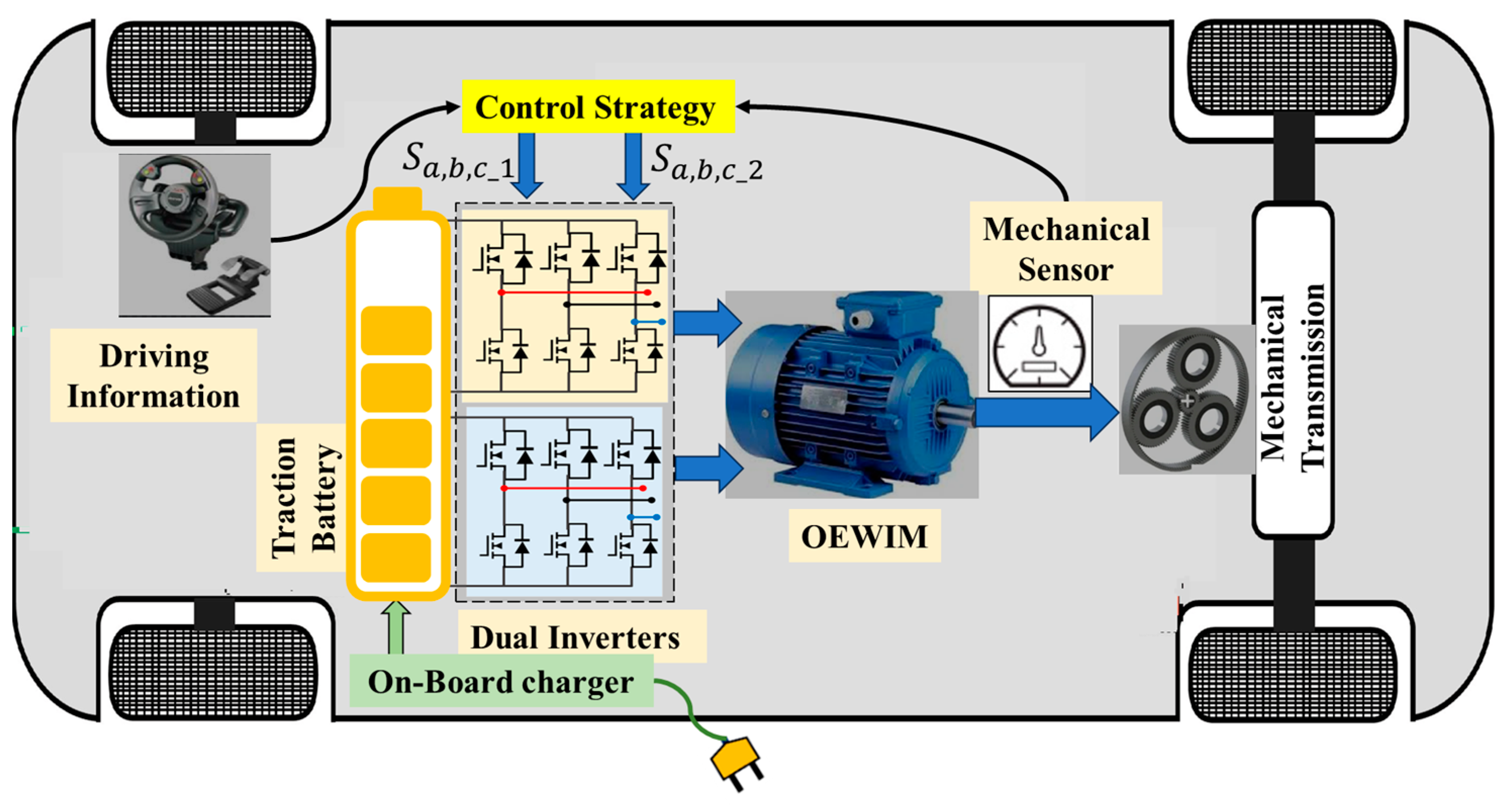
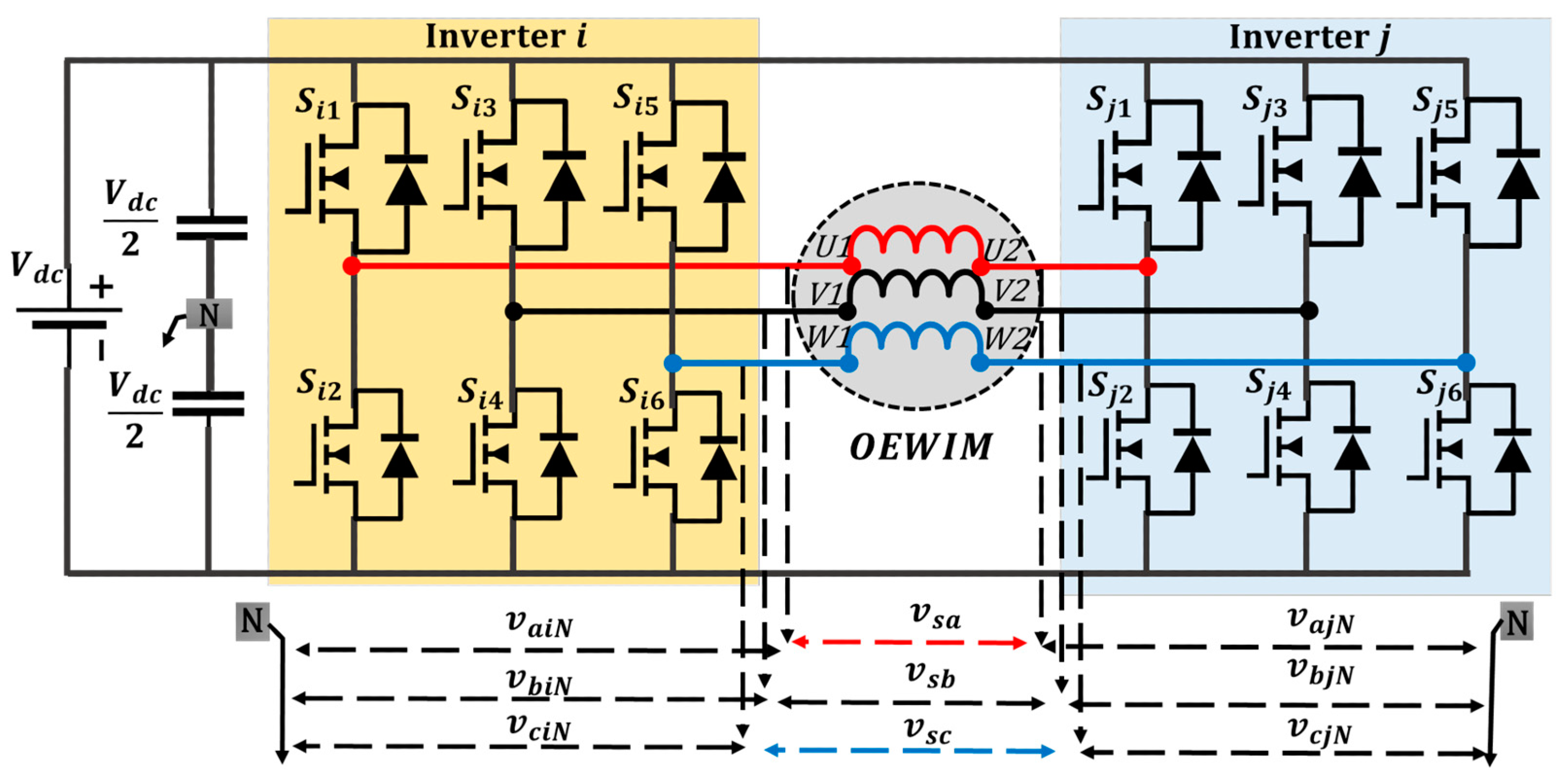
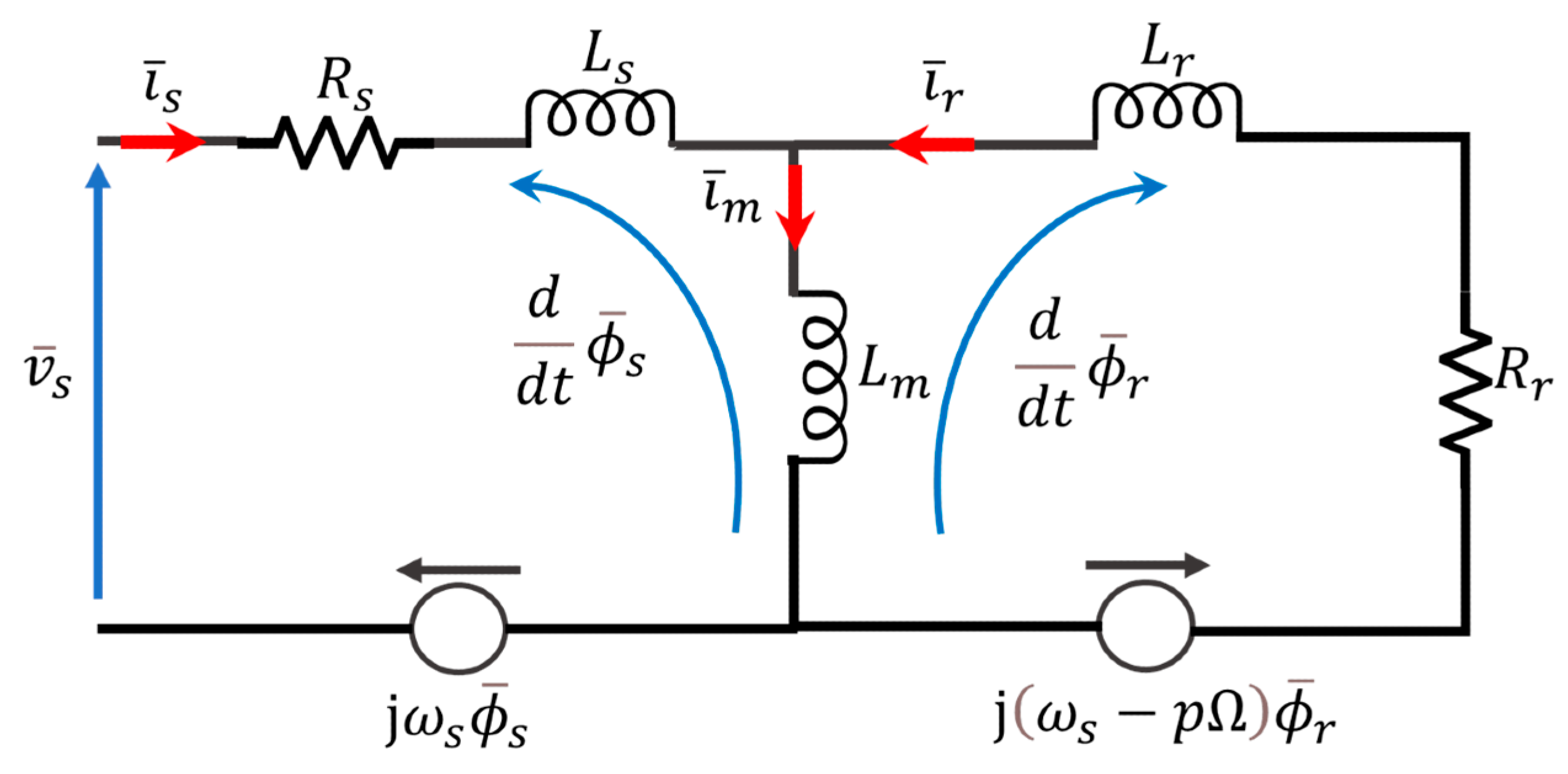
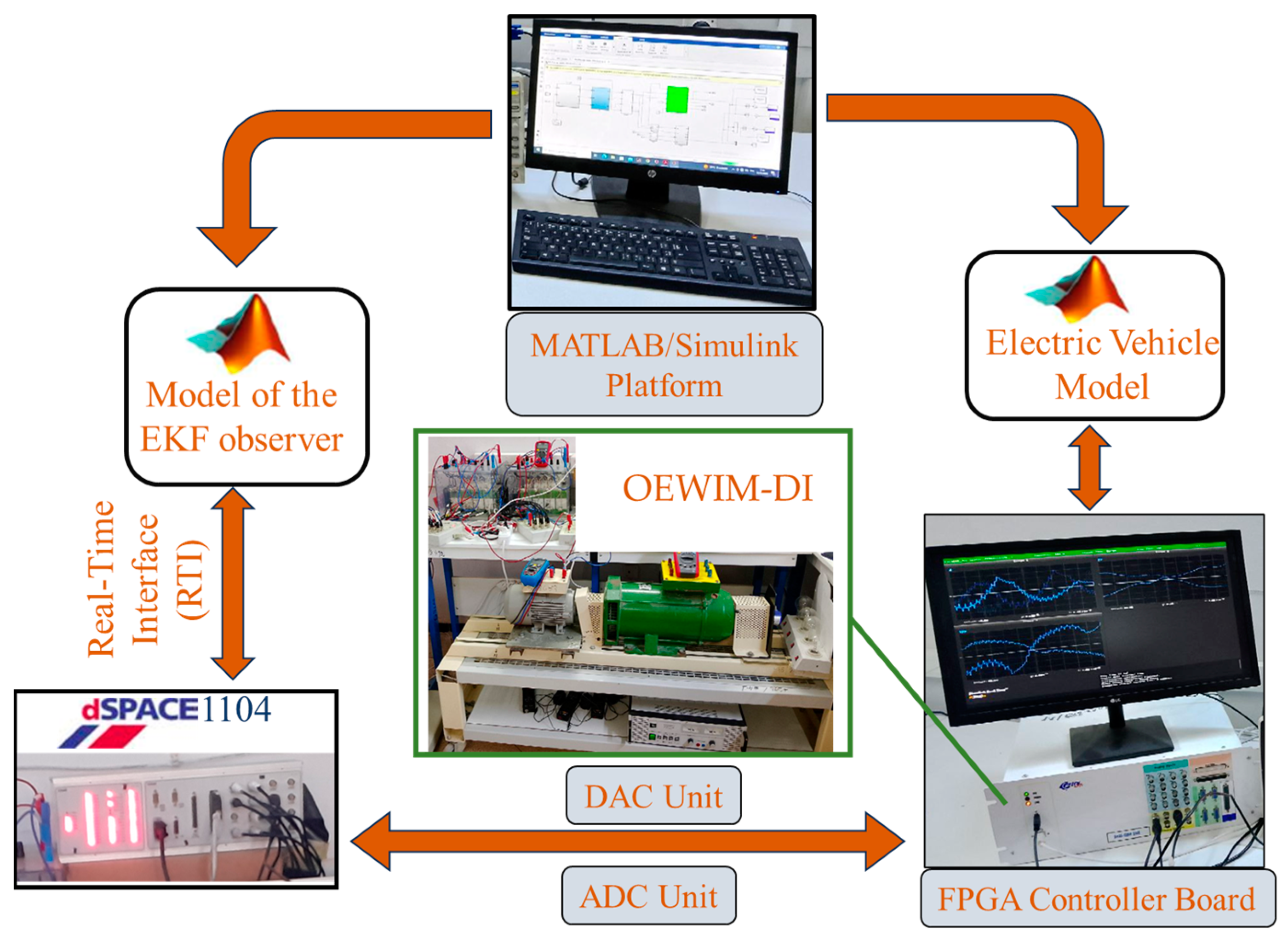
Electric Vehicles (EVs) are set to play a crucial role in the energy transition. Although EVs offer significant environmental benefits, their technology still faces major challenges related to performance optimization, energy efficiency improvement, and cost reduction. A key point to address these challenges is the accurate identification of the speed/torque operating points of the drive systems. However, this identification is generally achieved using mechanical sensors, which are fragile, bulky, and expensive. This paper aims to develop, implement, and validate a speed/torque observer in real time based on the Extended Kalman Filter (EKF) approach for an EV equipped with an Open-End Winding Induction Motor with Dual Inverter (OEWIM-DI). The implementation of the EKF is based on the state modeling of the OEWIM-DI, enabling the observation of the torque and speed using voltage and current measurements. The validation of this approach is conducted experimentally on the FPGA and DS1104 boards. The results show that this approach offers excellent performance in terms of accuracy, stability, and real-time response speed. These results suggest that the proposed method could significantly contribute to the advancement of EV technology by providing a more robust and cost-effective alternative to traditional mechanical sensors while improving the overall efficiency and performance of EV drive systems.
Keywords: electric vehicle; open-end winding induction motor; dual inverter; extended Kalman filter; speed/torque observer; FPGA; DS1104 electric vehicle; open-end winding induction motor; dual inverter; extended Kalman filter; speed/torque observer; FPGA; DS1104