Article

Eight-Year Cohort Study Examining Bicycling-Related Maxillofacial Fractures and Factors Contributing to Injury


by
Luis Miguel Gonzalez-Perez
1,*,
Johan Wideberg
2 and
Carlos Alvarez-Delgado
3
1
Department of Oral and Maxillofacial Surgery, Virgen del Rocio University Hospital, University of Seville, 41013 Seville, Spain
2
Department of Engineering and Materials and Transport Science, Higher Technical School of Engineering, University of Seville, 41092 Seville, Spain
3
Department of Clinical Documentation, Virgen del Rocio University Hospital, 41013 Seville, Spain
*
Author to whom correspondence should be addressed.
Osteology 2025, 5(4), 34; https://doi.org/10.3390/osteology5040034

Submission received: 29 July 2025 / Revised: 6 September 2025 / Accepted: 5 November 2025 / Published: 13 November 2025

Abstract

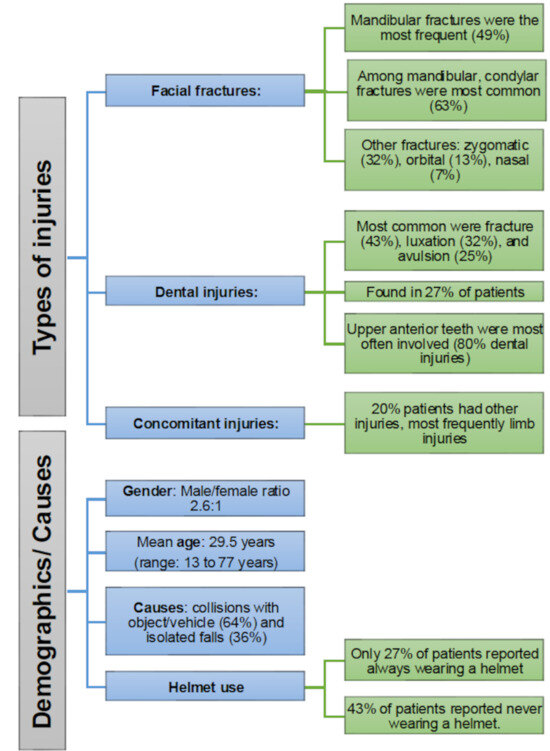
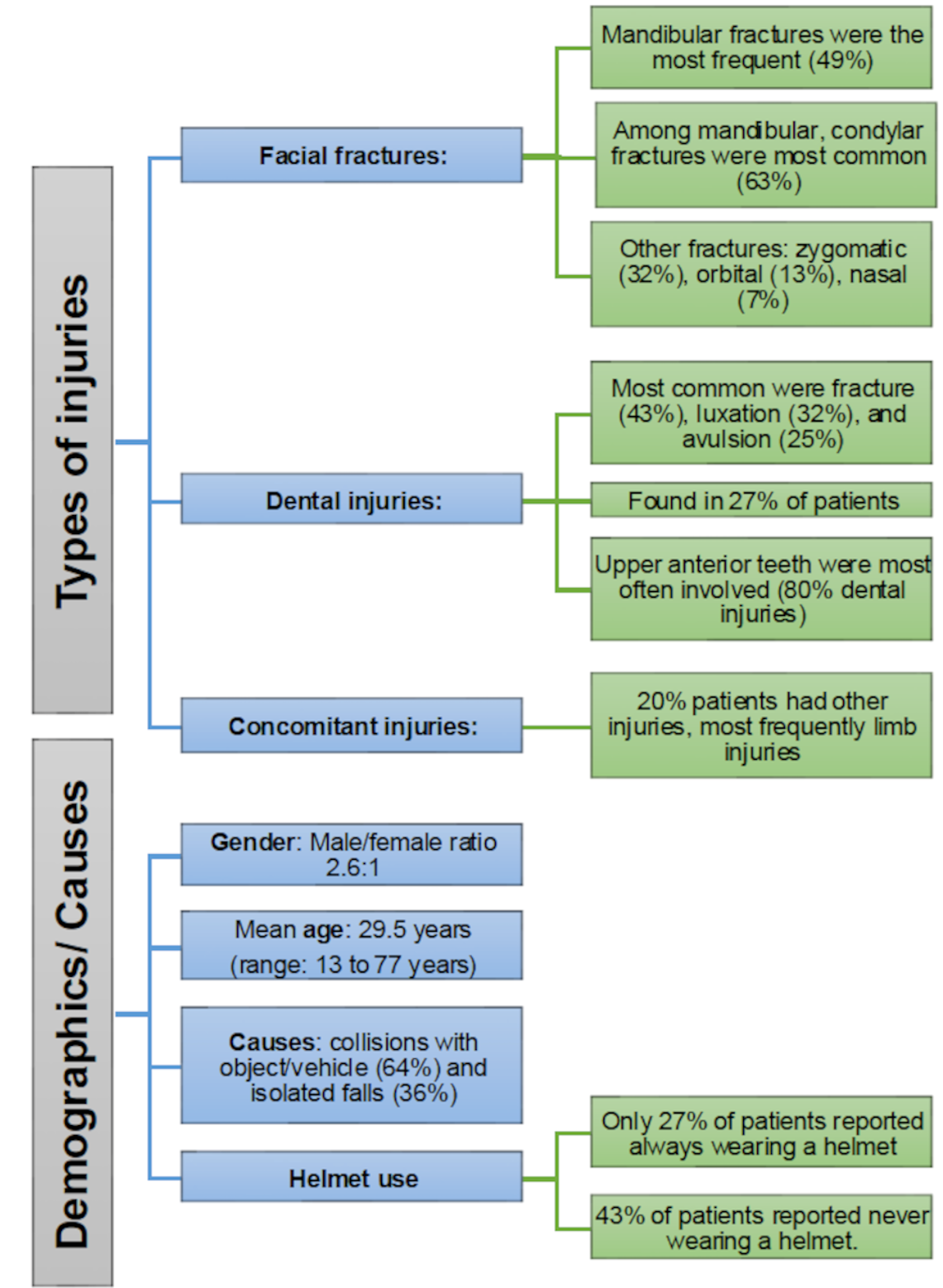
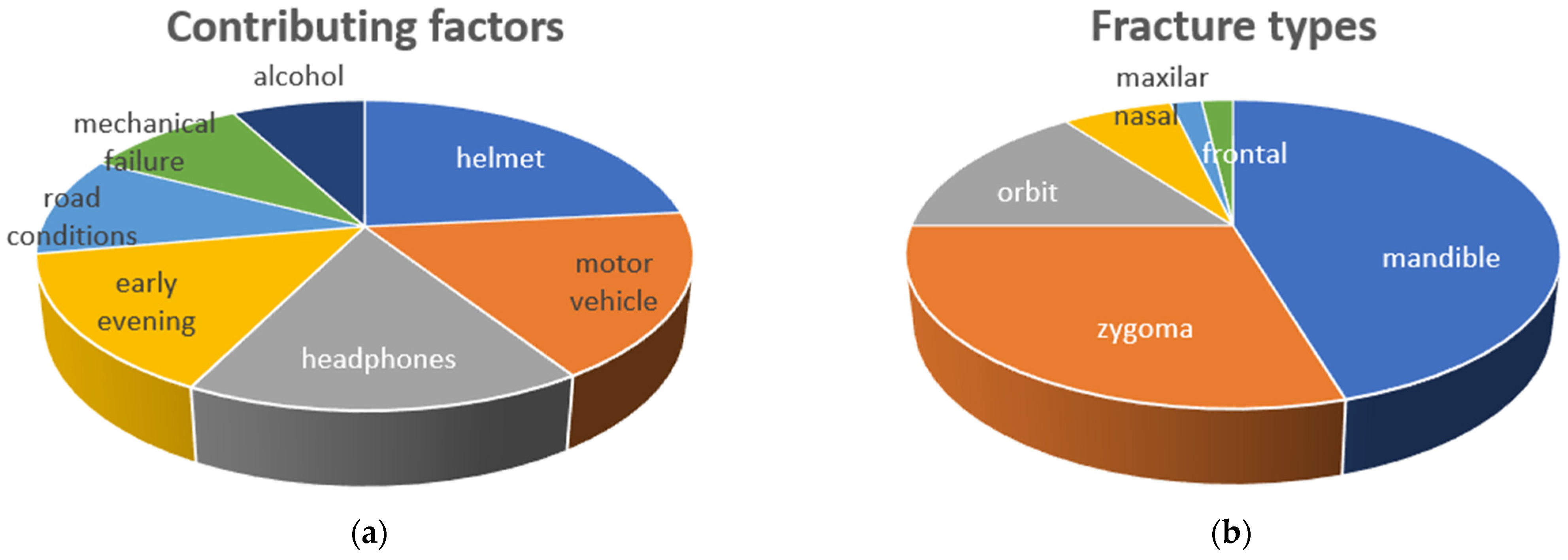
Objectives: The aim of this study was to determine the epidemiological characteristics of bicycling-related maxillofacial fractures in a defined population and to identify factors contributing to these injuries. Methods: An 8-year cohort study was carried out, including all patients presenting with bicycling-related maxillofacial fractures at a tertiary care center from 2017 through 2024. Data recorded for each patient included age, gender, date and cause of injury, contributing factors, type of facial fractures, other injuries, hospital stay, and helmet use. Statistical analysis was performed. Continuous variables were assessed for normality (Shapiro–Wilk test) and compared using the Mann–Whitney test. Categorical variables were analyzed with chi-square tests. A p-value ≤ 0.05 was considered statistically significant. Results: Out of 899 cycling accident patients seeking medical treatment, 122 (13%) sustained facial fractures, accounting for 4% of all facial fracture cases in our department during the study period. In our cohort, the male–female ratio was 2.6:1, and the mean age was 29.5 years (SD 12.8, range 13–77). Collision with another object/vehicle was the most common cause (64%), followed by isolated falls (36%). A total of 135 facial fractures were recorded (some patients had multiple fractures). Mandibular fractures were most frequent (49% of patients), followed by zygomatic (32%), orbital (13%), nasal (7%), maxillary (2%) and frontal (2%) fractures. Among mandibular injuries, condylar fractures were the most common subtype (63%). Dental injuries were found in 27% of patients. The most common dental trauma was tooth fracture (43% of those with dental injuries), followed by tooth luxation (32%) and tooth avulsion (25%). In 80% of cases involving dental injuries, the upper anterior teeth were involved. Concomitant injuries were present in 20% of patients, most often orthopedic limb injuries. Only 27% of patients reported always wearing a helmet, whereas 43% reported never having worn one. Conclusions: Bicycling-related facial injuries are a noteworthy subset of facial trauma. Missed or delayed diagnosis can lead to lasting deformities and functional issues. Preventive strategies—especially promoting helmet use and improving helmet design—along with broader safety measures are important to reduce the incidence and severity of these injuries.
Keywords: bicycling; cohort study; accident cause; maxillofacial trauma; traffic safety interventions; injury prevention; helmet use bicycling; cohort study; accident cause; maxillofacial trauma; traffic safety interventions; injury prevention; helmet use
Graphical Abstract