
Article

Phosphoric Acid Derivative-Catalyzed Carbonyl-Olefin Metathesis
1
Chemistry and Biochemistry Department, Saint Mary’s University of Minnesota, 700 Terrace Heights, Winona, MN 55987, USA
2
Chemistry Department, Hendrix College, 1600 Washington Ave., Conway, AR 72032, USA
3
Center for Nuclear Receptors and Cell Signaling, Department of Biology and Biochemistry, University of Houston, 3417 Cullen Blvd, Houston, TX 77204, USA
4
Jeannine Rainbolt College of Education, University of Oklahoma, 820 Van Vleet Oval, Norman, OK 73019, USA
5
Genentech, 1 Dna Way, South San Francisco, CA 94080, USA
6
College of Medicine and Science, Mayo Clinic, 200 First St. SW, Rochester, MN 55905, USA
7
Department of Ophthalmology, University of Arkansas for Medical Sciences, 4301 West Markham Street, Little Rock, AR 72205, USA
8
Experimental Therapeutics, University of Texas MD Anderson Cancer Center, 1901 East Road, Houston, TX 77054, USA
*
Author to whom correspondence should be addressed.
Organics 2026, 7(3), 29; https://doi.org/10.3390/org7030029
Submission received: 18 May 2026 / Revised: 20 June 2026 / Accepted: 30 June 2026 / Published: 8 July 2026

Abstract

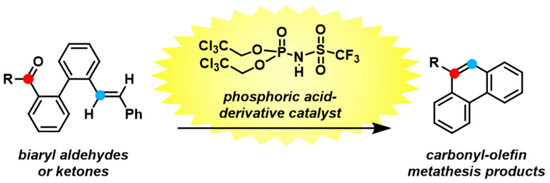
Ring-closing carbonyl-olefin metathesis (COM) reactions provide a straightforward method for producing cyclic alkenes from precursors containing carbonyl functional groups tethered to nucleophilic alkenes. Within the last decade, many methods for carrying out Lewis acid- or organocatalyzed COM reactions were reported; however, Brønsted–Lowry acid-catalyzed COM reactions are less developed. Herein, we report that phosphoric acid derivatives and N-triflylphosphoramides mediate COM reactions, although the substrate scope is limited to biaryl compounds that cyclize to produce phenanthrene products. We also disclose the synthesis and characterization of a previously non-fully characterized phosphoric acid derivative and a novel phosphoramide.

Graphical Abstract

1. Introduction

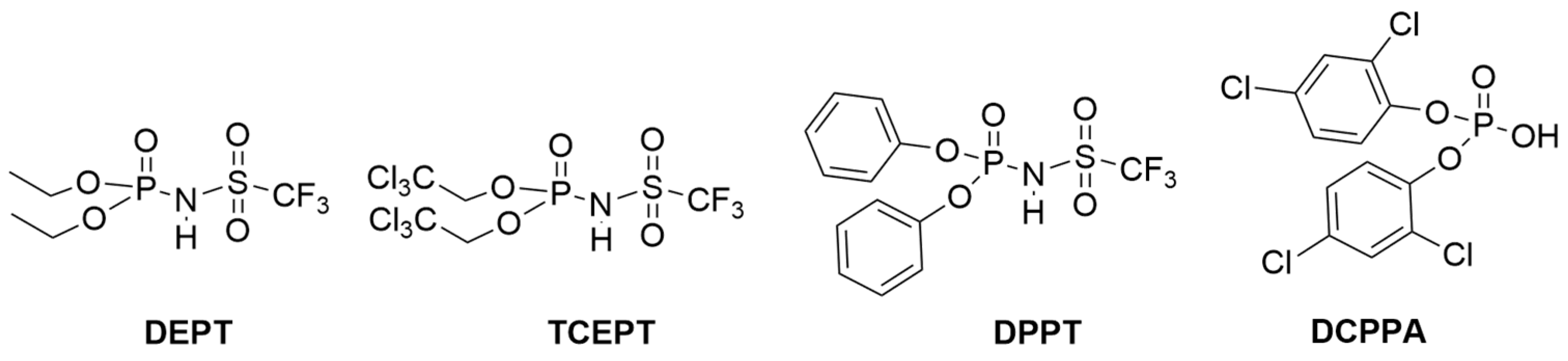
Carbon–carbon bond formation is essential in the fields of natural product, polymer, and pharmaceutical syntheses. One method for stitching together carbon–carbon bonds is through a reaction called carbonyl-olefin metathesis (COM), in which the carbon of a carbonyl group and the carbon of an alkene (or “olefin”) reaction partner are fused together in a new double bond, expelling a carbonyl by-product during the process (Scheme 1).
COM reactions can be mediated by light-activated processes or by stoichiometric or catalytic reagents, key examples of which have recently been reviewed [1,2,3]. Some of the earliest as well as the most recent examples of COM are light-activated intermolecular (cross-COM) reactions, the earliest being the Paternò–Büchi reaction, in which an alkene and carbonyl exposed to UV light undergo [2 + 2] cycloaddition to form oxetane intermediates that can be fragmented to produce COM products and carbonyl byproducts [4]. In contrast, a much more recent carbonyl–olefin cross-metathesis was described in which alkene and carbonyl substrates in the presence of a photocatalyst undergo visible-light-induced 1,3-diol formation, followed by acid-induced Grob-type 1,3-diol fragmentation, to produce the cross-COM product and carbonyl by-product [5].
Methods that employ stoichiometric reagents for installing alkenes in place of carbonyl groups (thus producing formal COM products) include Wittig reactions [6], Peterson olefination [7], Julia olefination [8], and Horner–Wadsworth–Emmons (HWE) reactions [9,10], all of which have become mainstays of organic synthesis for over half a century. Alternatively, formal cross- and ring-closing COM products have also been produced from carbonyl substrates in methods employing stoichiometric reagents typically used for carbonyl methylenation (such as Tebbe reagent [11] and Petassis reagent [12]), in another approach that has been extensively utilized for decades. Alongside these methods, COM reactions mediated by stoichiometric Lewis acids have been reported, though not nearly as extensively utilized as the aforementioned Wittig-like or carbonyl methylenation reactions [1].
While reactions employing stoichiometric reagents to produce formal COM products have survived the test of time and been applied in the synthesis of many natural products, catalytic COM reactions are very much an active area of development. The main approaches are split between organocatalyzed processes, as described by the Lambert group as early as 2012 [13], and Lewis-acid catalyzed processes, beginning with Schindler’s report of FeCl3-catalyzed intramolecular COM in 2016 [14].
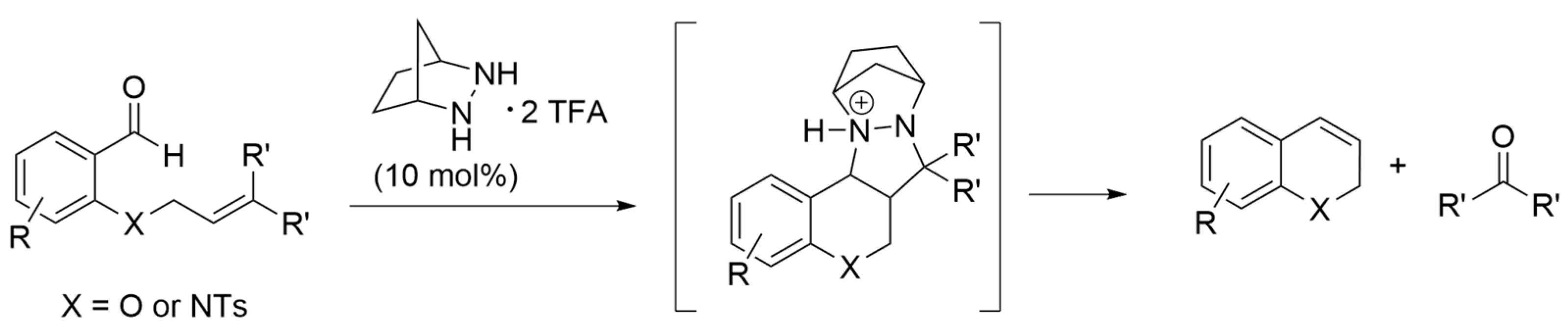
The Lambert group’s organocatalyzed ring-closing COM involves condensing a substrate’s carbonyl group with a hydrazine catalyst to form an iminium ion, which then participates in a [3 + 2] cycloaddition with the substrate’s tethered alkene to form a cycloadduct that undergoes a retro-[3 + 2] cycloaddition and hydrolysis to yield the COM product and carbonyl by-product (Scheme 2). This approach has since been applied to the synthesis of 2H-chromenes [15] and 1,2-dihydroquinolines [16].
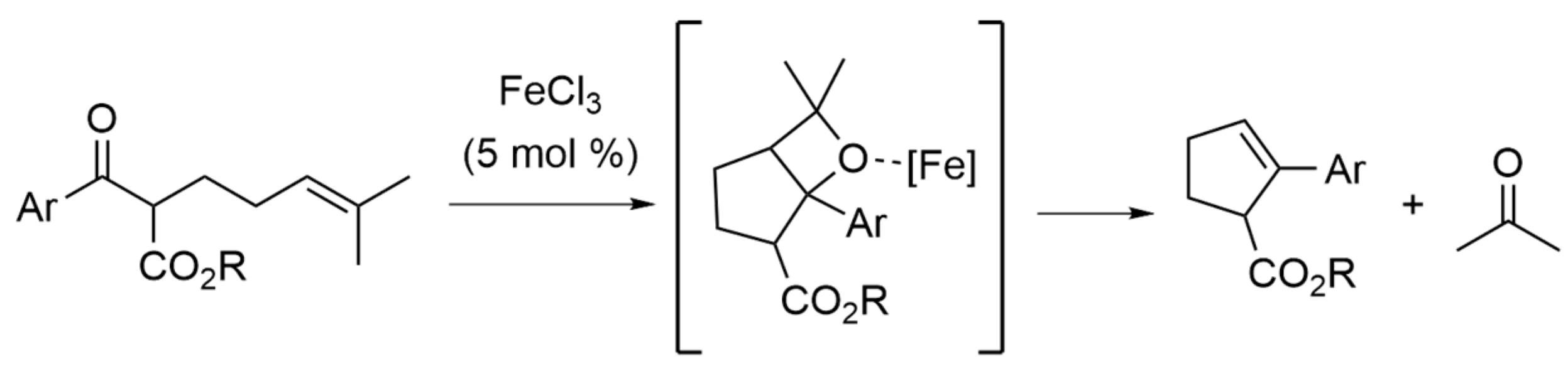
In the Schindler group’s initially reported FeCl3-catalyzed intramolecular COM, the β-ketoester substrate was proposed to form an oxetane intermediate, followed by cycloreversion (Scheme 3). The Schindler group and the Li group have since applied similar conditions, albeit occasionally with alternative iron(III) or aluminum(III) salts and/or additives, to synthesize polycyclic aromatic hydrocarbons, carbocycles, and heterocycles as COM products [17,18,19,20,21,22]. Similar reactions catalyzed by AuCl3 have also been reported by the Lin group [23].
Various examples of non-metal Lewis acid-catalyzed ring-closing COM reactions include tropylium-catalyzed [24] and I2-catalyzed [25] COM reactions reported by the Nguyen group and trityl tetrafluoroborate-catalyzed COM reactions reported by the Franzén group [26]. To date, there have also been a few Brønsted–Lowry ofb acid-catalyzed COM reactions reported, including the HCl-catalyzed COM reaction occurring within a cage-like hexameric resorcinarene supramolecular assembly disclosed by the Tiefenbacher group [27,28], the phosphomolybidic acid-catalyzed phenanthrene synthesis by the Lin group [29], and triflic acid-catalyzed reactions performed in nitrotoluene as well as para-toluenesulfonic acid-catalyzed reactions performed in hexafluoroisopropanol reported by the Nguyen group [30,31].
Although not yet widely reported for mediating COM reactions, Brønsted–Lowry acid organocatalysts have exploded in popularity since the early 2000s as potent facilitators of other molecular transformations, as demonstrated in work with BINOL-phosphoric acids [32] and phosphoramides [33] pioneered and developed by Akiyama, Terada, Yamamoto, and Reuping, or with disulfonimides [34] and imidodiphosphates (and trifylated derivatives thereof) [35] as reported by List, among others (see seminal reviews [36,37] by Akiyama and Mori for further examples).
Certain Brønsted–Lowry acid organocatalysts, specifically phosphoric acid derivatives and phosphoramides, have been shown to catalyze intramolecular carbonyl-ene (ICE) reactions (Scheme 4, 12) [38]. In this reaction, aldehydes tethered to trisubstituted alkenes react to form cyclic homoallylic alcohols in the presence of phosphoramides and phosphoric acid derivatives.
During this investigation, Dahlmann et al. observed not only the expected ICE product (Scheme 4, 2) and an ICE by-product resulting from elimination of the desired allylic alcohol (Scheme 4, 3), but also an apparent COM product formed during the reaction of aromatic aldehyde 1 in the presence of catalytic diphenyl phosphoric acid (DPP) (Scheme 4, 4). The formation of compound 4 was not included in the published investigation [38], but as our discovery coincided with Schindler’s report of FeCl3-catalyzed COM [14], we seized the opportunity to expand the toolbox of conditions for performing COM. Our primary objectives were to identify whether any commonly used, commercially available organic Brønsted–Lowry acids (beyond phosphoric acid derivatives or phosphoramides) would facilitate the transformation, and also to explore the scope of substrates that would undergo Brønsted–Lowry acid-catalyzed COM, choosing to focus on several of the substrates that have been reported for Lewis-acid catalyzed COM reactions as well as for our own previously reported Brønsted-Lowry acid-catalyzed ICE reactions.

2. Materials and Methods

2.1. General

All chemicals were purchased from Sigma-Aldrich (St. Louis, MO, USA), TCI America (Portland, OR, USA), and Oakwood Products, Inc. (Estill, SC, USA), and were used as received unless otherwise stated. Anhydrous acetonitrile (ACN) and tetrahydrofuran (THF) were dried using the PureSolv Solvent Purification System (Innovative Technologies, Newburyport, MA, USA). 1H-NMR, 13C-NMR, 19F-NMR, and 31P-NMR spectra were obtained using a JEOL 400 MHz NMR instrument (JEOL USA, Inc., Peabody, MA, USA). Chemical shifts are reported in parts per million relative to TMS for 1H-NMR and 13C-NMR, relative to neat CFCl3 for 19F-NMR, and relative to 85% phosphoric acid for 31P-NMR. Coupling constants are reported in Hertz, and multiplicities are reported using the following symbols: s (singlet), d (doublet), t (triplet), q (quartet), m (multiplet), dd (doublet of doublets), br s (broad singlet), and app t (apparent triplet). High-resolution mass spectroscopic (MS) data were recorded at the Mass Spectrometry Facility at the University of Minnesota on a Bruker BioTOF II ESI/TOF-MS instrument (Bruker Daltonics, Billerica, MA, USA) and at the Arkansas Statewide Mass Spectrometry Facility at the University of Arkansas on a Shimadzu IT-TOF instrument (Shimadzu, Kyoto, Japan), through services provided by each facility.

2.2. Synthesis of Catalysts

2.2.1. Synthesis of Bis(2,2,2-trichloroethyl) Phosphotriflamide (TCEPT)

Bis(2,2,2-trichloroethyl) phosphotriflamide (TCEPT) was synthesized by stirring potassium carbonate (300 mg, 2.2 mmol), trifluoromethane sulfonamide (330 mg, 2.2 mmol), and bis(2,2,2-trichloroethyl) phosphorochloridate (909.7 mg, 2.4 mmol) in anhydrous acetonitrile (4 mL) at room temperature for 17 h. The reaction mixture was then diluted with H2O (4 mL) and diethyl ether (5 mL), and the layers were separated. The aqueous layer was back-extracted with diethyl ether (2 × 10 mL), and the combined organic phase was washed successively with NaHCO3 and 6 M HCl (20 mL each), dried with Na2SO4, and concentrated by rotary evaporation. The resulting oil was found to contain bis(2,2,2-trichloroethyl) phosphotriflamide in a 10:1 mixture with the hydrolyzed product, bis(2,2,2-trichloroethyl) phosphoric acid. The mixture was re-dissolved in dichloromethane (75 mL) and washed with H2O (75 mL), then the organic layer was concentrated by rotary evaporation to yield purified bis(2,2,2-trichloroethyl) phosphotriflamide (0.165 g; 14% yield). 1H-NMR (400 MHz, MeOD-d4): δ 4.54 (d, J = 4.8 Hz, 4H), 4.60 (br s, 1H). 13C-NMR (100 MHz, MeOD-d4): δ 121.5 (q, JC-F = 318 Hz), 96.5 (d, JC-P = 13 Hz), 77.8 (d, JC-P = 5 Hz). 19F-NMR (376 MHz, MeOD-d4): δ −80.4 (s). 31P-NMR (162 MHz, MeOD-d4): δ −4.77 (s). HRMS, ESI: Calcd. for C5H4Cl6F3NO5PS (M–H): 487.7636; found: 487.7658.

2.2.2. Synthesis of Diethyl ((Trifluoromethyl)sulfonyl)phosphoramidate (DEPT)

Diethyl ((trifluoromethyl)sulfonyl)phosphoramidate (DEPT) was synthesized by stirring potassium carbonate (1.2 g, 8.8 mmol), trifluoromethane sulfonamide (1.3 g, 8.8 mmol), and diethyl phosphorochloridate (1.41 mL, 9.7 mmol) in anhydrous acetonitrile (15 mL) at room temperature for 24 h. The reaction mixture was then diluted with H2O (15 mL) and the layers separated. The aqueous layer was back-extracted with diethyl ether (15 mL) and the combined organic phase was washed successively with NaHCO3 and 6 M HCl (50 mL each), dried with MgSO4, and concentrated by rotary evaporation. The NMR spectra of the solid product matched those reported in the literature [39].

2.2.3. Synthesis of Diphenyl ((Trifluoromethyl)sulfonyl)phosphoramidate (DPPT)

Diphenyl ((trifluoromethyl)sulfonyl)phosphoramidate (DPPT) was prepared as previously described and its NMR spectrum matched that reported in the literature [40].

2.2.4. Synthesis of Bis(2,4-dichlorophenyl) Hydrogen Phosphate (DCPPA)

Bis(2,4-dichlorophenyl) hydrogen phosphate (DCPPA) was synthesized as follows: a solution of bis(2,4-dichlorophenyl) phosphorochloridate (1.0 g, 2.46 mmol) in anhydrous THF (5 mL) was chilled to 0 °C; then, aqueous 1 M NaOH (2.46 mL, 2.46 mmol NaOH) was added dropwise. The reaction mixture was allowed to warm to room temperature while stirring for 24 h. The reaction mixture was then diluted with H2O (20 mL) and then extracted with ethyl acetate (3 × 20 mL). The combined organic layers were dried with Na2SO4 and concentrated by rotary evaporation to give a quantitative yield of dried solid product. 1H-NMR (400 MHz, CDCl3): δ 7.42 (d, J = 2 Hz, 2.4H), 7.30 (d, J = 8.8 Hz, 2H), 7.20 (br s, 1H), 7.19 (dd, J = 8.8, J = 2.4 Hz, 2H). 13C-NMR (100 MHz, CDCl3): δ 144.9 (d, J = 6.6 Hz), 131.6, 130.6, 128.038, 126.9 (d, J = 7 Hz), 122.2. 31P-NMR (162 MHz, CDCl3): δ −11.5 (s). HRMS, ESI: Calcd. for C12H6Cl4O4P (M–H): 386.8733; found: 386.8719. Prior to use in catalysis reactions, the solid product was resuspended in ethyl acetate, washed with 6.0 M HCl (aq), and the organic layer was dried with Na2SO4 and concentrated by rotary evaporation to yield solid bis(2,4-dichlorophenyl) hydrogen phosphate (DCPPA).

2.3. Synthesis of COM Reaction Substrates

2.3.1. Synthesis of 2-(4-Methyl-3-penten-1-yl)benzaldehyde (1)

2-(4-Methyl-3-penten-1-yl)benzaldehyde (1) was prepared according to known procedures and its NMR spectrum matched that reported in the literature [41].

2.3.2. Synthesis of 2′-(2-Methylprop-1-en-1-yl)-[1,1′-biphenyl]-2-carbaldehyde (5a)

2′-(2-Methylprop-1-en-1-yl)-[1,1′-biphenyl]-2-carbaldehyde (5a) was prepared according to known procedures and its NMR spectrum matched that reported in the literature [42].

2.3.3. Synthesis of (E)-2′-Styryl-[1,1′-biphenyl]-2-carbaldehyde (5b)

(E)-2′-styryl-[1,1′-biphenyl]-2-carbaldehyde (5b) was prepared according to known procedures and purified by column chromatography in 100% cyclohexane; its NMR spectrum matched that reported in the literature [18].

2.3.4. Synthesis of (E)-1-(2′-Styryl-[1,1′-biphenyl]-2-yl)ethan-1-one (5c)

(E)-1-(2′-styryl-[1,1′-biphenyl]-2-yl)ethan-1-one (5c) was prepared according to known procedures and purified by column chromatography in 100% cyclohexane; its 1H-NMR spectrum was consistent with that reported for the E-isomer [18].

2.3.5. Synthesis of 2-[(3E)-4-Phenyl-3-buten-1-yl]benzaldehyde (8)

The synthesis of 2-[(3E)-4-phenyl-3-buten-1-yl]benzaldehyde (8) was adapted from known procedures [41]. To a flame-dried, nitrogen-flushed flask, anhydrous tetrahydrofuran (11 mL) and TriMEDA (0.57 mL, 4.4 mmol, 1.1 eq) were added and chilled to −20 °C. Then, n-BuLi (4 mmol, 1 eq) was added dropwise. After 15 min, o-tolualdehyde was added (0.46 mL, 4 mmol, 1 eq). After another 15 min, a second portion of n-BuLi (12 mmol, 3 eq) was added dropwise. The dark-red reaction mixture was stirred at −20 °C for 1 h; then, the mixture was chilled to −65 °C. To the chilled mixture, 3-bromo-1-phenyl-1-propene was added dropwise. The reaction mixture was allowed to warm up to room temperature, and then was quenched by pouring it into cold 1 M HCl. The product was extracted into diethyl ether, and the combined organic layers were washed with brine, dried over Na2SO4, and concentrated by rotary evaporation. The resulting oil was purified by normal-phase flash chromatography with a gradient of 0–4% ethyl acetate in cyclohexane to yield 60 mg (6% yield) of the E-isomer of 2-[(3E)-4-phenyl-3-buten-1-yl]benzaldehyde (8). The 1H-NMR spectrum of 8 was consistent with that reported for the E-isomer [43].

2.3.6. Synthesis of Ethyl 2-Benzoyl-6-methylhept-5-enoate (9)

Ethyl 2-benzoyl-6-methylhept-5-enoate (9) was prepared according to known procedures and its 1H-NMR spectrum was consistent with that reported in the literature [14].

2.3.7. Synthesis of 2-[(3-Phenyl-2-propen-1-yl)oxy]benzaldehyde (11)

Salicylaldehyde (0.17 mL, 1.6 mmol, 1 eq), potassium carbonate (0.68 g, 4.9 mmol, 3 eq), 1-bromo-3-phenyl-2-propene (0.39 g, 2 mmol, 1.2 eq), and acetonitrile (16 mL), were added to a round-bottom flask containing a stir bar. After stirring at room temperature for 3 h, water (50 mL) was added to the reaction mixture and the organic products were extracted with dichloromethane (2 × 50 mL). The pooled organic layer was washed with brine, dried over Na2SO4, and concentrated by rotary evaporation. The resulting material was recrystallized in hexanes to produce solid 11 (0.12 g, 31% yield). 1H-NMR (400 MHz, CDCl3): δ 10.57 (s, 1H), 7.86 (dd, J = 7.8, 1.8 Hz, 1H), 7.54 (m, 1H), 7.43 (m, 2H), 7.35 (m, 2H), 7.30 (m, 1H), 7.05 (m, 2H), 6.77 (d, J = 16 Hz, 1H), 6.44 (dt, J = 16, 5.6 Hz, 1H), 4.84 (dd, J = 5.6, 1.4 Hz, 2H). 13C-NMR (100 MHz, CDCl3): δ 189.9, 161.0, 136.1, 135.9, 133.6, 128.7, 128.6, 128.2, 126.6, 125.2, 123.5, 121.0, 113.0, 69.2. HRMS, ESI: Calcd. for C16H14O2Na+ (M + Na+): 261.0886; found: 261.0898.

2.3.8. N-Cinnamyl-N-(3-oxopropyl)-4-(trifluoromethyl)benzenesulfonamide (13)

The synthesis of N-cinnamyl-N-(3-oxopropyl)-4-(trifluoromethyl)benzenesulfonamide (13) was carried out in three steps. In the first step, N-(3-hydroxypropyl)-4-(trifluoromethyl)benzenesulfonamide was prepared as follows: to a mixture of 3-amino-1-propanol (0.63 mL, 8 mmol, 1 eq), triethylamine (1.14 mL, 1 eq), and dichloromethane (11.8 mL) chilled to 0 °C, a solution of 4-(trifluoromethyl)benzenesulfonyl chloride (2.00 g, 8 mmol, 1 eq) dissolved in dichloromethane (6.3 mL) was added dropwise. The reaction mixture was stirred for 30 min at 0 °C, then washed with water (2 × 20 mL). The organic layer was dried with Na2SO4 and concentrated by rotary evaporation. The product, N-(3-hydroxypropyl)-4-(trifluoromethyl)benzenesulfonamide, was taken on to the next step without further purification.
N-(3-hydroxypropyl)-4-(trifluoromethyl)benzenesulfonamide was then converted to N-cinnamyl-N-(3-hydroxypropyl)-4-(trifluoromethyl)benzenesulfonamide as follows: to a nitrogen-flushed round-bottom flask was added N-(3-hydroxypropyl)-4-(trifluoromethyl)benzenesulfonamide (0.95 g, 3.3 mmol, 1 eq), cesium carbonate (1.42 g, 4.4 mmol, 1.3 eq), and acetonitrile (18.8 mL). The mixture was stirred for 30 min, and then 3-bromo-1-phenyl-1-propene (0.88 mL, 3.3 mmol, 1 eq) was added. The reaction mixture was stirred overnight (19 h), and then 80 mL of water was added. The organic material was extracted with diethyl ether (3 × 60 mL), and the pooled organic layers were dried with Na2SO4 and concentrated by rotary evaporation. The product, N-cinnamyl-N-(3-hydroxypropyl)-4-(trifluoromethyl)benzenesulfonamide, was taken on to the next step without further purification.
N-cinnamyl-N-(3-oxopropyl)-4-(trifluoromethyl)benzenesulfonamide (13) was synthesized from N-cinnamyl-N-(3-hydroxypropyl)-4-(trifluoromethyl)benzenesulfonamide as follows: a suspension of pyridinium chlorochromate (0.98 g, 4.6 mmol, 1.5 eq) and Celite (2.0 g) in dichloromethane (10 mL) was chilled to 0 °C. A separate suspension of N-cinnamyl-N-(3-hydroxypropyl)-4-(trifluoromethyl)benzenesulfonamide (1.22 g, 3.06 mmol, 1 eq) in dichloromethane (5 mL) was prepared and added to the stirring, chilled PCC suspension. The reaction mixture was stirred for 3 h, then NaHSO4 (0.38 g) and diethyl ether (30 mL) were added to the reaction mixture. The reaction was stirred for 15 more minutes, then filtered. The filtrate was concentrated by rotary evaporation and purified by normal-phase column chromatography (20% ethyl acetate in hexanes) to yield 13b (0.33 g, 28% yield). 1H-NMR (400 MHz, CDCl3): δ 9.76 (s, 1H), 7.97 (d, J = 8 Hz, 2H), 7.79 (d, J = 8 Hz, 2H), 7.28 (m, 5H), 6.47 (d, J = 16 Hz, 1H), 5.92 (dt, J = 16, 8 Hz, 1H), 4.00 (d, 6.8 Hz, 2H), 3.50 (t, J = 6.8 Hz, 2H), 2.88 (t, J = 6.8 Hz, 2H). 13C-NMR (100 MHz, CDCl3): δ 199.8, 143.1, 135.6, 134.8, 134.7, 134.3, 128.7, 128.3, 127.8, 126.4, 125.9 (q, J = 271 Hz), 122.9. HRMS, ESI: Calcd. for C19H18F3NO3SNa+ (M + Na+): 420.0852; found: 420.0860.

3. Results and Discussion

3.1. Catalyst Screening

3.1.1. Commercially Available Catalysts

Our investigation began with screening our previously tested aryl substrate 1 [38] with alternative, commercially available organic Brønsted–Lowry acids (0.5 eq cat, CDCl3, r.t., overnight), to see if we could improve on the 5% isolated yield of COM product obtained using DPP as a catalyst (Table 1). Reactions with squaramide and thioureas (Table 1, entries 3–6) showed only unreacted starting material in the NMR of the crude reaction mixtures, while 1,1′-binaphthyl-2,2′-diyl hydrogen phosphate (BINOL phosphate) showed a trace of conversion to an unidentifiable product (Table 1, entry 2). This was surprising due to its structural similarity to DPP, but in contrast to DPP, BINOL phosphate did not appear to dissolve to a great extent in chloroform at room temperature, possibly leading to our negative result.

3.1.2. Phosphoric Acid Derivative and N-Triflylphosphoramide Synthesis

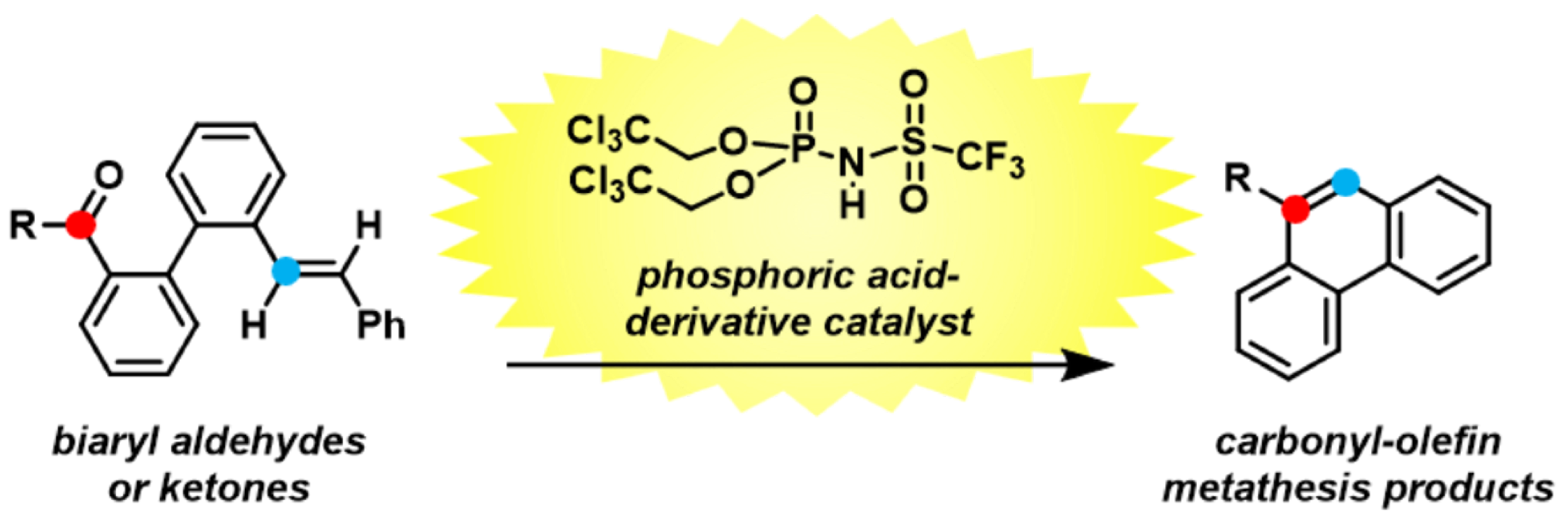
Based on these preliminary results, we returned our focus to the two types of organocatalysts that had successfully catalyzed our previously described carbonyl-ene reactions, namely dialkyl or diaryl phosphates and N-triflylphosphoramides [38]. Samples of each class of catalyst were prepared by treating commercially available dialkyl or diaryl phosphochloridates with hydroxide (Scheme 5A) or trifluoromethane sulfonamide (Scheme 5B) to yield a variety of dialkyl- or diaryl- N-triflylphosphoramides and phosphoric acid products, respectively (Figure 1). Notably, bis(2,2,2-trichloroethyl) ((trifluoromethyl)sulfonyl)phosphoramidate (TCEPT) is a novel compound, while bis(2,4-dichlorophenyl) hydrogen phosphate (DCPPA) is known [44] but has not previously been fully characterized in the literature (see Supplementary Materials for newly-reported NMR and mass spectra). Diethyl ((trifluoromethyl)sulfonyl)phosphoramidate (DEPT) and diphenyl ((trifluoromethyl)sulfonyl)phosphoramidate (DPPT) are both known compounds.

3.2. Phosphoric Acid Derivative and N-Triflylphosphoramide-Mediated COM Reactions with Biaryl Substrates

We screened DEPT, TCEPT, DPPT, and DCPPA for their ability to mediate COM reactions on a biaryl substrate previously disclosed by the Schindler group [18] (compound 5a, Table 2), which we used as a model substrate due to its facile synthesis and simple NMR spectrum. Our screening reactions were carried out using 0.5 equivalents of each catalyst in reactions run at room temperature overnight in dichloromethane (0.1 M). We exclusively investigated our reactions using dichloromethane because we desired to identify reactions that would occur with a commonly available, easy-to-remove solvent that would be both polar enough to dissolve our phosphoramide catalysts and yet be non-nucleophilic due to potential carbocation intermediates forming during the COM reaction. Furthermore, we wanted to identify reactions that would be easy to set up (no solvent purification or anhydrous conditions required) and take under 20 h to reach completion. We did not attempt to run the reactions at elevated temperature due to the volatility of the dichloromethane solvent.
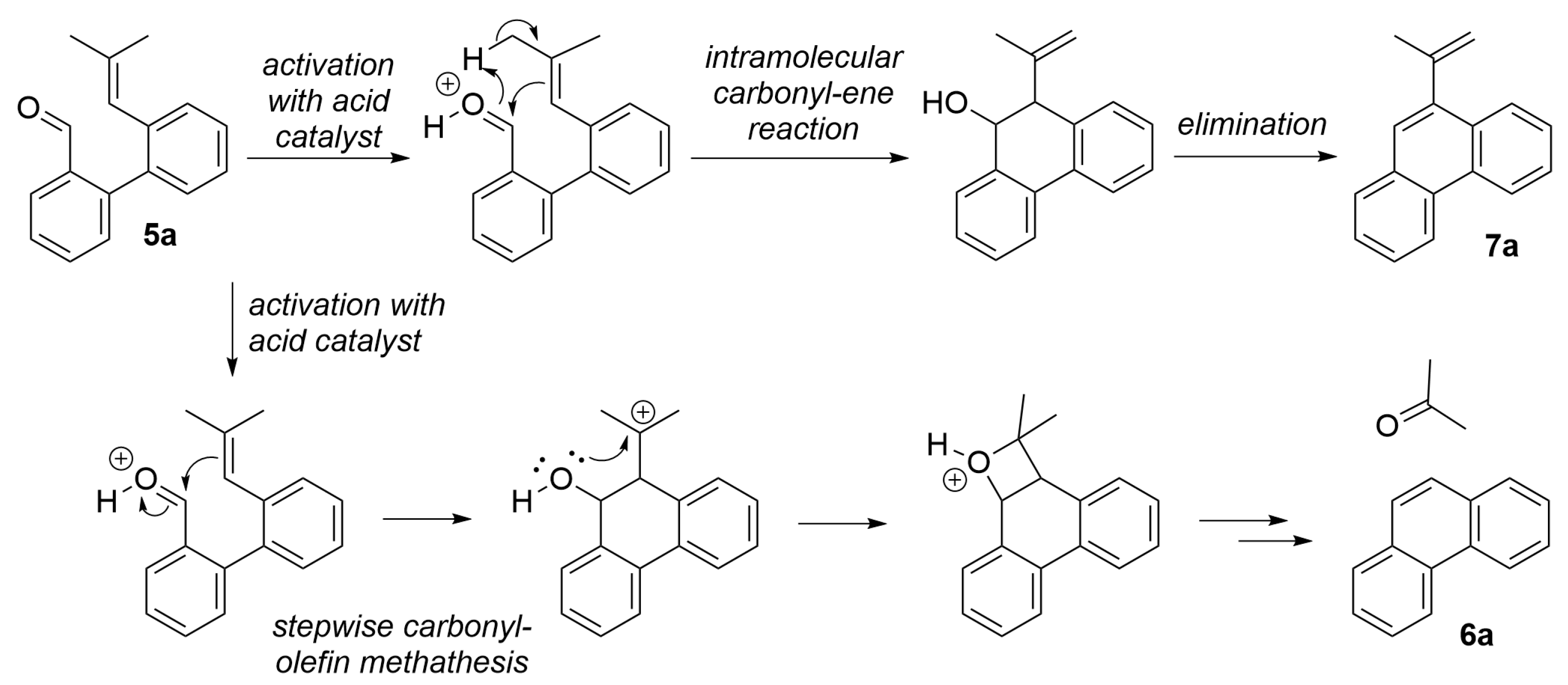
Our preliminary reaction with substrate 5a, which contained an aldehyde tethered to dimethyl alkene, produced complete conversion to a mixture of COM product 6a and the tandem intramolecular carbonyl-ene/elimination product 7a, according to NMR analysis of the crude reaction mixtures (Table 2, entries 1–4). The mechanisms for these two routes of conversion are shown in Scheme 6. Upon activation with the acid catalyst, substrate 5a preferentially undergoes an ICE reaction followed by facile elimination to produce 7a. In the competing COM pathway, the acid-activated intermediate is proposed to undergo a nucleophilic attack by the alkene to produce a carbocation intermediate, which is then attacked by the neighboring alcohol to produce an oxetane intermediate that fragments to form the formal COM product 6a. Our proposed stepwise COM mechanism is based on carbocation-trapping studies performed on a similar biaryl substrate by the Lin group in their investigation of phosphomolybdic acid-catalyzed COM [29]. For all four catalysts screened, the ICE/elimination product was the major product (67–84% yield) and the desired COM product was the minor product (16–33% yield).
To shut down the ICE pathway, we synthesized and tested biaryl substrates containing aldehyde or methyl ketone groups tethered to styryl alkenes lacking terminal allylic hydrogens (Table 2, 5b and 5c) [18]. Notably, substrates 5b–c underwent complete conversion to COM products 6b–c with TCEPT, as opposed to no conversion at all noted with DEPT, DCPPA, and DPPT. We attribute this loss of reactivity of substrates 5b–c compared to 5a to the reduced nucleophilicity of the styryl alkene as opposed to the dimethyl alkene. Gratifyingly, substrates 5b and 5c underwent complete conversion within 18 h in the presence of 0.5 equivalents of catalyst to furnish isolated yields of 64% and 77% of phenanthrene 6b and methylphenanthrene 6c COM products, respectively. No further products were identifiable in the 1H NMRs of the crude reaction mixtures prior to chromatographic purification; however, we noted that over the course of the reaction, the reaction solutions changed from clear and colorless to dark red/orange, so we suspect that polymerized materials were produced in addition to intramolecular COM products. The reddish material did not elute during normal-phase chromatography even in the presence of 100% methanol eluent, so we were unable to isolate and characterize this material. Comparable isolated yield (84%) was obtained when the catalyst loading was decreased to 0.2 equivalents and diminished slightly (62%) when the loading was reduced to 0.1 equivalents, due to incomplete conversion of starting material within our desired 20 h time-limit. No conversion of starting material 5b was seen in reactions with phosphoric acid or acetic acid (0.5 eq, 0.1 M DCM, r.t., overnight) (Table 2, entries 12–13).

3.3. Reaction Scope Limitations

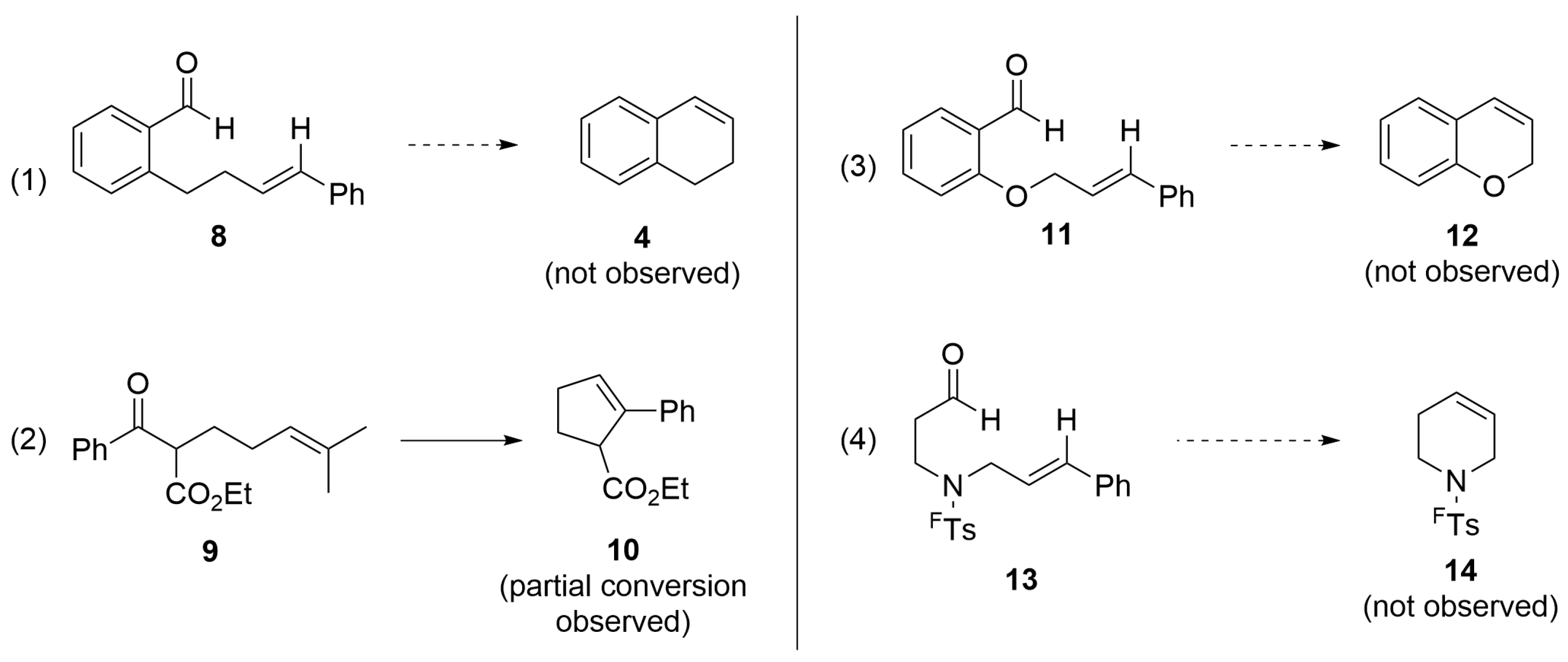
Inspired by our observation that an ortho-substituted benzaldehyde derivative formed trace amounts of COM product (Scheme 4), we synthesized an aryl aldehyde lacking terminal allylic hydrogens to shut down the ICE pathway (8, Scheme 7, reaction (1)). However, in the presence of 0.5 equivalents of phosphoric acid derivative or N-triflylphosphoramide catalyst (DEPT, TCEPT, DPPT, or DCPPA), no conversion to the expected COM product 1,2-dihydronaphthalene 4 occurred. NMR spectra of the crude reaction mixtures indicated unreacted starting material.
We also tested a β-ketoester substrate (9, Scheme 7, reaction (2)) known to undergo COM reactions to form cyclopentene (10) in the presence of Lewis acid catalysts [14]. For the N-triflylphosphoramide catalysts, NMRs of the crude reaction mixtures (run at 0.1 M in dichloromethane with 0.5 equivalent catalyst) indicated primarily mixtures of unreacted starting material and decomposition product ethyl benzoyl acetate, plus traces of unidentifiable products. When the reaction was run with TCEPT, the NMR of the crude reaction mixture showed a 1:1.6:1 ratio of COM product 10:starting material 9:ethyl benzoyl acetate, plus traces of unidentifiable products; however, due to the complexity of the reaction mixture and the small amount of COM product 10 produced, an isolated yield of 10 could not be obtained.
To investigate whether we could produce heterocycles using Brønsted–Lowry acid-catalyzed COM, we attempted to synthesize 2H-chromene 12 from styrylated salicylaldehyde 11 (Scheme 7, reaction (3)) in a reaction similar to that reported by Li and co-workers, who synthesized 3-phenyl-2H-chromenes via FeCl3-catalyzed COM reactions of phenyl ketone substrates [17]. Under our standard reaction conditions (0.5 equivalents of catalyst, 0.1 M in non-anhydrous dichloromethane, room temperature under air), the only reaction we observed was decomposition of starting material 11 back to salicylaldehyde; no COM product 12 was obtained. When the reactions were repeated under strictly anhydrous conditions, no apparent conversion occurred; only starting material 11 was recovered. Notably, the Li group also encountered inefficiencies when attempting their COM reactions to form their 2H-chromene products, obtaining moderate 50–70% yields under their standard 1 h reaction conditions in the presence of 25 mol % of FeCl3 as opposed to their usual 10% catalyst load.
Finally, based on our previous success in carrying out a phosphoric acid derivative-catalyzed ICE reaction to form a 6-membered ring tosylpiperidine product [38], we attempted to perform COM with similar tosylamine starting materials to produce 6-membered ring tetrahydropyridine COM products, using the strategy of replacing the prenyl group used in the ICE reaction substrate with a styryl group to shut down the ICE pathway. Our preliminary screening of styrylated tosylamine substrates with each of our four catalysts (DEPT, TCEPT, DPPT, and DCPPA) showed no conversion of starting materials. This result was not totally unexpected, as challenges with a similar reaction were previously reported by the Li group, who noted that their FeCl3-mediated COM reaction of a phenyl ketone tosylamine substrate to produce a 5-phenyl tetrahydropyridine product proceeded very inefficiently, reaching only 20% yield under their standard 1 h reaction conditions in the presence of a full equivalent of FeCl3 as opposed to their usual 10% catalyst load [17]. In the same publication, the Li group reported more success when they pivoted to produce 5-membered 2,5-dihydropyrroles as opposed to 6-membered tetrahydropyridine products, although the 2,5-dihydropyrrole syntheses occurred only in the presence of stoichiometric amounts of allyltrimethylsilane additive along with 20 mol % of FeCl3 catalyst. Difficulties were also encountered by the Schindler group during their FeCl3-mediated COM reaction to synthesize a similar 2,5-dihydropyrrole product; the authors speculated that the FeCl3 was interacting with the sulfonamide protecting group on the nitrogen as opposed to activating the carbonyl group [19]. We questioned whether our Brønsted–Lowry acid catalysts were similarly interacting with our tosylamine groups on our substrate. Inspired by the Schindler group’s approach to limiting complexation of Lewis acid catalysts with tosyl groups, we prepared a substrate with a more strongly electron-withdrawing 4-(trifluoromethyl)benzenesulfonyl protecting group (FTs) on the nitrogen atom (13, Scheme 7, reaction (4)) [19]. However, we did not observe any COM product formation when we attempted our reaction with the TCEPT catalyst. We note that the reduced nucleophilicity of the styryl as opposed to prenyl alkene on our starting materials may explain why we were able to successfully cyclize a tosylamine substrate to form a 6-membered ring in a phosphoric acid derivative-catalyzed ICE reaction [38] but not in our analogous attempted COM reactions.

4. Conclusions

Herein, we report the expansion of the range of relatively rare Brønsted–Lowry acid-catalyzed COM reactions to include those catalyzed by phosphoric acid derivatives and N-triflylphosphoramides. These catalysts were able to mediate COM reactions to produce phenanthrenes and, to a minor extent, substituted cyclopentene products, although they were unable to catalyze COM reactions to synthesize 1,2-dihydronaphthlenes, 2H-chromenes, and tetrahydropyridines, which have been previously produced through Lewis acid- and non-metal-catalyzed COM reactions [2]. To the best of our knowledge, this is only the second report ofBrønsted–Lowry y acid-catalyzed COM cyclization to produce polycyclic aromatic hydrocarbons, aside from the Lin group’s work with phosphomolybdic acid-catalyzed COM reactions [29]. During our investigation, we synthesized and characterized a novel N-triflylphosphoramide (TCEPT) and obtained spectroscopic data for a previously non-fully characterized phosphoric acid derivative (DCPPA), which we report here to facilitate future applications of these Brønsted–Lowry acids to reactions beyond carbonyl-olefin metathesis.

Supplementary Materials

The following supporting information can be downloaded at: https://www.mdpi.com/article/10.3390/org7030029/s1, NMR spectra and HRMS for novel or previously uncharacterized compounds: Figure S1: 1H-NMR of bis(2,2,2-trichloroethyl) ((trifluoromethyl)sulfonyl)phosphoramidate (TCEPT); Figure S2: 13C-NMR of bis(2,2,2-trichloroethyl) ((trifluoromethyl)sulfonyl)phosphoramidate (TCEPT); Figure S3: 31P-NMR of bis(2,2,2-trichloroethyl) ((trifluoromethyl)sulfonyl)phosphoramidate (TCEPT); Figure S4: 19F-NMR of bis(2,2,2-trichloroethyl) ((trifluoromethyl)sulfonyl)phosphoramidate (TCEPT); Figure S5: 1H-NMR of bis(2,4-dichlorophenyl) hydrogen phosphate (DCPPA); Figure S6: 13C-NMR of bis(2,4-dichlorophenyl) hydrogen phosphate (DCPPA); Figure S7: 31P-NMR of bis(2,4-dichlorophenyl) hydrogen phosphate (DCPPA); Figure S8: 1H-NMR of 2-[(3-phenyl-2-propen-1-yl)oxy]benzaldehyde (11); Figure S9: 13C-NMR of 2-[(3-phenyl-2-propen-1-yl)oxy]benzaldehyde (11); Figure S10: 1H-NMR of N-cinnamyl-N-(3-oxopropyl)-4-(trifluoromethyl)benzenesulfonamide (13); Figure S11: 13C-NMR of N-cinnamyl-N-(3-oxopropyl)-4-(trifluoromethyl)benzenesulfonamide (13); Figure S12: ESI-MS of bis(2,2,2-trichloroethyl) phosphotriflamide (TCEPT); Figure S13: ESI-MS of bis(2,4-dichlorophenyl) hydrogen phosphate (DCPPA); Figure S14: ESI-MS of 2-[(3-phenyl-2-propen-1-yl)oxy]benzaldehyde (11); Figure S15: ESI-MS of N-cinnamyl-N-(3-oxopropyl)-4-(trifluoromethyl)benzenesulfonamide (13).

Author Contributions

Conceptualization, H.A.D.; synthesis, purification, and characterization of substrates, catalysts, and reaction products, H.A.D., F.B., H.L.C., P.F.C., E.C.G., A.K.J., R.B.M., L.F.M., A.M.S., N.R. and E.M.V.; writing—original draft preparation, H.A.D.; writing—editing, P.F.C., A.K.J., F.B. and N.R.; funding acquisition, H.A.D. and F.B. All authors have read and agreed to the published version of the manuscript.

Funding

The authors acknowledge Hendrix College and Saint Mary’s University of Minnesota for laboratory space, equipment, and funding. F.B. and H.A.D. acknowledge the American Chemical Society Division of Organic Chemistry Summer Undergraduate Research Fellowship for funding. A.K.J., E.M.V., and H.A.D. acknowledge the Organic Syntheses Summer Research Grants for Faculty at Principally Undergraduate Institutions for funding.

Data Availability Statement

The original contributions presented in this study are included in the article/Supplementary Material. Further inquiries can be directed to the corresponding author.

Acknowledgments

The authors acknowledge Aphrodis A. Imanishimwe, Evan G. Rivera, Victoria V. Tang, Mattie R. Nester, Alexis J. Johnson, Zechariah C. Montgomery, Shawqi S. Musallam, and Rachel E. Szepieniec for their assistance with catalyst and substrate syntheses and COM reaction testing. The authors also acknowledge Thomas Nalli and Joseph West of Winona State University for their assistance with obtaining NMR spectra and low-resolution mass spectra, and Winona State University for the use of their 400 MHz NMR instrument and low-resolution mass spectrometer.

Conflicts of Interest

Author Phillip F. Crook was employed by the company Genentech. The remaining authors declare that the research was conducted in the absence of any commercial or financial relationships that could be construed as a potential conflict of interest.

Abbreviations

NMRNuclear Magnetic Resonance
DCMdichloromethane
COMcarbonyl-olefin metathesis
ICEintramolecular carbonyl-ene
UVultraviolet
Tftriflyl
Phphenyl
Memethyl
Tstosyl
FTs4-trifluoromethylbenzene sulfonyl

References

  1. Albright, H.; Davis, A.J.; Gomez-Lopez, J.L.; Vonesh, H.L.; Quach, P.K.; Lambert, T.H.; Schindler, C.S. Carbonyl–olefin metathesis. Chem. Rev. 2021, 121, 9359–9406. [Google Scholar] [CrossRef]
  2. Zhang, X. Cyclization Strategies in Carbonyl–Olefin Metathesis: An Up-to-Date Review. Molecules 2024, 29, 4861. [Google Scholar] [PubMed]
  3. Omahen, B.; Zheng, S.; de Azambuja, F. Carbonyl–Olefin Metathesis and Its Application in Natural Product Synthesis. Catalysts 2025, 15, 639. [Google Scholar] [CrossRef]
  4. Scharf, D.; Korte, F. Photosensibilisierte Cyclodimerisierung von Norbornen. Tetrahedron Lett. 1963, 4, 821–823. [Google Scholar] [CrossRef]
  5. Pitzer, L.; Sandfort, S.; Strieth-Kalthof, F.; Glorius, F. Carbonyl–Olefin Cross-Metathesis through a Visible-Light-Induced 1,3-Diol Formation and Fragmentation Sequence. Angew. Chem. Int. Ed. 2018, 57, 16219–16223. [Google Scholar] [CrossRef]
  6. Wittig, G.; Schöllkopf, U. Über Triphenyl-phosphin-methylene Als Olefinbildende Reagenzien I. Mitteil. Chem. Ber. 1954, 87, 1318–1330. [Google Scholar] [CrossRef]
  7. Peterson, D.J. Carbonyl Olefination Reaction Using Silyl-Substituted Organometallic Compounds. J. Org. Chem. 1968, 33, 780–784. [Google Scholar] [CrossRef]
  8. Julia, M.; Paris, J.-M. Syntheses a l’aide de Sulfones v(+)—Methode de Synthese Generale de Doubles Liaisons. Tetrahedron Lett. 1973, 14, 4833–4836. [Google Scholar]
  9. Horner, L.; Hoffmann, H.; Wippel, H.G. Phosphororganische Verbindungen, XII. Phosphinoxyde Als Olefinierungsreagenzien. Chem. Berichte 1958, 91, 61–63. [Google Scholar] [CrossRef]
  10. Wadsworth, W.S.; Emmons, W.D. The Utility of Phosphonate Carbanions in Olefin Synthesis. J. Am. Chem. Soc. 1961, 83, 1733–1738. [Google Scholar] [CrossRef]
  11. Tebbe, F.N.; Parshall, G.W.; Reddy, G.S. Olefin Homologation with Titanium Methylene Compounds. J. Am. Chem. Soc. 1978, 100, 3611–3613. [Google Scholar] [CrossRef]
  12. Petasis, N.A.; Bzowej, E.I. Titanium-Mediated Carbonyl Olefinations. 1. Methylenations of Carbonyl Compounds with Dimethyltitanocene. J. Am. Chem. Soc. 1990, 112, 6392–6394. [Google Scholar] [CrossRef]
  13. Griffith, A.K.; Vanos, C.M.; Lambert, T.H. Organocatalytic Carbonyl-Olefin Metathesis. J. Am. Chem. Soc. 2012, 134, 18581–18584. [Google Scholar] [CrossRef] [PubMed]
  14. Ludwig, J.R.; Zimmerman, P.M.; Gianino, J.B.; Schindler, C.S. Iron(III)-Catalysed Carbonyl–Olefin Metathesis. Nature 2016, 533, 374–379. [Google Scholar] [PubMed]
  15. Zhang, Y.F.; Jermaks, J.; MacMillan, S.N.; Lambert, T.H. Synthesis of 2H-Chromenes via Hydrazine-Catalyzed Ring-Closing Carbonyl-Olefin Metathesis. ACS Catal. 2019, 9, 9259–9264. [Google Scholar] [PubMed]
  16. Zhang, Y.; Sim, J.H.; MacMillan, S.N.; Lambert, T.H. Synthesis of 1,2-dihydroquinolines via hydrazine-catalyzed ring-closing carbonyl-olefin metathesis. Org. Lett. 2020, 22, 6026–6030. [Google Scholar] [PubMed]
  17. Ma, L.; Li, W.; Xi, H.; Bai, X.; Ma, E.; Yan, X.; Li, Z. FeCl3-Catalyzed Ring-Closing Carbonyl–Olefin Metathesis. Angew. Chem. Int. Ed. 2016, 55, 10410–10413. [Google Scholar] [CrossRef]
  18. McAtee, C.C.; Riehl, P.S.; Schindler, C.S. Polycyclic Aromatic Hydrocarbons via Iron(III)-Catalyzed Carbonyl–olefin Metathesis. J. Am. Chem. Soc. 2017, 139, 2960–2963. [Google Scholar] [CrossRef] [PubMed]
  19. Groso, E.J.; Golonka, A.N.; Harding, R.A.; Alexander, B.W.; Sodano, T.M.; Schindler, C.S. 3-Aryl-2,5-Dihydropyrroles via Catalytic Carbonyl Olefin-Metathesis. ACS Catal. 2018, 8, 2006–2011. [Google Scholar] [CrossRef] [PubMed]
  20. Riehl, P.S.; Nasrallah, D.J.; Schindler, C.S. Catalytic, Transannular Carbonyl-Olefin Metathesis Reactions. Chem. Sci. 2019, 10, 10267–10274. [Google Scholar] [CrossRef] [PubMed]
  21. Rykaczewski, K.A.; Groso, E.J.; Vonesh, H.L.; Gaviria, M.A.; Richardson, A.D.; Zehnder, T.E.; Schindler, C.S. Tetrahydropyradines via FeCl3-catalyzed carbonyl-olefin metathesis. Org. Lett. 2020, 22, 2844–2848. [Google Scholar] [PubMed]
  22. Albright, H.; Riehl, P.S.; McAtee, C.C.; Reid, J.P.; Ludwig, J.R.; Karp, L.A.; Zimmerman, P.M.; Sigman, M.S.; Schindler, C.S. Catalytic Carbonyl-Olefin Metathesis of Aliphatic Ketones: Iron(III) Homo-Dimers as Lewis Acidic Superelectrophiles. J. Am. Chem. Soc. 2019, 141, 1690–1700. [Google Scholar] [PubMed]
  23. Wang, R.; Chen, Y.; Shu, M.; Zhao, W.W.; Tao, M.L.; Du, C.; Fu, X.Y.; Li, A.; Lin, Z.H. AuCl3-Catalyzed Ring-Closing Carbonyl–olefin Metathesis. Chem.-Eur. J. 2020, 26, 1941–1946. [Google Scholar] [PubMed]
  24. Tran, U.P.N.; Oss, G.; Pace, D.P.; Ho, J.; Nguyen, T.V. Tropylium-Promoted Carbonyl–Olefin Metathesis Reactions. Chem. Sci. 2018, 9, 5145–5151. [Google Scholar] [PubMed]
  25. Tran, U.P.N.; Oss, G.; Breugst, M.; Detmar, E.; Pace, D.P.; Liyanto, K.; Nguyen, T.V. Carbonyl–olefin Metathesis Catalyzed by Molecular Iodine. ACS Catal. 2018, 9, 912–919. [Google Scholar]
  26. Ni, S.; Franzen, J. Carbocation Catalysed Ring Closing Aldehyde–Olefin Metathesis. Chem. Commun. 2018, 54, 12982–12985. [Google Scholar] [CrossRef]
  27. Catti, L.; Tiefenbacher, K. Brønsted Acid-Catalyzed Carbonyl-Olefin Metathesis inside a Self-Assembled Supramolecular Host. Angew. Chem. Int. Ed. 2018, 57, 14589–14592. [Google Scholar]
  28. Huck, F.; Catti, L.; Reber, G.L.; Tiefenbacher, K. Expanding the Protecting Group Scope for the Carbonyl Olefin Metathesis Approach to 2,5-Dihydropyrroles. J. Org. Chem. 2022, 87, 419–428. [Google Scholar] [PubMed]
  29. Chen, Y.; Liu, D.; Wang, R.; Xu, L.; Tan, J.; Shu, M.; Tian, L.; Jin, Y.; Zhang, X.; Lin, Z. Brønsted Acid-Catalyzed Carbonyl–Olefin Metathesis: Synthesis of Phenanthrenes via Phosphomolybdic Acid as a Catalyst. J. Org. Chem. 2022, 87, 351–362. [Google Scholar] [PubMed]
  30. To, T.A.; Mai, B.K.; Nguyen, T.V. Toward Homogeneous Brønsted-Acid-Catalyzed Intramolecular Carbonyl–Olefin Metathesis Reactions. Org. Lett. 2022, 24, 7237–7241. [Google Scholar] [PubMed]
  31. Anh To, T.; Pei, C.; Koenigs, R.M.; Vinh Nguyen, T. Hydrogen Bonding Networks Enable Brønsted Acid-Catalyzed Carbonyl-Olefin Metathesis. Angew. Chem. Int. Ed. 2022, 61, e202117366. [Google Scholar] [CrossRef]
  32. Parmar, D.; Sugiono, E.; Raja, S.; Rueping, M. Complete Field Guide to Asymmetric BINOL-Phosphate Derived Brønsted Acid and Metal Catalysis: History and Classification by Mode of Activation; Brønsted Acidity, Hydrogen Bonding, Ion Pairing, and Metal Phosphates. Chem. Rev. 2014, 114, 9047–9153. [Google Scholar] [CrossRef] [PubMed]
  33. Caballero-García, G.; Goodman, J.M. N-Triflylphosphoramides: Highly acidic catalysts for asymmetric transformations. Org. Biomol. Chem. 2021, 19, 9565–9618. [Google Scholar] [CrossRef] [PubMed]
  34. James, T.; Gemmeren, M.; List, B. Development and Applications of Disulfonimides in Enantioselective Organocatalysis. Chem. Rev. 2015, 115, 9388–9409. [Google Scholar] [CrossRef] [PubMed]
  35. Auk, M.H.; List, B. Organocatalysis Emerging as a Technology. Pure Appl. Chem. 2021, 93, 1371–1381. [Google Scholar] [CrossRef]
  36. Akiyama, T. Stronger Brønsted acids. Chem. Rev. 2007, 107, 5744–5758. [Google Scholar] [CrossRef] [PubMed]
  37. Akiyama, T.; Mori, K. Stronger Brønsted Acids: Recent Progress. Chem. Rev. 2015, 115, 9277–9306. [Google Scholar] [CrossRef] [PubMed]
  38. Dahlmann, H.A.; McKinney, A.J.; Santos, M.P.; Davis, L.O. Organocatalyzed intramolecular carbonyl-ene reactions. Molecules 2016, 21, 713. [Google Scholar] [CrossRef] [PubMed]
  39. Tolstikova, L.L.; Bel’skikh, A.V.; Shainyan, B.A. The Reaction of N-Sulfinyltrifluoromethanesulfonamide with Triethylphosphate and Triethylphosphite. Russ. J. Gen. Chem. 2010, 80, 1258–1262. [Google Scholar] [CrossRef]
  40. Tomooka, K.; Suzuki, M.; Shimada, M.; Ni, R.; Uehara, K. Stereoselective Multimodal Transformations of Planar Chiral 9-Membered Diallylic Amides. Org. Lett. 2011, 13, 4926–4929. [Google Scholar] [CrossRef] [PubMed]
  41. Denmark, S.E.; Kesler, B.S.; Moon, Y.C. Inter- and Intramolecular [4 + 2] Cycloadditions of Nitroalkenes with Olefins. 2-Nitrostyrenes. J. Org. Chem. 1992, 57, 4912–4924. [Google Scholar] [CrossRef]
  42. Becker, M.R.; Reid, J.P.; Rykaczewski, K.A.; Schindler, C.S. Models for Understanding Divergent Reactivity in Lewis Acid-Catalyzed Transformations of Carbonyls and Olefins. ACS Catal. 2020, 10, 4387–4397. [Google Scholar] [CrossRef]
  43. Nakano, S.; Kakugawa, K.; Nemoto, T.; Hamada, Y. Scandium-Catalyzed Cascade Cyclization to Produce Cyclobutane-Fused Tetrahydroquinoline, Chromane, Thiochromane, and Tetrahydronaphthalene Derivatives. Adv. Synth. Catal. 2014, 356, 2088–2096. [Google Scholar]
  44. Cremlyn, R.J.W.; David, J.; Kishore, N. Studies of Organophosphorochloridates. Part V. Some Derivatives of 2,4-Dichlorophenyl and Pentachlorophenyl Phosphorodichloridates. J. Chem. Soc. Perkin Trans. 1 1972, 1, 583–586. [Google Scholar] [CrossRef]
Scheme 1. Carbonyl-olefin metathesis (COM).
Organics 07 00029 sch001
Scheme 2. Hydrazine-catalyzed ring-closing carbonyl-olefin metathesis.
Organics 07 00029 sch002
Scheme 3. FeCl3-catalyzed ring-closing carbonyl-olefin metathesis.
Organics 07 00029 sch003
Scheme 4. Brønsted–Lowry acid-catalyzed carbonyl-ene reactions by Dahlmann et al. ([38]).
Organics 07 00029 sch004
Scheme 5. Synthesis of (A) phosphoric acid and (B) phosphoramide catalysts.
Organics 07 00029 sch005
Figure 1. Prepared phosphoramide and phosphoric acid catalysts.
Organics 07 00029 g001
Scheme 6. Proposed mechanisms of ICE/elimination and COM reaction pathways.
Organics 07 00029 sch006
Scheme 7. Substrate limitations of phosphoric acid derivative- and N-triflylphosphoramide-catalyzed COM reactions. All reactions were run with 0.5 eq. catalyst at 0.1 M in DCM, r.t., 16–20 h. Reactions were monitored by NMR of the crude reaction mixtures.
Organics 07 00029 sch007
Table 1. Catalyst screening for COM reactions. Reactions were run at 20 mg scale in 1 mL CDCl3 at room temperature. The table indicates the percent conversion by NMR of the crude reaction mixtures.
Organics 07 00029 i001
EntryCatalyst% 1% 3% 4EntryCatalyst% 1% 3% 4
1Organics 07 00029 i002603734Organics 07 00029 i00310000
2 *Organics 07 00029 i004Trace conv.005 *Organics 07 00029 i00510000
3 *Organics 07 00029 i006100006Organics 07 00029 i00710000
* catalyst does not completely dissolve.
Table 2. COM reactions with a biaryl substrate. Entries indicate conversion according to NMR of crude reaction mixtures. Values in parenthesis indicate isolated percent yields. na = not assessed.
Organics 07 00029 i008
EntrySubstrateCatalyst% 5% 6% 7
15aTCEPT02080
25aDPPT03367
35aDEPT03070
45aDCPPA01684
55bTCEPT0100 (64%)0
65bDPPT10000
75bDEPT10000
85bDCPPA10000
95cTCEPT0100 (77%)0
105cTCEPT ana(62%)na
115cTCEPT bna(84%)na
125bCH3COOH10000
135bH3PO410000
a 0.1 equivalents catalyst used; b 0.2 equivalents catalyst used.
Disclaimer/Publisher’s Note: The statements, opinions and data contained in all publications are solely those of the individual author(s) and contributor(s) and not of MDPI and/or the editor(s). MDPI and/or the editor(s) disclaim responsibility for any injury to people or property resulting from any ideas, methods, instructions or products referred to in the content.