
Synthesis and In Silico Evaluation of the Ninhydrin Derivatives Interaction with Target Proteins Involved in Cancer Pathogenesis and Progression



Abstract
1. Introduction
2. Materials and Methods
2.1. Chemistry
General Procedure for Synthesis
2.2. Molecular Docking Computations
3. Results and Discussion
3.1. Design and Synthesis of Ninhydrin Derivatives
3.2. Molecular Docking
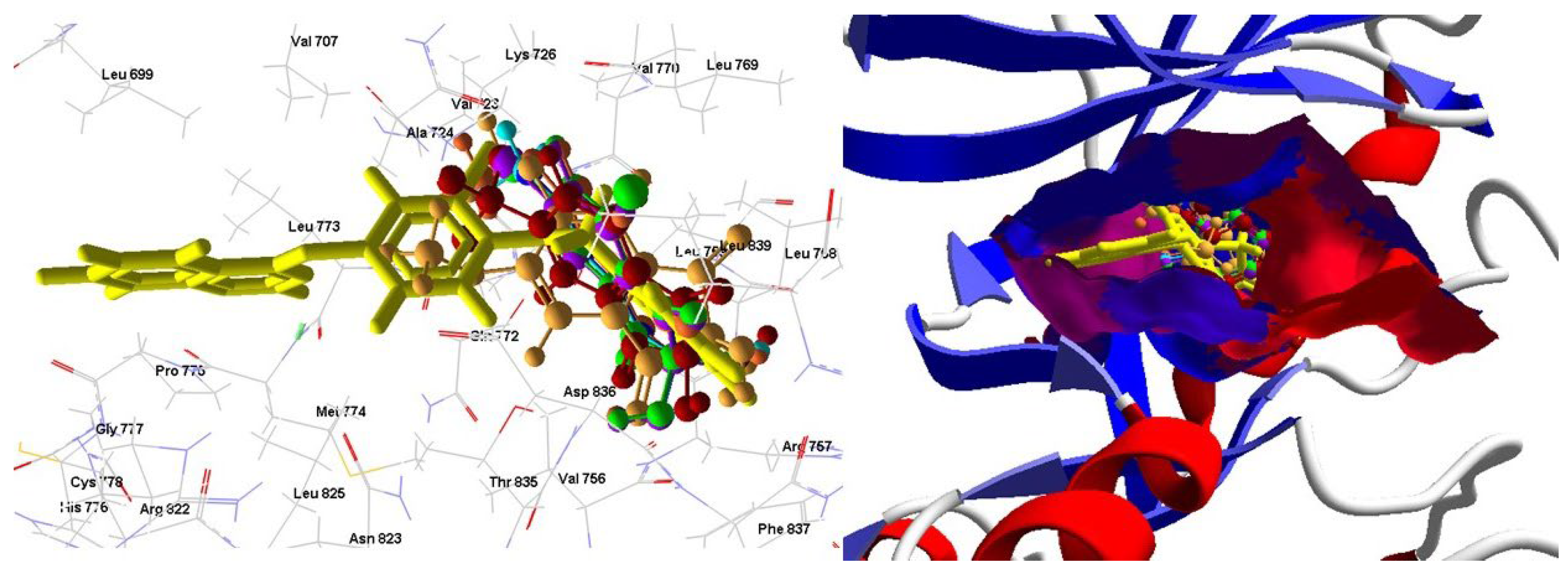
3.2.1. Tyrosine Protein Kinase Family
HER1
HER2
HER3
HER4
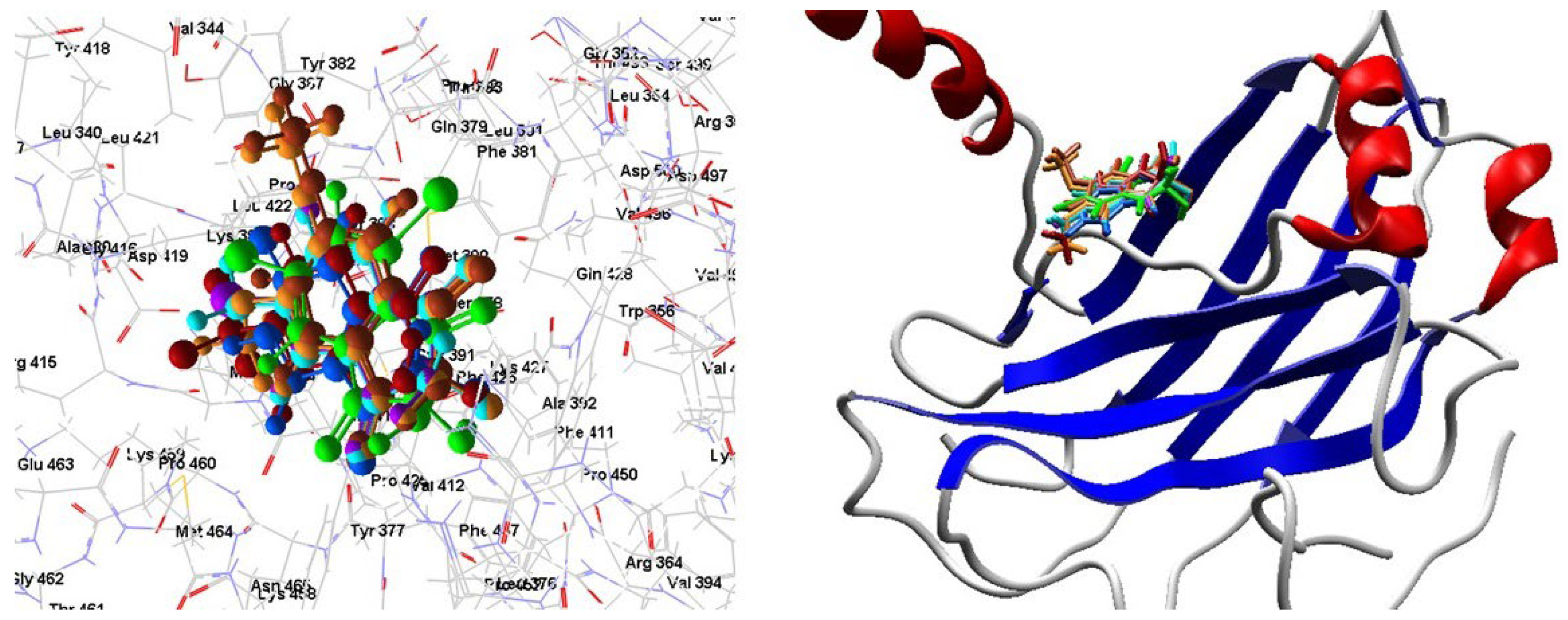
3.2.2. Lymphotoxin Beta Receptor (LTβR)
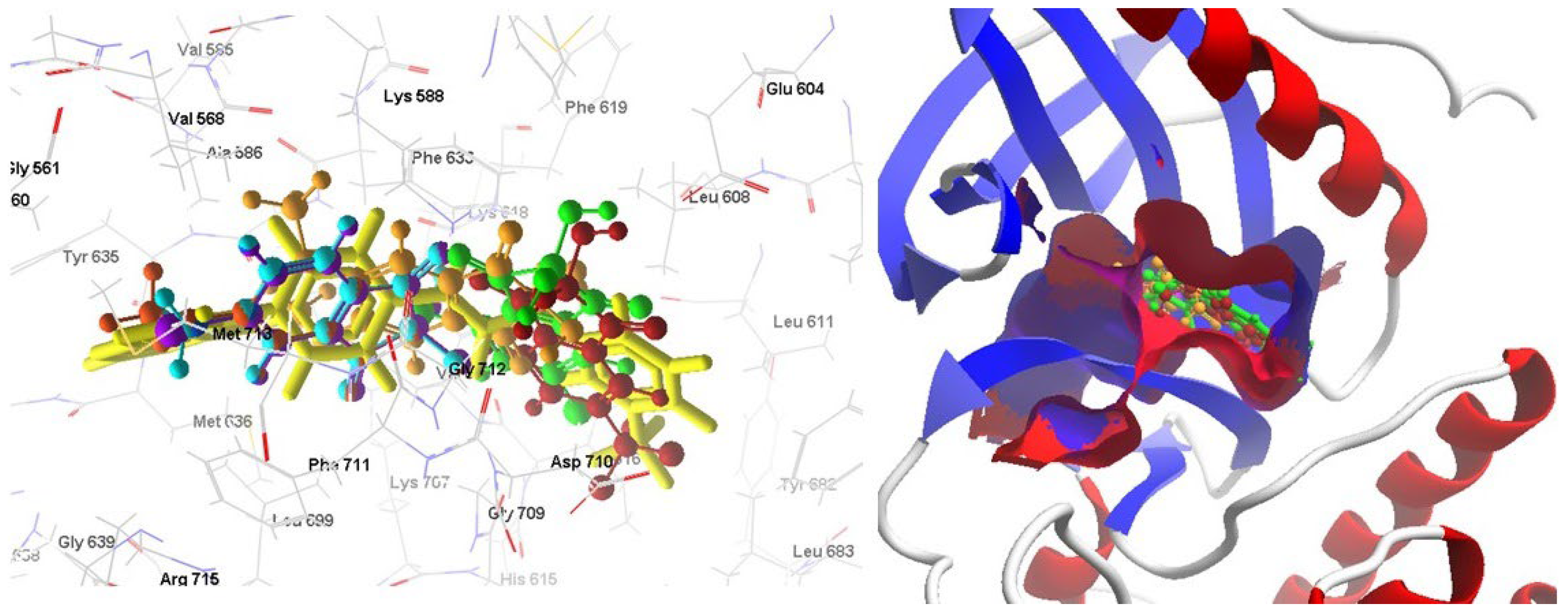
3.2.3. Tropomyosin Tyrosine Kinase Family
Trk-B
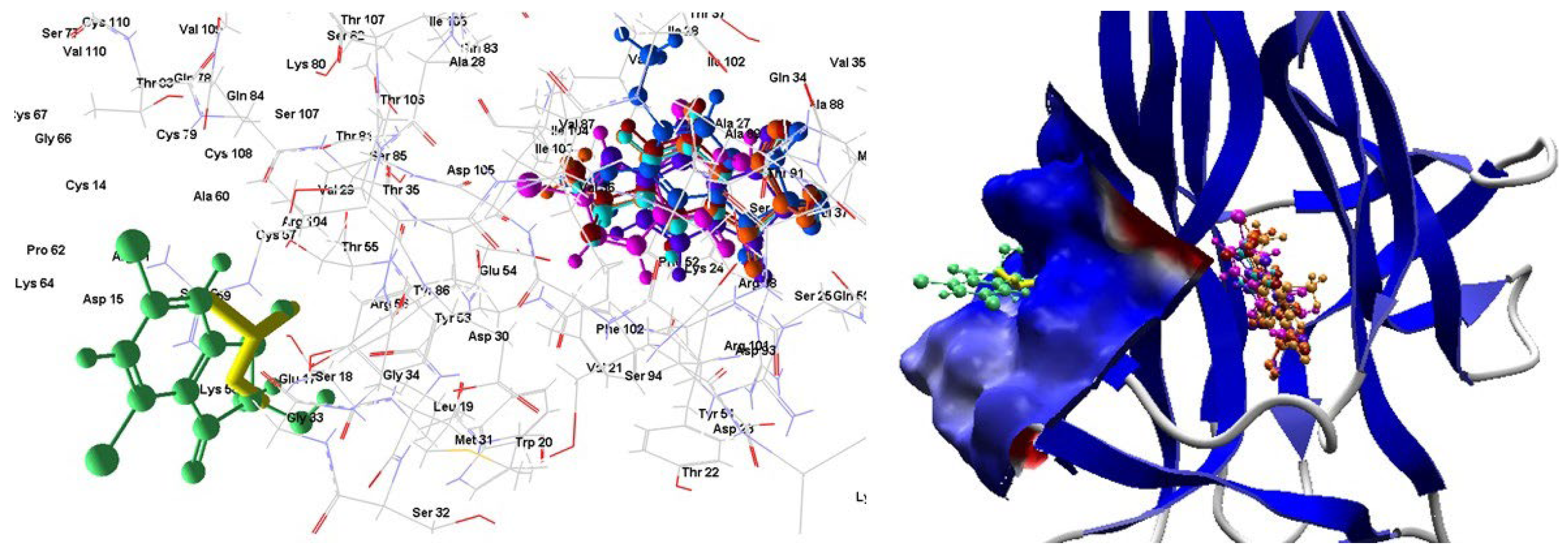
BDNF/NT-3
3.2.4. Peroxisome Proliferator-Activated Receptors (PPAR-α)
4. Conclusions
Supplementary Materials
Author Contributions
Funding
Data Availability Statement
Conflicts of Interest
Abbreviations
| HER | Human Epidermal Growth Factor Receptor |
| Trk-B | Tropomyosin receptor kinase B |
| BDNF | Brain-Derived Neurotrophic Factor |
| NT-3 | Neurotrophin-3 |
| LTβR | Lymphotoxin Beta Receptor |
| PPAR | Peroxisome Proliferator-Activated Receptor |
| MCF7 | Michigan Cancer Foundation—7 |
| SAR | Structure-activity studies |
| DMSO | Dimethyl sulfoxide |
| NBS | N-bromosuccinimide |
| DS | docking scores |
References
- Vavaiya, P.P.; Malviya, N.J.; Alshehri, A.A.; Alqarni, M.; Varu, H.L. The reaction of Ninhydrin Revisited: Applications in quantification of analytes, active pharmaceutical ingredients and amino acids. J. Mol. Struct. 2025, 1350, 144034. [Google Scholar] [CrossRef]
- Das, S. Recent applications of ninhydrin in multicomponent reactions. RSC Adv. 2020, 10, 18875–18906. [Google Scholar] [CrossRef] [PubMed]
- Das, A.; Banik, B.K. Chapter 6—Microwave-assisted oxidation and reduction reactions. In Advances in Green and Sustainable Chemistry; Microwaves in Chemistry Applications; Elsevier: Amsterdam, The Netherlands, 2021; pp. 199–244. [Google Scholar] [CrossRef]
- Lennard, C. Forensic sciences: Fingerprint techniques. In Module in Chemistry, Molecular Sciences and Chemical Engineering; Elsevier: Amsterdam, The Netherlands, 2013; pp. 1–10. [Google Scholar]
- Pierzynowski, S.G.; Wychowański, P.; Szczesny, W.; Galloto, R.; Zaworski, K.; Szkopek, D.; Woliński, J.; Donaldson, J.; Pierzynowska, K. Algorithm and ninhydrin method allow for measurement of the postprandial appearance of peptides in blood. Sci. Rep. 2025, 15, 19704. [Google Scholar] [CrossRef] [PubMed]
- Liu, J.; Liu, L.; Zhang, H. Research progress of fluorescent particle suspension technique for the visualization of latent handprints. New Chem. Mater. 2025, 53, 26–32. [Google Scholar]
- Menon, L.V.; Manoj, E. Three novel Schiff bases based on ninhydrin: Synthesis, characterization, DFT, anticancer, antibacterial and molecular docking studies. J. Mol. Struct. 2025, 1330, 141497. [Google Scholar] [CrossRef]
- Qureshi, S.; Al-Shabanah, O.A.; Al-Bekairi, A.M.; Al-Harbi, M.M.; Al-Gharably, N.M.; Raza, M. Studies on the cytotoxic, biochemical and anti-carcinogenic potentials of ninhydrin on Ehrlich ascites carcinoma cell-bearing Swiss albino mice. Investig. New Drugs 2000, 18, 221–230. [Google Scholar] [CrossRef] [PubMed]
- De, S.; Ashok Kumar, S.K. Development of highly potent Arene-Ru(II)-ninhydrin complexes for inhibition of cancer cell growth. Inorg. Chim. Acta 2020, 508, 119641. [Google Scholar] [CrossRef]
- Tahermansouri, H.; Abedi, E. One-pot Functionalization of Short Carboxyl Multi-walled Carbon Nanotubes with Ninhydrin and Thiourea via Microwave and Thermal Methods and Their Effect on MKN-45 and MCF7 Cancer Cells. Fuller. Nanotub. Carbon Nanostruct. 2014, 22, 834–844. [Google Scholar] [CrossRef]
- Hansen, D.B.; Joullié, M.M. The development of novel ninhydrin analogues. Chem. Soc. Rev. 2005, 34, 408–417. [Google Scholar] [CrossRef] [PubMed]
- Lipinski, C.A.; Lombardo, F.; Dominy, B.W.; Feeney, P.J. Experimental and computational approaches to estimate solubility and permeability in drug discovery and development settings. Adv. Drug Deliv. Rev. 1997, 23, 3–25. [Google Scholar] [CrossRef]
- Park, B.K.; Kitteringham, N.R.; O’Neill, P.M. Metabolism of fluorine-containing drugs. Annu. Rev. Pharmacol. Toxicol. 2001, 41, 443–470. [Google Scholar] [CrossRef] [PubMed]
- Müller, K.; Faeh, C.; Diederich, F. Fluorine in pharmaceuticals: Looking beyond intuition. Science 2007, 317, 1881–1886. [Google Scholar] [CrossRef] [PubMed]
- Hagmann, W.K. The many roles for fluorine in medicinal chemistry. J. Med. Chem. 2008, 51, 4359–4369. [Google Scholar] [CrossRef] [PubMed]
- Kalgutkar, A.S.; Soglia, J.R. Minimising the potential for metabolic activation in drug discovery. Expert Opin. Drug Metab. Toxicol. 2005, 1, 91–142. [Google Scholar] [CrossRef] [PubMed]
- Marminon, C.; Nacereddine, A.; Bouaziz, Z.; Nebois, P.; Jose, J.; Le Borgne, M. Microwave-assisted oxidation of indan-1-ones into ninhydrins. Tetrahedron Lett. 2015, 56, 1840–1842. [Google Scholar] [CrossRef]
- Guedat, P.; Boissy, G.; Borg-Capra, C.; Colland, F.; Daviet, L.; Formstecher, E.; Jack, X.; Rain, J.-C.; Delansorne, R.; Peretto, I.; et al. Inhibitors of Cysteine Proteases, the Pharmaceutical Compositions Thereof and Their Therapeutic Applications. Current Patent Assignee: HYBRIGENICS EP1798232, 20 June 2007, Location in patent: Page/Page Column 19. Available online: https://worldwide.espacenet.com/patent/search/family/036282596/publication/EP1798232A1?q=pn%3DEP1798232 (accessed on 8 June 2026).
- Kornblum, N.; Powers, J.W.; Anderson, G.J.; Jones, W.J.; Larson, H.O.; Levand, O.; Weaver, W.M. A new and selective method of oxidation. J. Am. Chem. Soc. 1957, 79, 6562. [Google Scholar] [CrossRef]
- Kornblum, N.; Jones, W.J.; Anderson, G.J. A new and selective method of oxidation. The conversion of alkyl halides and alkyl tosylates to aldehydes. J. Am. Chem. Soc. 1959, 81, 4113–4114. [Google Scholar] [CrossRef]
- Joullié, M.M.; Thompson, T.R.; Nemeroff, N.H. Ninhydrin and ninhydrin analogs. Syntheses and applications. Tetrahedron 1991, 47, 8791–8830. [Google Scholar] [CrossRef]
- Heffner, R.J.; Joullié, M.M. Synthetic routes to ninhydrins. Preparation of ninhydrin, 5-methoxyninhydrin, and 5-(methylthio)ninhydrin. Synth. Commun. 1991, 21, 2231–2256. [Google Scholar] [CrossRef]
- Tatsugi, J.; Izawa, Y. A convenient one-pot synthesis of indane-1,2,3-triones by oxidation of indan-1-ones with N-bromosuccinimide-dimethyl sulfoxide reagent. Chem. Lett. 1998, 28, 859–864. [Google Scholar] [CrossRef]
- Chen, M.; Sharma, A.; Lin, Y.; Wu, Y.; He, Q.; Gu, Y.; Xu, Z.P.; Monteiro, M.; Gu, W. Insulin and epithelial growth factor (EGF) promote programmed death ligand 1 (PD-L1) production and transport in colon cancer stem cells. BMC Cancer 2019, 19, 153. [Google Scholar] [CrossRef] [PubMed]
- Miricescu, D.; Totan, A.; Stanescu-Spinu, I.-I.; Badoiu, S.C.; Stefani, C.; Greabu, M. PI3K/AKT/mTOR signaling pathway in breast cancer: From molecular landscape to clinical aspects. Int. J. Mol. Sci. 2021, 22, 173. [Google Scholar] [CrossRef] [PubMed]
- Xia, P.; Xu, X.Y. PI3K/Akt/mTOR signaling pathway in cancer stem cells: From basic research to clinical application. Am. J. Cancer Res. 2015, 5, 1602–1609. [Google Scholar] [PubMed] [PubMed Central]
- Rivera, C.; Li, H.; Thomas-Crusells, J.; Lahtinen, H.; Viitanen, T. BDNF-induced TrkB activation down-regulates the K+-Cl− cotransporter KCC2 and impairs neuronal Cl− extrusion. J. Cell Biol. 2002, 159, 747–752. [Google Scholar] [CrossRef] [PubMed]
- Kue, C.S.; Kamkaew, A.; Voon, S.H.; Kiew, L.V.; Chung, L.Y.; Burgess, K.; Lee, H.B. Targeted delivery of a peptidomimetic ligand-photosensitizer kinase C tropomyosin receptor conjugate induces an antitumor immune response after photodynamic therapy. Sci. Rep. 2016, 6, 37209. [Google Scholar] [CrossRef] [PubMed]
- Jin, W. Role of JAK/STAT3 signaling in the regulation of metastasis, the transition of cancer stem cells, and chemoresistance of cancer by epithelial-mesenchymal transition. Cells 2020, 9, 217. [Google Scholar] [CrossRef] [PubMed]
- Kuramoto, K.; Yamamoto, M.; Suzuki, S.; Togashi, K.; Sanomachi, T.; Kitanaka, C.; Okada, M. Inhibition of the lipid droplet-peroxisome proliferator-activated receptor α axis suppresses cancer stem cell properties. Genes 2021, 12, 99. [Google Scholar] [CrossRef] [PubMed]
- Tyagi, S.; Gupta, P.; Saini, A.S.; Kaushal, C.; Sharma, S. The peroxisome proliferator-activated receptor: A family of nuclear receptors role in various diseases. J. Adv. Pharm. Technol. Res. 2011, 2, 236–240. [Google Scholar] [CrossRef] [PubMed]
- Laudadio, E.; Mobbili, G.; Sorci, L.; Galeazzi, R.; Minnelli, C. Mechanistic insight toward EGFR activation induced by ATP: Role of mutations and water in ATP binding patterns. J. Biomol. Struct. Dyn. 2023, 41, 6492–6501. [Google Scholar] [CrossRef] [PubMed]
- Venkateswaran, S.; Manivannan, H.P.; Francis, A.P.; Veeraraghavan, V.P.; Sankaran, K. Identification of potential phytochemical inhibitors from Conium maculatum targeting the epidermal growth factor receptor in metastatic colorectal cancer via molecular docking analysis. Cureus 2023, 15, e48000. [Google Scholar] [CrossRef] [PubMed]
- Maldonado, J.; Oliva, A.; Guzmán, L.; Molinari, A.; Acevedo, W. Synthesis, anticancer activity, and docking studies of novel hydroquinone-chalcone-pyrazoline hybrid derivatives. Int. J. Mol. Sci. 2024, 25, 7281. [Google Scholar] [CrossRef] [PubMed]
- Ibrahim, M.T.; Uzairu, A. Theoretical validation of some third-generation epidermal growth factor receptor (EGFR) inhibitors as non-small cell lung cancer (NSCLC) drugs. J. Taibah Univ. Med. Sci. 2023, 10, 329–341. [Google Scholar] [CrossRef]
- Ahsan, M.J.; Yadav, R.; Jadav, S.S. Synthesis, anticancer activity and molecular docking studies of newer quinoline analogues. In The Book of Abstract of 1st International Electronic Conference on Medicinal Chemistry; MDPI: Basel, Switzerland, 2015; Volume 2, pp. 1–17. [Google Scholar]
- Radwan, A.A.; Alanazi, F.; Al-Dhfyan, A. Bioinformatics-driven discovery of novel EGFR kinase inhibitors as anti-cancer therapeutics: In silico screening and in vitro evaluation. PLoS ONE 2024, 19, e0298326. [Google Scholar] [CrossRef] [PubMed]
- Abdullahi, S.H.; Uzairu, A.; Shallangwa, G.A.; Uba, S.; Umar, A.B. In-silico activity prediction, structure-based drug design, molecular docking and pharmacokinetic studies of selected quinazoline derivatives for their antiproliferative activity against triple negative breast cancer (MDA-MB231) cell line. Bull. Natl. Res. Cent. 2022, 46, 2. [Google Scholar] [CrossRef]
- Ibrahim, M.T.; Uzairu, A.; Uba, S.; Shallangwa, G.A. Design of more potent quinazoline derivatives as EGFRWT inhibitors for the treatment of NSCLC: A computational approach. Future J. Pharm. Sci. 2021, 7, 140. [Google Scholar] [CrossRef]
- Abdellattif, M.H.; Assy, M.G.; Elfarargy, A.; Ramadan, F.; Elgendy, M.S.; Emwas, A.-H.M.; Jaremko, M.; Shehab, W.S. Novel candidates synthesis of indenopyrazole, indenoazine and indenothiophene, with anticancer and in silico studies. Future Med. Chem. 2024, 16, 1429–1447. [Google Scholar] [CrossRef] [PubMed]
- Dera, A.A.; Zaib, S.; Areeba; Hussain, N.; Rana, N.; Javed, H.; Khan, I. Identification of Potent Inhibitors Targeting EGFR and HER3 for Effective Treatment of Chemoresistance in Non-Small Cell Lung Cancer. Molecules 2023, 28, 4850. [Google Scholar] [CrossRef] [PubMed]
- Wadi, J.; Sagheer, O. Mulberroside A could serve as a pan inhibitor for the tyrosine kinase domains of the HER family. F1000Research 2022, 11, 1201. [Google Scholar] [CrossRef]
- Sonar, P.; Shaikh, K.; Ballav, S.; Basu, S.; Harer, S. Comparative docking analysis of tyrosine kinase inhibitors with HER2 and HER4 receptors. Bioinformation 2022, 18, 974–981. [Google Scholar] [CrossRef] [PubMed]
- Sahu, A.; Patra, P.K.; Yadav, M.K.; Varma, M. Identification and characterization of ErbB4 kinase inhibitors for effective breast cancer therapy. J. Recept. Signal Transduct. 2017, 37, 470–480. [Google Scholar] [CrossRef] [PubMed]
- Zaraei, S.O.; Sbenati, R.M.; Alach, N.N.; Anbar, H.S.; El-Gamal, R.; Tarazi, H.; Shehata, M.K.; Abdel-Maksoud, M.S.; Oh, C.H.; El-Gamal, M.I. Discovery of first-in-class imidazothiazole-based potent and selective ErbB4 (HER4) kinase inhibitors. Eur. J. Med. Chem. 2021, 224, 113674. [Google Scholar] [CrossRef] [PubMed]
- Haybaeck, J.; Zeller, N.; Wolf, M.J.; Weber, A.; Wagner, U.; Kurrer, M.O.; Bremer, J.; Iezzi, G.; Graf, R.; Clavien, P.-A.; et al. A lymphotoxin-driven pathway to hepatocellular carcinoma. Cancer Cell 2009, 16, 295–308. [Google Scholar] [CrossRef] [PubMed]
- Hu, D.; Mohanta, S.K.; Yin, C.; Peng, L.; Ma, Z.; Srikakulapu, P.; Grassia, G.; MacRitchie, N.; Dever, G.; Gordon, P.; et al. Artery tertiary lymphoid organs control aorta immunity and protect against atherosclerosis via vascular smooth muscle cell lymphotoxin β receptors. Immunity 2015, 42, 1100–1115. [Google Scholar] [CrossRef] [PubMed]
- Dejardin, E.; Droin, N.M.; Delhase, M.; Haas, E.; Cao, Y.; Makris, C.; Li, Z.W.; Karin, M.; Ware, C.F.; Green, D.R. The lymphotoxin-β receptor induces different patterns of gene expression via two NF-κB pathways. Immunity 2002, 17, 525–535. [Google Scholar] [CrossRef] [PubMed]
- Boehm, T.; Scheu, S.; Pfeffer, K.; Bleul, C.C. Thymic medullary epithelial cell differentiation, thymocyte emigration, and the control of autoimmunity require lympho-epithelial cross talk via LTβR. J. Exp. Med. 2003, 198, 757–769. [Google Scholar] [CrossRef] [PubMed]
- Li, Y.; Li, F.; Qin, D.; Chen, H.; Wang, J.; Wang, J.; Song, S.; Wang, C.; Wang, Y.; Liu, S.; et al. The role of brain derived neurotrophic factor in central nervous system. Front. Aging Neurosci. 2022, 14, 986443. [Google Scholar] [CrossRef] [PubMed]
- Leopold, A.V.; Chernov, K.G.; Shemetov, A.A.; Verkhusha, V.V. Neurotrophin receptor tyrosine kinases regulated with near-infrared light. Nat. Commun. 2019, 10, 1129. [Google Scholar] [CrossRef] [PubMed]
- Junior, V.S.; Fernandes, G.M.d.M.; de Oliveira-Cucolo, J.G.; Pavarino, E.C.; Goloni-Bertollo, E.M. Role of tropomyosin-related kinase B receptor and brain-derived neurotrophic factor in cancer. Cytokine 2020, 136, 155270. [Google Scholar] [CrossRef] [PubMed]
- Ateaque, S.; Merkouris, S.; Barde, Y.A. Neurotrophin signalling in the human nervous system. Front. Mol. Neurosci. 2023, 16, 1225373. [Google Scholar] [CrossRef] [PubMed]
- Chaldakov, G.N.; Aloe, L.; Yanev, S.G.; Fiore, M.; Tonchev, A.B.; Vinciguerra, M.; Evtimov, N.T.; Ghenev, P.; Dikranian, K. Trackins (Trk-targeting drugs): A novel therapy for different diseases. Pharmaceuticals 2024, 17, 961. [Google Scholar] [CrossRef] [PubMed]
- Haniu, M.; Montestruque, S.; Bures, E.J.; Talvenheimo, J.; Toso, R.; Lewis-Sandy, S.; Welcher, A.A.; Rohde, M.F. Interactions between brain-derived neurotrophic factor and the TrkB receptor. J. Biol. Chem. 1997, 272, 25296–25303. [Google Scholar] [CrossRef] [PubMed]
- Kaupang, Å.; Hildonen, S.; Halvorsen, T.G.; Mortén, M.; Vik, A.; Hansen, T.V. Involvement of covalent interactions in the mode of action of PPARβ/δ antagonists. RSC Adv. 2015, 5, 76483–76490. [Google Scholar] [CrossRef]
- Wang, Y.J. Antcins, triterpenoids from Antrodia cinnamomea, as new agonists for peroxisome proliferator-activated receptor α. J. Food Drug Anal. 2019, 27, 295–304. Available online: https://www.ebi.ac.uk/biostudies/studies/S-EPMC9298643 (accessed on 8 June 2026). [CrossRef] [PubMed]
- Capelli, D.; Cerchia, C.; Montanari, R.; Loiodice, F.; Tortorella, P.; Laghezza, A.; Cervoni, L.; Pochetti, G.; Lavecchia, A. Structural basis for PPAR partial or full activation revealed by a novel ligand binding mode. Sci. Rep. 2016, 6, 34792. [Google Scholar] [CrossRef] [PubMed]



 | ||||||
|---|---|---|---|---|---|---|
| Compound | R1 | R2 | R3 | R4 | Yield (%) | Comments |
| 1 | -H | -OMe | -H | -OMe | 34 | Known (67% yield) [17] |
| 2 | -H | -OMe | -H | -H | 48 | First synthesized |
| 3 | -H | -Me | -H | -H | 52 | Known (87% yield) [17] |
| 4 | -H | -CF3 | -H | -H | 38 | First synthesized |
| 5 | -H | -Br | -H | -H | 51 | Known (86% yield) [17] |
| 6 | -H | -F | -H | -H | 34 | Known (80% yield) [17] |
| 7 | -Cl | -H | -Cl | -H | 39 | First synthesized |
Disclaimer/Publisher’s Note: The statements, opinions and data contained in all publications are solely those of the individual author(s) and contributor(s) and not of MDPI and/or the editor(s). MDPI and/or the editor(s) disclaim responsibility for any injury to people or property resulting from any ideas, methods, instructions or products referred to in the content. |
© 2026 by the authors. Licensee MDPI, Basel, Switzerland. This article is an open access article distributed under the terms and conditions of the Creative Commons Attribution (CC BY) license.
Share and Cite
Kovrizhina, A.R.; Khlebnikov, A.I. Synthesis and In Silico Evaluation of the Ninhydrin Derivatives Interaction with Target Proteins Involved in Cancer Pathogenesis and Progression. Organics 2026, 7, 26. https://doi.org/10.3390/org7020026
Kovrizhina AR, Khlebnikov AI. Synthesis and In Silico Evaluation of the Ninhydrin Derivatives Interaction with Target Proteins Involved in Cancer Pathogenesis and Progression. Organics. 2026; 7(2):26. https://doi.org/10.3390/org7020026
Chicago/Turabian StyleKovrizhina, Anastasia R., and Andrei I. Khlebnikov. 2026. "Synthesis and In Silico Evaluation of the Ninhydrin Derivatives Interaction with Target Proteins Involved in Cancer Pathogenesis and Progression" Organics 7, no. 2: 26. https://doi.org/10.3390/org7020026
APA StyleKovrizhina, A. R., & Khlebnikov, A. I. (2026). Synthesis and In Silico Evaluation of the Ninhydrin Derivatives Interaction with Target Proteins Involved in Cancer Pathogenesis and Progression. Organics, 7(2), 26. https://doi.org/10.3390/org7020026