Article

A Novel Class of Functionally Tuneable Star-Shaped Molecules for Interaction with Multiple Proteins

1
Department of Chemistry, Indian Institute of Technology Palakkad, Palakkad 678557, India
2
Environmental Sciences and Sustainable Engineering Center, Indian Institute of Technology Palakkad, Palakkad 678557, India
*
Author to whom correspondence should be addressed.
Organics 2023, 4(2), 219-231; https://doi.org/10.3390/org4020018
Submission received: 31 March 2023 / Revised: 7 May 2023 / Accepted: 12 May 2023 / Published: 16 May 2023
(This article belongs to the Collection Advanced Research Papers in Organics)

Abstract

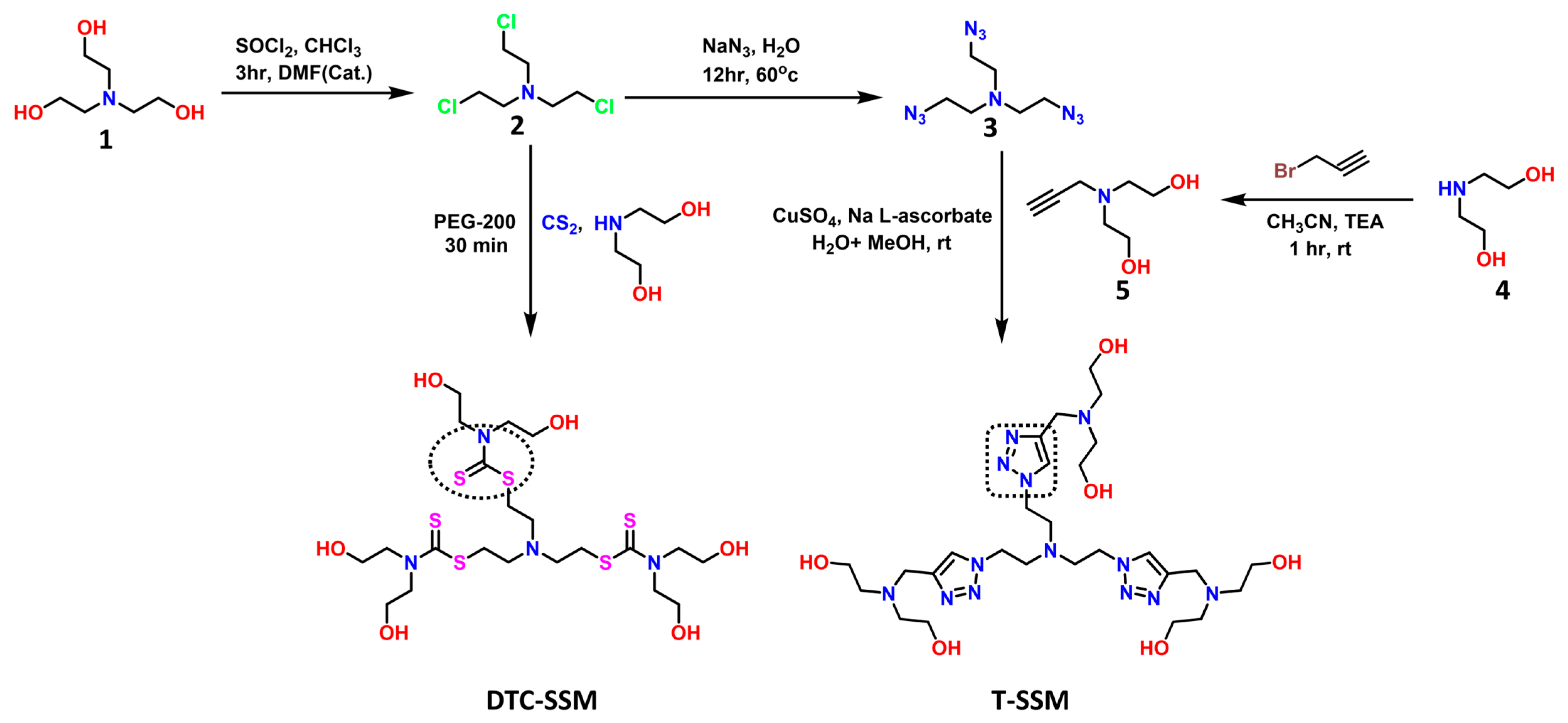
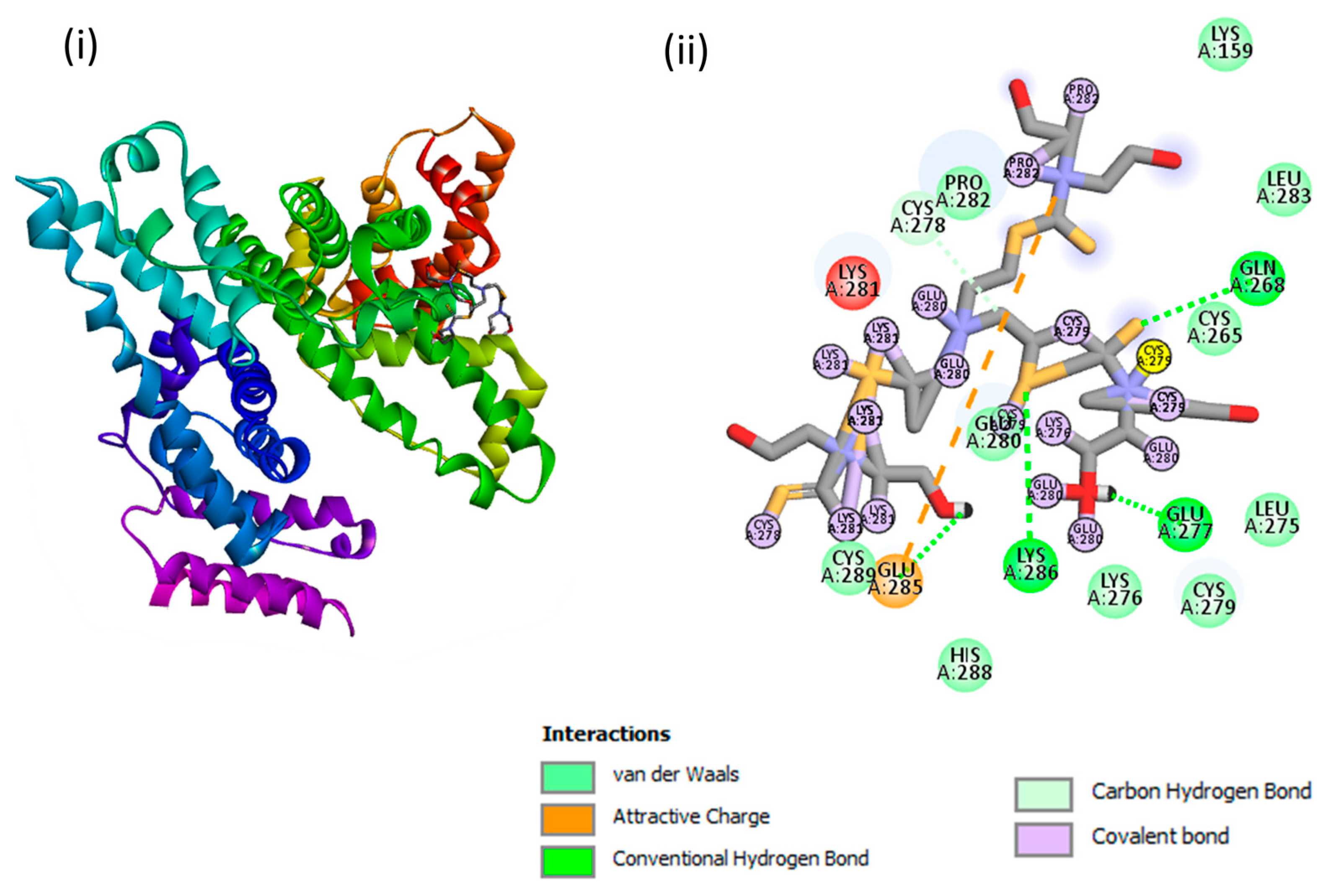
Molecules with tuneable properties are well known for their applications in the material and bio-medical fields; nevertheless, the structural and functional tunability makes them more significant in diverse applications. Herein, we designed and synthesized a novel class of star-shaped molecules via incorporating two important functional groups, i.e., triazole and dithiocarbamate (DTC). The rationale behind selecting these two key functional groups is their diverse applications, e.g., DTC having applications for therapeutics, pesticides, and vulcanizing agents, and triazole having applications for anti-cancer, fungicides, anti-microbials, inhibitors, etc. The structure of the molecules was strategically designed in such a way that their overall structures are the same (central tertiary-amine and peripheral hydroxy groups), except the key functional group (DTC and triazole) in the respective molecules was different. Following synthesis and characterization, the influence of DTC and triazole groups on their bioactivity was compared via interacting with the most abundant proteins present in the blood, including serum albumin, trypsin, haemoglobin, and ribonuclease. From both the experimental and molecular docking studies, it was confirmed that the triazole molecule has a higher binding affinity towards these proteins as compared to the DTC molecule. In summary, two star-shaped DTC- and triazole-based molecules were synthesized and their bioactivity was compared via binding with blood plasma proteins.
Keywords: star-shaped molecule; dithiocarbamate; triazole; tuneable property; protein interaction star-shaped molecule; dithiocarbamate; triazole; tuneable property; protein interaction