Article

Evaluating Binary Serialization Protocols for IoT/M2M Applications over Hybrid Terrestrial and Non-Terrestrial Networks

by
Natesh Kumar
1,
Mariano Falcitelli
2,*,
Francesco Kotopulos De Angelis
3,
Paolo Pagano
2 and
Sandro Noto
2
1
Independent Researcher, 56100 Pisa, Italy
2
CNIT-National Inter-University Consortium for Telecommunications, Photonic Networks & Technologies National Laboratory, 56124 Pisa, Italy
3
Scuola Superiore Sant’Anna, Telecommunications, Computer Engineering, and Photonics Institute (TeCIP), 56127 Pisa, Italy
*
Author to whom correspondence should be addressed.
Telecom 2026, 7(2), 43; https://doi.org/10.3390/telecom7020043

Submission received: 24 February 2026 / Revised: 24 March 2026 / Accepted: 7 April 2026 / Published: 10 April 2026

Abstract

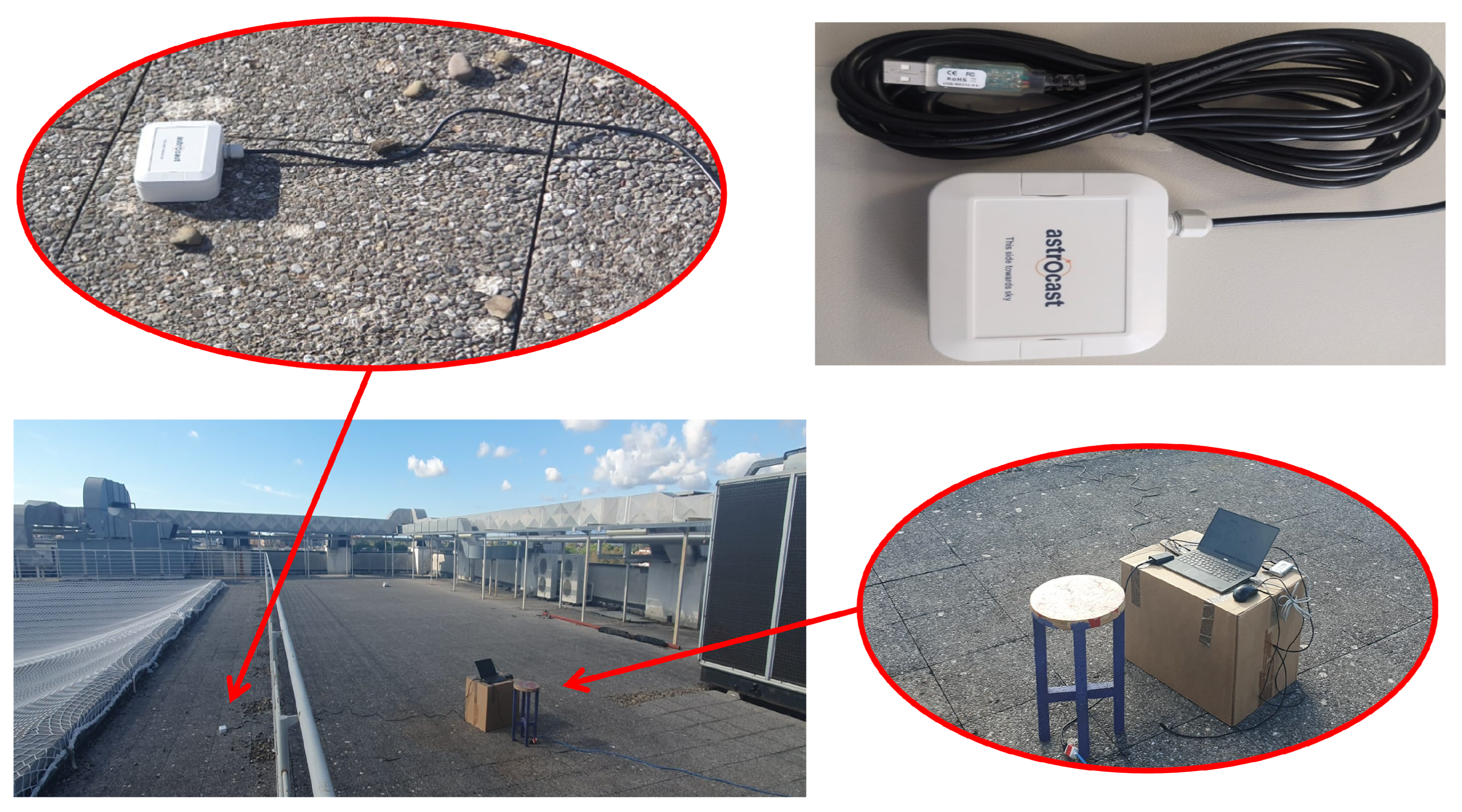
The rapid growth of Internet of Things (IoT) deployments in hybrid terrestrial/non-terrestrial networks (TN/NTN) faces a major bottleneck: the verbosity of standard data formats like JSON. This is critical for large-scale M2M systems tracking and monitoring multimodal dry containers, where devices must comply with the strict message-size limits of commercial satellite IoT (around 160 bytes per message). We present a comparative evaluation of four device-friendly binary serialization protocols (CBOR, MessagePack, Protocol Buffers, and a custom Struct+Zlib hybrid) targeted at battery-powered microcontrollers. Using a horizontally scalable testbed with up to 2000 concurrent devices and the oneM2M standard framework, we assess payload efficiency, throughput, latency, and maintainability. Only Protocol Buffers and Struct+Zlib meet NTN message-size limits, with Protocol Buffers providing the best trade-off between performance and long-term maintainability. Real-world validation with the Astrocast LEO satellite platform and the oneM2M Mobius framework confirms these results. Cost analysis suggests potential savings exceeding €62,000 per month for a 10,000-device maritime fleet, demonstrating both technical feasibility and economic viability. This study provides a methodological framework for designing efficient, scalable IoT systems in hybrid TN/NTN networks, offering practical guidance for global container tracking and monitoring deployments.
Keywords: Internet of Things; machine-to-machine; binary serialization; non-terrestrial networks; satellite IoT; Protocol Buffers; oneM2M; payload optimization; 5G NTN Internet of Things; machine-to-machine; binary serialization; non-terrestrial networks; satellite IoT; Protocol Buffers; oneM2M; payload optimization; 5G NTN