Review

Sugarcane Filter Cake: A Bibliometric Review of Traditional Uses and Its Potential as a Feedstock for Biorefinery and Biofuel Production

by
Wesley Araújo Passos
1,
Meirielly Jesus
2,
Hortência E. P. Santana
1,
Ingrid Vieira Fernandes
3,
Isadora Vieira Fernandes
4,
Joana Santos
2,*,
Fernando Mata
2,5,
Daniel Pereira Silva
1,2,3,6,7,* and
Denise Santos Ruzene
1,2,3,6
1
RENORBIO-Northeastern Biotechnology Network, Federal University of Sergipe, São Cristóvão 49107-230, SE, Brazil
2
CISAS-Center for Research and Development in Agrifood Systems and Sustainability, Instituto Politécnico de Viana do Castelo, 4900-347 Viana do Castelo, Portugal
3
Center for Exact Sciences and Technology, Federal University of Sergipe, São Cristóvão 49107-230, SE, Brazil
4
Center for Applied Agricultural Sciences, Federal University of Sergipe, São Cristóvão 49107-230, SE, Brazil
5
Estação Zootécnica Nacional, Instituto Nacional de Investigação Agrária e Veterinária, 2500-424 Santarém, Portugal
6
PROBIO-Graduate Program in Biotechnology, Federal University of Sergipe, São Cristóvão 49107-230, SE, Brazil
7
PPGPI-Graduate Program in Intellectual Property Science, Federal University of Sergipe, São Cristóvão 49107-230, SE, Brazil
*
Authors to whom correspondence should be addressed.
Fuels 2026, 7(3), 46; https://doi.org/10.3390/fuels7030046
Submission received: 2 May 2026 / Revised: 1 June 2026 / Accepted: 8 July 2026 / Published: 14 July 2026
(This article belongs to the Special Issue Biofuels and Bioenergy: New Advances and Challenges)

Abstract

Filter cake is a nutrient-rich solid byproduct generated during sugarcane juice clarification, representing both a challenge and an opportunity for the sugar–energy industry. This study presents a systematic bibliometric analysis of global research on filter cake valorization, with a particular focus on its potential for bioenergy and biofuel production. Data were retrieved from the Scopus database and analyzed using VOSviewer, resulting in a dataset of 530 publications up to 2024, of which 485 address recycling and reintegration pathways. The results identify Brazil and India as leading contributors, with research traditionally concentrated on agricultural applications. However, emerging trends highlight the growing interest in thermochemical and biochemical conversion routes, including its use as a substrate for biogas, bioethanol, and other biofuels. The findings demonstrate that filter cake is a promising feedstock for integrated biorefinery systems, contributing to renewable energy generation and resource recovery. Despite this potential, the transition toward advanced biofuel production and high-value energy applications remains limited. This review provides a comprehensive overview of research trends, identifies key gaps, and outlines strategic directions to support the shift from conventional waste management to energy-oriented valorization within a circular bioeconomy framework.

1. Introduction

The sugar–ethanol industry plays a key role on the global stage through the production of sugar and ethanol, widely consumed commodities. Sugarcane (Saccharum officinarum) is the primary feedstock for this agro-industrial sector [1]. It provides approximately 70% of all sugar produced worldwide [2] and is the second-most cultivated crop for bioethanol production [3], a renewable fuel that helps reduce greenhouse gas emissions [4].
Sugarcane is mainly cultivated in tropical regions and can regrow two to six times after the initial harvest [5]. Botanically, the aerial part of sugarcane comprises leaves, inflorescences, and stalk [6], which is the most valuable component as it contains sugar-rich juice. The stalk is typically composed of water, sucrose, and fiber, and the fibers, in turn, consist mainly of cellulose, hemicellulose, and lignin [7], providing mechanical resistance to the plant [8].
During photosynthesis, the process of converting CO2 and sunlight into energy, sugars are synthesized, distributed, and stored within the stalk [9,10,11]. Thus, among various important parameters, sugar content is considered the most economically relevant factor for the crop [9], as a wide range of valuable products can be derived from it. For example, sucrose-rich cane juice is crystallized to produce food-grade sugar crystals [12], whereas in other industrial processes, sugars are fermented using yeast to produce bioethanol [13]. Besides the main products, the industrial production of sugar and ethanol generates several byproducts, such as bagasse, ash, and filter cake [14]. Filter cake, also known as press mud, is a solid residue that results from the purification of the extracted juice [15]. In this process, the clear liquid rises while the filter cake settles at the bottom [16].
Filter cake contains proteins, sugars, fats, water, and lignocellulosic fibers [15,17], along with essential nutrients such as N, P, K, Ca, and Mg [18]. Its composition is influenced by factors such as soil type, the maturity stage of the cane at harvest, and juice treatment [18]. The chemical properties of the filter cake can vary depending on the type of clarifying agent used during the purification process. When sulfitation is employed, the filter cake exhibits acidic properties [19], whereas purification via carbonation produces an alkaline profile [16]. These variable chemical properties are significant as they allow this biomass to be effectively used as an agent for soil pH correction [20].
Despite the advantageous characteristics of filter cake, its improper disposal can lead to environmental problems, including soil and water pollution [21]. For instance, its microbial decomposition can produce acids that leach into and contaminate soils, in addition to releasing methane gas, which has a global warming potential 21 times greater than that of CO2 [22]. Crude filter cake may also present a high biochemical oxygen demand (BOD) due to its high content of organic matter and nutrients [23]. If these chemical components enter water bodies, the resulting increase in BOD can reduce dissolved oxygen concentration through microbial degradation of the organic matter [24], potentially leading to the death of fish and other aquatic life [25]. However, composting filter cake can reduce BOD to levels that are safe for agricultural use [26].
The generation of pollutant residues from the sugar–ethanol sector is expected to increase as global sugarcane production rises to meet the growing demand for bioethanol and sugar. The ten leading sugarcane-producing countries have a combined annual output of 1.556 billion tons of sugarcane [27], which is associated with massive residue generation, as, on average, 35 kg of filter cake are produced per ton of sugarcane processed [28]. In this scenario, recycling filter cake for various applications becomes a highly relevant alternative, with the potential to reduce environmental pollution while simultaneously enabling the production of multiple valuable products [29,30]. This sustainability focus has stimulated scientific research on filter cake applications in fields such as agriculture [31,32,33], environmental bioremediation [34,35,36], civil construction [37,38], biofuel production [39,40,41], thermal energy [42,43], the synthesis of bioproducts [44,45], and even animal nutrition [46,47]. Converting this low-cost biomass for biotechnological and commercial uses supports a circular bioeconomy [48].
Considering the information presented, this study aims to map the evolution, trends, and current state of scientific research on the utilization of sugarcane filter cake, particularly highlighting its potential in various applications. By showcasing the economic and environmental benefits of filter cake, this study contributes to the broader discourse on sustainability in various areas of research, fostering innovative and environmentally friendly waste management solutions.

2. Materials and Methods

The scientific articles for this present bibliometric analysis were retrieved from Scopus, one of the largest academic databases, which provides a broad view of global research output [49]. To perform this query, a strategic mix of keywords, Boolean operators, and quotation marks was used to refine the search. Logical operators were used to capture prefixes and suffixes of different words, while quotation marks captured multi-word terms.
Choosing the correct keywords is crucial for achieving results that align with the research objectives [50]. Based on these ideas, the following search query was used: TITLE-ABS-KEY ((“sugarcane” OR “sugar cane” OR “sugar-cane”) AND (“filter cake” OR “filtercake” OR “filter-cake” OR “press mud” OR “pressmud” OR “press-mud” OR “sugar-cane mud” OR “sugarcane mud” OR “sugar cane mud” OR “clarification sludge”)) AND DOCTYPE (ar).
The advanced search option was used to identify only research articles whose titles, abstracts, or keywords were relevant to the search query, thereby excluding patents, book chapters, conference papers, and review articles. To cover all studies focused on the theme, there were no restrictions on language or publication time. The resulting articles were then investigated qualitatively to ensure that they focused on sustainable filter cake reuse strategies. After removing results unrelated to the theme, the relevant articles were exported from Scopus in CSV format for analysis using the statistical software VOSviewer (version 1.6.20). The bibliometric analysis included the following indicators: sources, countries, institutions, keywords, and most cited articles, with the latter obtained from the Scopus database.

3. Results and Discussion

3.1. Unclassified Articles

The selected search identified a total of 530 articles published through the end of 2024 (search conducted in February 2025). Of this total, only 45 were not included in the bibliometric analysis, as they were outside the scope of this study. In this context, the use of the terms “sugarcane” and “filter cake” retrieved studies on filter cakes from other agricultural crops and on other sugarcane residues. For example, Melikoglu, Ozdemir, and Ates [51] investigated the thermochemical decomposition kinetics of residues such as sugarcane bagasse and filter cakes from orange and pomegranate to assess their renewable energy potential generation; Ma and Gao [52] developed a mathematical model of filter cake removal via membrane microfiltration to enhance the efficiency of sugarcane juice purification. Similarly, Costa et al. [53] extracted the flocculant protein 2S albumin from Moringa seeds using a CaCl2 solution to test its potential as an alternative to acrylamide in sugarcane juice clarification.
Studies exploring other residues from the industrial production of sugar and ethanol were also found. Radhakrishnan and Das [54] examined farmers’ views on using mill wastewater as fertilizer in cane fields; Hamad, Xu, and Liu [55] developed an eco-friendly drilling fluid using silica from sugarcane bagasse for applications in the oil and gas industry; and El-Sayed et al. [56] used ethanol-industry vinasse as an organic carbon source for Chlorella vulgaris production in a photobioreactor.

3.2. Selected Articles

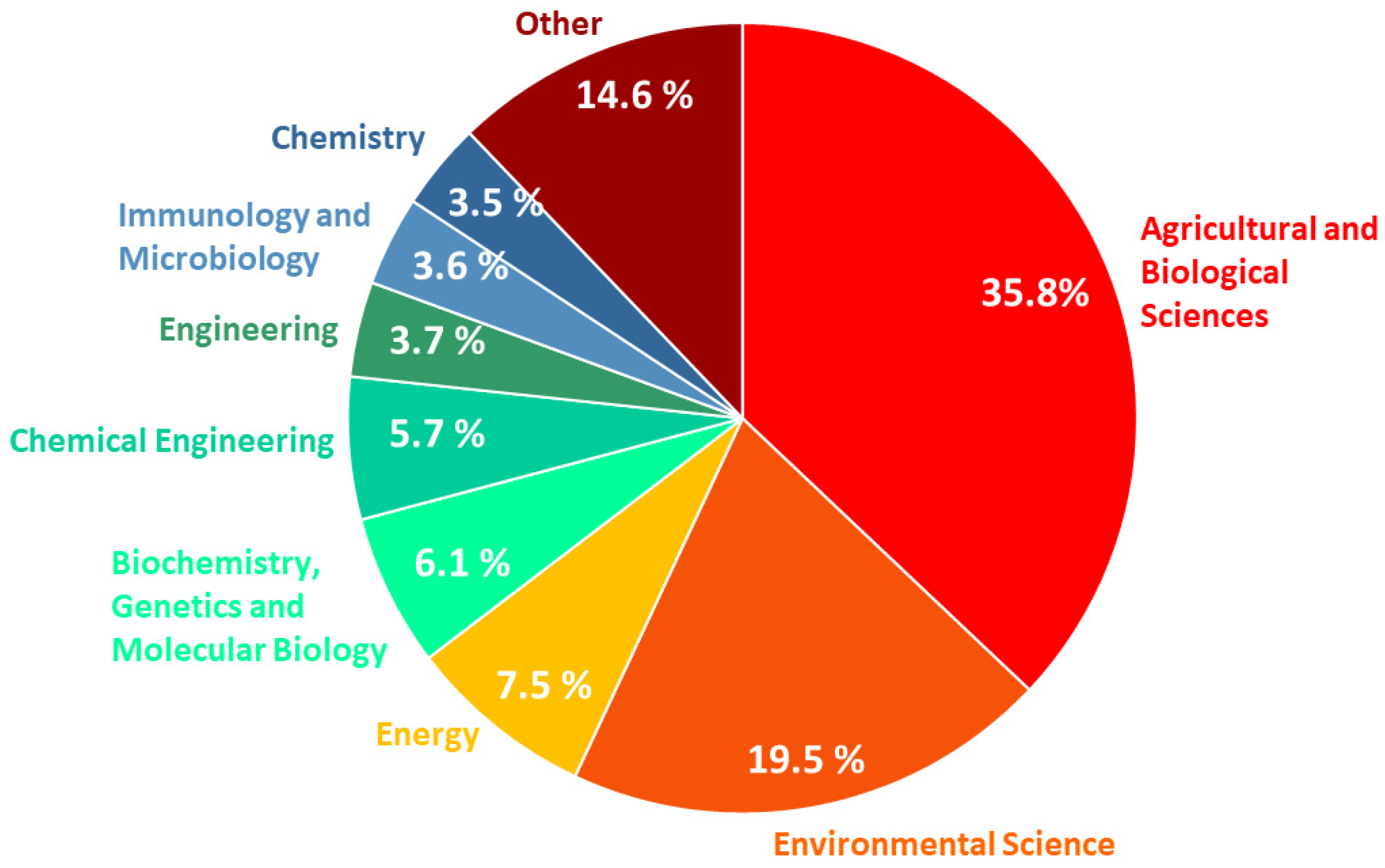
From the 530 articles retrieved, 485 fall within the scope of this study. These publications cover 22 academic research areas according to Scopus analysis, as shown in Figure 1. It should be highlighted that publications may simultaneously belong to more than one field of knowledge. For example, publications addressing the use of filter cake in the field of Agricultural and Biological Sciences may also belong to the area of Environmental Science, since both fields cover similar topics and are therefore related.
Agricultural and Biological Sciences and Environmental Science stood out among the others (Figure 1), indicating that most studies are linked to these areas. This highlight indicates that these areas are the most explored on the reuse of agro-industrial waste, which poses significant pollution risks when inadequately managed. Another possible reason for this highlight, particularly in the area of Agricultural and Biological Sciences, is that filter cake has great potential to be converted into a biofertilizer, reducing dependence on chemical fertilizers while generating economic and environmental benefits [57]. These attributes may stimulate the scientific community’s interest in further exploring its potential, thereby encouraging more publications in these areas.
According to Figure 1, the presence of diverse knowledge areas may be explained by the versatility of filter cake, which enables its reuse in various applications. For example, the work of Soares, Raniro, and Pavinato [58] falls under the Agricultural and Biological Sciences category, as it focuses on utilizing crude filter cake to enhance the solubilization of phosphate mineral fertilizers and increase phosphorus availability in soil for sugarcane cultivation. In contrast, Raimondi et al. [59] evaluated the potential of filter cake for adsorbing heavy metals (Pb and Zn) in mining areas, positioning their research within Environmental Science. On the other hand, the study by Pajampa and Wongwuttanasatian [60] is categorized in the Energy area, as the authors converted filter cake into a solid fuel (pellets) with varying proportions of sugarcane bagasse for steam generation in a boiler.
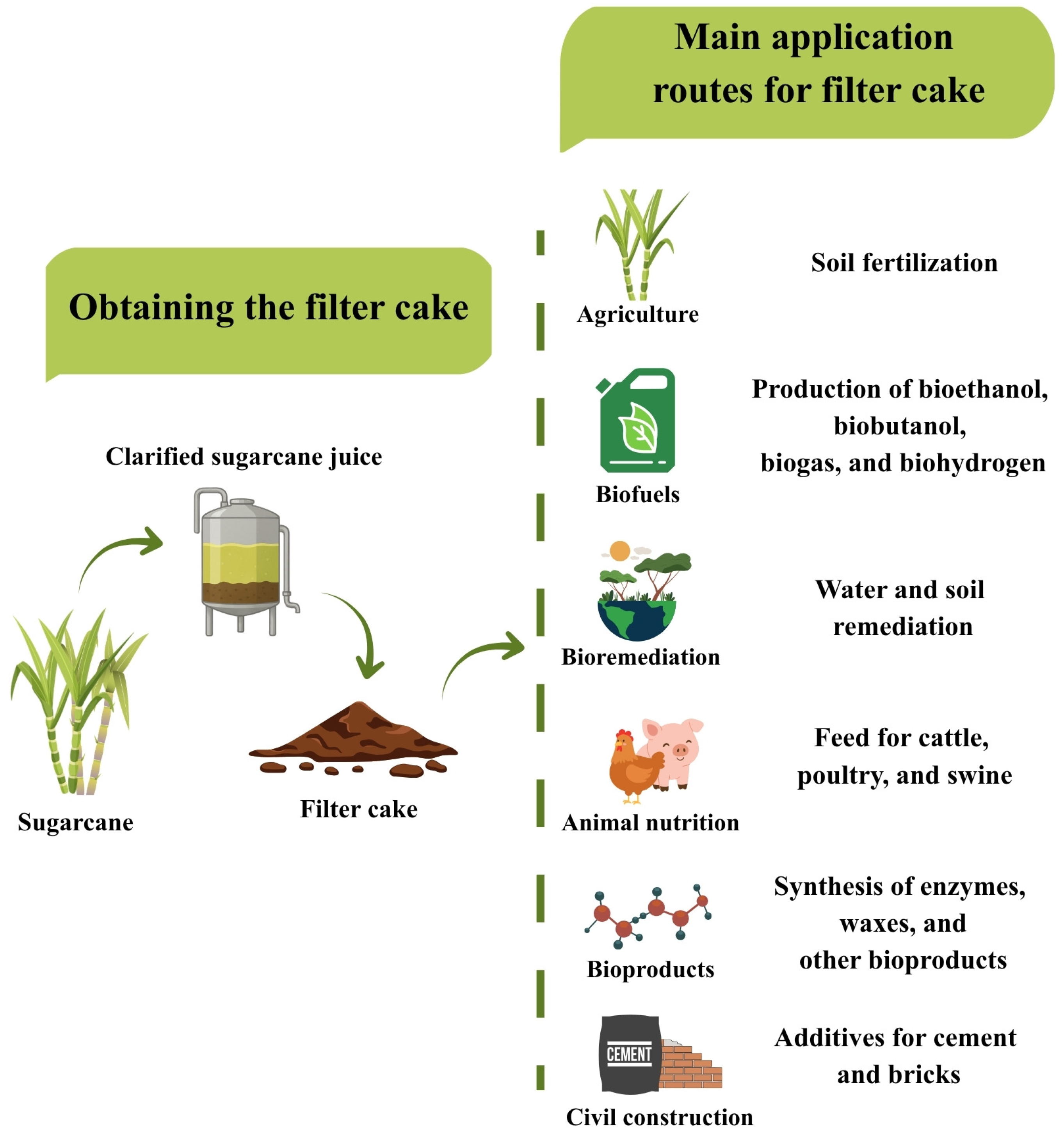
Despite the high biotechnological potential of filter cake, the economic viability of its large-scale valorization faces significant logistical challenges. The high moisture content (approximately 70–80%) and the seasonal nature of sugarcane production impose high transportation and storage costs, requiring bioeconomic processing units to be integrated into or located near sugar mills. Furthermore, the variability in the chemical composition of the cake, influenced by soil type and the clarification process used, requires robust and adaptable pretreatment processes to ensure efficiency in the production of second-generation biofuels or bioplastics. Figure 2 illustrates the various applications of filter cake across the different sectors identified in the analyses presented in this study.

Evolution of Publications

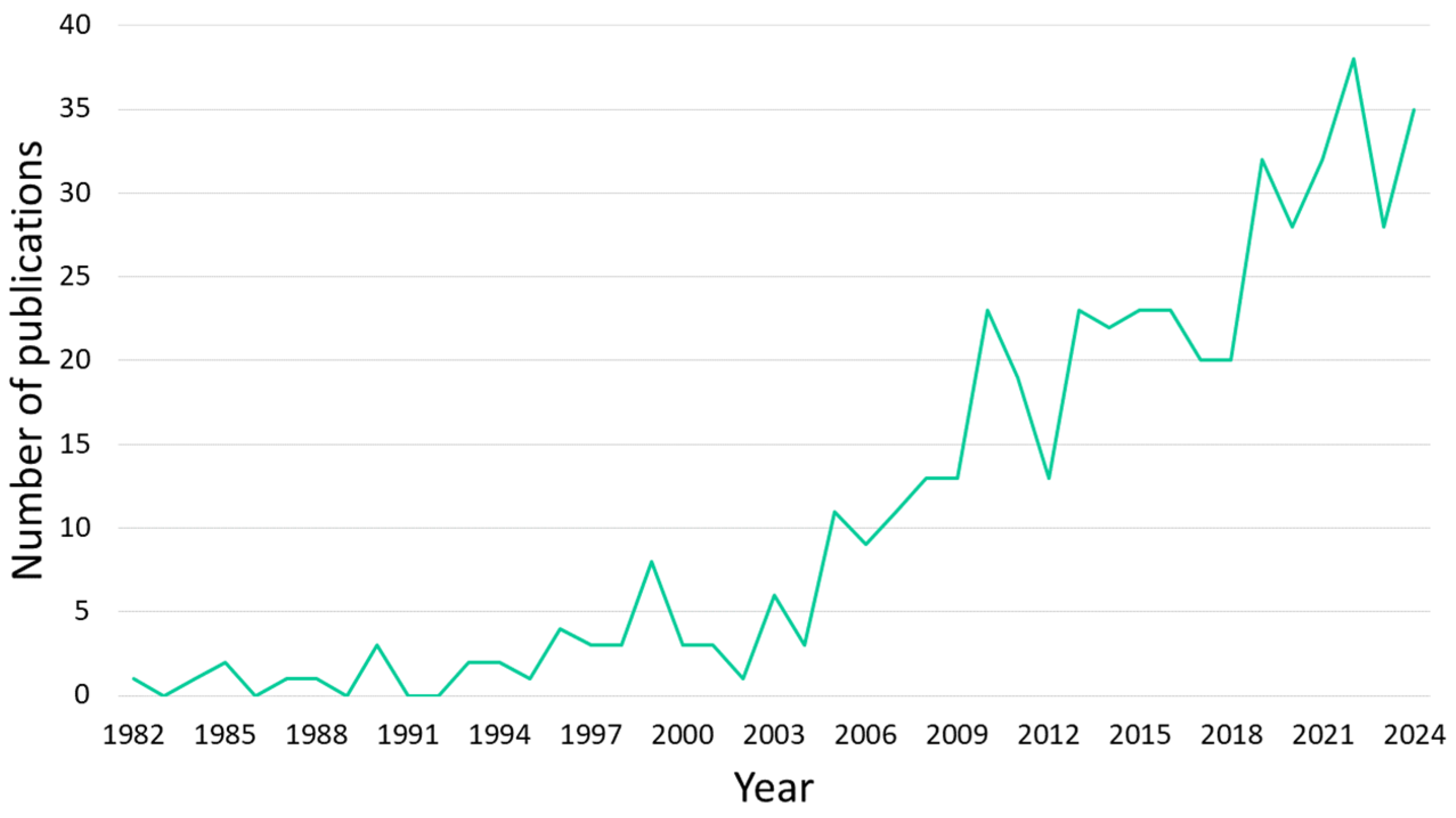
According to data from the research carried out, the first Scopus-indexed article on filter cake utilization was published in 1982, when Rai, Singh, and Prasad [61] evaluated the effect of a pyrite (FeS2) and filter cake fertilizer blend on chickpea production. They found that the fertilizer blend increased soil nitrogenase enzyme activity and iron content in plant nodules, significantly boosting grain yield. This shows that the first filter cake study was in agriculture, one of the oldest and most widely researched fields. In recent years, filter cake has also been studied in civil engineering as an additive in cement production [37] and brick manufacturing [38]. Studies on the use of filter cake biochar for soil and water remediation have also emerged [34,59,62,63,64]. Additionally, new investigations in the field of animal nutrition have also examined filter cake as an economical feed for swine [46], cattle [65], and poultry [66].
As shown in Figure 3, research on filter cake has increased significantly over time despite minor fluctuations. This growing trend is strongly linked to the significant increase in environmental pollution, which is largely due to the improper disposal of polluting waste. This consequently leads to the emergence of several studies focused on reducing environmental risks, specifically by minimizing agro-industrial waste. Another factor may be researchers’ interest in filter cake’s versatility, leading to studies that highlight its various applications.
Although the number of publications in 2024 was lower than that in 2022, it rose significantly from 2023 to 2024. This suggests that research on filter cake will likely continue to grow, driven by new findings and increasing environmental concerns.

3.3. Main Applications of Filter Cake

The articles within the scope of the topic presented a wide range of applications for sugarcane filter cake biomass. The main applications identified were: (i) agriculture, (ii) environmental bioremediation, (iii) biofuel production, (iv) synthesis of bioproducts, (v) civil construction, and (vi) animal nutrition.
Although bibliometric trends have identified several promising application pathways for filter cake, many studies remain in the early stages of development, such as those involving the synthesis of bioproducts in biorefineries for environmental remediation, construction, animal nutrition, and other uses. Notably, using filter cake as a biofertilizer in agricultural fields offers multiple economic and environmental benefits and is one of the most established applications, which explains the large volume of publications in this area (Figure 1). Conversely, energy scarcity, combined with climate change, largely driven by the burning of fossil fuels, has spurred research into bioenergy. For filter cake, these studies reveal promising opportunities for the energy sector, but they are still under development, mainly due to the lack of techno-economic feasibility studies, the need for pretreatment steps of the filter cake prior to fermentation or digestion routes, and challenges related to scaling up production. Consequently, while traditional agricultural applications continue to dominate the literature, innovative energy-driven alternatives are steadily emerging and gaining traction.

3.3.1. Agriculture

In the field of fruit cultivation, Ge et al. [67] investigated the use of composted filter cake (CFC) with plant-growth-promoting bacteria to improve mango yields on degraded arid soils. The application of 10 t/ha of bacteria-inoculated CFC increased organic carbon by 28% compared to untreated soil. CFC also enhanced soil chemical and biological properties, increasing N, P, and K availability and enzyme activities. These changes boosted mango yields by 66.3% and 60% in the first two seasons. Fruits showed a 25% higher °Brix value, 25.7% more vitamin C, and 20% greater pulp biomass. These results showed that CFC with microbes enhances soil quality and mango yields, promoting sustainable and cost-effective agriculture. On the other hand, Shankaraiah and Murthy [68] examined CFC combined with chemical fertilizer to improve sugarcane yields. Amending soil with 15 t/ha CFC and 100% NPK fertilizer (250:100:125 kg/ha) increased shoot counts and stem girth. This produced a sugarcane yield of 198 t/ha, a value 27.7% higher than the 155 t/ha with fertilizer alone. Moreover, the harvested sugarcane exhibited higher sugar yields (27.62 t/ha). They reported profits of 82.3 Rupees/ha and a benefit–cost ratio of 1:1.95, indicating CFC’s potential for increased net returns.
To improve the physicochemical properties of a weathered tropical soil, Eykelbosh et al. [69] tested pyrolyzed filter cake (biochar) and CFC as low-cost biofertilizers. The application of 5% biochar reduced soil CO2 losses from ~25 g to ~1 g, 23 times lower than those observed with CFC. Biochar macropores also improved soil porosity and water retention, highlighting its value as a biofertilizer. Speratti et al. [70] also converted filter cake into biochar with the aim of evaluating its effects on corn cultivation in sandy soils. After six weeks of treatment, 5% biochar pyrolyzed at 600 °C raised maize dry biomass to 16.7 g, 33% higher than that without biochar, while also enhancing soil osmotic potential by improving water circulation and aeration. These results placed filter cake biochar in a prominent position, outperforming other biochars derived from cotton hulls, swine manure, and eucalyptus residue.
In another approach, Sehar et al. [71] investigated the potential of filter cake biochar for lettuce cultivation on cadmium (Cd)-contaminated soils. The application of 5% biochar reduced soil Cd availability, lowering plant uptake from ~0.11 to ~0.07 mg/kg compared to the untreated control after 60 days. This treatment also enhanced soil biological characteristics by increasing the activity of antioxidant enzymes such as catalase and superoxide dismutase, as well as increasing leaf length (6.8 cm), fresh weight (89.7 g), and chlorophyll content (~0.6 mg/g) in the plant.
Following a similar approach, Chattha et al. [72] studied the crude filter cake’s ability to reduce cadmium-induced oxidative stress in green beans. Treatment with 5% filter cake reduced Cd uptake by 18%, outperforming cattle manure treatment. The authors highlighted that phosphorus from filter cake formed complexes with Cd, immobilizing it in the soil. Reduced Cd stress led to significant increases in the activities of antioxidant enzymes (catalase, peroxidase, and ascorbate peroxidase), which protect plant cell membranes from oxidative damage. Root and shoot lengths, leaf count per plant, and grains per pod all increased.
Dotaniya et al. [73] examined the impact of filter cake on microbial activity in Pb-contaminated soil. The results showed that the application of 10 g/kg filter cake to soil increased organic carbon from 0.44% to 0.51% and reduced Pb from 300 mg/kg to 280.32 mg/kg. This reduced Pb toxicity to soil microbes, increasing alkaline phosphatase by 60.82%, dehydrogenase by 64.19%, and acid phosphatase by 26.85%. Sharma et al. [74] evaluated the impact of filter cake on the quality of wheat and canola grains in Se-contaminated soils. Treatment with 20 t/ha of filter cake reduced Se concentrations in wheat and canola grains by 94% and 95%, respectively, compared to untreated soil. Under these conditions, wheat grains showed a 47% increase in starch content, while canola grains exhibited a 9.9% increase in oil content, along with higher levels of oleic, linoleic, and erucic acids.
In contrast, Khan et al. [75] used filter cake to alleviate saline stress in rice cultivation. The application of 9% w/w filter cake to highly saline soil (12 dS/m) enhanced rice growth and yield. Shoot and root fresh biomass increased by 40.7% and 7%, respectively, while shoot and root lengths increased by 44.7% and 27.9%. Thousand-grain weight rose by 23.61%, and grain yield per pot increased by 198%. These improvements were attributed to filter cake enhancing total chlorophyll by 33%, improving water transport, and stimulating the activities of the enzymes catalase, ascorbate peroxidase, and peroxidase in the soil. Similarly, Sheoran et al. [76] studied the effect of filter cake on saline stress in wheat and rice soils. It was observed that the application of 10,000 kg/ha of filter cake to soil with moderate sodium lowered exchangeable sodium by 20.1%, relieving plant stress. This boosted photosynthesis, stomatal conductance, respiration, and chlorophyll, raising wheat and rice yields by 18.9% and 16.7%, respectively. Moreover, the application of the biomass increased variable returns to US$303/ha from US$245/ha compared to untreated soil and reduced reliance on gypsum. These results indicate that filter cake is a cost-effective alternative that enhances soil resistance to irrigation-induced sodification, improves plant physiology, and boosts crop yields.

3.3.2. Environmental Bioremediation

Fernandes et al. [62] pyrolyzed filter cake into biochar (10 °C/min to 380 °C) to remove thiamethoxam from wastewater. Dosing 10 g of biochar into 10 mL of an aqueous solution contaminated with 10 mg/L thiamethoxam under agitation removed 70% of the pollutant within one hour, at which point the system reached equilibrium. According to the authors, the presence of surface functional groups on the biochar, such as hydroxyls, carboxylates, and phenolic compounds, likely enhanced pesticide adsorption and facilitated its removal. Similarly, Rondina et al. [63] produced filter cake biochar to assess its ability to remove methyl orange dye from water. Using 0.5 g of biochar derived from filter cake, the authors achieved a 98.68% removal of the dye (initial concentration: 24.17 ppm) within 20 min. They reported that this high efficiency resulted from the biochar’s large porosity and the interactions of its functional groups with dye molecules, promoting strong physical adsorption.
In contrast, Raimondi et al. [64] investigated the efficacy of composted filter cake (SCP) for removing Cd2+ from aqueous solutions. SCP removed 97% of the metal from samples containing 200 mg/L of Cd, indicating strong physical interactions between SCP and Cd. This performance reflects SCP’s properties, including a cation exchange capacity of 38 cmol/kg, a surface area of 236.1 m2/g, an organic matter content of 51.59%, and an abundance of oxygenated groups. Raimondi et al. [59] also assessed SCP’s potential to remove Pb and Zn from water. SCP removed 86% of Pb at 240 mg/L and 95.2% of Zn at ~20 mg/L. While less effective for Pb than clinoptilolite, SCP outperformed it in Zn removal thanks to its higher surface area (236.1 m2/g) and pore volume (0.230 cm3/g). Kinetic data showed that SCP reached equilibrium faster (approximately 30 min for Pb and 60 min for Zn). Cost comparisons, reported by the authors, placed SCP as a low-cost adsorbent (US$0.01–0.06 per kg of metal removed) with strong adsorption capacity.
In another approach, Santos et al. [77] tested two crude filter cake samples from different mills, one from Alagoas (FCAL) and the other from São Paulo (FCSP), to simultaneously remove multiple toxic metals from water. FCAL removed 68% of Ni and 95% of Cr at pH 6, while FCSP removed 98% of Cu and 62.3% of Cd at pH 8. Both cakes contained carboxylic acid, phenolic, and alcoholic hydroxyl groups that bind metal ions.
Tellechea et al. [78] investigated the use of raw filter cake, both alone and in combination with external NPK fertilizer, for the microbial bioremediation of diesel-contaminated soil. Filter cake alone removed 70% of the diesel, whereas filter cake combined with NPK achieved 73% diesel removal. This combination stimulated microbial activity in the soil, promoting diesel consumption as a carbon source and thereby improving overall removal.
Unlike the above works, Ketrot and Wisawapipat [34] utilized filter cake biochar adsorption to inhibit Pb in sandy loam soil. In their incubation tests, the addition of 5% w/w biochar to 250 g of soil with 250.8 mg Pb/kg reduced extractable Pb by 50.35% over 120 days. Biochar raised soil pH, inducing Pb complexation with hydroxide ions and immobilizing the metal. Raimondo et al. [79] used actinobacterial biostimulation with filter cake to enhance the removal of the organochlorine pesticide lindane from different soil types. Under optimized conditions, soil samples with varying moisture levels (20–30%) and contaminated with 2 mg/kg of lindane were amended with 2–10% particulate filter cake (0.5 mm) along with an actinobacterial consortium (2 g/kg). These samples were shaken and incubated at 30 °C for 14 days. According to the authors, the filter cake served as an effective nutrient source, promoting microbial growth in the soil. After the incubation period, the removal efficiency reached 61.4% in clayey soil, 70.8% in sandy clay soil, and 86.3% in sandy soil.

3.3.3. Biofuel Production

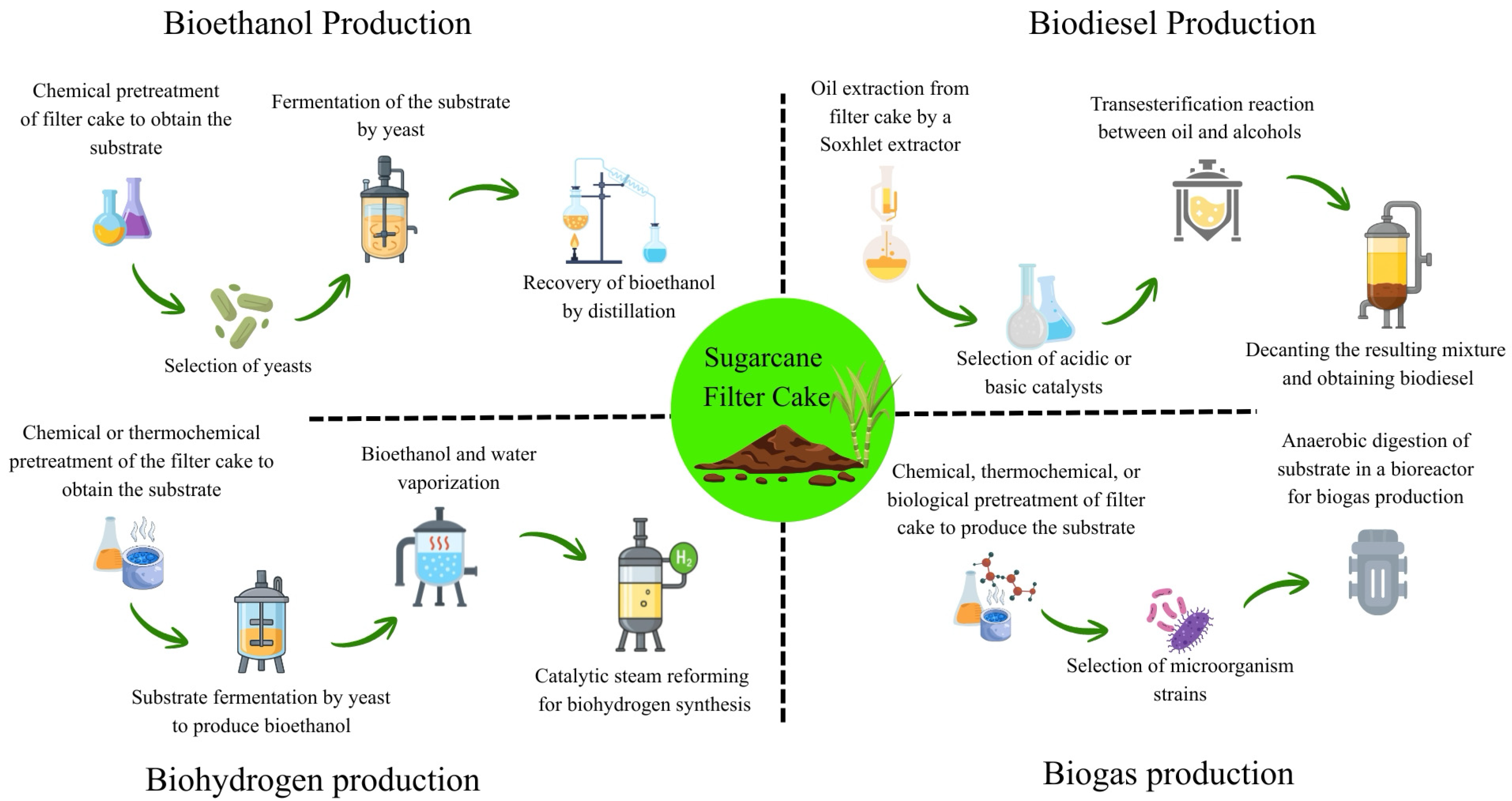
Figure 4 illustrates the conversion pathways of sugarcane filter cake into biofuels, including biogas, bioethanol, biohydrogen, and biodiesel, which were identified as the main biofuel production routes in the literature analyzed in this study. Sanchez et al. [80] used hydrolyzed filter cake to cultivate Saccharomyces cerevisiae for bioethanol production. Fermentation of the substrate with 1000 mg/L (NH4)2SO4 under continuous agitation at 200 rpm and 30 °C for 48 h produced 47.3 g/L bioethanol with minimal impurities. Supplementing the substrate with (NH4)2SO4 reduced aliphatic impurities in the bioethanol. Acid hydrolysis pretreatment (H2SO4) of the filter cake prior to fermentation broke down higher (non-fermentable) sugars into smaller (fermentable) sugar fractions, raising the concentration of reducing sugars from 85.5 to 122.2 g/L and favoring bioethanol yield.
For sustainable butanol production, Nimbalkar et al. [81] used H2SO4 pretreatment to extract cellulose and hemicellulose from filter cake for the cultivation of Clostridium acetobutylicum. The hydrolyzed filter cake contained 22.3% cellulose and 21.7% hemicellulose on a dry basis, underscoring its potential as a biofuel. Drying the filter cake at 100 °C prior to acid hydrolysis yielded 19.08 g/L of fermentable sugars, a higher value than that obtained using the wet cake treatment. Moreover, treatment of the hydrolysate with activated carbon showed high efficiency in removing fermentation-inhibitory compounds, eliminating 93–97% of phenolic compounds and 98% of furans. Thus, the dried and hydrolyzed filter cake proved to be a promising substrate, yielding 4.43 g/L of biobutanol after fermentation. Conversely, Casas et al. [82] investigated the potential of oil derived from filter cake as a feedstock for biodiesel production. Treatment of the filter cake with supercritical CO2 at 35 °C and 400 bar resulted in improved extraction efficiency and oil quality due to the high selectivity of CO2 for triglycerides and free fatty acids under those conditions. As reported in the work, the extracted oil contained 626.13 mg/kg of total fatty acids, including 226.6 mg/kg of oleic acid and 205.3 mg/kg of linoleic acid, which are ideal for biodiesel production. According to the results, the acid-catalyzed transesterification reaction between the extracted oil and methanol, at a 1:8 volumetric ratio, converted 100% of the extract into biodiesel within 120 min. The authors reported that supercritical CO2 extraction proved to be an innovative, effective, and environmentally friendly technology for extracting value-added compounds from biomass compared with other traditional extraction methods such as Soxhlet extraction.
In the field of gaseous biofuel production, Wongfaed et al. [83] studied the anaerobic digestion of enzymatically hydrolyzed filter cake for methane production. Fifteen days of hydrolysis yielded 284 mL CH4/L, 56% higher than the untreated cake. According to the authors, hydrolysis released lignolytic enzymes that degraded lignin, making cellulose and hemicellulose available as microbial feed and promoting methane production. However, hydrolysis efficiency improved only after 15 days of treatment, degrading 39.7%, 57.3% and 35.1% of cellulose, hemicellulose, and lignin, respectively. The authors reported that although lignin acted as a physical barrier preventing cellulase enzymes from accessing cellulose, the synergistic combination of all the enzymes not only degraded the lignin but also performed well in extracting the volatile solids present in the biomass, thereby promoting conversion to biogas.
Adopting a different biomass treatment, González et al. [84] used hydrothermal pretreatment at 150 °C to prepare filter cake liquid fractions for biogas production. The liquid fraction (LF) outperformed the solid fraction (SF) in microbial methane production, achieving 369 mL CH4/g COD, 48% higher than the SF. The higher fermentable sugar and fat contents of LF, compared to the lignin- and wax-rich composition of SF, explains its superior methane yield. In comparative studies carried out by the authors, methane production from LF also surpassed that from pure vinasse and vinasse blends, confirming the hydrolysate’s potential as a feedstock. In more advanced studies, Sanchez et al. [85] applied hydrothermal pretreatment to filter cake to produce bioethanol, which was subsequently converted into biohydrogen (H2) through catalytic steam reforming. Saccharomyces cerevisiae strains producing bioethanol were cultivated on various liquid substrates derived from the hydrothermal treatment of different filter cake samples. The liquid hydrolysate, supplemented with salts and nitrogen, served as a nutrient source for the yeast, achieving a sugar-to-ethanol conversion of 94.35% and producing an average of 82.1 g/L of ethanol after 70 h of fermentation. Among the samples, the second supplemented substrate (S2) demonstrated promising H2 production, achieving nearly 80% yield and about 4 mol H2/mol ethanol in the presence of 0.11 mol% impurities. Supplementation of the substrate lowered 3-methyl-1-butanol and other impurities, thereby reducing catalyst deactivation during the catalytic reforming step. On the other hand, Janke et al. [86] applied an alkaline pretreatment to filter cake to assess its potential as a substrate for volatile fatty acid and methane production via anaerobic digestion. Pretreatment with a higher NaOH concentration (6 g/100 g cake) increased its chemical oxygen demand (COD) content from 12% to 17% compared to pretreatment with lower NaOH levels. Under these conditions, according to the data presented, the alkaline agent enhanced the extraction of degradable nutrients from the filter cake (higher COD solubilization), improving microbial biodegradation of the substrate. Consequently, the pretreated cake produced 317 mL CH4/g volatile solids in 10 days, surpassing the untreated cake by 22.4%.
Meanwhile, Cleves, Rebellón, and Lozada [87] evaluated the co-digestion of filter cake and food waste (FW) for methane production. Anaerobic co-digestion at an 80:20 ratio yielded over 80% methane, a value 22% higher than pure cake digestion, increasing methane yield to 82.36 mL CH4/g volatile solids. The FW supplied an advantageous additional organic load, helping to balance the carbon-to-nitrogen ratio, while the filter cake provided phosphorus, which was lacking in FW. Thus, according to the authors, the co-digestion of filter cake with other agro-industrial residues proved to be a promising strategy by offering the necessary nutrients required by microorganisms, boosting methane production, and reducing reliance on costly substrates and external nutrients.

3.3.4. Synthesis of Bioproducts

Phukan and Boruah [88] subjected dried filter cake to chemical extraction using carbon tetrachloride as the solvent. Comparative tests showed that carbon tetrachloride outperformed toluene and yielded more wax. The maximum crude wax yield after refinement with activated carbon was 4.1% from treating 1 kg of cake with 3 L of solvent, while 4.8% of soft wax (double refined) was obtained from 0.5 kg of cake with 1.5 L of solvent. According to the results presented by the authors, the highly refined waxes exhibited 34% crystallinity, compared to 38% for carnauba wax, underscoring the commercial potential of cake-derived waxes. On the other hand, Texeira et al. [89] extracted antioxidant waxes from filter cake using ethanol. An acid pretreatment of the wet biomass at 120 °C with H2SO4 in a filter:acid ratio of 1:20 induced a wax yield (9.59 g wax/100 g of cake). The wax had 31.56 g/kg of phytosterols and a minimal concentration of impurities (26.19 mg/g).
In contrast, Dilipkumar, Rajasimman, and Rajamohan [90] tested filter cake as a carbon source for inulinase production by solid-state fermentation. The authors cultured Kluyveromyces marxianus (MTCC-188) on 10 g of cake at different moisture levels for 72 h. A moisture level of 65% yielded the highest inulinase activity (288 U/gds). Proper moisture improved nutrient transfer to the yeast, boosting growth and enzyme production.
Similarly, Shankaranand and Lonsane [91] investigated filter cake as a solid substrate for citric acid production. The cake was dried in a hot-air dryer to 11% moisture. For fermentation, 1 mL of Aspergillus niger CFTRI 30 was inoculated into 10 g of substrate supplemented with nitrogen and potassium and incubated for 120 h at 30 °C. The substrate has been shown to be a good source of nutrients for fungi, yielding 80% citric acid, equivalent to 174 g of acid per kg of substrate consumed.
Aiming to convert phytosterols into natural hormones in an ecological, effective, and economical way, Perez et al. [92] used 20% (w/v) filter cake as the substrate in a direct fermentation with Mycobacterium sp. at 30 °C, shaken at 200 rpm for 5 days. The results showed promising yields of the target bioproduct, reaching 82.29% 4-androstenedione (AD). The authors reported that the sterols in the filter cake can be directly metabolized by microbial strains without extracting and purifying sugarcane phytosterols, making the process faster and more economical.

3.3.5. Civil Construction

Mohamad et al. [38] used dried filter cake as an additive in the economical production of low-density bricks. A cementitious mix with 20% filter cake produced bricks that were 23% lighter, with a compressive strength of 17.16 MPa, which is close to the standard value (19 MPa). According to the authors, while higher proportions of filter cake may increase brick porosity and brittleness, controlled additions can yield lightweight, cost-effective, and commercially viable bricks. Alternatively, Sua-Iam and Makul [93] investigated the effect of incinerated filter cake as an additive in cement manufacture. A blend containing 10% incinerated filter cake, with a total powder density of 650 kg/m3, achieved the highest compressive strength (49.8 MPa) after 180 days of curing, compared to cements made with higher cake contents. As reported in the work, although below the strength of Portland cement (~56 MPa), this strength still offers acceptable workability when using the right cake dosage. Furthermore, the authors observed that strength increased steadily with longer curing times, indicating that sufficiently extended curing yields more durable cement.
In another approach, Ditta et al. [37] tested a biocement blend of incinerated cake and calcifying bacteria. Compressive tests showed that adding Lysinibacillus sp. to a biocement blend with 20% filter cake increased the strength by 3.8 MPa compared to ordinary cement. The bacteria cut porosity by 16% and water absorption by 18.3%, further increasing strength. The authors concluded that while filter cake alone weakens cement, adding calcifying bacteria offsets strength loss and improves porosity and water uptake.
In geotechnical engineering, James and Pandian [94] evaluated filter cake as a lime additive to stabilize expansive soil. Mixing 0.25% cake with 5.5% lime improved soil strength following 28 days of curing. The authors observed that these improvements may stem from the chemical composition of the filter cake, particularly the sugars that promote hydrocolloid formation and enhance particle cohesion, as well as the lignocellulosic fibers that reinforce the soil matrix.

3.3.6. Animal Nutrition

Sahu et al. [46] investigated the potential of filter cake as an economical ingredient in swine diets. A 15% filter cake diet yielded a gain of 65.8 kg versus 67 kg for the diet without filter cake. Despite this small difference, the filter cake diet saved 5.25 rupees per kg of weight gain. Filter cake also supplied 10% more protein than corn and 11.6 MJ/kg of digestible energy, surpassing that of wheat. In contrast, Malupere et al. [65] incorporated sun-dried filter cake into cattle feed formulations. Although the diet containing 10% filter cake resulted in a net weight gain of 82.1 kg compared to 84.3 kg for the feed without filter cake, it reduced total feed costs by 6.4%. Moreover, according to the authors, filter cake can replace up to 20% of wheat bran without adversely affecting feed intake, digestibility, rumen function, or calf growth.
In another approach, Melkam, Kebede, and Mengistu [66] focused on including sun-dried filter cake in broiler diets. A 10% filter cake diet during the finishing phase (days 29–49) yielded the highest weight gain (2112.9 g). In the work, it was reported that this result is associated with the fact that older birds, having a more developed digestive tract, can digest filter cake fibers more efficiently.
Unlike the above studies, Keshavanath, Shivanna, and Gangadhara [95] evaluated crude filter cake and bovine manure as alternative feed sources for fish (carp). A diet with 25 kg of filter cake resulted in 95.33% survival, 78.57 g of weight gain, 20.67% of protein and 2.01% of fat. In comparative tests, the diet containing 25 kg bovine manure only increased fish fat content (2.41%). Filter cake diets did not affect the texture, odor, or taste of cooked fish. The authors emphasized that filter cake also costs 30% less than bovine manure and improves fish yield by 26% per 10,000 kg feed, highlighting its promise for aquaculture.

3.4. Bibliometric Analysis

Bibliometric studies are important because they enable tracking the evolution, trends, and current status of scientific research focused on a specific topic of interest [96]. Among the many tools available for conducting bibliometric analysis, VOSviewer stands out as a powerful statistical tool that provides functionality for creating, exploring, and visualizing bibliometric network maps [97]. This tool is designed to analyze large numbers of publications simultaneously by generating network maps that display key information about the analyzed publication set [98]. These network maps combine data from the following sources: journals, countries, institutions, keywords, and citation counts [99].
In addition, based on the literature screening of the selected articles and the authors’ research expertise, Table 1 was developed to map the Technology Readiness Levels (TRLs) of the technologies addressed in the reviewed studies. The screening of the selected articles revealed contrasting TRLs among the evaluated applications. Many studies are still in their early stages, particularly bench-scale investigations focused on adsorbent and biocomposite synthesis. In the case of green biofuels, although production technologies have advanced considerably, large-scale implementation remains a major challenge, placing this sector in a transitional position within the TRL spectrum. In contrast, other pathways already employ mature, commercially established technologies, such as the direct agricultural application of filter cake as a biofertilizer. In this sense, Table 1 summarizes the main valorization pathways for sugarcane filter cake, highlighting their associated advantages and challenges, as well as the proposed hierarchy reflecting the technological maturity identified in the compiled dataset.

3.4.1. Sources That Publish the Most Articles

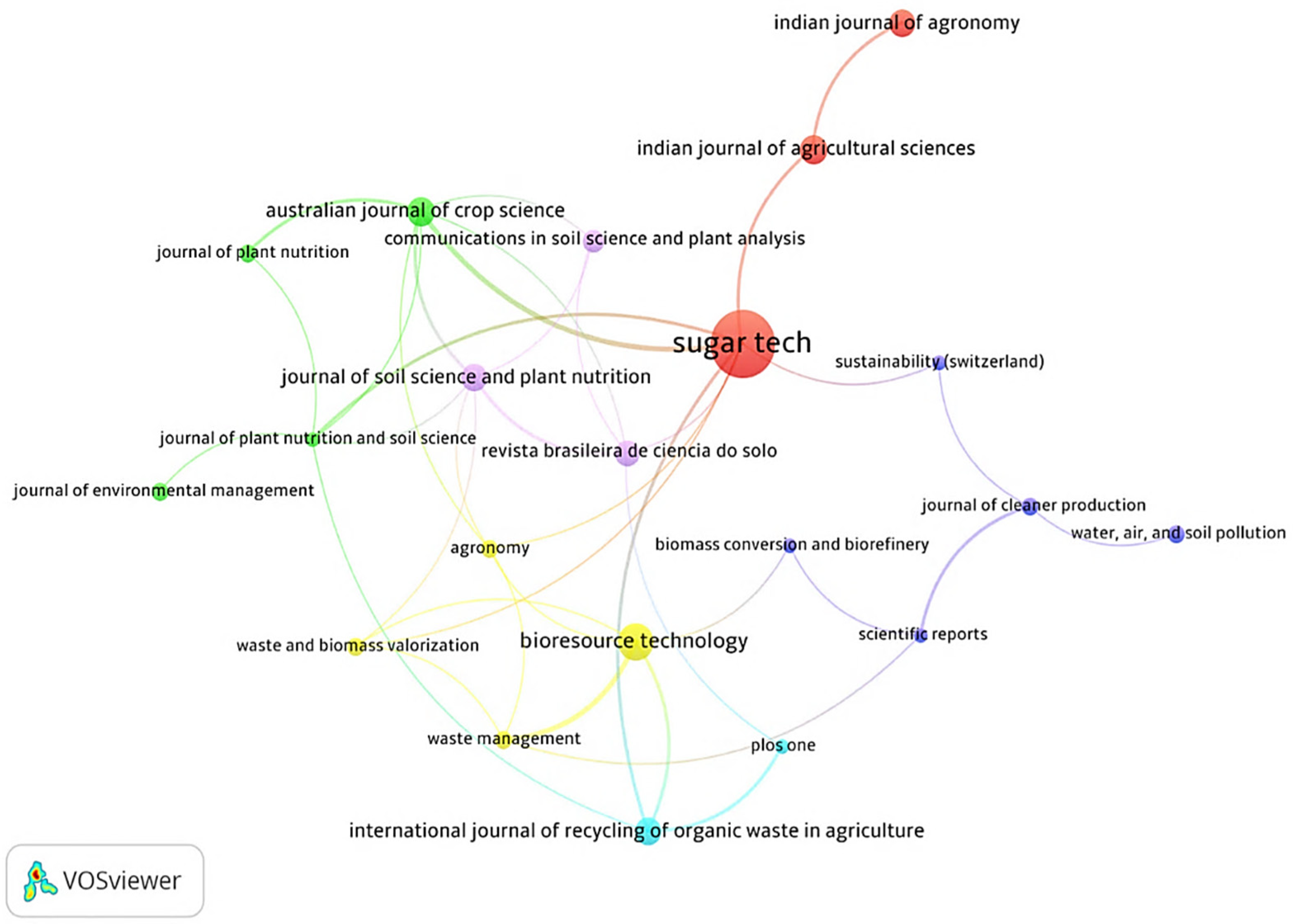
The journals that stood out in terms of the number of published articles are presented in Figure 5. However, the journals with the largest nodes (circles) were the most relevant in this regard, such as Sugar Tech with 32 publications, followed by Bioresource Technology with 14 publications, and the Australian Journal of Crop Science and the Indian Journal of Agricultural Sciences, each with 10 publications.
The lines (links) connecting the nodes (journals) represent bibliographic relationships between articles from different journals, with stronger lines indicating a higher frequency of simultaneous references among the articles. In this sense, the map reveals strong links between Sugar Tech and the Australian Journal of Crop Science, and between Bioresource Technology and Waste Management, indicating that articles published in these journals share similar bibliographic references and therefore tend to address similar topics.

3.4.2. Countries

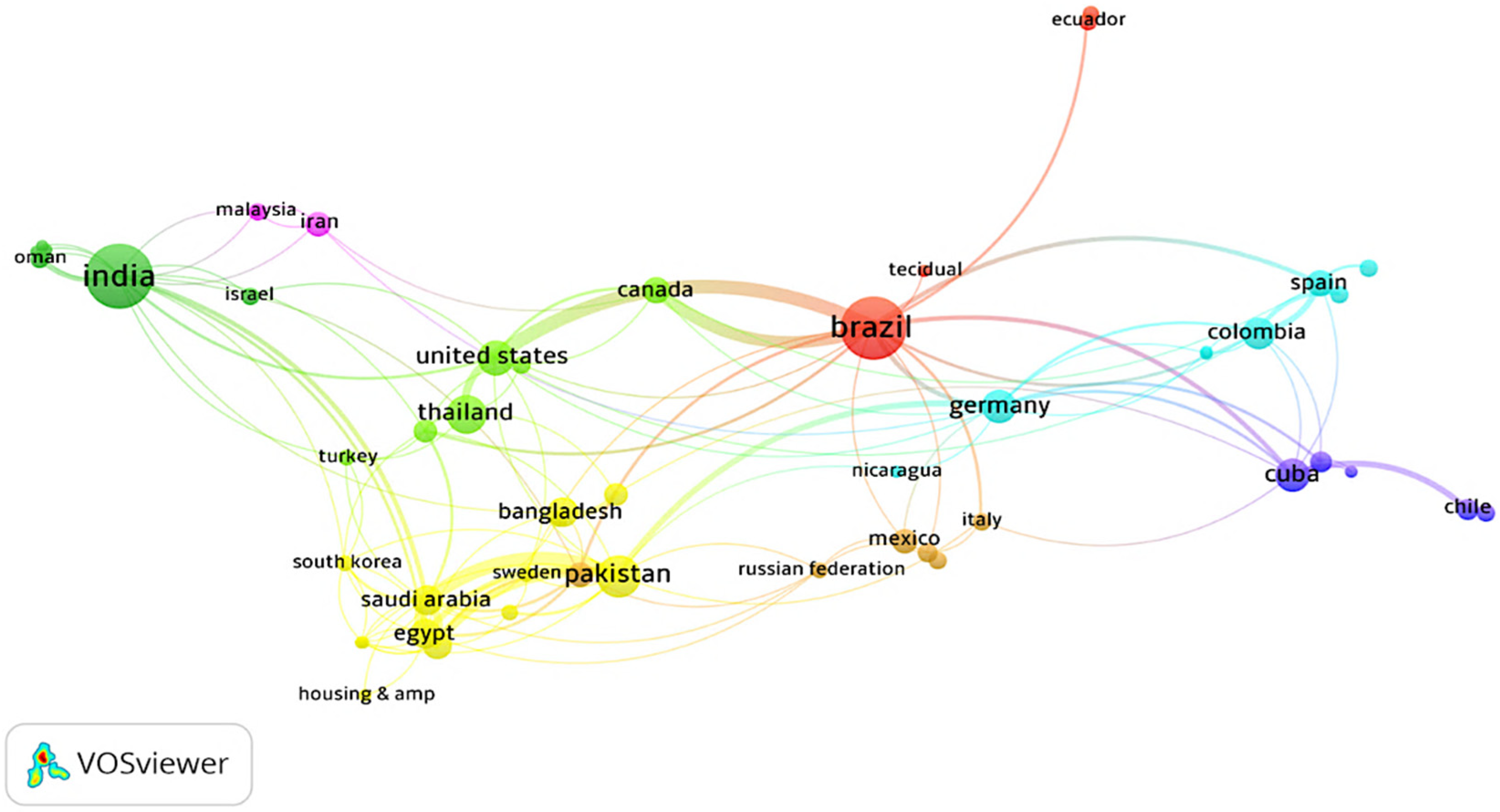
Regarding the relevance of the countries, the co-authorship network map shows that India and Brazil presented the largest number of publications focused on the topic, with 140 and 139 publications, respectively. Figure 6 confirms this observation, with larger nodes indicating a greater number of articles produced.
FAOSTAT data [101] revealed that between 1994 and 2023, Brazil and India led global sugar production from sugarcane, producing, on average, about 29,309,667 and 23,472,206 tonnes of sugar per year, respectively. This high sugar production generates a massive amount of filter cake during processing, which explains the efforts of the scientific communities in Brazil and India to reuse it in order to mitigate environmental problems caused by improper disposal, thus contributing to the growing number of publications on this topic.
According to Figure 6 the most intense lines indicate stronger collaboration between researchers of different nationalities in the development of the scientific papers under analysis. Thus, stronger collaborations can be observed between Brazilian researchers and researchers from the United States and Canada.
Regarding India, its researchers showed stronger collaboration with researchers from Saudi Arabia and Oman.

3.4.3. Most Productive Institutions

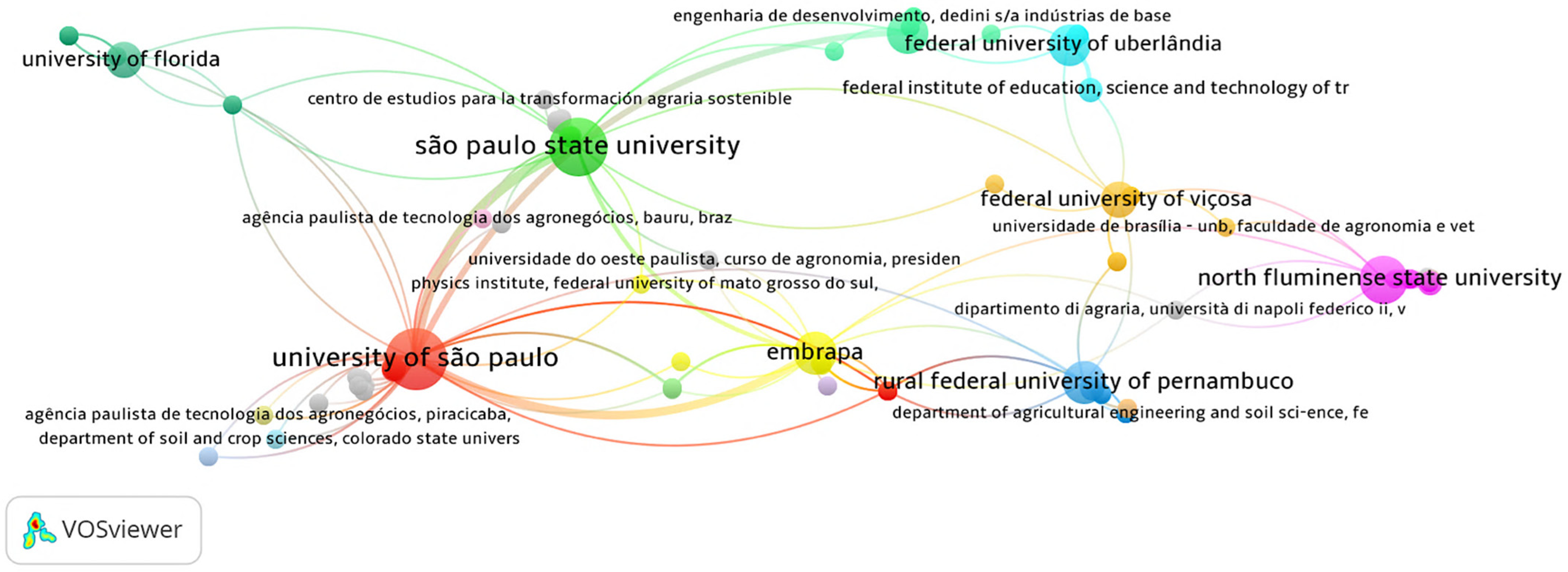
The institutions that most actively collaborated on the theme are highlighted in the network map in Figure 7. It is important to mention that VOSviewer performed this analysis considering all institutions, not only those affiliated with the lead author of each article. The network map in Figure 7 shows co-authorship relationships among institutions, revealing only those that collaborated with others on scientific research within the theme.
The most relevant institutions in terms of the number of articles produced were the University of São Paulo—USP/Brazil (35 articles), São Paulo State University—UNESP/Brazil (33), Khon Kaen University—KKU/Thailand (19), Northern Fluminense State University—UENF/Brazil (16), Indian Institute of Sugarcane Research, Lucknow—ICAR/India (14), University of Agriculture, Faisalabad—UAF/Pakistan (14), Federal Rural University of Pernambuco—UFRPE/Brazil (11), Tamil Nadu Agricultural University—TNAU/India (10), Federal University of Viçosa—UFV/Brazil (9), and the Brazilian Agricultural Research Corporation—EMBRAPA/Brazil (9). As shown in the network map in Figure 7, the lines connecting the nodes represent scientific collaborations among research institutions. A notably strong partnership is observed between USP and UNESP, and between USP and EMBRAPA, all Brazilian institutions. This may be attributed to the first two institutions being located in São Paulo state, the largest producer of sugarcane and food-grade sugar in Brazil [102], and, at the same time, to one of them receiving strong support from Brazil’s largest agricultural research company (EMBRAPA) to advance research on filter cake utilization.
Overall, Brazil was the country with the largest number of collaborating institutions, producing 139 articles through the efforts of 44 different organizations. It is worth noting that although the Indian Institute of Sugarcane Research, Lucknow—ICAR/India, Khon Kaen University—KKU/Thailand, Tamil Nadu Agricultural University—TNAU/India, and the University of Agriculture, Faisalabad—UAF/Pakistan, stood out in terms of article count, they did not exhibit significant collaboration with other institutions, which explains their absence from the co-authorship network map.

3.4.4. Keywords

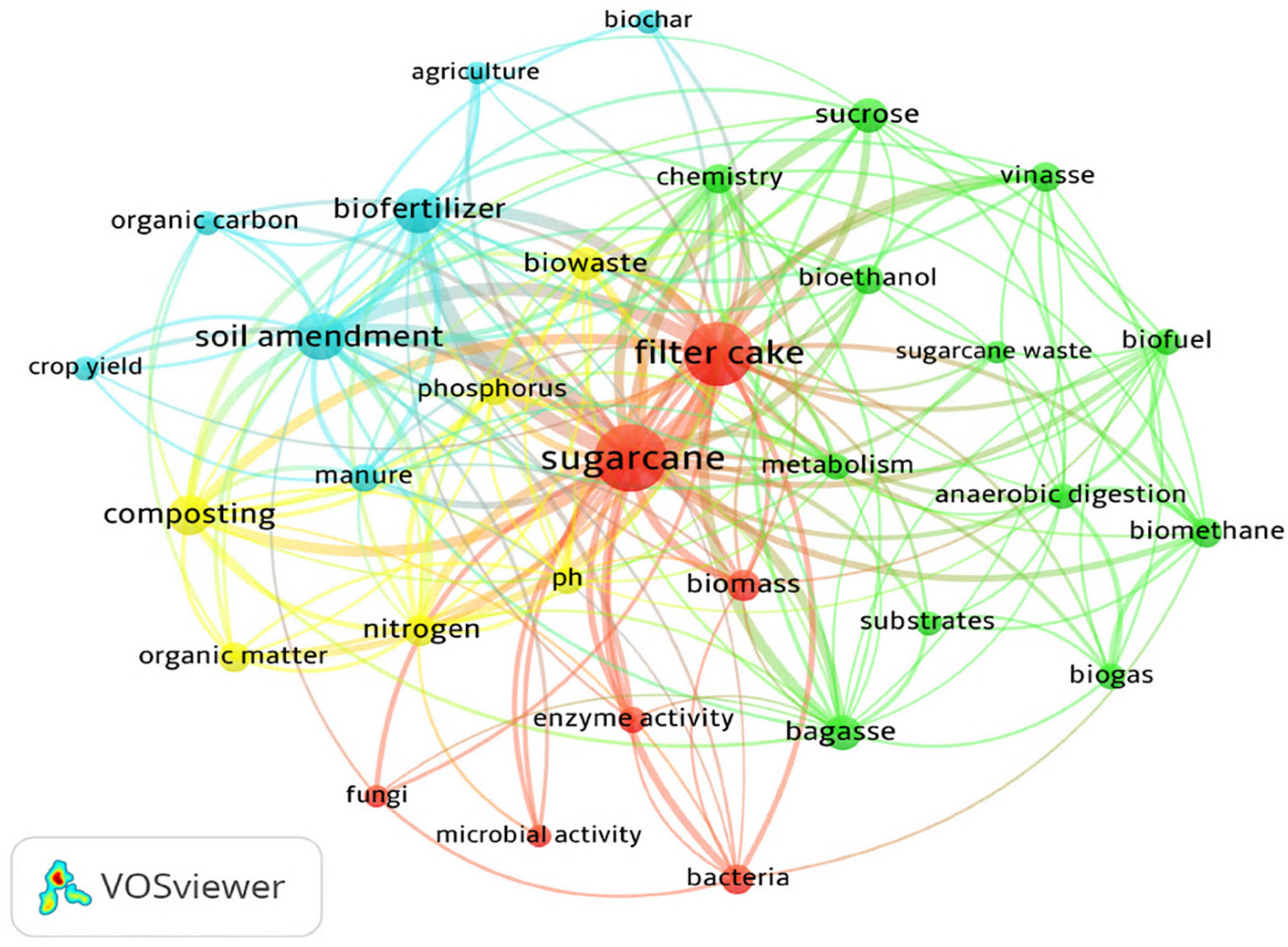
Keywords are terms used to enhance the visibility of publications. Before analyzing keywords in VOSviewer, it was necessary to merge synonymous and plural terms to eliminate duplicates. For example, “press mud” was replaced by “filter cake,” “saccharum cinarum” was replaced by “sugarcane,” and “biofertilizers” by “biofertilizer”. In addition, the minimum number of keyword occurrences in VOSviewer was set at 15, resulting in 32 keywords (Figure 8).
In the network map, the most prominent keywords (largest nodes) were “sugarcane” with 233 occurrences, “filter cake” with 200, “soil amendment” with 92, “biofertilizer” with 82, and “composting” with 59. These terms are connected by thicker lines, indicating that they appear more frequently in the same articles. Since every study addressed the reuse of sugarcane filter cake, “sugarcane” and “filter cake” emerged as the most common terms. Additionally, as shown in Figure 1, most studies have focused on agricultural and environmental applications, particularly the conversion of filter cake into biofertilizers through composting or pyrolysis to improve degraded soils and enhance crop productivity. This focus explains the highlights of terms such as “soil amendment”, “biofertilizer”, and “composting”.
Moreover, as mentioned in Section 3.4, the bibliometric analysis of all publications revealed that many studies are still in the early stages of development, while others are at more advanced stages. Notably, the use of filter cake as a biofertilizer in agricultural fields, particularly in sugarcane cultivation, is among the most established and large-scale applications. This widespread application may explain the frequent occurrence of the terms “sugar cane”, “filter cake” and “biofertilizer” in articles within the thematic scope.
The transition of the sugarcane energy industry to a circular bioeconomy is strongly driven by regulatory frameworks and decarbonization policies [103,104]. In the Brazilian context, the RenovaBio program has emerged as a strategic catalyst, encouraging reductions in carbon intensity through the use of waste to produce biogas and other biofuels [105,106]. The substitution of synthetic fertilizers, which have a high carbon footprint due to the Haber–Bosch process, with enriched filter cake not only promotes the circularity of nutrients in the soil (nitrogen, phosphorus and potassium) but also directly contributes to global greenhouse gas mitigation targets [107,108], aligning waste management with the UN Sustainable Development Goals (SDGs) [109].

3.4.5. Most Cited Articles

Citation analysis is an essential technique in scientific mapping that measures the relevance of publications based on the number of citations they receive. It identifies the most influential works in a field of research [110].
Key metrics include total citations (TC), which reflect the overall relevance of publications, and Field-Weighted Citation Impact (FWCI), which compares an article’s citation frequency with that of similar articles in the same field [50], thereby indicating its specific relevance. Scopus calculates the FWCI as the ratio between the number of citations an article has received and the average number of citations received by similar articles published in the previous three years. Thus, FWCI values greater than 1 indicate that the citation count of the analyzed article exceeds the average citation count of similar articles, indicating that the article is cited more frequently than the overall average [111].
It should be noted that this analysis included only studies describing the characteristics and potential of sugarcane filter cake, excluding those that used it without focusing on its attributes. Table 2 lists the articles that excelled in these metrics.
According to Table 2, it is notable that the article entitled “Characterization of pressmud: A sugar industry waste”, produced by Gupta et al. [112], recorded the highest TC (125) and the fourth-highest FWCI (2.01), demonstrating superior overall relevance. Through characterization analysis, the study reported that filter cake contains 33.73% carbon and 2.36% nitrogen, making it a promising substrate for methane production. Furthermore, its free hydroxyl and silanol groups enable its use as a biosorbent for removing heavy metals from wastewater.
Another highlight was the article “Mitigation of Salinity-Induced Oxidative Damage, Growth, and Yield Reduction in Fine Rice by Sugarcane Press Mud Application”, developed by Khan et al. [75], which achieved the highest FWCI (5.88) despite having the third-lowest TC (60). This indicates greater relevance within the thematic field, as this metric accounts for temporal variations and the specific citation density of the area. This work showed that applying filter cake at 9% w/w to soil enhanced antioxidant enzyme activities, photosynthetic pigments in plant leaves, water content via osmolyte accumulation, and potassium uptake, thereby improving rice yield. Overall, all the articles in Table 2 are relevant both in general and within their specific fields, each to different degrees.
Bibliometric analysis revealed that, although direct application to soil and energy production through combustion are mature areas, there is a significant gap in research focused on the extraction of high-value-added compounds, such as vegetable waxes and antioxidants present in filter cake. Future studies should focus on the development of multiproduct biorefineries using supercritical or enzymatic extraction technologies. Furthermore, the integration of filter cake into the production of new materials, such as biopolymers and composites for civil construction, represents a promising frontier that can diversify the revenue sources of sugar and ethanol plants.

3.5. Challenges and Future Prospects

Efforts to explore the potential of agro-industrial residues for producing biofuels and bioenergy have increased considerably over time, driven mainly by energy shortages, climate change, and other environmental issues [120]. Despite this context, the efficient use of sugarcane filter cake as a raw material in various biorefinery pathways, especially for biofuel production, may still face several challenges, especially in establishing a resilient green fuel sector that aligns with the Sustainable Development Goals (SDGs), as highlighted by Ragini et al. [120] in their study on sustainable biorefinery approaches for the valorization of agro-food industrial residues for biofuel production. A primary obstacle identified from the literature surveyed in this study is that experimental validation remains largely confined to bench-scale configurations, which frequently fail to yield results representative of large-scale systems [121]. For lignocellulosic matrices such as filter cake, this laboratory-to-industrial gap is a major bottleneck in development. Moreover, our bibliometric analysis identified a lack of environmental life-cycle assessments, which, according to Pérez-Almada et al. [122], creates uncertainty about the resulting environmental impacts and highlights the difficulties and high costs associated with transporting and mobilizing biomass as major challenges.
An analysis of studies on the application of filter cake in biorefinery processes has shown that, although its use offers significant economic and sustainability benefits [46,59,68,76], there remains a significant gap in assessing the overall technical performance and economic viability of sustainable alternatives to conventional refineries that rely on nonrenewable resources. The current literature on filter cake application lacks the detailed information necessary to build a comprehensive economic analysis. Future studies, including techno-economic analyses, should be conducted, as they also enable the prediction of a process’s environmental impact and the identification of opportunities to improve environmental performance [122], which can help ensure the competitiveness of new technologies and products compared with existing ones.
The few studies in the literature that examined small-scale green fuel production following pretreatment of sugarcane filter cake were carefully reviewed. In general, to convert residual biomass into a value-added bioproduct, pretreatment steps are often required to break down the biomass’s rigid structure, enabling its fractionation and subsequent use as a feedstock for producing green fuels and other applications [83]. In the studies analyzed, the identified pretreatments included chemical treatments using organic [82,88,89] and inorganic [80,81,86] reagents, thermochemical treatment with boiling water [84,85], and biochemical methods via enzymatic action [83]. Future investigations should explore these configurations, or combinations thereof, to assess their scalability. However, this transition to larger operational scales must be carefully monitored for economic bottlenecks, which commonly arise from intensive energy demands, expensive catalyst formulations, and large solvent volumes that present post-process recycling challenges. To mitigate these issues, replacing harsh methods with green alternatives, such as supercritical CO2 extraction, is a highly promising and environmentally sound alternative for synthesizing value-added bioproducts. For instance, Casas et al. [82] found that extracting filter cake oil with supercritical CO2 at 55 °C and 400 bar was more efficient and sustainable than hexane extraction via Soxhlet, orbital shaking, and ultrasound-assisted extraction for biodiesel production.
Furthermore, the development of innovative multiproduct technologies based on hybrid systems that integrate green hydrogen production with other biofuels, as well as the integration of biochemical and thermochemical pathways for energy recovery, appears to be a promising alternative to increase the efficiency of agro-industrial residue bioconversion into green fuels and to help overcome scalability constraints [120]. In another approach, AI tools integrated into process optimization would enable effective predictive maintenance and real-time monitoring of production inputs, improving operational flexibility as well as the efficiency of conversion processes in biorefineries [123]. Ultimately, establishing filter cake and similar residues as viable precursors for sustainable fuels and chemicals requires expanding government research incentives. Such programs are critical for improving pretreatment efficiencies, developing effective catalysts, and enhancing the overall commercial viability of these processes [124].
In summary, beyond its traditional use in agriculture, sugarcane filter cake holds immense potential for biorefinery and biofuel production, with studies showing promising results across several domains. Nonetheless, future research must focus on scalability and provide thorough techno-economic analyses to ensure industrial viability. Future work can also explore other biofuels. Future investigations should focus on synthesizing next-generation green fuels, deploying hybrid systems that integrate biological and thermochemical pathways, and leveraging AI tools for real-time process monitoring. Merging these multiproduct, low-emission frameworks through targeted government incentive programs represents the most viable path to advancing the use of filter cake and other residues in biorefinery and biofuel production.

4. Conclusions

This bibliometric analysis demonstrates the rapid expansion of research on sugarcane filter cake, highlighting its increasing relevance within the bioenergy sector. The mapping of 485 publications up to 2024 confirms that Brazil and India are leading contributors, with a strong historical emphasis on agricultural reuse and nutrient recovery pathways.
Despite these advances, the results reveal that the energy-oriented valorization of filter cake, particularly through thermochemical and biochemical conversion processes, remains underexplored. Current research is still largely concentrated on low-value applications, while its potential as a feedstock for biogas, bioethanol, and integrated biorefinery systems has not been fully realized.
Therefore, future efforts should prioritize the development of scalable conversion technologies, process optimization, and industrial integration strategies to bridge the gap between laboratory research and commercial biofuel production. Advancing these pathways is essential to reposition filter cake from a residual byproduct to a viable resource for renewable energy generation, supporting the transition toward more sustainable and low-carbon fuel systems.

Author Contributions

Conceptualization, W.A.P., H.E.P.S., I.V.F. (Ingrid Vieira Fernandes), I.V.F. (Isadora Vieira Fernandes), D.S.R. and D.P.S.; methodology, W.A.P., I.V.F. (Ingrid Vieira Fernandes) and I.V.F. (Isadora Vieira Fernandes); formal analysis, W.A.P., H.E.P.S., I.V.F. (Ingrid Vieira Fernandes) and I.V.F. (Isadora Vieira Fernandes); investigation, W.A.P., I.V.F. (Ingrid Vieira Fernandes) and I.V.F. (Isadora Vieira Fernandes); data curation, W.A.P., I.V.F. (Ingrid Vieira Fernandes) and I.V.F. (Isadora Vieira Fernandes); writing—original draft preparation, W.A.P.; writing—review and editing, M.J., H.E.P.S., I.V.F. (Ingrid Vieira Fernandes), J.S., F.M., D.S.R. and D.P.S.; visualization, W.A.P., M.J., H.E.P.S., I.V.F. (Ingrid Vieira Fernandes), I.V.F. (Isadora Vieira Fernandes), D.S.R. and D.P.S.; supervision, D.S.R. and D.P.S. All authors have read and agreed to the published version of the manuscript.

Funding

This research received no specific grant from any funding agency in the public, private, or not-for-profit sectors.

Institutional Review Board Statement

Not applicable.

Informed Consent Statement

Not applicable.

Data Availability Statement

The original contributions presented in this study are included in the article. Further inquiries can be directed to the corresponding authors.

Acknowledgments

The authors acknowledge the assistance of Brazilian research funding agencies, including the Coordination for the Improvement of Higher Education Personnel—CAPES, under Finance Code 001, a Brazilian foundation within the Ministry of Education (MEC); the National Council for Scientific and Technological Development—CNPq, a Brazilian foundation associated with the Ministry of Science, Technology and Innovation (MCTI); the Foundation of Support to Research and Technological Innovation of the State of Sergipe—FAPITEC/SE; and the Federal University of Sergipe. The authors also acknowledge the Foundation for Science and Technology (FCT, Portugal) for its support and the Center for Research and Development in Agrifood Systems and Sustainability (CISAS) [UID/05937/2025 (doi.org/10.54499/UID/05937/2025)].

Conflicts of Interest

The authors declare no conflicts of interest.

References

  1. Gunkel, G.; Kosmol, J.; Sobral, M.; Rohn, H.; Montenegro, S.; Aureliano, J. Sugar Cane Industry as a Source of Water Pollution—Case Study on the Situation in Ipojuca River, Pernambuco, Brazil. Water Air Soil Pollut. 2007, 180, 261–269. [Google Scholar] [CrossRef]
  2. Dinesh Babu, K.S.; Janakiraman, V.; Palaniswamy, H.; Kasirajan, L.; Gomathi, R.; Ramkumar, T.R. A Short Review on Sugarcane: Its Domestication, Molecular Manipulations and Future Perspectives. Genet. Resour. Crop Evol. 2022, 69, 2623–2643. [Google Scholar] [CrossRef] [PubMed]
  3. Otto, R.; Ferraz-Almeida, R.; Sanches, G.M.; Lisboa, I.P.; Cherubin, M.R. Nitrogen Fertilizer Consumption and Nitrous Oxide Emissions Associated with Ethanol Production—A National-Scale Comparison between Brazilian Sugarcane and Corn in the United States. J. Clean. Prod. 2022, 350, 131482. [Google Scholar] [CrossRef]
  4. Bordonal, R.O.; Carvalho, J.L.N.; Lal, R.; de Figueiredo, E.B.; de Oliveira, B.G.; La Scala, N. Sustainability of Sugarcane Production in Brazil. A Review. Agron. Sustain. Dev. 2018, 38, 13. [Google Scholar] [CrossRef]
  5. Yang, L.; Deng, Y.; Wang, X.; Zhang, W.; Shi, X.; Chen, X.; Lakshmanan, P.; Zhang, F. Global Direct Nitrous Oxide Emissions from the Bioenergy Crop Sugarcane (Saccharum Spp. Inter-Specific Hybrids). Sci. Total Environ. 2021, 752, 141795. [Google Scholar] [CrossRef] [PubMed]
  6. Wagih, M.E.; Musa, Y.; Ala, A. Fundamental Botanical and Agronomical Characterisation of Sugarcane Cultivars for Clonal Identification and Monitoring Genetic Variations. Sugar Tech 2004, 6, 127–140. [Google Scholar] [CrossRef]
  7. Hoang, N.V.; Furtado, A.; Donnan, L.; Keeffe, E.C.; Botha, F.C.; Henry, R.J. High-Throughput Profiling of the Fiber and Sugar Composition of Sugarcane Biomass. Bioenergy Res. 2017, 10, 400–416. [Google Scholar] [CrossRef]
  8. Zhichao, L.; Qingting, L.; Tao, W.; Jilie, H.; Haijun, Y.; Zhiang, L. Effects of Cellulose Structure of Sugarcane Stem on Mechanical Properties of Cell Wall. J. Nat. Fibers 2025, 22, 2445573. [Google Scholar] [CrossRef]
  9. Wang, M.; Li, A.-M.; Liao, F.; Qin, C.-X.; Chen, Z.-L.; Zhou, L.; Li, Y.-R.; Li, X.-F.; Lakshmanan, P.; Huang, D.-L. Control of Sucrose Accumulation in Sugarcane (Saccharum Spp. Hybrids) Involves MiRNA-Mediated Regulation of Genes and Transcription Factors Associated with Sugar Metabolism. GCB Bioenergy 2022, 14, 173–191. [Google Scholar] [CrossRef]
  10. Lima, I.M.; Beacorn, J.A. Targeting a Sustainable Sugar Crops Processing Industry: A Review (Part II): Reuse and Conversion Technologies. Sugar Tech 2022, 24, 1010–1028. [Google Scholar] [CrossRef]
  11. Khan, Q.; Qin, Y.; Guo, D.-J.; Yang, L.-T.; Song, X.-P.; Xing, Y.-X.; Li, Y.-R. A Review of the Diverse Genes and Molecules Involved in Sucrose Metabolism and Innovative Approaches to Improve Sucrose Content in Sugarcane. Agronomy 2023, 13, 2957. [Google Scholar] [CrossRef]
  12. Morales, H.; di Sciascio, F.; Aguirre-Zapata, E.; Amicarelli, A. Crystallization Process in the Sugar Industry: A Discussion On Fundamentals, Industrial Practices, Modeling, Estimation and Control. Food Eng. Rev. 2024, 16, 441–469. [Google Scholar] [CrossRef]
  13. Tse, T.J.; Wiens, D.J.; Reaney, M.J.T. Production of Bioethanol—A Review of Factors Affecting Ethanol Yield. Fermentation 2021, 7, 268. [Google Scholar] [CrossRef]
  14. Rebelato, M.G.; Rodrigues, A.M.; Thomaz, A.G.D.B.; Saran, L.M.; Madaleno, L.L.; Oliveira, O.J.D. Developing an Index to Assess Human Toxicity Potential of Sugarcane Industry. J. Clean. Prod. 2019, 209, 1274–1284. [Google Scholar] [CrossRef]
  15. Raza, Q.-U.-A.; Bashir, M.A.; Rehim, A.; Sial, M.U.; Raza, H.M.A.; Atif, H.M.; Brito, A.F.; Geng, Y. Sugarcane Industrial Byproducts as Challenges to Environmental Safety and Their Remedies: A Review. Water 2021, 13, 3495. [Google Scholar] [CrossRef]
  16. Dotaniya, M.L.; Datta, S.C.; Biswas, D.R.; Dotaniya, C.K.; Meena, B.L.; Rajendiran, S.; Regar, K.L.; Lata, M. Use of Sugarcane Industrial By-Products for Improving Sugarcane Productivity and Soil Health. Int. J. Recycl. Org. Waste Agric. 2016, 5, 185–194. [Google Scholar] [CrossRef]
  17. Almeida, M.A.; Colombo, R. Production Chain of First-Generation Sugarcane Bioethanol: Characterization and Value-Added Application of Wastes. Bioenergy Res. 2023, 16, 924–939. [Google Scholar] [CrossRef]
  18. Viti, M.L.; Mendes, K.F.; dos Reis, F.C.; Guimarães, A.C.D.; Soria, M.T.M.; Tornisielo, V.L. Characterization and Metabolism of Bound Residues of Three Herbicides in Soils Amended with Sugarcane Waste. Sugar Tech 2021, 23, 23–37. [Google Scholar] [CrossRef]
  19. Bokhtiar, S.M.; Sakurai, K. Integrated Use of Organic Manure and Chemical Fertilizer on Growth, Yield, and Quality of Sugarcane in High Ganges River Floodplain Soils of Bangladesh. Commun. Soil Sci. Plant Anal. 2005, 36, 1823–1837. [Google Scholar] [CrossRef]
  20. Mokolobate, M.S.; Haynes, R.J. Comparative Liming Effect of Four Organic Residues Applied to an Acid Soil. Biol. Fertil. Soils 2002, 35, 79–85. [Google Scholar] [CrossRef]
  21. Souza, E.G.S.; Rebelato, M.G. Assessment of the Environmental Performance of Sugarcane Companies Based on Waste Disposed of on the Soil. J. Environ. Health Sci. Eng. 2024, 22, 123–137. [Google Scholar] [CrossRef] [PubMed]
  22. George, P.A.O.; Eras, J.J.C.; Gutierrez, A.S.; Hens, L.; Vandecasteele, C. Residue from Sugarcane Juice Filtration (Filter Cake): Energy Use at the Sugar Factory. Waste Biomass Valorization 2010, 1, 407–413. [Google Scholar] [CrossRef]
  23. Rosa, A.S.; Martins, C.P.S. Produção Mais Limpa Nas Fontes Geradoras de Poluição Da Indústria de Açúcar e Álcool. Rev. Intertox Toxicol. Risco Ambient. Soc. 2013, 6, 2. [Google Scholar] [CrossRef]
  24. Chapra, S.C.; Camacho, L.A.; McBride, G.B. Impact of Global Warming on Dissolved Oxygen and BOD Assimilative Capacity of the World’s Rivers: Modeling Analysis. Water 2021, 13, 2408. [Google Scholar] [CrossRef]
  25. Menon, S.V.; Kumar, A.; Middha, S.K.; Paital, B.; Mathur, S.; Johnson, R.; Kademan, A.; Usha, T.; Hemavathi, K.N.; Dayal, S. Water Physicochemical Factors and Oxidative Stress Physiology in Fish, a Review. Front. Environ. Sci. 2023, 11, 1240813. [Google Scholar] [CrossRef]
  26. Sarangi, B.K.; Mudliar, S.N.; Bhatt, P.; Kalve, S.; Chakrabarti, T.; Pandey, R.A. Compost from Sugar Mill Press Mud and Distillery Spent Wash for Sustainable Agriculture. Dyn. Soil. Dyn. Plant 2008, 2, 35–49. [Google Scholar]
  27. Grandis, A.; Fortirer, J.S.; Navarro, B.V.; de Oliveira, L.P.; Buckeridge, M.S. Biotechnologies to Improve Sugarcane Productivity in a Climate Change Scenario. Bioenergy Res. 2024, 17, 1–26. [Google Scholar] [CrossRef]
  28. Prado, R.D.M.; Caione, G.; Naudi Silva Campos, C.N.S. Filter Cake and Vinasse as Fertilizers Contributing to Conservation Agriculture. Appl. Environ. Soil Sci. 2013, 2013, 581984. [Google Scholar] [CrossRef]
  29. Babar, A.T.; Patil, N.S.; Sangami, S. Composting of Sugarcane Waste by Microorganism and Subsequent Vermicomposting: A Practical Implementation Study. J. Integr. Sci. Technol. 2025, 13, 1029. [Google Scholar] [CrossRef]
  30. Soares, A.D.A.V.L.; Prado, R.D.M.; Bertani, R.M.D.A.; Silva, A.P.R.; Deus, A.C.F.; Kano, C.; Furlaneto, F.D.P.B. Contribution of Using Filter Cake and Vinasse as a Source of Nutrients for Sustainable Agriculture—A Review. Sustainability 2024, 16, 5411. [Google Scholar] [CrossRef]
  31. Setiaji, A.; Santoso, B.; Wibisono, H. Effect of Sugarcane Filter Cake-Based Organomineral Fertilizers on Sweet Maize Growth. Int. J. Recycl. Org. Waste Agric. 2023, 12, 159–177. [Google Scholar] [CrossRef]
  32. Gonçalves, J.C.; Pazian Neto, X.R.; Nunes, E.H.; Pecoraro, C.A.; Gasparotto, F.; Tavares Filho, J. Soybean Fertilization with Filter Cake and Its Effects on Soil Chemical Attributes|Adubação Da Soja Com Torta de Filtro e Seus Efeitos Nos Atributos Químicos Do Solo. Semin. Cienc. Agrar. 2023, 44, 755–766. [Google Scholar] [CrossRef]
  33. Torres, J.L.R.; Silva, A.C.M.M.; Vallone, H.S.; Vieira, D.M.S.; Souza, Z.M.; Lemes, E.M. Sugarcane Filter Cake Application to Coffee Crop and Soil Physical Attributes|Aplicação de Torta de Filtro de Cana-de-Açúcar Na Cultura Do Café e Relações de Atributos Físicos Do Solo. Rev. Agronegocio Meio Ambiente 2021, 14, e7997. [Google Scholar] [CrossRef]
  34. Ketrot, D.; Wisawapipat, W. Lead Immobilisation in Mining Contaminated Soil Using Biochar and Ash from Sugarcane. Plant Soil Environ. 2021, 67, 474–481. [Google Scholar] [CrossRef]
  35. Zenteno, M.D.C.; Fernandes, R.B.A.; Fontes, R.L.F.; Jordão, C.P. Availability and Chemical Associations of Cadmium in Contaminated Tropical Soils Amended with Mineral and Organic Amendments|Disponibilidad y Asociaciones Químicas de Cadmio En Suelos Tropicales Contaminados, Modificados Con Enmiendas Minerales y Orgáni. Terra Latinoam. 2022, 40, e928. [Google Scholar] [CrossRef]
  36. Torres, R.G.; Leal, E.R.; Toledo, A.M.; Morales, F.R.R.; Sanchez, J.S.C.; María, C.C.-D. Use of Rum and Cane Bagasse Sugar in the Removal of Oil Contaminated Soil|Uso de Cachaza y Bagazo de Caña de Azúcar En La Remoción de Hidrocarburos En Suelo Contaminado. Rev. Int. Contam. Ambient. 2011, 27, 31–39. [Google Scholar] [CrossRef]
  37. Ditta, Z.M.; Laohana, P.; Tanapongpisit, N.; Saenrang, W.; Boonlue, S.; Ekprasert, J.; Sata, V.; Chindaprasirt, P.; Baalousha, M. Mechanical and Self-Healing Properties of Cement Paste Containing Incinerated Sugarcane Filter Cake and Lysinibacillus Sp. WH Bacteria. Sci. Rep. 2024, 14, 6716. [Google Scholar] [CrossRef] [PubMed]
  38. Mohamad, M.; Chong, K.L.; Nasir, M.H.A.; Abidin, R.; Abu, N.H.; Razalli, M.R.; Taib, C.A.; Yusoff, Y.M.; Chellamuthu, V. Potential of Pressmud Waste from Sugar Industry in Brick Manufacturing for Green Business and Sustainability. PaperASIA 2024, 40, 25–30. [Google Scholar] [CrossRef] [PubMed]
  39. Wongarmat, W.; Reungsang, A.; Sittijunda, S.; Chu, C.-Y. Anaerobic Co-Digestion of Biogas Effluent and Sugarcane Filter Cake for Methane Production. Biomass Convers. Biorefin. 2022, 12, 901–912. [Google Scholar] [CrossRef]
  40. Gokulan, R.; Ganesh Prabhu, G.; Raja Murugadoss, J.; Hariharasuthan, S. Optimization of Bio-Hydrogen Production from Bio-Wastes. Ecol. Environ. Conserv. 2018, 24, 284–287. [Google Scholar]
  41. Sanchez, N.; Cobo, M.; Fontalvo, D.R.; Laverde, M.Á.U.; Pardo, R.Y.R. Bioethanol Production from Sugarcane Press-Mud: Assessment of the Fermentation Conditions to Reduce Fusel Alcohol. Fermentation 2021, 7, 194. [Google Scholar] [CrossRef]
  42. Gnanaraj, R.A. Energy Recovery from Sugarcane Press Mud. Asian J. Sci. Res. 2012, 5, 185–195. [Google Scholar] [CrossRef][Green Version]
  43. Gnanaraj, R.A.; Ravichandran, K.S.; Anantharaman, N.; Begum, K.M.M.S. ANFIS Approach to the Working of a Compost-Heat Extractor. Int. J. Environ. Waste Manag. 2013, 11, 13–26. [Google Scholar] [CrossRef]
  44. Pérez, I.; Cruz, A.; Tortoló, K.; Díaz, M.; Peña, M.A.; Vela, J. Evaluation of Filter Cake Oil as Antifoam in Yeast Production: New Use for This By-Product of the Sugarcane Derivatives Industry. Waste Biomass Valorization 2022, 13, 977–987. [Google Scholar] [CrossRef]
  45. Abdelatif, Y.; Gaber, A.-A.M.; Fouda, A.E.-A.S.; Elsokkary, T. Sustainable Utilization of Calcined Sugarcane Mud Waste as Nanofiller for Fine Paper Production. Biomass Convers. Biorefin. 2024, 14, 8947–8956. [Google Scholar] [CrossRef]
  46. Sahu, S.; Patel, B.H.M.; Sarangi, A.; Kumar, D.; Mahesh, M.S.; Upadhyay, D.; Dutt, T. Sun-Dried Sugarcane Press Mud Could Be a Prospective Feedstuff for Swine Production. Sugar Tech 2022, 24, 788–797. [Google Scholar] [CrossRef]
  47. Kumar, R.; Saha, S.K.; Kumar, D.; Mahesh, M.S.; Malapure, C.D. Effect of Dietary Utilisation of Sugarcane Press Mud on Production Performance of Muzaffarnagari Lambs. Trop. Anim. Health Prod. 2017, 49, 1439–1446. [Google Scholar] [CrossRef] [PubMed]
  48. Bridhikitti, A.; Kaewsuk, J.; Karaket, N.; Friend, R.; Sallach, B.; Chong, J.P.J.; Redeker, K.R. Balancing Agriculture and Industry through Waste Utilization for Sugarcane Sustainability. Sustainability 2023, 15, 14711. [Google Scholar] [CrossRef]
  49. Elsevier Scopus Support Center. Available online: https://service.elsevier.com/app/answers/detail/a_id/15534/supporthub/scopus/#tips (accessed on 6 July 2025).
  50. Simões, A.J.A.; Macêdo-Júnior, R.O.; Santos, B.L.P.; Silva, D.P.; Ruzene, D.S. A Bibliometric Study on the Application of Advanced Oxidation Processes for Produced Water Treatment. Water Air Soil Pollut. 2021, 232, 297. [Google Scholar] [CrossRef]
  51. Melikoglu, M.; Ozdemir, M.; Ates, M. Pyrolysis Kinetics, Physicochemical Characteristics and Thermal Decomposition Behavior of Agricultural Wastes Using Thermogravimetric Analysis. Energy Nexus 2023, 11, 100231. [Google Scholar] [CrossRef]
  52. Ma, S.; Gao, J. Effect of Surface Adsorption of Microfiltration for Magnetized Sugarcane Mixed Juice on Model of Mass Transfer. Trans. Chin. Soc. Agric. Eng. 2015, 31, 296–301. [Google Scholar] [CrossRef]
  53. Costa, G.H.G.; Freita, C.M.; Mendes, F.Q.; Roviero, J.P.; Mutton, M.J.R. Acrylamide Replaced by Moringa Extract in Sugar Production. Food Sci. Technol. 2018, 38, 591–599. [Google Scholar] [CrossRef]
  54. Radhakrishnan, K.; Das, S. Application of Stochastic Frontier Production Function in Sugarcane Industry-Treated Wastewater Reuse in Agriculture: Case Study of a Coastal District in Tamil Nadu, India. Arthaniti J. Econ. Theory Pract. 2019, 18, 185–200. [Google Scholar] [CrossRef]
  55. Hamad, B.A.; Xu, M.; Liu, W. Performance of Environmentally Friendly Silica Nanoparticles-Enhanced Drilling Mud from Sugarcane Bagasse. Part. Sci. Technol. 2021, 39, 168–179. [Google Scholar] [CrossRef]
  56. El-Sayed, A.E.-K.B.; Reda, M.M.; Almutairi, A.W.; Mavromatis, C. Biomass Production and Biochemical Composition of Chlorella Vulgaris Grown in Net-House Photobioreactor (NHPBR) Using Sugarcane Press Mud Waste. J. Taibah Univ. Sci. 2023, 17, 2194843. [Google Scholar] [CrossRef]
  57. Singh, K.P.; Srivastava, T.K.; Suman, A.; Singh, P.N. Sugarcane Productivity and Soil Health in a Bionutrition-Based Multi-Ratooning System under Sub-Tropics. Indian J. Agric. Sci. 2010, 80, 746–748. [Google Scholar]
  58. Soares, T.M.; Raniro, H.R.; Pavinato, P.S. Sugarcane Byproduct Influence on Mineral Fertilizer Solubility and Phosphorus Dynamics in the Soil. J. Soil Sci. Plant Nutr. 2022, 22, 1458–1467. [Google Scholar] [CrossRef]
  59. Raimondi, I.M.; Vieira, E.M.; Vaz, L.A.A.; Rodrigues, V.G.S. Comparison of Sugarcane Pressmud with Traditional Low-Cost Materials for Adsorption of Lead and Zinc in Mining Areas. Int. J. Environ. Sci. Technol. 2022, 19, 4627–4644. [Google Scholar] [CrossRef]
  60. Pajampa, K.; Wongwuttanasatian, T. A Trial of Filter Cake Pellets and Bagasse Co–Combustion in a Sugar Mill Steam Generator: Thermal and Economical Assessments. Energy Rep. 2023, 9, 422–430. [Google Scholar] [CrossRef]
  61. Rai, R.; Singh, S.N.; Prasad, V. Effect of Pressmud Amended Pyrite on Symbiotic N2-Fixation, Active Iron Contents of Nodules, Grain Yield and Quality of Chick Pea (cicer arietinum Linn.) Genotypes in Calcareous Soil. J. Plant Nutr. 1982, 5, 905–913. [Google Scholar] [CrossRef]
  62. Fernandes, J.O.; Bernardino, C.A.R.; Mahler, C.F.; Santelli, R.E.; Braz, B.F.; Borges, R.C.; Veloso, M.C.C.; Romeiro, G.A.; Cincotto, F.H. Biochar Generated from Agro-Industry Sugarcane Residue by Low Temperature Pyrolysis Utilized as an Adsorption Agent for the Removal of Thiamethoxam Pesticide in Wastewater. Water Air Soil Pollut. 2021, 232, 67. [Google Scholar] [CrossRef]
  63. Rondina, D.J.G.; Ymbong, D.V.; Cadutdut, M.J.M.; Nalasa, J.R.S.; Paradero, J.B.; Mabayo, V.I.F.; Arazo, R.O. Utilization of a Novel Activated Carbon Adsorbent from Press Mud of Sugarcane Industry for the Optimized Removal of Methyl Orange Dye in Aqueous Solution. Appl. Water Sci. 2019, 9, 181. [Google Scholar] [CrossRef]
  64. Raimondi, I.M.; Rodrigues, V.G.S.; Lima, J.Z.; Marques, J.P.; Vaz, L.A.A. The Potential Use of Pressmud as Reactive Material for Cd2+ Removal: Adsorption Equilibrium, Kinetics, Desorption, and Bioaccessibility. Water Air Soil Pollut. 2020, 231, 365. [Google Scholar] [CrossRef]
  65. Malapure, C.D.; Saha, S.K.; Kumar, D.; Mahesh, M.S.; Kumar, R. Exploring Sugarcane Press Mud as an Economical Feed Ingredient for Growing Cattle. Sugar Tech 2024, 26, 1171–1178. [Google Scholar] [CrossRef]
  66. Melkam, M.; Kebede, G.; Mengistu, A. Effects of Dietary Inclusion of Sugarcane (Saccurum Officinarum) Filter Cake on the Performances of Broiler Chickens. Cogent Food Agric. 2023, 9, 2263966. [Google Scholar] [CrossRef]
  67. Ge, Y.; Abdulkreem AL-Huqail, A.; Zhou, Z.; Ali, E.F.; Ghoneim, A.M.; Eissa, M.; El-Sharkawy, M.S.; Ding, Z. Plant Growth Stimulating Bacteria and Filter Mud Cake Enhance Soil Quality and Productivity of Mango (Mangifera indica L.). J. Soil Sci. Plant Nutr. 2022, 22, 3068–3080. [Google Scholar] [CrossRef]
  68. Shankaraiah, C.; Murthy, K.N.K. Effect of Enriched Pressmud Cake on Growth, Yield and Quality of Sugarcane. Sugar Tech 2005, 7, 1–4. [Google Scholar] [CrossRef]
  69. Eykelbosh, A.J.; Johnson, M.S.; Queiroz, E.S.; Dalmagro, H.J.; Couto, E.G. Biochar from Sugarcane Filtercake Reduces Soil CO2 Emissions Relative to Raw Residue and Improves Water Retention and Nutrient Availability in a Highly-Weathered Tropical Soil. PLoS ONE 2014, 9, e98523. [Google Scholar] [CrossRef] [PubMed]
  70. Speratti, A.B.; Johnson, M.S.; Sousa, H.M.; Dalmagro, H.J.; Couto, E.G. Biochars from Local Agricultural Waste Residues Contribute to Soil Quality and Plant Growth in a Cerrado Region (Brazil) Arenosol. GCB Bioenergy 2018, 10, 272–286. [Google Scholar] [CrossRef]
  71. Sehar, A.; Aziz, R.; Rafiq, M.T.; Hussain, M.M.; Rizwan, M.; Sehrish, A.K.; Rafiq, M.K.; Din, J.; Hussain, Q.; Al-Wabel, M.I.; et al. Synthesis of Biochar from Sugarcane Filter-Cake and Its Impacts on Physiological Performance of Lettuce (Lettuce sativa) Grown on Cadmium Contaminated Soil. Arab. J. Geosci. 2018, 11, 634. [Google Scholar] [CrossRef]
  72. Chattha, M.U.; Arif, W.; Khan, I.; Soufan, W.; Chattha, M.B.; Hassan, M.U.; Ullah, N.; El Sabagh, A.; Qari, S.H. Mitigation of Cadmium Induced Oxidative Stress by Using Organic Amendments to Improve the Growth and Yield of Mash Beans [Vigna mungo (L.)]. Agronomy 2021, 11, 2152. [Google Scholar] [CrossRef]
  73. Dotaniya, M.L.; Nagar, M.C.; Sharma, A.; Dotaniya, C.K.; Rajendiran, S.; Singh, V.B.; Doutaniya, R.K.; Saha, J.K. Management of Acid and Alkaline Phosphatase, Dehydrogenase Activities by Sugarcane Industry Waste under Lead Contamination- A Case Study of Indian Vertisol. PLoS ONE 2023, 18, e0286223. [Google Scholar] [CrossRef] [PubMed]
  74. Sharma, S.; Bansal, A.; Dogra, R.; Dhillon, S.K.; Dhillon, K.S. Effect of Organic Amendments on Uptake of Selenium and Biochemical Grain Composition of Wheat and Rape Grown on Seleniferous Soils in Northwestern India. J. Plant Nutr. Soil Sci. 2011, 174, 269–275. [Google Scholar] [CrossRef]
  75. Khan, I.; Muhammad, A.; Chattha, M.U.; Skalicky, M.; Bilal Chattha, M.; Ahsin Ayub, M.; Rizwan Anwar, M.; Soufan, W.; Hassan, M.U.; Rahman, M.A.; et al. Mitigation of Salinity-Induced Oxidative Damage, Growth, and Yield Reduction in Fine Rice by Sugarcane Press Mud Application. Front. Plant Sci. 2022, 13, 840900. [Google Scholar] [CrossRef] [PubMed]
  76. Sheoran, P.; Kumar, A.; Singh, A.; Kumar, A.; Parjapat, K.; Sharma, R.; Singh, R.K.; Yadav, R.K.; Dang, Y.P.; Sharma, P.C. Pressmud Alleviates Soil Sodicity Stress in a Rice–Wheat Rotation: Effects on Soil Properties, Physiological Adaptation and Yield-Related Traits. Land Degrad. Dev. 2021, 32, 2735–2748. [Google Scholar] [CrossRef]
  77. Santos, O.S.; Mendonça, A.G.R.; Santos, J.C.C.; Silva, A.P.B.; Costa, S.S.L.; Oliveira, L.C.; Carmo, J.B.; Botero, W.G. The Use of Sugar and Alcohol Industry Waste in the Adsorption of Potentially Toxic Metals. Environ. Technol. 2016, 37, 279–291. [Google Scholar] [CrossRef] [PubMed]
  78. Tellechea, F.R.F.; Martins, M.A.; Silva, A.A.; Rodrigues, E.F.G.; Martins, M.L.L. Use of Sugarcane Filter Cake and Nitrogen, Phosphorus and Potassium Fertilization in the Process of Bioremediation of Soil Contaminated with Diesel. Environ. Sci. Pollut. Res. 2016, 23, 18027–18033. [Google Scholar] [CrossRef] [PubMed]
  79. Raimondo, E.E.; Aparicio, J.D.; Bigliardo, A.L.; Fuentes, M.S.; Benimeli, C.S. Enhanced Bioremediation of Lindane-Contaminated Soils through Microbial Bioaugmentation Assisted by Biostimulation with Sugarcane Filter Cake. Ecotoxicol. Environ. Saf. 2020, 190, 110143. [Google Scholar] [CrossRef] [PubMed]
  80. Sanchez, N.; Ruiz, R.Y.; Infante, N.; Cobo, M. Bioethanol Production from Cachaza as Hydrogen Feedstock: Effect of Ammonium Sulfate during Fermentation. Energies 2017, 10, 2112. [Google Scholar] [CrossRef]
  81. Nimbalkar, P.R.; Khedkar, M.A.; Gaikwad, S.G.; Chavan, P.V.; Bankar, S.B. New Insight into Sugarcane Industry Waste Utilization (Press Mud) for Cleaner Biobutanol Production by Using C. acetobutylicum NRRL B-527. Appl. Biochem. Biotechnol. 2017, 183, 1008–1025. [Google Scholar] [CrossRef] [PubMed]
  82. Casas, L.; Hernández, Y.; Mantell, C.; Casdelo, N.; Ossa, E.M. Filter Cake Oil-Wax as Raw Material for the Production of Biodiesel: Analysis of the Extraction Process and the Transesterification Reaction. J. Chem. 2015, 2015, 946462. [Google Scholar] [CrossRef]
  83. Wongfaed, N.; O-Thong, S.; Sittijunda, S.; Reungsang, A. Taxonomic and Enzymatic Basis of the Cellulolytic Microbial Consortium KKU-MC1 and Its Application in Enhancing Biomethane Production. Sci. Rep. 2023, 13, 2968. [Google Scholar] [CrossRef] [PubMed]
  84. González, L.M.L.; Reyes, I.P.; Romero, O.R.; Budde, J.; Heiermann, M.; Vervaeren, H. Antagonistic Effects on the Methane Yield of Liquid Hot-Water Pretreated Press Mud Fractions Co-Digested with Vinasse. Energy Fuels 2015, 29, 7284–7289. [Google Scholar] [CrossRef]
  85. Sanchez, N.; Ruiz, R.Y.; Cifuentes, B.; Cobo, M. Controlling Sugarcane Press-Mud Fermentation to Increase Bioethanol Steam Reforming for Hydrogen Production. Waste Manag. 2019, 98, 1–13. [Google Scholar] [CrossRef] [PubMed]
  86. Janke, L.; Leite, A.; Batista, K.; Weinrich, S.; Sträuber, H.; Nikolausz, M.; Nelles, M.; Stinner, W. Optimization of Hydrolysis and Volatile Fatty Acids Production from Sugarcane Filter Cake: Effects of Urea Supplementation and Sodium Hydroxide Pretreatment. Bioresour. Technol. 2016, 199, 235–244. [Google Scholar] [CrossRef] [PubMed]
  87. Cleves, L.M.C.; Rebellón, L.F.M.; Lozada, P.T. Anaerobic Codigestion of Sugarcane Press Mud with Food Waste: Effects on Hydrolysis Stage, Methane Yield, and Synergistic Effects. Int. J. Chem. Eng. 2018, 2018, 9351848. [Google Scholar] [CrossRef]
  88. Phukan, A.C.; Boruah, R.K. Extraction and Evaluation of Microcrystalline Wax from Press Mud Waste of the Sugar Industry. Sep. Purif. Technol. 1999, 17, 189–194. [Google Scholar] [CrossRef]
  89. Teixeira, F.S.; Costa, P.T.; Vidigal, S.S.; Pintado, M.; Pimentel, L.L.; Alcalá, L.M.R. Toward Sustainable Wax Extraction from the Saccharum officinarum L. Filter Cake Byproduct: Process Optimization, Physicochemical Characterization, and Antioxidant Performance. ACS Sustain. Chem. Eng. 2023, 11, 13415–13428. [Google Scholar] [CrossRef] [PubMed]
  90. Dilipkumar, M.; Rajasimman, M.; Rajamohan, N. Optimization, Kinetics, and Modeling of Inulinase Production by K. marxianus var. marxianus. Prep. Biochem. Biotechnol. 2014, 44, 291–309. [Google Scholar] [CrossRef] [PubMed]
  91. Shankaranand, V.S.; Lonsane, B.K. Sugarcane-Pressmud as a Novel Substrate for Production of Citric Acid by Solid-State Fermentation. World J. Microbiol. Biotechnol. 1993, 9, 377–380. [Google Scholar] [CrossRef] [PubMed]
  92. Perez, C.; Falero, A.; Hung, B.R.; Tirado, S.; Balcinde, Y. Bioconversion of Phytosterols to Androstanes by Mycobacteria Growing on Sugar Cane Mud. J. Ind. Microbiol. Biotechnol. 2005, 32, 83–86. [Google Scholar] [CrossRef] [PubMed]
  93. Sua-Iam, G.; Makul, N. Effect of Incinerated Sugarcane Filter Cake on the Properties of Self-Compacting Concrete. Constr. Build. Mater. 2017, 130, 32–40. [Google Scholar] [CrossRef]
  94. James, J.; Pandian, P.K. Geoenvironmental Application of Sugarcane Press Mud in Lime Stabilisation of an Expansive Soil: A Preliminary Report. Aust. J. Civ. Eng. 2016, 14, 114–122. [Google Scholar] [CrossRef]
  95. Keshavanath, P.; Shivanna; Gangadhara, B. Evaluation of Sugarcane By-Product Pressmud as a Manure in Carp Culture. Bioresour. Technol. 2006, 97, 628–634. [Google Scholar] [CrossRef] [PubMed]
  96. Padilla, F.M.; Gallardo, M.; Agugliaro, F.M. Global Trends in Nitrate Leaching Research in the 1960–2017 Period. Sci. Total Environ. 2018, 643, 400–413. [Google Scholar] [CrossRef] [PubMed]
  97. Van Eck, N.J.; Waltman, L. Software survey: VOSviewer, a computer program for bibliometric mapping. Scientometrics 2010, 84, 523–538. [Google Scholar] [CrossRef] [PubMed]
  98. Passos, W.A.; Jesus, M.; Mata, F.; Menezes, M.S.; dos Santos, P.O.L.; Santos, B.L.P.; Santana, H.E.P.; Ruzene, D.S.; Silva, D.P. Bioremediation Potential of Sunflower-Derived Biosurfactants: A Bibliometric Description. Sustainability 2025, 17, 330. [Google Scholar] [CrossRef]
  99. Vieira, F.; Santana, H.E.P.; Silva, D.P.; Ruzene, D.S. A Bibliometric Description of Organosolv Pretreatment for Coconut Waste Valorization. Bioenergy Res. 2023, 16, 2115–2130. [Google Scholar] [CrossRef]
  100. Crusciol, C.A.C.; McCray, J.M.; de Campos, M.; do Nascimento, C.A.C.; Rossato, O.B.; Adorna, J.C.; Mellis, E.V. Filter Cake as a Long-Standing Source of Micronutrients for Sugarcane. J. Soil Sci. Plant Nutr. 2021, 21, 813–823. [Google Scholar] [CrossRef]
  101. FAOSTAT Crops and Livestock Products. Available online: https://www.fao.org/faostat/en/#data/QCL/visualize (accessed on 4 July 2025).
  102. CONAB Boletim Da Safra de Cana-de-Açúcar. Available online: https://www.gov.br/conab/pt-br/atuacao/informacoes-agropecuarias/safras/safra-de-cana-de-acucar/arquivos-boletins (accessed on 4 July 2025).
  103. International Energy Agency. Energy Technology Perspectives; International Energy Agency: Paris, France, 2020. [Google Scholar]
  104. FAO. Sustainable Bioeconomy and FAO; FAO: Rome, Italy, 2022. [Google Scholar]
  105. Empresa de Pesquisa Energética Balanço Energético Nacional. Available online: https://www.epe.gov.br/pt/publicacoes-dados-abertos/publicacoes/balanco-energetico-nacional-2022 (accessed on 12 April 2026).
  106. Brazil. Law No. 13.576 of 26 December 2017. Establishes the National Biofuels Policy (RenovaBio) and Provides Other Measures. Available online: https://www.planalto.gov.br/ccivil_03/_ato2015-2018/2017/lei/l13576.htm (accessed on 20 July 2025).
  107. IFA. Global Sustainability Report 2019: Vision–Values–Culture of Excellence; International Fertilizer Association: Paris, France, 2020; Available online: https://www.fertilizer.org/wp-content/uploads/2023/01/2020_IFA_Sustainability_Report.pdf (accessed on 12 April 2026).
  108. IPCC. Climate Change 2021: The Physical Science Basis. Contribution of Working Group I to the Sixth Assessment Report of the Intergovernmental Panel on Climate Change; Masson-Delmotte, V., Zhai, P., Pirani, A., Connors, S.L., Péan, C., Berger, S., Caud, N., Chen, Y., Goldfarb, L., Gomis, M.I., et al., Eds.; Cambridge University Press: Cambridge, UK; New York, NY, USA, 2021; p. 2391. [Google Scholar] [CrossRef]
  109. Heimann, T. Bioeconomy and SDGs: Does the Bioeconomy Support the Achievement of the SDGs? Earths Future 2019, 7, 43–57. [Google Scholar] [CrossRef]
  110. Donthu, N.; Kumar, S.; Mukherjee, D.; Pandey, N.; Lim, W.M. How to Conduct a Bibliometric Analysis: An Overview and Guidelines. J. Bus. Res. 2021, 133, 285–296. [Google Scholar] [CrossRef]
  111. Elsevier Field-Weighted Citation Impact (FWCI) Metrics. Available online: https://helpcenter.pure.elsevier.com/en_US/data-sources-and-integrations/field-weighted-citation-impact-fwci-metrics (accessed on 4 July 2025).
  112. Gupta, N.; Tripathi, S.; Balomajumder, C. Characterization of Pressmud: A Sugar Industry Waste. Fuel 2011, 90, 389–394. [Google Scholar] [CrossRef]
  113. Kumar, R.; Verma, D.; Singh, B.L.; Kumar, U. Shweta Composting of Sugar-Cane Waste by-Products through Treatment with Microorganisms and Subsequent Vermicomposting. Bioresour. Technol. 2010, 101, 6707–6711. [Google Scholar] [CrossRef] [PubMed]
  114. Eykelbosh, A.J.; Johnson, M.S.; Couto, E.G. Biochar Decreases Dissolved Organic Carbon but Not Nitrate Leaching in Relation to Vinasse Application in a Brazilian Sugarcane Soil. J. Environ. Manag. 2015, 149, 9–16. [Google Scholar] [CrossRef] [PubMed]
  115. González, L.M.L.; Reyes, I.P.; Dewulf, J.; Budde, J.; Heiermann, M.; Vervaeren, H. Effect of Liquid Hot Water Pre-Treatment on Sugarcane Press Mud Methane Yield. Bioresour. Technol. 2014, 169, 284–290. [Google Scholar] [CrossRef] [PubMed]
  116. Makul, N.; Sua-Iam, G. Characteristics and Utilization of Sugarcane Filter Cake Waste in the Production of Lightweight Foamed Concrete. J. Clean. Prod. 2016, 126, 118–133. [Google Scholar] [CrossRef]
  117. Dhillon, K.S.; Dhillon, S.K.; Dogra, R. Selenium Accumulation by Forage and Grain Crops and Volatilization from Seleniferous Soils Amended with Different Organic Materials. Chemosphere 2010, 78, 548–556. [Google Scholar] [CrossRef] [PubMed]
  118. Rasul, G.; Appuhn, A.; Müller, T.; Joergensen, R.G. Salinity-Induced Changes in the Microbial Use of Sugarcane Filter Cake Added to Soil. Appl. Soil Ecol. 2006, 31, 1–10. [Google Scholar] [CrossRef]
  119. Raimondo, E.E.; Saez, J.M.; Aparicio, J.D.; Fuentes, M.S.; Benimeli, C.S. Bioremediation of Lindane-Contaminated Soils by Combining of Bioaugmentation and Biostimulation: Effective Scaling-up from Microcosms to Mesocosms. J. Environ. Manag. 2020, 276, 111309. [Google Scholar] [CrossRef] [PubMed]
  120. Ragini, Y.P.; Karishma, S.; Kamalesh, R.; Saravanan, A.; TajSabreen, B.; Eswaar, D.K. Sustainable Biorefinery Approaches in the Valorization of Agro-Food Industrial Residues for Biofuel Production: Economic and Future Perspectives. Sustain. Energy Technol. Assess. 2025, 75, 104239. [Google Scholar] [CrossRef]
  121. Gonzalez, P.G.A.; de Jesus Gariboti, J.C.; Leal Silva, J.F.; Lopes, E.S.; Abaide, E.R.; Lopes, M.S.; Concha, V.O.C.; Felisbino, R.F.; Gomes, E.L.; Tovar, L.P. Soybean Straw as a Feedstock for Value-Added Chemicals and Materials: Recent Trends and Emerging Prospects. Bioenergy Res. 2023, 16, 717–740. [Google Scholar]
  122. Pérez-Almada, D.; Galán-Martín, Á.; del Mar Contreras, M.; Castro, E. Integrated Techno-Economic and Environmental Assessment of Biorefineries: Review and Future Research Directions. Sustain. Energy Fuels 2023, 7, 4031–4050. [Google Scholar] [CrossRef]
  123. Sun, X.; Wang, Z. Advancing Sustainable Bioeconomy: Integrative Biorefinery Pathways for Circular Valorization of Agro-Industrial Residues. Ind. Crops Prod. 2026, 243, 123038. [Google Scholar] [CrossRef]
  124. Damian, C.S.; Devarajan, Y.; Jayabal, R. A Comprehensive Review of the Resource Efficiency and Sustainability in Biofuel Production from Industrial and Agricultural Waste. J. Mater. Cycles Waste Manag. 2024, 26, 1264–1276. [Google Scholar] [CrossRef]
Figure 1. Percentage contribution of the different research areas of the articles found in the SCOPUS database.
Fuels 07 00046 g001
Figure 2. Overview of the main application routes and valorization pathways of sugarcane filter cake identified in the analyses presented in this study.
Fuels 07 00046 g002
Figure 3. Trend of publications on filter cake over time.
Fuels 07 00046 g003
Figure 4. Schematic flowchart of the conversion pathways identified in the literature analyzed in the present study for the valorization of sugarcane filter cake into advanced green fuels: bioethanol, biohydrogen, biodiesel, and biogas.
Fuels 07 00046 g004
Figure 5. Network mapping of the journals where the analyzed articles were published. Circles of the same color represent the same research clusters, while lines indicate connections between journals; thicker lines denote stronger connections.
Fuels 07 00046 g005
Figure 6. Network mapping of co-authorship among countries. Circles of the same color represent the same research clusters, while lines indicate connections between countries; thicker lines denote stronger connections.
Fuels 07 00046 g006
Figure 7. Network mapping of co-authorship among institutions. Circles of the same color represent the same research clusters, while lines indicate connections between institutions; thicker lines denote stronger connections.
Fuels 07 00046 g007
Figure 8. Network mapping of the most frequently occurring keywords. Circles of the same color represent the same research clusters, while lines indicate connections between keywords; thicker lines denote stronger connections.
Fuels 07 00046 g008
Table 1. Summary of the main valorization routes for filter cake.
Valorization RouteMain Advantages 1Technical/Economic Challenges 1Maturity Level (TRL) 2
BiofertilizersRecycling of NPK and organic matter; improves soil health [67,68] High transport costs due to moisture content [100]High
Biogas/MethaneContinuous renewable energy generation; waste reduction [83,84]Presence of fermentation inhibitors; need for pretreatment [81]Medium–High
2G BiofuelsEthanol production without increasing land use (cellulosic route) [80]High complexity of biomass hydrolysis processes [80,85]Medium
AdsorbentsLow-cost material for heavy metal and dye removal from water [59]Requirement for chemical or thermal activation [62]Laboratory
Bioactive CompoundsHigh market value (e.g., waxes and antioxidants for cosmetics) [88,90]Low extraction yields; high purity requirements [88,89]Low
1 The references presented in brackets are representative examples of studies reporting the respective advantages and challenges. 2 The Technology Readiness Level (TRL) and the classification of advantages and challenges were assigned based on the authors’ perceptions, which were constructed from the analysis and identification of key approaches in the articles included within the thematic scope of this manuscript.
Table 2. Most cited articles focusing on the use of sugarcane filter cake.
AuthorsTitleYearJournalTC *FWCI *
Gupta et al. [112]Characterization of pressmud: A sugar industry waste2011Fuel1252.01
Kumar et al. [113]Composting of sugar-cane waste by-products through treatment with microorganisms and subsequent vermicomposting2010Bioresource Technology1131.38
Eykelbosh et al. [114]Biochar decreases dissolved organic carbon but not nitrate leaching in relation to vinasse application in a Brazilian sugarcane soil2015Journal of Environmental Management993.47
González et al. [115]Effect of liquid hot water pre-treatment on sugarcane press mud methane yield2014Bioresource Technology851.87
Makul e Sua-Iam [116]Characteristics and utilization of sugarcane filter cake waste in the production of lightweight foamed concrete2016Journal of Cleaner Production731.65
Dhillon et al. [117]Selenium accumulation by forage and grain crops and volatilization from seleniferous soils amended with different organic materials2010Chemosphere691.38
Khan et al. [75]Mitigation of Salinity-Induced Oxidative Damage, Growth, and Yield Reduction in Fine Rice by Sugarcane Press Mud Application2022Frontiers in Plant Science605.88
Rasul et al. [118]Salinity-induced changes in the microbial use of sugarcane filter cake added to soil2006Applied Soil Ecology571.93
Raimondo et al. [119]Bioremediation of lindane-contaminated soils by combining of bioaugmentation and biostimulation: Effective scaling-up from microcosms to mesocosms2020Journal of Environmental Management561.71
TC: total citations; FWCI: Field-Weighted Citation Impact. * 2024 values.
Disclaimer/Publisher’s Note: The statements, opinions and data contained in all publications are solely those of the individual author(s) and contributor(s) and not of MDPI and/or the editor(s). MDPI and/or the editor(s) disclaim responsibility for any injury to people or property resulting from any ideas, methods, instructions or products referred to in the content.