Article

The Modelling and Optimization of a Sustainable Biofuel Supply Chain from Pomegranate Agricultural Waste


1
Department of Mathematics, Shri Guru Ram Rai P.G. College, Dehradun 248001, Uttarakhand, India
2
Department of Mathematics, Graphic Era (Deemed to be University), Bell Road, Clement Town, Dehradun 248002, Uttarakhand, India
3
Department of Mathematics, DBS Global University, Dehradun 248011, Uttarakhand, India
4
Department of Atmospheric Science, Environmental Science, and Physics, University of the Incarnate Word, San Antonio, TX 78209, USA
*
Authors to whom correspondence should be addressed.
Fuels 2026, 7(2), 28; https://doi.org/10.3390/fuels7020028
Submission received: 10 February 2026 / Revised: 17 March 2026 / Accepted: 20 April 2026 / Published: 5 May 2026

Abstract

The growing demand for energy and emerging environmental concerns are making it necessary to look for more sustainable alternatives. To address the limitations of first-generation biofuels and reduce dependence on fossil fuels, this study focuses on second-generation bioethanol sourced from non-edible pomegranate waste. This study develops and analyses a supply chain optimization model for the sustainable production of biofuel from pomegranate waste and solves it using a genetic algorithm. The framework assesses key supply chain elements, including collection centres for pomegranate waste, processing plants, bio-refineries for conversion and distribution centres for final bioethanol. The primary objective of the optimization is to reduce the total cost of the biofuel production system and to maximize positive environmental impact through waste valorization. A numerical example validates the framework, and a sensitivity analysis further evaluates the economic viability of the supply chain under fluctuating market conditions, such as variations in the purchasing cost of waste, the production cost of bioethanol and the opening cost of plants. Biofuel production supports the Sustainable Development Goals (SDG-12 and -13) by transforming waste into renewable energy. This study aims to address gaps in biofuel research by focusing on the underutilized area of pomegranate-based biofuel through an integrated supply chain optimization framework. The findings offer practical values for researchers working on renewable energy solutions, policymakers and business leaders.

1. Introduction

The continuous rise in global energy consumption is attributed to rapid industrialization, urbanization, and population growth. Fossil fuels are still the dominant source of energy, and are harmful to the environment, generate greenhouse gases (GHGs), and contribute to climate change. The 2030 Agenda for Sustainable Development, which UN member states created in 2015, is a plan to make people and the world healthier [1]. Researchers are investigating renewable and sustainable energy sources as prospective substitutes for conventional fossil fuels. Considerable research interest has focused on biofuels derived from agricultural waste as a possible alternative since they could enhance energy security and reduce carbon footprints. Agricultural waste is a valuable resource that is often thrown away or misused. Biofuel may be produced using it. By reducing environmental impact, biofuel production from agricultural waste supports both environmental sustainability, and the circular economy.
Second-generation ethanol systems have been developed using energy crops and lignocellulosic biomass from agricultural and forest waste. This will lower the number of food crops that are required to make ethanol, such as maize, wheat, and sugarcane. Although agriculture contributes significantly to the GDP of many developing countries, it also produces a large amount of waste that is largely unused. In this context, growing concerns over sustainability and energy security, coupled with advancements in biomass conversion, have stimulated interest in utilizing crop residues [2].
According to the Food and Agriculture Organization (FAO), approximately 1.5 million tons of nutrient-rich waste are generated annually from industrial pomegranate processing worldwide. The arils (the edible, juicy covering of the seeds) are the main part of the pomegranate that people eat. The peel, membranes and the other inedible parts are typically considered agricultural by-products; however, due to their high antioxidant content, they are extensively utilized as functional ingredients. Other than the arils, the remaining pomegranate components are regarded as agricultural waste; yet, because of their antioxidant properties, they are utilized as ingredients in the cosmetics sector [3]. Diabetes, high blood pressure, and obesity collectively constitute metabolic syndrome, a cluster of conditions recognized in clinical medicine. People with this illness are more likely to experience heart attacks or stroke. Pomegranate has been shown to assist in managing metabolic study [4]. Also, pomegranate waste and peel can be used to extract ethanol, which is another advantage of the fruit that is covered in this study. The manufacturing of automobile gasoline uses ethanol [5,6]. Around the world, ethanol is a highly demanded fuel. Greenhouse gas emissions are reduced by roughly 40–50% when bioethanol and gasoline are mixed [7].
Researchers are exploring alternative biofuel sources as the world moves toward renewable energy. Because pomegranate waste (including the peel and seeds) is rich in fermentable sugars it can be used as a feedstock to produce bioethanol. These waste materials can be effectively converted into biofuel through microbial fermentation, and this process not only produces sustainable fuel but also reduces agricultural waste. This study explores the potential of pomegranate waste as a cost-effective and environmentally friendly raw material for bioethanol production which highlights the benefits of waste valorization and development in fermentation technology. In this process, bioethanol is produced by extracting the juice from pomegranate waste and then fermenting it. After distillation, the ethanol is purified and its quality is assessed as shown in Figure 1. Compared to the biomass, pomegranate waste contains readily fermentable sugars, which can potentially result in higher ethanol yield under optimized conditions [8]. However, its high moisture content and presence of polyphenolic compounds require controlled extraction and fermentation processes.
More individuals are turning agricultural waste into biofuel that may be used for a long time. Processing pomegranates generates substantial quantities of organic waste, notably from the seeds and skins, which are full of lignocellulosic biomass. Producing biofuels such as bioethanol, biogas, and biodiesel from these residues [9] might help the energy industry establish a supply chain that endures over time. The process of converting things has to be better so that it is both economically viable and environmentally sustainable. Genetic algorithms (GAs) have become a powerful tool for optimizing process parameters and improving the efficiency of biofuels. This research looks at how genetic algorithms can be used to make things more efficient, how pomegranate waste may be used to make biofuel, and how important it is to have sustainable supply networks.
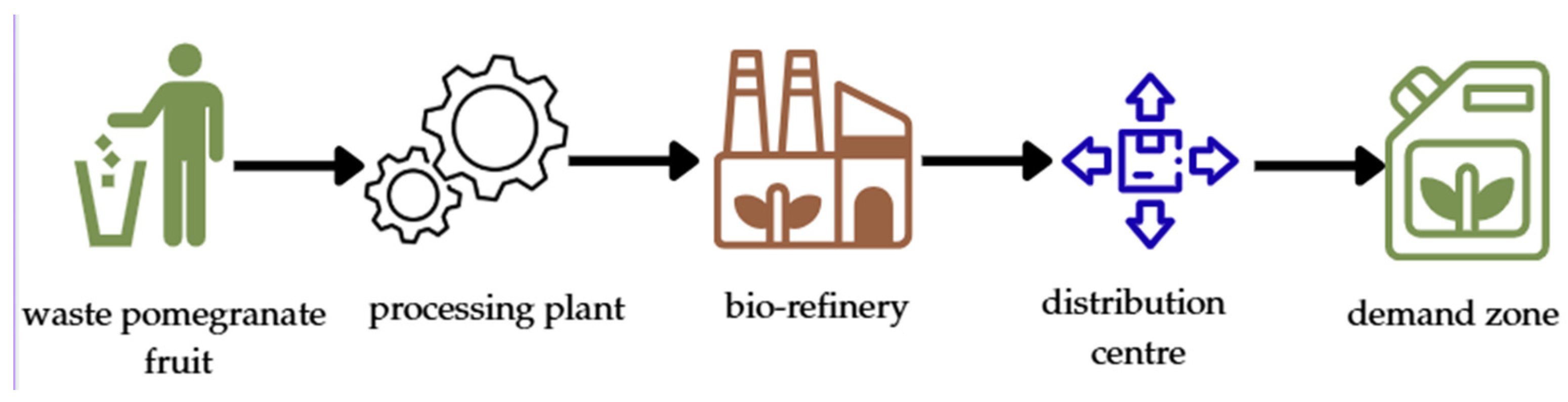
The aim of the present study is to propose a mathematical modelling approach for cost optimization which ensures the efficiency and cost-effectiveness of bioethanol production from pomegranate waste across the entire supply chain. With the use of a genetic algorithm, this study represents relevant points such as the availability of pomegranate waste, the construction of bio-refineries, and the transfer of the produced fuel, including sustainability and economic aspects. This aim could be useful as a source of information for pomegranate growers, policymakers and the scientific community involved in the development of second-generation biofuel. The sustainable supply chain for transforming pomegranate waste into biofuel is shown in Figure 2. This study seeks to answer the following research questions:
  • How can agricultural waste like pomegranate residues be effectively utilized to produce sustainable bioethanol?
  • How can this framework contribute to energy policy planning of decentralized, renewable fuel options?
  • What policy and infrastructural inventions are needed to scale pomegranate-waste-based biofuel production in developing agricultural economies?

Orientation of the Study

This study is organized into nine sections. Section 1 contains the introduction for this study; Section 2 contains the literature review which explains research gaps and the contribution of the authors. Section 3 contains assumptions and notations for this study. The mathematical model for a pomegranate-waste-based biofuel sustainable supply chain (PW-BFSSC) and all of its components are included in Section 4. Section 5 contains the solution methodology; Section 6 contains the numerical example to validate the study. Section 7 contains the results with a sensitivity analysis. Section 8 contains managerial insights and finally, Section 9 concludes the study with its future scope and limitations.

2. Literature Review

Recent research on biofuel production has highlighted the growing significance of optimizing sustainable and economical supply chains. The application of biofuel in the future is described in [10]. This study focuses on the generation of biofuel from pomegranate waste and extends existing research by proposing a scalable and sustainable supply chain model. There is growing interest in using biofuel because of its eco-friendly advantages and engine performance which make it an attractive alternative to petroleum-based diesel. It is possible to mitigate the impact of greenhouse gases and dependence on imported oil by implementing such initiatives [11].
Agricultural waste is an ideal source of renewable energy since it is easy and inexpensive to obtain. Studies show that it can reduce the utilization of fossil fuels and create less greenhouse gases [7]. Every year, farmers discard roughly 5 billion tons of waste. A significant portion is not utilized sufficiently, which is detrimental to the environment [9]. In the same way, ref. [12] utilized GIS to investigate banana residual biomass for making ethanol and power. This shows that agricultural waste may be converted into bioenergy. Both findings indicate that using various forms of biomass can enhance renewable energy systems and mitigate environmental impact.
Recent progress in biodiesel research includes technological innovation, sustainability, and a variety of feedstock sources. A comprehensive life cycle analysis of algae-derived biodiesel reveals its potential benefits and environmental challenges [13]. A framework was proposed for the long-term manufacture of biodiesel from leftover animal fat, focusing on making the supply chain more efficient and less harmful to the environment [14]. In a previous study of modern biodiesel production techniques, ref. [15] pointed out improvements in both feedstocks and conversion technologies. The performance of engines with varying fuel injection timings has been examined to assess the viability of utilizing waste plastic lubricants as alternative fuels, illustrating the potential efficacy of unconventional energy sources [16]. These results together indicate that biofuel research is increasingly prioritizing solutions that are both sustainable and circular.
This study examines pomegranate waste because of its potential as a sustainable resource for enhancing supply chain efficiency and producing biofuels. Pomegranate peel waste has been investigated as a potential feedstock for biodiesel production using Bacillus cereus [17]. The research showed that lipids can be easily extracted and converted into biodiesel, indicating that agricultural waste may be used to provide sustainable fuel. This strategy successfully illustrated the economic and ecological benefits of using pomegranate peels to produce bioenergy. Improved agricultural waste management requires efficient closed-loop supply chain models. A framework for a sustainable supply chain for managing pomegranate waste in Iran was suggested by [18], which is consistent with our plan to use pomegranate waste to create biofuels.
Through innovative modelling techniques, recent research has advanced the optimization of the biodiesel supply chain. In order to balance ecological and energy efficiency, ref. [19] created a sustainability index to improve the design of biodiesel networks. To address uncertainty in biodiesel supply chains, a robust possibilistic flexible model has been developed to enhance system resilience and cost efficiency [20]. With a focus on social sustainability in Iran, ref. [21] presented a multi-objective model for second-generation biodiesel. Multi-objective genetic algorithms have been applied to optimize production in order to maximize yield and minimize waste [22]. By balancing cost, operational efficiency and sustainability, ref. [23] maximized the production of biomass-based fuel presenting industry-driven alternatives to fossil fuels.
Recent research has significantly advanced the understanding of biofuel applications in diesel engines with a strong focus on sustainability, engine performance and emission reduction. Green microalgae biofuel generation was assessed by [24], which showed that it might lower emissions in common rail diesel engines while preserving sustainability. Studies on different biofuels and diesel blends have indicated enhanced engine performance along with lower environmental impacts compared to pure diesel fuel [25]. By demonstrating the feasible emission characteristics of Roselle and Karanja biodiesel through testing in compression ignition engines, ref. [26] made a further contribution. The latest research on Guizotia abyssinia combined with nano-additives was conducted by [27], revealing an enhancement in sustainability and energy efficiency indices. Recent advancements in biofuel research have shown that several forms of agricultural waste may serve as sustainable feedstock. Researchers are now developing methods to enhance the efficiency of these operations. Also, ref. [28] demonstrated that banana rachis can serve as a sustainable source of biofuel by applying their optimization method to identify an inexpensive solution to repurpose farm waste into valuable products.
The case study by [18] demonstrates many methods for integrating pomegranate waste into a sustainable closed-loop supply chain. Their method of multi-objective optimization finds a reasonable balance between environmental impact and cost-effectiveness. This means that agricultural waste may be converted into valuable biofuels in a scalable manner. This study highlights how effective supply chain architecture may turn pomegranate waste from an environmental burden into a source of renewable energy. It may also help with waste management and provide new sources of income in rural regions. This research attempts to address the unexplored issue of enhancing the supply chain for biofuel produced from pomegranate waste. A comparative overview of previous studies is provided in Table 1.

2.1. Research Gaps

  • Previous studies on the biofuel supply chain focus on commonly used agricultural wastes such as sugarcane bagasse, corn stover, banana rachis, and algae while pomegranate agricultural waste is still often unexplored. There is a gap in the literature because the few studies that deal with pomegranate waste mainly focus on biochemical conversion and extraction, with little attention paid to integrated supply chain design, logistics coordination, and cost-effective multi-echelon optimization.
  • Most of the PW-BFSSC does not focus on multiple supply sites, multiple storage and distribution centres and multiple demand zones. This study examines several supply sites, processing plants, bio-refineries, distribution centres and demand zones to address this gap.
  • Prior studies do not consider the uniform fleet of trucks in PW-BFSSC. The uniform fleet of trucks used to transport the pomegranate waste, extracted juice and biofuel is taken into consideration in this study.

2.2. Novelty of the Study

This study introduces an integrated optimization framework for a sustainable biofuel supply chain based on pomegranate waste, advancing the field in several key areas. We develop a finite multi-period, multi-echelon model that integrally coordinates investment, production, inventory, and transportation, shifting the focus from traditional waste material. One aspect that makes this study distinctive is the incorporation of policy-driven E10 blend demand, which is vital for decentralized economies. We employ a genetic algorithm (GA) to solve this complex, nonlinear mixed-integer problem. This makes the model more practically applicable and easier to scale. The framework incorporates sustainability by optimizing the supply chain to convert waste into fuel, which directly supports the goals of the Sustainable Development Goals (SDGs). Thus, the study establishes a scalable model designed to support the conversion of underutilized agricultural waste into second-generation biofuel.

3. Assumptions

  • Pomegranate waste (such as peels, seeds and pulp) from pomegranate cultivation and processing is taken into consideration for biofuel production. In this study, several locations have been selected for the collection of this waste.
  • The demand for E10, containing 90% gasoline and 10% ethanol, is considered in each planning period [28].
  • The planning period is restricted to a finite number of years.
  • In this model, at each level of PW-BFSSC a uniform fleet of trucks of type l has been considered. This assumption accounts for variations in truck capacities (tons per gallon) and to ensure uniformity, all trucks are treated as a single type l.

4. Mathematical Model

The formulation of an objective function is essential to mathematically define the relationship between system inputs and corresponding optimal outputs. This study presents a mathematical model for optimizing a pomegranate-waste-based biofuel sustainable supply chain to achieve economic sustainability. The GA is used to solve the model, providing a robust computational foundation for large-scale supply chain optimization. The notation used in this study is presented in Table 2.

4.1. Economic Objective

The advertising strategy for the PW-BFSSC includes print, outdoor, television and internet channels. The total advertisement cost is represented by C a d v :
C a d v = P c + O c + T c + I c
The costs of installation for p processing plant (capacity x), q bio-refinery equipped with technology a (capacity y) and r distribution centre with capacity z. The total installation cost is represented by C o p e n :
C o p e n = 1 p , x , t I C P p x ϕ p t m p x + 1 q , y , a , t I C B q y a π q a t n q a y + 1 r , z , d , t I C D r z ψ r d t o r z
The per unit purchasing cost of pomegranate waste, supplied to each processing plant p from supply point k. The total purchasing cost of pomegranate waste is represented by C p u r c h p o m :
C p u r c h p o m = 1 k , p , t P k t O k p t
The per unit cost for handling pomegranate waste at each processing plant p and the total handling cost is represented by C h a n d p o m :
C h a n d p o m = 1 k , p , t H p O k p t
The per unit inventory holding cost for pomegranate juice in p processing plant, per unit inventory holding cost for produced bioethanol in q bio-refinery and the inventory holding cost for bioethanol in distribution centre r. The total inventory holding cost is represented as C i n v :
C i n v = 1 p , t H O P p t I p t + 1 q , a , t H O B q a t J q a t + 1 r , t H O D r t K r t
The per unit production cost of pomegranate juice at processing plant p, the per unit production cost to produce bioethanol at q bio-refinery and the total production cost is represented as C p r o d :
C p r o d = 1 p , t P C P p t ϕ p t + 1 q , a , t P C B q a t π q a t
The per unit transportation cost to transport pomegranate waste from supply point k to processing plant p, pomegranate juice from processing plant p to bio-refinery q, produced biofuel from bio-refinery q to distribution centre r and then distribution centre r to demand zone d using truck type l. The total transportation cost is represented as C t r a n s :
C t r a n s = 1 l , k , p , t T W k p l O k p t + 1 l , p , q , t T J p q l O p q t + 1 l , q , r , a , t T B q r l O q r a t + 1 l , r , d , t T B r d l ψ r d t
Equation (8) formulates the total economic cost of the PW-BFSSC by combining all individual cost components defined in Equations (1)–(7). This function includes advertising expenses across different media channels, facility setup costs for processing plants, bio-refineries and distribution centres as well as handling and inventory holding costs. It also incorporates production costs at various stages and transportation expenses throughout the supply network.
M i n f e c o n o m i c = 1 p , x , t I C P p x ϕ p t m p x + 1 q , y , a , t I C B q y a π q a t n q a y + 1 r , z , d , t I C D r z ψ r d t o r z + 1 k , p , t P k t O k p t + 1 k , p , t H p O k p t + 1 p , t H O P p t I p t + 1 q , a , t H O B q a t J q a t + 1 r , t H O D r t K r t + 1 p , t P C P p t ϕ p t + 1 q , a , t P C B q a t π q a t + 1 l , k , p , t T W k p l O k p t + 1 l , p , q , t T J p q l O p q t + 1 l , q , r , a , t T B q r l O q r a t + 1 l , r , d , t T B r d l ψ r d t + P c + O c + T c + I c
The economic objective of this study focuses on minimizing the total cost of the PW-BFSSC, which includes the installation costs of biofuel production plants, the procurement and processing costs of pomegranate agricultural waste, inventory maintenance costs at various supply chain stages, production costs for biofuel, and transportation costs for moving raw material and final products between facilities.

4.2. Constraints

It is essential to include all the logical constraints into the optimization model, as they represent real-world limitations on production, transportation and supply capacities across different stages of the biofuel supply chain. These constraints ensure the feasibility of the final solution.
Supply, Demand and Budget Constraints
1 p O k p t S k t k , t
1 r ψ k p t μ d t d , t
C a d v M a x a d v
Constraints in transforming raw pomegranate waste biomass into pomegranate juice at the processing plant:
α 1 k O k p t = ϕ p t p , t
The amount of pomegranate juice supplied to all bio-refineries must be less than that produced at each processing facility:
1 q O p q t ϕ p t p , t
Mass balance constraints for converting pomegranate juice to biofuel:
β 1 p O p q t = 1 a π q a t   q , t
The total quantity sent to the distribution centre should not exceed the amount produced by the bio-refinery:
1 q , r O q r a t 1 a π q a t   q , t
In each period, the volume of biofuel delivered from the bio-refinery to the distribution centres must be greater than the demand centre volumes:
1 d ψ r d t 1 q , a O q r a t   r , t
Inventory balance constraints at processing plants:
I p , t = ϕ p t 1 q O p q t   p , t ; t = 1
I p , t = I p , t 1 + ϕ p t 1 q O p q t   p , t ; t 2
Inventory balance constraints at bio-refineries:
1 q J q a t = 1 a π q a t 1 a , r O q r a t   q , t ; t = 1
1 q J q a t = 1 q J q , a , t 1 + 1 a π q a t 1 a , r O q r a t   q , t ; t 2
Inventory balance constraints at distribution centres:
K r , t = 1 q , a O q a r t 1 d ψ r d t   r , t ; t = 1
K r , t = K r , t 1 + 1 q , a O q a r t 1 d ψ r d t   r , t ; t 2
Each bio-refinery is assigned a single technology and has limited production capacity:
1 y n q a y 1 , q , a a n d 1 a n q a y 1 , q , y
Each processing plant and distribution centre has a single capacity selection:
1 x m p x 1 , p a n d 1 z o r z 1 , r
Capacity Constraints
1 k O k p t 1 x M C A P p x m p x , p , t
1 p O p q t β 1 a , y M C A P q y n q a y , p , t
1 q O q r a t 1 z M C A P r z o r z , r , a , t
Budgetary constraints on the maximum number of production sites are:
1 p , x m p x M a x X
1 q , a , y n q a y M a x Y
1 r , z o r z M a x Z
Non-Negative Decision Variables
The outcome is determined by decision variables. Decision variables, which comprise binary and continuous variables, provide the optimal solution.
C o n t i n u o u s   D e c i s i o n   V a r i a b l e s   0 and   m p x ,   n q a y ,   o r z { 0,1 }     p , q , r , a , x , y , z

5. Solution Methodology

GA is a category of optimization techniques founded on the principle of natural selection. The primary advantage of GA is its ability to identify near-optimal solutions to complex problems. The proposed model is formulated as a large-scale, single-objective MILP problem with the aim of minimizing total economic costs. It combines discrete and continuous decision variables with logistical constraints, creating a highly combinatorial and complex solution space. Exact optimization methods can become computationally prohibitive for such large-scale problems. To address this, GA is selected for its global search capability, robustness, and flexibility in handling complex problem structures. This optimization is based on natural selection and genetics. Selection, crossover, and mutation are the three fundamental genetic processes involved in GA. Its population-based strategy enhances exploration and exploitation, increasing the likelihood of finding near-optimal solutions in reasonable computational time, making it well-suited to the demands of the proposed model.
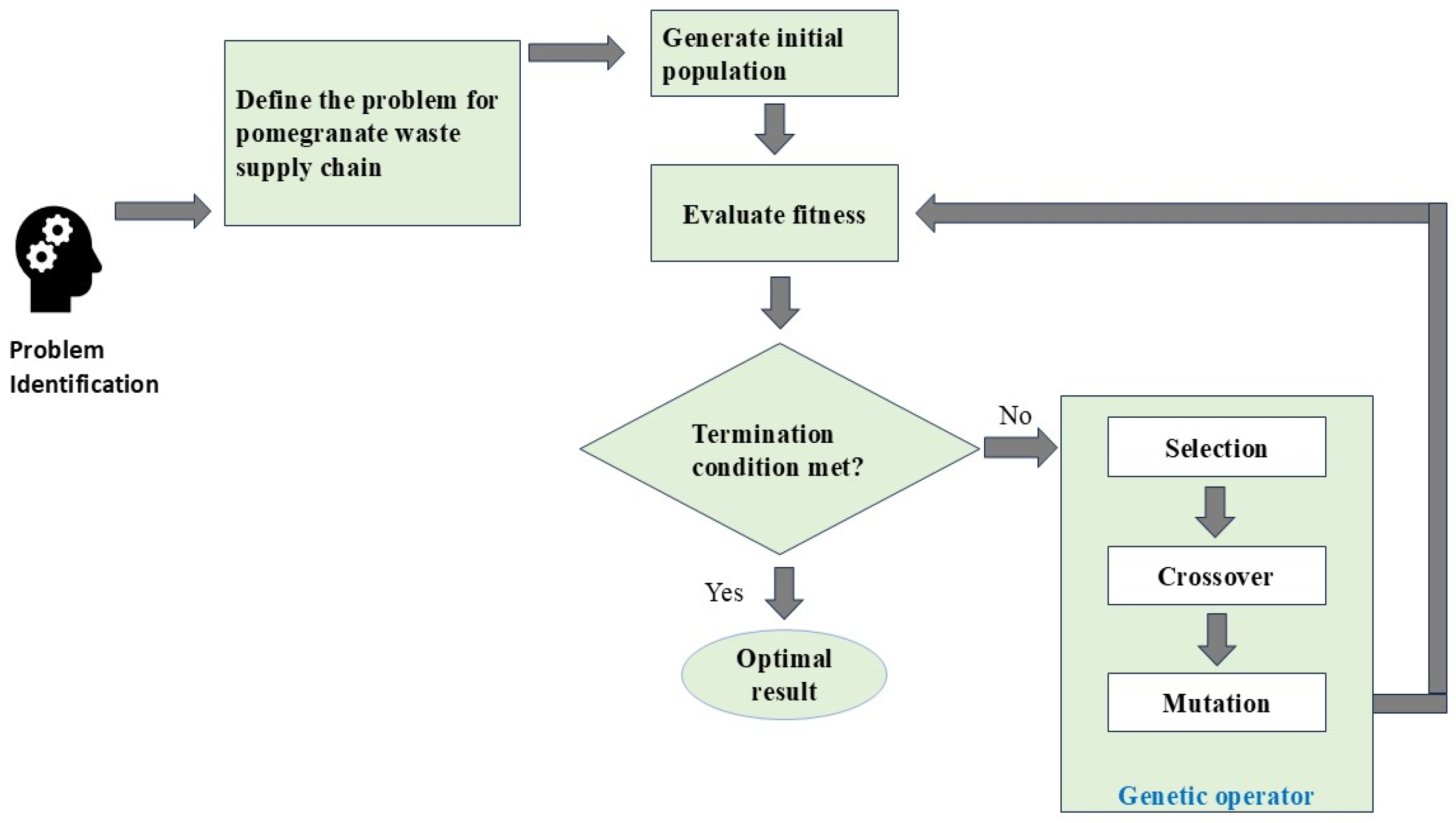
MATLAB R2019b is used to implement the genetic algorithm, where each chromosome represents a complete production and inventory plan for all facilities across all periods. Every gene is associated with the amount that is produced or delivered throughout a given period. The fitness function is designed to minimize overall costs, including advertisement, inventory holding, production, transportation and waste purchasing and handling costs, while penalizing model constraint violations proportionately. Individual genes are chosen for reproduction through tournament selection. A mutation is performed on each gene with a probability of 0.06 and a one-point crossover operator is used with a probability of 0.8. A relatively high crossover probability (0.8) promotes effective information exchange between solutions, while a moderate mutation probability (0.06) helps prevent premature convergence without introducing excessive randomness. A population of 100 individuals is chosen, and the algorithm stops after 500 generations, or earlier if no progress is observed after 50 generations. The population size and generation limit are determined to achieve stable convergence and high-quality solutions within reasonable computational time. The average processing time is about five minutes per instance on a standard desktop computer (Intel i5 processor with 16 GB RAM). To ensure reproducibility, the pseudo-code of the algorithm is included in the manuscript. Figure 3 represents the flowchart for the employed methodology. The algorithm used to solve the proposed study using the GA is as follows:
Step 1—Problem formulation: Define the optimization problem in terms of minimizing the objective function as Min f e c o n o m i c (x).
Step 2—Population initialization: Randomly initialize the population size n with individual i ( x 1 , x 2 , x 3 ,…… x i ) to begin the GA procedure. The initial values are generated within the specific bounds
x n i = lower   bound   +   rand   ×   ( upper   bound     lower   bound )
Step 3—Fitness Evaluation: Evaluate the fitness of everyone in the population using the objective function f e c o n o m i c (x). The fitness value corresponds directly to the objective function value.
Step 4—Selection: Following the selection procedure, a pair of randomly chosen individuals will be subject to crossover, depending on their fitness to produce for the next generation. The selection probability p i for individuals i is given by:
p i =   f e c o n o m i c ( x i ) j = 1 n f e c o n o m i c ( x j )
Step 5—Crossover: To make offspring, apply crossover operators to pairs of chosen parents (combine genetic material), which combines their genetics to produce multiple offspring.
x n i + 1 = α × x n i + ( 1 α ) × x n j
Parent 1 = x n i ,   Parent 2 = x n j
Next generation = xni+1; α is a random variable between 0 and 1.
Step 6—Mutation: The crossover is followed by the random mutation process to random changes in individuals to maintain diversity in the population. Replace the parent with a new offspring individual.
if   f e c o n o m i c x n i + 1 = f e c o n o m i c x n i
replace   x n i   to   x n i + 1
Otherwise, the algorithm returns to step 3 for re-evaluation until termination criteria are met.
Step 7—Output:
{ best   individual ,   best   value }   =   { decision   variable ,   optimum   value }

6. Numerical Example

The numerical example is used to further illustrate how this recommended method fits the parameterized model. The cost per unit is multiplied by the total distance to determine the transportation expenses between bioethanol production facilities [14]. Practical estimates at different manufacturing phases are shown in Table 3. Two processing plants (P1 and P2), two bio-refineries (F1 and F2), two pomegranate waste supply locations (K1 and K2), two distribution centres (R1 and R2) and four biofuel markets (D1, D2, D3, and D4) were all taken into consideration in this study. Pomegranate waste was transported from the supply sites to the processing facilities using trucks. The extracted pomegranate juice was then delivered by trucks from the processing plants to the bio-refineries. Finally, the bioethanol was transported to the distribution centre before reaching the demand zones. Input parameters related to the economic objective are shown in Table 3. Most of the parameters used in this study are adopted from [28] and applied in the numerical example to demonstrate the applicability of the proposed model.

7. Results and Sensitivity Analysis

For the entire supply chain, the optimal cost of the model is $ 1.02173 × 10 6 . Supply point K1 supplied 525.02 tons of pomegranate waste to P1 and 662.8 tons to P2. Additionally, 270.19 tons of pomegranate waste were transferred from supply point K2 to processing plant P1, and 925.57 tons were shipped to processing plant P2. After processing, the extracted juice was shipped to the bio-refineries. Plant P1 delivered 2123.45 gallons to bio-refinery F1 and 8286.28 gallons to F2. Plant P2 delivered 3908.49 gallons to bio-refinery F1 and 1221.28 gallons to F2. The high-end bioethanol produced at the exclusive bio-refineries F1 and F2 was sent to the distribution centres R1 and R2. F1 shipped 1628.66 gallons of bioethanol to distribution centre R1, and 8580.92 gallons to distribution centre R2. Furthermore, 986.02 gallons of bioethanol were shipped from F2 to distribution centre R1, and 3264.64 gallons were sent from bio-refinery F2 to distribution centre R2. This bioethanol was distributed from storage facilities to bioethanol demand centres. At various PW-BFSSC phases, the optimal shipment of bioethanol, pomegranate waste and pomegranate waste juice are displayed in Table 4.

Sensitivity Analysis

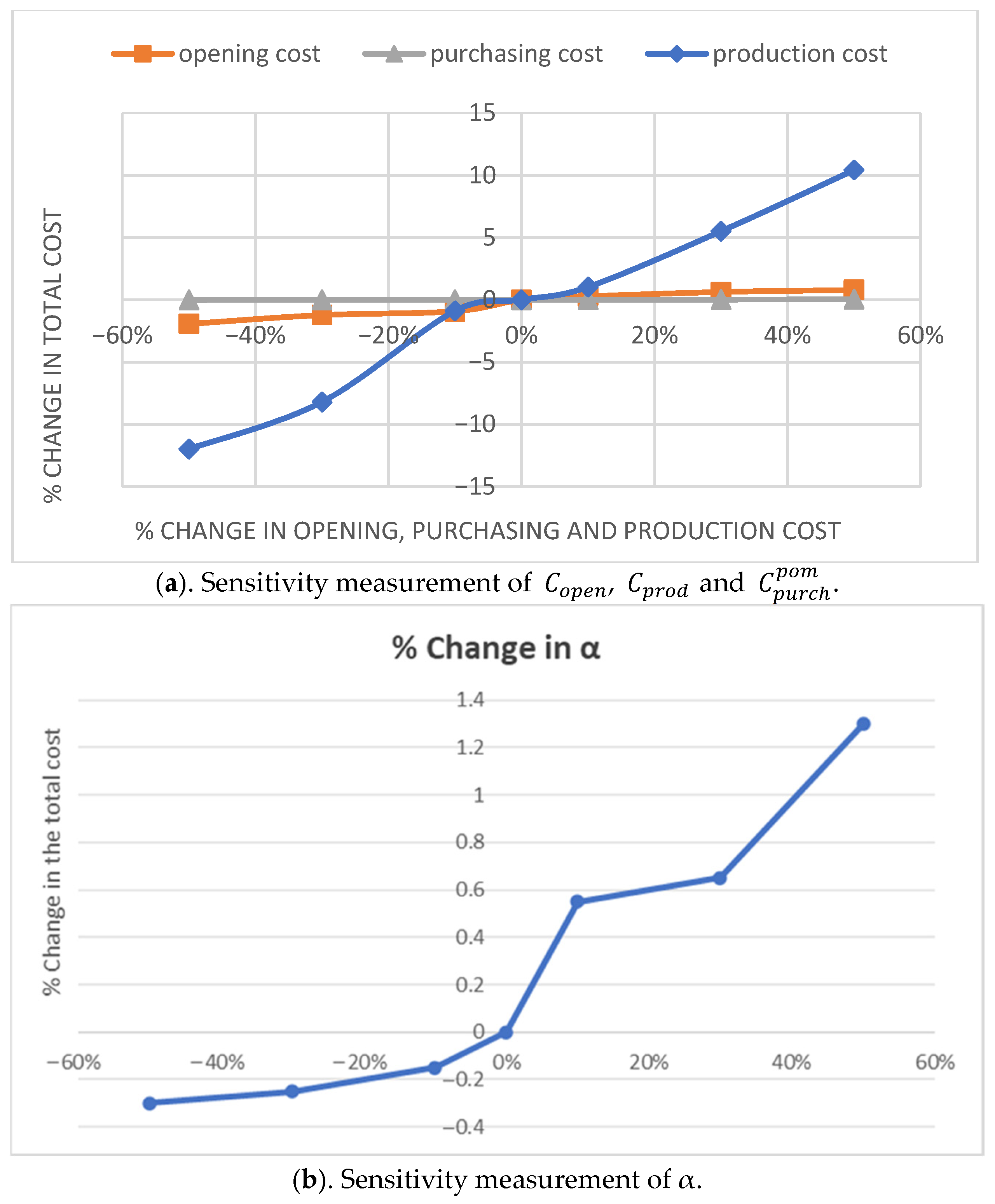
Sensitivity analysis is a useful method for figuring out how various parameters fit into the created model. It offers a comprehensive perspective of the input variable and the results, enabling the identification of the key elements influencing the system’s behaviour. We plotted the percentage change in total cost ( f e c o n o m i c ) with respect to the changes in the opening cost ( C o p e n ), production cost ( C p r o d ) and purchasing cost ( C p u r c h p o m ) to study the sensitivity of the total cost depending on the three cost components in Figure 4a. In Figure 4b a sensitivity analysis is conducted on the conversion coefficient α. The parameter varied within a reasonable range to evaluate its impact on the total cost. The results indicate that changes in the conversion coefficient led to proportional variations in total cost, with observed sensitivity values ranging from −0.34 to 1.30. We varied each cost parameter over a pre-specified independent range while fixing the other costs and analyzed the corresponding changes in total cost by plotting. This enabled us to see the relative impact of each cost component on the overall cost structure in Table 5. In addition, the sensitivity analysis of scale and cost parameters and significant variations are represented in Figure 4.
  • The main insight is that the production cost of bioethanol (from pomegranate waste) plays the most significant role at every stage of the SC. Production cost is the most sensitive and influential factor on total cost as shown in Figure 4a.
  • Figure 4a illustrates that the purchasing cost of pomegranate waste has little influence on the overall total cost. Also opening cost shows low sensitivity like purchasing cost.
  • In Figure 4b a sensitivity analysis indicates that changing the conversion coefficient leads to proportional variations in total cost, with observed sensitivity values ranging from −0.34 to 1.30. This indicates that while α is an important technical parameter, the economic performance of the system is moderately sensitive to α.
  • Decision-makers should focus on managing production costs for effective cost control and optimization.

8. Discussion

The findings of this study illustrate the feasibility of improving a PW-BFSSC by genetic algorithms, with a focus on economic sustainability. The proposed framework explicitly integrates sustainability considerations by optimizing the supply chain to convert waste into fuel, thereby contributing directly to the achievement of the Sustainable Development Goals (SDGs), particularly those related to responsible production, clean energy, and environmental protection. The sensitivity analysis shows that the production costs have the most impact on the entire cost of the supply chain. This highlights how crucial it is to have technology that enables flexible process adaption and makes the most of economies of scale. This research suggests an eco-friendly way to turn farm waste into power that fits with global goals for sustainability. This embodies the principles of a circular economy since it transforms waste from farming into energy instead of throwing it away. This is a way to generate sustainable energy and get rid of waste at the same time. The framework is scalable and can be applied to large-scale industrial biofuel production systems or a small company in the area. This study provides substantial practical insights for end-users, including farmers, biofuel producers, and policymakers, while simultaneously decreasing costs and improving efficiency via effective logistics and resource allocation. Further, these results suggest that biofuels derived from agricultural waste can support governments in emphasizing energy security and sustainability. This approach can also be applied to other forms of organic waste, including citrus peels or coconut husks. This facilitates the adoption of renewable energy.
The methodology and results of this study directly respond to the research goals presented in the introduction, offering theoretically robust and practically relevant insights for stakeholders throughout the biofuel supply chain. This study demonstrates that an effective multi-stage supply chain can convert pomegranate waste, rich in fermentable sugars, into bioethanol. The suggested PW-BFSSC model includes collecting, processing, fermenting, and distributing waste. The total cost of the system was $ 1.02173 × 10 6 , which suggests that using pomegranate waste as a feedstock for manufacturing second-generation biofuels is both feasible and cost-effective. This approach provides a replicable framework to decentralize biofuel production in rural regions. This would assist in achieving SDGs like renewable energy and waste reduction, lower reliance on fossil fuels, and improve the economy of rural areas.
The study shows that the method can only be improved if there are financial incentives to invest in bio-refineries, especially in technology that lowers prices. It also requires a good strategy for picking up and processing waste, as well as a way for the public and private sectors to work together to distribute the risks of investment. The cost of raw materials is not a primary concern as variations in purchasing costs a minimal impact on the total cost of the model. This means that policymakers do not have to worry about how much feedstock costs anymore. Instead, corporations should focus on developing innovative strategies to save costs in manufacturing and enhance the conversion process efficiency.

Managerial Insights and Practical Significance

This study emphasizes the effective conversion of pomegranate agricultural waste into a sustainable biofuel feedstock, presenting an approach that is both economically viable and environmentally responsible. The results have important implications for biofuel producers, farmers and policymakers who want to promote sustainability in agro-industrial supply chains.
  • Farmers, waste processors, and biofuel companies may all use the optimization model that was developed. It may help them organize their resources and generate energy from waste.
  • The model is used to coordinate the supply of agricultural residue, the plant capacity and the distribution of biofuel production, enabling the identification of an optimal scheduling of waste collection, processing capacity and a sustainable distribution strategy, in economic and environmental terms.
  • The information obtained can be used to reduce the operational costs by identifying critical areas for improvement, which can include decreasing the transportation cost by better logistics or improving processing efficiency.
  • With challenging legislations and societal pressure towards sustainable measures, this model is driven to reduce waste, enabling a circular economy approach by converting agricultural by-products into renewable energy.
  • The model is flexible enough to be applicable to other high-organic-waste-generating agricultural sectors such as citrus, olive and coconut production, meaning that similar waste-to-biofuel schemes can be set up. It will also help industries in environmentally sensitive regions to achieve the sustainability targets in a cost-effective way.
  • The proposed optimization framework functions as a practical decision-support tool, enabling managers to optimize waste collection, processing, and biofuel distribution. It supports cost reduction, efficient resource utilization, regulatory compliance, and the transition toward a sustainable supply chain.
The findings in this work provide solid support for further development of sustainable biofuel production by utilizing agricultural residues. This solution would not only be a benefit for waste management and green energy provision but also be in line with the international movement towards a circular economy. Its potential for commercial scaling makes it a promising solution for any new market and players in agro-industrial sectors looking for sustainable and profitable means of waste valorization.

9. Conclusions

The present study proposes a model for a bioethanol production chain with pomegranate agricultural residues in which optimization techniques could play an essential role in terms of cost efficiency, retained food and sustainability, and use a genetic algorithm to optimize the PW-BFSSC. Concentrating on pomegranate waste, the study upholds an environmentally friendly approach for the efficient transformation of agricultural waste into second-generation biofuels, which lessens dependence on fossil fuels and reduces environmental impact. The model makes decisions about five stages of supply chain network incommunicable waste collection, processing, and then two levels each of biofuel classifications and distributions to satisfy both economic and environmental aspects. The numerical results verify the effectiveness of the model, where the optimal total cost is equal to $1.02173 × 10⁶ and the production cost is found to be the most important element affecting supply chain performance. Basically, we have shown how to make biofuel in a practical way that can work on a large scale. This study uses agricultural waste for energy, helping to clean up the environment and move towards cleaner fuel. Future technology development, policy support and supply chain improvements could favour the feasibility and adoption of these kinds of waste-to-energy concepts and promote a sustainable and resource-efficient future.

9.1. Limitations of the Study

The supply chain model considers pomegranate waste without exploring the potential benefits of combining it with other agricultural residues to enhance efficiency. The model also assumes constant supply and demand, ignoring seasonal changes and market shifts.

9.2. Future Scope

This study can be extended by incorporating newer technologies such as AI and the IoT for efficient biofuel production and real-time supply chain tracking. It would be interesting to investigate the utilization of this model for other agricultural wastes like agro-industrial waste or citrus peel, increasing the versatility of this model. Future research can validate the model using real-world regional data to further enhance its practical applicability and decision-support capability. Further, a comprehensive Life Cycle Assessment (LCA) could assess the environmental benefits, and policy and market levers must be analyzed to enable an upscaling. Lastly, introducing stochastic modelling in this system could serve to accommodate uncertainties, including seasonal variability of the waste and irregular demand, thus making the system more robust.

Author Contributions

V.S.: methodology, writing—original draft, software, data curation, resources, formal analysis, visualization, and writing—review and editing. A.A.: methodology, software, and formal analysis. A.P.S. and A.C.: supervision, conceptualization, validation, investigation, resources, writing—review and editing, project administration, and visualization. V.K.: conceptualization, supervision, validation, and formal analysis. All authors have read and agreed to the published version of the manuscript.

Funding

This research received no external funding.

Data Availability Statement

Data will be made available on request.

Acknowledgments

The authors are thankful to Shri Guru Ram Rai P.G. College, Dehradun 248001, Uttarakhand, India; Graphic Era (Deemed to be University), Bell Road, Clement Town, Dehradun 248002, Uttarakhand India; DBS Global University, Dehradun 248011, Uttarakhand, India; University of the Incarnate Word, San Antonio, TX-78209, USA for their support during this research work.

Conflicts of Interest

The authors declare no conflicts of interest.

Abbreviations

The following abbreviations are used in this manuscript:
PW-BSSCPomegranate-waste-based biofuel sustainable supply chain
SDGSustainable Development Goals
GAGenetic algorithm
SCSupply chain

References

  1. Soergel, B.; Kriegler, E.; Weindl, I.; Rauner, S.; Dirnaichner, A.; Ruhe, C.; Hofmann, M.; Bauer, N.; Bertram, C.; Bodirsky, B.L.; et al. A sustainable development pathway for climate action within the UN 2030 Agenda. Nat. Clim. Change 2021, 11, 656–664. [Google Scholar] [CrossRef]
  2. Cherubini, F.; Ulgiati, S. Crop residues as raw materials for biorefinery systems—A LCA case study. Appl. Energy 2010, 87, 47–57. [Google Scholar] [CrossRef]
  3. Borodin, V.; Bourtembourg, J.; Hnaien, F.; Labadie, N. Handling uncertainty in agricultural supply chain management: A state of the art. Eur. J. Oper. Res. 2016, 254, 348–359. [Google Scholar] [CrossRef]
  4. Hu, J.Y.; Zhang, J.; Mei, M.; Yang, W.M.; Shen, Q. Quality control of a four-echelon agri-food supply chain with multiple strategies. Inf. Process. Agric. 2019, 6, 425–437. [Google Scholar] [CrossRef]
  5. Kalaycıoğlu, Z.; Erim, F.B. Total phenolic contents, antioxidant activities, and bioactive ingredients of juices from pomegranate cultivars worldwide. Food Chem. 2017, 221, 496–507. [Google Scholar] [CrossRef] [PubMed]
  6. Liu, S.; Xu, T.; Wu, X.; Lin, Y.; Bao, D.; Di, Y.; Ma, T.; Dang, Y.; Jia, P.; Xian, J.; et al. Pomegranate peel extract attenuates D-galactose–induced oxidative stress and hearing loss by regulating PNUTS/PP1 activity in the mouse cochlea. Neurobiol. Aging 2017, 59, 30–40. [Google Scholar] [CrossRef]
  7. Sarkar, N.; Ghosh, S.K.; Bannerjee, S.; Aikat, K. Bioethanol production from agricultural wastes: An overview. Renew. Energy 2012, 37, 19–27. [Google Scholar] [CrossRef]
  8. Mphahlele, R.R.; Stander, M.A.; Fawole, O.A.; Opara, U.L. Effect of fruit maturity and growing location on the postharvest contents of flavonoids, phenolic acids, vitamin C and antioxidant activity of pomegranate juice (cv. Wonderful). Sci. Hortic. 2014, 179, 36–45. [Google Scholar] [CrossRef]
  9. Kumar, R.; Strezov, V.; Weldekidan, H.; He, J.; Singh, S.; Kan, T.; Dastjerdi, B. Lignocellulose biomass pyrolysis for bio-oil production: A review of biomass pre-treatment methods for production of drop-in fuels. Renew. Sustain. Energy Rev. 2020, 123, 109763. [Google Scholar] [CrossRef]
  10. Adeniyi, O.M.; Azimov, U.; Burluka, A. Algae biofuel: Current status and future applications. Renew. Sustain. Energy Rev. 2018, 90, 316–335. [Google Scholar] [CrossRef]
  11. Wyatt, V.T.; Hess, M.A.; Dunn, R.O.; Foglia, T.A.; Haas, M.J.; Marmer, W.N. Fuel properties and nitrogen oxide emission levels of biodiesel produced from animal fats. J. Am. Oil Chem. Soc. 2005, 82, 585–591. [Google Scholar] [CrossRef]
  12. Guerrero, A.B.; Aguado, P.L.; Sánchez, J.; Curt, M.D. GIS-Based Assessment of Banana Residual Biomass Potential for Ethanol Production and Power Generation: A Case Study. Waste Biomass Valorization 2016, 7, 405–415. [Google Scholar] [CrossRef]
  13. Chamkalani, A.; Zendehboudi, S.; Rezaei, N.; Hawboldt, K. A critical review on life cycle analysis of algae biodiesel: Current challenges and future prospects. Renew. Sustain. Energy Rev. 2020, 134, 110143. [Google Scholar] [CrossRef]
  14. Singh, S.K.; Chauhan, A.; Sarkar, B. Strategy planning for sustainable biodiesel supply chain produced from waste animal fat. Sustain. Prod. Consum. 2024, 44, 263–281. [Google Scholar] [CrossRef]
  15. Yusuf, N.; Kamarudin, S.; Yaakub, Z. Overview on the current trends in biodiesel production. Energy Convers. Manag. 2011, 52, 2741–2751. [Google Scholar] [CrossRef]
  16. Mohan, R.K.; Sarojini, J.; Ağbulut, Ü.; Rajak, U.; Verma, T.N.; Reddy, K.T. Energy recovery from waste plastic oils as an alternative fuel source and comparative assessment of engine characteristics at varying fuel injection timings. Energy 2023, 275, 127374. [Google Scholar] [CrossRef]
  17. Kanakdande, A.P.; Khobragade, C.N.; Mane, R.S. Utilization of pomegranate waste-peel as a novel substrate for biodiesel production by Bacillus cereus (MF908505). Sustain. Energy Fuels 2020, 4, 1199–1207. [Google Scholar] [CrossRef]
  18. Gholipour, A.; Sadegheih, A.; Mostafaeipour, A.; Fakhrzad, M.B. Designing an optimal multi-objective model for a sustainable closed-loop supply chain: A case study of pomegranate in Iran. Environ. Dev. Sustain. 2024, 26, 3993–4027. [Google Scholar] [CrossRef]
  19. Ren, J.; Tan, S.; Yang, L.; Goodsite, M.E.; Pang, C.; Dong, L. Optimization of emergy sustainability index for biodiesel supply network design. Energy Convers. Manag. 2015, 92, 312–321. [Google Scholar] [CrossRef]
  20. Habib, M.S.; Omair, M.; Ramzan, M.B.; Chaudhary, T.N.; Farooq, M.; Sarkar, B. A robust possibilistic flexible programming approach toward a resilient and cost-efficient biodiesel supply chain network. J. Clean. Prod. 2022, 366, 132752. [Google Scholar] [CrossRef]
  21. Mohtashami, Z.; Bozorgi-Amiri, A.; Tavakkoli-Moghaddam, R. A two-stage multi-objective second generation biodiesel supply chain design considering social sustainability: A case study. Energy 2021, 233, 121020. [Google Scholar] [CrossRef]
  22. Goharimanesh, M.; Lashkaripour, A.; Akbari, A.A. Optimization of biodiesel production using multi-objective genetic algorithm. J. Appl. Sci. Eng. 2016, 19, 117–124. [Google Scholar] [CrossRef]
  23. Sharma, N.; Chauhan, A.; Singh, A.P.; Arora, R. Industry-driven optimization of biomass-based fuel production: Balancing cost, efficiency, and sustainability. Biofuels 2025, 16, 452–461. [Google Scholar] [CrossRef]
  24. Rajak, U.; Panchal, M.; Nashine, P.; Verma, T.N.; Kumar, R.; Pugazhendhi, A. Sustainability evaluation of green microalgae biofuel production and reducing the engine emissions in a common rail direct engine. Fuel 2023, 350, 128687. [Google Scholar] [CrossRef]
  25. Rajak, U.; Verma, T.N.; Allamraju, K.V.; Kumar, R.; Le, Q.H.; Pugazhendhi, A. Effects of different biofuels and their mixtures with diesel fuel on diesel engine performance and exhausts. Sci. Total Environ. 2023, 903, 166501. [Google Scholar] [CrossRef]
  26. Shrivastava, P.; Rajak, U.; Nashine, P.; Verma, T.N. Performance and Emission Characteristics of a Compression Ignition Engine Fueled With Roselle and Karanja Biodiesel. In Roselle: Production, Processing, Products and Biocomposites; Elsvier: Amsterdam, The Netherlands, 2021; pp. 165–176. [Google Scholar] [CrossRef]
  27. Abishek, M.S.; Kachhap, S.; Rajak, U.; Verma, T.N.; Giri, N.C.; AboRas, K.M.; Elrashidi, A. Exergy-energy, sustainability, and emissions assessment of Guizotia abyssinica (L.) fuel blends with metallic nano additives. Sci. Rep. 2024, 14, 3537. [Google Scholar] [CrossRef] [PubMed]
  28. Agrawal, A.; Bhargava, R.; Singh, A.P.; Chauhan, A.; Sharma, N. Sustainable biofuel from agricultural residues: Banana rachis optimization model. OPSEARCH 2025, 1–25. [Google Scholar] [CrossRef]
  29. Sarker, B.R.; Wu, B.; Paudel, K.P. Modeling and optimization of a supply chain of renewable biomass and biogas: Processing plant location. Appl. Energy 2019, 239, 343–355. [Google Scholar] [CrossRef]
  30. Esmaeili, S.A.H.; Szmerekovsky, J.; Sobhani, A.; Dybing, A.; Peterson, T.O. Sustainable biomass supply chain network design with biomass switching incentives for first-generation bioethanol producers. Energy Policy 2020, 138, 111222. [Google Scholar] [CrossRef]
  31. Aranguren, M.; Castillo-Villar, K.K.; Aboytes-Ojeda, M. A two-stage stochastic model for co-firing biomass supply chain networks. J. Clean. Prod. 2021, 319, 128582. [Google Scholar] [CrossRef]
  32. Wu, J.; Zhang, J.; Yi, W.; Cai, H.; Li, Y.; Su, Z. Agri-biomass supply chain optimization in north China: Model development and application. Energy 2022, 239, 122374. [Google Scholar] [CrossRef]
  33. Wang, X.; Ning, W.; Wang, K.; Yu, D. Study on the Optimization of Agricultural Production Waste Recycling Network under the Concept of Green Cycle Development. Sustainability 2022, 15, 165. [Google Scholar] [CrossRef]
  34. Azab, R.; Mahmoud, R.S.; Elbehery, R.; Gheith, M. A Bi-Objective Mixed-Integer Linear Programming Model for a Sustainable Agro-Food Supply Chain with Product Perishability and Environmental Considerations. Logistics 2023, 7, 46. [Google Scholar] [CrossRef]
  35. Blanco, V.; Hinojosa, Y.; Zavala, V. The Waste-to-Biomethane Logistic Problem: A mathematical optimization approach. ACS Sustain. Chem. Eng. 2023, 12, 8453–8466. [Google Scholar] [CrossRef]
  36. Altınışık, S.; Nigiz, F.U.; Gürdal, S.; Yılmaz, K.; Tuncel, N.B.; Koyuncu, S. Optimization of bioethanol production from sugar beet processing by-product molasses using response surface methodology. Biomass Convers. Biorefinery 2024, 15, 9875–9888. [Google Scholar] [CrossRef]
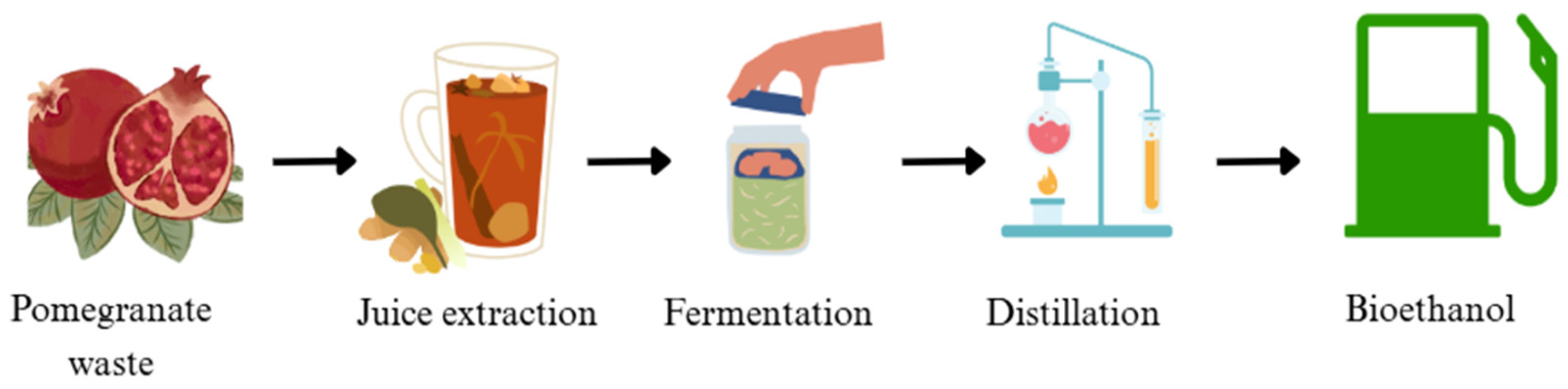
Figure 1. Process of bioethanol production.
Fuels 07 00028 g001
Figure 2. Pomegranate-waste-based biofuel sustainable supply chain framework.
Fuels 07 00028 g002
Figure 3. Flow chart for genetic algorithm.
Fuels 07 00028 g003
Figure 4. Sensitivity analysis.
Fuels 07 00028 g004
Table 1. Comparison of existing studies on agriculture supply chain.
AuthorsObjectiveModel TypeRaw MaterialAdvertisementSensitivity AnalysisSolution Method
[29]Cost minimizationMINLPCrops, grass, wood residue, livestock wasteNONOGA
[30]Profit maximizationSingle-objective LPPCorn, biomassNONOOS
[31]Cost minimizationStochastic network modelBiomassNOScenario-based analysisSimulation
[32]Cost minimizationDeterministic optimization modelAgricultural biomassNOYesOS
[33]Cost minimization Location-routing problem optimization modelAgricultural production waste NONOGA
[34]Profit maximizationMILPSugar beet waste/agro—food biomassNOYesOS
[35]Cost minimization MILP Organic waste/agricultural waste for biomethaneNOYesOS
[36]Cost optimizationMILPOrganic agricultural wasteNOYesMS
[23]Cost minimizationSingle-objective LPPAlgaeNOYesGA
[28]Cost minimizationSingle-objective LPPBanana rachisNOYesGA
This studyCost minimizationMILPPomegranate wasteYesYesGA
MINLP (mixed integer nonlinear programming), LPP (linear programming problem), MILP (mixed integer linear programming), OS (optimization software), GA (genetic algorithm), MS (mathematical solver).
Table 2. Notations.
Table 2. Notations.
Indices
kSupply point of pomegranate waste
yCapacity of biofuel refineries q
pCollection and processing plant of pomegranate waste
qSites of bio-refinery
rBiofuel distribution centre
zCapacity of biofuel distribution centre r
xCapacity of collection and processing plant p for pomegranate waste
dDemand centre of biofuel
aExisting biofuel production technologies
tDuration of planning period
lTruck type
Input Parameters for Economic Objective
P c Cost of promoting biofuel through print media
I c Cost of internet advertising
T c TV advertising cost
f e c o n o m i c Total cost of biofuel supply chain
C p r o d Total production cost of biofuel
O c Outdoor advertising expenses
C i n v Total holding cost of goods at different stages
C o p e n Total installation cost of biofuel production facility
C p u r c h p o m Total cost of purchasing pomegranate waste
C h a n d p o m Total handling cost of pomegranate waste
C t r a n s Overall transportation expenses in the supply chain
C a d v Total advertising cost
T B r d l Cost to transport one unit of biofuel from distribution centre r to demand centre d by truck type l
T B q r l Cost to transport one unit of biofuel from bio-refinery q to distribution centre r by truck type l
T J p q l Cost to transport one unit of pomegranate juice from processing plant p to bio-refinery q via truck type l
T W k p l Cost to transport one unit of pomegranate waste from supply location k to processing plant p via truck type l
P k t Per unit cost for sourcing pomegranate waste from supply point k in time t
I C P p x Cost per unit to install a processing plant p with capacity x
I C B q y a Cost per unit to install a bio-refinery q with technology a and capacity y
I C D r z Cost per unit to install a distribution centre r with capacity z
P C P p t Production cost (per unit) of pomegranate juice at processing plant p in time t
P C B q a t Per unit biofuel production cost at bio-refinery q in time t with technology a
H p Pomegranate waste handling cost per unit at the processing plant p
H O P p t Inventory holding cost (per unit) at processing plant p in time t
H O B q a t Inventory holding cost (per unit) at bio-refinery q in time t
H O D r t Inventory holding cost (per unit) at distribution centre r in time t
Constraints and Decision Variables
M C A P q y Maximum permitted capacity of bio-refinery q
M C A P p x Maximum permitted capacity of processing plant p
M C A P r z Maximum permitted capacity of distribution centre r
m p x If processing plant p with capacity x is opened, then the variable is set to 1; otherwise, 0
n q a y If bio-refinery q is opened, utilizes technology a with capacity y, then the variable is set to 1; otherwise, 0
o r z If distribution centre r with capacity z is opened, then the variable is set to 1; otherwise, 0
αConversion factor for biomass pomegranate waste
βYield factor for pomegranate juice
I p t Inventory level of pomegranate juice at processing plant p in time t
J q a t Level of biofuel inventory at bio-refinery q in time t
k r t Level of inventory at distribution centre r in time t
u d t Demand for biofuel in demand centre d in time t
O k p t Volume of pomegranate waste transferred from supply location k to processing plant p in time t
S k t Pomegranate waste volume at supply centre k in time t
ϕ p t Produced pomegranate juice in processing plant p in time t
π q a t Produced biofuel at bio-refinery q in time t utilizing technology a
ψ r d t Volume of transfer biofuel from distribution centre r to demand centre d in time t
O p q t Volume of pomegranate juice transported from processing plant p to bio-refinery q in time t
O q r a t Volume of biofuel transported from bio-refinery q to distribution centre r with technology a in time t
Table 3. Input parameters aligned with economic objectives.
Pomegranate Waste Purchasing and Handling Cost
Pomegranate WastePurchasing Cost ($/tonne)Handling Cost
From K1300280
From K2350260
Installation Cost
Processing PlantBio-refineriesDistribution Centre
PValueqValuerValue
P16,901,000F120,350,000R11,202,000
P25,002,000F225,000,000R21,675,000
Capacities of Bioethanol Production Plant
Processing PlantBio-refineriesDistribution Centre
PValue (tonne)qValue (gal)rValue (gal)
P176,000F139,500,000R13,100,000
P271,500F220,002,000R25,100,000
Pomegranate Juice and Bioethanol Production Costs
k P C P p t P C B q a t
Pomegranate Waste2.024.95
Advertisement Cost ($)
P c 1,350,000
O c 110,000
T c 550,000
I c 120,000
Pomegranate Waste Supply Point Feedstock Amount
K171,000
K271,500
Cost of Transportation ($/ton-km) and ($/gal-km)
T W k p l 1.7
T J p q l 0.4
T B q r l 1.5
T B r d l 0.5
Bioethanol Conversion Factor for Extracted Pomegranate Juice and Density of the Extracted Pomegranate Juice
kDensity (gm/cm3)β %
Pomegranate Waste0.9176
Table 4. The optimal amount of pomegranate waste, biofuel and extracted pomegranate juice across the PW-BFSSC.
Volume of Transferred Pomegranate Waste from Supply Point to Processing Plant
Quantity (tons)P1P2
K1525.02662.8
K2270.19925.57
Transferred Quantity of Extracted Pomegranate Juice from Processing Plant to Bio-refineries
Quantity (gallons)F1F2
P12123.458286.28
P23908.491221.28
Transferred Quantity of Bioethanol from Bio-refineries to Distribution Centre
Quantity (gallons)R1R2
F11628.668580.92
F2986.023264.64
Transferred Quantity of Bioethanol from Distribution Centres to Demand Zone
Quantity (gallons)D1D2D3D4
R1273.80109.21219.21315.09
R2108.91296.64412.30117.90
Table 5. Sensitivity analysis of critical parameters.
Parameters% Change in Parameters% Change in Total Cost
C p r o d −50%−11.98145
−30%−8.210038
−10%−0.890679
0%0
10%1.0248859
30%5.5015973
50%10.422218
C o p e n −50%−1.937524
−30%−1.230543
−10%−0.930544
0%0
10%0.274269
30%0.6244225
50%0.7807568
C p u r c h p o m   −50%−0.021536
−30%−0.004893
−10%−0.001957
0%0
10%0.010764
30%0.014678
50%0.037177
α−50%−0.34052
−30%−0.2535
−10%−0.1533
0%0
10%0.55654
30%0.65233
50%1.30223
Disclaimer/Publisher’s Note: The statements, opinions and data contained in all publications are solely those of the individual author(s) and contributor(s) and not of MDPI and/or the editor(s). MDPI and/or the editor(s) disclaim responsibility for any injury to people or property resulting from any ideas, methods, instructions or products referred to in the content.