Article

Numerical Investigation of Jatropha and Castor Biofuel Droplet Evaporation at High Engine Operating Conditions


by
Ali Raza
1,2,*,
Marva Hadia
3,
Zunaira Tu Zehra
1,
Sajjad Miran
4,*,
Muhammad Khurram
1 and
Ghulam Murtaza
1
1
Department of Mechanical Engineering, National University of Technology (NUTECH), Karnal Sher Khan Shaheed Road, Sector I-12, Islamabad 44000, Pakistan
2
School of Civil and Mechanical Engineering, Curtin University, Kent Street, Bentley, Perth, WA 6102, Australia
3
Department of Mechanical Engineering, National University of Sciences and Technology (NUST), Sector H-12, Islamabad 44000, Pakistan
4
Department of Mechanical Engineering, University of Gujrat (UOG), Hafiz Hayat Campus, Gujrat 50700, Pakistan
*
Authors to whom correspondence should be addressed.
Fuels 2026, 7(2), 24; https://doi.org/10.3390/fuels7020024
Submission received: 14 February 2026 / Revised: 16 March 2026 / Accepted: 7 April 2026 / Published: 14 April 2026

Abstract

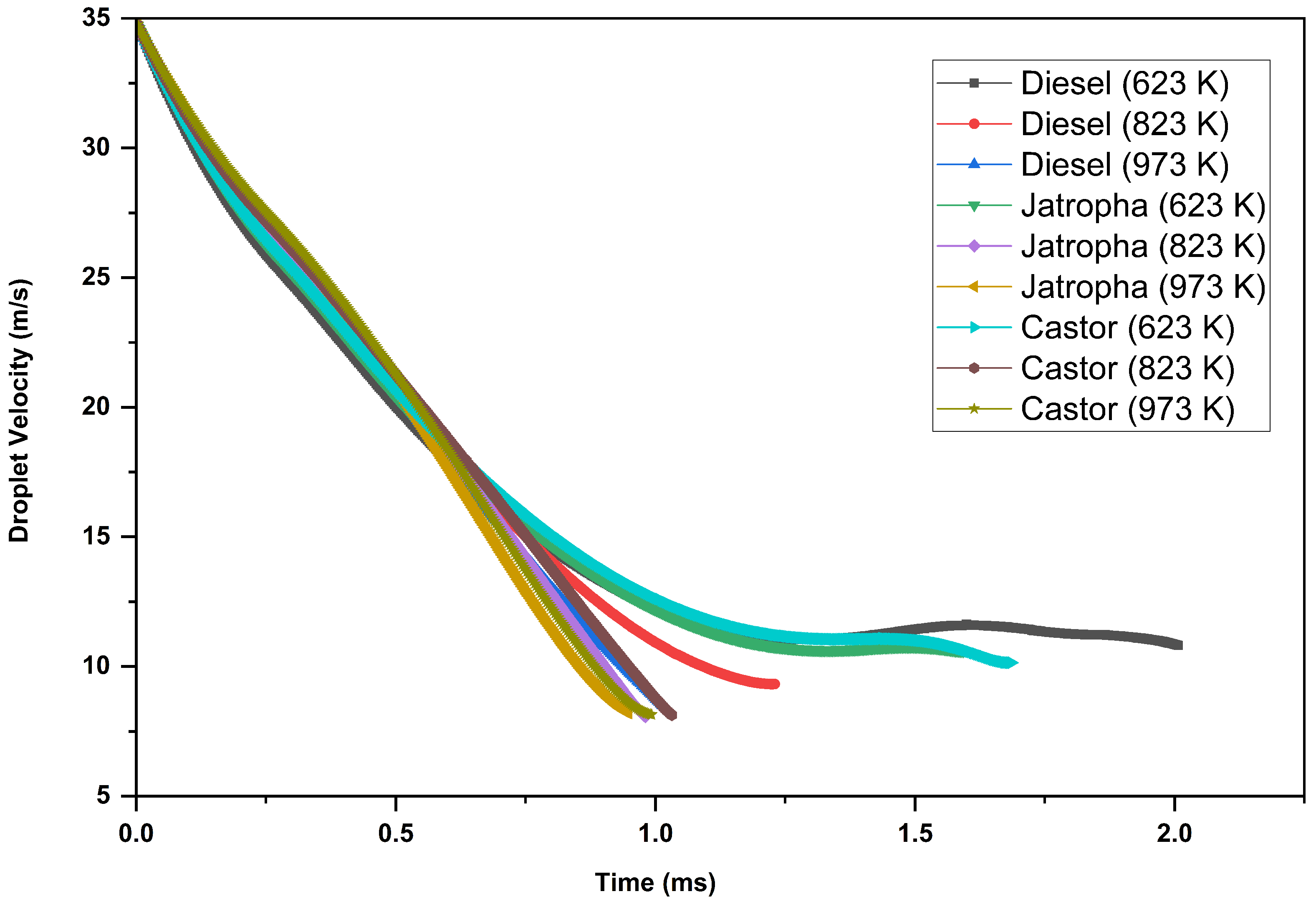
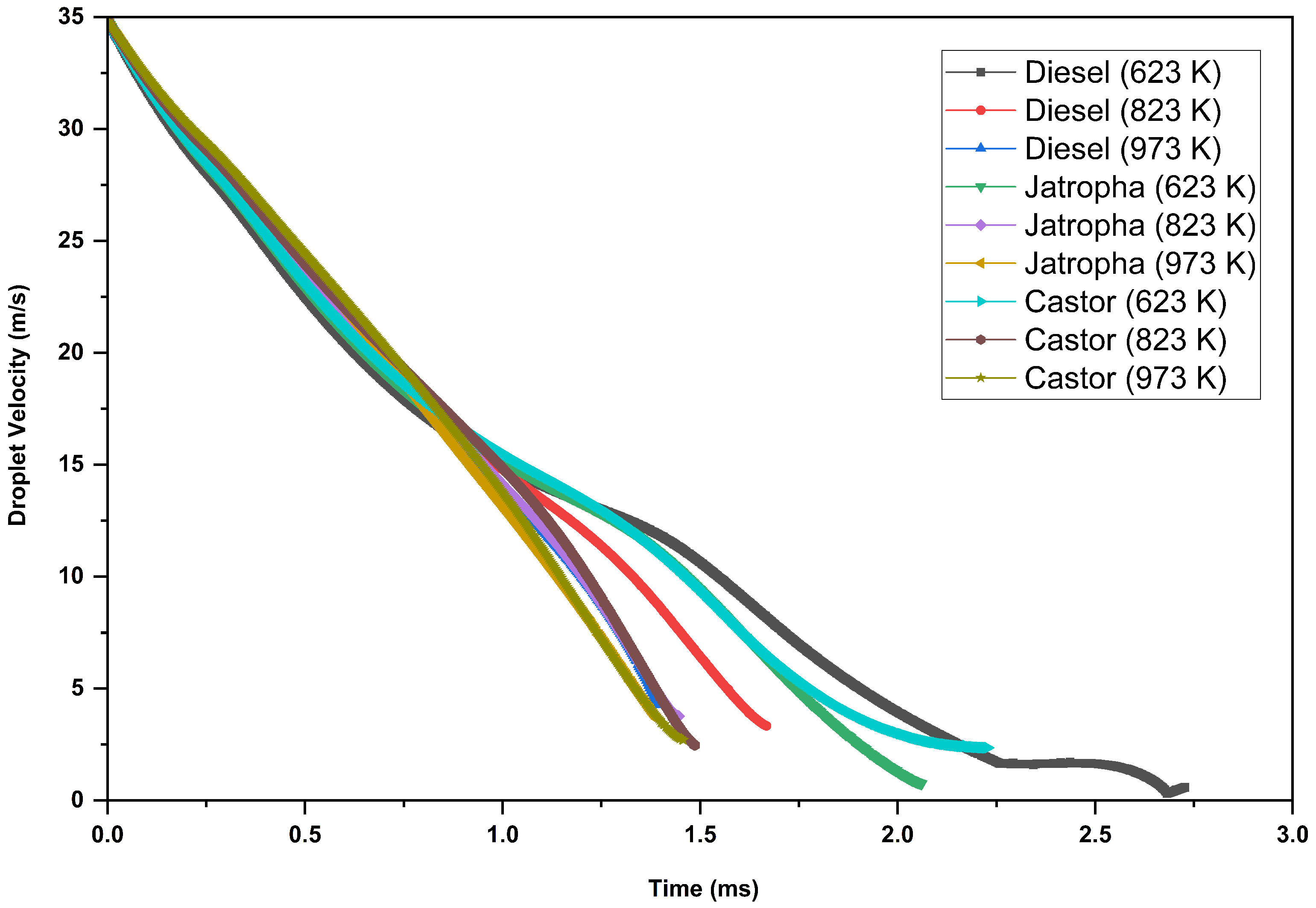
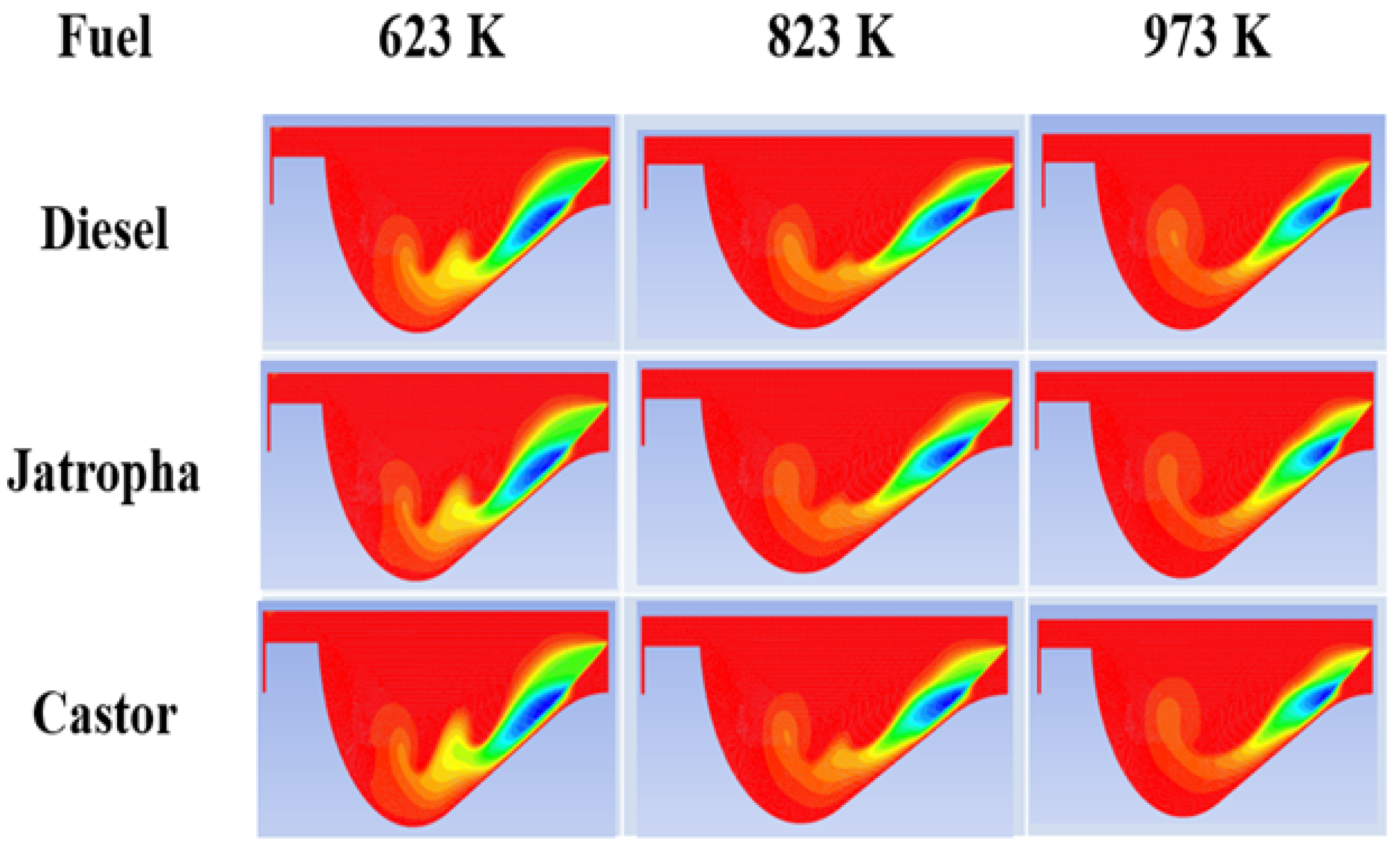
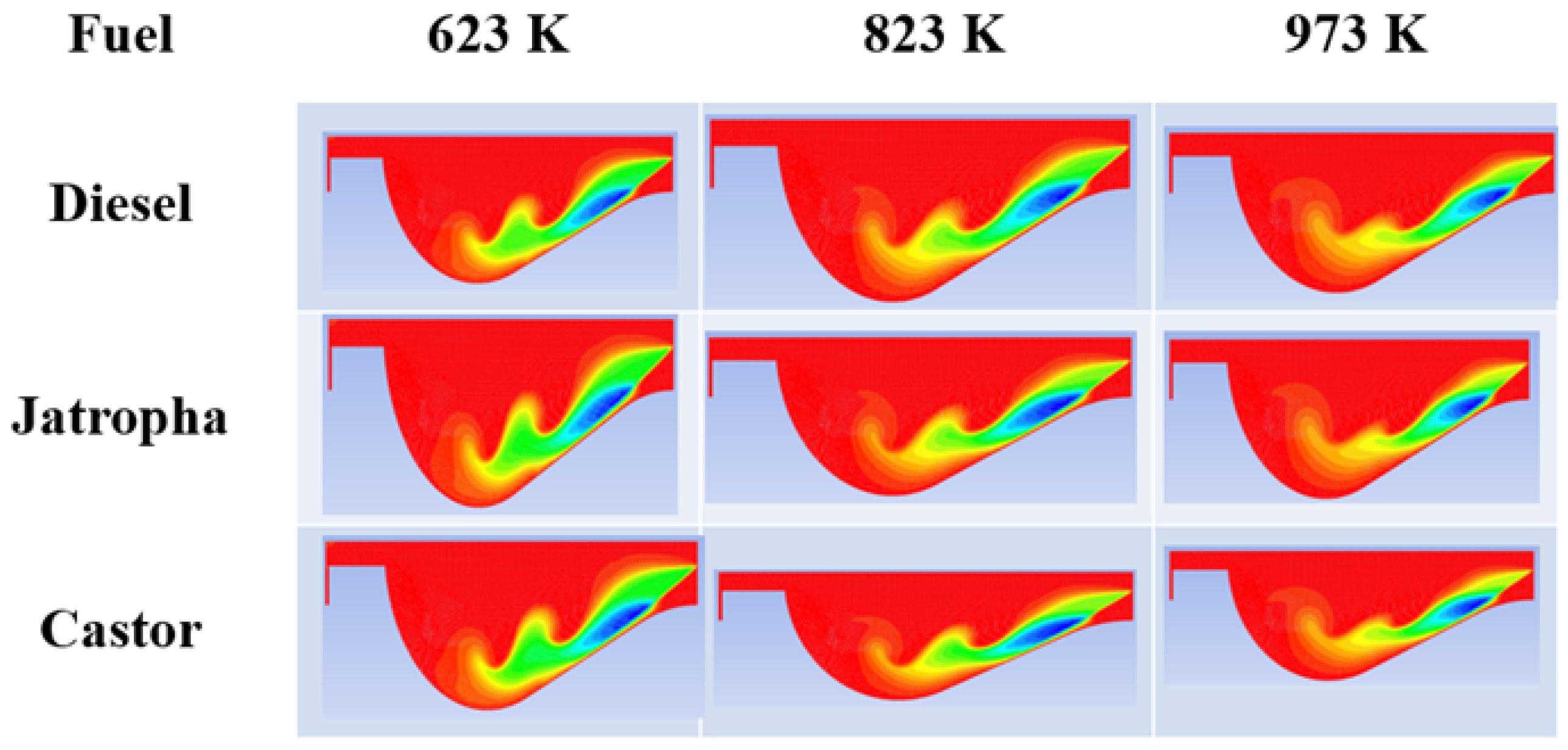
Fossil fuel depletion has increased interest in renewable alternatives such as biodiesel derived from non-edible plant oils. Droplet evaporation is a key process influencing fuel–air mixing and combustion efficiency in diesel engines. In this study, the evaporation characteristics of diesel and two non-edible biofuels, Jatropha and Castor, are investigated using computational fluid dynamics (CFD) under high-temperature and high-pressure conditions representative of engine environments. The numerical model incorporates the conservation equations of mass, momentum, and energy, together with the kε turbulence model and a discrete phase model to simulate droplet heating, motion, and mass transfer during evaporation. A comparative CFD analysis is performed to examine how fuel properties, ambient temperature, and droplet size affect the evaporation behaviour of diesel, Jatropha, and Castor droplets under identical engine-like conditions. The evolution of droplet diameter, temperature, velocity, and lifetime is analysed, and the applicability of the classical D2-law is evaluated under different operating conditions. The results indicate that biofuel droplets generally evaporate faster than diesel droplets at lower temperatures, while evaporation trends become similar at higher temperatures. These findings provide insight into the evaporation behaviour of Jatropha and Castor fuels and their potential application in diesel engines.
Keywords: CFD; kε model; Discrete Phase Model (DPM); engine spray simulation; renewable liquid fuel CFD; kε model; Discrete Phase Model (DPM); engine spray simulation; renewable liquid fuel