Article

An Accessible Method for the Quantitative Determination of Succinimide Additives in Diesel Fuel

1
AC2T research GmbH, 2700 Wiener Neustadt, Austria
2
OMV Downstream GmbH, 2320 Schwechat, Austria
*
Author to whom correspondence should be addressed.
Submission received: 11 November 2025 / Revised: 22 December 2025 / Accepted: 12 January 2026 / Published: 19 January 2026

Abstract

Succinimide additives play an important role in combating engine deposits and are therefore commonly blended in fuels. As many of the methods currently used to quantify them in fuel rely on time-consuming techniques and the use of expensive laboratory equipment, a more practical approach was explored. For this purpose, an existing method for aqueous samples involving a colour reaction with Rose Bengal dye and spectrophotometric detection in the UV/Vis range was modified for usage in the nonpolar fuel matrix and tested for applicability. The result was an accessible method for determining the succinimide additive content of diesel fuel—including biodiesel—that is easy to implement in the laboratory routine.

1. Introduction

Succinimides are commonly used additives in lubricants and fuels. They act as ashless dispersants in both engine oils [1,2] and fuels [3,4,5,6], and also as lubricity agents in fuels [7,8]. Their main role in fuels is to control deposits in the combustion chamber, fuel intake system, and fuel injector [3,4]. The typical structure of succinimide additives is depicted in Figure 1, where the eponymous succinimide (SI) is the linking group between a long hydrocarbon chain (represented by R in Figure 1) usually consisting of polyisobutylene (PIB), and a polar head, commonly polyamine, giving this additive group also the name PIBSI. While the alkyl chain (R in Figure 1) provides solubility in the oil or fuel matrix, the polar group attaches to insoluble contaminants, such as soot, oxidation products, and wear particles, as well as other surfaces in engine systems. Several of these additive molecules can accumulate around contaminants, keeping them in suspension [7,9].
The importance of deposit control additives in fuels has increased with advances in engine technology, such as the widespread use of direct injection systems for both gasoline and diesel fuel and their higher operating pressures [3,4,10]. The increasing use of biodiesel [11,12,13,14] may also pose new challenges in terms of deposit control, as some studies suggest that biodiesel blends can lead to greater deposit formation on different parts of a diesel engine, such as the injector [15,16,17,18].
For quality control or to monitor blending processes, a quantitative determination of deposit control and other additives can be necessary. The determination and quantification of additives in fuel is generally challenging because of the complex matrix, the very low concentrations of the additives (in the order of ppm), and their molecular size. It often requires the isolation of the component(s) of interest by adsorption or extraction, e.g., solid-phase or liquid–liquid extraction or adsorption chromatography [19]. Studies on the quantification of fuel detergent-dispersant additives usually involve elaborate methods, such as the combination of high pressure liquid chromatography (HPLC) and gas chromatography coupled with flame ionization detector or mass spectrometry (GC-FID or GC-MS) [19], size-exclusion chromatography (SEC) or thermogravimetry (TGA) [20] after pre-concentration by atmospheric distillation, gel permeation chromatography (GPC) [21], or direct infusion electrospray ionization and liquid chromatography coupled tandem mass spectrometry (LC-ESI MS/MS) [22]. A more practical method of detecting basic detergent-dispersant additives in fuel involves their reaction with a suitable indicator (e.g., tetrabromophenolphthalein ethyl ester dye HTBPE) and the detection of the spectroscopic response (e.g., colour change) [23]. The methods mentioned mostly include, but are not specific to, succinimide additives. Direct analysis of polyisobutylene succinimides in fuel by GC-MS is not possible due to their high boiling points (>250 °C), high molecular weights, low concentrations, and complex polymer structures [24,25]. In addition, there is a peak overlap between the numerous fuel components and the analyte of interest. Due to insufficient ionization during electron spray ionization (ESI), high resolution (HR) MS and the complex diesel matrix polar components are not well detectable [26]. Additionally, unwanted fragmentation, causing even worse recovery rates, has been reported. To overcome these issues, an HPLC separation or other ionization techniques such as atmospheric pressure chemical ionization (APCI) can be applied, but they require expensive and time-consuming method preparation, and are affected by variations in the diesel matrix and other additives [27]. This also applies to derivatisation strategies of specific structures, such as succinimides, for ESI-MS measurements, and are therefore not easily applicable [28]. Detection of polyisobutylene succinimides in fuels was successfully achieved by a technique known as direct analysis in real-time mass spectrometry (DART-MS) [24,25].
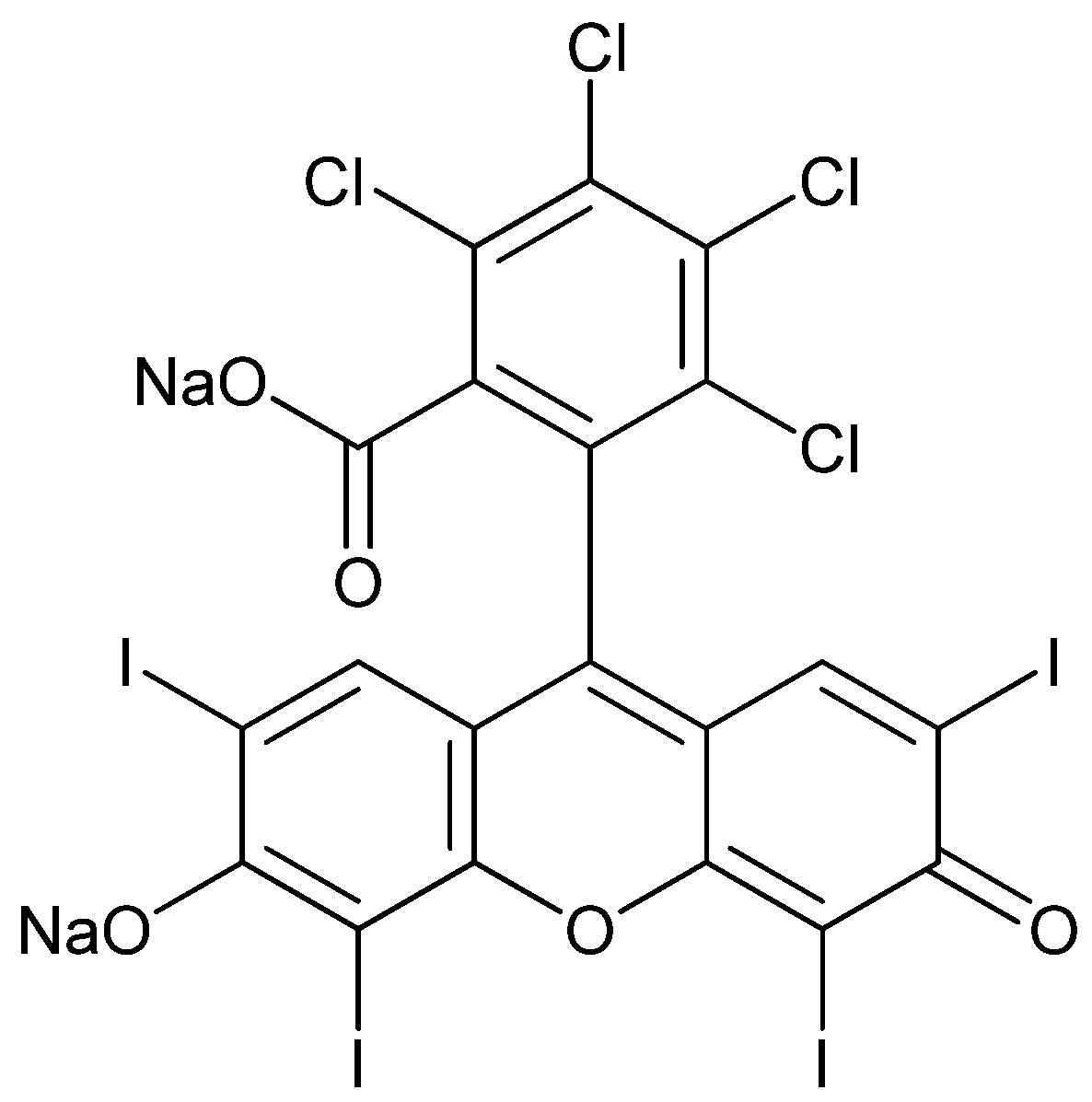
As can be seen from the literature, many of the available methods for the quantitative determination of succinimides in (diesel) fuel rely on the use of complex and time-consuming techniques and expensive high-end laboratory instruments. Currently, there is no established or standardized method specifically designed for the determination of succinimide in diesel fuel, and existing literature provides rather methodological foundations than ready-to-use protocols. The desire for a practical method that could be easily integrated into the laboratory routine called for a new approach. The starting point for the elaboration of a suitable method was a commercial method for the determination of polyamines in aqueous samples, which is based on a colour reaction with the xanthene dye Rose Bengal (see Figure 2), followed by spectrophotometric measurement.
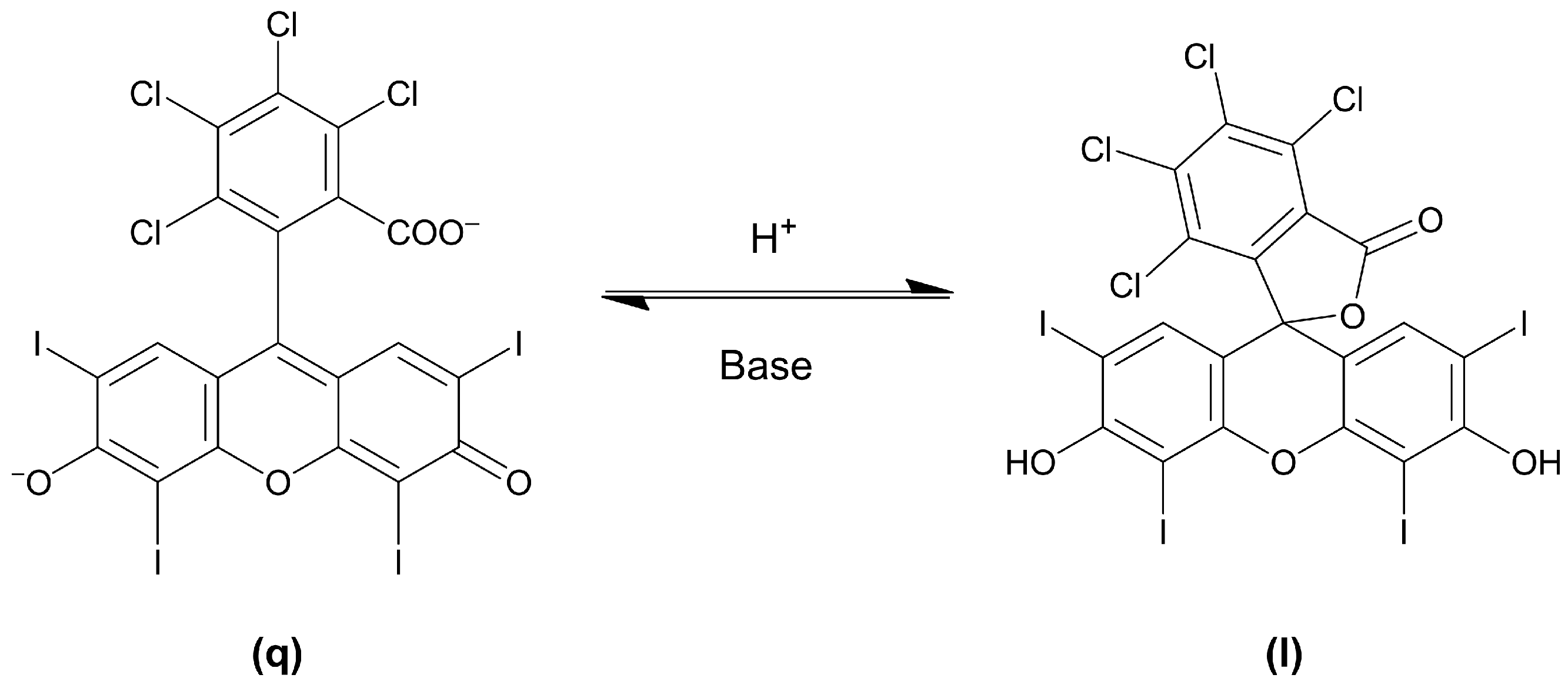
Rose Bengal can be used as an acid-base indicator as it changes colour with the pH variation based on a protonation and deprotonation reaction [29]. When exposed to acidic conditions, it changes its conformation from the quinoid (q) form to the lactone (l) form, as shown in Figure 3, and changes its appearance from pink to colourless. When subsequently exposed to the base, it reverts to the quinoid (q) form and regains its colour [30]. In the lactone form, the dominant absorption peak almost disappears as the electron delocalisation over the xanthene moiety is broken, and the solution becomes colourless. Amines such as piperidine, diethylamine, triethylamine, and trimethylamine have basicity and can neutralize Rose Bengal, resulting in a pink colour [31]. Thus, Rose Bengal has been used as an indicator in several colorimetric methods for the rapid quantification of basic amines, particularly in vapour [32] and aqueous phases [33].
Polyamines or film-forming amines are commonly used as corrosion and scale inhibitors in industrial processes that involve the use of water for heat transfer or steam generation [34,35,36]. They work by forming a protective hydrophobic layer on metal surfaces that repels corrosive species [35]. It is necessary to determine the polyamine concentration in process waters to set and maintain the dosage at the required level, as under- or overdoses can have detrimental effects, such as filter and tube blocking [36]. Since succinimide additives used in fuels contain polyamine chains (see Figure 1), an acid-base reaction of Rose Bengal with the amine groups in this polyamine chain will occur through a pH-dependent ion-association and charge-transfer mechanism. Under mildly basic conditions, the amine remains unprotonated and can act as an electron donor toward the highly electron-deficient xanthene chromophore of Rose Bengal, which exists predominantly as an anionic species. The attractive electrostatic interaction between the anionic dye and the neutral amine, combined with donor–acceptor charge transfer, leads to the formation of a strongly coloured molecular complex that produces a characteristic shift in the visible light spectrum. Hence, the detection based on the total basic nitrogen content provided by the polyamine chain in the succinimide additive is possible [37]. The existing commercial method using Rose Bengal, therefore, seemed to be a reasonable basis for developing a practical, rapid method for quantifying succinimides in diesel fuel, which could be integrated into laboratory routines.
The work described below includes method development mainly concerned with the transition from an aqueous to an organic medium to ensure miscibility with diesel fuel, method validation including the investigation of cross-sensitivities and the compatibility with biodiesel, and application of the method to commercial diesel fuel samples.

2. Materials and Methods

2.1. Materials

For the preparation of the solutions, methanol in LC-MS grade quality (≥99.9%), chloroform in LC grade quality (≥99.8%), and glacial acetic acid (99.7%) were obtained from Sigma-Aldrich (St. Louis, MO, USA). The reagent Rose Bengal (sodium salt, dye content 95%, CAS 632-69-9) was also acquired from Sigma-Aldrich (St. Louis, MO, USA). Unadditivated diesel fuel components that are used to blend commercial diesel fuels according to DIN EN 590 [38] and a reference substance containing a known amount of succinimides with a defined structure were furthermore required for the preparation of the calibration standards. All diesel fuel components and diesel fuel mixtures for method development were provided by OMV Downstream GmbH, Schwechat, Austria.
A 1 M sodium hydroxide solution was prepared with distilled water for cleaning purposes.
Positive displacement pipettes with suitable capillary piston tips for dispensing 10–100 µL, 100–1000 µL, and 500–5000 µL (Gilson Inc., Middleton, WI, USA), as well as 20 mL clip-top glass vials with snap-on caps, were used for the preparation of the solutions. Single-use syringes and needles were used for transferring the solutions into the cuvette.
UV/Vis measurements were carried out using a UV/Vis spectrophotometer (SPECORD 50, Analytik Jena GmbH, Jena, Germany) and suitable quartz cuvettes with 5 mm path length (Hellma GmbH & Co. KG, Müllheim, Germany).

2.2. Methods

2.2.1. Cleaning

The quartz cuvette is cleaned before and after each measurement by rinsing twice with 1 M sodium hydroxide solution and LC-MS grade methanol, respectively. The glass vials are rinsed with LC-MS grade methanol before use.

2.2.2. Preparation of the Reference Stock Solution

A stock solution of the reference substance is prepared at a concentration of approximately 1000 ppm succinimides in a suitable solvent. The succinimide concentration of the reference substance must be taken into account when preparing the stock solution.

2.2.3. Preparation of the Calibration Standards

A series of calibration standards over a concentration range close to the expected succinimide concentration of the sample is prepared. It is recommended to make at least 5 standards, e.g., 10, 25, 50, 100, and 200 ppm, as illustrated in Figure 4.
The dilution solution for each calibration standard is prepared by mixing the following components in a clean glass vial: 1 mL glacial acetic acid, 2 mL chloroform, 0.4 mL 6 mM Rose Bengal solution in methanol, and 5 mL unadditivated diesel fuel. For duplicate determinations, two batches of the dilution solution should be prepared for each concentration. The calibration standards are completed by adding the required amount of stock solution. This last step is performed 2 min before the start of the measurement.
The blank solution has the same composition as the dilution solution (without any stock solution). Sufficient volumes of blank solution should be prepared to allow the measurement of a blank value before each calibration standard and sample measurement.
Care should be taken when handling chloroform-containing waste due to its toxicity and environmental persistence; such waste should be collected separately and disposed of in accordance with institutional and regulatory safety guidelines.

2.2.4. Preparation of the Samples

The sample solution is prepared analogously to the dilution solution by mixing the following components in a clean glass vial: 1 mL glacial acetic acid, 2 mL chloroform, 0.4 mL 6 mM Rose Bengal solution in methanol. A total of 5 mL of the diesel fuel, the succinimide content of which is to be determined, is added 2 min before starting the measurement. It is recommended to perform a duplicate determination.

2.2.5. UV/Vis Measurement

The UV/Vis measurement is carried out in a wavelength range of 350–1000 nm. The first step is the determination of a blank value. It is carried out before each measurement and gives an indication of the cleanliness of the cuvette, which is important due to the high sensitivity of the method. The blank solution is filled into the cleaned cuvette using a syringe and a needle, and then the UV/Vis measurement is performed. If the blank value is too high, the cuvette must be cleaned again. This threshold has to be constant within one measurement series; therefore, it was set for all measurements of this study at a maximum value of 0.055 AU. If the quality test has been passed, the blank solution is drained from the cuvette, and the cuvette is first rinsed and then filled with the standard or sample solution to be measured. The measurement is performed analogously to the blank value.
It should be noted that although the reaction mixture is stable for longer than 5 min, it is recommended to always measure after the same reaction time for reasons of measurement accuracy.

2.2.6. Evaluation

The absorbance value at 560 nm is used for evaluation. The succinimide content of the sample is determined by inserting the respective value into the linear equation of the calibration line. Limit of detection (LOD) and limit of quantification (LOQ) are determined according to the IUPAC blank-based (or signal-to-noise) approach [39]. LOD was calculated as the mean blank signal (Meanblank) plus three times its standard deviation (SDblank):
LOD = Mean blank + 3 SD blank
The limit of quantification LOQ was defined as nine times the standard deviation of the blank:
LOQ = Mean blank + 10 SD blank

3. Results and Discussion

3.1. Method Development

Following a commercially available detection method of polyamines in aqueous solution (supplied by FINEAMIN SA), consisting of Rose Bengal and acetic acid, various steps had to be taken to adapt it to a procedure suitable for the detection of succinimides in fuels.
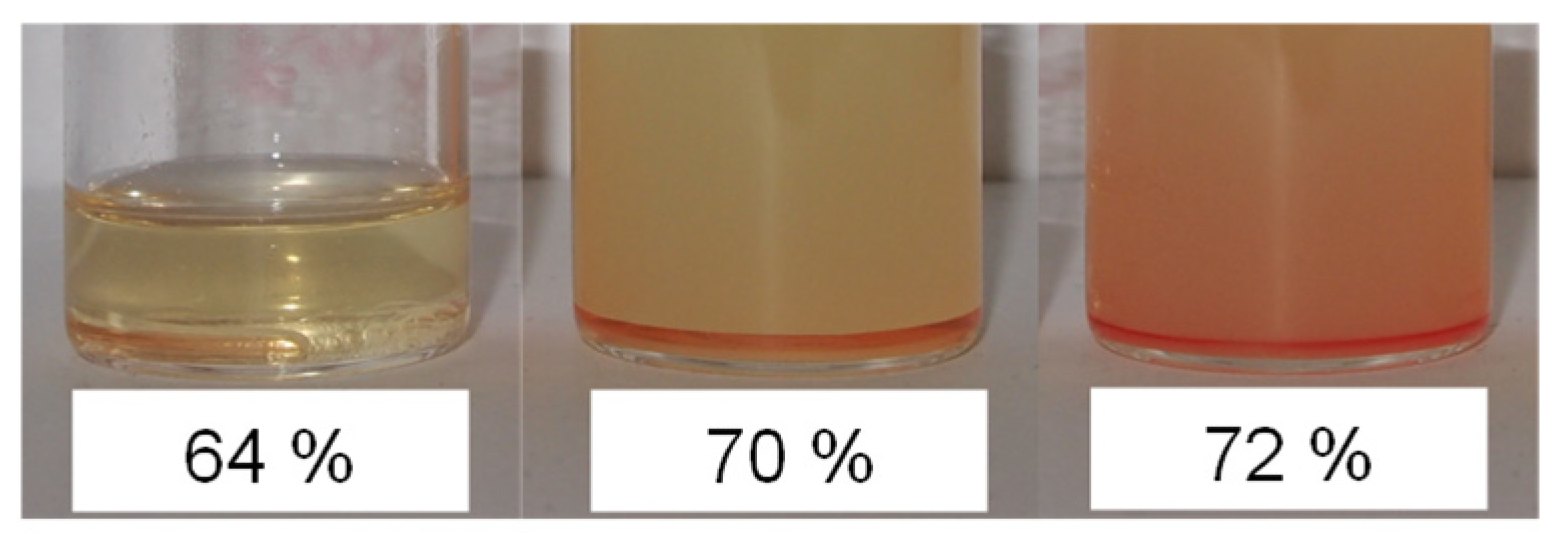
The first major task was to transfer the reaction from an aqueous medium to an organic solvent to achieve the required miscibility with diesel fuel. This meant that, especially, the dye, Rose Bengal, had to be dissolved in a different solvent. Methanol was found to be a suitable substitute for water, and a preliminary study to confirm its applicability was conducted using triethylenetetramine (TETA) as a sample. The switch to methanol as a solvent also meant that a more concentrated form of acetic acid was needed to acidify, i.e., discolour, the solution, which is why glacial acetic acid was used. In this step, Rose Bengal changed to the colourless lactone form (see Figure 3). The solutions examined in these pre-tests consisted of the following mixture: 4 mL glacial acetic acid, 0.4 mL 6 mM Rose Bengal solution in methanol, and 5 mL sample. The sample consisted of methanol containing a defined concentration of TETA, more specifically, 50, 100, and 200 ppm. Note that this solvent composition was not yet capable of dissolving fuel samples. It was investigated whether the colour reaction, i.e., the reverse transformation of Rose Bengal to the pink quinoid form, takes place in methanol and how the measured intensity depends on the reaction time. The reaction mixture was measured with the UV/Vis spectrophotometer 2, 5, and 10 min after preparation to find the appropriate measurement time. All measurements after 2 to 10 min yielded comparable results, which indicates a stable reaction solution over this period. Subsequent measurements were carried out after 2 to 5 min since that time span was found to be convenient for the practical work without adding unnecessary waiting time. The next step consisted of introducing chloroform as a solubilizer to provide miscibility with nonpolar substances like diesel fuel by shifting the solvent characteristics from polar organic towards apolar organic. The applicability of the method to diesel fuel containing succinimides was assessed using the following mixture composition: 1 mL glacial acetic acid, 2 mL chloroform, 0.4 mL 6 mM Rose Bengal solution in methanol, and 6 mL diesel fuel sample containing succinimides. This composition showed good miscibility, and the UV/Vis measurements after 2 and 5 min of reaction time resulted in high and equal intensities. Storage stability tests up to 5 days showed a stable, fully miscible solution without any precipitation throughout the entire period. An attempt was made to increase the proportion of diesel fuel in the mixture, which, however, led to turbidity, indicating that the components were not completely miscible, and the method is not feasible with diesel fuel contents above around 65 (% v/v) (see Figure 5). The substitution of chloroform by a less toxic solvent was attempted. However, non-toxic alternatives such as isopropanol or ethylene glycol did not provide satisfactory results regarding miscibility. Other solvents with more promising results in preliminary tests, such as dichloromethane, did not reduce issues regarding health and handling risks. Therefore, chloroform, as the best performing solvent, was used, and careful handling and disposal of the waste (see Section 2.2.3) was ensured.
For the application of the method on commercially available diesel fuel samples, and for future use, the preparation of the reaction mixture was additionally improved for reasons of practicality. Since volumetric pipettes of 5 mL are generally available in laboratories and capillary piston tips for dispensing 5000 µL are available for positive displacement pipettes, it was found to be practical to add 5 mL of diesel fuel sample to the mixture instead of 6 mL. This means that the diesel fuel content in the mixture is 60 (% v/v). While this adjustment makes the method easier to use, it does not affect its outcome.

3.2. Method Validation

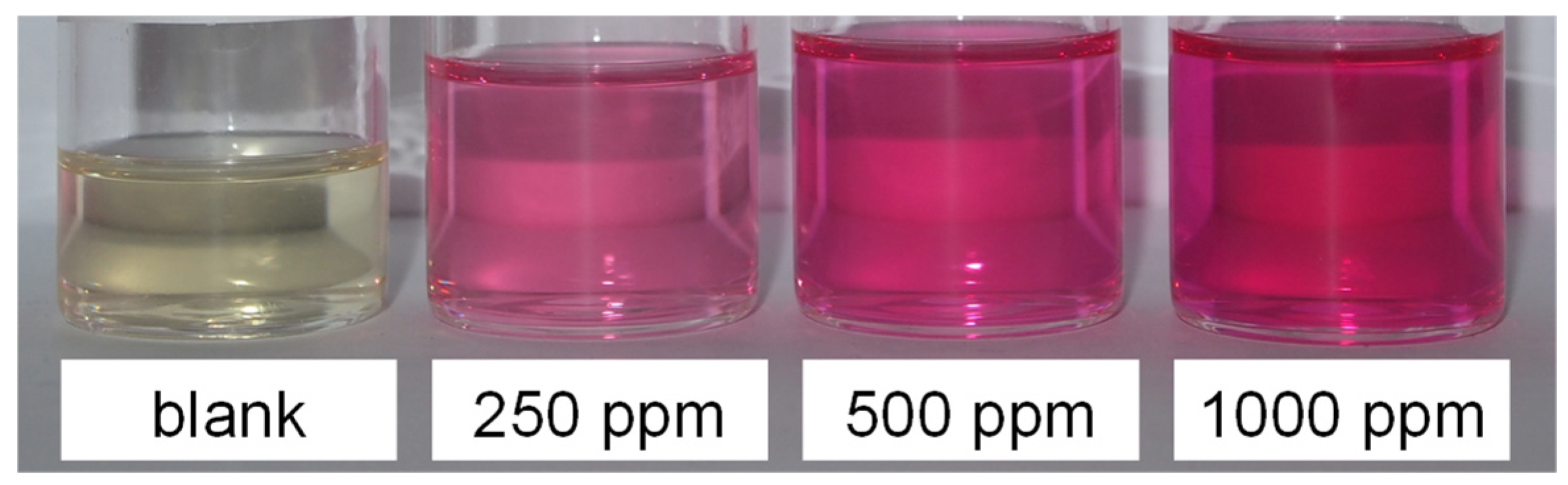
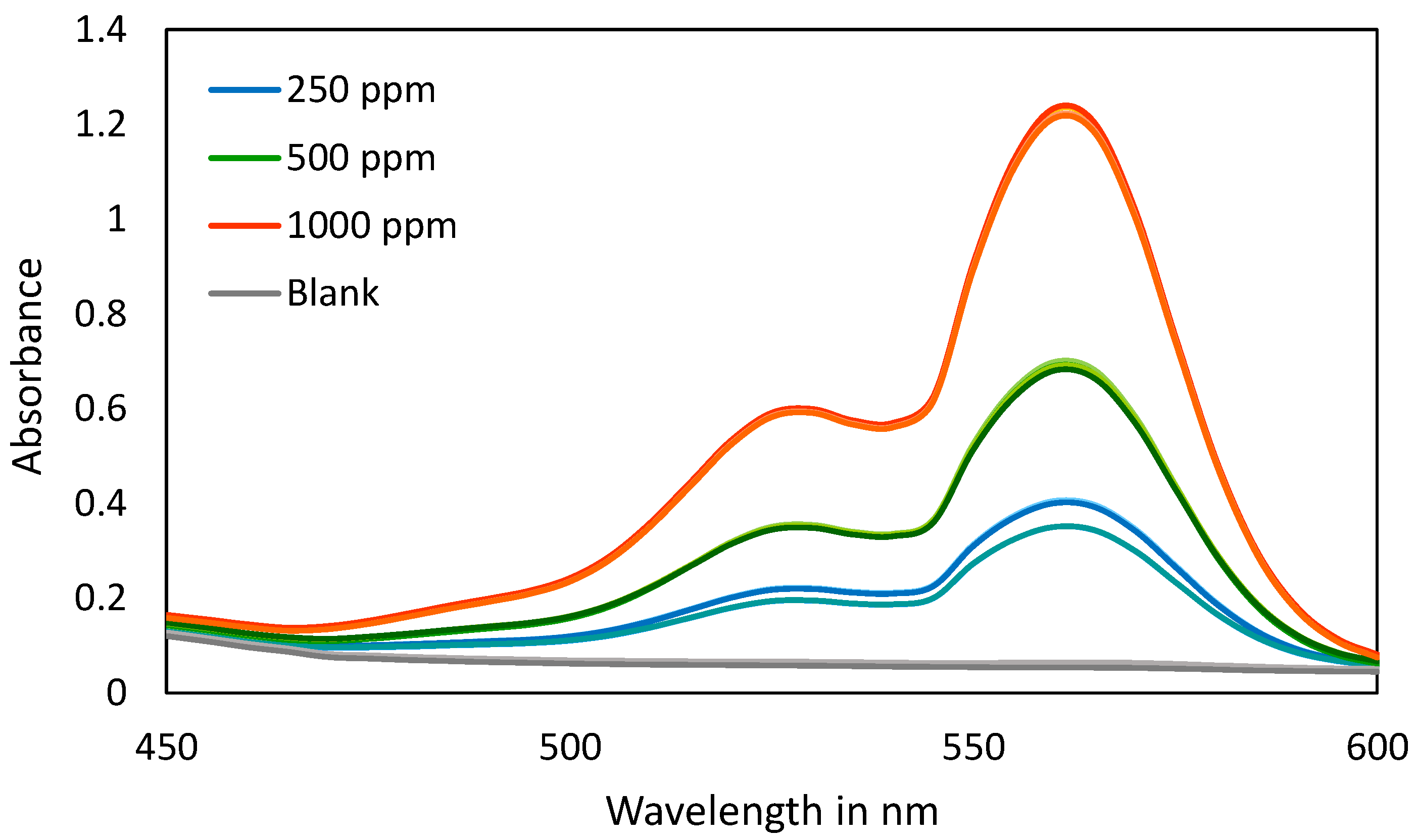
A series of tests was carried out to estimate the general range of method application. Mixtures prepared with diesel fuel samples containing 250, 500, and 1000 ppm succinimides (see Figure 6) were measured with the UV/Vis spectrophotometer according to the procedure described above. Duplicate determinations were made of each concentration, and each solution was measured 2 and 5 min after preparation, respectively. Figure 7 shows the section of interest of the recorded UV/Vis spectra. The results indicated comparable outcomes for the 2 and 5 min measurements and a linear relationship between the succinimide concentration and the measured intensity in the range of up to at least 1000 ppm.
In terms of repeatability, the relative standard deviation of the absorbance at 560 nm of repeated measurements was 3.5% on average. This statement was made on the basis of all the measurements presented in this article, including those of the biodiesel and commercial samples described in later sections.
While several analytical approaches exist for small-molecule additives in diesel fuel (see Section 1), such as normal-phase HPLC coupled with GC-MS or GC-FID [19,40], direct or derivatized GC-MS, and high-resolution LC-MS, the literature does not report on validated detection of succinimide, and quantitative parameters like LOD or precision/standard deviation are generally lacking. Infrared or nuclear magnetic resonance spectroscopy is not sensitive enough for trace-level quantification. Consequently, any reliable, precise, and standardized analysis of succinimide in diesel fuel requires developing a tailored method involving matrix cleanup, possibly derivatization, sensitive detection (GC-MS or LC-MS/MS), and full method validation to establish LOD, quantification, and precision. Existing literature provides useful methodological foundations but does not offer a ready-to-use protocol for validated succinimide quantification in diesel fuel. Consequently, only producer-reported succinimide contents could be used for method validation.

3.2.1. Limit of Detection and Limit of Quantification

LOD and LOQ were determined to be approximately 10 ppm and 20 ppm, respectively, as determined in IUPAC’s blank method described in 2.2.6 [39]. Meanblank was given with an absorbance of A = 0.05158, and SDblank with A = 0.002890. Signal thresholds were converted to concentration values using the linear calibration curve. A calibration series with succinimide concentrations in the range of 10 to 200 ppm was set up for this purpose, resulting in the following values for y = kx + d:d = 0.0505, k = 0.0009, R2 = 0.9973.

3.2.2. Cross-Sensitivities

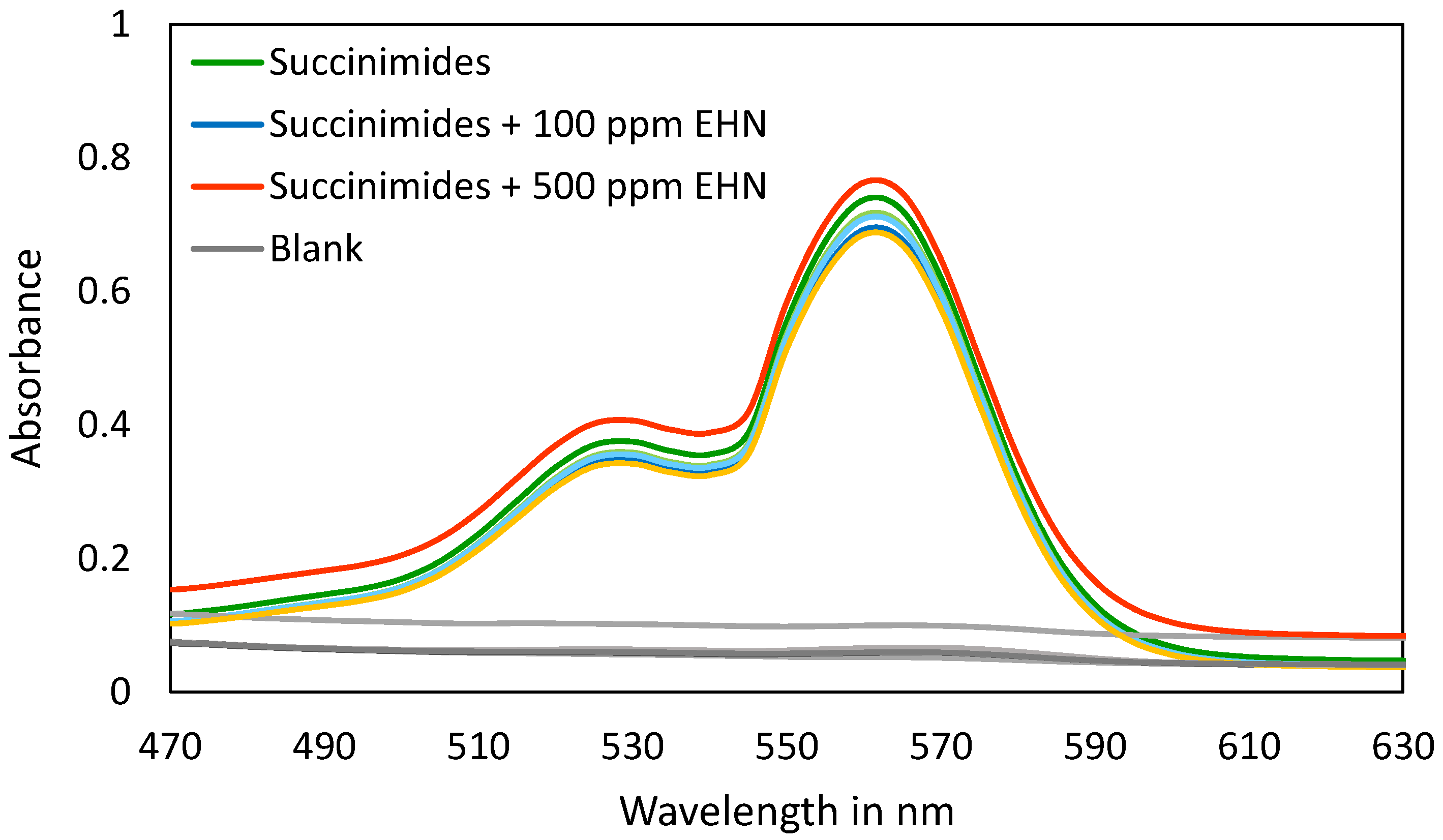
Investigations were made to check for cross-sensitivities of the reagents with 2-ethylhexyl nitrate (EHN), the most widely used cetane number improver additive contained in virtually all commercial diesel fuels [41,42]. In total, 100 and 500 ppm EHN were added to model diesel fuel samples containing 500 ppm succinimides, respectively. No substantial changes in absorption intensity were observed for the samples with additional EHN.
Further cross-sensitivities of the reagents with diesel fuel additives concern organic acids such as lubricity additives, typically added in the range of 100 ppm [43,44], and free acids from biodiesel. Assuming free acids of 0.5 mg KOH/g in biodiesel, the threshold for acids in EN 14214 [45], with oleic acid as the most abundant fatty acid in biodiesel and B7 diesel fuel, the concentration of free oleic acid in B7 would be less than 200 ppm. In this study, fatty acids were represented by succinic acid. Its concentration refers to less than 40 ppm in diesel fuel when accordingly calculated. A noticeable reduction in intensity was observed only at very high concentrations (up to 4000 ppm) of succinic acid, which are not common in conventional diesel fuel blends. Even a mixture of 500 ppm succinic acid and up to 500 ppm EHN did not cause cross-sensitivities, as shown in Figure 8.
The response of the method to tertiary amines was also investigated. Mixtures containing 1000 ppm of either TETA, triethanolamine, or triethylamine in purified water were prepared and measured. While TETA, a compound containing primary and secondary amines, responded to the method and produced an absorption band clearly distinguishable from the blank, the substances with tertiary amines led to absorptions close to the blank. Despite high concentrations, no substantial response was observed at this wavelength. These findings indicate that this method is not influenced by tertiary amines originating from other additives, e.g., corrosion inhibitors such as N,N-dimethyldodecylamin or polyalkoxylated amines as antistatic additives [46,47].
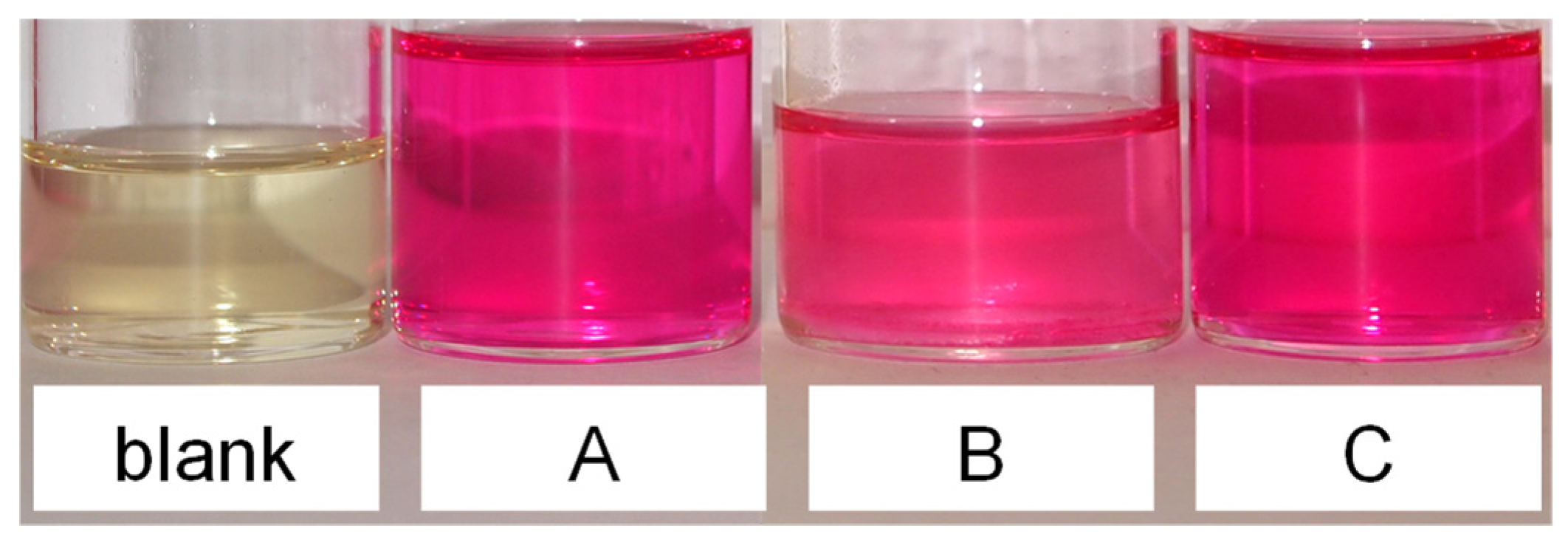
In a further series of tests, three commercially used additives with different succinimide structures were subjected to the method. The response of different structures, e.g., in terms of chain length of the polyamine chain linked to the succinimide, was studied, as this kind of structural diversity is not uncommon among different additive manufacturers. As can be seen in Figure 9, the different tested additives, all in a concentration of 500 ppm, clearly show the desired colour reaction. The PIBSI-type succinimide additives comprising polyamine chains of varying length (approximately N5 to N10) did not show significant deviations or evidence of systematic overestimation for longer chains. These results indicate that, within the tested range, the chain length of the polyamine moiety has no pronounced influence on the quantification. To definitively exclude subtle polyamine chain-length effects, further studies using succinimide additives with fully known and well-defined structures are recommended.

3.2.3. Biodiesel

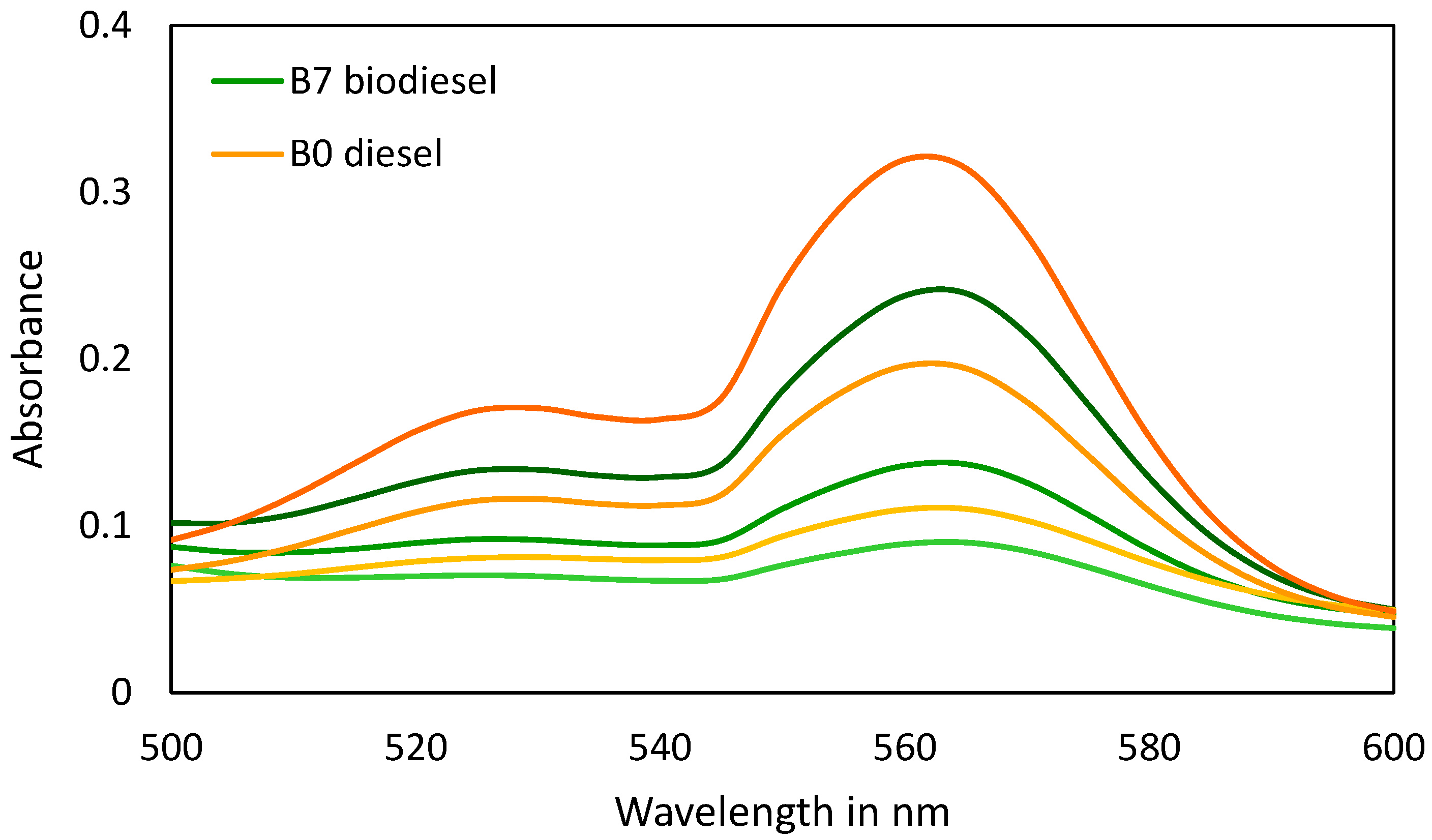
All analyses described in the previous sections were carried out with B0 diesel, i.e., diesel fuel without bio-components. Since biodiesel is currently widely used in Austria and in Europe, the majority of commercially available diesel fuel contains up to 7% FAME [38]. The application of the method to B7 biodiesel was assessed and compared to B0 diesel outcomes. Three different B0 diesel fuels and three different B7 diesel fuels were analyzed, all of them being conventional diesel fuel formulations provided by the supplier. Each B0 sample had a corresponding B7 sample with comparable succinimide content. The succinimide concentrations of each sample were known to the supplier and only disclosed after the analyses for verification purposes. During the analyses, a difference in the colouring of the samples was already apparent. In contrast to the B0 samples, the biodiesel samples produced a different, rather salmon pink coloration as shown in Figure 10. The fact that B0 and B7 give different absorptions at comparable succinimide contents can be seen in Figure 11, which resulted in the calculated succinimide contents for B0 and B7 being different. This led to the conclusion that applying the method to samples containing biodiesel requires the use of calibration standards prepared with corresponding amounts of unadditivated biodiesel, which was confirmed experimentally.

3.3. Application

The method was applied to two commercially available diesel fuel samples from different gas stations.
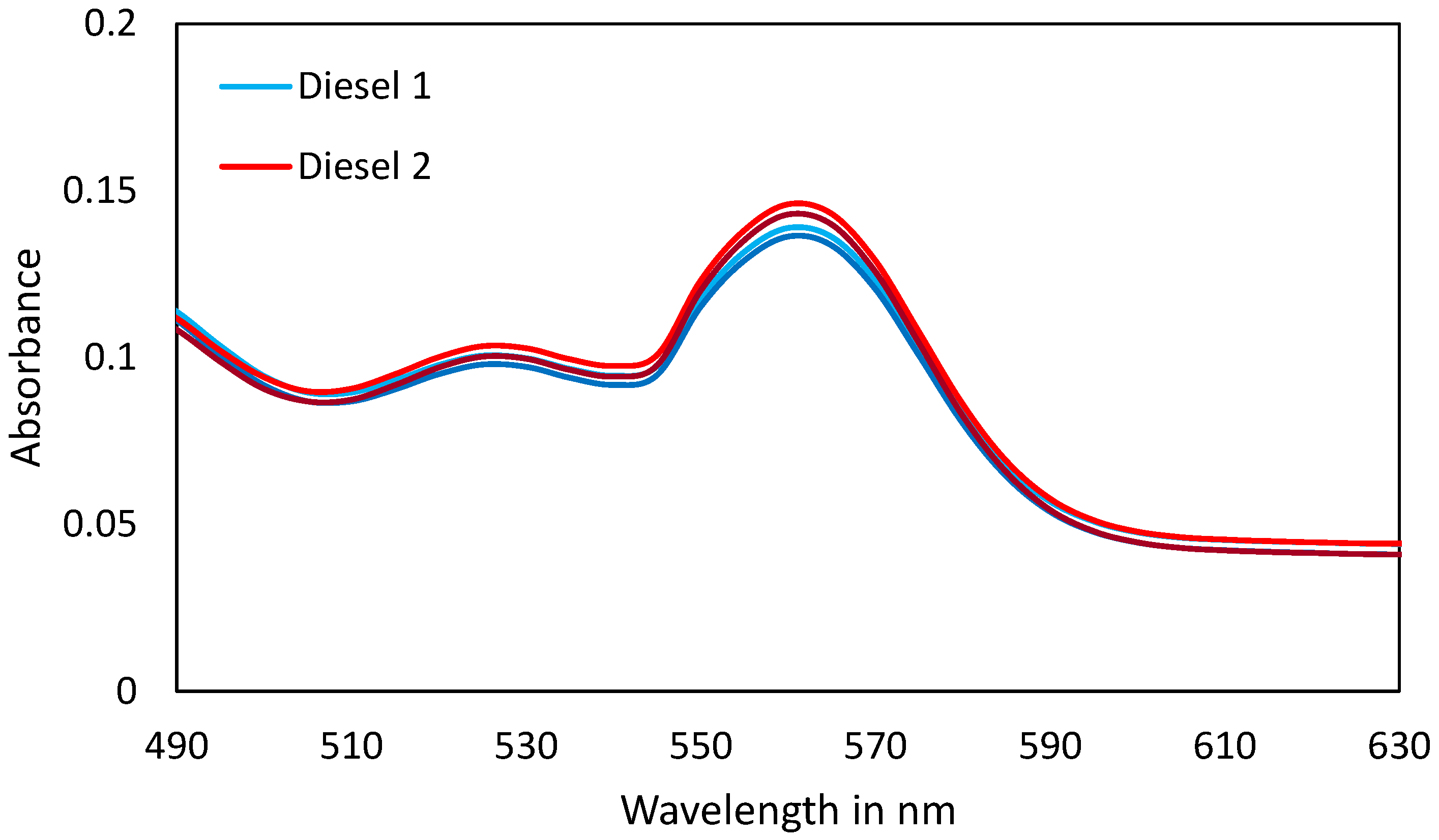
Figure 12 illustrates the section of interest of the UV/VIS spectra of the measured commercial samples, including a repeat measurement of each. The determined concentration values are given in Table 1. The repeat measurements show a relative deviation of 1.5% or lower in both cases.
Information on the actual succinimide content was subsequently obtained from the respective fuel manufacturer and was in good agreement with the values determined by the method presented.

4. Summary and Conclusions

Succinimide additives are widely used as dispersants, also known as deposit control additives, in fuels and lubricants. As many of the known methods for quantifying these additives are time-consuming and expensive due to their complexity and the need for expensive laboratory equipment, an accessible and practical method was elaborated in this work.
Since succinimide additives contain polyamines as a functional group, the new method was based on an existing method for the quantification of polyamines in aqueous samples, which is often used to monitor the corrosion inhibitor concentrations in process water. In principle, the method involves a colour reaction with Rose Bengal dye, where the initial solution is acidified by the addition of glacial acetic acid, which converts the dye to its colourless lactone form. When exposed to amine-containing succinimide additives, Rose Bengal reverts to its quinoid form and develops a pink colour, which can be detected by spectrophotometry. To enable the desired reaction in diesel fuel, the solvents used were adjusted in several steps, extending the method to organic solutions. The range of application was investigated up to at least 1000 ppm, and the LOD and LOQ were determined to be 10 ppm and 20 ppm, respectively.
The method was tested for cross-sensitivity to the widely applied diesel fuel additives; no substantial influence was found for cetane number improver ethylhexyl nitrate (EHN), as well as corrosion inhibitors based on organic acids and an antistatic additive represented by tertiary amines in this study.
The applicability of the method to diesel fuels containing biodiesel was also investigated, and an alternative to B0 diesel fuel was found and addressed. The method was also applied to commercial diesel fuel samples, and the measured succinimide contents were in good agreement with the subsequently revealed true values.
Eventually, the method proved to be easy to implement in the laboratory routine and provided a practical means of determining the succinimide additive content of diesel fuels. Future work should aim at simplifying the proposed methodology. One possible direction is the development of a compensation or normalization algorithm that enables the analysis of various fuel compositions without the need for fuel-specific calibration. First approaches showed promising results. A further potential for optimization is improving the accuracy of the current procedure, for instance, through refined signal processing, enhanced calibration strategies, or the incorporation of advanced data-driven correction techniques. The investigation of cross-sensitivities as well as future additives and fuel blends can also significantly enhance the robustness and reliability of the method, thereby broadening its applicability to real-world diesel fuels.

Author Contributions

Conceptualization, M.F.; methodology, M.F.; software, not applicable; validation, M.F. and N.D.; formal analysis, M.F.; investigation, M.F. and B.R.; resources, A.R.; data curation, M.F. and A.R.; writing—original draft preparation, M.F. and B.R.; writing—review and editing, M.F., N.D. and A.R.; visualization, M.F.; supervision, M.F. and N.D.; project administration, M.F.; funding acquisition, N.D. and A.R. All authors have read and agreed to the published version of the manuscript.

Funding

This work was funded by the “Austrian COMET-Program” (project InTribology2, no. 906860) via the Austrian Research Promotion Agency (FFG) and the federal states of Niederösterreich and Vorarlberg, and was carried out within the “Excellence Centre of Tribology” (AC2T research GmbH).

Data Availability Statement

Data is contained within the article.

Acknowledgments

The authors thank Mohamed Musthafa Iqbal for providing insights about the reaction mechanisms of Rose Bengal.

Conflicts of Interest

The authors, Marcella Frauscher, Ronai Bettina, and Nicole Dörr, are employed by AC2T research GmbH. The author, Alexandra Rögner, is employed by OMV Downstream GmbH.

References

  1. Mang, T.; Dresel, W. (Eds.) Lubricants and Lubrication, 2nd ed.; Wiley-VCH: Weinheim, Germany, 2007; ISBN 9783527314973. [Google Scholar]
  2. Bartha, L.; Deak, G.; Hancsok, J.; Baladincz, J.; Auer, J. Polyfunctional PIB Succinimide Type Engine Oil Additives. Lubr. Sci. 2001, 13, 313–328. [Google Scholar] [CrossRef] [Scilit]
  3. Srivastava, S.P.; Hancsók, J. Fuels and Fuel-Additives; John Wiley & Sons: Hoboken, NJ, USA, 2014. [Google Scholar]
  4. Bennett, J. Additives for Spark Ignition and Compression Ignition Engine Fuels. Proc. Inst. Mech. Eng. Part D J. Automob. Eng. 2018, 232, 148–158. [Google Scholar] [CrossRef] [Scilit]
  5. Herbstman, S.; Kashmir, S.V.; Theodore, E.N.; Benfaremo, N. Diesel Fuel Detergent Additive. U.S. Patent US5039307A, 13 August 1991. [Google Scholar]
  6. Herbstman, S.; Hayden, T.E.; Nalesnik, T.E.; Benfaremo, N. Gasoline Detergent Additive. U.S. Patent US5030249A, 9 July 1991. [Google Scholar]
  7. Mang, T. (Ed.) Encyclopedia of Lubricants and Lubrication; Springer: Berlin/Heidelberg, Germany, 2014; ISBN 978-3-642-22647-2. [Google Scholar]
  8. Schwab, S.D. Succinimide Lubricity Additive for Diesel Fuel and a Method for Reducing Wear Scarring in an Engine. U.S. Patent US8690968B2, 8 April 2014. [Google Scholar]
  9. Kim, Y.; Kim, J.; Hyeon, D.H.; Han, J.S.; Chun, B.H.; Jeong, B.H.; Kim, S.H. Development of PIBSI Type Dispersants for Carbon Deposit from Thermal Oxidative Decomposition of Jet A-1. Fuel 2015, 158, 91–97. [Google Scholar] [CrossRef] [Scilit]
  10. Reid, J.; Barker, J. Understanding Polyisobutylene Succinimides (PIBSI) and Internal Diesel Injector Deposits; SAE Technical Paper 2013-01-2682; SAE International: Warrendale, PA, USA, 2013. [Google Scholar] [CrossRef] [Scilit]
  11. Das, S.; Chowdhury, A. An Exploration of Biodiesel for Application in Aviation and Automobile Sector. Energy Nexus 2023, 10, 100204. [Google Scholar] [CrossRef] [Scilit]
  12. Hassan, T.; Rahman, M.M.; Rahman, M.A.; Nabi, M.N. Opportunities and Challenges for the Application of Biodiesel as Automotive Fuel in the 21st Century. Biofuels Bioprod. Biorefining 2022, 16, 1353–1387. [Google Scholar] [CrossRef] [Scilit]
  13. Knothe, G.; Razon, L.F. Biodiesel Fuels. Prog. Energy Combust. Sci. 2017, 58, 36–59. [Google Scholar] [CrossRef] [Scilit]
  14. Beck, Á.; Pölczmann, G.; Eller, Z.; Hancsók, J. Investigation of the Effect of Detergent-Dispersant Additives on the Oxidation Stability of Biodiesel, Diesel Fuel and Their Blends. Biomass Bioenergy 2014, 66, 328–336. [Google Scholar] [CrossRef] [Scilit]
  15. Liaquat, A.M.; Masjuki, H.H.; Kalam, M.A.; Fazal, M.A.; Khan, A.F.; Fayaz, H.; Varman, M. Impact of Palm Biodiesel Blend on Injector Deposit Formation. Appl. Energy 2013, 111, 882–893. [Google Scholar] [CrossRef] [Scilit]
  16. Liaquat, A.M.; Masjuki, H.H.; Kalam, M.A.; Rizwanul Fattah, I.M. Impact of Biodiesel Blend on Injector Deposit Formation. Energy 2014, 72, 813–823. [Google Scholar] [CrossRef] [Scilit]
  17. Feld, H.; Oberender, N. Characterization of Damaging Biodiesel Deposits and Biodiesel Samples by Infrared Spectroscopy (ATR-FTIR) and Mass Spectrometry (TOF-SIMS). SAE Int. J. Fuels Lubr. 2016, 9, 717–724. [Google Scholar] [CrossRef] [Scilit]
  18. Cook, S.; Richards, P. Possible Influence of High Injection Pressure on Diesel Fuel Stability: A Review and Preliminary Study; SAE Technical Paper 2009-01-1878; SAE International: Warrendale, PA, USA, 2009. [Google Scholar] [CrossRef] [Scilit]
  19. Boczkaj, G.; Jaszczołt, M.; Przyjazny, A.; Kamiński, M. Application of Normal-Phase High-Performance Liquid Chromatography Followed by Gas Chromatography for Analytics of Diesel Fuel Additives. Anal. Bioanal. Chem. 2013, 405, 6095–6103. [Google Scholar] [CrossRef] [Scilit]
  20. dos Santos, A.P.F.; da Silva, K.K.; Dweck, J.; d’Avila, L.A. Quantification of Detergent-Dispersant Additives in Gasoline by Thermogravimetry. Thermochim. Acta 2019, 681, 178400. [Google Scholar] [CrossRef] [Scilit]
  21. Brauer, S.J.; Miin, T.-C.T. Method for Quantitatively Determining Detergent Fuel Additives in Fuel Samples. Canadian Patent CA2132806A1, 25 March 1994. [Google Scholar]
  22. Ramos da Cruz, D.P.S. Análise de Gasolina Aditivada Por Espectrometria de Massas e Cromatografia Líquida Com Espectrometria de Massas Sequencial (Additive Gasoline Analysis by Mass Spectrometry and Liquid Chromatography Coupled Tandem Mass Spectrometry). Master’s Thesis, Universidade Estadual de Campinas, Campinas, Brazil, 2017. [Google Scholar]
  23. Malpas, E.R.; McFarlane, E.; Reading, K.; Matthews Wardle, R.W. Detection System. U.S. Patent US20080190354A1, 14 August 2008. [Google Scholar]
  24. Barnett, I.; Zhang, M. Discrimination of Brands of Gasoline by Using DART-MS and Chemometrics. Forensic Chem. 2018, 10, 58–66. [Google Scholar] [CrossRef] [Scilit]
  25. Barnett, I.; Bailey, F.C.; Zhang, M. Detection and Classification of Ignitable Liquid Residues in the Presence of Matrix Interferences by Using Direct Analysis in Real Time Mass Spectrometry. J. Forensic Sci. 2019, 64, 1486–1494. [Google Scholar] [CrossRef] [Scilit] [PubMed]
  26. Hupp, A.M.; Marshall, L.J.; Campbell, D.I.; Smith, R.W.; McGuffin, V.L. Chemometric Analysis of Diesel Fuel for Forensic and Environmental Applications. Anal. Chim. Acta 2008, 606, 159–171. [Google Scholar] [CrossRef] [Scilit]
  27. Wolf, R.; Kiefer, M.; Simon, M. Verfahren zum Nachweis von Kraftstoffadditiv-Komponenten. German Patent DE10246210A1, 15 April 2004. [Google Scholar]
  28. Zaikin, V.G.; Borisov, R.S. Options of the Main Derivatization Approaches for Analytical ESI and MALDI Mass Spectrometry. Crit. Rev. Anal. Chem. 2022, 52, 1287–1342. [Google Scholar] [CrossRef] [Scilit] [PubMed]
  29. Nakano, N.; Kobayashi, Y.; Nagashima, K. Development of a Monitoring Tape for Ammonia Gas in Air Using Rose Bengal. Analyst 1994, 119, 2009–2012. [Google Scholar] [CrossRef] [Scilit]
  30. Åkerlind, C.; Arwin, H.; Jakobsson, F.L.E.; Kariis, H.; Järrendahl, K. Optical Properties and Switching of a Rose Bengal Derivative: A Spectroscopic Ellipsometry Study. Thin Solid Film. 2011, 519, 3582–3586. [Google Scholar] [CrossRef] [Scilit]
  31. Paczkowski, J.; Lamberts, J.J.M.; Paczkowskat, B.; Neckers, D.C. Photophysical Properties of Rose Bengal and Its Derivatives. J. Free Radic. Biol. Med. 1985, 1, 341–351. [Google Scholar] [CrossRef]
  32. Bai, J.; Baker, S.M.; Goodrich-Schneider, R.M.; Montazeri, N.; Sarnoski, P.J. Development of a Rapid Colorimetric Strip Method for Determination of Volatile Bases in Mahi-Mahi and Tuna. J. Food Sci. 2021, 86, 2398–2409. [Google Scholar] [CrossRef] [Scilit]
  33. Lendi, M. Method for the Determination of Film-Forming Amines. United States Patent US9588090B2, 7 March 2017. [Google Scholar]
  34. Graf, A. Method for the Determination of Polyamines. European Patent EP0562210A1, 3 January 1996. [Google Scholar]
  35. Pensini, E.; Van Lier, R.; Cuoq, F.; Hater, W.; Halthur, T. Enhanced Corrosion Resistance of Metal Surfaces by Film Forming Amines: A Comparative Study between Cyclohexanamine and 2-(Diethylamino)Ethanolbased Formulations. Water Resour. Ind. 2018, 20, 93–106. [Google Scholar] [CrossRef] [Scilit]
  36. De Seranno, T.; Lambrechts, E.; De Meyer, E.; Hater, W.; De Geyter, N.; Verliefde, A.R.D.; Depover, T.; Verbeken, K. Effect of Film-Forming Amines on the Acidic Stress-Corrosion Cracking Resistance of Steam Turbine Steel. Metals 2020, 10, 1628. [Google Scholar] [CrossRef] [Scilit]
  37. El Sherif, Z.A.; Mohamed, A.O.; Walash, M.I.; Tarras, F.M. Spectrophotometric Determination of Loperamide Hydrochloride by Acid-Dye and Charge-Transfer Complexation Methods in the Presence of Its Degradation Products. J. Pharm. Biomed. Anal. 2000, 22, 13–23. [Google Scholar] [CrossRef] [Scilit] [PubMed]
  38. ÖNORM EN 590:2024 07 01; Kraftstoffe Für Kraftfahrzeuge–Diesel. Austrian Standards International: Vienna, Austria, 2024.
  39. Currie, L.A. Limits for Qualitative Detection and Quantitative Determination. Application to Radiochemistry. Anal. Chem. 1968, 40, 586–593. [Google Scholar] [CrossRef] [Scilit]
  40. Hamacher, D.; Schrader, W. Development of a Novel HPLC-MS Method to Separate Polar and Non-Polar Compounds in Biodiesel/Petrodiesel Mixtures. Separations 2022, 9, 214. [Google Scholar] [CrossRef] [Scilit]
  41. Brewer, M.; Cracknell, R.F.; Eggenstein, M.; Goh, T.K. Kraftstoffzusammensetzungen. German Patent DE102013112821A1, 5 June 2014. [Google Scholar]
  42. Duboc, B. The Effect of Fuel Additives on Diesel Fuel Delivery System and Combustion Performance. Ph.D. Thesis, University College London, London, UK, 2014. [Google Scholar]
  43. Barker, J.; Cook, S.; Richards, P. Sodium Contamination of Diesel Fuel, Its Interaction with Fuel Additives and the Resultant Effects on Filter Plugging and Injector Fouling. SAE Int. J. Fuels Lubr. 2013, 6, 826–838. [Google Scholar] [CrossRef] [Scilit]
  44. Hunger, H.; Litzow, U.; Genze, S.; Dörr, N.; Karner, D.; Eisenmenger-Sittner, C. Tribological Characterisation and Surface Analysis of Diesel Lubricated Sliding Contacts. Tribol. Schmier. 2010, 57, 6–13. [Google Scholar]
  45. DIN EN 14214:2019-05; Liquid Petroleum Products-Fatty Acid Methyl Esters (FAME) for Use in Diesel Engines and Heating Applications-Requirements and Test Methods. German Version; Deutsches Institut für Normung (DIN): Berlin, Germany, 2019. [CrossRef] [Scilit]
  46. Gosling, A. Additives for Fuels and Lubricants; Elsevier: Amsterdam, The Netherlands, 2020. [Google Scholar]
  47. Stache, H. Corrosion Inhibitors. In Fuel Additives; Springer: Berlin/Heidelberg, Germany, 1990. [Google Scholar]
Figure 1. Structure of mono- and bis-succinimides used as fuel and lubricant additives.
Fuels 07 00004 g001
Figure 2. Chemical structure of Rose Bengal.
Fuels 07 00004 g002
Figure 3. Protonation and deprotonation of Rose Bengal.
Fuels 07 00004 g003
Figure 4. Blank solution and calibration standards with 5 different succinimide concentrations.
Fuels 07 00004 g004
Figure 5. Sample mixtures with different diesel fuel contents of 64 (% v/v), 70 (% v/v), and 72 (% v/v).
Fuels 07 00004 g005
Figure 6. Blank solution and model samples with 3 different succinimide concentrations.
Fuels 07 00004 g006
Figure 7. Section of UV/Vis spectra of 250 (blue), 500 (green), and 1000 (orange) ppm succinimides in model diesel fuel samples after colour reaction; 4 measurements per concentration are plotted in different shades of the respective colour, but are sometimes indistinguishable due to strong overlap.
Fuels 07 00004 g007
Figure 8. Section of UV/Vis spectra of model diesel fuel samples, each containing 500 ppm succinimides without EHN (green) and with 100 ppm (blue) and 500 ppm (orange) EHN added, after colour reaction.
Fuels 07 00004 g008
Figure 9. Blank solution and sample solutions with 3 different succinimide additives, with additive A being the one used for the preparation of the stock solution.
Fuels 07 00004 g009
Figure 10. Blank solution, diesel fuel samples with biodiesel (B7) and without biodiesel (B0), with a 200 ppm calibration standard as reference.
Fuels 07 00004 g010
Figure 11. Section of UV/Vis spectra of B0 (orange) and B7 diesel fuel (green) samples after colour reaction.
Fuels 07 00004 g011
Figure 12. Section of UV/Vis spectra of commercial diesel fuel samples (sample 1 blue, sample 2 red) after colour reaction.
Fuels 07 00004 g012
Table 1. Measurement results for diesel fuels from gas stations.
PropertyDiesel 1Diesel 1Diesel 2Diesel 2
UV/VIS absorbance at 560 nm0.13870.13610.14580.1428
Succinimide concentration in ppm9896106103
Arithmetic mean of succinimide concentration in ppm97105
Relative standard deviation of succinimide concentration in %2.12.3
Disclaimer/Publisher’s Note: The statements, opinions and data contained in all publications are solely those of the individual author(s) and contributor(s) and not of MDPI and/or the editor(s). MDPI and/or the editor(s) disclaim responsibility for any injury to people or property resulting from any ideas, methods, instructions or products referred to in the content.