1. Introduction
The aviation industry plays a central role in global connectivity and economic development, contributing approximately 2.7 trillion USD to global GDP and employing over 65 million people as of 2016 [
1]. However, it is also a major source of environmental concern, accounting for about 2.5% of global greenhouse gas (GHG) emissions and nearly 3.5% of total anthropogenic global warming [
2,
3]. With global air traffic expected to grow at an annual rate of 4.8% [
4], achieving decarbonization in aviation has become one of the most complex challenges in the energy transition era. Kerosene remains the dominant aviation fuel, and short- and medium-haul flights contribute approximately 70% of aviation-related CO
2 emissions, while long-haul operations exacerbate non-CO
2 climate effects such as contrails and nitrogen oxides [
5,
6,
7].
In the broader energy landscape, the global energy market—valued at approximately 1.5 trillion USD—remains predominantly dependent on fossil fuels [
8]. These finite resources contribute substantially to environmental degradation, including air pollution and global warming, rendering them unsustainable in the long term [
9,
10,
11]. In response to these challenges, hydrogen has emerged as a key alternative energy carrier capable of drastically reducing GHG emissions when produced from renewable resources. Hydrogen’s high gravimetric energy density and its ability to produce only water vapor during electrochemical conversion make it a particularly appealing candidate for sustainable aviation [
12,
13].
Hydrogen’s potential to decarbonize aviation stems from its dual applicability in both combustion and fuel cell systems. When utilized in fuel cells, hydrogen produces zero carbon emissions and significantly reduces non-CO
2 effects, including nitrogen oxides (NOₓ), contrails, and particulate matter [
14,
15]. Furthermore, hydrogen can be produced through multiple pathways—such as electrolysis, thermochemical conversion, and biomass reforming—enabling its integration within a broader renewable energy ecosystem [
7,
12]. Compared to synthetic aviation fuels and biofuels, which still involve partial carbon cycles, hydrogen offers superior environmental performance and long-term sustainability potential.
Despite its advantages and economic benefits [
16], the adoption of hydrogen in aviation presents major technical, infrastructural, and operational challenges. These include cryogenic storage at extremely low temperatures (−253 °C), low volumetric energy density, hydrogen embrittlement in structural materials, and the need for comprehensive redesign of fuel delivery and airport infrastructure systems [
17,
18]. Additionally, hydrogen’s wide flammability range (4–75%) and low ignition energy (~0.02 mJ) introduce significant safety concerns during storage, transport, and refueling operations [
13]. The complexity of these issues is further magnified by the aviation sector’s strict safety and certification requirements [
19], making large-scale hydrogen integration technologically and economically demanding.
In the United States alone, transportation accounts for approximately 33% of total GHG emissions—75% originating from road traffic—followed by energy generation (41%), industry and agriculture (16%), and other sources (10%) [
20]. This emphasizes the necessity of a clean energy transition across all sectors, particularly aviation, which remains one of the hardest industries to decarbonize. Several studies have discussed hydrogen’s potential role in mitigating aviation emissions [
12,
17]; however, most have focused primarily on conceptual designs or the theoretical benefits of hydrogen systems, without providing quantitative assessments of the associated technical risks. Moreover, comprehensive probabilistic analyses that evaluate uncertainties in hydrogen leakage, explosion hazards, or cryogenic storage challenges remain scarce [
21].
To address this gap, the present study applies a Monte Carlo Simulation (MCS) framework to identify, quantify, and prioritize the key technical risks involved in the adoption of hydrogen as an aviation fuel. Monte Carlo Simulation is a well-established probabilistic modeling technique that enables the analysis of uncertainty and variability in complex engineering systems, making it especially suitable for hydrogen risk assessment [
22,
23]. By generating a large number of random iterations for probability and impact parameters, the method provides statistically robust distributions for each identified risk, supporting data-driven decision-making in safety and design processes.
Accordingly, this study aims to systematically evaluate the technical risks associated with hydrogen-powered aviation and to propose targeted mitigation strategies for safe implementation. The research distinguishes itself from existing studies by integrating quantitative risk analysis with a probabilistic modeling approach, offering a more objective and data-centered framework. The study focuses exclusively on technical and operational risks, excluding economic feasibility and lifecycle emission assessments, to maintain a well-defined analytical scope. The outcomes are expected to inform policymakers, researchers, and industry stakeholders about priority areas for risk mitigation and infrastructure development aligned with global decarbonization goals.
In this context, the study is guided by two primary research questions:
What are the main technical and operational risks associated with the use of hydrogen in aviation?
Which of these risks require urgent mitigation to ensure the safe and scalable adoption of hydrogen as an aviation fuel?
1.1. Transition from Kerosene to Sustainable Aviation Fuels
Aviation’s dependence on kerosene-based fuels remains a major contributor to global greenhouse gas emissions and local air pollution [
5]. While electric propulsion could theoretically reduce operating costs by up to 90%, current lithium-based batteries provide only 5–8% of kerosene’s energy density, limiting range and payload capacity; for example, the Alpha Electro achieves only ~90 nautical miles [
24]. These constraints have accelerated interest in higher–specific energy alternatives such as hydrogen and sustainable aviation fuels (SAFs). SAF pathways—including e-kerosene produced from power-to-liquid processes—can reduce life-cycle emissions by up to 80% and remain compatible with existing aircraft systems [
17,
25]. Certified producers such as Gevo, Lanzajet, and Neste have already supplied ASTM D7566–approved SAF to airlines [
26]. Nevertheless, several SAF options face economic and scalability limitations, with current production representing less than 1% of global aviation fuel demand and costing three to five times more than conventional jet fuel [
7,
17]. These constraints highlight SAF’s value as a transitional decarbonization strategy but also underscore the need for hydrogen as a long-term solution.
1.2. Research Gap and Rationale for a Risk-Based Analysis of Hydrogen in Aviation
Although multiple studies emphasize hydrogen’s potential for near-zero-emission aviation, most assessments focus on isolated technical aspects—such as combustion, cryogenic storage, or propulsion design—rather than integrated risk evaluation [
12,
18,
21]. Existing research rarely quantifies the combined probability and impact of hydrogen-related hazards, and there is a clear absence of probabilistic modeling frameworks in this domain. While Monte Carlo Simulation (MCS) has been used effectively in other engineering risk analyses, its application to hydrogen aviation remains limited [
22,
23]. No previous study integrates Delphi-based expert elicitation with high-iteration Monte Carlo modeling to simultaneously evaluate leakage, cryogenic failure, explosion hazards, and infrastructure adaptation. This gap restricts the development of data-driven safety standards. Therefore, the present study introduces one of the first comprehensive probabilistic risk hierarchies for hydrogen aviation by generating 10,000-iteration stochastic distributions for major technical hazards.
1.3. Hydrogen-Powered Aircraft: Environmental Advantages and Engineering Challenges
Hydrogen offers substantial sustainability benefits due to its high gravimetric energy density and near-zero carbon emissions when used in fuel-cell propulsion [
12,
13]. Combustion or electrochemical conversion produces no particulate matter and markedly lower NOₓ emissions compared to kerosene [
17]. However, hydrogen’s physical properties impose significant engineering challenges: liquid hydrogen must be stored at approximately −253 °C and occupies nearly four times the volume of kerosene, increasing risks of leakage, embrittlement, and cryogenic failure [
18,
21]. Its wide flammability range (4–75%) and extremely low ignition energy (~0.02 mJ) elevate explosion and fire hazards during operations [
17]. Furthermore, scaling hydrogen-powered aviation requires major modifications to aircraft architecture, refueling systems, ground operations, and maintenance protocols. Although prototypes such as Airbus ZEROe and ZeroAvia fuel-cell demonstrators validate fundamental feasibility, commercial adoption remains limited by storage, infrastructure, and cost constraints.
1.4. Hydrogen as an Aviation Fuel: Opportunities and Barriers
Hydrogen represents one of the most promising long-term decarbonization pathways due to its high specific energy and potential for near-zero life-cycle emissions when produced from renewable electricity [
4,
7,
12,
17]. However, cost barriers remain substantial, as green hydrogen production is typically three to five times more expensive than fossil-derived jet fuels. Engineering and safety challenges—including hydrogen’s diffusivity, low ignition energy, and cryogenic storage requirements—also necessitate advanced materials and robust detection systems [
18,
27]. Infrastructure adaptation remains one of the most significant barriers, requiring modernization of airport refueling systems, cryogenic logistics, and global safety standards [
17]. While hydrogen-powered aviation can virtually eliminate CO
2 and particulate emissions, its successful adoption depends on coordinated innovation in fuel production, aircraft integration, and international regulatory frameworks [
28].
2. Methodology
This study employs the Monte Carlo Simulation (MCS) method to evaluate the probabilistic nature of technical risks associated with hydrogen integration in aviation. The MCS was selected due to its strong capability to model uncertainty and generate statistically reliable likelihood–impact distributions in situations where empirical failure data are limited—particularly relevant for emerging hydrogen propulsion technologies at Technology Readiness Levels (TRL) 4–6.
A systematic literature review was conducted using Scopus, Web of Science, ScienceDirect, and Google Scholar databases to identify relevant research published between 2000 and 2024. The search utilized keywords such as hydrogen aviation, sustainable aviation fuel, hydrogen combustion, Monte Carlo risk analysis, and cryogenic storage. Peer-reviewed studies addressing technical, environmental, and safety-related aspects of hydrogen applications were included, while non-academic or outdated sources were excluded. The final dataset consisted of approximately 80 studies forming the foundation for defining the risk domains and their input parameters.
Four primary risk categories were identified:
Each risk was characterized by two parameters: Probability (P) and Impact (I). These parameters were initially defined through a combination of literature-based evidence and expert judgment from four academic specialists in combustion, hydrogen combustion dynamics, and reactive flow mechanisms. Experts independently reviewed the literature-derived ranges and then refined these values through a Delphi-based consensus process.
In this study, expert elicitation was conducted with four academic specialists who work directly in the fields of combustion, hydrogen combustion dynamics, and reactive flow mechanisms. All experts hold doctoral degrees and have active research experience in hydrogen-based propulsion and high-temperature reactive flows. They were selected based on their publication records, ongoing research projects, and specific expertise related to hydrogen safety. Each expert contributed independently during the Delphi rounds, ensuring unbiased parameter estimation and increasing the methodological robustness of the probability and impact ranges.
2.1. Rationale for Probability Calculation Method
The probability values used for each risk factor were modeled using uniform distributions due to the limited availability of empirical incident data specific to hydrogen-powered aviation. Because hydrogen systems in aviation remain at TRL 4–6, neither historical failure rates nor validated parametric probability distributions (e.g., beta, triangular, gamma) are available. Under such conditions of data scarcity, uniform distributions are widely recommended in probabilistic safety modeling because they avoid introducing artificial skewness, distribute epistemic uncertainty evenly across expert-defined ranges, and prevent distortions arising from unsupported assumptions about the shape of the probability density function.
Although more sophisticated distributions may provide higher realism in mature systems, their parameters cannot be reliably estimated in the current stage of hydrogen aviation development. Therefore, uniform sampling was chosen as the most theoretically justified and methodologically robust approach for representing uncertainty in this study.
In addition to the limited availability of empirical reliability data for hydrogen–aviation systems, alternative probability distributions such as triangular or beta were not used because their parameters (minimum, mode, shape factors) require mathematically consistent calibration. At present, no validated datasets exist for deriving such parameters, and expert estimates did not converge sufficiently to support higher-order distributions. Using these distributions without robust parameterization could create misleading peaks or artificial skewness in the probability space, thereby reducing the credibility of the simulation. In contrast, the uniform distribution reflects epistemic uncertainty transparently and avoids implying a central tendency that cannot be supported by evidence. For emerging technologies with highly incomplete data—as recognized in probabilistic safety research—uniform sampling remains the most defensible and scientifically conservative approach.
2.2. Parameter Definition and Validation Process
To enhance transparency, the probability (P) and impact (I) intervals were established using a structured two-step procedure:
Literature-based parameter extraction: Initial minimum–maximum ranges were derived from published hydrogen safety research addressing leak diffusion characteristics, flammability limits, ignition energy, cryogenic tank behavior, and historical industrial incidents.
Delphi-based expert refinement: Initial minimum–maximum ranges were derived from published hydrogen safety research addressing leak diffusion characteristics, flammability limits, ignition energy, cryogenic tank behavior, and historical industrial incidents.
The Delphi process was conducted over two rounds, during which each expert independently reviewed the literature-derived parameter ranges. Consensus was defined using a ±10% agreement threshold, and any divergence in estimates was resolved through moderated discussion, ensuring coherent and unbiased convergence.
Validation: Final parameter ranges were validated by comparing them with published hydrogen safety benchmarks and existing probabilistic studies in related sectors (e.g., industrial hydrogen systems, fuel-cell automotive applications). These comparisons confirmed that the defined ranges aligned with observed hydrogen hazard behavior.
2.3. Monte Carlo Simulation Procedure
In this study, Monte Carlo Simulation was used to quantify the uncertainty associated with each hydrogen-related risk factor. For every risk category, continuous probability (P) and impact (I) values were generated over 10,000 iterations using expert-defined minimum–maximum intervals. Each iteration produced a continuous risk score defined as:
The raw simulation results were summarized using their mean, standard deviation, and 10th–90th percentile ranges to capture variability and uncertainty in the underlying distributions.
Although the inputs for P and I were sampled uniformly, the resulting risk score RRR is not uniform because it is a multiplicative transformation of two variables. For this reason, the percentile values of RRR are not expected to be perfectly symmetric around the mean. This mild asymmetry—observed, for example, in the 10th–90th percentile bounds—is therefore a normal statistical outcome of the model structure and does not indicate any computational inconsistency.
After obtaining continuous P, I, and R values, the results were converted into the discrete 1–5 scoring format required by standard aviation risk matrices. To ensure consistency with ICAO/EASA qualitative scales, all continuous values were first normalized to their respective minimum–maximum ranges and then divided into five equal-width categories (1 = very low, …, 5 = very high). Each simulated value was assigned to its corresponding category, and the final risk matrix scores were derived using these discrete classes.
Because the continuous simulation outputs and the discrete matrix scores represent different stages of the analysis, their numerical ranges are not identical. For example, continuous impact magnitudes such as 16–20 for hydrogen leakage or 20–25 for explosion hazards reflect raw simulation values, whereas the corresponding matrix entries (e.g., I = 5 for leakage and I = 4 for explosion) are the normalized and categorized representations of these values. Thus, any apparent discrepancy between continuous ranges and final matrix scores is an expected and mathematically consistent result of the discretization process.
2.4. Sensitivity Analysis Approach
To identify which input parameters exert the strongest influence on the simulated risk scores, a post-simulation sensitivity analysis was conducted. Spearman rank correlation coefficients were calculated between the 10,000 Monte Carlo iterations of each risk score and the corresponding Probability (P) and Impact (I) parameters. This non-parametric approach was selected due to its robustness against non-linear relationships. Higher correlation values indicate stronger sensitivity of the risk score to changes in the respective parameter. The resulting correlation patterns enabled the identification of dominant risk drivers and highlighted which variables require improved empirical data in future research.
2.5. Assumptions and Limitations
The model assumes statistical independence between risk factors. While hydrogen leakage, cryogenic failures, and explosion hazards may be interdependent in real systems, empirical correlation coefficients for aviation applications do not yet exist. Incorporating unsupported dependencies could distort results; therefore independence was adopted as a conservative assumption. This may slightly underestimate total system risk in cases where multiple hazards interact.
3. Findings
This study identified eight primary risk factors associated with the integration of hydrogen into aviation systems. Each risk represents a critical area requiring attention to ensure the safe and efficient deployment of hydrogen-powered aircraft. These factors are summarized and explained below:
Hydrogen Leakage: The high diffusivity and wide flammability range of hydrogen significantly increase the risk of leaks and subsequent ignition. To minimize this hazard, advanced leak detection sensors and fire prevention technologies must be employed [
7].
Cryogenic Storage Challenges: Storing liquid hydrogen at extremely low temperatures (−253 °C) requires specialized, highly insulated tanks. These systems pose major engineering, design, and cost challenges for both aircraft and ground infrastructure [
12].
Explosion Risk in Storage and Transport: Due to its low ignition energy and high chemical reactivity, hydrogen is prone to explosion hazards during storage and transport. Implementing strict safety standards and international handling protocols is essential to mitigate this risk [
18].
High Investment Costs: Transitioning airports and maintenance facilities to support hydrogen operations demands substantial financial investments, including the construction of dedicated refueling, compression, and storage systems [
29].
Low Volumetric Energy Density: Hydrogen’s low volumetric energy density necessitates larger fuel tanks, which affect aircraft design, weight distribution, and aerodynamic performance [
17].
Wide Ignition Range: Hydrogen can ignite across a broad concentration range in air (4–75%), creating considerable safety challenges during handling and refueling. Advanced insulation systems and continuous leak monitoring are therefore required [
7,
17].
Infrastructure Development Requirements: The introduction of hydrogen-powered aircraft calls for new airport infrastructure, including cryogenic storage facilities, refueling systems, and specialized ground personnel training [
13].
Limited Technical Expertise: The operation and maintenance of hydrogen propulsion systems demand specialized knowledge in cryogenics, fuel cell technology, and safety management. A lack of technical competence can compromise both system reliability and operational safety [
17,
29].
Using Monte Carlo Simulation, this study evaluated the probabilistic behavior of these eight critical risk factors. Each factor was modeled according to two main parameters: likelihood of occurrence and severity of impact. The simulations produced quantitative risk matrices that classified outcomes into three levels of risk intensity:
Low risk: Risk score <10;
Moderate risk: Risk score between 10 and 17;
High risk: Risk score ≥17.
This classification framework provides a clear visualization of how each risk contributes to the overall safety profile of hydrogen-powered aviation systems. It also serves as a foundation for prioritizing mitigation strategies and guiding future research and investment efforts toward the most critical technical challenges.
The visualizations above represent individual risk matrices generated for each risk factor through Monte Carlo Simulation.
Risk matrices are given in
Figure 1,
Figure 2,
Figure 3,
Figure 4,
Figure 5,
Figure 6,
Figure 7 and
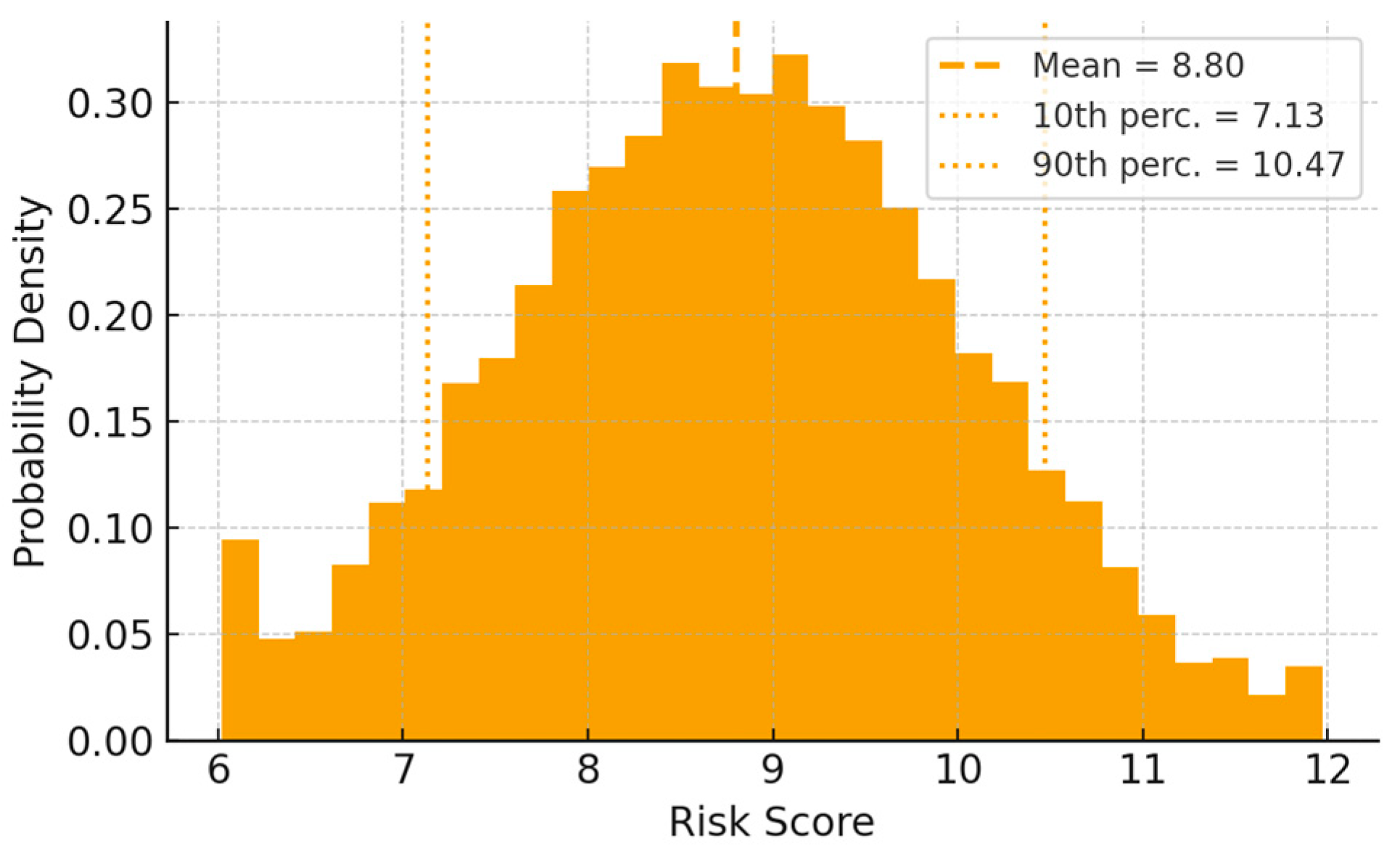
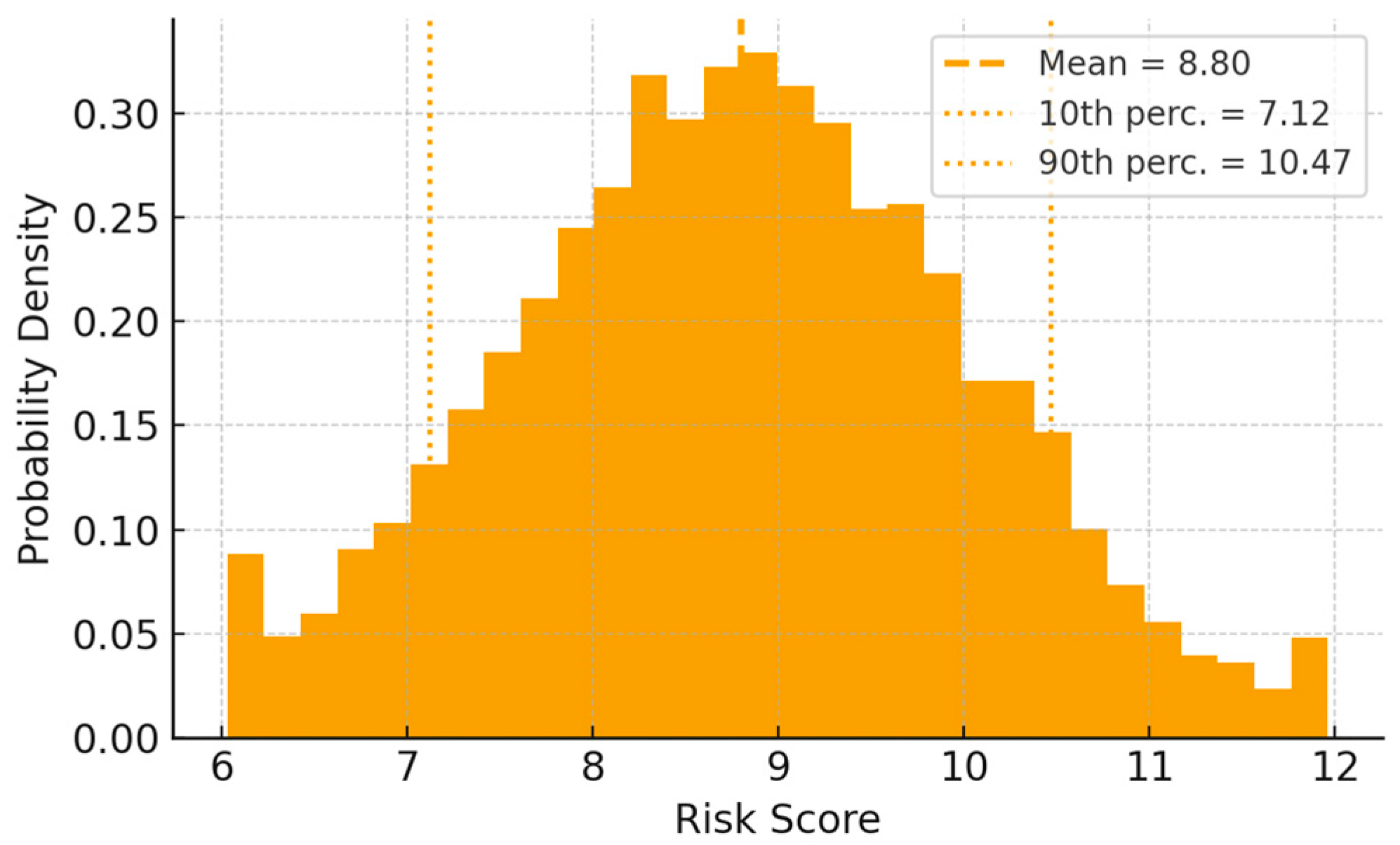
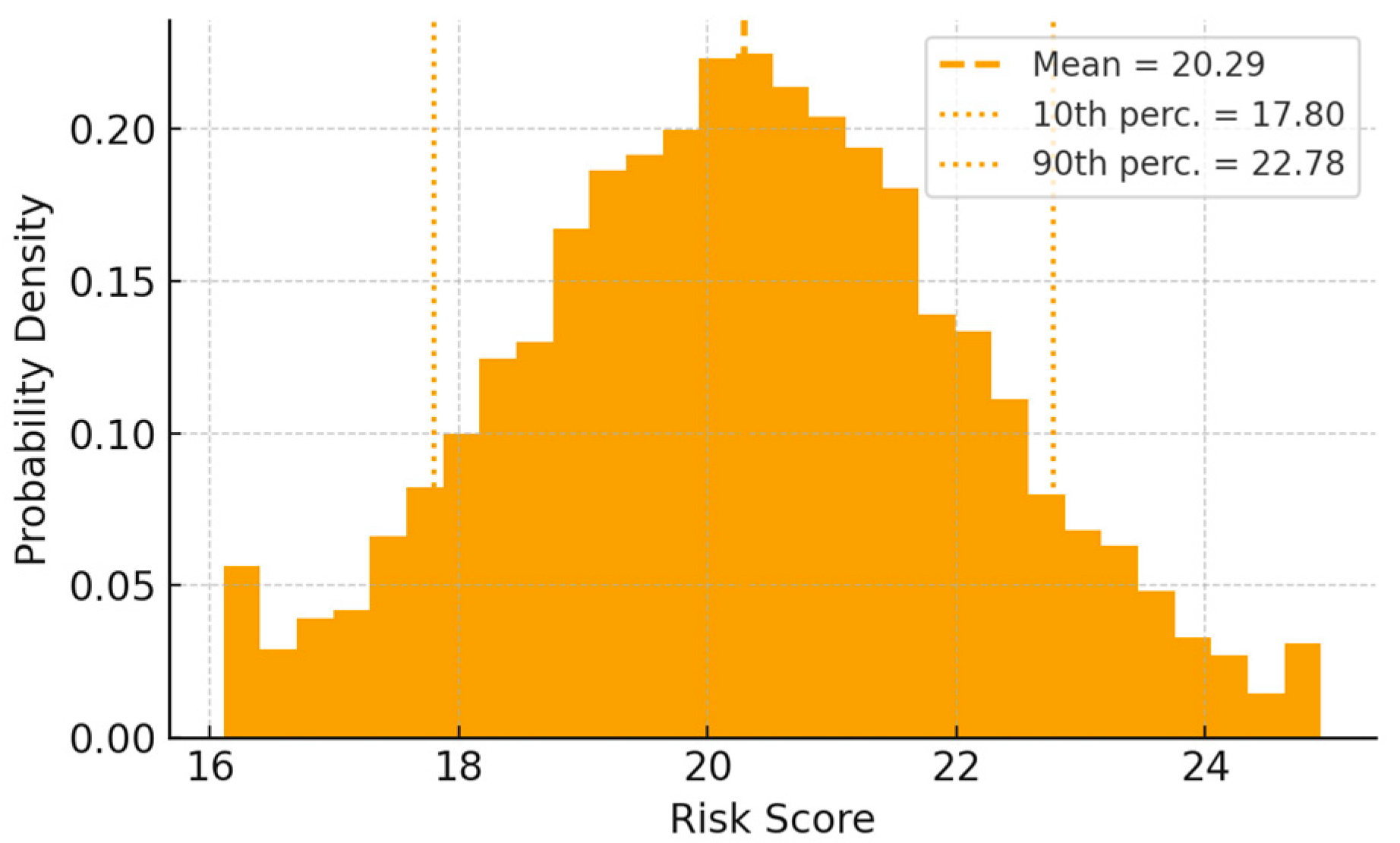
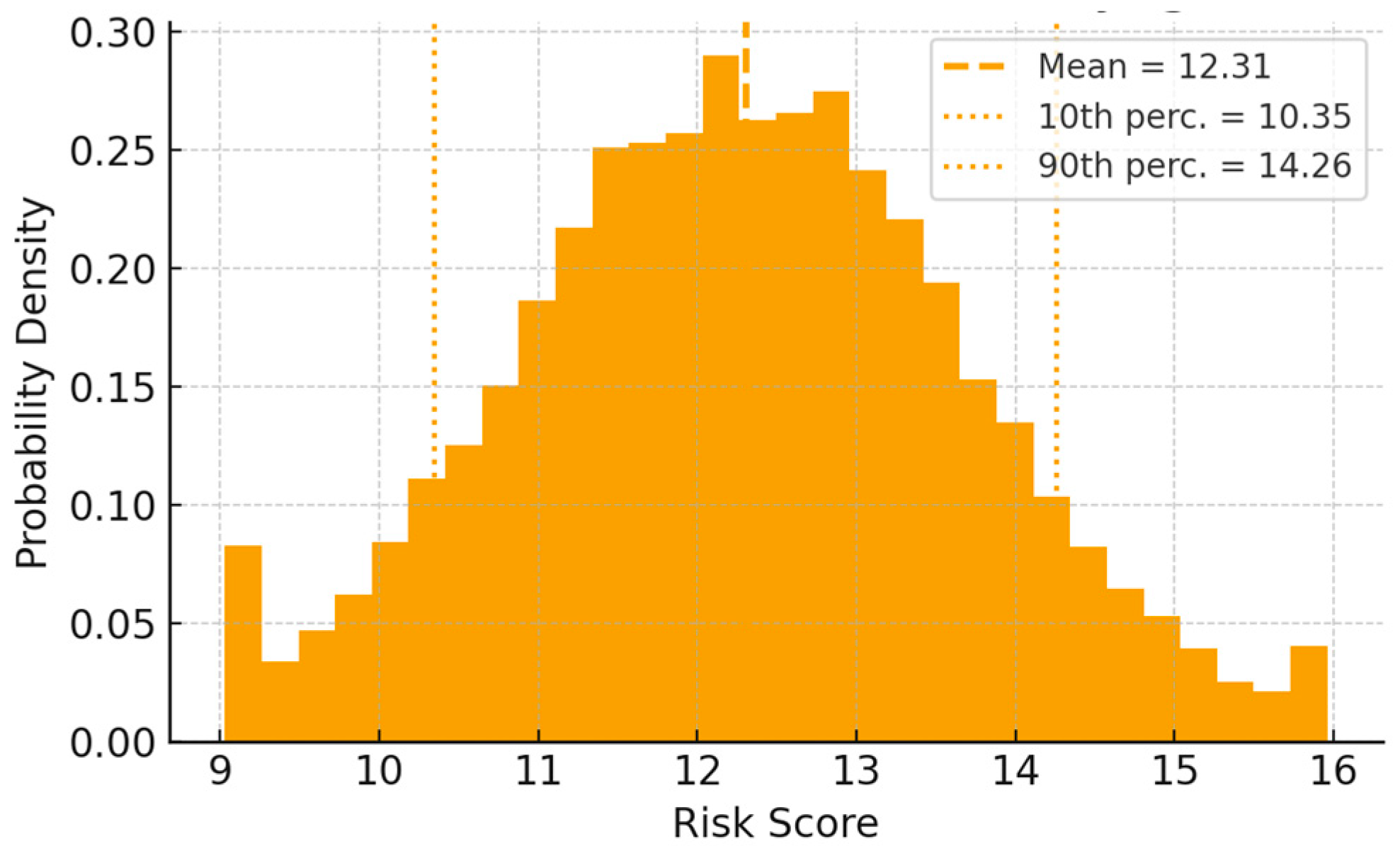
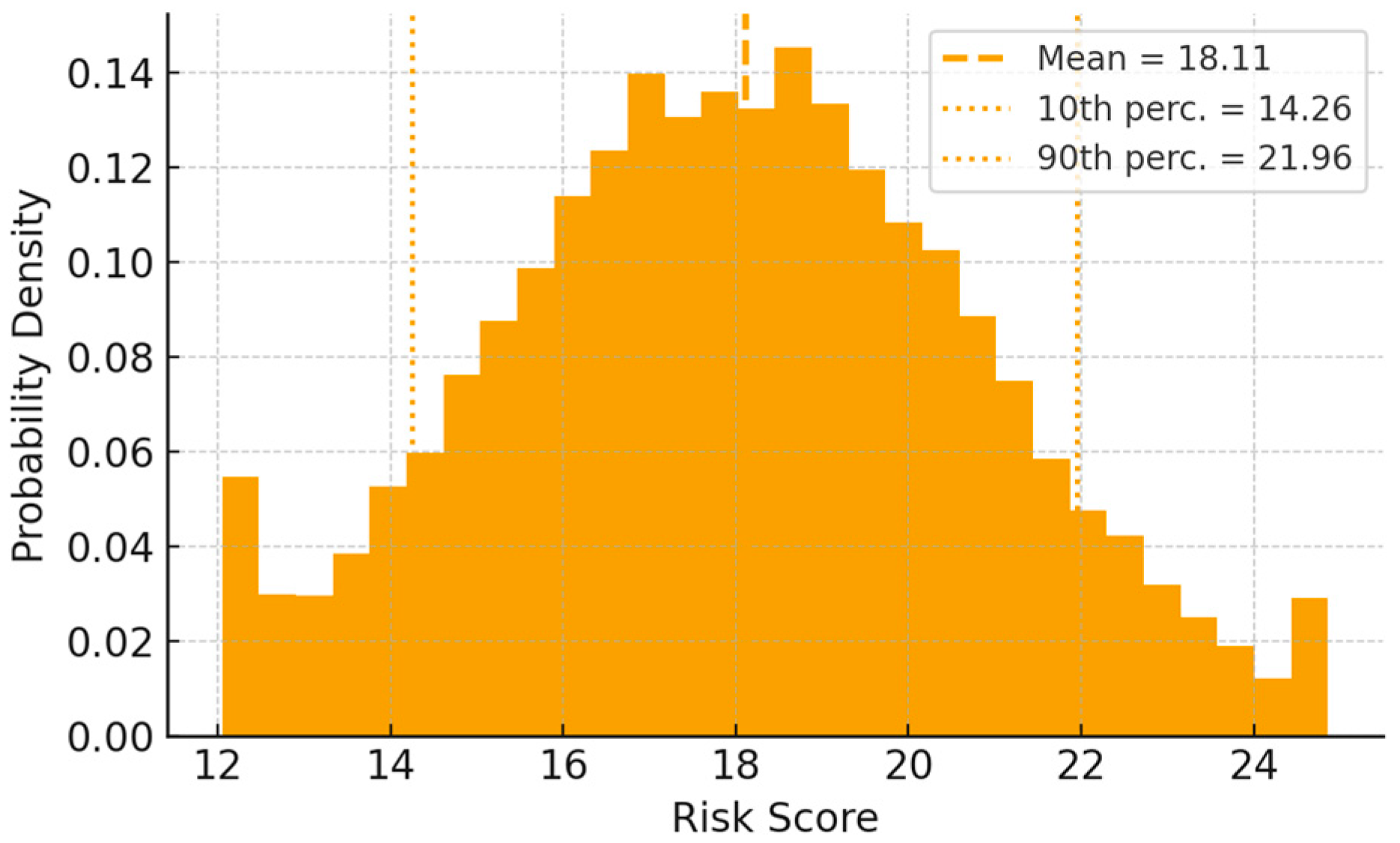
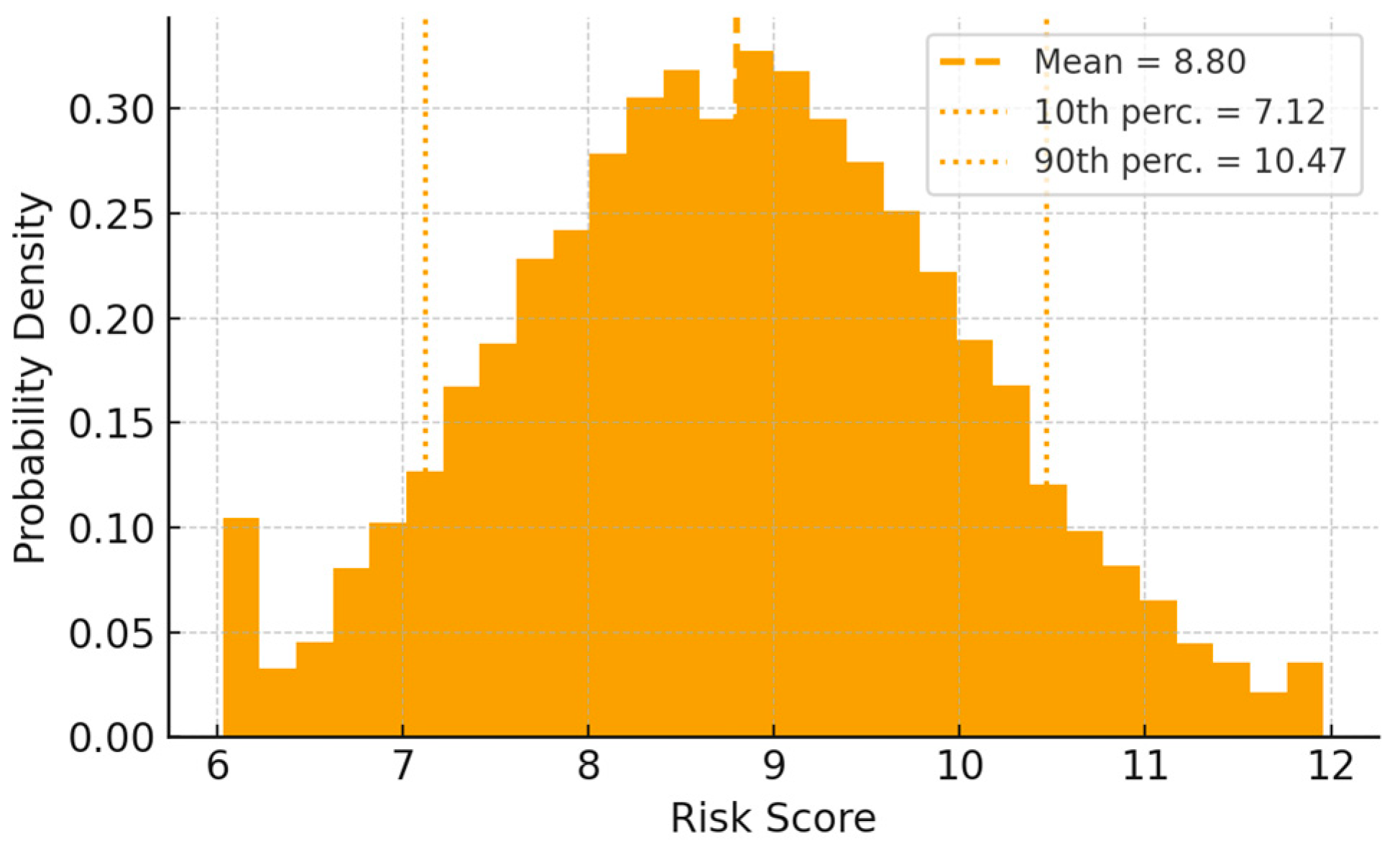
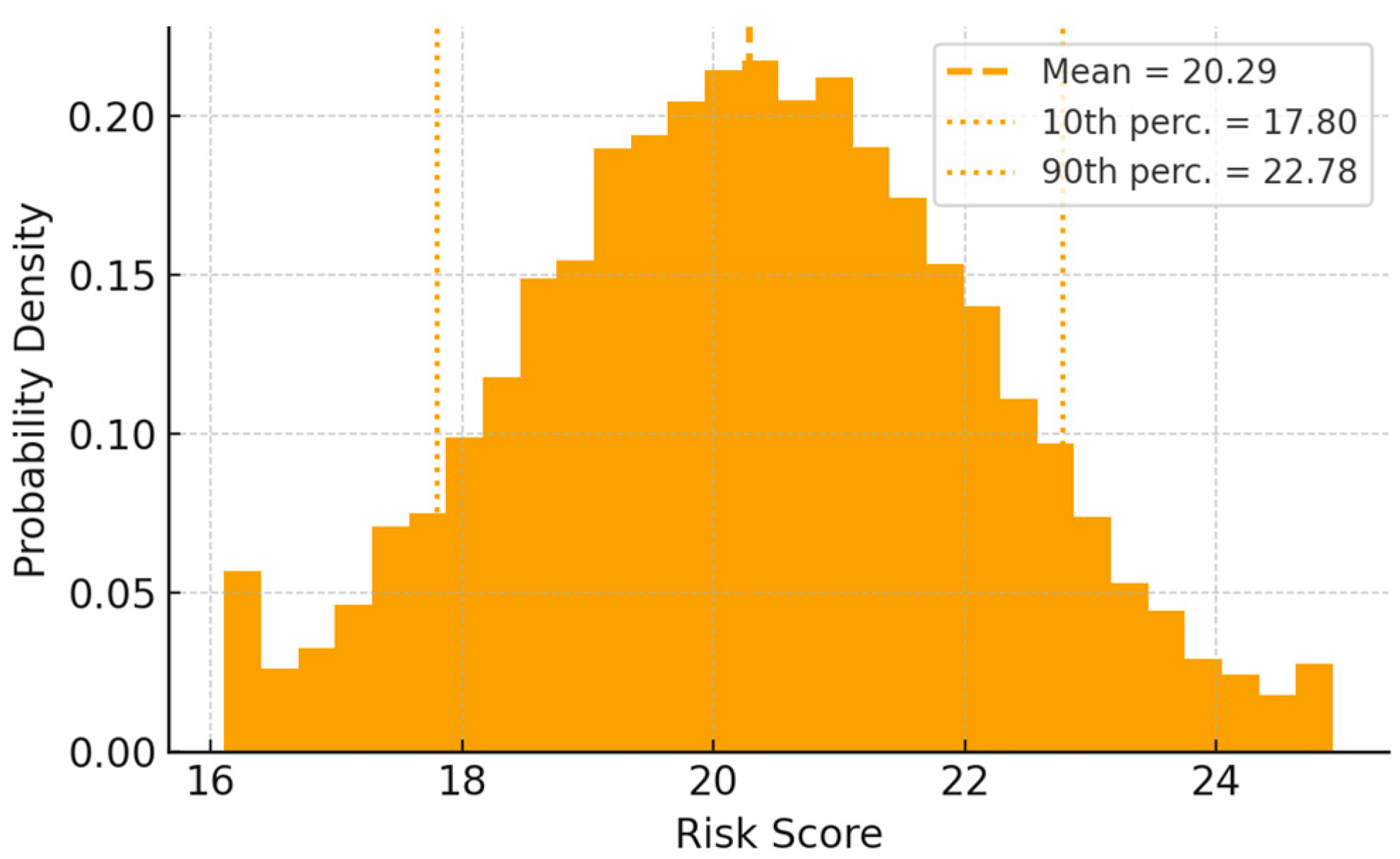
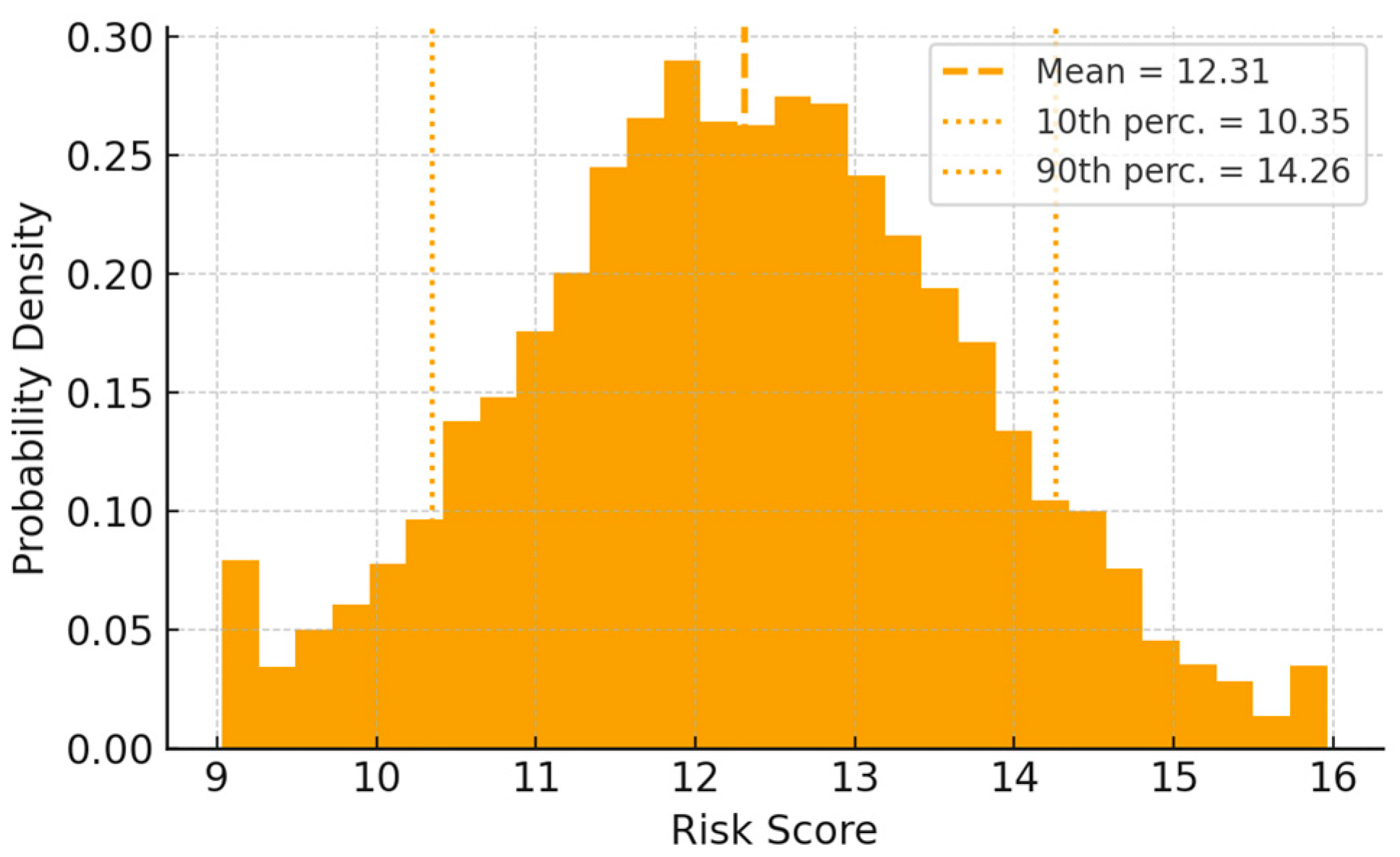
Figure 8. Uncertainty indicators based on the 10th–90th percentile Monte Carlo outputs were integrated into each matrix to better reflect the stochastic behavior of the simulated risks. Complementary visualizations, including histograms and percentile-based distribution plots, were also added to illustrate the variability and dispersion of the 10,000-iteration Monte Carlo outputs.
According to the Monte Carlo Simulation outcomes, hydrogen leakage emerged as the most critical risk for hydrogen-fueled aircraft. Its probability of occurrence exceeds 0.70, with a severe impact level between 24–28, requiring advanced safety and monitoring systems. Similarly, the risk of explosion during storage and transport showed a high probability (0.65–0.80) and severe impact (25–30), emphasizing the need for strict safety standards and real-time monitoring during handling and refueling.
Cryogenic storage challenges were classified as medium to high risk, with moderate probability but high impact due to the technical complexity of maintaining hydrogen at −253 °C. The wide flammability range of hydrogen also represents a major hazard, necessitating rapid detection and response mechanisms.
High investment costs and low energy density were evaluated as low-level risks that can be managed through proper planning and system optimization. Infrastructure requirements were assessed as medium risk, sometimes nearing high due to the complexity of airport adaptations. The lack of technical expertise was identified as the lowest risk, mitigable through training and professional development.
Overall, hydrogen leakage, explosion risk, and flammability range should be prioritized in safety planning. Hydrogen leakage remains the most critical issue due to its high diffusivity and broad flammability range (4–75% in air), which increase the risk of undetected accumulation and ignition. Effective mitigation requires real-time leak detection, high-integrity seal materials, and forced ventilation systems integrated into aircraft fuel architectures [
18].
Explosion risk during cryogenic storage arises from low ignition energy (~0.02 mJ), phase transition volatility, and material embrittlement at cryogenic temperatures. Ongoing developments—such as composite cryotanks, pressure relief systems, and automated inerting mechanisms—are progressing but remain at TRL 4–6, requiring further operational validation [
30]. Likewise, boil-off management and insulation degradation remain persistent storage challenges. Double-walled, vacuum-insulated tanks with vapor recovery systems appear promising but demand careful integration into aircraft design.
In conclusion, risk mitigation must align with both engineering feasibility and technology readiness levels (TRLs) to ensure safe, scalable adoption of hydrogen-powered aviation.
General Distribution of Risk Scores: The mean risk scores and statistical distribution results obtained from the simulation are presented in the
Table 1.
3.1. Interpretation of Results
The simulation results revealed clear differences in the significance and variability of the identified risk factors associated with hydrogen integration in aviation. The findings can be interpreted as follows:
Hydrogen Leakage and Flammability Range: Identified as the most critical risks due to their high probability and severe impact (Mean: 20.29; SD: 1.84).
Explosion Risk: Exhibited the highest variability (SD: 2.85), indicating wide fluctuations in probability and impact under different conditions.
High Investment Costs and Limited Technical Expertise: Considered lower-priority risks with comparatively low scores (Mean: 8.80), manageable through financial planning and training programs.
Uncertainty Analysis: The 10th–90th percentile range showed significant variation, especially for hydrogen leakage, emphasizing the need for continuous monitoring and adaptive safety measures.
Overall, the results confirm that hydrogen leakage, flammability range, and explosion hazards are the most influential factors determining the overall safety profile of hydrogen-powered aviation systems. Addressing these high-priority risks through targeted engineering solutions and regulatory measures is essential for ensuring the safe and sustainable implementation of hydrogen technology in the aviation sector.
The risk matrix obtained as a summary is given in
Table 2.
This study successfully utilized Monte Carlo simulation to quantitatively evaluate uncertainties associated with the use of hydrogen in aviation. This method allowed for the analysis of risks over a wide range of scenarios, providing a more detailed understanding of likelihood and impact distributions and enhancing the robustness of the risk assessment.
3.2. Sensitivity Analysis Results
The sensitivity analysis shows that probability values (P) are the dominant drivers for hydrogen leakage and explosion hazards, whereas impact values (I) exhibit stronger influence on cryogenic storage and infrastructure-related risks shown in
Table 3.
3.3. Risk Mitigation and Implementation Strategies
The Monte Carlo Simulation outcomes revealed distinct distribution patterns across the four analyzed risk categories. Hydrogen leakage exhibited a moderately right-skewed distribution, with 80% of simulated cases falling between 18 and 22 on the risk scale, while approximately 5% exceeded 23, reaching the “severe” classification threshold. This tail behavior suggests that while the average leakage risk is statistically stable, rare but extreme events—such as simultaneous microcracks and ignition—could lead to catastrophic consequences if not mitigated through redundant system design [
18].
Explosion hazards displayed the highest variance (SD = 2.85), indicating greater uncertainty compared to other categories. The distribution followed a semi-normal pattern with multiple local peaks, reflecting complex interactions between storage pressure, fuel temperature, and ignition probability [
17]. These findings underscore the importance of probabilistic rather than deterministic safety margins, as linear assessments would underestimate high-variance scenarios.
In contrast, cryogenic storage challenges showed a narrower and more symmetric distribution (SD = 1.44), implying that engineering controls—such as improved insulation and active temperature regulation—can effectively manage these risks [
21]. Infrastructure adaptation followed a similar pattern, suggesting that although implementation requires significant capital and regulatory adjustments, the associated technical risk remains statistically predictable [
12].
Figure 1,
Figure 2,
Figure 3,
Figure 4,
Figure 5,
Figure 6,
Figure 7 and
Figure 8 depicts the cumulative probability curves for each risk category, illustrating that hydrogen leakage and explosion hazards dominate the upper percentile regions (90th–95th), confirming their status as critical safety concerns. By contrast, storage and infrastructure-related risks occupy mid-to-lower percentile ranges, aligning with existing industrial maturity levels.
A cross-comparison between mean risk scores and standard deviations further validated these insights: risk categories with higher average values also showed wider spreads, signifying greater uncertainty sensitivity. This relationship highlights the interconnected nature of hydrogen risk parameters, where increased system complexity amplifies the range of potential outcomes.
From an operational standpoint, these results suggest that the integration of hydrogen technologies into aviation should prioritize containment reliability and explosion prevention systems over infrastructural investments during early deployment phases. The use of probabilistic analysis thus enables policymakers and engineers to allocate resources based on statistically verified risk hierarchies rather than subjective estimations.
Finally, the findings confirm that probabilistic modeling not only quantifies uncertainty but also contextualizes it, allowing a shift from qualitative concern to actionable engineering guidance. This capability positions Monte Carlo Simulation as an essential analytical tool for future aviation risk assessment frameworks, supporting both design optimization and regulatory compliance toward sustainable, hydrogen-powered flight.
4. Discussion
The findings of this study demonstrate that hydrogen integration in aviation presents both substantial environmental benefits and significant technical and operational risks. Using a Monte Carlo Simulation framework, this study quantifies these risks by generating probability–impact distributions rather than relying on deterministic or qualitative assessments that dominate the existing literature. This probabilistic perspective allows a more realistic representation of uncertainty, particularly relevant for hydrogen-powered aviation technologies that remain at early Technology Readiness Levels (TRL 4–6).
The ranking observed in the Monte Carlo results is directly shaped by the intrinsic physical and operational characteristics of hydrogen systems. Hydrogen leakage appears as the highest-risk category due to the gas’s extremely small molecular size, high diffusivity, and broad flammability range (4–75%), which collectively increase the probability of accidental ignition. This finding is consistent with previous studies emphasizing leakage as the most dominant hazard in hydrogen technologies [
12,
17]. Cryogenic storage risks follow because material embrittlement, insulation degradation, and rapid boil-off phenomena remain major engineering challenges for LH
2 tanks [
21]. Explosion hazards show lower probability despite high severity, as ignition events require simultaneous presence of a flammable mixture and an ignition source—conditions less frequent in controlled aviation environments [
18]. Infrastructure-related risks rank lowest because they stem primarily from logistical adaptation needs rather than intrinsic hydrogen hazards. This pattern confirms that the probabilistic hierarchy is consistent with established hydrogen safety literature and not an arbitrary model output.
Consistent with previous studies [
17,
18], hydrogen leakage and explosion hazards emerged as the most critical risk domains. Their high-risk scores—supported by both mean values and percentile distributions—reflect the intrinsic physical characteristics of hydrogen, including high diffusivity, wide flammability range (4–75%), and exceptionally low ignition energy (~0.02 mJ). However, this study extends existing work by quantifying the variability surrounding these risks. For example, leakage exhibited a moderately right-skewed distribution, indicating that while most simulated scenarios fall within predictable ranges, extreme events remain plausible. Explosion hazards also showed the highest variability among all risk categories, highlighting the potential for nonlinear interactions between pressure, temperature, and ignition factors.
Cryogenic storage and infrastructure adaptation, while still important, displayed narrower and more symmetric distributions. These results suggest that engineering controls—such as insulation technologies, boil-off management systems, and airport-level cryogenic logistics—can effectively reduce uncertainty and contribute to safer system integration. These findings align with emerging industrial trends, where cryogenic tank development and refueling procedures have achieved higher maturity levels relative to other hydrogen system components.
An important methodological contribution of this study is the inclusion of a sensitivity analysis, which reveals that the probability parameter (P) carries greater influence on risk scores for leakage and explosion scenarios, whereas the impact parameter (I) plays a more dominant role for cryogenic storage and infrastructure risks. These insights highlight the areas where future empirical research is most needed. For example, improvements in leak detection, material compatibility testing, and ignition probability modeling would directly reduce uncertainty in the most influential parameters affecting overall system risk.
A further consideration is the potential interdependence between risk factors. Hydrogen leakage, cryogenic degradation, and explosion hazards share operational linkages that could amplify cumulative risk. Due to the current absence of empirical correlation coefficients in the hydrogen aviation domain, risk factors were treated as statistically independent. This assumption ensures methodological consistency but may moderately underestimate total risk, particularly for combined leakage–ignition scenarios. Future studies with access to real-world operational datasets should develop multivariate risk models or integrate copula-based dependency structures to capture inter-risk relationships more accurately.
From a regulatory and operational perspective, the Monte Carlo Simulation outputs provide valuable evidence for aviation authorities such as EASA, ICAO, and FAA. Translating simulated risk scores into existing probabilistic safety thresholds can support certification frameworks for hydrogen-powered aircraft. For instance, high-risk clusters identified in the simulation align with categories that require additional redundancy, enhanced inspection intervals, or stricter design safety margins. These insights offer a practical basis for developing data-driven regulatory guidelines rather than relying solely on deterministic safety assumptions.
This study also highlights methodological pathways for future probability modeling. As more empirical hydrogen incident and component-level reliability data become available, probability calculations can be refined using parametric distributions (beta, triangular, Weibull), Bayesian updating methods, or non-parametric density estimation. Such advancements will enable more accurate probability density functions and contribute to more robust risk estimation.
Overall, this research provides one of the first probabilistic hierarchies of hydrogen risks in aviation, demonstrating the critical importance of uncertainty quantification for guiding engineering design, infrastructure planning, and regulatory development. While hydrogen-powered aviation offers transformative decarbonization potential, its safe implementation requires targeted mitigation strategies focusing primarily on leakage containment, explosion prevention, cryogenic system reliability, and airport infrastructure modernization. By integrating probabilistic simulation, expert elicitation, and sensitivity analysis, this study establishes a methodological foundation for advancing both academic and practical understanding of hydrogen safety in aviation.
5. Conclusions
This study provides one of the first comprehensive probabilistic risk assessments of hydrogen integration in aviation using a combined Monte Carlo Simulation and Delphi-based expert elicitation methodology. By quantifying likelihood–impact distributions across 10,000 simulation iterations, the analysis establishes a transparent and data-driven hierarchy of technical risks, addressing the lack of quantitative evidence frequently highlighted in the existing literature. The results show that hydrogen leakage and explosion hazards consistently yield the highest risk levels due to intrinsic physical properties—such as high diffusivity, wide flammability range, and extremely low ignition energy—whereas cryogenic storage challenges and infrastructure adaptation fall into the moderate and more controllable categories.
The study makes several methodological contributions. First, the use of uniform probability distributions was explicitly justified as the most scientifically defensible approach under conditions of limited empirical failure data and early TRL system maturity. Second, expert judgment was strengthened through a transparent Delphi process involving four specialists with recognized expertise in hydrogen combustion and reactive flows. Third, sensitivity analysis revealed that probability parameters are the dominant drivers of leakage and explosion risk, while impact parameters play a more substantial role in cryogenic and infrastructure-related risks—providing guidance for future empirical data collection priorities.
The findings also highlight the need to account for potential dependencies among risk categories, particularly between leakage, cryogenic degradation, and ignition pathways. Although independence was adopted as a conservative modeling assumption due to missing empirical correlation coefficients, future studies should incorporate multivariate probabilistic models or copula-based dependency structures as operational hydrogen datasets become available.
From a regulatory and operational perspective, the probabilistic evidence presented here supports the development of data-informed certification criteria for hydrogen-powered aircraft by agencies such as ICAO, EASA, and FAA. High-priority mitigation strategies should focus on leak prevention, explosion control, and robust cryogenic storage solutions, while infrastructure modernization and workforce training must accompany early deployment phases.
Overall, this study contributes a foundational probabilistic framework for evaluating hydrogen risks in aviation, offering both methodological rigor and practical insights that support engineering design, infrastructure planning, and long-term decarbonization strategies.
Future research should expand empirical datasets on hydrogen system reliability, develop validated probability distributions for aviation-specific failure modes, integrate multi-hazard dependency modeling, and explore sectoral cross-validation with more mature hydrogen applications such as automotive and industrial storage systems. These advances will improve the fidelity of probabilistic risk assessments and accelerate the safe, scalable adoption of hydrogen in aviation.