


Abstract
Biogas is increasingly recognized as a strategic component of Indonesia’s clean energy transition; however, household-level adoption remains limited, even in livestock-dense regions. This study provides one of the first empirical assessments in Indonesia that integrates socioeconomic, behavioral, and institutional determinants of household biogas adoption within a unified analytical framework. Focusing on dairy-farming households in West Java Province, we examine why adoption remains low despite significant manure-based energy potential. Guided by the hypothesis that institutional support and household perceptions exert stronger influence on adoption than resource availability alone, we apply a binary logistic regression model to data from 201 households (101 adopters and 100 non-adopters). The analysis incorporates structural variables (income, livestock ownership, and electricity access) together with perceptual and experiential factors (fuel-cost pressure, perceived time savings, and participation in training). Contrary to conventional expectations, higher education is negatively associated with adoption, reflecting Indonesia’s LPG price distortions and aspirational energy preferences. In contrast, fuel-cost pressure, livestock ownership, perceived time savings, and training participation significantly increase adoption likelihood. These findings underscore that effective biogas dissemination requires not only physical resources but also strengthened institutional support, improved technical capacity, and targeted awareness-building interventions.
1. Introduction
Enhancing access to modern energy is central to poverty reduction in rural regions where economic opportunities remain limited [1,2]. Although Indonesia continues to rely heavily on fossil fuels, the government aims to raise the renewable energy share to 23% by 2025. Within this context, biogas represents a mature household-scale technology capable of addressing intertwined environmental and energy challenges in both rural and peri-urban settings [2]. To date, however, its diffusion has been modest and uneven, underscoring the need for a clearer understanding of the drivers and barriers shaping household adoption.
Indonesia’s growing cattle population provides substantial feedstock for small-scale anaerobic digestion, and household digesters have been promoted nationwide since 2015 across more than ten provinces [1,3]. West Java Province—Indonesia’s primary dairy-producing region—offers particularly high potential because livestock manure is abundant and widely used in government- and privately supported biogas programs [3]. With a typical dairy cow generating 25–30 kg of manure per day, West Java’s herd represents a significant, yet underutilized, renewable energy resource.
Despite biogas promotion efforts, household energy use in Indonesia remains dominated by subsidized Liquefied Petroleum Gas (LPG), which accounts for more than 65% of fuel consumption. The government maintains the retail price of a 3 kg LPG cylinder at approximately IDR 20,000 [4], (USD 1.35, exchange rate as of Bank Indonesia in November 2025) to ensure affordability, creating a long-standing price distortion that undermines the competitiveness of biogas [3]. This structural subsidy contributes to persistent dependence on LPG and limits incentives for households to adopt renewable alternatives.
The persistence of LPG subsidies has increased Indonesia’s fiscal burden and widened the national energy trade deficit, reinforcing the urgency of developing decentralized renewable energy systems [5]. International experience demonstrates that household biogas can generate multiple co-benefits—waste management, fertilizer substitution, reduced indoor air pollution—but adoption and long-term functionality often remain limited [3,6]. These global patterns underscore the importance of understanding context-specific drivers of household adoption.
Long-term integration of biogas requires alignment with broader rural development goals, including livelihoods, public health, and agricultural productivity. In Indonesia, successful biogas dissemination depends heavily on institutional coordination among government agencies, NGOs, and private actors [2,3,7]. Weaknesses in these institutional arrangements—such as fragmented responsibilities or inconsistent follow-up—have been repeatedly identified as barriers to sustained adoption.
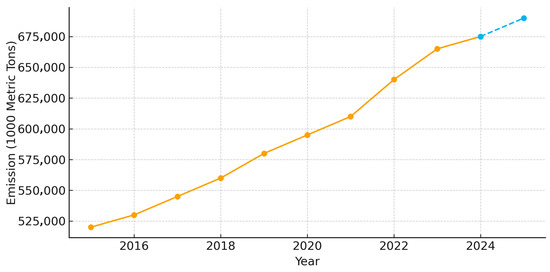
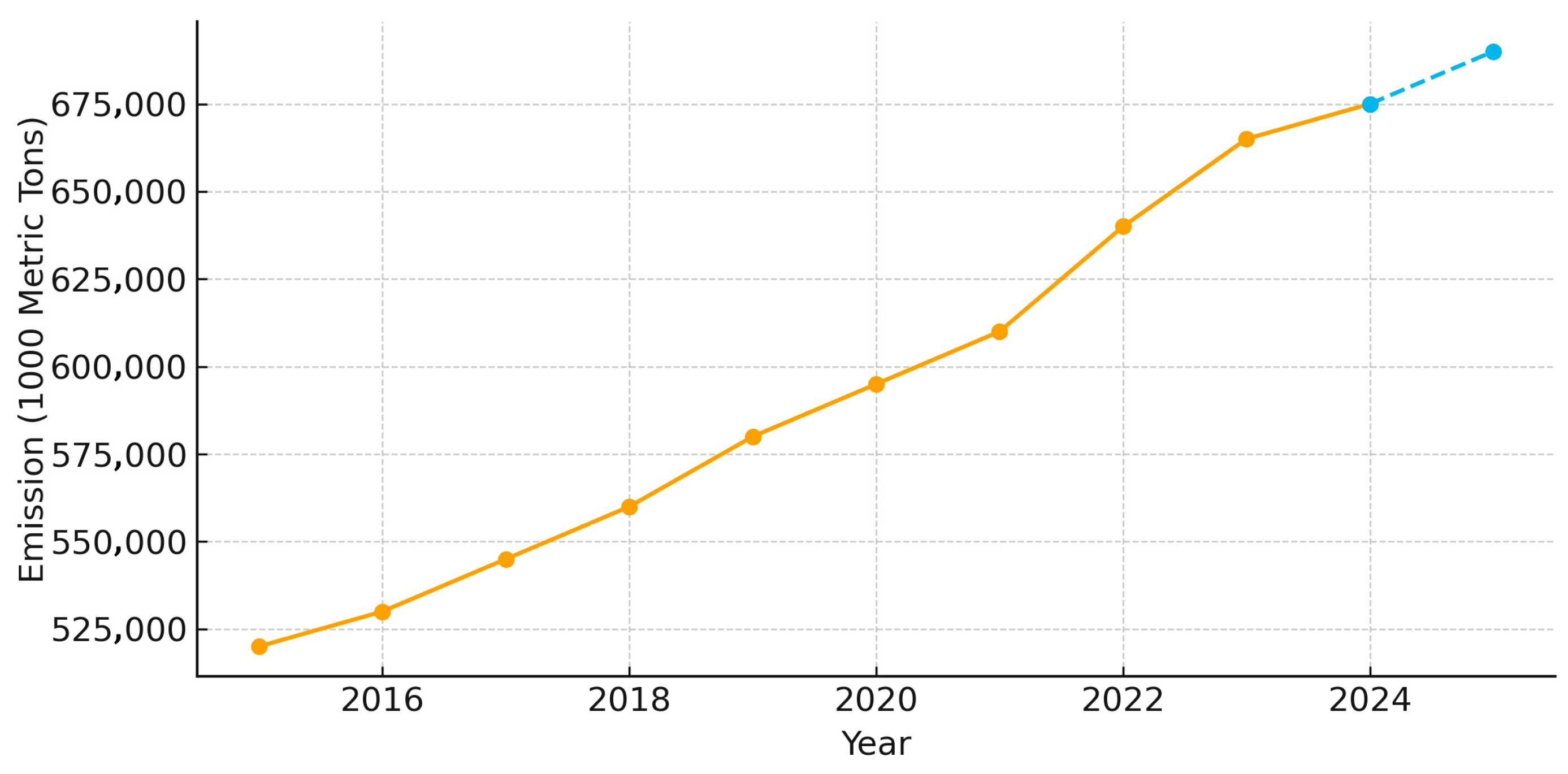
Indonesia’s climate commitments under Presidential Regulations No. 61/2011 and 5/2006 position biogas as a key contributor to the national renewable energy and GHG reduction targets. As illustrated in Figure 1, rising CO2 emissions highlight the urgency of accelerating low-carbon transitions. This figure shows a steady increase in CO2 emissions over time, indicating sustained growth in emissions across the observed years. The solid line represents historical data, which rises consistently, with a sharper increase after around 2021, suggesting intensified economic or energy-related activity.
Figure 1.
Carbon Dioxide (CO2) emissions in Indonesia [6].
The blue dashed line indicates a projected or forecasted trend, showing that emissions are expected to continue increasing soon if current patterns persist. This projection highlights the urgency of implementing mitigation measures, such as expanding renewable energy options like biogas, to curb future emissions growth. Yet biogas currently contributes less than 5% of renewable energy generation [3,6], signaling substantial untapped potential—particularly in rural livestock systems such as those in West Java.
Anaerobic digestion—a biochemical process that converts organic matter into methane-rich biogas offers a technically feasible and environmentally beneficial energy source for rural households [3,6]. Its performance depends on stable operating conditions such as temperature and pH, and methane’s high calorific value (≈50 MJ/kg) makes it a clean-burning alternative to solid fuels. However, the existence of technical potential alone does not guarantee adoption, which is shaped by household characteristics, economic constraints, and institutional support.
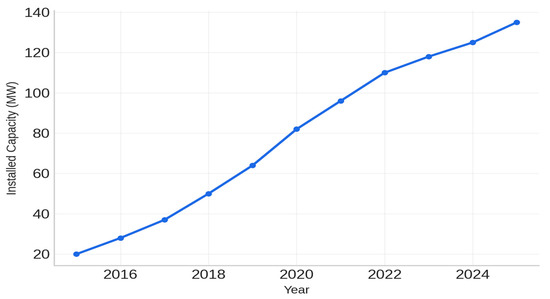
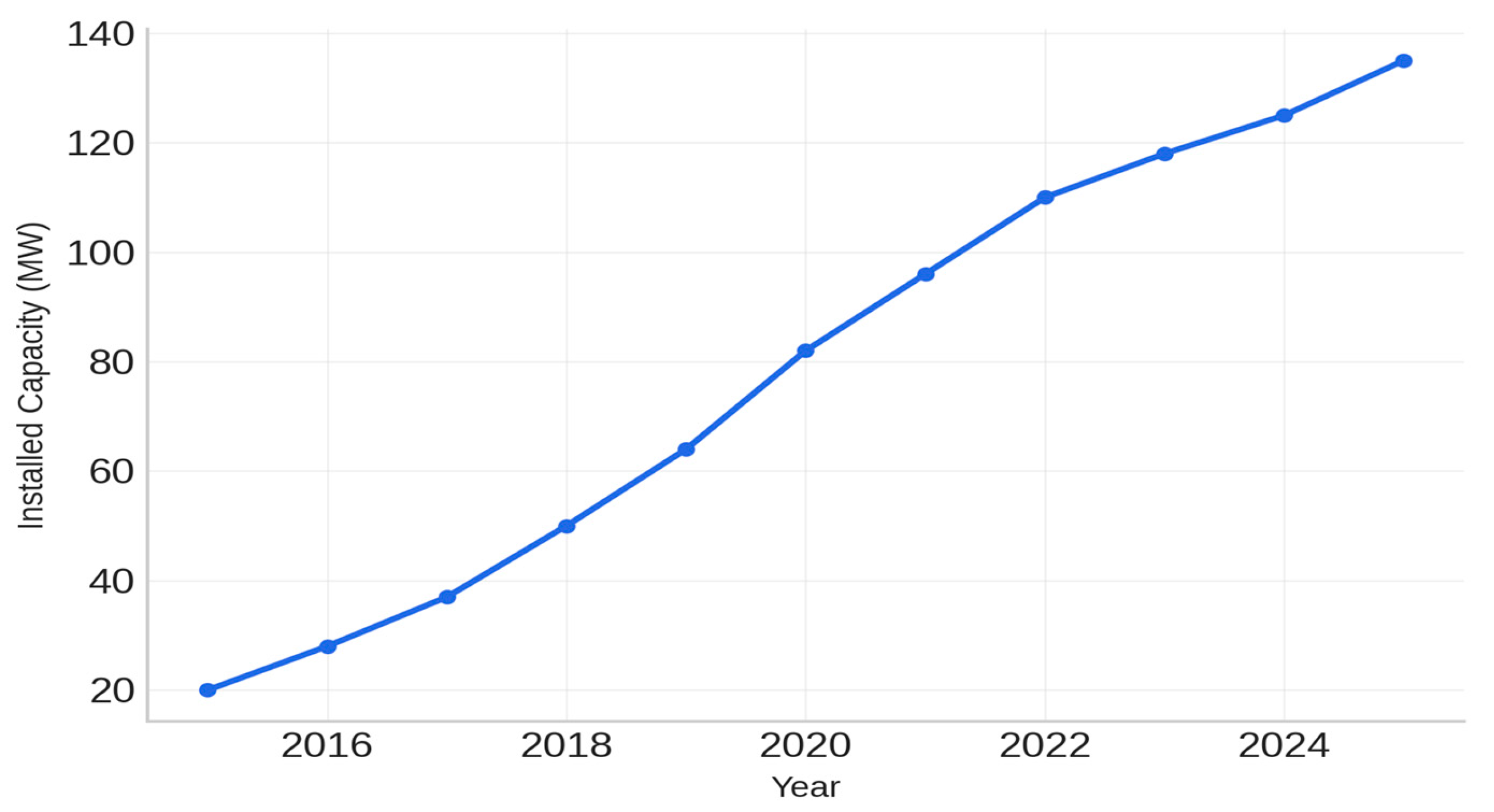
As shown in Figure 2, Indonesia’s installed biogas capacity increased from 2016 to 2024 reflecting gradual policy support and private investment. Within this expansion, cattle-based household systems play an important role due to the availability of centralized dairy cooperatives and clustered housing arrangements that facilitate feedstock collection.
Figure 2.
Biogas Energy Capacity in Indonesia (2016–2024) [2,8].
Indonesia’s Nationally Determined Contributions (NDCs) reaffirm the commitment to reduce GHG emissions by 29% unconditionally and 41% with international support by 2030. Meeting these targets requires cross-sectoral reforms, including renewable energy expansion with biogas identified as one pathway for reducing emissions from agriculture and rural energy use [1,2,9].
Between 2016 and 2024, Indonesia installed biogas capacity grew from 9 MW to 137 MW, reflecting steady policy support for renewable energy development [1,2,3]. By 2021, almost 48,000 household-scale biogas units had been installed nationwide, demonstrating the technology’s potential to expand clean cooking access in rural areas [1]. A key initiative supporting this expansion is the BIRU Program (Biogas Rumah), which promotes decentralized household biogas systems. To improve quality assurance, the Indonesian National Standard SNI 8019-2014 was introduced, Indonesian National Standard SNI 8019-2014, titled Standar Mutu Biogas Bertekanan Tinggi (High-Pressure Biogas Quality Standard) [9], define as technical requirements for purified and compressed biogas in Indonesia. It specifies quality criteria and test methods for biogas that has been upgraded, purified, and compressed to high pressure (about 200 bar) for commercial use as a fuel. The standard covers definitions, quality parameters (such as methane content, Wobbe index, hydrogen sulfide limits, gas composition limits, and dew point), and acceptable test procedures to ensure consistent and reliable biogas quality for safety and consumer protection that are specifying technical requirements for biogas purification and compression [2,3,10].
Despite these advances, significant technical and institutional barriers remain. In West Java, plastic-based digesters often produce low gas yields and require long stabilization periods [3]. Biogas programs commonly involve partnerships between provincial energy agencies, livestock offices, and private contractors, but governance remains fragmented, resulting in inconsistent implementation outcomes. Fragmented governance has resulted in inconsistent monitoring and limited coordination between agencies, despite formal recognition of biogas under Presidential Regulations Nos. 61/2011 and 5/2006. Adoption remains low—fewer than 2% of households used biogas systems as of 2016 [2,3,11,12]. Figure 2 shows continued projected growth, underscoring the sector’s untapped potential. Diffusion remains restricted by bureaucratic delays, low public awareness, competing energy priorities, and limited technical maintenance networks.
This study therefore examines how institutional fragmentation influences household-level adoption and how improved coordination can enhance program performance and knowledge transfer [11,12].
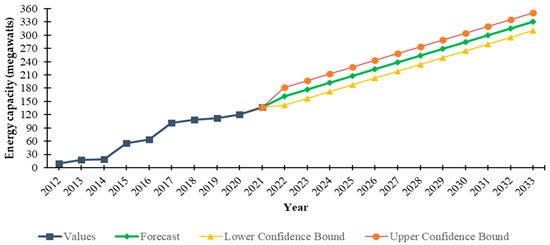
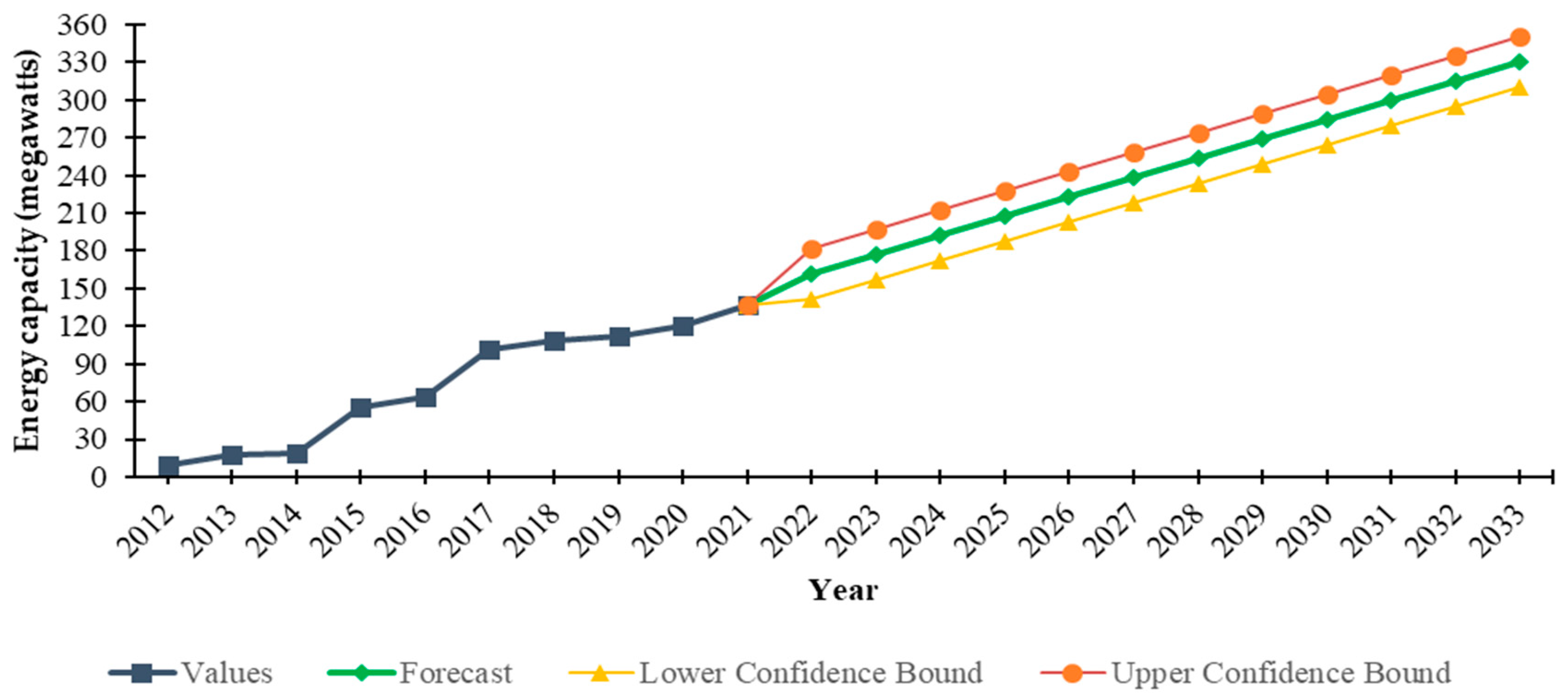
Figure 3 illustrates the trend of biogas energy capacity in Indonesia from 2012 to 2033, showing both historical values and projected forecasts in megawatts (MW). From 2012 to 2021, actual installed capacity increased steadily from around 10 MW to approximately 135 MW, with particularly strong growth between 2015 and 2017, indicating accelerated development during that period. Beginning in 2022, the forecast suggests a continued and consistent upward trajectory, with projected capacity rising from about 150 MW in 2022 to roughly 330 MW by 2033. The lower and upper confidence bounds indicate a reasonable range of uncertainty around the forecast, with estimates in 2033 ranging from approximately 310 MW to 350 MW. Overall, the figure highlights sustained growth in Indonesia’s biogas energy sector, reflecting ongoing expansion and positive prospects for renewable energy development [2,3,12].
Figure 3.
Biogas energy values and forecasts in Indonesia (in megawatts) from 2012 to 2033 [11,12].
The National Household Biogas Program (initiated in 2009 with support from SNV Netherlands Development Organization) promotes household-scale digesters through government–NGO partnerships Dairy cooperatives and private sector CSR programs also contribute to dissemination efforts. Indonesia’s large livestock population and expanding waste-to-energy projects—including methane capture from palm oil mills—illustrate the country’s substantial biogas potential. Government plans continue to prioritize small-scale biogas expansion within broader renewable energy strategies [2,11]. West Java’s livestock population generates substantial manure resources, offering significant potential for small-scale biogas production [1,2,10,13]. Local initiatives such as the Bandung Dairy Farmers Cooperative North (KPSBU) have supported the installation of various digester types, with fixed-dome models favored for their durability in rural settings [14]. These initiatives demonstrate how cooperatives can complement government programs in expanding biogas access.
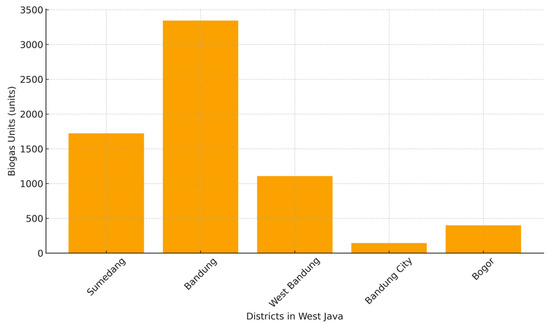
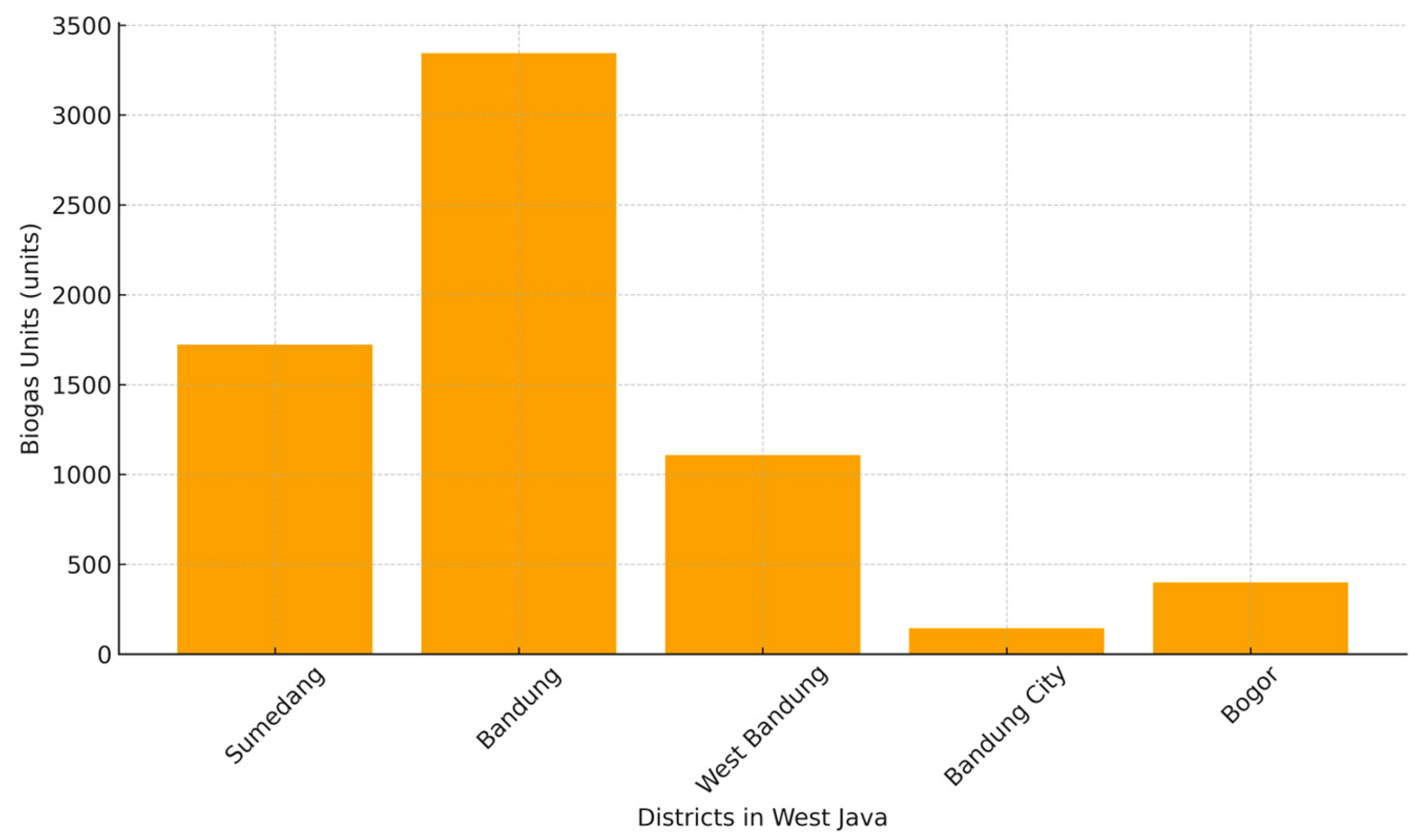
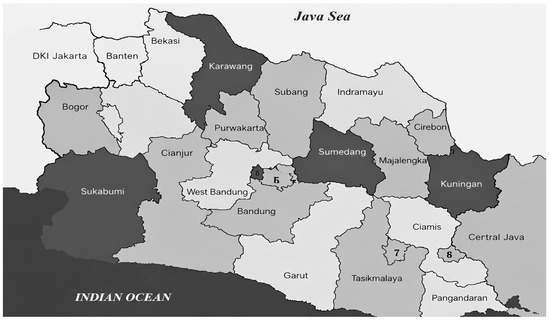
West Java has an estimated 1.22 million tons of livestock manure, with Garut contributing 199.72 thousand tons and Bandung 287.43 thousand tons. Livestock farmers who convert animal waste into biogas typically rely on government technical support or individual initiative. Three main biogas digester types are used in tropical regions like West Java: permanent (fixed dome), floating dome, and plastic-lid digesters [6,13,15]. Supportive government policies and private-sector programs strongly drive biogas development. Farmers usually use biogas installations provided by the central government or obtained through personal assistance [16,17]. Figure 4 shows the distribution of biogas digesters across West Java districts—such as Sumedang, Bandung, West Bandung, and Bogor—highlighting the areas with the most active adoption [18].
Figure 4.
Biogas Distribution across Districts in West Java. Source: West Java Energy and Mineral Resources Agency (2020) [18].
Biogas adoption in rural Indonesia requires more than biodigester installation, it depends on enabling infrastructure and institutional support. Farmers must have consistent access to livestock manure, space for digester construction, and reliable maintenance services. However, adoption is often hindered by inconsistent feedstock availability due to fluctuating livestock ownership, limited land around households, and rising cattle prices that encourage selling livestock rather than using manure for biogas production [18]. Similar constraints have been documented in other developing countries, where technical barriers, lack of spare parts, and poor follow-up services lead to non-functioning digesters over time these challenges confirm that biogas adoption is not solely a technological issue but a structural one that requires coordinated policy support.
This research makes a distinctive contribution by empirically analyzing the socioeconomic, behavioral, and institutional factors influencing biogas adoption among dairy-farming households in West Java. While earlier studies on biogas in Indonesia primarily describe system performance or sustainability challenges [12,19], this study applies a binary logistic regression model supported by innovation and behavioral adoption theory to quantify what truly drives uptake. The findings demonstrate that education, perceived time and fuel-cost savings, livestock ownership, and training significantly increase the likelihood of adoption these results align with international evidence showing that biogas adoption is shaped by human capital and awareness—not just by resource availability [17,20,21]. By linking farmer perceptions with adoption likelihood, the research advances theoretical understanding of small-scale renewable energy diffusion in developing countries [21].
Most importantly, the study provides practical guidance for designing effective biogas dissemination strategies. The identification of barriers such as credit constraints, lack of training, and insufficient technical support highlights clear intervention points for government and NGOs to improve program sustainability [22,23,24]. Supporting households through financing, training, and maintenance networks is essential to prevent dis-adoption, a problem observed in other countries with failed biogas initiatives [20,25]. By showing where adoption succeeds and why it fails, this research contributes to national renewable energy planning and strengthens Indonesia’s transition toward clean, decentralized energy system. The results are directly useful for policymakers, biogas program implementers, and development agencies working to scale household biogas as a solution for energy access, environmental sustainability, and rural well-being [15,18,26].
2. Materials and Methods
2.1. Description of the Study Site
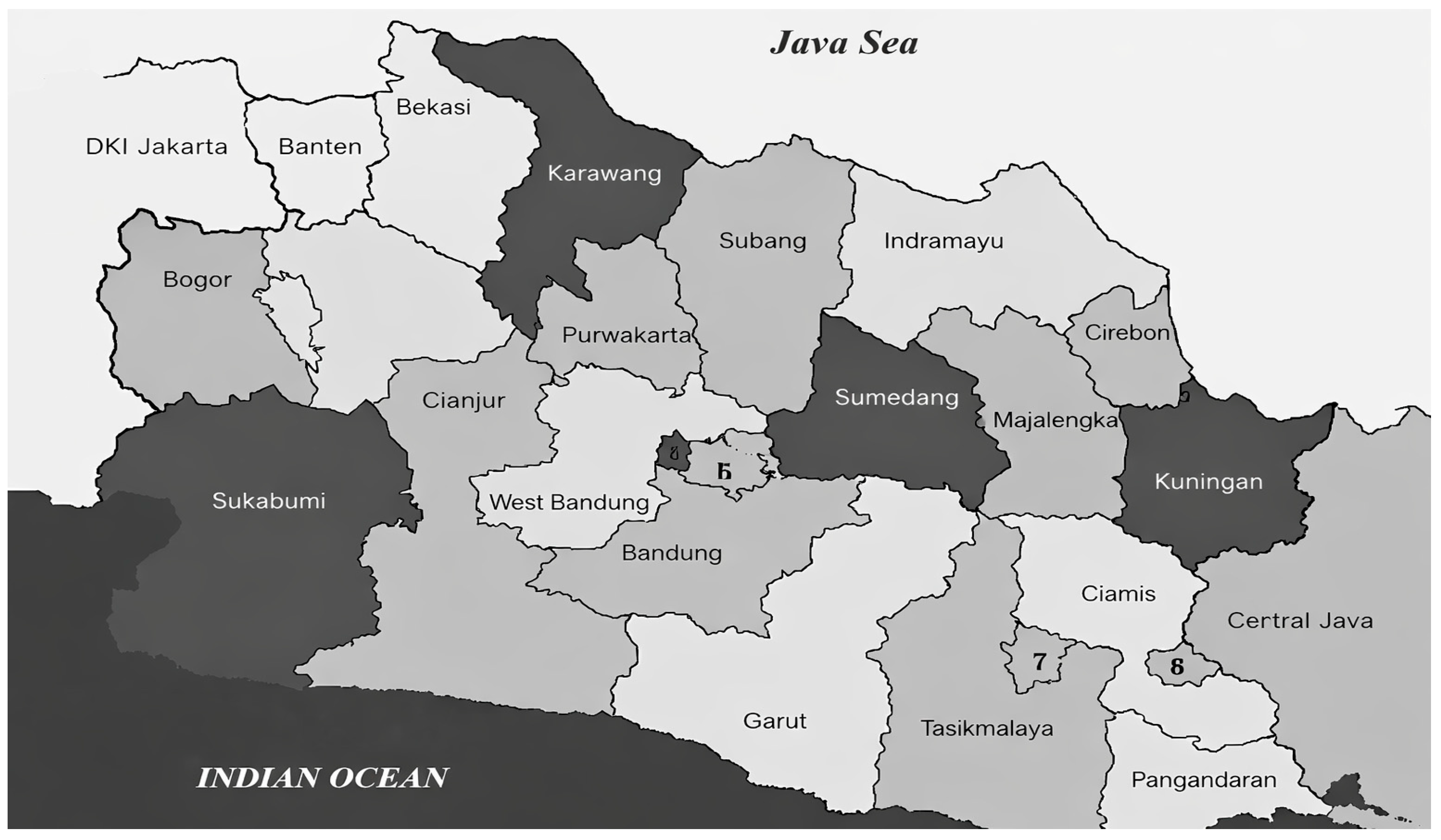
West Java Province, In Figure 5 located in the western part of Indonesia, spans approximately 46,299 km2 between 5°50′–7°50′ S and 105°–108°30′ E and is home to around 47 million inhabitants. The province is characterized by predominantly mountainous and volcanic terrain with fertile valleys that support intensive agriculture and livestock farming, particularly dairy and beef cattle production in upland areas such as Bandung and Garut. West Java experiences a tropical monsoon climate with distinct wet and dry seasons, where average temperatures range from 27–30 °C in lowland areas to 18–22 °C at higher elevations. These climatic conditions fall within the mesophilic range favorable for anaerobic digestion, and the abundance of livestock manure combined with high rural population density makes the region well suited for the development and assessment of household-scale biogas systems [27,28]. This varied terrain supports intensive agricultural activities, particularly rice cultivation and livestock farming. Dairy and beef cattle farming are widespread in upland districts such as Bandung, Garut, and Lembang, where cooler temperatures and abundant forage availability favor animal husbandry [29].
Figure 5.
Map of West Java Province, Indonesia [27,29].
2.2. Survey of the Households
The study employed primary and secondary data sources. Primary data were collected through a semi-structured household survey administered to 201 dairy-farming households across nine districts of West Java (Sumedang, Bandung District, West Bandung, Bandung City, Bekasi, Karawang, Bogor, Cianjur, and Purwakarta). Respondents were categorized as adopters (n = 101) or non-adopters (n = 100). The questionnaire captured socioeconomic characteristics, livestock ownership, energy-use behavior, and perceptions related to fuel costs, time savings, and institutional support.
The questionnaire design was informed by previous research on renewable energy and biogas adoption. A preliminary field assessment involving focus groups and key informant interviews was conducted to ensure content validity and clarity. The instrument was refined based on this pre-testing. Final data collection took place between April and June 2021.
2.3. Data Analysis
Survey responses were coded and cleaned in Microsoft Excel and analyzed using Stata 16 [30]. A binary logistic regression model was used to estimate the probability of household biogas adoption, where the dependent variable equals 1 for adopters and 0 for non-adopters. Logistic models are widely applied in technology adoption research. The model produces Odds Ratios (OR = eβ) to assess the magnitude and direction of each predictor’s effect. Average Marginal Effects (AMEs) were also calculated to provide interpretable changes in adoption probability for continuous and categorical variables. Model performance was assessed using the likelihood-ratio chi-square (χ2), Pseudo R2, and classification accuracy. Confidence intervals for ORs were computed from standard errors, and significance levels were determined using Wald tests. These outputs collectively identify which factors significantly influence adoption and inform targeted policy interventions.
Given the binary dependent variable, the adoption decision was modeled using a logistic regression of the form:
where Pᵢ is the probability of adopting biogas, X1–Xₙ are explanatory variables, and β represents estimated coefficients. Odds Ratios (OR = eβ) quantify the relative likelihood of adoption, while Average Marginal Effects (AMEs = ∂P/∂X) provide the average change in predicted probability for each variable.
logit(Pᵢ) = β0 + β1X1ᵢ + … + βₙXₙᵢ + εᵢ
P: 1. Biogas technology is adopted.
P: 0. Biogas technology is not adopted.
B0: Constant term with (X1…. Xn) as independent variable.
εᵢ: Unobserved factors/random disturbance.
Explanatory variables
- Age (years) of household head (X1) was coded as a continuous variable and then centered and standardized.
- Gender of household head (X2) was coded as a binary variable (1 = male, 0 = female).
- Family size (X3) recorded the number of household members, then centered and standardized.
- Education (X4) was measured as years of formal schooling.
- Household income (X5) was collected as annual income (in Rupiah), log-transformed, and standardized.
- Electricity access (X6) was coded as 1 if the household reported having access to the grid, 0 otherwise.
- Fuel-cost pressure (X7) was coded as 1 if households reported high fuel costs as a reason for adopting biogas, 0 otherwise.
- Livestock ownership (X8) was measured as the number of cattle (cow equivalents), centered and standardized.
- Timesaving (X9) was coded as 1 if respondents reported that biogas reduced the time spent on fuelwood collection or cooking, 0 otherwise.
- Training (X10) was coded as 1 if respondents received any hands-on biogas training in the last 24 months, 0 otherwise.
2.4. Factors Influencing Biogas Technology Adoption
In this study, ten predictors were selected based on established adoption theory and empirical findings: demographic (age, gender, family size), socioeconomic (education, income, livestock ownership, electricity access), behavioral (fuel-cost pressure, perceived time savings), and institutional (training).
2.4.1. Age of Household Head
The age of the household head may reflect both resource endowment and risk preferences. Older individuals often have greater financial capacity, which could support biogas investment. However, they are typically less flexible and more reluctant to take on the risks associated with new technologies [16,20,21]. The expected influence of age is therefore ambiguous.
2.4.2. Gender of Household Head
Gender influences intra-household energy decision-making. In principle, female-headed households may be more inclined to adopt biogas because women bear a greater burden of cooking and fuelwood collection. Yet, in many Indonesian households, men control resource allocation and formal ownership of assets. The effect of gender on adoption may thus be positive or negative, depending on whether women’s energy needs are prioritized in household decision-making [25,31,32].
2.4.3. Education of Household Head
Education enhances awareness of energy alternatives and the ability to process information on the environmental, health, and financial benefits of biogas. More educated households are also more likely to adopt innovations in general. Accordingly, the number of years of schooling of the household head was expected to positively influence biogas adoption [15,33,34,35].
2.4.4. Household Size
Larger households may have greater labor availability for dung collection and digester operation, making adoption easier. They may also have higher energy demand, which biogas can satisfy. However, larger families also stretch household resources, which could discourage investment in biogas. Thus, the effect of family size may be either positive or negative [36,37,38,39,40].
2.4.5. Livestock Ownership
Cattle manure is the primary feedstock for biogas digesters. Households with larger herds can ensure consistent feedstock supply, which is critical for the functionality of the system. Prior studies consistently show that livestock ownership positively influences adoption [31,32]. In this study, livestock numbers (in cow equivalents) were expected to be positively associated with adoption.
2.4.6. Household Income
Income strongly conditions households’ ability to cover upfront investment costs and maintenance expenses. Higher-income households are more likely to afford biogas technology and access spare parts and repair services. Thus, household income was hypothesized to positively influence adoption [41,42,43].
2.4.7. Electricity Access
Access to electricity provides households with an alternative modern energy source. While electricity is primarily used for lighting rather than cooking in rural areas, households with electricity connections may perceive less urgency to adopt biogas [44,45,46]. Accordingly, electricity access was expected to negatively influence adoption.
2.4.8. Fuel-Cost Pressure
Households facing high costs of traditional cooking fuels such as LPG, kerosene, and firewood have stronger incentives to adopt biogas as a cheaper alternative. Perceived fuel-cost pressure was therefore expected to positively influence adoption [47,48].
2.4.9. Time Saving
Biogas technology can reduce the time women and children spend collecting fuelwood and preparing meals. Households recognizing this time-saving potential are more likely to adopt. Thus, time saving was expected to positively influence adoption [49].
2.4.10. Training on Biogas Technology
Training provides households with the knowledge required for installation, operation, and maintenance of digesters. Previous studies have shown that access to training and technical support strongly improves adoption and long-term functionality. Therefore, training was hypothesized to positively influence adoption [50,51,52].
3. Results and Discussion
3.1. Socio-Demographic and Economic Characteristic of the Respondents
Table 1 presents the descriptive characteristics of the 201 surveyed households. Adopters generally have higher incomes, larger livestock herds, and greater access to credit and water sources. These patterns provide initial insights into socioeconomic differences but do not by themselves determine causal effects; therefore, the subsequent regression analysis is used to identify which factors significantly influence adoption. Repetitive descriptions of table values have been removed in accordance with reviewer guidance.
Table 1.
Demographic of respondents and economic characteristic of biogas adopters (N = 201).
3.1.1. Gender of Household Head
Gender was not statistically significant (OR = 2.10; p = 0.43). Gender did not significantly predict adoption despite differences in household roles. The descriptive findings are women perceive strong benefits from biogas (less firewood collection, cleaner cooking), but men typically control financial decisions, reducing the likelihood that female preferences translate into adoption behavior. This mismatch highlights the importance of intra-household bargaining, echoing Indonesian studies showing male authority in long-term investments but female influence over daily energy use [32,53]. The insignificant effect thus reflects institutional household norms rather than an absence of gendered benefits.
3.1.2. Age of Household Head
The effect of age was statistically small but marginally positive (OR = 1.02; p = 0.07). Age had only a marginal, small positive effect. Older household heads might have more stability and financial security, yet they may also be less inclined to adopt new technologies, producing a muted net effect. This suggests that biogas is not viewed primarily as a youth-driven innovation but as a practical household asset, reducing generational barriers, which is in line with previous research conducted in Pakistan [54] and India [55].
3.1.3. Family Size
Although positively signed, the family size was not statistically significant (OR = 1.24; p = 0.58). Larger households logically have higher fuel needs; family size was not predictive of adoption. Adopters and non-adopters had almost identical household sizes. This reflects that energy demand alone is insufficient to motivate adoption if the structural prerequisites—such as livestock, capital, and training—are not present. As in Pakistan [54] and Sub-Saharan Africa [56,57], family size becomes secondary to resource access, highlighting the importance of capacity to produce biogas, not just the need for it.
3.1.4. Education of Household Head
Education showed a significant negative association with biogas adoption (OR = 0.62; p = 0.005), a finding that contrasts with evidence from Nepal and Taiwan, where higher education typically promotes clean-energy uptake [58,59,60]. In Indonesia, this inverse relationship is shaped by the widespread availability and subsidy of LPG, which offers a convenient and reliable alternative that more educated households are better positioned to access. Thus, rather than encouraging biogas use, education aligns with a preference for subsidized modern fuels, underscoring how local policy and fuel-market conditions can override global patterns in energy transitions. While international research suggests a positive education effect, the Indonesian setting demonstrates how subsidies and alternative fuels can reverse expected tendencies [14,61,62].
3.1.5. Household Income
Adopters’ household income was almost twice than non-adopters, and it was a strong positive predictor (OR > 2, p < 0.01). According to AMEs, the adoption likelihood increases by 18–22 percentage points when one moves from the first to the third income quartile. Income was one of the strongest predictors. Higher-income households adopted biogas at much higher rates, likely due to better access to credit and financing mechanisms; greater ability to absorb installation and maintenance costs; proximity to markets, water sources, and spare part. Increased incomes improved credit eligibility and made it easier to access markets, water sources, and spare parts. This outcome is in line with research from Pakistan [63], Sub Saharan Africa [64,65,66], and India [32,67,68].
3.1.6. Electricity Access
Access to electricity had a negative association with adoption (OR = 0.78; p = 0.60), it was not statistically significant. Although electricity reduces the perceived marginal benefit of biogas for tasks like lighting, it is rarely used for cooking in rural Indonesia, limiting any real substitution effect. Mixed findings from prior research show that electricity can complement biogas rather than replace it, depending on local usage patterns. The insignificant effect here reinforces that biogas is primarily evaluated as a cooking fuel solution, not a general energy substitute [69,70].
3.1.7. Fuel-Cost Pressure
Fuel-cost pressure was a substantial and significant predictor (OR = 3.57; p < 0.001). Households that thought cooking fuels were expensive were 27–30 percentage points more likely to use biogas [71,72]. This finding is consistent with descriptive data indicating that adopters used 58% less firewood and 71% less kerosene than non-adopters. Fuel-cost pressure was a strong positive driver, underscoring the economic logic behind adoption. Households facing high firewood or kerosene prices were far more likely to adopt biogas—a pattern reflected in their reduced reliance on these fuels. This highlights biogas’s role as a cost-saving strategy, suggesting that households respond more readily to economic incentives than to demographic or social factors. The prominence of price sensitivity echoes findings across Pakistan, SSA, and India. It emphasizes the role of relative pricing incentives in home energy changes [72,73].
3.1.8. Livestock Ownership
Livestock ownership significantly influenced adoption (OR = 0.72 per additional cow equivalent; p = 0.003). Although the OR is less than one, which reflects scaling, the AMEs show that families with at least eight cattle were 25–28 percentage points more likely to adopt than those with fewer than four. Livestock ownership significantly increased adoption likelihood, confirming that feedstock availability is a foundational requirement. Even though the OR appears below one due to scaling, the substantive effect is large: households with eight or more animals were substantially more likely to adopt [15,40]. Since Indonesian digesters require at least four cattle for reliable gas production, this variable acts as a binding technical constraint; without sufficient manure, adoption is simply not feasible. Thus, livestock ownership is both an economic asset and a structural enabler [1,15,17,73].
3.1.9. Time Saving
Time saving was a highly significant predictor of biogas adoption (OR = 6.85; p < 0.001), with adopters who reported time savings being 35–40% more likely to use biogas. This strong effect underscores the central role of labor burden reduction—particularly for women and children who traditionally spend hours collecting firewood—as a major driver of clean cooking transitions. Consistent with global and African evidence [7,11,34], time savings function not only as a practical convenience but also as a gendered empowerment mechanism, enabling households to reallocate labor toward more productive or educational activities [74,75].
3.1.10. Training on Biogas Technology
Training was a strong predictor of adoption (OR = 1.59; p < 0.001), increasing the likelihood of uptake by 12–15 percentage points. Hands-on instruction reduced operational uncertainties, improved user confidence, and lowered digester failure rates, demonstrating that knowledge accessibility is as crucial as financial capacity. These findings align with global evidence showing that technical training and post-installation support are essential for long-term sustainability [72,76,77,78].
3.1.11. Synthesis of Results
Overall, income, fuel price pressure, livestock ownership, time savings, and training emerged as the key determinants of biogas adoption in West Java, aligning with descriptive patterns of wealthier households with larger herds and limited firewood access adopting at higher rates. The negative effect of education reflects the influence of Indonesia’s LPG subsidies, which discourage more educated households from switching to biogas.
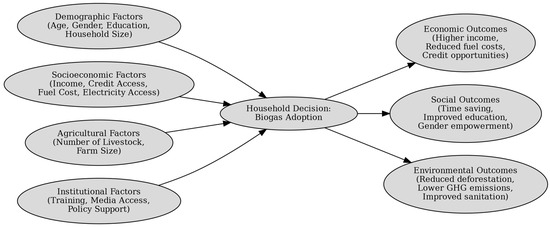
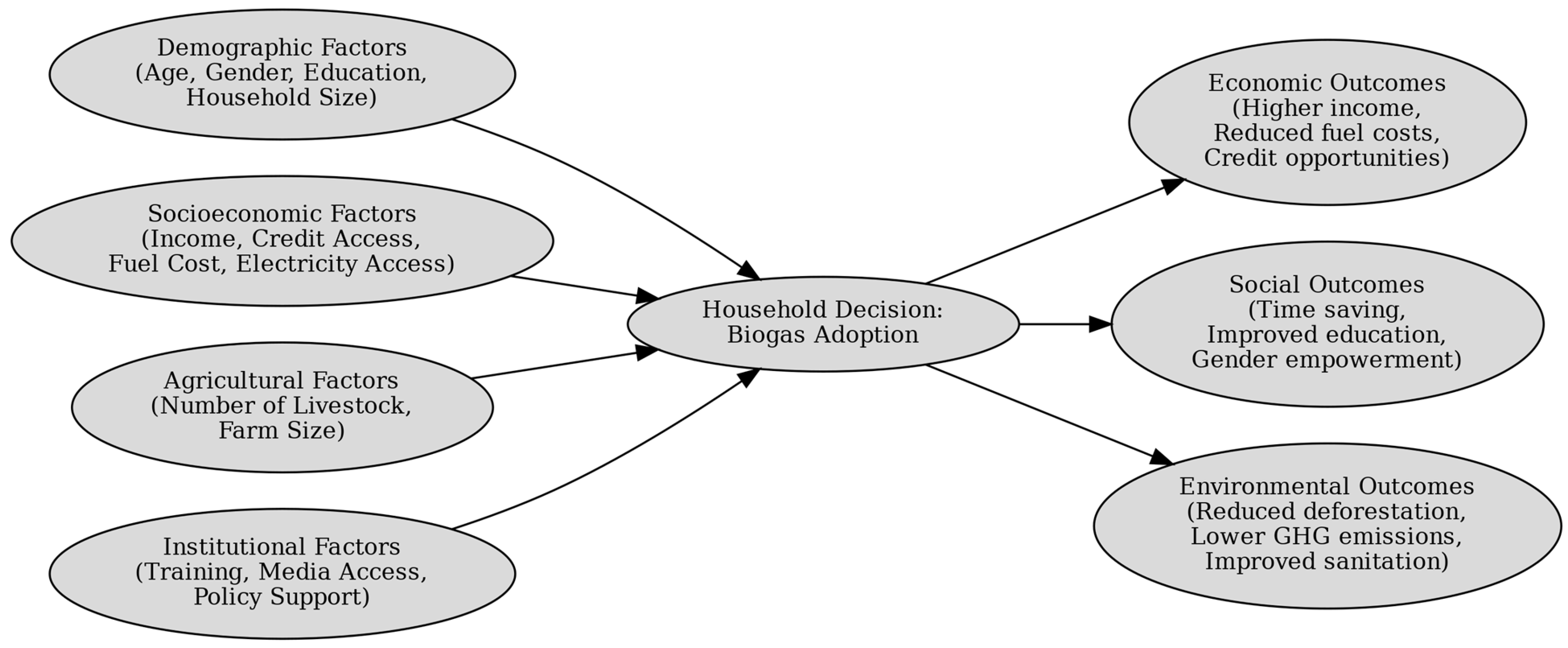
If we draw the graph from the result above, the figure will be like Figure 6 below:
Figure 6.
Determinant Biogas Adoption Framework in West Java, Indonesia (Author Illustration).
Figure 6 synthesizes the four main categories influencing adoption—demographic, socioeconomic, agricultural, and institutional. The framework illustrates how these determinants interact to shape household decisions and connect to economic, social, and environmental outcomes.
3.2. Results of the Binary Logistic Regression Model Analysis
Table 2 presents the results of the binary logistic regression analysis, which was applied to identify the determinants of small-scale biogas adoption in West Java. Out of the ten explanatory variables examined, five were statistically significant at conventional levels (p < 0.05), namely education, fuel cost, number of cattle, time savings, and participation in training programs. The results suggest that adoption decisions are shaped by both resource availability and institutional support, reflecting a complex interaction between socioeconomic and environmental considerations. It also presents both Odds Ratios (ORs) and Average Marginal Effects (AMEs), enabling clearer interpretation of the direction and magnitude of each factor’s influence. A deeper understanding of the interaction between socioeconomic conditions and technology uptake is essential for designing effective interventions. The analysis quantifies the influence of education, income, and livestock ownership while also identifying institutional factors—such as training and access to credit—as crucial mechanisms for reducing barriers to adoption. These insights support the development of targeted policies that promote sustainable energy use, reduce reliance on traditional fuels, and encourage more efficient agricultural production in rural West Java.
Table 2.
The Logit Model Results in Determining Biogas Adoption.
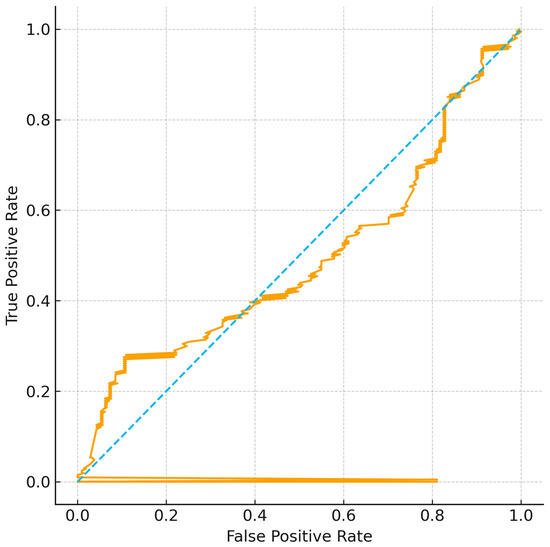
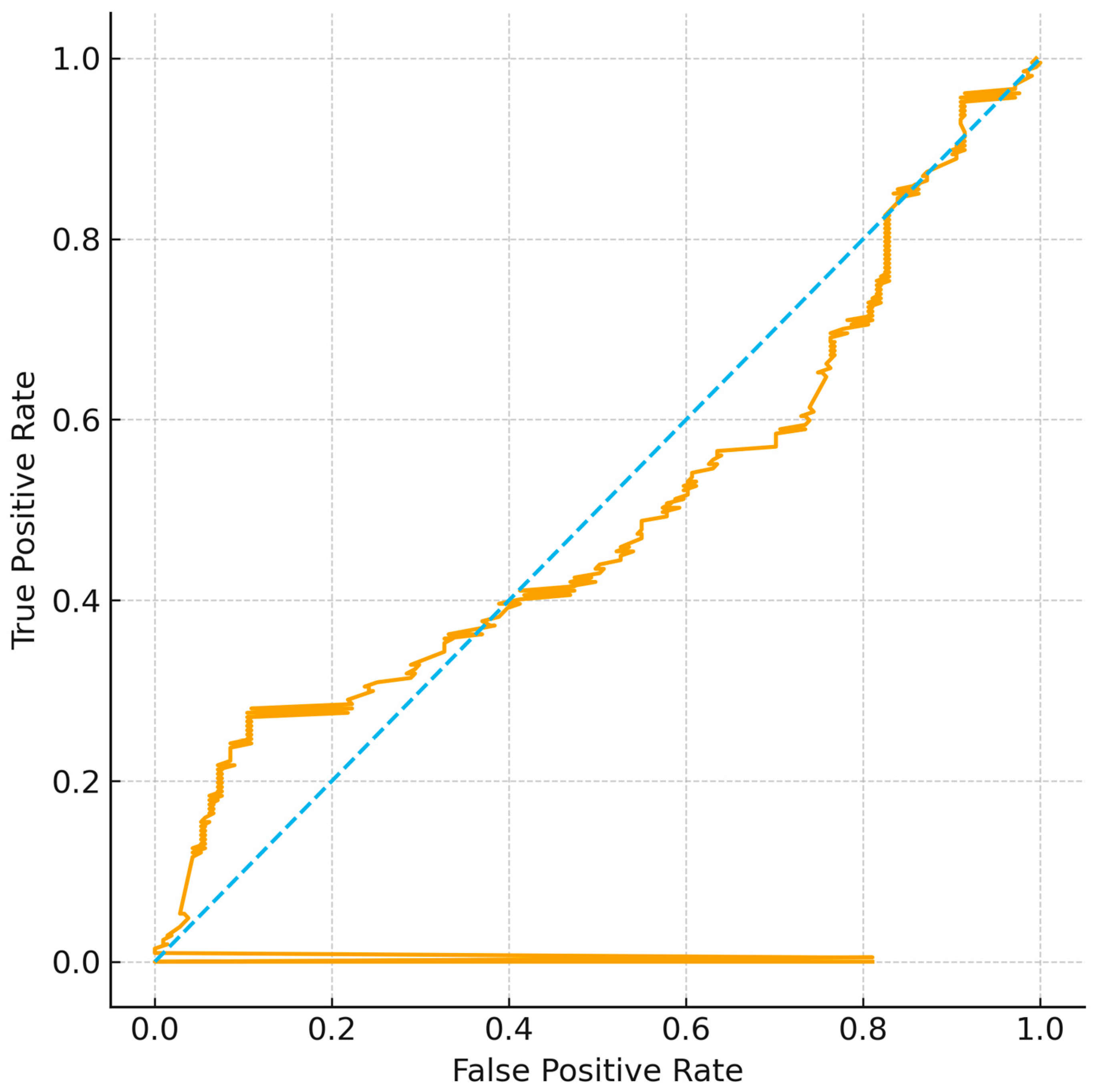
Figure 7 presents the Receiver Operating Characteristic (ROC) curve for the biogas adoption model, illustrating its ability to distinguish between adopters and non-adopters. The orange curve shows the model’s performance across different classification thresholds, with higher curvature toward the top-left indicating better discriminatory power. The blue dashed diagonal line represents a random classification benchmark (AUC = 0.5). Because the model’s ROC curve lies above this line for most thresholds, it demonstrates better-than-random predictive accuracy, confirming that the selected variables meaningfully explain household biogas adoption.
Figure 7.
ROC Curve for Biogas Adoption Model.
The logistic regression model demonstrated strong performance, indicated by an LR χ2 value of 229.85 (p < 0.000), a Pseudo R2 of 0.62, and classification accuracy above 80%. These results show that the selected variables collectively explain a substantial portion of the variation in household biogas adoption.
A second regression model using 201 household observations further confirmed the statistical significance of the explanatory variables. The likelihood-ratio chi-square statistic was 116.00 (p < 0.001), rejecting the hypothesis that all coefficients are jointly zero. With a log-likelihood of –81.31 and a Pseudo R2 of 0.4163, the model explains about 42% of the adoption outcome—strong explanatory power for cross-sectional household data. The constant term produced an odds ratio of 0.13 (p = 0.157), indicating that adoption probability is low in the absence of influencing variables. The substantive importance lies in the predictors: education, income, and livestock holdings significantly increase the likelihood of adoption, reflecting the roles of resource capacity and information access in shifting household decisions. Robustness checks of standard errors and confidence intervals revealed narrower intervals for education, income, and training—confirming the reliability of these effects—while wider intervals for gender and family size indicate greater uncertainty.
Regression results (Table 2) confirm that education is negatively associated with adoption (OR = 0.62). Therefore, higher schooling reduces, not increases, the likelihood of adoption. This effect reflects the substitutive role of subsidized LPG and the aspirational preferences of more educated households. Training plays a pivotal enabling role, emphasizing that information and technical support are essential for successful adoption. These findings align with studies by Thapa [23] and World Bank Report [79,80], which show that education has a positive and significant influence on adopting agricultural technologies. International research [28,29,35], similarly confirms that more farming experience correlates with greater willingness to adopt new technologies in China, South America, and North America.
The results align with international evidence [37,77,78,81] showing that adoption is shaped by resource capacity, perceived economic benefits, and institutional support. In West Java, the combination of livestock ownership, fuel-cost pressures, time savings, and training drives adoption, whereas education reflects fuel-market distortions rather than human-capital effects. These findings emphasize the need for targeted training, reliable technical support, and pricing policies that encourage sustainable adoption [28,37].
The analysis concludes that among the ten variables examined, the most influential determinants of biogas adoption are education, livestock herd size, perceived time savings, and participation in training. Together, these represent the combined effects of human capital, resource availability, and institutional support—factors essential for moving from theoretical potential to widespread household adoption. The study underscores that limited awareness remains a major constraint in West Java, reinforcing the need for expanded training and extension services to close persistent information gaps and accelerate the dissemination of biogas technology.
4. Conclusions
This study examined the determinants of household biogas adoption in West Java, Indonesia, using a logistic regression model integrated with socioeconomic, behavioral, and institutional variables. The analysis demonstrates that adoption is strongly shaped by fuel-cost pressure, perceived time savings, livestock ownership, and participation in training, while education shows a negative association due to LPG subsidy distortions. These findings confirm that biogas adoption depends on more than technical potential; it requires supportive institutional and economic conditions.
Biogas technology has shown strong potential to reduce reliance on traditional fuels in Indonesia by significantly lowering the use of kerosene, firewood, charcoal, and dung cake, while also reducing the need for chemical fertilizers. Beyond energy benefits, biogas adoption improves household income, sanitation, environmental health, and overall quality of life. It supports greener livelihoods and can play a vital role in sustainable resource management, helping address both energy scarcity and environmental degradation.
Despite these positive drivers, adoption remains constrained by high upfront costs, limited access to credit, inconsistent technical support, and competition from subsidized fossil fuels. To increase adoption, policymakers should prioritize (1) expanding training and after-sales services; (2) improving access to affordable financing; (3) strengthening coordination between government, NGOs, and cooperatives; and (4) aligning fuel-price policies to reduce distortions that disadvantage biogas. Enhancing these institutional and economic conditions will enable more households to benefit from biogas and support Indonesia’s broader goals of rural development and low-carbon energy transition.
Author Contributions
Conceptualization, R.S. and H.R.; Methodology, R.S. and J.M.; Software, R.S.; Validation, H.R. and J.M.; Formal analysis, R.S.; Investigation, R.S.; Resources, H.R.; Data curation, R.S.; Writing—original draft preparation, R.S.; Writing—review and editing, R.S., J.M. and H.R.; Visualization, R.S.; Project administration, H.R.; Funding acquisition, H.R. and J.M.; Supervision, H.R. All authors have read and agreed to the published version of the manuscript.
Funding
The research was financially supported by the Czech University of Life Sciences, Prague (Faculty of Tropical AgriSciences) within the IGA project No. 20243111.
Institutional Review Board Statement
Not applicable.
Informed Consent Statement
Not applicable.
Data Availability Statement
Data is available in a publicly accessible repository.
Conflicts of Interest
The authors declare no conflicts of interest.
References
- Badan Pusat Statistik (BPS). Populasi Hewan Ternak 2022–2023; Central Bureau of Statistics: Jakarta, Indonesia, 2023. [Google Scholar]
- Hivos; SNV Netherlands Development Organisation. Indonesia Domestic Biogas Program–Annual Report 2024; Biogas Rumah (BIRU): Jakarta, Indonesia, 2025. [Google Scholar]
- SNV; Hivos Indonesia. Domestic Biogas Programme–Annual Report 2023; Yayasan Rumah Energi: Jakarta, Indonesia, 2024. [Google Scholar]
- Bank Indonesia. JISDOR–Nilai Tukar USD/IDR; Bank Indonesia: Jakarta, Indonesia, 2025. [Google Scholar]
- Indonesia Domestic Biogas Program 2019 Annual Report. 2019. Available online: https://www.rumahenergi.org/wp-content/uploads/2020/11/AnnualReport-YRE-2019.pdf (accessed on 15 December 2025).
- Pambudi, N.A.; Firdaus, R.A.; Rizkiana, R.; Ulfa, D.K.; Salsabila, M.S.; Suharno; Sukatiman. Renewable Energy in Indonesia: Current Status, Potential, and Future Development. Sustainability 2023, 15, 2342. [Google Scholar] [CrossRef] [Scilit]
- Mirza, U.K.; Ahmad, N.; Majeed, T. An Overview of Biomass Energy Utilization in Pakistan. Renew. Sustain. Energy Rev. 2008, 12, 1988–1996. [Google Scholar] [CrossRef] [Scilit]
- Indonesia Domestic Biogas Programme (BIRU). Indonesia Domestic Biogas Programme (BIRU): Report 2021; Yayasan Rumah Energi: Jakarta, Indonesia, 2022. [Google Scholar]
- SNI 8019-2014; High Pressure Biogas Quality Standard (Standard Mutu Biogas Bertekanan Tinggi). Badan Standardisasi Nasional (BSN): Jakarta, Indonesia, 2025.
- Indonesia Domestic Biogas Programme Annual Report. 2022. Available online: https://www.rumahenergi.org/wp-content/uploads/2024/02/IDBP-Report-2022.pdf (accessed on 15 December 2025).
- Biogas Development in Indonesia: Household Scale Evaluation of Indonesian Transition Pathways in Biogas Utilisation TRANSrisk Project. 2016. Available online: https://jin.ngo/images/jin/publications/JIQ_Special_Nov2016_TRANSrisk_biogas_pathways_Indonesia.pdf (accessed on 15 December 2025).
- Badan Pusat Statistik (BPS). Populasi Hewan Ternak 2022–2023. Populasi Hewan Ternak di Jawa Barat, 2022–2023; Central Bureau of Statistics: Jakarta, Indonesia, 2023. [Google Scholar]
- Asian Development Bank: Indonesia. Energy Sector Assessment, Strategy, and Road Map; Asian Development Bank: Jakarta, Indonesia, 2016; ISBN 9789292575137. [Google Scholar]
- Ahmad Romadhoni Surya Putra, R.; Liu, Z.; Lund, M. The Impact of Biogas Technology Adoption for Farm Households—Empirical Evidence from Mixed Crop and Livestock Farming Systems in Indonesia. Renew. Sustain. Energy Rev. 2017, 74, 1371–1378. [Google Scholar] [CrossRef] [Scilit]
- Come, S.F.; Neto, J.A.F.; Cavane, E.P.A. Farmers’ Participation in Agricultural Research and Rural Extension Programs: Empirical Evidence of Maize Producers in Sussundenga District, Mozambique. J. Agric. Stud. 2023, 11, 49. [Google Scholar] [CrossRef] [Scilit]
- Dinas Energi dan Sumber Daya Mineral Provinsi Jawa Barat. Jumlah Biogas Berdasarkan Kabupaten/Kota Di Jawa Barat (2020); Dinas Energi Dan Sumber Daya Mineral Provinsi Jawa Barat: Kota Bandung, Jawa Barat, Indonesia, 2020. [Google Scholar]
- Paramonova, K.; Mazancová, J.; Roubík, H. Dis-Adoption of Small-Scale Biogas Plants in Vietnam: What Is Their Fate? Environ. Sci. Pollut. Res. 2023, 30, 2329–2339. [Google Scholar] [CrossRef] [Scilit]
- Situmeang, R.; Mazancová, J.; Roubík, H. Technological, Economic, Social and Environmental Barriers to Adoption of Small-Scale Biogas Plants: Case of Indonesia. Energies 2022, 15, 5105. [Google Scholar] [CrossRef] [Scilit]
- Ullah, A.; Saqib, S.E.; Kächele, H. Determinants of Farmers’ Awareness and Adoption of Extension Recommended Wheat Varieties in the Rainfed Areas of Pakistan. Sustainability 2022, 14, 3194. [Google Scholar] [CrossRef] [Scilit]
- Chuang, J.-H.; Wang, J.-H.; Liou, Y.-C. Farmers’ Knowledge, Attitude, and Adoption of Smart Agriculture Technology in Taiwan. Int. J. Environ. Res. Public Health 2020, 17, 7236. [Google Scholar] [CrossRef] [Scilit]
- Motevakel, P.; Roldán-Blay, C.; Roldán-Porta, C.; Escrivá-Escrivá, G.; Dasí-Crespo, D. Strategic Resource Planning for Sustainable Biogas Integration in Hybrid Renewable Energy Systems. Appl. Sci. 2025, 15, 642. [Google Scholar] [CrossRef] [Scilit]
- Thapa, S.; Morrison, M.; Parton, K.A. Willingness to Pay for Domestic Biogas Plants and Distributing Carbon Revenues to Influence Their Purchase: A Case Study in Nepal. Energy Policy 2021, 158, 112521. [Google Scholar] [CrossRef] [Scilit]
- Ali, S.; Yan, Q.; Razzaq, A.; Khan, I.; Irfan, M. Modeling Factors of Biogas Technology Adoption: A Roadmap towards Environmental Sustainability and Green Revolution. Environ. Sci. Pollut. Res. 2022, 30, 11838–11860. [Google Scholar] [CrossRef] [Scilit]
- Pradhan Shrestha, R.; Jirakiattikul, S.; Chapagain, B.; Katuwal, H.; Gyawali, S.; Shrestha, M. Biogas Adoption and Its Impact on Women and the Community: Evidence from Nepal. Energy Sustain. Dev. 2024, 81, 537–553. [Google Scholar] [CrossRef] [Scilit]
- Mirza, U.K.; Ahmad, N.; Harijan, K.; Majeed, T. Identifying and Addressing Barriers to Renewable Energy Development in Pakistan. Renew. Sustain. Energy Rev. 2009, 13, 927–931. [Google Scholar] [CrossRef] [Scilit]
- University of Hawai’i at Mānoa. Southeast Asia Maps [Map]. ArcGIS Experience Builder. 2023. Available online: https://experience.arcgis.com (accessed on 15 December 2025).
- Matin, H.H.A.; Suhardono, S.; Setyono, P.; Ramadhani, G.; Wahyuningtyas, J.; Wahyono, Y. Distribution Mapping and Accessibility Analysis of Biogas Digester Units Using Spatial Analysis Methods in Central Java, Indonesia. In Proceedings of the 10th International Conference on Energy, Environment, and Information Systems (ICENIS 2025), Semarang, Indonesia, 26–27 August 2025; Volume 50, p. 01013. [Google Scholar]
- Bappeda Provinsi Jawa Barat. West Java Provincial Spatial Planning Map (RTRW) 2024–2045: GIS-Based Thematic Maps; Government of West Java Province: Bandung, Indonesia, 2024. [Google Scholar]
- StataCorp. Stata Statistical Software: Release 16; StataCorp LLC: College Station, TX, USA, 2019. [Google Scholar]
- Oparaocha, S.; Dutta, S. Gender and Energy for Sustainable Development. Curr. Opin. Environ. Sustain. 2011, 3, 265–271. [Google Scholar] [CrossRef] [Scilit]
- Parikh, J. Hardships and Health Impacts on Women Due to Traditional Cooking Fuels: A Case Study of Himachal Pradesh, India. Energy Policy 2011, 39, 7587–7594. [Google Scholar] [CrossRef] [Scilit]
- Bekchanov, M.; Mondal, M.A.H.; de Alwis, A.; Mirzabaev, A. Why Adoption is Slow despite Promising Potential of Biogas Technology for Improving Energy Security and Mitigating Climate Change in Sri Lanka? Renew. Sustain. Energy Rev. 2019, 105, 378–390. [Google Scholar] [CrossRef] [Scilit]
- Nevzorova, T.; Kutcherov, V. Barriers to the Wider Implementation of Biogas as a Source of Energy: A State-of-the-Art Review. Energy Strategy Rev. 2019, 26, 100414. [Google Scholar] [CrossRef] [Scilit]
- Rahman, M.S.; Majumder, M.K.; Sujan, M.H.K. Adoption Determinants of Biogas and Its Impact on Poverty in Bangladesh. Energy Rep. 2021, 7, 5026–5033. [Google Scholar] [CrossRef] [Scilit]
- Getaneh, A.; Eba, K.; Tucho, G.T. Assessment of Biomass Energy Potential for Biogas Technology Adoption and Its Determinant Factors in Rural District of Limmu Kossa, Jimma, Ethiopia. Energies 2024, 17, 2176. [Google Scholar] [CrossRef] [Scilit]
- Mengistu, M.G.; Simane, B.; Eshete, G.; Workneh, T.S. Factors Affecting Households’ Decisions in Biogas Technology Adoption, the Case of Ofla and Mecha Districts, Northern Ethiopia. Renew. Energy 2016, 93, 215–227. [Google Scholar] [CrossRef] [Scilit]
- Rakgase, M.A.; Norris, D. Determinants of Livestock Farmers’ Perception of Future Droughts and Adoption of Mitigating Plans. Int. J. Clim. Chang. Strateg. Manag. 2015, 7, 191–205. [Google Scholar] [CrossRef] [Scilit]
- Hu, Y.; Cheng, H.; Tao, S. Environmental and Human Health Challenges of Industrial Livestock and Poultry Farming in China and Their Mitigation. Environ. Int. 2017, 107, 111–130. [Google Scholar] [CrossRef] [Scilit] [PubMed]
- Roubík, H.; Mazancová, J. Suitability of Small-Scale Biogas Systems Based on Livestock Manure for the Rural Areas of Sumatra. Environ. Dev. 2020, 33, 100505. [Google Scholar] [CrossRef] [Scilit]
- Mwirigi, J.W.; Makenzi, P.M.; Ochola, W.O. Socio-Economic Constraints to Adoption and Sustainability of Biogas Technology by Farmers in Nakuru Districts, Kenya. Energy Sustain. Dev. 2009, 13, 106–115. [Google Scholar] [CrossRef] [Scilit]
- Kabir, H.; Yegbemey, R.N.; Bauer, S. Factors Determinant of Biogas Adoption in Bangladesh. Renew. Sustain. Energy Rev. 2013, 28, 881–889. [Google Scholar] [CrossRef] [Scilit]
- Hasan, M.H.; Mahlia, T.M.I.; Nur, H. A Review on Energy Scenario and Sustainable Energy in Indonesia. Renew. Sustain. Energy Rev. 2012, 16, 2316–2328. [Google Scholar] [CrossRef] [Scilit]
- Mohamed Ali, A.; Alam, M.Z.; Mohamed Abdoul-latif, F.; Jami, M.S.; Gamiye Bouh, I.; Adebayo Bello, I.; Ainane, T. Production of Biogas from Food Waste Using the Anaerobic Digestion Process with Biofilm-Based Pretreatment. Processes 2023, 11, 655. [Google Scholar] [CrossRef] [Scilit]
- Uddin, W.; Khan, B.; Shaukat, N.; Majid, M.; Mujtaba, G.; Mehmood, A.; Ali, S.M.; Younas, U.; Anwar, M.; Almeshal, A.M. Biogas Potential for Electric Power Generation in Pakistan: A Survey. Renew. Sustain. Energy Rev. 2016, 54, 25–33. [Google Scholar] [CrossRef] [Scilit]
- Giwa, A.S.; Ali, N.; Ahmad, I.; Asif, M.; Guo, R.B.; Li, F.L.; Lu, M. Prospects of China’s Biogas: Fundamentals, Challenges and Considerations. Energy Rep. 2020, 6, 2973–2987. [Google Scholar] [CrossRef] [Scilit]
- Katuwal, H.; Bohara, A.K. Biogas: A Promising Renewable Technology and Its Impact on Rural Households in Nepal. Renew. Sustain. Energy Rev. 2009, 13, 2668–2674. [Google Scholar] [CrossRef] [Scilit]
- Shallo, L.; Sime, G. Impacts of Biogas Technology on Household Energy Expenditure. Sci. World J. 2025, 2025, 2846569. [Google Scholar] [CrossRef] [Scilit] [PubMed]
- Tahir, F.; Rasheed, R.; Fatima, M.; Batool, F.; Nizami, A.-S. Sustainability Analysis of Commercial-Scale Biogas Plants in Pakistan vs. Germany: A Novel Analytic Hierarchy Process—SMARTER Approach. Sustainability 2025, 17, 2168. [Google Scholar] [CrossRef] [Scilit]
- Bößner, S.; Devisscher, T.; Suljada, T.; Ismail, C.J.; Sari, A.; Mondamina, N.W. Barriers and Opportunities to Bioenergy Transitions: An Integrated, Multi-Level Perspective Analysis of Biogas Uptake in Bali. Biomass Bioenergy 2019, 122, 457–465. [Google Scholar] [CrossRef] [Scilit]
- Chien Bong, C.P.; Ho, W.S.; Hashim, H.; Lim, J.S.; Ho, C.S.; Peng Tan, W.S.; Lee, C.T. Review on the Renewable Energy and Solid Waste Management Policies towards Biogas Development in Malaysia. Renew. Sustain. Energy Rev. 2017, 70, 988–998. [Google Scholar] [CrossRef] [Scilit]
- Budiman, I. The Tangled Thread: Fragmentation of Biogas Governance in Indonesia. 2018. Available online: https://edepot.wur.nl/473100 (accessed on 15 December 2025).
- Clancy, J.; Dutta, S. Women and Productive Uses of Energy: Some Light on a Shadowy Area. Available online: https://www.energia.org/assets/2015/06/43-Women-and-productive-use-of-energy.pdf (accessed on 15 December 2025).
- Rasheed, R.; Yasar, A.; Tabinda, A.B.; Khan, N.; Su, Y.; Afzaal, M. Techno-Economic Impacts of Innovative Commercial-Industrial Scale Bioenergy Plant in Pakistan. Pak. J. Agric. Sci. 2016, 53, 647–652. [Google Scholar] [CrossRef] [Scilit]
- Mottaleb, K.A.; Rahut, D.B. Biogas Adoption and Elucidating Its Impacts in India: Implications for Policy. Biomass Bioenergy 2019, 123, 166–174. [Google Scholar] [CrossRef] [Scilit]
- International Energy Agency (IEA). Africa Energy Outlook 2022; IEA: Paris, France, 2022. [Google Scholar]
- Kebede, E.; Kagochi, J.; Jolly, C.M. Energy Consumption and Economic Development in Sub-Sahara Africa. Energy Econ. 2010, 32, 532–537. [Google Scholar] [CrossRef] [Scilit]
- Ali, J. Factors Affecting the Adoption of Information and Communication Technologies (ICTs) for Farming Decisions. J. Agric. Food Inf. 2012, 13, 78–96. [Google Scholar] [CrossRef] [Scilit]
- Khalil, M.; Berawi, M.A.; Heryanto, R.; Rizalie, A. Waste to Energy Technology: The Potential of Sustainable Biogas Production from Animal Waste in Indonesia. Renew. Sustain. Energy Rev. 2019, 105, 323–331. [Google Scholar] [CrossRef] [Scilit]
- Kasinath, A.; Fudala-Ksiazek, S.; Szopinska, M.; Bylinski, H.; Artichowicz, W.; Remiszewska-Skwarek, A.; Luczkiewicz, A. Biomass in Biogas Production: Pretreatment and Codigestion. Renew. Sustain. Energy Rev. 2021, 150, 111509. [Google Scholar] [CrossRef] [Scilit]
- Widodo, T.W.; Asari, A.; de Faria Sant’ Ana, N.; Elita, R. Design and Development of Biogas Reactor for Farmer Group Scale. Indones. J. Agric. 2009, 2, 121–128. [Google Scholar]
- Wahyudi, J. The Determinant Factors of Biogas Technology Adoption in Cattle Farming: Evidence from Pati, Indonesia. Int. J. Renew. Energy Dev. 2017, 6, 235–240. [Google Scholar] [CrossRef] [Scilit]
- Mushtaq, K.; Zaidi, A.A.; Askari, S.J. Design and Performance Analysis of Floating Dome Type Portable Biogas Plant for Domestic Use in Pakistan. Sustain. Energy Technol. Assess. 2016, 14, 21–25. [Google Scholar] [CrossRef] [Scilit]
- Tolessa, A. Current Status and Future Prospects of Small-Scale Household Biodigesters in Sub-Saharan Africa. J. Energy 2024, 2024, 5596028. [Google Scholar] [CrossRef] [Scilit]
- Boyd, A. Informing International UNFCCC Technology Mechanisms from the Ground up: Using Biogas Technology in South Africa as a Case Study to Evaluate the Usefulness of Potential Elements of an International Technology Agreement in the UNFCCC Negotiations Process. Energy Policy 2012, 51, 301–311. [Google Scholar] [CrossRef] [Scilit]
- Satyakti, Y. Global Green Growth: Clean Energy Industrial Investments and Expanding Job Opportunities Experiences of Brazil, Germany, Indonesia, the Republic of Korea and South Africa; UNIDO Press: Vienna, Austria, 2015. [Google Scholar]
- Singh, K.J.; Sooch, S.S. Comparative Study of Economics of Different Models of Family Size Biogas Plants for State of Punjab, India. Energy Convers. Manag. 2004, 45, 1329–1341. [Google Scholar] [CrossRef] [Scilit]
- Rao, P.V.; Baral, S.S.; Dey, R.; Mutnuri, S. Biogas Generation Potential by Anaerobic Digestion for Sustainable Energy Development in India. Renew. Sustain. Energy Rev. 2010, 14, 2086–2094. [Google Scholar] [CrossRef] [Scilit]
- Richards, D.; Yabar, H. Potential of Renewable Energy in Jamaica’s Power Sector: Feasibility Analysis of Biogas Production for Electricity Generation. Sustainability 2022, 14, 6457. [Google Scholar] [CrossRef] [Scilit]
- Liebetrau, J.; Reinelt, T.; Agostini, A.; Linke, B.; Murphy, J.D. Methane Emissions from Biogas Plants: Methods for Measurement, Results and Effect on Greenhouse Gas Balance of Electricity Produced; IEA Bioenergy Task 37; IEA Bioenergy: Paris, France, 2017; ISBN 9781910154359. [Google Scholar]
- Saxena, R.C.; Adhikari, D.K.; Goyal, H.B. Biomass-Based Energy Fuel through Biochemical Routes: A Review. Renew. Sustain. Energy Rev. 2009, 13, 167–178. [Google Scholar] [CrossRef] [Scilit]
- Shen, G.; Lin, W.; Chen, Y.; Yue, D.; Liu, Z.; Yang, C. Factors Influencing the Adoption and Sustainable Use of Clean Fuels and Cookstoves in China -a Chinese Literature Review. Renew. Sustain. Energy Rev. 2015, 51, 741–750. [Google Scholar] [CrossRef] [Scilit]
- Yasmin, N.; Grundmann, P. Adoption and Diffusion of Renewable Energy—The Case of Biogas as Alternative Fuel for Cooking in Pakistan. Renew. Sustain. Energy Rev. 2019, 101, 255–264. [Google Scholar] [CrossRef] [Scilit]
- Gwavuya, S.G.; Abele, S.; Barfuss, I.; Zeller, M.; Müller, J. Household Energy Economics in Rural Ethiopia: A Cost-Benefit Analysis of Biogas Energy. Renew. Energy 2012, 48, 202–209. [Google Scholar] [CrossRef] [Scilit]
- Yasar, A.; Nazir, S.; Tabinda, A.B.; Nazar, M.; Rasheed, R.; Afzaal, M. Socio-Economic, Health and Agriculture Benefits of Rural Household Biogas Plants in Energy Scarce Developing Countries: A Case Study from Pakistan. Renew. Energy 2017, 108, 19–25. [Google Scholar] [CrossRef] [Scilit]
- Spaargaren, G. Theories of Practices: Agency, Technology, and Culture: Exploring the Relevance of Practice Theories for the Governance of Sustainable Consumption Practices in the New World-Order. Glob. Environ. Change 2011, 21, 813–822. [Google Scholar] [CrossRef] [Scilit]
- Rosyidi, S.A.P.; Bole-Rentel, T.; Lesmana, S.B.; Ikhsan, J. Lessons Learnt from the Energy Needs Assessment Carried out for the Biogas Program for Rural Development in Yogyakarta, Indonesia. Procedia Environ. Sci. 2014, 20, 20–29. [Google Scholar] [CrossRef] [Scilit]
- Rupf, G.V.; Bahri, P.A.; de Boer, K.; McHenry, M.P. Barriers and Opportunities of Biogas Dissemination in Sub-Saharan Africa and Lessons Learned from Rwanda, Tanzania, China, India, and Nepal. Renew. Sustain. Energy Rev. 2015, 52, 468–476. [Google Scholar] [CrossRef] [Scilit]
- The World Bank. Access to Electricity (% of Population). World Development Indicators Database, World Bank Group. 2025. Available online: https://data.worldbank.org/indicator/EG.ELC.ACCS.ZS (accessed on 16 May 2024).
- International Energy Agency (IEA); World Bank Energy Sector Management Assistance Program (ESMAP). The State of Electricity Access Report (SEAR) 2017; World Bank: Washington, DC, USA, 2017. [Google Scholar]
- Mwirigi, J.; Balana, B.B.; Mugisha, J.; Walekhwa, P.; Melamu, R.; Nakami, S.; Makenzi, P. Socio-Economic Hurdles to Widespread Adoption of Small-Scale Biogas Digesters in Sub-Saharan Africa: A Review. Biomass Bioenergy 2014, 70, 17–25. [Google Scholar] [CrossRef] [Scilit]
- Martin, M. Potential of Biogas Expansion in Sweden: Identifying the Gap between Potential Studies and Producer Perspectives. Biofuels 2015, 6, 233–240. [Google Scholar] [CrossRef] [Scilit]

Disclaimer/Publisher’s Note: The statements, opinions and data contained in all publications are solely those of the individual author(s) and contributor(s) and not of MDPI and/or the editor(s). MDPI and/or the editor(s) disclaim responsibility for any injury to people or property resulting from any ideas, methods, instructions or products referred to in the content. |
© 2026 by the authors. Licensee MDPI, Basel, Switzerland. This article is an open access article distributed under the terms and conditions of the Creative Commons Attribution (CC BY) license.