Review

Association Between Metabolic Dysfunction-Associated Steatotic Liver Disease (MASLD) and Vasomotor Symptoms: A Scoping Review


by
Anastasia Ntikoudi
1,*,
Anastasia Papachristou
2,
Afroditi Tsalkitzi
1,
Despoina Rizikou
1,
Eleni Evangelou
1,
George Mastorakos
3 and
Eugenia Vlachou
1
1
Department of Nursing, University of West Attica, 12243 Athens, Greece
2
Health Department, Society of Care Research Art Technology Science (SOCRATES), 18901 Athens, Greece
3
Unit of Endocrinology, Diabetes Mellitus and Metabolism, Aretaieion University Hospital, Medical School of Athens, Ethnikon and Kapodistriakon University of Athens, 11528 Athens, Greece
*
Author to whom correspondence should be addressed.
Endocrines 2026, 7(2), 27; https://doi.org/10.3390/endocrines7020027
Submission received: 23 February 2026 / Revised: 24 April 2026 / Accepted: 5 June 2026 / Published: 9 June 2026
(This article belongs to the Section Endocrine Immunology, Cytokines and Cell Signaling)

Abstract

Background: Vasomotor symptoms (VMS), particularly hot flashes and night sweats, are highly prevalent during the menopausal transition and have been increasingly associated with adverse cardiometabolic profiles. Metabolic dysfunction-associated steatotic liver disease (MASLD) represents a major manifestation of systemic metabolic dysregulation and is rising globally. Emerging evidence suggests a potential overlap between menopausal symptom severity and MASLD risk; however, this relationship remains insufficiently characterized. Method: A scoping review was conducted in accordance with PRISMA-ScR guidelines to map the existing evidence on the association between VMS and MASLD. A comprehensive search of PubMed, Scopus, CINAHL, Cochrane Library, and MEDLINE was performed for English-language studies published between January 2015 and December 2025. Eligible studies included original research assessing both MASLD and menopausal symptoms. Data were extracted and synthesized narratively. Methodological quality was appraised using the CASP Cross-Sectional Studies Checklist. Results: Of 690 identified records, five cross-sectional studies met the inclusion criteria, comprising 106 to 5995 participants from Korea, Greece, and the United States. Across studies, moderate-to-severe VMS were consistently associated with increased MASLD prevalence or higher surrogate indices of hepatic steatosis. Women with more severe VMS demonstrated unfavorable metabolic profiles, including greater insulin resistance and elevated liver enzyme levels. Although adjustments for body mass index and hypertension attenuated some associations, the overall trend remained positive. Heterogeneity was observed in diagnostic tools and symptom assessment methods. Conclusions: Current evidence indicates a consistent association between VMS severity and MASLD in peri- and postmenopausal women. While causality cannot be inferred due to cross-sectional designs, VMS may represent a clinical marker of underlying metabolic and hepatic dysfunction. Longitudinal and mechanistic studies are warranted to clarify directionality and inform integrated screening strategies in midlife women.

1. Introduction

Vasomotor symptoms (VMS), primarily manifested as hot flashes and night sweats, represent the most common and distressing complaints experienced by women during the menopausal transition. Epidemiological evidence indicates that approximately 50–75% of perimenopausal and postmenopausal women report VMS at some point in their lives [1,2]. Although these symptoms were historically regarded as short-lived manifestations of reproductive aging, longitudinal studies have demonstrated that they may persist for extended periods, frequently exceeding seven years after the final menstrual period [3]. Consequently, VMS are increasingly recognized as a long-term clinical concern with potential implications for overall health.
Hot flashes are characterized by sudden, transient episodes of intense warmth, flushing, and sweating, predominantly affecting the face, neck, and upper torso [4]. These episodes are thought to arise from abrupt alterations in thermoregulatory control, accompanied by peripheral vasodilation [1,4,5]. The underlying mechanisms are complex and involve interactions among endocrine, neuroendocrine, and epigenetic pathways [6]. Symptom severity typically increases as ovarian estrogen production declines, with peak prevalence observed approximately one year after menopause [7]. Estimates suggest that 35–50% of perimenopausal women and 30–80% of postmenopausal women experience VMS [8]. Although symptoms resolve within seven years for most individuals, approximately one quarter of women remain symptomatic for up to a decade, and a smaller proportion report persistence beyond ten years [3,9].
Beyond thermoregulatory disturbances, VMS are frequently accompanied by palpitations, anxiety, sleep disruption, and emotional distress, collectively contributing to impaired daily functioning and reduced quality of life [6,8]. Importantly, similar symptom profiles may be observed in other clinical conditions, including hyperthyroidism, hypoglycemia, pheochromocytoma, carcinoid syndrome, and malignancies, highlighting the importance of careful differential diagnosis [6].
In addition to their impact on well-being, VMS have been increasingly associated with adverse cardiometabolic profiles. Observational studies have linked VMS to central adiposity, dyslipidemia, elevated blood pressure, insulin resistance, vascular inflammation, and markers of subclinical atherosclerosis [10,11,12,13,14]. These alterations overlap substantially with the defining components of metabolic syndrome [15], suggesting that VMS may serve as a clinical indicator of underlying metabolic vulnerability. However, the biological pathways connecting VMS with cardiometabolic dysfunction remain incompletely understood.
Recent years have witnessed a shift in clinical focus toward improving long-term health outcomes and quality of life in postmenopausal women. Current international guidelines recommend hormone replacement therapy for the management of moderate to severe VMS in carefully selected patients [6,7]. Nevertheless, concerns regarding contraindications, safety profiles, and patient acceptability have limited its universal use, prompting the search for alternative therapeutic strategies [5].
Metabolic dysfunction-associated steatotic liver disease (MASLD) represents another major manifestation of systemic metabolic dysregulation and constitutes a rapidly expanding global health challenge. Current estimates indicate that MASLD affects approximately 30% of the adult population worldwide, with prevalence increasing markedly over recent decades [16]. This rise parallels the global escalation of obesity and related metabolic disorders [17], positioning MASLD among the most prevalent chronic liver conditions.
MASLD is characterized by excessive accumulation of triglycerides within hepatocytes and is typically associated with the presence of at least one cardiometabolic risk factor [18]. The disease spectrum encompasses metabolic dysfunction associated steatotic liver, metabolic dysfunction associated steatohepatitis, and progressive complications such as fibrosis and cirrhosis [18]. The term MASLD has recently replaced the former designation non-alcoholic fatty liver disease and is now incorporated within a broader classification of steatotic liver diseases, which also includes moderate alcohol-related MASLD, alcohol-related liver disease, drug-induced steatotic liver disease, monogenic forms, and cryptogenic steatotic liver disease [18].
The development of MASLD is multifactorial. Insulin resistance and components of metabolic syndrome, including central obesity and type 2 diabetes, represent key determinants of disease onset and progression [17]. Additional contributors, such as genetic susceptibility, lifestyle behaviors, chromosomal influences, and age-related alterations in sex hormone profiles, further shape individual risk trajectories [19,20,21]. These factors may help explain observed sex-related differences in disease distribution. Although MASLD has traditionally been more prevalent in men, conditions specific to women, such as polycystic ovary syndrome and menopause, appear to increase vulnerability to both MASLD and its progressive form [19,20,21,22].
Menopause represents a critical period of heightened metabolic vulnerability [22]. The cessation of ovarian function is accompanied by an increase in visceral adipose tissue and adverse alterations in carbohydrate and lipid metabolism, which contribute to heightened inflammatory activity, accelerated disease progression, and further deterioration in health-related quality of life [19,23]. In this context, central obesity emerges as a key pathogenic factor linking endocrine disturbances, adipocyte dysfunction, and chronic low-grade inflammation to hepatic steatosis and fibrosis [24,25].
Taken together, VMS and MASLD appear to share overlapping metabolic, inflammatory, and hormonal determinants that may converge during the menopausal transition [8,19]. Despite growing recognition of these associations, the interrelationships between menopausal symptoms, metabolic dysfunction, and liver disease remain insufficiently characterized.
Given the high prevalence of VMS and MASLD, their shared cardiometabolic risk profiles, and the profound hormonal changes occurring during menopause, a more integrated understanding of these conditions is required. This scoping review aimed to synthesize the existing evidence on the associations between MASLD and menopausal symptoms, with particular emphasis on shared risk factors and clinical implications for peri- and postmenopausal women.

2. Materials and Methods

A scoping review methodology was used to map and synthesize the existing literature examining the associations between menopausal symptoms, particularly vasomotor symptoms, and MASLD. Unlike systematic reviews, scoping reviews are not designed to answer narrowly defined questions regarding the effectiveness of specific interventions. Instead, they aim to comprehensively explore the breadth of available evidence, clarify key concepts, identify knowledge gaps, and describe the nature and extent of research activity within a given field [25,26]. This approach was considered appropriate given the emerging and heterogeneous nature of research addressing the intersection between menopause-related symptomatology and metabolic liver disease.
The conduct and reporting of this review followed the Preferred Reporting Items for Systematic Reviews and Meta-Analyses extension for Scoping Reviews (PRISMA-ScR) guidelines to enhance methodological transparency, consistency, and reproducibility. The PRISMA-ScR framework informed all stages of the review process, including the formulation of the research objectives, development of the search strategy, study selection, and data charting. Although the protocol was not prospectively registered in a public repository, all methodological decisions were documented in detail to ensure clarity and replicability.
The study selection process was completed in two sequential phases. Initially, titles and abstracts were screened for relevance, followed by a full-text assessment to determine eligibility. Screening was performed independently by two reviewers, with any discrepancies resolved through consensus or consultation with a third reviewer when necessary. Data extraction was conducted using a standardized charting form designed to capture key study characteristics, including publication year, country of origin, study design, population demographics, outcomes assessed, and principal findings. Data charting was performed by one reviewer and subsequently verified by a second reviewer to ensure accuracy and consistency.
The main aim of this scoping review was to systematically map the evidence linking menopausal symptoms with MASLD, with particular emphasis on shared risk factors, biological mechanisms, and potential clinical implications. The review process consisted of three main stages: (i) identification of the research question and relevant literature; (ii) selection of eligible studies; and (iii) organization, synthesis, and narrative summarization of the findings.
A comprehensive literature search was conducted across multiple electronic databases, including PubMed, Scopus, CINAHL, Cochrane Library, and MEDLINE. The search strategy combined Medical Subject Headings (MeSH) and free-text terms specifically related to menopausal status, vasomotor symptomatology, and metabolic dysfunction-associated steatotic liver disease. The following MeSH terms and keywords were used: “menopause”, “postmenopause”, “perimenopause”, “hot flashes”, “vasomotor symptoms”, “fatty liver”, “non-alcoholic fatty liver disease”, “hepatic steatosis” and “metabolic dysfunction-associated steatotic liver disease”. Only articles published in English between January 2015 and December 2025 were considered eligible to ensure relevance to contemporary clinical and research contexts. A supplementary manual search was also conducted using Google Scholar to identify potentially overlooked studies.
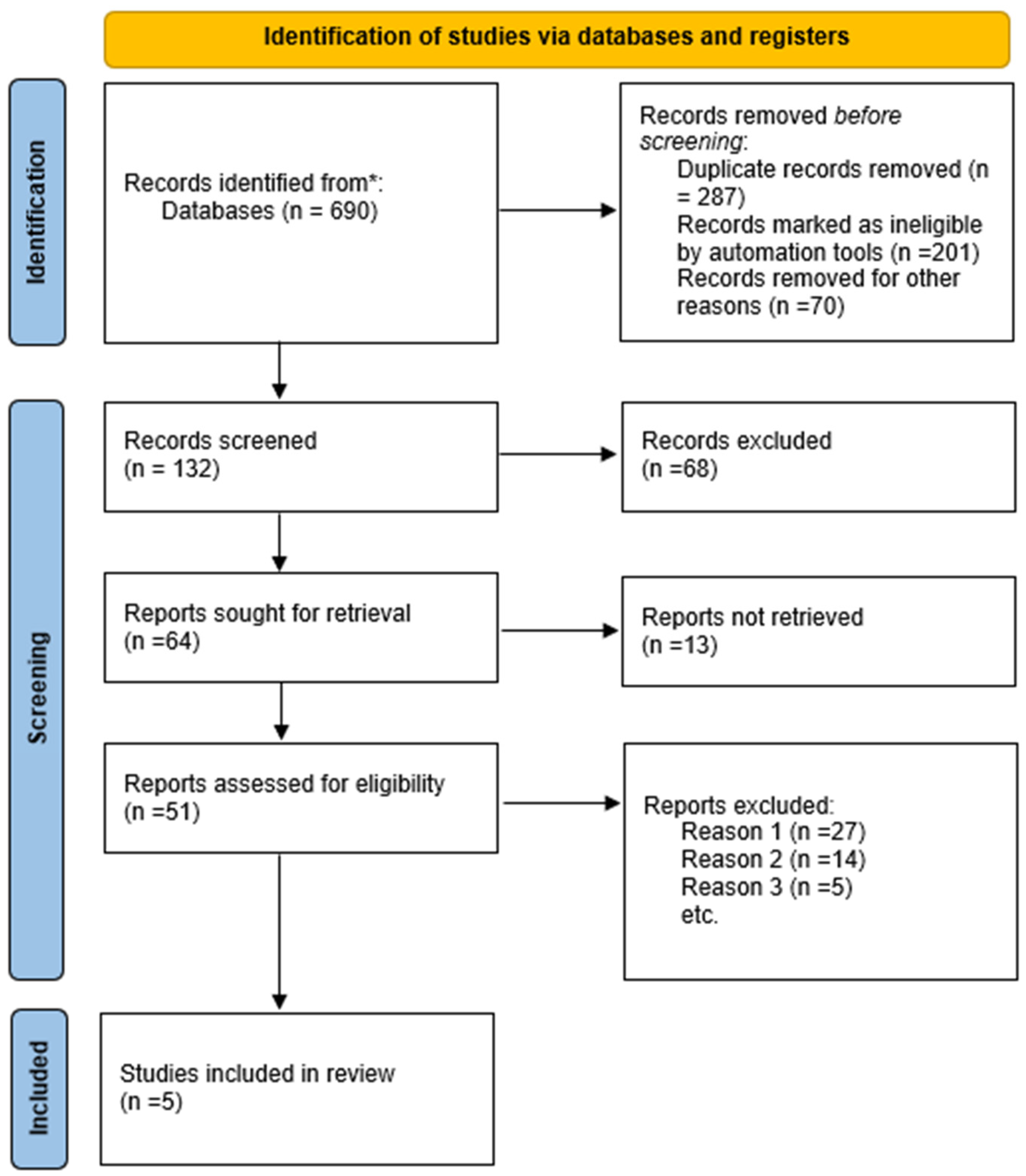
The literature search identified a total of 690 records. After the removal of duplicates, 132 studies remained for screening. Following title and abstract review, and subsequent full-text evaluation, five cross-sectional studies met the inclusion criteria and were included in this scoping review. Cross-sectional designs were included as they represented the only available evidence examining the association between MASLD and menopausal symptoms, with a specific focus on VMS. Studies were excluded if they did not assess VMS or did not investigate its relationship with MASLD. The screening and selection process was conducted independently by two reviewers, with any disagreements resolved through discussion or consultation with a third reviewer when necessary. Data from the included studies were extracted and synthesized across the following domains: (1) Study design and population characteristics; (2) Criteria and tools used to assess MASLD and VMS; (3) Principal findings related to the MASLD-VMS association; and (4) Methodological quality appraised using the CASP Cross-Sectional Studies Checklist. A detailed summary of the included studies is presented in Table A1, and the main findings are further discussed in the subsequent sections (Figure 1).
In contrast to systematic reviews, no exclusions were made based on study design. Observational studies, randomized and non-randomized clinical trials, cohort studies, case-control studies, cross-sectional studies, qualitative research, and mixed-methods studies were all considered eligible, provided they contributed original data relevant to the research question [26]. Editorials, commentaries, narrative reviews, conference abstracts, and book chapters were excluded due to the absence of primary data.

3. Results

3.1. Characteristics of Included Studies

The included studies were published between 2015 and 2025 and comprised cross-sectional designs. Study populations involved pre-, peri- and postmenopausal women, with sample sizes ranging from 106 to 5995 participants (Table A1). Two studies were conducted in Korea [27,28], two studies in Greece [29,30] and one study in the U.S [31].

3.2. Associations Between Menopausal Symptoms and MASLD Prevalence

Ryu et al. [27] found that as vasomotor symptoms (VMS) intensified, the occurrence of metabolic dysfunction-associated steatotic liver disease (MASLD) increased in postmenopausal women. Liver steatosis identified through abdominal ultrasound was progressively more common in groups with higher VMS severity, with the greatest prevalence in those experiencing moderate to severe symptoms (none: 31.7%, mild: 34.9%, moderate to severe: 39.1%; p = 0.037). Similarly, Armeni et al. [29] reported that individuals experiencing moderate to severe hot flushes showed elevated hepatic steatosis index (HSI) values, a surrogate for non-alcoholic fatty liver disease, with a positive linear trend linked to hot flush intensity (OR = 1.060, p = 0.002). A more recent investigation by Armeni et al. [30] also linked moderate-to-severe vasomotor symptoms with increased MASLD prevalence compared to those with no or mild symptoms (26.2% vs. 12.5%, p = 0.072; OR = 3.022, p = 0.041). Additionally, research by Aldhaleei et al. [31] indicated that women diagnosed with MASLD were more likely to report severe or very severe VMS (OR = 1.50, 95% CI: 1.08–2.08, p = 0.015). However, when adjustments were made for body mass index and hypertension, the statistical significance of this relationship diminished (adjusted ORs: 1.36 and 1.38, respectively). In Cho et al. [28], women were divided into four categories based on NAFLD status and body weight: lean without NAFLD (reference), overweight without NAFLD, lean with NAFLD, and overweight with NAFLD. Compared to the reference group, the likelihood of experiencing vasomotor symptoms (VMS) was significantly higher in all other groups, with adjusted prevalence ratios ranging from 1.22 to 1.49. For moderate-to-severe VMSs, these ratios increased further, up to 1.74. The study found that 22.0% of participants experienced VMSs and 18.9% had NAFLD. Most participants were in the premenopausal phase (94.6%), with a small proportion in early menopausal transition (5.4%) [28]. Notably, both lean and overweight individuals with NAFLD showed a strong association with increased occurrence and severity of VMSs, particularly among premenopausal women [28]. The highest symptom burden was observed in those with both overweight and NAFLD [28].

3.3. Vasomotor Symptoms and Metabolic Risk Factors Relevant to MASLD

Ryu et al. [27] reported that postmenopausal women experiencing moderate to severe VMS exhibited a more unfavorable metabolic profile, characterized by heightened insulin resistance. Furthermore, these individuals demonstrated significantly elevated levels of hepatic enzymes, including alanine aminotransferase (ALT), alkaline phosphatase (ALP), and gamma-glutamyl transferase (GGT), in comparison to women without VMS. In a separate study, Aldhaleei et al. [31] observed that, after adjusting for body mass index (BMI) and hypertension, the latter remained an independent predictor of severe or very severe VMS (adjusted odds ratio [OR] = 1.25; 95% confidence interval [CI]: 1.01–1.56; p = 0.04). Additionally, Armeni et al. [29] conducted a multivariable logistic regression analysis demonstrating that moderate to severe hot flushes were significantly associated with higher HSI values (OR = 1.060, p = 0.002) and lower menopausal age (OR = 0.884, p < 0.001). This stepwise model accounted for covariates including age, BMI, triglycerides, high-density lipoprotein (HDL), HOMA-IR, smoking status, alcohol consumption, and physical activity. No significant linear or categorical associations were identified between Fibrosis-4 (FIB-4) scores and hot flush severity.

3.4. Heterogeneity in Study Designs and Outcome Measures

In the cross-sectional study conducted by Ryu et al. [27], hepatic steatosis was assessed through abdominal ultrasonography, and VMS were evaluated using the Menopause Rating Scale (MRS). Similarly, in the study by Aldhaleei et al. [31], the diagnosis of MASLD was based on data extracted from medical records, while the MRS was also employed to assess VMS burden. Armeni et al. [29] indirectly evaluated liver steatosis and fibrosis using the HSI and FIB-4 score, whereas hot flush severity was categorized as none, mild, or moderate-to-severe; however, the specific assessment tool used for symptom evaluation was not reported. In a subsequent study by Armeni et al. [30], the extent of steatotic liver disease was quantified using the Fatty Liver Index (FLI), and VMS severity was measured via the Greene Climacteric Scale. Finally, Cho et al. [28] defined NAFLD based on ultrasonographic findings and assessed the presence and severity of vasomotor symptoms using a validated Korean version of the Menopause-Specific Quality of Life (MENQOL) questionnaire.

3.5. Evaluation of Risks of Bias

The risk of bias for each included cross-sectional study was critically assessed using the Critical Appraisal Skills Programme (CASP) Checklist for Cross-Sectional Studies (2024) [32]. This tool evaluates key methodological components across several domains, including clarity of research focus, appropriateness of study design, recruitment strategy, accuracy and validation of measurement tools, adequacy of sample size, and rigor in data analysis and reporting. Each study was independently appraised against these criteria to identify potential sources of bias, such as selection bias, measurement bias, and reporting bias. Studies that lacked explicit reporting on participant recruitment, measurement tools, or statistical methods were marked as “Can’t tell” in the relevant domains, following CASP guidance. The appraisal outcomes informed the synthesis and interpretation of findings in this review, contributing to the evaluation of the overall reliability and transferability of the evidence.
All five studies were found to address a clearly focused issue and employ appropriate methodologies. Measurement tools were considered valid and relevant across studies, and data analysis was consistently rigorous. However, two studies [29,30] did not provide adequate detail on sample size justification, resulting in an assessment of “Can’t tell” for that domain. Similarly, Armeni et al. [29], Aldhaleei et al. [31], and Ryu et al. [27] provided limited information on the applicability of findings to local populations, introducing some uncertainty regarding external validity. Despite these limitations, all studies were deemed to have substantial research value and contributed meaningfully to the evidence base. The outcomes of this appraisal informed the interpretation of findings and the overall assessment of study quality and transferability of results within this scoping review (Table A2).

4. Discussion

This scoping review synthesized current evidence on the association between MASLD and VMS in pre-, peri- and postmenopausal women. Across the five included cross-sectional studies, a consistent pattern emerged suggesting a positive association between the severity of VMS, particularly hot flushes, and the presence or severity of MASLD. These findings highlight a clinically relevant intersection between hepatic and hormonal health during the menopausal transition.
The included studies collectively suggest that women with more severe VMS are at increased risk for MASLD. Ryu et al. [27] reported a stepwise increase in hepatic steatosis prevalence with rising VMS severity, while Armeni et al. [29,30] demonstrated that moderate-to-severe hot flushes were associated with elevated hepatic steatosis and fatty liver indices. Cho et al. [28] extended these observations to a younger population of premenopausal women, showing that both lean and overweight individuals with NAFLD exhibited higher odds of experiencing moderate-to-severe VMS. Similarly, Aldhaleei et al. [31] observed that MASLD was linked to increased odds of severe VMS, although the strength of the association was attenuated after adjustment for BMI and hypertension.
These findings are particularly noteworthy given the established role of metabolic dysfunction in both VMS pathogenesis and MASLD development. The convergence of insulin resistance, central adiposity, systemic inflammation, and declining estrogen levels during midlife may form a shared pathophysiological basis for both conditions. For example, Ryu et al. [27] reported that postmenopausal women with severe VMS exhibited greater insulin resistance and elevated liver enzyme levels, reinforcing the metabolic dimension of this association. Armeni et al. [29] further demonstrated that lower age at menopause and unfavorable lipid profiles were associated with higher hepatic steatosis scores, suggesting that early endocrine aging may exacerbate liver-related metabolic risk.
A well-established epidemiological pattern further supports the biological plausibility of this association. The prevalence of MASLD is consistently lower in premenopausal women compared to age-matched men, but increases significantly after menopause, ultimately approaching or equaling that observed in men in later life [33]. This shift has been largely attributed to the decline in estrogen levels, which play a protective role in hepatic lipid metabolism, insulin sensitivity, and inflammatory regulation [19,20]. The transition from a relatively protected metabolic state to a higher-risk profile during menopause reinforces the hypothesis that hormonal changes underlying VMS may also contribute to the development and progression of MASLD. Menopause-related hormonal changes are known to promote visceral fat accumulation and metabolic dysregulation, which are key drivers of MASLD pathogenesis [19,23]. At the same time, VMS have been associated with adverse cardiometabolic profiles, including insulin resistance and vascular dysfunction [10,11]. This overlap supports the hypothesis that VMS may represent a clinical marker of underlying metabolic and hepatic vulnerability rather than an isolated symptomatic phenomenon. By synthesizing these findings, the present review highlights a clinically relevant link that has not been systematically contextualized in prior literature.
The findings of this review have potential implications for the early identification of MASLD in women presenting with severe VMS, particularly in midlife. VMS are highly prevalent and often prompt clinical consultation, representing a potential opportunity for cardiometabolic screening [34]. These results suggest that menopausal symptom severity could serve as a proxy indicator for underlying metabolic and hepatic dysfunction, thereby informing more holistic risk assessment approaches in clinical practice [34]. While current MASLD guidelines focus primarily on obesity, diabetes, and dyslipidemia, incorporating VMS as a clinical cue may enhance risk stratification in female populations.
An additional point requiring clarification is whether VMS are associated with the severity of liver disease, particularly fibrosis, or primarily with hepatic steatosis. The limited available evidence suggests that VMS are more consistently associated with the presence of steatosis and early metabolic alterations rather than advanced liver fibrosis. For instance, Armeni et al. [29] reported a significant association between hot flush severity and HSI, while no significant association was observed with fibrosis markers such as the FIB-4 score. This distinction is clinically relevant, as it suggests that VMS may be more useful as an early indicator of metabolic dysfunction and hepatic fat accumulation rather than a reliable predictor of advanced liver disease progression.
Furthermore, these results may have implications for therapeutic decision-making. The overlapping pathophysiology of MASLD and VMS, centered on estrogen deficiency, inflammation, and insulin resistance, raises the possibility that hormonal or lifestyle interventions targeting one condition may benefit the other [35]. However, this hypothesis remains to be formally evaluated in interventional trials.
Despite these insights, several limitations inherent to this review should be considered when interpreting the findings. An important limitation is that all included studies employed cross-sectional designs, which preclude the establishment of temporal or causal relationships between VMS and MASLD. While consistent associations were observed across studies, it remains unclear whether VMS contribute to the development of MASLD, whether MASLD or underlying metabolic dysfunction exacerbates VMS, or whether both conditions arise from shared pathophysiological mechanisms. This limitation is also acknowledged in primary studies investigating the MASLD-VMS relationship, where authors emphasize the need for longitudinal analyses to clarify directionality [27,31]. The observed methodological heterogeneity across studies also raises important considerations regarding the optimal approach for investigating the relationship between VMS and MASLD. Among the included studies, those employing imaging-based diagnosis of hepatic steatosis, such as ultrasonography, provide more direct assessments of hepatic steatosis compared with surrogate indices such as the HSI or FLI, which, although useful in large-scale epidemiological settings, may be subject to misclassification bias. Similarly, the use of validated and standardized instruments for VMS assessment, such as the MRS or MENQOL questionnaire, enhances reliability and comparability across studies. Future research would benefit from combining objective liver imaging techniques with standardized symptom assessment tools within longitudinal study designs, which would allow for more robust evaluation of temporal relationships and causal inference.
Despite the systematic search strategy, only five studies met the inclusion criteria, reflecting the small number of available studies on the association between VMS and MASLD. This small evidence base restricts the ability to draw robust or generalizable conclusions. Furthermore, two of the included studies originated from the same research group, which may introduce potential selection bias and limit the diversity of study populations. These factors highlight the need for additional independent studies across different populations to strengthen the evidence base.
A key strength of this scoping review is its systematic and comprehensive approach, adhering to PRISMA-ScR guidelines and utilizing rigorous appraisal tools (e.g., CASP). The review addresses a clinically important yet understudied intersection of metabolic liver disease and women’s health.
In summary, this scoping review identifies a potential link between menopausal vasomotor symptoms and MASLD, suggesting that symptom severity may reflect underlying metabolic and hepatic dysregulation during midlife. While existing evidence is limited to a small number of cross-sectional studies, the consistency of findings supports the need for greater clinical attention to liver health in women presenting with moderate to severe VMS. These preliminary associations warrant further investigation through longitudinal cohort studies and mechanistic research to establish causality, clarify shared pathophysiological pathways, and explore the role of hormonal and lifestyle interventions. Advancing this field could help bridge a critical gap in the integrated care of menopausal women at risk for cardiometabolic disease.

5. Conclusions

This scoping review highlights a consistent association between VMS and MASLD across five cross-sectional studies. Women experiencing moderate to severe VMS, particularly during the peri- and postmenopausal stages, appear to have an elevated risk of MASLD, regardless of body weight status. Although current evidence is limited and observational in nature, these findings underscore the potential role of VMS as a clinical marker of underlying hepatic and metabolic dysfunction. Given the growing burden of MASLD in midlife women, future longitudinal and interventional studies are needed to clarify causality, explore shared pathophysiological mechanisms, and assess whether early identification and management of menopausal symptoms could contribute to improved liver-related outcomes.

Author Contributions

Conceptualization, A.N. and E.V.; methodology, A.N., A.P. and A.T.; resources, A.N., E.E. and D.R.; writing—original draft preparation, A.N.; writing—review and editing, A.N., A.P. and E.E.; supervision, E.V. and G.M. All authors have read and agreed to the published version of the manuscript.

Funding

This research received no external funding.

Institutional Review Board Statement

Not applicable.

Informed Consent Statement

Not applicable.

Data Availability Statement

No new data were created or analyzed in this study.

Acknowledgments

During the preparation of this manuscript, the authors used Zotero for the purposes of bibliography input. The authors have reviewed and edited the output and take full responsibility for the content of this publication.

Conflicts of Interest

The authors declare no conflicts of interest.

Appendix A

Table A1. Summary Table of Included Studies.
Study (Author, Year)Study Design and Population CharacteristicsCriteria and Tools Used to Assess MASLD and VMSPrincipal Findings Related to MASLD-VMS Association
Ryu et al.
[27]
Cross-sectional study of 1793 postmenopausal women; moderate-to-severe VMS examined in relation to liver markers and steatosisMASLD assessed via abdominal ultrasound; VMS via Menopause Rating Scale (MRS)Higher VMS severity associated with increased MASLD prevalence; significant rise in steatosis with symptom severity
Armeni et al. [30]Cross-sectional study of 106 peri- and postmenopausal women; MASLD status and VMS severity evaluatedMASLD assessed using Fatty Liver Index (FLI); VMS severity evaluated using the Greene Climacteric ScaleModerate-to-severe VMS associated with increased MASLD risk (OR = 3.022, p = 0.041); MASLD prevalence,
moderate-to-severe VSM vs. no-to-mild: 26.2% vs. 12.5%
Armeni et al. [29]Cross-sectional study of 5995 non-obese postmenopausal women; hepatic steatosis and hot flush severity were evaluatedLiver disease assessed via Hepatic Steatosis Index (HSI) and FIB-4; hot flushes categorized by severity, no specific tool reportedHSI positively associated with hot flush severity (OR = 1.060, p = 0.002); no link with FIB-4
Aldhaleei et al. [31]Cross-sectional study of 4599 midlife women; fatty liver disease and hot flashes were investigatedMASLD identified through medical records; VMS assessed using the Menopause Rating Scale (MRS)MASLD linked to higher odds of severe/very severe VMS (OR = 1.50, p = 0.015); significance reduced after BMI/hypertension adjustment
Cho et al.
[28]
Cross-sectional study of 4242 premenopausal and early transition women; examined the prevalence of early-onset VMSs according to NAFLD status in lean and overweight premenopausal womenNAFLD diagnosed via ultrasound; VMS assessed using Korean version of Menopause-Specific Quality of Life (MENQOL) questionnaire; 4 body weight/NAFLD categories usedBoth lean and overweight NAFLD groups had elevated VMS risk (PRs 1.22–1.49); highest symptom burden in overweight-NAFLD group
Table A2. CASP Critical Appraisal Summary Table.
Study (Author, Year)Clearly Focused IssueAppropriate MethodAcceptable RecruitmentAccurate MeasurementsData Collection Addressed IssueSufficient Sample SizeResults PresentationRigorous Data AnalysisClear FindingsApplicable to Local Pop.Research Value
Cho et al. [28]YesYesYesYesYesYesYesYesYesYesYes
Armeni et al.
[29]
YesYesYesYesYesCan’t tellYesYesYesCan’t tellYes
Armeni et al.
[30]
YesYesYesYesYesCan’t tellYesYesYesYesYes
Aldhaleei et al.
[31]
YesYesYesYesYesYesYesYesYesCan’t tellYes
Ryu et al. [27]YesYesYesYesYesYesYesYesYesCan’t tellYes

References

  1. Boulet, M.J.; Oddens, B.J.; Lehert, P.; Vemer, H.M.; Visser, A. Climacteric and menopause in seven south-east Asian countries. Maturitas 2008, 61, 34–53. [Google Scholar] [CrossRef] [PubMed]
  2. Gold, E.B.; Colvin, A.; Avis, N.; Bromberger, J.; Greendale, G.A.; Powell, L.; Sternfeld, B.; Matthews, K. Longitudinal analysis of the association between vasomotor symptoms and race/ethnicity across the menopausal transition: Study of women’s health across the nation. Am. J. Public Health. 2006, 96, 1226–1235. [Google Scholar] [CrossRef]
  3. Avis, N.E.; Crawford, S.L.; Greendale, G.; Bromberger, J.T.; Everson-Rose, S.A.; Gold, E.B.; Hess, R.; Joffe, H.; Kravitz, H.M.; Tepper, P.G.; et al. Duration of menopausal vasomotor symptoms over the menopause transition. JAMA Intern. Med. 2015, 175, 531–539. [Google Scholar] [CrossRef]
  4. Forma, E.; Urbańska, K.; Bryś, M. Menopause hot flashes and molecular mechanisms modulated by food-derived nutrients. Nutrients 2024, 16, 655. [Google Scholar] [CrossRef]
  5. Thurston, R.C. Vasomotor symptoms and cardiovascular health: Findings from the SWAN and the MsHeart/MsBrain studies. Climacteric 2024, 27, 75–80. [Google Scholar] [CrossRef]
  6. Patel, B.; Dhillo, W.S. Menopause review: Emerging treatments for menopausal symptoms. Best. Pr. Res. Clin. Obs. Gynaecol. 2022, 81, 134–144. [Google Scholar] [CrossRef] [PubMed]
  7. American College of Obstetricians and Gynecologists. ACOG Practice Bulletin No. 141: Management of menopausal symptoms. Obs. Gynecol. 2014, 123, 202–216. [Google Scholar] [CrossRef] [PubMed]
  8. Gray, K.E.; Katon, J.G.; LeBlanc, E.S.; Woods, N.F.; Bastian, L.A.; Reiber, G.E.; Weitlauf, J.C.; Nelson, K.M.M.; LaCroix, A.Z. Vasomotor symptom characteristics: Are they risk factors for incident diabetes? Menopause 2018, 25, 520–530. [Google Scholar] [CrossRef]
  9. Lega, I.C.; Fine, A.; Antoniades, M.L.; Jacobson, M. Approche pragmatique à la prise en charge de la ménopause. CMAJ 2023, 195, E989–E995. [Google Scholar] [CrossRef]
  10. Thurston, R.C.; Sowers, M.R.; Sutton-Tyrrell, K.; Everson-Rose, S.A.; Lewis, T.T.; Edmundowicz, D.; Matthews, K.A. Abdominal adiposity and hot flashes among midlife women. Menopause 2008, 15, 429–434. [Google Scholar] [CrossRef]
  11. Thurston, R.C.; El Khoudary, S.R.; Sutton-Tyrrell, K.; Crandall, C.J.; Sternfeld, B.; Joffe, H.; Gold, E.B.; Selzer, F.; Matthews, K.A. Vasomotor symptoms and insulin resistance in the study of women’s health across the nation. J. Clin. Endocrinol. Metab. 2012, 97, 3487–3494. [Google Scholar] [CrossRef]
  12. Gerber, L.M.; Sievert, L.L.; Warren, K.; Pickering, T.G.; Schwartz, J.E. Hot flashes are associated with increased ambulatory systolic blood pressure. Menopause 2007, 14, 308–315. [Google Scholar] [CrossRef]
  13. Gast, G.C.; Samsioe, G.N.; Grobbee, D.E.; Nilsson, P.M.; van der Schouw, Y.T. Vasomotor symptoms, estradiol levels and cardiovascular risk profile in women. Maturitas 2010, 66, 285–290. [Google Scholar] [CrossRef]
  14. Thurston, R.C.; Sutton-Tyrrell, K.; Everson-Rose, S.A.; Hess, R.; Matthews, K.A. Hot flashes and subclinical cardiovascular disease: Findings from the Study of Women’s Health Across the Nation Heart Study. Circulation 2008, 118, 1234–1240. [Google Scholar] [CrossRef]
  15. Expert Panel on Detection Evaluation Treatment of High Blood Cholesterol in Adults. Executive summary of the third report of the National Cholesterol Education Program (NCEP) Adult Treatment Panel, I.I.I. JAMA 2001, 285, 2486–2497.
  16. Le, M.H.; Yeo, Y.H.; Li, X.; Li, J.; Zou, B.; Wu, Y.; Ye, Q.; Huang, D.Q.; Zhao, C.; Zhang, J.; et al. 2019 Global NAFLD prevalence: A systematic review and meta-analysis. Clin. Gastroenterol. Hepatol. 2022, 20, 2809–2917. [Google Scholar] [CrossRef]
  17. Huh, Y.; Cho, Y.J.; Nam, G.E. Recent epidemiology and risk factors of nonalcoholic fatty liver disease. J. Obes. Metab. Syndr. 2022, 31, 17–27. [Google Scholar] [CrossRef] [PubMed]
  18. Rinella, M.E.; Lazarus, J.V.; Ratziu, V.; Francque, S.M.; Sanyal, A.J.; Kanwal, F.; Romero, D.; Abdelmalek, M.F.; Anstee, Q.M.; Arab, J.P.; et al. A multisociety Delphi consensus statement on new fatty liver disease nomenclature. J. Hepatol. 2023, 79, 1542–1556. [Google Scholar] [CrossRef]
  19. Polyzos, S.A.; Goulis, D.G. Menopause and metabolic dysfunction-associated steatotic liver disease. Maturitas 2024, 186, 108024. [Google Scholar] [CrossRef] [PubMed]
  20. Zuo, Q.; Park, N.H.; Lee, J.K.; Santaliz-Casiano, A.; Madak-Erdogan, Z. Navigating nonalcoholic fatty liver disease (NAFLD): Exploring the roles of estrogens, pharmacological and medical interventions, and lifestyle. Steroids 2024, 203, 109330. [Google Scholar] [CrossRef] [PubMed]
  21. Taylor, L.C.; Arthur, G.; Cruz, M.d.C.; Stec, D.E.; Badmus, O.O. Contribution of Sex Differences to Development of Cardiovascular Disease in Metabolic-Associated Steatotic Liver Disease (MASLD). Int. J. Transl. Med. 2024, 4, 782–809. [Google Scholar] [CrossRef] [PubMed]
  22. Polyzos, S.A.; Lambrinoudaki, I.; Goulis, D.G. Menopausal hormone therapy in women with dyslipidemia and nonalcoholic fatty liver disease. Hormones 2022, 21, 375–381. [Google Scholar] [CrossRef]
  23. Li, Y.; Yang, P.; Ye, J.; Xu, Q.; Wu, J.; Wang, Y. Updated mechanisms of MASLD pathogenesis. Lipids Health Dis. 2024, 23, 117. [Google Scholar]
  24. Zhao, K.; Zhang, H.; Ding, W.; Yu, X.; Hou, Y.; Liu, X.; Li, X.; Wang, X. Adipokines regulate the development and progression of MASLD through organellar oxidative stress. Hepatol. Commun. 2025, 9, e0639. [Google Scholar] [CrossRef]
  25. Munn, Z.; Peters, M.D.J.; Stern, C.; Tufanaru, C.; McArthur, A.; Aromataris, E. Systematic Review or Scoping Review? Guidance for Authors When Choosing between a Systematic or Scoping Review Approach. BMC Med. Res. Methodol. 2018, 18, 143. [Google Scholar]
  26. Arksey, H.; O’Malley, L. Scoping Studies: Towards a Methodological Framework. Int. J. Soc. Res. Methodol. 2005, 8, 19–32. [Google Scholar] [CrossRef]
  27. Ryu, K.J.; Park, H.; Kim, Y.J.; Yi, K.W.; Shin, J.H.; Hur, J.Y.; Kim, T. Moderate to severe vasomotor symptoms are risk factors for non-alcoholic fatty liver disease in postmenopausal women. Maturitas 2018, 117, 22–28. [Google Scholar] [CrossRef] [PubMed]
  28. Cho, Y.; Chang, Y.; Choi, H.R.; Kang, J.; Kwon, R.; Lim, G.Y.; Ahn, J.; Kim, K.H.; Kim, H.; Hong, Y.S.; et al. Nonalcoholic Fatty Liver Disease and Risk of Early-Onset Vasomotor Symptoms in Lean and Overweight Premenopausal Women. Nutrients 2022, 14, 2805. [Google Scholar] [CrossRef] [PubMed] [PubMed Central]
  29. Armeni, E.; Augoulea, A.; Paschou, S.; Karagkouni, I.; Mili, N.; Kontou, L.; Kaparos, G.; Panoskaltsis, D.; Lambrinoudaki, I. Menopausal hot flushes severity is associated with hepatic steatosis index values. Maturitas 2021, 152, 72. [Google Scholar] [CrossRef]
  30. Armeni, E.; Augoulea, A.; Karagkouni, I.; Avgousti, I.; Charamanta, M.; Stergiotis, S.; Lambrinoudaki, I. 8622 The Severity of Vasomotor Symptoms Is Associated With Metabolic Dysfunction Associated Liver Disease (Masld) in Peri- AndPostmenopausal Women. J. Endocr. Soc. 2024, 8, bvae163.1775. [Google Scholar] [CrossRef]
  31. Aldhaleei, W.A.; Kapoor, E.; Shufelt, C.; Wallace, M.B.; Kling, J.M.; Cole, K.; Winham, S.J.; Hedges, M.S.; Faubion, S.S. The association between metabolic dysfunction-associated steatotic liver disease diagnosis and vasomotor symptoms in midlife women. Menopause 2025, 32, 121–127. [Google Scholar] [CrossRef] [PubMed]
  32. Critical Appraisal Skills Programme. CASP (Descriptive/Cross-Sectional Studies Checklist.). 2024. Available online: https://casp-uk.net/casp-checklists/CASP-checklist-cross-sectional-study-2024.pdf (accessed on 5 January 2026).
  33. Ballestri, S.; Nascimbeni, F.; Baldelli, E.; Marrazzo, A.; Romagnoli, D.; Lonardo, A. NAFLD as a Sexual Dimorphic Disease: Role of Gender and Reproductive Status in the Development and Progression of Nonalcoholic Fatty Liver Disease and Inherent Cardiovascular Risk. Adv. Ther. 2017, 34, 1291–1326. [Google Scholar] [CrossRef] [PubMed] [PubMed Central]
  34. Ryu, K.J.; Park, H.; Park, J.S.; Lee, Y.W.; Kim, S.Y.; Kim, H.; Jeong, Y.; Kim, Y.J.; Yi, K.W.; Shin, J.H.; et al. Vasomotor Symptoms: More Than Temporary Menopausal Symptoms. J. Menopausal Med. 2020, 26, 147–153. [Google Scholar] [CrossRef] [PubMed] [PubMed Central]
  35. Siusiuka, V.G.; Sergienko, M.Y.; Pavliuchenko, M.I.; Demidenko, O.; Deinichenko, O.V.; Onopchenko, S.P. Short- and long-term impact by vasomotor symptoms in menopause and modern approaches to their correction. Reprod. Health Woman 2024, 4, 63–69. [Google Scholar] [CrossRef]
Figure 1. The flow of information through the steps of the scoping review process, including identification, screening, eligibility, and inclusion.
Endocrines 07 00027 g001
Disclaimer/Publisher’s Note: The statements, opinions and data contained in all publications are solely those of the individual author(s) and contributor(s) and not of MDPI and/or the editor(s). MDPI and/or the editor(s) disclaim responsibility for any injury to people or property resulting from any ideas, methods, instructions or products referred to in the content.