1. Introduction
Heat exchangers serve as critical equipment for heat transfer in industrial applications, and are widely used in fields such as petroleum, natural gas, and electronic devices [
1,
2]. With prolonged system operation, airborne dust particles continuously deposit on the heat exchanger surface, leading to the phenomenon known as “fouling”. Such fouling not only significantly increases the thermal resistance of the heat exchanger and reduces heat transfer efficiency, but may also cause blockage of flow channels, increase pressure drop, and further impair system stability and energy efficiency [
3,
4]. Therefore, in-depth research on the fouling formation mechanism and distribution characteristics of heat exchangers, along with the development of accurate and reliable simulation models and parameter evaluation systems, holds important theoretical significance and engineering application value for improving heat transfer performance, optimizing energy consumption, and extending equipment service life.
It has been reported that more than 90% of heat exchange (HE) systems suffer from varying degrees of fouling [
5]. The associated economic losses are considerable, accounting for approximately 0.25% of the Gross Domestic Product (GDP) in highly industrialized countries [
6]. In the United States alone, the annual cost of fouling is estimated at 0.1–1.2 billion USD, accompanied by an additional emission of about 2.2 million tons of CO
2 each year [
7]. Experimental investigations on seawater fouling in thermal recovery systems of power plants have further demonstrated that, compared with a clean plate heat exchanger, fouling-induced thermal resistance can reduce the overall heat transfer coefficient by 21.3% [
8]. These findings indicate that, although fouling may not always cause an immediate and drastic loss of thermal efficiency, its long-term cumulative effects and associated maintenance costs remain significant and cannot be neglected.
In existing research, there has been growing attention among scholars toward fouling on the air side of heat exchangers. Regarding the analysis of fouling effects, some researchers have adopted experimental testing methods to conduct investigations. Bell et al. [
9] investigated the performance of plate-fin and microchannel heat exchangers under different dust conditions. They found that ASHRAE standard dust significantly increased the air-side pressure drop in microchannel heat exchangers, while Arizona dust primarily reduced their heat transfer efficiency. Lebele-Alawa et al. [
10] experimentally evaluated the impact of fouling on three heat exchanger units in a polyethylene production facility. The results indicated that the overall heat transfer coefficient of the exchangers decreased by 51.60% compared to the design value, and the primary heat exchanger experienced a severe reduction in performance, with its heat load and heat transfer coefficient declining significantly by 86.39% and 80.71%, respectively. In a study by Xu et al. [
11], fouling experiments were conducted on air conditioning systems equipped with louvered-fin and wavy-fin microchannel heat exchangers. After three months of operation in a factory environment, the cooling capacity decreased by 23% and 17.2%, and the coefficient of performance (COP) declined by 49.5% and 35.6%, respectively.
However, physical experiments are often associated with high costs, extended durations, and significant consumption of human and material resources. Moreover, it is often impractical to conduct shutdown tests in large-scale heat exchange stations. These limitations have prompted researchers to turn to numerical simulation methods. Välikangas et al. [
12] employed a LES-DEM soft-sphere model to numerically analyze the volumetric fouling rate in two types of heat exchangers under varying Reynolds numbers, particle sizes, and adhesive particle types. They found that the collection efficiency for highly adhesive particles increased monotonically with the Stokes number and Reynolds number, whereas that for particles with low adhesiveness exhibited a non-monotonic trend. Sun et al. [
13] took into account changes in tube structure caused by particle adhesion-deposition and intermittent shear re-suspension. By employing a fluid–structure interaction approach based on dynamic mesh technology, they systematically investigated particle-wall interactions and the consequent influence on thermal resistance. Hu et al. [
14] applied a discrete particle model combined with a deposition model to predict the movement and deposition behavior of graphite dust. This study indicated that in a staggered arrangement of heat exchanger tube bundles, the Nusselt number increased by 27.90–29.17%, while the deposition rate decreased by 1.52–3.15%, compared to an in-line arrangement.
Furthermore, to predict the performance degradation of heat exchangers caused by dust accumulation, researchers have employed machine learning methods to develop rapid prediction models based on experimental or simulated data. He et al. [
15] proposed a surrogate model for fouling prediction in industrial heat exchangers by combining machine learning with computational fluid dynamics (CFD). Three-dimensional numerical simulations were conducted under various fouling levels to train four neural networks: backpropagation neural network (BPNN), particle swarm optimization-enhanced BPNN (PSO-BPNN), convolutional neural network (CNN), and radial basis function neural network (RBFNN). All models achieved a root mean square error (RMSE) of less than 10
−7 K/W. Hou et al. [
16] simulated fouling on the cold side of a plate heat exchanger using a MATLAB R2024a-based program to alter its outlet temperature. Based on these simulated data, a long short-term memory (LSTM) neural network was employed to monitor the health status of the heat exchanger. Strzelczyk et al. [
17] introduced a synthetic image dataset simulating the accumulation of dust and particulate matter on heat exchanger surfaces, which was used to train CNNs, including UNet, UNet++, and CGNet, achieving an optimal balance between prediction accuracy and computational efficiency.
The impact of fouling on heat exchanger performance has been the subject of considerable academic interest. Extensive investigations have been conducted through experimental measurements, numerical simulations, and data-driven approaches to explore the formation mechanisms, characteristics, and impacts of fouling on thermal performance. However, current research has predominantly focused on variations in cold-side heat transfer characteristics, while the complex coupling mechanisms between internal thermal-flow behavior and dust deposition within heat exchangers remain inadequately explored. In practical operation, fouling not only reduces the heat transfer efficiency on the cold side, but may also alter the airflow distribution, temperature profile, and heat transfer pathways, thereby further compromising the overall thermal performance and energy consumption characteristics of the heat exchanger. Consequently, a thorough understanding of the interactions between fouling and the internal thermal-flow field is crucial for enhancing the long-term operational stability and energy efficiency of heat exchangers.
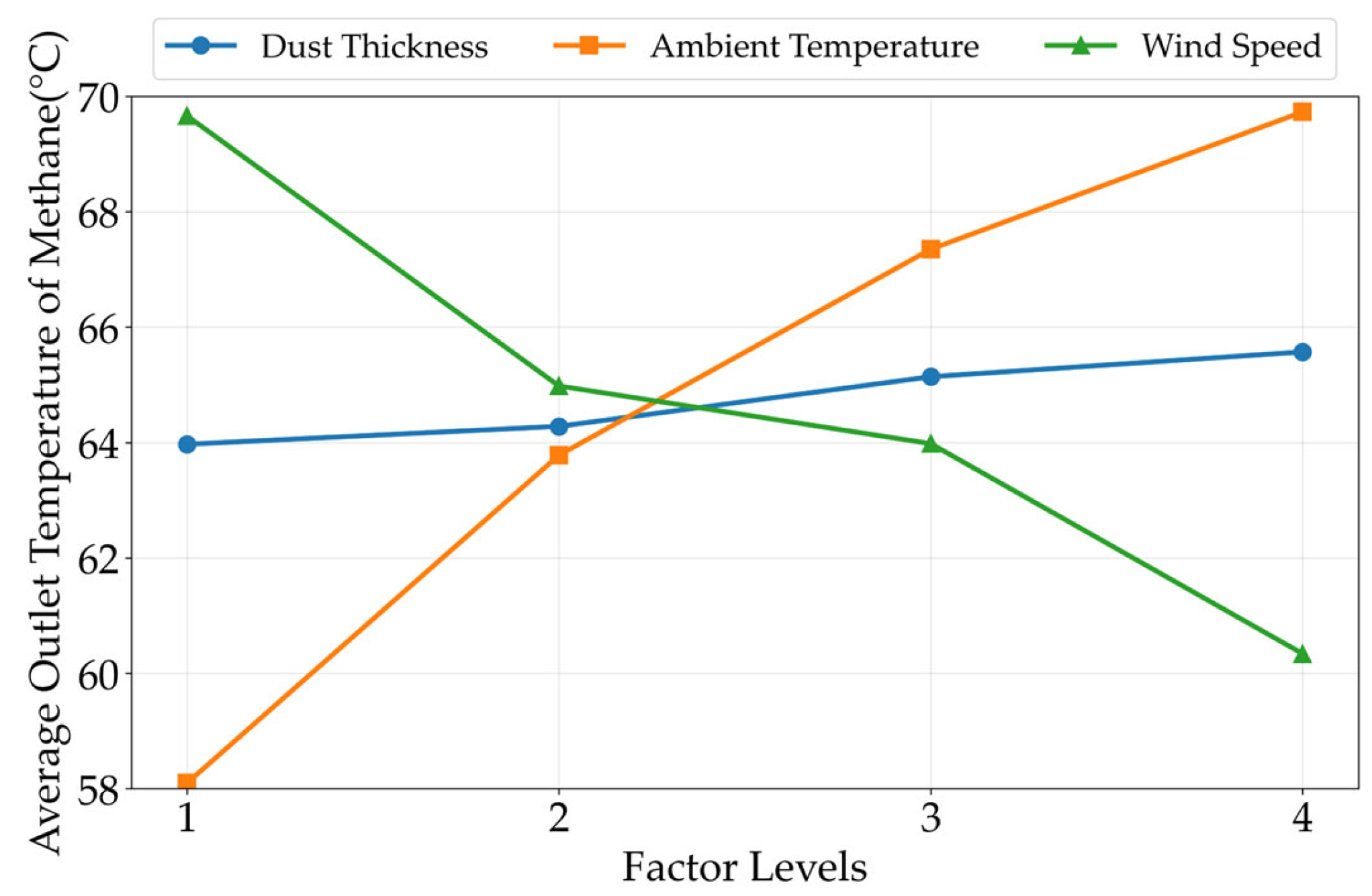
In this study, a hybrid simulation framework integrating the Discrete Element Method (DEM), Finite Element Analysis (FEA), and HTRI software was developed to systematically investigate the effects of dust accumulation on the heat transfer performance of heat exchangers. The proposed DEM-FEA-HTRI hybrid framework achieves multi-physics coupling, enabling simultaneous consideration of particle motion, deposition morphology, thermal resistance variation, and flow-heat transfer interactions. This study first employs the discrete element method (DEM) to investigate the distribution patterns of dust particles in a spiral finned-tube heat exchanger bundle. Subsequently, finite element (FE) simulations are conducted to analyze the influence of equivalent fouling thickness on the overall thermal-hydraulic performance of the heat exchanger. To mitigate the high computational cost and time consumption associated with direct FE simulations of large-scale tube bundles, a hybrid approach integrating numerical simulation and data-driven modeling is proposed. Specifically, the fouling thermal resistance coefficient derived from FE simulations is incorporated into HTRI software to calculate the fluid outlet temperature of the tube bundle. Furthermore, a random forest-based surrogate model is developed to predict the outlet fluid temperature using input features including the fouling thickness, ambient temperature, and inlet air velocity. The proposed methodology offers an efficient and accurate alternative for predicting the performance of heat exchangers under various fouling conditions.
3. Performance Analysis of Finned-Tube Heat Exchanger Under Fouling Conditions
3.1. Numerical Modeling of Finned-Tube Heat Exchanger
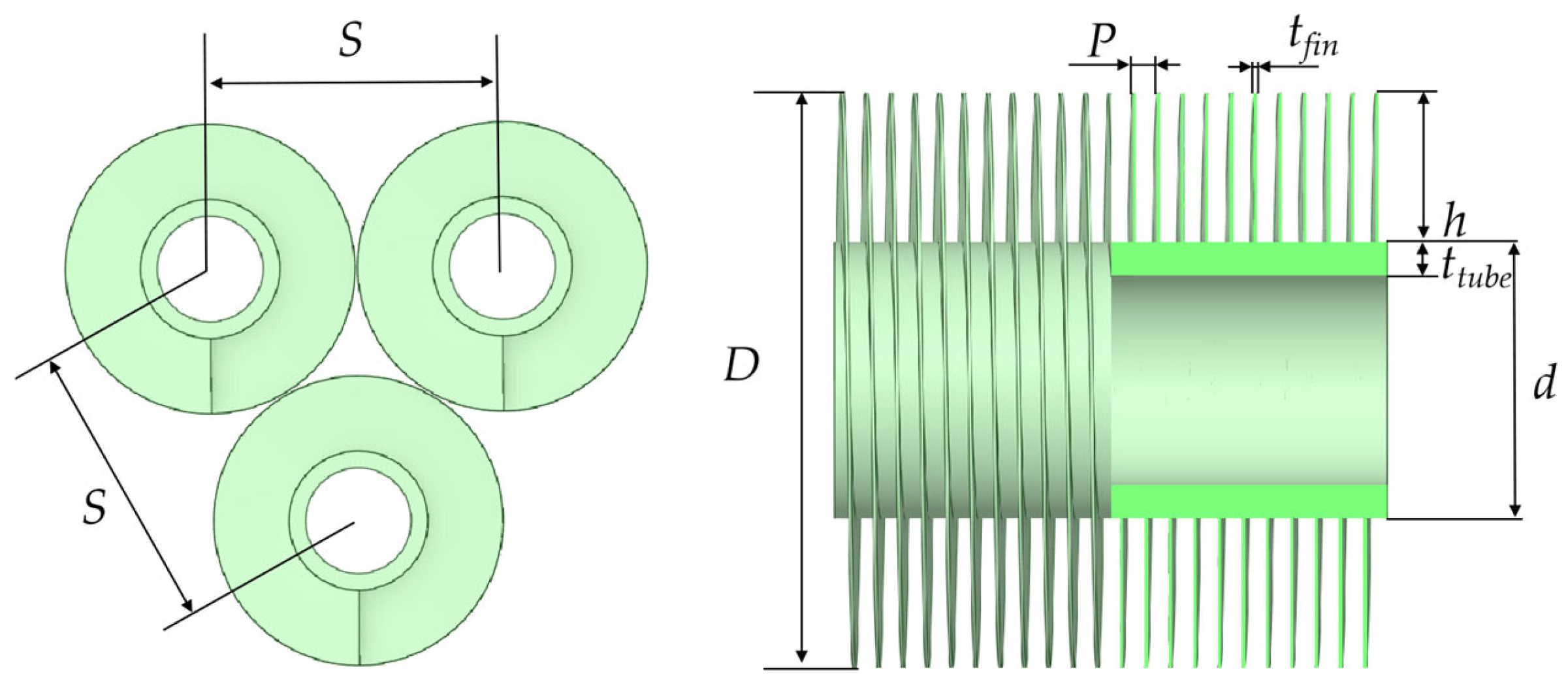
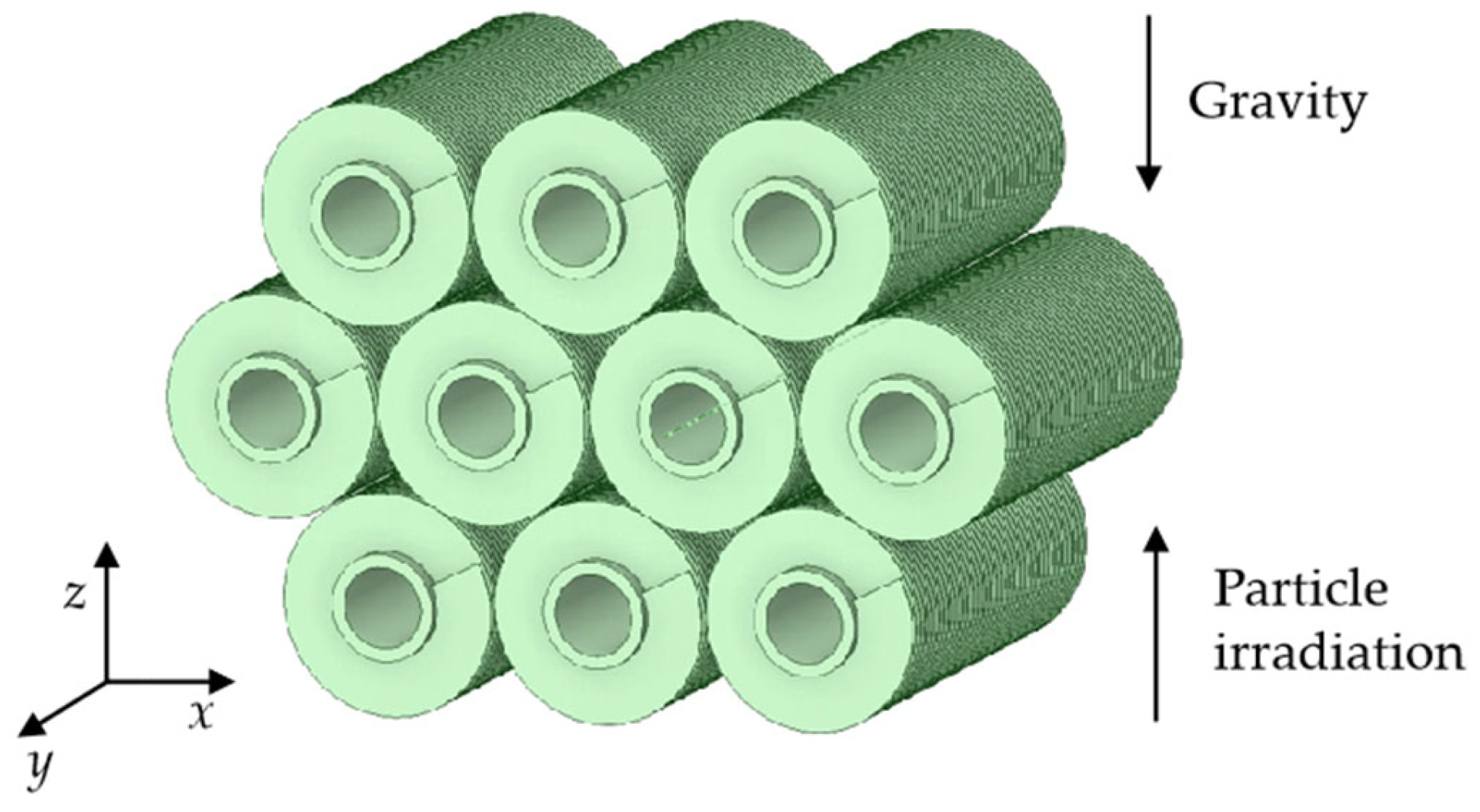
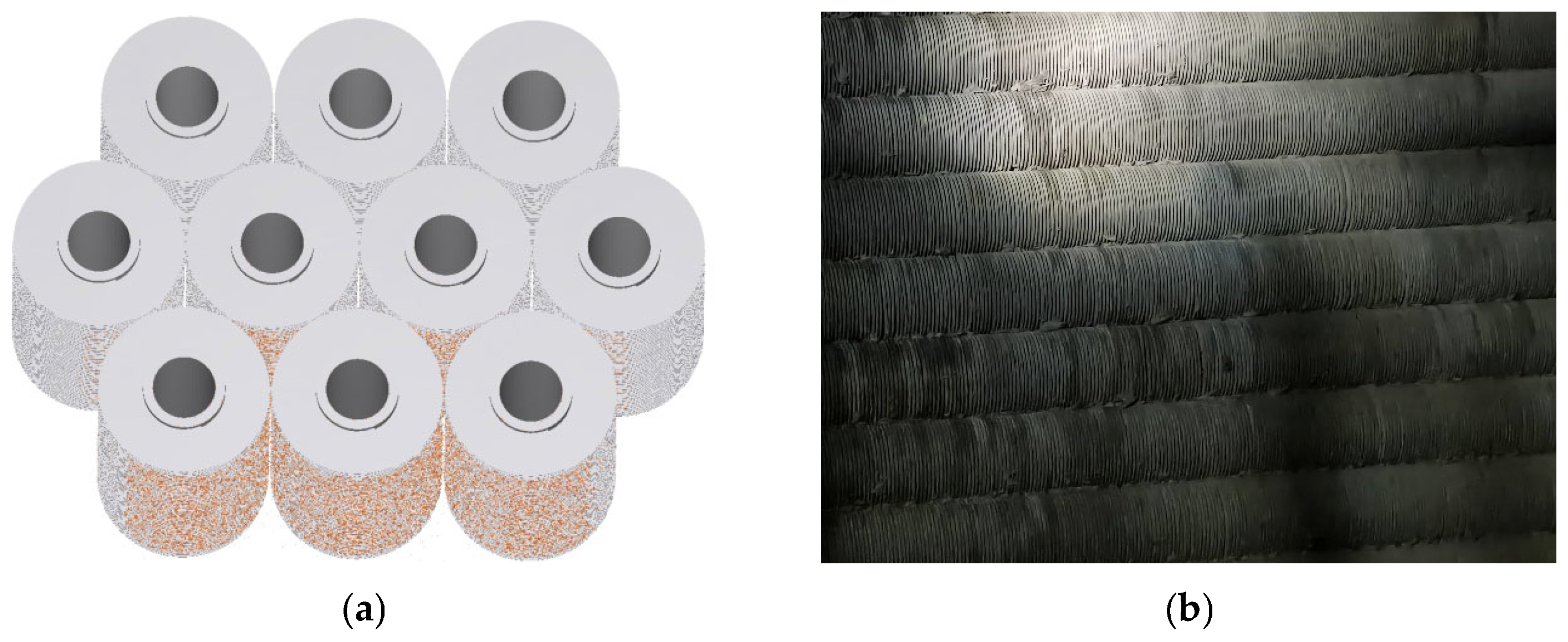
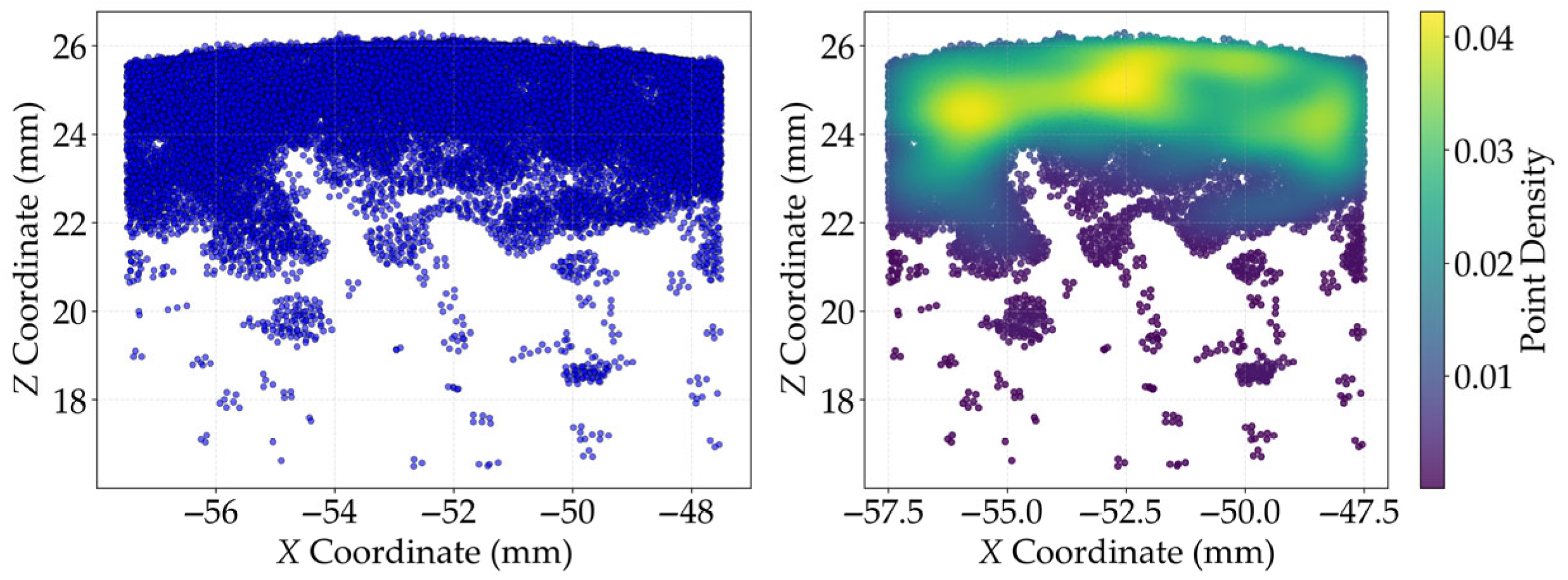
To analyze the effect of fouling on the thermal performance of the finned-tube heat exchanger using the finite element method, a rational representation of the dust distribution obtained from EDEM simulations is required. First, a statistical analysis of the spatial distribution characteristics of dust particles in the region of the bottom-layer fin tips was conducted. The specific approach involved projecting the dust particles onto the XZ cross-section, as illustrated in
Figure 1, and calculating the number density of particles within discrete intervals along the Z direction. As shown in
Figure 6, the statistical results indicate that with the center of the heat transfer tube as the origin, the particles are distributed relatively uniformly along the
Z-axis within the interval of 22–26 mm, with only minor fluctuations in number density observed in this region. In contrast, within the 18–22 mm interval, the number density decreases significantly to a negligible level. Based on this distribution characteristic, the dust accumulation on the fin tips within the height range of 22–26 mm can be equivalently modeled as a layer of uniform thickness, while the dust deposition on the remaining fin surface is considered negligible and thus set to zero. This equivalent approach not only accurately reflects the spatial distribution characteristics of the actual dust deposition, but also provides a reasonable simplification for subsequent performance analysis.
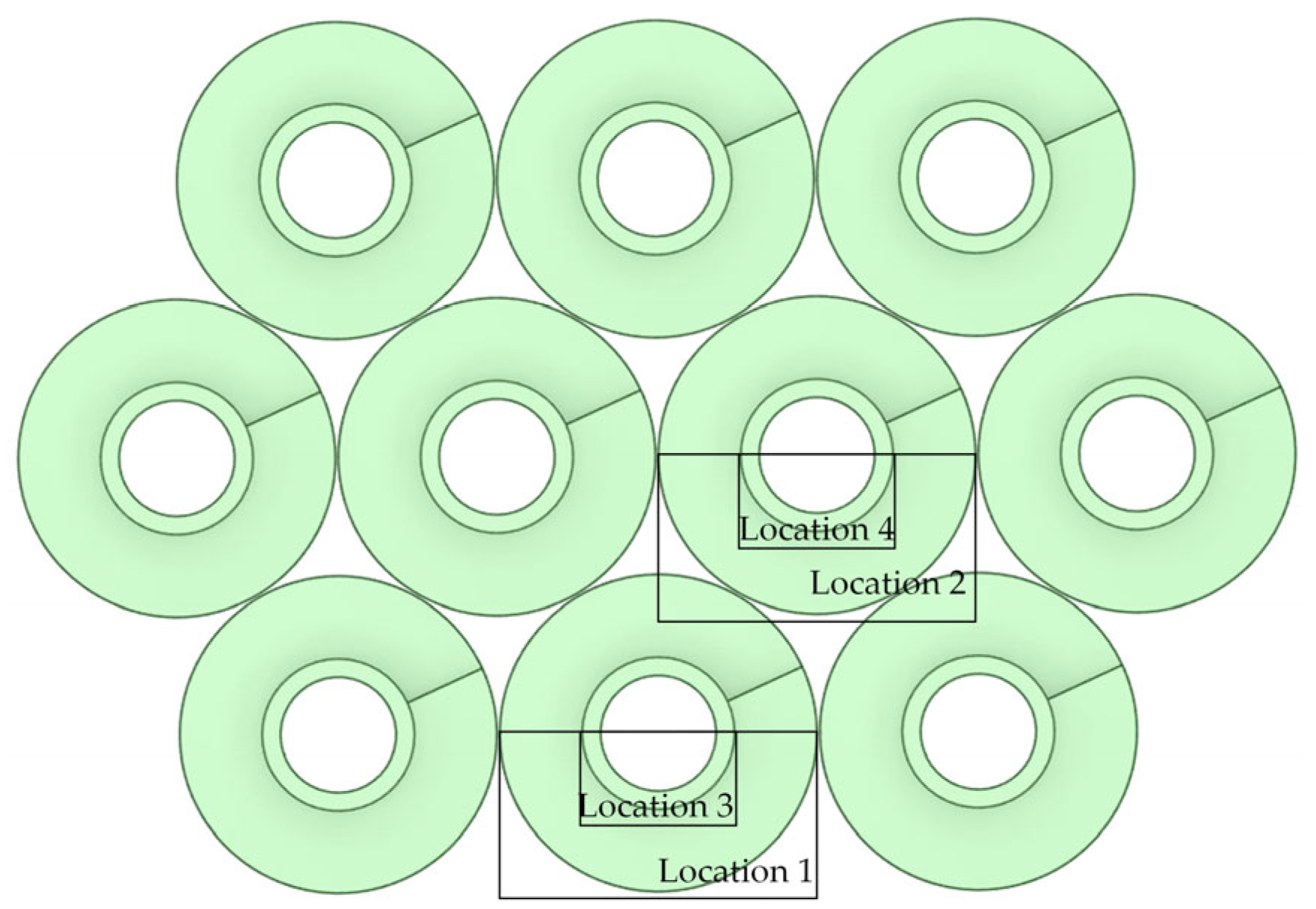
Moreover, since the dust accumulation is most pronounced at the tip of the first-layer fin (designated as Location 1), this study considers it as a critical region and defines a range of dust thickness values at this location for detailed analysis. To determine the number of dust particles corresponding to a given thickness at Location 1 and to further estimate the distribution characteristics and equivalent thicknesses at the other three designated orientations, a mathematical relationship is first established between the deposited dust volume and the equivalent thickness at each orientation. Based on the volume of a single dust particle and the statistically obtained number of particles at Location 1, the dust thickness at this location was inversely derived. Furthermore, by fitting trend curves to the dust distribution profiles across the four representative orientations, the number of particles corresponding to the other three orientations was extrapolated, and their respective equivalent thicknesses are subsequently determined. The detailed computational procedure is outlined as follows.
Step 1: Considering the mesh size and the fact that the inter-fin spacing is only 0.5 mm, the dust thickness range at Location 1 was set to 0.15 mm, 0.18 mm, 0.21 mm, and 0.24 mm. Using the equivalent dust volume
V(1) corresponding to a given dust thickness at Location 1 and the volume of a single particle
Vp, the corresponding number of dust particles
N(1) was calculated. This relationship can be expressed as:
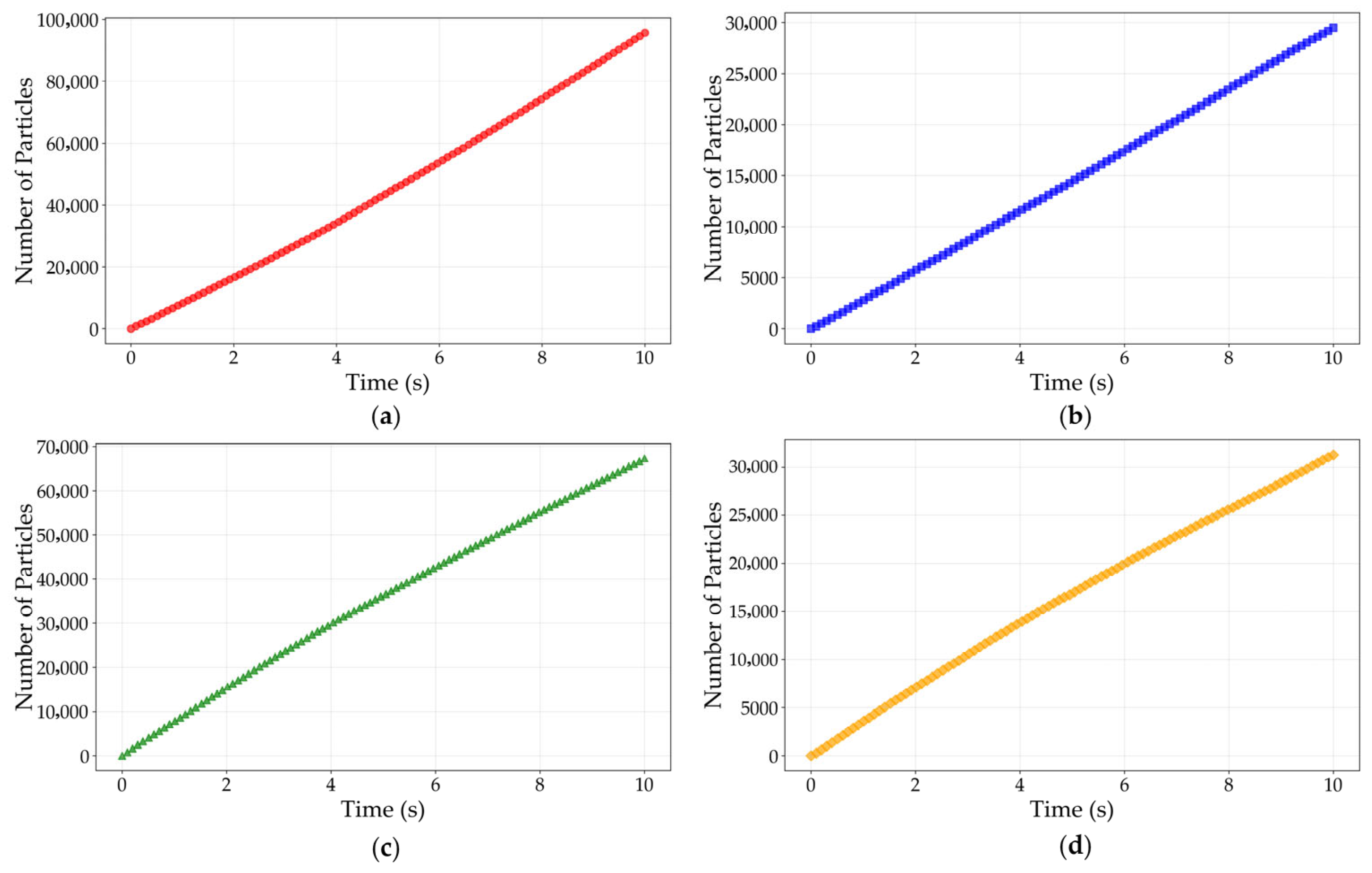
Step 2: Based on the number of dust particles at Location 1 and the fitted time–particle number curve
f(1) shown in
Figure 5a, the corresponding simulation time
t* is determined using Equation (9). This time value is then used to calculate the number of dust particles at the remaining Locations as described in Equation (10).
Step 3: Establish the functional relationship
φ for calculating the equivalent dust volume and thickness at other locations. The equivalent dust volume
V(n) is derived based on the number of dust particles, which is then substituted into the corresponding Equation (11) to determine the equivalent dust thickness
th(n).
Based on the specified dust layer thickness at Location 1, the corresponding dust thickness values calculated for other locations are summarized in
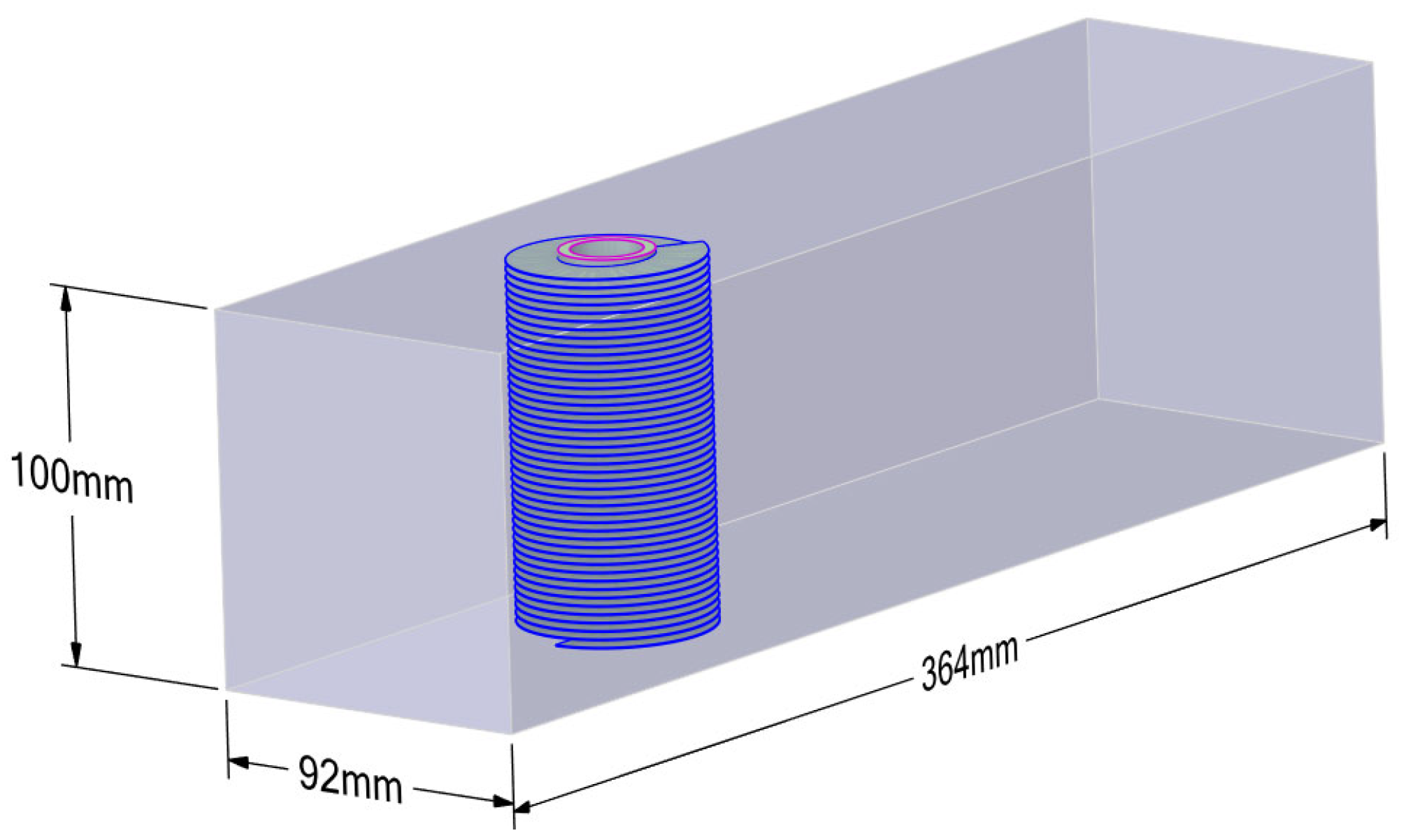
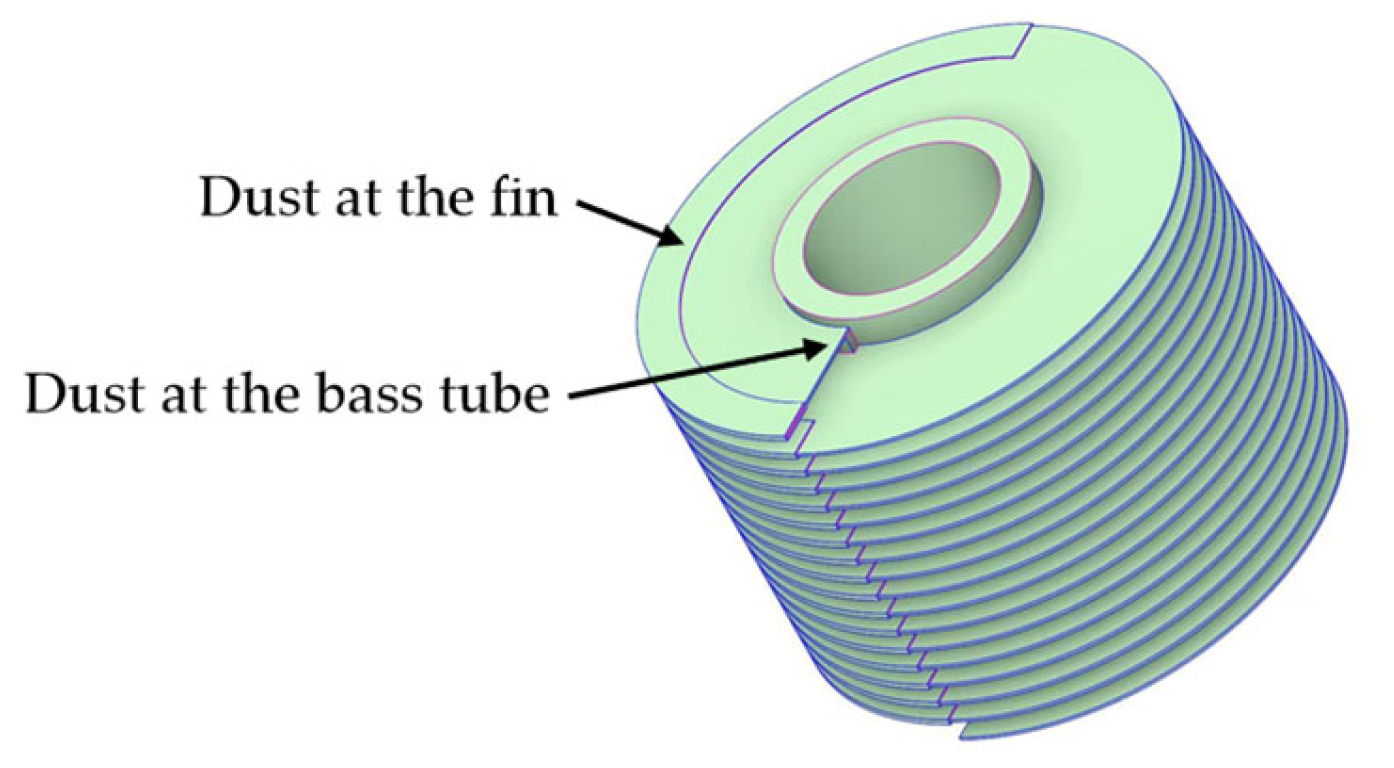
Table 4. A helical finned-tube heat exchanger model with simulated dust deposition is subsequently developed, as illustrated in
Figure 7.
3.2. Boundary Conditions for Finite Element Simulation
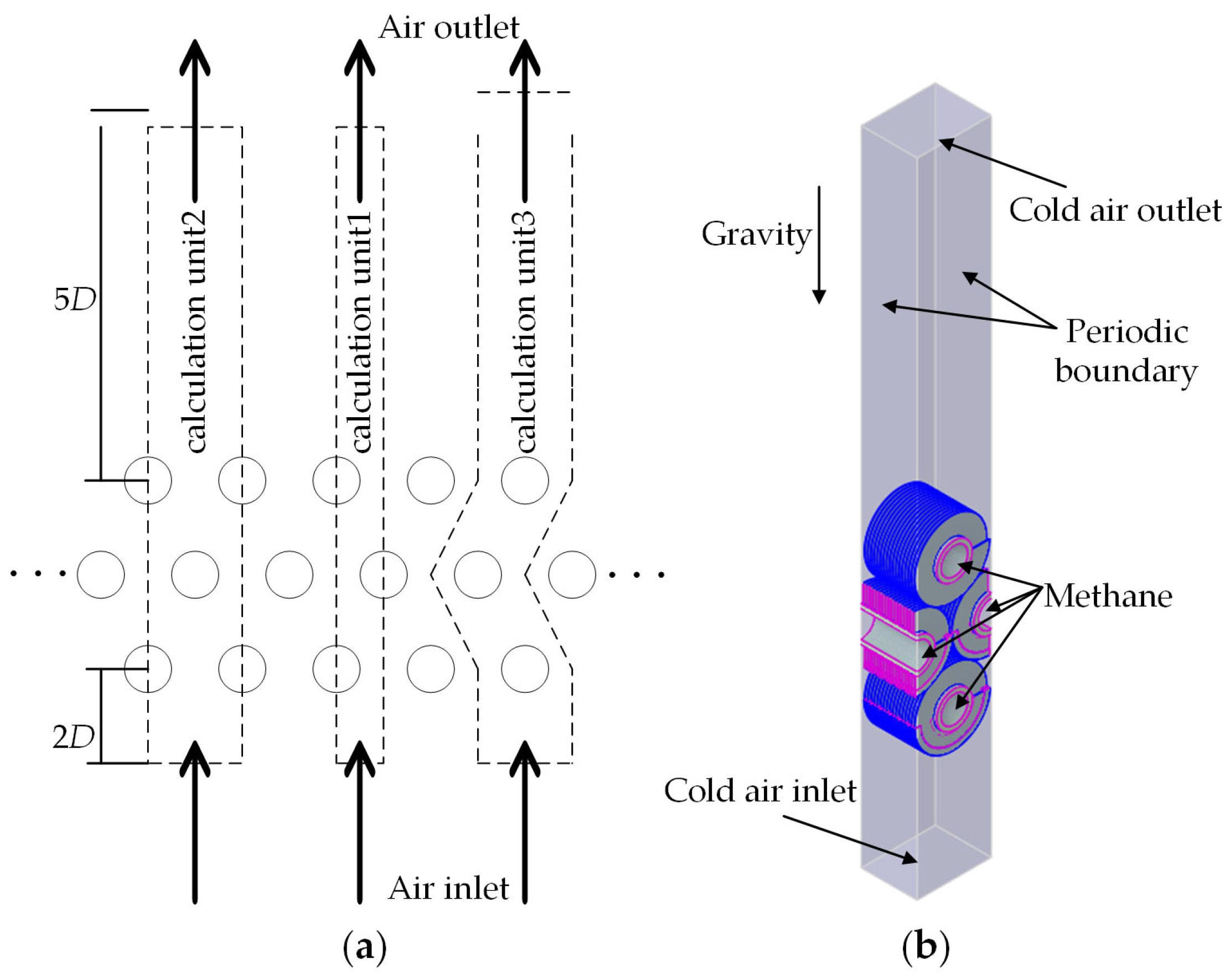
To optimize the computational domain setup for reduced computational resource consumption while maintaining accuracy, three different computational unit configurations are considered in this study.
Figure 8 illustrates the computational units and their corresponding domain schematics for the integral helical finned tube, with
Figure 8a showing the arrangements of the staggered finned-tube bundle. Given that the finned tube contains multiple repeating units along the transverse direction and assuming that the incoming cold air is uniformly distributed transversely at the inlet, three types of simplified computational domains are commonly employed in existing studies, including calculation unit 1 [
23], calculation unit 2 [
24,
25], and calculation unit 3 [
26]. These approaches significantly reduce computational cost without compromising simulation accuracy.
In selecting a suitable computational unit, calculation unit 2 is deemed inapplicable to this study due to its nonconformity with periodic boundary conditions in the topologically structured transverse boundary surfaces. Calculation unit 3 is also excluded because the extremely small transverse and longitudinal spacings considered in this study resulted in geometric conflicts between the fluid domain and the fins. Therefore, calculation unit 1 is ultimately adopted for simulation analysis. To ensure uniform airflow distribution at the inlet, the length of the air inlet section is set to twice the fin outer diameter of the helical finned tube. Meanwhile, the outlet section length is set to five times the fin outer diameter to minimize backflow effects at the outlet. This design contributes to optimized fluid dynamic behavior and thermal exchange performance.
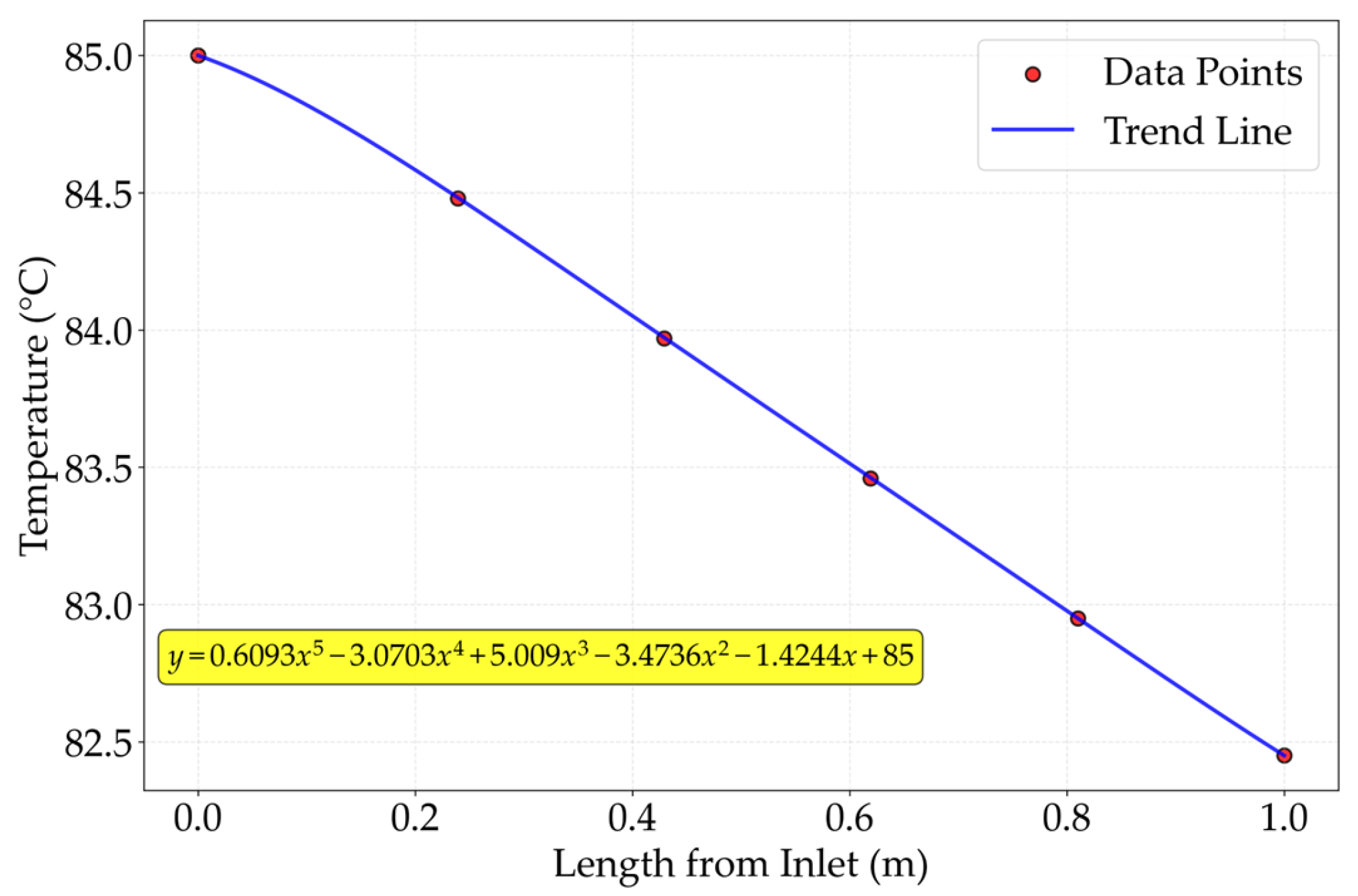
In this study, the heat exchanger is configured as follows: to reproduce the continuous arrangement of finned tubes in practical applications, the side surfaces of the computational domain were set as periodic boundary conditions. In this way, the model only needs to simulate a single representative unit to accurately infer the overall thermal–flow behavior under similar operating conditions. Methane was selected as the working fluid inside the tube. The inlet boundary was set as a mass flow inlet with a total mass flow rate of 0.21 kg/s. Considering the existence of periodic boundaries, there are two inlets corresponding to half of the total inlet area, so their mass flow rate was set to 0.105 kg/s. The inlet temperature of methane was 85 °C, and the outlet boundary was set as a pressure outlet with a gauge pressure of 0 Pa to simulate the pressure relief condition during actual operation. For the external air domain, air was used as the cooling medium. The inlet was set as a velocity inlet, and the outlet was set as a pressure outlet. All walls were defined as no-slip stationary walls to ensure that the interaction between airflow and solid surfaces conforms to the real convective heat transfer process.
To determine the appropriate turbulence model for this study, the flow regime of the external air was first evaluated by calculating the Reynolds number (
Re) based on the characteristic velocity and fin outer diameter of the finned-tube bundle, as expressed by Equation (13):
where
ρ is the density,
u is the velocity and
D is the characteristic length. Considering the minimum inlet velocity of 1 m/s, substituting the parameters into the equation yields a Reynolds number exceeding the critical threshold of 2300, indicating that the airflow around the fins is in a turbulent regime. Given the distinctly turbulent nature of the airflow entering the heat exchanger tube bundle, the SST k–omega turbulence model is employed in the simulation [
27]. The main structure of the heat exchanger is constructed from 304 stainless steel.
Table 5 provides the relevant material properties. To represent the continuous arrangement of finned tubes in practical applications, the side boundaries of the computational domain are set as periodic conditions. This configuration allows the model to simulate the performance of a single unit while effectively extrapolating the heat transfer and flow behavior of the overall structure under similar operating conditions.
3.3. Mesh Independence Verification
During the meshing process of the heat exchanger model in Fluent Meshing, the poly-hexcore meshing method was adopted. This type of mesh is particularly suitable for simulating thin-walled finned-tube structures, as it effectively captures steep gradients near solid surfaces and minimizes numerical diffusion. Since stronger temperature and velocity gradients occur near the forced-convection heat transfer walls, a denser mesh was applied around the fluid–solid coupling regions to improve the simulation accuracy. Accordingly, boundary layer meshes were generated in these regions to accurately resolve near-wall flow behavior.
To ensure the accuracy and efficiency of the numerical simulations, a mesh independence verification was performed. Three mesh configurations with total element counts of 9.77 × 10
6, 10.86 × 10
6, and 12.19 × 10
6 were compared. The key output parameters, namely the air outlet temperature and the pressure drop between the inlet and outlet, are listed in
Table 6. The results indicate that when the number of mesh elements exceeds 10.86 × 10
6, the variations in both air outlet temperature and pressure drop are less than 1%, demonstrating satisfactory grid independence. Therefore, the medium-density mesh (10.86 × 10
6 elements) was selected for subsequent simulations to balance computational cost and accuracy.
3.4. Effect of Dust in Different Positions on Heat Exchange
To quantify the sensitivity of heat exchanger performance to non-uniform dust deposition, three scenarios were considered: (i) both locations—dust present at the fin tip and the fin root; (ii) fin-tip only; and (iii) fin-root only. For all cases, an equivalent dust model with a thickness of 0.15 mm (corresponding to Location 1) was adopted. The simulations were conducted under an air inlet velocity of 1 m/s and an ambient temperature of 10 °C, representing typical operating conditions in industrial environments.
The influence of dust accumulation at different positions was evaluated by analyzing the air-side outlet temperature, which reflects the variation in overall heat transfer efficiency under each deposition scenario. The corresponding air outlet temperatures for the three cases were 55.75 °C (both locations), 56.27 °C (fin-tip only), and 55.79 °C (fin-root only), as summarized in
Table 7.
Taking the case i as the reference, the fin-tip only case increases by 0.52 °C, whereas the fin-root only case increases it by only 0.04 °C. The observed differences in outlet temperature indicate that dust deposition at different locations exerts distinct influences on heat transfer performance. Specifically, the fin tip region plays a dominant role in heat dissipation due to its large effective surface area and high local heat transfer coefficient. Once dust accumulates in this area, the effective heat transfer surface is rapidly covered, and the additional thermal resistance significantly suppresses local convection efficiency. In contrast, dust at the fin root region has a relatively minor impact because this area inherently contributes less to the overall heat transfer process and experiences weaker flow intensity. Consequently, non-uniform dust deposition—particularly concentrated at the fin tips—results in a more pronounced deterioration of the overall heat exchange performance.
3.5. Effect of Fouling Layer Thickness on a Spiral Finned Tube Heat Exchanger Performance
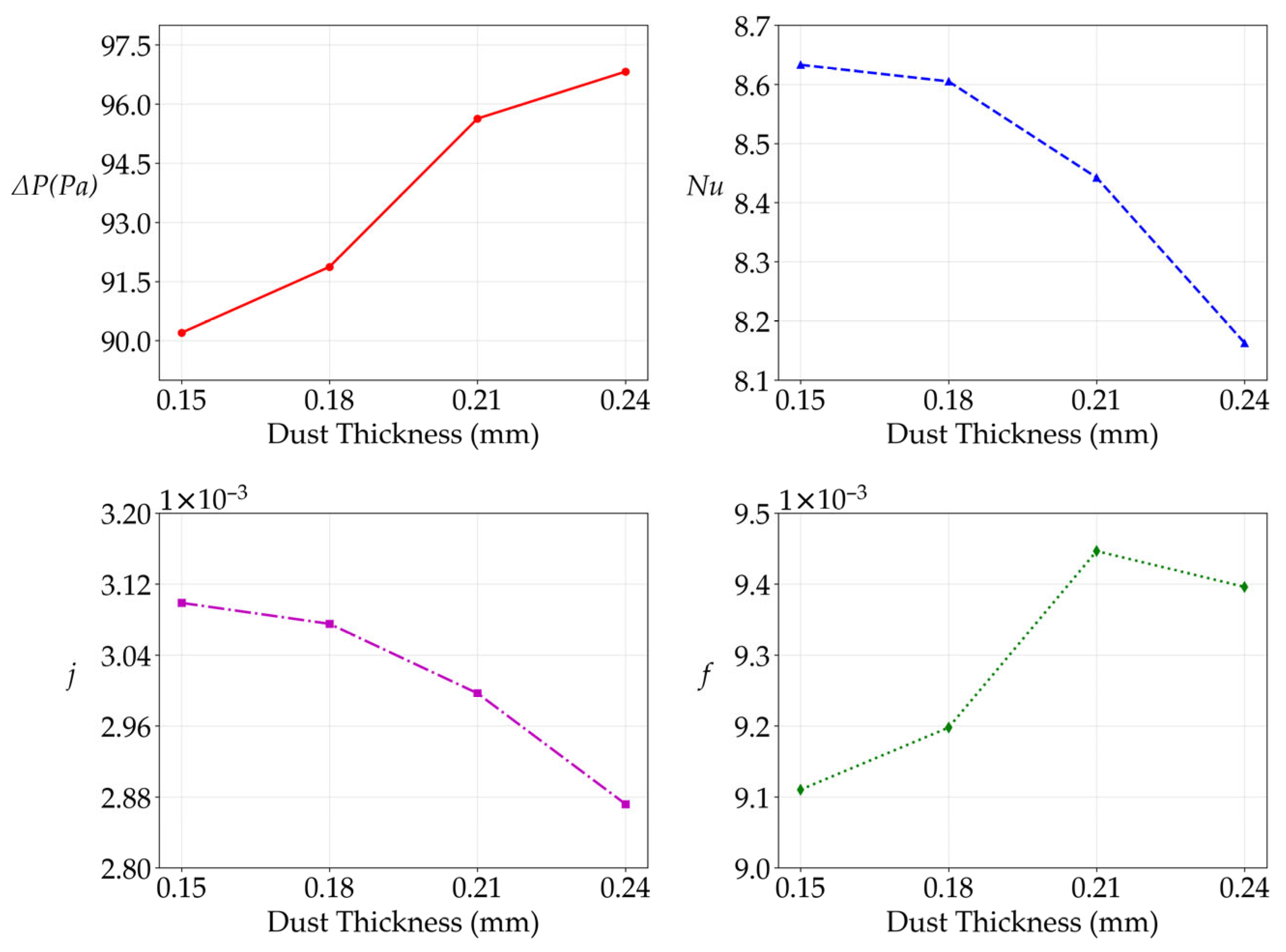
To investigate the effect of dust deposition thickness on the performance of a spiral finned-tube heat exchanger, experiments were conducted at Location 1 with four different dust thicknesses: 0.15 mm, 0.18 mm, 0.21 mm, and 0.24 mm. The velocity and temperature of the cooling air were maintained at 3 m/s and 30 °C, respectively. The pressure drop ΔP between the inlet and outlet, Nusselt number (
Nu), heat transfer factor (
j-factor), and resistance factor (
f-factor) were systematically analyzed under different dust deposition conditions [
29].
Figure 9 presents the evaluated performance metrics of the heat exchanger across varying thickness conditions.
As the dust thickness increased, the pressure drop ΔP across the heat exchanger gradually rises, indicating that dust accumulation reduces the flow passage area and increases surface roughness, thereby enhancing flow resistance. In contrast, the Nusselt number and heat transfer factor decrease significantly with increasing dust thickness, suggesting that the dust layer introduce additional thermal resistance on the heat transfer surface and alter the flow boundary layer structure around the fins, consequently impairing convective heat transfer capacity.
5. Conclusions
During long-term operation of air-cooled heat exchange equipment, fouling tends to accumulate on heat transfer surfaces, significantly impairing thermal and hydrodynamic performance. Therefore, investigating heat transfer characteristics under fouling conditions is crucial for improving energy efficiency and ensuring operational reliability. This study focuses on the performance degradation of spiral finned-tube heat exchangers caused by fouling deposition and proposes an integrated prediction methodology combining discrete element method, finite element analysis, and surrogate modeling. The deposition behavior of dust particles within the tube bundle is first simulated using the DEM to characterize the spatial distribution of fouling and determine equivalent thickness values in different orientations. Subsequently, FE simulation is employed to analyze the influence of ash layer thickness on the thermal-hydraulic performance of the heat exchanger. To address the high computational cost associated with finite element methods and their limited applicability to large-scale tube assemblies, the fouling resistance obtained from FE simulations is incorporated as an input parameter into HTRI software for efficient computation of the outlet temperatures in long-distance heat exchanger configurations. Furthermore, a surrogate model is developed with fouling thickness, ambient temperature, and inlet air velocity as input variables, and the average outlet temperature of the fluid as the response variable. The proposed approach enables rapid prediction of heat exchanger performance under multiple operating conditions, thereby enhancing computational efficiency and meeting the demands of engineering analysis.
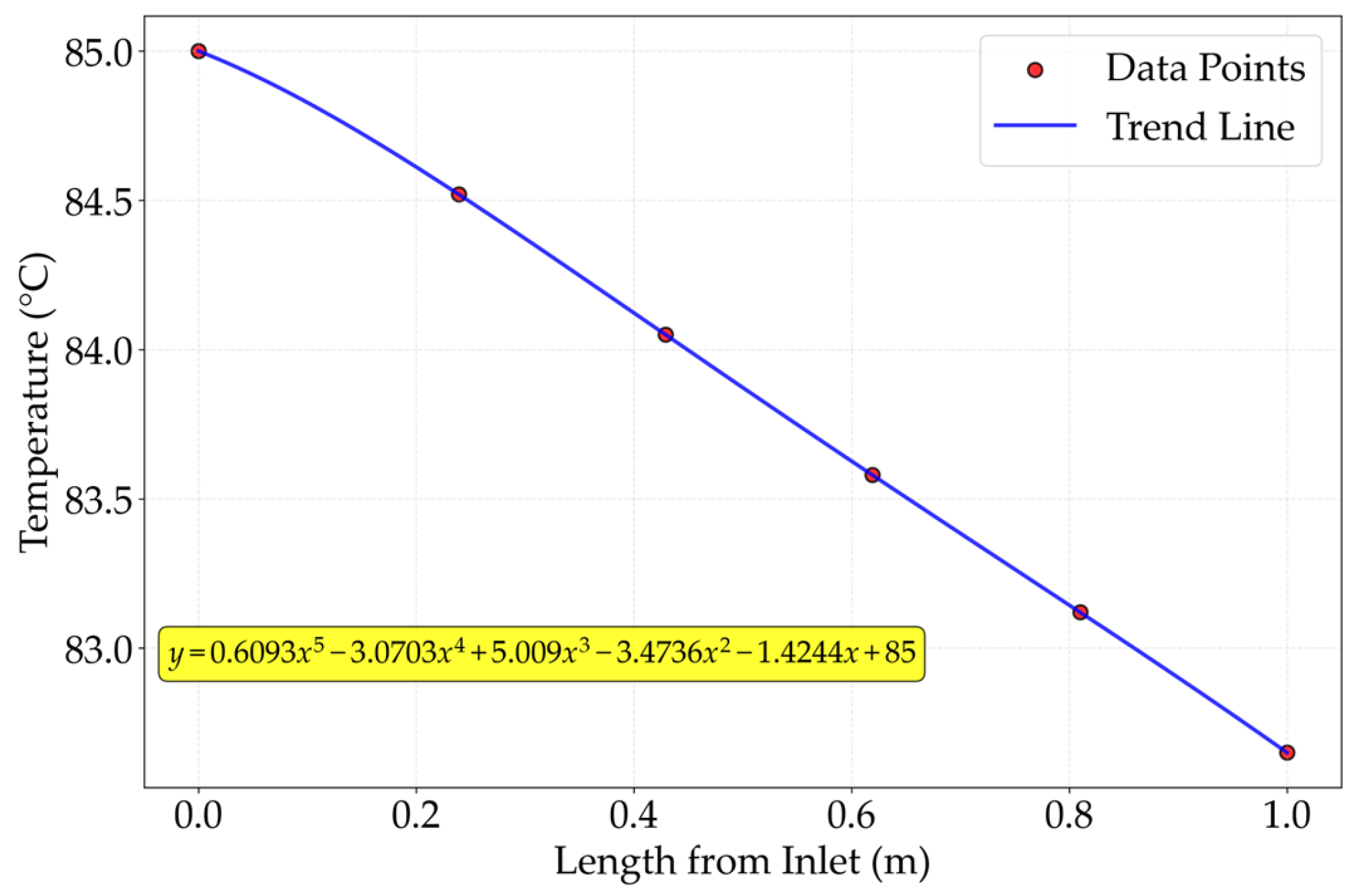
A case study was conducted on the spiral finned-tube heat exchanger assembly at the Chongqing Xiangguosi Underground Gas Storage Co., Ltd. By integrating DEM and FE simulation, it is found that increasing dust deposition thickness leads to elevated flow resistance, resulting in a rise in the pressure difference between the inlet and outlet as well as an increase in the resistance factor. In contrast, the Nusselt number and heat transfer factor decrease with greater dust thickness due to the thermal insulation effect of fouling, which reduces heat exchange efficiency. After validating the consistency between the FE simulation and HTRI software results, a 16-group orthogonal experimental design was constructed based on fouling thickness, ambient temperature, and inlet air velocity. The combined use of FE simulation and HTRI software enabled the calculation of methane temperatures at the outlet of a 15-m-long tube assembly. On the basis, an RF prediction model was trained, which achieved a MAPE of 0.0942% and a maximum error of 0.1869% on the testing dataset, demonstrating high prediction accuracy and reliability. This study not only provides an effective tool for fouling state assessment and operational optimization of heat exchangers at the Chongqing Xiangguosi Underground Gas Storage Co., Ltd., but also offers valuable insights into performance prediction and maintenance strategy formulation for heat exchange equipment in similar industrial contexts.
Beyond the specific case of spiral finned-tube heat exchangers, the proposed DEM–FEA–HTRI–RF hybrid framework exhibits strong adaptability to other types of heat exchange equipment, such as plate-fin, shell-and-tube, and air–gas heat exchangers. By adjusting the geometric parameters and boundary conditions in the DEM and FEA modules, the same methodology can be extended to model different fouling behaviors and evaluate their thermal–hydraulic impacts under diverse industrial conditions. This flexibility highlights the framework’s potential as a universal tool for fouling analysis, performance prediction, and optimization across a wide range of heat exchanger configurations.





 and
and