Article

Factors Affecting Anxiety and Depression in Women Undergoing Infertility Treatment: A Single-Center Experience


by
Radomir Anicic
1,2,*,†,
Milina Tancic-Gajic
2,3,†,
Jovana Kocic
1,2,
Dragutin Sretenovic
1,2 and
Aleksandar Dmitrovic
2,4
1
Clinic for Gynecology and Obstetrics “Narodni Front”, 11000 Belgrade, Serbia
2
Faculty of Medicine, University of Belgrade, 11000 Belgrade, Serbia
3
Clinic for Endocrinology, Diabetes and Metabolic Diseases, University Clinical Center of Serbia, 11000 Belgrade, Serbia
4
Clinic for Gynecology and Obstetrics, University Clinical Centre of Serbia, 11000 Belgrade, Serbia
*
Author to whom correspondence should be addressed.
These authors contributed equally to this work.
Reprod. Med. 2026, 7(2), 18; https://doi.org/10.3390/reprodmed7020018
Submission received: 25 February 2026 / Revised: 29 March 2026 / Accepted: 4 April 2026 / Published: 8 April 2026

Abstract

Background: Infertility is a growing global public health concern associated with reduced quality of life and increased anxiety and depressive symptoms across diverse populations. However, factors influencing mental health in women undergoing infertility treatment remain insufficiently understood. This study aimed to assess psychological distress and identify factors associated with anxiety and depression in women receiving infertility treatment. Methods: A cross-sectional study was conducted at a leading regional infertility referral center. Women with confirmed infertility were consecutively recruited during routine visits. Psychological distress was assessed using the validated Patient Health Questionnaire-4. Demographic, reproductive, and clinical data were collected from self-report and medical records. Associations of infertility duration and age with comorbidities and other demographic variables were evaluated using appropriate parametric and nonparametric tests, and correlations were examined using Spearman’s rank coefficient. Results: The mean age was 34.9 ± 5.9 years and the median duration of infertility was 3 years. Nearly half of participants had mild psychological distress (49.3%), while 16.7% and 2.7% had moderate and severe distress, respectively; 32% screened positive for anxiety and 17.3% for depression. Longer infertility duration was significantly associated with higher depressive symptom scores, whereas other demographic and clinical variables showed no significant associations. Conclusions: Psychological distress is highly prevalent among women with infertility, with depressive symptoms increasing with longer infertility duration. These findings highlight the need for routine psychological screening and integration of mental health support into infertility care in clinical practice and long-term treatment planning, emphasizing a comprehensive, patient-centered approach to reproductive medicine.

1. Introduction

Infertility is an increasingly important global public health concern with substantial medical, psychological, and social implications. The World Health Organization estimates that approximately one in six individuals experiences infertility during their lifetime [1]. Between 1990 and 2021, the global prevalence of female infertility increased by more than 80%, accompanied by substantial increases in age-standardized prevalence and disability-adjusted life years (DALYs) [2,3]. While the greatest burden remains among women aged 35–39 years, prevalence is rising most rapidly in those aged 30–34 years, suggesting a shift toward earlier reproductive risk exposure and delayed childbearing patterns. Forecast models further indicate that the global burden of infertility is expected to continue rising in the coming decades [2,3], reinforcing the need for a broader understanding of its medical and psychosocial consequences.
Beyond its biological dimension, infertility is now recognized as a multidimensional condition strongly associated with psychological distress and reduced quality of life (QoL). A review of the global literature published in the last 10 years showed that across different cultures and countries, infertility adversely affects QoL, manifesting as depressive and anxiety symptoms as well as sexual dysfunction [4]. Infertility has been linked to increased psychological difficulties in both men and women following treatment failure [5]. However, a meta-analysis comparing stress, depression, anxiety and QoL found that these disturbances are more pronounced in women than in men [6]. In addition, a meta-analysis comprising 32 studies found that infertile women exhibited a higher prevalence of depression compared with the general population within the same country [7].
The psychological impact of infertility is also influenced by its underlying etiology. Ovulatory dysfunction and anovulation, tubal disorders, endometriosis, and uterine or cervical factors are the most common causes of female infertility [8] and may carry independent psychological consequences [9]. This is supported by significant population-based evidence, including a Danish cohort study of more than 2 million women, which demonstrated that reproductive system disorders are associated with an increased risk of depression, particularly within the first year following diagnosis [9]. However, findings across specific conditions remain inconsistent. For example, a nationwide Danish study of infertile women recruited from fertility clinics found no significant association between polycystic ovary syndrome (PCOS) and symptoms of anxiety or depression [10], suggesting that the psychological burden may vary depending on clinical context and patient selection. Similarly, while endometriosis has been associated with poorer QoL and increased depressive symptoms compared with infertility alone, anxiety levels appear to be less consistently affected [11].
In addition to clinical factors, sociodemographic and psychosocial variables also contribute to the heterogeneity of mental health outcomes among infertile women. Older age, lower educational level, longer duration of infertility, and reduced self-esteem have all been identified as potential risk factors for increased depressive symptoms [12,13]. However, these associations are not uniform across studies, and the relative contribution of clinical versus psychosocial determinants remains insufficiently clarified.
Despite the growing body of evidence linking infertility to psychological distress, there remains variability in findings across populations and settings, and limited consensus regarding the most important predictors of anxiety and depression in infertile women. Therefore, further research is needed to better characterize the burden of psychological distress in this population and identify key associated factors that may inform targeted screening and intervention strategies. The aim of this study was to investigate psychological distress in women undergoing infertility treatment and identify potential factors associated with anxiety and depression.

2. Materials and Methods

2.1. Procedure

This was an observational cross-sectional study conducted over a 6-month period at the Clinic for Gynecology and Obstetrics “Narodni Front,” University Clinical Centre of Serbia, a tertiary referral center for reproductive medicine and the main regional referral center for infertility care. Participants were consecutively recruited during routine clinical visits.
All participants completed the Patient Health Questionnaire-4 (PHQ-4), a validated screening instrument for the assessment of anxiety and depressive symptoms. Demographic, reproductive, and clinical data were obtained from patient self-reports and medical records.
The primary outcomes were PHQ-2, GAD-2, and PHQ-4 total scores, analyzed as continuous variables. Higher scores indicated greater symptom burden.
The study was conducted in accordance with the Declaration of Helsinki and the principles of Good Clinical Practice (GCP). All participants provided informed consent prior to inclusion in the study. The study protocol was approved by the appropriate institutional ethics committee (Ethical Code: 25/VII-10).

2.2. Participants

The study included women with a confirmed diagnosis of infertility. Collected variables included age, duration of infertility, history of at least one birth, history of at least one miscarriage, Papanicolaou (PAP) test category, menstrual cycle regularity, and educational attainment.
Information on prior diagnostic and assisted reproductive procedures was recorded, including intrauterine insemination, in vitro fertilization (IVF), hysterosalpingography (HSG), and hysteroscopy.
The presence of medical and gynecological comorbidities was systematically assessed, including insulin resistance, PCOS, Hashimoto’s thyroiditis, endometrial polyps, uterine fibroids, endometriosis, ovarian cysts, tubal occlusion, and chronic medical diseases. Additionally, the presence of genital infections (Ureaplasma, Mycoplasma, and Chlamydia trachomatis) was recorded based on available clinical documentation.

2.3. Instrument

Psychological distress was assessed using the PHQ-4, a brief, validated screening instrument derived from the Patient Health Questionnaire-9 (PHQ-9) and the Generalized Anxiety Disorder-7 (GAD-7). The PHQ-4 consists of four items, including two items assessing anxiety symptoms (Generalized Anxiety Disorder-2 [GAD-2]) and two items assessing depressive symptoms (Patient Health Questionnaire-2 [PHQ-2]). The term “two items” refers to two specific questions for each domain; for example, anxiety is assessed with items such as “Feeling nervous, anxious or on edge,” while depression is assessed with items such as “Little interest or pleasure in doing things.”
Each item is rated on a 4-point Likert scale ranging from 0 (“not at all”) to 3 (“nearly every day”) over the preceding two weeks. Subscale scores for anxiety and depression range from 0 to 6, while the total PHQ-4 score ranges from 0 to 12, with higher scores indicating greater psychological distress. Total scores are categorized as normal (0–2), mild (3–5), moderate (6–8), and severe (9–12) psychological distress. A score ≥3 on the first two items (GAD-2) suggests clinically relevant anxiety symptoms, while a score ≥3 on the last two items (PHQ-2) indicates clinically relevant depressive symptoms.
The PHQ-4 has been widely validated in general and clinical populations, demonstrating good internal consistency and construct validity as a brief screening tool for anxiety and depressive disorders [14].

2.4. Data Analysis

Continuous variables were assessed for normality and summarized using means and standard deviations or medians (25th–75th percentile), as appropriate. Categorical variables were summarized as frequencies and percentages. Associations between psychological outcomes and clinical variables were evaluated using nonparametric tests, including the Mann–Whitney U test for comparisons between two groups and the Kruskal–Wallis test for comparisons involving more than two groups. Spearman’s rank correlation coefficient was used to assess relationships between continuous or ordinal variables. Associations of infertility duration and age with comorbidities and other demographic variables were assessed using the Mann–Whitney U or independent-samples t-test for two-group comparisons and Kruskal–Wallis or one-way ANOVA for comparisons across more than two groups. Statistical significance was defined as a two-sided p value < 0.05. Statistical analyses were performed using SPSS Statistics software, Version 27.0 (IBM Corp., Armonk, NY, USA).

3. Results

3.1. Population Characteristics

The mean age of the study population was 34.9 ± 5.9 years and the median duration of infertility was 3 years (2–4). Over half of the study population (54.7%) had a university degree.
Regarding reproductive history, the majority of participants had never given birth (88.7%) and 20% had experienced at least one miscarriage. Only 7.3% of women had undergone IVF, while HSG and hysteroscopy had been performed in 36% and 23.3% of women, respectively. Intrauterine insemination had been performed in 14% of participants. Most participants had regular menstrual cycles (82.7%), PAP category II (96%), and no chronic medical conditions (84%). Thrombophilia was present in 4.7% of women. Genital infections were rare: Mycoplasma was detected in 1.3% of women, Ureaplasma in 4%, and Chlamydia in none.
Metabolic and endocrine comorbidities included insulin resistance (24.7%) and polycystic ovary syndrome (PCOS) (18.7%), while Hashimoto’s thyroiditis was present in 18% of participants. Gynecological conditions were less common, with endometrial polyps in 15.3%, uterine fibroids in 11.3%, endometriosis in 10.7%, ovarian cysts in 10.7%, and tubal occlusion in 6.7% of women. Characteristics of the study population are shown in detail in Table 1.

3.2. PHQ-4 Scores

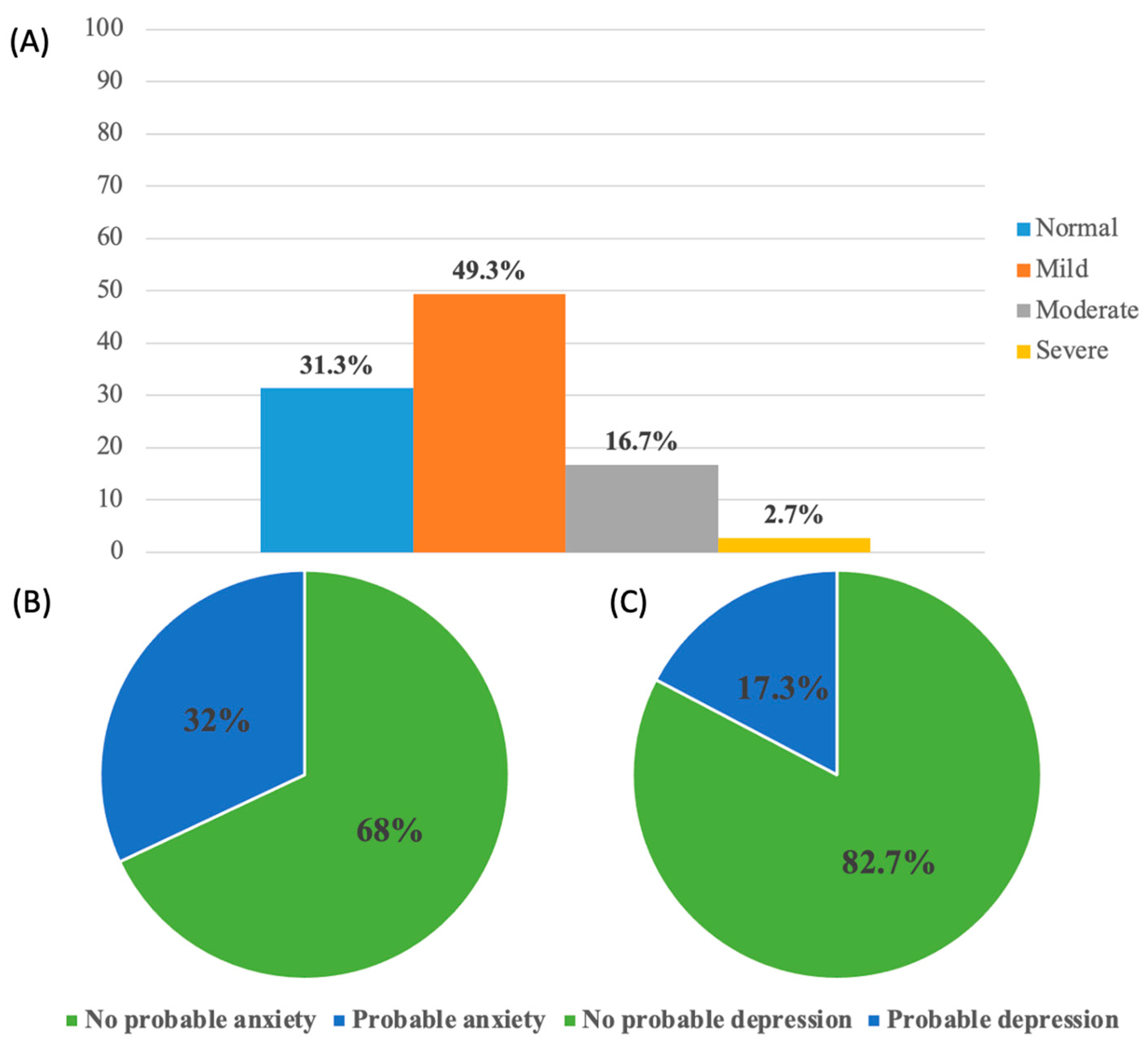
Based on the PHQ-4 total score, nearly half of the participants (49.3%) exhibited mild psychological distress, while 16.7% and 2.7% had moderate and severe distress, respectively. Analysis of the subscales indicated that 32% of women had probable anxiety (GAD-2 ≥ 3) and 17.3% had probable depression (PHQ-2 ≥ 3) (Figure 1). The PHQ-4 demonstrated acceptable internal consistency in this sample (Cronbach’s α = 0.764), consistent with previous validation studies.

3.3. Primary and Secondary Outcomes

Univariate analyses demonstrated a weak but statistically significant, positive association between infertility duration and PHQ-2 scores (Spearman’s ρ = 0.187), indicating that women with a longer duration of infertility reported more depressive symptoms (Table 2) (Figure S1). PHQ-2 scores correlated strongly with GAD-2 (ρ = 0.546) and PHQ-4 total scores (ρ = 0.856), reflecting the interrelated nature of anxiety and depressive symptoms. No other clinical or demographic variables were significantly associated with depressive or anxiety symptoms (Table S1).
There were several statistically significant differences between subgroups of women. Women with PCOS were younger than those without PCOS (32.9 ± 5.8 vs. 35.4 ± 5.8 years; p = 0.040). In contrast, women with uterine fibroids were older than those without fibroids (39.5 ± 4.1 vs. 34.3 ± 5.8 years; p < 0.001). Women with Ureaplasma infection were younger than those without the infection (28.2 ± 7.3 vs. 35.2 ± 5.7 years; p = 0.004). Women who had undergone hysteroscopy had a longer duration of infertility compared to those who had not (3 (2–5) vs. 2 (2–3) years; p = 0.004) (Table 3).

4. Discussion

In this cross-sectional study conducted at a tertiary referral center for reproductive medicine, we found a high prevalence of psychological distress among women with infertility, with nearly half of participants reporting mild distress and approximately one-fifth exhibiting moderate to severe symptoms. Anxiety symptoms were present in almost one-third of women, while depressive symptoms affected nearly one in five. These findings underscore the substantial psychological burden associated with infertility, even in a relatively young and medically stable population.
The most notable finding was the significant association between longer infertility duration and higher depressive symptom scores. These results align with prior studies showing that longer infertility duration is significantly associated with greater depressive symptom burden [13,14,15,16]. Furthermore, elevated cyclothymic, depressive, and anxiety symptoms have been independently associated with a 41–55% reduction in the odds of achieving a clinical pregnancy after adjustment for key clinical factors [17]. A randomised controlled trial by Soleimani et al. has demonstrated that structured stress management programs, such as infertility coach-led counseling, can significantly reduce perceived infertility-related stress and may enhance treatment outcomes, including oocyte count and pregnancy success [18]. Together, these findings underscore the importance of early identification and management of psychological distress as an integral component of comprehensive infertility care.
In contrast, no other demographic, reproductive, or clinical variables, including age, educational level, miscarriage history, menstrual regularity, or the presence of gynecological and endocrine comorbidities, were significantly associated with anxiety or depressive symptoms. However, other literature findings suggest that these factors indeed contribute to higher anxiety and depression [12,13,19]. In our cohort, prior exposure to diagnostic or assisted reproductive procedures, including IVF, was not associated with higher distress levels. Given the small proportion of women who had undergone IVF, this finding should be interpreted cautiously, but it may also indicate psychological adaptation or resilience among women who have already engaged with advanced fertility treatments. A study focusing on women undergoing IVF-embryo transfer found that 27% experienced depression and 18% experienced anxiety, with higher education and certain treatment timing or male-factor infertility reducing risk, while comorbidities and extended ART strategies were independently associated with increased risk [20]. Other factors, such as marriage status, BMI, smoking and alcohol use were also found to be associated with higher odds of psychological distress [21]. Although conditions such as PCOS and endometriosis have been linked to impaired mental health [9], we found no significant association with psychological outcomes. This may reflect relatively mild clinical presentations, effective management, or the predominance of infertility as the central stressor. Similar results were reported by Jannink et al. and Basirat et al., where PCOS was not associated with anxiety or depression [10,22]. However, other studies observed higher anxiety and depression in women with PCOS [23,24] and more depressive symptoms in those with endometriosis [11].
Depressive and anxiety symptoms often co-occur in women with infertility [25]. Consistent with this, strong correlations between depressive, anxiety, and total PHQ-4 scores in our cohort highlight the interrelated nature of these psychological responses. The PHQ-4 demonstrated acceptable internal consistency, supporting its reliability as a brief screening tool in reproductive medicine [14]. Its simplicity and ease of administration make it suitable for busy outpatient settings, facilitating early identification of women who may benefit from psychological assessment or intervention.
Clinically, infertility duration emerges as a simple, readily available marker to identify women at higher risk of depressive symptoms, aligning with prior evidence [13,14,15,16]. However, the lack of associations with most clinical and demographic variables suggests that targeted screening alone may be insufficient. While reproductive specialists recognize the negative impact of psychological distress, routine screening for anxiety and depression remains uncommon, underscoring the need for a systematic approach [26]. Consensus guidelines recommend integrated psychosocial assessment across the infertility care continuum to address emotional needs at all treatment stages, and psychological interventions have been shown to improve anxiety, depression, and overall well-being [27,28].
This study has several strengths, including consecutive patient recruitment, the use of a validated screening tool, and comprehensive assessment of reproductive and medical comorbidities. Nevertheless, certain limitations should be acknowledged. The cross-sectional design precludes causal inference, and longitudinal studies are needed to clarify temporal relationships between infertility duration and psychological distress. The single-center setting may limit generalizability, and the relatively small number of women undergoing IVF restricted subgroup analyses. Several potential sources of bias and residual confounding, including variation in IVF cycle stage, nutritional status, physical activity, cortisol levels and other psychosocial or biological variables, could not be assessed in the present study. Additionally, the PHQ-4 is a screening instrument rather than a diagnostic tool, and clinical interviews would be required to confirm psychiatric diagnoses.

5. Conclusions

In conclusion, psychological distress is highly prevalent among women with infertility, with depressive symptoms increasing with longer infertility duration. These findings emphasize the importance of routine psychological screening and the integration of mental health support into infertility care pathways. Addressing the psychological dimensions of infertility should be considered an essential component of comprehensive, patient-centered reproductive medicine.

Supplementary Materials

The following supporting information can be downloaded at https://www.mdpi.com/article/10.3390/reprodmed7020018/s1: Figure S1: Correlation between infertility duration and PHQ-2 score; Table S1: Association of patient characteristics with PHQ-4 and its subscales.

Author Contributions

Conceptualization, R.A., M.T.-G. and A.D.; methodology, R.A., M.T.-G., J.K. and A.D.; software, R.A., M.T.-G. and A.D.; validation, R.A., M.T.-G., J.K. and A.D.; formal analysis, R.A., M.T.-G., D.S. and A.D.; investigation, R.A., M.T.-G., J.K., D.S. and A.D.; resources, R.A., M.T.-G. and A.D.; data curation, R.A., M.T.-G., J.K., D.S. and A.D.; writing—original draft preparation, R.A., M.T.-G. and A.D.; writing—review and editing, R.A., M.T.-G., J.K., D.S. and A.D.; visualization, R.A., M.T.-G., J.K. and A.D.; supervision, R.A. and A.D.; project administration, R.A., M.T.-G., D.S. and A.D.; funding acquisition, R.A., M.T.-G., J.K., D.S. and A.D. All authors have read and agreed to the published version of the manuscript.

Funding

This research received no external funding.

Institutional Review Board Statement

The study was conducted in accordance with the Declaration of Helsinki and approved by the Institutional Ethics Committee of Clinic for Gynecology and Obstetrics “Narodni Front” (protocol code: 22008-2025-010221, date of approval: 15 May 2025).

Informed Consent Statement

Informed consent was obtained from all subjects involved in the study.

Data Availability Statement

The original contributions presented in this study are included in the article. Further inquiries can be directed to the corresponding author.

Conflicts of Interest

The authors declare no conflicts of interest.

References

  1. World Health Organization. Infertility Prevalence Estimates, 1990–2021; World Health Organization: Geneva, Switzerland, 2023. [Google Scholar]
  2. Feng, J.; Wu, Q.; Liang, Y.; Liang, Y.; Bin, Q. Epidemiological characteristics of infertility, 1990–2021, and 15-year forecasts: An analysis based on the global burden of disease study 2021. Reprod. Health 2025, 22, 26. [Google Scholar] [CrossRef]
  3. Liu, J.; Qin, Y.; Liu, H.; Liu, Y.; Yang, Y.; Ning, Y.; Ye, H. Global, regional, and national burden of female infertility and trends from 1990 to 2021 with projections to 2050 based on the GBD 2021 analysis. Sci. Rep. 2025, 15, 17559. [Google Scholar] [CrossRef]
  4. Braverman, A.M.; Davoudian, T.; Levin, I.K.; Bocage, A.; Wodoslawsky, S. Depression, anxiety, quality of life, and infertility: A global lens on the last decade of research. Fertil. Steril. 2024, 121, 379–383. [Google Scholar] [CrossRef]
  5. Maroufizadeh, S.; Karimi, E.; Vesali, S.; Omani Samani, R. Anxiety and depression after failure of assisted reproductive treatment among patients experiencing infertility. Int. J. Gynaecol. Obstet. 2015, 130, 253–256. [Google Scholar] [CrossRef]
  6. Almutawa, Y.M.; AlGhareeb, M.; Daraj, L.R.; Karaidi, N.; Jahrami, H. A systematic review and meta-analysis of the psychiatric morbidities and quality of life differences between men and women in infertile couples. Cureus 2023, 15, e37327. [Google Scholar] [CrossRef]
  7. Kiani, Z.; Simbar, M.; Hajian, S.; Zayeri, F. The prevalence of depression symptoms among infertile women: A systematic review and meta-analysis. Fertil. Res. Pract. 2021, 7, 6. [Google Scholar] [CrossRef]
  8. Carson, S.A.; Kallen, A.N. Diagnosis and management of infertility: A review. JAMA 2021, 326, 65–76. [Google Scholar] [CrossRef] [PubMed]
  9. Bliddal, M.; Wesselhoeft, R.; Rasmussen, L.; Janecka, M.; Zaks, N.; Petersen, L.K.; Egsgaard, S.; Jensen, P.B.; Munk-Olsen, T. The overlooked link between reproductive system disorders and depression: A cohort study in 2 million women. Psychol. Med. 2025, 55, e354. [Google Scholar] [CrossRef] [PubMed]
  10. Jannink, T.; Bordewijk, E.M.; Aalberts, J.; Hendriks, J.; Lehmann, V.; Hoek, A.; Goddijn, M.; van Wely, M.; ANDES study group. Anxiety, depression, and body image among infertile women with and without polycystic ovary syndrome. Hum. Reprod. 2024, 39, 784–791. [Google Scholar] [CrossRef]
  11. Mori, L.P.; Zaia, V.; Montagna, E.; Vilarino, F.L.; Barbosa, C.P. Endometriosis in infertile women: An observational and comparative study of quality of life, anxiety, and depression. BMC Women’s Health 2024, 24, 251. [Google Scholar] [CrossRef] [PubMed]
  12. Gao, W.; Ju, Y.; Gao, L.; Mohammed Abdalla, H.; Salum Masoud, S. Depression, anxiety and associated factors among infertile women in Zanzibar. J. Psychosom. Obstet. Gynaecol. 2025, 46, 2522387. [Google Scholar] [CrossRef] [PubMed]
  13. Akintayo, A.A.; Aduloju, O.P.; Dada, M.U.; Abiodun-Ojo, O.A.; Oluwole, L.O.; Ade-Ojo, I.P. Comparison of self-esteem and depression among fertile and infertile women in a low resource setting. J. Obstet. Gynaecol. 2022, 42, 1198–1203. [Google Scholar] [CrossRef]
  14. Ghaheri, A.; Omani-Samani, R.; Sepidarkish, M.; Hosseini, M.; Maroufizadeh, S. The four-item patient health questionnaire for anxiety and depression: A validation study in infertile patients. Int. J. Fertil. Steril. 2020, 14, 234–239. [Google Scholar] [CrossRef]
  15. Tadesse, S.; Kumsa, H.; Kitil, G.W.; Chereka, A.A.; Gedefaw, G.; Chane, F.; Mislu, E. Prevalence and contributing factors of depression among women with infertility in low-resource settings: A systematic review and meta-analysis. Front. Med. 2025, 12, 1477483. [Google Scholar] [CrossRef]
  16. Hu, L.; Yuan, Y.; Li, Y.; Cai, M.; Yin, J.; Zhu, L. Prevalence and risk factors of negative emotions in infertile women: A systematic review and meta-analysis. Front. Public Health 2025, 13, 1701381. [Google Scholar] [CrossRef]
  17. Szabo, G.; Szigeti, F.J.; Sipos, M.; Varbiro, S.; Gonda, X. Affective temperaments show stronger association with infertility treatment success compared to somatic factors, highlighting the role of personality focused interventions. Sci. Rep. 2023, 13, 21956. [Google Scholar] [CrossRef]
  18. Soleimani, R.; Ansari, F.; Hamzehgardeshi, Z.; Elyasi, F.; Moosazadeh, M.; Yazdani, F.; Shahidi, M.; Shiraghaei, N.; Karimi, M.; Hemati, T.; et al. Perceived stress reduction through an infertility coaching program: A randomized controlled clinical trial. Sci. Rep. 2023, 13, 14511. [Google Scholar] [CrossRef]
  19. Pathak, B.G.; Mburu, G.; Habib, N.; Kabra, R.; Malik, A.; Kiarie, J.; Chowdhury, R.; Dhabhai, N.; Mazumder, S. Prevalence and correlates of symptoms of depression, anxiety, and psychological distress among women of reproductive age with delayed conception in urban and peri-urban low to mid-socioeconomic neighborhoods of Delhi, India: A cross-sectional study. PLoS ONE 2025, 20, e0315347. [Google Scholar] [CrossRef] [PubMed]
  20. Li, N.; Bai, J.; Wang, L.; Chen, M.; Zhu, H.; Dong, J.; Luo, M.; Zhang, H.; Xu, D.; He, F.; et al. Factors influencing the anxiety and depression status in patients undergoing in vitro fertilization-embryo transfer assisted pregnancy. Sci. Rep. 2025, 15, 16303. [Google Scholar] [CrossRef] [PubMed]
  21. Bagade, T.; Thapaliya, K.; Breuer, E.; Kamath, R.; Li, Z.; Sullivan, E.; Majeed, T. Investigating the association between infertility and psychological distress using Australian Longitudinal Study on Women’s Health (ALSWH). Sci. Rep. 2022, 12, 10808. [Google Scholar] [CrossRef]
  22. Basirat, Z.; Faramarzi, M.; Esmaelzadeh, S.; Abedi Firoozjai, S.H.; Mahouti, T.; Geraili, Z. Stress, depression, sexual function, and alexithymia in infertile females with and without polycystic ovary syndrome: A case-control study. Int. J. Fertil. Steril. 2019, 13, 203–208. [Google Scholar] [CrossRef] [PubMed]
  23. Shi, X.; Zhang, L.; Fu, S.; Li, N. Co-involvement of psychological and neurological abnormalities in infertility with polycystic ovarian syndrome. Arch. Gynecol. Obstet. 2011, 284, 773–778. [Google Scholar] [CrossRef]
  24. Li, S.J.; Zhou, D.N.; Li, W.; Yang, J. Mental health status assessment in polycystic ovarian syndrome infertility patients: A pilot study. J. Huazhong Univ. Sci. Technolog. Med. Sci. 2017, 37, 750–754. [Google Scholar] [CrossRef]
  25. Lakatos, E.; Szigeti, J.F.; Ujma, P.P.; Sexty, R.; Balog, P. Anxiety and depression among infertile women: A cross-sectional survey from Hungary. BMC Women’s Health 2017, 17, 48. [Google Scholar] [CrossRef]
  26. Hoff, H.S.; Crawford, N.M.; Mersereau, J.E. Screening for psychological conditions in infertile women: Provider perspectives. J. Women’s Health 2018, 27, 503–509. [Google Scholar] [CrossRef]
  27. Gameiro, S.; Boivin, J.; Dancet, E.; de Klerk, C.; Emery, M.; Lewis-Jones, C.; Thorn, P.; Van den Broeck, U.; Venetis, C.; Verhaak, C.M.; et al. ESHRE guideline: Routine psychosocial care in infertility and medically assisted reproduction—A guide for fertility staff. Hum. Reprod. 2015, 30, 2476–2485. [Google Scholar] [CrossRef]
  28. Jackson, P.L.; Saunders, P.; Mizzi, S.; Hallam, K.T. The efficacy of psychological interventions for infertile women: A systematic review and meta-analysis. BMC Women’s Health 2025, 25, 506. [Google Scholar] [CrossRef]
Figure 1. Distribution of psychological symptoms: (A) PHQ-4 Total Score, (B) GAD-2 Score, (C) PHQ-2 Score.
Reprodmed 07 00018 g001
Table 1. Characteristics of the study population.
Sociodemographic Characteristics:
Age, mean ± SD34.91 ± 5.874
Infertility duration, median (Q1–Q3)3 (2–4)
Educational attainment, n (%)
 University degree82 (54.7)
 Post-secondary33 (22)
 Secondary/High school28 (18.7)
 Primary school7 (4.7)
Reproductive history:
At least one birth, n (%)
 Yes17 (11.3)
 No133 (88.7)
At least one miscarriage, n (%)
 Yes30 (20)
 No120 (80)
Gynecological procedures/treatments:
IVF treatment, n (%)
 Yes11 (7.3)
 No139 (92.7)
HSG, n (%)
 Yes54 (36)
 No96 (64)
Hysteroscopy, n (%)
 Yes35 (23.3)
 No115 (76.7)
Intrauterine insemination, n (%)
 Yes21 (14)
 No129 (86)
Gynecological/clinical characteristics:
Regular menstrual cycle, n (%)
 Yes124 (82.7)
 No26 (17.3)
PAP category II, n (%)
 Yes144 (96)
 No6 (4)
Chronic medical conditions, n (%)
 Thrombophilia7 (4.7)
 No chronic medical conditions126 (84)
 Other16 (10.7)
Genital infections:
Mycoplasma, n (%)
 Yes2 (1.3)
 No148 (98.7)
Ureaplasma, n (%)
 Yes6 (4)
 No144 (96)
Chlamydia, n (%)
 Yes0 (0)
 No149 (100)
Metabolic and endocrine comorbidities:
Insulin resistance, n (%)
 Yes37 (24.7)
 No113 (75.3)
PCOS, n (%)
 Yes28 (18.1)
 No122 (81.9)
Hashimoto’s thyroiditis, n (%)
 Yes27 (18)
 No122 (81.3)
Other gynecological conditions:
Endometrial polyps, n (%)
 Yes23 (15.3)
 No127 (84.7)
Uterine fibroids, n (%)
 Yes17 (11.4)
 No132 (88.6)
Endometriosis, n (%)
 Yes16 (10.7)
 No134 (89.3)
Ovarian cysts, n (%)
 Yes16 (10.7)
 No134 (89.3)
Tubal occlusion, n (%)
 Yes10 (6.7)
 No140 (93.3)
Table 2. Association of infertility duration and age with PHQ-4 and its subscales.
Spearman’s Correlation Coefficientp-Value
AgeInfertility DurationAgeInfertility Duration
Total Score−0.0970.1460.2360.074
GAD-2−0.1000.0730.2230.375
PHQ-2−0.0760.1870.3520.022
Table 3. Differences between subgroups of women.
Age, Mean ± SDp-ValueInfertility Duration, Median (Q1–Q3)p-Value
At least one pregnancy 0.498 0.284
 Yes34 ± 4.1683 (2–4)
 No35.03 ± 6.0603 (2–4)
At least one miscarriage 0.852 0.897
 Yes34.73 ± 6.7053 (2–4)
 No34.96 ± 5.6783 (2–4)
IVF treatment 0.167 0.065
 Yes37.27 ± 6.7844 (2–6)
 No34.73 ± 5.7833 (2–4)
HSG 0.211 0.139
 Yes34.11 ± 5.7193 (2–5)
 No35.36 ± 5.9423 (2–3)
Hysteroscopy 0.139 0.004
 Yes36.20 ± 5.7543 (2–5)
 No34.52 ± 5.8792 (2–3)
Intrauterine insemination 0.597 0.598
 Yes34.43 ± 4.1662 (2–3)
 No34.99 ± 6.1173 (2–4)
Regular menstrual cycle 0.765 0.584
 Yes34.99 ± 5.5823 (2–4)
 No34.54 ± 7.2232.5 (2–4)
PAP category II 0.167 0.696
 Yes34.78 ± 5.8223 (2–4)
 No38.17 ± 6.7652.5 (2–7)
Chronical medical conditions 0.712 0.322
 Yes35.41 ± 6.1553 (2–4)
 No34.85 ± 5.8813 (2–4)
Mycoplasma 0.345 0.418
 Yes31 ± 9.8993.5 (3–4)
 No34.97 ± 5.843 (2–4)
Ureaplasma 0.004 0.387
 Yes28.17 ± 7.252 (2–3)
 No35.19 ± 5.6683 (2–4)
Insulin resistance 0.083 0.349
 Yes33.46 ± 6.2343 (2–5)
 No35.30 ± 5.73 (2–4)
PCOS 0.040 0.059
 Yes32.86 ± 5.7653 (2–5)
 No35.39 ± 5.823 (2–4)
Hashimoto’s thyroiditis 0.875 0.693
 Yes34.78 ± 4.613 (2–3)
 No34.98 ± 6.1483 (2–4)
Endometrial polyps 0.204 0.167
 Yes36.35 ± 5.7733 (2–5)
 No34.65 ± 5.8783 (2–4)
Uterine fibroids <0.001 0.318
 Yes39.47 ± 4.0643 (2–5)
 No34.25 ± 5.7723 (2–4)
Endometriosis 0.332 0.828
 Yes33.56 ± 5.1763 (1.5–4)
 No35.07 ± 5.9493 (2–4)
Ovarian cysts 0.219 0.698
 Yes36.63 ± 6.4173 (2–3.5)
 No34.71 ± 5.7983 (2–4)
Tubal occlusion 0.162 0.712
 Yes32.4 ± 7.2763 (2–4)
 No35.09 ± 5.7513 (2–4)
Educational attainment 0.200 0.975
 University degree35.49 ± 5.53 (2–4)
 Post-secondary33.55 ± 6.0783 (2–4)
 Secondary/High school34.14 ± 6.2583 (2–3.5)
 Primary school37.71 ± 6.9693 (2–3)
Disclaimer/Publisher’s Note: The statements, opinions and data contained in all publications are solely those of the individual author(s) and contributor(s) and not of MDPI and/or the editor(s). MDPI and/or the editor(s) disclaim responsibility for any injury to people or property resulting from any ideas, methods, instructions or products referred to in the content.