


Abstract
Background/Objectives: Dichorionic triamniotic (DCTA) triplet pregnancies are associated with increased rates of placenta-specific complications primarily attributed to vascular anastomoses in the monochorionic (MC) pair. Selective fetal reduction to twins (of one of the MC pair) is a complex and not a widely available procedure. Multifetal reduction (MFR) to singleton pregnancy can reduce adverse pregnancy outcomes but is controversial due to medico-legal and socio-ethical issues. The aim of this study is to identify the rate of miscarriage < 24 weeks or preterm birth < 34 weeks following MFR to singleton pregnancy in DCTA triplets and compare the results with expectant management. Methods: This systematic review was conducted according to Preferred Reporting Items for Systematic Reviews and Meta-Analyses guidelines and registered in the Prospective Register of Systematic Reviews System (ID: CRD42023422585). Results: Overall, from 21 citations of relevance, 6 studies with a total of 548 DCTA triplet pregnancies fulfilled the inclusion/exclusion criteria. In comparison with expectant management (n = 336), meta-analysis demonstrated that MFR to singleton pregnancy (n = 212) was associated with a lower rate (9.4% vs. 48.5%) of preterm birth (RR = 0.19, 95%CI 0.07–0.51), whereas the rate of miscarriage (14.6% vs. 9.2%) did not significantly increase (RR = 1.53, 95%CI 0.91–2.55). Conclusions: In DCTA triplet pregnancies, MFR to singleton pregnancy was associated with a reduced preterm birth rate and not associated with an increased miscarriage rate. Given the fact that the MC pair is reduced only to lower the rate of preterm birth, appropriate counselling and justification are important. In the absence of randomized controlled trials, data from systematic reviews are the best available evidence for counseling on the different management options.
1. Introduction
The widespread use of assisted reproductive techniques increased the rate of triplet pregnancies [1,2,3,4,5,6,7,8]. Triplet pregnancies of mixed chorionicity (dichorionic triamniotic, DCTA) are increasingly common, mainly because of the splitting of one of the embryos transferred [8,9]. DCTA triplets are associated with a higher rate of miscarriage (<24 weeks of gestation) and preterm birth (<34 weeks) [7,10,11,12,13,14]. To prevent DCTA triplets, single embryo transfer and selective fetal reduction (SFR), of one of the monochorionic (MC) pair, have been used.
In DCTA triplets, there is ample evidence to support SFR to dichorionic diamniotic (DCDA) twins, thus considered to have a more favorable outcome [7,13,15,16,17,18]. However, SFR to DCDA twins is a complex and not widely available procedure. Multifetal reduction (MFR) to singleton pregnancy can reduce adverse pregnancy outcomes but is controversial due to medico-legal and socio-ethical issues.
Moreover, in DCTA triplets, detailed counselling on the different options available and appropriate risk stratification into a high-risk group for perinatal complications should take place. Therefore, identifying potential risk factors for optimal stratification is important. Both biochemical and ultrasonographical markers used in first-trimester combined screening could serve this purpose [19]. While lower concentrations of pregnancy-associated plasma protein-A and free beta-human chorionic gonadotropin demonstrated associations with outcomes of preterm birth, their individual and collective predictive efficacies for foreseeing such events were found to be suboptimal [20]. In view of scarce literature and ethical dilemmas involved, evidence-based counselling could optimize decision-making and prevent placenta-specific complications [7,21].
There is a need for improved care and support for parents facing the decision of continuing a DCTA triplet pregnancy or deciding on MFR to singleton pregnancy. By summarizing all available English-language literature, this study aims to identify the rate of miscarriage < 24 weeks or preterm birth < 34 weeks after MFR to singleton pregnancy in DCTA triplets and compare the results with expectant management.
2. Materials and Methods
This systematic review was conducted according to Preferred Reporting Items for Systematic Reviews and Meta-Analyses guidelines (PRISMA) and followed an a-priori-designed search protocol, which was registered prospectively on the Prospective Register of Systematic Reviews System (PROSPERO) (ID: CRD42023422585) [22,23]. Ethical approval was not required for retrospective studies without patient identifiers.
2.1. Study Inclusion Criteria
2.1.1. Types of Studies
To gather any available information, the study design included prospective randomized controlled trials (RCTs), prospective cohort studies, and retrospective studies [24,25].
2.1.2. Types of Participants
DCTA triplets with 3 live fetuses at 8–14 weeks, data on both expectant management and MFR to singleton pregnancy, outcomes of miscarriage < 24 weeks or preterm delivery < 34 weeks.
2.1.3. Types of Therapeutic Interventions
- Expectant management;
- MFR to singleton pregnancy by ultrasound-guided intrathoracic potassium chloride injection or ultrasound-guided laser ablation/radiofrequency ablation of the pelvic vessels of the MC pair.
2.1.4. Types of Outcome Measures (With Their Respective Measurement Units)
- Miscarriage < 24 weeks (rate);
- Preterm birth < 34 weeks (rate). To compare our data current literature, the cut-off for preterm birth is represented by a range (from 24+0 to <33+6 weeks). Summary outcomes are provided as relative risks (RR) and 95% confidence intervals (95% CI).
2.1.5. General Admission Requirements
Conclusively, studies were included when the following criteria were met:
- DCTA triplets with 3 live fetuses at 8–14 weeks;
- Available data on both expectant management and MFR to singleton pregnancy;
- Outcomes of miscarriage before 24 weeks or preterm delivery before 34 weeks;
- Presented data allowed calculation of miscarriage or preterm delivery rate;
- Data or subsets of data were not published more than once.
2.2. Study Exclusion Criteria
Unmatched case–control studies with different or inconsistent gestational age at recruitment between the 2 arms were excluded, because the rate of miscarriage is higher early in pregnancy. Studies with gestational age at reduction ≥ 14 weeks were similarly excluded. We excluded the following studies: review articles, case reports, case series (reporting on ≤5 participants), letters to the editor, comments, conference abstracts, retracted articles and study protocols.
2.3. Identification of Studies
A systematic literature review was conducted to identify studies reporting on MFR to singleton pregnancy and expectant management in DCTA triplets. Primary online medical databases including MEDLINE via PubMed, EMBASE, Scopus, Cochrane Database of Systematic Reviews (CDSR), Cochrane Central Register of Controlled Trials (CENTRAL), and ClinicalTrials.gov registry accessed on 31 December 2025 were searched from 1 January 2000 until 31 December 2025, due to potentially markedly altered practice and techniques over an extensively elongated period. Reference lists from identified articles and relevant systematic reviews were screened manually to locate further eligible studies. The search algorithm included: combinations of medical subject heading (MeSH) terms, keywords, and word variants for: ‘triplet pregnancy’, ‘mixed chorionicity’, ‘fetal reduction’, ‘selective termination’, ‘selective reduction’, ‘dichorionic triplets’, ‘monochorionic multiple pregnancy’, ‘multifetal reduction’, and ‘monochorionic component’. After reading the abstracts, two reviewers (C.A. and E.I.) independently assessed all potentially eligible articles in which expectant management and MFR to singleton pregnancy were evaluated. The filters that were applied were English language and human female population. Grey literature, including conference proceedings, dissertations, and unpublished studies, was excluded from this review.
2.4. Study Selection
Duplicates were removed and two independent reviewers (C.A. and E.I.) initially screened the title and abstract of the retrieved studies. If the inclusion/exclusion criteria were satisfied, journal articles were obtained and full-text evaluation was independently conducted by both reviewers to determine final eligibility. Discrepancies during the selection process between the reviewers were resolved through discussion and consensus involving a third investigator (T.T.).
2.5. Data Extraction
For each eligible study, two independent reviewers (C.A. and E.I.) extracted appropriate data using a predefined form designed specifically for this systematic review. Standardized preformulated tables were used to ensure completeness and allow subsequent data analysis and outcome synthesis. The reviewers were not blind to journal names, article authors or affiliations as this was deemed unnecessary. If required, corresponding authors were contacted via institutional email.
The following data were recorded for each article:
- Author(s);
- Publication year;
- Number of participants in each arm;
- Conception method;
- Maternal age;
- Gestational age at recruitment;
- Chorionicity and amnionicity based on the presence or absence of the lambda sign [26];
- MFR technique;
- Miscarriage rate;
- Preterm delivery rate;
- Gestational age at delivery;
- Number of live births and survivors.
If overlapping samples were detected, the study with the largest sample size was selected for data extraction.
2.6. Study Design Characteristics
The following study design characteristics were extracted from each included study: study type (descriptive or analytical), investigator role (experimental or observational), allocation and control (randomization/blinding), direction of inquiry (prospective or retrospective), timeframe (longitudinal or cross-sectional), and comparison method.
2.7. Quality Assessment
Two independent reviewers (C.A. and E.I.) assessed the quality of each included study using GoodReseArch for Comparative Effectiveness checklist (GRACE) [27,28], and the Quality Assessment Tool for Observational Cohort and Cross-Sectional Studies (Ref. https://www.nhlbi.nih.gov/health-pro/guidelines/in-develop/cardiovascular-risk-reduction/tools/cohort (accessed on 31 December 2025)). Included studies should meet at least 50% of the points for each scale. Discrepancies were discussed and, if consensus could not be reached between the two reviewers, a third senior reviewer (T.T.) was consulted.
2.8. Statistical Analysis
For data analysis, x2 and Fisher’s exact test were used appropriately. Dor data synthesis, 2 × 2 contingency tables were constructed and RRs, 95% CIs, and number needed to treat (NNT) or harm (NNH) were calculated (when RRs did not cross 1.0). If 2 × 2 contingency table contained a zero cell, 0.5 was added.
The following statistical software packages were used for data analysis and outcome synthesis:
- Comprehensive Meta-Analysis (CMA), Version 3.3.070, 2014 (Biostat Inc., 14 North Dean Street, Englewood, NJ 07631, USA);
- Medcalc for Windows, version 12.7 (Medcalc Software, Mariakerke, Belgium);
- Review Manager (RevMan), Version 5.3, 2014 (Copenhagen: The Nordic Cochrane Centre, The Cochrane Collaboration).
3. Results
3.1. Search Results and Study Selection
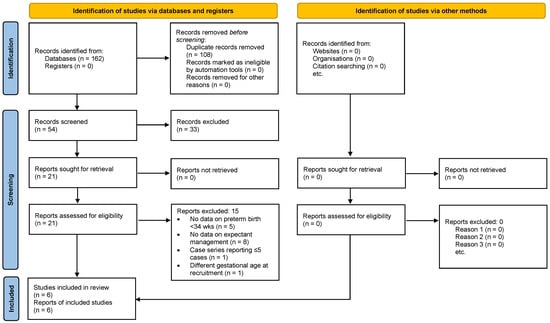
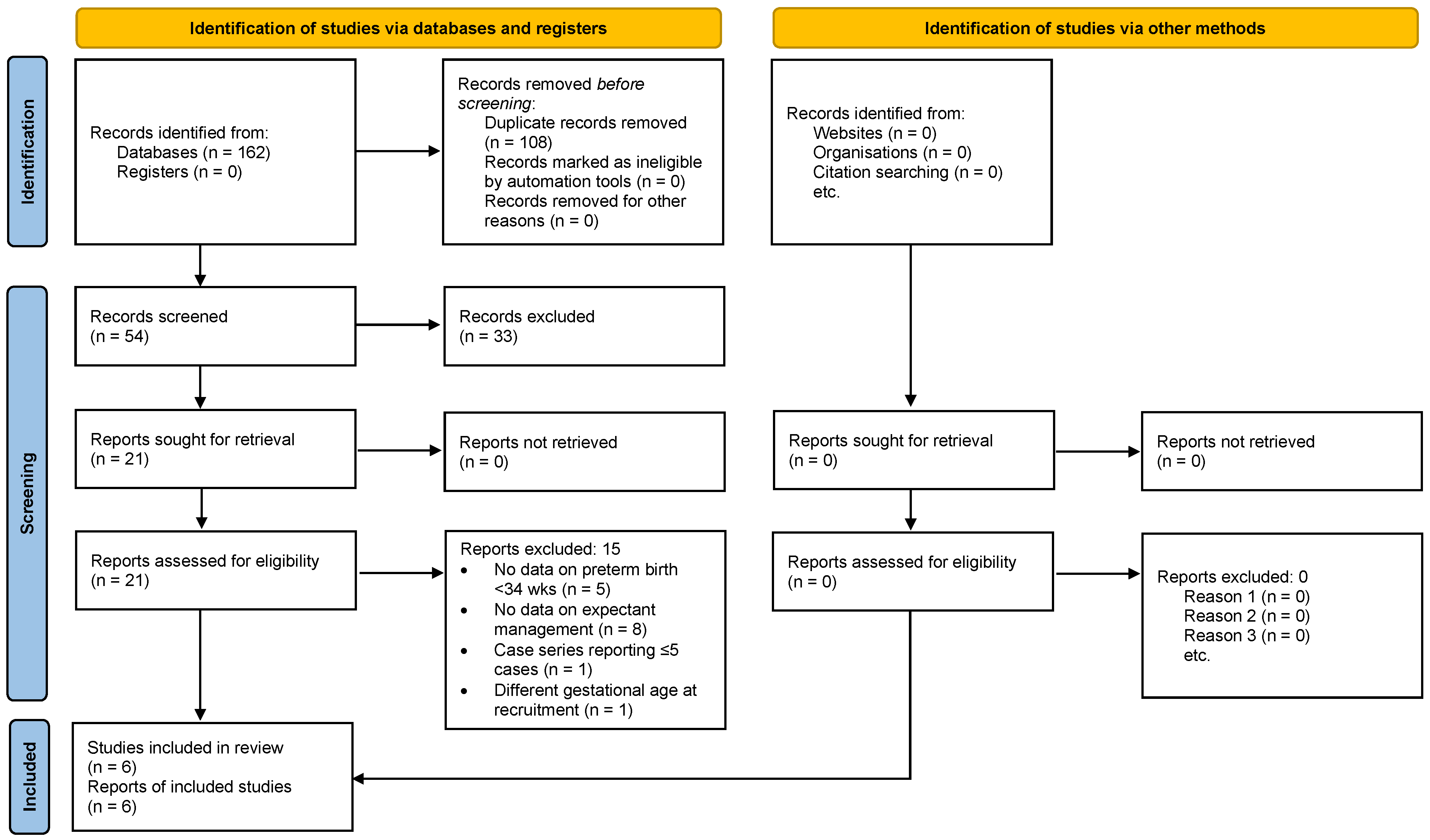
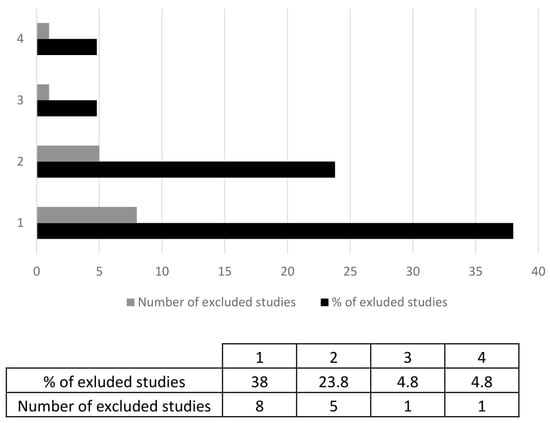
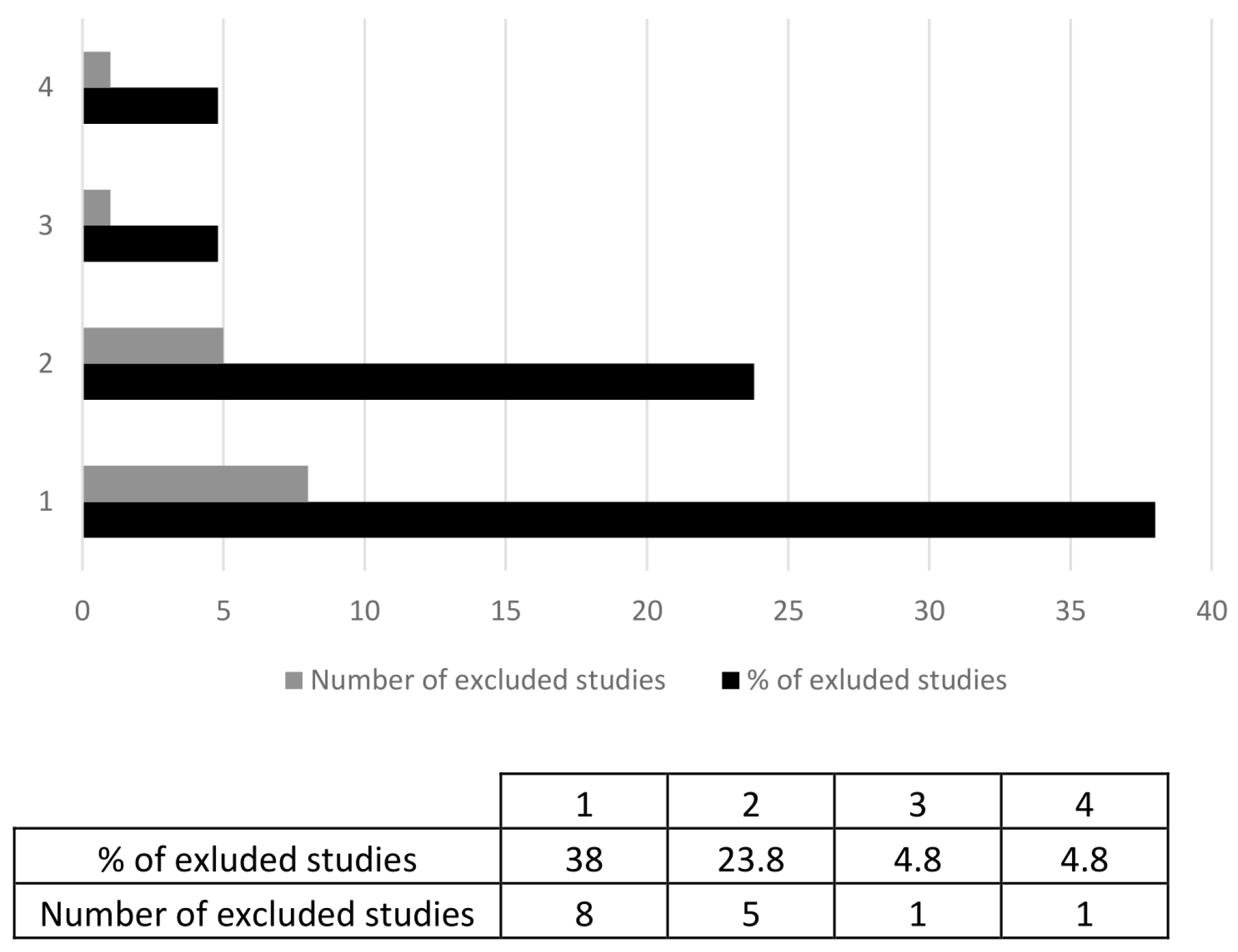
The electronic database search yielded 162 results. Following duplicate removal and exclusion due to predefined criteria (n = 108), 54 studies underwent title and abstract screening, of which 33 were excluded. A total of 21 studies underwent full-text review, of which 6 studies were ultimately included in this systematic review (Figure 1). Exclusion reasons were: (1) unavailable data on expectant management (n = 8); (2) unavailable data on preterm birth (n = 5); (3) case series (n = 1); and (4) different or inconsistent gestational age at recruitment between the 2 arms (n = 1) (Table 1, Figure 2 and Table A1).
Figure 1.
PRISMA flow diagram of the studies included [22,23].
Table 1.
Results of computerized database search and study selection for embryo reduction to singletons vs. expectant management in dichorionic triplet pregnancies.
Figure 2.
Absolute numbers and percentages of the studies excluded. Numerical order corresponds to different reasons for exclusion, as shown in Table 1.
3.2. Study Range and Characteristics
From the six articles included, 12 datasets were retrieved [8,17,29,30,31,32]. Expectant management was evaluated in six studies with six datasets [8,17,29,30,31,32]. MFR (of the MC pair) to singleton pregnancy was evaluated in six articles with six datasets (Table 2) [8,17,29,30,31,32]. The procedure was performed transabdominally by using a 20G or 22G needle and intracardiac or intrathoracic injection of potassium chloride [8,17,29,30,31,32]. No other MFR techniques were used in the included studies.
Table 2.
Studies reporting on outcome of DCTA triplet pregnancies managed either expectantly or with ER to singletons [8,17,29,30,31,32].
From the six articles included, the cutt-off for preterm birth was defined as <34 weeks in 3 studies (Table 3) [29,30,31], <32 weeks in 2 studies (Table 4) [17,32], and <33 weeks in 1 study [8].
Table 3.
Studies reporting on outcome of DCTA triplet pregnancies managed either expectantly or with ER to singletons using a cut-off for preterm birth < 34 weeks [29,30,31].
Table 4.
Studies reporting on outcome of DCTA triplet pregnancies managed either expectantly or with ER to singletons using a cut-off for preterm birth < 32 weeks [17,32].
3.3. Study Quality and Potential Sources of Bias
Study quality was assessed in six articles, and all six retrospective studies were included in the systematic review (Table A2) (Figure A1). No RCTs or prospective cohort studies were identified. Consequently, the overall certainty of evidence derived from this review is inherently limited, with most evidence likely rated as low or very low certainty if formally assessed.
This review identified several imperfections in study characteristics among the included studies: for instance, the method of data collection was retrospective in all six (100%); patient selection was non-consecutive or unknown in all six articles (100%); the outcome assessors were not blinded to the exposure status of the participants in all six (100%); reporting of study population was insufficient in two (33.3%) [8,29]; although there was sufficient description of MFR procedures in all six (100%).
The potential for reporting biases was carefully assessed qualitatively, given the constrictions of only a few articles analyzed and subsequently a limited amount of data sets available. The visual inspection of the derived funnel plots, both of standard error by Logit risk ratio and of precision (1/Std Err) by Logit risk ratio, appears asymmetrical (Comprehensive Meta-analysis Version 3.3.070, 2014, Biostat Inc., 14 North Dean Street, Englewood, NJ, USA) (Figure A2, Figure A3, Figure A4 and Figure A5).
The classical measure of heterogeneity is Cochran’s Q, which is included in each meta-analysis function because it forms part of the Der Simonian–Laird random effects pooling method [33]. Gavanghan et al., in 2000, indicated that Q has low power as a comprehensive test of heterogeneity, especially when the number of studies is small, i.e., most meta-analyses [34]. Conversely, Q has too much power as a test of heterogeneity if the number of studies is large as demonstrated by Higgins et al. in 2003 [35]. Due to the inherent heterogeneity of study designs and outcomes in the included studies, there is a tendency to advise using random effect models for the pooling of all observational studies [36].
Quantity I2 describes the percentage of total variation across studies that is due to true heterogeneity rather than chance, thus quantifying the effect of heterogeneity and providing a measure of the degree of inconsistency in the studies’ results. A value of 0% indicates no observed heterogeneity and larger values show increasing heterogeneity. The high I2 values show that most of the variability across studies is due to heterogeneity rather than chance. Statistical analyses were performed using MedCalc for Windows, version 12.7 (MedCalc Software, Mariakerke, Belgium), Review Manager (RevMan), Version 5.3, 2014 (Copenhagen: The Nordic Cochrane Centre, The Cochrane Collaboration) and MetaAnalysisOnline.com assessed on 15 January 2026: Web-Based Tool for the Rapid Meta-Analysis of Clinical and Epidemiological Studies [37].
3.4. Combined Data
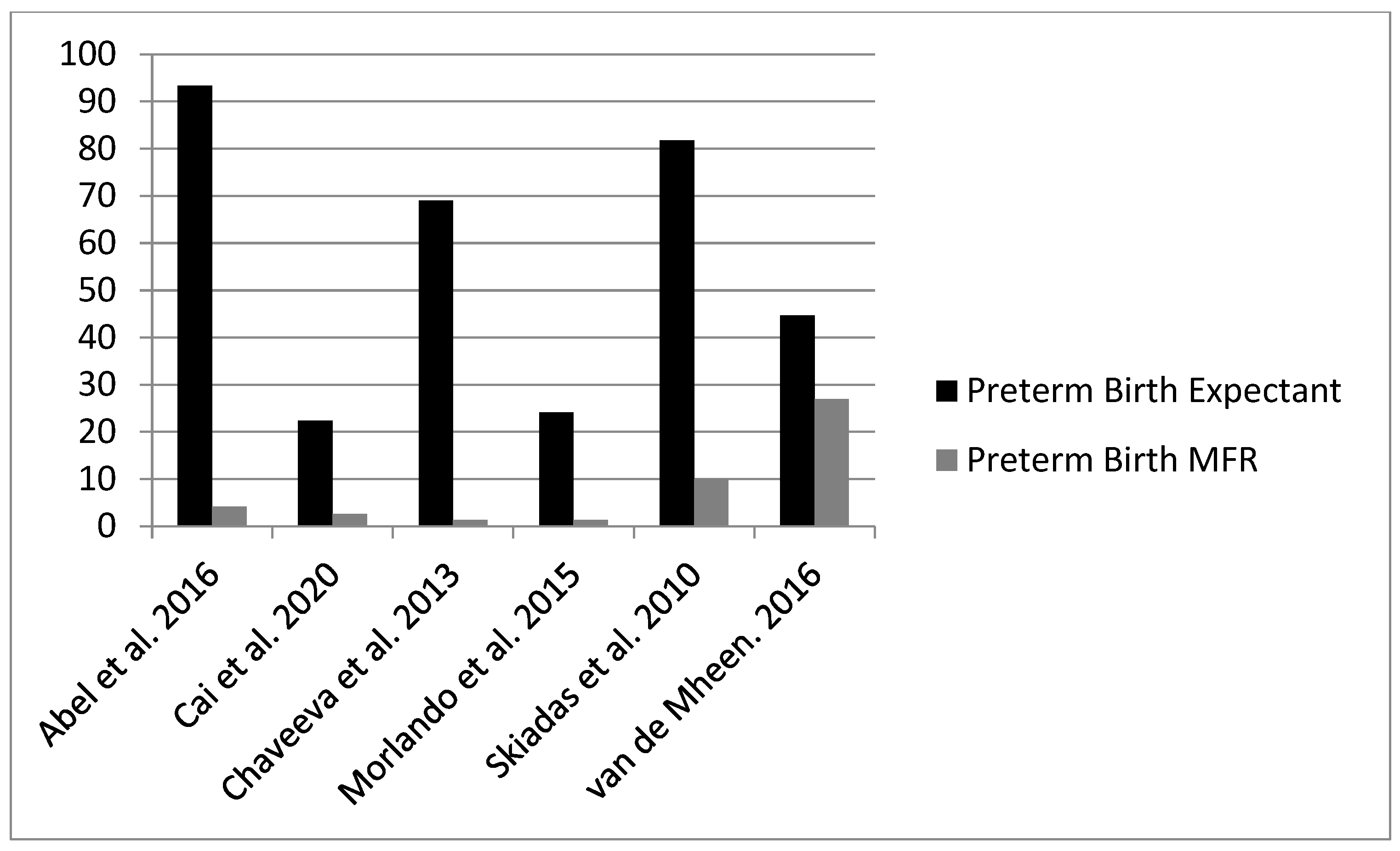
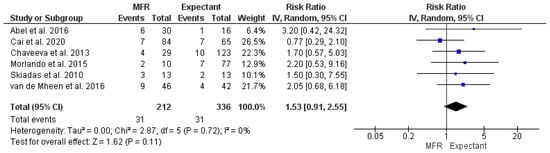
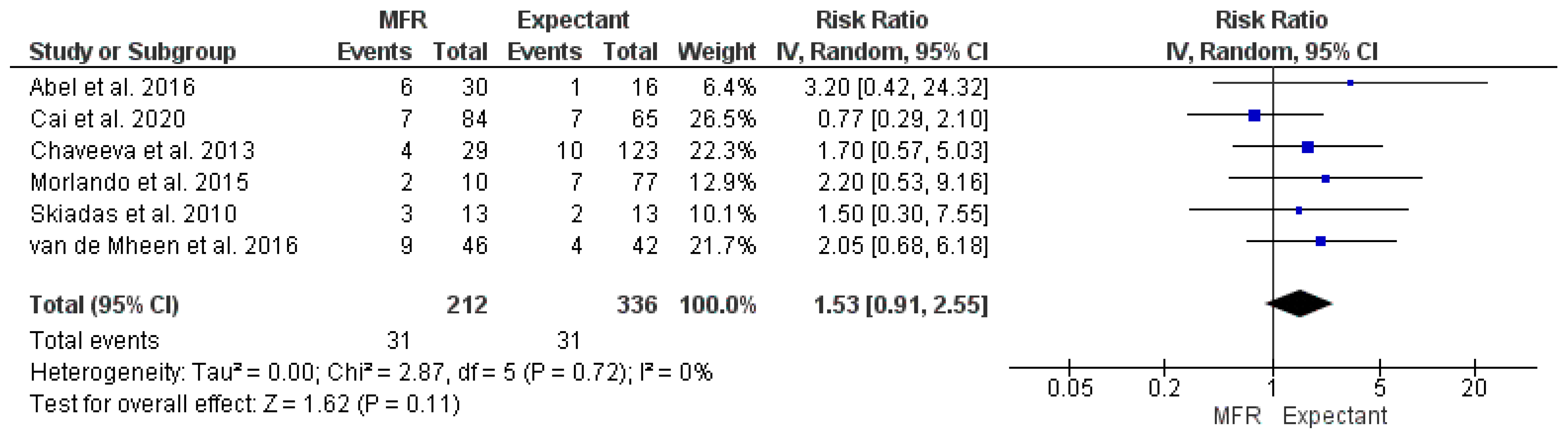
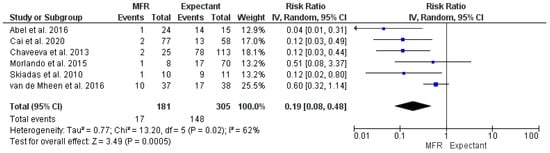
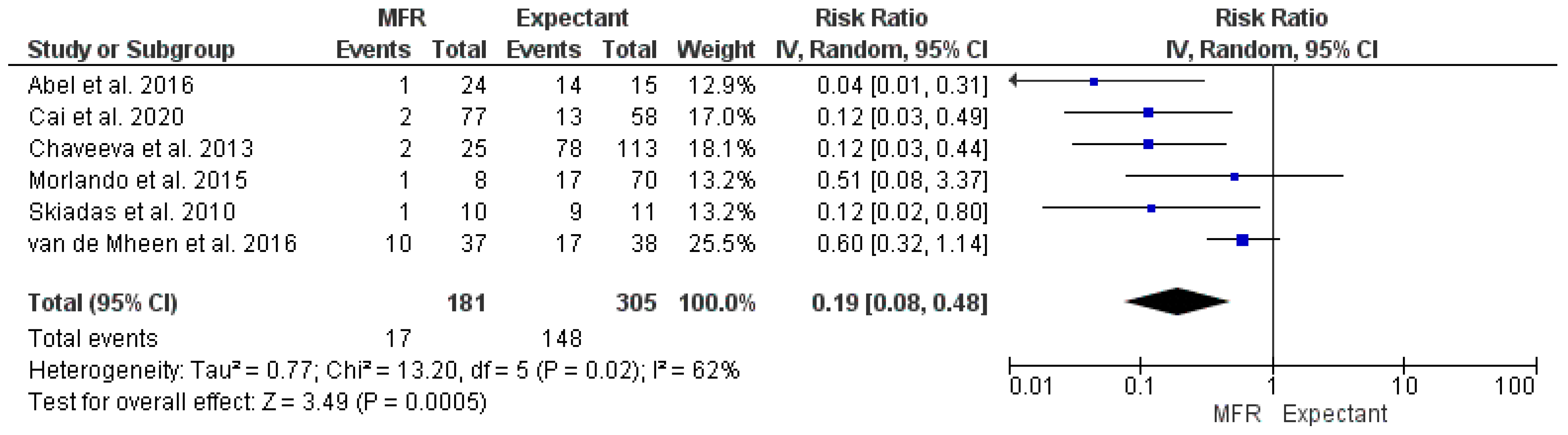
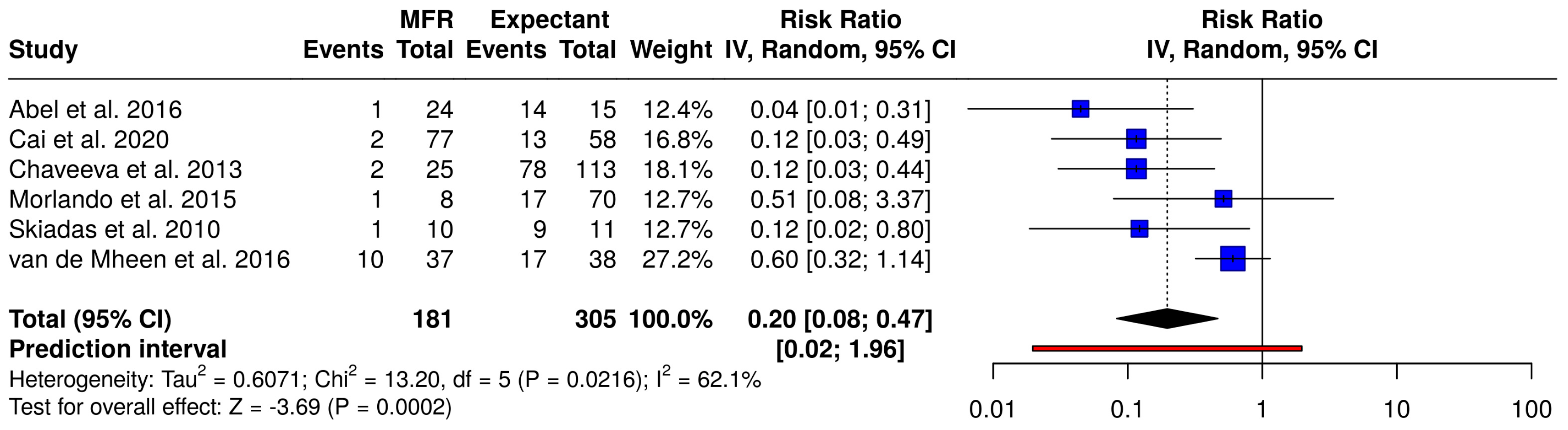
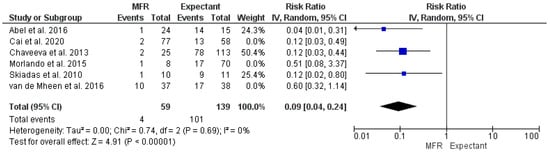
In DCTA triplet pregnancies managed expectantly (n = 336), the rates of miscarriage and preterm birth < 34 weeks were 9.2% and 48.5% (excluding miscarriages), respectively. MFR to singleton pregnancy in DCTA triplets (n = 212), is associated with a statistically non-significant increase in miscarriage rate (14.6% vs. 9.2%, p = 0.07 and RR = 1.53, 95% 0.91–2.55) (Figure 3) (Figure A6) and a statistically significant decrease in preterm birth rate (9.4% vs. 48.5%, p < 0.0001 and RR = 0.19, 95%CI 0.07–0.51) (Figure 4 and Figure 5) (Figure A7). In DCTA triplets, it was calculated, based on percentages (i.e., 9.4% vs. 48.5%), that 2.56 MFRs to singleton pregnancy need to be performed to prevent 1 preterm birth [38,39].
Figure 3.
Forest plot indicating a non-significant increase in miscarriage rate following embryo reduction to singletons in dichorionic triamniotic triplet pregnancies. IV, inverse variance [8,17,29,30,31,32].
Figure 4.
Forest plot indicating a significant reduction preterm birth rate following embryo reduction to singletons in dichorionic triamniotic triplet pregnancies. IV, inverse variance [8,17,29,30,31,32].
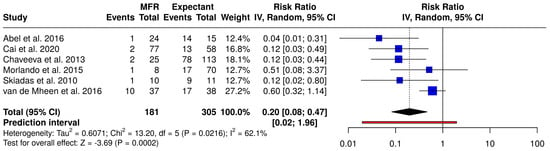
Figure 5.
Forest plot indicating a significant reduction preterm birth rate following embryo reduction to singletons in dichorionic triamniotic triplet pregnancies (with Knapp–Hartung adjustment) [37]. IV, inverse variance. Between study heterogeneity estimator, Sidik–Jonkman [8,17,29,30,31,32].
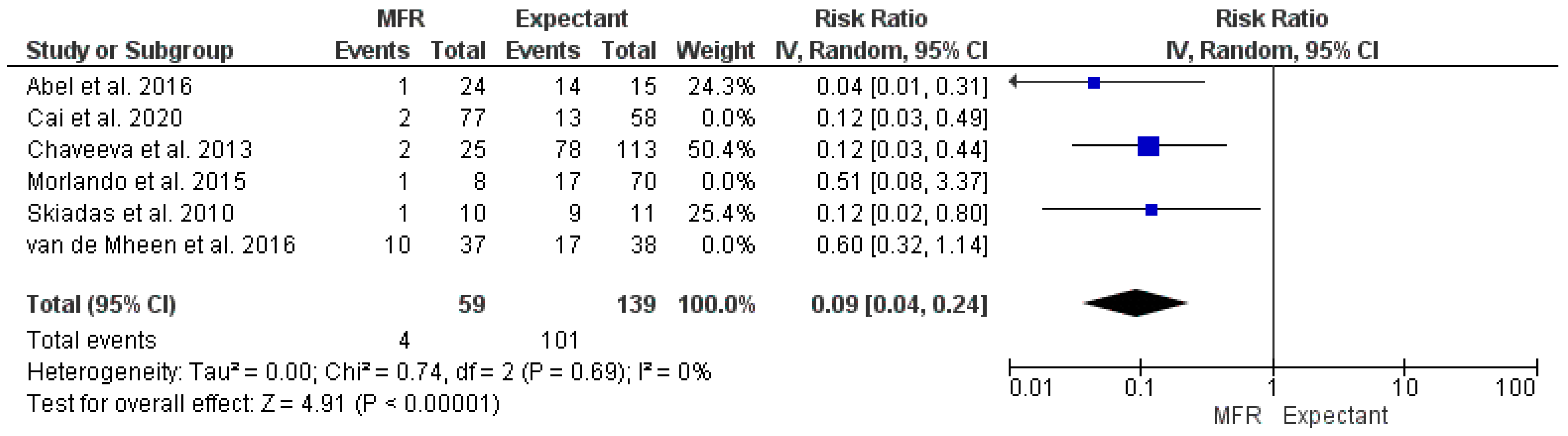
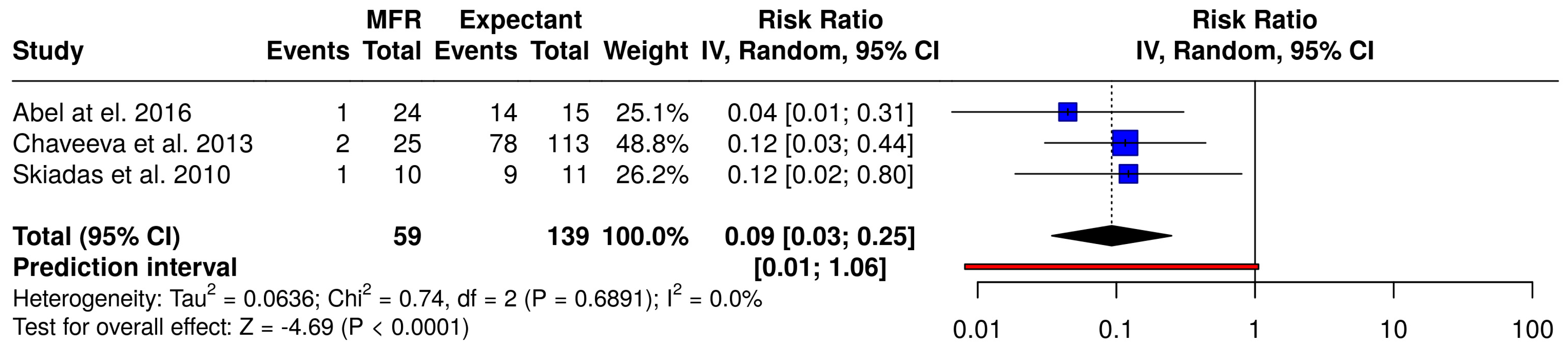
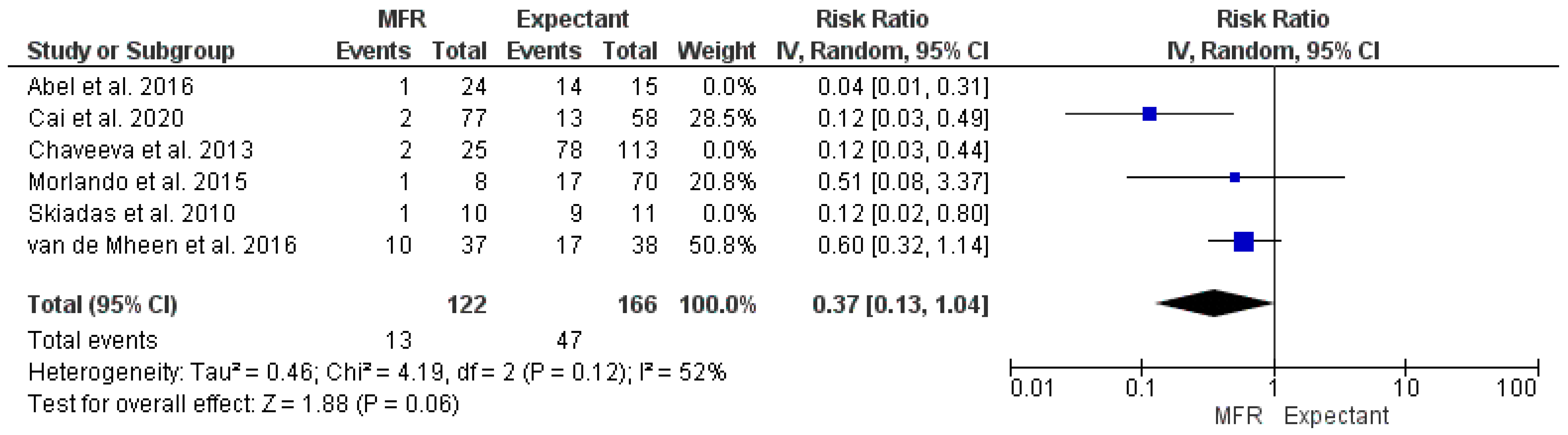
From the six articles included, the cut-off for preterm birth was defined as <34 weeks in three studies (Figure 6 and Figure 7) [29,30,31] and <32 weeks in two studies (Figure 8 and Figure 9) [17,32].
Figure 6.
Forest plot of included studies using a cut-off for preterm birth < 34 weeks. IV, inverse variance [8,17,29,30,31,32].
Figure 7.
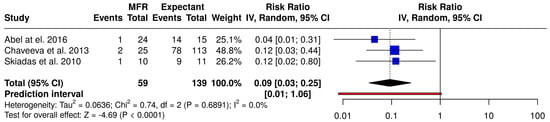
Forest plot of included studies using a cut-off for preterm birth < 34 weeks. (with Knapp–Hartung adjustment) [37]. IV, inverse variance. Between study heterogeneity estimator, Sidik–Jonkman [29,30,31].
Figure 8.
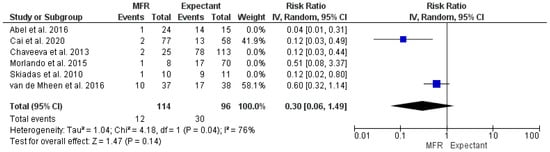
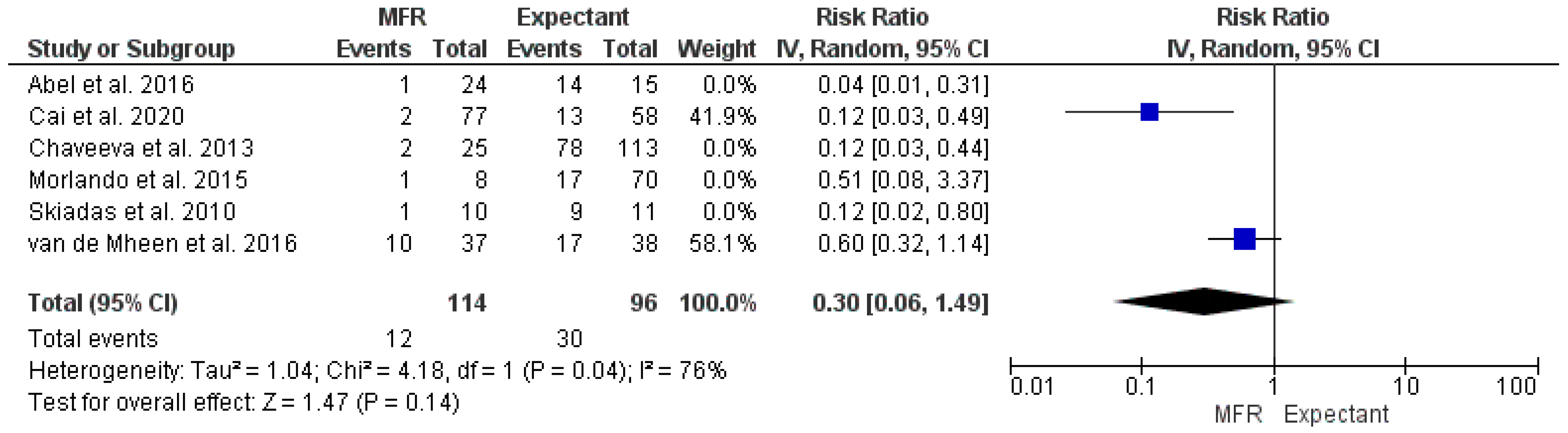
Forest plot of included studies using a cut-off for preterm birth < 32 weeks. IV, inverse variance [8,17,29,30,31,32].
Figure 9.
Forest plot of included studies using a cut-off for preterm birth < 32 weeks (with Knapp–Hartung adjustment) [37]. IV, inverse variance. Between study heterogeneity estimator, Sidik–Jonkman [17,32].
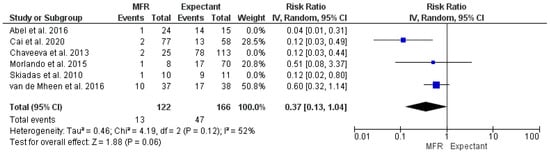
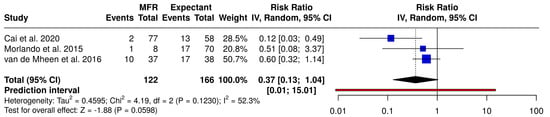
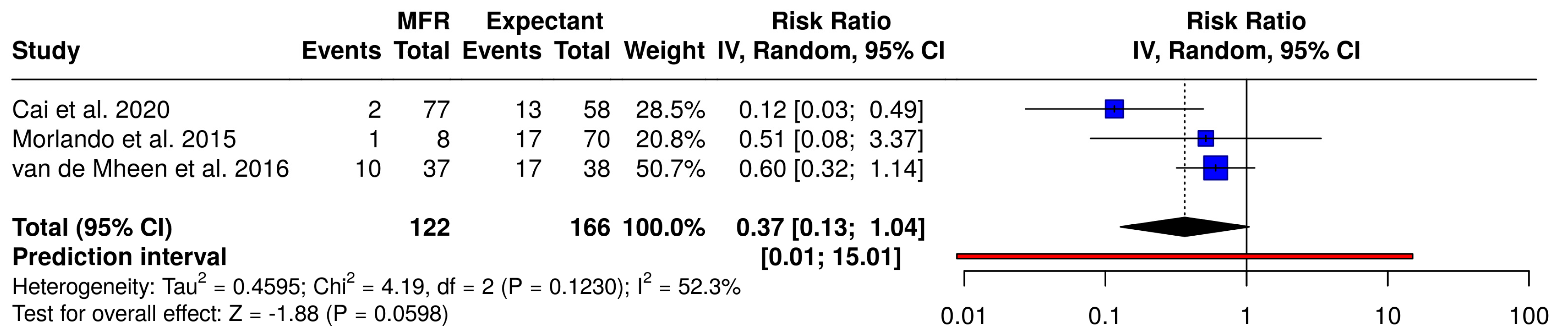
A subgroup of three studies were the cut-off for preterm birth was defined as <33 weeks was further evaluated (Figure 10 and Figure 11) [8,17,32].
Figure 10.
Forest plot of subgroup of included studies using a cut-off for preterm birth < 33 weeks. IV, inverse variance [8,17,29,30,31,32].
Figure 11.
Forest plot of subgroup of included studies using a cut-off for preterm birth < 33 weeks (with Knapp–Hartung adjustment) [37]. IV, inverse variance. Between study heterogeneity estimator, Sidik–Jonkman [8,17,32].
4. Discussion
The primary result of our study is that MFR to singleton pregnancy was associated with a reduced rate of preterm birth but not associated with an increased rate of miscarriage in DCTA triplets.
The greatest strength of our systematic review is that contrary to current literature, it only included studies with both intervention and expectant arm. This increases the strength of the review by directly comparing outcomes within the same studies, reducing confounding variables and enhancing reliability. Therefore, the possibility of selective reporting bias is reduced but cannot be entirely ruled out. The number of patients included in the analysis is high, thus allowing some quantitative synthesis.
Nevertheless, this systematic review has several limitations, mainly due to significant heterogeneity among studies. Common limitations were lack of data on parity, rates of death beyond neonatal period, and neurodevelopmental impairment in survivors. Moreover, none of the included studies conducted a subgroup analysis of different time periods concerning pregnancy outcomes in relation to recent advances in neonatal intensive care and obstetric care, which have improved the outcome for younger and lighter neonates (Table A3). No RCTs were identified from our literature search. These limitations highlight the necessity for cautious interpretation of synthesized results and advocate for improved transparency in reporting future research.
The abovementioned accurately reflect the weaknesses of our review methods: (1) there were only a small number of papers with small sample sizes and potentially suffering from bias that we were able to include, (2) the cut-off for preterm birth was not consistent in all studies included, and (3) non-English publications were missed. Furthermore, the potential for publication and reporting biases, particularly given the reliance on retrospective studies, should also be acknowledged as a limitation impacting the certainty of conclusions drawn.
Chaveeva et al. calculated that MFR to singleton pregnancy adds 4.5% to the rate of miscarriage noted in DCTA triplets managed expectantly [30]. Despite including intervention-only studies, Morlando et al. reported that in MFR to singleton pregnancy the rate of miscarriage was 14.5% (95% CI 7.6–26.2%) [8]. Although inconclusive, our results agree with current literature. In our study, the rate of miscarriage was 14.6%, which is comparable to that reported by the largest studies included [17,30]. However, concerning MFR to singleton pregnancy, ethical considerations arise both for the parents and the health practitioners including: (1) the parents’ right to decide as well as the psychological impact of their decision, and (2) respecting the principles of beneficence and/or non-maleficence as well as the potential for proportionality between benefits and harms.
Regarding implications for current practice and future research, when the top priority is three live-born infants, expectant management seems to be a reasonable choice. However, if the priority is to decrease the rate of preterm birth, MFR to singleton pregnancy could be discussed (Table A3). Given the fact that in the MFR group the MC pair is reduced only to decrease the rate of preterm birth, appropriate medico-legal and socio-ethical counselling and justification are important. Parental autonomy, cultural and legal variability across countries, and psychological morbidity after MFR should be considered. MFR should not only be viewed as technical intervention but rather as a value-laden, preference-sensitive decision. Outcome metrics alone are insufficient to guide counseling and patient-centered values may outweigh statistical risk reduction.
Included studies span over two decades (2000–2025), during which neonatal survival at <34 weeks and obstetric management of multiples have dramatically evolved. Pooling outcomes across eras risks temporal confounding. Observed benefits may partially reflect era effects rather than intervention effects. In the absence of RCTs, data from systematic reviews appear to be the best existing evidence for counseling on the different options available. Future research should aim for standardized methodologies and clearer reporting practices to enable more robust certainty assessments and provide stronger evidence to guide clinical practice.
5. Conclusions
In DCTA triplet pregnancies, our results suggest the following:
- MFR to singleton pregnancy is associated with a lower rate of preterm birth but not a higher rate of miscarriage. Because of modest numbers, these results should be interpreted with caution.
- If the cut-off for preterm delivery is lowered <33 weeks, MFR to singleton pregnancy could prove more efficient for an equal rate of miscarriage < 24 weeks.
- Regardless of personal values conflict with parents’ request, unbiased information must be available, or the parents should be referred elsewhere.
Author Contributions
Conceptualization, C.A.; methodology, C.A. and E.I.; software, C.A.; validation, T.T. and G.G.; formal analysis, C.A.; investigation, C.A., E.I. and T.T.; resources, C.A., T.T. and G.G.; data curation, C.A. and E.I.; writing—original draft preparation, C.A.; writing—review and editing, T.T. and G.G.; visualization, C.A. and E.I.; supervision, T.T. and G.G.; project administration, C.A. and E.I.; funding acquisition, C.A., T.T. and G.G. All authors have read and agreed to the published version of the manuscript.
Funding
This research received no external funding.
Institutional Review Board Statement
Not applicable.
Informed Consent Statement
Not applicable.
Data Availability Statement
The original contributions presented in this study are included in the article. Further inquiries can be directed to the corresponding author.
Conflicts of Interest
The authors declare no conflicts of interest.
Abbreviations
The following abbreviations are used in this manuscript:
| DCTA | Dichorionic triamniotic |
| MC | Monochorionic |
| MFR | Multifetal reduction |
| SFR | Selective fetal reduction |
| DCDA | Dichorionic diamniotic |
| PRISMA | Preferred Reporting Items for Systematic Reviews and Meta-analyses |
| PROSPERO | Prospective Register of Systematic Reviews System |
| RCTs | Randomized controlled trials |
| MEDLINE | Medical Literature Analysis and Retrieval System Online |
| EMBASE | Excerpta Medica dataBASE |
| CDSR | Cochrane Database of Systematic Reviews |
| CENTRAL | Cochrane Central Register of Controlled Trials |
| MeSH | Medical Subject Heading |
| GRACE | GoodReseArch for Comparative Effectiveness |
| RR | Relative risk |
| CI | Confidence interval |
| NNT | Number needed to treat |
| NNH | Number needed to harm |
Appendix A
Table A1.
Excluded studies list and reason(s) for exclusion [7,18,40,41,42,43,44,45,46,47,48,49,50,51].
Table A2.
GoodReseArch for Comparative Effectiveness (GRACE) and Quality Assessment Tool for Observational Cohort and Cross-Sectional Studies (QATOCS/QATCSS) scores of the included studies [8,17,29,30,31,32].
Table A3.
Data on maternal age, method of conception, gestation at recruitment or multifetal embryo reduction and pregnancy outcome in dichorionic triamniotic triplet pregnancies [8,17,29,30,31,32].
Figure A1.
QATOCS/QATCSS score of the included studies. QATOCS/QATCSS, quality assessment tool for observational cohort and cross-sectional studies [8,17,29,30,31,32].
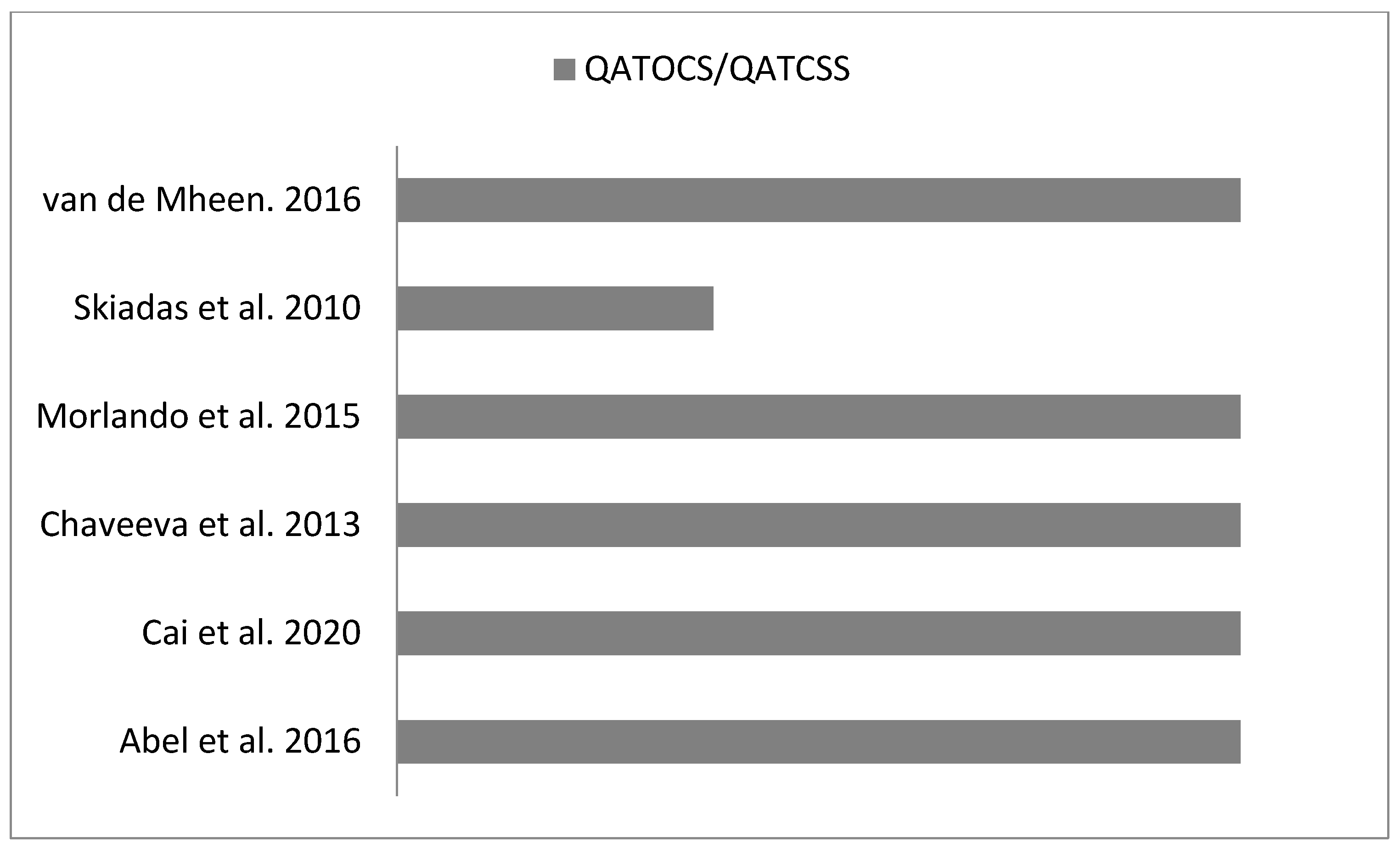
Figure A2.
Standard error by Logit risk ratio for studies reporting on dichorionic triamniotic triplet pregnancy miscarriage risk indicating publication bias.
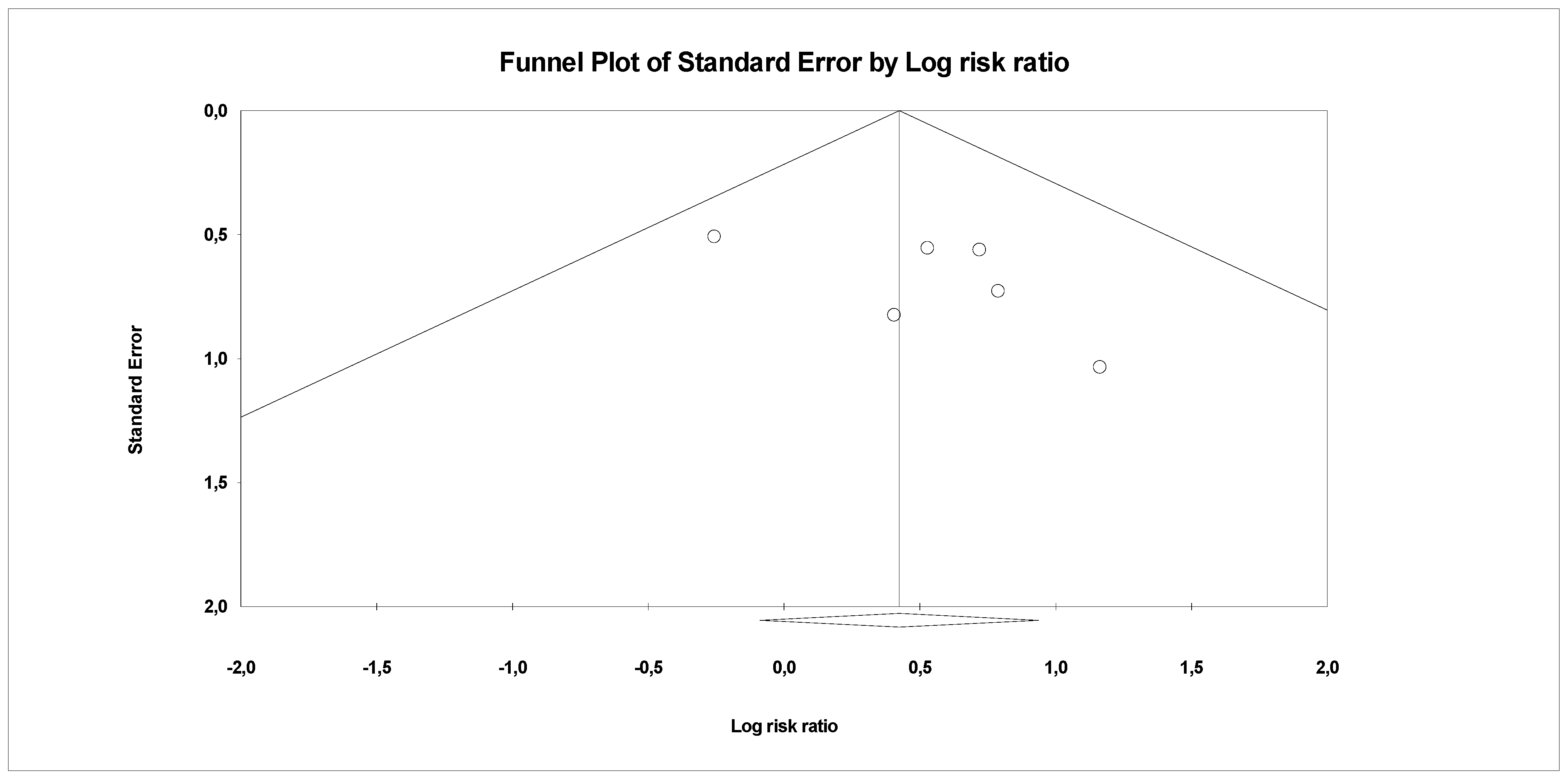
Figure A3.
Precision (1/Std Err) by Logit risk ratio, for studies reporting on dichorionic triamniotic triplet pregnancy miscarriage risk indicating publication bias.
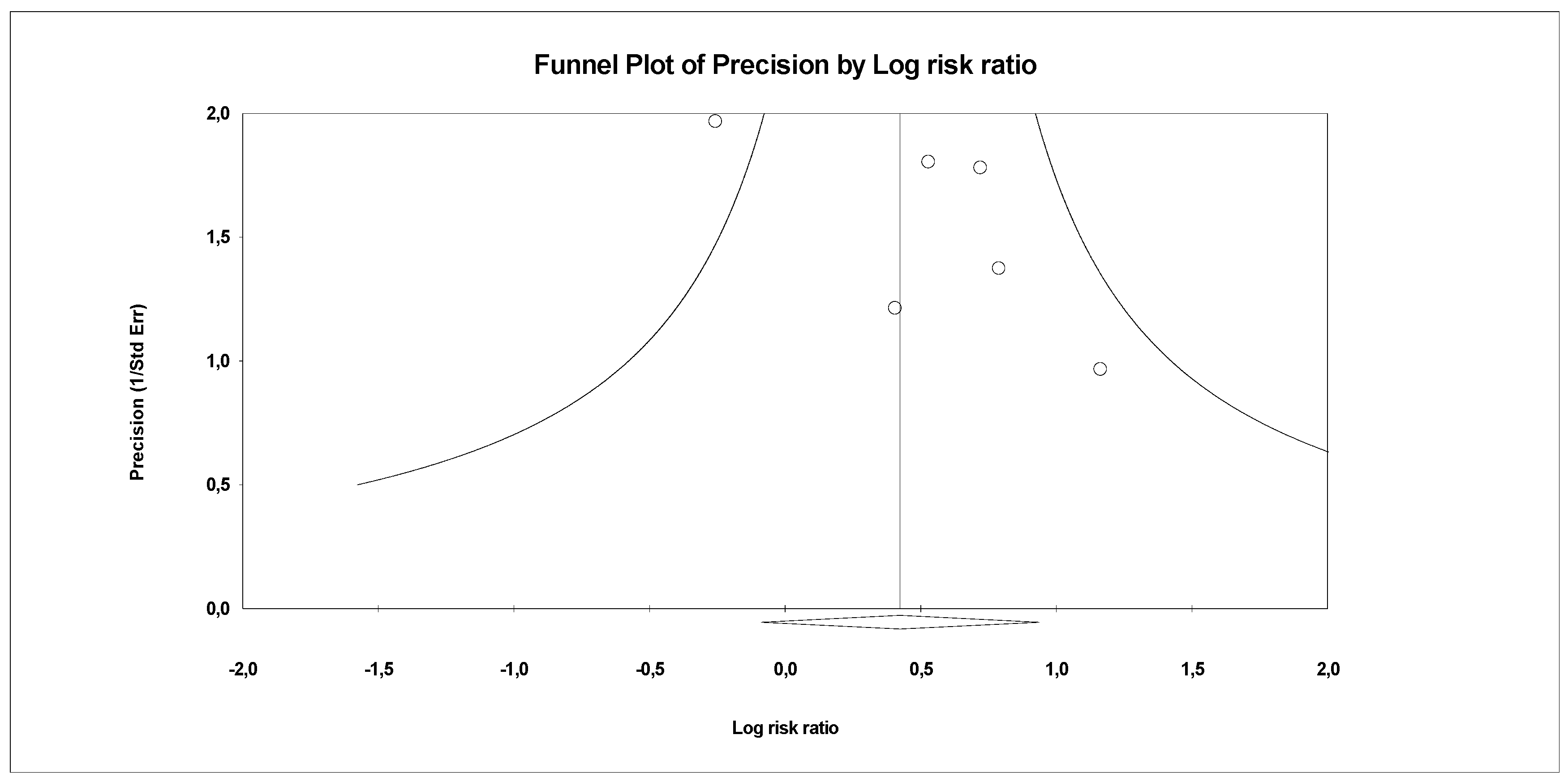
Figure A4.
Standard error by Logit risk ratio for studies reporting on dichorionic triamniotic triplet pregnancy preterm birth risk indicating publication bias.
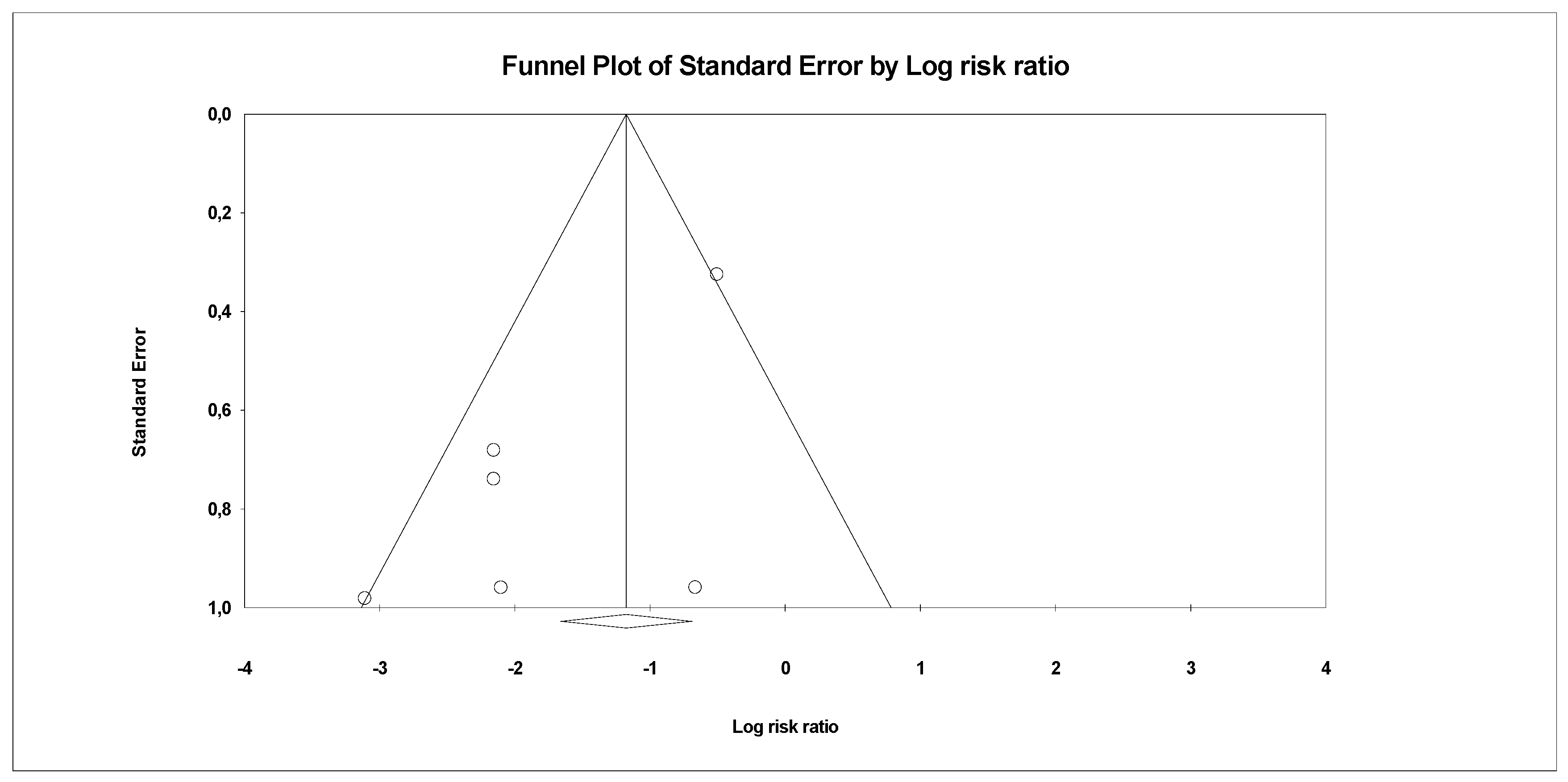
Figure A5.
Precision (1/Std Err) by Logit risk ratio for studies reporting on dichorionic triamniotic triplet pregnancy preterm birth risk indicating publication bias.
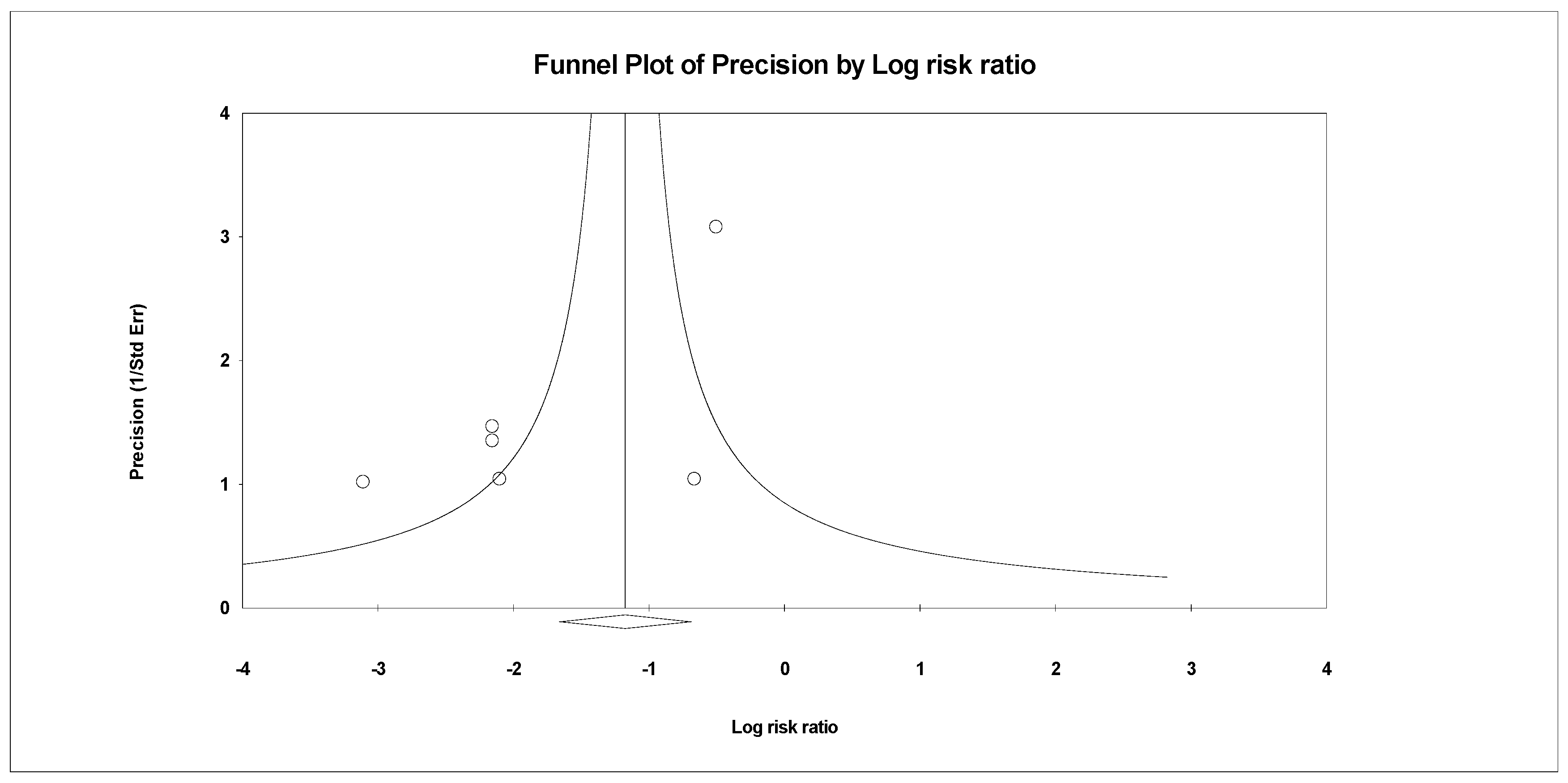
Figure A6.
Rates of miscarriage for dichorionic triamniotic triplet pregnancies of the studies included in the systematic review. MFR, multifetal reduction [8,17,29,30,31,32].
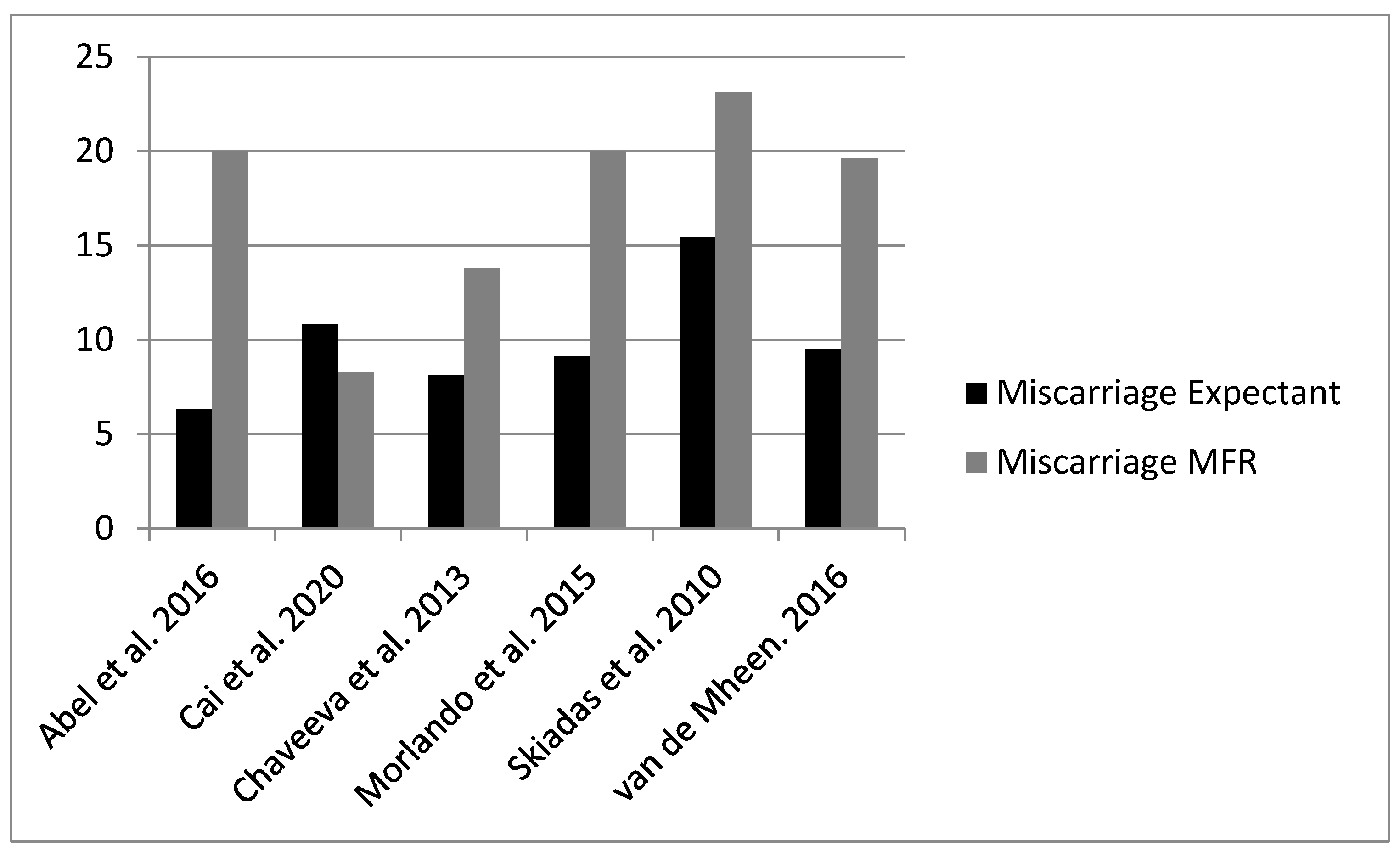
Figure A7.
Rates of preterm birth for dichorionic triamniotic pregnancies of the studies included in the systematic review. MFR, multifetal reduction [8,17,29,30,31,32].
References
- Blondel, B.; Kaminski, M. Trends in the Occurrence, Determinants, and Consequences of Multiple Births. Semin. Perinatol. 2002, 26, 239–249. [Google Scholar] [CrossRef] [Scilit]
- Papageorghiou, A.T.; Avgidou, K.; Bakoulas, V.; Sebire, N.J.; Nicolaides, K.H. Risks of Miscarriage and Early Preterm Birth in Trichorionic Triplet Pregnancies with Embryo Reduction versus Expectant Management: New Data and Systematic Review. Hum. Reprod. 2006, 21, 1912–1917. [Google Scholar] [CrossRef] [Scilit]
- Luke, B.; Brown, M.B. Maternal Morbidity and Infant Death in Twin vs Triplet and Quadruplet Pregnancies. Am. J. Obstet. Gynecol. 2008, 198, 401.E1–401.E10. [Google Scholar] [CrossRef] [Scilit] [PubMed]
- Martin, J.A.; Hamilton, B.E.; Ventura, S.J.; Osterman, M.J.K.; Kirmeyer, S.; Mathews, T.J.; Wilson, E.C. Births: Final Data for 2009. In National Vital Statistics Reports; National Center for Health Statistics: Hyattsville, MD, USA, 2011; Volume 60, pp. 1–70. [Google Scholar]
- Martin, J.A.; Hamilton, B.E.; Ventura, S.J.; Osterman, M.J.K.; Wilson, E.C.; Mathews, T.J. Births: Final Data for 2010. In National Vital Statistics Reports; National Center for Health Statistics: Hyattsville, MD, USA, 2012; Volume 61, pp. 1–72. [Google Scholar]
- Ferraretti, A.P.; Goossens, V.; de Mouzon, J.; Bhattacharya, S.; Castilla, J.A.; Korsak, V.; Kupka, M.; Nygren, K.G.; Nyboe Andersen, A.; European IVF-Monitoring (EIM); et al. Assisted Reproductive Technology in Europe, 2008: Results Generated from European Registers by ESHRE. Hum. Reprod. 2012, 27, 2571–2584. [Google Scholar] [CrossRef] [Scilit]
- van de Mheen, L.; Everwijn, S.M.P.; Knapen, M.F.C.M.; Oepkes, D.; Engels, M.; Manten, G.T.R.; Zondervan, H.; Wirjosoekarto, S.A.M.; van Vugt, J.M.G.; Erwich, J.J.H.M.; et al. The Effectiveness of Multifetal Pregnancy Reduction in Trichorionic Triplet Gestation. Am. J. Obstet. Gynecol. 2014, 211, 536.E1–536.E6. [Google Scholar] [CrossRef] [Scilit] [PubMed]
- Morlando, M.; Ferrara, L.; D’Antonio, F.; Lawin-O’Brien, A.; Sankaran, S.; Pasupathy, D.; Khalil, A.; Papageorghiou, A.; Kyle, P.; Lees, C.; et al. Dichorionic Triplet Pregnancies: Risk of Miscarriage and Severe Preterm Delivery with Fetal Reduction versus Expectant Management. Outcomes of a Cohort Study and Systematic Review. BJOG 2015, 122, 1053–1060. [Google Scholar] [CrossRef] [Scilit]
- Schachter, M.; Raziel, A.; Friedler, S.; Strassburger, D.; Bern, O.; Ron-El, R. Monozygotic Twinning after Assisted Reproductive Techniques: A Phenomenon Independent of Micromanipulation. Hum. Reprod. 2001, 16, 1264–1269. [Google Scholar] [CrossRef] [Scilit] [PubMed]
- Pons, J.C.; Charlemaine, C.; Dubreuil, E.; Papiernik, E.; Frydman, R. Management and Outcome of Triplet Pregnancy. Eur. J. Obstet. Gynecol. Reprod. Biol. 1998, 76, 131–139. [Google Scholar] [CrossRef] [Scilit]
- Strauss, A.; Paek, B.W.; Genzel-Boroviczény, O.; Schulze, A.; Janssen, U.; Hepp, H. Multifetal Gestation—Maternal and Perinatal Outcome of 112 Pregnancies. Fetal Diagn. Ther. 2002, 17, 209–217. [Google Scholar] [CrossRef] [Scilit]
- Blickstein, I. How and Why Are Triplets Disadvantaged Compared to Twins? Best Pract. Res. Clin. Obstet. Gynaecol. 2004, 18, 631–644. [Google Scholar] [CrossRef] [Scilit]
- Blickstein, I.; Keith, L.G. The Decreased Rates of Triplet Births: Temporal Trends and Biologic Speculations. Am. J. Obstet. Gynecol. 2005, 193, 327–331. [Google Scholar] [CrossRef] [Scilit]
- Goldenberg, R.L.; Culhane, J.F.; Iams, J.D.; Romero, R. Epidemiology and Causes of Preterm Birth. Lancet 2008, 371, 75–84. [Google Scholar] [CrossRef] [Scilit] [PubMed]
- Melgar, C.A.; Rosenfeld, D.L.; Rawlinson, K.; Greenberg, M. Perinatal Outcome after Multifetal Reduction to Twins Compared with Nonreduced Multiple Gestations. Obstet. Gynecol. 1991, 78, 763–767. [Google Scholar] [CrossRef] [Scilit]
- Anthoulakis, C.; Dagklis, T.; Mamopoulos, A.; Athanasiadis, A. Risks of Miscarriage or Preterm Delivery in Trichorionic and Dichorionic Triplet Pregnancies with Embryo Reduction versus Expectant Management: A Systematic Review and Meta-Analysis. Hum. Reprod. 2017, 32, 1351–1359. [Google Scholar] [CrossRef] [Scilit] [PubMed]
- Cai, P.; Ouyang, Y.; Gong, F.; Li, X. Pregnancy Outcomes of Dichorionic Triamniotic Triplet Pregnancies after in Vitro Fertilization-Embryo Transfer: Multifoetal Pregnancy Reduction versus Expectant Management. BMC Pregnancy Childbirth 2020, 20, 165. [Google Scholar] [CrossRef] [Scilit] [PubMed]
- Liu, S.; Li, G.; Wang, C.; Zhou, P.; Wei, Z.; Song, B. Pregnancy and Obstetric Outcomes of Dichorionic and Trichorionic Triamniotic Triplet Pregnancy with Multifetal Pregnancy Reduction: A Retrospective Analysis Study. BMC Pregnancy Childbirth 2022, 22, 280. [Google Scholar] [CrossRef] [Scilit]
- Swiercz, G.; Zmelonek-Znamirowska, A.; Szwabowicz, K.; Armanska, J.; Detka, K.; Mlodawska, M.; Mlodawski, J. Navigating Uncertain Waters: First-Trimester Screening’s Role in Identifying Neonatal Complications. J. Clin. Med. 2024, 13, 1982. [Google Scholar] [CrossRef] [Scilit]
- Swiercz, G.; Zmelonek-Znamirowska, A.; Szwabowicz, K.; Armanska, J.; Detka, K.; Mlodawska, M.; Mlodawski, J. Evaluating the Predictive Efficacy of First Trimester Biochemical Markers (PAPP-A, Fβ-hCG) in Forecasting Preterm Delivery Incidences. Sci. Rep. 2024, 14, 16206. [Google Scholar] [CrossRef] [Scilit]
- Dodd, J.M.; Crowther, C.A. Reduction of the Number of Fetuses for Women with a Multiple Pregnancy. Cochrane Database Syst. Rev. 2012, 10, CD003932. [Google Scholar] [CrossRef] [Scilit]
- Liberati, A.; Altman, D.G.; Tetzlaff, J.; Mulrow, C.; Gøtzsche, P.C.; Ioannidis, J.P.A.; Clarke, M.; Devereaux, P.J.; Kleijnen, J.; Moher, D. The PRISMA Statement for Reporting Systematic Reviews and Meta-Analyses of Studies That Evaluate Health Care Interventions: Explanation and Elaboration. PLoS Med. 2009, 6, e1000100. [Google Scholar] [CrossRef] [Scilit]
- Page, M.J.; McKenzie, J.E.; Bossuyt, P.M.; Boutron, I.; Hoffmann, T.C.; Mulrow, C.D.; Shamseer, L.; Tetzlaff, J.M.; Akl, E.A.; Brennan, S.E.; et al. The PRISMA 2020 Statement: An Updated Guideline for Reporting Systematic Reviews. BMJ 2021, 372, n71. [Google Scholar] [CrossRef] [Scilit] [PubMed]
- Green, S. Systematic Reviews and Meta-Analysis. Singap. Med. J. 2005, 46, 270–273. [Google Scholar]
- Henderson, L.K.; Craig, J.C.; Willis, N.S.; Tovey, D.; Webster, A.C. How to Write a Cochrane Systematic Review. Nephrology 2010, 15, 617–624. [Google Scholar] [CrossRef] [Scilit]
- Sepulveda, W.; Sebire, N.J.; Hughes, K.; Odibo, A.; Nicolaides, K.H. The Lambda Sign at 10–14 Weeks of Gestation as a Predictor of Chorionicity in Twin Pregnancies. Ultrasound Obstet. Gynecol. 1996, 7, 421–423. [Google Scholar] [CrossRef] [Scilit]
- Dreyer, N.A.; Velentgas, P.; Westrich, K.; Dubois, R. The GRACE Checklist for Rating the Quality of Observational Studies of Comparative Effectiveness: A Tale of Hope and Caution. J. Manag. Care Spec. Pharm. 2014, 20, 301–308. [Google Scholar] [CrossRef] [Scilit]
- Dreyer, N.A.; Bryant, A.; Velentgas, P. The GRACE Checklist: A Validated Assessment Tool for High Quality Observational Studies of Comparative Effectiveness. J. Manag. Care Spec. Pharm. 2016, 22, 1107–1113. [Google Scholar] [CrossRef] [Scilit]
- Skiadas, C.C.; Missmer, S.A.; Benson, C.B.; Acker, D.; Racowsky, C. Impact of Selective Reduction of the Monochorionic Pair in in Vitro Fertilization Triplet Pregnancies on Gestational Length. Fertil. Steril. 2010, 94, 2930–2931. [Google Scholar] [CrossRef] [Scilit] [PubMed]
- Chaveeva, P.; Kosinski, P.; Puglia, D.; Poon, L.C.; Nicolaides, K.H. Trichorionic and Dichorionic Triplet Pregnancies at 10-14 Weeks: Outcome after Embryo Reduction Compared to Expectant Management. Fetal Diagn. Ther. 2013, 34, 199–205. [Google Scholar] [CrossRef] [Scilit] [PubMed]
- Abel, J.S.; Flöck, A.; Berg, C.; Gembruch, U.; Geipel, A. Expectant Management versus Multifetal Pregnancy Reduction in Higher Order Multiple Pregnancies Containing a Monochorionic Pair and a Review of the Literature. Arch. Gynecol. Obstet. 2016, 294, 1167–1173. [Google Scholar] [CrossRef] [Scilit]
- van de Mheen, L.; Everwijn, S.M.P.; Haak, M.C.; Manten, G.T.R.; Zondervan, H.A.; Knapen, M.F.C.M.; Engels, M.A.J.; Erwich, J.J.H.M.; Coumans, A.B.; van Vugt, J.M.G.; et al. Outcome of Multifetal Pregnancy Reduction in Women with a Dichorionic Triamniotic Triplet Pregnancy to a Singleton Pregnancy: A Retrospective Nationwide Cohort Study. Fetal Diagn. Ther. 2016, 40, 94–99. [Google Scholar] [CrossRef] [Scilit]
- DerSimonian, R.; Laird, N. Meta-Analysis in Clinical Trials. Control Clin. Trials 1986, 7, 177–188. [Google Scholar] [CrossRef] [Scilit]
- Gavaghan, D.J.; Moore, A.R.; McQuay, H.J. An Evaluation of Homogeneity Tests in Meta-Analyses in Pain Using Simulations of Individual Patient Data. Pain 2000, 85, 415–424. [Google Scholar] [CrossRef] [Scilit] [PubMed]
- Higgins, J.P.T.; Thompson, S.G.; Deeks, J.J.; Altman, D.G. Measuring Inconsistency in Meta-Analyses. BMJ 2003, 327, 557–560. [Google Scholar] [CrossRef] [Scilit] [PubMed]
- Borenstein, M.; Hedges, L.V.; Higgins, J.P.T.; Rothstein, H.R. A Basic Introduction to Fixed-Effect and Random-Effects Models for Meta-Analysis. Res. Synth. Methods 2010, 1, 97–111. [Google Scholar] [CrossRef] [Scilit] [PubMed]
- Fekete, J.T.; Győrffy, B. MetaAnalysisOnline.Com: Web-Based Tool for the Rapid Meta-Analysis of Clinical and Epidemiological Studies. J. Med. Internet Res. 2025, 27, e64016. [Google Scholar] [CrossRef] [Scilit]
- Stang, A.; Poole, C.; Bender, R. Common Problems Related to the Use of Number Needed to Treat. J. Clin. Epidemiol. 2010, 63, 820–825. [Google Scholar] [CrossRef] [Scilit]
- Wen, L.; Badgett, R.; Cornell, J. Number Needed to Treat: A Descriptor for Weighing Therapeutic Options. Am. J. Health Syst. Pharm. 2005, 62, 2031–2036. [Google Scholar] [CrossRef] [Scilit]
- Kim, M.S.; Kang, S.; Kim, Y.; Kang, J.Y.; Moon, M.J.; Baek, M.J. Transabdominal Fetal Reduction: A Report of 124 Cases. J. Obstet. Gynaecol. 2021, 41, 32–37. [Google Scholar] [CrossRef] [Scilit]
- Shaw, C.J.; Paramasivam, G.; Vacca, C.; Lees, C.C. Expectant Management versus Multifetal Pregnancy Reduction in Dichorionic Triamniotic (DCTA) Triplets: Single Centre Experience. Eur. J. Obstet. Gynecol. Reprod. Biol. 2021, 264, 200–205. [Google Scholar] [CrossRef] [Scilit]
- Zemet, R.; Haas, J.; Bart, Y.; Barzilay, E.; Zloto, K.; Argaman, N.; Schwartz, N.; Weisz, B.; Yinon, Y.; Mazaki-Tovi, S.; et al. Pregnancy Outcome after Multifetal Pregnancy Reduction of Triplets to Twins versus Reduction to Singletons. Reprod. Biomed. Online 2020, 40, 445–452. [Google Scholar] [CrossRef] [Scilit]
- Zhou, A.-J.; Li, L.; Wang, H.-M.; Wang, Y.-Y.; Zhong, L.-H.; Dong, T.-T.; Wang, X.-T.; Li, H.-Y. Comparisons between Two Methods of Multifetal Pregnancy Reduction in Women with a Dichorionic Triamniotic Triplet Pregnancy. Taiwan. J. Obstet. Gynecol. 2019, 58, 793–797. [Google Scholar] [CrossRef] [Scilit]
- Liu, Y.; Shen, Y.; Zhang, H.; Tang, Y.; Lu, G.; Lin, G.; Gong, F. Clinical Outcomes of Multifetal Pregnancy Reduction in Trichorionic and Dichorionic Triplet Pregnancies: A Retrospective Observational Study. Taiwan. J. Obstet. Gynecol. 2019, 58, 133–138. [Google Scholar] [CrossRef] [Scilit]
- Lin, H.; Wen, Y.; Li, Y.; Chen, X.; Yang, D.; Zhang, Q. Early Fetal Reduction of Dichorionic Triplets to Dichorionic Twin or Singleton Pregnancies: A Retrospective Study. Reprod. Biomed. Online 2016, 32, 490–495. [Google Scholar] [CrossRef] [Scilit]
- Yanaihara, A.; Ohgi, S.; Motomura, K.; Taniguchi, R.; Hatakeyama, S.; Yanaihara, T. Dichorionic Triplets Following Frozen-Thawed Poor-Stage Embryo Transfer: A Report of Two Cases and a Review. Reprod. Biol. Endocrinol. 2017, 15, 80. [Google Scholar] [CrossRef] [Scilit]
- Athanasiadis, A.P.; Karavida, A.; Tzitzimikas, S.; Vavilis, D.; Grimbizis, G.; Tarlatzis, B.C.; Bontis, J. Fetal Reduction in a Nontuplet Pregnancy: Technical and Ethical Considerations. Eur. J. Obstet. Gynecol. Reprod. Biol. 2005, 120, 227–229. [Google Scholar] [CrossRef] [Scilit] [PubMed]
- Okyay, E.; Altunyurt, S.; Soysal, D.; Kaymak, O.; Soysal, S.; Danisman, N.; Gulekli, B. A Comparative Study of Obstetric Outcomes in Electively or Spontaneously Reduced Triplet Pregnancies. Arch. Gynecol. Obstet. 2014, 290, 177–184. [Google Scholar] [CrossRef] [Scilit] [PubMed]
- Li, R.; Chen, X.; Yang, S.; Yang, R.; Ma, C.; Liu, P.; Qiao, J. Retain Singleton or Twins? Multifetal Pregnancy Reduction Strategies in Triplet Pregnancies with Monochorionic Twins. Eur. J. Obstet. Gynecol. Reprod. Biol. 2013, 167, 146–148. [Google Scholar] [CrossRef] [Scilit]
- Geipel, A.; Berg, C.; Katalinic, A.; Plath, H.; Hansmann, M.; Germer, U.; Gembruch, U. Prenatal Diagnosis and Obstetric Outcomes in Triplet Pregnancies in Relation to Chorionicity. BJOG 2005, 112, 554–558. [Google Scholar] [CrossRef] [Scilit]
- Sun, L.; Zou, G.; Zhou, F.; Yang, Y.; Oepkes, D.; Duan, T. Outcome of Dichorionic Triamniotic Triplet: The Experience from an Emerging Fetal Therapy Center. J. Matern. Fetal Neonatal Med. 2018, 31, 3075–3079. [Google Scholar] [CrossRef] [Scilit] [PubMed]
- De Catte, L.; Camus, M.; Foulon, W. Monochorionic High-Order Multiple Pregnancies and Multifetal Pregnancy Reduction. Obstet. Gynecol. 2002, 100, 561–566. [Google Scholar] [CrossRef] [Scilit]



Disclaimer/Publisher’s Note: The statements, opinions and data contained in all publications are solely those of the individual author(s) and contributor(s) and not of MDPI and/or the editor(s). MDPI and/or the editor(s) disclaim responsibility for any injury to people or property resulting from any ideas, methods, instructions or products referred to in the content. |
© 2026 by the authors. Licensee MDPI, Basel, Switzerland. This article is an open access article distributed under the terms and conditions of the Creative Commons Attribution (CC BY) license.