1. Introduction
As the global energy landscape shifts toward renewable sources and electrification, the need for robust, scalable energy storage has never been greater. While lithium-ion batteries (LIBs) have achieved widespread commercial success, they face constraints related to cost, resource scarcity, safety, and long-term sustainability [
1,
2]. In contrast, multivalent ion batteries (MVIBs), which utilize charge carriers such as magnesium (Mg
2+), calcium (Ca
2+), zinc (Zn
2+), and aluminum (Al
3+), have emerged as promising next-generation systems due to their potential for higher volumetric capacities, abundant raw materials, and enhanced safety profiles [
3,
4,
5].
Unlike monovalent lithium ions, multivalent ions carry more charge per ion, offering the potential for higher energy densities. For instance, aluminum can transfer three electrons per ion compared to lithium’s one, while also being lightweight and cost-effective [
5]. Magnesium and calcium are likewise more earth-abundant and dendrite-resistant, making them promising candidates for safer, high-energy devices [
6,
7].
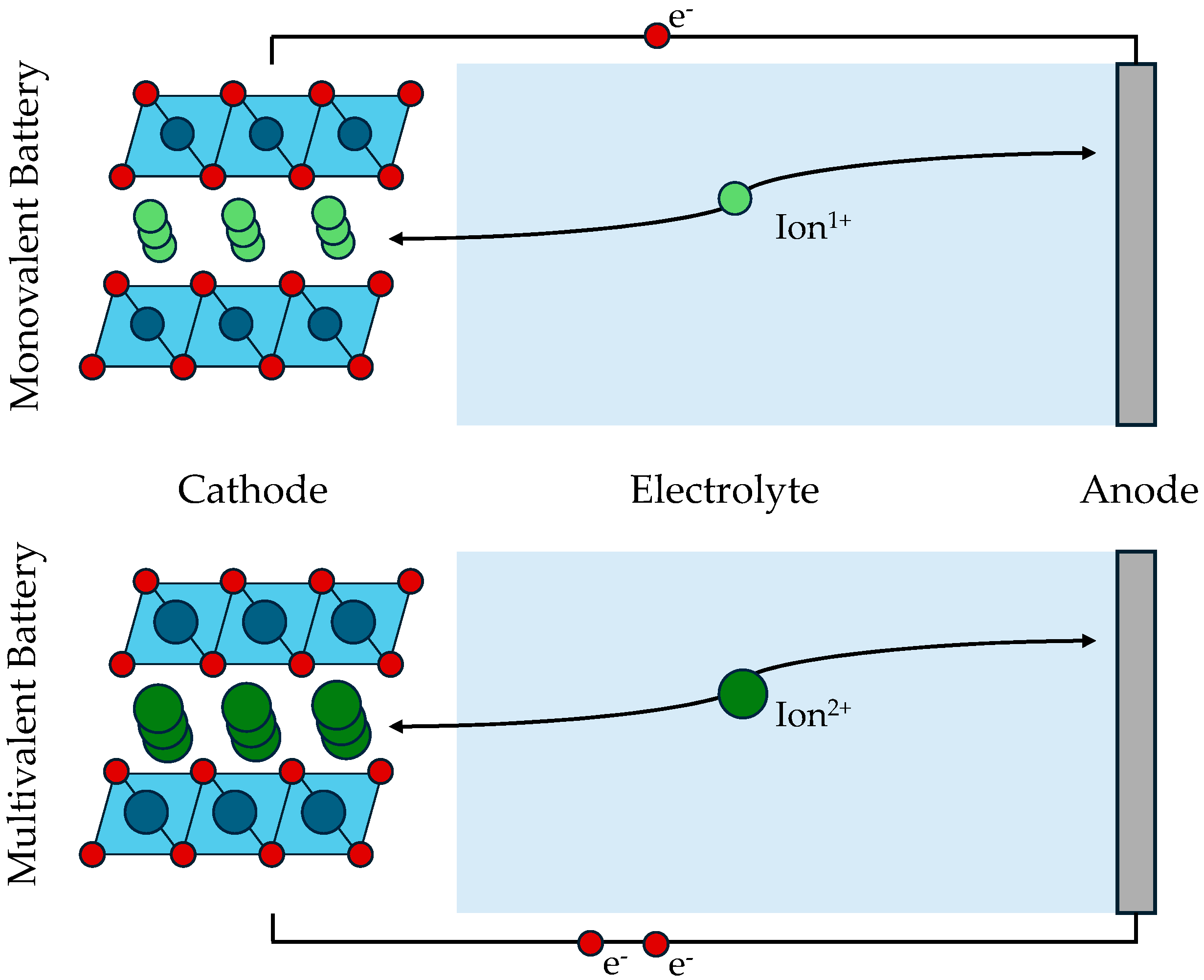
Figure 1 illustrates this distinction: on the top, the monovalent system depicts the movement of a single type of ion between the solution and solid phases, representing the relatively simple charge transport in lithium-ion batteries. On the right, the multivalent system shows the simultaneous involvement of multiple ions. Despite these advantages, substantial technical challenges remain. The divalent and trivalent nature of multivalent ions results in slow solid-state diffusion, limited reversibility, and strong ion-solvent interactions, all of which impair battery performance [
8,
9].
To address these challenges, researchers have developed a range of cathode architectures, anode configurations, and electrolyte formulations tailored to the distinct behavior of multivalent ions. Advanced materials such as Prussian blue analogs for Ca
2+ [
10], NASICON-type hosts for Al
3+ [
11], and engineered transition metal sulfides for Mg
2+ [
12] have demonstrated improved insertion kinetics and capacity retention. In parallel, electrolyte innovations such as dual salt systems for Zn
2+ and Mg
2+ cells [
13,
14], ionic liquids for Al
3+ systems [
15], and solvation tuned glymes for Mg
2+ and Ca
2+ electrolytes have been effective in suppressing side reactions and enabling stable long term cycling [
16,
17].
Recently, emerging strategies have expanded beyond traditional material design to address the challenges of multivalent ion transport. Protein-based biomimetic coatings have been proposed to create selective and adaptive ion pathways, enhancing interface stability in non-alkali systems [
18]. Meanwhile, solid electrolyte interfaces (SEI) modification through artificial interphases or film-forming additives, along with rational electrolyte design such as localized high-concentration or functionalized solvents, has shown promise in improving reversibility and suppressing dendrite formation [
19]. These approaches highlight the growing role of interfacial and bioinspired engineering in advancing next-generation multivalent batteries.
At the same time, interface engineering strategies have become a cornerstone of MVIB development. In addition to artificial SEIs, pH-buffered electrolytes and surface-coating methods have demonstrated success in controlling passivation and dendrite formation, particularly in Zn and Ca systems [
19]. Meanwhile, operando characterization and AI-guided materials discovery are improving the identification of viable electrode-electrolyte pairs under real-world conditions [
20,
21].
This review focuses on recent advancements in magnesium, zinc, and aluminum-based multivalent ion battery systems. It highlights how electrolyte formulation, interfacial engineering, and intelligent optimization strategies are converging to overcome core challenges and advance MVIBs toward commercial readiness.
While other reviews into MVIBs examine individual battery chemistries in isolation, this work adopts a comparative perspective that explores how developments in one system can accelerate progress in others. The discussion identifies shared design principles and chemistry specific limitations across aqueous and nonaqueous systems, revealing transferable mechanisms that link electrolyte design, interfacial stabilization, and cathode architecture among Mg, Zn, Al, and Ca technologies. In addition, a technology roadmap is presented that aligns the maturity and intrinsic characteristics of each chemistry with implementation strategies and application requirements in grid storage, flexible electronics, and mobility. This integrated perspective provides a foundation for coordinated research and development efforts aimed at advancing multivalent energy storage toward large scale adoption.
2. Fundamentals of Multivalent Ion Batteries
MVIBs are a compelling alternative to lithium-ion by using ions that carry two or more charges such as Mg2+, Zn2+, and Al3+ to enhance energy density and storage efficiency. These ions offer a higher charge-to-volume ratio than monovalent Li+, enabling more compact and efficient storage. For example, aluminum can deliver three electrons per ion with a volumetric capacity of 8046 mAh cm−3, exceeding that of lithium-based systems.
From a materials abundance and cost perspective, multivalent systems are better: magnesium and calcium are among the most abundant elements in the Earth’s crust, and aluminum is widely available and recyclable. Zinc, which is already used in commercial applications, offers the benefit of safe operation in aqueous media, making it suitable for stationary energy storage where flammability is a concern.
However, the high charge density that gives their theoretical advantage also introduces several challenges. Multivalent ions exhibit stronger electrostatic interactions with surrounding anions and solvents, which affect ionic mobility and solid-state diffusion. As a result, ion insertion into host cathode structures is difficult. For example, magnesium’s slow kinetics within oxide lattices severely limits its practical capacity and reversibility. Furthermore, interfacial stability and cathode compatibility also prevent their practical deployment.
Table 1 compares key physical and electrochemical parameters of representative multivalent ions, highlighting how charge density, ionic radius, and abundance influence their practical performance and limitations.
Interfacial instability also presents a major barrier to commercialization. In aqueous zinc-ion batteries, repeated cycling leads to the formation of dendrites and passivation layers that degrade performance and raise safety risks. Aluminum systems, while promising in capacity, often rely on corrosive chloroaluminate-based ionic liquids, raising cost and environmental concerns.
Another obstacle lies in cathode compatibility. Larger solvated ionic radius and higher valence state of multivalent ions require host materials with open crystal frameworks and redox chemistries. While Prussian blue analogs, layered oxides, and MoVO-type structures have shown promise, they often suffer from limited reversibility or structural degradation during extended cycling.
Despite these challenges, the promise of MVIBs remains strong. Recent advances in solvation chemistry, interface design, and cathode architecture are helping mitigate the limitations posed by multivalent ion chemistry. As research progresses, understanding the fundamental behaviors of these ions remains crucial to unlocking their full potential for scalable and sustainable energy storage.
Hydrated radio better represents ionic mobility in electrolytes. Bare crystal radii are smaller but less relevant for solvation and diffusion processes. To contextualize the properties of multivalent carriers at the device level,
Table 2 summarizes representative voltage windows, cycle life ranges, and electrolyte systems for each ion.
3. Advances in Core Chemistries
3.1. Magnesium-Ion Batteries
Magnesium-ion batteries (MIBs) are favorable due to magnesium’s high volumetric capacity (3833 mAh cm−3), dendrite-free plating behavior, and widespread natural abundance. These attributes position MIBs as a safer and more cost-effective to lithium-based batteries. However, despite these advantages, MIB development remains constrained by several persistent challenges. Chief among them are the sluggish solid-state diffusion of Mg2+ ions, their strong coordination with solvent molecules, and poor reversibility in conventional cathode materials.
Early breakthroughs by Aurbach et al. demonstrated the first prototype rechargeable magnesium battery using Grignard-based electrolytes, confirming the characteristic dendrite-free deposition of Mg metal [
6]. Subsequent mechanistic work by Muldoon et al. and Shterenberg et al. found that the strong coordination of Mg
2+ with ether or carbonate solvents forms stable solvation shells that severely limit ion transport and intercalation kinetics [
12,
23]. Ling et al. further clarified at the atomic level that non-dendritic growth originates from the high surface diffusion rate of adsorbed Mg atoms [
24].
Recent efforts have focused on developing cathode materials that can accommodate the sluggish diffusion of divalent ions. Cobalt-sulfide-based composites such as Co
3S
4 and CoS
2 have shown promise because their heterostructure interfaces improve electron transport and Mg
2+ mobility through internal electric-field effects [
25]. Wang et al. reported that Co
3S
4–CoS
2 cathodes achieved reversible capacities exceeding 590 mAh g
−1 and sustained cycling stability, demonstrating the potential of interfacial-engineered architectures [
25]. These findings complement earlier work showing that Co
3S
4 can adsorb soluble magnesium sulfides produced during cycling, thereby mitigating shuttle effects and improving long-term reversibility [
26].
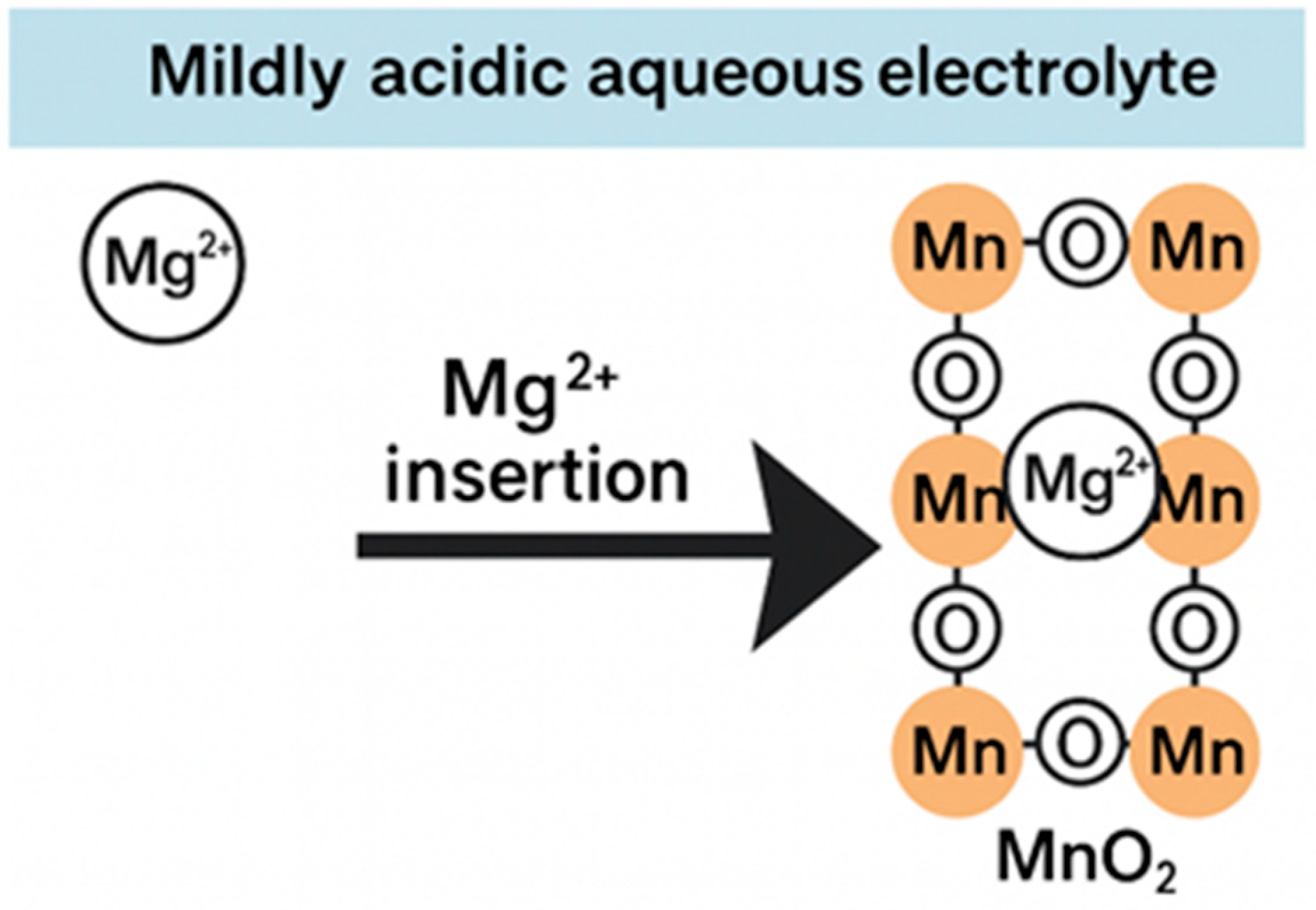
To mitigate these transport barriers, researchers have focused on solvation-tuned electrolyte designs that weaken Mg-solvent interactions through chelating additives or mixed-solvent systems, lowering the desolvation energy at the electrode/electrolyte interface [
27]. Layered and tunnel-structured manganese oxides such as δ-MnO
2 and Mn
3O
4 exhibit improved reversibility in mildly acidic electrolytes where partial proton co-insertion enhances diffusion pathways and stabilizes host structures. These effects are illustrated in
Figure 2, which shows the Mg
2+ insertion/extraction mechanism in MnO
2 under mildly acidic conditions.
Beyond δ-MnO
2, similar improvements extend to other manganese-based cathodes such as Mn
3O
4, highlighting the broad potential of solvation-controlled electrolyte strategies for multivalent ion transport. Further progress has also been achieved by incorporating additives such as MgF
2 and I
2 that form thin, conductive interfacial layers to lower overpotential and improve cycling stability [
28,
29]. Additionally, mixed-solvent systems based on THF and DMA have demonstrated improved electrolyte stability and reduced gas formation compared to conventional DME systems, enhancing long-term durability [
30].
These findings emphasize the central role of electrolyte engineering in enabling practical MIB systems. By tuning solvation dynamics and minimizing parasitic side reactions such as Mg(OH)2 precipitation, researchers can substantially improve Mg2+ transport properties. Thus, achieving high-voltage operation and full reversibility in both aqueous and non-aqueous systems remains an open challenge.
In summary, while MIBs offer several intrinsic advantages, progress hinges on tailoring electrolyte composition and interfacial chemistry to support efficient desolvation and reversible intercalation. Further improvement of electrolyte additives, cathode architectures, and surface coatings will be essential to go from laboratory demonstrations to commercially viable magnesium-ion batteries.
3.2. Zinc-Ion Batteries
Zinc-ion batteries (ZIBs) are recognized as a safe, cost-effective, and scalable option for grid storage and portable electronics. Their compatibility with aqueous electrolytes offers intrinsic safety benefits, including non-flammability and environmental tolerance, while also enabling simplified cell assembly and reduced manufacturing costs. Additionally, zinc is abundant, non-toxic, and capable of delivering competitive capacities.
Despite these advantages, interfacial challenges hinder ZIB commercialization. Most notably are dendritic zinc growth, hydrogen evolution reactions (HER), and parasitic side reactions at the Zn/electrolyte interface. These issues can lead to capacity fading, short-circuiting, and reduced coulombic efficiency during cycling. A key source of these problems lies in the unstable and heterogeneous nature of zinc electrodeposition in aqueous environments.
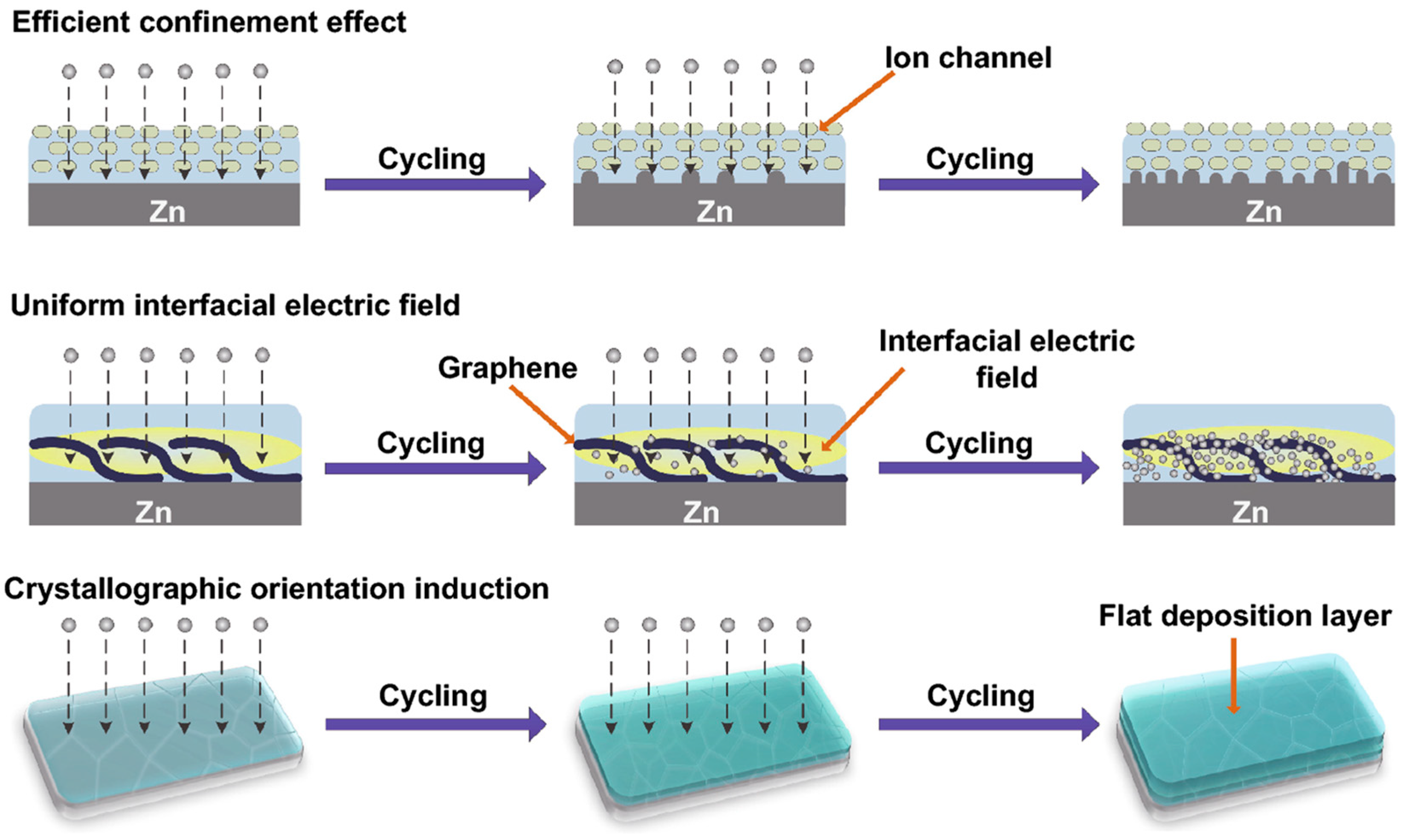
As summarized by Li et al., interfacial-engineering approaches mitigate these instabilities through mechanisms such as ion-flux confinement, uniform electric-field distribution, increased nucleation-site density, electrostatic shielding, and crystallographic-orientation control [
31]. Carbon-based coatings (e.g., reduced graphene oxide), metal layers (In, Au), and inorganic oxides (ZrO
2, TiO
2) have each demonstrated the ability to homogenize ion transport and suppress parasitic hydrogen evolution.
Recent progress has expanded these strategies toward polymeric and bio-derived coatings. Alginate-based hydrogels introduce abundant carboxyl and hydroxyl groups that chelate Zn
2+ ions, promote uniform nucleation, and sustain reversible plating/stripping, thereby achieving dendrite-free cycling and high coulombic efficiency. One representative example is the zinc-nitrilotriacetic acid (Zn-NTA) system, in which nitrilotriacetic acid molecules coordinate with Zn
2+ to form a uniform chelated interphase. This Zn-NTA layer acts as a chemical buffer that redistributes Zn-ion flux, suppresses dendritic nucleation, and mitigates parasitic side reactions by providing mechanical confinement and electrostatic screening [
32].
Figure 3 illustrates the dominant suppression mechanisms, including ion-flux confinement, electric-field homogenization, and nucleation-site enrichment, which together enable stable and reversible Zn deposition [
31,
33]. These interfacial-design principles underscore that chemical coordination, electrostatic screening, and structural control are essential to achieving long-life aqueous ZIBs suitable for safe, low-cost energy-storage applications.
Building on these foundations, hydrogel and polymer electrolytes can further stabilize interfacial transport and enable mechanically compliant designs. A transient zinc-ion battery employing a cross-linked agarose and carboxymethyl cellulose hydrogel demonstrated ultralong cycling stability and uniform ion flux across the interface [
34]. Dual-salt electrolytes such as ZnSO
4–MnSO
4 stabilize MnO
2 cathodes, enhance ionic conductivity, and mitigate dissolution, which complements interfacial strategies for long-term cycling [
35]. Ionic-liquid based and water-in-salt electrolytes expand the electrochemical window and can suppress hydrogen evolution, improving efficiency and durability in practical conditions [
36]. At the anode, ultrathin ZnF
2 surface layers promote even nucleation and reduce dendritic growth while maintaining high retention over extended cycling [
37].
Beyond suppressing dendrites and side reactions, the mechanical durability of artificial interphases governs long-term cycling. Self-healable hydrogel coatings can close microcracks formed during plating/stripping and maintain ionic pathways for hundreds to thousands of cycles, delaying short-circuit failure. However, dehydration, fatigue, and interphase delamination under high current or extended operation introduce lifespan limits, after which Zn re-exposure can re-introduce dendrites. Achieving fully autonomous, long-term self-healing remains an open challenge [
38,
39,
40].
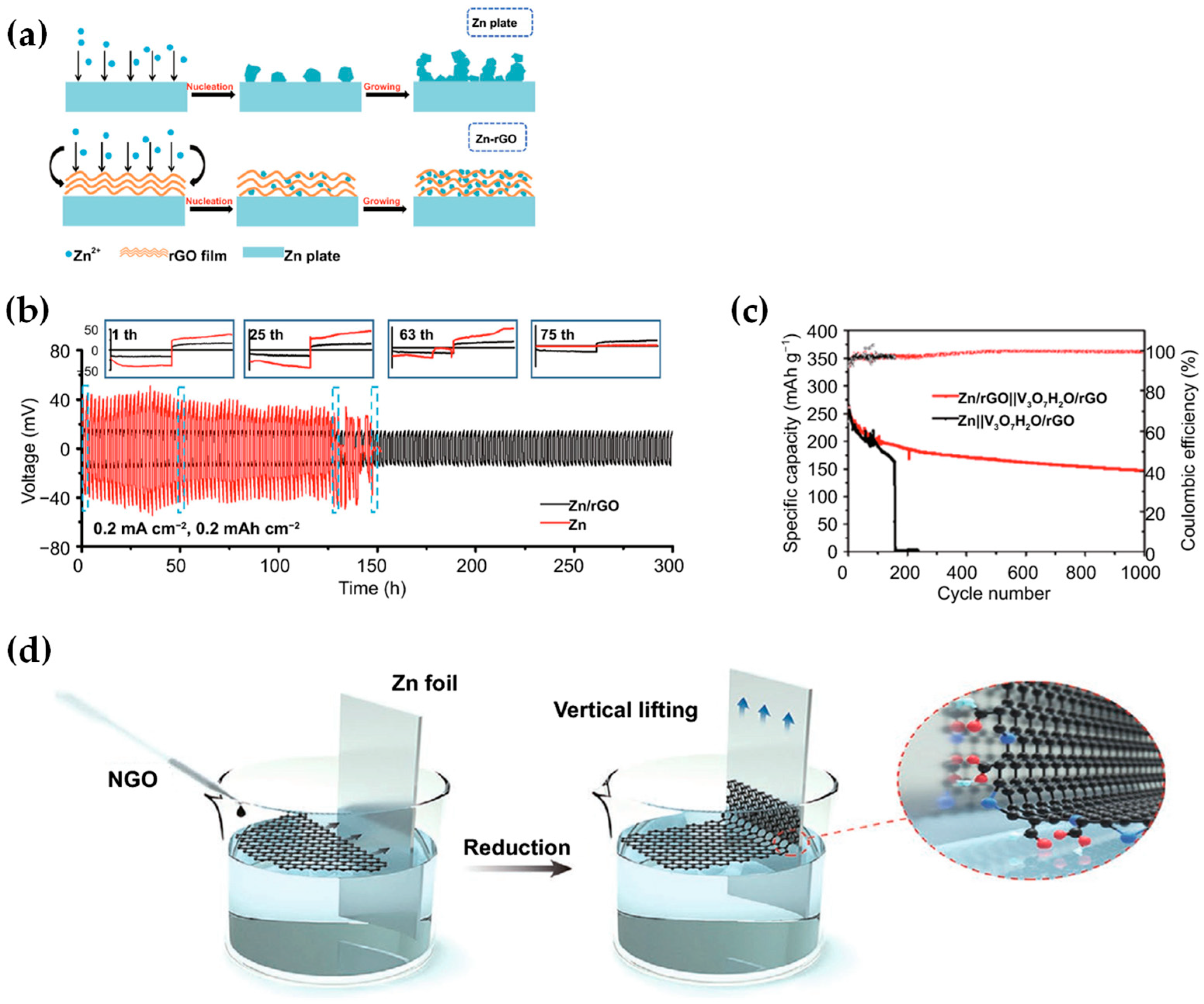
Furthermore, Li et al. found these principles extend across diverse coating chemistries. Carbon-based interphases, such as reduced-graphene-oxide or nitrogen-doped graphene coatings promote uniform Zn nucleation, suppress dendrite propagation, and lower interfacial resistance. As shown in
Figure 4, conductive and doped-carbon layers enable smoother Zn plating, smaller voltage hysteresis, and more stable long-term cycling, collectively highlighting the benefits of interfacial control in aqueous ZIBs [
31].
These findings highlight the importance of interfacial design in overcoming the instability of aqueous ZIBs. Through coordinated chemical interactions and engineered surface architectures, protective coatings—including carbon-based, polymeric, and chelate-assisted systems—offer scalable solutions toward longer-lasting zinc-ion batteries.
3.3. Aluminum Ion Batteries
Aluminum-ion batteries (AIBs) are a trivalent alternative to lithium-based systems because of aluminum’s high volumetric capacity (8046 mAh cm−3), natural abundance, and low cost. In contrast to lithium, aluminum offers safer non-dendritic deposition behavior and the ability to transfer three electrons per ion, making it good for high-energy and long-life grid storage. However, conventional AIBs rely heavily on chloroaluminate-based ionic liquids such as AlCl3-EMImCl, which are often costly, corrosive, and environmentally harmful.
To address these limitations, Zhao et al. developed a more sustainable AIB system using a deep eutectic solvent (DES) composed of AlCl
3 and urea, paired with a graphene cathode and aluminum metal anode. This DES electrolyte enabled Al
3+ intercalation under ambient conditions while preventing free chlorine evolution while minimizing corrosion of current collectors. Structural reversibility was verified by in situ Raman and ex situ XRD analysis. Cycling data demonstrated a capacity of 70 mAh g
−1 with over 90% retention after 1000 cycles and coulombic efficiency above 98%, confirming the long-term stability of the system [
41].
Beyond this formulation, additional innovations have explored halide-free and biomass-derived electrolytes for greater sustainability. Zhao et al. introduced eutectic systems such as Al(NO
3)
3-acetamide that eliminate halide content while preserving stable electrochemical performance. Their findings showed capacities of 100–120 mAh g
−1 over hundreds of cycles with minimal polarization and reduced side reactions, demonstrating the viability of halide-free eutectics for green AIBs [
42]. Luo et al. further investigated biomass-derived carbon cathodes paired with eutectic electrolytes, achieving similar performance metrics while reducing environmental impact and cost [
43].
Recent research has also highlighted the potential of organic and composite cathode materials to improve AIB performance. Organic electrodes such as quinones and imides exhibit tunable redox sites, flexibility, and high sustainability. Quinone-based cathodes including anthraquinone and phenanthrenequinone can deliver stable cycling capacities through reversible carbonyl redox reactions, while polymerization or incorporation into carbon frameworks mitigates dissolution and enhances conductivity [
44]. Hybrid materials such as MoS
2–MXene composites and NH
4V
4O
10 nanosheets further improve electron transport and structural stability, supporting capacities above 150 mAh g
−1 [
45,
46]. These hybrid designs reflect a growing trend toward interface-optimized and flexible electrode structures that combine high capacity with mechanical resilience.
On the electrolyte side, novel deep eutectic and ionic-liquid analog systems continue to expand AIB capabilities. The AlCl
3–urea eutectic remains a leading formulation, but recent advances in low-cost, non-halide deep eutectic electrolytes—such as Al(NO
3)
3–acetamide and AlCl
3/Et
3NHCl—have further improved conductivity and corrosion resistance [
47]. Xu et al. demonstrated that AlCl
3/Et
3NHCl offers 30-fold lower cost than traditional ionic liquids and excellent rate capacity retention over 30,000 cycles [
47]. Complementary work by Lu et al. developed eutectic blends that exhibit low viscosity and stable high-temperature operation, supporting safer grid-scale applications [
48].
Recent work has also moved toward solid-state AIB architectures for improved mechanical flexibility and recyclability. Liu et al. developed a cellulose-based hydrogel polymer electrolyte that retained over 80% of its ionic conductivity after 100 bending cycles and supported stable cycling in pouch cell configurations [
49]. These hydrogel electrolytes combine safety, environmental friendliness, and mechanical compliance, making them suitable for wearable and portable applications.
Together, these studies demonstrate that AIBs can be redesigned around sustainable and safe components without sacrificing performance. Deep eutectic solvents, halide-free systems, and hydrogel electrolytes provide multiple viable pathways toward scalable aluminum-ion energy storage. Continued innovation in this field could enable AIBs to meet long-duration grid and flexible demands, while aligning with sustainability and resource availability goals.
3.4. Calcium Ion Batteries
Calcium-ion batteries (CIBs) are also seen as a promising multivalent system due to calcium’s high natural abundance, low reduction potential (−2.87 V vs. SHE), and relatively low cost compared to lithium. Calcium supports divalent ion transfer, which can increase charge density without the resource limitations of other systems. However, CIB has sluggish kinetics in cathode hosts and poor reversibility in most electrolytes, particularly at room temperature. These challenges have made the practical uses of CIBs more difficult than zinc- or magnesium-based systems.
Geng et al. developed a novel room-temperature Ca/Cl
2 battery system that circumvents the intercalation bottleneck by utilizing a redox couple based on Cl
2 gas and a CaCl
2-based electrolyte. This system operates through a shuttle-free, reversible Ca/Cl
2 conversion reaction in which Ca metal serves as the anode and a carbon-supported Cl
2 cathode enables high-capacity cycling. The electrolyte is formulated with 1 M LiDFOB in triethyl phosphate (TEP) to stabilize the Ca metal surface and suppress dendritic growth. The electrolyte Calcium-Aluminum-Lithium-Salt (CALS) consists of a CaCl
2-LiDFOB salt mixture dissolved in triethyl phosphate (TEP). This formulation stabilizes the Ca metal surface, suppresses dendritic growth, and enables reversible Ca/Cl
2 redox cycling at room temperature [
50].
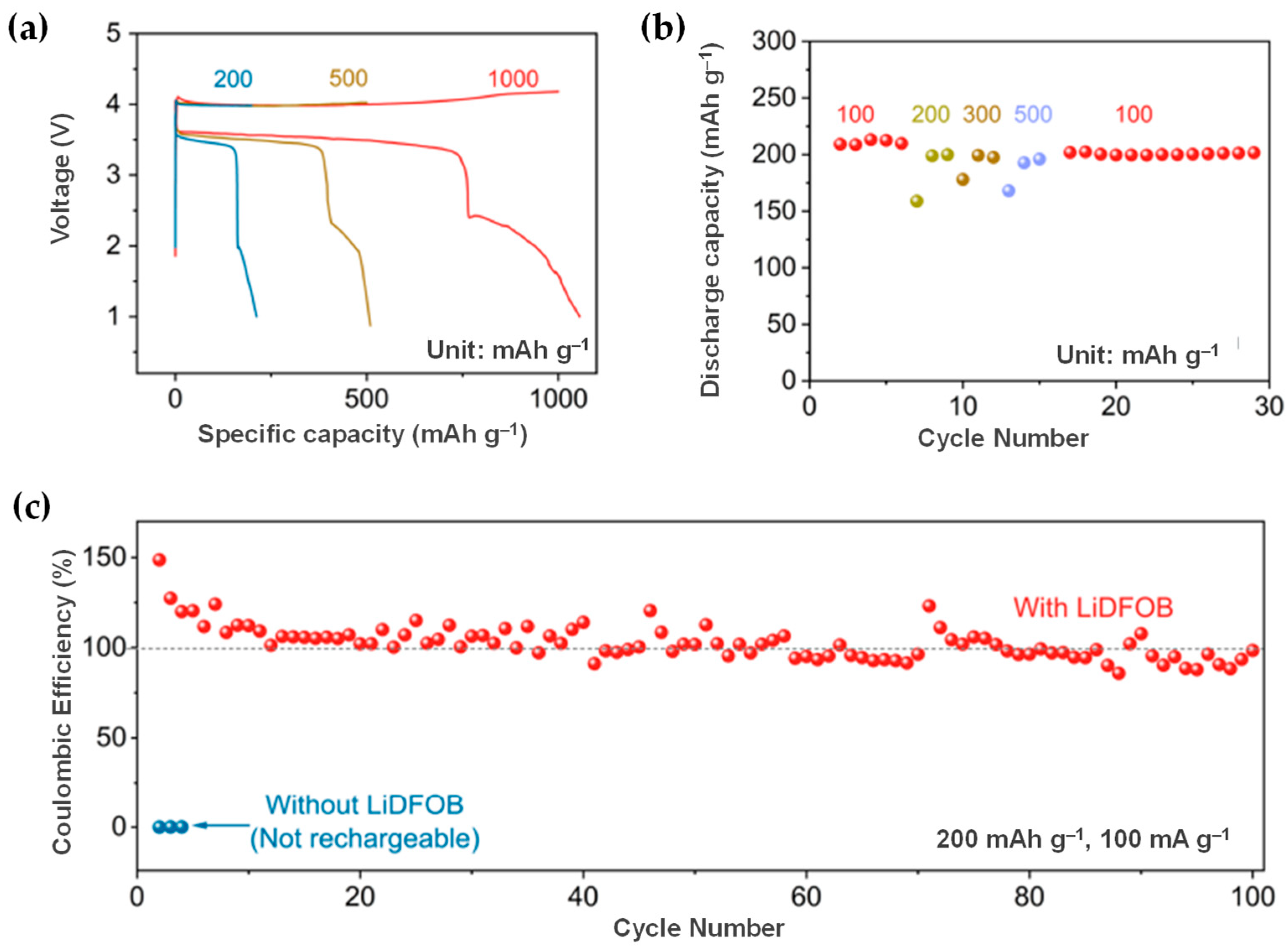
Figure 5 illustrates the performance of the Ca/Cl
2 battery configuration, which features a graphite cathode and a LiDFOB-mediated CALS electrolyte. The system achieved a high specific capacity of 500 mAh g
−1 and retained over 300 mAh g
−1 after 150 cycles at 0.2 A g
−1, with Coulombic efficiency approaching 100%. The presence of LiDFOB contributed to a more stable calcium interface, improved ion transport, and enhanced long-term cycling stability under ambient and low-temperature conditions.
This breakthrough provides a path to bypass the slow solid-state diffusion of Ca2+ by replacing it with a redox-active species. Importantly, the use of a molecular cathode avoids common issues with structural collapse or intercalation barriers in traditional layered hosts. The strategy also decouples cathode design from cation mobility, which has long been a limiting factor for CIBs.
Regarding generalization, the Ca/Cl
2 couple benefits from favorable halogen redox and interfacial stabilization in the CALS electrolyte. For Mg or Zn, analogous halogen pairs (e.g., Mg/Cl
2, Zn/Cl
2) face higher desolvation barriers and collector corrosion so direct portability is easy without electrolyte/interphase redesign. Thus, Ca/Cl
2 is promising but not universally transferable because targeted chemistry-specific optimization would be required [
16,
50].
The Ca/Cl
2 conversion mechanism demonstrates that molecular redox couples can decouple cation transport from solid-state diffusion, providing a pathway applicable to other multivalent systems. Similar halide-based or conversion-type chemistries have been explored for magnesium and aluminum, such as Mg/Br
2 and Al/I
2 configurations, which rely on soluble halogen shuttles rather than intercalation within host lattices [
51,
52]. However, practical application beyond calcium is limited by parasitic side reactions and corrosion of current collectors in aqueous or ionic-liquid media [
16,
50]. Future work exploring analogous redox-mediated mechanisms in Mg
2+ or Al
3+ systems could enable comparable improvements in ion kinetics and capacity retention.
Further progress has been achieved through machine-learning-guided screening and high-throughput computational analysis to identify NASICON-type and boron-doped frameworks with low activation energies for Ca
2+ transport [
53]. Kim et al. used first-principles and data-driven models to predict optimal NASICON cathodes that combine high voltage, minimal volume change, and structural stability, highlighting the promise of boron substitution in increasing ionic conductivity [
53]. Other cathode classes such as Prussian blue analogs and vanadium-based compounds have demonstrated reversible calcium intercalation and high-voltage operation [
54].
Electrolyte research for calcium-ion batteries is still developing. Borate-based and hybrid electrolytes have enabled room-temperature cycling by reducing passivation and facilitating reversible plating and stripping [
16]. Shyamsunder et al. demonstrated that Ca[B(hfip)
4]
2 in glyme solvents supports stable cycling with low overpotentials and minimal passivation, representing a key step toward practical CIBs [
16]. Complementary advances include hydride-based and redox-mediated systems that utilize conversion mechanisms to enhance capacity and reduce diffusion barriers [
55].
Complementary work by Shyamsunder et al. further supports the viability of calcium electrochemistry through their demonstration of reversible calcium plating and stripping in non-nucleophilic borate-based electrolytes at room temperature [
16]. Using Ca[B(hfip)
4]
2—a borate salt—in a glyme-based solvent (ethereal), primarily 1,2-dimethoxyethane they achieved stable calcium cycling with low overpotentials and no passivation, suggesting new electrolyte formulations that can be extended to intercalation-type calcium batteries in the future.
These studies expand options for calcium-ion battery development, from innovative redox chemistries to optimized electrolytes that support stable divalent ion transport. The Ca/Cl2 conversion system represents a step toward scalable, cold-tolerant, and high-capacity CIBs, while ongoing electrolyte research points to longer-term opportunities for integrating calcium into more traditional battery architectures.
4. Cross-Cutting Strategies
The advancement of MVIBs relies on innovations that cut across core chemistries, particularly in the areas of electrolyte engineering, interfacial design, and sustainable materials development. These strategies are essential for improving performance, extending cycle life, and enabling real-world applicability.
Table 3 provides a summary of these strategies.
Electrolyte optimization has proven decisive for unlocking the intrinsic potential of multivalent systems by mitigating sluggish ion transport and parasitic side reactions. In recent studies, dual-salt and hybrid electrolyte systems have emerged as viable solutions for balancing ionic strength, electrode stability, and long-term reversibility. For example, the combination of ZnSO
4 and MnSO
4 in ZIBs stabilizes the MnO
2 cathode against dissolution while enhancing ionic conductivity through synergistic ion pairing [
35]. In magnesium systems, solvation-tuned glyme-based electrolytes such as Mg(TFSI)
2 in diglyme or triglyme improve desolvation kinetics at the electrode interface, reducing overpotential and supporting stable Mg plating/stripping for hundreds of cycles [
56]. Similarly, in calcium systems, borate-based salts like Ca[B(hfip)
4]
2 in glyme solvents enable reversible Ca deposition by suppressing surface passivation and reducing activation barriers for Ca
2+ transport [
57]. For aluminum, deep eutectic electrolytes such as AlCl
3–urea and Al(NO
3)
3–acetamide have broadened the electrochemical window while lowering corrosivity and cost, creating a sustainable path toward ambient-temperature operation [
58]. Collectively, these formulations demonstrate that targeted solvation control and ionic coordination tuning are universal levers for improving reversibility across Mg, Zn, Al, and Ca systems.
Engineering the electrode–electrolyte interface remains one of the most impactful approaches for MVIB performance enhancement. In aqueous ZIBs, the application of polymeric modifiers such as tannic acid coatings or polyacrylamide hydrogels directly onto the zinc surface helps regulate Zn
2+ ion flux and suppress dendrite formation, significantly extending cycle life under practical current densities [
38]. Comparable approaches are now being adopted in magnesium and calcium batteries, where artificial interphases formed by MgF
2, CaF
2, or metal–organic nanolayers stabilize the anode against side reactions and passivation [
59]. In aluminum-ion systems, protective carbon frameworks and nitrogen-doped graphene coatings minimize corrosion and promote uniform Al
3+ intercalation [
60]. Such interface designs, whether through inorganic passivation layers, self-healing hydrogels, or functional polymer coatings, establish a unified direction for mitigating dendrite formation and interfacial instability across all MVIB chemistries.
Beyond performance, sustainability has emerged as a central design principle. Many current cathode materials rely on transition metals such as vanadium or cobalt, which face supply and toxicity concerns. To address this, researchers are exploring biomass-derived carbons, organic redox-active polymers, and recyclable electrode architectures, particularly in zinc and aluminum-based systems [
61]. Lignin- and cellulose-derived carbon frameworks, for instance, have demonstrated high surface area, tunable porosity, and strong affinity for multivalent cations, resulting in stable Zn
2+ and Al
3+ storage. Halide-free electrolytes such as Al(NO
3)
3–acetamide deep eutectic solvents provide environmental compatibility while maintaining stable cycling [
42]. Water-processable electrode inks, biodegradable polymer binders, and closed-loop recycling concepts are now being integrated into prototype MVIB cells, aligning electrochemical innovation with circular-economy principles.
Taken together, these cross-cutting strategies constitute the technological foundation for next-generation MVIBs. By tailoring solvation chemistry, surface reactivity, and materials sourcing, researchers can bridge performance gaps among magnesium, zinc, aluminum, and calcium systems. This convergence not only enhances electrochemical reversibility and durability but also promotes scalable, eco-conscious energy storage solutions suitable for grid, mobility, and flexible electronic applications.
5. Advanced Characterization and Intelligent Optimization Systems
Intelligent optimization strategies are playing an increasingly important role in performance enhancement, safety, and operational adaptability. These approaches integrate real-time diagnostics, machine learning models, and embedded control systems to respond dynamically to degradation, stress, and usage variability across zinc-, magnesium-, aluminum-, and calcium-based systems [
62,
63].
Recent studies emphasize the growing utility of in situ and operando characterization tools to observe degradation phenomena and guide material improvements. For instance, Pham et al. employed in situ X-ray diffraction and online electrochemical mass spectrometry (OEMS) to track gas evolution and cathode structure collapse during high-rate cycling of aluminum-ion batteries. This enabled targeted redesigns in cathode crystallinity and binder composition to suppress failure mechanisms [
64].
Beyond diagnostics, intelligent thermal and chemical regulation is also key to enhancing long-term battery stability. In zinc-ion systems, Chen et al. developed a phase-change material-based thermal regulation protocol using thermoelectric sensors to control local temperature during cycling. This reduced dendrite formation and capacity fade under fluctuating loads [
65].
Machine learning (ML) methods are rapidly emerging as transformative tools for electrolyte and electrode optimization. Sun et al. trained a convolutional neural network (CNN) on electrochemical impedance spectroscopy datasets for magnesium-ion batteries, enabling accurate prediction of capacity fade and suggesting electrolyte modifications to slow degradation [
66]. Li et al. created a supervised learning platform trained on over 500 electrolyte formulations spanning aluminum and zinc systems. The platform revealed nonlinear correlations between anion identity, solvent viscosity, and overpotential behavior, which guided experimentalists to unexpected high-performance combinations [
67].
Real-time sensor integration is enabling adaptive control in multivalent systems. Meng et al. demonstrated a flexible calcium-ion battery embedded with temperature and pressure sensors in the separator layer. These sensors fed data to a battery management system (BMS) that dynamically adjusted current and voltage, preventing thermal runaway and premature aging [
68]. In soft battery architectures, sensor-embedded hydrogel components were also shown to improve strain tolerance and provide expansion feedback, particularly in zinc and magnesium chemistries.
At the system level, cloud-based platforms and digital twins are being used to replicate battery behavior in real-time for remote diagnostics and predictive maintenance. Dubarry et al. developed a digital twin of an AIB system that tracked internal conductivity, charge transfer resistance, and temperature fluctuations across multiple cycles. Deployed across battery farms, such models enable centralized operation control and lifecycle extension strategies [
69].
Similarly, materials with intrinsic sensing properties are being engineered to enable passive feedback mechanisms. Ling et al. introduced a UV-fluorescent hydrogel electrolyte for ZIBs that changed emission based on local pH and dendrite growth. This allowed real-time visual monitoring and flagged unsafe cells using low-cost optical detectors [
39].
More experimentally, self-healing and responsive interfaces are under development. Inspired by tribological coatings in marine lubricants, nanocapsules of buffering agents are being embedded at the electrode-electrolyte interface in MIBs. These capsules rupture under mechanical or chemical stress, releasing stabilizers that recondition the surface without external intervention [
40].
These innovations represent a shift from passive to adaptive and intelligent battery systems. The integration of diagnostics, AI-driven sensor-embedded components, and feedback-responsive materials promises to enhance MVIB longevity, safety, and performance under diverse operating conditions. As MVIB deployment scales, these smart systems will be crucial to unlocking their full potential in both stationary and mobile energy storage applications.
6. Applications and Roadmap
Given the cost, performance characteristics, and varying levels of technological maturity, different battery chemistries are positioned to serve distinct markets and will likely be adopted on different timelines. Over time, these emerging technologies are expected to gradually replace monovalent lithium-ion batteries in specific applications where they offer clear advantages.
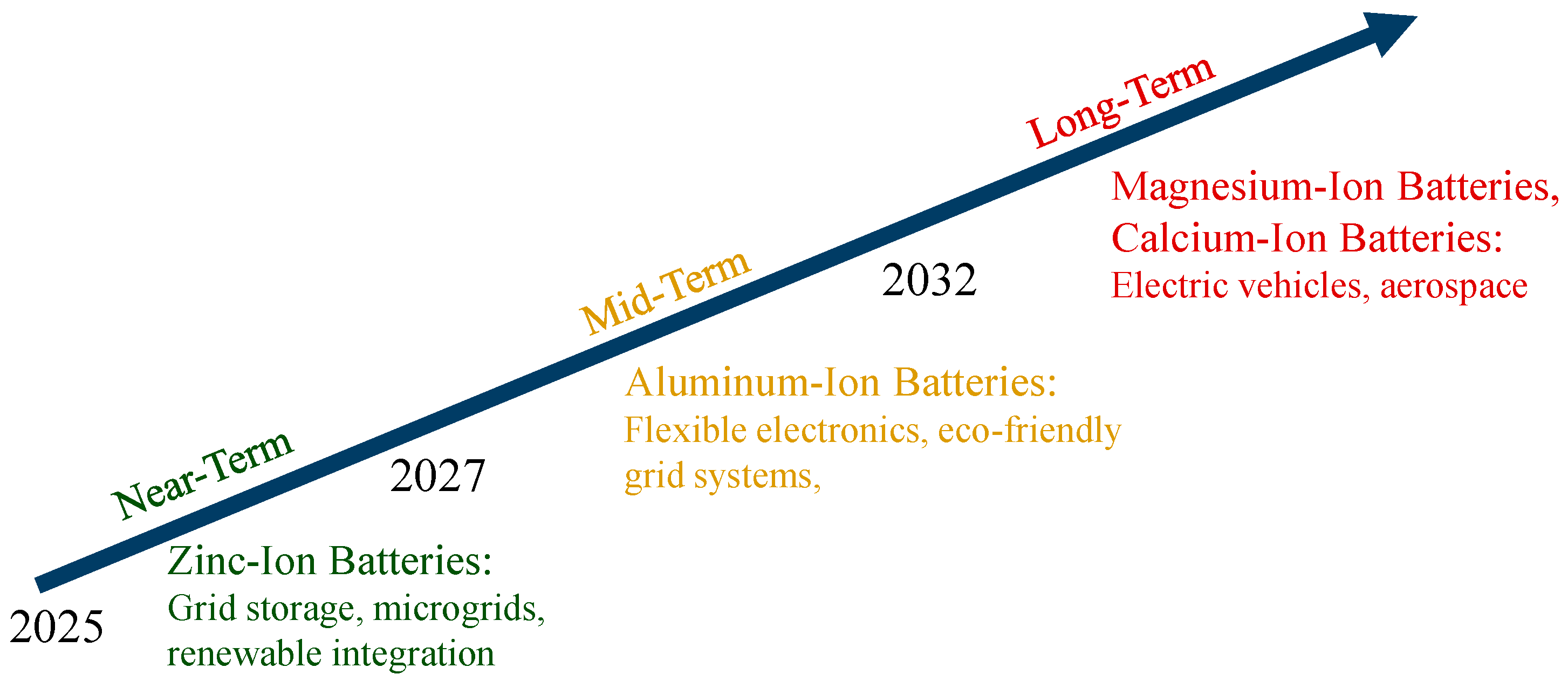
Figure 6 presents a summary roadmap that outlines the major battery technologies, their target markets, and the projected timeframes for implementation based on current development trends. The following section provides a detailed discussion of each technology and its corresponding market potential.
For the purposes of this study, near-term is defined as 0–3 years, mid-term as 3–7 years, and long-term as 7–15 years. Placement on the roadmap is based on (i) demonstrated cell durability and voltage windows, (ii) electrolyte maturity and safety, (iii) pilot deployments and product literature, and (iv) manufacturability and cost considerations.
Table 4 summarizes these considerations for each MVIB chemistry.
6.1. Near-Term—Zinc-Ion Batteries for Grid Storage
ZIBs, particularly aqueous-based systems, are emerging as strong candidates for near-term deployment in grid-scale storage. Their appeal stems from several key advantages, including nonflammable electrolytes that enhance operational safety, the global availability of zinc, and a competitive cost structure relative to lithium-ion batteries. These factors make zinc-ion batteries well suited for large-scale stationary applications where cost and safety are prioritized over energy density.
Commercial adoption is already underway. Companies such as Zinc8 and Redflow have deployed zinc-ion battery modules for multi-hour energy shifting, microgrid support, and renewable energy integration [
70]. These deployments highlight the ability of ZIBs to deliver reliable, long-duration storage, which is critical for balancing intermittent renewable generation with grid demand. Moreover, the underlying electrochemistry, based on reversible zinc plating and stripping, provides a robust foundation for scalability while relying on environmentally benign materials.
Despite these advantages, several challenges continue to limit widespread implementation. Dendrite growth during zinc cycling can compromise cell stability and safety, while side reactions such as hydrogen evolution and electrolyte degradation reduce cycle life and efficiency. Addressing these issues has become a focus of recent research. Advances such as gel polymer electrolytes, pH-buffered formulations, and surface chelation strategies, including Zn-NTA interfacial layers, have shown promise in mitigating dendrite formation, stabilizing the electrolyte, and extending cycling performance under practical operating conditions [
71].
Taken together, these developments suggest that ZIBs are poised to become a commercially viable solution for grid applications in the near term. Continued improvements in electrolyte engineering, electrode surface design, and system integration will determine the extent to which ZIBs can scale to meet the growing demand for safe, cost-effective, and sustainable energy storage.
6.2. Mid-Term—Aluminum-Ion Batteries for Flexible Electronics and Grid Use
AIBs are gaining attention for both flexible electronics and scalable grid storage because of aluminum’s abundance, low cost, high volumetric capacity, and trivalent redox behavior. These characteristics make aluminum an attractive charge carrier for applications where sustainability, affordability, and performance must be balanced.
Recent innovations have moved beyond traditional chloroaluminate ionic liquid electrolytes toward greener, low-toxicity deep eutectic solvents such as AlCl
3-urea. These solvents provide improved electrochemical performance while offering greater environmental compatibility [
15]. Complementary advances in hydrogel polymer electrolytes, particularly those derived from cellulose, have made it possible to create mechanically flexible aluminum-ion batteries that maintain stable cycling performance even under repeated deformation. This capability makes them especially suitable for emerging applications such as wearable devices, portable electronics, and soft robotics [
49].
Sustainability has also become an important driver of development. Research into halide-free eutectics reduces reliance on corrosive components, while the use of biomass-derived cathodes introduces environmentally responsible materials into the electrode design. Together, these advances broaden the potential for aluminum-ion batteries in eco-sensitive markets where safety and sustainability are central considerations [
43].
Looking forward, AIBs are positioned as a mid-term solution for applications that require both flexibility and scalability. Continued progress in electrolyte chemistry, electrode architecture, and materials sustainability will determine their trajectory, with the potential to make aluminum-based systems competitive for grid storage while also enabling the next generation of flexible electronic devices.
6.3. Long-Term—Magnesium-Ion and Calcium-Ion Batteries for Electric Vehicles
MIBs are being actively explored for electric vehicle and aerospace applications due to magnesium’s high volumetric capacity, dendrite-free deposition, and low cost. These features make magnesium attractive as a charge carrier for high-density, safer alternatives to lithium-ion batteries in mobility sectors. However, significant challenges remain, including sluggish magnesium ion transport and surface passivation of electrodes. Current research is addressing these barriers through novel electrolyte formulations such as bidentate ether solvents and magnesium borohydride complexes, which improve ionic conductivity and compatibility with metal anodes [
72].
Progress is also being made on the cathode side. Materials with large interlayer spacings, such as Mo
6S
8 (Chevrel phases) and V
2O
5, are being engineered to accommodate reversible magnesium intercalation and to provide structural stability during cycling [
73]. While magnesium-ion batteries remain at an early stage of development, these breakthroughs highlight their long-term potential for high-energy, cost-effective, and safe battery systems capable of supporting electric vehicles and aerospace platforms.
CIBs are also gaining attention for high-power applications because of calcium’s favorable redox potential and rapid oxide-lattice diffusion kinetics. Recent studies have demonstrated stable cycling with high-voltage cathodes such as NaV
2(PO
4)
3 and Prussian Blue analogs when paired with fluorinated borate-based electrolytes [
54]. In parallel, solid-state designs using calcium-conducting phosphate or sulfide glasses are being developed, offering enhanced thermal stability and suppression of parasitic reactions. These advances suggest that CIBs could become promising candidates for long-duration storage in both stationary and industrial environments.
Across these chemistries, improvements in intelligent battery management systems are becoming increasingly critical. Advanced management tools that incorporate impedance spectroscopy, thermal sensing, and capacity forecasting help maintain performance under dynamic operating conditions [
74]. In addition, machine learning approaches are accelerating discovery and optimization. For example, Lv et al. developed a neural network model that predicted zinc ion solvation energetics across hundreds of electrolyte candidates, significantly reducing the reliance on trial-and-error screening [
75].
Multivalent batteries are also being integrated into hybrid renewable systems such as solar and wind microgrids, where they enable peak shaving and energy time-shifting. Zinc-based systems already demonstrate commercial viability as low-cost, low-risk solutions [
76]. Looking forward, aluminum and magnesium systems with nonflammable electrolytes are positioned to meet the stringent safety requirements of urban, high-temperature, and enclosed environments, broadening the role of multivalent technologies in the long-term energy landscape.
6.4. Scaling Barriers
Scaling multivalent-ion batteries to industrial production faces technical, economic, and safety obstacles that shape the projected adoption timelines shown in
Figure 6. These challenges differ by chemistry but collectively determine manufacturing readiness and long-term commercial viability.
Zinc-ion systems benefit from aqueous processing and low-cost active materials, yet large-format module assembly and electrolyte management still require standardization. System costs are dominated by components such as pumps, reservoirs, and power electronics rather than the electrochemistry itself [
70]. Aluminum-ion batteries face corrosion and compatibility issues during electrode roll-to-roll fabrication, as most current collectors react with chloroaluminate or eutectic electrolytes [
15,
41]. Moreover, deep-eutectic-solvent and ionic-liquid precursors remain expensive at scale, with limited supplier networks [
77,
78]. Magnesium- and calcium-based systems are far from manufacturable because of the sensitivity of their electrolytes to moisture and air [
5,
6].
Electrolyte formulation is also a key economic issue. In ZIBs, commodity salts such as ZnSO
4 are inexpensive, but lifetime and energy efficiency depend heavily on costly organic additives and pH-buffering agents [
35,
71]. Aluminum-ion electrolytes based on AlCl
3-urea or halide-free eutectics reduce toxicity relative to ionic liquids but still exhibit variable purity, viscosity, and conductivity across batches, complicating quality control [
42,
77]. Magnesium and calcium remain in the lab because their synthesis routes are neither high-yield nor environmentally benign, and stabilizing these electrolytes while preserving high ionic mobility remains a major unresolved challenge [
9,
73].
Aqueous zinc-ion cells are intrinsically nonflammable, yet dendrite growth and hydrogen evolution can cause internal short circuits under high current densities [
31,
38]. Aluminum-ion systems are also nonflammable but prone to corrosive side reactions and gas generation at elevated potentials [
15,
41]. Magnesium and calcium chemistries are thermally stable and non-volatile; however, their incomplete interphase formation and high polarization can cause uneven deposition, localized heating, or mechanical stress that accelerates degradation [
12,
16,
24]. Advanced battery-management systems with real-time impedance and temperature feedback are expected to be necessary for ensuring reliability in scaled deployments [
68,
69,
74].
Considering these constraints, zinc-ion batteries remain the only multivalent chemistry with demonstrated pilot installations and near-term commercial potential [
70,
76]. Aluminum-ion systems show strong promise for mid-term adoption in flexible and eco-sensitive markets once corrosion and electrolyte-cost issues are resolved [
41,
49]. Magnesium- and calcium-ion batteries, while attractive in theory, require transformative advances in electrolyte chemistry, electrode compatibility, and manufacturing scalability before moving beyond laboratory demonstration [
5,
16,
50,
73]. The scalability constraints described above emphasize the remaining scientific and engineering obstacles that must be addressed before multivalent systems achieve widespread deployment.
7. Challenges and Future Directions
Despite major strides in cathode innovation, electrolyte design, and intelligent optimization, MVIBs face a series of interlinked challenges that must be resolved for large-scale commercial deployment. These challenges range from ion transport to system-level engineering and standardization. One of the foremost technical issues that remain is ion transport limitations, particularly in systems using cations like Al3+ and Mg2+. Their strong electrostatic interactions with surrounding solvents and anions lead to sluggish diffusion kinetics and high activation energies for intercalation. Even with solvation shell engineering and open-framework cathodes like MoVO or LDHs, diffusion bottlenecks in both the electrolyte and electrode persist, capping power density and rate capability.
Interfacial instability causes transport limitations. For divalent systems like MIBs and CIBs, spontaneous passivation layers form on the metal anodes in most conventional electrolytes, blocking ion transport. Although artificial SEI layers and fluorinated additives maintain conductivity while preventing degradation, achieving stable, self-healing interfaces under cycling and temperature variation remains a problem. In aqueous ZIBs, dendritic growth, hydrogen evolution, and pH drift threaten cell lifetimes. And while advancements like tannic acid coatings or polyacrylamide gels help stabilize the interface, industrial-level reliability at high current has yet to be seen.
Many prototype MVIBs also rely on cathode materials containing cobalt, vanadium, or other critical metals that raise cost and supply chain concerns. To align with life-cycle sustainability goals, research is expanding toward biomass-derived and metal-free electrodes for Zn2+ and Al3+ systems. Carbonized cellulose, lignin-based carbons, and bio-templated porous frameworks with surface redox functionalities present renewable and scalable alternatives while lowering environmental impact. Developing closed-loop recycling and processing routes that will further enhance the sustainability of multivalent chemistries.
System-level integration is another challenge. Multivalent chemistries often require non-standard current collectors, corrosion-resistant separators, and electrolyte-resistant packaging due to their high reactivity or acidity. Recent studies have proposed several novel encapsulation solutions to mitigate electrolyte-substrate incompatibility in multivalent systems. Carbon-based collectors such as graphite paper, carbon cloth, and graphene-coated foils provide both corrosion resistance and high conductivity in AlCl3- and urea-based AIBs. Titanium nitride (TiN) and stainless-steel meshes have also been explored for Mg2+ and Zn2+ systems, where passivating oxide layers inhibit parasitic reactions without sacrificing mechanical integrity. Similarly, polymer-metal composite encapsulations including PVDF-Al2O3 and epoxy-TiO2 coatings have been introduced to seal current collectors against ionic corrosion while maintaining thermal stability. Traditional aluminum foil corrodes rapidly in AlCl3-based AIBs, prompting exploration of carbon fabrics or Ti-coated substrates. New membrane technologies with ion-selectivity and mechanical robustness are also under development to minimize crosstalk and shorting.
Finally, standardization remains underdeveloped in MVIB research. Variability in test conditions and cell configuration hinders the comparability of data across studies. Long-term performance, thermal stability, and safety data are rarely measured beyond a few hundred cycles. Establishing consensus testing protocols like the Li-ion field will be critical for industrial adaptation and regulatory approval.
Looking forward, interdisciplinary collaboration across chemistry, materials science, mechanical engineering, and data science will be necessary to unlock the full potential of MVIBs. Aligning technical breakthroughs with manufacturing and sustainability goals, multivalent systems could move beyond the lab toward practical deployment in electronics, electric vehicles, and stationary energy storage.
8. Conclusions
Multivalent ion batteries bring a new wave for electrochemical energy storage, offering a path toward systems that are safer, more abundant, and potentially higher in energy density than conventional lithium-ion technologies. This paper has examined recent advances across key chemistries of magnesium, zinc, aluminum, and calcium. Highlighting innovations in solvation shell engineering, electrolyte additive strategies, cathode design, and interfacial stabilization. Through focused studies such as zinc-alginate interface engineering, aluminum-ion deep eutectic solvents, and calcium-chlorine redox systems mediated by LiDFOB, researchers have found that many of the challenges associated with sluggish ion kinetics and unstable cycling can be overcome through materials and electrolyte design.
Cross-cutting strategies which adopt self-healing materials and sustainable cathodes, are extending MVIBs into wearable devices while also reducing their environmental footprint. Intelligent optimization techniques from real-time diagnostics and in situ sensors to machine learning-guided electrolyte discovery are reshaping how these batteries are controlled and improved. As this technology matures, each battery chemistry finds its niche: zinc-ion batteries in near-term grid deployment, aluminum-ion systems for mid-term eco-conscious storage, and magnesium and calcium-based batteries poised for long-term roles in transportation and aerospace.
However, challenges remain in the form of interfacial instability, manufacturing complexity, and lack of standardization. The transition from laboratory breakthroughs to market-ready systems will depend on coordinated efforts in scalable engineering, data-driven design, and robust performance validation. Multivalent batteries could redefine sustainable storage enabling safer, longer lasting, and more versatile energy systems for the next generation.