
Article

Photophysical, Electrochemical, Density Functional Theory, and Spectroscopic Study of Some Oligothiophenes


by
Mamoun M. Bader
1,*,
Phuong-Truc T. Pham
2,
Juri A. Busaili
1,
Samar M. Alrifai
1,
Sarah H. Younas
1 and
El Hadj Elandaloussi
3
1
Department of Chemistry, College of Science, Alfaisal University, Riyadh 11533, Saudi Arabia
2
Department of Chemistry, Penn State Scranton, Dunmore, PA 18512, USA
3
Department of Ecology and Environment, Environmental & Sustainable Development Laboratory, Faculty of Natural and Life Sciences, Ahmed Zabana University—Relizane, Bourmadia, Relizane 48000, Algeria
*
Author to whom correspondence should be addressed.
Optics 2025, 6(4), 56; https://doi.org/10.3390/opt6040056
Submission received: 29 June 2025 / Revised: 2 September 2025 / Accepted: 4 November 2025 / Published: 10 November 2025

Abstract

Dicyanovinyl (DCV) oligothiophenes are interesting materials due to their unique optical and electronic properties. They are relatively easy to prepare using Knoevenagel condensation reactions from the corresponding aldehydes. Understanding their optical and electrochemical characteristics is important for both building structure/property relationships and for optimizing their performance in various applications. We report on the electrochemical and photophysical properties of three oligothiophenes end-capped with dicyanovinyl -CH=C(CN)2 or DCV groups. The compounds included in this study are DCV-T-DCV (1), DCV-2T-DCV (2), and DCV-3T-DCV (3), where T represents one thiophene unit. Introduction of the DCV groups into oligothiophenes results in unique evolution of their electrochemical and optical behavior. First, new reversible two-electron reduction processes in the series DCV-nT-DCV start to appear with a gradual increase in the reduction potential with an increasing number of thiophene units. This was consistent with the electronic spectroscopic results. These results demonstrate that the DCV groups can be used in molecular design and fine-tuning of the optical and redox properties of oligothiophene and presumably this strategy can be extended to other conjugated organic molecules. We also report on the photophysical and vibrational spectroscopic properties of these compounds. The C=C stretching bands in Raman and IR spectra reveal more quinoidal nature in shorter molecules and more dominant benzoidal character in longer molecules. The DCV-induced modulation of electrochemical, optical, and vibrational properties highlights their potential in diverse optoelectronic applications.

1. Introduction

1.1. Background and Motivation

Organic compounds with extended π-conjugated frameworks possess unique electronic and optical properties, which render them highly attractive for modern functional materials. Their structural flexibility allows for rational design strategies that fine-tune energy levels, absorption profiles, and charge-transport properties. As a result, conjugated organic molecules have found widespread application in organic semiconductors, thermochromic systems, nonlinear optical materials, electroluminescent emitters, organic photovoltaics (OPVs), field-effect transistors (FETs), and chemical sensors [1,2,3,4,5,6,7].

1.2. Thiophene-Based Functional Materials

Within this broad class, thiophenes are particularly significant because of their stability, synthetic versatility, and ability to form highly conjugated oligomers and polymers. Their ease of chemical modification and the wide structural diversity achievable in oligothiophenes give them a distinct advantage in the molecular design of next-generation optoelectronic materials. Numerous oligothiophene architectures have been reported in recent years, illustrating the flexibility of thiophene-based design principles [2,3,4,5].

1.3. Controlling Solid-State Structure Through Crystal Engineering

In addition to molecular design, the solid-state organization of π-conjugated systems plays a critical role in determining their optical and electronic behavior. Molecular packing influences intermolecular charge transport, exciton migration, and optical transitions. Recently, crystal engineering strategies have been employed to direct packing motifs and to develop predictive approaches for controlling intermolecular interactions in conjugated systems [8].

1.4. Impact of Electron-Withdrawing Substituents

Oligothiophenes bearing strong electron-accepting groups, including nitro [9], cyano [10], dicyanovinyl (DCV) [11], and tricyanovinyl (TCV) [12] substituents, have emerged as especially versatile building blocks. These substituents lower the LUMO levels, modulate HOMO–LUMO gaps, and enhance intermolecular interactions, resulting in tunable electronic and optical properties. Their structural, spectroscopic, electrochemical, and charge-transport characteristics have therefore been the subject of extensive investigation [9,10,11,12]. Among these, DCV- and TCV-functionalized oligothiophenes have received particular attention for their ability to produce well-aligned energy levels and favorable π-stacking geometries [11,12].

1.5. Previous Work on DCV- and TCV-Oligothiophenes

Our previous studies, along with those of others, demonstrated that TCV-substituted oligothiophenes can behave as ambipolar semiconductors in thin-film FETs, enabling efficient transport of both electrons and holes [13]. We also reported the solid-state chemistry of multicyano-substituted oligothiophenes and oligo(ethylenedioxythiophenes) (EDOT) [14]. These investigations revealed that DCV and TCV substituents strongly influence molecular conformation, often promoting planarity, stabilizing syn-conformations of thiophene sulfur atoms, and enhancing intermolecular π-stacking interactions [12,14]. Such findings underscore the critical role of electron-accepting substituents in directing both molecular structure and supramolecular assembly.

1.6. Synthetic Accessibility of Dicyanovinyl Thiophenes

Another attractive feature of DCV-thiophenes is their straightforward synthetic accessibility. Typically, they are prepared by Knoevenagel condensation of malonitrile with aldehydes (such as 2,5-diformylthiophene, employed in the preparation of compound (1) or ketones [11]. This convenient methodology has enabled the preparation of diverse donor–acceptor (D–π–A) conjugated systems incorporating DCV units, many of which have been investigated for applications in optoelectronics, sensing, and energy conversion [11].

1.7. Scope of This Work

In the present study, we investigate the electrochemical, optical, and theoretical properties of three DCV-substituted oligothiophenes: DCV-T-DCV (1), DCV-2T-DCV (2), and DCV-3T-DCV (3). Their redox properties were examined via cyclic voltammetry, while UV–vis absorption spectroscopy and density functional theory (DFT) calculations were used to probe their electronic structures. In addition, we provide a brief discussion of their fluorescence and vibrational features. Notably, we have previously reported the crystal structures of compounds 1 and 2, which serve as valuable benchmarks for understanding their solid-state packing and structure–property relationships (Figure 1) [14].

2. Materials and Methods

All reagents were purchased from Sigma-Aldrich and used as received. Compounds 13 were prepared according to published procedures [11].
General procedure for the synthesis of dicyanovinyl derivatives 13 from the corresponding formyl compounds by Knoevenagel condensation.
To a solution of malonitrile (4 mmol) and the formyl derivatives, the corresponding dialdehydes (1 mmol) in ethanol (50 mL) were added triethylamine (2 drops). The solution was heated at reflux for 5 h, then cooled to room temperature, and the solid was filtered off. It was washed several times with ethanol, chloroform, and acetone and then dried with ether. The resulting solids were recrystallized from an appropriate solvent to give the dicyanovinyl compounds 13.
For example, compound 2: 2,2′-[(2,2′-Bithiophene)-5,5′-diyldimethyidyne] bis-malonitrile Dark solid, recrystallized from THF/CHCl3 (74%). 1H NMR (250 MHz, DMSO-d6, δ): 8.72 (2H, s), 7.95 (2H, d, 3J = 4.10 Hz), 7.90 (2H, d, 3J = 4.10 Hz). 13C NMR (DMSO-d6, δ): 152.20, 142.47, 129.07, 128.67, 126.95, 125.63, 125.49, 125.40.
All oligothiophene potentials were measured with cyclic voltammetry (1 mM solutions) in 0.1 M n-Bu4N+ClO4/CH3CN at 100 mV/s (vs Ag/AgCl). The linear absorption spectra were acquired (2*10−4 mol/L solutions in a 1 mm quartz cell were acquired using a Shimadzu UV-3101 PC UV–vis-82 NIR scanning spectrophotometer, while fluorescence was acquired using a Shimadzu RF1501 instrument.

3. Results and Discussion

Dicyanovinyl (DCV) oligothiophenes exhibit significant electrochemical properties that are crucial for their possible application in organic electronics, particularly in organic photovoltaics, sensors, and other electronic devices [11]. Electrochemical studies via cyclic voltammetry (CV) reveal the redox behavior of DCV oligothiophenes [7]. The presence of electron-accepting groups in oligothiophenes results in the lowering of the reduction potential, indicating their role in enhancing electron affinity. The introduction of the DCV groups is consistent with earlier studies on tricyanovinyl (TCV)-substituted oligothiophenes and oligothiophenes endowed with other electron-accepting groups [8,9,10,11,12]. The DCV group affords major changes in their redox behavior and optical properties. This is expected since both CV and UV–VIS are considered effective measures of the HOMO-LUMO gaps in these compounds.
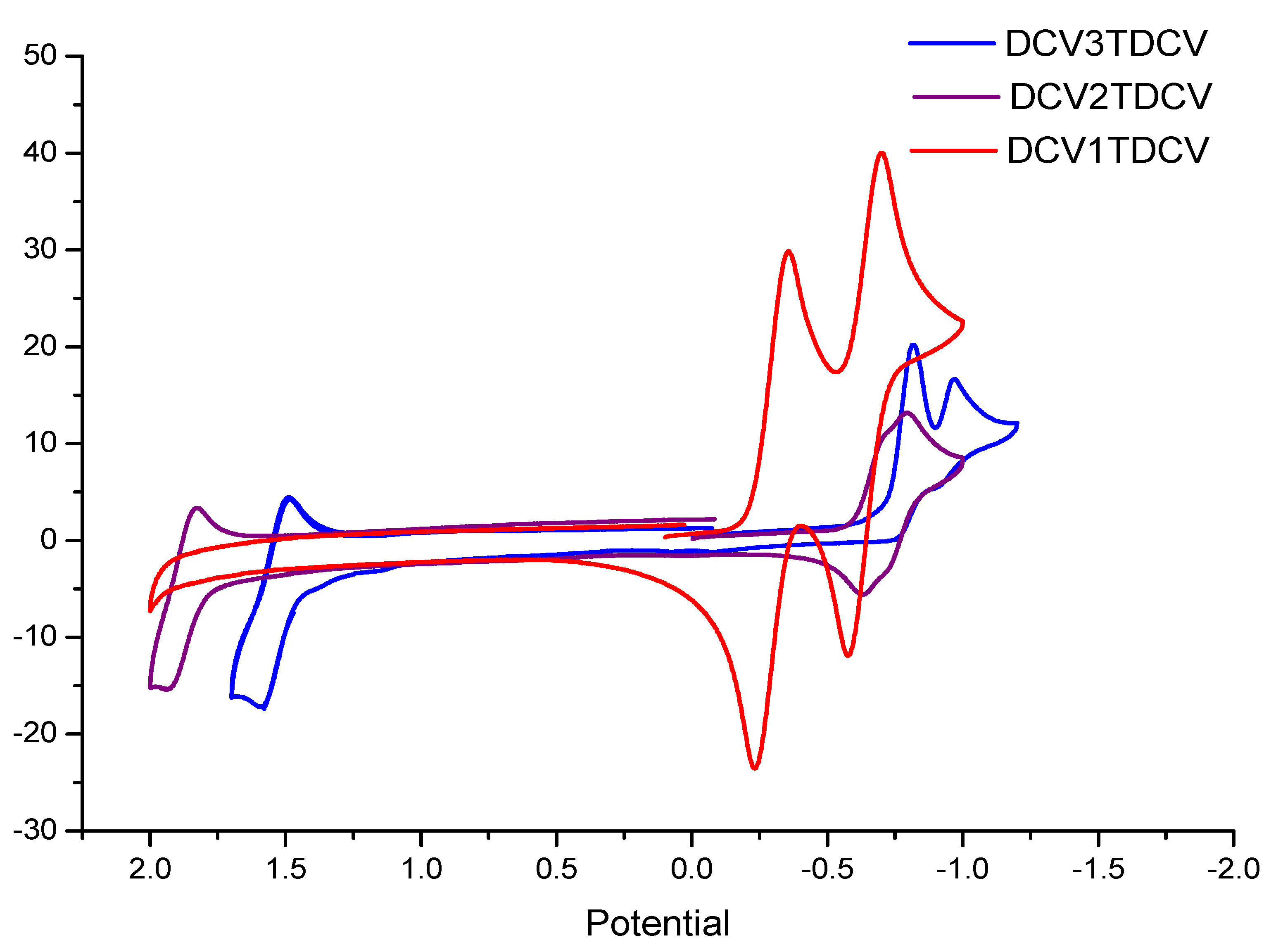
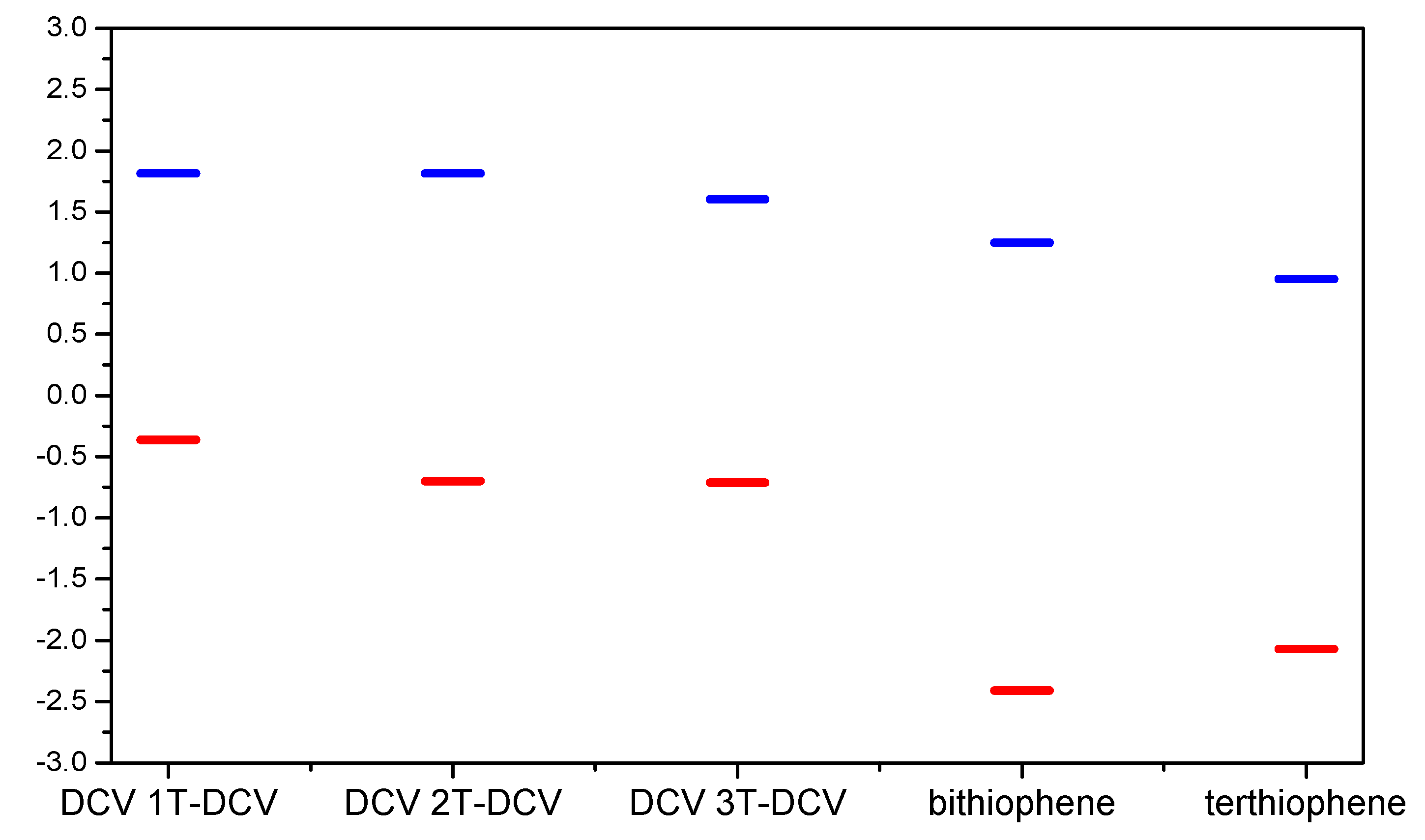
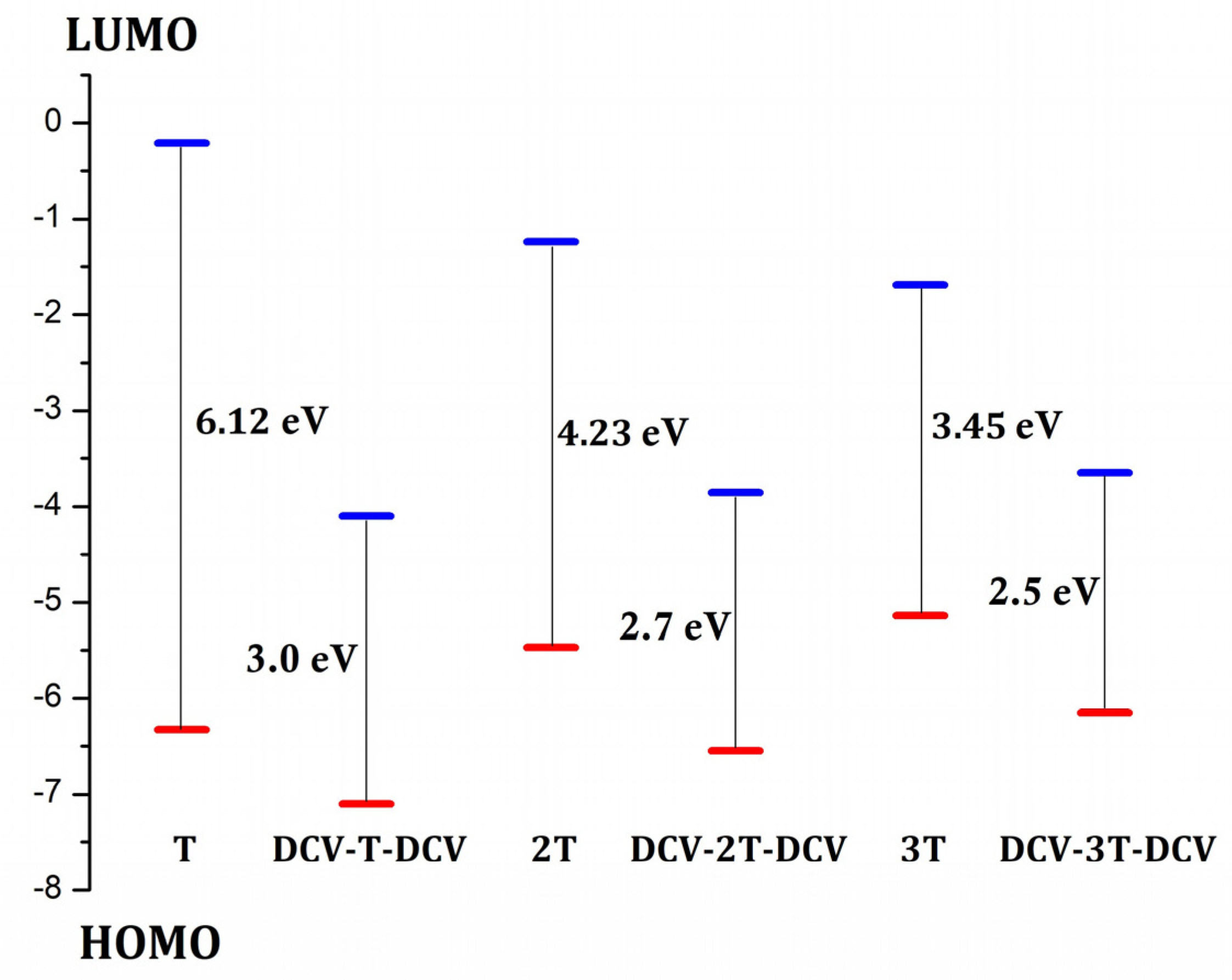
The introduction of the DCV group onto the thiophene molecules results in a unique evolution of their electrochemical and electronic behavior, as evident from cyclic voltammetry and UV–vis measurements. First, new reversible two-electron reduction processes in the series DCV-nT-DCV start to appear in compound 1 with a gradual increase in the reduction potential with an increasing number of thiophene units, which was consistent with the UV–vis results. This is presumably due to the lowering of the LUMO levels of these molecules as revealed from the cyclic voltammetry, which was consistent with the electronic spectroscopic results. The separation between the reduction and oxidation peaks increases with the increase in the number of thiophene units. The electrochemical data also reveal that the difference between the oxidation and reduction potentials, ∆Ep, for 13 is significantly smaller than the corresponding values for the unsubstituted oligothiophenes. This suggests that compounds 2 and 3 are more likely to exhibit ambipolar transport. Compound 1 is only reduced, and no oxidation was observed, indicating the dominance of the electron-accepting nature of this molecule (Figure 2. In compound 2, where one more thiophene unit is present, the molecule can be both reduced and oxidized, with the reduction potential shifted towards a more negative potential (Figure 2). The trend is further continued in compound 3, where the molecule is shown to both accept and give electrons, a property indicating the possibility of heaving as an ambipolar material (Figure 2). We also note that the ΔEp for bithiophene is 3.66 V, and this is reduced to 2.56 V upon the introduction of two DCV groups or a reduction of 0.55 V per DCV group. Similar trends were observed for the terthiophene analog. These results were consistent with the electronic spectroscopic results and earlier studies on TCV-substituted oligothiophenes [12]. The TCV appeared to be more effective than the DCV based on CV and UV–vis data. This can be attributed to the additional cyano group [11,12]. We examined the bathochromic shifts observed in these compounds upon introducing the DCV groups. For example, λmax for bithiophene is 303.5 nm (in CH3CN) and is shifted to 456.75 nm in DCV-2T-DCV (153.2 nm shift) and further to 502 nm for the DCV-3T-DCV. These results demonstrate that the DCV groups provide a relatively straightforward method in molecular design and fine-tuning of the optical and redox properties of oligothiophene. Presumably, this strategy can be extended to other conjugated organic molecules (Table 1). The electrochemical band gaps, as calculated from the onset of oxidation and reduction potentials, generally correlate well with optical band gaps derived from absorption spectra and trends from DFT calculations, confirming the consistency between electrochemical and photophysical measurements. (Figure 3 and Figure 4) This has been further confirmed by DFT calculations of the HOMO-LUMO levels for compounds 13 (Figure 5).
DFT calculations were performed using Spartan 24 at the BLY3P level [15] (isolated gas phase molecules), and they appear to reproduce the trends obtained in the evolution of the energy levels constructed by using cyclic voltammetry data (Figure 6 and Figure 7).
When we turn to their UV–vis spectra, we note that DCV-substituted oligothiophenes display strong absorption in their electronic spectra, attributed to their extended π-conjugation, intramolecular charge transfer, and lowering of the LUMO levels due to the electron-withdrawing capability of the DCV group, resulting in red-shifted absorption peaks compared with unsubstituted oligothiophenes. This result is consistent with observations in closely related systems employing various electron-accepting groups, such as cyano-, nitro, and tricaynovinyl groups [8,9,10,11,12] (Figure 3).
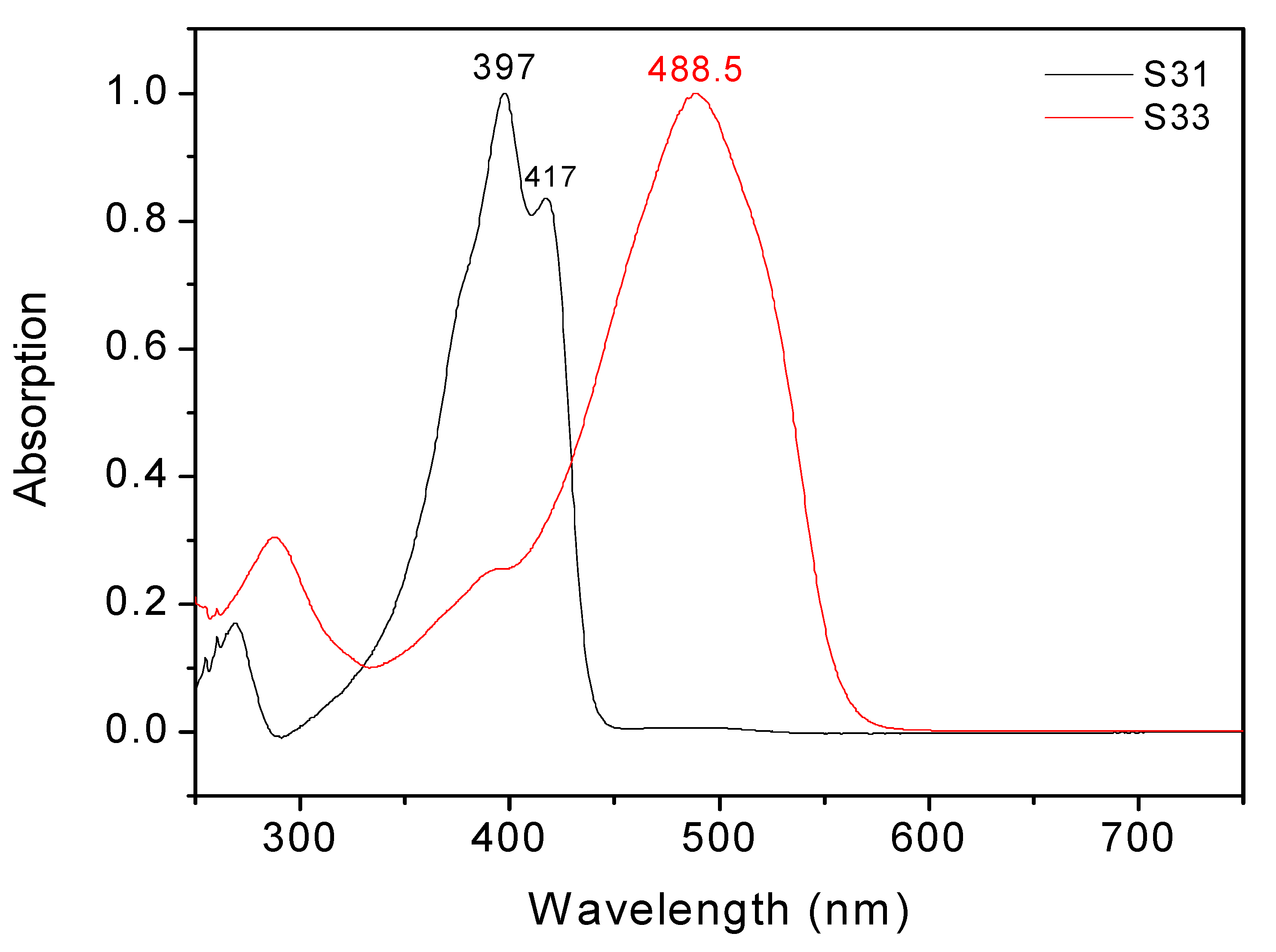
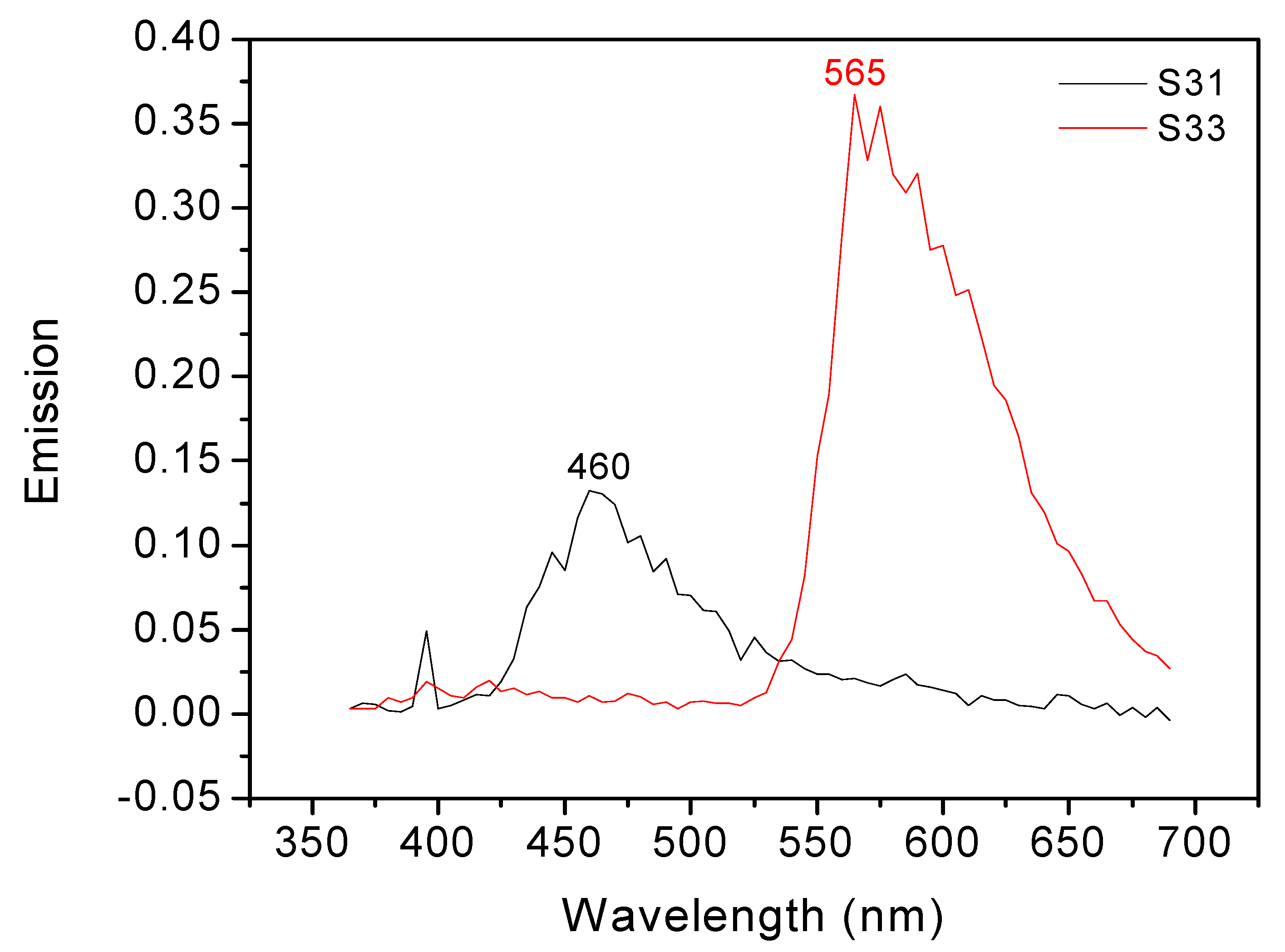
In addition, we observed that these materials appeared visibly fluorescent, which prompted us to look into their fluorescence behavior (Figure 6). We like to point out that many detailed spectroscopic and key studies were reported on oligothiopehens and derivatives. These studies mainly focused on the fluorescence behavior of oligothiophenes and derivatives as a function of solvent polarity and concentration dependence, in addition to quantum yields and lifetimes [16,17,18,19]. In our work, we observe that the fluorescence emission is red-shifted, compared to absorption maxima, by around 70 to 80 nm. For example, the fluorescence emission of compound 3 is red-shifted by nearly 80 nm (565 nm) compared to the absorption maxima (484.5 nm). This property makes these compounds particularly suitable for applications in organic light-emitting diodes (OLEDs) and as fluorescent probes in sensing applications. We are currently investigating the possibility of their use as biomarkers and DNA intercalators (as X-ray structures revealed nearly planar molecules) [20,21,22,23,24]. From these crystal structural studies, we concluded that both inter- and intramolecular CN…S interactions and intermolecular CN…H-C interactions play a role in enhancing planarity of DCV and TCV-containing molecules [12].
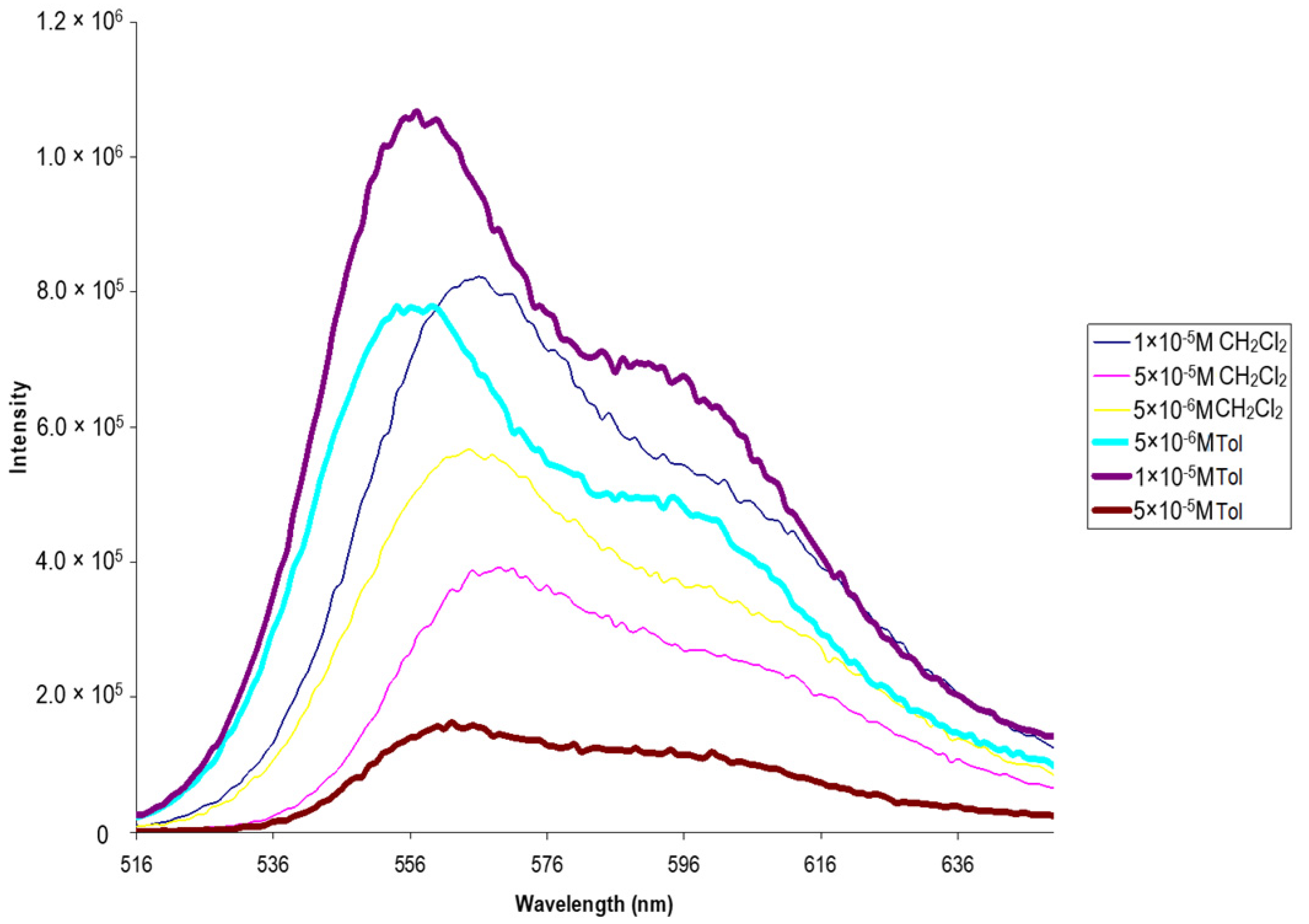
We also carried out concentration-dependent fluorescence measurements on compound 3 in toluene and dichloromethane (Figure 7). We note that dicyanovinyl-terminated oligothiophenes exhibit pronounced solvent-polarity and concentration-dependent fluorescence behavior. In nonpolar solvents like toluene, they generally show high quantum yields, narrow lifetimes, and minimal non-radiative decay, typical of locally excited (LE) states. As the polarity increases (e.g., DCM), fluorescence slightly red-shifts presumably via intramolecular charge transfer (ICT). At higher concentrations, aggregation-induced quenching appears to further suppress fluorescence more likely through intermolecular CT and excimer formation—an effect amplified in polar environments.
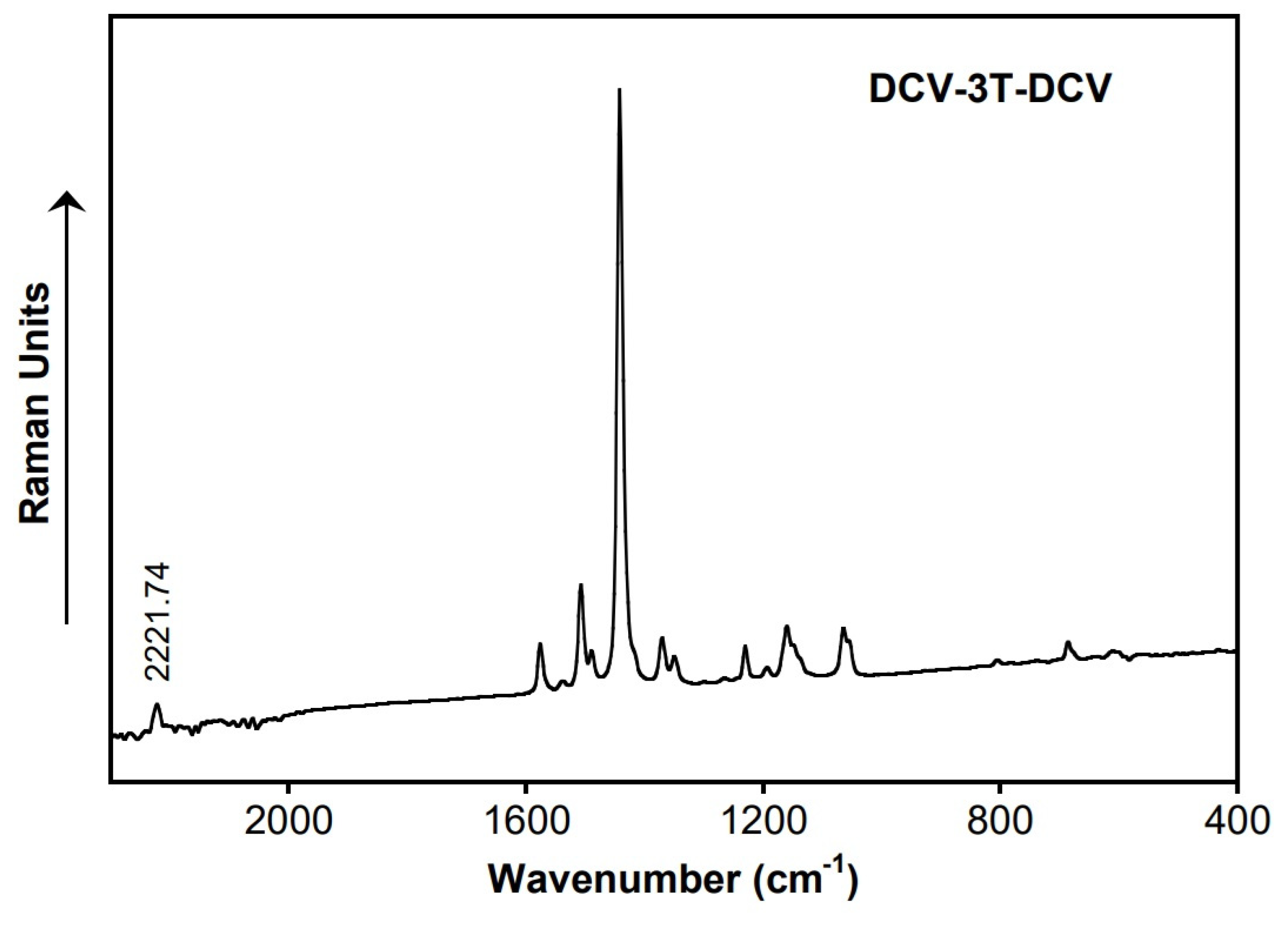
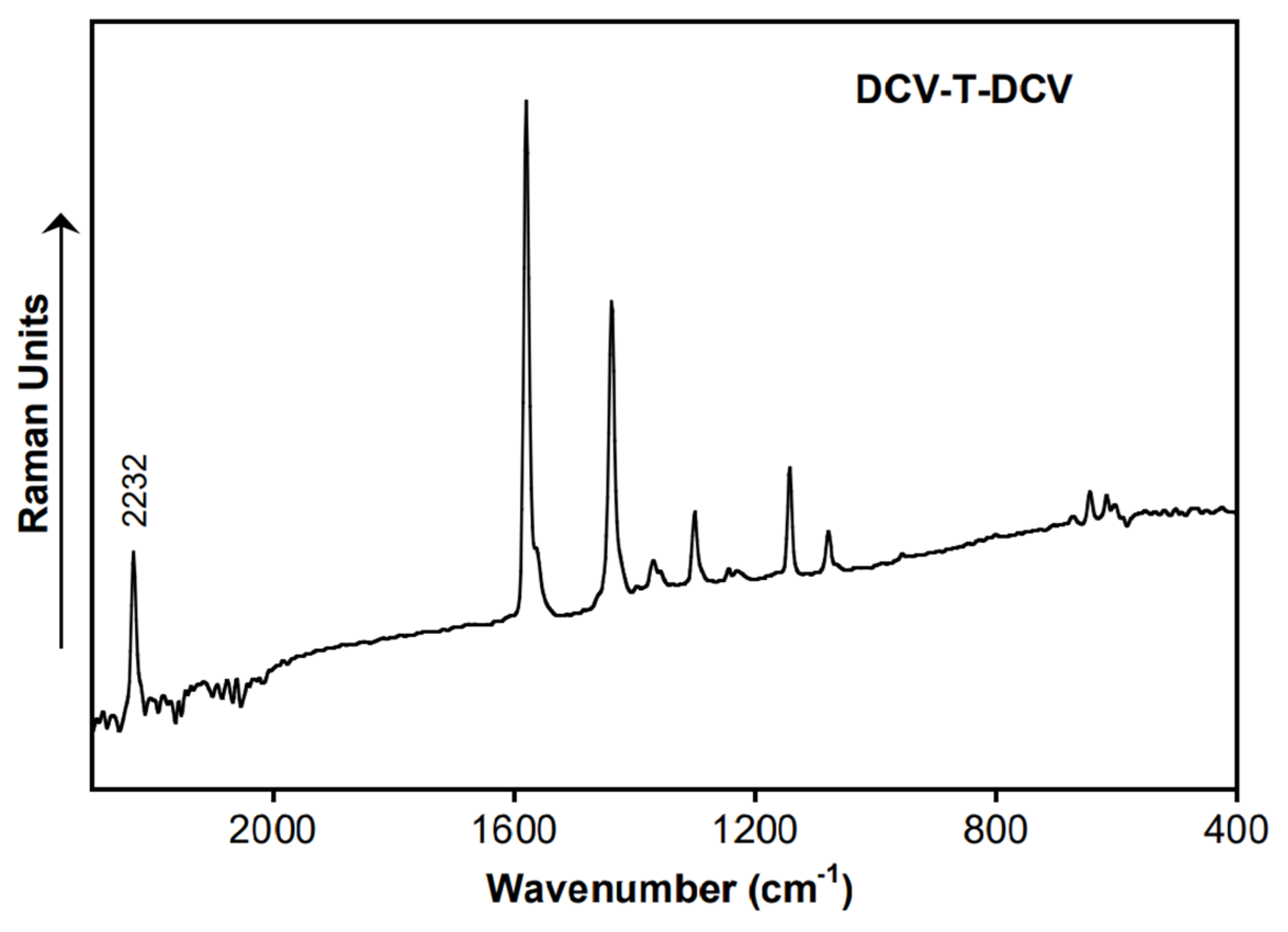
Dicyanovinyl (DCV) oligothiophenes exhibit distinct infrared (IR) and Raman spectral characteristics due to their molecular structure and DCV groups. These characteristics can be employed in using them as IR and or Raman markers. The most prominent features in the IR spectra are the νC≡N peaks at ~2222–2229 cm−1, closely matching those reported for TCV-substituted oligothiophenes and TCNQ (2225.5 cm−1) [25,26,27,28] (Table 2).
The position and intensity of these peaks appear to be influenced by inter- and intramolecular interactions as revealed in single-crystal structural studies. The key intramolecular interactions were between the CN…S, resulting in forcing planarity, as revealed by X-ray studies. The second important feature in the vibrational spectra of these compounds is the evolution of C=C stretching frequencies between the quinoidal and benzoidal limits as a function of the number of thiophene units. As one might expect, the thiophene units contribute several vibrational modes to the Raman and IR spectra. The C=C stretching in the thiophene rings generally appears between 1400 and 1600 cm−1. These bands provide insights into the aromatic character and conjugation. In particular, the quinoidal vs. benzoid C=C stretching modulation provides additional indication of IMCT. Furthermore, the intensity and position of these bands can indicate the degree of conjugation and the influence of cyano substituents on the electronic structure. If we consider the Raman spectra of 1 and 3 (Figure 8), we clearly see that, in the shorter molecule (compound 1), the quinoidal band is dominant at 1588.9 cm−1, while the benzoidal band is less intense at 1455 cm−1. This is reversed in the longer molecule (compound 3), where the quinoidal band is diminished in intensity at 1584.9 cm−1, while the benzoidal band is dominant at 1444.5 cm−1 [25,26,27,28].

4. Conclusions

This study demonstrates that DCV-substituted oligothiophenes exhibit interesting photophysical, electrochemical, and vibrational properties, which can be gradually fine-tuned to develop materials suitable for several applications. The clear correlation between electrochemical band gaps and optical behavior, supported by DFT-calculated HOMO-LUMO levels, establishes these molecules as promising candidates for applications such as organic field-effect transistors and molecular sensors. Vibrational analyses provide further support for their tunability and sensitivity to structure and environment, reinforcing their potential for use in structurally responsive optoelectronic systems.

Author Contributions

Conceptualization M.M.B. and P.-T.T.P.; methodology, E.H.E.; software, P.-T.T.P. and S.M.A.; validation, M.M.B. and P.-T.T.P.; formal analysis, M.M.B.; investigation, M.M.B. and P.-T.T.P.; resources, M.M.B.; data curation, J.A.B., S.M.A., S.H.Y., M.M.B. and P.-T.T.P.; writing—original draft preparation, M.M.B.; writing—review and editing, M.M.B. and P.-T.T.P.; visualization, J.A.B., S.M.A. and S.H.Y.; supervision, M.M.B.; project administration, M.M.B. and P.-T.T.P.; funding acquisition, M.M.B. All authors have read and agreed to the published version of the manuscript.

Funding

This research received no external funding. It was supported by an IRG grant from Alfaisal University Office of Research, Grant No. IRG-24409.

Data Availability Statement

Data and samples can be provided by reasonable request from M.M.B.

Acknowledgments

The authors gratefully acknowledge the financial support from the Office of the Vice President for Research at Alfaisal University (Grant No. IRG-24409, awarded to M. Bader), and the stipend support for undergraduate researchers (S. Al Rifai, S. Younas, and J. Albusaili) was provided by the Deanships of the College of Science and Student Affairs at Alfaisal University. We value the encouraging early NLO results during our collaboration with W. Sun at NDSU. We thank J. Q. Chen and Lam Lam, who helped with the IR data of compounds 1 and 2.

Conflicts of Interest

The authors declare no conflict of interest.

References

  1. Kertesz, M.; Choi, C.H.; Yang, S. Conjugated Polymers and Aromaticity. Chem. Rev. 2005, 105, 3448–3481. [Google Scholar] [CrossRef]
  2. Roncali, J. Synthetic Principles for Bandgap Control in Linear π-Conjugated Systems. Chem. Rev. 1997, 97, 173–206. [Google Scholar] [CrossRef]
  3. Brédas, J.-L.; Beljonne, D.; Coropceanu, V.; Cornil, J. Charge-Transfer and Energy-Transfer Processes in π-Conjugated Oligomers and Polymers: A Molecular Picture. Chem. Rev. 2004, 104, 4971–5004. [Google Scholar] [CrossRef] [PubMed]
  4. Friederich, P.; Fediai, A.; Kaiser, S.; Konrad, M.; Jung, N.; Wenzel, W. Toward Design of Novel Materials for Organic Electronics. Adv. Mater. 2019, 31, 1808256. [Google Scholar] [CrossRef] [PubMed]
  5. Bader, M.M.; Carvalho, T.; Li, H.; Tarter, S.; Spangler, C.W. Design and Synthesis of New Acceptor Molecules for Photoinduced Electron Transfer Reverse Saturable Absorption. In Linear and Nonlinear Optics of Organic Materials, Proceedings of the International Symposium on Optical Science and Technology, 2001, San Diego, CA, USA, 29 July–3 August 2001; SPIE: Bellingham, WA, USA, 2001; Volume 4461. [Google Scholar] [CrossRef]
  6. Mishra, A.; Ma, C.-Q.; Bäuerle, P. Functional Oligothiophenes: Molecular Design for Multidimensional Nanoarchitectures and Their Applications. Chem. Rev. 2009, 109, 1141–1276. [Google Scholar] [CrossRef] [PubMed]
  7. Perepichka, I.F.; Perepichka, D.F. Handbook of Thiophene-Based Materials: Applications in Organic Electronics and Photonics, 2 Volumes; Wiley: Hoboken, NJ, USA, 2009. [Google Scholar]
  8. Pham, P.-T.T.; Bader, M.M. Inter- and Intramolecular Interactions in Some Bromo- and Tricyanovinyl-Substituted Thiophenes and Ethylenedioxythiophenes. Cryst. Growth Des. 2014, 14, 916–922. [Google Scholar] [CrossRef]
  9. Casado, J.; Pappenfus, T.M.; Miller, L.L.; Mann, K.R.; Ortí, E.; Viruela, P.M.; Pou-Amérigo, R.; Hernández, V.; López Navarrete, J.T. Nitro-Functionalized Oligothiophenes as a Novel Type of Electroactive Molecular Material: Spectroscopic, Electrochemical, and Computational Study. J. Am. Chem. Soc. 2003, 125, 2524–2534. [Google Scholar] [CrossRef]
  10. Hapiot, P.; Demanze, F.; Yassar, A.; Garnier, F. Molecular Engineering of Band-Level Energies in Oligothiophenes through Cyano-Substitutions. J. Phys. Chem. 1996, 100, 8397–8401. [Google Scholar] [CrossRef]
  11. Zhan, X.; Zhang, W.; Li, Y.; Zhang, X.; Xie, Z.; Zhan, Q.; Zhan, Y. Dicyanovinyl-Substituted Oligothiophenes as Materials for Organic Photovoltaic Cells. J. Am. Chem. Soc. 2011, 133, 6787–6795. [Google Scholar]
  12. Bader, M.M.; Pham, P.-T.; Alrifai, S.M.T.; Younas, S.H.; Albusaili, J.A. Molecular Design and Crystal Engineering of Oligothiophenes Using Dicyanovinyl- (DCV) and Tricyanovinyl- (TCV) Groups. CrystEngComm 2025, 27, 5558–5570. [Google Scholar] [CrossRef]
  13. Cai, X.; Burand, M.W.; Newman, C.R.; da Silva Filho, D.A.; Pappenfus, T.M.; Bader, M.M.; Brédas, J.-L.; Mann, K.R.; Frisbie, C.D.J. N-and P-channel transport behavior in thin film transistors based on tricyanovinyl-capped oligothiophenes. Phys. Chem. B 2006, 110, 14590–14597. [Google Scholar] [CrossRef]
  14. Bader, M.M.; Pham, P.-T.T.; Nassar, B.R.; Lin, H.; Xia, Y.; Frisbie, C.D. Extended 7,7,8,8-Tetracyano-p-quinodimethane-Based Acceptors: How Molecular Shape and Packing Impact Electron Accepting Behavior. Cryst. Growth Des. 2009, 9, 4599–4601. [Google Scholar] [CrossRef]
  15. Spartan, Version 24; Wavefunction Inc: Irvine, CA, USA, 2024.
  16. Huss, A.S.; Pappenfus, T.; Bohnsack, J.; Burand, M.; Mann, K.R.; Blank, D.A. The Influence of Internal Charge Transfer on Nonradiative Decay in Substituted Terthiophenes. J. Phys. Chem. A 2009, 113, 10202–10210. [Google Scholar] [CrossRef] [PubMed]
  17. Zhao, F.; Kong, J.; Zhang, W.; Kuang, Z.; Zhou, M. Triplet Excited-State Dynamics in Benzothiadiazole-Based Thermally Activated Delayed Fluorescence Compound. J. Phys. Chem. Lett. 2024, 15, 2885–2892. [Google Scholar] [CrossRef] [PubMed]
  18. Stoltzfus, D.M.; Donaghey, J.E.; Armin, A.; Shaw, P.E.; Burn, P.L.; Meredith, P. Charge Generation Pathways in Organic Solar Cells: Assessing the Contribution from the Electron Acceptor. Chem. Rev. 2016, 116, 12920–12955. [Google Scholar] [CrossRef] [PubMed]
  19. Effenberger, F.; Wuerthner, F.; Steybe, F. Synthesis and Solvatochromic Properties of Donor–Acceptor–Substituted Oligothiophenes. J. Org. Chem. 1995, 60, 2082–2091. [Google Scholar] [CrossRef]
  20. Bogner, L.; Yang, Z.; Baum, S.; Corso, M.; Fitzner, R.; Bäuerle, P.; Franke, K.J.; Pascual, J.I.; Tegeder, P. Electronic States and Exciton Dynamics in Dicyanovinyl-Sexithiophene on Au(111). J. Phys. Chem. C 2016, 120, 27268–27275. [Google Scholar] [CrossRef]
  21. Yang, T.; Tang, Y.; Wei, Y.; Xie, L.; Huang, W. Molecular Gridization of Organic Semiconducting π Backbones. Acc. Chem. Res. 2025, 13, 1748–1751. [Google Scholar] [CrossRef]
  22. Harpham, M.R.; Süzer, Ö.; Ma, C.-Q.; Bäuerle, P.; Goodson, T., III. Thiophene Dendrimers as Entangled Photon Sensor Materials. J. Am. Chem. Soc. 2009, 131, 973–979. [Google Scholar] [CrossRef]
  23. Li, S.; Cooper, V.R.; Thonhauser, T.; Lundqvist, B.I.; Langreth, D.C. Stacking Interactions and DNA Intercalation. J. Phys. Chem. B 2009, 113, 11166–11172. [Google Scholar] [CrossRef]
  24. Ganji, M.; Kim, S.H.; van der Torre, J.; Abbondanzieri, E.; Dekker, C. Intercalation-Based Single-Molecule Fluorescence Assay To Study DNA Supercoil Dynamics. Nano Lett. 2016, 16, 4699–4707. [Google Scholar] [CrossRef]
  25. Agosti, E.; Rivola, M.; Hernandez, V.; Del Zoppo, M.; Zerbi, G. Electronic and Dynamical Effects from the Unusual Features of the Raman Spectra of Oligo and Polythiophenes. Synth. Met. 1999, 100, 101–112. [Google Scholar] [CrossRef]
  26. Esposti, A.D.; Moze, O.; Taliani, C.; Tomkinson, J.; Zamboni, R.; Zerbetto, F. The Intramolecular Vibrations of Prototypical Polythiophenes. J. Chem. Phys. 1996, 104, 9704–9718. [Google Scholar] [CrossRef]
  27. Milani, A.; Brambilla, L.; Del Zoppo, M.; Zerbi, G. Raman Dispersion and Intermolecular Interactions in Unsubstituted Thiophene Oligomers. J. Phys. Chem. B 2007, 111, 1271–1276. [Google Scholar] [CrossRef]
  28. Ortí, E.; Viruela, P.M.; Viruela, R.; Effenberger, F.; Hernández, V.; López Navarrete, J.T. Raman and Theoretical Study of the Solvent Effects on the Sizable Intramolecular Charge Transfer in the Push–Pull 5-(Dimethylamino)-5′-nitro-2,2′-bithiophene. J. Phys. Chem. A 2005, 109, 8724–8731. [Google Scholar] [CrossRef]
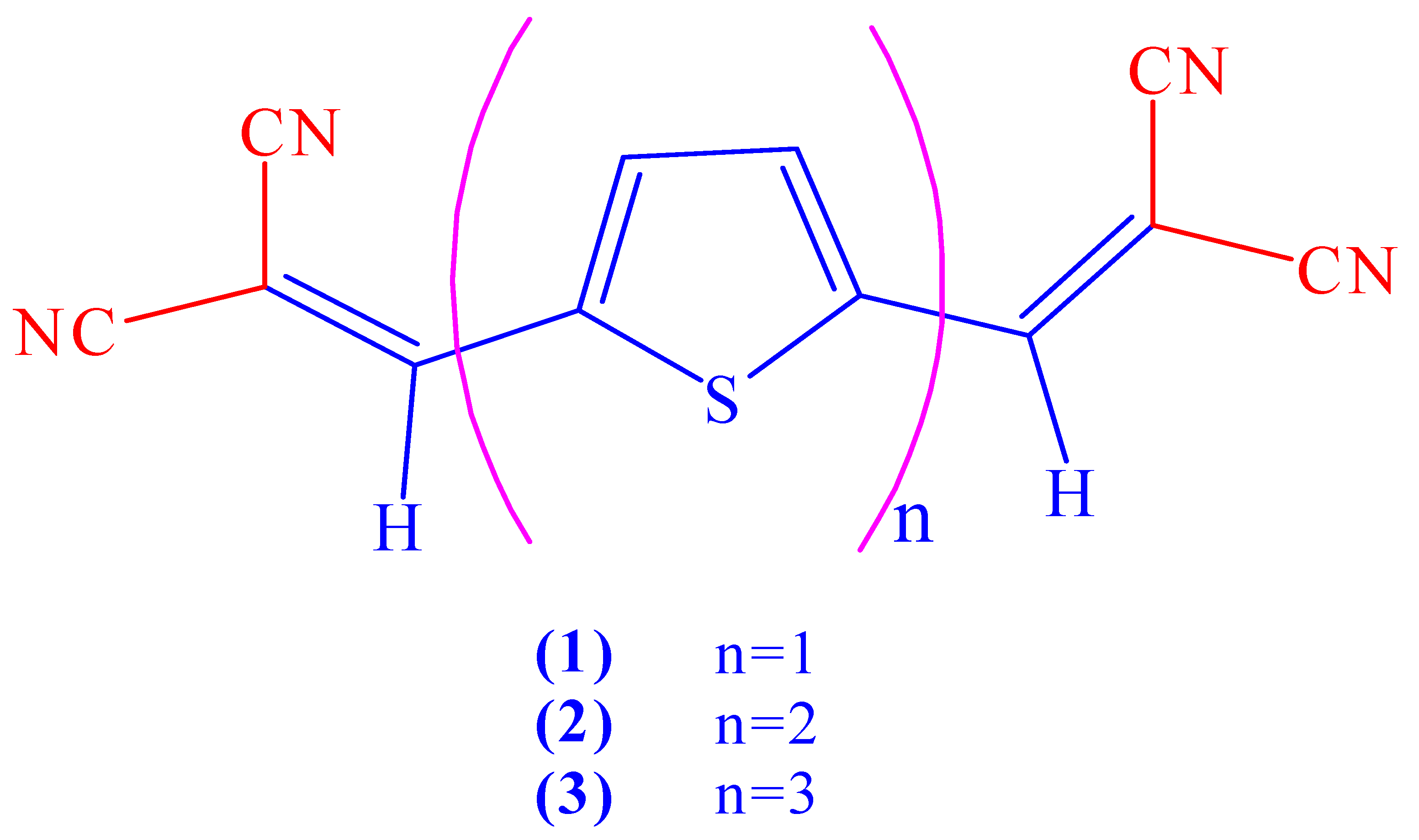
Figure 1. Structures of compounds 13.
Optics 06 00056 g001
Figure 2. Cyclic voltammogram for compounds 13.
Optics 06 00056 g002
Figure 3. Normalized electronic spectra of 1 and 3 in dichloromethane.
Optics 06 00056 g003
Figure 4. Schematic representation of the relative HOMO-LUMO levels based on CV for compounds compared with bithiophene and terthiophene.
Optics 06 00056 g004
Figure 5. HOMO-LUMO levels calculated by DFT [11,15].
Optics 06 00056 g005
Figure 6. Fluorescence spectra of 1 S31 and 3 S33 in dichloromethane. The emission spectra are excited by the 355 nm.
Optics 06 00056 g006
Figure 7. Fluorescence spectra of DCV-3T-DCV in toluene and dichloromethane at various concentrations.
Optics 06 00056 g007
Figure 8. Raman spectra of compounds 1 and 3. Note the evolution of the B and Q in the C=C stretching bands between shorter and longer molecules.
Optics 06 00056 g008aOptics 06 00056 g008b
Table 1. Electrochemical and optical data for the molecules in this study a.
CompoundEp, oxEp, redΔEpλmax in CH2Cl2
DCV-T-DCVnot measurable−0.358 (rev)
−0.70 (rev)
-415
DCV-2T-DCV1.83−0.7962.556451
DCV-3T-DCV1.488−0.818
−0.972
2.296502
bithiophene1.25 −2.41
−3.10
3.66303.5
terthiophene0.95−2.07
−2.47
3.02353
TetracyanoethyleneNot measurable−0.54
TCV 2T-TCV b2.12−0.08 (rev)
−0.37 (rev)
−0.81
−1.47
2.20504.0 (in acetonitrile)
a All oligothiophene potentials were measured with cyclic voltammetry (1 mM solutions) in 0.1 M n-Bu4N+ClO4/CH3CN at 100 mV/s (vs Ag/AgCl). b Added for comparison with DCV (Bader, MM et al. Chem. Mat. 2003) [12].
Table 2. Summary of CN-stretching frequencies for compounds 13.
ν C N cm−1
CompoundIRRaman
DCV-T-DCV2229.342232.2
DCV-2T-DCV2223.562225.7
DCV-3T-DCV2222.602221.7
For comparison: FTIR ν C N for TCNE is 2226.12 cm−1, and 2225.47 ν C N cm−1 for TCNQ.
Disclaimer/Publisher’s Note: The statements, opinions and data contained in all publications are solely those of the individual author(s) and contributor(s) and not of MDPI and/or the editor(s). MDPI and/or the editor(s) disclaim responsibility for any injury to people or property resulting from any ideas, methods, instructions or products referred to in the content.