1. Introduction
Rectangular metallic silos (RMSs) represent critical infrastructure components in industrial and agricultural sectors, serving as essential storage facilities for diverse granular and bulk materials, including grains, cement, coal, sand, and various powdered substances [
1,
2,
3]. These storage structures constitute fundamental elements for agricultural processing facilities and industrial manufacturing operations, with the strategic importance extending beyond mere storage capacity to serve as vital nodes in supply chain networks representing substantial capital investments for both public and private sector entities.
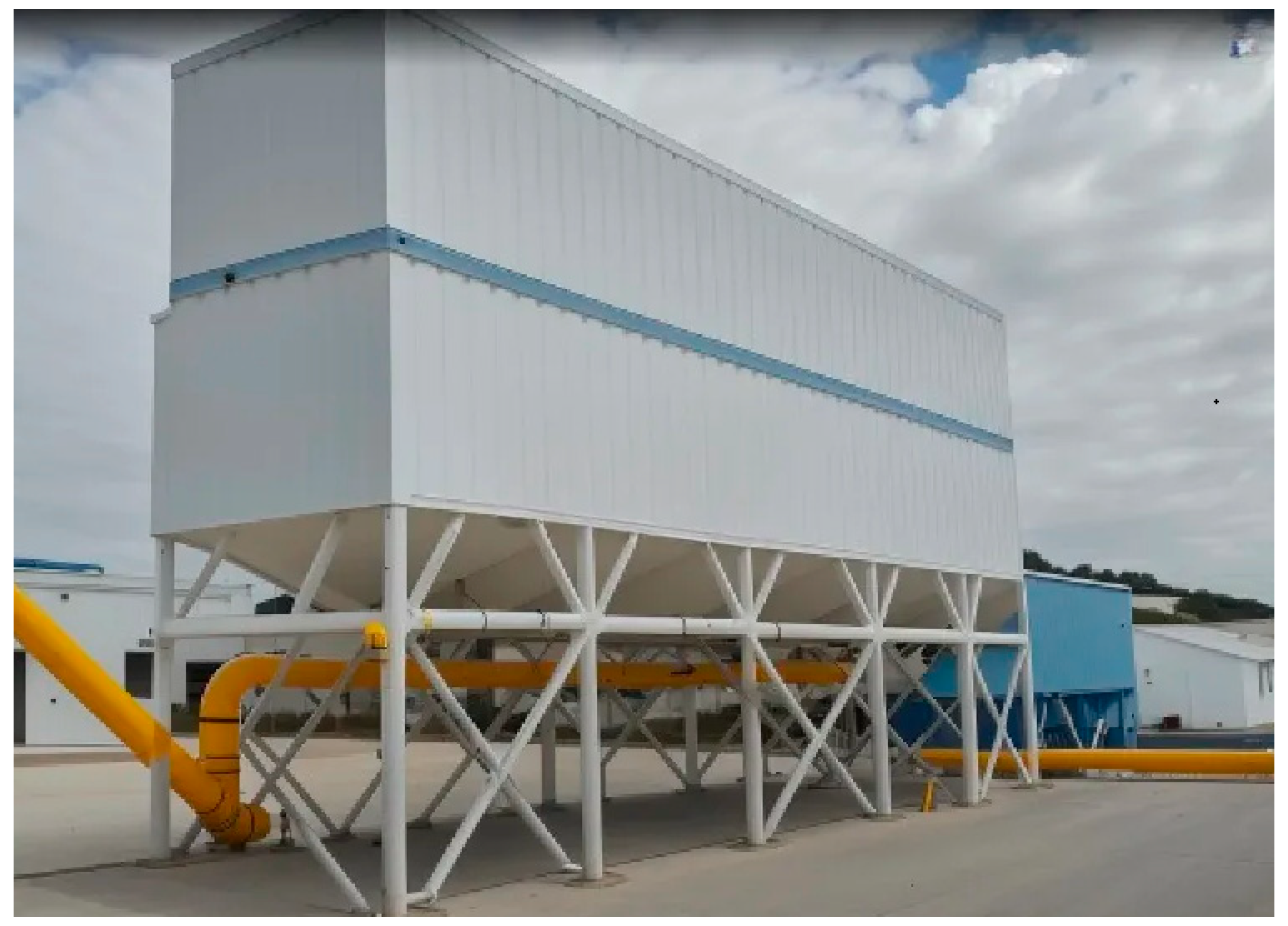
Figure 1 depicts a typical RMS configuration commonly employed in industrial applications.
Storage structures can be classified according to multiple criteria, including structural configuration, construction materials, support mechanisms, and geometric properties. Ground-supported and elevated silos may be categorized based on cross-sectional geometry (rectangular, circular, or polygonal); foundation connection type (rigid or flexible base attachments); and construction methodology involving various metallic materials and fabrication techniques. While numerous storage facilities, particularly cylindrical configurations, have been constructed using steel materials, rectangular metallic silos offer distinct advantages in terms of structural efficiency, modular construction capabilities, and optimized space utilization for bulk material storage [
4,
5].
The design of metallic silos requires comprehensive consideration of both structural capacity and operational performance requirements, encompassing static loads from stored materials, dynamic loads from filling and discharge operations, thermal effects, wind loads, and seismic actions [
6]. Historical seismic events have documented numerous instances of significant damage to storage structures, including substantial destruction during the Long Beach 1933, Niigata 1964, Alaska 1964, San Fernando 1971, Northridge 1994, Kobe 1995, and Kocaeli 1999 earthquakes [
7,
8,
9].
Primary failure mechanisms in metallic silos typically involve structural deformation, material yielding at critical stress concentration locations, buckling of shell elements under compressive stresses, and joint failure in the silo walls due to excessive demand on welded or bolted connections. Additionally, during strong ground motion, these structures experience substantial time-varying dynamic loads from stored granular materials throughout the earthquake duration.
Literature Review, Research Gap, and Novelty
The effects of repeated earthquakes on structural behavior have been studied for various structural systems, yet related research has primarily focused on single-degree-of-freedom systems [
10], multi-story building structures [
11,
12,
13,
14,
15,
16], utility tunnels [
17], and above-ground steel tanks [
18]. Recent advances in seismic analysis have demonstrated the critical importance of considering sequential earthquake effects on structural performance and cumulative damage, as structures in seismically active regions may be subjected to foreshocks, mainshocks, and aftershocks within relatively short time periods [
10,
11,
12].
Within the specific context of silo structures, the distinction between rectangular and cylindrical configurations is particularly important under seismic loading: rectangular bins develop non-uniform lateral pressure distributions and torsional responses that are absent in axisymmetric cylindrical geometries, yet existing seismic code provisions (EN 1998-4 [
19], EN 1993-4-1 [
20]) do not address rectangular silo geometries explicitly. The limited number of studies on rectangular metallic silos under seismic loading further underscores the need for dedicated investigations.
Yang et al. [
3] conducted comprehensive experimental and numerical investigations on grain bulk material steel silo structures under single earthquake events, demonstrating significant soil–structure interaction effects and the influence of storage fullness on seismic response. Jing et al. [
4] investigated static and seismic pressure distributions in cylindrical steel silos through shaking table tests and finite element analysis, providing valuable insights into pressure amplification phenomena during seismic events. However, these studies focused exclusively on single earthquake scenarios and cylindrical geometries.
Khalil et al. [
2] presented advanced finite element modeling approaches for assessing seismic overpressure in flat-bottom steel silos, incorporating sophisticated contact algorithms and material nonlinearity. Their work highlighted the complexity of granular material behavior during seismic excitation but did not address the effects of sequential earthquakes or rectangular geometries. Mehretehran and Maleki [
21] examined buckling behavior of cylindrical steel silos under stored solids loads, comparing finite element predictions with Eurocode 8 provisions and identifying areas where code specifications may be either conservative or unconservative.
To the authors’ knowledge, no comprehensive investigation has examined the inelastic seismic response of rectangular metallic silos under multiple earthquakes, highlighting a critical gap in the current state of knowledge. This research addresses this gap by providing the first systematic evaluation of elevated rectangular silos subjected to realistic earthquake sequences, incorporating both soil–structure interaction and varying storage fullness levels. The principal novelty of the present work lies in three aspects: (a) it constitutes the first systematic investigation of rectangular metallic silos under multiple earthquake sequences, addressing a critical knowledge gap left by previous research that has exclusively examined single “design earthquake” scenarios; (b) it comprehensively incorporates SSI effects through flexible foundation modeling, demonstrating quantitatively that foundation flexibility reduces peak displacements by 15–25% relative to rigid-base assumptions; and (c) it provides the first quantitative evidence on the amplification of seismic demands due to sequential loading for this structural typology, offering preliminary guidance for performance-based design. The findings also reveal that current Eurocode 8 provisions substantially underestimate displacement demands under sequential loading, motivating a discussion of necessary code modifications.
2. Numerical Modeling Methodology and Computational Framework
2.1. Finite Element Model Description
The computational analysis employs three-dimensional finite element methodology to investigate the seismic response of an integrated soil–structure–granular material system.
The primary structural geometry consists of an elevated rectangular silo body with plan dimensions of 6.0 m × 4.0 m and a total height of 8.0 m, supported by six circular hollow section (CHS) columns with 400 mm outer diameter and 12 mm wall thickness. The silo shell thickness varies linearly from 8 mm at the top to 14 mm at the base, reflecting typical design practice where increased thickness accommodates higher stress demands at lower elevations. The supporting columns are arranged in a rectangular pattern with a spacing of 5.0 m longitudinally and 3.0 m transversely, creating a stable three-dimensional structural system. The complete geometric specifications are summarized in
Table 1.
2.2. Material Properties and Constitutive Models
The steel material properties correspond to S355 structural steel grade with elastic modulus E = 210 GPa, Poisson’s ratio ν = 0.3, mass density ρ = 7850 kg/m3, and characteristic yield strength fy = 355 MPa. The constitutive behavior incorporates bilinear kinematic hardening with post-yield tangent modulus equal to 2% of the elastic modulus (Et = 0.02 E = 4.2 GPa), representing realistic cyclic loading characteristics observed in structural steel under seismic conditions.
The granular material represents stored wheat grain, with a bulk density of 800 kg/m
3, internal friction angle of 30°, and wall friction coefficient of 0.35, consistent with the published values for wheat in metallic containers (EN 1991-4) [
22]. For the elevated silo configurations examined, the granular material is represented through equivalent concentrated masses applied at eight discrete elevations (one per meter of silo height), reflecting the vertical distribution of stored material. The mass value at each level is determined from the volumetric partitioning of the stored grain over the corresponding 1.0 m vertical segment. This simplified representation is justified by the relatively rigid behavior of granular materials within metallic silos during seismic events, while significantly reducing computational demands compared to explicit granular material modeling. The approach has been validated for predicting fullness-dependent frequency shifts and global displacement demands in elevated silos by Yang et al. [
3] and Jing et al. [
4], who demonstrated accuracy within acceptable bounds for the aspect ratio of the present configuration. It is acknowledged, however, that the lumped mass representation cannot capture grain–wall contact forces (normal pressure amplification and wall friction during shaking) that arise in explicit granular simulations. Consequently, local wall pressure distributions—relevant for detailed shell buckling assessment—cannot be derived from the present model, and this constitutes an explicit limitation of the study, noted also in
Section 2 of the revised manuscript.
2.3. Soil Properties and Boundary Conditions
The surrounding soil medium represents Type C classification according to Eurocode 8 [
23], corresponding to deposits of dense to medium-dense sands and gravels with shear wave velocity V
s = 180–360 m/s. The soil constitutive behavior follows an equivalent-linear viscoelastic formulation with shear modulus G = 100 MPa, Poisson’s ratio ν
s = 0.28, mass density ρ
s = 1900 kg/m
3, and yielding shear wave velocity V
s = 229 m/s.
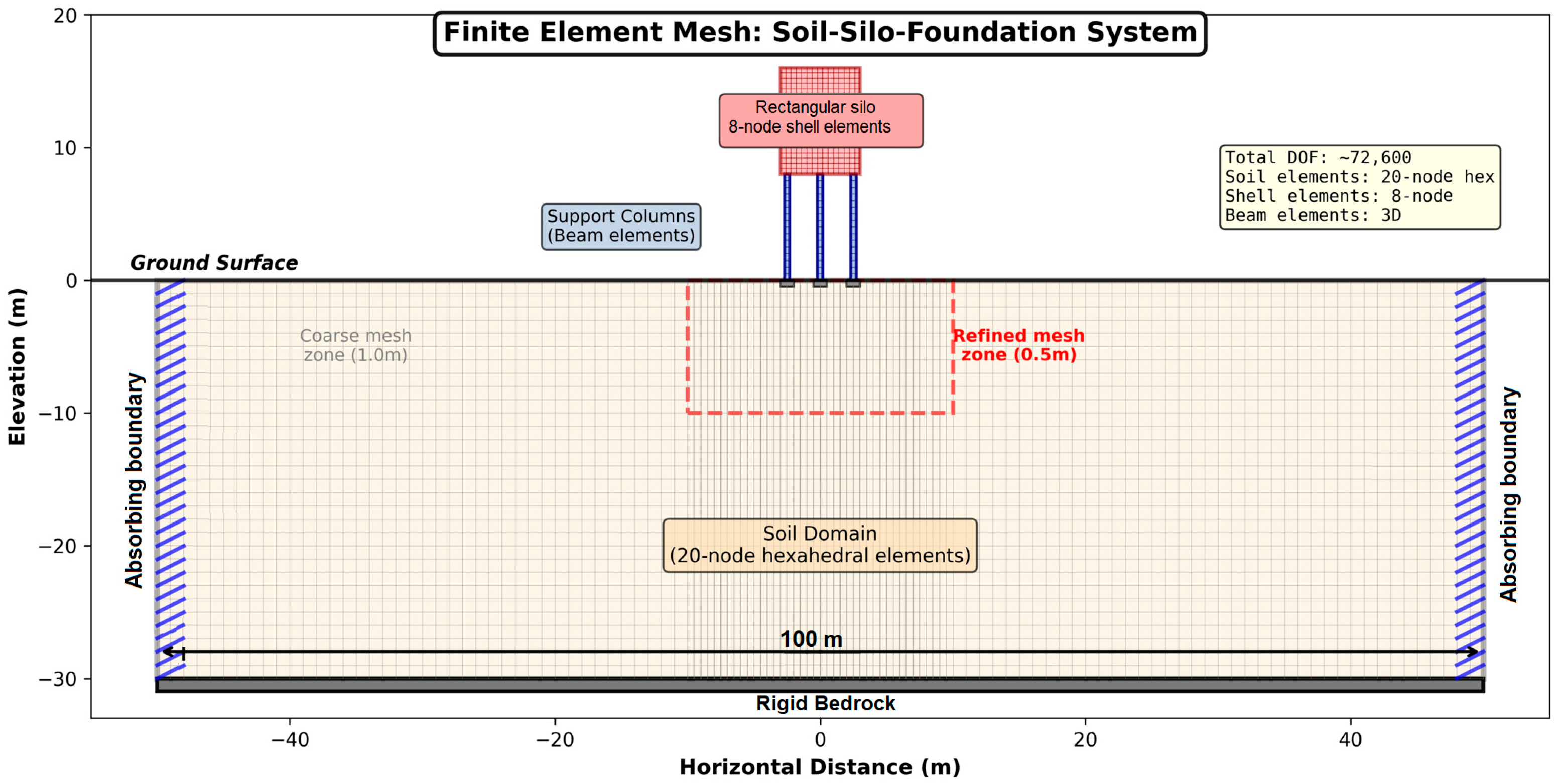
The computational soil domain extends laterally to 50 m from the structure centerline in both horizontal directions and vertically from ground surface to 30 m depth, where rigid bedrock is assumed. Viscous absorbing boundary conditions are implemented at lateral boundaries to prevent spurious wave reflections, representing enhanced versions of absorbing boundary formulations originally developed by Lysmer and Kuhlemeyer [
24]. These boundary conditions effectively simulate a semi-infinite soil extent while maintaining computational efficiency.
2.4. Finite Element Discretization and Mesh Convergence
The spatial discretization employs twenty-node hexahedral brick elements for the soil continuum with a characteristic element dimension of 1.0 m in regions distant from the structure, refined to 0.5 m in the immediate vicinity of the foundation system where stress gradients are most pronounced. The silo shell structure utilizes eight-node shell elements with five integration points through thickness, providing an accurate representation of bending behavior and membrane forces. Supporting columns are modeled using three-dimensional beam-column elements with appropriate cross-sectional properties. The shell-to-column connection is modeled as a rigid link with full moment transfer, ensuring compatibility between the shell mid-surface and the column centroidal axis at the junction nodes. The base of the soil domain is fully fixed (no uplift or sliding permitted at bedrock level), while the foundation–soil interface allows gapping through a contact formulation with zero tensile strength, permitting realistic foundation–soil separation under strong rocking motion. Local buckling of the CHS columns is accounted for through reduced effective section moduli calculated per EN 1993-1-5 [
25] for Class 3/4 cross-sections: with D/t = 400/12 = 33.3, the cross-section falls within the Class 3 boundary, and effective section properties are computed accordingly. The complete discretized system comprises approximately 72,600 degrees of freedom.
Systematic mesh convergence studies were performed to ensure solution independence from spatial discretization choices. Progressive mesh refinement was implemented with element sizes varying from 3.0 m to 0.3 m in critical regions.
Figure 2 illustrates the finite element mesh adopted for the soil–structure system.
2.5. Model Calibration and Verification
Model calibration incorporated available experimental data from shake table tests of similar elevated silo configurations reported in the recent literature [
3,
4]. The fundamental natural period obtained from eigenvalue analysis of the calibrated model equals T
1 = 0.42 s for the first mode (longitudinal translation) and T
2 = 0.39 s for the second mode (transverse motion). These values align reasonably with measurements from instrumented silos of comparable dimensions, providing confidence in the modeling approach adopted.
Validation of nonlinear response capabilities was accomplished through comparison with the published results for steel structures subjected to earthquake loading [
26,
27], demonstrating that the adopted material models and solution algorithms reproduce expected hysteretic behavior, including stiffness degradation, strength deterioration, and pinching effects typical of steel structures with connection flexibility.
Quantitative verification was performed by comparing predicted base shear coefficients with values obtained from simplified code-based procedures. For the examined configurations subjected to design-level earthquakes (PGA = 0.3 g), the numerical model predicts base shear coefficients in the range of 0.28–0.35, which compares favorably with Eurocode 8 elastic response spectrum predictions of 0.30–0.38 for the relevant period range, providing additional validation of the modeling approach.
2.6. Governing Equations and Solution Procedure
The discretized system results in a matrix equation of motion governing the dynamic response of the coupled soil–silo–granular material system under seismic excitation:
where
and
are the mass and damping matrices, and
denotes the nonlinear stiffness matrix (which, for linear elastic behavior, takes the form
). Furthermore
,
, and
are the displacement, velocity, and acceleration vectors relative to the base, respectively. Finally,
is the influence vector, and
is the ground acceleration at the rigid bedrock level.
The governing equation is solved numerically through stepwise integration using the Newmark constant average acceleration scheme (β = 0.25, γ = 0.5) coupled with modified Newton–Raphson iteration at each time increment. This combination provides robust convergence characteristics for the nonlinear soil–structure interaction problem. The time integration employs a time step Δt = 0.005 s, satisfying stability requirements and accurately capturing frequency content up to 100 Hz.
Rayleigh damping is employed with damping ratios ξ = 2% for the steel structure and ξ = 8% for the soil medium. The Rayleigh coefficients are derived by calibrating to the first two natural frequencies of the coupled system: for the flexible-base model, ω
1 = 13.33 rad/s (f
1 = 2.12 Hz) and ω
2 = 16.08 rad/s (f
2 = 2.56 Hz), yielding α = 1.143 s
−1 and β = 3.52 × 10
−3 s for the structural domain, and α = 1.830 s
−1 and β = 5.63 × 10
−3 s for the soil domain. The equivalent-linear soil model is employed at a representative shear strain level of γ ≈ 0.05–0.10%, consistent with the expected deformation level in a Type C soil under the examined PGA range and appropriate for the secant shear modulus used (G = 100 MPa). The potential double-counting of damping between the absorbing (viscous) boundary conditions and the modal Rayleigh damping is avoided by applying Rayleigh damping exclusively to the structural degrees of freedom; damping of the soil medium is governed by the viscoelastic constitutive model and the Lysmer–Kuhlemeyer absorbing boundaries, which together represent radiation damping without interference with the structural Rayleigh terms. The numerical analysis is performed using the specialized finite element software SINUS 4.0 (Seismic INelastic analysis of Underground Structures–Version 4.0) [
28], specifically developed and validated for seismic soil–structure interaction problems, incorporating the aforementioned solution algorithms.
2.7. Model Limitations
The following limitations of the computational model are explicitly acknowledged: (a) the equivalent-linear soil constitutive model may underestimate nonlinear soil response at high shear strain levels (γ > 0.1%), which can occur under maximum considered earthquake loading, and a fully nonlinear soil model would be required for a more rigorous treatment; (b) the lumped mass representation of the granular material precludes assessment of local wall pressure distributions and grain–wall interaction forces relevant for shell buckling design; (c) vertical seismic components are not included in the primary analyses, which may underestimate axial column demands, particularly for near-fault records; (d) only a single silo geometry and a single EC8 Type C soil profile are examined, limiting the generality of the quantitative findings; (e) connection degradation under cyclic loading is not modeled, as the rigid link assumption at shell-column interfaces is maintained throughout the analysis; (f) the intensity scaling approach is uniform (PGA-based), without spectrum-matching, which may introduce record-to-record variability in the structural response at longer periods. These limitations define the boundary conditions of applicability for the results and recommendations presented in this study.
3. Seismic Input and Loading Protocol
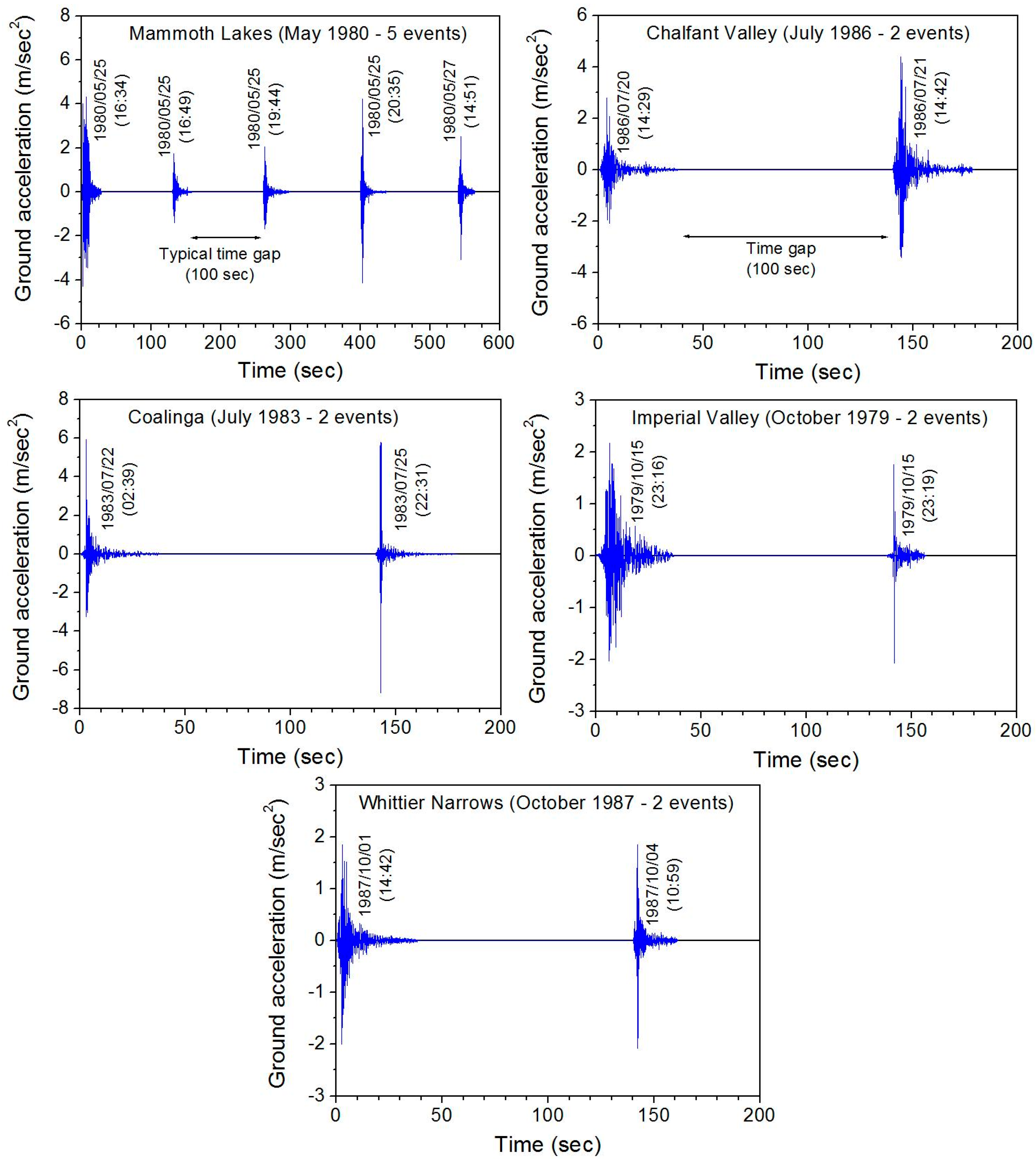
The seismic input consists of carefully selected real earthquake records organized into five distinct seismic sequences. These sequences were chosen based on stringent criteria to ensure consistency and reliability: each sequence comprises multiple earthquake events recorded within a brief temporal window (≤3 days), captured by the same recording station, in identical orientations, and at approximately equivalent fault distances. This systematic selection approach eliminates variables that could introduce uncertainty into the comparative analysis of structural response.
The selected sequences encompass the Mammoth Lakes sequence (May 1980), which includes five individual events, along with four additional sequences, each containing two events: Chalfant Valley (July 1986), Coalinga (July 1983), Imperial Valley (October 1979), and Whittier Narrows (October 1987).
These earthquake records capture the essential characteristics of strong ground motion that can significantly influence the dynamic response of soil–silo–granular material systems. Comprehensive details regarding the specific characteristics of each earthquake event, including magnitude, distance, and ground motion parameters, are provided in
Table 2.
Figure 3 shows the time histories of the ground acceleration, where between two consecutive seismic events, a time gap is applied, which is equal to 100 s. This gap is absolutely enough to cease the movement of any structure due to damping.
All the records were processed following standard procedures: baseline correction and uniform intensity scaling applied simultaneously to both horizontal components, maintaining the original amplitude ratio between components (PGA-based scaling). The stronger horizontal component was applied in the X (longitudinal) direction of the silo, consistent with the critical loading direction identified from modal analysis. Vertical components were not included in the primary analyses, consistent with the horizontal-dominant loading assumption for elevated structures with fundamental period T < 0.5 s; this omission is acknowledged as a limitation and listed as a direction for future research, particularly given evidence that vertical ground motion can influence axial column demands in elevated storage structures [
19]. Three intensity levels were examined: frequent earthquakes (PGA = 0.15 g, 50% probability of exceedance in 50 years), design basis earthquake (PGA = 0.30 g, 10% in 50 years), and maximum considered earthquake (PGA = 0.45 g, 2% in 50 years). It is further noted that the five sequences were selected from shallow crustal earthquakes with predominantly short-period content, which is representative of the seismic environment of many European and Mediterranean sites but may not capture near-fault pulse-like records, subduction zone records with long-duration content, or other site classes. Consequently, the amplification factors proposed in
Section 5 are applicable specifically to short-period records on Type C soil, and extension to other seismic environments requires additional analyses.
4. Numerical Results and Comparative Analysis
4.1. Dynamic Characteristics and Modal Analysis
Modal analysis reveals that soil–structure interaction significantly influences the dynamic characteristics of the elevated silo system. For the rigid base configuration, the fundamental period is T1 = 0.35 s, whereas incorporating a flexible foundation increases this to T1 = 0.42 s, reflecting the additional flexibility contributed by soil deformability. The first two modes involve translational motion in orthogonal horizontal directions with nearly identical frequencies (f1 = 2.38 Hz, f2 = 2.56 Hz), indicating a symmetric structural configuration. Storage fullness also affects modal properties: the 50% filled configuration exhibits fundamental period T1 = 0.42 s, while 100% fullness increases this to T1 = 0.48 s due to increased effective mass. Modal participation factors indicate that the first two modes contribute approximately 85% of the total effective mass, justifying the use of time-history analysis rather than simplified modal response spectrum procedures for accurate response prediction. The research methodology, evaluating structural response both during isolated earthquake events and throughout sequences of multiple earthquakes. The structural behavior is characterized through detailed force–displacement relationships providing quantitative measures of how the silo system progressively weakens under repeated seismic loading. The findings are illustrated through representative response data, such as the relationship between base shear forces and top-level displacements in the longitudinal direction for a silo operating at half capacity with granular stored material.
4.2. Maximum Displacement Response and Permanent Deformation
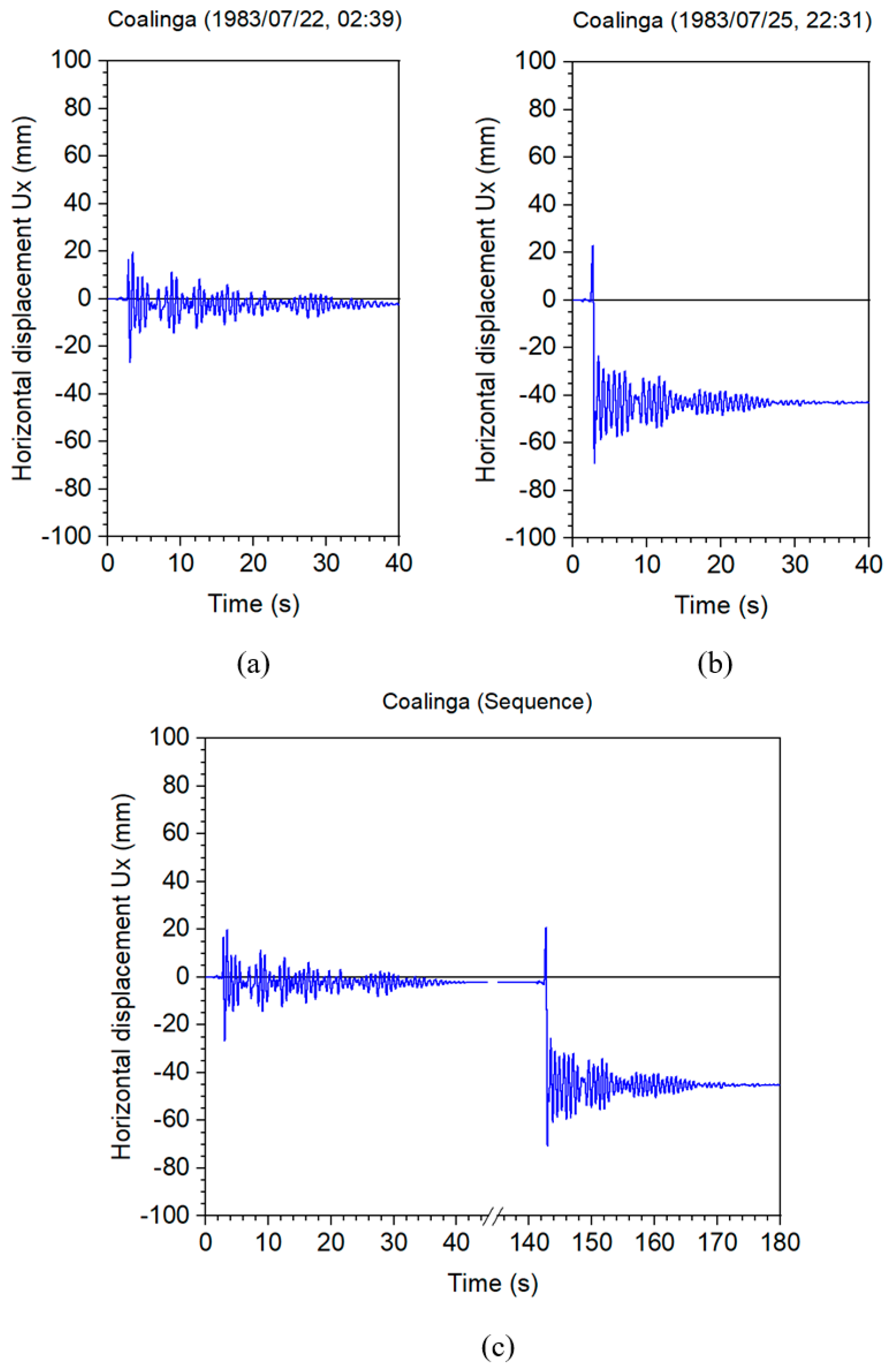
Figure 4 depicts the time history of X-displacement for the top of the structure and 50% fullness with granular material, examining the Coalinga seismic sequence (July 1983).
Similarly,
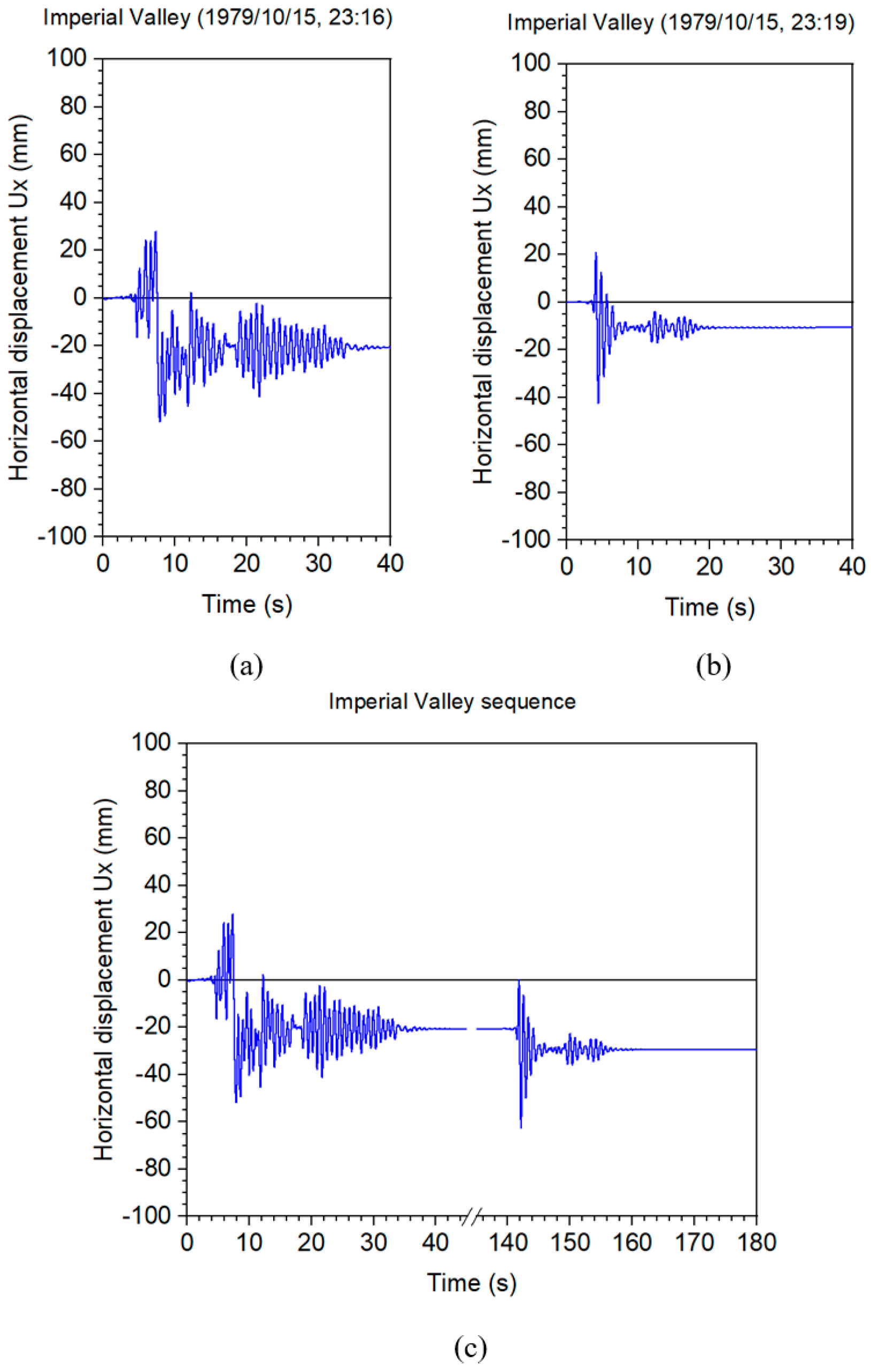
Figure 5 depicts the time history of horizontal displacement in the X-direction for the top of the structure and 50% fullness with granular material, examining the Imperial Valley seismic sequence (October 1979).
Residual deformations represent a critical performance indicator for operational serviceability following earthquake events.
Figure 4 and
Figure 5 illustrate residual lateral displacement at the silo top after earthquake sequence completion. The results reveal that sequential earthquakes produce substantially higher residual deformations than single events, with increases ranging from 30 to 60% depending on sequence intensity and structural configuration. For the design basis earthquake level (PGA = 0.30 g), single event residual displacement averages 8–12 mm across all the sequences, whereas complete sequences produce residual displacements of 15–22 mm. At maximum considered earthquake intensity (PGA = 0.45 g), these values increase to 18–25 mm for single events versus 32–45 mm for complete sequences, representing increases of 45–78%.
Soil–structure interaction effects are beneficial in reducing residual deformations: flexible foundation configurations exhibit 10–18% lower residual displacements compared to rigid base assumptions, mainly due to energy dissipation through radiation damping. This finding suggests that conventional rigid base analyses may overestimate permanent deformation, particularly for structures founded on relatively soft soil deposits.
4.3. Base Shear–Deformation Response
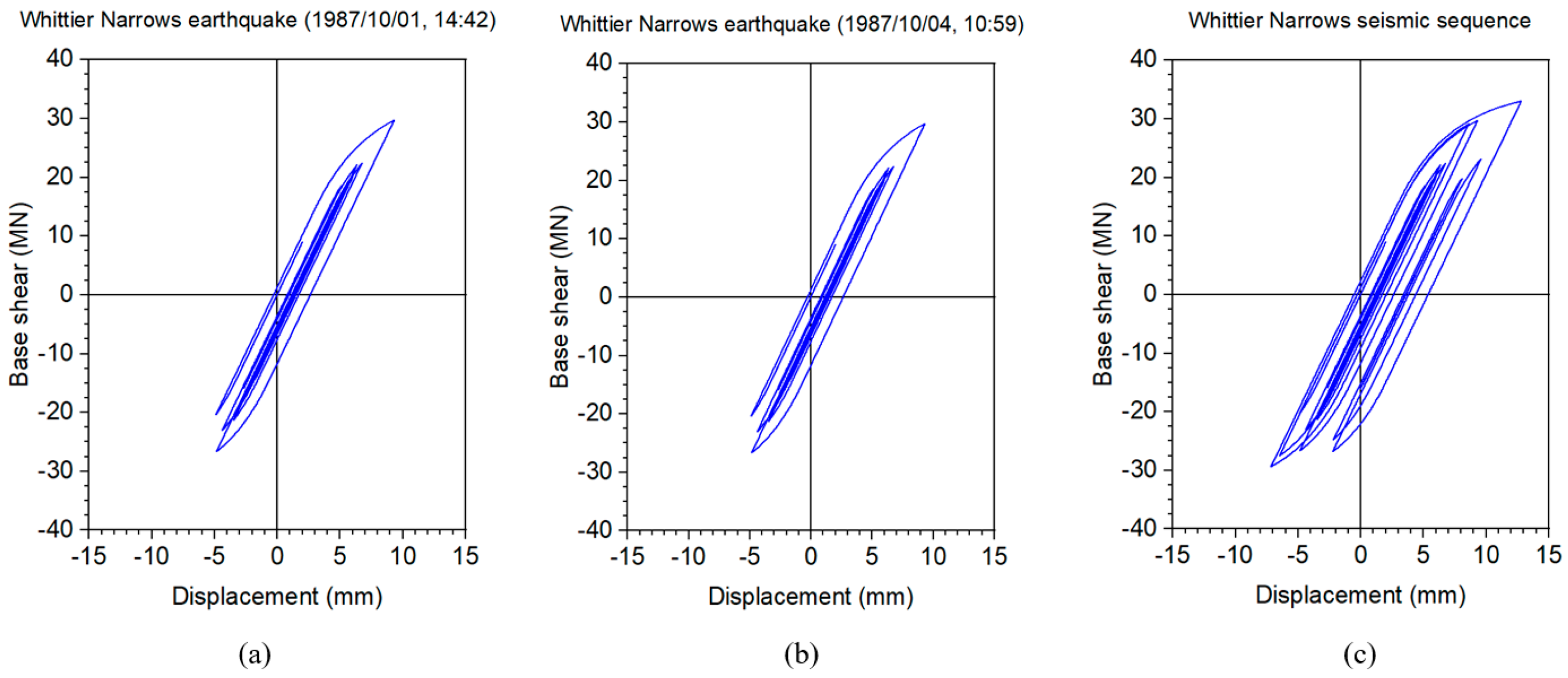
Figure 6 depicts the base shear of the silo in the X-direction versus the top horizontal displacement in the same direction for 50% fullness with granular material, examining the Whittier Narrows seismic sequence (October 1987). It is evident that the multiplicity of earthquakes leads to more intense response, in terms of maximum or permanent displacements and of the number of inelastic cycles.
4.4. Soil–Structure Interaction
This subsection compares the structural response for rigid base versus flexible foundation configurations. In this study, it is found that SSI effects are generally beneficial, reducing maximum displacements by 15–25% and base shear demands by 10–18% compared to rigid base assumptions. This reduction stems from period lengthening, radiation damping effects, and foundation compliance that allows relative foundation–soil movement during strong shaking. However, SSI effects vary with earthquake characteristics: for long-period ground motions (predominant period > 1.0 s), period lengthening due to SSI may amplify displacement demands rather than reduce them, and the 15–25% reduction reported here should be replaced by a case-by-case assessment for such seismic environments. For short-period motions (predominant period < 0.5 s), as in the examined sequences, SSI consistently reduces structural response. The examined earthquake sequences predominantly contain short-period energy, explaining the generally beneficial SSI effects observed in the present study. Design practitioners in regions characterized by long-period seismic hazard (e.g., subduction zones or soft deep-basin sites) should, therefore, not directly apply the SSI reduction factors reported here without further verification.
Foundation rotation contributes significantly to total lateral displacement, accounting for 25–40% of the top displacement depending on soil properties and excitation characteristics. This finding emphasizes the importance of adequate foundation design to limit rocking motion and associated P-delta effects on column stability.
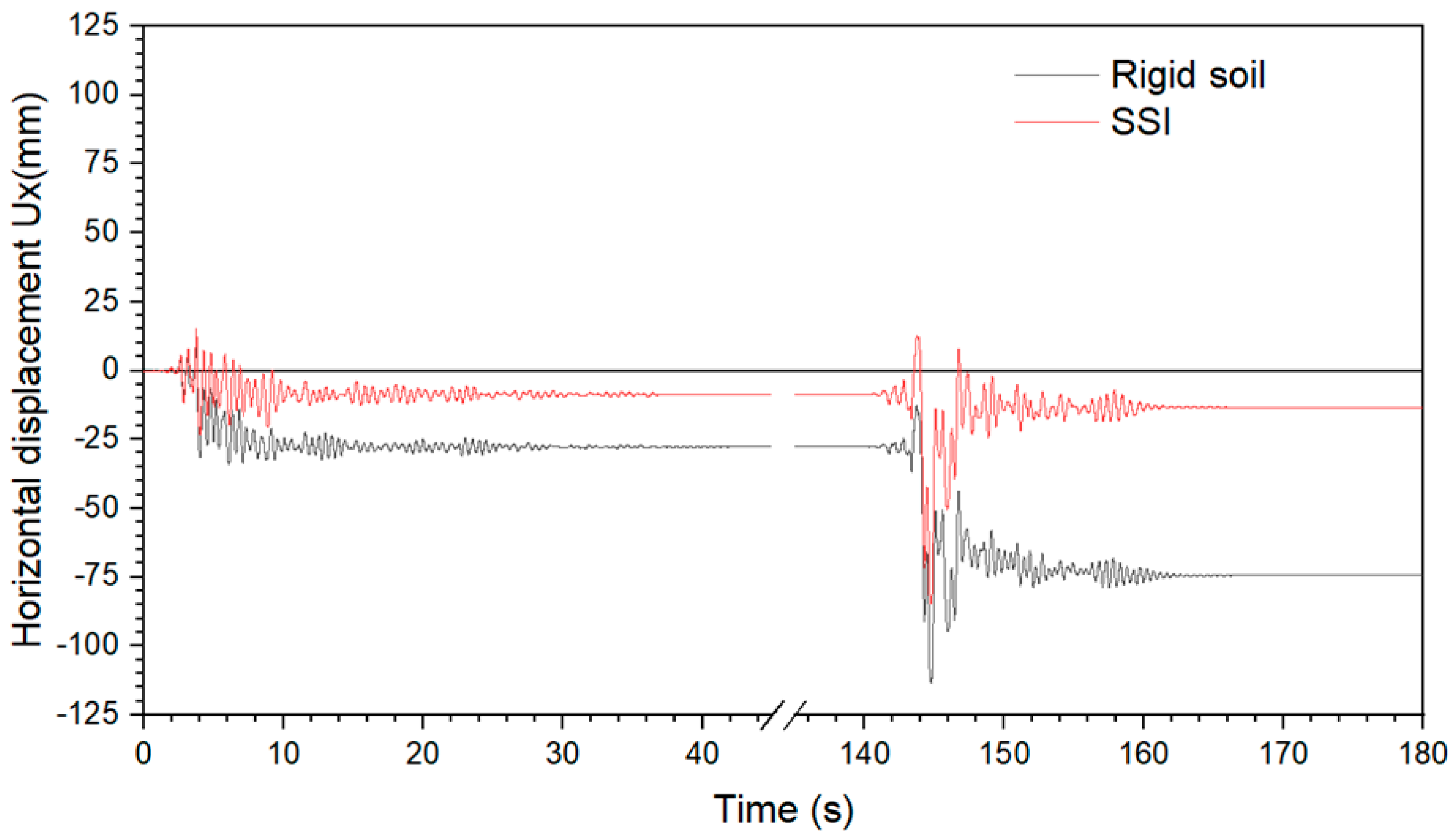
Typically,
Figure 7 examines the effect of soil flexibility. More specifically, the response of the soil–silo–granular material system is compared with that of the rigid soil assumption. It is obvious that the flexibility of soil leads to smaller values of both maximum displacement and residual/permanent displacement. This has not only to do with the more flexible behavior of the soil–silo–granular material system but also with its higher effective damping (mainly due to geometrical damping).
4.5. Effects of Silo’s Fullness
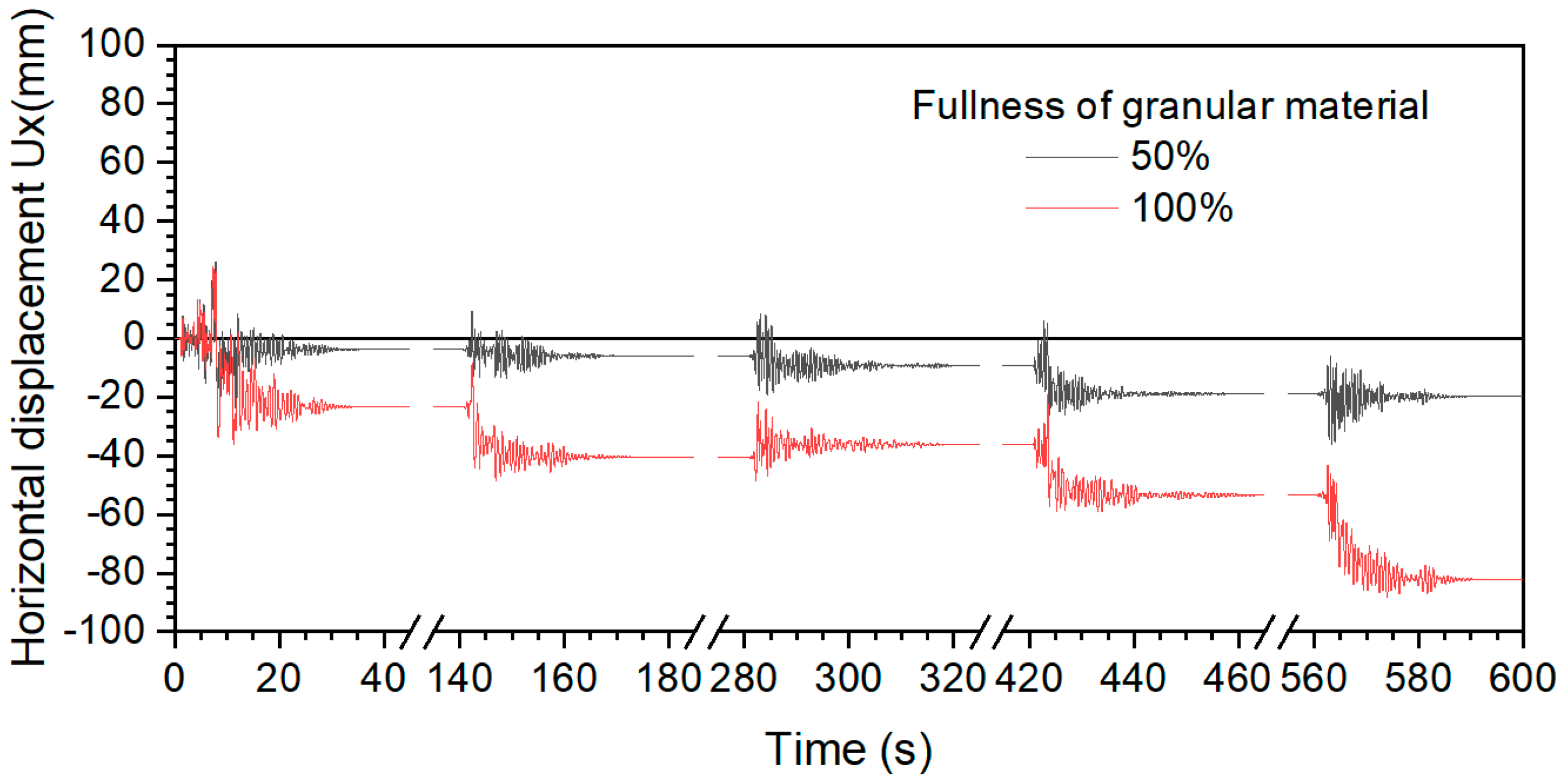
The effect of fullness of silo structures is typically shown in
Figure 8. More specifically, the Mammoth Lakes seismic sequence is examined in the following, which consists of five distinct seismic events that were also recorded by the same station within 3 days. Two fullness values of granular material for the silo under consideration are examined: 50% and 100%. It is evident that the level of fullness strongly affects the inelastic response of the silo. Furthermore, the effect of the multiplicity of earthquakes on the behavior of the silo is also obvious.
4.6. Comparison with Code Provisions
Table 3 compares numerical predictions with Eurocode 8 [
20] design provisions for elevated silos. The EC8 force demand was derived using the lateral force method per EN 1998-1:2004, Clause 4.3.3.2 [
23], with the following parameters: Type C ground spectrum with ag = 0.30 g, soil factor S = 1.15, and corner periods TB/TC/TD = 0.20/0.60/2.0 s; importance class II (γI = 1.0); behavior factor q = 2.0, adopted for steel structures with limited ductility consistent with current silo design practice; fundamental period T
1 = 0.42 s from eigenvalue analysis of the flexible-base model. The EC8 displacement was derived from the elastic spectrum ordinate at T
1 using the equal-displacement rule with ductility correction per Clause 4.3.4. It is explicitly noted that EN 1998-4 [
19] (silos, tanks, pipelines) does not provide specific provisions for elevated rectangular silos; the comparison is therefore based on EN 1998-1 [
23] general provisions, and this limitation is stated in the revised table caption. The results indicate that code-specified force demands are generally conservative for single earthquake scenarios but may underestimate demands under sequential loading by 15–25%. Displacement predictions from code-based simplified methods underestimate actual displacements by 20–35% for single events and 40–60% for sequences, suggesting that current provisions require modification to account for realistic seismic loading scenarios.
Particularly concerning is the absence of provisions for residual deformation limits in current codes, despite the critical importance of post-earthquake serviceability for silo operations. The analyses suggest that a residual displacement limit of H/200 (40 mm for the examined 8 m structure) represents a meaningful threshold for operational functionality: permanent lateral displacement of the silo top at this level begins to interfere with the discharge funnel alignment and the mechanical conveying equipment typically connected at the silo base, based on manufacturer specifications for similar grain storage systems. Residual displacements exceeding approximately 40 mm in the FEM results were consistently associated with significant permanent column drift that would impair normal operation. It is emphasized that this limit is a preliminary engineering judgment and a suggested starting point for performance-based criteria; formal codification requires consultation with operational guidelines and, ideally, experimental data from real silo facilities.
5. Conclusions and Design Recommendations
This research represents the first comprehensive investigation of elevated rectangular metallic silos subjected to sequential strong ground motions, incorporating detailed soil–structure interaction analysis and varying storage fullness levels. The study addresses a critical gap in current knowledge and design practice, providing quantitative evidence that conventional single-event seismic design approaches substantially underestimate structural vulnerability in seismically active regions.
The most important findings from this study are:
Sequential earthquakes consistently produce 25–45% higher maximum displacements and 30–60% higher residual deformations compared to single earthquake scenarios, indicating that current design provisions based on single “design earthquake” concepts may be inadequate for structures in seismically active regions experiencing multiple events.
Soil–structure interaction effects are generally beneficial, reducing maximum displacements by 15–25% and base shear demands by 10–18% compared to rigid base assumptions, though these benefits vary with ground motion characteristics and soil properties.
Storage fullness significantly affects seismic response: fully loaded silos (100% capacity) exhibit 25–35% higher displacements and 30% higher base shear coefficients compared to half-filled configurations, requiring careful consideration of operational loading scenarios in design.
Current Eurocode 8 provisions generally provide conservative force demand predictions for single events, but underestimate displacement demands by 20–35% and do not address residual deformation limits critical for post-earthquake serviceability.
Displacement-based design approaches should be adopted, with explicit consideration of cumulative deformation and residual displacement limits (suggested limit: 1/200 of structure height for operational serviceability).
Capacity design principles should ensure ductile failure mechanisms in structural members while protecting critical connections and foundations from brittle failure modes.
Foundation design should explicitly consider soil–structure interaction effects using realistic soil properties and boundary conditions, avoiding overly conservative rigid base assumptions that may misrepresent actual behavior.
Design load combinations should incorporate sequential earthquake effects through amplification factors of 1.3–1.5 applied to single-event displacement demands for structures in high seismicity zones. It is emphasized that these factors are conditioned on the examined configuration range (Type C soil, T ≈ 0.35–0.48 s, five shallow-crustal seismic sequences) and should be treated as preliminary guidance pending a broader parametric study covering additional soil types, silo geometries, and ground motion ensembles.
Future research directions should investigate parametric variations in geometric configuration and aspect ratios; effects of different soil types and foundation systems; influence of connection detailing on cumulative damage progression; development of simplified analysis procedures for preliminary design; and experimental validation through large-scale shake table testing of representative silo configurations. Additionally, probabilistic seismic hazard analysis incorporating realistic earthquake sequence scenarios would provide an improved basis for performance-based design methodologies.
The findings emphasize that traditional seismic design procedures require substantial reconsideration to account for multiple earthquake phenomena in realistic hazard assessment, particularly for critical infrastructure components where operational continuity following earthquake events is essential for economic and social stability.
Author Contributions
Conceptualization, F.K. and G.H.; methodology, F.K. and G.H.; software, G.H.; validation, F.K. and G.H.; formal analysis, F.K.; investigation, F.K. and G.H.; resources, G.H.; data curation, F.K.; writing—original draft preparation, F.K.; writing—review and editing, F.K. and G.H.; visualization, F.K.; supervision, G.H.; project administration, G.H. All authors have read and agreed to the published version of the manuscript.
Funding
This research received no external funding.
Data Availability Statement
The data presented in this study are available within this article.
Conflicts of Interest
The authors declare no conflicts of interest.
References
- Khalil, M.; Ruggieri, S.; Uva, G. Assessment of structural behavior, vulnerability, and risk of industrial silos: State-of-the-art and recent research trends. Appl. Sci. 2022, 12, 3006. [Google Scholar]
- Khalil, M.; Ruggieri, S.; Tateo, V.; Butenweg, C.; Nascimbene, R.; Uva, G. Assessment of the seismic overpressure in flat bottom steel silos based on advanced FE modelling approach. Soil Dyn. Earthq. Eng. 2025, 190, 109149. [Google Scholar] [CrossRef]
- Yang, J.; Feng, G.; Jing, H.; Zhang, F. Seismic response and theoretical analysis of grain bulk material-steel silo structure under earthquake action. J. Constr. Steel Res. 2023, 211, 108207. [Google Scholar] [CrossRef]
- Jing, H.; Wang, X.; Yang, J.; Chen, H. Static and seismic pressure of cylindrical steel silo model with granular materials. J. Constr. Steel Res. 2022, 198, 107515. [Google Scholar] [CrossRef]
- Yang, J.; Zhang, F.; Li, P.; Jing, H. Seismic performance of column-bearing silo structure with granular materials considering SSI effect. In Structures; Elsevier: Amsterdam, The Netherlands, 2023; Volume 47, pp. 595–606. [Google Scholar]
- Mehretehran, A.M.; Maleki, S. Axial buckling of imperfect cylindrical steel silos with isotropic walls under stored solids loads: FE analyses versus Eurocode provisions. Eng. Fail. Anal. 2022, 137, 106282. [Google Scholar] [CrossRef]
- Zdravkov, L.; Tanev, V. Reasons for Collapse of Steel Silos for Wheat with 1600 M3 Capacity. J. Int. Assoc. Shell Spat. Struct. 2024, 65, 206–216. [Google Scholar] [CrossRef]
- Tremblay, R.; Mitchell, D.; Tinawi, R. Damage to industrial structures due to the 27 February 2010 Chile earthquake. Can. J. Civ. Eng. 2013, 40, 735–749. [Google Scholar] [CrossRef]
- Brunesi, E.; Nascimbene, R.; Beilic, D. Understanding the Seismic Resilience of Metallic Cylindrical Tanks Through Parametric Analysis. Appl. Sci. 2025, 15, 474. [Google Scholar] [CrossRef]
- Manafpour, A.R.; Kamrani, P. Performance capacity of damaged RC SDOF systems under multiple far-and near-field earthquakes. Soil Dyn. Earthq. Eng. 2019, 116, 164–173. [Google Scholar] [CrossRef]
- Ruiz-García, J.; Negrete-Manriquez, J.C. Evaluation of drift demands in existing steel frames under as-recorded far-field and near-fault mainshock-aftershock seismic sequences. Eng. Struct. 2011, 33, 621–634. [Google Scholar] [CrossRef]
- Goda, K.; Taylor, C.A. Effects of aftershocks on peak ductility demand due to strong ground motion records from shallow crustal earthquakes. Earthq. Eng. Struct. Dyn. 2012, 41, 2311–2330. [Google Scholar] [CrossRef]
- Di Sarno, L.; Pugliese, F. Effects of mainshock-aftershock sequences on fragility analysis of RC buildings with ageing. Eng. Struct. 2021, 232, 111837. [Google Scholar] [CrossRef]
- Zhai, C.H.; Zheng, Z.; Li, S.; Xie, L.L. Seismic analyses of a RCC building under mainshock-aftershock seismic sequences. Soil Dyn. Earthq. Eng. 2015, 74, 46–55. [Google Scholar] [CrossRef]
- Abdelnaby, A.E.; Elnashai, A.S. Numerical modeling and analysis of RC frames subjected to multiple earthquakes. Earthq. Struct. 2015, 9, 957–981. [Google Scholar] [CrossRef]
- Hosseinpour, F.; Abdelnaby, A.E. Fragility curves for RC frames under multiple earthquakes. Soil Dyn. Earthq. Eng. 2017, 98, 222–234. [Google Scholar] [CrossRef]
- Konstandakopoulou, F.D.; Beskou, N.D.; Hatzigeorgiou, G.D. Three-dimensional nonlinear response of utility tunnels under single and multiple earthquakes. Soil Dyn. Earthq. Eng. 2021, 143, 106607. [Google Scholar] [CrossRef]
- Konstandakopoulou, F.D.; Hatzigeorgiou, G.D. Water and wastewater steel tanks under multiple earthquakes. Soil Dyn. Earthq. Eng. 2017, 100, 445–453. [Google Scholar] [CrossRef]
- EN 1998-4; Eurocode 8: Design of Structures for Earthquake Resistance—Part 4. CEN: Brussels, Belgium, 2004.
- EN 1993-4; Eurocode 3: Design of Steel Structures—Part 4. CEN: Brussels, Belgium, 2005.
- Mehretehran, A.M.; Maleki, S. Seismic response and failure modes of steel silos with isotropic stepped walls: The effect of vertical component of ground motion and comparison of buckling resistances under seismic actions with those under wind or discharge loads. Eng. Fail. Anal. 2021, 120, 105100. [Google Scholar] [CrossRef]
- EN 1991-4; Eurocode 1—Part 4: Actions on silos and tanks. CEN: Brussels, Belgium, 2004.
- EN 1998-1; Eurocode 8: Design of Structures for Earthquake Resistance—Part 1. CEN: Brussels, Belgium, 2004.
- Lysmer, J.; Kuhlemeyer, R.L. Finite dynamic model for infinite media. J. Eng. Mech. Div. 1969, 95, 859–877. [Google Scholar] [CrossRef]
- EN 1993-1; Eurocode 3: Design of Steel Structures—Part 1. CEN: Brussels, Belgium, 2005.
- Taucer, F.F.; Spacone, E.; Filippou, F.C. A Fiber Beam-Column Element for Seismic Response Analysis of Reinforced Concrete Structures; Report UCB/EERC-91/17; Earthquake Engineering Research Center, University of California: Berkeley, CA, USA, 1991. [Google Scholar]
- Mazzoni, S.; McKenna, F.; Scott, M.H.; Fenves, G.L. OpenSees Command Language Manual; Pacific Earthquake Engineering Research Center, University of California: Berkeley, CA, USA, 2006. [Google Scholar]
- Hatzigeorgiou, G.D.; Beskos, D.E. SINUS: Seismic INelastic Analysis of Underground Structures Computer Program, Version 4.0; Hellenic Open University: Patras, Greece, 2024.
| Disclaimer/Publisher’s Note: The statements, opinions and data contained in all publications are solely those of the individual author(s) and contributor(s) and not of MDPI and/or the editor(s). MDPI and/or the editor(s) disclaim responsibility for any injury to people or property resulting from any ideas, methods, instructions or products referred to in the content. |