

Artificial Intelligence in Medical Education: A Narrative Review
 ,
,  , and
, and
Abstract
1. Introduction
- Which AI technologies demonstrate solid evidence for enhancing knowledge acquisition, clinical reasoning, communication skills, and procedural performance?
- What challenges related to equity, accessibility, and language arise when AI tools are used by diverse learner populations?
- To what extent are faculty and institutions prepared to implement AI within medical curricula, and where do gaps in infrastructure or training remain?
- What ethical principles, governance structures, and policy frameworks are required to support safe, transparent, and responsible use of AI in medical education?
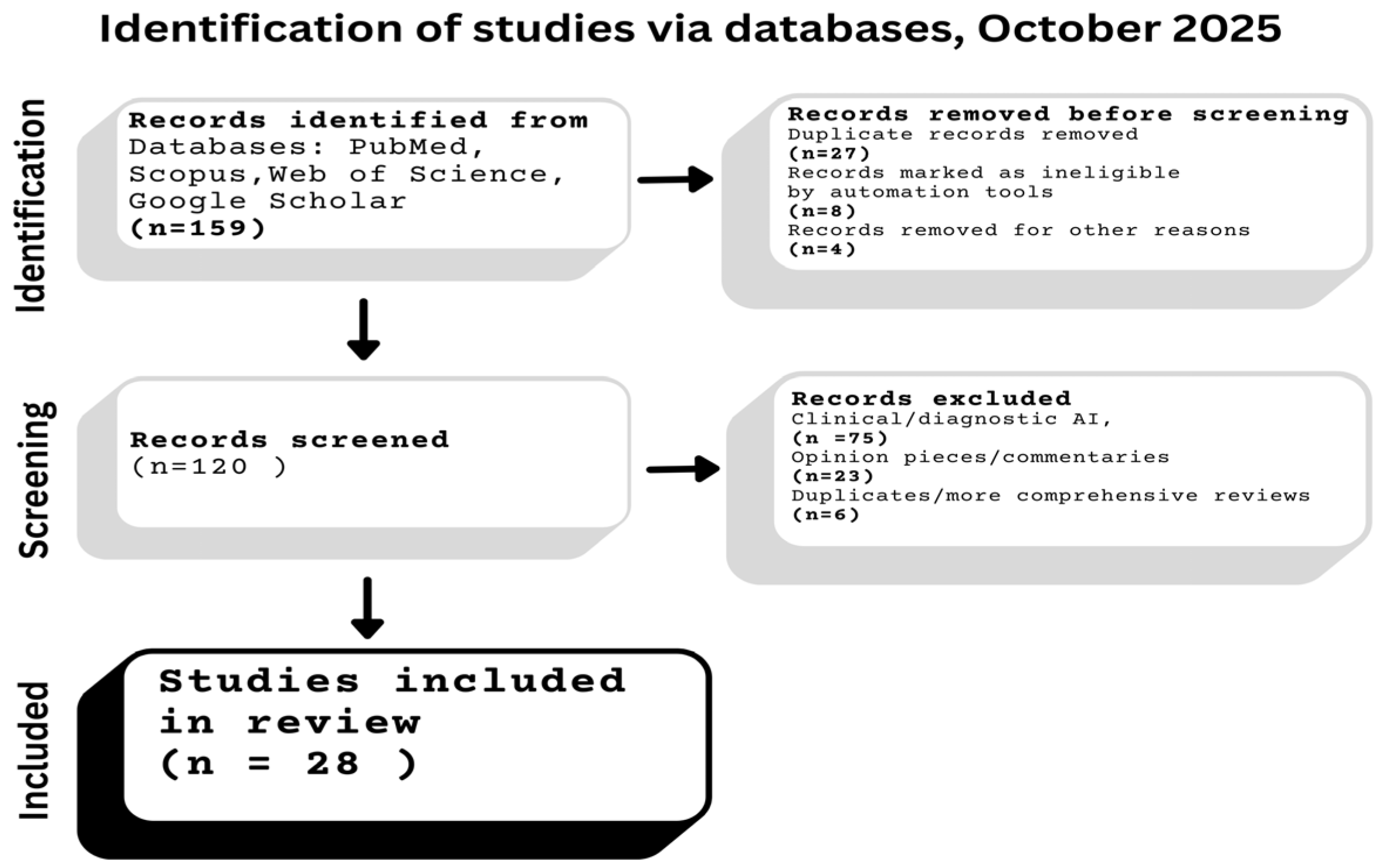
2. Materials and Methods
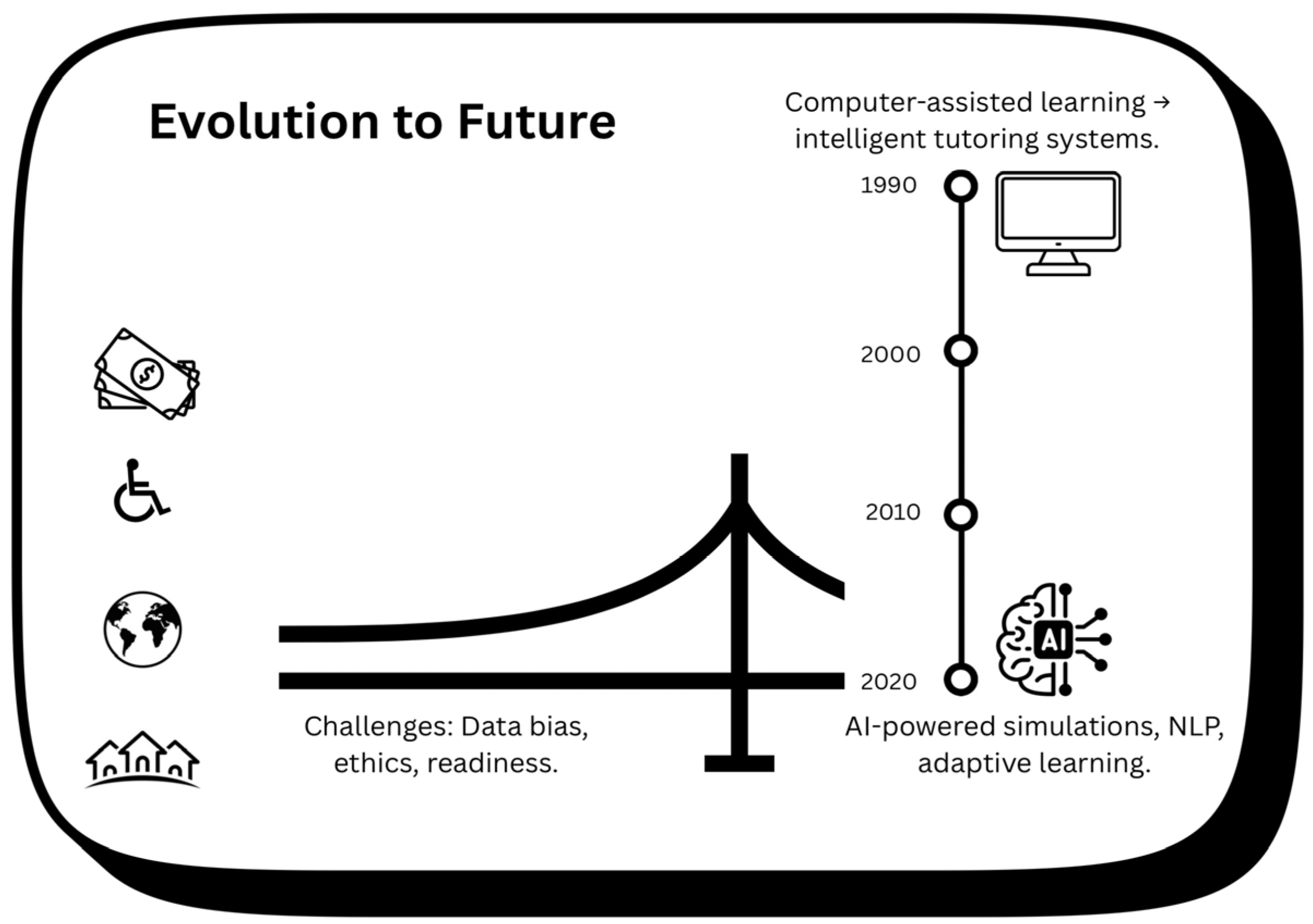
3. Historical Background
4. Fundamentals of Artificial Intelligence
5. AI-Enhanced Teaching Techniques
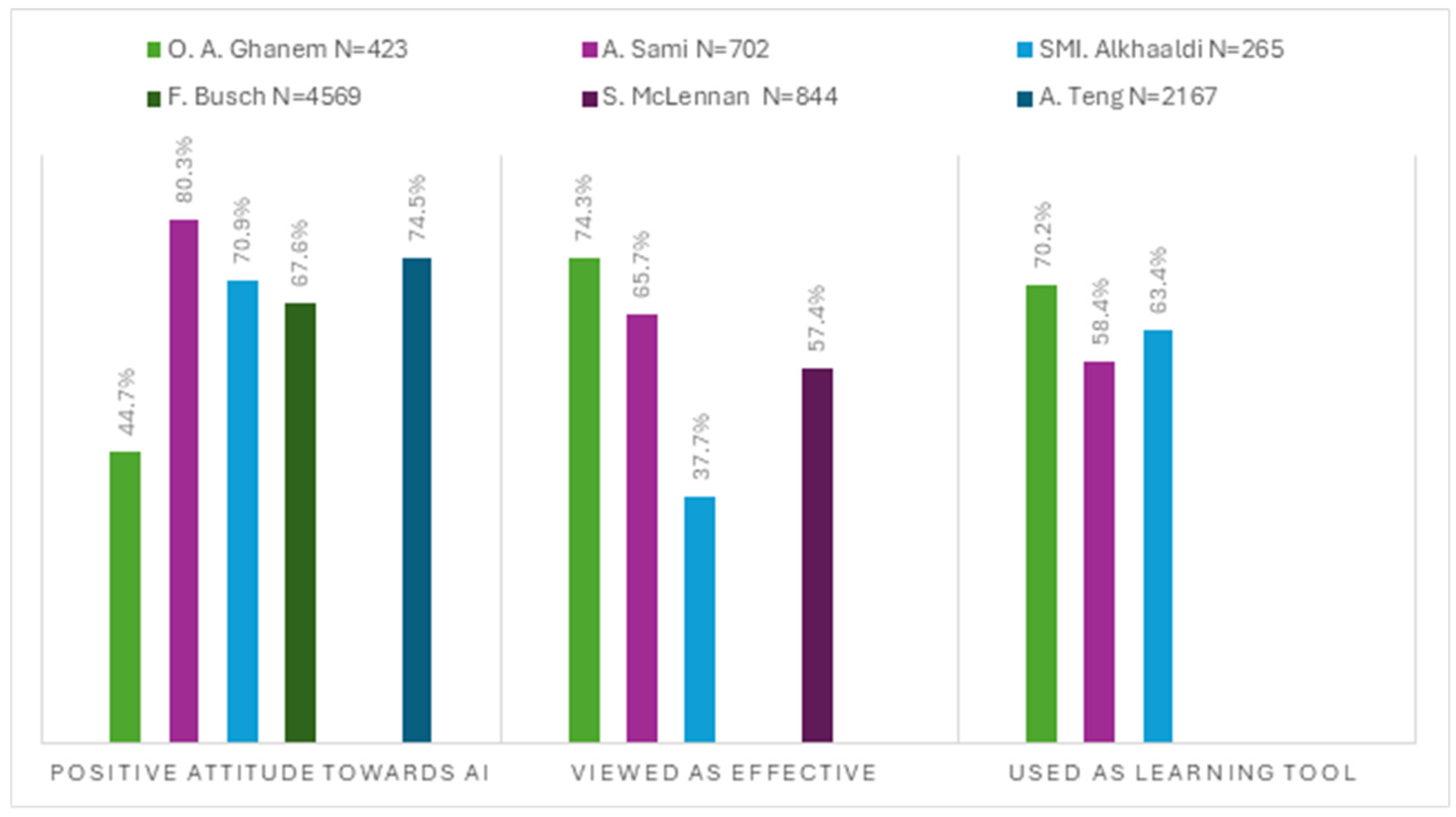
6. Integrative Analysis: Effectiveness of AI-Enhanced Learning Approaches
7. Challenges, Limitations, and Risk Management
7.1. Limitations of This Review
7.2. Research Agenda
- Longitudinal evaluation of clinical competence: Determine whether improvements achieved through AI-supported learning persist over time and translate into measurable gains in clinical reasoning and patient outcomes.
- Validation of AI literacy curricula: Design and test structured curricula for students and faculty that standardize the teaching of algorithmic reasoning, ethical awareness, and data interpretation.
- Development of frameworks for AI competence assessment: Establish reliable metrics for evaluating diagnostic reasoning, decision-making, and responsible use of AI systems in educational settings.
- Faculty development and readiness studies: Identify effective models for training educators to integrate AI tools confidently while maintaining pedagogical rigour.
- Institutional and policy research: Explore governance structures, transparency standards, and ethical regulations for the responsible use of LLMs and data-driven educational platforms.
7.3. Practical Recommendations
- Integrate AI literacy across the curriculum. Include clear learning outcomes on topics such as algorithmic reasoning, data interpretation, and bias awareness at every stage of training.
- Create transparent institutional policies. Define how generative and analytical AI tools may be used in teaching, assessment, and research to maintain fairness and academic integrity.
- Invest in reliable digital infrastructure. Provide secure data storage, stable internet access, and interoperable platforms capable of supporting adaptive AI-based learning.
- Support faculty development. Offer ongoing workshops, mentoring, and ethics-focused seminars that help educators gain confidence in using AI tools and integrating them into teaching.
- Encourage interdisciplinary collaboration. Foster cooperation among clinicians, educators, computer scientists, and ethicists to design and evaluate AI-driven educational initiatives.
- Evaluate progress regularly. Monitor learning outcomes, data-security standards, and equity impacts to ensure that AI adoption continues to improve training quality and remains aligned with institutional goals.
8. Special Populations and Equity Considerations
9. Training, Curriculum Integration, and Faculty Development
10. Current Frameworks
11. Future Perspectives
12. Overview of Current Evidence
13. Conclusions
Author Contributions
Funding
Institutional Review Board Statement
Informed Consent Statement
Data Availability Statement
Acknowledgments
Conflicts of Interest
Abbreviations
| AI | Artificial Intelligence |
| ML | Machine learning |
| NLP | Natural Language Processing |
| LLM | Large Language models (LLM) |
| AR | Augmented reality |
| VR | Virtual reality |
| SP | Standardized patient |
References
- Schwalbe, N.; Wahl, B. Artificial intelligence and the future of global health. Lancet 2020, 395, 1579–1586. [Google Scholar] [CrossRef] [Scilit]
- Rajpurkar, P.; Chen, E.; Banerjee, O.; Topol, E.J. AI in health and medicine. Nat. Med. 2022, 28, 31–38. [Google Scholar] [CrossRef] [Scilit]
- Davenport, T.; Kalakota, R. The potential for artificial intelligence in healthcare. Future Healthc. J. 2019, 6, 94–98. [Google Scholar] [CrossRef] [Scilit] [PubMed]
- Masters, K. Ethical use of artificial intelligence in health professions education: AMEE Guide No. 158. Med. Teach. 2023, 45, 574–584. [Google Scholar] [CrossRef] [Scilit] [PubMed]
- Sriram, A.; Ramachandran, K.; Krishnamoorthy, S. Artificial intelligence in medical education: Transforming learning and practice. Cureus 2025, 17, e80852. [Google Scholar] [CrossRef] [Scilit]
- Chatha, W.A. From scalpel to simulation: Reviewing the future of cadaveric dissection in the upcoming era of virtual and augmented reality and artificial intelligence. Cureus 2024, 16, e71578. [Google Scholar] [CrossRef] [Scilit]
- Holderried, F.; Stegemann-Philipps, C.; Herschbach, L.; Moldt, J.A.; Nevins, A.; Griewatz, J.; Holderried, M.; Herrmann-Werner, A.; Festl-Wietek, T.; Mahling, M. A generative pretrained transformer (GPT)-powered chatbot as a simulated patient to practice history taking: Prospective, mixed methods study. JMIR Med. Educ. 2024, 10, e53961. [Google Scholar] [CrossRef] [Scilit]
- Kleinert, R.; Heiermann, N.; Plum, P.S.; Wahba, R.; Chang, D.H.; Maus, M.; Chon, S.-H.; Hoelscher, A.H.; Stippel, D.L. Web-based immersive virtual patient simulators: Positive effect on clinical reasoning in medical education. J. Med. Internet Res. 2015, 17, e263. [Google Scholar] [CrossRef] [Scilit] [PubMed]
- Kassutto, S.; Clancy, C.; Bennett, N.; Tsao, S. Virtual simulations to enhance medical student exposure to management of critically ill patients. ATS Sch. 2024, 5. Epub ahead of print. [Google Scholar] [CrossRef] [Scilit]
- Watari, T.; Tokuda, Y.; Owada, M.; Onigata, K. The utility of virtual patient simulations for clinical reasoning education. Int. J. Environ. Res. Public Health 2020, 17, 5325. [Google Scholar] [CrossRef] [Scilit]
- Kononowicz, A.; Woodham, L.; Edelbring, S.; Stathakarou, N.; Davies, D.; Saxena, N.; Car, L.T.; Carlstedt-Duke, J.; Car, J.; Zary, N. Virtual patient simulations in health professions education: Systematic review and meta-analysis by the Digital Health Education Collaboration. J. Med. Internet Res. 2019, 21, e14676. [Google Scholar] [CrossRef] [Scilit]
- Edelbring, S.; Dastmalchi, M.; Hult, H.; Lundberg, I.E.; Dahlgren, L.O. Experiencing virtual patients in clinical learning: A phenomenological study. Adv. Health Sci. Educ. Theory Pr. 2011, 16, 331–345. [Google Scholar] [CrossRef] [Scilit]
- Plackett, R.; Kassianos, A.P.; Mylan, S.; Kambouri, M.; Raine, R.; Sheringham, J. The effectiveness of using virtual patient educational tools to improve medical students’ clinical reasoning skills: A systematic review. BMC Med. Educ. 2022, 22, 365. [Google Scholar] [CrossRef] [Scilit]
- Zhu, E.; Hadadgar, A.; Masiello, I.; Zary, N. Augmented reality in healthcare education: An integrative review. PeerJ 2014, 2, e469. [Google Scholar] [CrossRef] [Scilit]
- Kamphuis, C.; Barsom, E.; Schijven, M.; Christoph, N. Augmented reality in medical education? Perspect. Med. Educ. 2014, 3, 300–311. [Google Scholar] [CrossRef] [Scilit]
- Bork, F.; Stratmann, L.; Enssle, S.; Eck, U.; Navab, N.; Waschke, J.; Kugelmann, D. The benefits of an augmented reality magic mirror system for integrated radiology teaching in gross anatomy. Anat. Sci. Educ. 2019, 12, 585–598. [Google Scholar] [CrossRef] [Scilit]
- Cook, D.; Overgaard, J.; Pankratz, V.; Del Fiol, G.; Aakre, C. Virtual patients using large language models: Scalable, contextualized simulation of clinician-patient dialogue with feedback. J. Med. Internet Res. 2025, 27, e68486. [Google Scholar] [CrossRef] [Scilit] [PubMed]
- Çiçek, F.E.; Ülker, M.; Özer, M.; Kıyak, Y.S. ChatGPT versus expert feedback on clinical reasoning questions and their effect on learning: A randomized controlled trial. Postgrad. Med. J. 2025, 101, 458–463. [Google Scholar] [CrossRef] [Scilit] [PubMed]
- Chiu, J.; Castro, B.; Ballard, I.; Nelson, K.; Zarutskie, P.; Olaiya, O.; Song, D.; Zhao, Y. Exploration of the role of ChatGPT in teaching communication skills for medical students: A pilot study. Med. Sci. Educ. 2025. Epub ahead of print. [Google Scholar] [CrossRef] [Scilit]
- Aster, A.; Ragaller, S.V.; Raupach, T.; Marx, A. ChatGPT as a virtual patient: Written empathic expressions during medical history taking. Med. Sci. Educ. 2025, 35, 1513–1522. [Google Scholar] [CrossRef] [Scilit] [PubMed]
- Borg, A.; Georg, C.; Jobs, B.; Huss, V.; Waldenlind, K.; Ruiz, M.; Edelbring, S.; Skantze, G.; Parodis, I. Virtual patient simulations using social robotics combined with large language models for clinical reasoning training in medical education: Mixed methods study. J. Med. Internet Res. 2025, 27, e63312. [Google Scholar] [CrossRef] [Scilit]
- Schwarz, P.; Hellmers, S.; Spanknebel, S.; Hurlemann, R.; Hein, A. Humanoid patient robot for diagnostic training in medical and psychiatric education. Front. Robot. AI 2024, 11, 1424845. [Google Scholar] [CrossRef] [Scilit]
- Holderried, F.; Stegemann-Philipps, C.; Herrmann-Werner, A.; Festl-Wietek, T.; Holderried, M.; Eickhoff, C.; Mahling, M. A language model-powered simulated patient with automated feedback for history taking: Prospective study. JMIR Med. Educ. 2024, 10, e59213. [Google Scholar] [CrossRef] [Scilit] [PubMed]
- Vrdoljak, J.; Boban, Z.; Vilović, M.; Kumrić, M.; Božić, J. A review of large language models in medical education, clinical decision support, and healthcare administration. Healthcare 2025, 13, 603. [Google Scholar] [CrossRef] [Scilit] [PubMed]
- Dev, P.; Hoffer, E.P.; Barnett, G.O. Computers in medical education. In Biomedical Informatics; Shortliffe, E., Cimino, J.J., Eds.; Springer: New York, NY, USA, 2006; pp. 737–762. [Google Scholar]
- Jwayyed, S.; Stiffler, K.A.; Wilber, S.T.; Southern, A.; Weigand, J.; Bare, R.; Gerson, L.W. Technology-assisted education in graduate medical education: A review of the literature. Int. J. Emerg. Med. 2011, 4, 51. [Google Scholar] [CrossRef] [Scilit] [PubMed]
- Farooq, M.; Usmani, A. Artificial intelligence in medical education. J. Coll. Physicians Surg. Pak. 2025, 35, 503–507. [Google Scholar] [CrossRef] [Scilit]
- Cook, D.A.; Hatala, R.; Brydges, R.; Zendejas, B.; Szostek, J.H.; Wang, A.T.; Erwin, P.J.; Hamstra, S.J. Technology-enhanced simulation for health professions education: A systematic review and meta-analysis. JAMA 2011, 306, 978–988. [Google Scholar] [CrossRef] [Scilit]
- Tene, T.; Vique López, D.F.; Valverde Aguirre, P.E.; Orna Puente, L.M.; Vacacela Gomez, C. Virtual reality and augmented reality in medical education: An umbrella review. Front. Digit. Health 2024, 6, 1365345. [Google Scholar] [CrossRef] [Scilit]
- Moro, C.; Birt, J.; Stromberga, Z.; Phelps, C.; Clark, J.; Glasziou, P.; Scott, A.M. Virtual and augmented reality enhancements to medical and science student physiology and anatomy test performance: A systematic review and meta-analysis. Anat. Sci. Educ. 2021, 14, 368–376. [Google Scholar] [CrossRef] [Scilit]
- García-Robles, P.; Cortés-Pérez, I.; Nieto-Escámez, F.A.; García-López, H.; Obrero-Gaitán, E.; Osuna-Pérez, M.C. Immersive virtual reality and augmented reality in anatomy education: A systematic review and meta-analysis. Anat. Sci. Educ. 2024, 17, 514–528. [Google Scholar] [CrossRef] [Scilit]
- Park, S.; Shin, H.J.; Kwak, H.; Lee, H.J. Effects of immersive technology-based education for undergraduate nursing students: Systematic review and meta-analysis using the GRADE approach. J. Med. Internet Res. 2024, 26, e57566. [Google Scholar] [CrossRef] [Scilit] [PubMed]
- Arango-Ibanez, J.P.; Posso-Nuñez, J.A.; Díaz-Solórzano, J.P.; Cruz-Suárez, G. Evidence-based learning strategies in medicine using AI. JMIR Med. Educ. 2024, 10, e54507. [Google Scholar] [CrossRef] [Scilit] [PubMed]
- Kolachalama, V.B.; Garg, P.S. Machine learning and medical education. NPJ Digit. Med. 2018, 1, 54. [Google Scholar] [CrossRef] [Scilit]
- Jiang, T.; Gradus, J.L.; Rosellini, A.J. Supervised machine learning: A brief primer. Behav. Ther. 2020, 51, 675–687. [Google Scholar] [CrossRef] [Scilit]
- Deo, R.C. Machine learning in medicine. Circulation 2015, 132, 1920–1930. [Google Scholar] [CrossRef] [Scilit] [PubMed]
- Narayanan, S.; Ramakrishnan, R.; Durairaj, E.; Das, A. Artificial intelligence revolutionizing the field of medical education. Cureus 2023, 15, e49604. [Google Scholar] [CrossRef] [Scilit] [PubMed]
- Ghorashi, N.; Ismail, A.; Ghosh, P.; Sidawy, A.; Javan, R. AI-powered chatbots in medical education: Potential applications and implications. Cureus 2023, 15, e43271. [Google Scholar] [CrossRef] [Scilit] [PubMed]
- Wolfe, C.R.; Widmer, C.L.; Reyna, V.F.; Hu, X.; Cedillos, E.M.; Fisher, C.R.; Brust-Renck, P.G.; Williams, T.C.; Vannucchi, I.D.; Weil, A.M. The development and analysis of tutorial dialogues in AutoTutor Lite. Behav. Res. Methods 2013, 45, 623–636. [Google Scholar] [CrossRef] [Scilit]
- As’ad, M. Intelligent tutoring systems, generative artificial intelligence (AI), and healthcare agents: A proof of concept and dual-layer approach. Cureus 2024, 16, e69710. [Google Scholar] [CrossRef] [Scilit] [PubMed]
- Ellaway, R.H. Virtual patients as activities: Exploring the research implications of an activity theoretical stance. Perspect. Med. Educ. 2014, 3, 266–277. [Google Scholar] [CrossRef] [Scilit]
- Danforth, D.; Procter, M.; Chen, R.; Johnson, M.; Heller, B. Development of virtual patient simulations for medical education. J. Virtual Worlds Res. 2009. Available online: https://jvwr-ojs-utexas.tdl.org/jvwr/article/view/707 (accessed on 25 September 2025). [CrossRef] [Scilit]
- Hui, Z.; Zewu, Z.; Jiao, H.; Yu, C. Application of ChatGPT-assisted problem-based learning teaching method in clinical medical education. BMC Med. Educ. 2025, 25, 50. [Google Scholar] [CrossRef] [Scilit] [PubMed]
- Qiu, Y.; Liu, C. Capable exam-taker and question-generator: The dual role of generative AI in medical education assessment. Glob. Med. Educ. 2025. Epub ahead of print. [Google Scholar] [CrossRef] [Scilit]
- Pavlin GPoličar Špendl, M.; Curk, T.; Zupan, B. Automated assignment grading with large language models: Insights from a bioinformatics course. Bioinformatics 2025, 41 (Suppl. 1), i21–i29. [Google Scholar] [CrossRef] [Scilit] [PubMed]
- Popov, V.; Mateju, N.; Jeske, C.; Lewis, K.O. Metaverse-based simulation: A scoping review of charting medical education over the last two decades in the lens of the ‘marvelous medical education machine’. Ann. Med. 2024, 56, 2424450. [Google Scholar] [CrossRef] [Scilit]
- Cangiarella, J.; Rosenfeld, M.; Poles, M.; Webster, T.; Schaye, V.; Ruggles, K.; Dinsell, V.; Triola, M.M.; Gillespie, C.; Grossman, R.I.; et al. Implementing an accelerated three-year MD curriculum at NYU Grossman School of Medicine. Med. Teach. 2024, 46, 1575–1583. [Google Scholar] [CrossRef] [Scilit]
- Stamer, T.; Steinhäuser, J.; Flägel, K. Artificial intelligence supporting the training of communication skills in the education of health care professions: Scoping review. J. Med. Internet Res. 2023, 25, e43311. [Google Scholar] [CrossRef] [Scilit]
- Gligorea, I.; Cioca, M.; Oancea, R.; Gorski, A.-T.; Gorski, H.; Tudorache, P. Adaptive learning using artificial intelligence in e-learning: A literature review. Educ. Sci. 2023, 13, 1216. [Google Scholar] [CrossRef] [Scilit]
- Vallée, A.; Blacher, J.; Cariou, A.; Sorbets, E. Blended learning compared to traditional learning in medical education: Systematic review and meta-analysis. J. Med. Internet Res. 2020, 22, e16504. [Google Scholar] [CrossRef] [Scilit]
- Courteille, O.; Fahlstedt, M.; Ho, J.; Hedman, L.; Fors, U.; von Holst, H.; Felländer-Tsai, L.; Möller, H. Learning through a virtual patient vs. recorded lecture: A comparison of knowledge retention in a trauma case. Int. J. Med. Educ. 2018, 9, 86–92. [Google Scholar] [CrossRef] [Scilit]
- Mujamammi, A.H.; Alqahtani, S.A.; Alqaidi, F.A.; Alharbi, B.A.; Alsubaie, K.M.; Alhaisoni, F.E.; Sabi, E.M. Evaluation of medical students’ satisfaction with using a simulation-based learning program as a method for clinical teaching. Cureus 2024, 16, e59364. [Google Scholar] [CrossRef] [Scilit]
- Zhang, Y.; Weng, Y.; Wang, B. CWT-ViT: A time–frequency representation and vision transformer-based framework for automated robotic surgical skill assessment. Expert Syst. Appl. 2024, 258, 125064. [Google Scholar] [CrossRef] [Scilit]
- Constable, M.D.; Zhang, F.X.; Conner, T.; Monk, D.; Rajsic, J.; Ford, C.; Park, L.J.; Platt, A.; Porteous, D.; Grierson, L.; et al. Advancing healthcare practice and education via data sharing: Demonstrating the utility of open data by training an artificial intelligence model to assess cardiopulmonary resuscitation skills. Adv. Health Sci. Educ. 2025, 30, 15–35. [Google Scholar] [CrossRef] [Scilit]
- Zia, A.; Essa, I. Automated surgical skill assessment in RMIS training. Int. J. Comput. Assist. Radiol. Surg. 2018, 13, 731–739. [Google Scholar] [CrossRef] [Scilit]
- Grantcharov, T.P.; Bardram, L.; Funch-Jensen, P.; Rosenberg, J. Assessment of technical surgical skills. Eur. J. Surg. 2002, 168, 139–144. [Google Scholar] [CrossRef] [Scilit]
- Goh, P.S.; Sandars, J. A vision of the use of technology in medical education after the COVID-19 pandemic. MedEdPublish 2020, 9, 49. [Google Scholar] [CrossRef] [Scilit]
- Rincón, E.H.H.; Jimenez, D.; Aguilar, L.A.C.; Flórez, J.M.P.; Tapia, Á.E.R.; Peñuela, C.L.J. Mapping the use of artificial intelligence in medical education: A scoping review. BMC Med. Educ. 2025, 25, 526. [Google Scholar] [CrossRef] [Scilit]
- Naseer, M.A.; Saeed, S.; Afzal, A.; Ali, S.; Malik, M.G.R. Navigating the integration of artificial intelligence in the medical education curriculum: A mixed-methods study exploring the perspectives of medical students and faculty in Pakistan. BMC Med. Educ. 2025, 25, 273. [Google Scholar] [CrossRef] [Scilit]
- Zhai, C.; Wibowo, S.; Li, L.D. The effects of over-reliance on AI dialogue systems on students’ cognitive abilities: A systematic review. Smart Learn. Environ. 2024, 11, 28. [Google Scholar] [CrossRef] [Scilit]
- Feigerlova, E.; Hani, H.; Hothersall-Davies, E. A systematic review of the impact of artificial intelligence on educational outcomes in health professions education. BMC Med. Educ. 2025, 25, 129. [Google Scholar] [CrossRef] [Scilit]
- Ansquer, R.; Mesnier, T.; Farampour, F.; Oriot, D.; Ghazali, D.A. Long-term retention assessment after simulation-based training of pediatric procedural skills among adult emergency physicians: A multicenter observational study. BMC Med. Educ. 2019, 19, 348. [Google Scholar] [CrossRef] [Scilit]
- Celi, L.A.; Cellini, J.; Charpignon, M.L.; Dee, E.C.; Dernoncourt, F.; Eber, R.; Mitchell, W.G.; Moukheiber, L.; Schirmer, J.; Situ, J.; et al. Sources of bias in artificial intelligence that perpetuate healthcare disparities: A global review. PLoS Digit. Health 2022, 1, e0000022. [Google Scholar] [CrossRef] [Scilit]
- Haider, S.A.; Borna, S.; Gomez-Cabello, C.A.; Pressman, S.M.; Haider, C.R.; Forte, A.J. The algorithmic divide: A systematic review on AI-driven racial disparities in healthcare. J. Racial Ethn. Health Disparities 2024. Epub ahead of print. [Google Scholar] [CrossRef] [Scilit]
- Sami, A.; Tanveer, F.; Sajwani, K.; Kiran, N.; Javed, M.A.; Ozsahin, D.U.; Muhammad, K.; Waheed, Y. Medical students’ attitudes toward AI in education: Perception, effectiveness, and its credibility. BMC Med. Educ. 2025, 25, 82. [Google Scholar] [CrossRef] [Scilit]
- Ghanem, O.A.; Hagag, A.M.; Kormod, M.E.; El-Refaay, M.A.; Khedr, A.M.; Abozaid, O.M.; Abdelmoaty, K.M.; Hamed, M.S. Medical students’ knowledge, attitudes, and practices toward generative artificial intelligence in Egypt 2024: A cross-sectional study. BMC Med. Educ. 2025, 25, 790. [Google Scholar] [CrossRef] [Scilit]
- Teng, M.; Singla, R.; Yau, O.; Lamoureux, D.; Gupta, A.; Hu, Z.; Hu, R.; Aissiou, A.; Eaton, S.; Hamm, C.; et al. Health care students’ perspectives on artificial intelligence: Countrywide survey in Canada. JMIR Med. Educ. 2022, 8, e33390. [Google Scholar] [CrossRef] [Scilit]
- Busch, F.; Hoffmann, L.; Truhn, D.; Ortiz-Prado, E.; Makowski, M.R.; Bressem, K.K.; Adams, L.C. Global cross-sectional student survey on AI in medical, dental, and veterinary education and practice at 192 faculties. BMC Med. Educ. 2024, 24, 1066. [Google Scholar] [CrossRef] [Scilit]
- McLennan, S.; Meyer, A.; Schreyer, K.; Buyx, A. German medical students’ views regarding artificial intelligence in medicine: A cross-sectional survey. PLoS Digit. Health 2022, 1, e0000114. [Google Scholar] [CrossRef] [Scilit]
- Alkhaaldi, S.M.I.; Kassab, C.H.; Dimassi, Z.; Oyoun Alsoud, L.; Al Fahim, M.; Al Hageh, C.; Ibrahim, H. Medical student experiences and perceptions of ChatGPT and artificial intelligence: Cross-sectional study. JMIR Med. Educ. 2023, 9, e51302. [Google Scholar] [CrossRef] [Scilit]
- Wang, W. Different natural languages, equal importance. Patterns 2023, 4, 100821. [Google Scholar] [CrossRef] [Scilit]
- Liang, W.; Yuksekgonul, M.; Mao, Y.; Wu, E.; Zou, J. GPT detectors are biased against non-native English writers. Patterns 2023, 4, 100779. [Google Scholar] [CrossRef] [Scilit]
- Bray, N.N.; Wheeler, D.; Zumwalt, J. AI-enhanced rural medical education: Bridging gaps and building trust. Acad. Med. 2025. Epub ahead of print. [Google Scholar] [CrossRef] [Scilit]
- El Morr, C.; Singh, D.; Sawhney, V.; Fernandes, S.; El-Lahib, Y.; Gorman, R. Exploring the intersection of AI and inclusive design for people with disabilities. Stud. Health Technol. Inform. 2024. Epub ahead of print. [Google Scholar] [CrossRef] [Scilit]
- Adako, O.P.; Adeusi, O.C.; Alaba, P.A. Enhancing education for children with ASD: A review of evaluation and measurement in AI tool implementation. Disabil. Rehabil. Assist. Technol. 2025, 20, 1578–1595, Epub ahead of print. [Google Scholar] [CrossRef] [Scilit]
- Blanco, M.A.; Nelson, S.W.; Ramesh, S.; Callahan, C.E.; Josephs, K.A.; Jacque, B.; Baecher-Lind, L.E. Integrating artificial intelligence into medical education: A roadmap informed by a survey of faculty and students. Med. Educ. Online 2025, 30, 2531177. [Google Scholar] [CrossRef] [Scilit] [PubMed]
- McCoy, L.; Ganesan, N.; Rajagopalan, V.; McKell, D.; Niño, D.F.; Swaim, M.C. A training needs analysis for AI and generative AI in medical education: Perspectives of faculty and students. J. Med. Educ. Curric. Dev. 2025, 12, 23821205251339226. [Google Scholar] [CrossRef] [Scilit]
- Wood, E.A.; Ange, B.L.; Miller, D.D. Are we ready to integrate artificial intelligence literacy into medical school curriculum: Students and faculty survey. J. Med. Educ. Curric. Dev. 2021, 8, 23821205211024078. [Google Scholar] [CrossRef] [Scilit] [PubMed]
- Salih, S.M. Perceptions of faculty and students about use of artificial intelligence in medical education: A qualitative study. Cureus 2024, 16, e57605. [Google Scholar] [CrossRef] [Scilit]
- Lee, J.; Wu, A.S.; Li, D.; Kulasegaram, K.M. Artificial intelligence in undergraduate medical education: A scoping review. Acad. Med. 2021, 96 (Suppl. 11), S62–S70. [Google Scholar] [CrossRef] [Scilit]
- Jamal, A.; Solaiman, M.; Alhasan, K.; Temsah, M.H.; Sayed, G. Integrating ChatGPT in medical education: Adapting curricula to cultivate competent physicians for the AI era. Cureus 2023, 15, e43036. [Google Scholar] [CrossRef] [Scilit]
- Rezigalla, A.A. AI in medical education: Uses of AI in construction type A MCQs. BMC Med. Educ. 2024, 24, 247. [Google Scholar] [CrossRef] [Scilit]
- Law, A.K.; So, J.; Lui, C.T.; Choi, Y.F.; Cheung, K.H.; Hung, K.K.C.; Graham, C.A. AI versus human-generated multiple-choice questions for medical education: A cohort study in a high-stakes examination. BMC Med. Educ. 2025, 25, 208. [Google Scholar] [CrossRef] [Scilit]
- Association of American Medical Colleges (AAMC). Principles for the Use of Artificial Intelligence in Medical Education; AAMC: Washington, DC, USA, 2023; Available online: https://www.aamc.org/about-us/mission-areas/medical-education/principles-ai-use (accessed on 25 September 2025).
- General Medical Council. Outcomes for Graduates 2018; GMC: London, UK, 2020; Available online: https://www.gmc-uk.org/education/standards-guidance-and-curricula/standards-and-outcomes/outcomes-for-graduates (accessed on 25 September 2025).
- UCSF School of Medicine. Generative Artificial Intelligence Usage Policy; UCSF School of Medicine: San Francisco, CA, USA, 2024; Available online: https://meded.ucsf.edu/policies-procedures/bridges-curriculum-generative-artificial-intelligence-usage-policy (accessed on 25 September 2025).
- University of Arizona College of Medicine. Student Use of AI Policy; University of Arizona College of Medicine: Tucson, AZ, USA, 2023; Available online: https://medicine.arizona.edu/internal-resources/form/policy-student-use-ai (accessed on 25 September 2025).
- Li, Z.; Li, F.; Fu, Q.; Wang, X.; Liu, H.; Zhao, Y.; Ren, W. Large language models and medical education: A paradigm shift in educator roles. Smart Learn. Environ. 2024, 11, 26. [Google Scholar] [CrossRef] [Scilit]
- Chinnaraju, A. AI-powered consumer segmentation and targeting: A theoretical framework for precision marketing by autonomous (agentic) AI. Int. J. Sci. Res. Arch. 2025, 14, 401–424. [Google Scholar] [CrossRef] [Scilit]
- Judge, C.S.; Krewer, F.; O’Donnell, M.J.; Kiely, L.; Sexton, D.; Taylor, G.W.; Skorburg, J.A.; Tripp, B. Multimodal artificial intelligence in medicine. Kidney360 2024, 5, 1771–1779. [Google Scholar] [CrossRef] [Scilit] [PubMed]
- Loftus, T.J.; Ruppert, M.M.; Shickel, B.; Ozrazgat-Baslanti, T.; Balch, J.A.; Efron, P.A.; Upchurch, G.R.; Rashidi, P.; Tignanelli, C.; Bian, J.; et al. Federated learning for preserving data privacy in collaborative healthcare research. Digit. Health 2022, 8, 20552076221134455. [Google Scholar] [CrossRef] [Scilit] [PubMed]
- Yamada, R.; Futakawa, K.; Xu, K.; Kondo, S. Using virtual patients to enhance empathy in medical students: A scoping review protocol. Syst. Rev. 2025, 14, 52. [Google Scholar] [CrossRef] [Scilit]



| Technology | Purpose | Educational Use | Evidence |
|---|---|---|---|
| Virtual Simulations (VR-based) | Provide an adaptable, scalable, and cost-effective tool that enables learners to practice remotely and asynchronously caring for deteriorating patients while receiving instant feedback [9]. | Creates immersive VR-based patient cases that allow for repeated and intentional practice. | With Body Interact, a virtual patient simulation, clinical reasoning scores improved from about 53% to nearly 78%, and knowledge scores rose slightly from around 48% to 51% after just one session [10]. |
| Interactive Virtual Patients | Digital, interactive simulations that mirror real clinical situations, designed for education, training, and assessment within the health professions [11]. | Allow learners to engage in simulated clinical practice, offering a safe space to gather information and strengthen decision-making skills [12]. | Overall, 58% of participants reported beneficial effects of virtual patient tools on clinical reasoning. In particular, 72% proved improvements in data collection, diagnostic reasoning, and patient management, whereas only 43% found progress in general problem-solving skills [13]. |
| Augmented Reality (AR) Simulation | AR enhances medical training by layering digital information over the physical environment, enabling learners to interact with virtual anatomy, procedures, and patient data in real time. This approach creates immersive, practice-oriented learning experiences [14]. | Used as an additional resource in teaching anatomy and clinical skills, AR helps students visualize spatial structures and practice procedures in a digitally enriched context, bridging the gap between textbook knowledge and real clinical encounters [15]. | In a comparative study, students who learned radiologic anatomy using the AR “Magic Mirror” achieved a 22.6% higher average on post-intervention tests and expressed greater satisfaction with their anatomical understanding compared to those using traditional methods [16]. |
| Benefit | Description & Evidence |
|---|---|
| Scalability & Accessibility | AI-based virtual patients (VPs) present a cost-effective and scalable alternative to conventional simulations, which often exceed $10,000 per case. By lowering expenses by more than half while preserving educational realism, they provide a practical and sustainable solution for clinical training [17]. |
| Improved Clinical Reasoning | In a randomized trial involving 129 participants, ChatGPT generated feedback produced clinical reasoning outcomes nearly identical to expert input, with only a 2.5% variation in test scores [18]. Supporting this, a meta-analysis found that virtual patient simulations enhanced clinical skill development by 30–40% when compared with standard training methods [11]. |
| Enhanced Communication Practice | In a study, ChatGPT based role play markedly increased students’ willingness to engage in breaking bad news, with participation rising to 39%. Trust in ChatGPT as a teaching tool improved by 50% [19]. |
| Adaptive, Persona-Based Interaction | When evaluated as a virtual partner for empathetic history taking, ChatGPT was involved in 659 interactions, where about 14% of exchanges reflected genuine opportunities for empathy. Students noted that the AI contributed to supporting both autonomy and empathic engagement during these encounters [20]. |
| Multimodal & Robotic Integration | Students rated LLM driven social robotic systems as more immersive and authentic compared to computer-only simulations, leading to measurable improvements in reasoning, communication, and emotional skills [21]. In addition, humanoid robot-based simulations were considered valuable by 67% of participants, who described them as an engaging supplement to structured training that enabled flexible and repeatable practice [22]. |
| Automated, Personalized Feedback | GPT-4 demonstrates reliability as a simulated patient by delivering feedback that aligns closely with expert evaluations. In a large-scale study, its responses showed accuracy levels exceeding 99%, highlighting strong potential for use in formative assessments such as history taking and OSCE preparation. This showcases how AI can contribute to providing structured, repeatable, and high-quality feedback that supports medical training [23]. |
| Comprehensive Utility of LLMs | LLM’s have applications that extend beyond medical education, showing promise in clinical decision-making support. A recent study assessing GPT-3.5 as a simulated participant in a breast tumor board found that its recommendations were consistent with those of the multidisciplinary team in 70% of cases. Senior radiologists particularly valued its ability to provide concise clinical summaries, treatment suggestions, and explanations. Despite these encouraging results, researchers stress that the implementation of LLMs in clinical contexts must occur under rigorous professional oversight [24]. |
| Virtual Reality (VR) | Aspect | Augmented Reality (AR) |
|---|---|---|
| It is frequently utilized for procedural and anatomical training, providing interactive and dynamic feedback that has been applied across multiple fields [29,31,32]. | Applications | It integrates educational material directly into real-time clinical environments, making it valuable for anatomical instruction and procedural guidance [29,30]. |
| It has been shown to enhance learning in anatomy and physiology, while also supporting better knowledge retention and learner engagement [29,31]. | Effectiveness | Although it demonstrates utility, its effectiveness is generally considered noninferior rather than consistently superior to conventional teaching approaches [30,31]. |
| It fosters strong motivation and sustained engagement through immersive experiences [29,32]. | Student Engagement | It supports learner engagement by merging digital cues with real-world settings, thereby enhancing interactivity [29,30]. |
| It provides opportunities for immersive assessment scenarios [29] though still under broader umbrella work. | Assessment | Assessment through AR remains less well-defined, with limited evaluation frameworks available to determine its broader educational role [29,30]. |
| The use of it enables simulated practice of high-risk clinical procedures without exposing learners to real-world danger [29,32]. | Clinical Simulation | It facilitates guided, in situ learning experiences in authentic contexts; however, empirical studies assessing its effectiveness in controlled settings are relatively limited [29,30] |
| Evidence indicates that it enhances learner performance and spatial reasoning across a range of educational contexts [31,32]. | Pedagogical Outcomes | It contributes to contextualized learning and the development of visual comprehension, though supporting evidence is not as extensive as that for VR [30]. |
| Despite its benefits, it often demands significant resources and may result in physical discomfort for users [29,32]. | Limitations | It shares technical challenges; effectiveness can be inconsistent [30,31]. |
| Aspect (Study) | Students | Faculty | Findings |
|---|---|---|---|
| Confident using AI tools in education Naseer et al., 2025 [59] (Pakistan) | 45.1% (confident) | 45.7% (confident) | (Survey data showing only ~45% of both students and faculty felt confident using AI tools). |
| Self-rated AI proficiency level: Novice/Advanced Beginner M. Blanco et al., 2025 [76] (USA) | ≈70% (majority) | ≈77% (majority) | Categories (novice or advanced beginner). Most students and faculty rated themselves as novice or advanced beginners in AI proficiency. |
| Infrequent use of AI tools M. Blanco et al., 2025 [76] (USA) | 71% (low frequency) | 76% (low frequency) | The percentage reporting that they use AI tools “never, almost never” or “occasionally” (i.e., no or low usage frequency). Majority of both groups reported almost never to occasionally using AI tools for school or work. |
| Awareness of AI topics in medicine Wood et al., 2021 [78] (USA) | 30% (aware) | 50% (aware) | Respondents who reported being aware of AI applications in medicine. |
| Learned about AI from media Wood et al., 2021 [78] (USA) | 72% | 59% | Respondents who learned about AI primarily via media sources (e.g., news, social media). The majority in both groups learned about AI from media: 72% of students, 59% of faculty. |
| Desire for AI training support M. Blanco et al., 2025 [76] (USA) | 66% (recommend training) | 67% (recommend training) | A proportion suggesting that their institution should provide training (e.g., workshops) to support AI use in education. About two-thirds of students and faculty indicated the need for training and workshops on using AI. |
| Reference | Country/Setting | Population | Design | AI Modality | Quality/Risk of Bias |
|---|---|---|---|---|---|
| Watari et al., 2020 [10] | Japan | Medical students | Observational | Virtual Patient | Moderate |
| Kononowicz et al., 2019 [11] | International | Students/residents | Systematic review/meta-analysis | Virtual Patient | High |
| Edelbring et al., 2011 [12] | Sweden | Medical students | Qualitative | Virtual Patient | Low |
| Plackett et al., 2022 [13] | UK | Medical students | Systematic review | Virtual Patient | Moderate |
| Kleinert et al., 2015 [8] | Germany | Medical students | Interventional | Virtual Patient | Moderate |
| Cook et al., 2025 [17] | USA | Trainees | Simulation | LLM + VP | Low–Moderate |
| Borg et al., 2025 [21] | Sweden | Medical students | Mixed methods | LLM + Robotics | Moderate |
| Aster et al., 2025 [20] | Germany | Medical students | Prospective | LLM + VP | Moderate |
| Holderried et al., 2024 [23] | Germany | Medical students | Prospective | LLM Simulated Patient | Moderate |
| Bork et al., 2019 [16] | Germany | Medical students | Controlled | AR | Moderate–High |
| Mujamammi et al., 2024 [52] | Saudi Arabia | Medical students | Survey | VR | Moderate |
| Çiçek et al., 2025 [18] | Turkey | Medical trainees | RCT | LLM feedback | High |
| Chiu et al., 2025 [19] | USA | Medical students | Pilot | LLM communication | Low–Moderate |
| Hui et al., 2025 [43] | China | Medical students | Intervention | LLM PBL | Low–Moderate |
| Pavlin et al., 2025 [45] | Slovenia | Students | Course-based | LLM grading | Moderate |
| Qiu & Liu, 2025 [44] | China | Students | Evaluation | LLM assessment | Moderate |
| Schwarz et al., 2024 [22] | Germany | Students | Mixed methods | Robotic patient | Moderate |
| Ansquer et al., 2019 [62] | France | Emergency physicians | Longitudinal | Simulation/Computer Vision | High |
| McLennan et al., 2022 [69] | Germany | Students | Survey | AI | Low |
| Alkhaaldi et al., 2023 [70] | UAE | Students | Survey | AI/LLM | Low |
| Sami et al., 2025 [65] | Pakistan | Students | Survey | AI | Low |
| Ghanem et al., 2025 [66] | Egypt | Students | Survey | LLM | Low |
| Teng et al., 2022 [67] | Canada | Health students | National survey | AI | Moderate |
| Busch et al., 2024 [68] | International | Students | Global survey | AI | Moderate |
| Naseer et al., 2025 [59] | Pakistan | Students & faculty | Mixed methods | AI | Low |
| Blanco et al., 2025 [76] | USA | Students & faculty | Survey | AI | Low–Moderate |
| Wood et al., 2021 [78] | USA | Students & faculty | Survey | AI | Low |
Disclaimer/Publisher’s Note: The statements, opinions and data contained in all publications are solely those of the individual author(s) and contributor(s) and not of MDPI and/or the editor(s). MDPI and/or the editor(s) disclaim responsibility for any injury to people or property resulting from any ideas, methods, instructions or products referred to in the content. |
© 2025 by the authors. Licensee MDPI, Basel, Switzerland. This article is an open access article distributed under the terms and conditions of the Creative Commons Attribution (CC BY) license (https://creativecommons.org/licenses/by/4.0/).
Share and Cite
Michalczak, M.; Zgoda, W.; Michalczak, J.; Żądło, A.; Nasser, A.; Tokarek, T. Artificial Intelligence in Medical Education: A Narrative Review. AI 2025, 6, 322. https://doi.org/10.3390/ai6120322
Michalczak M, Zgoda W, Michalczak J, Żądło A, Nasser A, Tokarek T. Artificial Intelligence in Medical Education: A Narrative Review. AI. 2025; 6(12):322. https://doi.org/10.3390/ai6120322
Chicago/Turabian StyleMichalczak, Mateusz, Wiktoria Zgoda, Jakub Michalczak, Anna Żądło, Ameen Nasser, and Tomasz Tokarek. 2025. "Artificial Intelligence in Medical Education: A Narrative Review" AI 6, no. 12: 322. https://doi.org/10.3390/ai6120322
APA StyleMichalczak, M., Zgoda, W., Michalczak, J., Żądło, A., Nasser, A., & Tokarek, T. (2025). Artificial Intelligence in Medical Education: A Narrative Review. AI, 6(12), 322. https://doi.org/10.3390/ai6120322