
Challenges in Antimicrobial Treatment and Antimicrobial Stewardship in Hospital-Acquired Infections in Adult Burn Patients


 ,
,
Abstract
1. Introduction
2. Methods
3. Prevalence and Risk Factors of Hospital-Acquired Infections in Burn Units
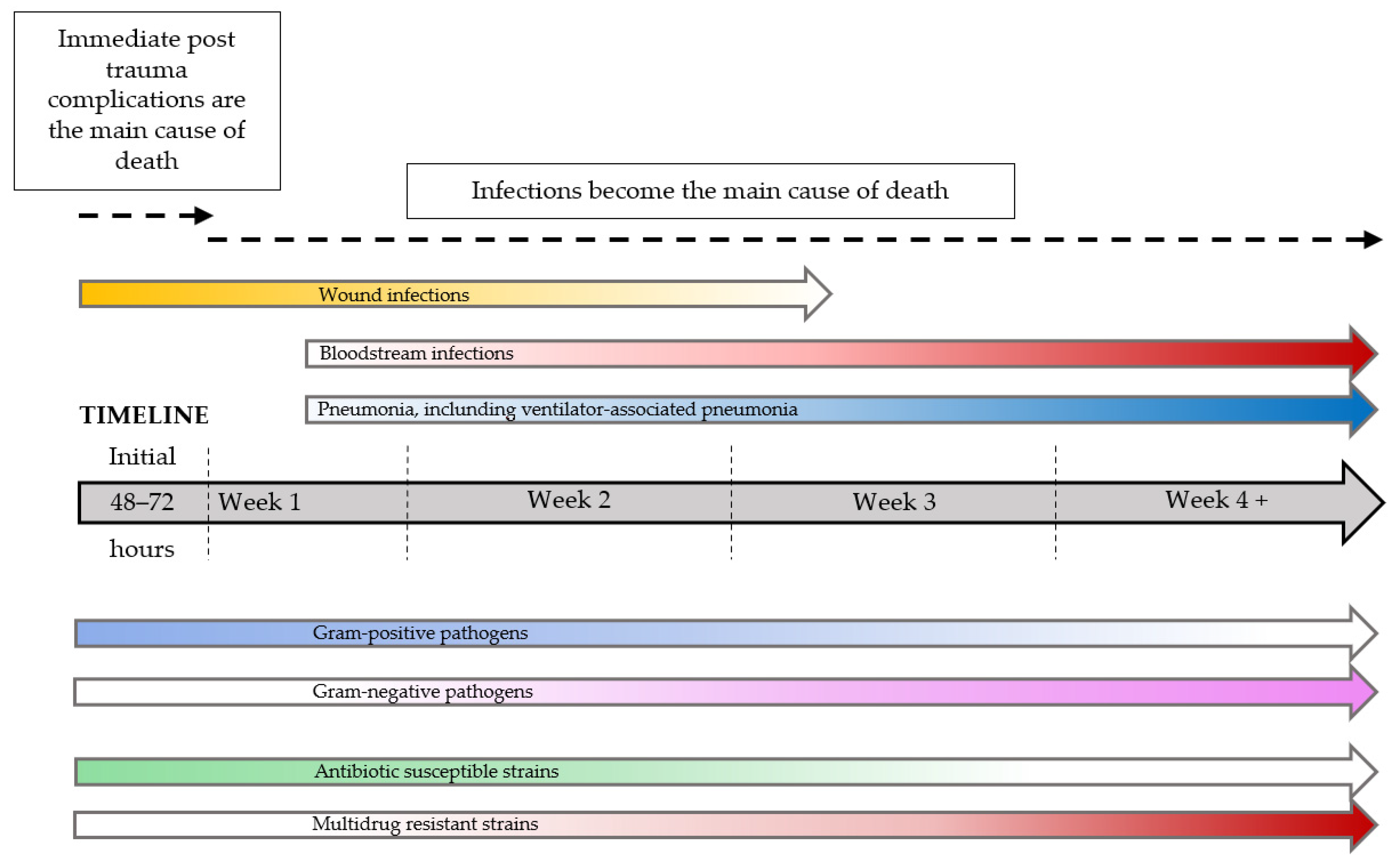
4. Clinical and Diagnostic Peculiarities of Principal Hospital-Acquired Infections in Burn Units
4.1. Sepsis and Bloodstream Infections
4.2. Pneumonia
4.3. Wound Infections
5. Microbiology of Bacterial Hospital-Acquired Infections
6. Antibiotic Treatment of Hospital-Acquired Infections in Burn Patients
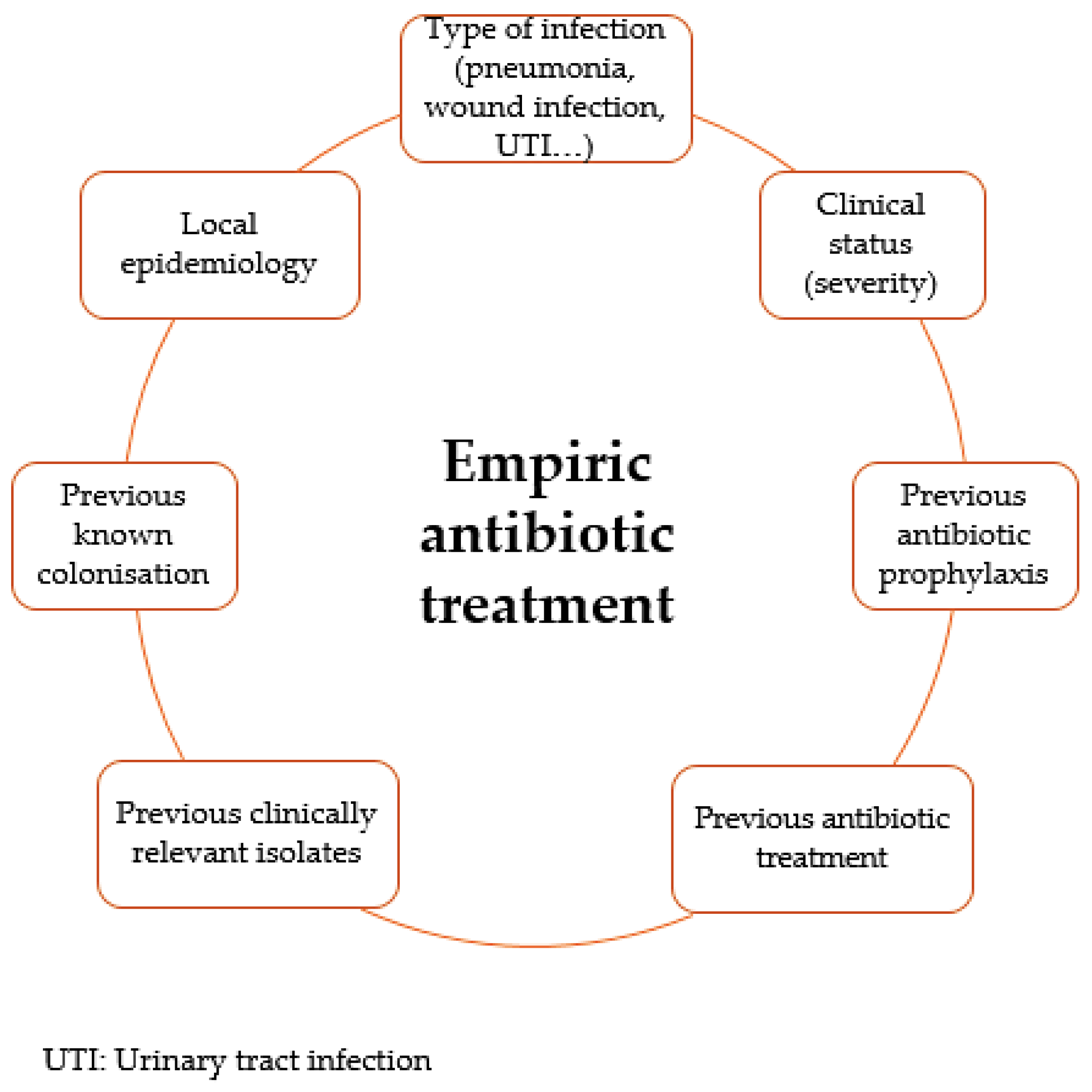
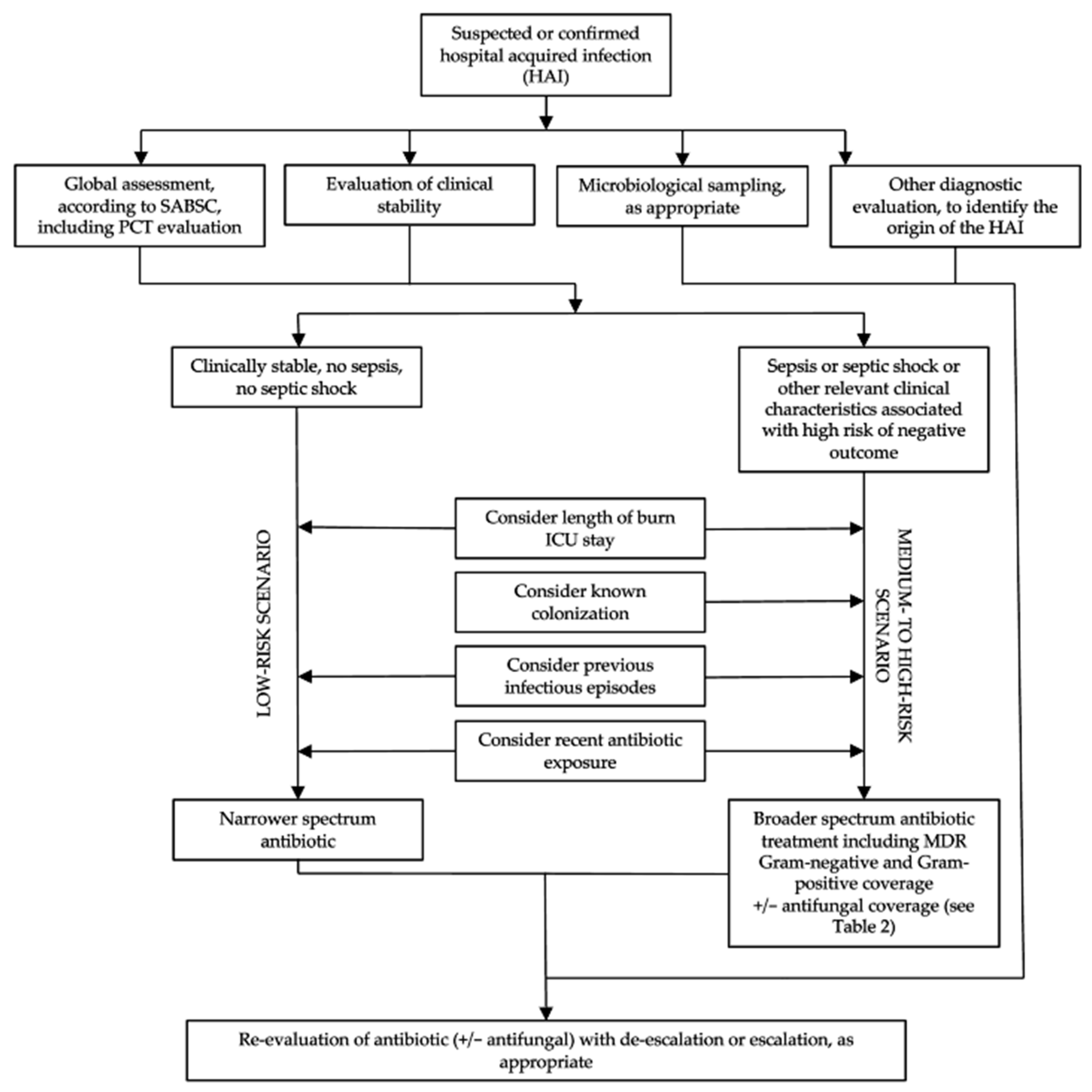
6.1. General Considerations, Empiric Regimens and Targeted Therapies
6.2. Pharmacokinetic/Pharmacodynamics Issues
7. Antimicrobial Stewardship Considerations in HAIs in Burn Patients
8. Conclusions
- (i)
- Improving the accuracy of diagnostic criteria for suspected sepsis (particularly in the early stages after burn injury)
- (ii)
- Better defining the role of colonizing pathogens in guiding antimicrobial empiric treatment for systemic infections
- (iii)
- Expanding our understanding of PK/PD properties of antibiotics in burn patients, particularly for novel molecules used to treat MDR pathogens
- (iv)
- Identifying the best way to implement effective and sustainable AMS programs
Author Contributions
Funding
Institutional Review Board Statement
Informed Consent Statement
Data Availability Statement
Conflicts of Interest
Abbreviations
| ABA | American Burn Association |
| AMS | Antimicrobial Stewardship |
| ARC | Augmented Renal Clearance |
| AST | Antibiotic Susceptibility Testing |
| BAL | Bronchoalveolar Lavage |
| BSI | Bloodstream Infection |
| CCI | Charlson Comorbidity Index |
| CI | Continuous Infusion |
| CRE | Carbapenem-Resistant Enterobacterales |
| CVC | Central Venous Catheter |
| CoNS | Coagulase-Negative Staphylococci |
| ESBL | Extended-Spectrum Beta-Lactamase |
| HAI | Hospital-Acquired Infection |
| ICU | Intensive Care Unit |
| ISBI | International Society for Burn Injuries |
| KPC | Klebsiella pneumoniae Carbapenemase |
| MBL | Metallo-Beta-Lactamase |
| MDR | Multidrug-Resistant |
| MIC | Minimum Inhibitory Concentration |
| MRSA | Methicillin-Resistant Staphylococcus aureus |
| MV | Mechanical Ventilation |
| NBR | National Burn Repository |
| NEWS | National Early Warning Score |
| NEWS2 | National Early Warning Score 2 |
| OXA | Oxacillinase |
| PK/PD | Pharmacokinetics/Pharmacodynamics |
| qSOFA | Quick Sequential Organ Failure Assessment |
| SIRS | Systemic Inflammatory Response Syndrome |
| SOFA | Sequential Organ Failure Assessment |
| TBSA | Total Body Surface Area |
| TZP | Piperacillin–Tazobactam |
| UTI | Urinary Tract Infection |
| VAP | Ventilator-Associated Pneumonia |
| VRE | Vancomycin-Resistant Enterococcus |
| WHO | World Health Organization |
References
- World Health Organization. Burns. Available online: https://www.who.int/news-room/fact-sheets/detail/burns (accessed on 21 July 2025).
- Smolle, C.; Cambiaso-Daniel, J.; Forbes, A.A.; Wurzer, P.; Hundeshagen, G.; Branski, L.K.; Huss, F.; Kamolz, L.-P. Recent Trends in Burn Epidemiology Worldwide: A Systematic Review. Burns 2017, 43, 249–257. [Google Scholar] [CrossRef]
- Guidelines for Burn Patient Referral—American Burn Association. Available online: https://ameriburn.org/resources/burnreferral/ (accessed on 29 August 2025).
- Krishnan, P.; Frew, Q.; Green, A.; Martin, R.; Dziewulski, P. Cause of Death and Correlation with Autopsy Findings in Burns Patients. Burns 2013, 39, 583–588. [Google Scholar] [CrossRef]
- Ressner, R.A.; Murray, C.K.; Griffith, M.E.; Rasnake, M.S.; Hospenthal, D.R.; Wolf, S.E. Outcomes of Bacteremia in Burn Patients Involved in Combat Operations Overseas. J. Am. Coll. Surg. 2008, 206, 439–444. [Google Scholar] [CrossRef]
- Lachiewicz, A.M.; Hauck, C.G.; Weber, D.J.; Cairns, B.A.; van Duin, D. Bacterial Infections After Burn Injuries: Impact of Multidrug Resistance. Clin. Infect. Dis. 2017, 65, 2130–2136. [Google Scholar] [CrossRef] [PubMed]
- Sun, F.-J.; Zhang, X.-B.; Fang, Y.; Chen, J.; Xing, H.; Shi, H.; Feng, W.; Xia, P. Spectrum and Drug Resistance of Pathogens from Patients with Burns. Burns 2012, 38, 1124–1130. [Google Scholar] [CrossRef]
- Alp, E.; Coruh, A.; Gunay, G.K.; Yontar, Y.; Doganay, M. Risk Factors for Nosocomial Infection and Mortality in Burn Patients: 10 Years of Experience at a University Hospital. J. Burn Care Res. 2012, 33, 379–385. [Google Scholar] [CrossRef]
- Tebano, G.; la Martire, G.; Raumer, L.; Cricca, M.; Melandri, D.; Pea, F.; Cristini, F. Which Are the Best Regimens of Broad-Spectrum Beta-Lactam Antibiotics in Burn Patients? A Systematic Review of Evidence from Pharmacology Studies. Antibiotics 2023, 12, 1737. [Google Scholar] [CrossRef]
- Cleland, H.; Tracy, L.M.; Padiglione, A.; Stewardson, A.J. Patterns of Multidrug Resistant Organism Acquisition in an Adult Specialist Burns Service: A Retrospective Review. Antimicrob. Resist. Infect. Control 2022, 11, 82. [Google Scholar] [CrossRef]
- van Langeveld, I.; Gagnon, R.C.; Conrad, P.F.; Gamelli, R.L.; Martin, B.; Choudhry, M.A.; Mosier, M.J. Multiple-Drug Resistance in Burn Patients: A Retrospective Study on the Impact of Antibiotic Resistance on Survival and Length of Stay. J. Burn Care Res. 2017, 38, 99–105. [Google Scholar] [CrossRef]
- Magiorakos, A.-P.; Srinivasan, A.; Carey, R.B.; Carmeli, Y.; Falagas, M.E.; Giske, C.G.; Harbarth, S.; Hindler, J.F.; Kahlmeter, G.; Olsson-Liljequist, B.; et al. Multidrug-Resistant, Extensively Drug-Resistant and Pandrug-Resistant Bacteria: An International Expert Proposal for Interim Standard Definitions for Acquired Resistance. Clin. Microbiol. Infect. 2012, 18, 268–281. [Google Scholar] [CrossRef] [PubMed]
- Dissanaike, S.; Ha, D.; Mitchell, D.; Larumbe, E. Socioeconomic Status, Gender, and Burn Injury: A Retrospective Review. Am. J. Surg. 2017, 214, 677–681. [Google Scholar] [CrossRef] [PubMed]
- Golshan, A.; Patel, C.; Hyder, A.A. A Systematic Review of the Epidemiology of Unintentional Burn Injuries in South Asia. J. Public Health 2013, 35, 384–396. [Google Scholar] [CrossRef]
- Forjuoh, S.N. Burns in Low- and Middle-Income Countries: A Review of Available Literature on Descriptive Epidemiology, Risk Factors, Treatment, and Prevention. Burns 2006, 32, 529–537. [Google Scholar] [CrossRef] [PubMed]
- Strassle, P.D.; Williams, F.N.; Weber, D.J.; Sickbert-Bennett, E.E.; Lachiewicz, A.M.; Napravnik, S.; Jones, S.W.; Cairns, B.A.; van Duin, D. Risk Factors for Healthcare-Associated Infections in Adult Burn Patients. Infect. Control Hosp. Epidemiol. 2017, 38, 1441–1448. [Google Scholar] [CrossRef]
- Corcione, S.; Pensa, A.; Castiglione, A.; Lupia, T.; Bortolaso, B.; Romeo, M.R.; Stella, M.; Rosa, F.G.D. Epidemiology, Prevalence and Risk Factors for Infections in Burn Patients: Results from a Regional Burn Centre’s Analysis. J. Chemother. 2021, 33, 62–66. [Google Scholar] [CrossRef] [PubMed]
- Escandón-Vargas, K.; Tangua, A.R.; Medina, P.; Zorrilla-Vaca, A.; Briceño, E.; Clavijo-Martínez, T.; Tróchez, J.P. Healthcare-Associated Infections in Burn Patients: Timeline and Risk Factors. Burns 2020, 46, 1775–1786. [Google Scholar] [CrossRef]
- Wanis, M.; Walker, S.A.N.; Daneman, N.; Elligsen, M.; Palmay, L.; Simor, A.; Cartotto, R. Impact of Hospital Length of Stay on the Distribution of Gram Negative Bacteria and Likelihood of Isolating a Resistant Organism in a Canadian Burn Center. Burns 2016, 42, 104–111. [Google Scholar] [CrossRef]
- Keen, E.F.; Robinson, B.J.; Hospenthal, D.R.; Aldous, W.K.; Wolf, S.E.; Chung, K.K.; Murray, C.K. Prevalence of Multidrug-Resistant Organisms Recovered at a Military Burn Center. Burns 2010, 36, 819–825. [Google Scholar] [CrossRef]
- Cavalcante, R.d.S.; Canet, P.; Fortaleza, C.M.C.B. Risk Factors for the Acquisition of Imipenem-Resistant Acinetobacter Baumannii in a Burn Unit: An Appraisal of the Effect of Colonization Pressure. Scand. J. Infect. Dis. 2014, 46, 593–598. [Google Scholar] [CrossRef]
- Wibbenmeyer, L.; Williams, I.; Ward, M.; Xiao, X.; Light, T.; Latenser, B.; Lewis, R.; Kealey, G.P.; Herwaldt, L. Risk Factors for Acquiring Vancomycin-Resistant Enterococcus and Methicillin-Resistant Staphylococcus Aureus on a Burn Surgery Step-down Unit. J. Burn Care Res. 2010, 31, 269–279. [Google Scholar] [CrossRef]
- Javanmardi, F.; Emami, A.; Pirbonyeh, N.; Rajaee, M.; Hatam, G.; Keshavarzi, A. Study of Multidrug Resistance in Prevalent Gram-Negative Bacteria in Burn Patients in Iran: A Systematic Review and Meta-Analysis. J. Glob. Antimicrob. Resist. 2019, 19, 64–72. [Google Scholar] [CrossRef]
- Raman, G.; Avendano, E.E.; Chan, J.; Merchant, S.; Puzniak, L. Risk Factors for Hospitalized Patients with Resistant or Multidrug-Resistant Pseudomonas aeruginosa Infections: A Systematic Review and Meta-Analysis. Antimicrob. Resist. Infect. Control 2018, 7, 79. [Google Scholar] [CrossRef]
- Diao, H.; Lu, G.; Zhang, Y.; Wang, Z.; Liu, X.; Ma, Q.; Yu, H.; Li, Y. Risk Factors for Multidrug-Resistant and Extensively Drug-Resistant Acinetobacter Baumannii Infection of Patients Admitted in Intensive Care Unit: A Systematic Review and Meta-Analysis. J. Hosp. Infect. 2024, 149, 77–87. [Google Scholar] [CrossRef]
- Kahn, S.A.; Bernal, N.; Mosier, M.J. Pearls From the National Burn Repository. J. Burn Care Res. 2018, 39, 626–627. [Google Scholar] [CrossRef] [PubMed]
- Tedesco, D.J.; Hutter, M.F.; Khalaf, F.; Ricciuti, Z.; Jeschke, M.G. Sepsis in Burn Care: Incidence and Outcomes. Mil. Med. Res. 2025, 12, 55. [Google Scholar] [CrossRef] [PubMed]
- Kelly, E.J.; Oliver, M.A.; Carney, B.C.; Shupp, J.W. Infection and Burn Injury. Eur. Burn J. 2022, 3, 165–179. [Google Scholar] [CrossRef]
- Norbury, W.; Herndon, D.N.; Tanksley, J.; Jeschke, M.G.; Finnerty, C.C. Infection in Burns. Surg. Infect. 2016, 17, 250–255. [Google Scholar] [CrossRef]
- van Duin, D.; Strassle, P.D.; DiBiase, L.M.; Lachiewicz, A.M.; Rutala, W.A.; Eitas, T.; Maile, R.; Kanamori, H.; Weber, D.J.; Cairns, B.A.; et al. Timeline of Health Care-Associated Infections and Pathogens after Burn Injuries. Am. J. Infect. Control 2016, 44, 1511–1516. [Google Scholar] [CrossRef] [PubMed]
- Bacomo, F.K.; Chung, K.K. A Primer on Burn Resuscitation. J. Emerg. Trauma Shock 2011, 4, 109–113. [Google Scholar] [CrossRef]
- Dg, G. Sepsis in the Burn Patient: A Different Problem than Sepsis in the General Population. Burn. Trauma 2017, 5, 23. [Google Scholar] [CrossRef]
- Dastagir, K.; Krezdorn, N.; Bingoel, A.S.; Mett, T.R.; Radtke, C.; Jokuszies, A.; Vogt, P.M. Application of Critical Care Scores in Severely Burned Patients. J. Burn Care Res. 2021, 42, 1176–1180. [Google Scholar] [CrossRef] [PubMed]
- Greenhalgh, D.G.; Hill, D.M.; Burmeister, D.M.; Gus, E.I.; Cleland, H.; Padiglione, A.; Holden, D.; Huss, F.; Chew, M.S.; Kubasiak, J.C.; et al. Surviving Sepsis After Burn Campaign. Burns 2023, 49, 1487–1524. [Google Scholar] [CrossRef] [PubMed]
- Singer, M.; Deutschman, C.S.; Seymour, C.W.; Shankar-Hari, M.; Annane, D.; Bauer, M.; Bellomo, R.; Bernard, G.R.; Chiche, J.-D.; Coopersmith, C.M.; et al. The Third International Consensus Definitions for Sepsis and Septic Shock (Sepsis-3). JAMA 2016, 315, 801–810. [Google Scholar] [CrossRef] [PubMed]
- ISBI Practice Guidelines Committee; Advisory Subcommittee; Steering Subcommittee. ISBI Practice Guidelines for Burn Care, Part 2. Burns 2018, 44, 1617–1706. [Google Scholar] [CrossRef]
- Greenhalgh, D.G.; Saffle, J.R.; Holmes, J.H.; Gamelli, R.L.; Palmieri, T.L.; Horton, J.W.; Tompkins, R.G.; Traber, D.L.; Mozingo, D.W.; Deitch, E.A.; et al. American Burn Association Consensus Conference to Define Sepsis and Infection in Burns. J. Burn Care Res. 2007, 28, 776–790. [Google Scholar] [CrossRef]
- Mann-Salinas, E.A.; Baun, M.M.; Meininger, J.C.; Murray, C.K.; Aden, J.K.; Wolf, S.E.; Wade, C.E. Novel Predictors of Sepsis Outperform the American Burn Association Sepsis Criteria in the Burn Intensive Care Unit Patient. J. Burn Care Res. 2013, 34, 31–43. [Google Scholar] [CrossRef]
- Stanojcic, M.; Vinaik, R.; Jeschke, M.G. Status and Challenges of Predicting and Diagnosing Sepsis in Burn Patients. Surg. Infect. 2018, 19, 168–175. [Google Scholar] [CrossRef]
- Cabral, L.; Afreixo, V.; Almeida, L.; Paiva, J.A. The Use of Procalcitonin (PCT) for Diagnosis of Sepsis in Burn Patients: A Meta-Analysis. PLoS ONE 2016, 11, e0168475. [Google Scholar] [CrossRef]
- Cabral, L.; Afreixo, V.; Meireles, R.; Vaz, M.; Chaves, C.; Caetano, M.; Almeida, L.; Paiva, J.A. Checking Procalcitonin Suitability for Prognosis and Antimicrobial Therapy Monitoring in Burn Patients. Burn. Trauma 2018, 6, 10. [Google Scholar] [CrossRef]
- Li, A.T.; Moussa, A.; Gus, E.; Paul, E.; Yii, E.; Romero, L.; Lin, Z.C.; Padiglione, A.; Lo, C.H.; Cleland, H.; et al. Biomarkers for the Early Diagnosis of Sepsis in Burns: Systematic Review and Meta-Analysis. Ann. Surg. 2022, 275, 654–662. [Google Scholar] [CrossRef]
- Patel, B.M.; Paratz, J.D.; Mallet, A.; Lipman, J.; Rudd, M.; Muller, M.J.; Paterson, D.L.; Roberts, J.A. Characteristics of Bloodstream Infections in Burn Patients: An 11-Year Retrospective Study. Burns 2012, 38, 685–690. [Google Scholar] [CrossRef]
- Raz-Pasteur, A.; Hussein, K.; Finkelstein, R.; Ullmann, Y.; Egozi, D. Blood Stream Infections (BSI) in Severe Burn Patients--Early and Late BSI: A 9-Year Study. Burns 2013, 39, 636–642. [Google Scholar] [CrossRef] [PubMed]
- Shupp, J.W.; Pavlovich, A.R.; Jeng, J.C.; Pezzullo, J.C.; Oetgen, W.J.; Jaskille, A.D.; Jordan, M.H.; Shoham, S. Epidemiology of Bloodstream Infections in Burn-Injured Patients: A Review of the National Burn Repository. J. Burn Care Res. 2010, 31, 521–528. [Google Scholar] [CrossRef]
- Fochtmann-Frana, A.; Freystätter, C.; Vorstandlechner, V.; Barth, A.; Bolliger, M.; Presterl, E.; Ihra, G.; Muschitz, G.; Mittlboeck, M.; Makristathis, A.; et al. Incidence of Risk Factors for Bloodstream Infections in Patients with Major Burns Receiving Intensive Care: A Retrospective Single-Center Cohort Study. Burns 2018, 44, 784–792. [Google Scholar] [CrossRef] [PubMed]
- Gallaher, J.R.; Banda, W.; Lachiewicz, A.M.; Krysiak, R.; Cairns, B.A.; Charles, A.G. Colonization with Multidrug-Resistant Enterobacteriaceae Is Associated with Increased Mortality Following Burn Injury in Sub-Saharan Africa. World J. Surg. 2018, 42, 3089–3096. [Google Scholar] [CrossRef]
- Pangli, H.; Papp, A. The Relation between Positive Screening Results and MRSA Infections in Burn Patients. Burns 2019, 45, 1585–1592. [Google Scholar] [CrossRef] [PubMed]
- Final Recommendations of the ECIL 10 Working Group. Available online: https://www.ecil-leukaemia.com/en/resources/resources-ecil (accessed on 18 July 2025).
- Dunbar, S.A.; Gardner, C.; Das, S. Diagnosis and Management of Bloodstream Infections with Rapid, Multiplexed Molecular Assays. Front. Cell. Infect. Microbiol. 2022, 12, 859935. [Google Scholar] [CrossRef]
- ISBI Practice Guidelines Committee; Steering Subcommittee; Advisory Subcommittee. ISBI Practice Guidelines for Burn Care. Burns 2016, 42, 953–1021. [Google Scholar] [CrossRef]
- Huzar, T.F.; Cross, J.M. Ventilator-Associated Pneumonia in Burn Patients: A Cause or Consequence of Critical Illness? Expert Rev. Respir. Med. 2011, 5, 663–673. [Google Scholar] [CrossRef]
- Barret, J.P.; Ramzy, P.I.; Wolf, S.E.; Herndon, D.N. Sensitivity and Specificity of Bronchoalveolar Lavage and Protected Bronchial Brush in the Diagnosis of Pneumonia in Pediatric Burn Patients. Arch. Surg. 1999, 134, 1243–1246; discussion 1246-1247. [Google Scholar] [CrossRef]
- Ramzy, P.I.; Herndon, D.N.; Wolf, S.E.; Irtun, O.; Barret, J.P.; Ramirez, R.J.; Heggers, J.P. Comparison of Wound Culture and Bronchial Lavage in the Severely Burned Child: Implications for Antimicrobial Therapy. Arch. Surg. 1998, 133, 1275–1280. [Google Scholar] [CrossRef][Green Version]
- Church, D.; Elsayed, S.; Reid, O.; Winston, B.; Lindsay, R. Burn Wound Infections. Clin. Microbiol. Rev. 2006, 19, 403–434. [Google Scholar] [CrossRef]
- Rowan, M.P.; Cancio, L.C.; Elster, E.A.; Burmeister, D.M.; Rose, L.F.; Natesan, S.; Chan, R.K.; Christy, R.J.; Chung, K.K. Burn Wound Healing and Treatment: Review and Advancements. Crit. Care 2015, 19, 243. [Google Scholar] [CrossRef]
- Azzopardi, E.A.; Azzopardi, E.; Camilleri, L.; Villapalos, J.; Boyce, D.E.; Dziewulski, P.; Dickson, W.A.; Whitaker, I.S. Gram Negative Wound Infection in Hospitalised Adult Burn Patients--Systematic Review and Metanalysis-. PLoS ONE 2014, 9, e95042. [Google Scholar] [CrossRef]
- Wasiak, J.; Cleland, H.; Campbell, F.; Spinks, A. Dressings for Superficial and Partial Thickness Burns. Cochrane Database Syst. Rev. 2013, 2013, CD002106. [Google Scholar] [CrossRef]
- Brown, T.P.L.H.; Cancio, L.C.; McManus, A.T.; Mason, A.D. Survival Benefit Conferred by Topical Antimicrobial Preparations in Burn Patients: A Historical Perspective. J. Trauma 2004, 56, 863–866. [Google Scholar] [CrossRef]
- Ruegsegger, L.; Xiao, J.; Naziripour, A.; Kanumuambidi, T.; Brown, D.; Williams, F.; Marshall, S.H.; Rudin, S.D.; Yen, K.; Chu, T.; et al. Multidrug-Resistant Gram-Negative Bacteria in Burn Patients. Antimicrob. Agents Chemother. 2022, 66, e0068822. [Google Scholar] [CrossRef]
- Gang, R.K.; Sanyal, S.C.; Bang, R.L.; Mokaddas, E.; Lari, A.R. Staphylococcal Septicaemia in Burns. Burns 2000, 26, 359–366. [Google Scholar] [CrossRef]
- Altoparlak, U.; Erol, S.; Akcay, M.N.; Celebi, F.; Kadanali, A. The Time-Related Changes of Antimicrobial Resistance Patterns and Predominant Bacterial Profiles of Burn Wounds and Body Flora of Burned Patients. Burns 2004, 30, 660–664. [Google Scholar] [CrossRef]
- Wisplinghoff, H.; Bischoff, T.; Tallent, S.M.; Seifert, H.; Wenzel, R.P.; Edmond, M.B. Nosocomial Bloodstream Infections in US Hospitals: Analysis of 24,179 Cases from a Prospective Nationwide Surveillance Study. Clin. Infect. Dis. 2004, 39, 309–317. [Google Scholar] [CrossRef]
- Suleyman, G.; Alangaden, G.J. Nosocomial Fungal Infections: Epidemiology, Infection Control, and Prevention. Infect. Dis. Clin. N. Am. 2021, 35, 1027–1053. [Google Scholar] [CrossRef]
- Ozlu, O.; Basaran, A. Infections in Patients with Major Burns: A Retrospective Study of a Burn Intensive Care Unit. J. Burn Care Res. 2022, 43, 926–930. [Google Scholar] [CrossRef]
- Emaneini, M.; Beigverdi, R.; van Leeuwen, W.B.; Rahdar, H.; Karami-Zarandi, M.; Hosseinkhani, F.; Jabalameli, F. Prevalence of Methicillin-Resistant Staphylococcus Aureus Isolated from Burn Patients in Iran: A Systematic Review and Meta-Analysis. J. Glob. Antimicrob. Resist. 2018, 12, 202–206. [Google Scholar] [CrossRef]
- Raz-Pasteur, A.; Fishel, R.; Hardak, E.; Mashiach, T.; Ullmann, Y.; Egozi, D. Do Wound Cultures Give Information About the Microbiology of Blood Cultures in Severe Burn Patients? Ann. Plast. Surg. 2016, 76, 34–39. [Google Scholar] [CrossRef]
- Fransen, F.; Melchers, M.J.B.; Meletiadis, J.; Mouton, J.W. Pharmacodynamics and Differential Activity of Nitrofurantoin against ESBL-Positive Pathogens Involved in Urinary Tract Infections. J. Antimicrob. Chemother. 2016, 71, 2883–2889. [Google Scholar] [CrossRef]
- Costescu Strachinaru, D.I.; Gallez, J.-L.; François, P.-M.; Baekelandt, D.; Paridaens, M.-S.; Pirnay, J.-P.; De Vos, D.; Djebara, S.; Vanbrabant, P.; Strachinaru, M.; et al. Epidemiology and Etiology of Blood Stream Infections in a Belgian Burn Wound Center. Acta Clin. Belg. 2022, 77, 353–359. [Google Scholar] [CrossRef]
- Khalili, Y.; Memar, M.Y.; Farajnia, S.; Adibkia, K.; Kafil, H.S.; Ghotaslou, R. Molecular Epidemiology and Carbapenem Resistance of Pseudomonas aeruginosa Isolated from Patients with Burns. J. Wound Care 2021, 30, 135–141. [Google Scholar] [CrossRef]
- Bahemia, I.A.; Muganza, A.; Moore, R.; Sahid, F.; Menezes, C.N. Microbiology and Antibiotic Resistance in Severe Burns Patients: A 5 Year Review in an Adult Burns Unit. Burns 2015, 41, 1536–1542. [Google Scholar] [CrossRef]
- Girerd-Genessay, I.; Bénet, T.; Vanhems, P. Multidrug-Resistant Bacterial Outbreaks in Burn Units: A Synthesis of the Literature According to the ORION Statement. J. Burn Care Res. 2016, 37, 172–180. [Google Scholar] [CrossRef]
- Weber, D.J.; van Duin, D.; DiBiase, L.M.; Hultman, C.S.; Jones, S.W.; Lachiewicz, A.M.; Sickbert-Bennett, E.E.; Brooks, R.H.; Cairns, B.A.; Rutala, W.A. Healthcare-Associated Infections among Patients in a Large Burn Intensive Care Unit: Incidence and Pathogens, 2008–2012. Infect. Control Hosp. Epidemiol. 2014, 35, 1304–1306. [Google Scholar] [CrossRef]
- Rashid, A.; Solomon, L.K.; Lewis, H.G.; Khan, K. Outbreak of Epidemic Methicillin-Resistant Staphylococcus Aureus in a Regional Burns Unit: Management and Implications. Burns 2006, 32, 452–457. [Google Scholar] [CrossRef]
- Falk, P.S.; Winnike, J.; Woodmansee, C.; Desai, M.; Mayhall, C.G. Outbreak of Vancomycin-Resistant Enterococci in a Burn Unit. Infect. Control Hosp. Epidemiol. 2000, 21, 575–582. [Google Scholar] [CrossRef] [PubMed]
- Kanamori, H.; Parobek, C.M.; Juliano, J.J.; van Duin, D.; Cairns, B.A.; Weber, D.J.; Rutala, W.A. A Prolonged Outbreak of KPC-3-Producing Enterobacter Cloacae and Klebsiella Pneumoniae Driven by Multiple Mechanisms of Resistance Transmission at a Large Academic Burn Center. Antimicrob. Agents Chemother. 2017, 61, e01516-16. [Google Scholar] [CrossRef]
- Tissot, F.; Blanc, D.S.; Basset, P.; Zanetti, G.; Berger, M.M.; Que, Y.-A.; Eggimann, P.; Senn, L. New Genotyping Method Discovers Sustained Nosocomial Pseudomonas aeruginosa Outbreak in an Intensive Care Burn Unit. J. Hosp. Infect. 2016, 94, 2–7. [Google Scholar] [CrossRef]
- Douglas, M.W.; Mulholland, K.; Denyer, V.; Gottlieb, T. Multi-Drug Resistant Pseudomonas aeruginosa Outbreak in a Burns Unit—An Infection Control Study. Burns 2001, 27, 131–135. [Google Scholar] [CrossRef] [PubMed]
- Simor, A.E.; Lee, M.; Vearncombe, M.; Jones-Paul, L.; Barry, C.; Gomez, M.; Fish, J.S.; Cartotto, R.C.; Palmer, R.; Louie, M. An Outbreak Due to Multiresistant Acinetobacter Baumannii in a Burn Unit: Risk Factors for Acquisition and Management. Infect. Control Hosp. Epidemiol. 2002, 23, 261–267. [Google Scholar] [CrossRef] [PubMed]
- Bassetti, M.; Rello, J.; Blasi, F.; Goossens, H.; Sotgiu, G.; Tavoschi, L.; Zasowski, E.J.; Arber, M.R.; McCool, R.; Patterson, J.V.; et al. Systematic Review of the Impact of Appropriate versus Inappropriate Initial Antibiotic Therapy on Outcomes of Patients with Severe Bacterial Infections. Int. J. Antimicrob. Agents 2020, 56, 106184. [Google Scholar] [CrossRef]
- Tang, F.; Yuan, H.; Li, X.; Qiao, L. Effect of Delayed Antibiotic Use on Mortality Outcomes in Patients with Sepsis or Septic Shock: A Systematic Review and Meta-Analysis. Int. Immunopharmacol. 2024, 129, 111616. [Google Scholar] [CrossRef]
- Prescott, H.C.; Antonelli, M.; Alhazzanic, W.; Møller, M.H.; Alshamsi, F.; Azevedo, L.C.P.; Belley-Cote, E.; De Waele, J.; Derde, L.; Dionnec, J.C.; et al. Surviving Sepsis Campaign: International Guidelines for Management of Sepsis and Septic Shock 2026. Intensive Care Med. 2026, 54, 725–812. [Google Scholar] [CrossRef]
- Tamma, P.D.; Heil, E.L.; Justo, J.A.; Mathers, A.J.; Satlin, M.J.; Bonomo, R.A. Infectious Diseases Society of America 2024 Guidance on the Treatment of Antimicrobial-Resistant Gram-Negative Infections. Clin. Infect. Dis. 2024, ciae403. [Google Scholar] [CrossRef]
- Paul, M.; Carrara, E.; Retamar, P.; Tängdén, T.; Bitterman, R.; Bonomo, R.A.; Waele, J.d.; Daikos, G.L.; Akova, M.; Harbarth, S.; et al. European Society of Clinical Microbiology and Infectious Diseases (ESCMID) Guidelines for the Treatment of Infections Caused by Multidrug-Resistant Gram-Negative Bacilli (Endorsed by European Society of Intensive Care Medicine). Clin. Microbiol. Infect. 2022, 28, 521–547. [Google Scholar] [CrossRef] [PubMed]
- Liu, V.X.; Fielding-Singh, V.; Greene, J.D.; Baker, J.M.; Iwashyna, T.J.; Bhattacharya, J.; Escobar, G.J. The Timing of Early Antibiotics and Hospital Mortality in Sepsis. Am. J. Respir. Crit. Care Med. 2017, 196, 856–863. [Google Scholar] [CrossRef]
- Ferrer, R.; Martin-Loeches, I.; Phillips, G.; Osborn, T.M.; Townsend, S.; Dellinger, R.P.; Artigas, A.; Schorr, C.; Levy, M.M. Empiric Antibiotic Treatment Reduces Mortality in Severe Sepsis and Septic Shock from the First Hour: Results from a Guideline-Based Performance Improvement Program. Crit. Care Med. 2014, 42, 1749–1755. [Google Scholar] [CrossRef]
- Raith, E.P.; Udy, A.A.; Bailey, M.; McGloughlin, S.; MacIsaac, C.; Bellomo, R.; Pilcher, D.V.; Australian and New Zealand Intensive Care Society (ANZICS) Centre for Outcomes and Resource Evaluation (CORE). Prognostic Accuracy of the SOFA Score, SIRS Criteria, and qSOFA Score for In-Hospital Mortality Among Adults with Suspected Infection Admitted to the Intensive Care Unit. JAMA 2017, 317, 290–300. [Google Scholar] [CrossRef] [PubMed]
- Vincent, J.L.; Moreno, R.; Takala, J.; Willatts, S.; De Mendonça, A.; Bruining, H.; Reinhart, C.K.; Suter, P.M.; Thijs, L.G. The SOFA (Sepsis-Related Organ Failure Assessment) Score to Describe Organ Dysfunction/Failure. On Behalf of the Working Group on Sepsis-Related Problems of the European Society of Intensive Care Medicine. Intensive Care Med. 1996, 22, 707–710. [Google Scholar] [CrossRef]
- NHS National Early Warning Score (NEWS) 2 Standardising the Assessment of Acute-Illness Severity in the NHS 2017. Available online: https://www.rcp.ac.uk/media/a4ibkkbf/news2-final-report_0_0.pdf (accessed on 30 April 2026).
- Ladhani, H.A.; Sajankila, N.; Zosa, B.M.; He, J.C.; Yowler, C.J.; Brandt, C.; Claridge, J.A.; Khandelwal, A.K. Utility of Sequential Organ Failure Assessment Score in Predicting Bacteremia in Critically Ill Burn Patients. Am. J. Surg. 2018, 215, 478–481. [Google Scholar] [CrossRef]
- Yoon, J.; Kym, D.; Hur, J.; Cho, Y.S.; Chun, W.; Yoon, D. Validation of Sepsis-3 Using Survival Analysis and Clinical Evaluation of Quick SOFA, SIRS, and Burn-Specific SIRS for Sepsis in Burn Patients with Suspected Infection. PLoS ONE 2023, 18, e0276597. [Google Scholar] [CrossRef]
- Gimenez, F.M.P.; Cardoso, L.T.Q.; Kerbauy, G.; Matsuo, T.; Grion, C.M.C. Analysis of the SOFA Score, Quick-SOFA, and SIRS Criteria in Burn Patients with Infection. Rev. Bras. Enferm. 2025, 78, e20240111. [Google Scholar] [CrossRef] [PubMed]
- Osler, T.; Glance, L.G.; Hosmer, D.W. Simplified Estimates of the Probability of Death after Burn Injuries: Extending and Updating the Baux Score. J. Trauma 2010, 68, 690–697. [Google Scholar] [CrossRef]
- Knowlin, L.; Stanford, L.; Moore, D.; Cairns, B.; Charles, A. The Measured Effect Magnitude of Co-Morbidities on Burn Injury Mortality. Burns 2016, 42, 1433–1438. [Google Scholar] [CrossRef]
- Heng, J.S.; Clancy, O.; Atkins, J.; Leon-Villapalos, J.; Williams, A.J.; Keays, R.; Hayes, M.; Takata, M.; Jones, I.; Vizcaychipi, M.P. Revised Baux Score and Updated Charlson Comorbidity Index Are Independently Associated with Mortality in Burns Intensive Care Patients. Burns 2015, 41, 1420–1427. [Google Scholar] [CrossRef]
- Prasad, A.; Thode, H.C.; Singer, A.J. Predictive Value of Quick SOFA and Revised Baux Scores in Burn Patients. Burns 2020, 46, 347–351. [Google Scholar] [CrossRef] [PubMed]
- Gallardo-Pizarro, A.; Lopera, C.; Peyrony, O.; Monzo-Gallo, P.; Aiello, T.F.; Martinez-Urrea, A.; Herrera, S.; Río, A.D.; Teijon-Lumbreras, C.; Chumbita, M.; et al. Rectal Colonisation by Multidrug-Resistant Gram-Negative Bacteria and Subsequent Bacteraemia in Haematological Patients. Clin. Microbiol. Infect. 2025, 31, 1579–1583. [Google Scholar] [CrossRef]
- Temkin, E.; Solter, E.; Lugassy, C.; Chen, D.; Cohen, A.; Schwaber, M.J.; Carmeli, Y. CPE Working Group The Natural History of Carbapenemase-Producing Enterobacterales: Progression From Carriage of Various Carbapenemases to Bloodstream Infection. Clin. Infect. Dis. 2024, 79, 22–29. [Google Scholar] [CrossRef] [PubMed]
- Giannella, M.; Pascale, R.; Viale, P. Progression From Carriage to Bloodstream Infection and Fatality by Different Enterobacterales Species, Carbapenemases, and Host Settings: Deciphering the Melting Pot. Clin. Infect. Dis. 2024, 79, 30–32. [Google Scholar] [CrossRef]
- Kang, S.-W.; Park, S.; Kim, A.R.; Han, J.; Lee, J.; Seo, H.; Sung, H.; Kim, M.-N.; Chang, E.; Bae, S.; et al. Clinical Characteristics of and Risk Factors for Subsequent Carbapenemase-Producing Enterobacterales (CPE) Bacteraemia in Rectal CPE Carriers. Int. J. Antimicrob. Agents 2023, 62, 106959. [Google Scholar] [CrossRef]
- Cano, A.; Gutiérrez-Gutiérrez, B.; Machuca, I.; Gracia-Ahufinger, I.; Pérez-Nadales, E.; Causse, M.; Castón, J.J.; Guzman-Puche, J.; Torre-Giménez, J.; Kindelán, L.; et al. Risks of Infection and Mortality Among Patients Colonized With Klebsiella Pneumoniae Carbapenemase-Producing K. Pneumoniae: Validation of Scores and Proposal for Management. Clin. Infect. Dis. 2018, 66, 1204–1210. [Google Scholar] [CrossRef]
- Kim, M.; Jeon, K.; Kym, D.; Jung, J.; Jang, Y.J.; Han, S.B. Carbapenem-Resistant Enterobacterales Infection and Colonization in Patients with Severe Burns: A Retrospective Cohort Study in a Single Burn Center. Antimicrob. Resist. Infect. Control 2025, 14, 3. [Google Scholar] [CrossRef]
- Reighard, A.; Diekema, D.; Wibbenmeyer, L.; Ward, M.; Herwaldt, L. Staphylococcus Aureus Nasal Colonization and Colonization or Infection at Other Body Sites in Patients on a Burn Trauma Unit. Infect. Control Hosp. Epidemiol. 2009, 30, 721–726. [Google Scholar] [CrossRef]
- Gardner, A.; Nieberg, P.; Sakoulas, G.; Wong-Beringer, A. Carbapenem De-Escalation as an Antimicrobial Stewardship Strategy: A Narrative Review. JAC Antimicrob. Resist. 2025, 7, dlaf022. [Google Scholar] [CrossRef]
- Mathieu, C.; Pastene, B.; Cassir, N.; Martin-Loeches, I.; Leone, M. Efficacy and Safety of Antimicrobial De-Escalation as a Clinical Strategy. Expert Rev. Anti-Infect. Ther. 2019, 17, 79–88. [Google Scholar] [CrossRef]
- Kohama, Y.; Kosugi, M.; Arakawa, M.; Hidaka, S. Evaluating the Impact of De-Escalating Antimicrobial Therapy in Burn Patients: A Retrospective Cohort Study. Pharmazie 2022, 77, 311–315. [Google Scholar] [CrossRef]
- Averbuch, D.; Vanbiervliet, Y.; Baccelli, F.; Mikulska, M.; Neofytos, D.; Garcia-Vidal, C.; Aguilar-Guisado, M.; Blijlevens, N.; Munoz, P.; Cordonnier, C.; et al. Empirical and Targeted Antimicrobial Therapy in Patients with Febrile Neutropenia and Haematological Malignancy or after Haematopoietic Cell Transplantation: Recommendations from the 10th European Conference on Infections in Leukaemia. Lancet Infect. Dis. 2026, 26, e232–e247. [Google Scholar] [CrossRef]
- Silverman, J.A.; Mortin, L.I.; Vanpraagh, A.D.G.; Li, T.; Alder, J. Inhibition of Daptomycin by Pulmonary Surfactant: In Vitro Modeling and Clinical Impact. J. Infect. Dis. 2005, 191, 2149–2152. [Google Scholar] [CrossRef]
- Burdet, C.; Saïdani, N.; Dupieux, C.; Lemaignen, A.; Canouï, E.; Surgers, L.; Vareil, M.O.; Lefort, A.; Lepeule, R.; Peiffer-Smadja, N.; et al. Cloxacillin versus Cefazolin for Meticillin-Susceptible Staphylococcus Aureus Bacteraemia (CloCeBa): A Prospective, Open-Label, Multicentre, Non-Inferiority, Randomised Clinical Trial. Lancet 2025, 406, 2349–2359. [Google Scholar] [CrossRef] [PubMed]
- Lakhundi, S.; Zhang, K. Methicillin-Resistant Staphylococcus Aureus: Molecular Characterization, Evolution, and Epidemiology. Clin. Microbiol. Rev. 2018, 31, e00020-18. [Google Scholar] [CrossRef] [PubMed]
- Blanchet, B.; Jullien, V.; Vinsonneau, C.; Tod, M. Influence of Burns on Pharmacokinetics and Pharmacodynamics of Drugs Used in the Care of Burn Patients. Clin. Pharmacokinet. 2008, 47, 635–654. [Google Scholar] [CrossRef]
- Cota, J.M.; FakhriRavari, A.; Rowan, M.P.; Chung, K.K.; Murray, C.K.; Akers, K.S. Intravenous Antibiotic and Antifungal Agent Pharmacokinetic-Pharmacodynamic Dosing in Adults with Severe Burn Injury. Clin. Ther. 2016, 38, 2016–2031. [Google Scholar] [CrossRef]
- Jeschke, M.G. Postburn Hypermetabolism: Past, Present, and Future. J. Burn Care Res. 2016, 37, 86–96. [Google Scholar] [CrossRef]
- Steele, A.N.; Grimsrud, K.N.; Sen, S.; Palmieri, T.L.; Greenhalgh, D.G.; Tran, N.K. Gap Analysis of Pharmacokinetics and Pharmacodynamics in Burn Patients: A Review. J. Burn Care Res. 2015, 36, e194–e211. [Google Scholar] [CrossRef]
- Abdul-Aziz, M.H.; Alffenaar, J.-W.C.; Bassetti, M.; Bracht, H.; Dimopoulos, G.; Marriott, D.; Neely, M.N.; Paiva, J.-A.; Pea, F.; Sjovall, F.; et al. Antimicrobial Therapeutic Drug Monitoring in Critically Ill Adult Patients: A Position Paper. Intensive Care Med. 2020, 46, 1127–1153. [Google Scholar] [CrossRef]
- Gatti, M.; Cojutti, P.G.; Pascale, R.; Tonetti, T.; Laici, C.; Dell’Olio, A.; Siniscalchi, A.; Giannella, M.; Viale, P.; Pea, F. Assessment of a PK/PD Target of Continuous Infusion Beta-Lactams Useful for Preventing Microbiological Failure and/or Resistance Development in Critically Ill Patients Affected by Documented Gram-Negative Infections. Antibiotics 2021, 10, 1311. [Google Scholar] [CrossRef]
- Roberts, J.A.; Paul, S.K.; Akova, M.; Bassetti, M.; Waele, J.J.D.; Dimopoulos, G.; Kaukonen, K.-M.; Koulenti, D.; Martin, C.; Montravers, P.; et al. DALI: Defining Antibiotic Levels in Intensive Care Unit Patients: Are Current β-Lactam Antibiotic Doses Sufficient for Critically Ill Patients? Clin. Infect. Dis. 2014, 58, 1072–1083. [Google Scholar] [CrossRef]
- Conil, J.-M.; Georges, B.; Ravat, F.; Ruiz, S.; Seguin, T.; Metsu, D.; Fourcade, O.; Saivin, S. Ceftazidime Dosage Recommendations in Burn Patients: From a Population Pharmacokinetic Approach to Clinical Practice via Monte Carlo Simulations. Clin. Ther. 2013, 35, 1603–1612. [Google Scholar] [CrossRef]
- Dailly, E.; Kergueris, M.F.; Pannier, M.; Jolliet, P.; Bourin, M. Population Pharmacokinetics of Imipenem in Burn Patients. Fundam. Clin. Pharmacol. 2003, 17, 645–650. [Google Scholar] [CrossRef]
- Doh, K.; Woo, H.; Hur, J.; Yim, H.; Kim, J.; Chae, H.; Han, S.; Yim, D.-S. Population Pharmacokinetics of Meropenem in Burn Patients. J. Antimicrob. Chemother. 2010, 65, 2428–2435. [Google Scholar] [CrossRef] [PubMed]
- Machado, A.S.; Oliveira, M.S.; Sanches, C.; da Silva Junior, C.V.; Gomez, D.S.; Gemperli, R.; Santos, S.R.C.J.; Levin, A.S. Clinical Outcome and Antimicrobial Therapeutic Drug Monitoring for the Treatment of Infections in Acute Burn Patients. Clin. Ther. 2017, 39, 1649–1657.e3. [Google Scholar] [CrossRef]
- Falcone, M.; Menichetti, F.; Cattaneo, D.; Tiseo, G.; Baldelli, S.; Galfo, V.; Leonildi, A.; Tagliaferri, E.; Di Paolo, A.; Pai, M.P. Pragmatic Options for Dose Optimization of Ceftazidime/Avibactam with Aztreonam in Complex Patients. J. Antimicrob. Chemother. 2021, 76, 1025–1031. [Google Scholar] [CrossRef]
- Walstad, R.A.; Aanderud, L.; Thurmann-Nielsen, E. Pharmacokinetics and Tissue Concentrations of Ceftazidime in Burn Patients. Eur. J. Clin. Pharmacol. 1988, 35, 543–549. [Google Scholar] [CrossRef] [PubMed]
- Fournier, A.; Eggimann, P.; Pantet, O.; Pagani, J.L.; Dupuis-Lozeron, E.; Pannatier, A.; Sadeghipour, F.; Voirol, P.; Que, Y.-A. Impact of Real-Time Therapeutic Drug Monitoring on the Prescription of Antibiotics in Burn Patients Requiring Admission to the Intensive Care Unit. Antimicrob. Agents Chemother. 2018, 62, e01818-17. [Google Scholar] [CrossRef]
- Alshaer, M.; Mazirka, P.; Burch, G.; Peloquin, C.; Drabick, Z.; Carson, J. Experience with Implementing a Beta-Lactam Therapeutic Drug Monitoring Service in a Burn Intensive Care Unit: A Retrospective Chart Review. J. Burn Care Res. 2023, 44, 121–128. [Google Scholar] [CrossRef]
- Santos, R.M.; Boyd, A.N.; Walroth, T.A.; Hall, A.; King, J.; Ahiskali, A.; Walter, E.; Neumann, N.; Curry, D.; Hoyte, B.; et al. A Multicenter, Retrospective Outcome Analysis of Vancomycin Area Under the Curve Versus Trough-Based Dosing Strategies in Patients with Burn or Inhalational Injuries (MONITOR). J. Burn Care Res. 2024, 45, 1383–1389. [Google Scholar] [CrossRef]
- Bousselmi, K.; Thabet, L.; Bayoudh, A.; Memi, M.; Messaadi, A. Antimicrobial Use and Antimicrobial Resistance in an Intensive Care Burn Department. Crit. Care 2006, 10, P108. [Google Scholar] [CrossRef]
- Wermine, K.; Gotewal, S.; Song, J.; Huang, L.G.; Corona, K.K.; Chokshi, S.N.; Villarreal, E.L.; Efejuku, T.A.; Chaij, J.M.; Bagby, S.P.; et al. Patterns of Antibiotic Administration in Patients with Burn Injuries: A TriNetX Study. Burns 2024, 50, 52–58. [Google Scholar] [CrossRef]
- Dyar, O.J.; Huttner, B.; Schouten, J.; Pulcini, C.; ESGAP (ESCMID Study Group for Antimicrobial stewardshiP). What Is Antimicrobial Stewardship? Clin. Microbiol. Infect. 2017, 23, 793–798. [Google Scholar] [CrossRef]
- Sehgal, P.; Elligsen, M.; Lo, J.; Lam, P.W.; Leis, J.A.; Fowler, R.; Pinto, R.; Daneman, N. Long-Term Sustainability and Acceptance of Antimicrobial Stewardship in Intensive Care: A Retrospective Cohort Study. Crit. Care Med. 2021, 49, 19–26. [Google Scholar] [CrossRef]
- Pulcini, C.; Tebano, G.; Mutters, N.T.; Tacconelli, E.; Cambau, E.; Kahlmeter, G.; Jarlier, V.; EUCIC-ESGAP-EUCAST Selective Reporting Working Group. Selective Reporting of Antibiotic Susceptibility Test Results in European Countries: An ESCMID Cross-Sectional Survey. Int. J. Antimicrob. Agents 2017, 23, 793–798. [Google Scholar] [CrossRef]
- Kaki, R.; Elligsen, M.; Walker, S.; Simor, A.; Palmay, L.; Daneman, N. Impact of Antimicrobial Stewardship in Critical Care: A Systematic Review. J. Antimicrob. Chemother. 2011, 66, 1223–1230. [Google Scholar] [CrossRef]
- Guo, Y.; Kong, L.; Liu, J.; Li, R.; Cui, M.; Kong, X.; Li, X.; Yang, M. Evaluation of an Antibiotic Stewardship Program for Promoting Rational Antibiotic Use in an ICU in China. BMC Infect. Dis. 2025, 25, 1301. [Google Scholar] [CrossRef]
- Schuetz, P.; Beishuizen, A.; Broyles, M.; Ferrer, R.; Gavazzi, G.; Gluck, E.H.; González Del Castillo, J.; Jensen, J.-U.; Kanizsai, P.L.; Kwa, A.L.H.; et al. Procalcitonin (PCT)-Guided Antibiotic Stewardship: An International Experts Consensus on Optimized Clinical Use. Clin. Chem. Lab. Med. 2019, 57, 1308–1318. [Google Scholar] [CrossRef]
- Wirz, Y.; Meier, M.A.; Bouadma, L.; Luyt, C.E.; Wolff, M.; Chastre, J.; Tubach, F.; Schroeder, S.; Nobre, V.; Annane, D.; et al. Effect of Procalcitonin-Guided Antibiotic Treatment on Clinical Outcomes in Intensive Care Unit Patients with Infection and Sepsis Patients: A Patient-Level Meta-Analysis of Randomized Trials. Crit. Care 2018, 22, 191. [Google Scholar] [CrossRef] [PubMed]
- Matuszak, S.S.; Kolodziej, L.; Micek, S.; Kollef, M. Antibiotic De-Escalation in the Intensive Care Unit: Rationale and Potential Strategies. Antibiotics 2025, 14, 467. [Google Scholar] [CrossRef]
- Chiotos, K.; Tamma, P.D.; Gerber, J.S. Antibiotic Stewardship in the Intensive Care Unit: Challenges and Opportunities. Infect. Control Hosp. Epidemiol. 2019, 40, 693–698. [Google Scholar] [CrossRef] [PubMed]
- Pickens, C.I.; Wunderink, R.G. Principles and Practice of Antibiotic Stewardship in the ICU. Chest 2019, 156, 163–171. [Google Scholar] [CrossRef]
- Burgoon, R.; Weeda, E.; Mediwala, K.N.; Raux, B.R. Clinical Utility of Negative Methicillin-Resistant Staphylococcus Aureus (MRSA) Nasal Surveillance Swabs in Skin and Skin Structure Infections. Am. J. Infect. Control 2022, 50, 941–946. [Google Scholar] [CrossRef] [PubMed]
- Karlin, D.; Pham, C.; Furukawa, D.; Kaur, I.; Martin, E.; Kates, O.; Vijayan, T. State-of-the-Art Review: Use of Antimicrobials at the End of Life. Clin. Infect. Dis. 2024, 78, e27–e36. [Google Scholar] [CrossRef]
- Barajas-Nava, L.A.; López-Alcalde, J.; Figuls, M.R.I.; Solà, I.; Cosp, X.B. Antibiotic Prophylaxis for Preventing Burn Wound Infection. Cochrane Database Syst. Rev. 2013, 2013, CD008738. [Google Scholar] [CrossRef]
- Avni, T.; Levcovich, A.; Ad-El, D.D.; Leibovici, L.; Paul, M. Prophylactic Antibiotics for Burns Patients: Systematic Review and Meta-Analysis. BMJ 2010, 340, c241. [Google Scholar] [CrossRef]
- Ramos, G.; Cornistein, W.; Cerino, G.T.; Nacif, G. Systemic Antimicrobial Prophylaxis in Burn Patients: Systematic Review. J. Hosp. Infect. 2017, 97, 105–114. [Google Scholar] [CrossRef]
- Zha, S.; Niu, J.; He, Z.; Fu, W.; Huang, Q.; Guan, L.; Zhou, L.; Chen, R. Prophylactic Antibiotics for Preventing Ventilator-Associated Pneumonia: A Pairwise and Bayesian Network Meta-Analysis. Eur. J. Med. Res. 2023, 28, 348. [Google Scholar] [CrossRef]
- Evans, L.; Rhodes, A.; Alhazzani, W.; Antonelli, M.; Coopersmith, C.M.; French, C.; Machado, F.R.; Mcintyre, L.; Ostermann, M.; Prescott, H.C.; et al. Surviving Sepsis Campaign: International Guidelines for Management of Sepsis and Septic Shock 2021. Crit. Care Med. 2021, 49, e1063. [Google Scholar] [CrossRef]
- Daneman, N.; Rishu, A.; Pinto, R.; Rogers, B.A.; Shehabi, Y.; Parke, R.; Cook, D.; Arabi, Y.; Muscedere, J.; Reynolds, S.; et al. Antibiotic Treatment for 7 versus 14 Days in Patients with Bloodstream Infections. N. Engl. J. Med. 2025, 392, 1065–1078. [Google Scholar] [CrossRef]
- Chastre, J.; Wolff, M.; Fagon, J.-Y.; Chevret, S.; Thomas, F.; Wermert, D.; Clementi, E.; Gonzalez, J.; Jusserand, D.; Asfar, P.; et al. Comparison of 8 vs. 15 Days of Antibiotic Therapy for Ventilator-Associated Pneumonia in Adults: A Randomized Trial. JAMA 2003, 290, 2588–2598. [Google Scholar] [CrossRef] [PubMed]
- Mo, Y.; Booraphun, S.; Li, A.Y.; Domthong, P.; Kayastha, G.; Lau, Y.H.; Chetchotisakd, P.; Limmathurotsakul, D.; Tambyah, P.A.; Cooper, B.S.; et al. Individualised, Short-Course Antibiotic Treatment versus Usual Long-Course Treatment for Ventilator-Associated Pneumonia (REGARD-VAP): A Multicentre, Individually Randomised, Open-Label, Non-Inferiority Trial. Lancet Respir. Med. 2024, 12, 399–408. [Google Scholar] [CrossRef] [PubMed]
- Lee, T.C.; Prosty, C.J.; Fralick, M.; Huttner, A.; McDonald, E.G.; Molina, J.; Paul, M.; Pinto, R.; Rishu, A.; von Dach, E.; et al. Seven vs Fourteen Days of Antibiotics for Gram-Negative Bloodstream Infection: A Systematic Review and Noninferiority Meta-Analysis. JAMA Netw. Open 2025, 8, e251421. [Google Scholar] [CrossRef]
- Nauriyal, V.; Rai, S.M.; Joshi, R.D.; Thapa, B.B.; Kaljee, L.; Prentiss, T.; Maki, G.; Shrestha, B.; Bajracharya, D.C.; Karki, K.; et al. Evaluation of an Antimicrobial Stewardship Program for Wound and Burn Care in Three Hospitals in Nepal. Antibiotics 2020, 9, 914. [Google Scholar] [CrossRef] [PubMed]
- Fonseca-Rivera, I.C.; Pando-Caciano, A.; Agüero-Palacios, Y.D. Impact of an Antimicrobial Stewardship Program on Mortality and Consumption of Antibiotics in the Intensive Care Units of a Pediatric Referral Hospital in Peru. Antimicrob. Steward. Healthc. Epidemiol. 2025, 5, e250. [Google Scholar] [CrossRef]
- Sadeq, A.A.; Shamseddine, J.M.; Babiker, Z.O.E.; Nsutebu, E.F.; Moukarzel, M.B.; Conway, B.R.; Hasan, S.S.; Conlon-Bingham, G.M.; Aldeyab, M.A. Impact of Multidisciplinary Team Escalating Approach on Antibiotic Stewardship in the United Arab Emirates. Antibiotics 2021, 10, 1289. [Google Scholar] [CrossRef]
- Zbyrak, V.; Reverón, S.L.; Smoke, S.; Mehta, A.; Marano, M.A.; Lee, R. Antibiotic Usage After Procalcitonin-Guided Therapy Algorithm Implementation In A Burn Intensive Care Unit. Ann. Burn Fire Disasters 2020, 33, 317–321. [Google Scholar]



(“Burns”[Mesh]) AND “Infections”[Mesh]
|
| (“Burns”[Mesh]) AND “Infections”[Mesh] and epidemiology |
(“Burns”[Mesh]) AND (“Infections”[Mesh]) and (“multidrug resistant” OR “multi-drug resistant”)
|
| “Burns” AND “Infections” and (“pharmacokinetic/pharmacodynamic”) OR (“pharmacokinetic/pharmacodynamics”) |
| (“Infections”[Mesh]) AND “Burns”[Mesh] AND “tissue penetration” |
| (“Burns”[Mesh]) AND (“Infections”[Mesh]) and (“antibiotic stewardship” OR “antimicrobial stewardship”) |
| “Burns” AND “Infections” and (“antibiotic stewardship” OR “antimicrobial stewardship”) |
| (“Infections”[Mesh]) AND “Burns”[Mesh] AND guidelines |
| qSOFA AND Burn |
| SOFA AND Burn |
| (“Organ Dysfunction Scores”[Mesh]) AND “Burns”[Mesh] |
| NEWS AND Burn |
| NEWS2 AND Burn |
| “Baux score” and mortality |
| “Revised Baux score” AND mortality OR “rBaux score” AND mortality |
| (“Burns”[Mesh]) AND “Infections”[Mesh] AND “revised baux score” |
| (“Burns”[Mesh]) AND “Infections”[Mesh] AND (“colonization” OR “colonisation”) |
| (“burn”[tiab] or “burns”[tiab] or “burned”[tiab]) and (“pharmacokinetic” AND/OR “pharmacodynamics”) |
| (“antibiotic stewardship” or “antimicrobial stewardship”) AND (“burn”[tiab] or “burns”[tiab]) |
| Society or First Author | ABA [37], Endorsed by ISBI [36] | Greenhalgh DG et al. [34], Surviving Sepsis After Burn Campaign, Endorsed by ISBI |
|---|---|---|
| Year of publication |
|
|
| Criteria |
|
|
| Interpretation | Diagnosis of sepsis requires ≥3 criteria plus at least one of the following features of infection:
| These findings should be considered triggers for considering a diagnosis of sepsis in burn patients. No single criterion is sufficient to establish the diagnosis; rather, the presence of multiple criteria more reliably predicts sepsis and indicates the need for further diagnostic evaluation and therapeutic intervention. |
| Pathogens | Microbiological Characteristics | Main Infectious Syndromes in Burn Patients * | Main Acquired Phenotypic Resistance Profile |
|---|---|---|---|
| Staphylococcus aureus | Facultatively anaerobic, Gram-positive cocci, typically arranged in clusters | Bacteremia, including CVC infections Wound infections Pneumonia | Methicillin-resistance, determining resistance to all beta-lactams (except ceftaroline and ceftobiprole); resistance to fluoroquinolones |
| Coagulase-negative Staphylococci (CoNS) | Facultatively anaerobic, Gram-positive cocci, typically arranged in clusters | Bacteremia, including CVC infections Wound infections Much less virulent than S. aureus | Methicillin-resistance, determining resistance to all beta-lactams (except ceftaroline and ceftobiprole); resistance to fluoroquinolones |
| Streptococci | Facultatively anaerobic, Gram-positive cocci, typically arranged in chains or pairs | Bacteremia, including CVC infections, Wound infections Pneumonia Intra-abdominal infections | Resistance to ampicillin (in some species); resistance to 3GC is described, but overall rare (and only in some species) Resistance to macrolides and lincosamides |
| Enterococcus faecalis | Facultatively anaerobic, Gram-positive cocci, typically arranged in short chains or pairs | Bacteremia, including CVC infections IAIs UTIs | Lack of synergy between beta-lactams and aminoglycosides |
| Enterococcus faecium | Facultatively anaerobic, Gram-positive cocci, typically arranged in short chains or pairs | Bacteremia, including CVC infections IAIs UTIs | Resistance to ampicillin Resistance to vancomycin |
| Enterobacterales (order of bacteria, including Escherichia coli, Klebsiella pneumoniae, Enterobacter cloacae, Serratia marcescens, Morganella morganii, Salmonella spp., and many others) | Facultatively anaerobic, Gram-negative bacilli | Bacteremia, including CVC infections Pneumonia Wound infections IAIs UTIs | Resistance to 3GC Resistance to carbapenems |
| Pseudomonas aeruginosa | Aerobic, Gram-negative bacilli | Bacteremia, including CVC infections Pneumonia Wound infections IAIs UTIs | Complex combination of resistance mechanisms, determining multiple resistance patterns, including resistance to ceftazidime and cefepime, resistance to piperacillin–tazobactam, resistance to carbapenems, resistance to new beta-lactam-beta-lactamase inhibitor combinations, and cefiderocol |
| Acinetobacter baumannii | Aerobic, Gram-negative short bacilli, sometimes appearing as coccobacilli | Bacteremia, including CVC infections Pneumonia Wound infections IAIs UTIs | Carbapenem resistance |
| Clinical Scenario | Other Clinically Relevant Features | Empiric Antibiotic Treatment | Notes |
|---|---|---|---|
| Low-risk scenario (see Figure 3) | First infectious episode, first 2 weeks of hospitalization | TZP + daptomycin or vancomycin | In context with the high prevalence of 3GC resistance, consider meropenem instead of TZP, particularly if TZP resistance is frequent as well. |
| First infectious episode, ≥2 weeks of hospitalization | TZP | ||
| In case of pneumonia (including VAP) | Add anti-Gram-positive coverage (linezolid or vancomycin) irrespective of length of hospitalization | Avoid daptomycin, since it is inactivated by the surfactant [108]. Perform a nasal swab for MRSA if this is not already available. If the nasal swab for MRSA is negative, discontinue anti-Gram-positive coverage | |
| In case of wound infection | Add anti-Gram-positive coverage irrespective of the length of hospitalization | ||
| In case of UTI | Avoid anti-Gram-positive coverage (daptomycin or vancomycin) irrespective of the length of hospitalization | ||
| Medium- to high-risk scenario (see Figure 3) | First infectious episode, first 2 weeks of hospitalization | Meropenem + daptomycin or vancomycin | |
| First infectious episode, ≥2 weeks of hospitalization | Meropenem + daptomycin or vancomycin + an echinocandin | ||
| Known KPC-producing Enterobacterales colonization | Ceftazidime–avibactam or meropenem–vaborbactam or imipenem–cilastatin–relebactam + daptomycin or vancomycin + an echinocandin | ||
| Known MBL-producing Enterobacterales colonization | Aztreonam–avibactam or ceftazidime–avibactam + aztreonam + daptomycin or vancomycin + an echinocandin | ||
| Known OXA-48-producing Enterobacterales colonization | Ceftazidime–avibactam + daptomycin or vancomycin + an echinocandin | ||
| Known MDR Pseudomonas aeruginosa colonization | Ceftolozane–tazobactam (if active) + daptomycin or vancomycin + an echinocandin | If there are other concomitant colonizations, they have to be taken into account (e.g., ceftolozane–tazobactam is inactive on carbapenemase-producing strains) | |
| In case of pneumonia (including VAP) | As before, but avoid daptomycin, preferring linezolid or vancomycin. Antifungal coverage (echinocandin) is not needed. | Avoid daptomycin, since it is inactivated by the surfactant. Perform a nasal swab for MRSA if this is not already available. If the nasal swab for MRSA is negative, discontinue anti-Gram-positive coverage | |
| In case of UTI | Avoid anti-Gram-positive coverage irrespective of the length of hospitalization |
| Gram-Positive Pathogens | |
| Methicillin-susceptible Staphylococcus aureus | Cefazolin or (flu)(cl)oxacillin |
| Methicillin-resistant Staphylococcus aureus | Daptomycin, vancomycin, ceftaroline, or ceftobiprole For pneumonia: linezolid, vancomycin, ceftaroline, or ceftobiprole. Consider dalbavancin, particularly for wound infection and bone and joint infections |
| Streptococcus pneumoniae | Ampicillin or ceftriaxone/cefotaxime (according to AST) |
| Other Streptococci | Ampicillin, ceftriaxone, or vancomycin (according to AST) |
| Enterococcus faecalis | Ampicillin (+ceftriaxone for endocarditis) |
| Enterococcus faecium | Vancomycin |
| Vancomycin-resistant Enterococcus faecium | Linezolid or daptomycin |
| Gram-negative pathogens | |
| 3GC-susceptible Enterobacterales | Ceftriaxone or cefotaxime |
| 3GC-resistant Enterobacterales, ESBL producers |
|
| 3GC-resistant Enterobacterales, inducible chromosomal AmpC-producers * |
|
| KPC-producing Enterobacterales | Ceftazidime–avibactam or meropenem–vaborbactam or imipenem–cilastatin–relebactam |
| MBL-producing Enterobacterales | Aztreonam–avibactam or ceftazidime–avibactam + aztreonam |
| OXA-48-producing Enterobacterales | Ceftazidime–avibactam |
| MDR Pseudomonas aeruginosa | Ceftolozane–tazobactam if active; otherwise, choose one fully active beta-lactam agent If no fully active beta-lactam (i.e., MIC at breakpoint) is present, consider the addition of a second non-beta-lactam agent If resistant to all beta-lactams, consider the association of two non-beta-lactam agents |
| Carbapenem-resistant Acinetobacter baumannii | Sulbactam–durlobactam + imipenem–cilastatin If sulbactam–durlobactam is not available: high dose ampicillin–sulbactam (≥9 g of sulbactam/day) + a second agent among colistin, cefiderocol, tigecycline, eravacycine, minocycline, fosfomycin (according to susceptibility test) |
| Stenotrophomonas maltophilia | Trimethoprim/sulfamethoxazole + levofloxacin. If one of these two agents is inactive, add a second agent among tigecycline, eravacycine, minocycline, cefiderocol (according to susceptibility test) |
| Fungi | |
| Candida spp. | Caspofungin, anidulafungin, or micafungin. Descalation to fluconazole is indicated once the fungemia is cleared and the patient is clinically stable, in susceptible strains. Consider rezafungin, particularly for long-course treatment. |
| Candida auris | Variable susceptibility profile, treat with caspofungin, anidulafungin, micafungin, or liposomal amphotericin B, according to susceptibility test. Seek urgent infectious diseases advice. |
| Filamentous fungi | Liposomal amphotericin B, voriconazole, or isavuconazole, according to isolated species and susceptibility tests. Seek urgent infectious diseases advice. |
| Antibiotic | Suggested Drug Regimens in Burn Patients with Severe Infection |
|---|---|
| Ceftazidime | 1 g every 4 h or CI of 6 g/24 h (with loading dose) |
| Cefepime | 2 g every 8 h; consider CI of 6 g/24 h (with loading dose) |
| piperacillin–tazobactam | 18 g/24 h CI (with loading dose). Higher doses may be needed for patients with ARC. |
| Meropenem | 6 g/24 h CI (with loading dose). Higher doses may be needed for patients with ARC. |
| imipenem–cilastatin | 500 mg every 6 h; 1 g every 6 h if ARC. |
| Aztreonam | 2 g every 6–8 h or 6–8 g in CI (particularly if ARC) |
ceftaroline ceftobiprole ceftolozane–tazobactam cefepime–enmetazobactam ceftazidime–avibactam meropenem–vaborbactam imipenem-cil.–relebactam aztreonam–avibactam cefiderocol | Insufficient data on burn patients. Standard regimens:
|
| Institution of the AMS team |
| Education for prescribers |
| Preauthorization for reserve antibiotics and formulary restrictions |
| Systematic (unsolicited) audit and feedback on antibiotic use (review of antibiotic prescriptions and provision of feedback to prescribers) |
| Treatment guidance tailored to local epidemiology |
| Treatment algorithm tailored to patient colonization status (e.g., use of MRSA nasal swab to reduce anti-MRSA coverage, use CRE screening to guide anti-Gram-negative treatment) |
| Rapid molecular diagnostics (e.g., on blood cultures and respiratory samples) |
| Selective reporting of antibiotic susceptibility testing |
| Biomarker-guided antibiotic initiation or discontinuation protocols |
| Computerized clinical decision support tools (computer-assisted decision support) |
| Reassessment of antibiotic prescriptions on a pre-specified day of therapy (e.g., day 2, 3, 7) |
| Antibiotic de-escalation protocols |
| Algorithm guiding antibiotic use in end-of-life setting |
Disclaimer/Publisher’s Note: The statements, opinions and data contained in all publications are solely those of the individual author(s) and contributor(s) and not of MDPI and/or the editor(s). MDPI and/or the editor(s) disclaim responsibility for any injury to people or property resulting from any ideas, methods, instructions or products referred to in the content. |
© 2026 by the authors. Published by MDPI on behalf of the European Burns Association. Licensee MDPI, Basel, Switzerland. This article is an open access article distributed under the terms and conditions of the Creative Commons Attribution (CC BY) license.
Share and Cite
Tebano, G.; Convertino, C.; Raumer, L.; Sgarzani, R.; Melandri, D.; Cristini, F. Challenges in Antimicrobial Treatment and Antimicrobial Stewardship in Hospital-Acquired Infections in Adult Burn Patients. Eur. Burn J. 2026, 7, 35. https://doi.org/10.3390/ebj7020035
Tebano G, Convertino C, Raumer L, Sgarzani R, Melandri D, Cristini F. Challenges in Antimicrobial Treatment and Antimicrobial Stewardship in Hospital-Acquired Infections in Adult Burn Patients. European Burn Journal. 2026; 7(2):35. https://doi.org/10.3390/ebj7020035
Chicago/Turabian StyleTebano, Gianpiero, Caterina Convertino, Luigi Raumer, Rossella Sgarzani, Davide Melandri, and Francesco Cristini. 2026. "Challenges in Antimicrobial Treatment and Antimicrobial Stewardship in Hospital-Acquired Infections in Adult Burn Patients" European Burn Journal 7, no. 2: 35. https://doi.org/10.3390/ebj7020035
APA StyleTebano, G., Convertino, C., Raumer, L., Sgarzani, R., Melandri, D., & Cristini, F. (2026). Challenges in Antimicrobial Treatment and Antimicrobial Stewardship in Hospital-Acquired Infections in Adult Burn Patients. European Burn Journal, 7(2), 35. https://doi.org/10.3390/ebj7020035