Review

Use of Artificial Intelligence in Burn Assessment: A Scoping Review with a Large Language Model-Generated Decision Tree


1
Department of Plastic and Reconstructive Surgery, Örebro University Hospital, Faculty of Medicine and Health, Örebro University, 70182 Örebro, Sweden
2
Department of Surgical Sciences, Plastic Surgery, Uppsala University, 75185 Uppsala, Sweden
3
Burn Center, Department of Plastic and Maxillofacial Surgery, Uppsala University Hospital, 75185 Uppsala, Sweden
4
School of Medical Sciences, Faculty of Medicine and Health, Örebro University, 70182 Örebro, Sweden
*
Author to whom correspondence should be addressed.
Eur. Burn J. 2026, 7(1), 4; https://doi.org/10.3390/ebj7010004
Submission received: 21 November 2025 / Revised: 25 December 2025 / Accepted: 30 December 2025 / Published: 4 January 2026

Abstract

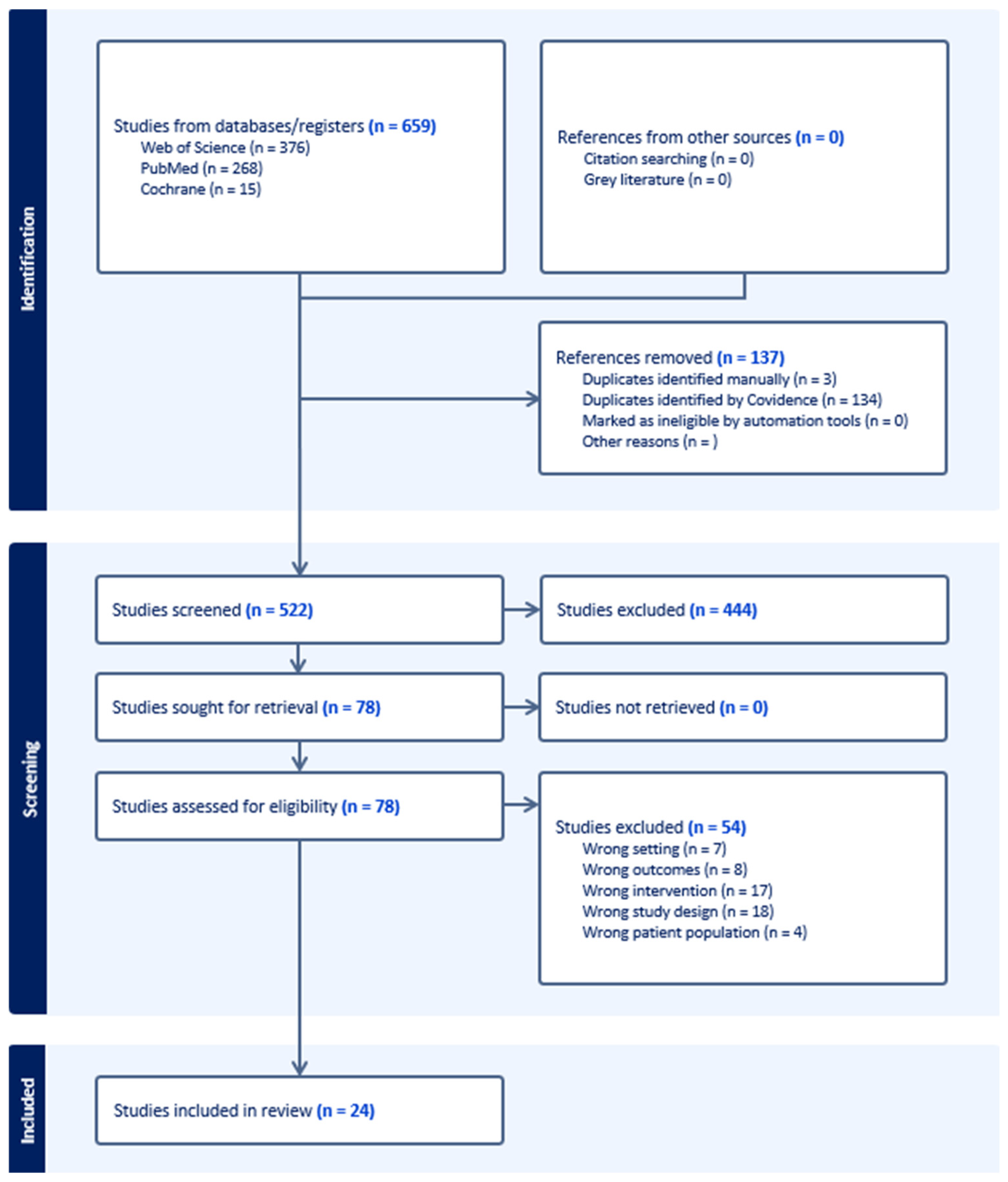
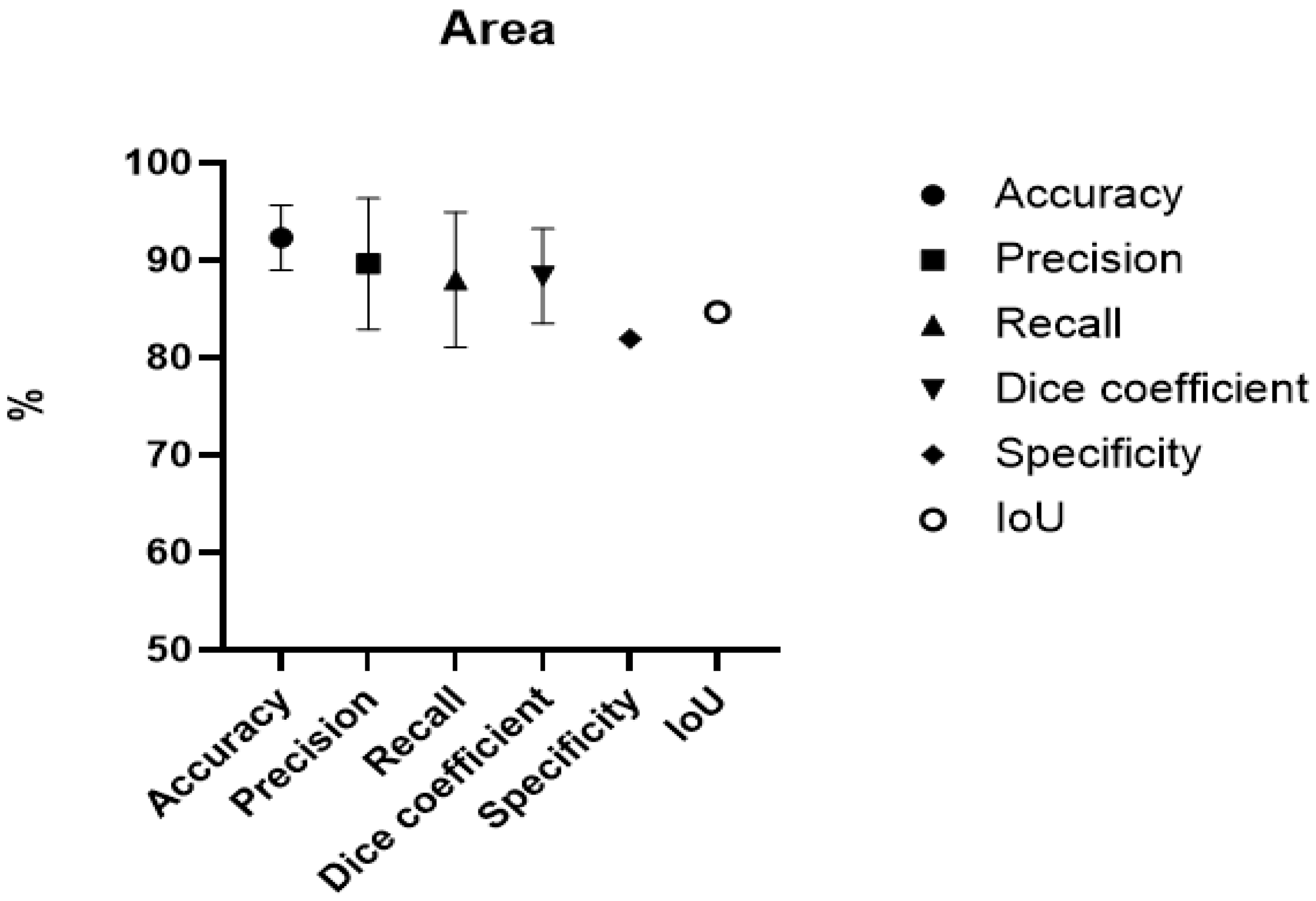
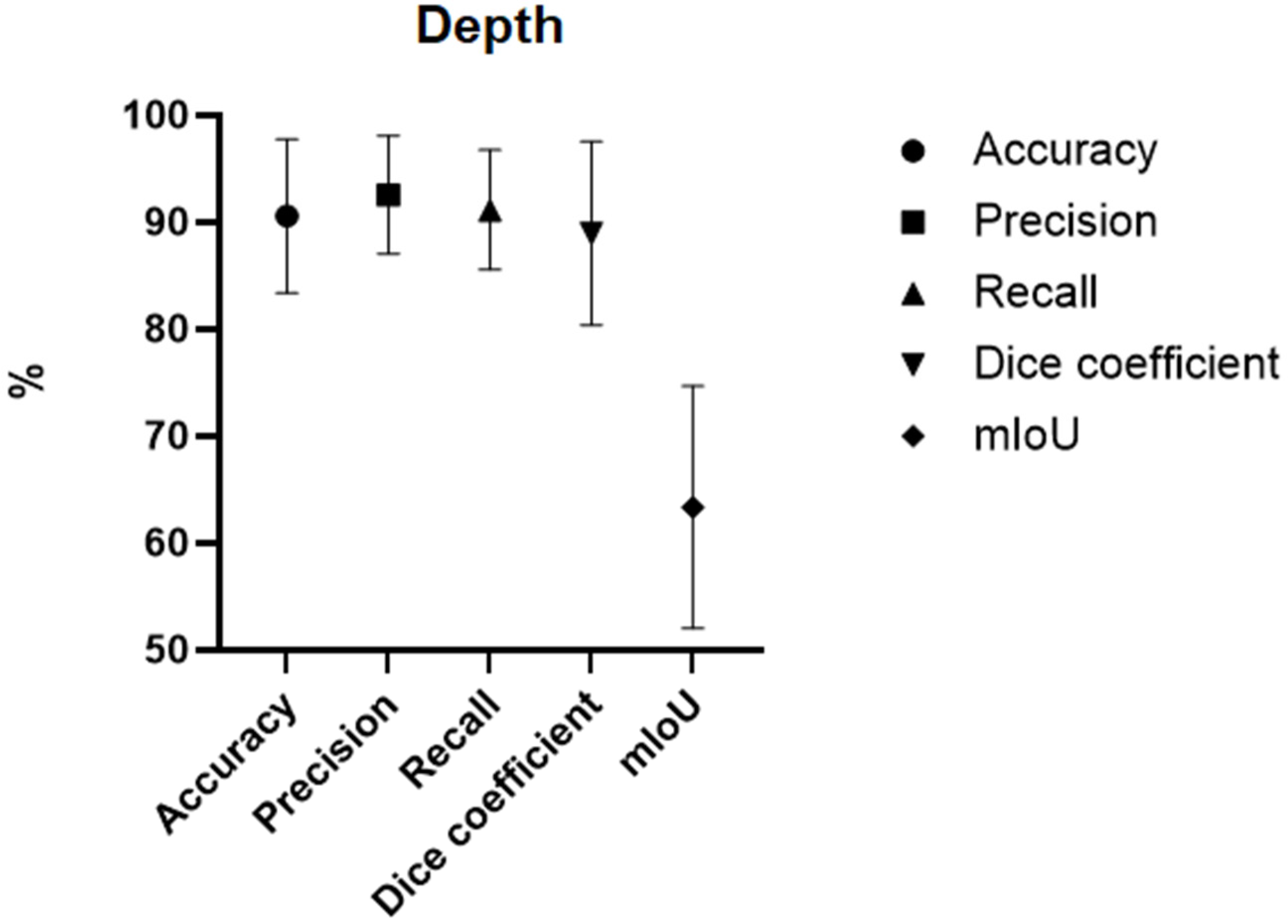
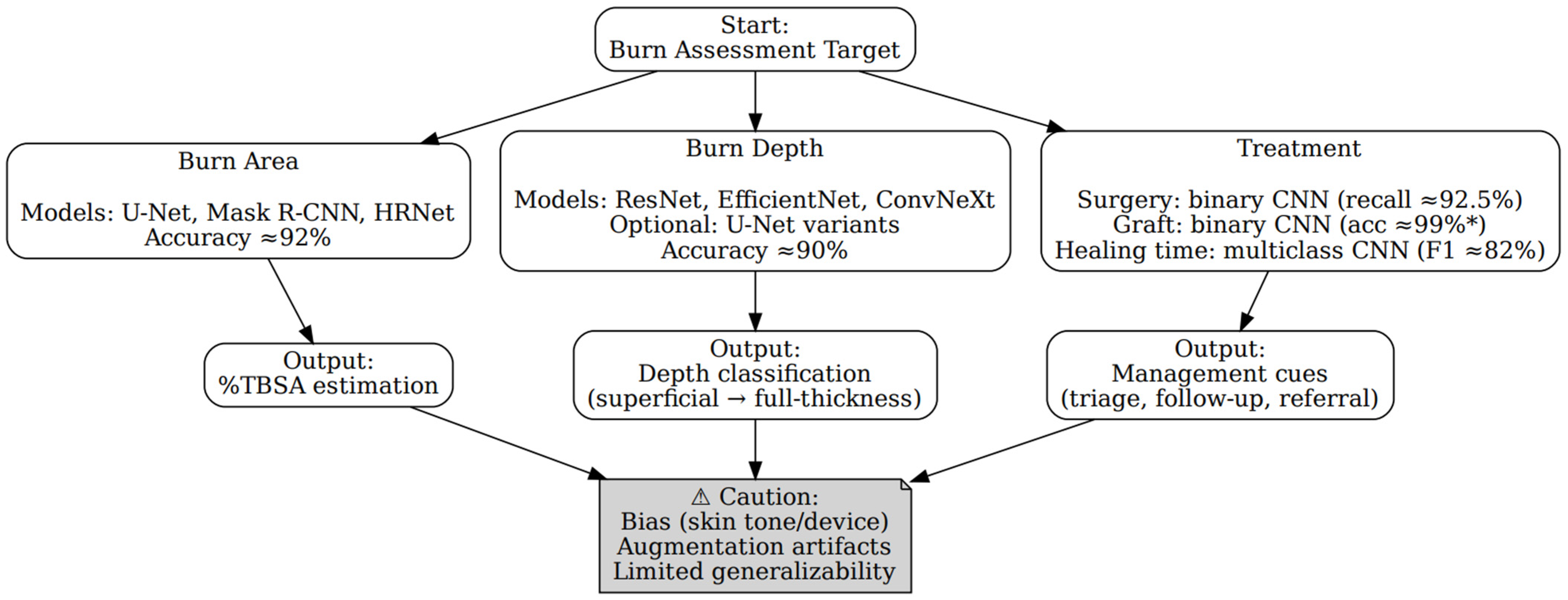
Background: Burns cause about 180,000 deaths annually and lead to substantial morbidity, especially in low- and middle-income countries. Clinical assessment of burn depth and TBSA relies on visual and bedside examination and remains subjective. Convolutional neural networks (CNNs) have been proposed to improve objectivity in image-based burn assessment, but clinical generalizability and acceptance remain uncertain. Aims: To map current evidence on CNN performance for burn TBSA, burn depth and treatment-related tasks and to explore whether a large language model (LLM) can organize extracted findings into a transparent, literature-derived orientation decision tree. Methods: We performed a scoping review following PRISMA-ScR. PubMed, Web of Science and Cochrane were searched on 5 April 2025. Eligible studies reported CNN analysis of 2D burn images and quantitative performance metrics. We summarized reported values descriptively. We then provided a structured summary of extracted findings to ChatGPT to draft a one-page orientation decision tree. Two consultant burn surgeons reviewed the figure for clarity and plausibility. Results: Of 659 records, 24 studies were included. Across studies, reported performance for TBSA and depth assessment was often high, but study designs, datasets, labels, imaging modalities and validation strategies varied substantially. High reported performance does not necessarily imply clinical robustness or real-world accuracy. A single study reported high test-set accuracy for graft versus non-graft using heavily expanded data. This value should not be generalized. Conclusions: CNNs show promise for image-based burn TBSA and depth assessment, but heterogeneity, dataset limitations and limited external validation restrict interpretation and clinical transfer. The LLM-derived decision tree is a literature-synthesis orientation figure, not a clinical decision-support tool.
Keywords: artificial intelligence; burn assessment; deep learning; convolutional neural networks; large language models; decision support; segmentation; burn depth; burn area; treatment recommendation artificial intelligence; burn assessment; deep learning; convolutional neural networks; large language models; decision support; segmentation; burn depth; burn area; treatment recommendation