
Article

Interactions Between Tourism Vessels and Humpback Whales in the Gulf of Tribugá, Colombia

by
Laura Valentina Girón-Castaño
1,2,
Ann Carole Vallejo
2,*,
Isabel C. Avila
1,3 and
Alan Giraldo
1
1
Grupo de Investigación en Ecología Animal, Department of Biology, Universidad del Valle, Cali 760032, Colombia
2
R&E Ocean Community Conservation, Oakville, ON L6M 5H5, Canada
3
Institute for Terrestrial and Aquatic Wildlife Research (ITAW), University of Veterinary Medicine Hannover, Foundation, 25761 Büsum, Germany
*
Author to whom correspondence should be addressed.
Oceans 2025, 6(4), 67; https://doi.org/10.3390/oceans6040067
Submission received: 1 June 2025 / Revised: 1 September 2025 / Accepted: 1 October 2025 / Published: 13 October 2025
(This article belongs to the Special Issue Marine Mammals in a Changing World, 2nd Edition)

Abstract

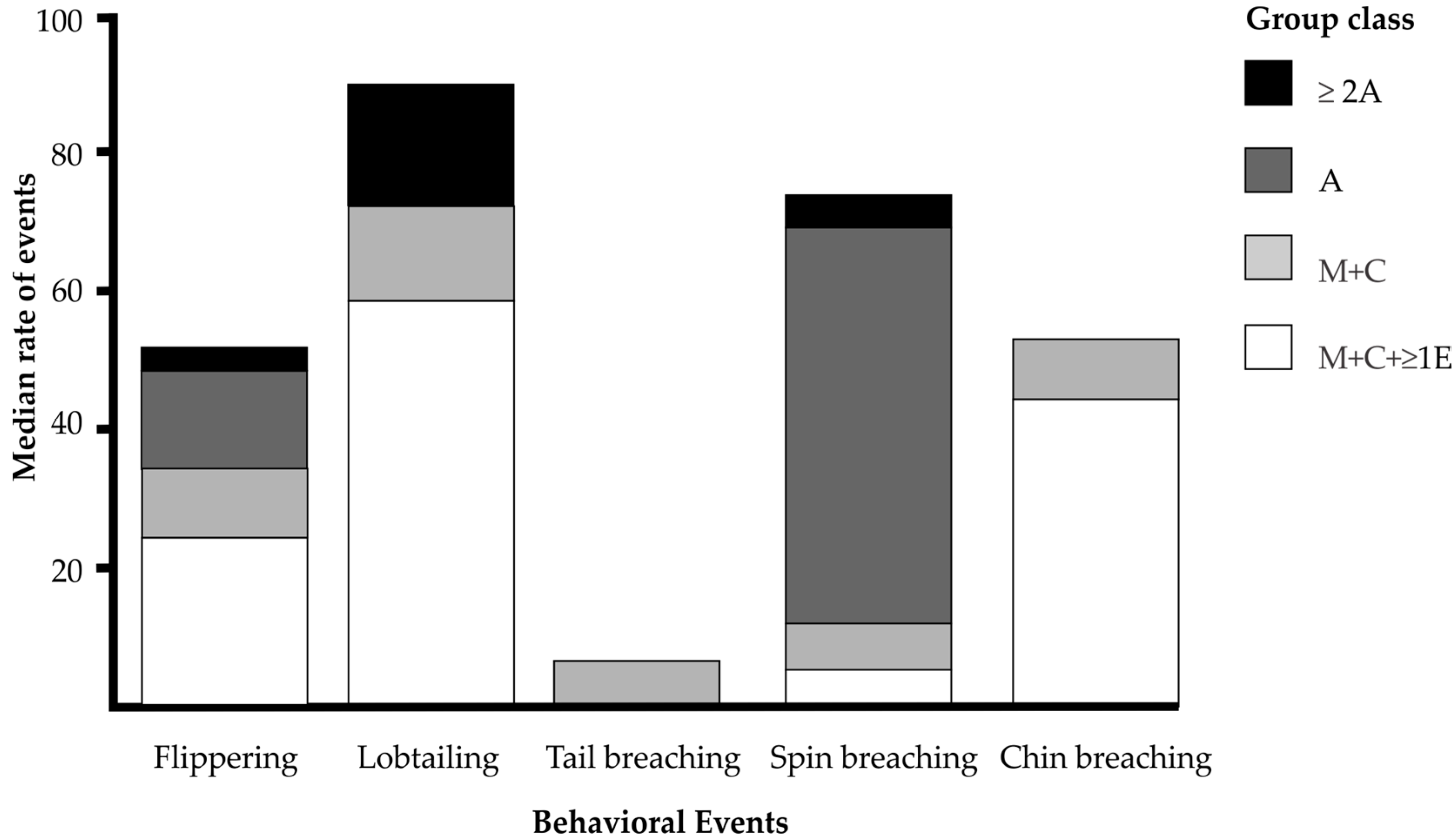
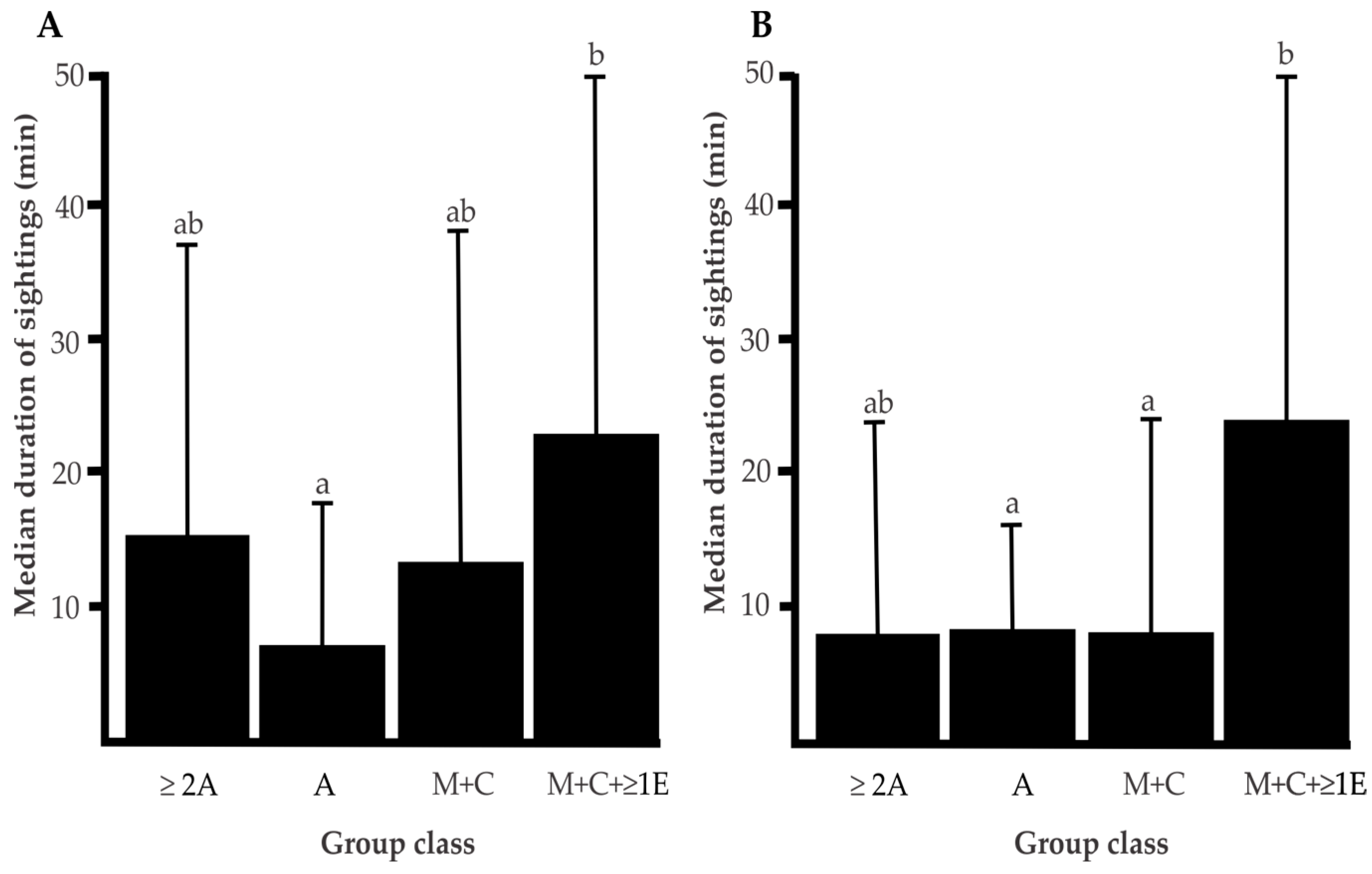
Whale-watching is a growing ecotourism activity in Colombia that offers economic benefits but may pose behavioral risks to humpback whales (Megaptera novaeangliae) if not properly managed. Although preventive recommendations exist to promote sustainable practices, their effectiveness remains largely unquantified in the Colombian North Pacific. This study evaluates adherence to whale-watching regulations and describes humpback whale behavioral responses to vessel presence in the Gulf of Tribugá, a key breeding and calving area. Data were collected from tourism vessels during July and September 2023, documenting 236 whales across 99 groups—71% of which included calves. The predominant whale response to vessels was neutral (74%), while evasive behaviors occurred in 22% of encounters, particularly among mother–calf pairs. Surface-active behavior was infrequent (22%) and most observed in calf–escort groups, serving as a supplementary indicator of behavioral state. Compliance with whale-watching recommendations varied: although most encounters involved a single vessel (57%) and averaged 16 min in duration, only 14% of vessels maintained the recommended minimum distance of 100 m. These findings highlight persistent gaps in regulatory adherence and underscore the need for strengthened enforcement and adaptive management to ensure sustainable whale-watching practices in Colombia’s North Pacific.
Keywords: aerial displays; Megaptera novaeangliae; recommendations; Tropical Eastern Pacific; whale-watching aerial displays; Megaptera novaeangliae; recommendations; Tropical Eastern Pacific; whale-watching