
Article

Energy Efficiency Analysis of a Deformable Wave Energy Converter Using Fully Coupled Dynamic Simulations
1
School of Water, Energy and Environment, Cranfield University, Cranfield MK43 0AL, UK
2
School of Automotive and Traffic Engineering, Jiangsu University, Zhenjiang 212013, China
*
Author to whom correspondence should be addressed.
Oceans 2024, 5(2), 227-243; https://doi.org/10.3390/oceans5020014
Submission received: 23 February 2024 / Revised: 23 March 2024 / Accepted: 8 April 2024 / Published: 15 April 2024

Abstract

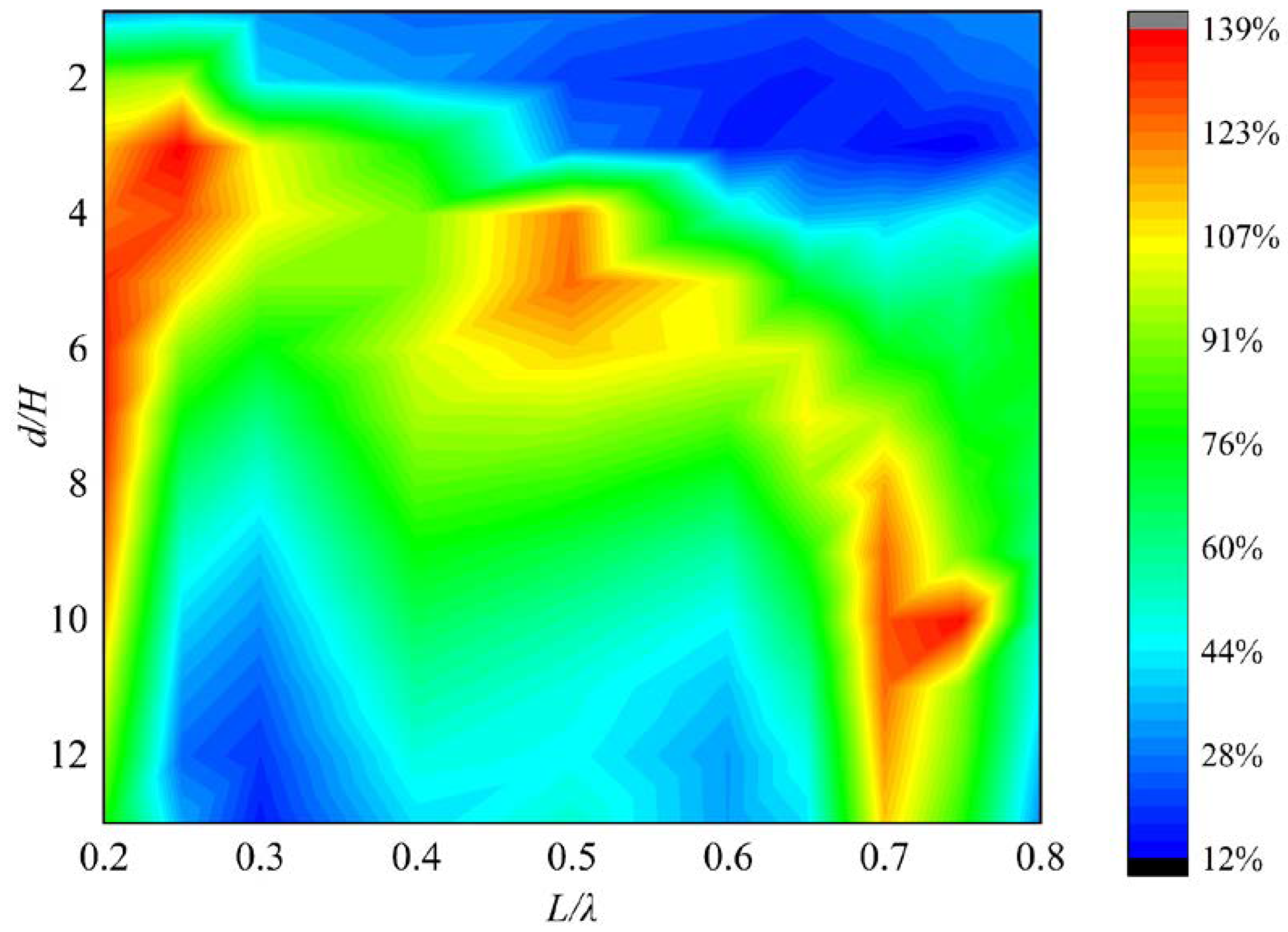
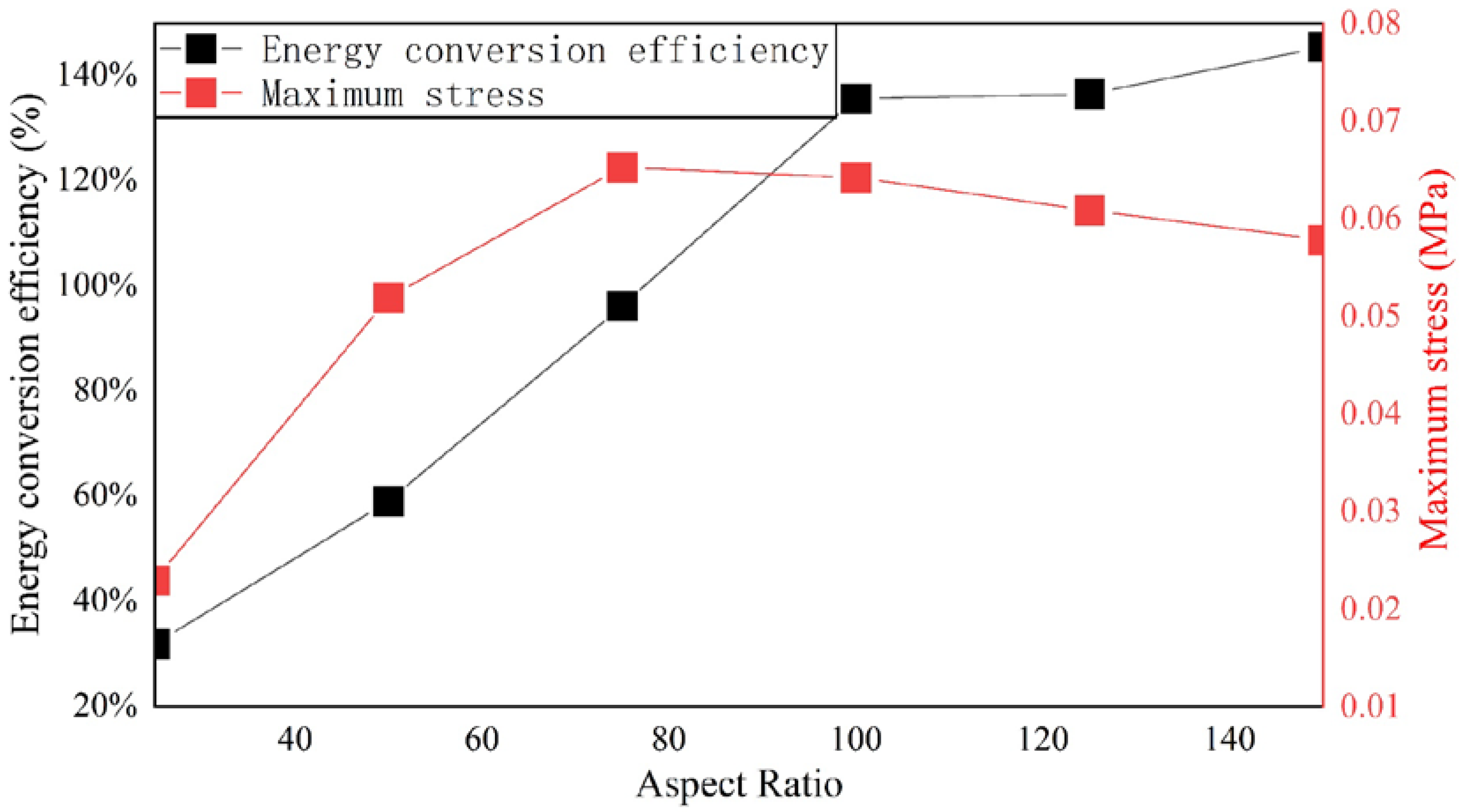
Deformable wave energy converters have significant potential for application as flexible material that can mitigate structural issues, while how to design the dimensions and choose an optimal deployment location remain unclear. In this paper, fully coupled computational fluid dynamics and computational solid mechanics were used to simulate the dynamic interactions between ocean waves and a deformable wave energy converter. The simulation results showed that the relative length to wave, deployment depth and aspect ratio of the device have significant effects on the energy conversion efficiency. By calculating the energy captured per unit width of the device, the energy efficiency was found to be up to 138%. The optimal energy conversion efficiencies were achieved when the structure length was 0.25, 0.5 or 0.75 of the dominating wavelength and submerged at a corresponding suitable depth. The aspect ratio and maximum stress inside the wave energy converter showed a nonlinear trend, with potential optimal points revealed. The simulation approach and results support the future design and optimisation of flexiable wave energy converters or other marine structures with notable deformations.
Keywords: deformable wave energy converter; fluid–structure interaction; hydroelasticity; computational fluid dynamics; computational solid mechanics deformable wave energy converter; fluid–structure interaction; hydroelasticity; computational fluid dynamics; computational solid mechanics