Systematic Review

Biomechanical and Biological Behavior of Zirconium-Reinforced Polyether-Ether-Ketone (Biohpp®) Prosthetic Applications: A Systematic Review


by
Natalia Blanch-Martínez
,
Anabel Gramatges-Rojas
,
Carmen Ferrer-Serena
and
Santiago Arias-Herrera
*
Department of Dentistry, Faculty of Health Sciences, Universidad Europea de Valencia, Valencia, Spain
*
Author to whom correspondence should be addressed.
Prosthesis 2026, 8(5), 48; https://doi.org/10.3390/prosthesis8050048 (registering DOI)
Submission received: 13 February 2026 / Revised: 19 April 2026 / Accepted: 11 May 2026 / Published: 16 May 2026
(This article belongs to the Section Bioengineering and Biomaterials)

Abstract

Background/Objectives: The development of high-performance biocompatible polymers such as zirconium-reinforced polyether ether ketone (BioHPP®) has expanded the range of materials available for implant-supported prostheses, traditionally limited to metal alloys and zirconia. Due to its favorable mechanical properties and elastic modulus similar to cortical bone, BioHPP® has been proposed as a potential alternative in implant prosthodontics. This systematic review aimed to analyze the biomechanical behavior of zirconium-reinforced PEEK and assess its advantages and limitations in implant prosthetic applications. Methods: A systematic review was conducted in accordance with PRISMA 2020 guidelines, including studies published between 2011 and 2025 that evaluated the performance of BioHPP in implant prosthetic applications. Results: The search strategy identified 34 studies that met the inclusion criteria. The included studies evaluated mechanical properties such as fracture resistance, elastic modulus, stress distribution, and peri-implant tissue response. Zirconium-reinforced PEEK demonstrated fracture resistance values reaching up to 1623.31 N and an elastic modulus of approximately 4 GPa, comparable to cortical bone. Several studies also reported favorable stress distribution patterns and reduced mechanical complications when compared with conventional metallic materials. Conclusions: Zirconium-reinforced PEEK exhibits promising biomechanical characteristics for use in implant-supported prostheses, particularly due to its fracture resistance and bone-like elastic modulus. However, the available evidence is predominantly based on in vitro and finite element studies. Long-term clinical trials are required to confirm its clinical performance and establish definitive recommendations for routine use.

1. Introduction

The great challenge of modern implantology is the innovation of new materials that improve biomechanical and biocompatible properties to optimize treatment with dental implants [1].
The recent high demand for more metal-free materials is contributing to the search for and research into the development of new materials. Scientific literature supports that metals release metal ions in the mouth, which can cause damage to cell structure, alter cell function (membrane permeability and enzyme activity), cause immune and inflammatory changes, allergic effects, and damage genetic material [1,2,3,4,5]. The development of new and innovative materials, such as high-performance polymers, opens up a wide range of therapeutic options for implant prostheses. They are presented as alternative materials to metal and ceramic alloys in the manufacture of structures, attachments, and fixed and removable dental prostheses [6,7,8,9].
Among the most inert polymeric biomaterials are polytetrafluoroethylene (PTFE), polyethylene terephthalate (PET), polymethyl methacrylate (PMMA), polyether ether ketone (PEEK), and ceramic-filled polyether ether ketone (BioHPP) [7,8,9].
These modifications have been reported to improve relevant material properties, including reduced elastic modulus and increased elongation at fracture relative to other biomaterials. They are thermal and electrical insulators when used in high molecular weight forms without plasticizers and are relatively resistant to biodegradation, even comparable physically to bone cortex and dentin [10,11,12,13,14]. This systematic review will study the benefits of a polyether ether ketone (PEEK) material reinforced with zirconium (BioHPP) for the manufacture of attachments and prostheses on implants, evaluating its behavior and biomechanical characteristics [15,16,17,18,19,20,21].
The objective of this systematic review is to evaluate the mechanical, physical, and biological performance of BioHPP compared to conventional prosthetic materials used in implant-supported rehabilitations.

2. Materials and Methods

2.1. Registry Protocol and Focused Question

The following systematic review was conducted following the guidelines of the PRISMA (Preferred Reporting Items for Systematic Reviews and Meta-Analyses) statement [22] and adhered to Enhancing the Quality and Transparency of Health Research (EQUATOR NETWORK) recommendations (see Supplementary Materials: PRISMA Checklist). It was registered in PROSPERO (CRD 1279023).

2.2. Inclusion and Exclusion Criteria

The eligibility criteria according to the PICO process have been defined as follows: P (Population): Patients who need rehabilitation of single or multiple edentulous areas using fixed prostheses on implants. I (Intervention): Use of BioHpp material in implant prostheses. C (Comparison): Use of conventional materials such as titanium, noble or non-noble alloys, ceramics. O (Outcome): Mechanical, physical, and biological variables. Therefore, our research question would be as follows: In patients requiring implant-supported prosthetic rehabilitation, does the use of zirconium-reinforced polyetheretherketone (BioHPP®), compared with conventional materials such as titanium, metal alloys, or ceramics, result in improved mechanical, physical, and biological performance?
This systematic review included only primary studies comprising clinical studies in humans, animal studies, and in vitro laboratory studies evaluating the use of BioHPP in implant-supported prosthetic applications published between 2011 and 2025.
Exclusion criteria included studies using BioHPP as a non-implant prosthetic material, as well as studies involving other PEEK variations. In addition, articles published before 2011, those not available in English or Spanish, and non-original study designs—such as case reports, case series, pilot studies, narrative literature reviews, systematic reviews, and letters to the editor—were excluded. These publications were only considered during the initial screening process to identify relevant primary studies and to provide contextual background for the Introduction and Discussion sections.

2.3. Sources of Information and Search Strategy

The study was planned and conducted in accordance with the protocols established in the PRISMA guidelines for conducting systematic reviews.
A search for articles was conducted in the following databases: MEDLINE (PubMed), and Scopus. Various search strategies were designed to identify studies using free and controlled terminology, adapting each term to the thesaurus of each database in order to obtain greater sensitivity and specificity in the results. The Boolean operators AND, OR, and NOT were used together with the keywords. “BioHPP,” “abutment-BioHPP,” “PEEK,” and “Prothesis BioHPP.” The literature search was conducted using the combinations of the following Medical Subject Heading (MeSH) and text words: ((“BioHPP prosthesis” [Supplementary Concept] OR “BioHPP prosthesis” [All Fields] OR ‘BioHPP’ [All Fields]) AND implant prosthesis [All Fields]) OR ((“BioHPP prosthesis” [Supplementary Concept] OR “BioHPP prosthesis” [All Fields] OR “BioHPP” [All Fields]) AND implants prosthesis [All Fields])) AND (“mechanical” [MeSH Terms] OR ‘chemical’ [All Fields] OR “biological” [All Fields]). Manual search of reference list was used to identify additional articles. Additional relevant articles were searched manually from the reference lists of full text in order to not exclude any publication of interest.

2.4. Study Selection Process

Two reviewers (B.M. and A.H.) independently and in duplicate performed the study selection according to the predefined eligibility criteria. Once the duplicate had been removed, titles and abstracts of all identified studies were screened for eligibility. During this phase, the articles were excluded because they were published before the established date (2011) or because they did not fit the study topic. The literature was first searched by title and abstract, followed by an analysis of the full article for relevant literature. In case of any discrepancy, it was resolved by mutual consensus of both reviewers. After the removal of duplicates, titles and abstracts of all retrieved studies were independently screened by two reviewers according to the predefined eligibility criteria. Full-text articles were then assessed for inclusion. Inter-rater agreement was evaluated during both the title/abstract screening and full-text assessment phases using Cohen’s kappa coefficient, which measures agreement beyond chance; values greater than 0.81 were interpreted as indicating almost perfect agreement. Any discrepancies were resolved through discussion and consensus between the reviewers or, when required, by consultation with a third reviewer.

2.5. Data Extraction

Data were extracted from the included studies, including the following methodological details: topic, thus expanding the search in terms of study characteristics (reviews, clinical trials, case–control studies, in vitro studies, in vivo studies, case series), study participants (humans regardless of age and sex), intervention (comparison of BioHpp with conventional materials), measured results (physical and immunological mechanical properties), year of publication (last 14 years), and type of prosthesis studied (fixed prosthesis on implants).

2.6. Quality Assessment

The methodological quality and risk of bias of the included studies were assessed using the Critical Appraisal Skills Programme (CASPe) checklists. Each study was independently evaluated by two reviewers according to the corresponding CASPe tool, depending on the study design. The assessment included key domains such as clarity of the research question, appropriateness of the methodology, study design, data collection, and validity of the results. Discrepancies between reviewers were resolved through discussion until consensus was reached. The CASPe tool provides a structured approach to critically appraise the validity, results, and applicability of the included studies. Once the articles had been analyzed, the second phase of the control was carried out by assessing the risk of bias in the articles.

2.7. Data Analysis and Synthesis of the Results

The included studies were analyzed using a qualitative (narrative) synthesis approach. Data from each study were extracted and summarized according to key outcome variables, including mechanical, physical, and biological properties of BioHPP. The findings were organized and presented in descriptive tables to facilitate comparison across studies. Due to the heterogeneity in study designs, methodologies, and outcome measures, a quantitative synthesis (meta-analysis) was not considered appropriate.

3. Results

3.1. Study Selection

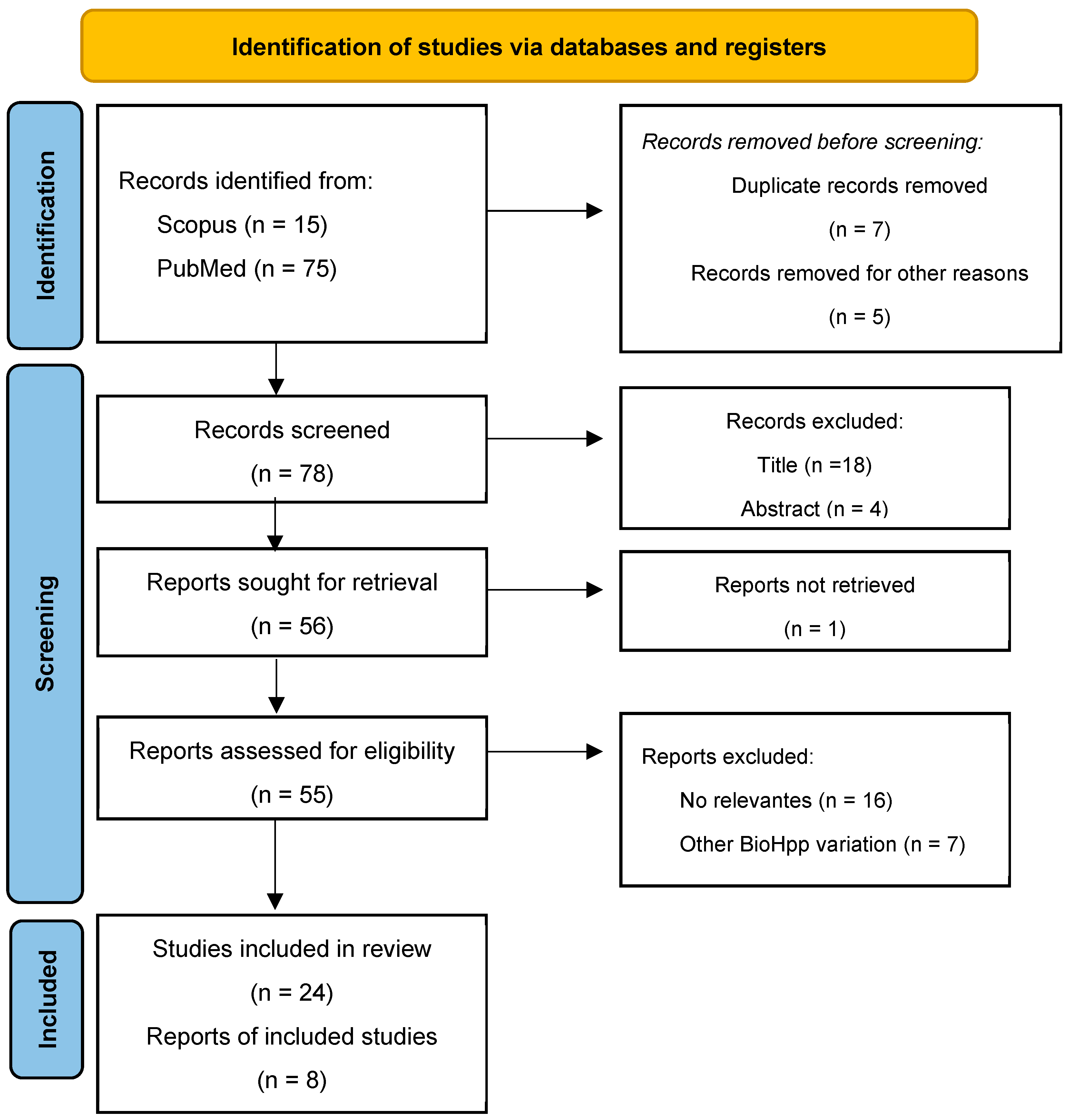
Subsequently, following abstract screening, 4 additional articles were excluded. The remaining 56 articles were assessed for full-text eligibility, and 23 studies were excluded for not meeting the eligibility criteria (16 due to lack of relevance and 7 because they addressed a different variant of the BioHPP material). A total of 32 studies were included in the qualitative synthesis. Among them, 24 studies underwent methodological quality assessment (CASPe), whereas 8 studies were included for descriptive analysis only (Figure 1).

3.2. Assessment of Methodological Quality and Risk of Bias

The risk of bias was assessed using the CASPe guide. Each article was analyzed by answering a set of 11 questions to assess its biases. The first 3 questions were eliminatory, followed by a quality assessment. All questions could be answered with an assertive, negative, or unassessable response. The accuracy of each study was not included, as only the material of interest from the groups was extracted. All the procedures for each study are illustrated in Table 1, which evaluates the methodological quality and risk of bias of the trial-type studies used in this review. Of the thirteen studies that were not clinical trials, nine showed no risk of bias after assessment using the relevant questions. Similarly, the clinical trials included in the review had a low risk of bias in all the questions assessed.

3.3. Synthesis of Results

To obtain clear data, we have created a descriptive table of the results analyzed in the selected studies, illustrated in Table 2. The results analyzed were divided according to the types of information designated in the objectives of the study and subdivided into more specific sections.
The characteristics studied were: adhesive shear strength of the abutment, response of the soft tissues around the prosthetic abutments, relative density of BioHpp, elastic modulus of BioHpp, force required to fracture the material, marginal space and bone level around the implants, and tensile strength of BioHpp.

4. Discussion

The choice of material for the manufacture of attachments or prostheses on implants is closely related to the success of the treatment. In the literature, we can see a great interest in new metal-free materials in which we seek properties that are as similar as possible to the anatomical structure they replace [1,2,3,4,5,6,7,8,9,10,11,12,13,14,15,16,17,18,19,20,21,22,23,24,25,26,27,28,29,30,31]. The extremely rigid prosthetic materials used to date, such as metals, create resistance to the natural torsion of the maxillary or mandibular bone, which can lead to its resorption [2,3,4,5,8,9,10,11]. These forces act at an unfavorable angle on the implants and the bone. This also interferes at the macro level, negatively affecting the physiological development of movement and causing bone atrophy [8,9,10,11,12].
The prosthetic role of BioHPP must be interpreted according to the specific clinical application in which the material is used, since its biomechanical behavior differs substantially when employed as a healing abutment, definitive abutment, prosthetic framework, hybrid prosthesis structure, or removable prosthetic component. For this reason, the present discussion is structured according to the prosthetic function of BioHPP rather than considering it as a homogeneous material across all implant-supported rehabilitations.

4.1. BioHPP as Abutment Material

Another of the studies analyzed states that the elastic modulus of BioHpp [6,7,31], in large implant rehabilitations where the value studied is very similar to that of the maxillary bone [2,3,4,5,6,7,8,9,10,11,12,13,14], reaching a value of 4 GPa, observing the similarity of the elastic modulus of human bone [10,11,12,13,14,15,16,17,18,19]. The same values confirming the ability of BioHpp to reproduce such an important characteristic of the relationship between tooth and bone are reported by different studies [10,11,12,13,14,15,16,17,18,19,20,21,22,23,24], analyzing the same value of 4 GPa in individual abutments and abutments for fixed bridges on implants. Sharpey’s fibers serve to support and at the same time cushion the tooth [30]. This cushioning capacity does not exist when an implant is placed, so that the peaks of the forces are transmitted directly and completely to the maxillary/mandibular bone. From a mechanical point of view, this has negative effects on osseointegration and is physiologically unfavorable for antagonists [31]. Using BioHPP attachments achieves a considerable reduction in these force peaks, which is especially important in immediate restoration in order to ensure safe osseointegration. A restoration made with BioHPP better cushions the masticatory force both vertically and laterally during chewing compared to titanium, zirconium, or ceramic [27]. This cushioning feature is pleasant for the patient, as well as physiologically healthy, while extending the life of the restoration. Different individual BioHPP abutments were also analyzed in comparison to zirconium. In addition to demonstrating that the material has adequate surface roughness and biocompatibility, which allows us to use this material with patients susceptible to allergens or metals, it shows that this material has greater elasticity (150 MPa) and a lower elastic modulus (4 GPa) compared to the previously indicated materials [30].
There is also a 73.54% increase in fracture resistance when using BioHPP as a trans-epithelial abutment, up to six months after implant loading [11]. Finally, it is worth noting the use of BioHPP as an angled trans-epithelial abutment, compared to angled abutments made of carbon fiber-reinforced polymers [23], in which less microdeformation was observed around the implant connection in the angled carbon fiber-reinforced polymer abutments when axial loads were applied, although no statistically significant differences were found under oblique loading conditions. Continuing with the radiological and biological analysis, in the use of different attachments with different materials, including BioHPP, we can affirm that the BioHPP abutment preserves the health of the peri-implant tissue, creating an area of protection against bacteria through its intimate relationship with the implant platform, preventing disconnections.
Analyzing the responses of soft tissues when using BioHpp, we find studies that examine plaque index, gingival recession, and bleeding index. In different studies [17,28,29,30], the bleeding index is evaluated using BioHpp, which registers a statistically significant value compared to other materials. The value of 0 specifies the health of the peri-implant tissues in terms of the bleeding index. In 6- and 12-month reviews of another in vivo study [24], we find a plaque index value of 1, which may be caused by poor hygiene on the part of patients, as the gingival recession and plaque index values correspond to those previously found. The probing depths recorded vary from 1.006 mm at the first 6-month check-up to 1.315 mm at 12 months. They only indicate the maximum value recorded at 2 years, which corresponds to 3 mm in the cases studied in individual abutments or full arch rehabilitations. To support this thesis, it can be stated that in 93% of cases at the 3-month check-up, the probing depth does not exceed 3 mm, and the percentage increases compared to the values recorded at 2 weeks, which was 87% [17,18,19,20,21,22,23,24,25,26,27,28]. It also establishes that the material, thanks to its ceramic microparticle filler component, has an optimal polishing capacity that improves its biological qualities and prevents the deposition of bacterial plaque with a maximum plaque index of 1 at 2 years and reduces the discoloration process, which has not been recorded at check-ups [3,6,17,28,31]. Also, after evaluating BioHPP in terms of discoloration at the two-year check-up, we have confirmed that BioHPP does not suffer from discoloration in the oral environment in the case series performed [28].

4.2. BioHPP as Framework Material in Fixed Prostheses

When BioHPP is used as a framework material for fixed implant-supported rehabilitations, fracture resistance, flexural strength, marginal adaptation, and prosthetic configuration become the main variables of interest. In the clinical case of a complete implant restoration, we also found the same values with a two-year follow-up period, confirming that the material can withstand maximum load values of 3.6 GPa [29,30,31].
Another significant aspect for the effectiveness of a fixed prosthesis is the close relationship between the abutment and the prosthetic crown using a cementing or screwing technique. In the studies analyzed, this characteristic is categorized by analyzing the adhesive shear strength. Their in vitro study states that BioHpp can be considered a good metal-free alternative thanks to its high shear strength with composite resins, obtaining values of 31.1 MPa, which is higher than titanium [31]. Continuing with the analysis of the same aspect, another study also examined the shear strength of BioHpp, finding slightly lower values of 25 MPa, arguing that this material is also valid for temporary treatments. The same value can also be observed in the clinical case, knowing its limitations, since it deals with a single patient [31]. To conclude the evaluation of the characteristics of BioHPP in fixed rehabilitations, we have taken into consideration the fracture resistance of this material. Several previously analyzed studies also address fracture resistance by analyzing its elastic modulus [2,3,4,5,6,7,8,9,10,11,12,13,14,15,18,19,20,21,22,23,24,25,26,27,28,29,30,31], which has an average value of more than 1200 N, reaching up to 1626.21 N when used as a material for large implant restorations.
The prosthetic configuration is particularly relevant in this context, since BioHPP may be used either as a framework veneered with composite or ceramic materials or as part of the full prosthetic structure. The presence of titanium interfaces and hybrid implant connections may significantly influence the mechanical performance, stress distribution, and long-term stability of the restoration. Therefore, these prosthetic variables should be considered when interpreting the biomechanical outcomes reported in the literature.

4.3. BioHPP in Removable Prostheses and Overdentures

When performing full-arch restorations using fixed prostheses on implants, and particularly in removable prostheses and overdenture rehabilitations, another physical characteristic that we take into account when assessing patient comfort is the weight of the prosthesis that the patient will use. We analyze the relative density, which is the most significant value when studying the weight of the material, and obtain equal and stable values over time equal to 1.31 g/cm3, which is lighter and more comfortable compared to conventional materials such as titanium or metal alloys [30,31].
This lower density allows the fabrication of lighter prosthetic structures while maintaining acceptable rigidity and resistance to functional loading, which may improve patient adaptation and comfort, especially in elderly patients or in full-arch rehabilitations. In overdenture and hybrid prosthesis designs, this characteristic may also contribute to better stress modulation and lower mechanical overload on the implant system.

4.4. Limitations

The body of evidence included in this systematic review presents several limitations that should be considered when interpreting the findings. The relatively recent introduction of the material under investigation has resulted in a limited number of available studies, particularly in vivo investigations. Furthermore, a considerable proportion of the included studies were characterized by small sample sizes, which may compromise the precision of the estimates and limit the external validity of the reported outcomes. In addition, heterogeneity in study designs, methodologies, and outcome measures further constrains the comparability of results. This heterogeneity is particularly relevant because BioHPP has been evaluated in very different prosthetic applications, including healing abutments, definitive abutments, fixed prosthetic frameworks, removable prostheses, overdentures, and hybrid rehabilitations, each with distinct biomechanical and biological implications. Therefore, conclusions should be interpreted according to the specific prosthetic indication rather than generalized across all implant-supported prosthetic applications. Taken together, these factors reduce the overall strength of the evidence and preclude definitive conclusions. Therefore, further well-designed, standardized in vivo studies with larger and more representative samples are warranted to strengthen the current evidence base and to better define the clinical performance of the material.

5. Conclusions

Within the limitations of this systematic review, zirconia-reinforced polyether ether ketone (BioHPP) appears to be a promising material for implant-supported prosthetic applications. The available evidence indicates favorable mechanical properties, including high fracture resistance, an elastic modulus closer to that of bone, and satisfactory marginal adaptation at the implant–prosthesis interface. In addition, BioHPP demonstrates good biocompatibility, with reports of reduced gingival inflammation compared to conventional materials, as well as chemical stability under oral conditions, showing resistance to corrosion and discoloration, making it an ideal material for use in attachments, hybrid prostheses, and overdentures on implants. However, the current evidence is limited by the predominance of in vitro studies, small sample sizes, and heterogeneity in study designs. Further well-designed, long-term clinical studies are required to confirm these findings and to establish clear clinical indications for the use of BioHPP in implant prosthodontics.

Supplementary Materials

The following supporting information can be downloaded at: https://www.mdpi.com/article/10.3390/prosthesis8050048/s1, PRISMA 2020 Checklist [22].

Author Contributions

Conceptualization, S.A.-H. and N.B.-M.; Methodology, S.A.-H.; Software, S.A.-H.; Validation, S.A.-H. and N.B.-M.; Formal Analysis, N.B.-M.; Investigation, N.B.-M.; Resources, S.A.-H. and N.B.-M.; Data Curation, N.B.-M., A.G.-R. and C.F.-S.; Writing—Original Draft Preparation, N.B.-M.; Writing—Review and Editing, S.A.-H., N.B.-M., A.G.-R. and C.F.-S.; Visualization, S.A.-H. and N.B.-M.; Supervision, S.A.-H. All authors have read and agreed to the published version of the manuscript.

Funding

This research received no external funding.

Institutional Review Board Statement

Not applicable.

Informed Consent Statement

Not applicable.

Data Availability Statement

The datasets used and analysed during the current review are available from the corresponding author on reasonable request.

Acknowledgments

The authors would like to thank the European University of Valencia and the researchers for their help in this systematic review.

Conflicts of Interest

The authors declare no conflicts of interest.

References

  1. Koutouzis, T.; Richardson, J.; Lundgren, T. Comparative Soft and Hard Tissue Responses to Titanium and Polymer Healing Abutments. J. Oral. Implantol. 2011, 37, 174–182. [Google Scholar] [CrossRef]
  2. Parmigiani, J.M.; Muñoz, M.E.C. Peek, alternativa a aleaciones metálicas en la boca. Odontología sin metal. Maxillaris Actual. Prof. Ind. Del Sect. Dent. 2015, 17, 156–165. [Google Scholar]
  3. Di Iorio, E.; Berardini, M. Un nuovo materiale per riabilitazioni fisse implantosupportate. Dent. Cadmos 2016, 84, 320–325. [Google Scholar] [CrossRef]
  4. Zoidis, P.; Papathanasiou, I. Modified PEEK resin-bonded fixed dental prosthesis as an interim restoration after implant placement. J. Prosthet. Dent. 2016, 116, 637–641. [Google Scholar] [CrossRef] [PubMed]
  5. Bechir, E.S.; Bechir, A.; Gioga, C.; Manu, R.; Burcea, A.; Dascalu, I.T. The advantages of BioHPP polymer as superstructurema-terial in oral implantology. Mater. Plast. 2016, 53, 394–398. [Google Scholar]
  6. AL-Rabab’ah, M.; Hamadneh, W.; Alsalem, I.; Khraisat, A.; Abu Karaky, A. Use of High Performance Polymers as Dental Implant Abutments and Frameworks: A Case Series Report. J. Prosthodont. 2019, 28, 365–372. [Google Scholar] [CrossRef]
  7. Pérez-Albacete Martínez, C.; Ramos-Fátima, M. Long term stability of platform switch plus Bio HPP abutment. Radiological analysis. Clin. Oral. Implant. Res. 2017, 28, 68. [Google Scholar]
  8. Georgiev, J.; Vlahova, A.; Kissov, H.; Aleksandrov, S.; Kazakova, R. Possible Application of Biohpp in Prosthetic Dentistry: A Literature Review. J. IMAB-Annu. Proceeding (Sci. Pap.) 2018, 24, 1896–1898. [Google Scholar] [CrossRef]
  9. Hassam, M.; Elshahawy, W. Evaluation of Marginal Adaptation and Fracture Resistance of Bio HPP and Zirconia. Egypt. Dent. J. 2018, 64, 1489–1501. [Google Scholar]
  10. Jin, H.Y.; Teng, M.H.; Wang, Z.J.; Li, X.; Liang, J.Y.; Wang, W.X.; Jiang, S.; Zhao, B.D. Comparative evaluation of BioHPP and titanium as a framework veneered with composite resin for implant-supported fixed dental prostheses. J. Prosthet. Dent. 2019, 122, 383–388. [Google Scholar] [CrossRef] [PubMed]
  11. Atsu, S.; Aksan, M.; Bulut, A. Fracture Resistance of Titanium, Zirconia, and Ceramic-Reinforced Polyetheretherketone Implant Abutments Supporting CAD/CAM Monolithic Lithium Disilicate Ceramic Crowns after Aging. Int. J. Oral Maxillofac. Implant. 2019, 34, 622–630. [Google Scholar] [CrossRef]
  12. Guo, L.; Smeets, R.; Kluwe, L.; Hartjen, P.; Barbeck, M.; Cacaci, C.; Gosau, M.; Henningsen, A. Cytocompatibility of Titanium, Zirconia and Modified PEEK after Surface Treatment Using UV Light or Non-Thermal Plasma. Int. J. Mol. Sci. 2019, 20, 5596. [Google Scholar] [CrossRef] [PubMed]
  13. Bathala, L.; Majeti, V.; Rachuri, N.; Singh, N.; Gedela, S. The Role of Polyether Ether Ketone (Peek) in Dentistry—A Review. J. Med. Life 2019, 2, 5–9. [Google Scholar] [CrossRef] [PubMed]
  14. Iyer, R.S.; R, S.S.; Hegde, D.; Coutinho, C.A.; Priya, A. BioHPP: Properties and applications in prosthodontics: A review. J. Res. Dent. 2020, 7, 72–76. [Google Scholar] [CrossRef]
  15. Younes, A.; Korsel, A.; El Tokhey, H.; Ali, K.; Kamel, M. The effect of different implant abutment materials on the stress distribution to the bone implant contact. Egypt. Dent. J. 2020, 66, 1289–1294. [Google Scholar] [CrossRef]
  16. Blanch-Martínez, N.; Arias-Herrera, S.; Martínez-González, A. Behavior of polyether-ether-ketone (PEEK) in prostheses on dental implants. A review. J. Clin. Exp. Dent. 2021, 13, e520–e526. [Google Scholar] [CrossRef]
  17. Amer, M.; Elsheikh, M.; Haleem, M.; Ghoraba, S.; Salem, A. Short-term comparative evaluation of BioHPP and cast cobalt–chromium as framework for implant supported prostheses: A split mouth clinical randomized trial. J. Int. Oral Health 2021, 13, 564–570. [Google Scholar] [CrossRef]
  18. Jovanović, M.; Živić, M.; Milosavljević, M. A potential application of materials based on a polymer and CAD/CAM composite resins in prosthetic dentistry. J. Prosthodont. Res. 2021, 65, 137–147. [Google Scholar] [CrossRef]
  19. Emera, R.M.K.; Abdallah, R.M. Denture base adaptation, retention, and mechanical properties of BioHPP versus nano-alumina-modified polyamide resins. J. Dent. Res. Dent. Clin. Dent. Prospect. 2021, 15, 239–246. [Google Scholar] [CrossRef]
  20. Omaish, H.H.M.; Abdelhamid, A.M.; Neena, A.F. Comparison of the strain developed around implants with angled abutments with two reinforced polymeric CAD-CAM superstructure materials: An in vitro comparative study. J. Prosthet. Dent. 2022, 127, 634.e1–634.e8. [Google Scholar] [CrossRef]
  21. Rajamani, V.; Reyal, S.; Gowda, E.; Shashidhar, M. Comparative prospective clinical evaluation of computer aided design/computer aided manufacturing milled BioHPP PEEK inlays and Zirconia inlays. J. Indian Prosthodont. Soc. 2021, 21, 240–248. [Google Scholar] [CrossRef]
  22. Page, M.J.; McKenzie, J.E.; Bossuyt, P.M.; Boutron, I.; Hoffmann, T.C.; Mulrow, C.D.; Shamseer, L.; Tetzlaff, J.M.; Akl, E.A.; Brennan, S.E.; et al. The PRISMA 2020 statement: An updated guideline for reporting systematic reviews. BMJ 2021, 372, n71. [Google Scholar] [CrossRef]
  23. Speroni, S.; Antonelli, L.; Coccoluto, L.; Giuffrè, M.; Sarnelli, F.; Tura, T.; Gherlone, E. The Effectiveness and Predictability of BioHPP (Biocompatible High-Performance Polymer) Superstructures in Toronto-Branemark Implant-Prosthetic Rehabilitations: A Case Report. Prosthesis 2025, 7, 10. [Google Scholar] [CrossRef]
  24. Singh, I.; Pai, U.Y.; Shetty, B.T.; Rodrigues, S.J.; Saldanha, S.; Mahesh, M.; Prasada, K.S.; Kamath, V.; Bajantri, P.; Mukherjee, S.; et al. Evaluation of Viability and Adhesion of Human Gingival Fibroblast and the Adhesion of Oral Microflora on Thermally Aged Zirconia and BioHPP Abutment Surfaces: An In Vitro Study. Int. J. Dent. 2025, 2025, 1553672. [Google Scholar] [CrossRef] [PubMed]
  25. Küçükekenci, A.S.; Çakmak, G.; Güven, M.E.; Dede, D.Ö.; Yilmaz, B.; Dönmez, M.B. Implant-supported fixed complete denture frameworks in additively and subtractively manufactured high-performance polymers: Fabrication and fit accuracy. J. Dent. 2025, 159, 105838. [Google Scholar] [CrossRef]
  26. Thamarai, C.; Hariharan, A.; Thanya, K.; Baby, A.G.; Saishree, A.R.; Parameswari, B.D.; Narmadha, D. Comparative Evaluation of Stress at the Implant Bone Interface Between Short Implants and Long Implants Using BioHPP Abutment—An In Vitro Study. J. Pharm. Bioallied Sci. 2025, 17, S1107–S1110. [Google Scholar] [CrossRef]
  27. Kowalski, R.; Frąckiewicz, W.; Kwiatkowska, M.; Światłowska-Bajzert, M.; Sobolewska, E. Comparison of the Performance Parameters of BioHPP® and Biocetal® Used in the Production of Prosthetic Restorations in Dentistry—Part I: Mechanical Tests: An In Vitro Study. Materials 2025, 18, 561. [Google Scholar] [CrossRef] [PubMed]
  28. Wiessner, A.; Wassmann, T.; Wiessner, J.M.; Schubert, A.; Wiechens, B.; Hampe, T.; Bürgers, R. In Vivo Biofilm Formation on Novel PEEK, Titanium, and Zirconia Implant Abutment Materials. Int. J. Mol. Sci. 2023, 24, 1779. [Google Scholar] [CrossRef]
  29. Al-Asad, H.M.; El Afandy, M.H.; Mohamed, H.T.; Mohamed, M.H. Hybrid Prosthesis versus Overdenture: Effect of BioHPP Prosthetic Design Rehabilitating Edentulous Mandible. Int. J. Dent. 2023, 29, 4108679. [Google Scholar] [CrossRef]
  30. Campaner, L.M.; Silveira, M.P.M.; de Andrade, G.S.; Borges, A.L.S.; Bottino, M.A.; de OliveiraDal Piva, A.M.; Lo Giudice, R.; Ausiello, P.; Tribst, J.P.M. Influence of Polymeric Restorative Materials on the Stress Distribution in Posterior Fixed Partial Dentures: 3D Finite Element Analysis. Polymers 2021, 13, 758. [Google Scholar] [CrossRef] [PubMed]
  31. Sundar, P.; Ramakrishnan, H.; Sampathkumar, J.; Azhagarasan, N.S. Evaluation of machining tolerance and vertical microgaps of biohpp peek and cadcam milled zirconia abutments over titanium implants. J. Dent. Implant. Res. 2022, 41, 25–35. [Google Scholar] [CrossRef]
  32. Reda, R.; Zanza, A.; Cicconetti, A.; Bhandi, S.; Guarnieri, R.; Testarelli, L.; Di Nardo, D. A Systematic Review of Cementation Techniques to Minimize Cement Excess in Cement-Retained Implant Restorations. Methods Protoc. 2022, 5, 9. [Google Scholar] [CrossRef]
  33. El Saeedi, T.M.A.; Thabet, Y.G.; Mohamed, S.L.; Sabet, M.E. Evaluation of the Accuracy and Adaptation of BioHPP Removable Partial Denture Frameworks Constructed by Milling vs the Pressing Technique. Int. J. Prosthodont. 2022, 35, 647–652. [Google Scholar] [CrossRef]
  34. Ghodsi, S.; Tanous, M.; Hajimahmoudi, M.; Mahgoli, H. Effect of aging on fracture resistance and torque loss of restorations sup-ported by zirconia and polyetheretherketone abutments: An in vitro study. J. Prosthet. Dent. 2021, 125, 501.e1–501.e6. [Google Scholar] [CrossRef]
Figure 1. PRISMA 2020 Flow Diagram for New Systematic Reviews.
Prosthesis 08 00048 g001
Table 1. Risk of bias according to CASPe guide for systematic reviews with meta-analysis of observational studies. Positive/methodologically sound (green); negative/relatively poor methodology (red); unknowns (blue).
Author and ReferenceIs the Trial Oriented to a Clearly Defined Question?Was the Assignment of Patients to Treatments Random?Were All Patients Who Entered the Study Adequately Considered Until the End?Was Blinding Maintained?Were the Groups Similar at the Beginning of the Trial?Apart from the Intervention Under Study, Were the Groups Treated in the Same Way?Is the Treatment Effect Very Large?What Is the Precision of This Effect?Can These Results Be Applied to Your Setting or Local Population?Were All Clinically Important Outcomes Taken Into Account?Do the Benefits Obtained Justify the Risks and Costs?
Speroni et al. (2025 [23]
Singh et al. (2025) [24]
Küçükekenci et al. (2025) [25]
Thamarai et al. (2025) [26]
Kowalski et al. (2025) [27]
Wiessner et al. (2023) [28]
Al Assad et al. (2023) [29]
Campaner et al. (2022) [30]
Sundar et al. (2022) [31]
Reda et al.
2022 [32]
El Saeedi et al. (2022) [33]
Rajamani et al. (2021) [21]
Amer et al. (2021) [17]
Ghodsi et al. (2021) [34]
Younes et al. (2020) [15]
Atsu et al. (2019) [11]
Bathala et al. (2019) [13]
Hassam et al. (2018) [9]
AL-Rabab’ah et al. (2017) [6]
Perez et al. (2017) [7]
Zoidis et al. (2016) [4]
Bechir et al. (2016) [5]
Di Lorio et al. (2015) [3]
Koutouzis et al. (2011) [1]
Table 2. Results of the included studies. (NR: not reported; PD, probing depth; BIC, bone–implant contact; MPa, megapascal; GPa, gigapascal; N, Newton; nm, nanometer; µm, micrometer; Ti, titanium; Zr, zirconia; CAD/CAM, computer-aided design/computer-aided manufacturing).
AuthorShear Bond Strength (MPa)Soft Tissue ResponseDensity (g/cm3)Elastic Modulus (GPa)Fracture Strength (N)Marginal GapStress/OthersMain Findings
Koutouzis et al. 2011 [1]NRBleeding: 4.5%; PD ≤ 3 mm (93%)NRNRNRNRNRNo increased risk of bone loss or soft tissue recession
Parmigiani et al. 2015 [2]NRNR1.32 4NRNRHigh resistance to stressSuitable for patients with metal allergies
Di Lorio et al. 2015 [3]>25No bleeding; PD ≤ 3 mm1.3–1.54NRNRFlexural strength ≈ 150 MPaImproved clinical outcomes
Zoidis et al. 2016 [4]25NRNRNRNRNRNRSuitable as definitive prosthetic material
Bechir et al. 2016 [5]NRSoft tissue complications in few patientsNR4No fractures reportednrFlexibility > 150 MPaAcceptable clinical behavior
AL-Rabab’ah et al. 2017 [6]NRNo recession or discolorationNRNRNRNRNRPromising clinical outcomes
Perez et al. 2017 [7]NRNRNRNRNRNRNRGreater prosthetic stability
Georgiev et al. 2018 [8]NRNR1.314NRNRNRAlternative to metal alloys
Hassam et al. 2018 [9]NRNRNRNR1626.3120.27 nmNRHigher fracture resistance vs. zirconia
Jin et al. 2019 [10]31.1 MPaNRNRNR1518NRNRGood adhesion with composite
Atsu et al. 2019 [11]NRNRNRNRFailure modes reportedNRNRPromising biomechanical behavior
Guo et al. 2019 [12]NRNRNRNRNRNRNRImproved surface properties
Bathala et al. 2019 [13]NRNRNRNR1200NRNRReduced stress shielding
Iyer et al. 2020 [14]NRNRNR4>1200NRNRExcellent mechanical properties
Younes et al. 2020 [15]NRNRNRNRNRNRBIC: 73.54%Better stress distribution
Blanch-Martinez et al. 2021 [16]NRNRNR41518NRNRImproved biomechanical performance
Amer et al. 2021 [17]NRStable soft tissue parametersNRNRNRNRNRComparable to metallic frameworks
Jovanović et al. 2021 [18]25NR1.314~1200NRNRLighter prostheses
Emera et al. 2021 [19]NRNRNRNRNRNRNRImproved flexural strength
Rajamani et al. 2021 [21] NRNRNRNRNRNRNRLower resistance than zirconium.
Omaish et al. 2022 [20]NRNRNRNRNRNRMicrostrain values reportedAcceptable stress distribution
Reda et al. 2022 [32]NRLow plaque affinityNR4.2–4.8700–1600AcceptableNRReduced microgap
Sundar et al.
2022 [31]
NRNRNRNRNRNRNRGood prosthetic adaptation
El Saeedi et al. 2022 [33]NRNRNRNRNRNRNRBetter overdenture outcomes
Al-Asad et al. 2023 [29]NRLow bone lossNRNRNR10 umNRHigher biofilm vs. Ti/Zr
Wiessner et al. 2023 [28] NRBiofilm formation: 19.7%NRNRNRNRNRSuitable as final material
Thamarai et al. 2025 [26] NRNRNR4NRNRNRWear resistance variability
Kowalski et al. 2025 [27] NRNRNR5.34NRNRNR Adequate biological behavior
Singh et al.
2025 [24]
NRNRNR3–4NRAcceptableNR-
Küçükekenci et al. 2025 [25]NRNRNRNRNRNRNRBetter manufacturing accuracy
Speroni et al. 2025 [23]NRNRNRNRNRNRNRClinical advantages (case report)
Disclaimer/Publisher’s Note: The statements, opinions and data contained in all publications are solely those of the individual author(s) and contributor(s) and not of MDPI and/or the editor(s). MDPI and/or the editor(s) disclaim responsibility for any injury to people or property resulting from any ideas, methods, instructions or products referred to in the content.