


Abstract
Heart valve prostheses play a key role in regulating the normal cardiac function for patients with valvular diseases, yet even slight alterations in their flow dynamics can result in serious physiological consequences. This paper provides an overview of in vitro studies using Particle Image Velocimetry (PIV) to investigate the hemodynamics of heart valve prostheses. We first trace the historical evolution of prosthetic valve designs and highlight key milestones in their development. Key experimental considerations for PIV apparatus design are summarized. Subsequently, we review major in vitro PIV studies that have enhanced understanding of prosthetic valve hemodynamics, including flow patterns, turbulence characteristics, and flow–structure interactions. Finally, we outline current challenges and propose future research recommendations, highlighting the potential of integrating advanced PIV methods with high-fidelity imaging for improved assessment of prosthetic valve performances. Overall, the study of heart valve prostheses remains inherently complex due to the multiscale nature of hemodynamic phenomena. Recent advances in experimental fluid mechanics, particularly PIV, have significantly enhanced the ability to visualize and quantify the hemodynamics of prosthetic valves, providing valuable insights for optimizing design and improving the durability of next-generation valve prostheses.
1. Introduction
The cardiovascular system is one of the most important systems of the human body, responsible for maintaining blood circulation and facilitating the transport and exchange of nutrients, oxygen, and carbon dioxide among tissues. There are two major circulations in the human body—pulmonary circulation (carrying deoxygenated blood to the lungs) and systemic circulation (delivering oxygenated blood to the body) [1]. The heart lies in the center of this system, which functions as a dynamic pump, starting and circulating the continuous blood flow throughout the cardiac cycle in the system.
To ensure the proper contraction and relaxation functions of the heart in the system, heart valves play a significant role in the four chambers of the heart, acting as check valves to ensure the unidirectional blood flow by preventing backflow throughout the cardiac cycle. In the United States, more than five million people are diagnosed with heart valve diseases each year, and over 25,000 people die from them [2]. Valvular dysfunction, such as stenosis or regurgitation, can result in various heart valve diseases and even heart failure ultimately. Although valve repair is feasible in certain cases, valve replacement remains the more widely used intervention for treating valvular diseases, providing effective symptom relief when paired with appropriate prosthesis selection and surgical technique. Therefore, valve prostheses, serving as substitutes for native heart valves, have been extensively studied over the past decades to provide better therapeutic outcomes for patients with optimized blood flow performance and biocompatibility. Despite significant advancements in prosthetic development, the design of an ideal prosthetic valve that perfectly replicates the physiological behavior of native heart valves is still challenging nowadays. From a hemodynamic perspective, blood flow inside the human body, particularly in the cardiac flow environment, is inherently unsteady and pulsatile, characterized by complex fluid–structure interactions between the valve leaflets and the surrounding areas [3,4]. The existing prosthetic valve designs may induce high shear stresses, complex turbulent flow structures, and recirculation zones that trigger platelet activation, hemolysis, and thrombosis, ultimately impairing long-term valve performance [5,6]. Therefore, precise characterization of the hemodynamic performance of valve prostheses under physiological conditions is essential for guaranteeing their long-term safety and durability.
Over the decades, many types of prosthetic heart valves have been designed to meet the durability, biocompatibility, and hemodynamic efficiency. For instance, mechanical valves are primarily made of metal, showing long-term durability but requiring lifelong anticoagulant therapy due to the risk of thrombosis. In contrast, bioprosthetic valves, typically fabricated from porcine or bovine tissues that replicate the tricuspid structure of native valves, exhibit enhanced hemocompatibility but are limited by structural degeneration and calcification over time [7]. Nowadays, recent efforts have focused on the development of polymeric and hybrid valve designs, which aim to integrate the durability of mechanical valves with the biocompatibility of tissue-based valves. Successive generations of prosthetic valve development have increasingly focused on understanding the complex flow dynamics that govern their hemodynamic performance. To achieve this goal, a comprehensive hemodynamic investigation of prosthetic valves needs precise visualization and quantification of the complex flow fields. Notably, computational fluid dynamics (CFD) simulations are widely used to study and visualize flow fields. However, due to the inherent complexity of cardiovascular flows and the numerical nature of the approach, certain assumptions and simplifications are often unavoidable in CFD simulations. To better visualize and analyze the flow fields, in recent decades, Particle Image Velocimetry (PIV) has become a powerful experimental technique for in vitro hemodynamic investigations [8,9]. Furthermore, by enabling non-intrusive, high-resolution measurement of complex, time-resolved flow structures—such as jets, vortices, and recirculation zones—PIV provides valuable insights into the highlighting flow mechanisms for valve prostheses. These data are essential for validating CFD models, evaluating valve performance, and supporting design optimization in the future.
Existing reviews offer valuable comparisons between valve types [10,11,12] but often overlook the technical evolution of the experimental methods used to study them. This review fills that void by focusing on the application and evolution of PIV techniques in investigating the hemodynamics of prosthetic heart valves, tracing the transition from early 2D characterizations to modern 3D tomographic and time-resolved measurements, and analyzing how these advancements have improved the detection of transient, small-scale flow structures critical to valve durability. This review summarizes more than 102 review papers, research articles, book chapters, and conference proceedings that cover the characterization of various prosthetic heart valves and associated experimental studies. We identified the relevant literature through searching the Web of Science database using various combinations of the following keywords: “cardiovascular,” “prosthetic heart valve,” “PIV,” “experiment,” and “hemodynamics.” We first review the development history of heart valve prostheses. Next, we summarize the key experimental considerations of the PIV apparatus for in vitro experimental studies. Then, we discuss recent advancements in PIV techniques. Afterwards, we examine the representative important hemodynamic findings obtained from existing PIV in vitro studies. Finally, we provide some recommendations for future research to better evaluate the hemodynamics of prosthetic heart valves.
2. Historic Development of Valve Prostheses
Currently, artificial valve replacement is the standard treatment for patients with severe valvular disease who are not candidates for surgical repair. The development of prosthetic heart valves began more than 70 years ago with the aim of providing substitutes for native valves that can restore normal function following valve replacement. Researchers continue to pursue the design of an ideal prosthetic valve that offers long-term durability, excellent hemodynamic performance, high thromboresistance, and superior implantability comparable to native valves. However, such a perfectly engineered valve remains under investigation, and existing devices still present certain inherent performance limitations. At present, two mature types of prosthetic valves dominate the clinical markets commercially: mechanical heart valves (MHVs) and bioprosthetic heart valves (BHVs) [13].
2.1. Mechanical Heart Valves
MHVs are the most established and widely used prostheses in valve replacement surgery. They are usually designed with a two-leaflet structure made of metal or carbon.
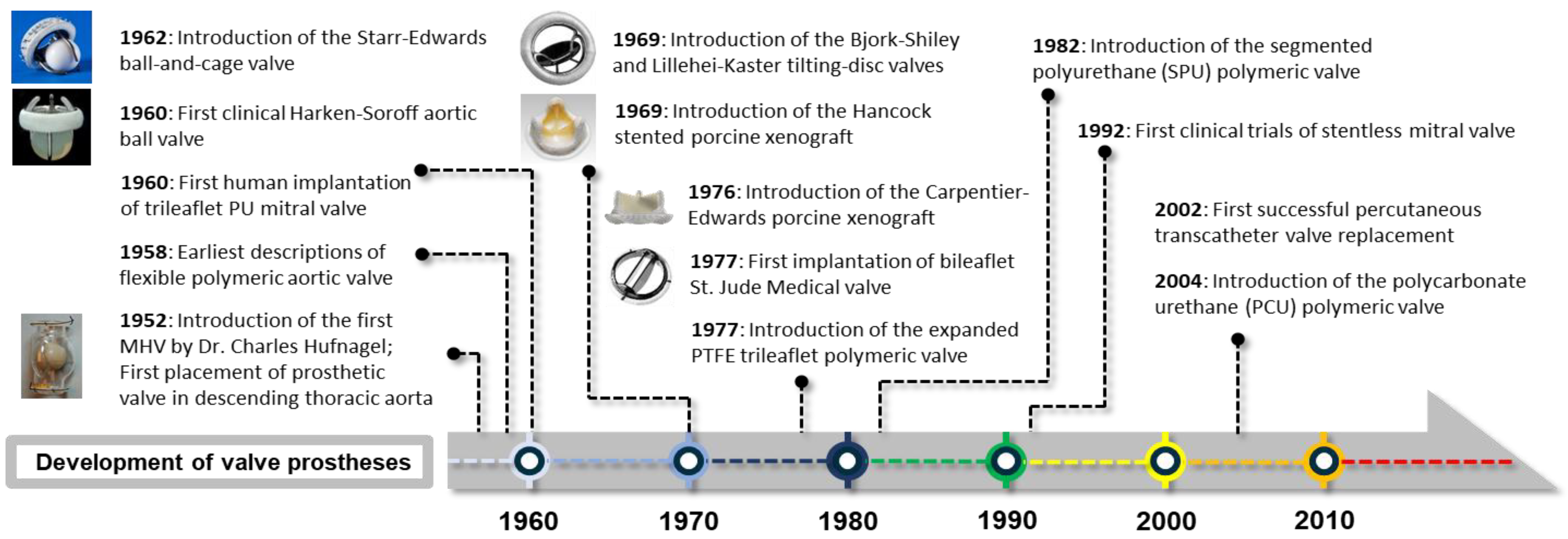
Since their inception in the 1950s, MHVs have undergone long-term development and improvement. Throughout this period, a great number of types of designs and models have been developed to enhance their functionality and performance [14]. The first MHV was designed and invented by Dr. Hufnagel in 1952, featuring a ball-chamber structure, which was implanted in the descending aorta [15]. However, due to its complexity and the associated high mortality, it was not practical to replace diseased heart valves during surgical procedures. Consequently, the Starr–Edwards ball valve, a first-generation ball-and-cage MHV with a stainless-steel cage and a Silastic ball occlude, was developed, and subsequently refined to overcome the shortcomings of Hufnagel’s design, offering a smaller size, bilateral caging, and consequently, improved ease of implantation during surgery in 1960 [15]. Following the initial trial period, various MHV designs experienced significant growth. These include pyrolytic carbon-fabricated MHVs, non-tilting disk MHVs (i.e., Kay–Shiley and Beall–Surgitool disk valve), and tilting disk MHVs (i.e., Björk–Shiley convexo-concave, Lillehei–Kaster, and Hall–Kaster tilting disk valve). Subsequently, bileaflet MHVs such as Gott–Daggett and SJM bileaflet valve, as well as trileaflet-like TRIFLO, were further invented and developed, exhibiting notable improvements in designs and valve performances (refer to Figure 1).
However, due to their non-physiological structure and flow interactions, MHVs can produce abnormal hemodynamics, thereby increasing the risk of platelet activation and even hemolysis [16,17,18]. Consequently, patients with MHV implants typically require lifelong anticoagulant therapy.
2.2. Bioprosthetic Heart Valves
Bioprosthetic heart valves (BHVs) are native tissue substitutes fabricated from animal or human tissues. Among these, porcine (pig) and bovine (cow) tissues are the most commonly used materials [19]. Early comparison reported by Edmunds indicated that bovine BHVs showed better hemodynamics and durability than porcine BHVs [20]. Homografts (human heart tissue) also serve as an alternative form of biological valve replacement. More recently, a systematic review of 562 studies compared the complication, durability, mortality, and hemodynamic performance across porcine and bovine BHVs [21]. Their findings suggested that bovine valves showed better complication and hemodynamic profiles, while both types are generally comparable in durability, mortality, and postoperative functional status.
The use of BHVs has significantly increased in the last few decades [22]. Compared with MHVs, BHVs are relatively newer heart valve types but have quickly attracted a great number of clinical and academic attentions, and the trend is likely to continue in the future [23]. This is because compared to MHVs, BHVs greatly lower the thrombotic risk, decrease the risk of bleeding, and reduce the cost and energy put in life-long warfarin therapy [24,25,26]. In addition, by mimicking real biological materials, BHVs are more similar to native heart valves [12,27]. However, BHVs have been shown to be less durable, with structural deterioration occurring more readily, particularly due to the accumulation of calcium and lipids [28]. This deterioration situation may even worsen over longer implantation periods [24]. Nevertheless, some studies have reported that patients receiving BHV replacements have a lower risk of late reoperation compared to those with MHV replacements [29].
2.3. Polymeric Heart Valves
Polymeric heart valves (PHVs), similar to MHVs, emerged very early as a promising class of valve prostheses fabricated from synthetic polymers. PHVs have been motivated and developed to address the inherent limitations of both MHVs and BHVs.
The first implanted PHV into humans by Dr. Braunwald was made from flexible polyurethane (PU) in 1960 [30]. During that period, polymeric materials such as silicone, polytetrafluoroethylene (PTFE), polyethylene terephthalate (PETE or Dacron), and Teflon were considered viable options due to their favorable flexibility and biocompatibility. However, despite various design approaches, PHVs fabricated from these materials exhibited significant shortcomings, which substantially limited their clinical application. For example, these materials typically exhibit reduced durability as a result of rapid hydrolysis and limited resistance to thromboembolism [31,32].
Over the past two to three decades, more advanced polymers have been developed, which were more durable, biostable, and can better replicate the hemodynamics of natural heart valves [33] and address key limitations of MHVs (i.e., life-long requirement for anticoagulation) and BHVs (i.e., limited durability) [32,33,34,35]. For instance, segmented polyurethane (SPU) has demonstrated enhanced resistance to flexural fatigue and thromboembolism [36]. Other polymers such as polyether urethane (PEU), polycarbonate urethane (PCU), and polydimethylsiloxane (PDMS) have also been explored. Among these, PCU has shown better performance compared to PEU, with lower risk of hydrolytic degradation as well as greater biostability and thermal stability [37]. More recently, another novel nanocomposite polymer—polyhedral oligomeric silsesquioxane (POSS)—has been developed and tested, showing excellent biocompatibility, biostability, anti-thrombogenic properties, and resistance to calcification [33,38]. In addition, De Gaetano et al. reported that two types of PHVs fabricated from styrenic block copolymers met the ISO 5840 standard based on evaluations of pressure drops, effective orifice area (EOA), and regurgitant volume [39]. PHVs represent strong alternatives to other valve types and hold significant potential for wider clinical application in the future. Figure 1 shows a summarized timeline of the historical development of prosthetic heart valves.
Figure 1.
Timeline of representative milestones of the historic development of prosthetic heart valves (referenced from Dasi et al. [40]).
3. Particle Image Velocimetry (PIV)
3.1. General Description of In Vitro PIV Experimental Apparatus
CFD simulations and experimental studies are widely employed to detect the flow characteristics within prosthetic heart valves. In recent years, the PIV technique has been increasingly utilized to provide detailed visualization of the in vitro flow fields of prosthetic valves. To replicate the physiological conditions of pulsatile blood flow, PIV experiments are typically conducted using a mock circulatory closed-loop system. The design of this type of apparatus was first described by Rosenberg et al. and has been reviewed by Deutsch et al. [41,42].
Figure 2 illustrates a schematic of a typical in vitro PIV apparatus for artificial valve testing. It generally includes a pulsatile pump, transparent test section, pressure transducers, a compliance chamber, and a fluid reservoir. The programmable pulsatile pump, controlled by an electric pulse generator and computer, generates physiological waveforms with adjustable parameters such as frequency, stroke volume, flow rate, waveform type, and synchronization mode to accommodate diverse experimental and visualization needs. The compliance chamber replicates arterial elasticity to maintain physiological pressure, with membrane-based designs providing higher accuracy in volume measurement and non-membrane types offering effective, though less precise, compliance. Additionally, the test section, which contains the valve prosthesis and the PIV visualization system (camera and laser apparatus), represents a key component of the experimental setup (Figure 2).
Figure 2.
Schematic of a mock circulatory loop used for studies [13].
Flow visualization is performed by seeding the fluid with fluorescent tracer particles illuminated by a laser, allowing particle motion—and thus fluid flow—to be captured in sequential images during two consecutive laser pulses. The number of cameras and the laser specifications depend on the particular PIV technique employed.
3.2. Basic Selection of PIV Techniques
PIV methods can be classified into different categories according to their respective characteristics and capacities, which are discussed in detail in the following section.
3.2.1. PIV of Different Temporal Resolutions
Regarding temporal resolution in experimental studies, PIV techniques can be broadly categorized into low-repetition-rate (phase-locked) and high-repetition-rate (time-resolved) approaches. Low-repetition-rate PIV is typically operated in a phase-locked mode, where data are acquired at specific time points. In this case, the acquisition frequency is lower than the intrinsic variation frequency of the flow. Consequently, while low-repetition-rate PIV can capture the mean flow characteristics, it cannot fully resolve the temporal dynamics of the flow during one cardiac cycle.
High-repetition-rate PIV enables the measurement of temporal flow characteristics across the aortic valve during one cardiac cycle. In other words, time-resolved PIV can capture the same flow pattern in at least three to four consecutive fields. This technique supports imaging rates of up to 3000 frames per second with a spatial resolution of 1024 × 1024 pixels [43]. Compared with phase-locked PIV, time-resolved PIV requires high-performance cameras with reduced inter-frame time and higher frame rate, as well as more advanced cross-correlation algorithms for velocity field processing. For instance, using high-resolution PIV, Moore and Dasi investigated blood flow and leaflet motion in vitro under varying physiological coronary flow conditions [44]. Their results demonstrated an increase in shear stress near the leaflet and showed that the presence of coronary flow improved leaflet mechanics and sinus hemodynamics.
3.2.2. PIV of Different Spatial Velocimetry Configurations
Based on the spatial velocimetry configuration supported, PIV can be classified into planar, stereoscopic, and volumetric approaches, which differ in the number of velocity components and dimensions resolved. Planar PIV employs a single camera to measure two velocity components in a two-dimensional plane (2D-2C). Lim et al. investigated a pulsatile flow with a 2D-2C PIV in a porcine BHV at the aortic root, visualizing velocity fields and Reynolds shear stress (RSS) [45]. Similarly, Ducci et al. utilized 2D-2C PIV to observe the velocity field within the Valsalva sinuses and to evaluate changes in fluid dynamics after transcatheter aortic valve replacement (TAVR) [46].
As mentioned above, planar PIV records only the in-plane projection of the velocity vector, neglecting the out-of-plane velocity component. This limitation may lead to significant errors in flows with strong three-dimensional characteristics. Stereoscopic PIV addresses this issue by incorporating an additional camera at a different viewing angle, allowing measurement of two in-plane velocity components along with one out-of-plane component (2D-3C) [47]. By resolving the third component, stereoscopic PIV can better quantify parameters with strong dimensional dependence, such as Reynolds shear stress (RSS). Kaminsky et al. reported that the out-of-plane (third) velocity component (measured by Stereoscopic PIV) had minimal impact on the overall flow velocity [48]. However, systematic comparisons between 2D-PIV and stereoscopic 3D-PIV performed by Abe et al. and Yoon and Lee demonstrated that the out-of-plane velocity contributed the largest source of error [49,50].
The temporal and spatial resolution of stereoscopic and planar PIV are almost identical when the same equipment and evaluation algorithms are used. Both techniques rely on illuminating a thin laser sheet with seeding particles and capturing their motion over successive frames to reconstruct velocity fields. In contrast, volumetric PIV extends the measurement principle into 3D space. It requires additional components, including a high-power illumination source and volume optics (instead of sheet optics). As a result, volumetric PIV systems are generally more costly and technically challenging to set up and operate compared to planar and stereoscopic PIV approaches. Multiplane stereoscopic PIV, holographic PIV, and tomographic PIV are representatives of volumetric PIV, each providing unique methods to reconstruct 3D flow structures. Table 1 is a comparison across the major PIV techniques in terms of their velocity representation, illumination requirement, advantages, and limitations.
Table 1.
Comparison of the major PIV techniques.
Brunette et al. conducted a 3D volumetric PIV study to evaluate the flow fields in a transparent phantom under mild stenotic coronary artery conditions, using the PIV data to analyze shear stress and related hemodynamic parameters [51]. Similarly, Hasler and Obrist utilized a tomographic PIV system to measure the 3D flow field in the vicinity of a bioprosthetic aortic valve with varying aortic root sizes [52]. Their results revealed that an enlarged aortic cross-section was associated with stronger turbulence and retrograde flow in the ascending aorta, emphasizing the role of anatomical variation in prosthetic valve hemodynamics. Ferrari and Obrist further used tomographic PIV to compare the hemodynamics across a tri-leaflet mechanical valve, a bi-leaflet mechanical valve, and a bioprosthetic valve [53]. Table 2 briefly summarizes the experimental studies of valve prostheses using different configurations of PIV techniques.
Table 2.
Summary of spatial configuration categorized PIV techniques in experimental studies of valve prostheses.
4. In Vitro Experimental Studies on Valve Prostheses Using PIV
In vitro experimental studies using PIV techniques have played an important role in advancing and optimizing prosthetic heart valves. These investigations have enabled the detailed characterization of flow dynamics across various valve designs, which guide the improvements in hemodynamic performance and durability. It should be noted that there are various types of in vitro visualization methods, such as Laser Doppler Velocimetry (LDV/LDA) and Ultrasound-Based Particle Tracking or Doppler Visualization. However, in this section, we are specifically focusing on PIV in vitro experiments on the three major prosthetic valves—mechanical, bioprosthetic, and polymeric valves.
4.1. PIV Experiments in Mechanical Heart Valves
In vitro studies of MHVs started to emerge around the 1990s when numerous different and novel MHV designs were proposed and introduced. During this period, the traditional phase-locked 2D-PIV technique was the most widely applied approach. As shown in Figure 1, Brücker was among the first to apply a cross-correlation PIV method to heart valve studies [75]. Using long-term PIV recordings of a tilting disk valve (i.e., Björk–Shiley Monostrut aortic model), they provided a general picture of the transient flow characteristics throughout the entire aortic cycle. Similarly, Lim et al. investigated velocity flow fields and RSS distributions in MHVs of various opening angles under steady flow conditions [45]. Their results demonstrated that tilting disk MHVs with larger opening angles resulted in smoother flow profiles, corresponding to a lower risk of ventricular hypertrophy, while St. Vincent MHVs showed the lowest pressure drop and shear stresses compared with other designs. In addition, building on earlier work, Brücker et al. conducted a phase-locked PIV to study a TRIFLO trileaflet MHV under pulsatile flow conditions, revealing secondary vortices along the leaflets during different cardiac phases [54]. These stagnant vortices are dangerous as they create zones of low flow where blood can “pool,” leading to thrombus formation.
Among MHVs, the St. Jude (SJM) bileaflet valve has received the greatest academic attention due to its favorable long-term clinical performance and widespread commercial adoption. Employing a phase-locked 2D-PIV, Manning et al. characterized the regurgitant flow fields of an SJM under pulsatile flow conditions and evaluated their influence on valve function [55]. They also found that the estimated ensemble-averaged viscous shear rates generated by hinge jet collisions were below levels typically associated with hemolysis and platelet activation, which is the precursor to the MHV’s biggest clinical hurdle: the lifelong requirement for anticoagulants. Based on a similar PIV approach, Haya and Tavoularis examined the influence of SJM valve orientation on stresses and flow conditions in the coronary sinus [61]. Their study revealed that both vortex formation and flow rate within the sinus were sensitive to valve orientation, with elevated pressures more frequently observed when the valve’s plane of symmetry was aligned normal to the aorta plane of curvature. These findings by Haya and Tavoularis [61] integrate with the orientation studies of Lim et al. [45], suggesting that the ‘smoother flow profiles’ achieved by larger opening angles can be clinically undermined if the valve’s orientation relative to the aortic curvature is not optimized to maintain coronary perfusion. Additionally, Büsen et al. evaluated the impact of compliance on the hemodynamics of an SJM, demonstrating that reduced compliance was associated with greater pressure change [63]. With more advanced PIV techniques (3D3C-PIV), Amatya et al. measured the 3D velocity fields and shear forces around an SJM across different temporal phases [58]. Their analysis highlighted component-dependent characteristics of elliptical jet flow through the leaflets, as well as regions of elevated shear stress and strong vorticity. Bellofiore and Quinlan employed high-resolution PIV combined with advanced data analysis methods (e.g., Lagrangian tracking and blood damage assessment) to directly quantify blood damage induced by SJM valves, underscoring the necessity of high-resolution measurements for accurate evaluation [59]. Focusing on aortic dissection, Franzetti et al. built an anatomically accurate physical phantom of a real patient’s dissected aorta and performed 2D PIV experiments on it [64]. The measurements, e.g., recirculation zones and low-shear regions, showed strong agreement with clinical imaging and companion CFD simulations.
Moreover, numerous studies have combined PIV measurements with CFD numerical simulations to achieve a more comprehensive understanding of the in vitro hemodynamics of SJM valves. Ge et al. integrated a 3D numerical simulation with a 2D-PIV on an SJM under non-pulsatile flow conditions, demonstrating the advantages of simulation in complementing experiments and providing further understanding about jet formation and twin vortices along the aortic wall [56]. In addition, Dasi et al. also conducted an experiment-simulation integrated approach to investigate vorticity dynamics on SJM, extracting detailed time-dependent vortex structures and leaflet kinematics across different phases of cardiac cycles (initiation, acceleration, deceleration, and closure) [40]. More studies were conducted in recent years on the more advanced tri-leaflet, low-thrombogenic MHVs (TRIFLO), examining their performance in minimizing blood stagnation areas and flow separation. Vennemann et al. applied time-resolved micro-PIV to evaluate the flow condition in the pivoting region [62]. They found that its leaflets closed ~ 50% more slowly than those of traditional designs (e.g., SJM), a behavior likely resulting from its novel hinge design and considered hemodynamically beneficial. This slower closure dynamic reported by Vennemann et al. [62] presents a notable contrast to the SJM’s rapid leaflet motion; while the SJM optimizes for a quick seal to prevent regurgitation [55], the TRIFLO’s slower kinematics aim to reduce the impact of the ‘squeeze flow’ effect, potentially lowering the risk of mechanical hemolysis at the moment of closure. Ferrari and Obrist compared the hemodynamics of a TRIFLO MHV, a conventional bi-leaflet MHV, and a bioprosthetic valve [53]. They found that both MHVs produced lower peak velocities and lower turbulent kinetic energy (TKE) than the bioprosthetic valve. Lower TKE is good, as high TKE is associated with endothelial dysfunction and can accelerate the calcification of the aortic wall. Compared to the other two valves, TRIFLO MHV showed the greatest capacity to increase its effective flow area at higher cardiac outputs. Collectively, these studies indicate a clear trajectory in MHV development: while earlier research prioritized minimizing the pressure drop across tilting disks, modern tri-leaflet designs like the TRIFLO aim to achieve the energy efficiency of bioprosthetic valves while maintaining the lower TKE and peak velocities typically reserved for mechanical prostheses. Table 3 summarizes the related PIV experimental studies on MHVs.
Table 3.
Summary of related PIV experimental studies on mechanical heart valves (MHVs).
4.2. PIV Experiments in Bioprosthetic Heart Valves
Building on insights from MHVs, PIV experiments have also been applied to BHVs to evaluate their hemodynamic performance. Lim et al. compared the velocity and Reynolds stress fields of a porcine BHV with those of three different MHVs [45]. They reported that porcine BHV showed higher pressure drop and Reynolds stresses. Clinically, chronic exposure to high RSS can accelerate leaflet tissue fatigue and collagen degradation, shortening the valve’s lifespan. This finding provides a critical contrast to the MHV studies mentioned previously; while MHVs are primarily associated with localized shear ‘hotspots’ near hinges, porcine BHVs exhibit more distributed but higher overall RSS, highlighting a fundamental trade-off between the mechanical durability of polymers/metals and the physiological flow patterns of biological tissue. After that, as an extension of the previous study, Lim et al. visualized the velocity fields of a porcine BHV at different stages under pulsatile flow using PIV and examined its impact on the hydrodynamic characteristics at the aortic root [66].
Additionally, several studies have investigated how the anatomical configuration of BHVs affects in vitro hemodynamics. For instance, Toninato et al. compared the performance of BHVs with different aortic root configurations and highlighted the importance of identifying the optimal integrated aortic valve–root configuration [76]. Building on this perspective, other studies examined the effects of a bicuspid aortic valve, which are associated with adverse outcomes such as increased leaflet calcification and aortic stenosis. Saikrishnan et al. evaluated the flow fields and pressure conditions in the aortic root and sinus regions of bicuspid BHVs with different degrees of stenosis. They revealed that eccentric and stenotic bicuspid valves showed higher systolic jet velocities, total kinetic energy, and Reynolds stress compared to tricuspid valves [8]. Highly eccentric jets can create asymmetric wall shear stress, which is a primary driver for aortic remodeling and the progression of aortic aneurysms in BAV patients. These findings by Saikrishnan [8] contrast with the ‘idealized’ root configurations used in earlier porcine studies [66], demonstrating that the hemodynamic benefits of a tri-leaflet BHV can be almost entirely negated when the valve is constrained by the asymmetric geometry of a bicuspid aortic root. Consistent with these findings, McNally et al. demonstrated that non-dilated BAV aortas—particularly those with left-right coronary and left-noncoronary cusp fusions—exhibited distinct flow characteristics compared with dilated aortas, including increased jet skewness, higher systolic jet intensity, and elevated turbulence and shear stress [69]. Furthermore, considering the reported influence of coronary flow on valve calcification, Moore and Dasi studied its effects on coronary flow on leaflet mechanics and sinus hemodynamics. Using time-resolved PIV, they found that the presence of coronary flow reduced regions of low wall shear stress and enhanced washout at the leaflet base, leading to overall improvements in leaflet mechanics and sinus hemodynamics [44].
In addition to the properties of the valves themselves, the surgical operation of valve replacement also plays a critical role. Groves et al. [77] and Mokhtar et al. [78] investigated the effects of Transcatheter Aortic Valve Replacement (TAVR) and stent placement, respectively. Their findings suggested that a 5 mm distance between the valve and the annulus is optimal, while the use of a half-y stent was shown to effectively reduce blood velocity and limit aneurysm growth. Proper positioning is vital to prevent paravalvular leak (PVL). One major issue with TAVR is the elevated risk of leaflet thrombosis formation [79]. Another TAVR procedure may be needed after degeneration of the originally implanted valve (called TAV-in-TAV) to mitigate suboptimal outcomes such as aortic regurgitation [80]. Hatoum et al. evaluated the hemodynamics, quantified by EOA and turbulence (RSS), of six different TAV-in-TAV implantation configurations. They found that all TAV-in-TAV setups generated 2–3 times higher RSS than single valves [71]. This significant elevation in RSS in TAV-in-TAV scenarios contrasts with the findings of Groves et al. [77] for single TAVR implants; it suggests that while a primary TAVR can achieve near-physiological flow with proper 5 mm positioning, the ‘nested’ geometry of a second stent inherently creates a high-turbulence environment that single-valve designs are not currently optimized to handle. This inherent hemodynamic risk underscores the need for rigorous post-intervention monitoring, particularly for patients with residual or recurrent stenosis. To this end, exercise stress echocardiography (ESE) is emerging as a vital tool; it allows clinicians to evaluate dynamic hemodynamic shifts under physiological stress, potentially uncovering abnormalities that remain hidden during resting post-TAVR assessments [81].
As mentioned above, one of the major advantages of the PIV technique over other measurement techniques is its superior spatial resolution. However, most PIV methods operate at relatively low temporal resolution, despite recent advances. To address this limitation, Bellofiore and Quinlan developed an experimental setup that combined high-resolution velocity measurements with PIV to investigate flow patterns and stress generated by a prosthetic heart valve [59]. This approach enabled more accurate assessments of platelet damage and activation, revealing that shear stress and blood damage are highly sensitive to measurement resolution. In parallel, efforts to enhance both spatial resolution and computational efficiency have led to the increasing adoption of advanced PIV methods, such as tomographic PIV [82]. Using this technique, Hasler and Obrist designed a hydraulic flow loop apparatus to test BHVs in the aortic root, successfully visualizing 3D velocity vector fields [68]. As a follow-up study, Hasler and Obrist further mapped velocity fields of BHVs under steady and pulsatile flow conditions, identifying instantaneous, ensemble-averaged, and phase-averaged flow structures [52]. The application of tomographic PIV significantly improved the detection of instantaneous flow fields and enabled precise localization of regions with elevated wall shear stress. Utilizing tomographic PIV, Ferrari and Obrist found that the Paramount bioprosthetic valve by Edwards Lifesciences had a lower EOA, causing greater peak velocities and greater TKE compared to bi-leaflet and tri-leaflet mechanical valves, particularly at low cardiac outputs [53]. A summary of related PIV experimental studies on BHVs is provided in Table 4.
Table 4.
Summary of related PIV experimental studies on bioprosthetic heart valves (BHVs).
4.3. PIV Experiments in Polymeric Heart Valves
Although BHVs have been widely studied through in vitro PIV experiments to evaluate their flow dynamics and durability, polymeric heart valves (PHVs) have received comparatively limited attention, despite showing considerable promise as an alternative prosthesis.
Compared to MHVs and BHVs, PHVs have been extensively investigated due to their limited commercialization and clinical use [39]. Notably, Leo and colleagues made a significant contribution by investigating the influence of different PHV designs—such as commissural design and leaflet thickness—on hemodynamic performance. Using 3D PIV, they observed the flow fields within PHVs and identified regions of elevated velocity and shear stress across different cardiac phases in PHVs [57,72]. Their findings demonstrated that leaflet thickness was the dominant parameter affecting the leakage jets during diastole, with thicker leaflets producing more pronounced regurgitant jets. Furthermore, the blood clot formation was inferred to be primarily associated with the high shear stress concentrated along the edges of the central orifice during systole [72]. These observations were consistent with earlier results obtained using LDV, reinforcing the hemodynamic challenges associated with PHV design [83,84]. These findings by Leo et al. highlight a unique design constraint for PHVs that contrasts with MHVs and BHVs; while MHV thrombosis is typically driven by hinge–jet collisions and BHV failure by tissue calcification, PHV performance is primarily governed by a ‘thickness–flexibility’ trade-off where increasing material for durability inadvertently worsens diastolic leakage.
Moreover, to develop more clinically applicable PHVs, Del Gaudio et al. designed and fabricated an electrospun PHV and assessed its hemodynamic performance by characterizing velocity and turbulence profiles downstream of the valve through a 2D PIV measurement [34]. The valve performed favorably in replicating physiological and pathological conditions across different cardiovascular cycles. They found that the velocity distribution was independent of Reynolds number but was related to the Womersley number, suggesting that the valve’s performance varies significantly with heart rate. This dependence on the Womersley number integrates with the BHV studies of Ferrari and Obrist [53], suggesting that while polymeric valves can replicate physiological flow at rest, their performance under the high-frequency pulsatility of exercise may be less stable than that of biological tissue valves. In another study, Yousefi et al. focused on structural dynamics of PHVs by applying 2D PIV to six valve prototypes that differed in arch geometry (arch height-to-diameter ratio) and stent design (height-to-diameter ratio) [35]. By analyzing velocity, vorticity, and turbulence profiles, their results showed that the presence of arches reduced regurgitant flow, peak systolic velocity, and Reynolds shear stress by 5%, 58%, and 40%, respectively, while also enhancing flow jet reattachment during early systole. Faster flow reattachment and lower peak velocities indicate a more laminar flow, which helps prevent post-stenotic dilation. Given the growing interest in PHVs as durable and biocompatible alternatives, further PIV-based investigations are essential to optimize valve design and better understand their long-term hemodynamic behaviors. Notably, Chen et al. developed a PHV prototype with biomimetic fiber architecture and NiTi-reinforced [85]. With the assistance of PIV measurements and finite element analysis, they demonstrated improved systolic hemodynamics, optimized leaflet motion, and significantly reduced stress distribution, indicating enhanced durability and design potential for next-generation prosthetic valves. Zhou et al. produced fabric-composite valves using polyethylene membranes and compared their hemodynamic performance with a bovine prosthetic valve model [73]. They found that the polymeric valves did not improve EOA and regurgitant fraction. However, they showed much lower shear stresses, indicating more stable blood flow and potentially lower risk of thrombosis. This observation by Zhou et al. [73] offers a significant contrast to the traditional clinical assessment of BHVs, where a high EOA is usually the primary metric of success. It suggests that for PHVs, achieving a ‘thrombo-resistant’ environment through lower shear stress may be a more attainable and clinically relevant design goal than matching the EOA of bovine prostheses. A summary of related PIV experimental studies on PHVs is provided in Table 5.
Table 5.
Summary of related PIV experimental studies on polymeric heart valves (PHVs).
4.4. Cross-Study Methodological Synthesis
Different types of PIV configurations show varied suitability based on the research goal across valve classes. Time-resolved PIV systems with high temporal resolution are primarily selected to study thrombogenic potential, since accurate characterization of peak RSS, TKE, and transient stress exposure to track rapid systolic jets associated with vortices. Conversely, phase-locked PIV methods are usually utilized to investigate mean leaflet stresses or structural fatigue, addressing the cycle-averaged flow characteristics.
Beyond this, many reported findings demonstrate that important metrics show different sensitivity to the measured parameters. For instance, RSS and TKE are the flow characteristics, which highly rely on spatial resolution and accurate interrogation window size, with localized peak stresses frequently underestimated by under-resolved measurements [86]. However, vorticity fields are relatively less sensitive to spatial coarsening; they are still impacted by temporal undersampling in highly unsteady flows [87]. Furthermore, large-scale flow characteristics, including jet trajectories and sinus vortices, are qualitatively reliable across mechanical, bioprosthetic, and polymeric valves. Nevertheless, peak shear magnitudes and thrombogenic indicators are highly sensitive to the selection of working fluid, optical conditions, and data-processing techniques.
Collectively, these observations indicate that the overall flow characteristics remain relatively consistent across various experimental setups, while stress-derived quantitative metrics are highly dependent on the selected experimental method. In addition to methodological comparisons, understanding how these experimental findings align with clinical outcomes and regulatory evaluation criteria is also necessary to better establish translational relevance for future studies.
4.5. Translational and Regulatory Considerations
Although PIV provides high-resolution and relatively detailed insights into in vitro hemodynamic evaluation, the results obtained reflect representative engineering metrics instead of true clinical outcomes. Critical flow characteristics such as RSS, TKE, vorticity, etc., can be interpreted relative to experimentally reported hemolysis and platelet activation thresholds. Nonetheless, an exact quantitative comparison cannot be made due to the differences in exposure time, selected working fluid properties, and biological variability. Meanwhile, in transcatheter valve studies, areas of high shear, stagnation, or sinus recirculation acquired through PIV can provide insight into flow conditions associated with subclinical leaflet thrombosis and hypo-attenuated leaflet thickening (HALT), although in vitro experiments cannot replicate biological responses.
In addition, from a regulatory perspective, how well the working fluid flows through prosthetic valves is primarily evaluated in accordance with the ISO 5840 standard [88], which addresses the global functional metrics—EOA, pressure gradients, regurgitation, and durability rather than detailed flow-field mapping. Under these circumstances, PIV analyses can provide additional insights that complement standard preclinical testing, revealing local shear environments and providing a mechanistic understanding of device performance and safety without replacing regulatory performance criteria. Thus, PIV-derived data are not a substitute but may serve as supporting evidence to guide design modifications and evaluate potential risks.
4.6. Limitations of PIV Experiments in Valve Testing
PIV experiments, a powerful in vitro experimental tool, play a critical role in evaluating prosthetic valve performance. However, the inherent limitations of PIV experiments can affect the accuracy of the measured results and should be addressed. Some representative limitations of PIV are summarized here:
- Optical distortion and refractive-index mismatch: PIV experiments rely on the optical imaging accuracy of the seeding particles in the analog working fluid [9]. In the prosthetic valve testing, the model components (e.g., acrylic, silicone) and working fluid must match perfectly to avoid optical distortion. Even if a common working fluid—water and glycerol mixture—matches the fluid viscosity, it can still cause optical distortion due to refractive index mismatch with the model material. Researchers must advance imaging or specific index-matching fluids to mitigate this effect.
- Newtonian versus non-Newtonian effects of working fluid: While blood is a non-Newtonian fluid, most in vitro PIV experiments utilize Newtonian analogs, such as water and glycerol mixture, to ensure optical transparency as mentioned above. However, blood’s shear-thinning behavior means these analogs may yield inaccurate results in the regions of low shear. Therefore, the choice of working fluid is a critical factor that can significantly impact the accuracy of hemodynamic parameters obtained from PIV measurements [9,89].
- Near-wall and boundary-layer resolution limits: Accurately predicting the flow near valve surfaces is important in estimating the shear stress and analyzing potential blood damage. Traditional PIV techniques have the limitation of spatial resolution, particularly near walls, and often suffer from poor particle seeding around these areas. Therefore, velocity gradients near the wall remain uncertain, and the viscous sublayer is generally under-resolved. These issues arise from low particle density near the surface, optical reflections, and biases in cross-correlation processing [86,90,91]. As a result, velocity profiles in the close vicinity of the wall are often extrapolated instead of directly measured, leading to additional error in estimating shear stress.
- Finite interrogation window size and spatial averaging effects: After data acquisition, the analysis and processing of the collected data represent a critical and technically demanding stage that finally determines the accuracy and reliability of the resulting flow field characterization. Velocity fields were obtained via cross-correlation of instantaneous image pairs, with multi-pass interrogation, optimized window sizing, and sufficient overlap to satisfy the Nyquist criterion and improve accuracy. However, this spatial averaging may affect regions of high velocity gradients (e.g., leakage jets and narrow gaps), resulting in an underestimation of peak velocities and shear stresses [92]. This limitation is critical, particularly in analyzing the transient, high shear events associated with platelet activation and blood damage.
- Phase-averaging effects in phase-locked PIV: Phase-locked PIV is a time-resolved measurement and often employed in periodic flows. This type of PIV technique improves the signal-to-noise ratio and achieves relatively high spatial resolution [93]. On the other hand, because phase-locked PIV highly relies on the cycle-to-cycle repeatability, it averages out the important transient flow features such as vortex instability and turbulence intermittency. Additionally, the turbulent fluctuations (e.g., turbulence intensity and peak shear stress) are also canceled out due to the ensemble-averaged flow fields of phase-locked PIV [94]. In particular, the peak shear stress is an important metric in studying thrombosis. All the inherent features of phased-locked PIV potentially impact these key parameters.
Overall, while PIV remains a widely applied technique for prosthetic valve assessment, the optical, spatial, and temporal limitations of PIV should be clearly recognized and carefully considered in quantitative analyses. Particularly, the potential underestimation of peak shear stress and attenuation of transient flow features necessitate careful experimental design, along with transparent reporting of imaging and post-processing parameters. Where feasible, the adoption of high-resolution or time-resolved PIV methods, combined with complementary computational approaches, can help underscore these limitations and enable a more comprehensive characterization of valve hemodynamics.
5. Recommendations for Future Research
Although many researchers have made significant contributions to investigating the hemodynamics of prosthetic heart valves experimentally and computationally, there are still several challenges that remain due to limitations in experimental and computational methods. Based on the literature review in this paper, the following recommendations are listed to guide future work in this field.
5.1. Methodological Recommendations
A notable limitation across in vitro PIV studies is the absence of standardized experimental protocols. Experimental consistency, such as model geometries, working fluid, refractive index matching, and PIV settings, is necessary for future studies. As such, to improve the reproducibility and cross-study consistency, the community-wide guidelines of the critical metrics could improve transparency and allow for more robust comparisons across the fields. These metrics may include, at a minimum, the following:
- Model geometry and scaling specifications.
- Summary of working fluid properties (density, viscosity, and refractive index for different model materials).
- Spatial and temporal resolution of PIV experiments.
- Post-processing setting information such as interrogation window size and overlap.
- Implementation of uncertainty quantification methods as well as clear validation procedures, including analytical solutions, benchmark flow cases, and repeatable tests.
Additionally, novel PIV techniques should be more widely adopted. Methods such as micro-PIV offer much higher spatial resolution than traditional approaches and can capture localized flow features in critical regions, such as valve hinges and pivoting areas. For example, Jun et al. applied 2D micro-PIV to study leakage flow in the hinge of a mechanical valve [95], while Vennemann et al. used it to investigate the pivoting region under physiological conditions [62]. Moving forward, PIV studies need to be clearer about the spatial and temporal resolutions, ensuring they are sufficient to measure compiled flow phenomena. Wider application of these tools will provide more detailed experimental data to inform both design improvements and future computational validations.
5.2. Computational Recommendations
Computational techniques require continued advancement. While conventional planar PIV and CFD simulations have already provided valuable insights [11,96], current methods still face challenges when handling complex geometries and dynamic boundaries, which often require fine grids to capture these features [97].
Future work should address the experimental studies and computational simulations integration. So, currently, the emerging capable three-dimensional techniques, such as tomographic and stereoscopic PIV integrating with fluid–structure interaction (FSI) models, would be a promising pathway for experimental and computational mutual validation. Such hybrid frameworks are increasingly critical for improving confidence in emphasizing multi-scale, high-resolution, and two-phase simulations capable of resolving localized hemodynamics with greater accuracy and efficiency [12,97].
5.3. Translational Recommendations
Nowadays, as prosthetic valve technologies continue to evolve, PIV techniques must be extended to emphasize the new clinical and engineering challenges. Particularly, the application of PIV to transcatheter valve systems such as valve-in-valve and TAVR-in-TAVR configurations is still limited, despite their increasing clinical relevance.
Similarly, polymeric and tissue-engineered valves (TEVs) offer a promising solution to overcome the non-regenerative limitations of current prostheses, especially for validated experimental investigations [98]. For these next-generation devices, in vitro hemodynamic assessments via PIV methods will be particularly valuable for optimizing scaffold materials and identifying flow conditions conducive to extracellular matrix growth, which are important for long-term valve adaptation and durability [99,100,101,102].
In sum, further improvements in this field will require coordinated progress in experimental standardization, high-resolution measurement techniques, integrated experimental-computational validation approaches, and focused application to next-generation valve technologies. Such efforts are essential for the development of prosthetic heart valves that more closely replicate the functional and adaptive behavior of native valves.
6. Conclusions
Heart valves play a central role in maintaining the cardiac function of the human body, and even minor abnormalities in flow dynamics can result in severe physiological consequences. Thus, prosthetic heart valve hemodynamics are also crucial for patients, which are governed by complicated flow phenomena, and small alterations in flow characteristics can result in critical physiological consequences. This review shows that in vitro PIV studies have been particularly valuable for revealing important flow characteristics, such as velocity, vortex persistence, and high shear regions, which are not readily captured by bulk performance metrics.
A notable finding from this review is that valve performance cannot be reliably estimated through a single experimental apparatus. Variations in test geometry, working fluid, optical access, and resolution can significantly impact the results in flow fields, leading to difficulties in comparing the results across studies. To improve reproducibility and cross-study comparison, PIV design and reporting must be more standardized. Additionally, recent studies in time-resolved and phase-locked PIV have enabled more detailed investigations of transient flow–structure interactions, providing new opportunities to relate the valve kinematics and localized hemodynamic stresses to thrombosis and hemolysis. However, challenges remain in capturing physiologically realistic boundary conditions and in linking in vitro results with in vivo validation.
Overall, the reviewed literature here suggests that PIV has progressed from a primarily qualitative visualization method to a quantitative tool that can inform prosthetic valve design and optimization. The continued integration of advanced PIV techniques with standardized testing protocols and complementary computational methods is important for translating experimental outcomes into clinically meaningful improvements in studying prosthetic heart valve performance.
Author Contributions
Conceptualization, R.Z.; methodology, R.Z.; validation, R.Z.; formal analysis, R.Z.; investigation, R.Z.; writing—original draft preparation, R.Z.; writing—review and editing, R.Z., M.M.N., A.B.M.N.S.N., and C.D.B.; visualization, R.Z.; supervision, R.Z.; project administration, R.Z.; funding acquisition, R.Z. All authors have read and agreed to the published version of the manuscript.
Funding
This work is supported by Spring 2025 SCSE Chancellor’s Small Grants, University of Minnesota Duluth.
Institutional Review Board Statement
Not applicable.
Informed Consent Statement
Not applicable.
Data Availability Statement
The data presented in this study are derived from previously published studies and are included within the article. No new data were generated.
Conflicts of Interest
The authors declare no conflicts of interest.
Abbreviations
The following abbreviations are used in this manuscript:
| PIV | Particle Image Velocimetry |
| CFD | Computational fluid dynamics |
| MHV | Mechanical heart valves |
| BHV | Bioprosthetic heart valves |
| PHV | Polymeric heart valves |
| EOA | Effective orifice area |
| TAVR | Transcatheter aortic valve replacement |
| RSS | Reynolds shear stress |
| LDV | Laser Doppler Velocimetry |
| TKE | Turbulent kinetic energy |
| FSI | Fluid–structure interaction |
| TEV | Tissue-engineered valves |
| HALT | Hypo-attenuated leaflet thickening |
References
- Hurst, J.W.; Schlant, R.C.; Alexander, R.W. The Heart, Arteries, and Veins; McGraw-Hill, Health Professions Division: New York, NY, USA, 1994; p. 110. Available online: https://books.google.com/books/about/The_Heart_Arteries_and_Veins.html?id=HbMGwsp3_8YC (accessed on 6 May 2024).
- National Center for Health Statistics. Centers for Disease Control and Prevention. Underlying Cause of Death 2018–2021 on CDC WONDER Online Database. Data are from the Multiple Cause of Death Files, 2018–2021, As Compiled from Data Provided by the 57 Vital Statistics Jurisdictions Through the Vital Statistics Cooperative Program. Available online: https://www.cdc.gov/heart-disease/about/heart-valve-disease.html (accessed on 15 March 2026).
- Sigüenza, J.; Pott, D.; Mendez, S.; Sonntag, S.J.; Kaufmann, T.A.; Steinseifer, U.; Nicoud, F. Fluid-structure interaction of a pulsatile flow with an aortic valve model: A combined experimental and numerical study. Int. J. Numer. Methods Biomed. Eng. 2018, 34, e2945. [Google Scholar] [CrossRef] [Scilit]
- Syed, F.; Khan, S.; Toma, M. Modeling Dynamics of the Cardiovascular System Using Fluid-Structure Interaction Methods. Biology 2023, 12, 1026. [Google Scholar] [CrossRef] [Scilit]
- Yen, J.-H.; Chen, S.-F.; Chern, M.-K.; Lu, P.-C. The effect of turbulent viscous shear stress on red blood cell hemolysis. J. Artif. Organs 2014, 17, 178–185. [Google Scholar] [CrossRef] [Scilit] [PubMed]
- Bluestein, D.; Chandran, K.B.; Manning, K.B. Towards Non-thrombogenic Performance of Blood Recirculating Devices. Ann. Biomed. Eng. 2010, 38, 1236–1256. [Google Scholar] [CrossRef] [Scilit] [PubMed]
- Emery, R.W.; Emery, A.M.; Raikar, G.V.; Shake, J.G. Anticoagulation for mechanical heart valves: A role for patient based therapy. J. Thromb. Thrombolysis 2007, 25, 18–25. [Google Scholar] [CrossRef] [Scilit]
- Saikrishnan, N.; Yap, C.-H.; Milligan, N.C.; Vasilyev, N.V.; Yoganathan, A.P. In Vitro Characterization of Bicuspid Aortic Valve Hemodynamics Using Particle Image Velocimetry. Ann. Biomed. Eng. 2012, 40, 1760–1775. [Google Scholar] [CrossRef] [Scilit] [PubMed]
- Raghav, V.; Sastry, S.; Saikrishnan, N. Experimental Assessment of Flow Fields Associated with Heart Valve Prostheses Using Particle Image Velocimetry (PIV): Recommendations for Best Practices. Cardiovasc. Eng. Technol. 2018, 9, 273–287. [Google Scholar] [CrossRef] [Scilit]
- Diaz, R.; Hernandez-Vaquero, D.; Alvarez-Cabo, R.; Avanzas, P.; Silva, J.; Moris, C.; Pascual, I. Long-term outcomes of mechanical versus biological aortic valve prosthesis: Systematic review and meta-analysis. J. Thorac. Cardiovasc. Surg. 2019, 158, 706–714. [Google Scholar] [CrossRef] [Scilit]
- Kheradvar, A.; Groves, E.M.; Falahatpisheh, A.; Mofrad, M.K.; Alavi, S.H.; Tranquillo, R.; Dasi, L.P.; Simmons, C.A.; Grande-Allen, K.J.; Goergen, C.J.; et al. Emerging Trends in Heart Valve Engineering: Part IV. Computational Modeling and Experimental Studies. Ann. Biomed. Eng. 2015, 43, 2314–2333. [Google Scholar] [CrossRef] [Scilit]
- Yoganathan, A.P.; Chandran, K.B.; Sotiropoulos, F. Flow in Prosthetic Heart Valves: State-of-the-Art and Future Directions. Ann. Biomed. Eng. 2005, 33, 1689–1694. [Google Scholar] [CrossRef] [Scilit]
- Zhang, R. Experimental Studies of Pulsatile Flow Characteristics of Aortic Models Under Normal and Diseased Conditions. Ph.D. Thesis, North Dakota State University, Fargo, ND, USA, 2021. [Google Scholar]
- Tokunaga, S.; Tominaga, R. Artificial valves “up to date” in Japan. J. Artif. Organs 2010, 13, 77–87. [Google Scholar] [CrossRef] [Scilit]
- Starr, A.; Edwards, M.L. Mitral Replacement: Clinical Experience with a Ball-Valve Prosthesis. Ann. Surg. 1961, 154, 726–740. [Google Scholar] [CrossRef] [Scilit]
- Nygaard, H.; Paulsen, P.K.; Hasenkam, J.M.; Pedersen, E.M.; Rovsing, P.E. Turbulent stresses downstream of three mechanical aortic valve prostheses in human beings. J. Thorac. Cardiovasc. Surg. 1994, 107, 438–446. [Google Scholar] [CrossRef] [Scilit]
- Nygaard, H.; Giersiepen, M.; Hasenkam, J.; Reul, H.; Paulsen, P.; Rovsing, P.; Westphal, D. Two-dimensional color-mapping of turbulent shear stress distribution downstream of two aortic bioprosthetic valves in vitro. J. Biomech. 1992, 25, 429–440. [Google Scholar] [CrossRef] [Scilit] [PubMed]
- Li, C.-P.; Lo, C.-W.; Lu, P.-C. Estimation of Viscous Dissipative Stresses Induced by a Mechanical Heart Valve Using PIV Data. Ann. Biomed. Eng. 2009, 38, 903–916. [Google Scholar] [CrossRef] [Scilit] [PubMed]
- Singhal, P.; Luk, A.; Butany, J. Bioprosthetic Heart Valves: Impact of Implantation on Biomaterials. ISRN Biomater. 2013, 2013, 728791. [Google Scholar] [CrossRef] [Scilit]
- Edmunds, L.H. Is prosthetic valve thrombogenicity related to design or material? Tex. Heart Inst. J. 1996, 23, 24–27. [Google Scholar]
- Yap, K.H.; Murphy, R.; Devbhandari, M.; Venkateswaran, R. Aortic valve replacement: Is porcine or bovine valve better? Interact. Cardiovasc. Thorac. Surg. 2012, 16, 361–373. [Google Scholar] [CrossRef] [Scilit]
- Head, S.J.; Çelik, M.; Kappetein, A.P. Mechanical versus bioprosthetic aortic valve replacement. Eur. Heart J. 2017, 38, 2183–2191. [Google Scholar] [CrossRef] [Scilit]
- Rodriguez-Gabella, T.; Voisine, P.; Puri, R.; Pibarot, P.; Rodés-Cabau, J. Aortic Bioprosthetic Valve Durability Incidence, Mechanisms, Predictors, and Management of Surgical and Transcatheter Valve Degeneration. J. Am. Coll. Cardiol. 2017, 70, 1013–1028. [Google Scholar] [CrossRef] [Scilit]
- Rahimtoola, S.H. Choice of prosthetic heart valve for adult patients. JACC 2003, 41, 893–904. [Google Scholar] [CrossRef] [Scilit]
- van Geldorp, M.W.; Jamieson, W.E.; Kappetein, A.P.; Ye, J.; Fradet, G.J.; Eijkemans, M.J.; Grunkemeier, G.L.; Bogers, A.J.; Takkenberg, J.J. Patient outcome after aortic valve replacement with a mechanical or biological prosthesis: Weighing lifetime anticoagulant-related event risk against reoperation risk. J. Thorac. Cardiovasc. Surg. 2009, 137, 881–886.e5. [Google Scholar] [CrossRef] [Scilit]
- Zhao, D.F.; Seco, M.; Wu, J.J.; Edelman, J.B.; Wilson, M.K.; Vallely, M.P.; Byrom, M.J.; Bannon, P.G. Mechanical Versus Bioprosthetic Aortic Valve Replacement in Middle-Aged Adults: A Systematic Review and Meta-Analysis. Ann. Thorac. Surg. 2016, 102, 315–327. [Google Scholar] [CrossRef] [Scilit]
- Susin, F.M.; Espa, S.; Toninato, R.; Fortini, S.; Querzoli, G. Integrated strategy for in vitro characterization of a bileaflet mechanical aortic valve. Biomed. Eng. Online 2017, 16, 29. [Google Scholar] [CrossRef] [Scilit]
- Carpentier, A. Hemodynamic Factors Affecting the Fate of Valvular Bioprosthesis. Circulation 2010, 121, 2083–2084. [Google Scholar] [CrossRef] [Scilit] [PubMed]
- Khan, S.S.; Trento, A.; DeRobertis, M.; Kass, R.M.; Sandhu, M.; Czer, L.S.; Blanche, C.; Raissi, S.; Fontana, G.P.; Cheng, W.; et al. Twenty-year comparison of tissue and mechanical valve replacement. J. Thorac. Cardiovasc. Surg. 2001, 122, 257–269. [Google Scholar] [CrossRef] [Scilit] [PubMed]
- Braunwald, E.; Frye, R.L.; Aygen, M.M.; Gilbert, J.W., Jr. Studies on Starling’s law of the heart. III. Observations in patients with mitral stenosis and atrial fibrillation on the relationships between left ventricular end-diastolic segment length, filling pressure, and the characteristics of ventricular contraction. J. Clin. Investig. 1960, 39, 1874–1884. [Google Scholar] [CrossRef] [Scilit]
- Roe, B.B.; Kelly, P.B.; Myers, J.L.; Moore, D.W. Tricuspid Leaflet Aortic Valve Prosthesis. Circulation 1966, 33, I-124–I-130. [Google Scholar] [CrossRef] [Scilit]
- Kuan, Y.H.; Dasi, L.P.; Yoganathan, A.; Leo, H.L. Recent Advances in Polymeric Heart Valves Research. Int. J. Biomater. Res. Eng. 2011, 1, 1–17. [Google Scholar] [CrossRef] [Scilit]
- Ghanbari, H.; Viatge, H.; Kidane, A.G.; Burriesci, G.; Tavakoli, M.; Seifalian, A.M. Polymeric heart valves: New materials, emerging hopes. Trends Biotechnol. 2009, 27, 359–367. [Google Scholar] [CrossRef] [Scilit] [PubMed]
- Del Gaudio, C.; Gasbarroni, P.L.; Romano, G.P. Experimental investigations on the fluid-mechanics of an electrospun heart valve by means of particle image velocimetry. J. Mech. Behav. Biomed. Mater. 2016, 64, 229–239. [Google Scholar] [CrossRef] [Scilit]
- Yousefi, A.; Bark, D.L.; Dasi, L.P. Effect of Arched Leaflets and Stent Profile on the Hemodynamics of Tri-Leaflet Flexible Polymeric Heart Valves. Ann. Biomed. Eng. 2017, 45, 464–475. [Google Scholar] [CrossRef] [Scilit]
- Wisman, C.B.; Pierce, W.S.; Donachy, J.H.; Pae, W.E.; Myers, J.L.; Prophet, G.A. A polyurethane trileaflet cardiac valve prosthesis: In vitro and in vivo studies. ASAIO J. 1982, 28, 164–168. [Google Scholar]
- Salacinski, H.J.; Tai, N.R.; Carson, R.J.; Edwards, A.; Hamilton, G.; Seifalian, A.M. In vitro stability of a novel compliant poly(carbonate-urea)urethane to oxidative and hydrolytic stress. J. Biomed. Mater. Res. 2001, 59, 207–218. [Google Scholar] [CrossRef] [PubMed]
- Kannan, R.Y.; Salacinski, H.J.; Butler, P.E.; Seifalian, A.M. Polyhedral Oligomeric Silsesquioxane Nanocomposites: The Next Generation Material for Biomedical Applications. Acc. Chem. Res. 2005, 38, 879–884. [Google Scholar] [CrossRef] [Scilit] [PubMed]
- De Gaetano, F.; Serrani, M.; Bagnoli, P.; Brubert, J.; Stasiak, J.; Moggridge, G.D.; Costantino, M.L. Fluid Dynamic Characterization of a Polymeric Heart Valve Prototype (Poli-Valve) Tested under Continuous and Pulsatile Flow Conditions. Int. J. Artif. Organs 2015, 38, 600–606. [Google Scholar] [CrossRef] [Scilit]
- Dasi, L.P.; Ge, L.; Simon, H.A.; Sotiropoulos, F.; Yoganathan, A.P. Vorticity dynamics of a bileaflet mechanical heart valve in an axisymmetric aorta. Phys. Fluids 2007, 19, 067105. [Google Scholar] [CrossRef] [Scilit]
- Rosenberg, G.; Phillips, W.M.; Landis, D.L.; Pierce, W.S. Design and evaluation of the Pennsylvania State University mock circulatory system. ASAIO J. 1981, 4, 41–49. [Google Scholar]
- Deutsch, S.; Tarbell, J.M.; Manning, K.B.; Rosenberg, G.; Fontaine, A.A. Experimental fluid mechanics of pulsatile artificial blood pumps. Annu. Rev. Fluid Mech. 2006, 38, 65–86. [Google Scholar] [CrossRef] [Scilit]
- Kaminsky, R.; Rossi, M.; Scalise, L.; Kallweit, S.; Simons, A.P.; Weber, H. PIV Measurements with high Temporal Resolution be-hind Artificial Heart Valves. In Proceedings of the 6th International Symposium on Particle Image Velocimetry Pasadena, Pasadena, CA, USA, 21–23 September 2005; Available online: http://bluebox.ippt.pan.pl/abiomed/workshops/bf2005/abstracts/kaminsky.pdf (accessed on 22 November 2025).
- Moore, B.L.; Dasi, L.P. Coronary Flow Impacts Aortic Leaflet Mechanics and Aortic Sinus Hemodynamics. Ann. Biomed. Eng. 2015, 43, 2231–2241. [Google Scholar] [CrossRef] [Scilit]
- Lim, W.L.; Chew, Y.T.; Chew, T.C.; Low, H.T. Steady flow dynamics of prosthetic aortic heart valves: A comparative evaluation with PIV techniques. J. Biomech. 1998, 31, 411–421. [Google Scholar] [CrossRef] [Scilit]
- Ducci, A.; Pirisi, F.; Tzamtzis, S.; Burriesci, G. Transcatheter aortic valves produce unphysiological flows which may contribute to thromboembolic events: An in-vitro study. J. Biomech. 2016, 49, 4080–4089. [Google Scholar] [CrossRef] [Scilit] [PubMed]
- Westerweel, J.; Nieuwstadt, F.T.M.; Westerweel, J.; Nieuwstadt, F.T.M. Performance tests on 3-dimensional velocity measurements with a two-camera digital particle-image velocimeter. LAAA 1991, 1, 349–355. Available online: https://ui.adsabs.harvard.edu/abs/1991laaa.conf..349W/abstract (accessed on 8 May 2024).
- Kaminsky, R.; Kallweit, S.; Weber, H.; Claessens, T.; Jozwik, K.; Verdonck, P. Flow Visualization Through Two Types of Aortic Prosthetic Heart Valves Using Stereoscopic High-speed Particle Image Velocimetry. Artif. Organs 2007, 31, 869–879. [Google Scholar] [CrossRef] [Scilit]
- Abe, M.; Longmire, E.K.; Hishida, K.; Maeda, M. A comparison of 2D and 3D PIV measurements in an oblique jet. J. Vis. 2000, 3, 165–173. [Google Scholar] [CrossRef] [Scilit]
- Yoon, J.-H.; Lee, S.-J. Direct comparison of 2D PIV and stereoscopic PIV measurements. Meas. Sci. Technol. 2002, 13, 1631–1642. [Google Scholar] [CrossRef] [Scilit]
- Brunette, J.; Mongrain, R.; Laurier, J.; Galaz, R.; Tardif, J. 3D flow study in a mildly stenotic coronary artery phantom using a whole volume PIV method. Med Eng. Phys. 2008, 30, 1193–1200. [Google Scholar] [CrossRef] [Scilit]
- Hasler, D.; Obrist, D. Three-dimensional flow structures past a bio-prosthetic valve in an in-vitro model of the aortic root. PLoS ONE 2018, 13, e0194384. [Google Scholar] [CrossRef] [Scilit] [PubMed]
- Ferrari, L.; Obrist, D. Comparison of Hemodynamic Performance, Three-Dimensional Flow Fields, and Turbulence Levels for Three Different Heart Valves at Three Different Hemodynamic Conditions. Ann. Biomed. Eng. 2024, 52, 3196–3207. [Google Scholar] [CrossRef] [Scilit]
- Brücker, C.; Steinseifer, U.; Schröder, W.; Reul, H. Unsteady flow through a new mechanical heart valve prosthesis analysed by digital particle image velocimetry. Meas. Sci. Technol. 2002, 13, 1043–1049. [Google Scholar] [CrossRef] [Scilit]
- Manning, K.B.; Kini, V.; Fontaine, A.A.; Deutsch, S.; Tarbell, J.M. Regurgitant Flow Field Characteristics of the St. Jude Bileaflet Mechanical Heart Valve under Physiologic Pulsatile Flow Using Particle Image Velocimetry. Artif. Organs 2003, 27, 840–846. [Google Scholar] [CrossRef] [Scilit]
- Ge, L.; Leo, H.-L.; Sotiropoulos, F.; Yoganathan, A.P. Flow in a Mechanical Bileaflet Heart Valve at Laminar and Near-Peak Systole Flow Rates: CFD Simulations and Experiments. J. Biomech. Eng. 2005, 127, 782–797. [Google Scholar] [CrossRef] [Scilit]
- Leo, H.L. An In Vitro Investigation of the Flow Fields Through Bileaflet and Polymeric Prosthetic Heart Valves. A Dissertation Presented to the Academic Faculty In Partial Fulfillment Of the Requirements for the Degree Doctor of Philosophy in Biomedical Engineering. Ph.D. Thesis, Georgia Institute of Technology, Atlanta, GA, USA, 2005. [Google Scholar]
- Amatya, D.; Troolin, D.; Methods, E.L. 3D3C velocity measurements downstream of artificial heart valves. In Proceedings of the in 8th International Symposium on Particle Image Velocimetry, Melbourne, Australia, 25–28 August 2009; Available online: https://www.researchgate.net/profile/Ellen-Longmire/publication/228783896_3D3C_Velocity_Measurements_Downstream_of_Artificial_Heart_Valves/links/00b49527d477c92094000000/3D3C-Velocity-Measurements-Downstream-of-Artificial-Heart-Valves.pdf (accessed on 22 November 2025).
- Bellofiore, A.; Quinlan, N.J. High-Resolution Measurement of the Unsteady Velocity Field to Evaluate Blood Damage Induced by a Mechanical Heart Valve. Ann. Biomed. Eng. 2011, 39, 2417–2429. [Google Scholar] [CrossRef] [Scilit]
- Hegner, F.; Hess, D.; Brücker, C. Volumetric 3D PIV in heart valve flow. In Proceedings of the 11th International Symposium on Particle Image Velocimetry, Santa Barbara, CA, USA, 14–16 September 2015; Available online: https://dantecdynamics.com/wp-content/uploads/2019/11/volumetric_3d_piv_in_heart_valve_flow.pdf (accessed on 22 November 2025).
- Haya, L.; Tavoularis, S. Effects of bileaflet mechanical heart valve orientation on fluid stresses and coronary flow. J. Fluid Mech. 2016, 806, 129–164. [Google Scholar] [CrossRef] [Scilit]
- Vennemann, B.M.; Rösgen, T.; Carrel, T.P.; Obrist, D. Time-Resolved Micro PIV in the Pivoting Area of the Triflo Mechanical Heart Valve. Cardiovasc. Eng. Technol. 2016, 7, 210–222. [Google Scholar] [CrossRef] [Scilit]
- Büsen, M.; Arenz, C.; Neidlin, M.; Liao, S.; Schmitz-Rode, T.; Steinseifer, U.; Sonntag, S.J. Development of an In Vitro PIV Setup for Preliminary Investigation of the Effects of Aortic Compliance on Flow Patterns and Hemodynamics. Cardiovasc. Eng. Technol. 2017, 8, 368–377. [Google Scholar] [CrossRef] [Scilit]
- Franzetti, G.; Bonfanti, M.; Homer-Vanniasinkam, S.; Diaz-Zuccarini, V.; Balabani, S. Experimental evaluation of the patient-specific haemodynamics of an aortic dissection model using particle image velocimetry. J. Biomech. 2022, 134, 110963. [Google Scholar] [CrossRef] [Scilit]
- Catalano, C.; Pasta, S.; Potratz, P.; Buffle, E.; Siepe, M.; Obrist, D. Haemodynamic Performance of Transcatheter Heart Valve in Bileaflet Mechanical Valve: An In-vitro Study. Interdiscip. Cardiovasc. Thorac. Surg. 2025, 40, ivaf265. [Google Scholar] [CrossRef] [Scilit] [PubMed]
- Lim, W.; Chew, Y.; Chew, T.; Low, H. Pulsatile flow studies of a porcine bioprosthetic aortic valve in vitro: PIV measurements and shear-induced blood damage. J. Biomech. 2001, 34, 1417–1427. [Google Scholar] [CrossRef] [Scilit] [PubMed]
- Brunette, J.; Mongrain, R.; Tardif, J.C. A realistic coronary artery phantom for particle image velocimetry. J. Vis. 2004, 7, 241–248. [Google Scholar] [CrossRef] [Scilit]
- Hasler, D.; Landolt, A.; Obrist, D. Tomographic PIV behind a prosthetic heart valve. Exp. Fluids 2016, 57, 80. [Google Scholar] [CrossRef] [Scilit]
- McNally, A.; Madan, A.; Sucosky, P. Morphotype-Dependent Flow Characteristics in Bicuspid Aortic Valve Ascending Aortas: A Benchtop Particle Image Velocimetry Study. Front. Physiol. 2017, 8, 242864. [Google Scholar] [CrossRef] [Scilit] [PubMed]
- Okafor, I.; Raghav, V.; Condado, J.F.; Midha, P.A.; Kumar, G.; Yoganathan, A.P. Aortic Regurgitation Generates a Kinematic Obstruction Which Hinders Left Ventricular Filling. Ann. Biomed. Eng. 2017, 45, 1305–1314. [Google Scholar] [CrossRef] [Scilit]
- Hatoum, H.; Lilly, S.; Maureira, P.; Crestanello, J.; Dasi, L.P. The hemodynamics of transcatheter aortic valves in transcatheter aortic valves. J. Thorac. Cardiovasc. Surg. 2021, 161, 565–576.e2. [Google Scholar] [CrossRef] [Scilit]
- Leo, H.L.; Dasi, L.P.; Carberry, J.; Simon, H.A.; Yoganathan, A.P. Fluid Dynamic Assessment of Three Polymeric Heart Valves Using Particle Image Velocimetry. Ann. Biomed. Eng. 2006, 34, 936–952. [Google Scholar] [CrossRef] [Scilit]
- Zhou, H.; Wu, Q.; Wu, L.; Zhao, Y. In vitro hemodynamics of fabric composite membrane for cardiac valve prosthesis replacement. J. Biomech. 2024, 163, 111956. [Google Scholar] [CrossRef] [Scilit]
- Liu, S.; Zheng, X.; Cao, Y.; Wang, W.; Wei, L.; Wang, S. Effect of Initial Opening Morphology of Polymeric Valves on Hemodynamic Performance. Cardiovasc. Eng. Technol. 2025, 16, 481–492. [Google Scholar] [CrossRef] [Scilit]
- Brücker, C. Dual-camera DPIV for flow studies past artificial heart valves. Exp. Fluids 1997, 22, 496–506. [Google Scholar] [CrossRef] [Scilit]
- Toninato, R.; Salmon, J.; Susin, F.M.; Ducci, A.; Burriesci, G. Physiological vortices in the sinuses of Valsalva: An in vitro approach for bio-prosthetic valves. J. Biomech. 2016, 49, 2635–2643. [Google Scholar] [CrossRef] [Scilit]
- Groves, E.M.; Falahatpisheh, A.; Su, J.L.; Kheradvar, A. The Effects of Positioning of Transcatheter Aortic Valves on Fluid Dynamics of the Aortic Root. Asaio J. 2014, 60, 545–552. [Google Scholar] [CrossRef] [Scilit] [PubMed]
- Mokhtar, N.H.; Abas, A.; Teong, S.L.; Razak, N.A. Particle image velocimetry experiment of blood flow through stent in artery bifurcation aneurysm problem. In Proceedings of the 2nd International Conference on Mathematics, Engineering and Industrial Applications 2016, AIP Conference Proceedings, Songkhla, Thailand, 10–12 August 2016; Volume 1775, p. 030095. [Google Scholar]
- Yanagisawa, R.; Hayashida, K.; Yamada, Y.; Tanaka, M.; Yashima, F.; Inohara, T.; Arai, T.; Kawakami, T.; Maekawa, Y.; Tsuruta, H.; et al. Incidence, Predictors, and Mid-Term Outcomes of Possible Leaflet Thrombosis After TAVR. JACC Cardiovasc. Imaging 2017, 10, 1–11. [Google Scholar] [CrossRef] [Scilit]
- Bapat, V.N.; Fukui, M.; Zaid, S.; Okada, A.; Jilaihawi, H.; Rogers, T.; Khalique, O.; Cavalcante, J.L.; Landes, U.; Sathananthan, J.; et al. A Guide to Transcatheter Aortic Valve Design and Systematic Planning for a Redo-TAV (TAV-in-TAV) Procedure. JACC Cardiovasc. Interv. 2024, 17, 1631–1651. [Google Scholar] [CrossRef] [Scilit] [PubMed]
- Sonaglioni, A.; Lombardo, M.; Baravelli, M.; Trotta, G.; Sommese, C.; Anzà, C. Exercise stress echocardiography with tissue Doppler imaging in risk stratification of mild to moderate aortic stenosis. Int. J. Cardiovasc. Imaging 2015, 31, 1519–1527. [Google Scholar] [CrossRef] [Scilit]
- Novara, M.; Scarano, F. A particle-tracking approach for accurate material derivative measurements with tomographic PIV. Exp. Fluids 2013, 54, 1584. [Google Scholar] [CrossRef] [Scilit]
- Woo, Y.-R.; Williams, F.P.; Yoganathan, A.P. In-Vitro Fluid Dynamic Characteristics of the Abiomed Trileaflet Heart Valve Prosthesis. J. Biomech. Eng. 1983, 105, 338–345. [Google Scholar] [CrossRef] [Scilit]
- Yoganathan, A.P.; Woo, Y.-R.; Sung, H.-W. Turbulent shear stress measurements in the vicinity of aortic heart valve prostheses. J. Biomech. 1986, 19, 433–442. [Google Scholar] [CrossRef] [Scilit]
- Chen, S.; Zhang, B.; Hu, J.; Zheng, X.; Qin, S.; Li, C.; Wang, S.; Mao, J.; Wang, L. Bioinspired NiTi-reinforced polymeric heart valve exhibiting excellent hemodynamics and reduced stress. Compos. Part B Eng. 2023, 255, 110615. [Google Scholar] [CrossRef] [Scilit]
- Raben, J.S.; Hariharan, P.; Robinson, R.; Malinauskas, R.; Vlachos, P.P. Time-Resolved Particle Image Velocimetry Measurements with Wall Shear Stress and Uncertainty Quantification for the FDA Nozzle Model. Cardiovasc. Eng. Technol. 2015, 7, 7–22. [Google Scholar] [CrossRef] [Scilit] [PubMed]
- Rahgozar, S.; Maciel, Y.; Schlatter, P. Spatial resolution analysis of planar PIV measurements to characterise vortices in turbulent flows. J. Turbul. 2013, 14, 37–66. [Google Scholar] [CrossRef] [Scilit]
- ISO 5840-1:2015; (E): Cardiovascular Implants: Cardiac Valve Prostheses. Part 1: General Requirements. ISO Copyright Office: Geneva, Switzerland, 2015; p. 56. Available online: https://www.iso.org/standard/61732.html (accessed on 15 March 2026).
- Walker, A. The Characterization of Common Cardiovascular Flow Regimes Using Newtonian and Non-Newtonian Fluids. Ph.D. Thesis, University of Calgary, Calgary, AB, Canada, 2013. [Google Scholar] [CrossRef]
- Nguyen, C.V.; Nguyen, T.D.; Wells, J.C.; Nakayama, A. Interfacial PIV to resolve flows in the vicinity of curved surfaces. Exp. Fluids 2010, 48, 577–587. [Google Scholar] [CrossRef] [Scilit]
- Kähler, C.J.; Scharnowski, S.; Cierpka, C. On the uncertainty of digital PIV and PTV near walls. Exp. Fluids 2012, 52, 1641–1656. [Google Scholar] [CrossRef] [Scilit]
- Theunissen, R.; Scarano, F.; Riethmuller, M.L. An adaptive sampling and windowing interrogation method in PIV. Meas. Sci. Technol. 2006, 18, 275–287. [Google Scholar] [CrossRef] [Scilit]
- Vennemann, P.; Kiger, K.T.; Lindken, R.; Groenendijk, B.C.; Vos, S.S.-D.; Hagen, T.L.T.; Ursem, N.T.; Poelmann, R.E.; Westerweel, J.; Hierck, B.P. In vivo micro particle image velocimetry measurements of blood-plasma in the embryonic avian heart. J. Biomech. 2006, 39, 1191–1200. [Google Scholar] [CrossRef] [Scilit] [PubMed]
- Kefayati, S.; Milner, J.S.; Holdsworth, D.W.; Poepping, T.L. In Vitro Shear Stress Measurements Using Particle Image Velocimetry in a Family of Carotid Artery Models: Effect of Stenosis Severity, Plaque Eccentricity, and Ulceration. PLoS ONE 2014, 9, e98209. [Google Scholar] [CrossRef] [Scilit] [PubMed]
- Jun, B.H.; Saikrishnan, N.; Yoganathan, A.P. Micro Particle Image Velocimetry Measurements of Steady Diastolic Leakage Flow in the Hinge of a St. Jude Medical® Regent™ Mechanical Heart Valve. Ann. Biomed. Eng. 2013, 42, 526–540. [Google Scholar] [CrossRef] [Scilit]
- Chandran, K.B. Role of Computational Simulations in Heart Valve Dynamics and Design of Valvular Prostheses. Cardiovasc. Eng. Technol. 2010, 1, 18–38. [Google Scholar] [CrossRef] [Scilit] [PubMed]
- Sotiropoulos, F.; Borazjani, I. A review of state-of-the-art numerical methods for simulating flow through mechanical heart valves. Med. Biol. Eng. Comput. 2009, 47, 245–256. [Google Scholar] [CrossRef] [Scilit]
- Langer, R.; Vacanti, J.P. Tissue engineering. Science 1993, 260, 920–926. [Google Scholar] [CrossRef] [Scilit] [PubMed]
- Migneco, F.; Hollister, S.J.; Birla, R.K. Tissue-Engineered Heart Valve Prostheses: ‘State of the Heart’. Regen. Med. 2008, 3, 399–419. [Google Scholar] [CrossRef] [Scilit]
- Ye, J.; Cheung, A.; Yamashita, M.; Wood, D.; Peng, D.; Gao, M.; Thompson, C.R.; Munt, B.; Moss, R.R.; Blanke, P.; et al. Transcatheter Aortic and Mitral Valve-in-Valve Implantation for Failed Surgical Bioprosthetic Valves. JACC Cardiovasc. Interv. 2015, 8, 1735–1744. [Google Scholar] [CrossRef] [Scilit]
- Dijkman, P.E.; Fioretta, E.S.; Frese, L.; Pasqualini, F.S.; Hoerstrup, S.P. Heart Valve Replacements with Regenerative Capacity. Transfus. Med. Hemotherapy 2016, 43, 282–290. [Google Scholar] [CrossRef] [Scilit] [PubMed]
- Emmert, M.Y.; Hoerstrup, S.P. Tissue engineered heart valves: Moving towards clinical translation. Expert Rev. Med. Devices 2016, 13, 417–419. [Google Scholar] [CrossRef] [Scilit] [PubMed]
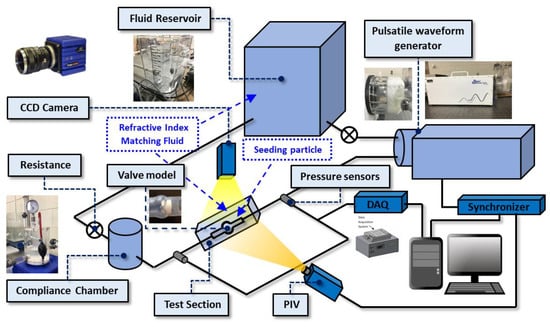
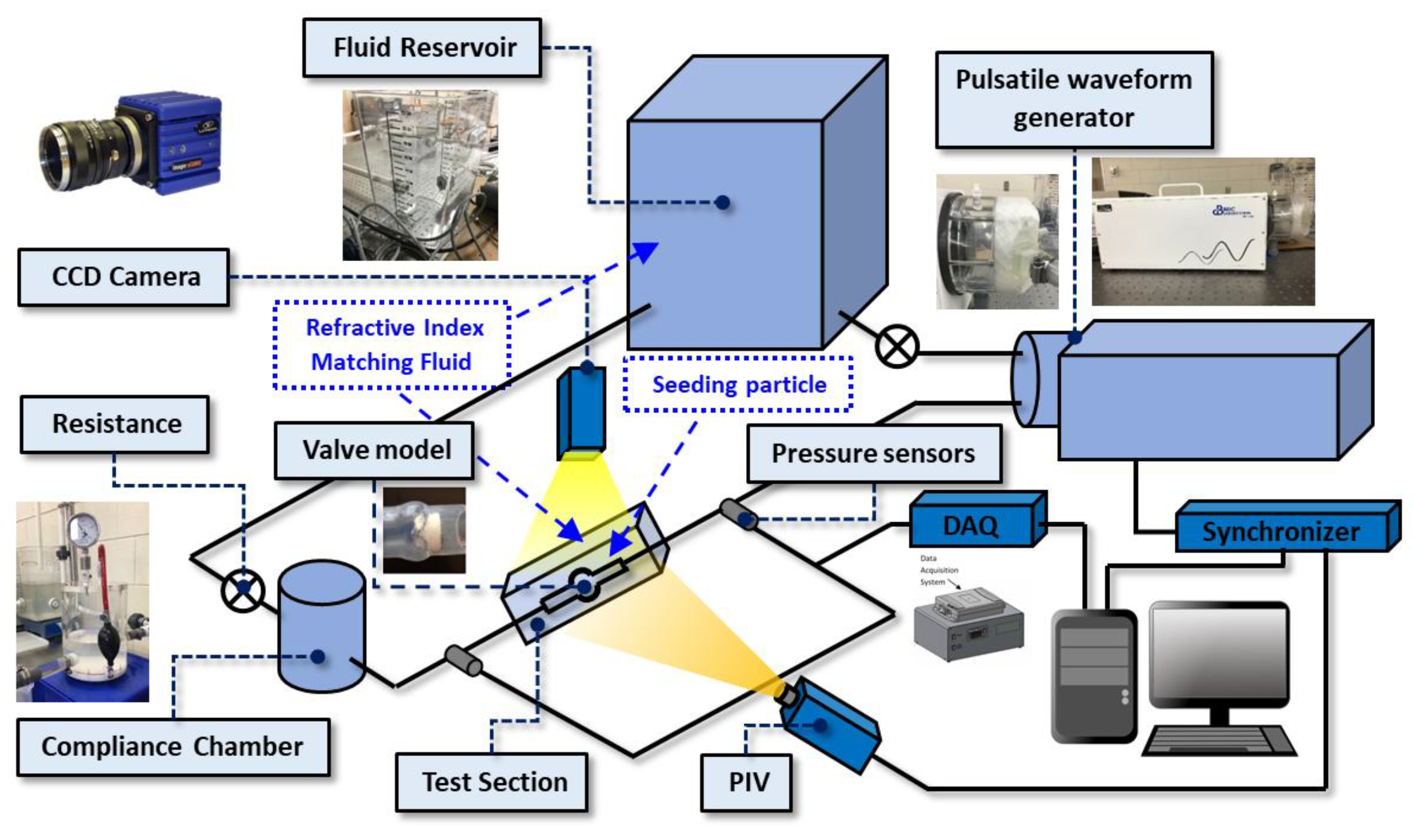

Disclaimer/Publisher’s Note: The statements, opinions and data contained in all publications are solely those of the individual author(s) and contributor(s) and not of MDPI and/or the editor(s). MDPI and/or the editor(s) disclaim responsibility for any injury to people or property resulting from any ideas, methods, instructions or products referred to in the content. |
© 2026 by the authors. Licensee MDPI, Basel, Switzerland. This article is an open access article distributed under the terms and conditions of the Creative Commons Attribution (CC BY) license.