1. Introduction
Dental implants are a cornerstone in the rehabilitation of partially or completely edentulous patients, offering predictable function, esthetics, and long-term success [
1,
2]. Their clinical success relies on osseointegration, defined by Brånemark as a direct structural and functional connection between living bone and the implant surface [
3,
4,
5].
A major challenge in implant prosthodontics is controlling functional loads, which vary with implant angulation, splinting design, and fixture length. In vivo biting forces generate stresses and strains at the bone–implant interface and within the implant itself, and increased functional loading produces high stress gradients and bending moments in peri-implant bone and, may accelerate bone resorption [
6,
7]. While axial placement is traditionally considered ideal, several studies, including a meta-analysis by Ata Ali et al., report no significant difference in success rates or marginal bone loss between tilted and axial implants [
8,
9].Unlike natural teeth, dental implants lack a periodontal ligament and therefore transfer functional loads directly to the surrounding bone, making implant position and load orientation critical biomechanical considerations [
10]. Implant angulation is often necessary in cases of limited bone or proximity to vital structures, and studies have shown that tilt does not significantly increase peri-implant stress when prosthetic design is optimized [
8,
11,
12]. In resorbed ridges, bone availability often limits implant placement, and procedures such as sinus lifts increase treatment complexity. Short implants have been suggested as an alternative, but their biomechanical behavior remains debated. Some studies report higher stress and strain due to reduced bone–implant contact, whereas others show comparable or even lower marginal bone loss relative to longer implants [
13,
14,
15].
Overall, implant biomechanics are strongly influenced by prosthetic design factors such as angulation, splinting, and implant length. Several techniques have been used to study stress distribution, including photoelasticity, finite element analysis, strain gauge analysis, and more recently, Digital Photoelasticity and Digital Image Correlation (DIC) [
16,
17,
18,
19]. Unlike strain gauges, which capture strain at a single point, DIC provides full-field, non-contact strain measurement and has been increasingly applied in implant biomechanics [
20,
21]. However, limited studies exist on DIC-based evaluation of peri-implant strain. Earlier investigations by our group using DIC yielded promising insights, and this experience guided its refined application in the current work [
19].
This study aims to evaluate the strain and displacement generated on a simulated supporting bone model with splinted and non-splinted, parallel and angulated, short and conventional implants.
The null hypothesis of this in vitro study was that implant angulation, splinting, and implant length would not result in significant differences in peri-implant strain and displacement under axial and oblique loading conditions, as measured using digital image correlation.
2. Materials and Methods
This in vitro study evaluated the effect of implant angulation, splinting, and length on peri-implant strain and displacement using Digital Image Correlation (DIC). A stereolithographic mandibular model was designed from Cone Beam Computed Tomography (CBCT) data and printed in standard clear resin using a 3D printer (Formlabs Inc., Somerville, MA, USA) to simulate bone [
22,
23]. The mechanical properties of the 3D-printed resin (Formlabs Inc., Somerville, MA, USA) were characterized by the manufacturer with an elastic modulus of approximately 2.8 GPa and Poisson’s ratio of 0.30, which are within the range of D2–D3 bone used in prior in vitro models [
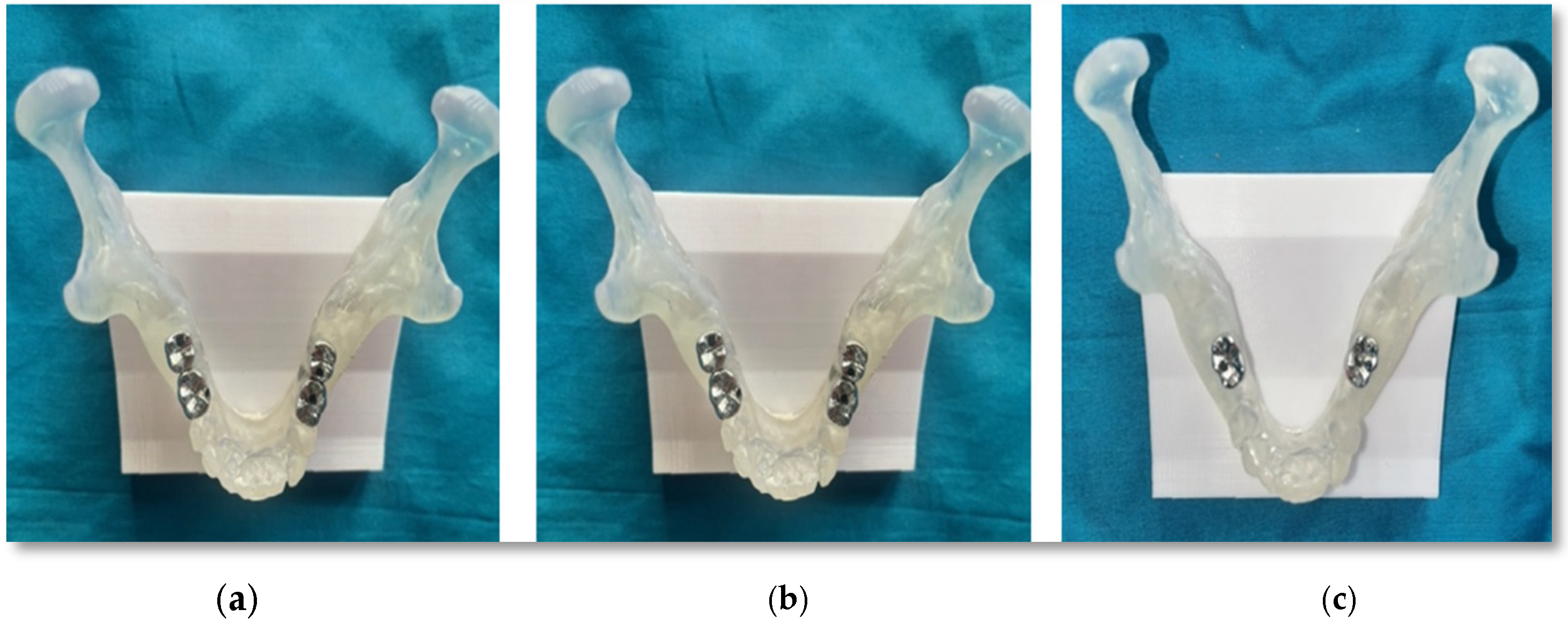
24]. Although this material does not replicate the anisotropy of cortical and trabecular bone, its homogeneous and isotropic nature enables consistent DIC measurement and inter-group comparison. These material characteristics were considered when interpreting the strain results and in discussing limitations. Three experimental comparisons were made: Group 1 included parallel and angulated implants (4.2 × 10 mm, ADIN Dental Implant Systems, Afula, Israel), Group 2 consisted of two parallel implants (4.2 × 10 mm) restored either as splinted and non-splinted crowns, and Group 3 compared short (4.2 × 6.25 mm) and long (4.2 × 13 mm) implants placed in parallel alignment. Each experimental group consisted of 5 samples per subgroup (
n = 5). To ensure reproducibility and completeness of the study, five repeated loading tests—comprising vertical (0°) and oblique (15° and 30°) directions—were performed on each prosthesis. This standardized repetition improves statistical reliability and minimizes measurement variability in DIC analysis [
25]. Screw-retained cobalt–chromium crowns were designed using Exocad DentalCAD 3.0 Galway (Darmstadt, Germany) with standardized occlusal morphology, and crowns were fabricated as a single casting. Final models for groups 1 to 3 are shown in
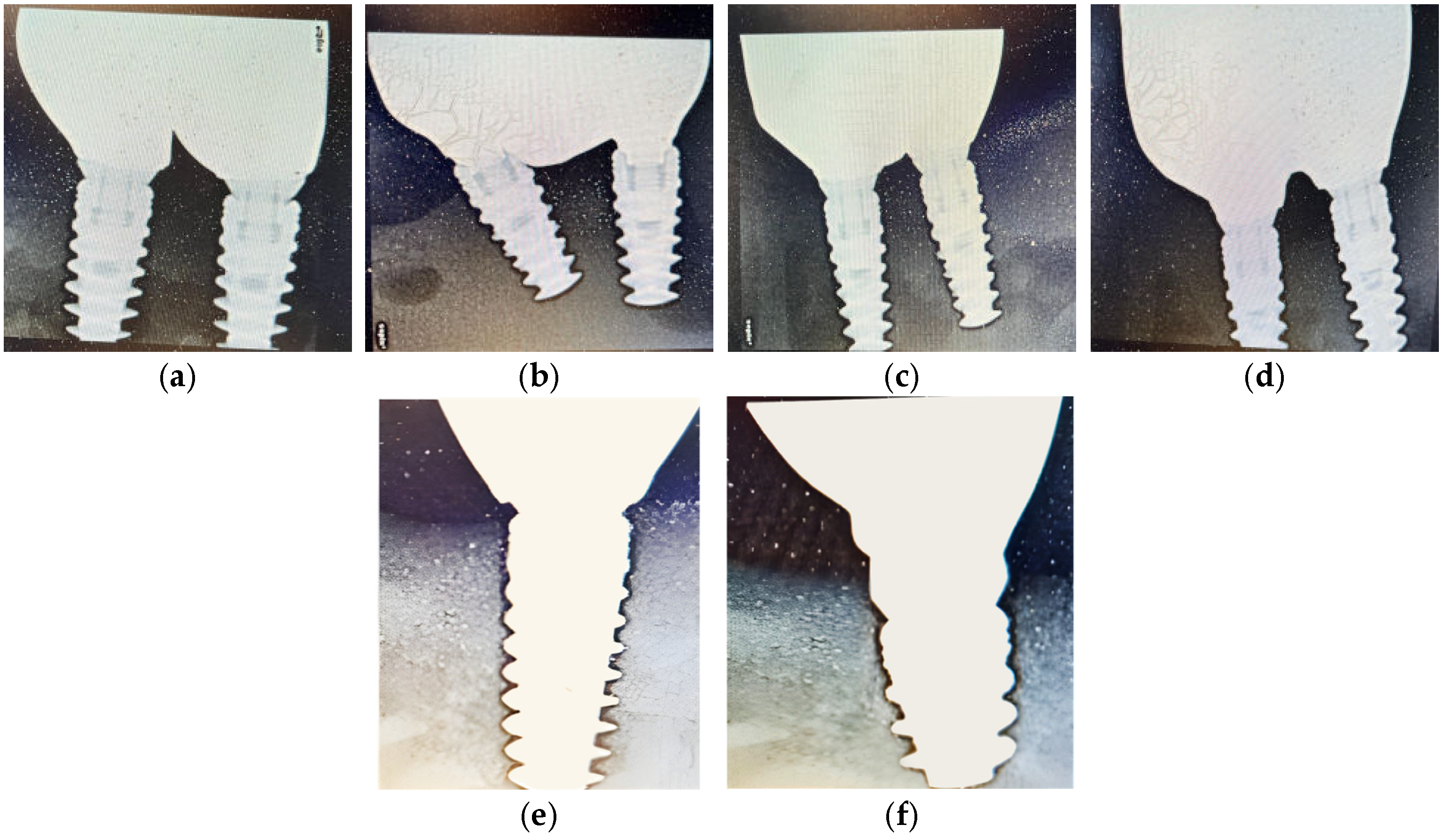
Figure 1, respectively. Radiographic images are obtained to check the correctness of the implantation process and angulations achieved (
Figure 2).
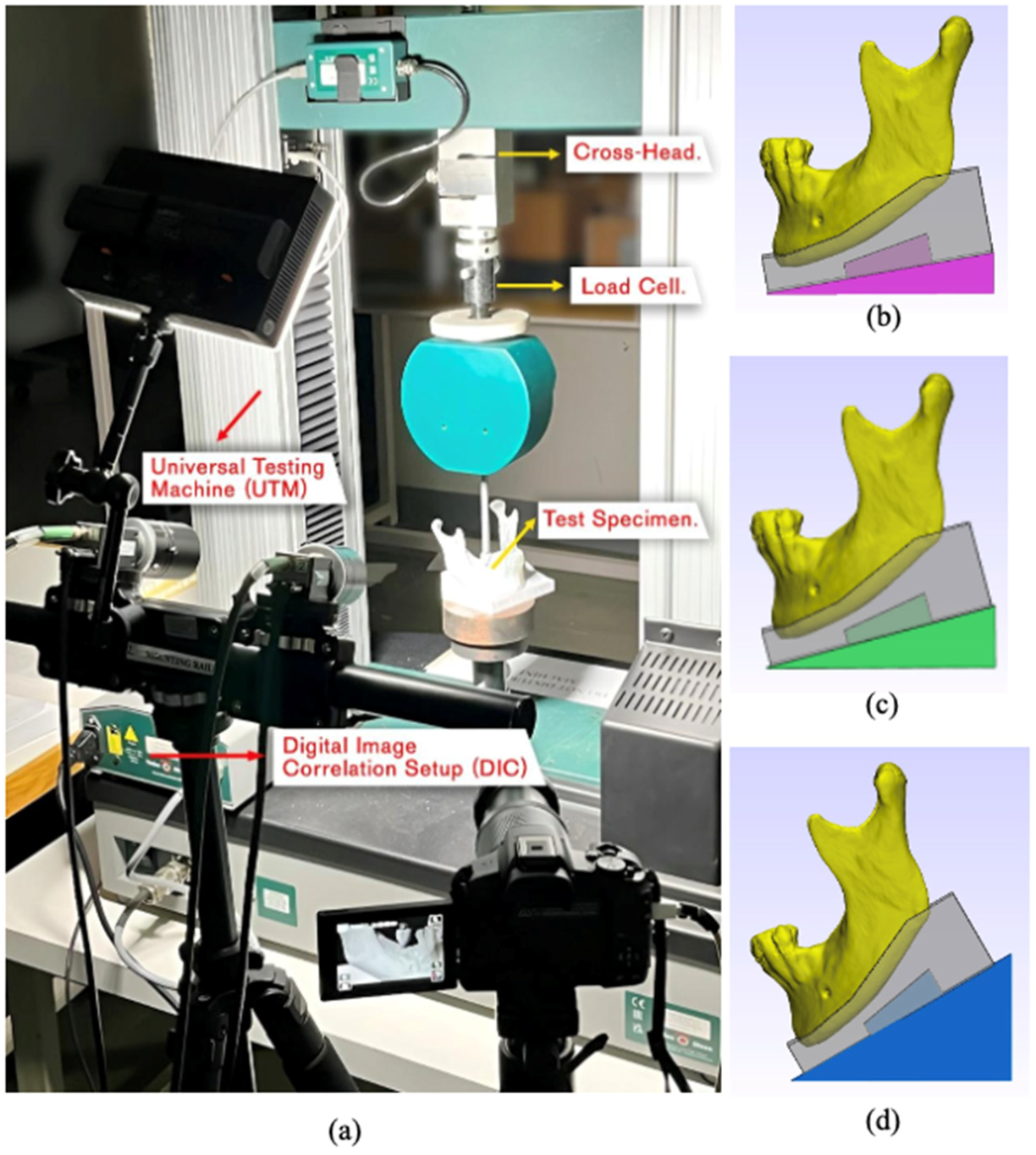
Angulated loading was achieved using custom-fabricated bases made of polylactic acid (PLA) produced via 3D printing, allowing precise and repeatable positioning of the models at the required inclinations. Each model was mounted on a Universal Testing Machine (Tinius Olsen 50STTM, Augsburg, Germany) and subjected to a load of 500 N at 0°, 15°, and 30° as shown in
Figure 3a–d.
For DIC measurement, the model surface was coated with a stochastic speckle pattern (white matte base, black spray overlay) and imaged during loading using a (Canon EOS 80D) DSLR camera (24.2 MP, Canon, Tokyo, Japan) under fixed lighting and exposure conditions. Strain and displacement fields were calculated using Istra 4D v4.8.2 software (Dantec Dynamics A/S, Skovlunde, Denmark), following established DIC protocols. Data were analyzed using descriptive statistics (mean, standard deviation, frequency, and percentage). Specific quantitative measurements were extracted at five standardized peri-implant zones: mesial, distal, crestal, middle (body), and apical regions. These data were used to evaluate how implant angulation and prosthetic configuration influenced strain and displacement patterns under different loading angles. For comparisons involving more than two groups, one-way ANOVA followed by Tukey’s multiple post hoc test was performed, while independent t-tests were used for comparisons between two groups with symmetrical distribution. A p-value < 0.05 was considered statistically significant, and all statistical analyses were performed using SPSS Statistics v30.0.
3. Results
The experimental models were analyzed for strain and displacement across varying implant angulations, splinting conditions, and implant lengths under different loading angulations.
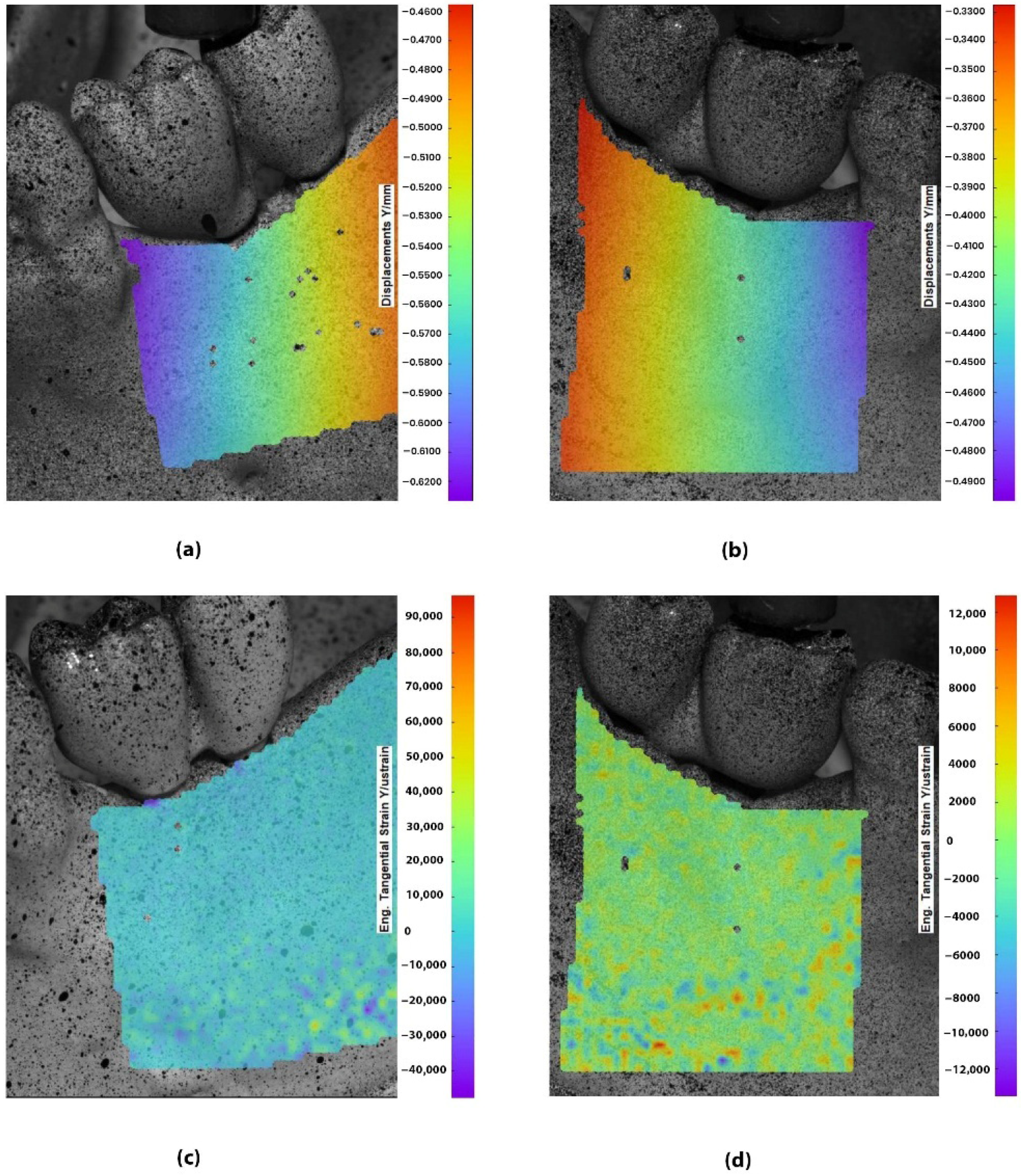
Figure 4 presents representative DIC results showing the displacement and strain contours obtained for one of the analyzed cases, i.e., in Group 1 for a 15° loading inclination.
Here, the whole field variations in the field variables (in this case, strain and displacement) are represented in color-coding form, and one can interpret the results by comparing the color information from that of the values given in the color bar.
Statistical analysis revealed significant differences in biomechanical behavior among the groups, highlighting the influence of implant configuration and loading angle on strain distribution and displacement patterns.
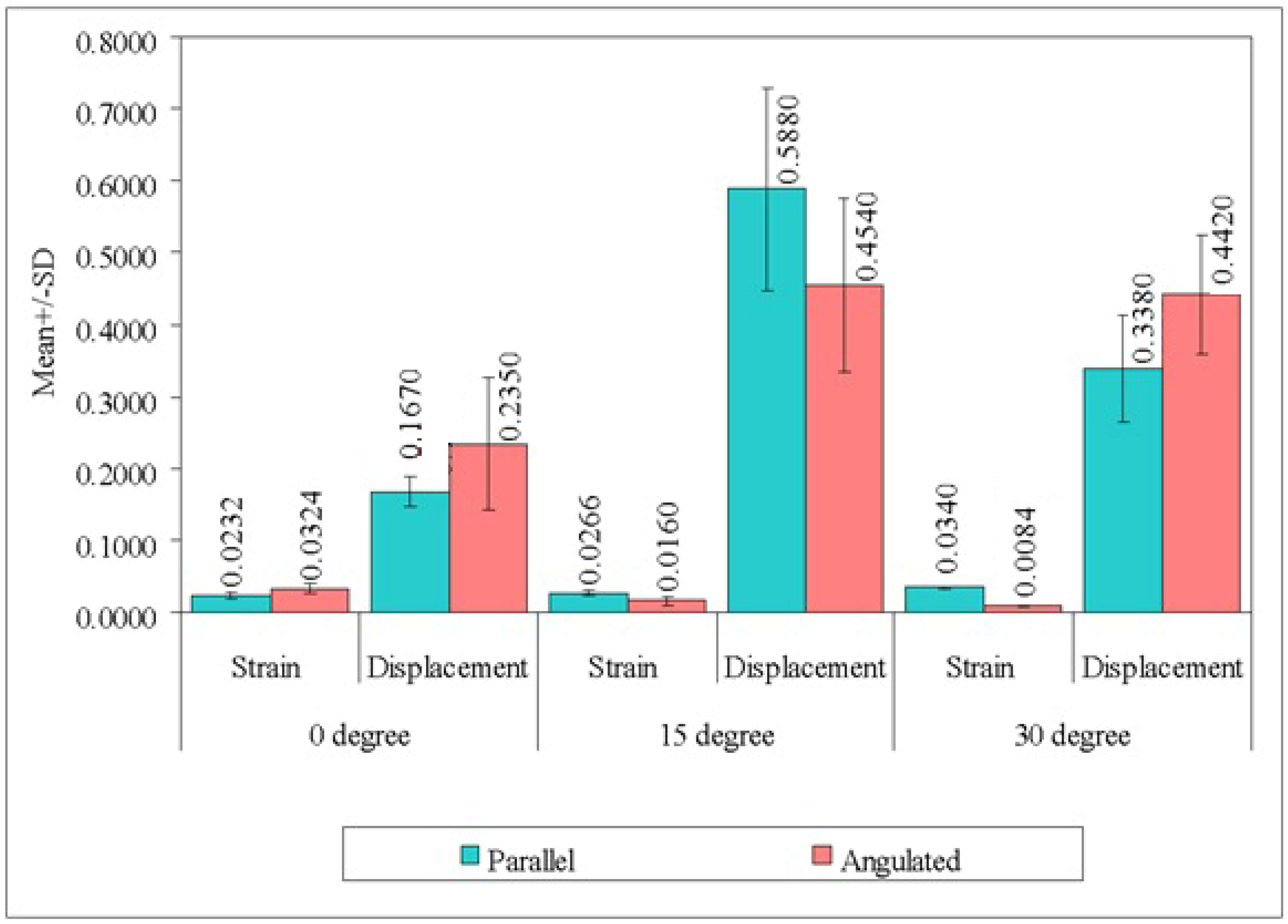
For parallel and angulated implants, strain analysis showed significant differences across loading angles, the quantitative comparison of peri-implant strain values across loading angulations for parallel and angulated implants is summarized in
Table 1. Parallel implants recorded the highest mean strain at 30° (0.035 ± 0.0136), whereas angulated implants peaked at 0° (0.0324 ± 0.0073). Displacement also differed, with parallel implants showing the highest value at 15° (0.5880 ± 0.1404) and angulated implants at 15° (0.4540 ± 0.1210). Comparisons revealed that angulated implants produced higher strain at 0°, while parallel implants exceeded angulated values at 15° and more markedly at 30°. For displacement, angulated implants were higher at 0° and 30°, while parallel implants surpassed them at 15°. Representative strain and displacement fields for parallel and angulated implant configurations are presented in
Figure 5.
The 95% confidence intervals showed stable measurements within both configurations, though parallel implants exhibited wider variation at 30°. The large effect sizes (Cohen’s d > 2.0) confirmed meaningful biomechanical differences, with angulated implants demonstrating better adaptation to oblique forces.
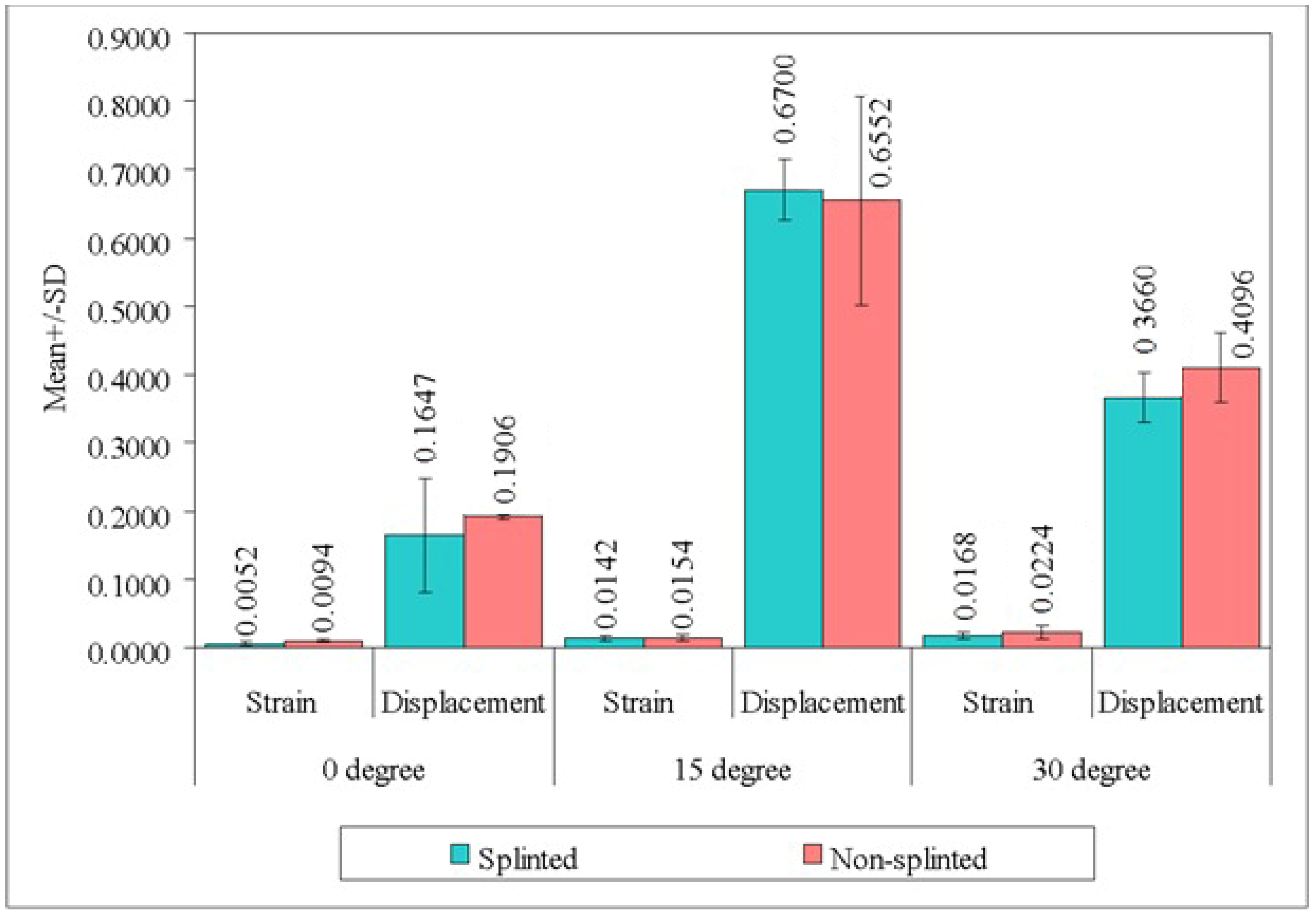
Splinted and non-splinted implants also demonstrated significant differences. The comparison of peri-implant strain values across different loading angulations for splinted and non-splinted restorations are presented in
Table 2. Splinted implants showed the highest mean strain at 30° (0.0168 ± 0.0040), while displacement peaked at 15° (0.6700 ± 0.0447). Non-splinted implants, however, consistently produced greater strain, with the highest at 30° (0.0224 ± 0.0096), and also recorded the greatest displacement at 15° (0.6552 ± 0.1520). Variability was more pronounced in non-splinted implants, particularly at 15°, as reflected by higher SD values. The strain and displacement distributions observed in splinted and non-splinted implant configurations are shown in
Figure 6.
The 95% confidence intervals show slightly wider variability for non-splinted restorations, particularly at 30°, indicating greater strain fluctuation under oblique loads. Cohen’s d values range from small to large (−0.27 to −1.48), demonstrating that splinted restorations generally experienced lower strain magnitudes, especially under axial loading (0°).
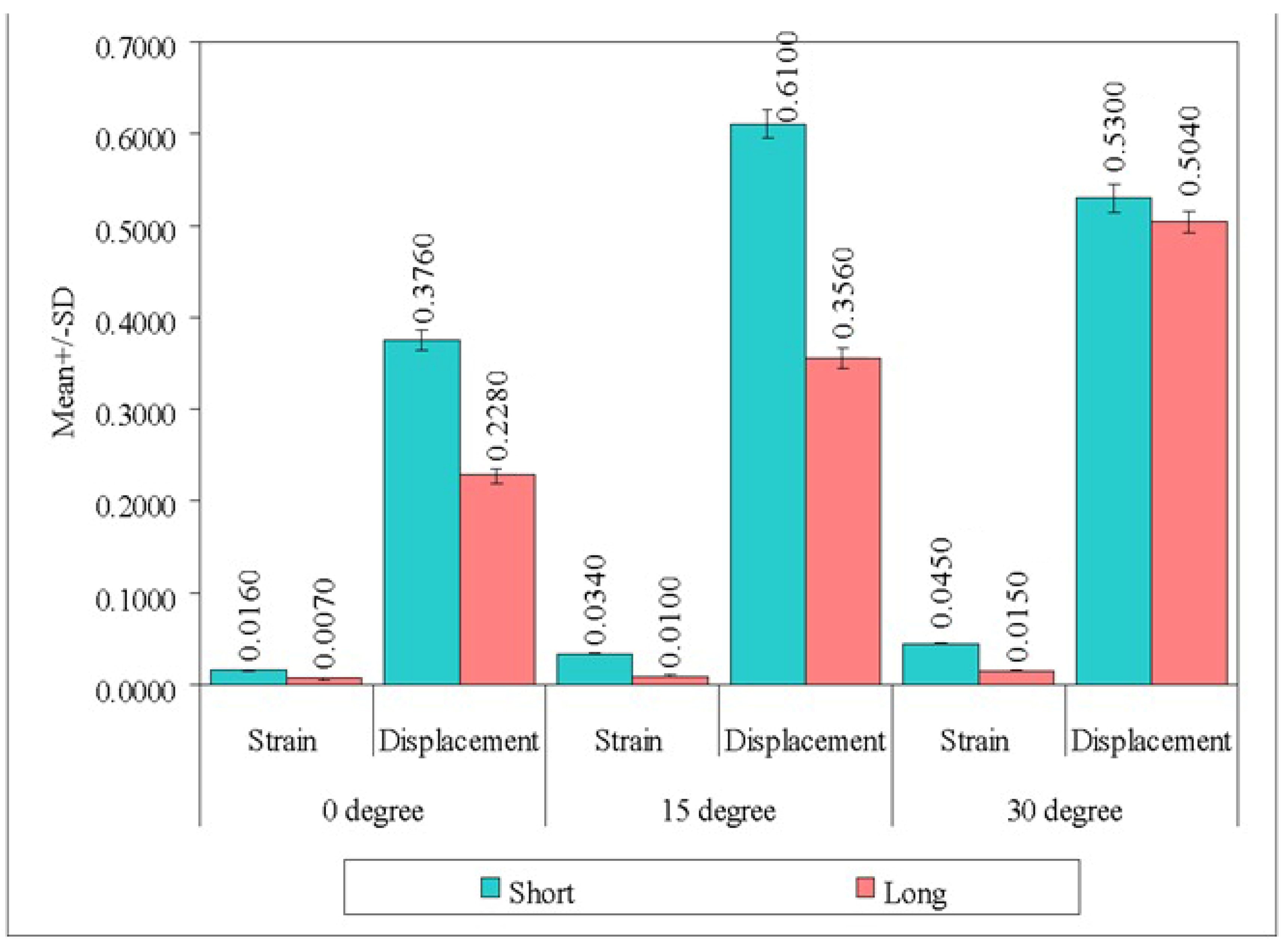
In short and long implants, strain differences were highly significant, with short implants consistently recording higher values at all angles, peaking at 30° (0.0450 ± 0.0007), compared to long implants, which peaked lower at 30° (0.0150 ± 0.0007). The comparison of peri-implant strain values across different loading angulations for short and long implants are presented in
Table 3. Displacement followed a similar pattern, with short implants showing markedly higher values across all angles, especially at 15° (0.6100 ± 0.0158), while long implants recorded lower displacement overall, though the highest was still at 30° (0.5040 ± 0.0114). A comparative visualization of strain and displacement behavior across implant configurations is provided in
Figure 7. The 95% confidence intervals show minimal variation within both short and long implant groups, reflecting high measurement precision. However, Cohen’s d values (12.9–42.9) indicate extremely large effect sizes, signifying a strong biomechanical difference between short and long implants under all loading conditions.
Overall, significant differences were observed between 0° vs. 30° (p = 0.0001) and 15° vs. 30° (p = 0.0001), with standard deviations remaining stable in most groups.
4. Discussion
The success of dental implant restorations depends on biomechanical factors such as implant design, prosthetic components, and load distribution at the implant–bone interface. Predictable outcomes require careful consideration of implant geometry, length, diameter, angulation, and prosthetic design.
The homogeneous 3D-printed resin model served as a valid platform for evaluating peri-implant biomechanics, as it enabled controlled, reproducible, and quantitative comparison of strain and displacement across implant configurations. The mechanical properties of the standard photopolymer resin (elastic modulus ≈ 2.8 GPa; Poisson’s ratio ≈ 0.30) approximate those of D2-D3 bone, making it an acceptable analog for relative stress–strain behavior [
24]. Its isotropic, dimensionally stable nature minimizes variability from bone heterogeneity and enhances the precision of Digital Image Correlation (DIC) analysis by ensuring that strain variations arise from implant design rather than material inconsistencies.
These material limitations imply that the absolute strain and displacement values obtained should be interpreted with caution. The homogeneous resin substrate tends to produce sharper, localized strain gradients since it lacks the natural damping and adaptive remodeling capacity of living bone. Therefore, the results are best understood as comparative indicators of how angulation, splinting, or implant length influence load transfer, rather than as predictors of exact clinical magnitudes. In vivo, biological adaptation and heterogeneous bone density would likely attenuate the peak strain values observed under static conditions, but the relative trends among experimental groups remain valid for understanding peri-implant biomechanics.
This study evaluated three key variables-implant angulation, splinting, and implant length, under loads up to 500 N. Functional forces on implants typically range from 140–390 N [
26], though values up to 900 N have been reported [
27], underscoring the importance of designing for high occlusal loads. A load of 500 N was applied based on literature data as an upper physiological limit of masticatory force, consistent with previous in vitro studies [
28], to simulate clinically relevant high-load conditions. Using this higher load allows assessment of implant performance under worst-case functional conditions, thereby providing a conservative safety margin. Although true masticatory loading is dynamic and multidirectional, static testing under a standardized 500 N force enables assessment of implant behavior under conservative worst-case conditions while ensuring reproducibility.
Loads were applied at 0°, 15°, and 30° to replicate axial and oblique forces. While 0° represented ideal loading, 15° and 30° simulated realistic off-axis conditions. Petris et al. reported altered stress at 15° [
29], and Goellner et al. showed increased peri-implant stress at 30° [
30], supporting the clinical relevance of this range.
Digital Image Correlation (DIC) was used to measure strain and displacement. Unlike strain gauges that record single-point values, DIC provides full-field, non-contact analysis, allowing more accurate visualization of stress distribution across the implant–bone complex.
Parallel implants showed lower strain under axial loading but higher strain under oblique forces compared to angulated implants. In contrast, angulated implants, particularly at 15°, appeared better aligned with off-axis loads. This was associated with reduced strain concentration in the present in vitro model, indicating altered load transfer behavior under off-axis loading. These findings are consistent with FEA observations by Tabrizi et al. and Zampelis et al., who reported that implant angulation does not necessarily increase bone stress when prosthetic design is optimized. The displacement trends further highlighted this relationship: while parallel implants recorded greater displacement at 15°, values at 30° appeared to decline sharply. Importantly, this reduction does not indicate improved mechanical stability but reflects a biomechanical shift wherein oblique forces generate rotational moments rather than linear translation. Such rotational loading produces bending stresses around the implant axis, particularly in parallel configurations, and may compromise peri-implant bone despite seemingly lower displacement values. The displacement trends also suggest that angulated implants exhibit more controlled linear displacement under oblique forces within the tested mechanical model, though potential rotational stresses should be considered [
8,
31]. Building on this, the role of prosthetic connection and load sharing becomes equally important, particularly when implants are placed in compromised anatomical situations.
Splinted configurations consistently reduced both strain and displacement compared to non-splinted counterparts, supporting their role in load sharing and stress mitigation. Finite element analyses by Lemos et al. and de Souza Batista et al. similarly demonstrated that splinting reduces stress at the crestal bone and implant–abutment interface by 20–30% [
13,
32]. However, literature such as Yilmaz et al. also notes that splinting may not always yield statistically significant differences in marginal bone loss, highlighting the role of case-specific factors [
33]. Interestingly, in both splinted and non-splinted groups, displacement values also decreased at 30°, though this was attributable to the same moment-induced loading phenomenon rather than genuine biomechanical stability. These results emphasize that while splinting offers a clear biomechanical advantage in dissipating functional loads, torque and bending stresses at high angulations remain a persistent risk that cannot be captured by linear displacement measures alone. Nevertheless, in cases with limited inter-implant space or hygiene challenges, individual crowns may still be indicated; thus, the decision to splint should balance mechanical advantage against prosthetic maintenance and accessibility.
Given these biomechanical benefits, it is also relevant to consider how implant length further modifies strain distribution, since fixture dimensions directly influence the magnitude of stress transferred to bone. Short implants recorded higher strain and displacement across all loading angles, reflecting the mechanical disadvantage of reduced bone–implant contact. Longer implants provided better stress distribution and positional stability, particularly under oblique loading. The DIC findings that short implants generated higher strain and displacement at all load angles are corroborated by FEA studies from Borie et al., Elfadaly et al., and Löhlein et al., all of which showed greater cortical stress and marginal strain around short fixtures due to reduced bone–implant contact area [
25,
34]. Nevertheless, clinical studies by Uehara et al. and Lemos et al. indicate that short implants can achieve survival rates comparable to longer ones when used in appropriate clinical scenarios with careful prosthetic planning [
13,
15].
Accordingly, based on the statistically significant differences observed among the experimental groups, the null hypothesis that implant angulation, splinting, and implant length would not result in differences in peri-implant strain and displacement under axial and oblique loading conditions was rejected.
5. Limitations
The current in vitro study provides quantitative insight into peri-implant strain and displacement under controlled loading, several clinical considerations must be recognized when translating these results to patient care.
Although epoxy and resin-based models are widely used as bone analogs in implant biomechanics research, certain variations must be acknowledged when compared to natural bone. 3D-printed resin model is homogeneous, isotropic, and linearly elastic, whereas real bone is anisotropic and viscoelastic, with distinct cortical and cancellous layers that exhibit different stiffness, damping, and strain-adaptive responses. Consequently, the epoxy model cannot reproduce regional variations in bone density, trabecular orientation, or the time-dependent deformation and microcrack propagation observed in living bone under cyclic loading. Additionally, resin’s lack of a fluid phase eliminates the influence of marrow and vascular channels on energy dissipation and stress redistribution. These differences may result in slightly higher localized strain gradients in the in vitro model than would occur in vivo. Nevertheless, such models remain valuable for relative biomechanical comparisons, where experimental control and reproducibility are prioritized over absolute physiological replication. In the parallel and angulated implant groups, angulated implants demonstrated better adaptation to oblique forces compared to parallel configurations, suggesting potential biomechanical benefits in anatomically restricted regions such as the posterior maxilla or mandible. However, in clinical conditions, excessive implant angulation may compromise prosthetic path of insertion, screw access, and load transfer if not supported by an appropriate framework design.
In the splinted versus non-splinted groups, splinting reduced both strain and displacement, indicating improved load sharing and stress distribution. Clinically, this advantage must be balanced against hygiene maintenance challenges, prosthetic space limitations, and inter-implant divergence, which may preclude splinting in certain restorative scenarios.
For the short versus long implant comparison, longer implants consistently produced lower strain and displacement, reflecting superior load dissipation due to increased surface area and anchorage. Nonetheless, the choice of implant length in practice often depends on available bone height, sinus or nerve proximity, and patient-specific anatomic constraints. In such cases, short implants may still achieve clinical success with optimized prosthetic design and occlusal load management.
The interpretation of statistical effect sizes also warrants caution. The extremely large Cohen’s d values observed in certain comparisons, particularly between short and long implants, are largely attributable to the very small within-group standard deviations inherent to the controlled in vitro experimental setup and the homogeneous resin model. While these effect sizes are mathematically correct, they primarily reflect relative mechanical differences under standardized laboratory conditions rather than the true magnitude of clinical effect. In vivo, biological variability, bone heterogeneity, viscoelastic behavior, and adaptive remodeling would be expected to moderate such differences.
Finally, as with most in vitro biomechanical investigations, this study employed static loading on 3D-printed resin models to ensure controlled and reproducible conditions for strain analysis. While this approach provides valuable quantitative insight into peri-implant load behavior, it does not replicate the complex biological responses of bone remodeling or the viscoelastic nature of peri-implant tissues. Future in vivo and dynamic loading studies can further expand on these findings to correlate laboratory results with clinical performance.
6. Conclusions
Within the limitations of this in vitro study, implant angulation, splinting, and implant length were associated with differences in peri-implant strain and displacement under axial and oblique loading conditions. Angulated implants tended to exhibit lower strain concentrations under off-axis loading compared to parallel configurations, while splinted restorations were associated with reduced strain and displacement relative to non-splinted designs. Longer implants generally demonstrated more favorable biomechanical behavior than short implants across the tested loading angulations.
Collectively, these observations provide comparative biomechanical insight into how implant geometry may influence load transfer and strain distribution under controlled conditions. The rotational behavior observed at higher loading inclinations suggests a transition from predominantly translational to combined angular deformation, within the limitations of an in vitro model.