Electrochemical Evaluation of Ag–CaP–ZrO2 Composite Coatings on Ti6Al4V for Enhanced Corrosion Resistance in Dental Implants


Abstract
1. Introduction
2. Materials and Methods
2.1. Specimen Preparation
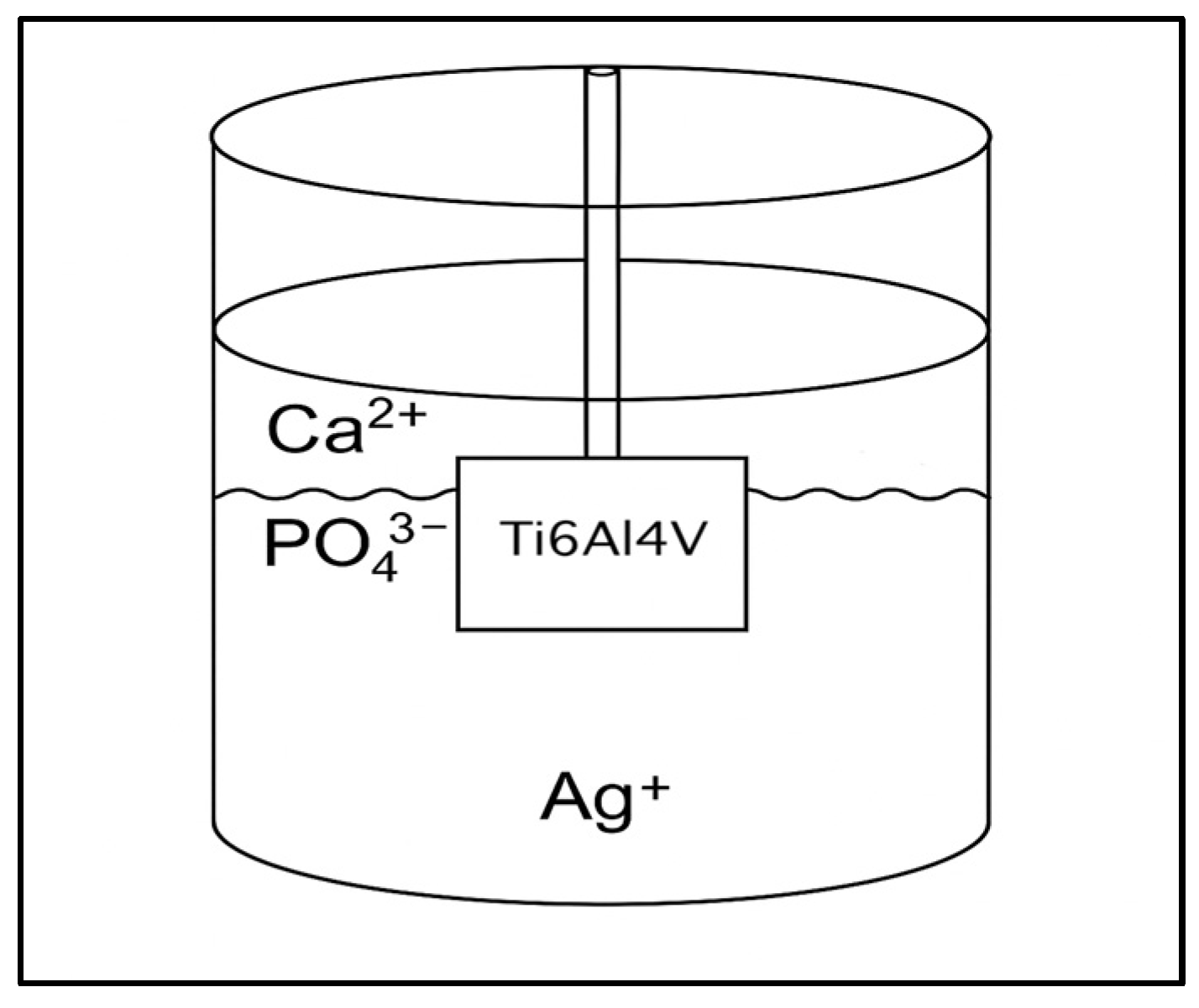
2.2. Preparation of CaP and CaP/Ag Coatings
2.3. Preparation of an Aqueous Zirconium Chloride Solution from ZrO2
2.4. Electrochemical Characterization
2.4.1. Preparation of Test Solutions
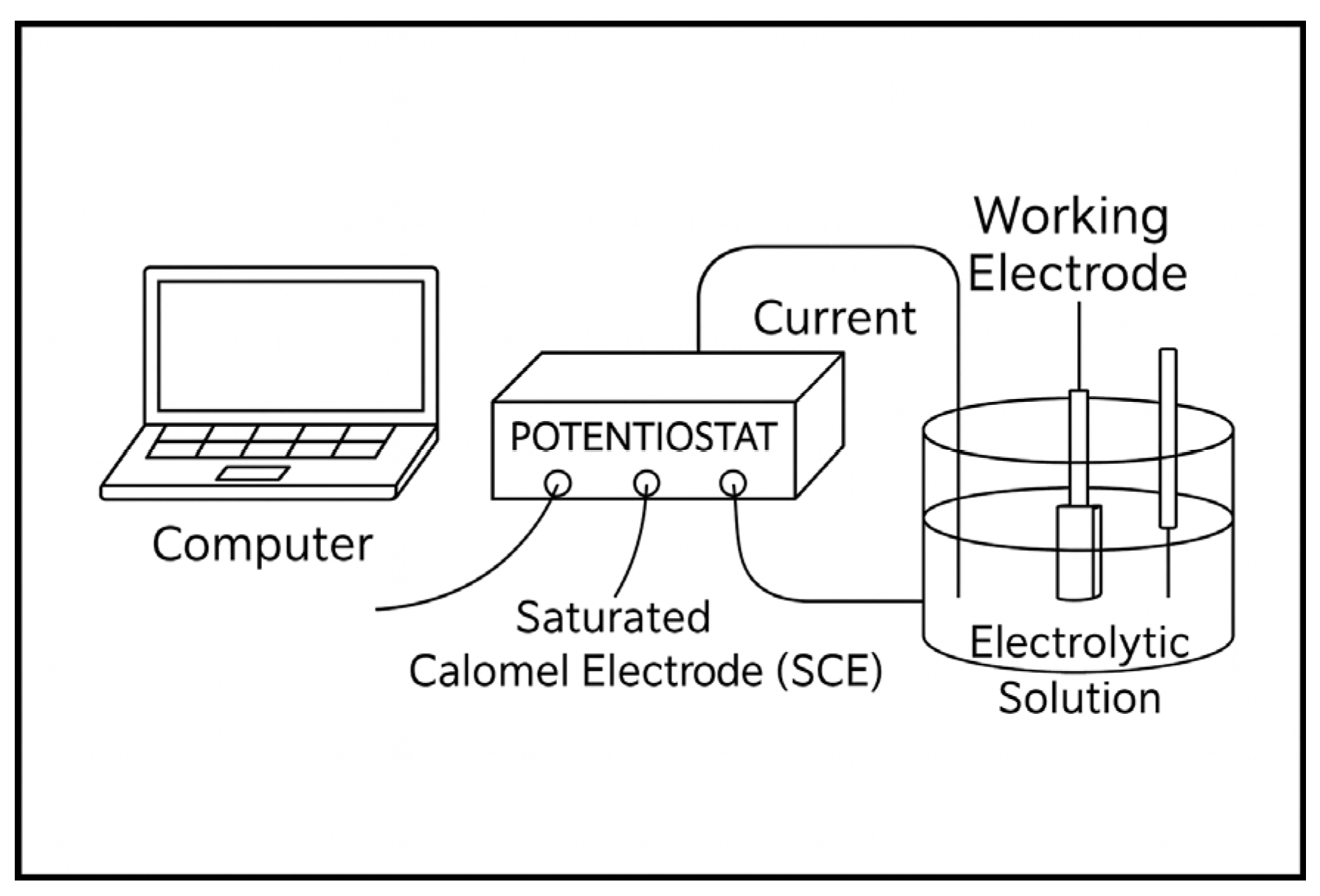
2.4.2. Electrochemical Test
3. Results
3.1. Electrochemical Evaluation
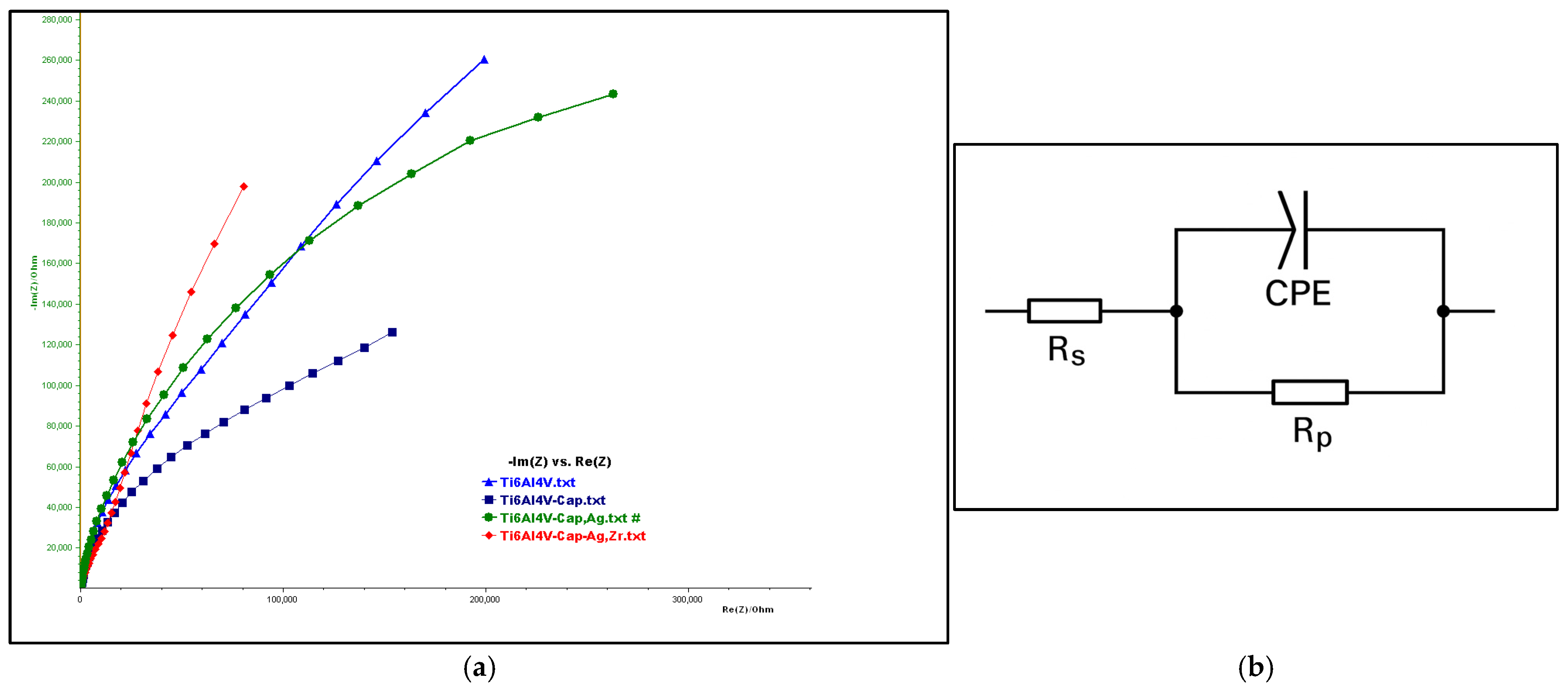
Electrochemical Impedance Spectroscopy (EIS)
3.2. Morphological Characterization of Surfaces
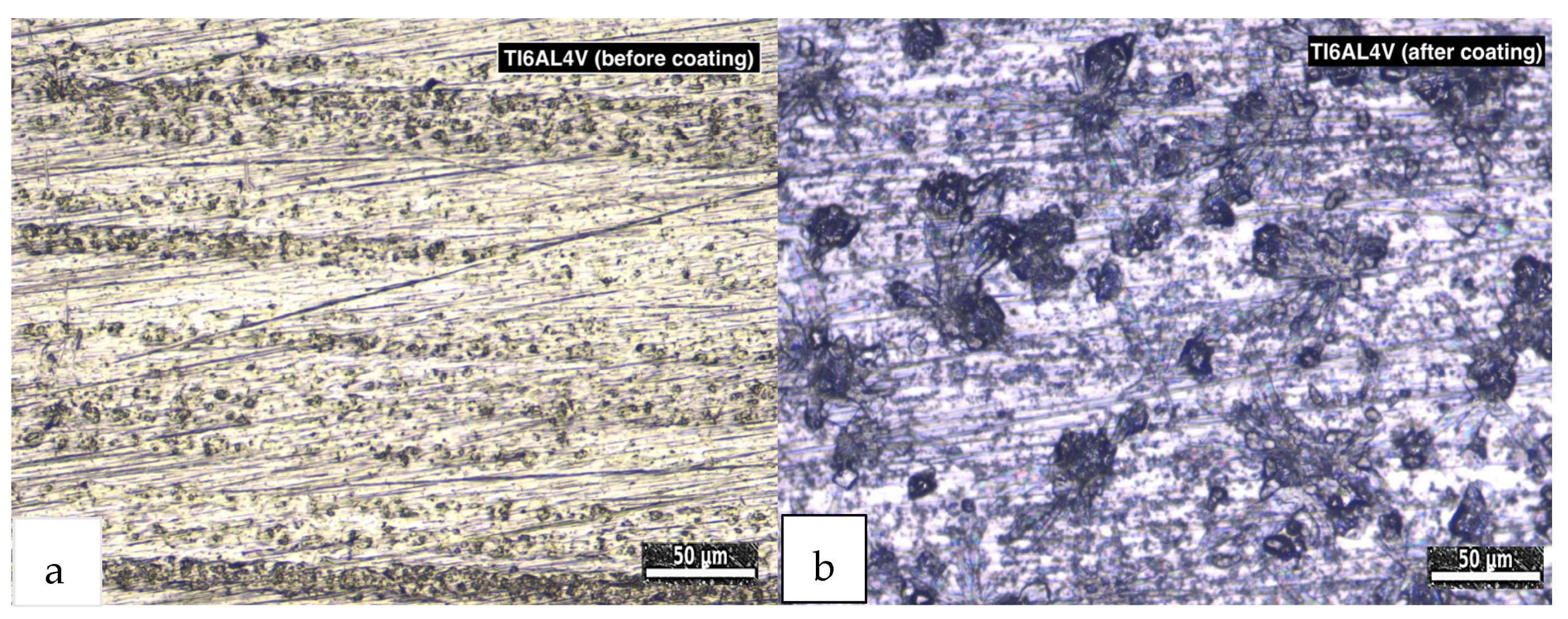
3.2.1. Observations Performed with a Nikon Microscope
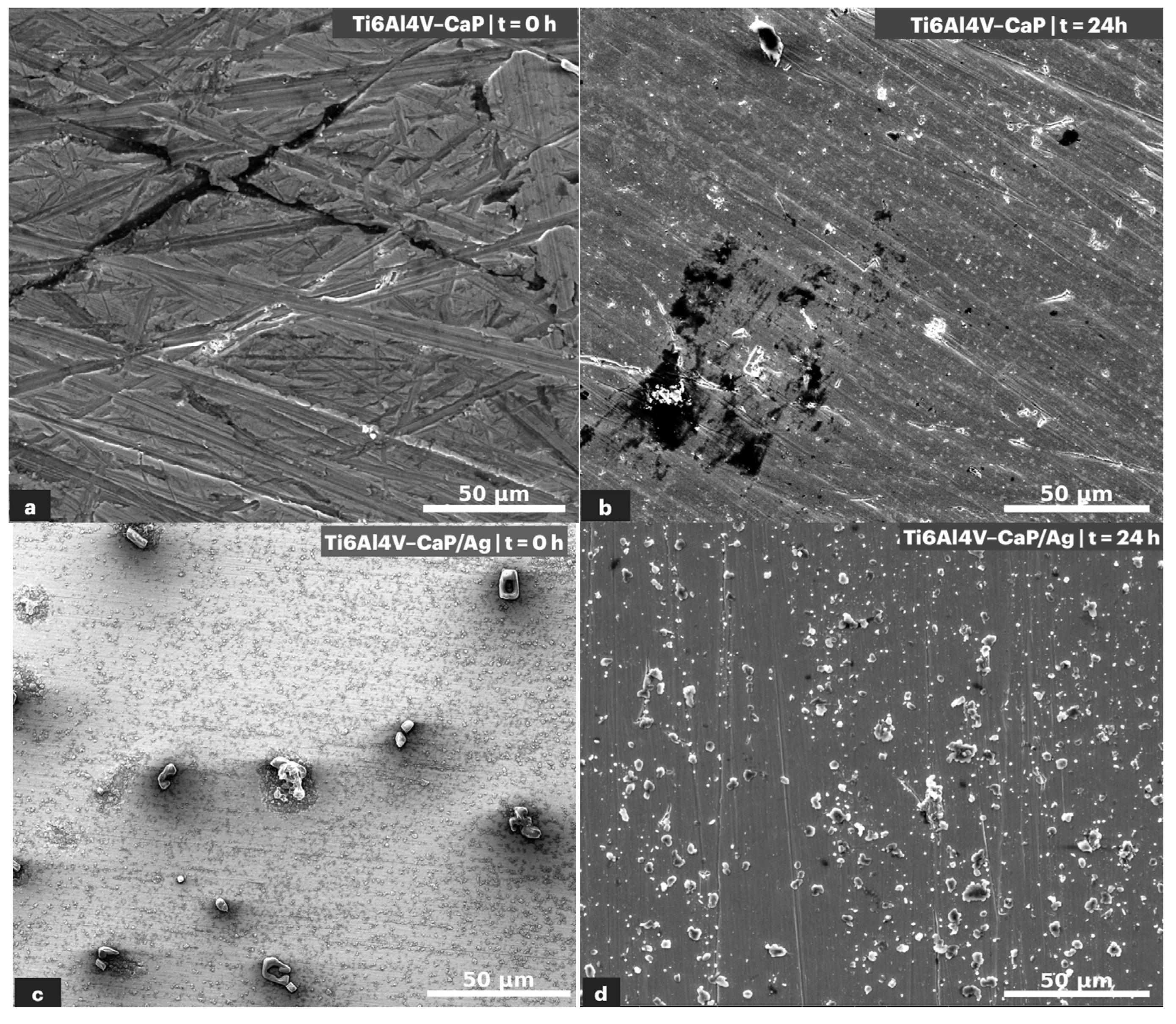
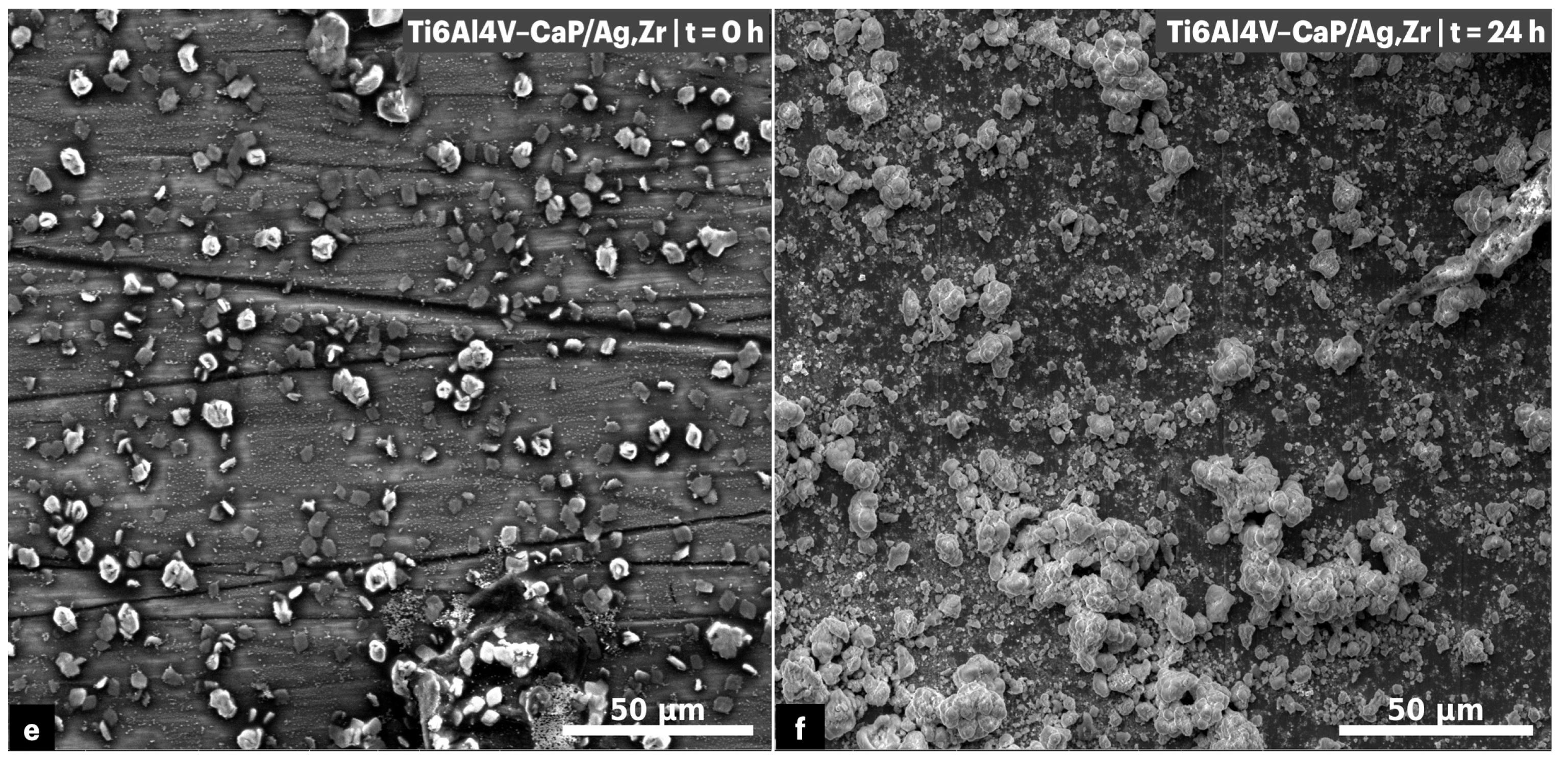
3.2.2. SEM Observations
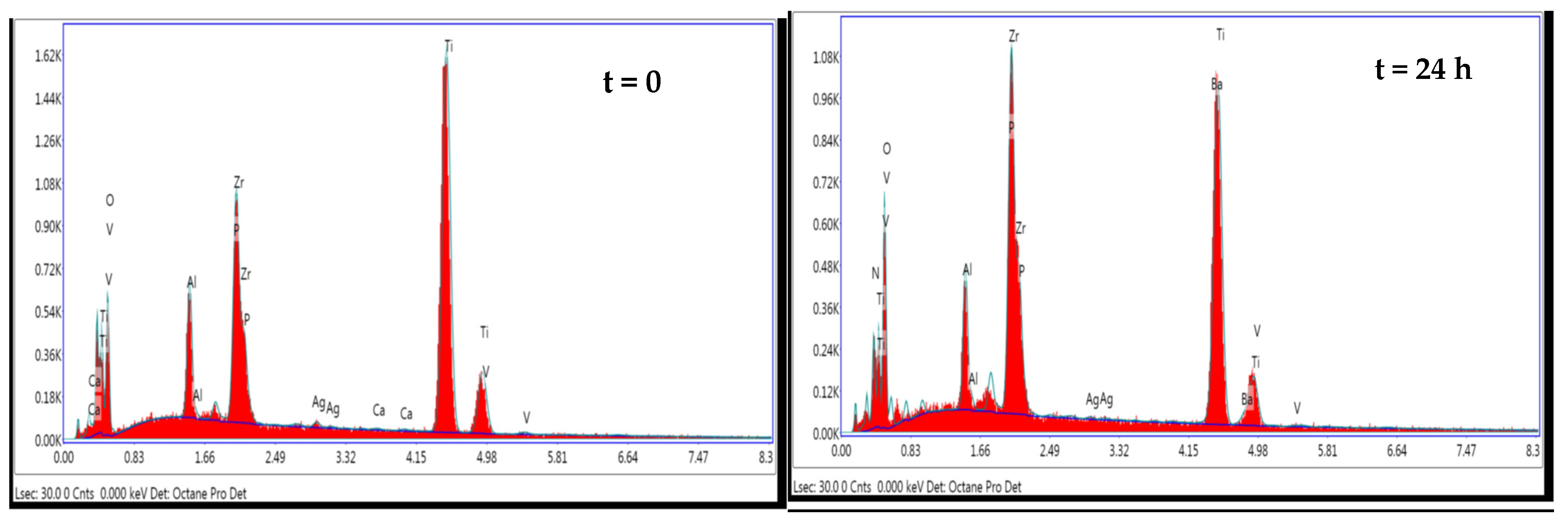
3.3. Chemical Characterization by EDS
4. Discussion
4.1. Effect of CaP Coating
4.2. Effect of Ag Incorporation
- (1)
- Ag+ ions interact with phosphate species (PO43−) at the titanium/solution interface, forming Ag3PO4-like compounds that act as local barrier sites against ionic diffusion;
- (2)
- the presence of Ag+ promotes the formation of a denser and more homogeneous TiO2 passive layer, enhancing charge-transfer resistance and reducing ionic permeability.
4.3. Synergistic Effect of Ag and Zr
4.4. Correlation with Literature and Overall Interpretation
5. Conclusions
Author Contributions
Funding
Institutional Review Board Statement
Informed Consent Statement
Data Availability Statement
Acknowledgments
Conflicts of Interest
Abbreviations
| ZrO2 | Zirconium Dioxide |
| HCl | Hydrochloric Acid |
| CP-Ti | Commercially Pure Titanium |
| CaP | Calcium Phosphate |
| SBF | Simulated Body Fluid |
| AS | Artificial Saliva |
| EIS | Electrochemical Impedance Spectroscopy |
| Rp | Polarization Resistance |
| OCP | Open Circuit Potential |
| SEM | Scanning Electron Microscopy |
| EDS | Energy-Dispersive X-ray Spectroscopy |
| Ecorr | Corrosion Potential |
| Icorr | Corrosion Current Density |
| WE | Working Electrode |
| RE | Reference Electrode |
| CE | Counter Electrode |
| SCE | Saturated Calomel Electrode |
References
- Tardelli, J.D.C.; da Costa Valente, M.L.; de Oliveira, T.T.; Dos Reis, A.C. Influence of chemical composition on cell viability on titanium surfaces: A systematic review. J. Prosthet. Dent. 2021, 125, 421–425. [Google Scholar] [CrossRef] [PubMed]
- Shahriyari, F.; Taghiabadi, R.; Razaghian, A.; Mahmoudi, M. Effect of friction hardening on the surface mechanical properties and tribological behavior of biocompatible Ti-6Al-4V alloy. J. Manuf. Process. 2018, 31, 776–786. [Google Scholar] [CrossRef]
- Howe, M.-S.; Keys, W.; Richards, D. Long-term (10-year) dental implant survival: A systematic review and sensitivity meta-analysis. J. Dent. 2019, 84, 9–21. [Google Scholar] [CrossRef] [PubMed]
- Buser, D.; Janner, S.F.; Wittneben, J.G.; Brägger, U.; Ramseier, C.A.; Salvi, G.E. 10-year survival and success rates of 511 titanium implants with a sandblasted and acid-etched surface: A retrospective study in 303 partially edentulous patients. Clin. Implant. Dent. Relat. Res. 2012, 14, 839–851. [Google Scholar] [CrossRef]
- Duraccio, D.; Mussano, F.; Faga, M.G. Biomaterials for dental implants: Current and future trends. J. Mater. Sci. 2015, 50, 4779–4812. [Google Scholar] [CrossRef]
- Jung, R.E.; Zembic, A.; Pjetursson, B.E.; Zwahlen, M.; Thoma, D.S. Systematic review of the survival rate and the incidence of biological, technical, and aesthetic complications of single crowns on implants reported in longitudinal studies with a mean follow-up of 5 years. Clin. Oral Implant. Res. 2012, 23, 2–21. [Google Scholar] [CrossRef]
- D’haese, J.; Ackhurst, J.; Wismeijer, D.; De Bruyn, H.; Tahmaseb, A. Current state of the art of computer-guided implant surgery. Periodontology 2000 2017, 73, 121–133. [Google Scholar] [CrossRef]
- Lee, C.-T.; Huang, Y.-W.; Zhu, L.; Weltman, R. Prevalences of peri-implantitis and peri-implant mucositis: Systematic review and meta-analysis. J. Dent. 2017, 62, 1–12. [Google Scholar] [CrossRef]
- Smeets, R.; Stadlinger, B.; Schwarz, F.; Beck-Broichsitter, B.; Jung, O.; Precht, C.; Kloss, F.; Gröbe, A.; Heiland, M.; Ebker, T. Impact of dental implant surface modifications on osseointegration. BioMed Res. Int. 2016, 2016, 6285620. [Google Scholar] [CrossRef]
- Coondoo, I.; Satapathy, S.; Panwar, N. Structural, microstructural, ferroelectric and photoluminescent properties of praseodymium modified Ba0.98Ca0.02Zr0.02Ti0.98O3 ceramics. Ceram. Int. 2018, 44, 1690–1698. [Google Scholar]
- Robo, C.; Öhman-Mägi, C.; Persson, C. Long-term mechanical properties of a novel low-modulus bone cement for the treatment of osteoporotic vertebral compression fractures. J. Mech. Behav. Biomed. Mater. 2021, 118, 104437. [Google Scholar] [CrossRef]
- Le Guéhennec, L.; Soueidan, A.; Layrolle, P.; Amouriq, Y. Surface treatments of titanium dental implants for rapid osseointegration. Dent. Mater. 2007, 23, 844–854. [Google Scholar] [CrossRef] [PubMed]
- Li, X.; Liu, D.; Xiao, Z.; Zhao, Y.; Han, S.; Chen, B.; Dai, J. Scaffold-facilitated locomotor improvement post complete spinal cord injury: Motor axon regeneration versus endogenous neuronal relay formation. Biomaterials 2019, 197, 20–31. [Google Scholar] [CrossRef] [PubMed]
- Zhang, Z.; Chen, H.; Wang, Y.; Wang, G.; Li, L.; Zhong, M.; Bai, H. Effect of sodium silicate binder on the performance of ceramic coatings on copper prepared by the slurry method. Surf. Coat. Technol. 2022, 448, 128868. [Google Scholar] [CrossRef]
- Landolt, D.; Mischler, S. Tribocorrosion of Passive Metals and Coatings; Elsevier: Amsterdam, The Netherlands, 2011. [Google Scholar]
- Souza, J.; Barbosa, S.; Ariza, E.; Celis, J.-P.; Rocha, L. Simultaneous degradation by corrosion and wear of titanium in artificial saliva containing fluorides. Wear 2012, 292, 82–88. [Google Scholar] [CrossRef]
- Toptan, F.; Alves, A.; Pinto, A.; Ponthiaux, P. Tribocorrosion behavior of bio-functionalized highly porous titanium. J. Mech. Behav. Biomed. Mater. 2017, 69, 144–152. [Google Scholar] [CrossRef]
- Fangaia, S.I.G. Tribological Study of Metal Alloys Subject to Dental Wear. Ph.D. Thesis, Universidade de Coimbra (Portugal), Coimbra, Portugal, 2022. [Google Scholar]
- Aissi, M.; Tayyaba, Q.; Er-Ramly, A.; Hermawan, H.; Merzouk, N. Improving the clinical performance of dental implants through advanced surface treatments: The case of Ti and ZrO2 coatings. Metals 2025, 15, 320. [Google Scholar] [CrossRef]
- Upadhyay, A.; Pradhan, L.; Yenurkar, D.; Kumar, K.; Mukherjee, S. Advancement in ceramic biomaterials for dental implants. Int. J. Appl. Ceram. Technol. 2024, 21, 2796–2817. [Google Scholar] [CrossRef]
- Körtvélyessy, G. The Impact of Different Cone-Angle Implant-Abutment Relationships on the Long-Term Success of Implant Restorations. Ph.D. Thesis, University of Szeged (Hungary), Szeged, Hungary, 2023. [Google Scholar]
- Tramontana, D. Custom Abutments for Dental Implants, Their Evolution and Uses: A Narrative Review. Master’s Thesis, Universidade Fernando Pessoa, Porto, Portugal, 2022. [Google Scholar]
- López-Valverde, N.; López-Valverde, A.; Aragoneses, J.M.; Macedo de Sousa, B.; Rodrigues, M.J.; Ramírez, J.M. Systematic review and meta-analysis of the effectiveness of calcium-phosphate coating on the osseointegration of titanium implants. Materials 2021, 14, 3015. [Google Scholar] [CrossRef] [PubMed]
- Medina, E.L.; Vaca-González, J.; Aperador, W.; Ramtani, S.; Falentin-Daudre, C.; Garzón-Alvarado, D. Review of Advanced Coatings for Metallic Implants: A Study/Proposal on Yttria-Stabilized Zirconia and Silver-Doped Hydroxyapatite. JOM 2025, 77, 5345–5361. [Google Scholar] [CrossRef]
- Neto, J.V.C.; Teixeira, A.B.V.; Dos Reis, A.C. Hydroxyapatite coatings versus osseointegration in dental implants: A systematic review. J. Prosthet. Dent. 2025, 134, 92–99. [Google Scholar] [CrossRef]
- Damerau, J.M.; Bierbaum, S.; Wiedemeier, D.; Korn, P.; Smeets, R.; Jenny, G.; Nadalini, J.; Stadlinger, B. A systematic review on the effect of inorganic surface coatings in large animal models and meta-analysis on tricalcium phosphate and hydroxyapatite on periimplant bone formation. J. Biomed. Mater. Res. Part B Appl. Biomater. 2022, 110, 157–175. [Google Scholar] [CrossRef]
- Kose, N.; Otuzbir, A.; Pekşen, C.; Kiremitçi, A.; Doğan, A. A silver ion-doped calcium phosphate-based ceramic nanopowder-coated prosthesis increased infection resistance. Clin. Orthop. Relat. Res.® 2013, 471, 2532–2539. [Google Scholar] [CrossRef]
- Pardun, K.; Treccani, L.; Volkmann, E.; Streckbein, P.; Heiss, C.; Destri, G.L.; Marletta, G.; Rezwan, K. Mixed zirconia calcium phosphate coatings for dental implants: Tailoring coating stability and bioactivity potential. Mater. Sci. Eng. C 2015, 48, 337–346. [Google Scholar] [CrossRef]
- Kedia, S.; Das, A.; Patro, B.; Nilaya, J. Potential tribological and antibacterial benefits of pulsed laser-deposited zirconia thin film on Ti6Al4V bio-alloy. Appl. Phys. A 2022, 128, 670. [Google Scholar] [CrossRef]
- García, I.; Trobajo, C.; Amghouz, Z.; Alonso-Guervos, M.; Díaz, R.; Mendoza, R.; Mauvezín-Quevedo, M.; Adawy, A. Ag-and Sr-enriched nanofibrous titanium phosphate phases as potential antimicrobial cement and coating for a biomedical alloy. Mater. Sci. Eng. C 2021, 126, 112168. [Google Scholar] [CrossRef] [PubMed]
- Parau, A.C.; Büyüksungur, S.; Li, G.; Liu, Q.; Badillo, E.; Blum, L.; Schmidt, J.; Pana, I.; Vitelaru, C.; Marinescu, I.M. Zn-doped CaP coating equips Ti implants with corrosion resistance, biomineralization, antibacterial and immunotolerant activities. J. Adv. Res. 2025. In Press. [Google Scholar] [CrossRef] [PubMed]
- Opavová, K.; Horkavcová, D.; Jablonská, E.; Mrázková, L.; Bašusová, A. Development of titania coatings containing calcium, phosphorus, and silver, applied via the sol–gel method and dip-coating technique. Mater. Adv. 2025, 6, 352–364. [Google Scholar] [CrossRef]
- Cesar, P.F.; de Paula Miranda, R.B.; Santos, K.F.; Scherrer, S.S.; Zhang, Y. Recent advances in dental zirconia: 15 years of material and processing evolution. Dent. Mater. 2024, 40, 824–836. [Google Scholar] [CrossRef]
- Kunrath, M.F.; Gupta, S.; Lorusso, F.; Scarano, A.; Noumbissi, S. Oral tissue interactions and cellular response to zirconia implant-prosthetic components: A critical review. Materials 2021, 14, 2825. [Google Scholar] [CrossRef]
- Sun, J.; Ding, Q.; Chen, Y.; Li, J.; Wang, Z.; Wei, Z.; Ge, X.; Zhang, L. Effects and underlying mechanism of micro-nano-structured zirconia surfaces on biological behaviors of human gingival fibroblasts under inflammatory conditions. Acta Biomater. 2024, 183, 356–370. [Google Scholar] [CrossRef]
- Ziyati, O.; Abou-Obeida, S.; Walim, Z.; El Boussiri, K. Hydroxyapatite-Coated Titanium Dental Implants. Open Access Libr. J. 2025, 12, 1–23. [Google Scholar] [CrossRef]
- Zhang, H.; Wu, Z.; Wang, Z.; Yan, X.; Duan, X.; Sun, H. Advanced surface modification techniques for titanium implants: A review of osteogenic and antibacterial strategies. Front. Bioeng. Biotechnol. 2025, 13, 1549439. [Google Scholar] [CrossRef] [PubMed]
- Paital, S.R.; Dahotre, N.B. Calcium phosphate coatings for bio-implant applications: Materials, performance factors, and methodologies. Mater. Sci. Eng. R Rep. 2009, 66, 1–70. [Google Scholar] [CrossRef]
- Surmenev, R.A.; Surmeneva, M.A.; Ivanova, A.A. Significance of calcium phosphate coatings for the enhancement of new bone osteogenesis–a review. Acta Biomater. 2014, 10, 557–579. [Google Scholar] [CrossRef]
- Elhalil, A.; Boumya, W.; Machrouhi, A.; Elmoubarki, R.; Mansouri, S.; Sadiq, M.; Abdennouri, M.; Barka, N. Synthesis, characterization and efficient photocatalytic properties of spinel materials for dye degradation. Appl. Surf. Sci. Adv. 2023, 13, 100381. [Google Scholar] [CrossRef]
- Iqbal, F.; Fatima, H.; Ali, A.; Nadeem, S.; Mujahid, K. Improving the Corrosion, Biocompatibility and Antibacterial Properties of Pure Magnesium Implants through Silver-Doped Calcium Phosphate Coatings. Colloids Surf. A Physicochem. Eng. Asp. 2025, 137418. [Google Scholar] [CrossRef]
- Park, E.; Hoelzer, D.T.; Condrate Sr, R.A. Analysis of the Interface Between Plasma-Sprayed Calcium Phosphate Coating and Ti-6Al-4V. MRS Online Proc. Libr. (OPL) 1996, 458, 409. [Google Scholar] [CrossRef]
- Ramaswamy, N.; Gopalan, V.; Kwon, T.Y. Corrosion of Stirred Electrochemical Nano-Crystalline Hydroxyapatite (HA) Coatings on Ti6Al4V. Materials 2022, 15, 8609. [Google Scholar] [CrossRef]
- Kreller, T.; Sahm, F.; Bader, R.; Boccaccini, A.R.; Jonitz-Heincke, A.; Detsch, R. Biomimetic calcium phosphate coatings for bioactivation of titanium implant surfaces: Methodological approach and in vitro evaluation of biocompatibility. Materials 2021, 14, 3516. [Google Scholar] [CrossRef]
- Lin, M.-H.; Yu, Y.-T.; Ou, S.-F. Formation of calcium-phosphate-based coatings on titanium by laser-induced deposition in liquid environment. Appl. Surf. Sci. 2023, 641, 158448. [Google Scholar] [CrossRef]
- Alishavandi, M.; Ebadi, M.; Alishavandi, S.; Kokabi, A.H. Microstructural and mechanical characteristics of AA1050/mischmetal oxide in-situ hybrid surface nanocomposite by multi-pass friction stir processing. Surf. Coat. Technol. 2020, 388, 125488. [Google Scholar] [CrossRef]
- Dearnley, P. A review of metallic, ceramic and surface-treated metals used for bearing surfaces in human joint replacements. Proc. Inst. Mech. Eng. Part H J. Eng. Med. 1999, 213, 107–135. [Google Scholar] [CrossRef]
- Rabadzhiyska, S.; Dechev, D.; Ivanov, N.; Ivanova, T.; Strijkova, V.; Katrova, V.; Rupetsov, V.; Dimcheva, N.; Valkov, S. Wear and corrosion resistance of ZrN coatings deposited on Ti6Al4V alloy for biomedical applications. Coatings 2024, 14, 1434. [Google Scholar] [CrossRef]
- Rosalbino, F.; Macciò, D.; Scavino, G. Corrosion behaviour of Zr-Ag alloys for dental implant application. Mater. Sci. Appl. 2023, 14, 501–514. [Google Scholar] [CrossRef]
- Yu, F.; Addison, O.; Davenport, A. Temperature-dependence corrosion behavior of Ti6Al4V in the presence of HCl. Front. Mater. 2022, 9, 880702. [Google Scholar] [CrossRef]





| Compounds | Quantity in g/L |
|---|---|
| NaCl → Na+, Cl− | 0.4 |
| KCl → K+, Cl− | 0.4 |
| CaCl2 → Ca2+, Cl− | 0.906 |
| NaH2PO4·2H2O → H2PO4−, Na+ | 0.69 |
| Na2S·9H2O → Na+, S2− | 0.005 |
| urea | 1 |
| lactic acid | For adjust pH à 5.5 |
| Open Circuit Potential (OCP) | 24 h Stabilization Time |
|---|---|
| Electrochemical impedance spectroscopie | Frequency range 100 KHz–10 mHz, amplitude 10 mV (RMS). |
| Potentiodynamic polarization curves | Potential range: −1.0 V to +2.0 V vs. SCE; scan rate: 1 mV·s−1 (0.001 V·s−1) |
| Cyclic potentiodynamic polarization | Potential range: −1.0 V to +2.0 V vs. SCE; return potential: −1.0 V vs. SCE; scan rate: 1 mV·s−1 (0.001 V·s−1) |
| Reproducibility | Three tests (n = 3) per condition |
| Electrode/Electrolyte Interface | Ti6Al4V | Ti6Al4V-Cap | Ti6Al4V-Cap/Ag | Ti6Al4V-Cap/Ag,Zr |
|---|---|---|---|---|
| RS (Ω cm2) | 187 | 173.8 | 196.6 | 169.2 |
| Q1 (μF sn−1 cm−2) | 21.3 | 22.48 | 19.38 | 41.33 |
| n1 | 0.888 | 0.869 | 0.892 | 0.843 |
| RP (Ω cm2) | 492,253 | 232,086 | 514,851 | 861,652 |
| χ2/|Z| | 0.61 | 0.55 | 0.20 | 0.72 |
| Coating | t = 0 h | t = 24 h | Quick Read | Estimated Surface Area Affected (%) |
|---|---|---|---|---|
| Ti6Al4V–CaP | Thin film, conforming to the grooves, overall continuous coverage, few defects | Bare areas, partial dissolution, dark/irregular deposits, localized microcracks | Limited stability, reduced protection. | ≈10% |
| Ti6Al4V–CaP/Ag | Smooth matrix with well-anchored prominent aggregates (Ag/CaP), heterogeneous distribution. | More numerous particles/micro-aggregates, local reappearance of grooves → partial dissolution, secondary deposits. | Intermediate behavior: secondary deposition + granular topography. | ≈6% |
| Ti6Al4V–CaP/Ag,Zr | High density of well-defined spheroidal particles, good coverage. | Compact continuous layer of fused aggregates, masked grooves, no visible bare areas. | Superior stability, dense protective film. | <5% |
| Sample | Condition | O (at.%) | Ca (at.%) | P (at.%) | Ag (at.%) | Zr (at.%) | Ca/P Ratio |
|---|---|---|---|---|---|---|---|
| Ti6Al4V–CaP | 0 h | 56.8 ± 0.3 | 26.2 ± 0.4 | 16.1 ± 0.2 | — | — | 1.63 ± 0.05 |
| 24 h | 55.9 ± 0.2 | 25.0 ± 0.3 | 15.8 ± 0.3 | — | — | 1.58 ± 0.04 | |
| Ti6Al4V–CaP/Ag | 0 h | 55.2 ± 0.4 | 25.7 ± 0.4 | 15.9 ± 0.3 | 3.2 ± 0.1 | — | 1.61 ± 0.06 |
| 24 h | 54.8 ± 0.3 | 25.5 ± 0.3 | 15.8 ± 0.2 | 3.1 ± 0.1 | — | 1.61 ± 0.05 | |
| Ti6Al4V–CaP/Ag,Zr | 0 h | 54.5 ± 0.3 | 25.9 ± 0.4 | 15.8 ± 0.3 | 2.3 ± 0.1 | 1.5 ± 0.1 | 1.64 ± 0.03 |
| 24 h | 54.0 ± 0.2 | 25.5 ± 0.3 | 15.9 ± 0.2 | 2.1 ± 0.1 | 1.4 ± 0.1 | 1.60 ± |
Disclaimer/Publisher’s Note: The statements, opinions and data contained in all publications are solely those of the individual author(s) and contributor(s) and not of MDPI and/or the editor(s). MDPI and/or the editor(s) disclaim responsibility for any injury to people or property resulting from any ideas, methods, instructions or products referred to in the content. |
© 2025 by the authors. Licensee MDPI, Basel, Switzerland. This article is an open access article distributed under the terms and conditions of the Creative Commons Attribution (CC BY) license (https://creativecommons.org/licenses/by/4.0/).
Share and Cite
Aissi, M.; Er-ramly, A.; Merzouk, N. Electrochemical Evaluation of Ag–CaP–ZrO2 Composite Coatings on Ti6Al4V for Enhanced Corrosion Resistance in Dental Implants. Prosthesis 2025, 7, 141. https://doi.org/10.3390/prosthesis7060141
Aissi M, Er-ramly A, Merzouk N. Electrochemical Evaluation of Ag–CaP–ZrO2 Composite Coatings on Ti6Al4V for Enhanced Corrosion Resistance in Dental Implants. Prosthesis. 2025; 7(6):141. https://doi.org/10.3390/prosthesis7060141
Chicago/Turabian StyleAissi, Mohamed, Azzedine Er-ramly, and Nadia Merzouk. 2025. "Electrochemical Evaluation of Ag–CaP–ZrO2 Composite Coatings on Ti6Al4V for Enhanced Corrosion Resistance in Dental Implants" Prosthesis 7, no. 6: 141. https://doi.org/10.3390/prosthesis7060141
APA StyleAissi, M., Er-ramly, A., & Merzouk, N. (2025). Electrochemical Evaluation of Ag–CaP–ZrO2 Composite Coatings on Ti6Al4V for Enhanced Corrosion Resistance in Dental Implants. Prosthesis, 7(6), 141. https://doi.org/10.3390/prosthesis7060141