Article

Real-Time Intent Sensing for Assistive Devices with Implications for Minimising Maintenance

by
Joseph Russell
* and
Jeroen H. M. Bergmann
Natural Interaction Lab, Institute of Biomedical Engineering, Department of Engineering Science, University of Oxford, Parks Road, Oxford OX1 3PJ, UK
*
Author to whom correspondence should be addressed.
Prosthesis 2023, 5(2), 453-466; https://doi.org/10.3390/prosthesis5020031

Submission received: 8 February 2023 / Revised: 28 April 2023 / Accepted: 2 May 2023 / Published: 6 May 2023
(This article belongs to the Special Issue Design, Control, and Biomechanics of Prosthetic Limbs)

Abstract

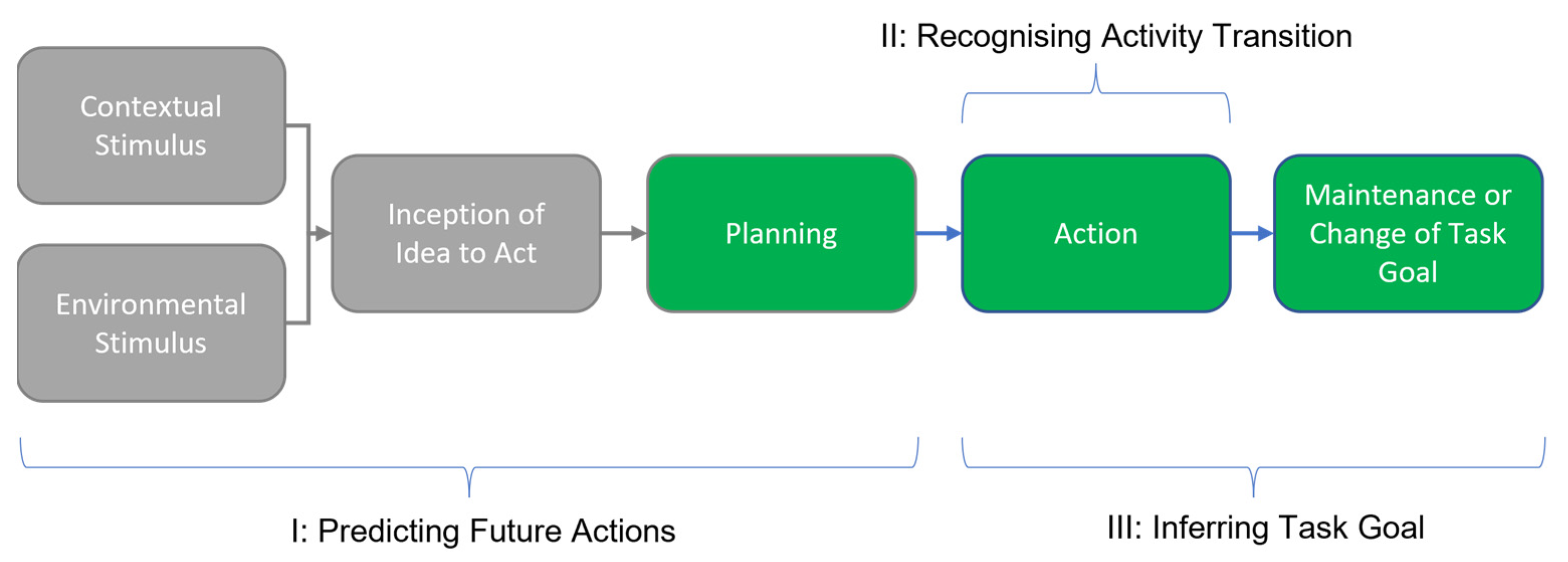
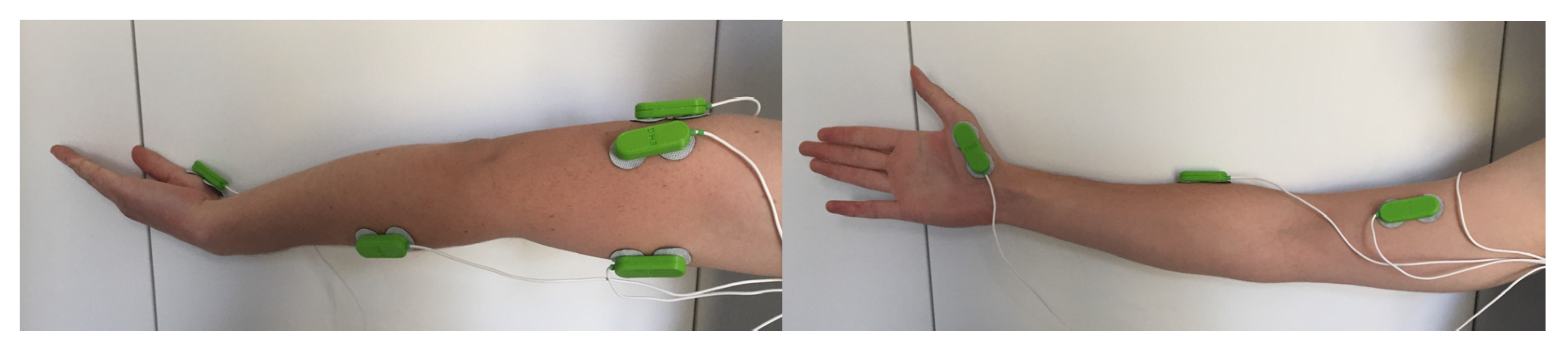
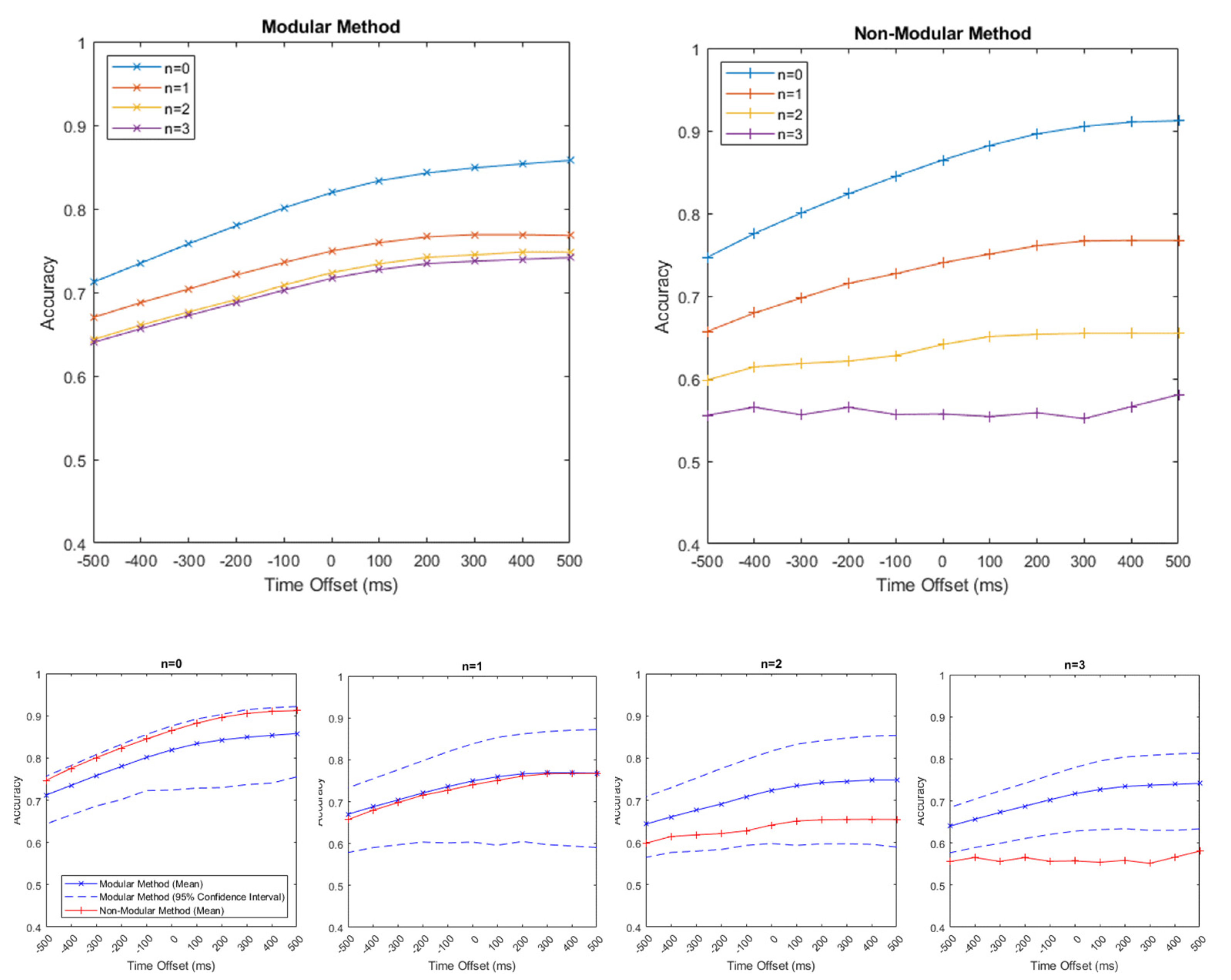
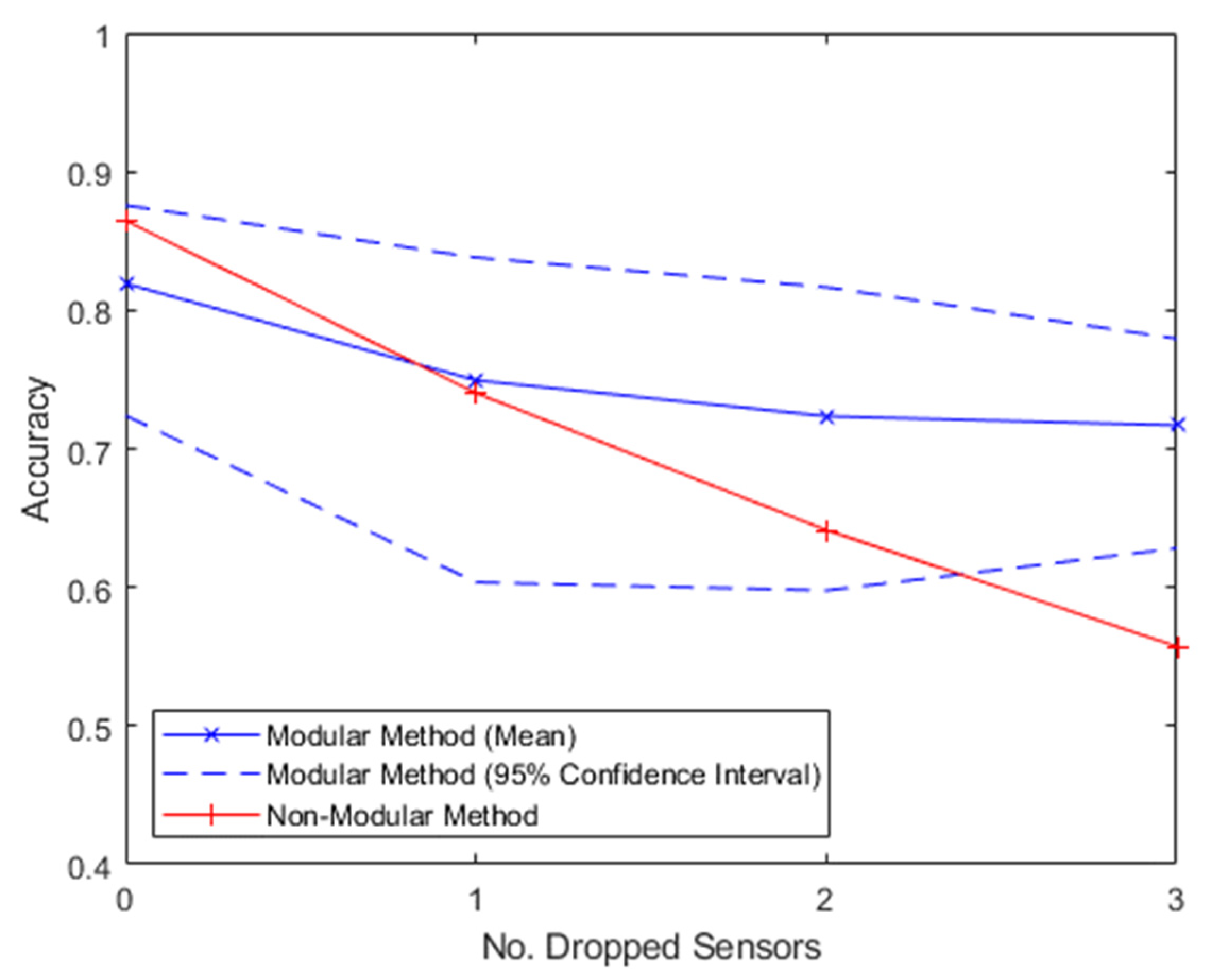
Intent sensing is a growing field within medical device control, with major potential applications for assistive devices, such as prosthetics. As many sensors as possible should be utilised to maximise accuracy. The availability of sensors may change over time due to changing surroundings or activities, sensors failing, and electrode contact being lost. The sensor network should be dynamic and modular in nature, continuing to function even when some sensors are unavailable. The management of sensor unavailability may help to reduce the need for device maintenance, particularly in developing nations with limited availability of these services. An algorithm is proposed to classify intent using networked sensors in real time. Data are gathered using human participants wearing four surface electromyography sensors and performing a pseudo-random sequence of grasps. The relationship between time offset and prediction accuracy is investigated, with the algorithm predicting future intent actions up to half a second in advance. Sensor dropout is simulated by randomly replacing sensor readings with recorded noise. The new algorithm is compared to existing algorithms and shown to be more accurate in situations of sensor dropout, with the difference increasing as more sensors become unavailable. This suggests that when reductions in sensing capabilities are likely to occur over time, the modular method is more appropriate for control.
Keywords: medical devices; probabilistic sensor networks; device maintenance; Bayesian sensor fusion medical devices; probabilistic sensor networks; device maintenance; Bayesian sensor fusion