1. Introduction
Technological progress in the economy of each country generates an increased demand for energy and, as a consequence, raw materials such as liquid, solid fuels and gas, the replacement of which with alternative sources can often be complicated, time-consuming and cannot be used in all conditions. The above circumstances are gradually increasing the demand for transport services, with road transport undoubtedly being the most popular branch in the world. The widespread use of this type of displacement is justified by its high efficiency (on shorter and medium-sized routes), speed of task completion (minimization of transshipment activities), flexibility (high availability of roads) and the possibility of direct delivery of goods from the sender to the recipient without the need to perform additional cargo manipulations [
1]. On the other hand, however, the probability of negative road accidents for this branch is the highest and, depending on the country, it is estimated that 85–97% of total accidents in transport concern road transport [
2,
3,
4,
5]. The sources of potential risk are diverse, including drivers, passengers, vehicles, infrastructure facilities and the natural environment, but as a rule they can be classified as:
Natural;
Civilizational;
Terrorist (deliberate destructive actions) [
5].
The range of potential threats can be local, regional, national or even international. The first two sets of threats are relatively well recognized and taken into account in the planning, organizing and implementation phases of logistics operations. The increase in the threat of terrorist and sabotage attacks is already mainly related to the modern age, largely defined by political and economic instability. The specificity of modern armed conflicts largely lies in the direct or indirect impact on society through the components of the economic system. A precise blow to the fuel and energy sector disrupts production and distribution processes in virtually all sectors of the economy. Unfortunately, negative interference in the area of logistics and transport can be simple, effective and cheap, and potential damage to logistics equipment, depending on the place and time of its occurrence, usually brings a number of severe effects of a direct, mass, but also secondary (indirect) nature.
For this reason, the ability to react quickly, the flexibility of this functional area, and the minimization of potential threats affecting planned operational tasks are gaining particular importance [
6].
On the basis of experience from contemporary armed conflicts, the concepts of energy and distributed logistics have begun to be used, and modern strategies for improving supply chains, such as “agile” and “lean-agile”, focus on the agility and efficiency (reactivity) of the entire system and minimizing losses [
7]. The ability to redirect energy flows and material goods in crisis situations is a huge advantage in the national economy today, but its implementation is not a single process with a serial structure, easy to implement in existing supply networks.
1.1. Specifics of the Dangerous Goods Transport
Among the transported cargo, dangerous goods deserve special attention, which are defined as materials and objects whose international carriage by road is prohibited or permitted only under certain conditions specified in the ADR (European Agreement Concerning the International Carriage of Dangerous Goods by Road) [
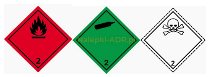
8]. Their road transport, due to its specificity and safety aspects, requires the use of many procedures at the stage of planning, preparation and implementation of transport tasks. During transport, both in solid, liquid and gaseous forms, these materials can pose a threat to the entire environment, in particular people, the natural environment and infrastructure facilities (general and road). On the basis of chemical and physical properties and predominant hazards, each dangerous goods can be assigned to one of 13 classes, with the classification criteria and individual United Nations number (UN) being uniform for all signatory states. The unification of transport procedures makes it possible to ensure universal, high technical and organizational standards in all countries and to increase the level of safety during loading, moving and unloading of these goods. The danger of these goods may result from their explosive, flammable, oxidizing, corrosive, poisonous, infectious or radioactive properties. It should be emphasized that each cargo can only be assigned to one class based on the dominant hazard, but have additional properties corresponding to other classes. Thus, in addition to being susceptible to ignition, a class 3 flammable liquid material may also have poisonous properties, and then it will also be marked with appropriate warning stickers during transport. A list of the classes of dangerous goods, the hazards posed and the corresponding warning markings affixed to packaging and transport units is provided—our own study based on [
8,
9] is in
Table 1.
Transport units with dangerous goods have characteristic markings placed on the front and back in the form of orange plates, or also supplemented on the sides, analogously to warning stickers corresponding to the hazards posed by a given material. Numbered plates are used for transport in tankers and in bulk, while the presence of only “clean” plates on the front and rear of the vehicle indicates that goods are transported in packages of the shipment (
Figure 1). The top number on the plate indicates the hazard identification number, and the bottom number indicates the UN commodity number.
The hazard identification number consists of 2 or 3 digits, which mostly correspond to the class number and in particular define the following hazards: 2—gas emission, 3—flammability of liquid materials or gases, self-heating of liquid materials, 4—flammability or self-heating of solid materials, 5—oxidizing (increasing burning), 6—poisonous effect or risk of infection, 7—radioactive action, 8—corrosive properties, 9—risk of spontaneous and violent reaction (possibility of explosion, decomposition or polymerization). The repetition of the digit indicates the severity of a given threat, while if the threat can be sufficiently expressed by one digit, then 0 is added to it on the plates in the hazard identification number.
Depending on the route and travel time, the risk to the environment can vary and does not come solely from the physical or chemical properties of dangerous goods [
10,
11]. Statistical data from various sources even confirm that the destructive effects of these goods are more often secondary effects of typical traffic accidents caused by human error, technical defects or road properties [
12]. Unfortunately, in such cases, the consequences can be catastrophic and are immediate in the form of deaths, injuries, material damage, but more and more often the subsequent economic and ecological factor is noticed [
13]. For this reason, the issue of risk in the road transport of dangerous goods should be treated on many levels, taking into account the correctness of loading and unloading (minimizing handling tasks), the choice of the route of movement (shortening the travel time and the number of stops), the terrain, the time of day and climatic (atmospheric) conditions [
3,
14]. When considering the issue of safety in road transport, it is necessary to take into account the safety of the cargo itself against the influence of the external environment, but also the safety of the environment (vehicles, people, natural environment, surrounding infrastructure) against the harmful effects of the properties of dangerous goods. During movement, hazardous substances are exposed to compression, shocks, vibrations and other dynamic influences resulting from the accumulation of goods on the vehicle’s cargo box, braking and acceleration of the vehicle, the nature of the road, the driver’s driving technique, the type of vehicle or the traffic volume [
15].
In European countries, the vast majority of dangerous goods transported by road in tankers are liquid fuels (belonging to class 3) or gases in a liquefied state (belonging to class 2)—on average 55 ÷ 75%. In the European Union (EU), in 2015 ÷ 2021, this indicator was at the level of 66 ÷ 68.2%, which confirms that these materials are undoubtedly of strategic importance in any economy and are the most important determinant of the development of modern society, its mobility, the availability of consumer goods and the standard of living [
16,
17]. Under “normal transport conditions”, the most common road accidents involving tankers are the overturning of the vehicle (without additional effects) or the overturning with leakage, explosion or fire. The free surface of the liquid and the change in the position of the cargo’s center of gravity during movement on the roads is an extremely unfavorable factor, which additionally increases the risk of collision or accident. Although tankers are equipped with numerous safety systems that are designed to minimize the likelihood of a substance being released, ignited or exploded, unfortunately this does not mean that the risk can be eliminated completely.
The marking of vehicles transporting dangerous goods in the form of orange plates and warning stickers is visible from a long distance, on each side of the vehicle, and its task is to warn other road users of potential danger. Mainly, it should oblige other drivers to maintain an appropriate distance from the vehicle with dangerous goods, and use such a driving technique that does not force the tanker driver to react violently in the form of braking, accelerating or changing the direction of travel. Such maneuvers, combined with the inertia of the liquid and the change in the position of the center of gravity of the cargo, can lead to a serious accident. Unfortunately, the reality of road traffic shows that a large part of “typical” drivers often do not take into account the “moving danger” or, even being aware of what goods are being transported, do not know what obligations arise from such a fact for themselves. In transport practice, when stationary (in traffic jams or at traffic lights), drivers maintain only a few meters distance from the vehicle with dangerous goods (often even less than 5 m), treating them in the same way as other vehicles, and while driving, it is sometimes only a dozen or several dozen meters. There are also drivers who do not know what it means to mark a vehicle with orange plates or such knowledge is limited.
1.2. Contemporary Conditions of the Road Transport
Russian aggression against Ukraine on 24 February 2022 confirmed how great impact have logistics and transport on the social, economic and military spheres of each country and how easy it is to disrupt the entire functioning system [
18,
19].
Therefore, the main goal of the strategy adopted by the aggressor was to eliminate as much combat equipment as possible from the fight, but also to cut off the Ukrainian economy and armed forces from energy resources. Massive air and missile attacks included a.o, airports, military units, and elements and installations of the so-called “critical infrastructure”, containing systems such as:
Supply of energy, energy resources and fuels;
Communication and IT systems;
Financial and banking systems;
Food and water supply;
Rescue and health care facilities and equipment;
Public transport and administrative bodies [
20].
The invasion effectively led to the interruption of many logistics routes operating on the basis of seaports. Replacing them with universal logistics hubs and quickly building alternative land logistics channels has become an absolute necessity. The disruption of supply chains and attacks on Ukraine’s fuel infrastructure (primarily the Kremenchuk refinery) have led to an increase in demand for liquid fuels. In the current situation, the Ukrainian economy was forced to diversify their suppliers and turn away from imports from Russia and Belarus in favor of the European Union countries. The increased demand for these materials in the conditions of hostilities and the successive impact of the aggressor on stationary elements of fuel and energy infrastructure generated the need to build effective logistics channels and, as a result, increase the transport volume for this group of goods.
In the first months of the full-scale invasion, many EU member states decided to liberalize border control and the movement of Ukrainian vehicles. Solidarity Corridors have also been created, which play a key role for Ukrainian imports. Since May 2022, they have enabled Ukraine to import approx. 88 million tons of goods such as fuels, vehicles, fertilizers, as well as obtaining military and humanitarian aid [
21]. Among other things, at the beginning of May 2022, Poland, regardless of actions at the EU level, has abolished the requirement to have permits for the transport of fuel by road from Polish territory. At the same time, road transport remains dominant in export transport across the Polish–Ukrainian border and is responsible for an average of 73 ÷ 85% of transport in terms of value. Overall, the share of fuels, chemical products, weapons and ammunition in transports to Ukraine across the border with Poland has increased the most since the outbreak of the war. Poland is invariably one of the key directions for fuel supplies to Ukraine. In 2023, exports of this group of dangerous goods remained at the level of 33% ÷ 63% in mass on a monthly basis, and this high indicator is still maintained [
22].
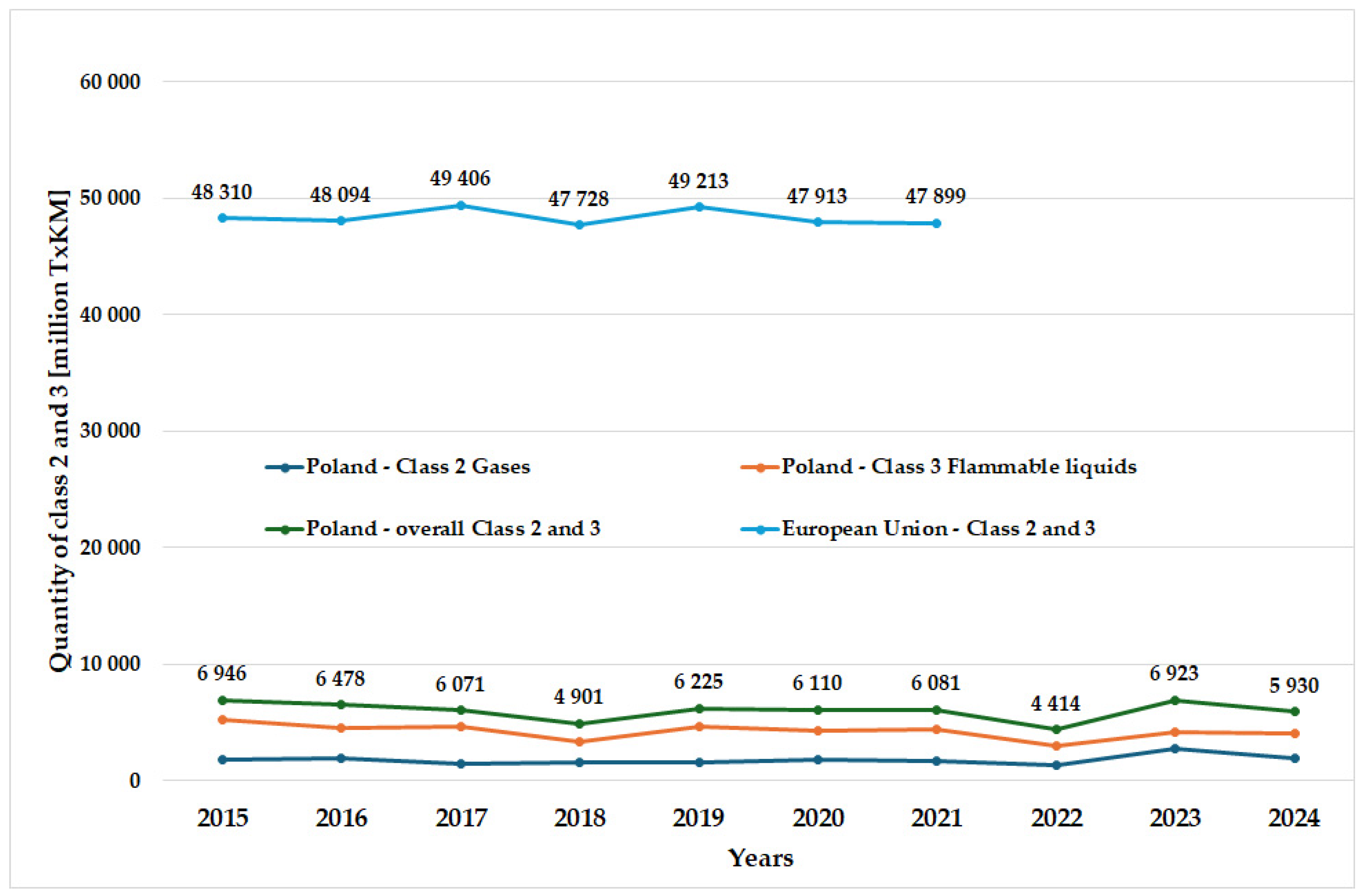
At the European Union level, the overall percentage of dangerous goods transported on public roads, expressed in million tonnes × ilometre (TKM), does not seem high. Over the years 2015 ÷ 2021, it averaged 3.8 ÷ 4.4% of the total amount of goods; however, precise, cumulative data for all EU countries after the outbreak of the war are not available. However, it should be emphasized that Poland is at the forefront of EU countries when it comes to the international transport of flammable liquid materials (class 3) and gases (class 2), and detailed data on the background of the EU are presented in
Figure 2.
The chart shows that the volume of international transport of liquid fuels and gases in Poland in 2022 significantly decreased, but in the following year it regained importance, stabilizing at a level higher than before the outbreak of the war [
23]. However, this increase is not rapid, which means that most of the transport tasks with increased imports of liquid and gaseous fuels have been taken over by Ukrainian carriers. The increased volume of tanker vehicles registered in Ukraine is noticeable on Polish public roads on a daily basis, as the availability of liquid fuels and gas has become even more important, conditioning the functioning of the economy in war conditions and conducting military operations against the aggressor.
However, it should be borne in mind that dangerous goods moved on public roads in the event of a possible accident pose a huge threat to the population, the environment or the surrounding infrastructure, although their frequency in “normal transport conditions” has been low so far. In recent years, accidents involving dangerous goods in Europe have accounted for only 1% of all road accidents, with road transport accounting for an average of 2/3 of all transport modes [
24]. The design of packaging, technological advancement and the use of security elements in vehicles or tankers to a large extent protect goods against the release of substances, leakage and fire. ADR procedures for packing, loading, labeling and driver training successfully minimize the risk of an accident itself and its subsequent consequences.
Also, the overall number of accidents caused by the properties of dangerous substances alone does not seem significant at first glance, but the modern transport reality associated with increased traffic of vehicles with dangerous goods and recorded cases of sabotage activities precisely fit into the concept of hybrid warfare. The tense situation on the eastern border of the European Union and North Atlantic Treaty Organization (NATO) justifies the need to pay more attention to the issue of road transport safety and to take into account not only natural and civilizational threats, but also terrorist threats (deliberate destructive actions). Therefore, the risk of an intentional, direct attack on vehicles carrying liquid fuels or liquefied gases should not be ignored. The effect of such interference can be immediate and can take the form of a direct, internal explosion of vapors of a heated liquid with a low flash point or an unlimited external explosion of a released vapor cloud of flammable liquid materials [
24]. The risk associated with an attack on vehicles carrying dangerous goods can become particularly felt on high-traffic roads, intersections, in cities, around shopping centers, on viaducts and bridges, and tunnels, where the impact is particularly extensive and immediate. It also implies subsequent communication, supply and military difficulties. It is also worth emphasizing that the destruction of a fuel tanker is not only a direct loss of high-value materials with huge consequences for the economy and the environment, but also a number of subsequent severe non-economic effects. Undoubtedly, a fuel tanker is very sensitive to possible attacks, and additional unfavorable factors on the roads are its size, fuel weight, variable center of gravity of the load, visible markings and low mobility. The terrorist attacks in the United States on 11 September 2001 initiated a change in the approach to this issue, which is why many solutions were implemented in the international ADR agreement concerning, among others, the protection of high-risk dangerous goods, monitoring and passage through tunnels [
8].
Currently, a lot of space is devoted to the development of intelligent transport systems that would increase the operational efficiency of vehicles and safety on the roads by: choosing the optimal route (economical and at the same time the safest), monitoring vehicle traffic and driver’s working time, and informing about traffic difficulties or accidents. However, the effectiveness of such tools is conditional for, among other things, resistance to intentional and unintentional cyber-attacks [
24,
25].
In this study, a more in-depth analysis will be made of the frequently traveled section of the Płock–Korczowa communication route (border crossing), through which fuels are transported from the Polish refinery to the territory of Ukraine, taking into account the aspect of broadly understood road transport safety.
This scientific research work attempts to apply digital interactive platforms (DIP) together with associated information technologies (IT) in road transport. The implementation of all tools, software and procedures within the framework of smart mobility (SM) is aimed at increasing efficiency and safety in logistics transport. The main objective of the scientific research work is therefore to develop a proposal for the implementation of effective tools minimizing the total risk in the road transport of liquid and gaseous fuels, which are crucial from an economic and military point of view, using publicly available digital interactive platforms.
The elaboration was prepared under the research subvention of the AGH University of Krakow, No. 16.16.150.545 in 2026.
2. Related Works
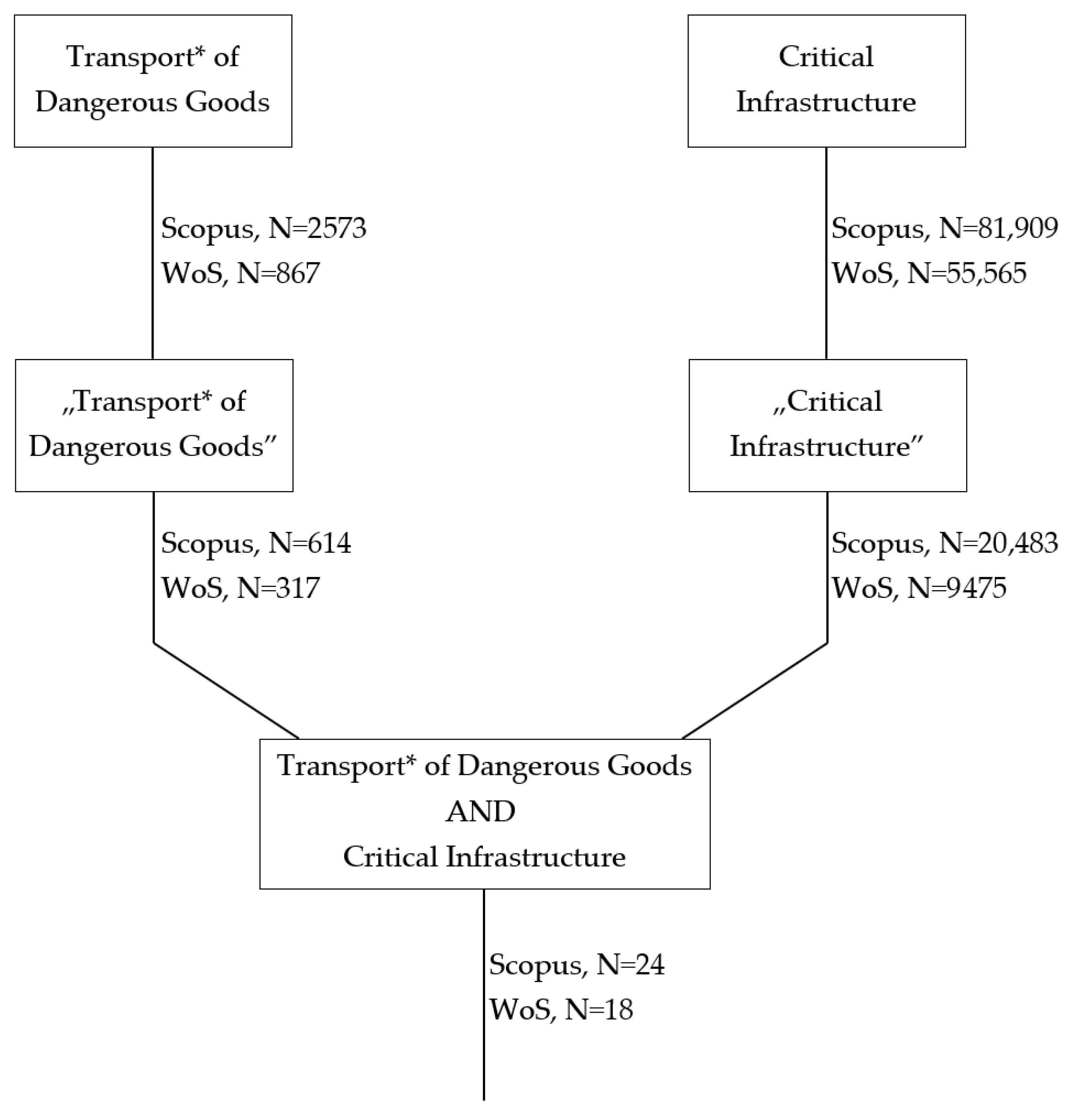
Two scientific article databases—Scopus and Web of Science (WoS)—were utilized to identify the research gap.
Figure 3 illustrates the article selection process for the identification of the research gap.
For searches for Transport* of Dangerous Goods, 2573 articles were found in Scopus and 867 in WoS. Searching for the entire phrase reduced these numbers to 614 and 317 articles, respectively. In the case of Critical Infrastructure searches, 81,909 articles were searched in the Scopus database, and 55,565 in WoS. Searching for the entire phrase allowed to reduce this number to 20,483 and 9475 articles, respectively. The last step of the search for related works was the use of the phrase “Transport* of Dangerous Goods AND Critical Infrastructure” to obtain 24 articles in the Scopus database and 18 WoS databases. The next step was to remove the articles duplicated in both databases. Consequently, 31 individual search results were retrieved based on the inclusion of specified keywords. In the subsequent stage, six articles were excluded due to their nature (e.g., conference proceedings reference, book introduction, lack of an abstract). A total of 25 articles incorporating the selected keywords were obtained. In the following step, an additional six articles were rejected due to a lack of relevance to the subject matter of critical infrastructure and the transport of dangerous goods. Ultimately, 19 articles were subjected to analysis.
Research within the scope of Dangerous Goods Transport (DGT) and Critical Infrastructure (CI) is extensive. Specific emphasis must be placed on risk and safety management in road tunnels, as well as the human factor influencing overall safety. Minciardi and Robba in [
26] proposed a model supporting the control of fleets transporting hazardous materials. This model accounted for various decision-making levels in fleet management. Heuristic rule, dynamic programming, and mathematical programming techniques were employed to optimize the costs associated with tunnel transit. Bersani et al. in [
27] proposed a model concerning the optimal traffic control strategy for dangerous goods at tunnel entrances, aiming to minimize the risk of hazards. Kirytopoulos et al. in [
28] presented a comprehensive range of methods for conducting risk assessment concerning the transport of dangerous goods through tunnels. The focus was on outlining both the technical aspects of tunnels and the human and organizational factors that may affect safety. A fuzzy logic system based on the Cognitive Reliability and Error Analysis Method (CREAM) was utilized to provide a more advanced estimation of tunnel performance under safety-critical conditions. Kirytopoulos et al. in [
29] proposed the Dangerous Good-Quantitative Risk Assessment (DG-QRA) Organisation for Economic Co-operation and Development/World Road Association (OECD/PIARC) model and presented its simulation for operator response times in a threat situation.
Focus has also been directed towards route optimization and spatial risk analysis. It should be noted that Conca, Ridella, and Sapori in [
30] concentrated on analyzing the interaction between traffic flow and accident frequency and proposed an integrated approach to investigate routing problems with safety considerations. A tactical and operational decision-making tool was proposed for route determination, minimizing the cost for the carrier while accounting for the risks associated with dangerous goods. Kanj et al. in [
31] proposed and modeled the risk assessment for the transport of dangerous goods using a multi-agent system and developed a simulation with a Geographic Information System (GIS) that displays the location, heavy vehicle trajectory, and areas affected by an accident during the simulation. Strzelczyk and Guze in [
32] employed graph theory to identify critical nodes, arcs and routes within transportation networks, as well as to determine alternative routes based on network criticality. Vidriková and Boc in [
33] analyzed the transport infrastructure in Slovakia and proposed an optimization process for selecting dangerous goods transport routes, considering the protection of critical infrastructure elements by identifying segments that generate significant safety risks. Garbolino et al. in [
34] focused on DGT between France and Italy via road and rail. They proposed a spatial model based on two indices that are implemented into a GIS in order to define a Spatial Decision Support System dedicated to the decision-makers (infrastructures managers, public authorities and transport companies). It was emphasized that DGT procedures should be evaluated at various geographical levels and should incorporate the spatial characteristics of the specific area. However, it should be noted how Stec and Grzebyk in their work [
35] refer to the definitions of Spatial Information System and Geographical Information System and explain them.
Furthermore, advanced telematic technologies, sensors, and systems are being utilized, also within the context of Smart Cities. Bartholmai et al. in [
36] proposed the application of Radio-Frequency Identification (RFID) sensor systems and energy-efficient sensors for the continuous condition monitoring, identification, and diagnostics of transported hazardous materials, which can contribute to reducing the incidence of accidents and non-compliance with prevailing transport regulations. Adamec et al. in [
37] addressed the subject of hazards related to the transport of dangerous goods in urban areas and proposed actions aligned with the concept of smart cities through the creation of a functional communication network. Sakhno in [
38] conducted a comparative analysis of electronic DGT monitoring systems in Poland and Romania and developed recommendations for the potential implementation of such systems in Ukraine, considering military activities and the state of transport infrastructure. Articles that utilized simulation models can also be highlighted—Bogalecka and Dąbrowska in [
39] employed the Monte Carlo simulation technique to model maritime accidents and the consequences of chemical substance releases in marine and oceanic waters, aiming to mitigate accident impacts. Renčelj et al. in [
40] assessed the current state of dangerous goods transport in the Western Balkans, focusing on aligning national regulations with international standards. Barriers and differences regarding the implementation and enforcement of regulations in the countries studied were identified, which were subsequently used to create recommendations for promoting safer and more sustainable dangerous goods transport practices. Dbouk et al. in [
41] evaluated whether occupational health and safety and accident prevention regulations adequately govern the risk associated with the processing and storage in United Kingdom (UK) ports.
The searched articles also addressed the subject of rail transport of dangerous goods. Rail transport is not discussed in this paper—the focus is on road transport. However, it should be noted that critical infrastructure issues, methods and threat prevention are no less important. These papers encompass issues related to monitoring, terrorism, and safety indicators. Beugin, Marais, and Lozach in [
42] assessed the performance of a satellite positioning system employed in rail freight transport. Khanmohamadi et al. in [
43] addressed the subject of terrorist threats pertaining to the transport of dangerous goods. Critical areas along the Texas–Illinois rail routes were identified to pinpoint vulnerable locations regarding surrounding infrastructure and the population potentially susceptible to a terrorist attack. These areas subsequently informed the analysis of the probability of operator route selection and terrorist attack. Ebrahimi and Henderson in [
44] analyzed accidents and incidents in the Canadian railway industry, pointing to recurring precursors and patterns that can serve as warning signals. This analysis was conducted in the context of the increasing volume of dangerous goods transported by rail, necessitating an adequate level of safety. Thompson in [
45] highlighted the threats associated with the transport of dangerous goods in Canada, as well as the potential consequences of accidents, sabotage, or terrorist attacks on surrounding populations, and the cascading effects of such events.
3. Materials and Methods
The scientific research work is concentrated on a real object located in Central Eastern Europe, in Poland, represented by a segment of the Płock–Korczowa road (to the border crossing). The main starting point is the locality of Płock (street: Chemików, Łukasiewicza, Rataja, Bartoszewskiego). Płock is a city in Poland (Republic of Poland, Rzeczpospolita Polska in Polish, RP), with the refinery’s headquarters located in the mazowieckie Province (Voivodeship). Marked with the number 1 in this work. The main end point is the locality of Korczowa (border crossing). Marked in this work with the number 20. Korczowa is a village in Poland, located in the Podkarpackie Province, with the Korczowa–Krakowiec border crossing, on the Polish–Ukrainian border. The object of the real works is located in three provinces: mazowieckie, lubelskie i podkarpackie. The total length of the object of works is 540 km and includes:
Roads in the locality center;
European Route (Europejska Droga Międzynarodowa (EDM) in Polish, European International Road, E-road, Ei, E-route): E30;
Expressway (Droga Ekspresowa (Si) in Polish, Expy): S2, S17, S19;
Motorway (Autostrada (Ai) in Polish, M-way): A4;
These are in the character of:
Municipal Road (Mun. Rd.);
District Road (Dist. Rd.);
European Route;
National Road (NR, Nat. Rd.), Provincial Road (Voivodeship Road, PR, Prov. Rd.);
Provincial Road, National Road;
National Road.
Dźwigoł in [
46] emphasizes that the type of research corresponds to its precise design, creating a research model and selection of appropriate research methods. At the same time, Matel in [
47] emphasized artistic work (twórczość in Polish), creativity and research intuition. Thus, in this work, the integration of three methods was used:
Objectives and Key Results (OKR);
Specific, Measurable, Achievable, Relevant, Time-bound (SMART);
Case Study (CS).
A feature of the OKR method is the management of goals and monitoring the degree of their implementation.
The feature of the SMART method is: Specific (a specifically defined goal), Measurable (measurable indicators to monitor progress), Achievable (realistic achievability), Relevant (the importance of the goal), Time-bound (agreed completion time), and a feature of the CS method is analysis and evaluation of a specific case, situation or phenomenon.
A literature review was also conducted, which enabled an overview of scientific research work and the definition of further steps in the implementation of the subject digital interactive platforms in the road transport of dangerous goods—smart mobility.
In the road transport of dangerous goods, attention should be paid to the sources of available data, among which the spatial data infrastructure (SDI) is important, and digital interactive platforms play a key role here. DIPs enable two-way communication and interaction between users. The application of DIP and related information technologies in road transport—smart mobility—can focus on minimizing overall risk. For this purpose, publicly available DIP was used:
National Geoportal (Geoportal Krajowy in Polish)—the platform provides map resources for Poland; its attribute is the exploration of spatial data and related collections and services. Provides tools for analysis, data retrieval and searching, e.g., searching for locality names, searching by coordinates, searching for elevation (height) data, and more. Available at [
48];
Google Maps—a widely known map platform. It provides tools for, among other things, viewing maps, locating places, planning routes, real-time navigation, and more. Available at [
49].
Matel in [
47] emphasized artistic work, creativity and research intuition in striving for originality in research, identifying new economic challenges and finding creative solutions to them. The subject of this work concerns DIP in the Road Transport of Dangerous Goods—Smart Mobility. It was created by a team represented by: AGH University of Krakow (AGH University), University of Economics in Katowice and The Polish Air Force University. The integration of specialists from three different environments contributed to achieving the main goal of this work, as well as mutual deepening of knowledge and experiences.
4. Results
Subject matter of the work digital interactive platforms in the road transport of dangerous goods—smart mobility realized on a real object Płock–Korczowa has been further densified with 18 additional locality/points. This approach, on the one hand, facilitated the selection of the horizontal and vertical planes to define the total road route 1–20. On the other hand, it contributed to:
- 1.
DGT in the scope:
Low social activity;
Low traffic activity.
- 2.
Harmonization of fuel tanker traffic;
- 3.
Optimization of the route taking into account the terrain—especially in the vertical plane;
- 4.
Protection against access by unauthorized persons;
- 5.
Realization of transport during night hours.
In this publication, in order to avoid direct identification of the real object represented by the segment of the Płock–Korczowa road route, the rectangular plane coordinates X and Y in the state spatial reference system have not been provided, thus preserving their anonymity. The segment of the Płock–Korczowa road route is an important transport corridor in road transport of dangerous goods—smart mobility. The anonymity introduced ensures that there is no accurate and direct geolocation.
Table 2 presents the results of the work for road transport of dangerous goods with DIP application.
The results of the work are concretized in:
Name of locality/point with assigned number of the main and intermediate point;
Road characteristics—attribute: Mun. Rd., Dist. Rd., Nat. Rd., Prov. Rd., E-road;
Road number;
Value of the distance between individual localities/points (Dist);
With the definition of the province in which it is located;
Values of the elevation coordinate Hi in [m.a.s.l.] presented in the state spatial reference system—in the elevation system;
Value of the elevation difference ΔHi in [m] relative to the starting point in the locality of Płock;
Value of the average elevation of the road segment Avg. Hi Rd. in [m].
In terms of the first three maximum values of elevation differences relative to the starting point in the locality of Płock, occupy the position of (
Table 2):
140.6 [m]—number 14: locality Kraśnik;
114.9 [m]—number 12: locality Dąbrowica;
114.5 [m]—number 15: locality Janów Lubelski.
In turn, in terms of the first three minimum values of elevation differences relative to the starting point in the locality of Płock, occupy the position of (
Table 2):
−45.4 [m]—number 3: locality Dobrzyków;
−19.4 [m]—number 4: locality Sochaczew;
−12.6 [m]—number 6: locality Pruszków.
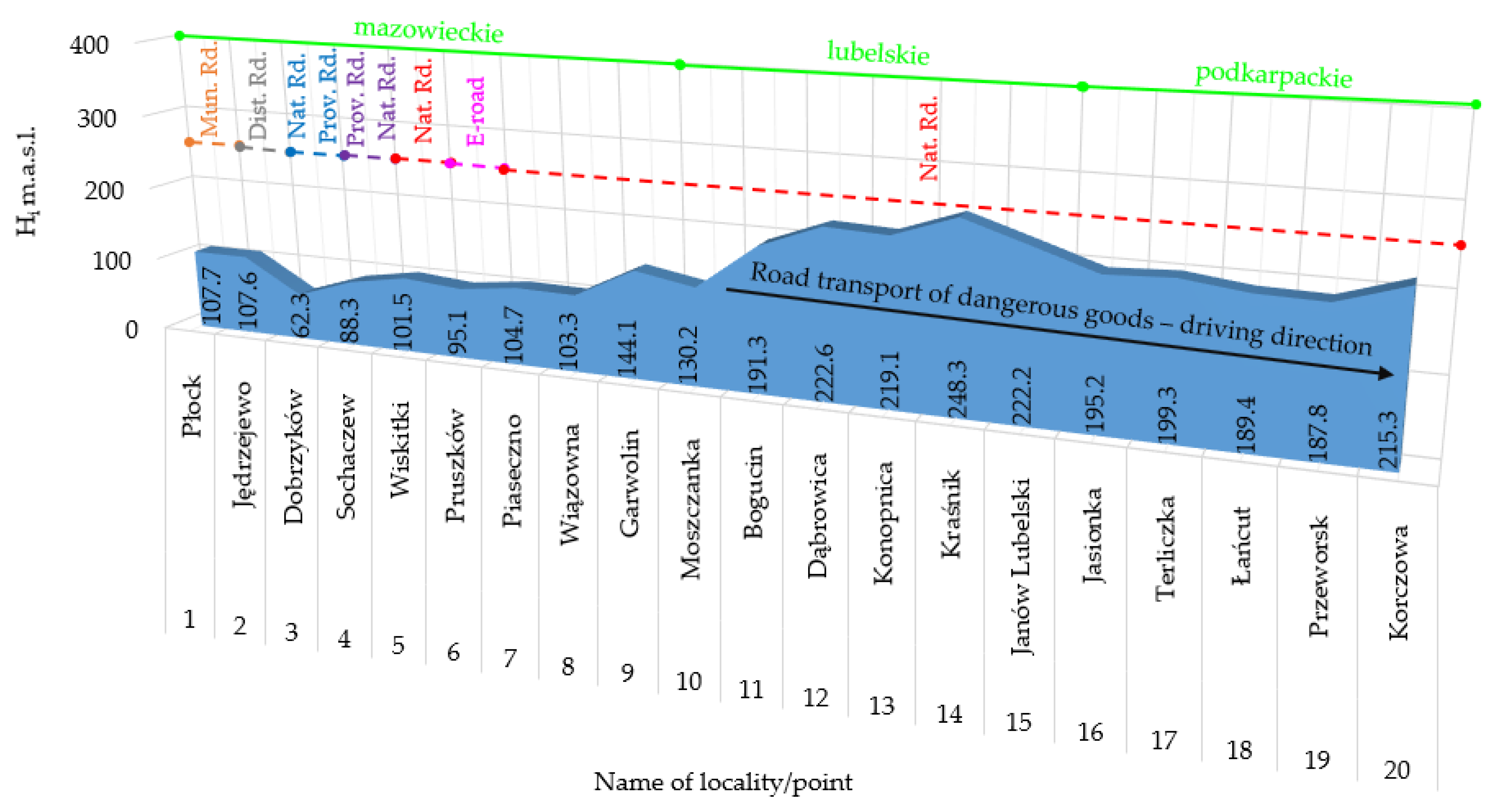
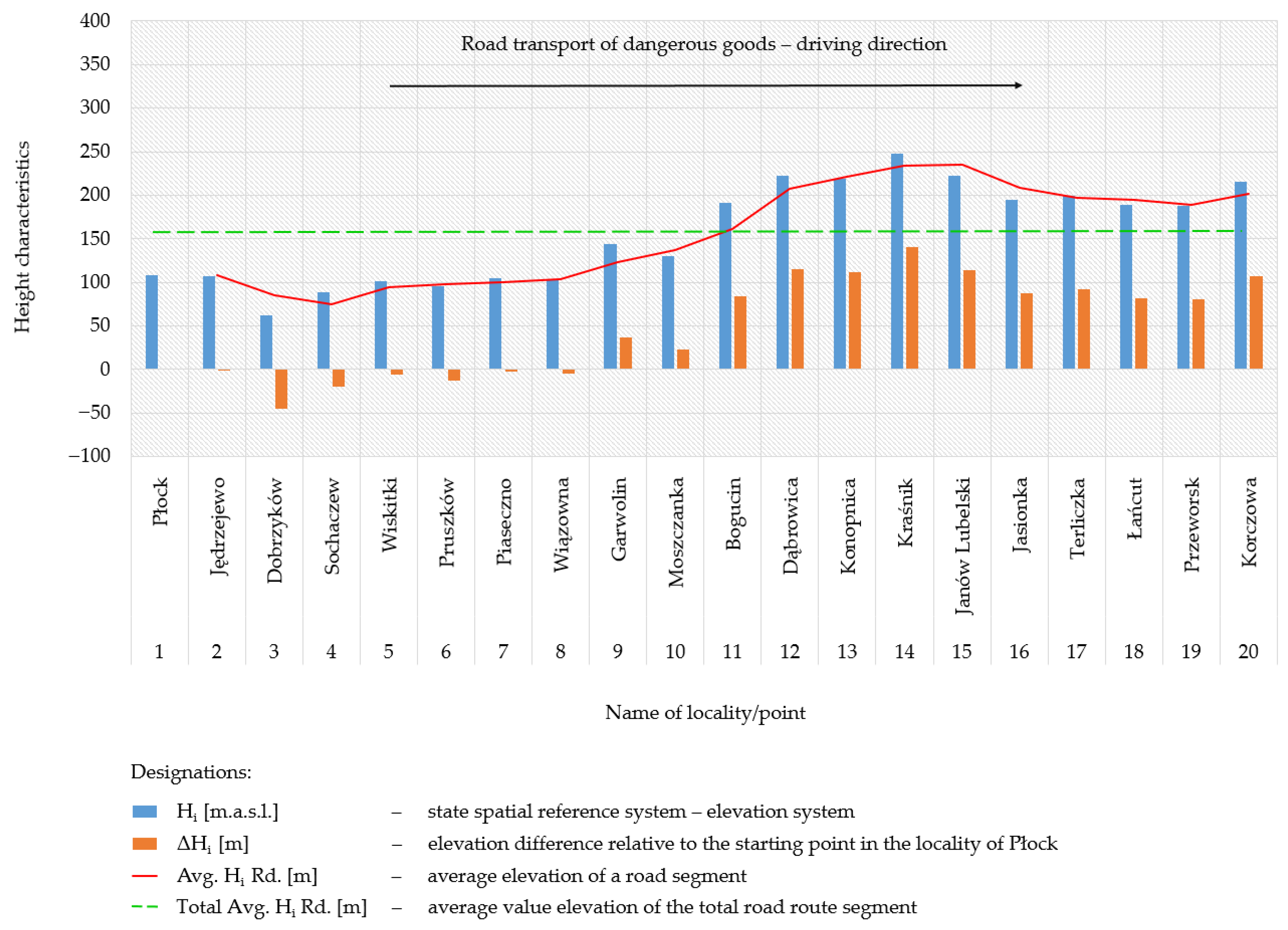
Figure 4 shows the graphic interpretation in the form of an elevation–longitudinal profile together with names of provinces and road characteristics. It presents the results of the study taking into account the values of the elevation coordinate expressed in the state spatial reference system–elevation system in [m.a.s.l.]. The state spatial reference system in the elevation system H
i allowed for determining elevation differences relative to the starting point in the locality of Płock ΔH
i and calculating the average elevation of a road segment Avg. H
i Rd. (
Figure 5).
A graphical visualization of the terrain of the Płock–Korczowa road segment is presented in
Figure 5. It brings together data in a single graph, covering:
Hi [m.a.s.l.]—state spatial reference system–elevation system;
ΔHi [m]—elevation difference relative to the starting point in the locality of Płock;
Avg. Hi Rd. [m]—average elevation of a road segment;
Total Avg. Hi Rd. [m]—average value elevation of the total road route segment.
Presenting them in a single graph allows for a clear comparison of this data. The average value of the total road route elevation total Avg. Hi Rd. on the segment 1–20 is 156.8 [m].
The subject matter of the scientific research work carried out allows us to conclude that it is important to develop and implement digital interactive platforms in road DGT in integration with the state spatial reference system–elevation system. Consequently, such an integrated tool, available to decision-makers and the average user of public roads, constitutes a sound integration in practice—so important in everyday life.
5. Discussion
Digital interactive platforms in the road transport of dangerous goods—smart mobility provides important information in the process of developing this mode of transport. It deserves special attention in the current international situation. Factors such as low social activity and traffic, taking into account the harmonization of specialized fuel tanker transport activities. Then, consolidation in route optimization, taking into account the terrain—especially in the vertical plane. Furthermore, ensuring protection against access by unauthorized persons and carrying out transport at night are part of their common denominator.
Route optimization taking into account the terrain in the vertical plane provides information not only about the gradient of ascents and descents, maximum elevations and declines, but also about changes in elevations, taking into account the geolocation of steep and gentle segments of the Płock–Korczowa road route. DIP in the road transport of dangerous goods ensures that the appropriate route is selected. It contributes to vehicle control; weather conditions are also important here, as is the condition of the braking system. Similarly, sections of road with large and sudden changes in elevation can be dangerous. Railway level crossings (RLC) also fit into this trend, which require, among other things, profile monitoring—longitudinal gradient of the road [
50]. A sudden change in height may cause road transport of dangerous goods to become stuck on the RLC. DIP in the road DGT allows you to select road segments, taking into account changes in the relevant elevation. At the same time, this approach is significantly reflected in the issues of “mechanical load and emissions”. When the inclines are long, this is reinforced by intensive fuel consumption and engine load. DIP in the road DGT providing data in the state spatial reference system–elevation system is an important tool for selecting a road section. On the other hand, in matters of “mechanical load and emissions”, on-board devices.
This work combines IT with security and logistics, which are essential to any economy. Akulov et al. in [
51] state that information technology is an integral part of modern society. The attributes of DIP include not only automation and monitoring, but also real-time communication. In the context of road transport, DIPs can also include functions such as transport monitoring and digital record keeping, and can be an important tool for risk and crisis management. The role of fleet management and communication between the driver, company and recipient should also be emphasized. Magiera et al. in [
52] address the subject of navigation issues, Nagy et al. in [
53] refer to cognitive load, at the same time Kézai et al. in [
54] emphasize smart economy. Bridgelall draws attention to the integral part of the nation’s economic vitality in his research in [
55]. He sees the importance here of road and rail infrastructure and the need to monitor its condition.
In addition to the advantages of DIP in the road DGT, smart mobility, their role in terms of challenges and threats should also be emphasized. To which data security belongs. Thus, this paper does not present rectangular plane coordinates X, Y in the state spatial reference system, thereby preserving their anonymity. Although, they are also available. In terms of data security, attention should also be paid to the protection of sensitive information, e.g., the type of substance. It is also important to train staff in the use of DIP and to link it to the existing IT infrastructure in companies. Bridgelall in [
55] states that as infrastructure limitations intensify, trucks and rail will remain dominant in freight transport.
DIP may contribute to route optimization with respect to vertical road gradients, thereby supporting fleet management. They can serve as tools for maintaining a balance between transport time and transport safety. Transport time may be considered in terms of route length, as routes with lower gradients may result in increased travel time and a greater total distance traveled. Safety is understood here in a broad sense, encompassing both infrastructural aspects (whether a route passes through CI) and road gradient (which affects not only the behavior of the cargo within the vehicle but also vehicle wear, including brake and fuel consumption). With regard to these factors, DIP may prove to be an important tool in transport planning; at the same time, the results of this study confirm the validity of integrating DIPs in road DGTs, smart mobility, with the state spatial reference system–elevation system. It is also worth noting that they can be applied before the phase of proper cargo movement, which may be one of the elements of minimizing the risk of transporting dangerous goods. Proper route planning and then the use of information and communication technologies (ICT) allowing for real-time monitoring of transport [
56] can be additional factors allowing for the management of the risk of transport of dangerous goods.
6. Conclusions
Taking into account the current situation in the international arena, in the conditions of increased traffic of heavy goods vehicles in international traffic, the implementation of systemic measures seems to be the most beneficial, in particular:
Organization of the transport of dangerous goods during periods of low social activity and low traffic (minimizing the number of people, vehicles and objects exposed to danger);
Organization of the movement of fuel tankers on routes running outside urban and populated areas, ensuring smooth traffic and avoiding stops and traffic jams (minimizing the number of people exposed to risk);
Recognizing and selecting routes with a gentle course, taking into account the terrain, without sudden inclines, descents and bends (with a small gradient of changes in the route profile), enabling the reduction in amplitudes of movement of the free surface of the fuel, limiting the migration of the center of gravity of the liquid and the intensity of dynamic effects of the load on the transport unit;
Limiting the access of third parties to information about the transported goods (type of substance, quantity, route, places of loading and unloading) and carrying out transport at night.
Therefore, the subject matter of the scientific research work concerned digital interactive platforms in the road transport of dangerous goods—smart mobility. It is very important in the field of logistics and transport, especially in the current geopolitical situation. The main objective of the scientific research work has been achieved. The results of proposals for effective tools that contribute to minimizing overall risk are presented. The methods used in this work and their integration are considered to be correct. DIP in the road transport of dangerous goods—smart mobility represents progress, e.g., for the global database. Transparency is essential in the road transport of dangerous goods. DIP in the road DTG corresponds to Vehicle-to-Everything (V2X), which contributes to enhancing transport safety and efficiency. In the context of road DGT, communication technology between vehicles is important: Vehicle-to-Vehicle (V2V) and road infrastructure: Vehicle-to-Infrastructure (V2I).
Further research employing DIP may focus on the determination of alternative routes for given origin–destination pairs, optimizing routes with respect to vertical gradients or the minimization of critical infrastructure elements along a given route.
DIP in road DGT—smart mobility supports stakeholders in a wide range of tasks. They provide useful information that enables the planning and implementation of strategic transport, especially road DGT.
Author Contributions
Conceptualization, A.K. (34%), A.W.-H. (33%) and T.I. (33%); methodology, A.K. (34%), A.W.-H. (33%) and T.I. (33%); software, A.K. (34%), A.W.-H. (33%) and T.I. (33%); validation, A.K. (34%), A.W.-H. (33%) and T.I. (33%); formal analysis, A.K. (34%), A.W.-H. (33%) and T.I. (33%); investigation, A.K. (34%), A.W.-H. (33%) and T.I. (33%); resources, A.K. (34%), A.W.-H. (33%) and T.I. (33%); data curation, A.K. (34%), A.W.-H. (33%) and T.I. (33%); writing—original draft preparation, A.K. (34%), A.W.-H. (33%) and T.I. (33%); writing—review and editing, A.K. (34%), A.W.-H. (33%) and T.I. (33%); visualization, A.K. (34%), A.W.-H. (33%) and T.I. (33%); supervision, A.K. (34%), A.W.-H. (33%) and T.I. (33%); project administration, A.K. (34%), A.W.-H. (33%) and T.I. (33%). All authors have read and agreed to the published version of the manuscript. Each author’s contribution to the publication as a percentage: A.K. 34%, A.W.-H. 33%, T.I. 33%.
Funding
This research received no external funding.
Data Availability Statement
Data is contained within the article.
Acknowledgments
The elaboration was prepared under the research subvention of the AGH University of Krakow, No. 16.16.150.545 in 2026.
Conflicts of Interest
The authors declare no conflicts of interest.
Abbreviations
The following abbreviations are used in this manuscript:
| DGT | Dangerous Good Transport |
| CI | Critical Infrastructure |
| SDI | Spatial Data Infrastructure |
| DIP | Digital Interactive Platform |
| IT | Information Technology |
| SM | Smart Mobility |
| OKR | Objectives and Key Results |
| SMART | Specific, Measurable, Achievable, Relevant, Time-bound |
| CS | Case Study |
| V2X | Vehicle-to-Everything |
| ADR | European Agreement Concerning the International Carriage of Dangerous Goods by Road |
| UN | United Nations number |
| EU | European Union |
| TKM | Tonne Kilometre |
| NATO | North Atlantic Treaty Organization |
| WoS | Web of Science |
| N | Number of Articles Found |
| CREAM | Cognitive Reliability and Error Analysis Method |
| DG-QRA | Dangerous Good-Quantitative Risk Assessment |
| OECD/PIARC | Organisation for Economic Co-operation and Development/World Road Association |
| GIS | Geographical Information System |
| RFID | Radio-Frequency Identification |
| UK | United Kingdom |
| RP | Republic of Poland, Poland, Rzeczpospolita Polska in Polish |
| E-road | European Route, European International Road, Ei, E-route, Europejska Droga Międzynarodowa (EDM) in Polish |
| Expy | Expressway, Droga Ekspresowa (Si) in Polish |
| M-way | Motorway, Autostrada (Ai) in Polish |
| Mun. Rd. | Municipal Road |
| Dist. Rd. | District Road |
| Nat. Rd. | National Road, NR |
| Prov. Rd. | Provincial Road, Voivodeship Road, PR |
| AGH University | AGH University of Krakow |
| Dist. | Distance, Disti, value Dist. and Disti in [km] |
| Hi | State Spatial Reference System—Elevation System, Elevation Coordinate, value Hi in [m.a.s.l.] |
| ΔHi | Elevation Difference Relative to the Starting Point in the Locality of Płock, value ΔHi in [m] |
| Avg. Hi Rd. | Average Elevation of a Road Segment, value Avg. Hi Rd. in [m] |
| Total Avg. Hi Rd. | Average Value Elevation of the Total Road Route Segment, value Total Avg. Hi Rd. in [m] |
| m | Meter |
| km | Kilometer |
| m.a.s.l. | Metres Above Sea Level |
| RLC | Railway Level Crossing |
| ICT | Information and Communication Technologies |
| V2V | Vehicle-to-Vehicle |
| V2I | Vehicle-to-Infrastructure |
References
- Hajdul, M.; Stajniak, M.; Foltyński, M.; Koliński, A.; Andrzejczyk, P. Organizacja i Monitorowanie Procesów Transportowych; Instytut Logistyki i Magazynowania: Poznań, Poland, 2015; pp. 217–222. [Google Scholar]
- Li, Z.; Zhang, M. Analysis of Factors Affecting Road Transport Accidents of Hazardous Materials Based on PG-BN. J. Adv. Transp. 2024, 2024, 5558952. [Google Scholar] [CrossRef]
- Pantelić, S.; Milovanović, B.; Dogatović, M.; Živanović, P.; Bajćetić, S.; Tica, S.; Nad, A. Consequence Assessment Model for Gasoline Transport: Belgrade Case Study Based on Multi-Agent Simulation. Sustainability 2023, 15, 2598. [Google Scholar] [CrossRef]
- Kuzmin, A.V.; Freze, T.Y. Is it safe to transport dangerous goods by road? (Environmental safety associated with dangerous goods transportation by road). In IOP Conference Series: Materials Science and Engineering; IOP Publishing Ltd.: Bristol, UK, 2019; Volume 687, p. 066026. [Google Scholar]
- Chruzik, K. Inżynieria Bezpieczeństwa w Transporcie; Wydawnictwa Politechniki Śląskiej: Gliwice, Poland, 2016; p. 7. [Google Scholar]
- Jałowiec, T. Paradygmaty Logistyki Wojskowej; Difin S.A.: Warszawa, Poland, 2020; pp. 100–102. [Google Scholar]
- Tundys, B.; Rzeczycki, A.; Drobiazgiewicz, J. Decyzje strategiczne w Łańcuchach Dostaw; Wydawnictwo Edu-Libri: Kraków, Poland, 2018; pp. 64–76. [Google Scholar]
- UNECE. European Agreement Concerning the International Carriage of Dangerous Goods by Road, Edition 2025; UNECE: Geneva, Switzerland, 2025. [Google Scholar]
- Grzegorczyk, K.; Buchcar, R. Przewóz Drogowy Towarów Niebezpiecznych ADR 2025–2027; Wydawnictwo AdeR Buch-Car: Błonie, Poland, 2025; pp. 27–41. [Google Scholar]
- Şencan, M.; Yavuz, H. Transportation of dangerous goods: Turkey model. J. Int. Trade Logist. Law 2017, 3, 65–69. [Google Scholar]
- Walendzik, M.; Kamiński, T.; Pawlak, P.; Demestichas, K. The analysis of organizational and legal possibilities to reduce the dangers related to road transport of dangerous goods in Poland. J. KONBiN 2021, 51, 16. [Google Scholar] [CrossRef]
- Janno, J.; Koppel, O. Operational risks in dangerous goods transportation chain on roads. LogForum 2018, 14, 34–36. [Google Scholar] [CrossRef]
- Batarliene, N. Essential Safety Factors for the Transport of Dangerous Goods by Road: A Case Study of Lithuania. Sustainability 2020, 12, 4954. [Google Scholar] [CrossRef]
- Batarlienė, N. Dangerous goods transportation: New technologies and reducing of the accident. J. KONBiN 2008, 5, 213–217. [Google Scholar] [CrossRef][Green Version]
- Waśniewski, T.R. Bezpieczeństwo Transportu i Logistyki; Difin: Warszawa, Poland, 2021; p. 142. [Google Scholar]
- Vaskova Hristova, P. Transport of dangerous goods as part of a functional modern society. In Proceedings of the CBU International Conference on Innovations in Science and Education, Prague, Czech Republic, 22–24 March 2017; pp. 184–185. [Google Scholar]
- Almási, C. Evolution of the Regulation of the Transport of Dangerous Goods by Road. Műszaki Katonai Közlöny 2023, 33, 113–114. [Google Scholar] [CrossRef]
- Minakova, S.; Volobuyeva, T.; Minakov, V.; Minakova, O.; Tselikova, A. Peculiarities of truck transportation in wartime conditions. Nauk. Visnyk Natsionalnoho Hirnychoho Universytetu 2023, 6, 184–188. [Google Scholar] [CrossRef]
- Sharanov, R.; Vatchenko, O. The Crisis Management System of Ukrainian Transport Enterprises. In Proceedings of the 28th International Scientific Conference Transport Means 2024, Kaunas, Lithuania, 2–4 October 2024; pp. 266–267. [Google Scholar] [CrossRef]
- Elak, L.; Zieliński, T.; Ciekanowski, Z.; Żurawski, S. Odporność Społeczeństwa, Państwa na Zagrożenia Hybrydowe; Menedżerska Akademia Nauk Stosowanych: Warszawa, Poland, 2023; p. 320. [Google Scholar]
- Solidarity Lanes: Latest Figures—September 2025. Available online: https://transport.ec.europa.eu/news-events/news/solidarity-lanes-latest-figures-september-2025-2025-10-27_en?prefLang=pl&etrans=pl (accessed on 2 November 2025).
- Błaszak, K.; Podsiad, A. Polska-Ukraina: Sektor Transportu. Konkurencja i Współpraca; Departament Badań i Analiz Bank Gospodarstwa Krajowego: Warszawa, Poland, 2024; pp. 9–13, 24–27. [Google Scholar]
- Road Freight Transport of Dangerous Goods by Type of Dangerous Goods and Territorial Coverage. Available online: https://ec.europa.eu/eurostat/databrowser/view/road_go_ta_dg/default/table?lang=en (accessed on 2 November 2025).
- Garbolino, E.; Tkiouat, M.; Yankevich, N.; Lachtar, D. Transport of Dangerous Goods. Methods and Tools for Reducing the Risks of Accidents and Terrorist Attack; NATO Science for Peace and Security Series C: Environmental Security; Springer: Berlin/Heidelberg, Germany, 2012; pp. 30–38, 74–78. [Google Scholar]
- Wang, H.; Liang, Q. Risk Analysis and Route Optimization of Dangerous Goods Transportation Based on the Empirical Path Set. Hindawi J. Adv. Transp. 2020, 2020, 8838692. [Google Scholar] [CrossRef]
- Minciardi, R.; Robba, M. A bi-level approach for the decentralized optimal control of dangerous goods fleets flowing through a tunnel. IFAC Proc. Vol. 2011, 44, 9788–9793. [Google Scholar] [CrossRef]
- Bersani, C.; Minciardi, R.; Robba, M.; Sacile, R.; Tomasoni, A.M. Optimal Control of Hazardous Materials Traffic Flow the Case of Transport Through a Critical Infrastructure. In Proceedings of the 6th International Conference on Informatics in Control, Automation and Robotics, ICINCO 2009, Milan, Italy, 2–5 July 2009; Volume 1, pp. 311–316. [Google Scholar]
- Kirytopoulos, K.; Konstandinidou, M.; Nivolianitou, Z.; Kazaras, K. Embedding the human factor in road tunnel risk analysis. Process Saf. Environ. Prot. 2014, 92, 329–337. [Google Scholar] [CrossRef]
- Kirytopoulos, K.; Konstandinidou, M.; Nivolianitou, Z.; Kazaras, K. Enhancing Road Tunnel Risk Assessment with a Fuzzy System Based on the CREAM Methodology. Chem. Eng. Trans. 2013, 31, 349–354. [Google Scholar] [CrossRef]
- Conca, A.; Ridella, C.; Sapori, E. A Risk Assessment for Road Transportation of Dangerous Goods: A Routing Solution. Transp. Res. Procedia 2016, 14, 2890–2899. [Google Scholar] [CrossRef]
- Kanj, H.; Kulaglic, A.; Aly, W.H.S.; Al-Tarawneh, M.A.B.; Safi, K.; Kanj, S.; Flaus, J.M. Agent-based risk analysis model for road transportation of dangerous goods. Results Eng. 2025, 25, 103944. [Google Scholar] [CrossRef]
- Strzelczyk, A.; Guze, S. An Approach to the Analysis of Critical Elements of Transport and Logistics Networks Using Graph Theory. TransNav Int. J. Mar. Navig. Saf. Sea Transp. 2024, 18, 535–544. [Google Scholar] [CrossRef]
- Vidriková, D.; Boc, K. Optimization of Transportation of the Dangerous Goods in Regard to Critical Infrastructure. In Proceedings of the 18th International Conference Transport Means 2014, Kaunas, Lithuania, 23–24 October 2014; pp. 360–363. [Google Scholar]
- Garbolino, E.; Lachtar, D.; Sacile, R.; Bersani, C. Vulnerability and Resilience of the Territory Concerning Risk of Dangerous Goods Transportation (DGT): Proposal of a Spatial Model. Chem. Eng. Trans. 2013, 32, 91–96. [Google Scholar] [CrossRef]
- Stec, M.; Grzebyk, M. Spatial Information Systems in Public Administration—Assessment of Statutory Tasks Realization. Mod. Manag. Rev. 2017, 22, 4. [Google Scholar] [CrossRef][Green Version]
- Bartholmai, M.; Stoppel, M.; Petrov, S.; Hohendorf, S.; Goedecke, T. Two application examples of RFID sensor systems-identification and diagnosis of concrete components and monitoring of dangerous goods transports. Acta IMEKO 2015, 4, 85–89. [Google Scholar] [CrossRef][Green Version]
- Adamec, V.; Schüllerová, B.; Adam, V. Issues of Hazardous Materials Transport and Possibilities of Safety Measures in the Concept of Smart Cities. Smart City 2016, 166, 790–799. [Google Scholar] [CrossRef]
- Sakhno, S. Innovative Approaches to Increasing the Safety and Efficiency of Transportation of Dangerous Goods in the Conditions of Digital Transformation of Transport Systems. In Intelligent Transport Systems: Ecology, Safety, Quality, Comfort, Proceedings of the 2nd International Scientific Conference, ITSESQC 2024, Kyiv, Ukraine, 26–27 November 2024; Slavinska, O., Danchuk, V., Kunytska, O., Hulchak, O., Eds.; Lecture Notes in Networks and Systems; Springer: Cham, Switzerland, 2024; Volume 1336, pp. 124–134. [Google Scholar] [CrossRef]
- Bogalecka, M.; Dąbrowska, E. Monte Carlo Simulation Approach to Shipping Accidents Consequences Assessment. Water 2023, 15, 1824. [Google Scholar] [CrossRef]
- Renčelj, M.; Lindov, O.; Pljakić, M.; Sever, D. Assessment of Dangerous Goods Transport: Case Western Balkan Countries. Sustainability 2025, 17, 891. [Google Scholar] [CrossRef]
- Dbouk, W.; Teagle, D.; Armstrong, L.-M.; Hjalmarsson, J.; Turnock, S.; Ntovas, A. Critical review and recommendations for strengthening health and safety and major accident prevention regulations for carbon capture and storage in UK ports. Int. J. Greenh. Gas Control 2025, 147, 104479. [Google Scholar] [CrossRef]
- Beugin, J.; Marais, J.; Lozach, J.P. A Dependability Analysis for Integrating a Satellite Positioning System in a Rail Freight Application. In Proceedings of the ENC-GNSS 2008, European Navigation Conference, Toulouse, France, 23–25 April 2008; pp. 1–6. [Google Scholar]
- Khanmohamadi, M.; Bagheri, M.; Khademi, N.; Ghannadpour, S.F. A security vulnerability analysis model for dangerous goods transportation by rail—Case study: Chlorine transportation in Texas-Illinois. Saf. Sci. 2018, 110, 230–241. [Google Scholar] [CrossRef]
- Ebrahimi, B.; Henderson, N. Recommendations to Improve Quality of Safety Indicators in the Railway Industry. In Proceedings of the 2023 Annual Reliability and Maintainability Symposium (RAMS), Orlando, FL, USA, 23–26 January 2023; pp. 1–6. [Google Scholar] [CrossRef]
- Thompson, S.A. Consequence modelling of the population risk exposure resulting from airborne toxic material released from rail cars within Toronto, Ontario. Int. J. Crit. Infrastruct. 2015, 11, 243–264. [Google Scholar] [CrossRef]
- Dźwigoł, H. Premises for Establishing Research Methods. In Zeszyty Naukowe Politechniki Śląskiej. Organizacja i Zarządzanie; Wydawnictwo Politechniki Śląskiej: Gliwice, Poland, 2015; Volume 78, pp. 99–116. [Google Scholar]
- Matel, A. Badania Naukowe w Procesie Kreowania Wiedzy—Implikacje w Dziedzinie Ekonomii. In Poznanie Naukowe w Procesie Kreowania Wiedzy Ekonomicznej, 1st ed.; Kiełczewski, D., Matel, A., Eds.; Wydawnictwo Uniwersytetu w Białymstoku: Białystok, Poland, 2017; pp. 107–117. [Google Scholar]
- Geoportal Krajowy. Available online: https://mapy.geoportal.gov.pl/imap/ (accessed on 30 December 2025).
- Google Maps. Available online: https://www.google.com/maps/ (accessed on 30 December 2025).
- Kampczyk, A. An Innovative Approach to Surveying the Geometry of Visibility Triangles at Railway Level Crossings. Sensors 2020, 20, 6623. [Google Scholar] [CrossRef] [PubMed]
- Akulov, A.; Zhelieznov, K.; Zabolotnyi, O.; Chabaniuk, E.; Shvets, A. Training Simulators for Crane Operators and Drivers. Eng. Today 2023, 2, 31–37. [Google Scholar] [CrossRef]
- Magiera, W.; Vārna, I.; Mitrofanovs, I.; Silabrieds, G.; Krawczyk, A.; Skorupa, B.; Apollo, M.; Maciuk, K. Dokładność odbiorców Code GNSS na różnych warunkach. Zdalne Wyczucia 2022, 14, 2615. [Google Scholar] [CrossRef]
- Nagy, V.; Kovács, G.; Földesi, P.; Kurhan, D.; Sysyn, M.; Szalai, S.; Fischer, S. Testing Road Vehicle User Interfaces Concerning the Driver’s Cognitive Load. Infrastructures 2023, 8, 49. [Google Scholar] [CrossRef]
- Kézai, P.K.; Fischer, S.; Lados, M. Smart Economy and Startup Enterprises in the Visegrád Countries—A Comparative Analysis Based on the Crunchbase Database. Smart Cities 2020, 3, 1477–1494. [Google Scholar] [CrossRef]
- Bridgelall, R. Driving Standardization in Infrastructure Monitoring: A Role for Connected Vehicles. Vehicles 2023, 5, 1878–1891. [Google Scholar] [CrossRef]
- Soussi, A.; Tomasoni, A.M.; Zero, E.; Sacile, R. An ICT-based decision support system (DSS) for the safety transport of dangerous goods along the Liguria and Tuscany Mediterranean Coast. In Intelligent Sustainable Systems: Selected Papers of WorldS4 2022, Volume 2; Nagar, A.K., Singh Jat, D., Mishra, D.K., Joshi, A., Eds.; Lecture Notes in Networks and Systems; Springer: Singapore, 2022; Volume 579, pp. 629–638. [Google Scholar] [CrossRef]
| Disclaimer/Publisher’s Note: The statements, opinions and data contained in all publications are solely those of the individual author(s) and contributor(s) and not of MDPI and/or the editor(s). MDPI and/or the editor(s) disclaim responsibility for any injury to people or property resulting from any ideas, methods, instructions or products referred to in the content. |