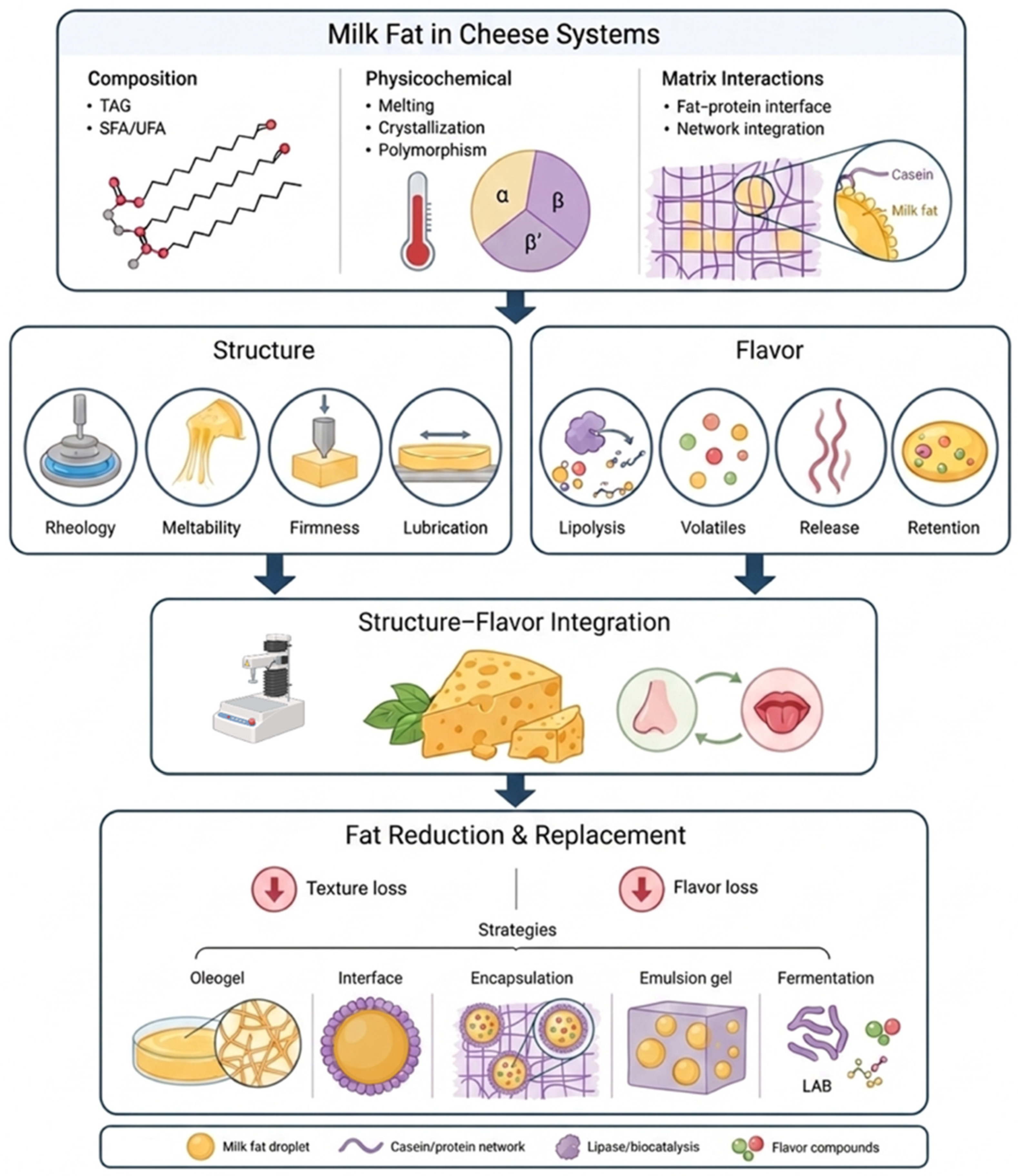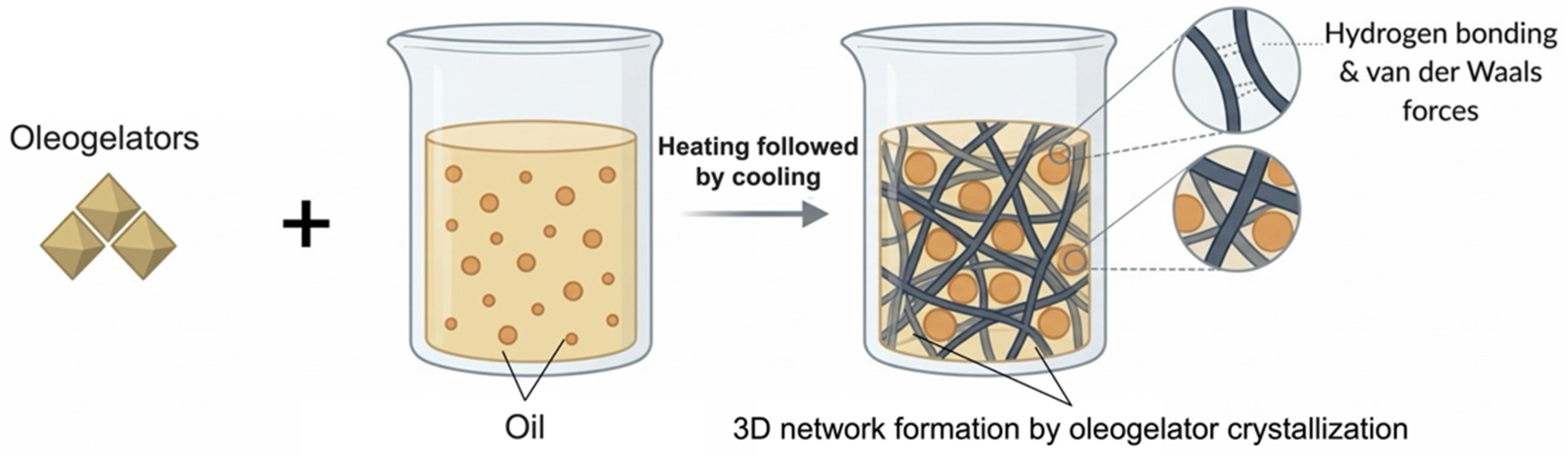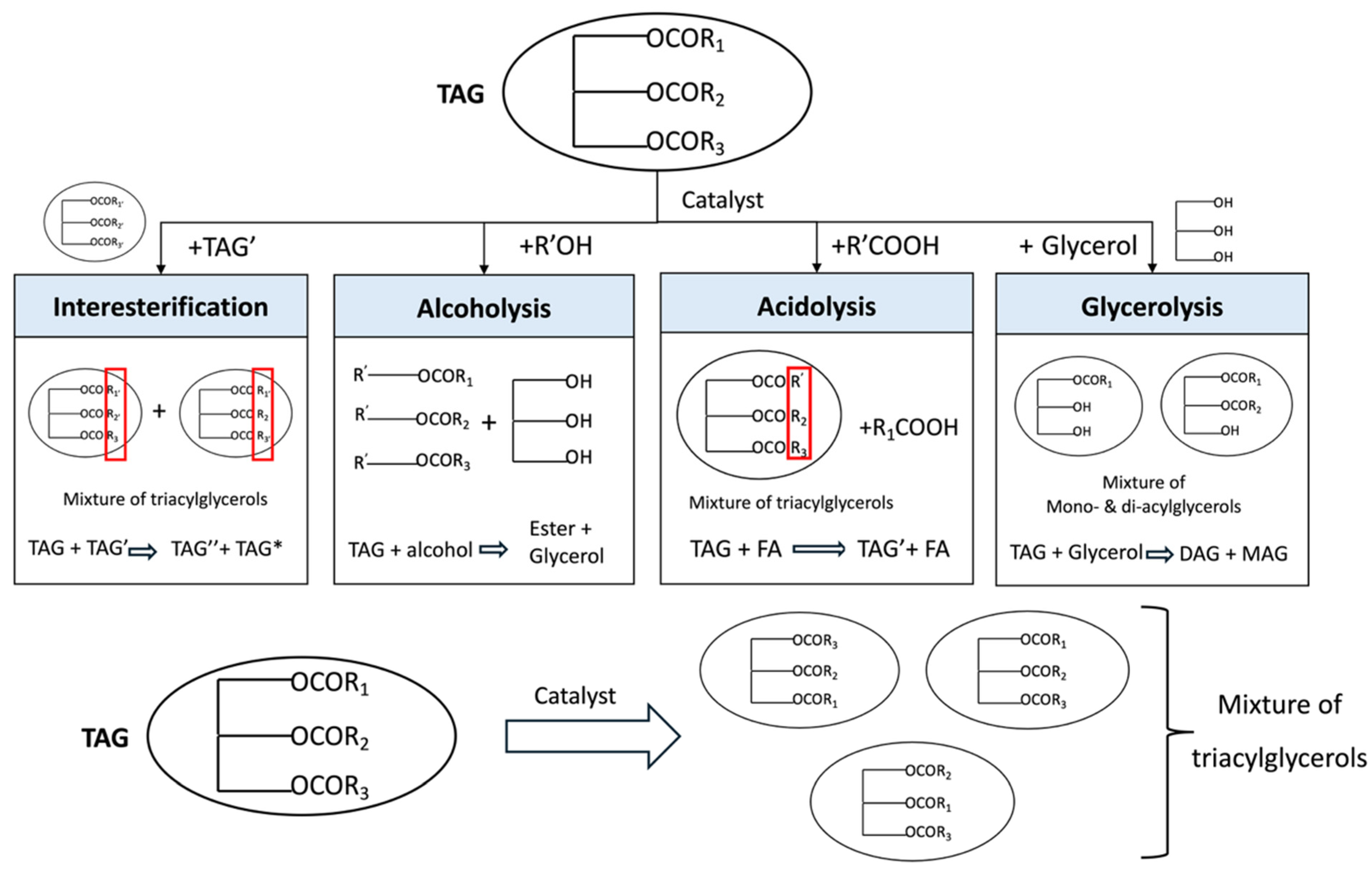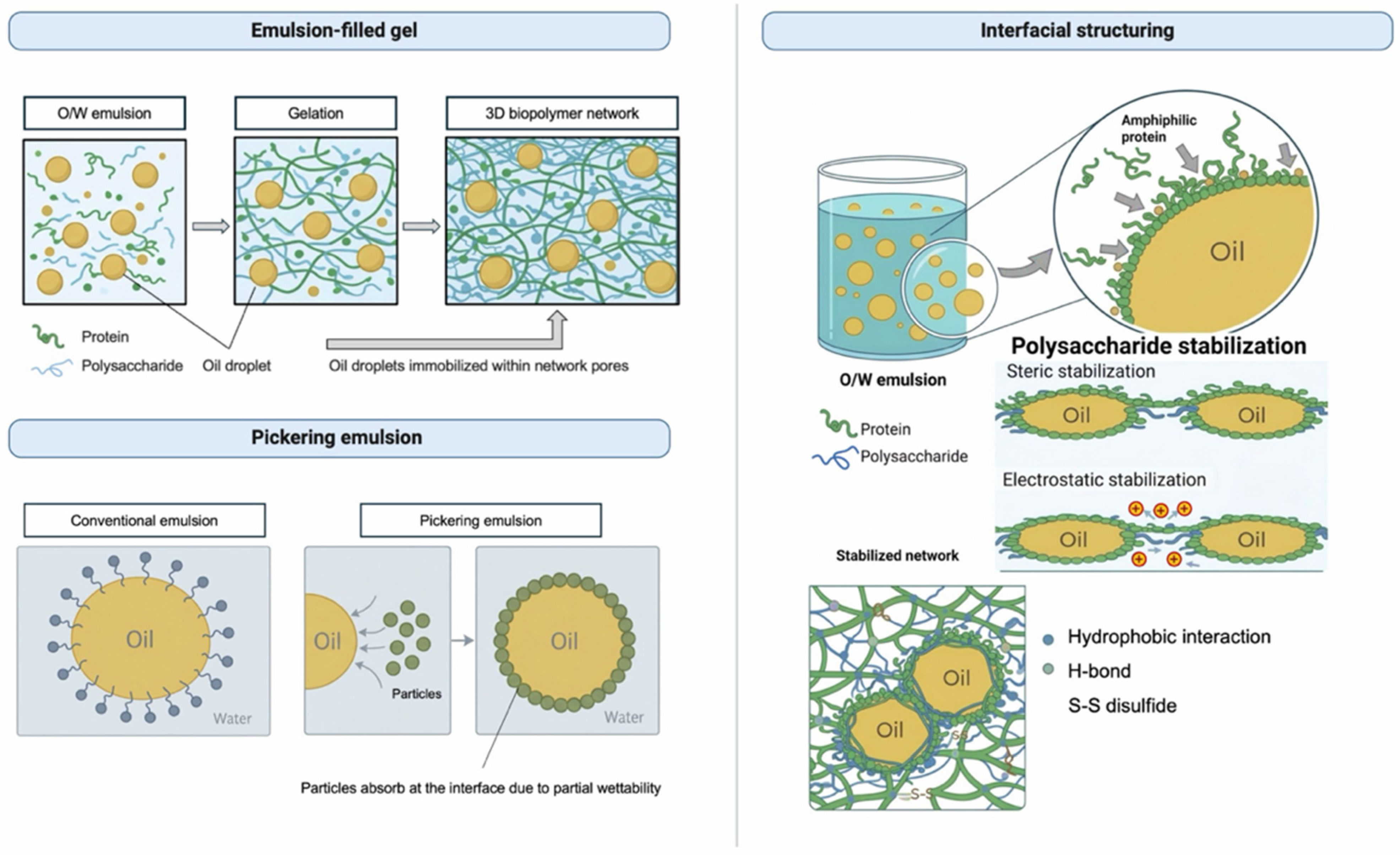
Integrated Insights into Structural and Flavor Functions of Milk Fat in Cheese Systems: Implications for Fat Reduction and Replacement Strategies


Abstract
1. Introduction
2. Literature Search and Selection
3. Structural Role of Dairy Fat in Cheese
3.1. Physicochemical Properties of Milk Fat
3.2. Fatty Acid Composition and Functional Implications
3.3. Fat–Protein Interaction
4. Role of Dairy Fat in Flavor Development in Cheese
4.1. Framework of Cheese Flavor Development Influenced by Milk Fat
4.2. Milk Fat as a Primary Source of Flavor Precursors Through Lipolysis
4.3. Secondary Aroma Compounds Derived from Milk Fat Metabolism

| Group | Name | Odor Descriptor | Odor Threshold in Water | Primary Catabolism Pathway |
|---|---|---|---|---|
| Acid carboxylic | Acetic acid ** | Acetic, sour | 22 ppm/7 ppm (in butter) | Lactose fermentation |
| Butanoic acid * | Sharp, cheese, sweaty, putrid, sour | 0.6–6.8 ppm | Lipolysis | |
| Pentanoic acid * | Putrid, sweaty, rancid | 1.1–6.5 ppm | ||
| Hexanoic acid * | Sickening, sweaty, rancid, sour, sharp, pungent, cheesy, fatty | 1–15 ppm | ||
| 3-methyl butanoic acid ** | Rancid, cheese, sweaty, putrid | 0.07–1 ppm | Amino acid catabolism | |
| Octanoic acid * | Unpleasant, oily, fatty odor, rancid taste | 3–5.8 ppm/350 ppm (in butter) | Lipolysis | |
| Decanoic acid * | Fatty, unpleasant, rancid, citrus | 2.2–10 ppm/200 ppm (in butter) | ||
| Ester | Ethyl butanoate * | Fruity, apple-like, babana, pineapple | 0.13–1 ppb | Esterification: butanoic acid + ethanol |
| Ethyl hexanoate * | Pineapple, ether | 0.3–5 ppb | Hexanoic acid + ethanol. | |
| 3-Methylbutyl acetate * | Fruity, banana | 2–5 ppb | Acetic acid + 3-methylbutanol | |
| Isobutyl butanoate * | Fruity | 9.4 ppb | Butanoic acid + isobutanol | |
| Ethyl octanoate * | Fruity, banana, apple-like | 5–5.8 ppb | Octanoic acid + ethanol. | |
| Phenyl ethyl acetate ** | Fruity | 19–480 ppb | Acetic acid + phenyl ethanol | |
| Ethyl decanoate * | Brandy, oily, fruity, grape-like | 5–23 ppb | Decanoic acid + ethanol | |
| Ketones | 3-Hydroxy-2-butanone (Acetoin) ** | Buttery | 140 ppb | Citrate metabolism |
| 2-Pentanone * | Sweet, fruity, cheesy | 1.6–4 ppm | β-oxidation of fatty acids | |
| 2-Hexanone * | Blue cheese | 40–81 ppb | ||
| 2-Heptanone * | Blue cheese, spicy, cinnamon | 21–140 ppb | ||
| 2-Nonanone * | Fruity, floral | 5–41 ppb | ||
| Alcohols | Ethanol ** | Alcohol, mild | 3.5–2000 ppm | Glycolysis/Fermentation |
| 2-Heptanol * | Earthy, oily, sweetish | 300–500 ppb | Reduction of methyl ketone | |
| 1-Octen-3-ol * | Mushroom | 1–10 ppb | Oxidation of fatty acids | |
| 2-Nonanol * | Fatty, melon, mild green | 85–180 ppb | Reduction of methyl ketone | |
| 3-Methyl-1-butanol ** | Fusel oil, whiskey | 250–300 ppb | Amino acid catabolism | |
| 2-Methyl-1-butanol ** | Fruity, alcohol | 300 ppb | ||
| Phenyl ethanol ** | Rose flower | 750 ppb | ||
| 3-Methyl butanal ** | Green, malty | 1–2 ppb | ||
| Acetaldehyde ** | Ethereal, pungent, green | 1.5 ppb | ||
| Phenyl acetaldehyde ** | Floral, broom | 4–6.3 ppb | ||
| 3-Methyl thiopropanal (methional) ** | Boiled potato | 0.2–1 ppb | Amino acid catabolism | |
| Lactones | δ- decalactone * | Creamy, coconut, peach, milk | 100 ppb | From hydroxy fatty acids |
| δ- dodecalactone * | Fruity, coconut, peach, pear | 45 ppb | ||
| γ-nonalactone * | Coconut, almond, anise | 30 ppb | ||
| γ-decalactone * | Fruity, peach | 1–11 ppb | ||
| Terpen | Styrene ** | Plastic | 3.6–730 ppb | Carry-over from feed |
| Limonene ** | Fruity, lemon | 4–1000 ppb | ||
| Maillard-derived compounds | 2,3-Dimethyl pyrazine ** | Roasted nuts, coffee, peanut, butter | 400–2500 ppb | Maillard reaction |
| Furaneol ** | Burnt sugar, caramel notes | 0.03–200 ppb | Carbohydrate metabolism | |
| Anisole | 4-Methylanisole ** | Gorgonzola cheese | 160 ppb | Metabolism of phenolic compounds |
| Cheese Type | Key Lipid-Derived Compounds | Major Secondary Volatiles from Fat | Characteristic Flavor Profile | Refs. |
|---|---|---|---|---|
| Gorgonzola | Butanoic acid, Hexanoic acid, Octanoic acid, Decanoic acid | 1. Ketones: 2-heptanone, 2-nonanone 2. Alcohols: 1-octen-3-ol, heptan-2-ol, nonan-2-ol. 3. Ester: ethyl hexanoate, ethyl butanoate | 1. Piquant Gorgonzola: salty, moldy/ammonia, pungent, and grainy characteristics; 2. Sweet Gorgonzola: sweet, creamy, and floral characteristics | [97,109,112,114,115] |
| Stilton | Butanoic acid, Hexanoic acid Octanoic acid, Decaoic acid, 3-methylbutanoic acid | 1. Ketones: 2-heptanone, 2-nonanone 2. Alcohols: heptan-2-ol, nonan-2-ol 3. Ester: ethyl butanoate | Creamy, moldy, slightly sharp, and metallic flavor characteristics | [88,89] |
| Camembert | Butanoic acid, Hexanoic acid, Octanoic acid, Lauric acid, Palmitic acid, Oleic acid, Hexanoic acid | 1. Ketones: 2-heptanone, 2-nonanone, 2-undecanone 2. Alcohols: 1-octen-3-ol 3. Ester: ethyl octanoate, ethyl butanoate and ethyl hexanoate | 1. Young cheese: sour and weak aroma; 2. Moderately ripened cheese: mushroom-like, buttery, soft, and elastic characteristics; 3. Over-ripened cheese: ammonia odor | [91,116,117] |
| Full fat Cheddar | Butanoic acid, Pentanoic acid, Hexanoic acid, Octanoic acid, Decanoic acid | 1. Ketones: 2,3-butanedione, 2-heptanone 2. Ester: ethyl butyrate, ethyl caproate 3. Lactones: δ-decalactone, γ-decalactone | 1. Long-ripened cheese: fruity and sulfur notes 2. Younger cheese: spicy and brothy flavor | [87,101,118,119,120] |
| Low fat Cheddar | Butanoic acid, Hexanoic acid | 1. Lactones: * | Bitter, rosy, burnt, and weaker creamy/fatty | [120,121] |
4.4. Milk Fat as a Matrix Regulating Aroma Retention and Sensory Perception
4.5. Indirect Modulation of Proteolysis- and Carbohydrate-Derived Flavor by Milk Fat
5. Mechanistic Implications for Fat Replacement in Cheese Systems
5.1. Replicating Lipid Crystallization and Melting Behavior
5.2. Modifying Interfacial Interactions Within the Protein Matrix

5.3. Modulating Lipid-Derived Flavor Pathway
5.4. Modulating Aroma Retention and Sensory Perception
6. Conclusions and Future Research Perspectives
Author Contributions
Funding
Institutional Review Board Statement
Informed Consent Statement
Data Availability Statement
Conflicts of Interest
Abbreviations
| TAGs | Triacylglycerols |
| SFC | Solid fat content |
| AMF | Anhydrous milk fat |
| SFAs | Saturated fatty acids |
| UFAs | Unsaturated fatty acids |
| MUFAs | Monounsaturated fatty acids |
| CMP | Caseinomacropeptide |
| PUFAs | Polyunsaturated fatty acids |
| MFGM | Milk fat globule membrane |
| ADV | Acid degree value |
| LCFA | Long-chain fatty acids |
| MCFA | Medium-chain fatty acids |
| SCFA | Short-chain fatty acids |
| FFAs | Free fatty acids |
| FAAs | Free amino acids |
| Arg | Arginine |
| Pro | Proline |
| Ser | Serine |
| Asn | Asparagine |
| DMS | Dimethyl sulfide |
| DMDS | Dimethyl disulfide |
| DMTS | Dimethyl trisulfide |
| HOSO | High-oleic sunflower oil |
| PCA | Plant-based cheese alternative |
References
- Fox, P.F.; McSweeney, P.L.H. Cheese: An Overview. In Cheese; Elsevier: Amsterdam, The Netherlands, 2017; pp. 5–21. [Google Scholar]
- Lamichhane, P.; Kelly, A.L.; Sheehan, J.J. Symposium Review: Structure-Function Relationships in Cheese. J. Dairy Sci. 2018, 101, 2692–2709. [Google Scholar] [CrossRef]
- Kongo, J.M.; Malcata, F.X. Cheese: Processing and Sensory Properties. In Encyclopedia of Food and Health; Elsevier: Amsterdam, The Netherlands, 2016; pp. 748–754. [Google Scholar]
- Waldron, D.S.; Hoffmann, W.; Buchheim, W.; McMahon, D.J.; Goff, H.D.; Crowley, S.V.; Moloney, C.; O’Regan, J.; Giuffrida, F.; Celigueta Torres, I.; et al. Role of Milk Fat in Dairy Products. In Advanced Dairy Chemistry, Volume 2; McSweeney, P.L.H., Fox, P.F., O’Mahony, J.A., Eds.; Springer International Publishing: Cham, Switzerland, 2020; pp. 245–305. [Google Scholar]
- Shahidi, F.; Weenen, H. (Eds.) Food Lipids: Chemistry, Flavor, and Texture; ACS Symposium Series; American Chemical Society: Washington, DC, USA, 2005; Volume 920. [Google Scholar]
- Cui, G.; Liu, Q.; Li, F.; Pang, X.; Xie, N.; Geng, X.; Li, H.; Wang, Y.; Lv, J.; Zhang, S. Exploring the Role of Milk Fat Structure and Crystallization in Enhancing Whipped Cream Properties and Stability. LWT 2025, 228, 118054. [Google Scholar] [CrossRef]
- Coppa, M.; Ferlay, A.; Monsallier, F.; Verdier-Metz, I.; Pradel, P.; Didienne, R.; Farruggia, A.; Montel, M.C.; Martin, B. Milk Fatty Acid Composition and Cheese Texture and Appearance from Cows Fed Hay or Different Grazing Systems on Upland Pastures. J. Dairy Sci. 2011, 94, 1132–1145. [Google Scholar] [CrossRef] [PubMed]
- Rowney, M.K.; Hickey, M.W.; Roupas, P.; Everett, D.W. The Effect of Homogenization and Milk Fat Fractions on the Functionality of Mozzarella Cheese. J. Dairy Sci. 2003, 86, 712–718. [Google Scholar] [CrossRef]
- Deshwal, G.K.; Van Der Meulen, L.; Fenelon, M.; Gómez-Mascaraque, L.G.; Huppertz, T. Properties of Processed Cheese Made from Cagliata Cheese: Influence of Fat Content and Ripening of Cagliata Cheese and Homogenization of Cheese Milk. Food Struct. 2025, 43, 100406. [Google Scholar] [CrossRef]
- Lei, Y.; Guo, X.; Wu, Z.; Feng, J.; Yang, T.; Zhang, W.; Cong, Y. Evaluation of Flavor Quality of Commercial Butter: A Systematic Comparison of Sweet Cream and Cultured Butter. Food Chem. X 2025, 32, 103334. [Google Scholar] [CrossRef] [PubMed]
- Alehosseini, E.; McSweeney, P.L.H.; Miao, S. Recent Updates on Plant Protein-Based Dairy Cheese Alternatives: Outlook and Challenges. Crit. Rev. Food Sci. Nutr. 2025, 65, 6846–6860. [Google Scholar] [CrossRef]
- Ray, A.; Dev, M.; Das, M. A Concise Review on Current Trend of Replacing Fat in the Development of Non-Dairy Cheese Analogues. Food Sci. Biotechnol. 2025, 34, 1557–1564. [Google Scholar] [CrossRef]
- Giha, V.; Ordoñez, M.J.; Villamil, R.A. How Does Milk Fat Replacement Influence Cheese Analogue Microstructure, Rheology, and Texture Profile? J. Food Sci. 2021, 86, 2802–2815. [Google Scholar] [CrossRef]
- Majhenič, A.Č.; Levart, A.; Salobir, J.; Prevc, T.; Pajk Žontar, T. Can Plant-Based Cheese Substitutes Nutritionally and Sensorially Replace Cheese in Our Diet? Foods 2025, 14, 771. [Google Scholar] [CrossRef]
- Tekin, A.; Hayaloğlu, A.A. Overcoming the Flavour and Textural/Rheological Problems of Plant-Based Cheese Alternatives: Challenges and Solution Strategies. Future Foods 2025, 11, 100531. [Google Scholar] [CrossRef]
- Savchina, E.; Grosso, A.L.; Massoner, P.; Morozova, K.; Scampicchio, M.M.; Ferrentino, G. From Liquid to Solid: Exploring Techniques, Applications, and Challenges of Structured Oils as Fat Replacements in Food Formulations. Compr. Rev. Food Sci. Food Saf. 2025, 24, e70163. [Google Scholar] [CrossRef]
- Lorenzen, M.; Van Den Berg, F.W.J.; Lillevang, S.K.; Ahrné, L. The Effect of Milk Fat Content on Microstructure and Rheological Properties of Rennet Casein Gel Emulsions. Food Hydrocoll. 2024, 146, 109243. [Google Scholar] [CrossRef]
- Luo, J.; Wang, Y.; Guo, H.; Ren, F. Effects of Size and Stability of Native Fat Globules on the Formation of Milk Gel Induced by Rennet. J. Food Sci. 2017, 82, 670–678. [Google Scholar] [CrossRef]
- Short, E.C.; Kinchla, A.J.; Nolden, A.A. Plant-Based Cheeses: A Systematic Review of Sensory Evaluation Studies and Strategies to Increase Consumer Acceptance. Foods 2021, 10, 725. [Google Scholar] [CrossRef]
- Lopez, C.; Lesieur, P.; Bourgaux, C.; Ollivon, M. Thermal and Structural Behavior of Anhydrous Milk Fat. 3. Influence of Cooling Rate. J. Dairy Sci. 2005, 88, 511–526. [Google Scholar] [CrossRef]
- Takeguchi, S.; Sato, A.; Hondoh, H.; Aoki, M.; Uehara, H.; Ueno, S. Multiple β Forms of Saturated Monoacid Triacylglycerol Crystals. Molecules 2020, 25, 5086. [Google Scholar] [CrossRef]
- Dreher, J.; Blach, C.; Terjung, N.; Gibis, M.; Weiss, J. Formation and Characterization of Plant-based Emulsified and Crosslinked Fat Crystal Networks to Mimic Animal Fat Tissue. J. Food Sci. 2020, 85, 421–431. [Google Scholar] [CrossRef]
- Ghazani, S.M.; Marangoni, A.G. Molecular Origins of Polymorphism in Cocoa Butter. Annu. Rev. Food Sci. Technol. 2021, 12, 567–590. [Google Scholar] [CrossRef]
- Li, L.; Liu, G. Engineering Effect of Oleogels with Different Structuring Mechanisms on the Crystallization Behavior of Cocoa Butter. Food Chem. 2023, 422, 136292. [Google Scholar] [CrossRef]
- Martini, S.; Awad, T.; Marangoni, A.G. Structure and Properties of Fat Crystal Networks. In Modifying Lipids for Use in Food; Elsevier: Amsterdam, The Netherlands, 2006; pp. 142–169. [Google Scholar]
- Berry, S.E.E. Triacylglycerol Structure and Interesterification of Palmitic and Stearic Acid-Rich Fats: An Overview and Implications for Cardiovascular Disease. Nutr. Res. Rev. 2009, 22, 3–17. [Google Scholar] [CrossRef]
- Rogers, M.A.; Tang, D.; Ahmadi, L.; Marangoni, A.G. Fat Crystal Networks. In Food Materials Science; Aguilera, J.M., Lillford, P.J., Eds.; Springer: New York, NY, USA, 2008; pp. 369–414. [Google Scholar]
- Cholakova, D.; Denkov, N. Polymorphic Phase Transitions in Triglycerides and Their Mixtures Studied by SAXS/WAXS Techniques: In Bulk and in Emulsions. Adv. Colloid Interface Sci. 2024, 323, 103071. [Google Scholar] [CrossRef]
- Lokuge, G.M.S.; Maigaard, M.; Lund, P.; Rovers, T.A.M.; Larsen, L.B.; Poulsen, N.A.; Wiking, L. Physico-Chemical, Sensory and Oxidative Quality of Butter from Cows Fed 3-Nitrooxypropanol. Int. Dairy J. 2024, 152, 105885. [Google Scholar] [CrossRef]
- Schmelzer, J.M.; Hartel, R.W. Interactions of Milk Fat and Milk Fat Fractions with Confectionery Fats. J. Dairy Sci. 2001, 84, 332–344. [Google Scholar] [CrossRef]
- Gliguem, H.; Ghorbel, D.; Lopez, C.; Michon, C.; Ollivon, M.; Lesieur, P. Crystallization and Polymorphism of Triacylglycerols Contribute to the Rheological Properties of Processed Cheese. J. Agric. Food Chem. 2009, 57, 3195–3203. [Google Scholar] [CrossRef]
- Wiking, L.; De Graef, V.; Rasmussen, M.; Dewettinck, K. Relations between Crystallisation Mechanisms and Microstructure of Milk Fat. Int. Dairy J. 2009, 19, 424–430. [Google Scholar] [CrossRef]
- Gliguem, H.; Lopez, C.; Michon, C.; Lesieur, P.; Ollivon, M. The Viscoelastic Properties of Processed Cheeses Depend on Their Thermal History and Fat Polymorphism. J. Agric. Food Chem. 2011, 59, 3125–3134. [Google Scholar] [CrossRef]
- Ramel, P.R.; Marangoni, A.G. Insights into the Mechanism of the Formation of the Most Stable Crystal Polymorph of Milk Fat in Model Protein Matrices. J. Dairy Sci. 2017, 100, 6930–6937. [Google Scholar] [CrossRef]
- Tzompa-Sosa, D.A.; Ramel, P.R.; Van Valenberg, H.J.F.; Van Aken, G.A. Formation of β Polymorphs in Milk Fats with Large Differences in Triacylglycerol Profiles. J. Agric. Food Chem. 2016, 64, 4152–4157. [Google Scholar] [CrossRef]
- Lopez, C. Crystallization and Melting Properties of Milk Fat. In Dairy Fat Products and Functionality; Truong, T., Lopez, C., Bhandari, B., Prakash, S., Eds.; Springer International Publishing: Cham, Switzerland, 2020; pp. 205–243. [Google Scholar]
- Ramel, P.R.; Marangoni, A.G. Characterization of the Polymorphism of Milk Fat within Processed Cheese Products. Food Struct. 2017, 12, 15–25. [Google Scholar] [CrossRef]
- Tran, T.; Rousseau, D. Influence of Shear on Fat Crystallization. Food Res. Int. 2016, 81, 157–162. [Google Scholar] [CrossRef]
- Campos, R.; Narine, S.S.; Marangoni, A.G. Effect of Cooling Rate on the Structure and Mechanical Properties of Milk Fat and Lard. Food Res. Int. 2002, 35, 971–981. [Google Scholar] [CrossRef]
- Van Der Sman, R.G.M.; Van Den Hoek, I.A.F.; Zhao, Y. Interaction of Milk Fat Solidification and Cheese Cooling. J. Food Eng. 2025, 395, 112531. [Google Scholar] [CrossRef]
- Herrera, M.L.; Hartel, R.W. Effect of Processing Conditions on Crystallization Kinetics of a Milk Fat Model System. J. Am. Oil Chem. Soc. 2000, 77, 1177–1188. [Google Scholar] [CrossRef]
- Mazzanti, G.; Marangoni, A.G.; Idziak, S.H.J. Synchrotron Study on Crystallization Kinetics of Milk Fat under Shear Flow. Food Res. Int. 2009, 42, 682–694. [Google Scholar] [CrossRef]
- Kaufmann, N.; Kirkensgaard, J.J.K.; Andersen, U.; Wiking, L. Shear and Rapeseed Oil Addition Affect the Crystal Polymorphic Behavior of Milk Fat. J. Am. Oil Chem. Soc. 2013, 90, 871–880. [Google Scholar] [CrossRef]
- Grall, D.S.; Hartel, R.W. Kinetics of Butterfat Crystallization. J. Am. Oil Chem. Soc. 1992, 69, 741–747. [Google Scholar] [CrossRef]
- Mititelu, M.; Lupuliasa, D.; Neacșu, S.M.; Olteanu, G.; Busnatu, Ș.S.; Mihai, A.; Popovici, V.; Măru, N.; Boroghină, S.C.; Mihai, S.; et al. Polyunsaturated Fatty Acids and Human Health: A Key to Modern Nutritional Balance in Association with Polyphenolic Compounds from Food Sources. Foods 2024, 14, 46. [Google Scholar] [CrossRef]
- Kapoor, B.; Kapoor, D.; Gautam, S.; Singh, R.; Bhardwaj, S. Dietary Polyunsaturated Fatty Acids (PUFAs): Uses and Potential Health Benefits. Curr. Nutr. Rep. 2021, 10, 232–242. [Google Scholar] [CrossRef] [PubMed]
- Lindmark Månsson, H. Fatty Acids in Bovine Milk Fat. Food Nutr. Res. 2008, 52, 1821. [Google Scholar] [CrossRef]
- Taylor, M.W.; MacGibbon, A.K.H. Milk Lipids|Fatty Acids. In Encyclopedia of Dairy Sciences; Elsevier: Amsterdam, The Netherlands, 2011; pp. 655–659. [Google Scholar]
- Yang, D.; Lee, Y.-Y.; Lu, Y.; Wang, Y.; Zhang, Z. Internal Factors Affecting the Crystallization of the Lipid System: Triacylglycerol Structure, Composition, and Minor Components. Molecules 2024, 29, 1847. [Google Scholar] [CrossRef] [PubMed]
- Leong, T.S.H.; Ong, L.; Gamlath, C.J.; Gras, S.L.; Ashokkumar, M.; Martin, G.J.O. Formation of Cheddar Cheese Analogues Using Canola Oil and Ultrasonication—A Comparison between Single and Double Emulsion Systems. Int. Dairy J. 2020, 105, 104683. [Google Scholar] [CrossRef]
- Sanders, C.; Dobson, S.; Marangoni, A.G. Effect of Saturated and Unsaturated Fat on the Physical Properties of Plant-Based Cheese. Curr. Res. Food Sci. 2024, 9, 100832. [Google Scholar] [CrossRef]
- El-Metwally, R.I.; El-Menawy, R.K.; Ismail, M.M. Correlation between Free Fatty Acids Content and Textural Properties of Gouda Cheese Supplemented with Denatured Whey Protein Paste. J. Food Sci. Technol. 2023, 60, 590–599. [Google Scholar] [CrossRef]
- Moon, K.; Choi, K.-O.; Jeong, S.; Kim, Y.-W.; Lee, S. Solid Fat Replacement with Canola Oil-Carnauba Wax Oleogels for Dairy-Free Imitation Cheese Low in Saturated Fat. Foods 2021, 10, 1351. [Google Scholar] [CrossRef]
- Hamdy, S.M.; Metwally, A.A.; Deghedie, M.A.; Abdelmontaleb, H.S. Characterization of Fatty Acid Profiles and Nutritional Quality Indices in Commercial Spreadable Processed Cheeses: Comparative Analysis and Health Implications. Food Saf. Health 2026, 1–20. [Google Scholar] [CrossRef]
- Kasprzak, M.M.; Najgebauer-Lejko, D.; Pluta-Kubica, A.; Turek, K.; Domagała, J.; Czaja, T.P. Impact of Milk Fat Globule Replacement with Emulsified Canola Oil Droplets on the Composition, Structure, Texture, Sensory Properties, and Lipid Oxidation of Fresh Soft Rennet Cheese. J. Dairy Sci. 2025, 108, 8259–8272. [Google Scholar] [CrossRef] [PubMed]
- Fusaro, I.; Giammarco, M.; Odintsov Vaintrub, M.; Chincarini, M.; Manetta, A.C.; Mammi, L.M.E.; Palmonari, A.; Formigoni, A.; Vignola, G. Effects of Three Different Diets on the Fatty Acid Profile and Sensory Properties of Fresh Pecorino Cheese “Primo Sale”. Asian-Australas. J. Anim. Sci. 2020, 33, 1991–1998. [Google Scholar] [CrossRef] [PubMed]
- Vanbergue, E.; Hurtaud, C.; Peyraud, J.-L.; Beuvier, E.; Duboz, G.; Buchin, S. Effects of N-3 Fatty Acid Sources on Butter and Hard Cooked Cheese; Technological Properties and Sensory Quality. Int. Dairy J. 2018, 82, 35–44. [Google Scholar] [CrossRef]
- Obeid, S.; Guyomarc’h, F.; Francius, G.; Guillemin, H.; Wu, X.; Pezennec, S.; Famelart, M.-H.; Cauty, C.; Gaucheron, F.; Lopez, C. The Surface Properties of Milk Fat Globules Govern Their Interactions with the Caseins: Role of Homogenization and pH Probed by AFM Force Spectroscopy. Colloids Surf. B Biointerfaces 2019, 182, 110363. [Google Scholar] [CrossRef]
- Černíková, M.; Nebesářová, J.; Salek, R.N.; Řiháčková, L.; Buňka, F. Microstructure and Textural and Viscoelastic Properties of Model Processed Cheese with Different Dry Matter and Fat in Dry Matter Content. J. Dairy Sci. 2017, 100, 4300–4307. [Google Scholar] [CrossRef]
- Guinee, T.P.; Gorry, C.B.; O’Callaghan, D.J.; O’Kennedy, B.T.; O’Brie, N.; Fenelon, M.A. The Effects of Composition and Some Processing Treatments on the Rennet Coagulation Properties of Milk. Int. J. Dairy Technol. 1997, 50, 99–106. [Google Scholar] [CrossRef]
- Guinee, T.P.; Auty, M.A.E.; Fenelon, M.A. The Effect of Fat Content on the Rheology, Microstructure and Heat-Induced Functional Characteristics of Cheddar Cheese. Int. Dairy J. 2000, 10, 277–288. [Google Scholar] [CrossRef]
- Michalski, M.C.; Cariou, R.; Michel, F.; Garnier, C. Native vs. Damaged Milk Fat Globules: Membrane Properties Affect the Viscoelasticity of Milk Gels. J. Dairy Sci. 2002, 85, 2451–2461. [Google Scholar] [CrossRef] [PubMed]
- Goff, H.D. Dairy Product Processing Equipment. In Handbook of Farm, Dairy and Food Machinery Engineering; Elsevier: Amsterdam, The Netherlands, 2013; pp. 199–221. [Google Scholar]
- Kiełczewska, K.; Ambroziak, K.; Krzykowska, D.; Aljewicz, M. The Effect of High-Pressure Homogenisation on the Size of Milk Fat Globules and MFGM Composition in Sweet Buttermilk and Milk. Int. Dairy J. 2021, 113, 104898. [Google Scholar] [CrossRef]
- Oppen, D.; Schmidt, F.; Braitmaier, S.H.; Hinrichs, J.; Weiss, J. Modelling of Dynamic Mastication Physics of Cheese/Casein Gels as Function of Milk-Fat Distribution and Intensity of Thermo-Mechanical Treatment. Food Res. Int. 2024, 192, 114694. [Google Scholar] [CrossRef]
- Singh, H. Symposium Review: Fat Globules in Milk and Their Structural Modifications during Gastrointestinal Digestion. J. Dairy Sci. 2019, 102, 2749–2759. [Google Scholar] [CrossRef] [PubMed]
- Vigneux, M.-P.B.; Villeneuve, W.; Pouliot, Y.; Britten, M. Increasing the Proportion of Homogenised Fat in Cheese Milk: Effect on Cheese-Making Properties. Int. Dairy J. 2022, 126, 105254. [Google Scholar] [CrossRef]
- Yao, D.; Sun, L.-C.; Zhang, L.-J.; Chen, Y.-L.; Miao, S.; Cao, M.-J.; Lin, D. Emulsion Structural Remodeling in Milk and Its Gelling Products: A Review. Gels 2024, 10, 671. [Google Scholar] [CrossRef]
- Lepesioti, S.; Zoidou, E.; Lioliou, D.; Moschopoulou, E.; Moatsou, G. Quark-Type Cheese: Effect of Fat Content, Homogenization, and Heat Treatment of Cheese Milk. Foods 2021, 10, 184. [Google Scholar] [CrossRef]
- Schmidt, F.; Hinrichs, J. Linking Milk Homogenization to Meltability and Microstructure of Cheese. Int. Dairy J. 2026, 172, 106427. [Google Scholar] [CrossRef]
- Rogers, N.R.; McMahon, D.J.; Daubert, C.R.; Berry, T.K.; Foegeding, E.A. Rheological Properties and Microstructure of Cheddar Cheese Made with Different Fat Contents. J. Dairy Sci. 2010, 93, 4565–4576. [Google Scholar] [CrossRef]
- Guinee, T.P.; O’Callaghan, D.J. Effect of Increasing the Protein-to-Fat Ratio and Reducing Fat Content on the Chemical and Physical Properties of Processed Cheese Product. J. Dairy Sci. 2013, 96, 6830–6839. [Google Scholar] [CrossRef]
- Bouchoux, A.; Cayemitte, P.-E.; Jardin, J.; Gésan-Guiziou, G.; Cabane, B. Casein Micelle Dispersions under Osmotic Stress. Biophys. J. 2009, 96, 693–706. [Google Scholar] [CrossRef]
- Cai, H.; Bijl, E.; Sala, G.; Scholten, E. Relationship between the Perception of Complex Textural Attributes and the Bolus Properties of Cheese. Food Hydrocoll. 2024, 150, 109713. [Google Scholar] [CrossRef]
- Caro, I.; Soto, S.; Franco, M.J.; Meza-Nieto, M.; Alfaro-Rodríguez, R.H.; Mateo, J. Composition, Yield, and Functionality of Reduced-Fat Oaxaca Cheese: Effects of Using Skim Milk or a Dry Milk Protein Concentrate. J. Dairy Sci. 2011, 94, 580–588. [Google Scholar] [CrossRef]
- Lorenzen, M.; Tică, A.; Lillevang, S.K.; Windhab, E.J.; Ahrné, L. The Influence of Milk Fat Content on the Extrusion of Rennet Casein Emulsion Gels. Food Hydrocoll. 2025, 163, 111109. [Google Scholar] [CrossRef]
- Atik, D.S.; Huppertz, T. Melting of Natural Cheese: A Review. Int. Dairy J. 2023, 142, 105648. [Google Scholar] [CrossRef]
- Fox, P.F.; Wallace, J.M. Formation of Flavor Compounds in Cheese. In Advances in Applied Microbiology; Elsevier: Amsterdam, The Netherlands, 1997; Volume 45, pp. 17–85. [Google Scholar]
- Shahidi, F.; Hossain, A. Role of Lipids in Food Flavor Generation. Molecules 2022, 27, 5014. [Google Scholar] [CrossRef]
- Fox, P.F.; McSweeney, P.L.H. (Eds.) Advanced Dairy Chemistry Volume 2 Lipids; Springer: Boston, MA, USA, 2006. [Google Scholar]
- Hassan, F.A.M.; Abd El-Gawad, M.A.M.; Enab, A.K. Flavour Compounds in Cheese (Review). Int. J. Acad. Res. 2012, 4, 169–181. [Google Scholar] [CrossRef]
- McSweeney, P.L.H.; Sousa, M.J. Biochemical Pathways for the Production of Flavour Compounds in Cheeses during Ripening: A Review. Le Lait 2000, 80, 293–324. [Google Scholar] [CrossRef]
- Fox, P.F. (Ed.) Cheese: Chemistry, Physics and Microbiology; Springer: Boston, MA, USA, 1993. [Google Scholar]
- Murata, R.; Shim, Y.Y.; Kim, Y.J.; Reaney, M.J.T.; Tse, T.J. Exploring Lactic Acid Bacteria in Food, Human Health, and Agriculture. Crit. Rev. Food Sci. Nutr. 2025, 65, 8122–8148. [Google Scholar] [CrossRef]
- Boutrou, R.; Guéguen, M. Interests in Geotrichum Candidum for Cheese Technology. Int. J. Food Microbiol. 2005, 102, 1–20. [Google Scholar] [CrossRef]
- Ropars, J. Penicillium Camemberti. In Encyclopedia of Dairy Sciences; Elsevier: Amsterdam, The Netherlands, 2022; pp. 593–598. [Google Scholar]
- You, L.-Q.; Wang, Y.-R.; Bai, S.; Wang, X.-Y.; Wei, Z.-J. Impact of Ripening Periods on the Key Volatile Compounds of Cheddar Cheese Evaluated by Sensory Evaluation, Instrumental Analysis and Chemometrics Method. Appl. Food Res. 2024, 4, 100578. [Google Scholar] [CrossRef]
- Gkatzionis, K.; Linforth, R.S.T.; Dodd, C.E.R. Volatile Profile of Stilton Cheeses: Differences between Zones within a Cheese and Dairies. Food Chem. 2009, 113, 506–512. [Google Scholar] [CrossRef]
- Lawlor, J.B.; Delahunty, C.M.; Sheehan, J.; Wilkinson, M.G. Relationships between Sensory Attributes and the Volatile Compounds, Non-Volatile and Gross Compositional Constituents of Six Blue-Type Cheeses. Int. Dairy J. 2003, 13, 481–494. [Google Scholar] [CrossRef]
- McSweeney, P.; Fox, P.F. (Eds.) Advanced Dairy Chemistry: Volume 3: Lactose, Water, Salts and Minor Constituents; Springer: New York, NY, USA, 2009. [Google Scholar]
- Ramirez, B.F.D.; Martins, G.A.; Bicas, J.L.; Maróstica Júnior, M.R. Formation and Characterization of Aroma Compounds in Camembert Cheese. Compounds 2025, 5, 19. [Google Scholar] [CrossRef]
- Anastasiou, R.; Kazou, M.; Georgalaki, M.; Aktypis, A.; Zoumpopoulou, G.; Tsakalidou, E. Omics Approaches to Assess Flavor Development in Cheese. Foods 2022, 11, 188. [Google Scholar] [CrossRef]
- Mei, J.; Guo, Q.; Wu, Y.; Li, Y.; Yu, H. Study of Proteolysis, Lipolysis, and Volatile Compounds of a Camembert-Type Cheese Manufactured Using a Freeze-Dried Tibetan Kefir Co-Culture during Ripening. Food Sci. Biotechnol. 2015, 24, 393–402. [Google Scholar] [CrossRef]
- Ferroukhi, I.; Chassard, C.; Mardon, J. A Comprehensive Overview of Blue-Veined Cheeses. Int. Dairy J. 2024, 154, 105926. [Google Scholar] [CrossRef]
- Diezhandino, I.; Fernández, D.; Abarquero, D.; Prieto, B.; Renes, E.; Fresno, J.M.; Tornadijo, M.E. Changes in the Concentration and Profile of Free Fatty Acids during the Ripening of a Spanish Blue-Veined Cheese Made from Raw and Pasteurized Cow and Goat Milk. Dairy 2023, 4, 222–234. [Google Scholar] [CrossRef]
- Salvatore, E.; Addis, M.; Pes, M.; Fiori, M.; Pirisi, A. Evaluation of Lipolysis and Volatile Compounds Produced by Three Penicillium Roqueforti Commercial Cultures in a Blue-Type Cheese Made from Ovine Milk. Ital. J. Food Sci. 2015, 27, 437–442. [Google Scholar] [CrossRef]
- Sablé, S.; Cottenceau, G. Current Knowledge of Soft Cheeses Flavor and Related Compounds. J. Agric. Food Chem. 1999, 47, 4825–4836. [Google Scholar] [CrossRef]
- Tamime, A.Y.; Marshall, V.M.E. Microbiology and Technology of Fermented Milks. In Microbiology and Biochemistry of Cheese and Fermented Milk; Law, B.A., Ed.; Springer: Boston, MA, USA, 1997; pp. 57–152. [Google Scholar]
- Zheng, X.; Shi, X.; Wang, B. A Review on the General Cheese Processing Technology, Flavor Biochemical Pathways and the Influence of Yeasts in Cheese. Front. Microbiol. 2021, 12, 703284. [Google Scholar] [CrossRef]
- Mugampoza, D.; Gkatzionis, K.; Linforth, R.S.T.; Dodd, C.E.R. Acid Production, Growth Kinetics and Aroma Profiles of Lactobacillus Flora from Stilton Cheese. Food Chem. 2019, 287, 222–231. [Google Scholar] [CrossRef] [PubMed]
- Huang, W.; Gumulya, Y.; Wätjen, A.P.; Marcellin, E.; Prakash, S.; Bang-Berthelsen, C.H.; Turner, M.S. Enhancing Dairy-like Aromas and Reducing Beany Flavours in Mould-Ripened Soy Cheeses. Int. J. Food Microbiol. 2025, 443, 111408. [Google Scholar] [CrossRef]
- Warner, E.; Homwongpanich, K.; Drake, M. Consumer Perception of Plant-Based Cheese. J. Food Sci. 2025, 90, e70460. [Google Scholar] [CrossRef] [PubMed]
- James, S.; Nwokocha, L.; Tsebam, B.C.; Amuga, S.J.; Ibrahim, A.B.; Audu, Y. Effects of Different Coagulants on the Physico-Chemical, Microbial and Sensory Properties of Wara, a Nigerian Soft Soy-Cheese. Agro Sci. 2017, 15, 41. [Google Scholar] [CrossRef]
- Luo, H.; Akkermans, S.; Verheyen, D.; Wang, J.; Polanska, M.; Van Impe, J.F.M. Tuning and Modeling Cheese Flavor. Compr. Rev. Food Sci. Food Saf. 2024, 23, e13420. [Google Scholar] [CrossRef]
- Grebenteuch, S.; Kanzler, C.; Klaußnitzer, S.; Kroh, L.W.; Rohn, S. The Formation of Methyl Ketones during Lipid Oxidation at Elevated Temperatures. Molecules 2021, 26, 1104. [Google Scholar] [CrossRef]
- Collins, Y.F.; McSweeney, P.L.H.; Wilkinson, M.G. Lipolysis and Free Fatty Acid Catabolism in Cheese: A Review of Current Knowledge. Int. Dairy J. 2003, 13, 841–866. [Google Scholar] [CrossRef]
- Manzo, N.; Santini, A.; Pizzolongo, F.; Aiello, A.; Marrazzo, A.; Meca, G.; Durazzo, A.; Lucarini, M.; Romano, R. Influence of Ripening on Chemical Characteristics of a Traditional Italian Cheese: Provolone Del Monaco. Sustainability 2019, 11, 2520. [Google Scholar] [CrossRef]
- Chandra, P.; Enespa; Singh, R.; Arora, P.K. Microbial Lipases and Their Industrial Applications: A Comprehensive Review. Microb. Cell Factories 2020, 19, 169. [Google Scholar] [CrossRef]
- López-Díaz, T.M.; Alegría, Á.; Rodríguez-Calleja, J.M.; Combarros-Fuertes, P.; Fresno, J.M.; Santos, J.A.; Flórez, A.B.; Mayo, B. Blue Cheeses: Microbiology and Its Role in the Sensory Characteristics. Dairy 2023, 4, 410–422. [Google Scholar] [CrossRef]
- Yang, Z.; Wang, J.; Wang, B.; Cao, Y. Characterization of Volatile Compounds in Mozzarella Cheeses Made from Bovine and Buffalo Milk by Different Aroma Extraction and Identification Methods. J. Dairy Sci. 2025, 108, 3214–3233. [Google Scholar] [CrossRef]
- Sourabié, A.M.; Spinnler, H.-E.; Saint-Eve, A.; Bonnarme, P.; Landaud, S. Recent Advances in Volatile Sulfur Compounds in Cheese: Thiols and Thioesters. In ACS Symposium Series; Qian, M.C., Fan, X., Mahattanatawee, K., Eds.; American Chemical Society: Washington, DC, USA, 2011; Volume 1068, pp. 119–135. [Google Scholar]
- Moio, L.; Piombino, P.; Addeo, F. Odour-Impact Compounds of Gorgonzola Cheese. J. Dairy Res. 2000, 67, 273–285. [Google Scholar] [CrossRef]
- van Gemert, L.J. Odour Thresholds: Compilations of Odour Threshold Values in Air, Water and Other Media; Oliemans Punter: Utrecht, The Netherlands, 2011. [Google Scholar]
- Torri, L.; Aprea, E.; Piochi, M.; Cabrino, G.; Endrizzi, I.; Colaianni, A.; Gasperi, F. Relationship between Sensory Attributes, (Dis) Liking and Volatile Organic Composition of Gorgonzola PDO Cheese. Foods 2021, 10, 2791. [Google Scholar] [CrossRef]
- Laurindo, J.; Picinatto, M.B.; Melati, J.; Morés, S.; Benedetti Tonial, I. Physicochemical Characterization, Fatty Acids Profile and Lipid Quality of Gorgonzola Cheeses. Conjecturas 2022, 22, 709–722. [Google Scholar] [CrossRef]
- Galli, B.D.; Martin, J.G.P.; Da Silva, P.P.M.; Porto, E.; Spoto, M.H.F. Sensory Quality of Camembert-Type Cheese: Relationship between Starter Cultures and Ripening Molds. Int. J. Food Microbiol. 2016, 234, 71–75. [Google Scholar] [CrossRef] [PubMed]
- Talavera-Bianchi, M.; Chambers Iv, E.; Chambers, D.H. Describing Flavor Using Fewer And Simpler “Hits” (High Identity Traits) Profiling: An Example With Cheese. J. Sens. Stud. 2010, 25, 481–493. [Google Scholar] [CrossRef]
- Wang, J.; Yang, Z.J.; Wang, Y.D.; Cao, Y.P.; Wang, B.; Liu, Y. The Key Aroma Compounds and Sensory Characteristics of Commercial Cheddar Cheeses. J. Dairy Sci. 2021, 104, 7555–7571. [Google Scholar] [CrossRef]
- Singh, T.K.; Drake, M.A.; Cadwallader, K.R. Flavor of Cheddar Cheese: A Chemical and Sensory Perspective. Compr. Rev. Food Sci. Food Saf. 2003, 2, 166–189. [Google Scholar] [CrossRef]
- Carunchia Whetstine, M.E.; Drake, M.A.; Nelson, B.K.; Barbano, D.M. Flavor Profiles of Full-Fat and Reduced-Fat Cheese and Cheese Fat Made from Aged Cheddar with the Fat Removed Using a Novel Process. J. Dairy Sci. 2006, 89, 505–517. [Google Scholar] [CrossRef]
- Drake, M.A.; Miracle, R.E.; McMahon, D.J. Impact of Fat Reduction on Flavor and Flavor Chemistry of Cheddar Cheeses. J. Dairy Sci. 2010, 93, 5069–5081. [Google Scholar] [CrossRef]
- Andriot, I.; Septier, C.; Peltier, C.; Noirot, E.; Barbet, P.; Palme, R.; Arnould, C.; Buchin, S.; Salles, C. Influence of Cheese Composition on Aroma Content, Release, and Perception. Molecules 2024, 29, 3412. [Google Scholar] [CrossRef]
- Homma, R.; Yamashita, H.; Funaki, J.; Ueda, R.; Sakurai, T.; Ishimaru, Y.; Abe, K.; Asakura, T. Identification of Bitterness-Masking Compounds from Cheese. J. Agric. Food Chem. 2012, 60, 4492–4499. [Google Scholar] [CrossRef]
- Corvera-Paredes, B.; Sánchez-Reséndiz, A.I.; Medina, D.I.; Espiricueta-Candelaria, R.S.; Serna-Saldívar, S.; Chuck-Hernández, C. Soft Tribology and Its Relationship With the Sensory Perception in Dairy Products: A Review. Front. Nutr. 2022, 9, 874763. [Google Scholar] [CrossRef] [PubMed]
- Engel, E.; Nicklaus, S.; Septier, C.; Salles, C.; Le Quéré, J.L. Evolution of the Taste of a Bitter Camembert Cheese during Ripening: Characterization of a Matrix Effect. J. Agric. Food Chem. 2001, 49, 2930–2939. [Google Scholar] [CrossRef] [PubMed]
- Blaya, J.; Barzideh, Z.; LaPointe, G. Symposium Review: Interaction of Starter Cultures and Nonstarter Lactic Acid Bacteria in the Cheese Environment. J. Dairy Sci. 2018, 101, 3611–3629. [Google Scholar] [CrossRef]
- Zhao, Y.; Khalesi, H.; He, J.; Fang, Y. Application of Different Hydrocolloids as Fat Replacer in Low-Fat Dairy Products: Ice Cream, Yogurt and Cheese. Food Hydrocoll. 2023, 138, 108493. [Google Scholar] [CrossRef]
- Lawler, P.; Dimick, P. Crystallization and Polymorphism of Fats. In Food Lipids; Akoh, C., Min, D., Eds.; Food Science and Technology; CRC Press: Boca Raton, FL, USA, 2008; Volume 20080748. [Google Scholar]
- Cheng, K.; Pan, Y.; Han, Z.; Wang, Z.; Sun, Q.; Wei, S.; Xia, Q.; Liu, Y.; Liu, S.; Shao, J.-H. A Sight of Self-Assembly Mechanism in Fish Oil Oleogels: Phase Transition, Crystal Structure and Non-Covalent Interaction. Food Chem. 2024, 433, 137323. [Google Scholar] [CrossRef]
- Liu, L.; Gao, Z.; Chen, G.; Yao, J.; Zhang, X.; Qiu, X.; Liu, L. A Comprehensive Review: Impact of Oleogel Application on Food Texture and Sensory Properties. Food Sci. Nutr. 2024, 12, 3849–3862. [Google Scholar] [CrossRef]
- Ferdaus, M.J.; Barman, B.; Mahmud, N.; Da Silva, R.C. Oleogels as a Promising Alternative to Animal Fat in Saturated Fat-Reduced Meat Products: A Review. Gels 2024, 10, 92. [Google Scholar] [CrossRef]
- Gengatharan, A.; Mohamad, N.V.; Zahari, C.N.M.C.; Vijayakumar, R. Oleogels: Innovative Formulations as Fat Substitutes and Bioactive Delivery Systems in Food and Beyond. Food Struct. 2023, 38, 100356. [Google Scholar] [CrossRef]
- Noon, J.; Rousseau, D.; Euston, S.R. Oleogelation for Saturated Fat Replacement in Vegan Cheese. Food Chem. 2025, 470, 142684. [Google Scholar] [CrossRef]
- Temkov, M.; Mureșan, V. Tailoring the Structure of Lipids, Oleogels and Fat Replacers by Different Approaches for Solving the Trans-Fat Issue—A Review. Foods 2021, 10, 1376. [Google Scholar] [CrossRef]
- Do Nascimento, N.N.; Cansian, A.B.M.; De Sousa, J.S.; Negrão, F.N.; Tardioli, P.W.; Vieira, A.M.S. Plants Lipases: Challenges, Recent Advances, and Future Prospects—A Review. Bioprocess Biosyst. Eng. 2025, 48, 1049–1067. [Google Scholar] [CrossRef]
- Farfán, M.; Álvarez, A.; Gárate, A.; Bouchon, P. Comparison of Chemical and Enzymatic Interesterification of Fully Hydrogenated Soybean Oil and Walnut Oil to Produce a Fat Base with Adequate Nutritional and Physical Characteristics. Food Technol. Biotechnol. 2015, 53, 361–366. [Google Scholar] [CrossRef]
- Dijkstra, A.J.; Van Duijn, G. Vegetable Oils: Oil Production and Processing. In Encyclopedia of Food and Health; Elsevier: Amsterdam, The Netherlands, 2016; pp. 373–380. [Google Scholar]
- Cofrades, S.; Alvarez, M.D. New Technological Strategies for Improving the Lipid Content in Food Products. In Food Structure Engineering and Design for Improved Nutrition, Health and Well-Being; Elsevier: Amsterdam, The Netherlands, 2023; pp. 243–273. [Google Scholar]
- Gauvin, M.-P.; Pouliot, Y.; Britten, M. Rennet Coagulation Properties of Milk in the Presence of MFGM Fragments Isolated from Raw-and Pasteurised-Cream Buttermilk. Int. Dairy J. 2018, 85, 153–158. [Google Scholar] [CrossRef]
- Lima, R.R.; Stephani, R.; Perrone, Í.T.; De Carvalho, A.F. Plant-Based Proteins: A Review of Factors Modifying the Protein Structure and Affecting Emulsifying Properties. Food Chem. Adv. 2023, 3, 100397. [Google Scholar] [CrossRef]
- Cen, S.; Li, S.; Meng, Z. Advances of Protein-Based Emulsion Gels as Fat Analogues: Systematic Classification, Formation Mechanism, and Food Application. Food Res. Int. 2024, 191, 114703. [Google Scholar] [CrossRef]
- Aruchunan, U.; Henry, C.J.; Sim, S.Y.J. Role of Protein-Lipid Interactions for Food and Food-Based Applications. Food Hydrocoll. 2025, 160, 110715. [Google Scholar] [CrossRef]
- Erni, P.; Windhab, E.J.; Gunde, R.; Graber, M.; Pfister, B.; Parker, A.; Fischer, P. Interfacial Rheology of Surface-Active Biopolymers: Acacia Senegal Gum versus Hydrophobically Modifed Starch. Biomacromolecules 2007, 8, 3458–3466. [Google Scholar] [CrossRef]
- Nooshkam, M.; Varidi, M.; Zareie, Z.; Alkobeisi, F. Behavior of Protein-Polysaccharide Conjugate-Stabilized Food Emulsions under Various Destabilization Conditions. Food Chem. X 2023, 18, 100725. [Google Scholar] [CrossRef]
- Li, Y.; Liang, G.; Wang, Z.; Zeng, M.; He, Z.; Chen, Q.; Qin, F.; Chen, J. Soybean Soluble Polysaccharides: Composition, Structure, and Protein Stabilization Mechanism in Acidic Milk Drinks. Foods 2025, 14, 3629. [Google Scholar] [CrossRef]
- Farjami, T.; Madadlou, A. An Overview on Preparation of Emulsion-Filled Gels and Emulsion Particulate Gels. Trends Food Sci. Technol. 2019, 86, 85–94. [Google Scholar] [CrossRef]
- Abdullah; Liu, L.; Javed, H.U.; Xiao, J. Engineering Emulsion Gels as Functional Colloids Emphasizing Food Applications: A Review. Front. Nutr. 2022, 9, 890188. [Google Scholar] [CrossRef]
- Roullet, M.; Clegg, P.S.; Frith, W.J. Rheology of Protein-Stabilised Emulsion Gels Envisioned as Composite Networks. 2—Framework for the Study of Emulsion Gels. J. Colloid Interface Sci. 2021, 594, 92–100. [Google Scholar] [CrossRef]
- Tsujii, K. Wetting and Surface Characterization. In Cosmetic Science and Technology; Elsevier: Amsterdam, The Netherlands, 2017; pp. 373–388. [Google Scholar]
- Hossain, K.M.Z.; Deeming, L.; Edler, K.J. Recent Progress in Pickering Emulsions Stabilised by Bioderived Particles. RSC Adv. 2021, 11, 39027–39044. [Google Scholar] [CrossRef]
- Niroula, A.; Nazir, A.; Schroën, K. Particle-Dominated Double Emulsions: Concept of Pickering Stabilization, Interfacial Challenges, and Emerging Opportunities in Food Systems. Future Foods 2025, 11, 100668. [Google Scholar] [CrossRef]
- Guo, S.; Li, J.; Ji, X.; Jiao, W.; Wan, Z.; Huang, L.; Niu, X.; Xu, J.; Liu, Y.; Zheng, J.; et al. Interactions, Properties and Lipid Digestibility of Attractive Pickering Emulgels Formed by Sequential Addition of Oppositely Charged Nanopolysaccharides. Green Chem. 2025, 27, 650–659. [Google Scholar] [CrossRef]
- Sun, A.; Dong, W.; Li, T.; Zhang, L.; Huang, A.; Wang, X. Pickering Emulsion Gel Based on WPI/SPI Composite Protein-Sodium Alginate: Encapsulation of Nervonic Acid and Its Application in Processed Cheese. Food Biosci. 2025, 67, 106341. [Google Scholar] [CrossRef]
- Wang, Q.; Espert, M.; Hernández, M.J.; Salvador, A.; Sanz, T. Effect of Cellulose Ether Emulsion and Oleogel as Healthy Fat Alternatives in Cream Cheese. Linear and Nonlinear Rheology, Texture and Sensory Properties. Food Hydrocoll. 2024, 150, 109740. [Google Scholar] [CrossRef]
- Bemer, H.L.; Limbaugh, M.; Cramer, E.D.; Harper, W.J.; Maleky, F. Vegetable Organogels Incorporation in Cream Cheese Products. Food Res. Int. 2016, 85, 67–75. [Google Scholar] [CrossRef]
- Huang, H.; Hallinan, R.; Maleky, F. Comparison of Different Oleogels in Processed Cheese Products Formulation. Int. J. Food Sci. Technol. 2018, 53, 2525–2534. [Google Scholar] [CrossRef]
- Urgu, M.; Unluturk, S.; Koca, N. Effects of Fat Reduction on the Stability, Microstructure, Rheological and Color Characteristics of White-Brined Cheese Emulsion with Different Emulsifying Salt Amounts. Korean J. Food Sci. Anim. Resour. 2018, 38, 866–877. [Google Scholar] [CrossRef]
- Li, H.; Qiu, X.; Ren, C.; Zhao, S.; Zhang, J.; Cao, H.; Zou, Y.; Chen, X.; Li, H.; Yu, J. Effect of the Whey Protein Isolate-Pectin Bilayer Emulsion System on the Textural Properties and Oil Release Characteristics of Room-Temperature Stored Processed Cheese. LWT 2024, 203, 116403. [Google Scholar] [CrossRef]
- Arslan, S.; Topcu, A.; Saldamli, I.; Koksal, G. Utilization of Interesterified Fat in the Production of Turkish White Cheese. Food Sci. Biotechnol. 2010, 19, 89–98. [Google Scholar] [CrossRef]
- Yu, L.; Hammond, E.G. Production and Characterization of a Swiss Cheese-like Product from Modified Vegetable Oils. J. Am. Oil Chem. Soc. 2000, 77, 917–924. [Google Scholar] [CrossRef]
- Fidan, Ş.; Tekin, A.; Şahingil, D.; Karabulut, İ.; Hayaloğlu, A.A. A Plant-Based Cheese Alternative (PCA) Developed by Oleogelation with Apricot Kernel Oil and Incorporation of the Kernel Press Cake: An Alternative Approach to Produce PCA Containing Lower Saturated Fatty Acid. Innov. Food Sci. Emerg. Technol. 2025, 102, 103968. [Google Scholar] [CrossRef]
- Irfan, S.; Murtaza, M.A.; Mueen Ud Din, G.; Hafiz, I.; Murtaza, M.S.; Rafique, S.; Ameer, K.; Abrar, M.; Mohamed Ahmed, I.A. Physicochemical, Microbial, and Functional Attributes of Processed Cheddar Cheese Fortified with Olive oil–whey Protein Isolate Emulsion. Food Sci. Nutr. 2023, 11, 1247–1256. [Google Scholar] [CrossRef] [PubMed]
- Shahbazi, M.; Jäger, H.; Ettelaie, R. Application of Pickering Emulsions in 3D Printing of Personalized Nutrition. Part II: Functional Properties of Reduced-Fat 3D Printed Cheese Analogues. Colloids Surf. Physicochem. Eng. Asp. 2021, 624, 126760. [Google Scholar] [CrossRef]
- Masiá, C.; Fernández-Varela, R.; Jensen, P.E.; Rahimi Yazdi, S. The Impact of Different Bacterial Blends on Texture and Flavour Development in Plant-Based Cheese. Future Foods 2023, 8, 100250. [Google Scholar] [CrossRef]
- Nugroho, A.D.W.; Van Schalkwijk, S.; Cebeci, S.; Jacobs, S.; Wesselink, W.; Staring, G.; Goerdayal, S.; Prodan, A.; Stijnman, A.; Teuling, E.; et al. Biopurification Using Non-Growing Microorganisms to Improve Plant Protein Ingredients. npj Sci. Food 2024, 8, 48. [Google Scholar] [CrossRef]
- Ghandehari-Alavijeh, S.; Can Karaca, A.; Akbari-Alavijeh, S.; Assadpour, E.; Farzaneh, P.; Saidi, V.; Jafari, S.M. Application of Encapsulated Flavors in Food Products; Opportunities and Challenges. Food Chem. 2024, 436, 137743. [Google Scholar] [CrossRef]
- English, M.; Okagu, O.D.; Stephens, K.; Goertzen, A.; Udenigwe, C.C. Flavour Encapsulation: A Comparative Analysis of Relevant Techniques, Physiochemical Characterisation, Stability, and Food Applications. Front. Nutr. 2023, 10, 1019211. [Google Scholar] [CrossRef] [PubMed]
- Tarchi, I.; Bouaziz, M.; Bhat, Z.; Aït-Kaddour, A. Effect of Encapsulated Olive Leaf Extract on the Physicochemical, Rheological and Antioxidant Properties of Cantal-Type Cheese. Appl. Food Res. 2025, 5, 100925. [Google Scholar] [CrossRef]
- Villamil, R.-A.; Guzmán, M.-P.; Ojeda-Arredondo, M.; Cortés, L.Y.; Gil Archila, E.; Giraldo, A.; Mondragón, A.-I. Cheese Fortification through the Incorporation of UFA-Rich Sources: A Review of Recent (2010–2020) Evidence. Heliyon 2021, 7, e05785. [Google Scholar] [CrossRef]
- Mongenot, N.; Charrier, S.; Chalier, P. Effect of Ultrasound Emulsification on Cheese Aroma Encapsulation by Carbohydrates. J. Agric. Food Chem. 2000, 48, 861–867. [Google Scholar] [CrossRef]
- Kostov, G.; Shopska, V.; Denkova, R.; Ivanova, M.; Balabanova, T.; Vlaseva, R. Encapsulation of Plant and Animal Oils Used in Dairy Industry: A Review. Acta Univ. Cibiniensis Ser. E Food Technol. 2016, 20, 21–40. [Google Scholar] [CrossRef]


| Type of Cheese | Modification Approach | Change in Fat Compositions | Main Texture Changes in Cheese | Ref. |
|---|---|---|---|---|
| Cantal-type cheese | Dietary modification | Higher UFA | Less firm and more elastic | [7] |
| Fresh soft rennet cheese | Canola oil replacement | Higher UFA | No significant changes in hardness, adhesiveness, springiness, cohesiveness | [55] |
| Fresh Pecorino cheese | Dietary modification | Higher UFA Lower SFA | Higher friability | [56] |
| Processed cheese | Vegetable fat replacement | Higher medium-chain SFA | Softer | [54] |
| Hard cooked cheese | Dietary modification | Higher UFA | Less firm and elastic | [57] |
| Strategy | Cheese System | Modification Approach | Functional/Textural Effect | Potential Limitations | Ref. |
|---|---|---|---|---|---|
| A. Oleogelation | |||||
| Cream cheese | Sunflower oil oleogels replaced 50–100% milk fat | Maintained solid-like behavior, improved spreadability. | High replacement disrupted casein matrix continuity, resulting in weaker structural integrity and softer cheese textures. | [154] | |
| Cream cheese | RBW/EC oleogels incorporated into reduced-fat cream cheese formulations. | 1. 25% fat reduction and increase in unsaturated fat. 2. RBW and EC samples showed hardness, spreadability, stickiness, fat globule size comparable to full-fat controls | 1. EC lowered cheese adhesiveness and storage modulus. 2. Oleolgels altered low-temperature rheological behavior (5–30 °C) compared with full-fat controls. | [155] | |
| Processed cheese | Processed cheese formulated with 10% soybean oil oleogels structured using 0.5–1.0% RBW/SW. | 1. Reduced saturated fat (20–22%) while maintaining comparable hardness, storage modulus, and meltability comparable. 2. Increasing wax concentration strengthened crystalline lipid networks and reduced oil loss to ≤0.7% | Above 70 °C, wax melting released mobile vegetable oil molecules that weakly interacted with casein, destabilizing the protein–fat network during heating. | [156] | |
| B. Emulsion | |||||
| White-brined cheese | RF and FF cheese emulsions prepared with different dry matter (15–25%) and ES (0–3%) levels | 1. Stable emulsions were obtained at 25% DM (FF) and 20–25% DM (RF) with 3% ES. 2. Increasing ES improved fat dispersion and emulsion stability. 3. Fat reduction increased apparent viscosity and pseudoplastic behavior due to higher protein content. | Fat reduction significantly increased viscosity, reducing flowability and causing difficulties during pumping and spray drying. | [157] | |
| C. Interfacial structuring | |||||
| Processed cheese | 1. WPI emulsions prepared from heat-treated 8% WPI and butter 2. WPI-pectin bilayer emulsions formed by coating WPI emulsions with 2% pectin under acidic conditions. | 1. WPI-pectin bilayer emulsions improved thermal stability, reduced droplet aggregation and oil release (~10%) during storage. 2. The bilayer system increased a more uniform fat distribution and compact cheese microstructure, resulting in the higher hardness and lower melting temperature. | Heat-treated may partially disrupt protein structure, weakening interfacial stability and oil immobilization. | [158] | |
| D. Interesterification | |||||
| Turkish white Cheese | Turkish white cheese formulated with 0–1.5% interesterified fat from palm, palm kernel, and soybean oils (melting point 22 °C) | 1. Interesterified fat increased the PUFA/SFA ratio from 0.04 to 0.94. 2. Most interesterified-fat cheeses exhibited higher hardness, gumminess, and chewiness than the control cheese. | - | [159] | |
Disclaimer/Publisher’s Note: The statements, opinions and data contained in all publications are solely those of the individual author(s) and contributor(s) and not of MDPI and/or the editor(s). MDPI and/or the editor(s) disclaim responsibility for any injury to people or property resulting from any ideas, methods, instructions or products referred to in the content. |
© 2026 by the authors. Licensee MDPI, Basel, Switzerland. This article is an open access article distributed under the terms and conditions of the Creative Commons Attribution (CC BY) license.
Share and Cite
Tran, K.M.; Hoang, O.T.; Nguyen, L.T. Integrated Insights into Structural and Flavor Functions of Milk Fat in Cheese Systems: Implications for Fat Reduction and Replacement Strategies. Dairy 2026, 7, 41. https://doi.org/10.3390/dairy7030041
Tran KM, Hoang OT, Nguyen LT. Integrated Insights into Structural and Flavor Functions of Milk Fat in Cheese Systems: Implications for Fat Reduction and Replacement Strategies. Dairy. 2026; 7(3):41. https://doi.org/10.3390/dairy7030041
Chicago/Turabian StyleTran, Khue Minh, Oanh Thi Hoang, and Lan Thi Nguyen. 2026. "Integrated Insights into Structural and Flavor Functions of Milk Fat in Cheese Systems: Implications for Fat Reduction and Replacement Strategies" Dairy 7, no. 3: 41. https://doi.org/10.3390/dairy7030041
APA StyleTran, K. M., Hoang, O. T., & Nguyen, L. T. (2026). Integrated Insights into Structural and Flavor Functions of Milk Fat in Cheese Systems: Implications for Fat Reduction and Replacement Strategies. Dairy, 7(3), 41. https://doi.org/10.3390/dairy7030041