Article

Impact of Heat Treatment and Calcium Addition on the Coagulum Quality During Raw and Heated Cow’s Milk Coagulation Induced by GDL


by
Thierno Abdoul Rahim Sow
1,2,3,
Moncef Hammami
4,
Alpha Oumar Sily Diallo
2 and
Romdhane Karoui
1,*
1
University of Artois, University of Lille, University of Littoral Côte d’Opale, University of Picardie Jules Verne, University of de Liège, INRAE, Junia, UMR-T 1158, BioEcoAgro, F-62300 Lens, France
2
Department of Food Product Technology and Control (TCPA), Higher Institute of Veterinary Sciences and Medicine (ISSMV) of Dalaba, Dalaba B.P. 09, Guinea
3
Department of Chemical of Engineering, Gamal Abdel Nasser University of Conakry, Conakry B.P. 1147, Guinea
4
Higher Institute of Agriculture of Mateur, Route de Tabarka, Mateur 7030, Tunisia
*
Author to whom correspondence should be addressed.
Dairy 2026, 7(2), 23; https://doi.org/10.3390/dairy7020023
Submission received: 14 January 2026 / Revised: 20 February 2026 / Accepted: 4 March 2026 / Published: 9 March 2026
(This article belongs to the Section Milk Processing)

Abstract

Acid-induced coagulation of milk plays an important role in the production of dairy products with high quality. The gel texture is significantly affected by processing conditions such as heat treatment and mineral composition. This study examines the effect of moderate heat treatment applied at 65 °C for 5 min and ionic calcium supplementation (10 mM CaCl2) on coagulation at 30 °C for 180 min of cow’s milk induced by glucono-δ-lactone (GDL). A slow and gradual protonation was induced, reaching pH values of 4.3–4.5. Rheological analysis revealed an increase in G′ from 59.28 Pa for raw milk gel to 224.1 Pa after the addition of CaCl2. An inverse trend was observed for gel produced with heated milk after the addition of CaCl2. However, the gel produced from calcium-fortified heated milk showed G′ values of 136.7 Pa. Turbiscan analysis showed the highest TSI for gels made from heated milk. Scanning electron microscopy analysis indicates that raw milk gels supplemented with CaCl2 exhibit dense and homogeneous networks, while heat-treated GDL gels show more porous networks. Mid-infrared (3000–2800 cm−1, 1700–1500 cm−1, and 1500–900 cm−1) and fluorescence spectra revealed changes in protein–protein, protein–water, and protein–protein–lipid interactions throughout coagulation.

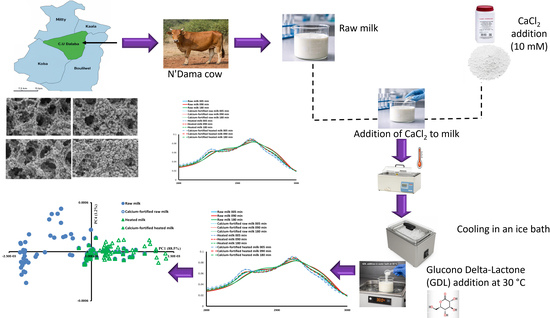
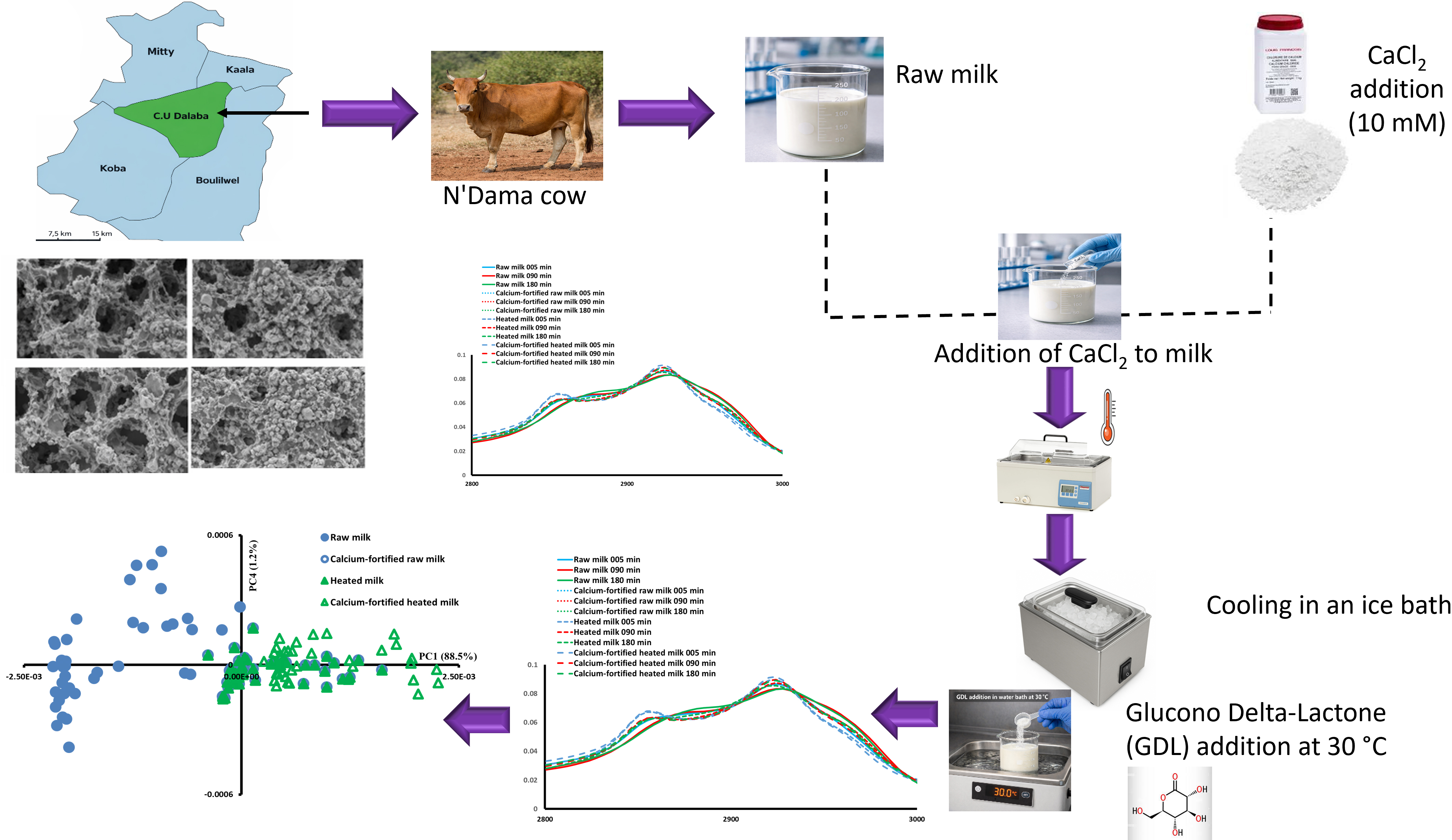
Graphical Abstract

1. Introduction

Milk coagulation is a critical step in the production of dairy products such as yoghurt and cheese. It can be achieved either biologically through the addition of lactic acid bacteria [1,2], and enzymatically, through the action of rennet and/or plant enzymes. Milk coagulation can also be induced chemically by the incorporation of glucono-δ-lactone (GDL), which produces gluconic acid and promotes progressive aggregation of casein [3]. Depending on the type of the used coagulant, the gelling mechanism and the structure of the resulting coagulum can vary considerably, thus influencing the texture, syneresis and final quality of the gel. The most common approaches are based on the use of enzymatic coagulation by rennet, GDL or lactic ferments. More recently, the use of natural acidifiers such as lemon juice, rich in citric acid and ascorbic acid, is also employed [4].
Heat treatment and calcium enrichment are among the major technological factors likely to influence the functional properties of milk gel. Heating causes partial or extensive denaturation of whey proteins and promotes their interaction with caseins via disulfide bridges, while the addition of CaCl2 modifies the ionic balance and reinforces aggregation [3,5]. The intensity and nature of these interactions strengthen or weaken the gel structure depending on coagulation conditions [1]. Recent investigations indicate that milk heated above 70 °C or the addition of calcium modifies the kinetics and quality of rennet- or GDL-induced coagulation [6].
Although the effect of heat treatment and calcium supplementation on enzymatic-induced coagulation has been extensively studied, only limited studies were performed on GDL-induced coagulation. In addition, majority of the studies related to GDL are focused on using rheology and fluorescence or mid infrared spectroscopy [7]. The impact of moderate heat treatment and the addition of calcium on the GDL gel is limited. Using this combined effect is essential for predicting gel behaviour and for precisely controlling the structural and functional quality of acid dairy gels. Therefore, the present study aims to evaluate the combined effect of moderate heat treatment and CaCl2 supplementation at 10 mM on the quality of cow’s milk gel induced by GDL.

2. Materials and Methods

2.1. Milk Sample

Ten litres (10 L) of cow’s milk was collected in Dalaba prefecture (10°41′33′ N, 12°14′59′ W), Guinea. To ensure microbiological stability during storage, sodium azide was added to the milk at a final concentration of 0.02% (w/w), followed by homogenisation. The treated milk was distributed into sterile containers (150 mL capacity) and stored at −20 °C until further use. Prior to experimentation, frozen milk samples were thawed overnight at 4 °C under controlled conditions. After thawing, no particles or aggregates were observed in the milk samples.

2.2. Preparation of Milk Samples for Gelation

Raw and heated calcium-enriched milk were prepared by adding calcium chloride anhydride (CaCl2) (Merck, Darmstadt, Germany) to raw milk at a concentration of 10 mM, followed by shaking at 150 rpm for 2 min. Aliquots of 18 mL of milk were transferred into Pyrex tubes with an inner diameter of 18 mm and a height of 150 mm (VWR, Paris, France). For heated milk, Pyrex tubes containing the milk samples were immersed in a thermostatically controlled water bath maintained at 65 °C for 5 min. Immediately after heating, the tubes were removed and rapidly cooled in ice for few minutes to stop thermal effects. The samples were then transferred to a water bath set at 30 °C and equilibrated for 1 h prior to acidification. Milk gelation was induced by the addition of GDL (Merck, Germany) at 2.3% (w/w). Gentle agitation was applied to ensure complete dissolution.

2.3. Monitoring of GDL-Induced Coagulation

2.3.1. pH Determination

The evolution of pH during gelation induced by GDL at 30 °C was monitored at 15 min intervals over a total period of 180 min using a calibrated pH metre (WTW pH 330i Taschen-pH-meter, Troitedt, Germany). Standard buffer solutions at pH 7.00 and 4.00 were used and all measurements were carried out in triplicate.

2.3.2. Rheological Analyses

Viscoelastic properties of gels formed by GDL were characterised by measuring the storage modulus (G′) and loss modulus (G″) using a HAAKE® MARS III rheometer (Thermo Fisher Scientific, Karlsruhe, Germany), equipped with a Peltier temperature control system (TM-PE-P). Measurements were conducted using a cup-and-rotor geometry (rotor diameter 25.959 mm, length 34.51 mm, gap 1.9 mm). Oscillatory tests were performed at 30 °C for 180 min within the linear viscoelastic region, using a constant frequency of 0.1 Hz and a strain amplitude of 0.15%. To minimise moisture loss during gelation, a protective cover was placed over the sample prior to measurement. At least three replicates were performed for each experimental trial.

2.3.3. Turbiscan Analyses

Gelation processes induced by GDL were investigated using a Turbiscan LAB analyser (Formulation Smart Scientific Analysis, Toulouse, France). The instrument is equipped with a detection head operating in near-infrared light at a wavelength of 880 nm. During analysis, the light beam was directed vertically through the sample (approximately 30 mL) contained in an airless measurement cell, allowing for the quantification of transmitted and backscattered light. Measurements were conducted over 180 min at 30 °C. The Turbiscan Stability Index (TSI) was calculated from temporal variations in backscattering intensity and was used as an indicator of particle migration and structural changes occurring during gel formation, as previously described by others [1,5].

2.3.4. Polyacrylamide Gel Electrophoresis Analyses

Protein profile of gels obtained after 180 min of coagulation were analysed by SDS-PAGE. Gel samples (2 g) were solubilised in 15 mL of Tris-HCl solution (pH 6.8) containing 10% SDS, glycerol, and 2-mercaptoethanol. The mixtures were homogenised for 2 min and then centrifuged at 2600× g for 15 min at 40 °C. Supernatants were combined with loading buffer (Tris-HCl pH 6.8, 2-mercaptoethanol, 10% SDS, glycerol, and bromophenol blue; 1:1 v/v). Electrophoretic separation was carried out on 12.5% polyacrylamide gels following the protocol of [8], using a Mini-Protean Tetra Cell system (Bio-Rad Laboratories, Hercules, CA, USA). Aliquots of 5 µL were loaded per well, and electrophoresis was performed at 200 V and 500 mA for 60 min. Proteins were visualised by Coomassie brilliant blue staining, and molecular weights were estimated by comparison with a broad-range protein marker (Protein Marker III, 10–250 kDa).

2.3.5. Scanning Electron Microscopy (SEM) Analyses

Microstructure of gel samples collected after 180 min of coagulation was examined by scanning electron microscopy (SEM) using a FlexSEM1000 microscope (Hitachi, Tokyo, Japan). Prior to observation, gel samples were frozen at −30 °C and then sectioned into slices about 30 µm thick using a freezing microtome. This procedure allowed the preservation of the internal structure while enabling representative sectioning. SEM images were obtained at an accelerating voltage of 5.00 kV and a working distance of 4.6 mm. Micrographs were recorded at a magnification of ×100.

2.3.6. Fluorescence Analyses

Fluorescence measurements were performed on gels using a Fluoromax-4 spectrofluorimeter (Jobin Yvon, Horiba, NJ, USA). To reduce surface reflection, scattering, and depolarisation effects, the excitation beam was fixed at an incidence angle of 60°. The instrument was equipped with a thermostatic sample holder, and the temperature was maintained at 30 °C using a Haake A 25 AC 200 controller (Thermo Scientific, Bordeaux, France). A volume of 3 mL was carefully poured into a quartz cuvette. Fluorescence spectra were recorded with excitation, and emission wavelengths were set at 290 and 410 nm, respectively, enabling the acquisition of emission spectra corresponding to tryptophan residues (305–450 nm) and excitation spectra corresponding to vitamin A (290–390 nm). Measurements were performed in triplicate at 5, 15, 30, 45, 60, 75, 90, 105, 120, 135, 150, 165, and 180 min of coagulation.

2.3.7. Mid-Infrared Analyses

Mid-infrared (MIR) spectra were recorded at 30 °C over the range 4000–900 cm−1 using an IRTracer100 Fourier transform infrared spectrometer (Shimadzu, Duisburg, Germany). Spectra were acquired in attenuated total reflection (ATR) mode using a ZnSe ATR (Pike Technologies, Inc., Madison, WI, USA) crystal with an incidence angle of 45° and 10 internal reflections. Temperature regulation of the ATR accessory was done by the Julabo thermostatic system at 30 °C. For each spectrum, 64 scans were accumulated at a resolution of 16 cm−1. A background spectrum was recorded using distilled water. Subsequently, a 3 mL sample was placed on the ATR crystal, and MIR spectra were recorded in triplicate at 5, 15, 30, 45, 60, 75, 90, 105, 120, 135, 150, 165, and 180 min of coagulation.

2.4. Multidimensional Data Analysis

For fluorescence (vitamin A and tryptophan) and MIR spectra, principal component analysis (PCA) was applied separately to each data table [9,10,11,12]. ANOVA was carried out using XLSTAT 2019 software (Addinsoft SARL USA, New York, NY, USA), while PCA was realised with MATLAB (Matlab, version 6.5, Release 12, The MathWorks, Natick, MA, USA).

3. Results and Discussion

3.1. pH Measurement

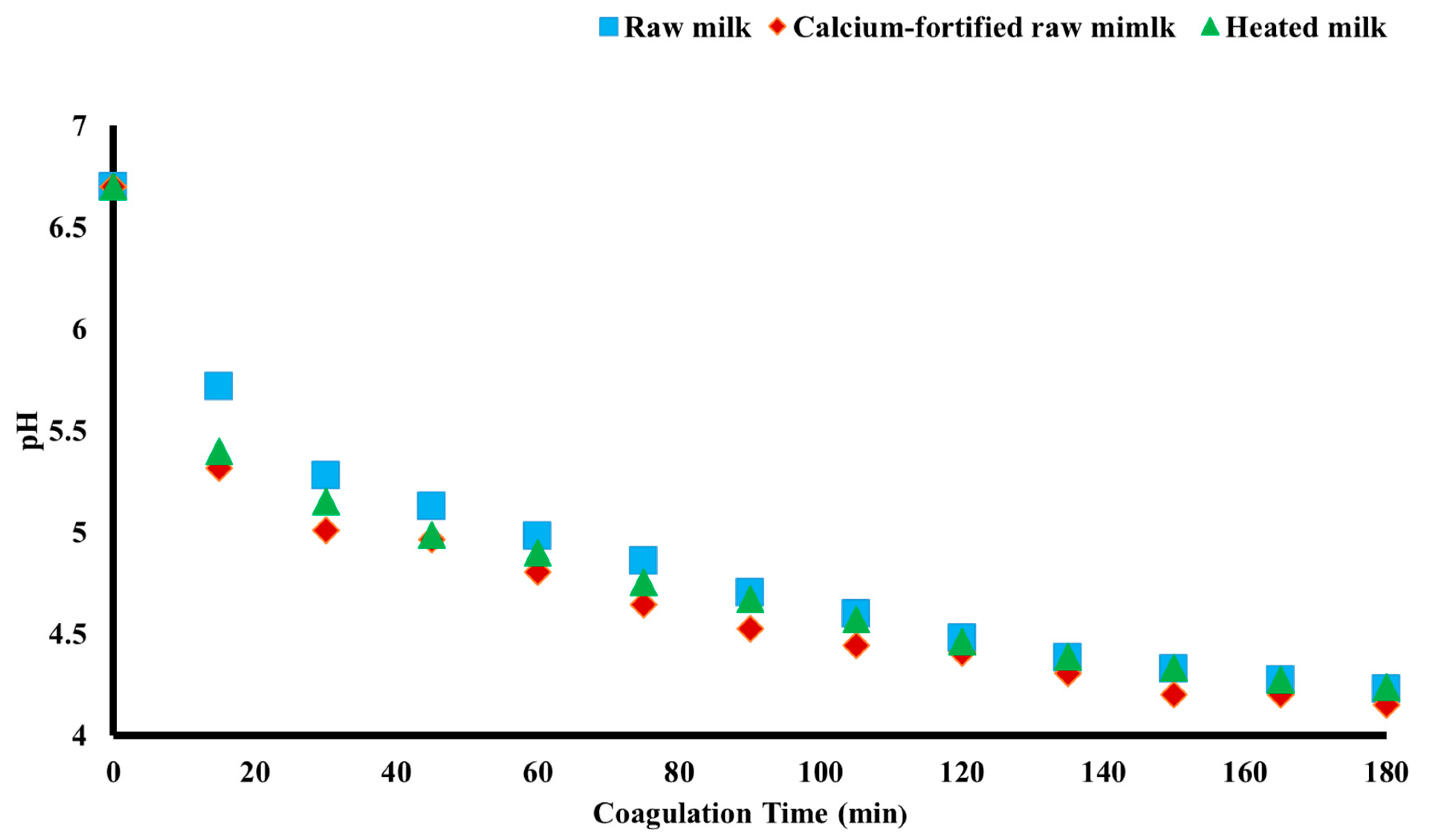
A decrease in pH values was observed throughout coagulation. This is linked to progressive protonation of the colloidal system and progressive destabilisation of casein micelles. This phenomenon is particularly pronounced in calcium-fortified raw milk which exhibited the lowest values throughout gelation, consistent with previous studies showing that the presence of free Ca2+ promotes a reduction in pH values [13]. As illustrated in Figure 1, GDL-induced gelation is characterised by slow, regular, and continuous acidification kinetics, resulting in final pH values between 4.3 and 4.5 after 180 min. This is due to the progressive hydrolysis of GDL to gluconic acid, thereby releasing hydrogen ions in a controlled manner [14]. This allows for the progressive demineralisation of colloidal calcium phosphates and the gradual opposition of casein micelles, which promotes gradual development of attractive forces without structural collapse. Heat treatment modulates kinetics due to interactions between denatured whey proteins and k-casein at the micellar surface. However, regardless of the milk temperature, the acidification profile remains gradual under GDL, highlighting the intrinsic robustness of its mechanism of action. It has been shown that milk acidification, when using natural acidifying agents with high proton capacity such as lemon juice, results from a rapid re-lease of protons [4]. This rapid proton release leads to rapid neutralisation of micelle charges and rapid rearrangement of the milk structure, including k-casein compaction and rapid dissolution of colloidal calcium phosphates [15,16]. The gradual nature of GDL-induced acidification crates a more gradual transition from a liquid to a gelled structure and a more homogeneous protein structure.

3.2. Rheology Measurements

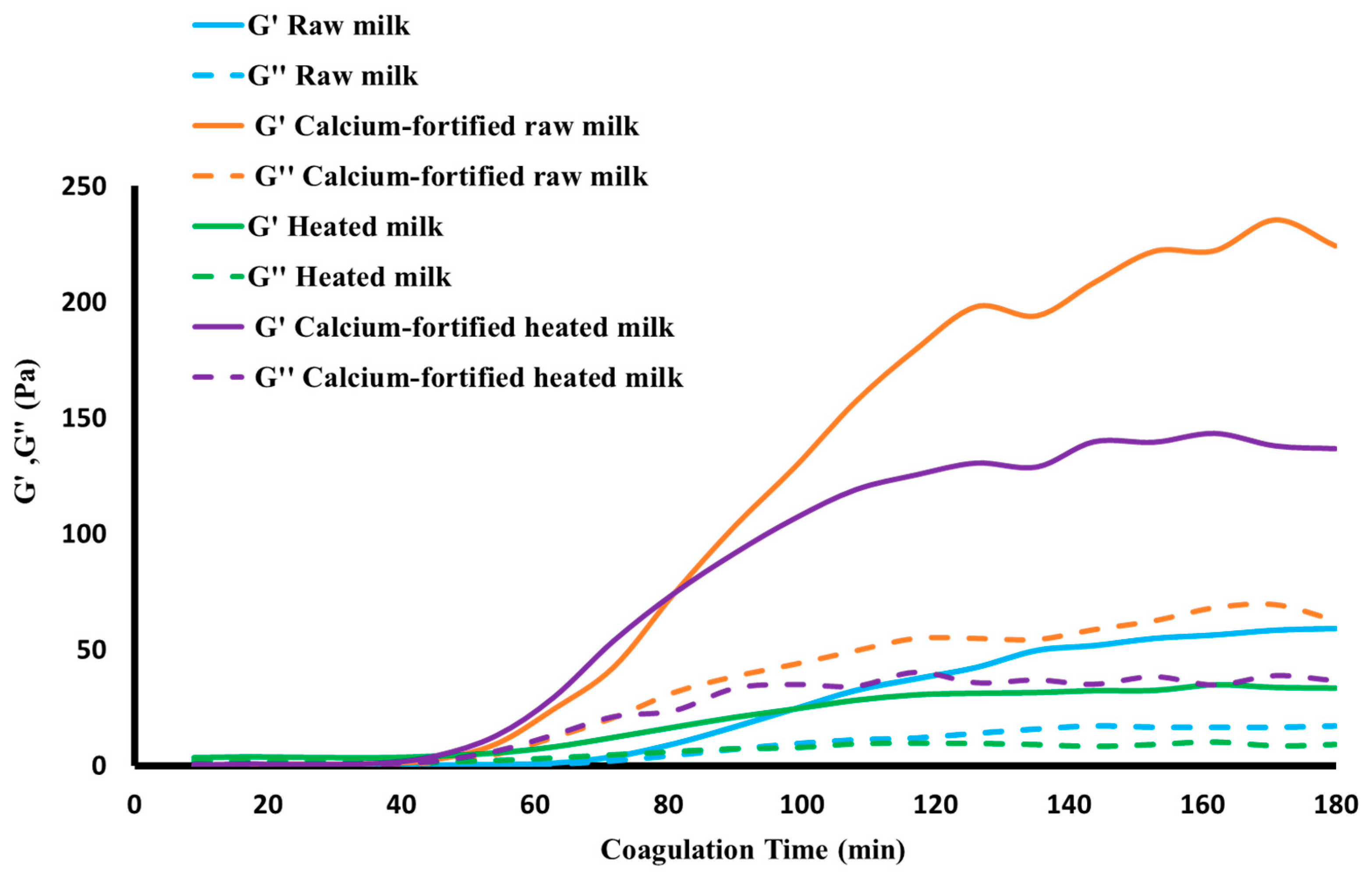
Viscoelastic properties of dairy gels produced with GDL are presented in Figure 2. Different viscoelastic behaviour was observed among the different gels. An increase in both G′ and G″ modules, characteristic of a protein structure for acid gels, is observed as a function of gelation time. Nonetheless, this increase is greatly influenced by the presence of calcium and the heat treatment. Indeed, the G′ value at 180 min was 59.28 Pa for gels produced from raw milk and reached 224.1 Pa for those made with calcium-fortified raw milk. Gels produced with heated milk exhibited the lowest G′ values (33.48 Pa). An increase in G′ and G″ values was observed when gels were produced with heated milk enriched with CaCl2, resulting in a final G′ value of 136.7 Pa. These data confirm the results of previous findings [17], depicting that ionic calcium influences the formation of a micelle network, constituting a factor that strengthens gel cohesion. The findings are also in agreement with viscoelastic properties of gels produced with lemon juice [4] under the same conditions. For example, it has been reported that gels obtained from raw milk exhibit intermediate elasticity (G′ = 48.71 Pa), while those produced with milk heated at 65 °C for 5 min display a G′ value of 22.21 Pa. Conversely, the lowest G′ value was observed for gel produced from heated and calcium-enriched milk (G′ = 9.66 Pa). Our findings are consistent with the observations of: (i) [14], who demonstrate that the slow acidification kinetics induced by GDL favours the formation of a dense and elastic protein network; and (ii) [18] who depict that slowly acidified gels are less sensitive to the disruptive effect of heat than those resulting from rapid acidification. It would appear that heat treatment at 65 °C for 5 min disrupts the hydrophobic and electrostatic interactions essential to structuring of acidic gels, resulting in a decrease in their elasticity, consistent with previous results [19].
Finally, GDL, thanks to its slow kinetics, develops particularly elastic structures, even in heated milk. These results are in line with previous findings regarding the role of the acidification mechanism, mineral form, and heating conditions in the gelation processes of dairy products [20].

3.3. Turbiscan Measurements

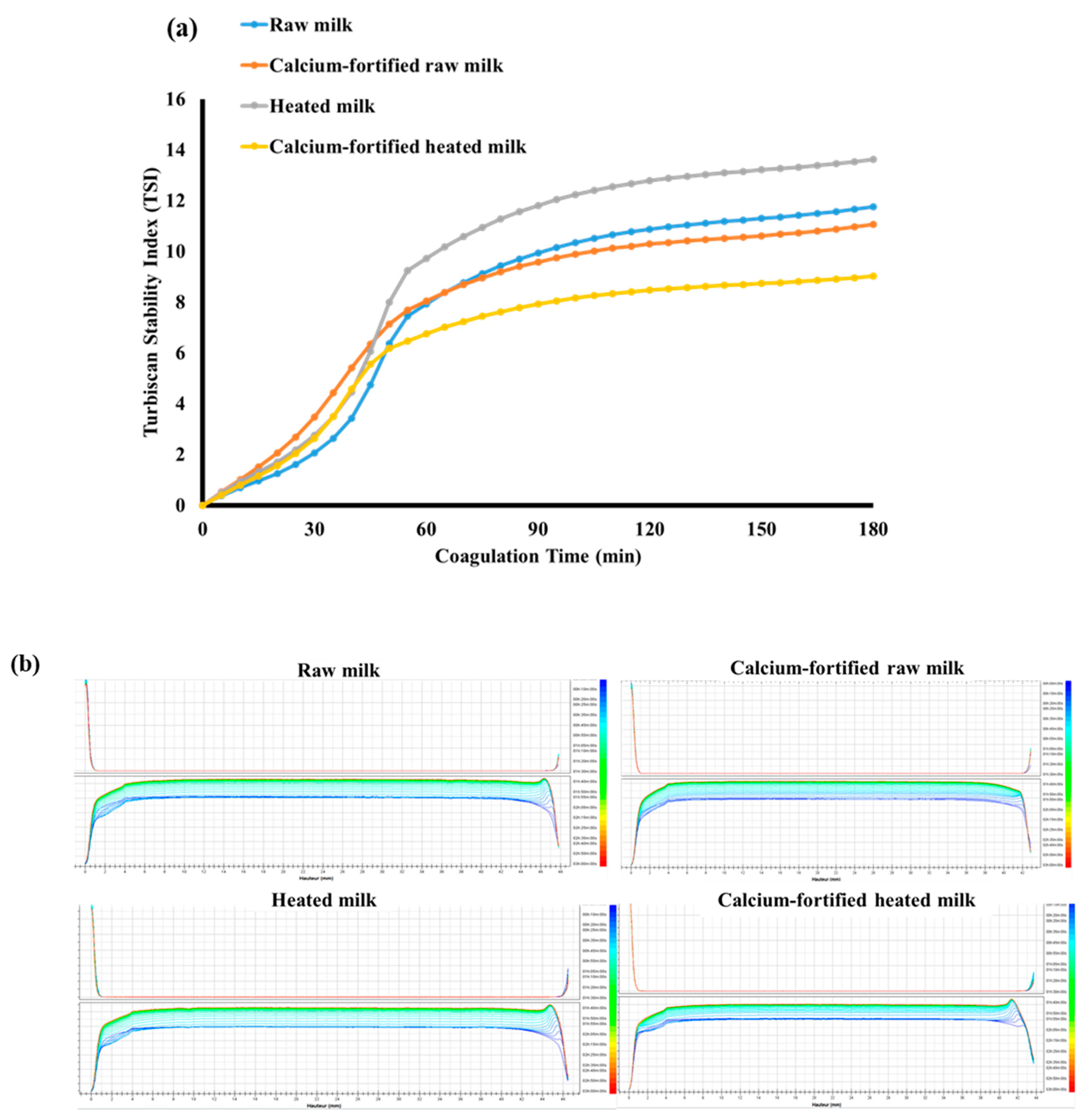
Figure 3a,b depict the stability index (TSI) and the transmission and backscattering profiles of different gels during 180 min of coagulation.
The gels are characterised by moderate to low TSI values (Figure 3a) depending on the gel types, accompanied by backscattering profiles indicating progressive and regular structuring without sharp breaks (Figure 3b). This trend closely corresponds to the observations of [14,18], who showed that a slow release of gluconic acid, as a result of GDL hydrolysis, helps in creating a homogeneous gel, hence hindering effects that would result from rapid acidification, thereby decreasing structural differences due to protein denaturation. This trend is also in agreement with rheology measurements where the highest G′ values were observed for gels produced with milk supplemented with calcium. These results are different from our previous findings obtained with lemon juice during coagulation. Indeed, it has been found that gels acidified with lemon juice showed a marked increase in TSI throughout coagulation [4], particularly in heated milk gels, reflecting progressive gel destabilisation. This behaviour is consistent with the results obtained with rheological measurements by [4] that showed the lowest G′ value coagulation for gels produced with heated milk throughout coagulation. Backscattering profiles of gels produced with heated milk confirm this structural heterogeneity, in agreement with the observations of [18], who highlight the role of partially denatured serum proteins on intermolecular interactions. Conversely, calcium-fortified raw milk exhibited a lower TSI value, indicating better network cohesion, consistent with the investigation of [13,21], who demonstrated that increasing ionic calcium reduced electrostatic repulsion between micelles, thus improving aggregation and limiting optical imbalances within acidic gels.
These results demonstrate that physical stability of milk gels depends not only on the nature of the coagulant used, but also on the intensity of heat treatment and the presence of calcium.

3.4. Polyacrylamide Gel Electrophoresis

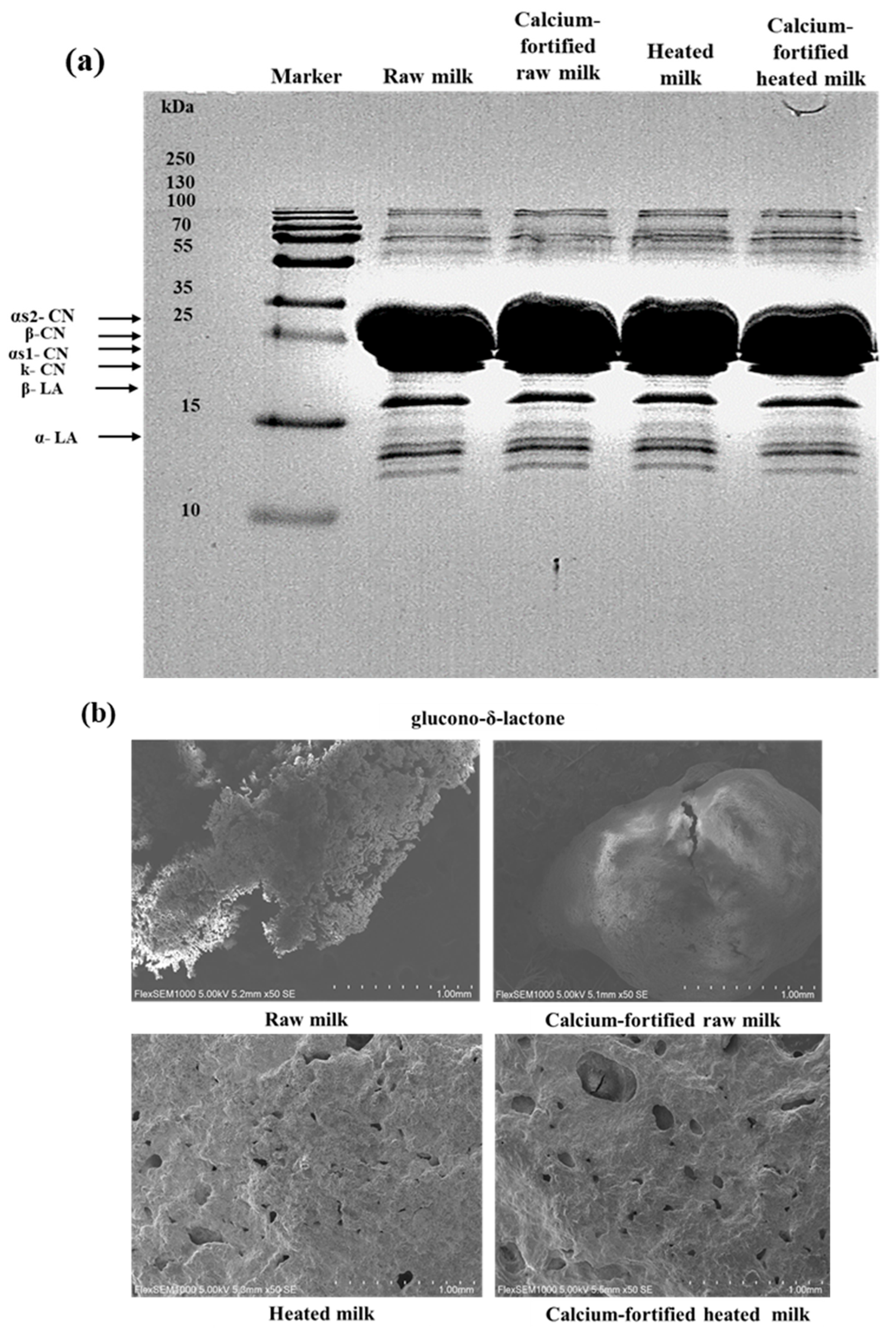
SDS-PAGE profiles of the gels obtained after 180 min (Figure 4a) strongly highlight the impact of heating and calcium supplementation. Samples coagulated with GDL indicate a relatively slower process based on protein distribution and a strong predominance of high molecular weight regions (greater than 55 kDa). This strong predominance was particularly evident in heated and calcium-supplemented gel samples, confirming the results of [22]. These authors depict that gels coagulated with GDL facilitate the transfer of whey proteins, as well as the majority of caseins, to the coagulated regions. These results confirm those of [23], who indicate that GDL-facilitated coagulation largely contributes to the acidification mechanisms during the formation of high molecular weight proteins. The obtained results differ from our previous findings concerning gelation induced by lemon juice. Indeed, it has been reported that raw milk gels coagulated with lemon juice [4] exhibit electrophoretic profiles clearly delineated by the main components of casein proteins (αs1 casein, αs2 casein, β-casein, and κ-caseins, approximately 20–25 kDa) associated with whey proteins (β-lactoglobulin, approximately 18 kDa, and α-lactalbumin = 14 kDa). The addition of CaCl2 to raw milk did not alter the profile of the lemon juice gel obtained after 180 min; however, an increase in casein concentrations was observed, indicating strong interactions due to neutralising capacities.

3.5. Scanning Electron Microscopy

Scanning electron microscopy of gels (Figure 4b) revealed a wide diversity of microstructures depending on the milk sample. Gels produced from raw milk exhibited irregular aggregates and non-homogeneous porosity, a phenomenon that can be attributed to progressive acidification still largely dependent probably on the initial colloidal characteristics of the milk. In contrast, calcium supplementation promotes the development of more homogeneous and compact aggregates due to a progressive improvement in network integrity with a simultaneous decrease in pH [13]. Gels prepared from heated milk, with or without calcium supplementation, exhibit homogeneous structure, yet still quite porous, with a more homogeneous distribution of cavities. This reflects a progressive rearrangement of the protein network under the combined effect of heat treatments and the slow acidification induced by hydrolysis [24]. These observations are similar to those found in our previous studies [4], where gels prepared with lemon juice and raw milk exhibited a poorly organised structure, with macroscopic aggregates and moderately high porosity. This phenomenon was attributed to a rapid drop in pH leading to rapid destabilisation of the casein micelles and poorly controlled aggregation of the protein network. Furthermore, enriching raw milk with calcium induced better gel organisation, a smoother morphology, and smaller pore diameters. This effect is thought to be due to an increase in the ionic strength between calcium ions and casein, as well as the formation of intermicellar bonds that strengthen the cohesion of the protein network [24]. However, they differed for heated, calcium-enriched lemon juice gels, which exhibited a heterogeneous structure with irregular pores, resulting from the combined action of whey protein denaturation and local calcium ion interactions [25]. These results highlight the crucial role of coagulant type, heating, and mineral characteristics of the milk in determining the microstructural properties of dairy gels. The differences observed between samples at the microscopic scale are consistent with rheological analysis and stability index measurements.

3.6. Mid-Infrared Measurements

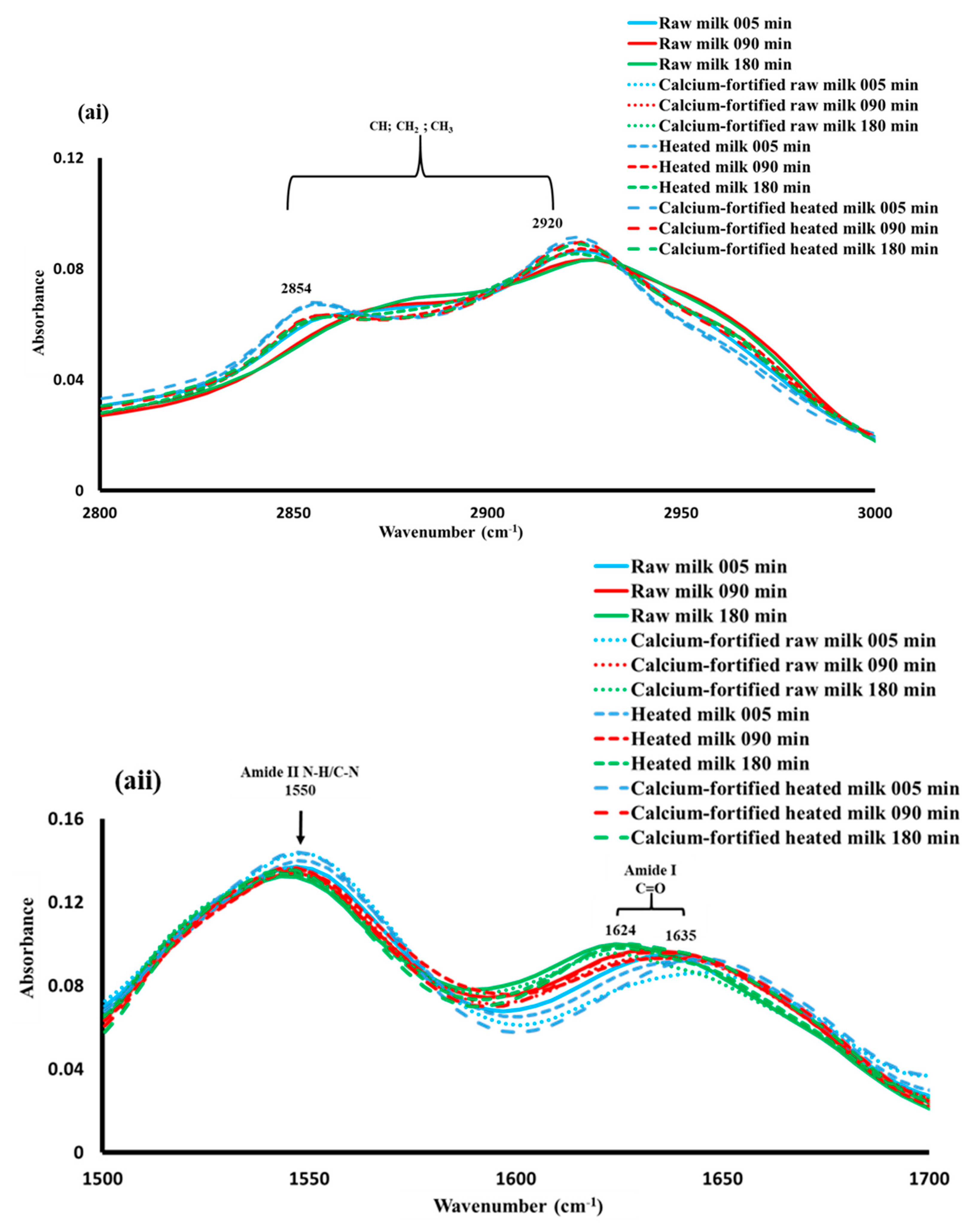
The 3000–2800 cm−1 spectral region is mainly associated with C-H stretching vibrations of fatty acid carbon chains [26], and that of 1700–1500 cm−1 is linked to protein vibrations (Amide I and Amide II). The 1500–900 cm−1 region, called fingerprint, is associated with CH, COH, CO and CC deformation vibrations as well as P=O stretching.

3.6.1. Study of the 3000–2800 cm−1 Spectral Region Throughout Coagulation

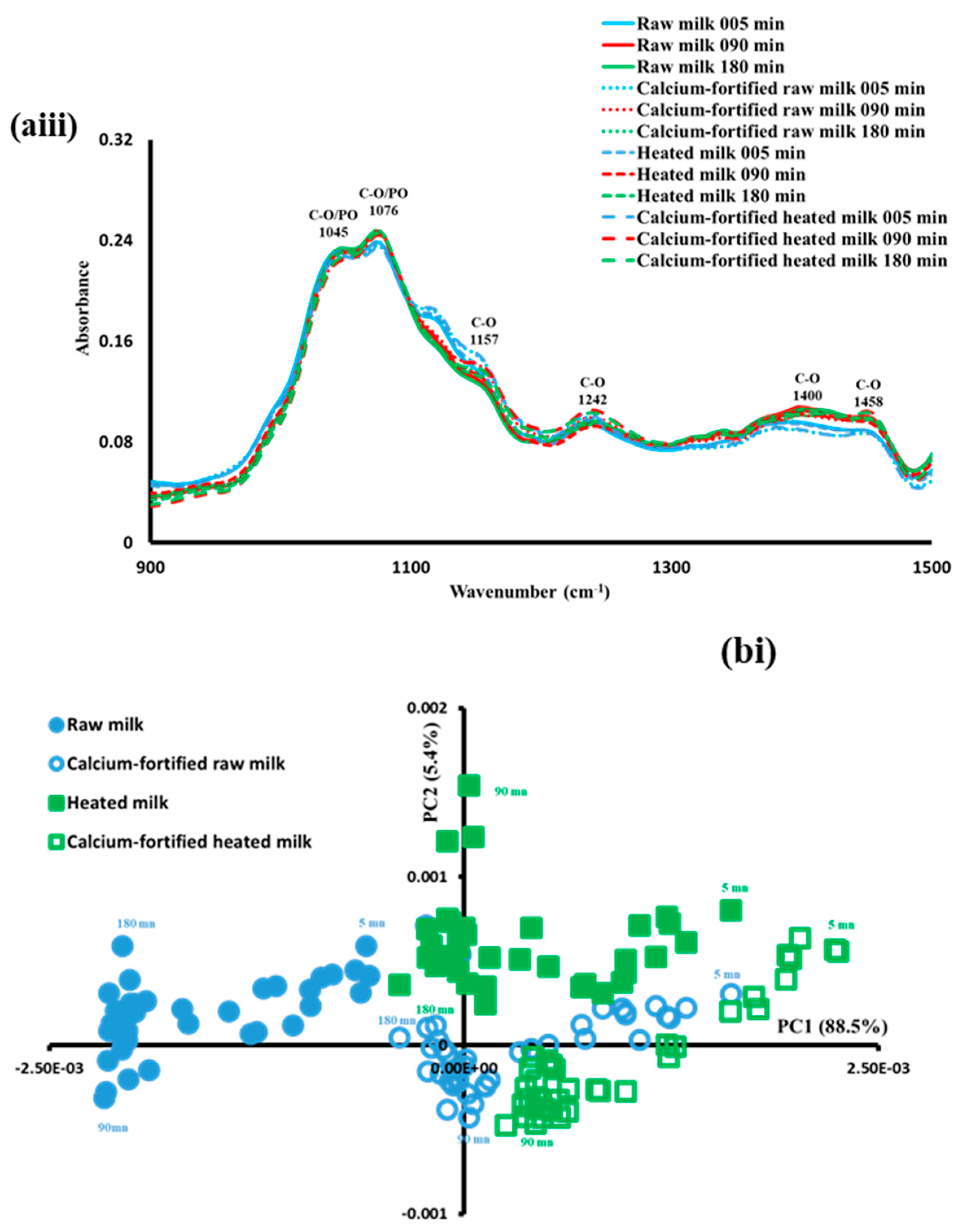
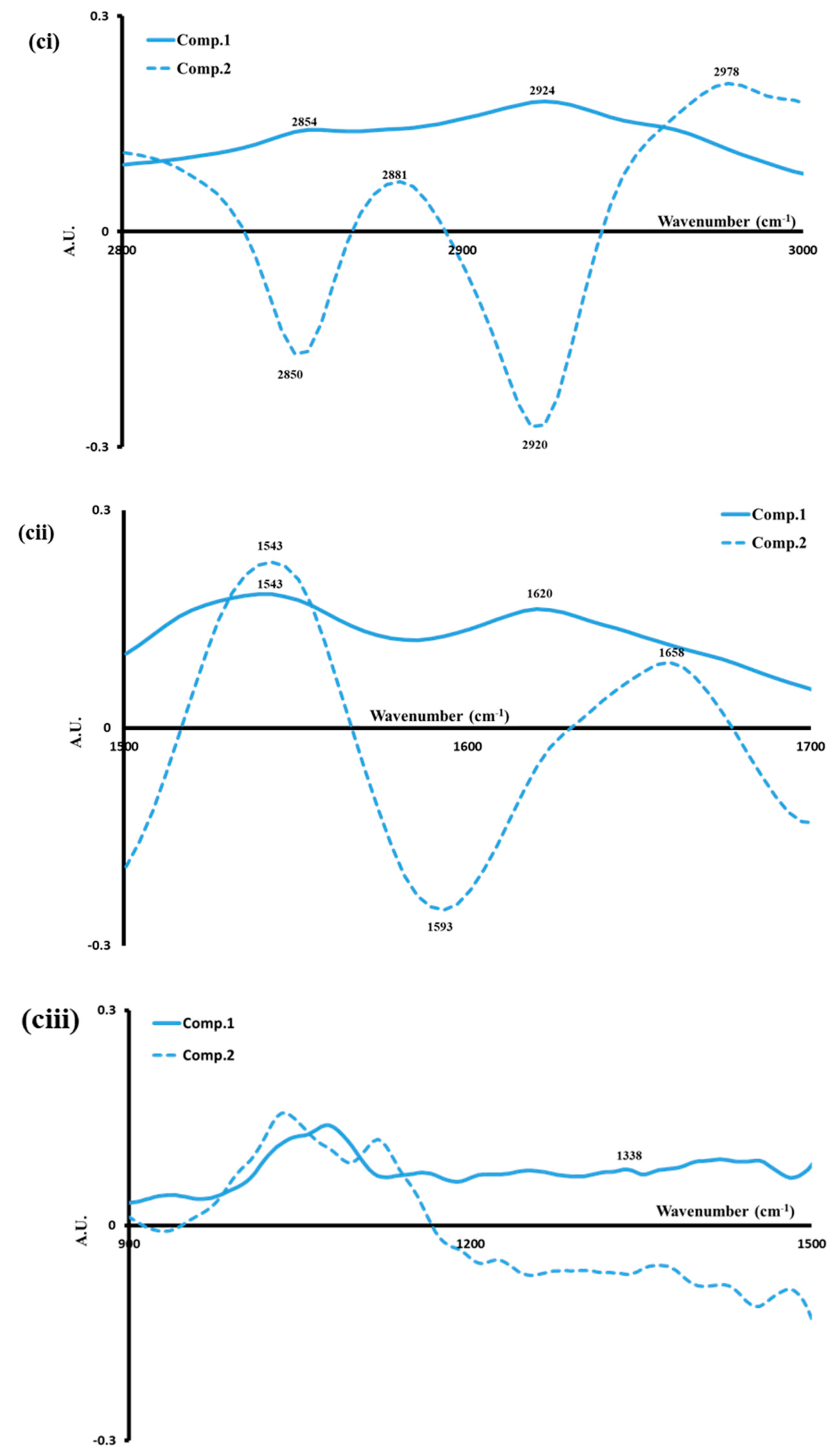
The spectral region from 3000 to 2800 cm−1 provides valuable data for understanding lipid organisation and protein–lipid interactions during milk coagulation. Figure 5(ai) shows that GDL gels are characterised by more uniform spectra and a moderate increase in bands at 2854 and 2920 cm−1. PCA was applied to the normalised spectral region from 3000 to 2800 cm−1 (Figure 5(bi)). Clear discrimination of samples based on coagulation time and milk type was observed. Furthermore, calcium-enriched gel samples separated well from others. To identify the vibrations responsible for separations observed on the PCA similarity map, spectral patterns were studied (Figure 5(ci)). Spectral pattern 1, associated with PC1, revealed generally positive peaks, with maxima at 2854 and 2924 cm−1, in agreement with [26]. Spectral pattern 2 is characterised by the presence of two negative bands at 2850 and 2920 cm−1, as well as two positive bands at 2881 and 2978 cm−1. This suggests that the progressive acidification induced by GDL alters the environment of CH2 and CH3 groups. These modifications are consistent with a gradual reorganisation of the lipid phase, leading to a variation in the CH2/CH3 ratio and suggesting a progressive increase in lipid network viscosity during coagulation, in agreement with [27]. These observations differ from those of [4] where lemon-juice-induced gelation was studied and a sharp increase in the absorbance around 2854 and 2920 cm−1 was reported, particularly for heated lemon juice gels enriched with calcium.

3.6.2. Study of the 1700–1500 cm−1 Spectral Region Throughout Coagulation

The 1700–1500 cm−1 region (Figure 5(aii)) associated with the Amide I (C=O) and Amide II (N–H/C–N) vibrational bands clearly evidences the influence of heat treatment and CaCl2 addition on protein network structure.
GDL-induced coagulation showed a slight increase in the absorbance of the Amide II band at 1550 cm−1, especially for gels produced with heated milk, while those made with raw milk and milk that was heated and then fortified with calcium exhibited intermediate values. In the Amide I region, two characteristic bands are observed at 1624 and 1635 cm−1. During coagulation, a blue shift in the band from 1635 to 1624 cm−1 was observed regardless of the milk type (heat treatment, addition of calcium), indicating a controlled evolution of the secondary structure. This trend is in agreement with the investigation of the authors of [28], who depict that a progressive release of protons leads to a gradual reorganisation of the micelles and structuring of the coagulum.
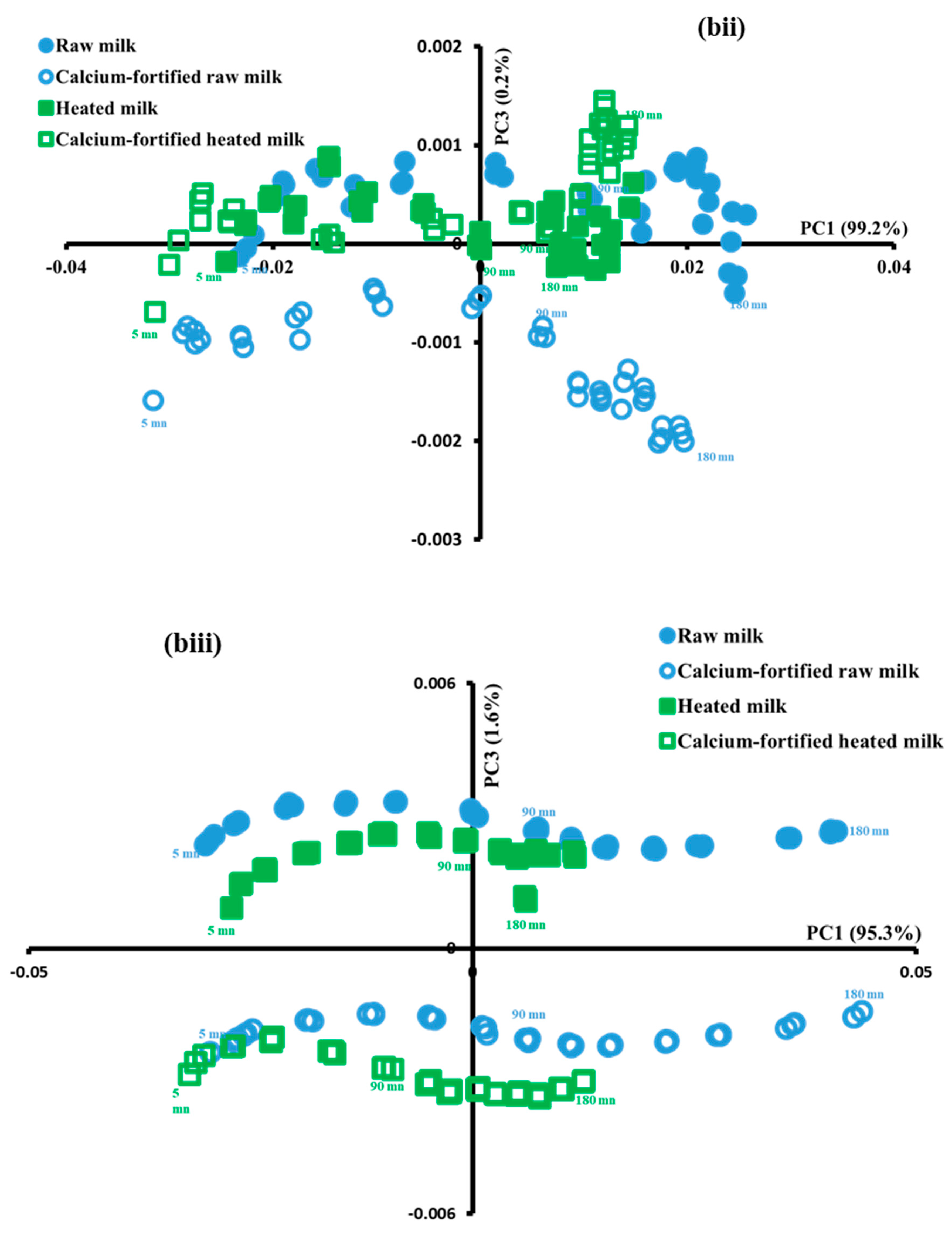
To obtain further information on structural changes in the 1700–1500 cm−1 spectral region, PCA was applied to the normalised data. The similarity map of GDL-induced gelation (Figure 5(bii)) showed a progressive evolution of gel structure. Indeed, PC1 explaining 99.2% of the total variance indicated a clear discrimination of gels according to coagulation time. Thus, samples analysed at the beginning of acidification showed negative scores, while those recorded at the end of coagulation showed positive scores. Spectral analysis revealed distinct behaviours depending on the coagulation mechanism and the initial state of the milk before coagulation. As the samples were discriminated according to PC1, only spectral pattern 1 was studied (Figure 5(cii)). It revealed two positive peaks at 1543 and 1620 cm−1, indicating slow and homogeneous acidification reactions, accompanied by micellar demineralisation and casein coagulation. This trend is different from lemon-juice-induced coagulation [4], showing three positive bands located at 1530, 1570 and 1690 cm−1 ascribed to Amide II, and a negative peak at about 1627 cm−1 attributed to Amide I. These observations suggest significant alterations in the secondary structure of casein and associated protein–protein and/or protein–water interactions.

3.6.3. Study of the 1500–900 cm−1 Spectral Region Throughout Coagulation

The spectral region between 1500 and 900 cm−1 (Figure 5(aiii)) exhibited various absorption bands at 1045–1076, 1157, 1238–1253, 1381–1400, and 1454–1458 cm−1 that are ascribed to C-O, C-O-P, and C-H bonds, accompanied by characteristic bands of amide III [27,29]. These bands could be related to transformations of the protein–mineral matrix of milk proteins during coagulation [30]. It is noteworthy that, during GDL-induced gelation (Figure 5(aiii)), intermediate absorbance bands are observed, indicating a progressive and homogeneous increase in acidity over time [31,32]. The similarity map of PCA performed on the 1500–900 cm−1 region is shown in Figure 5(biii). The analysis revealed that the first two PCs explained 96.7% of the total variance. Indeed, PC1 allowed the discrimination of gels based on their coagulation time, since the samples analysed at the beginning of coagulation (5–90 min) showed negative scores, while others showed positive scores. As shown in (Figure 5(ciii)), spectral pattern 1 is dominated by broad positive bands at 1076, 1253, 1338, and 1454 cm−1, while spectral pattern 2 is characterised by bands located around 1037 and 1122 cm−1, indicating a progressive modification of C–O and C–O–P bonds, specific to protein–mineral interactions.

3.7. Fluorescence Spectroscopy Measurements

3.7.1. Study of Fluorescence Spectra of Tryptophan During Coagulation

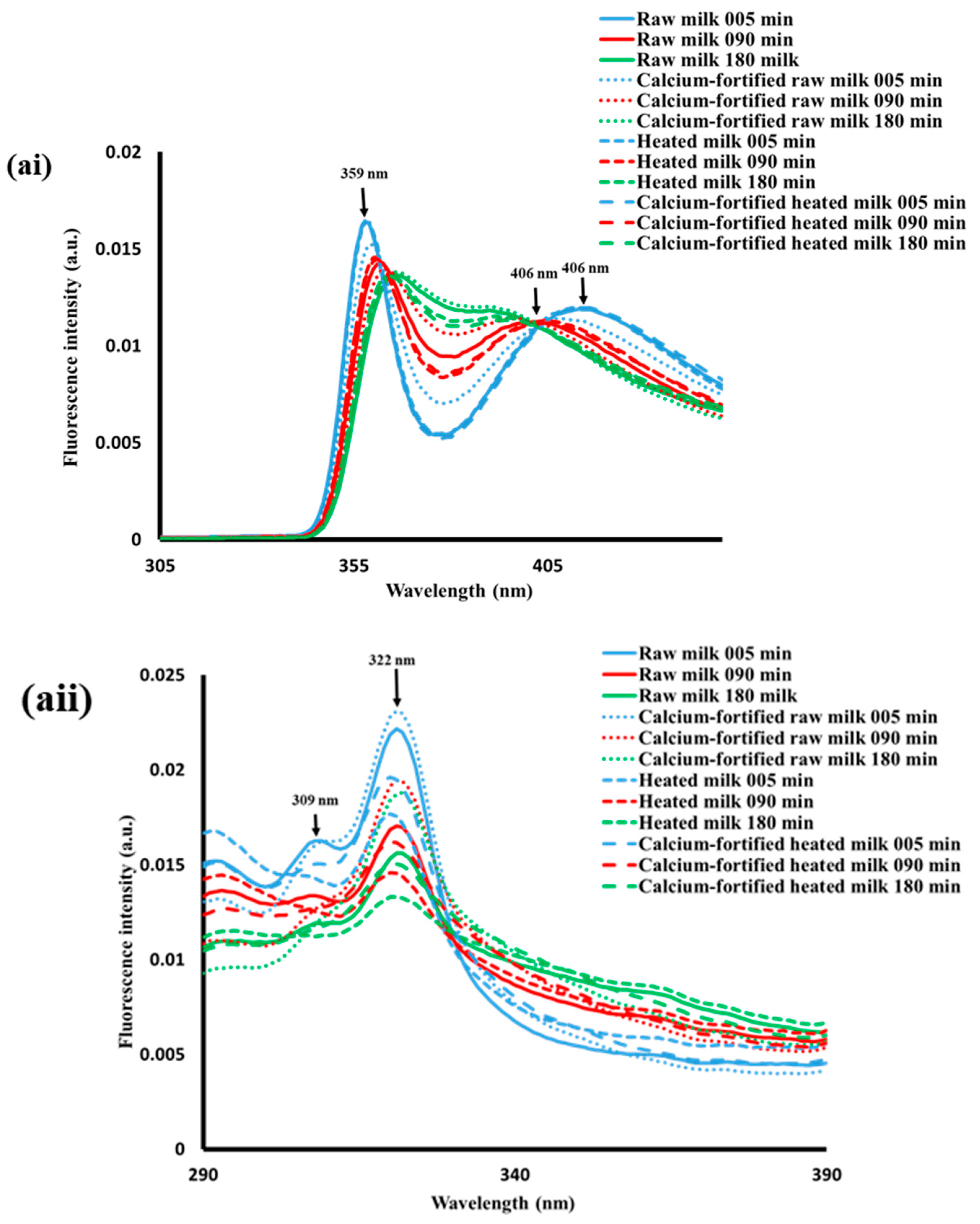
During coagulation (Figure 6(ai)), the spectra showed different trends depending on the coagulation conditions (heat treatment, addition of CaCl2). The spectra showed two maxima located at 359 and 406 nm. A decrease in fluorescence intensity and a red shift in the maximum emission of tryptophan was noted for samples scanned at 180 min. It could be concluded that gels at 180 min were in a hydrophilic environment due to a progressive acidification process of milk accompanied by concomitant reorganisation of protein–protein interactions [33].
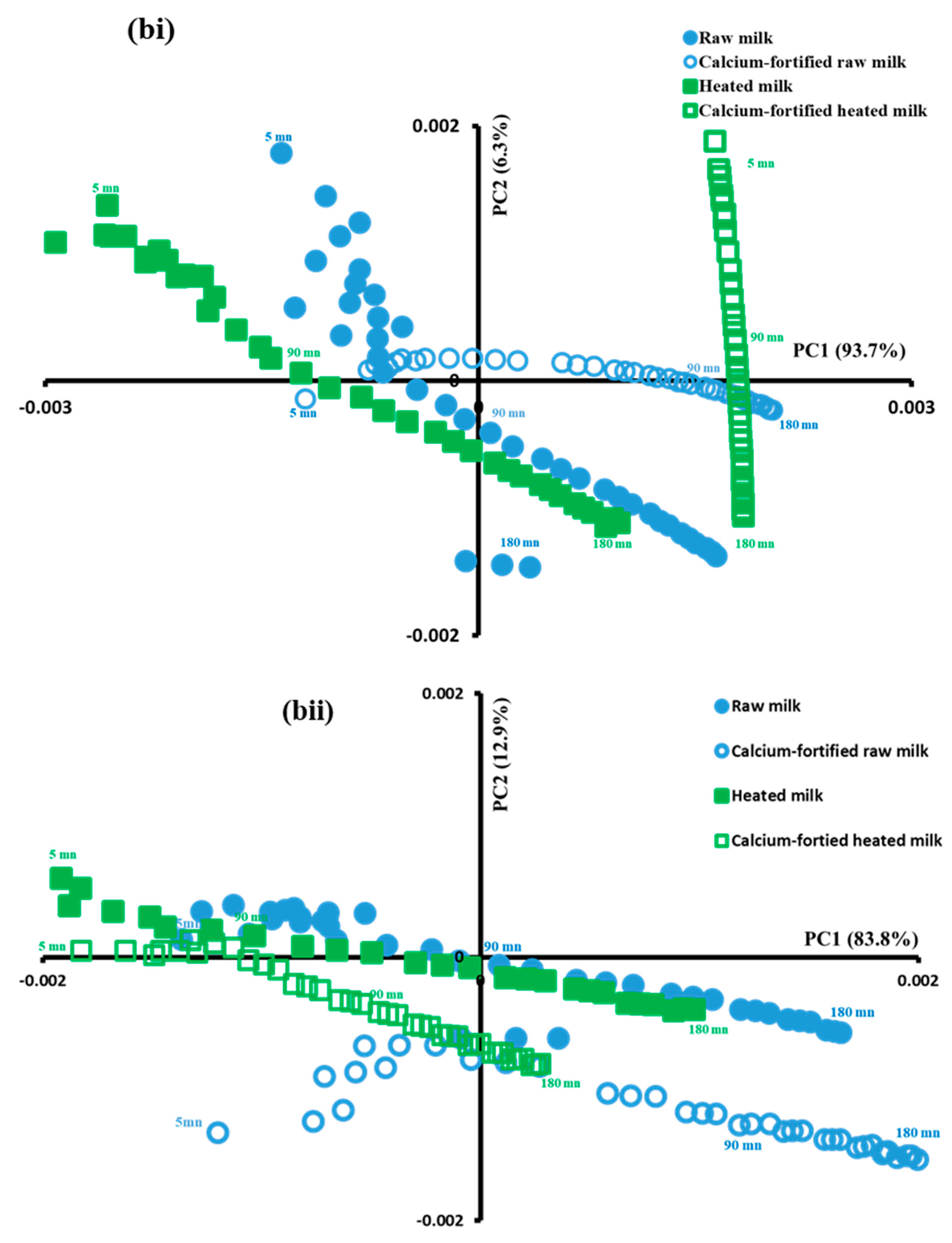
PCA was performed on tryptophan fluorescence spectra (Figure 6(bi)). A clear separation of samples according to their coagulation time was observed. Indeed, gel samples scanned at the end of coagulation time (180 min) presented negative scores according to PC2.
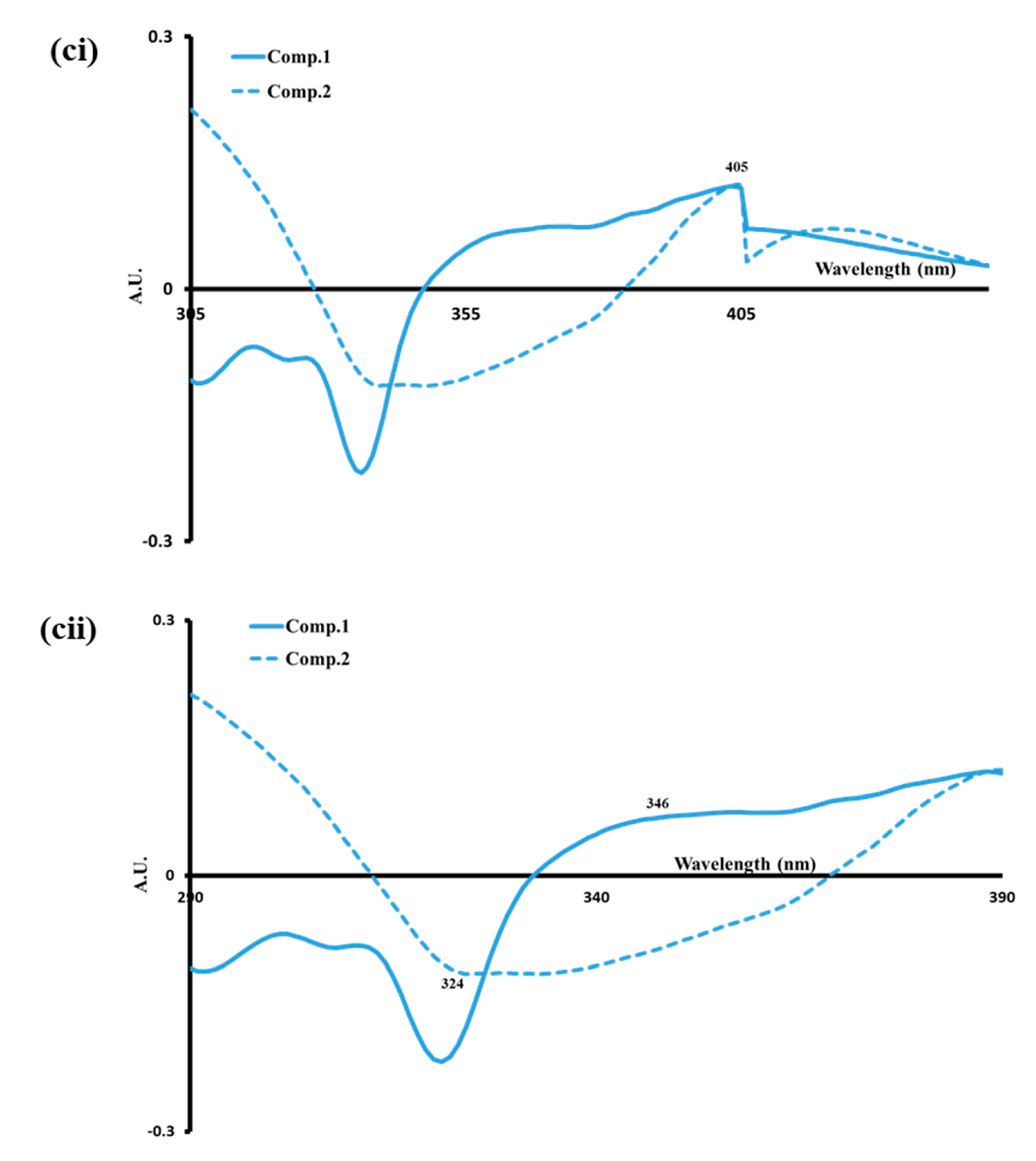
The addition of GDL-induced spectral modification according to spectral pattern 1 (Figure 6(ci)) is characterised by an intense negative peak around 336 nm and a broad positive peak around 405 nm. Regarding spectral pattern 2, a continuous transition is observed, with a positive contribution at lower wavelengths, a broad negative peak at 340, and a positive one at 405 nm.

3.7.2. Study of Fluorescence Spectra of Vitamin A During Coagulation

Figure 6(aii) shows the excitation spectra of vitamin A recorded in the 290–390 nm range during milk coagulation with GDL. Samples exhibited bands centred at 309 nm and a broad band around 322 nm, which correspond to the specific bands of retinol in milk fat globules. These bands are commonly used to characterise the organisation of the lipid phase in dairy products [32,33]. It can be concluded that GDL leads to changes in the environment of vitamin A due to lipid–protein, lipid–lipid interactions, and/or some modifications in the physical state of triglycerides [34].
PCA was performed on the excitation spectra of vitamin A of milk samples coagulated with GDL (Figure 6(bii)). PC1 explaining 83.8% of the total variance separated samples at the beginning of coagulation having negative scores from those at the end of coagulation time (180 min).
Spectral pattern 1 (Figure 6(cii)) showed a negative peak at 321 nm and a positive one at 346 nm, indicating a shift in excitation towards higher wavelengths, corresponding to a change in polarity and local organisation of triglycerides, while spectral pattern 2 exhibited a negative peak at approximately 324 nm.

4. Conclusions

The effect of a combined moderate heat treatment (65 °C, 5 min) and CaCl2 supplementation GDL induced milk gelation was determined at molecular, micro-scopic, and macroscopic levels. pH monitoring shows that the progressive hydrolysis of GDL allows for a steady acidification of the colloidal system, promoting gradual demineralization of colloidal calcium phosphates and progressive reorganisation of casein micelles, independent of the milk’s thermal state. Rheological analyses also demonstrate formation of gels with high G′ value from calcium-enriched raw milk, exhibiting a dense and homogeneous network. Gels produced with heated milk display weaker and more heterogeneous characteristics, indicating the existence of interactions between Ca2+ ions and whey proteins. Furthermore, Turbiscan stability analyses shows that GDL-induced gels exhibit improved structural homogeneity and increased physical stability, particularly in calcium-enriched systems, while the effects of heat treatment are partially offset by progressive acidification kinetics. MIR and fluorescence spectra confirm that the changes observed at macroscopic (rheology) and microscopic (SEM) levels also occur at the molecular scale. Indeed, during coagulation, various protein–protein, protein–water, and/or protein–lipid interactions are observed.
From the obtained results, it seems that GDL presents significant technical and industrial advantages in the dairy sector, particularly in terms of stability and protein network organisation when compared to natural alternatives such as lemon juice.

Author Contributions

Conceptualization, T.A.R.S. and R.K.; methodology, T.A.R.S. and R.K.; validation, R.K.; investigation, T.A.R.S. and R.K.; writing—original draft, T.A.R.S.; writing—review and editing, T.A.R.S., R.K. and M.H.; visualisation, T.A.R.S. and R.K.; supervision, A.O.S.D. and R.K.; project administration, R.K.; funding acquisition, A.O.S.D. and R.K. All authors have read and agreed to the published version of the manuscript.

Funding

This work was funded by the BIHAUTSECO de France project, whit financial support from the French State, the European Union, and the Hauts-de-France Region Council.

Institutional Review Board Statement

Not applicable.

Informed Consent Statement

Not applicable.

Data Availability Statement

The original contributions presented in the study are included in the article. Further inquiries can be directed to the corresponding author.

Acknowledgments

The authors are grateful for the financial support of the Major Domain of interest (DIM) “Eco-Energy Efficiency” of Artois University. Thierno Abdoul Rahim Sow would like to thank the Embassy of France in Guinea and the French government for the financial support. He would also like to thank the Guinean authorities for their cooperation and assistance during his stay in the University of Artois. The authors would like to thank Gaoussou Karamoko and Faiez Hentati for their help in SEM and electrophoresis analyses, respectively.

Conflicts of Interest

The authors declare that they have no conflicts of interest.

References

  1. Wu, J.; Chen, S.; van der Meeren, P. Heat stability assessment of milk: A review. Foods 2024, 13, 2236. [Google Scholar] [CrossRef]
  2. Bankole, A.O.; Irondi, E.A.; Awoyale, W.; Adebo, O.A. Application of natural and modified additives in yogurt formulation: Types, production, and rheological and nutraceutical benefits. Front. Nutr. 2023, 10, 1257439. [Google Scholar] [CrossRef] [PubMed]
  3. Mejares, C.T.; Huppertz, T.; Chandrapala, J. Heat-induced changes in blends of skimmed buffalo and bovine milk. Int. Dairy J. 2023, 141, 105627. [Google Scholar] [CrossRef]
  4. Sow, T.A.R.; Diallo, A.O.S.; Karoui, R. Monitoring lemon juice-induced coagulation of cow’s milk: Impact of heat treatment and calcium addition on gel quality. Appl. Sci. 2025, 15, 10092. [Google Scholar] [CrossRef]
  5. Cheng, Z.; van Leusden, P.; Eisner, M.D.; Ahrné, L. Effect of milk pH during heating on gelation and textural properties of heat- and acid-induced milk gels. Int. Dairy J. 2025, 172, 106424. [Google Scholar] [CrossRef]
  6. Wang, W.; Tan, K.W.J.; Chiang, P.L.; Wong, W.X.; Chen, W.; Lin, Q. Impact of Incorporating Free Calcium and Magnesium on the Heat Stability of a Dairy- and Soy-Protein-Containing Model Emulsion. Polymers 2023, 15, 4424. [Google Scholar] [CrossRef] [PubMed]
  7. Karoui, R.; Dufour, É.; De Baerdemaeker, J. Common components and specific weights analysis: A tool for monitoring the molecular structure of semi-hard cheese throughout ripening. Anal. Chim. Acta 2006, 572, 125–133. [Google Scholar] [CrossRef]
  8. Laemmli, U.K. Cleavage of Structural Proteins during the Assembly of the Head of Bacteriophage T4. Nature 1970, 227, 680–685. [Google Scholar] [CrossRef]
  9. Karoui, R.; Kemps, B.; Bamelis, F.; De Ketelaere, B.; Mertens, K.; Schoonheydt, R.; Decuypere, E.; De Baerdemaeker, J. Development of a rapid method based on front face fluorescence spectroscopy for the monitoring of egg freshness: 1- evolution of thick and thin albumens. Eur. Food Res. Technol. 2006, 223, 303–312. [Google Scholar] [CrossRef]
  10. Karoui, R.; Mouazen, A.M.; Dufour, E.; Pillonel, L.; Schaller, E.; De Baerdemaeker, J. Chemical characterisation of European Emmental cheeses by near infrared spectroscopy using chemometric tools. Int. Dairy J. 2006, 16, 1211–1217. [Google Scholar] [CrossRef]
  11. Karoui, R.; Mouazen, A.M.; Dufour, E.; Pillonel, L.; Picque, D.; De Baerdemaeker, J.; Bosset, J.-O. Application of the MIR for the determination of some chemical parameters in European Emmental cheeses produced during summer. Eur. Food Res. Technol. 2006, 222, 165–170. [Google Scholar] [CrossRef]
  12. Karoui, R.; De Baerdemaeker, J. A review of analytical methods coupled with chemometric tools for dairy product quality determination. Food Chem. 2007, 102, 621–640. [Google Scholar] [CrossRef]
  13. Tarapata, J.; Smoczyński, M.; Maciejczyk, M.; Zulewska, J. Effect of calcium chloride addition on properties of acid-rennet gels. Int. Dairy J. 2020, 106, 104707. [Google Scholar] [CrossRef]
  14. Qu, Y.; Barjon, S.; Skibsted, L.H.; Barone, G. Influence of partial acidification of skim milk on physicochemical properties. Int. J. Dairy Technol. 2023, 76, 597–606. [Google Scholar] [CrossRef]
  15. Lee, W.J.; Lucey, J.A. Structure and physical properties of yogurt gels: Effect of inoculation rate and temperature. J. Dairy Sci. 2004, 87, 3153–3164. [Google Scholar] [CrossRef] [PubMed]
  16. Panikuttira, B.; Payne, F.A.; O’Shea, N.; Tobin, J.T.; O’Donnell, C.P. Evaluation of a fluorescence and infrared backscatter sensor to monitor acid-induced coagulation of skim milk. Innov. Food Sci. Emerg. Technol. 2019, 54, 219–224. [Google Scholar] [CrossRef]
  17. Wilbanks, D.J.; Yazdi, S.R.; Lucey, J.A. Influence of ionic environment on rheological properties of acidified micellar casein gels. J. Dairy Sci. 2025, 108, 3287–3299. [Google Scholar] [CrossRef]
  18. Anema, S.G. Heat and/or high-pressure treatment of skim milk. Int. J. Dairy Technol. 2008, 61, 85–94. [Google Scholar] [CrossRef]
  19. Hou, W.; Ma, X.; Yu, Z.; Bari, L.; Jiang, H.; Du, Q.; Fan, R.; Wang, J.; Yang, Y.; Han, R. Impact of Ultrasonic and Heat Treat-ments on the Physicochemical Properties and Rennet-Induced Coagulation Characteristics of Milk from Various Species. Ultrason. Sonochem. 2024, 111, 107084. [Google Scholar] [CrossRef]
  20. Ahmadi, E.; Vasiljevic, T.; Huppertz, T. Influence of heating temperature and pH on acid gelation of micellar calcium phosphate-adjusted skim milk. Foods 2024, 13, 1724. [Google Scholar] [CrossRef]
  21. Zhang, Z.; Jiang, K.; Yang, A.; Xu, K.; Meng, F.; Zhong, F.; Wang, B. Effect of whey protein changes on milk flavor and sensory characteristics during heating. Foods 2025, 14, 33. [Google Scholar] [CrossRef]
  22. Zhao, L.; Liu, J.; Li, Y.; Wang, X. Effects of heat treatment and stabilizing salts on goat milk. LWT 2020, 132, 109878. [Google Scholar] [CrossRef]
  23. Chen, Y.; Zhang, Y.; Wang, X.; Zhao, L. Proteomic profiling of milk coagulation induced by GDL. Food Hydrocoll. 2016, 52, 137–143. [Google Scholar] [CrossRef]
  24. Anema, S.G.; Klostermeyer, H. Heat-induced, pH-dependent dissociation of casein micelles on heating reconstituted skim milk at temperatures below 100 °C. J. Agric. Food Chem. 1997, 45, 1108–1115. [Google Scholar] [CrossRef]
  25. Karoui, R.; Mazerolles, G.; Dufour, E.; Pillonel, L.; Schaller, E.; De Baerdemaeker, J. Monitoring the geographic origin of cheeses using mid-infrared and fluorescence spectroscopies. Int. Dairy J. 2005, 15, 275–286. [Google Scholar] [CrossRef]
  26. Vasbinder, A.J.; Rollema, H.S.; de Kruif, C.G. Impaired rennetability of heated milk. J. Dairy Sci. 2003, 86, 1548–1555. [Google Scholar] [CrossRef]
  27. Boukria, O.; Safarov, J.; Gharsallaoui, A.; El Hadrami, E.M.; Aït-Kaddour, A.; Sultanova, S. Monitoring molecular structure changes of cow and camel milk mixtures during coagulation: A study based on TPA and 2DCOS-MIR spectroscopy. Chemosensors 2023, 11, 178. [Google Scholar] [CrossRef]
  28. Lucey, J.A. Formation and physical properties of milk protein gels. J. Dairy Sci. 2002, 85, 281–294. [Google Scholar] [CrossRef]
  29. Karoui, R.; Qannari, E.M.; Mazerolles, G.; Dufour, E.; Pillonel, L.; Picque, D.; De Baerdemaeker, J. Spectroscopic techniques coupled with chemometrics for structure and texture determination. Int. Dairy J. 2003, 13, 607–620. [Google Scholar] [CrossRef]
  30. Dalgleish, D.G. The enzymatic coagulation of milk. In Cheese: Chemistry, Physics and Microbiology; Fox, P.F., Ed.; Springer: Boston, MA, USA, 1993; pp. 579–619. [Google Scholar] [CrossRef]
  31. Shaikh, S.; O’Donnell, C. Applications of fluorescence spectroscopy in dairy processing. Curr. Opin. Food Sci. 2017, 17, 16–24. [Google Scholar] [CrossRef]
  32. Herbert, S.; Riaublanc, A.; Dufour, E.; Bertrand, D. Fluorescence spectroscopy investigation of milk coagulation. J. Dairy Sci. 1999, 82, 2056–2062. [Google Scholar] [CrossRef]
  33. Hougaard, A.B.; Lawaetz, A.J.; Ipsen, R.H. Front-face fluorescence spectroscopy for milk characterization. LWT 2013, 53, 331–337. [Google Scholar] [CrossRef]
  34. Karoui, R.; Kamal, M. Rennet-induced coagulation of raw and heated camel and cow milk gels determined by instrumental techniques: Effects of added calcium and phosphate. J. Sci. Food Agric. 2017, 97, 3948–3957. [Google Scholar] [CrossRef] [PubMed]
Figure 1. Evolution of pH values during GDL-induced gelation obtained from different milk samples.
Dairy 07 00023 g001
Figure 2. Evolution of viscoelastic moduli G′ (storage modulus) and G″ (loss modulus) during GDL-induced gelation obtained from different samples.
Dairy 07 00023 g002
Figure 3. Evolution of the Turbiscan Stability Index (TSI) (a) and associated transmission and back-diffusion profiles (b) during coagulation of cow’s milk (30 °C, 180 min) induced by: glucono-δ-lactone (GDL) for raw milk, calcium-fortified raw milk, heated milk, and calcium-fortified heated milk.
Dairy 07 00023 g003
Figure 4. SDS-PAGE (a) and scanning electron microscopy (b) of gels obtained by gelation induced by glucono- δ-lactone GDL.
Dairy 07 00023 g004
Figure 5. Mid-infrared spectra (a), principal component analysis similarity map (b), and spectral profiles corresponding to components 1 (—) and 2 (—) (c) during GDL-induced milk coagulation for the spectral regions (i) 3000–2800 cm−1, (ii) 1700–1500 cm−1 and (iii) 1500–900 cm−1.
Dairy 07 00023 g005aDairy 07 00023 g005bDairy 07 00023 g005cDairy 07 00023 g005d
Figure 6. Normalised tryptophan emission spectra (ai) and vitamin A excitation spectra (aii) recorded at 5, 90, and 180 min, principal component similarity maps for tryptophan emission spectra (bi), vitamin A excitation spectra (bii), and spectral patterns of principal components 1 and 2 of tryptophan (ci) and vitamin A (cii) for coagulation induced by GDL.
Dairy 07 00023 g006aDairy 07 00023 g006bDairy 07 00023 g006c
Disclaimer/Publisher’s Note: The statements, opinions and data contained in all publications are solely those of the individual author(s) and contributor(s) and not of MDPI and/or the editor(s). MDPI and/or the editor(s) disclaim responsibility for any injury to people or property resulting from any ideas, methods, instructions or products referred to in the content.