Article

Atomic Charges from Machine-Learned Charge Densities: Consistency and Substituent Effects

1
State Key Laboratory of Advanced Marine Materials, Zhejiang Key Laboratory of Extreme-Environmental Material Surfaces and Interfaces, Ningbo Institute of Materials Technology and Engineering, Chinese Academy of Sciences, Ningbo 315201, China
2
College of Materials Science and Opto-Electronic Technology, University of Chinese Academy of Sciences, Beijing 100049, China
3
Suzhou Institute for Advanced Research, University of Science and Technology of China, Suzhou 215123, China
4
School of Artificial Intelligence and Data Science, University of Science and Technology of China, Hefei 230026, China
*
Author to whom correspondence should be addressed.
Chemistry 2026, 8(3), 34; https://doi.org/10.3390/chemistry8030034

Submission received: 15 February 2026 / Revised: 1 March 2026 / Accepted: 12 March 2026 / Published: 16 March 2026
(This article belongs to the Section Theoretical and Computational Chemistry)

Abstract

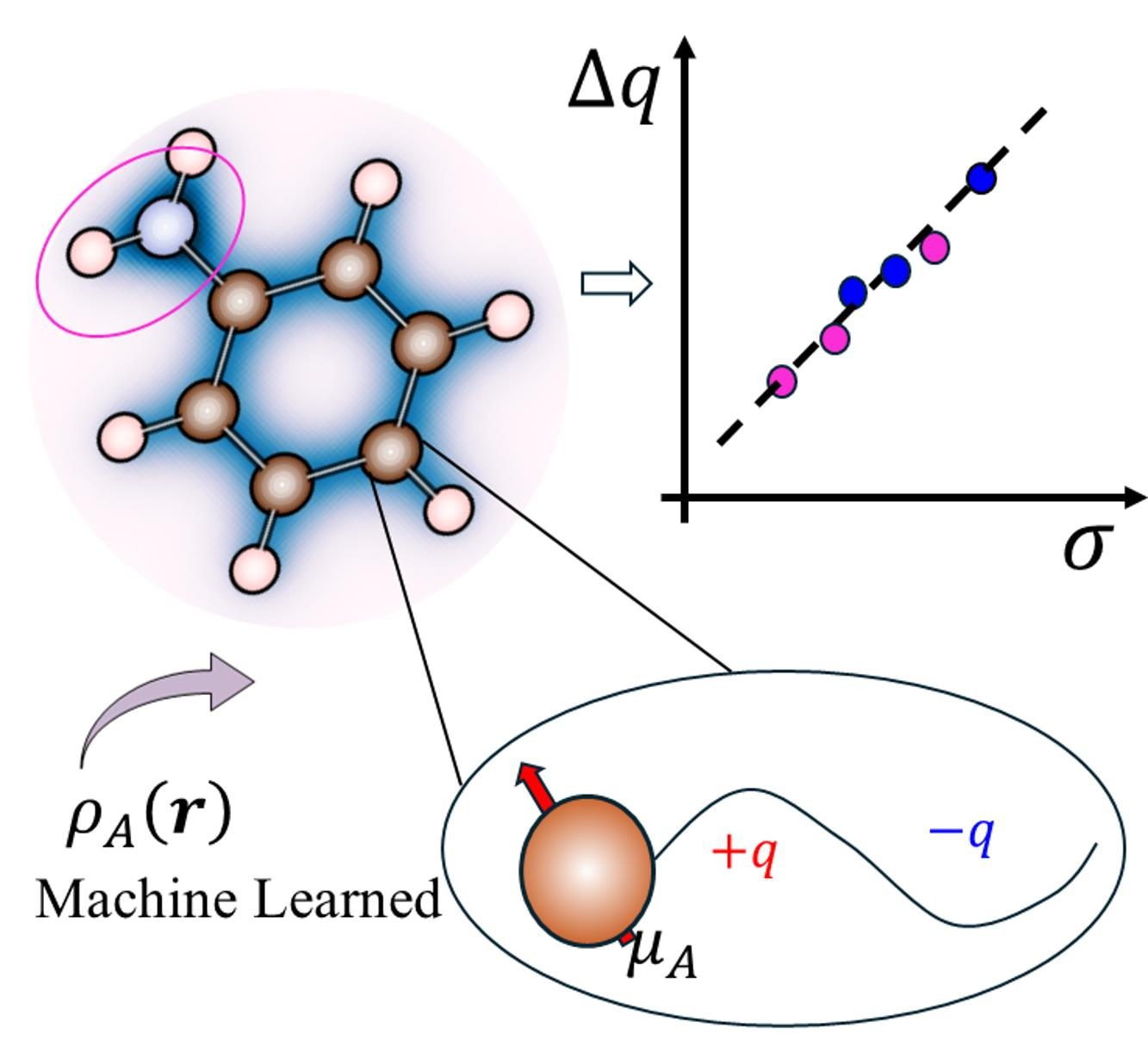
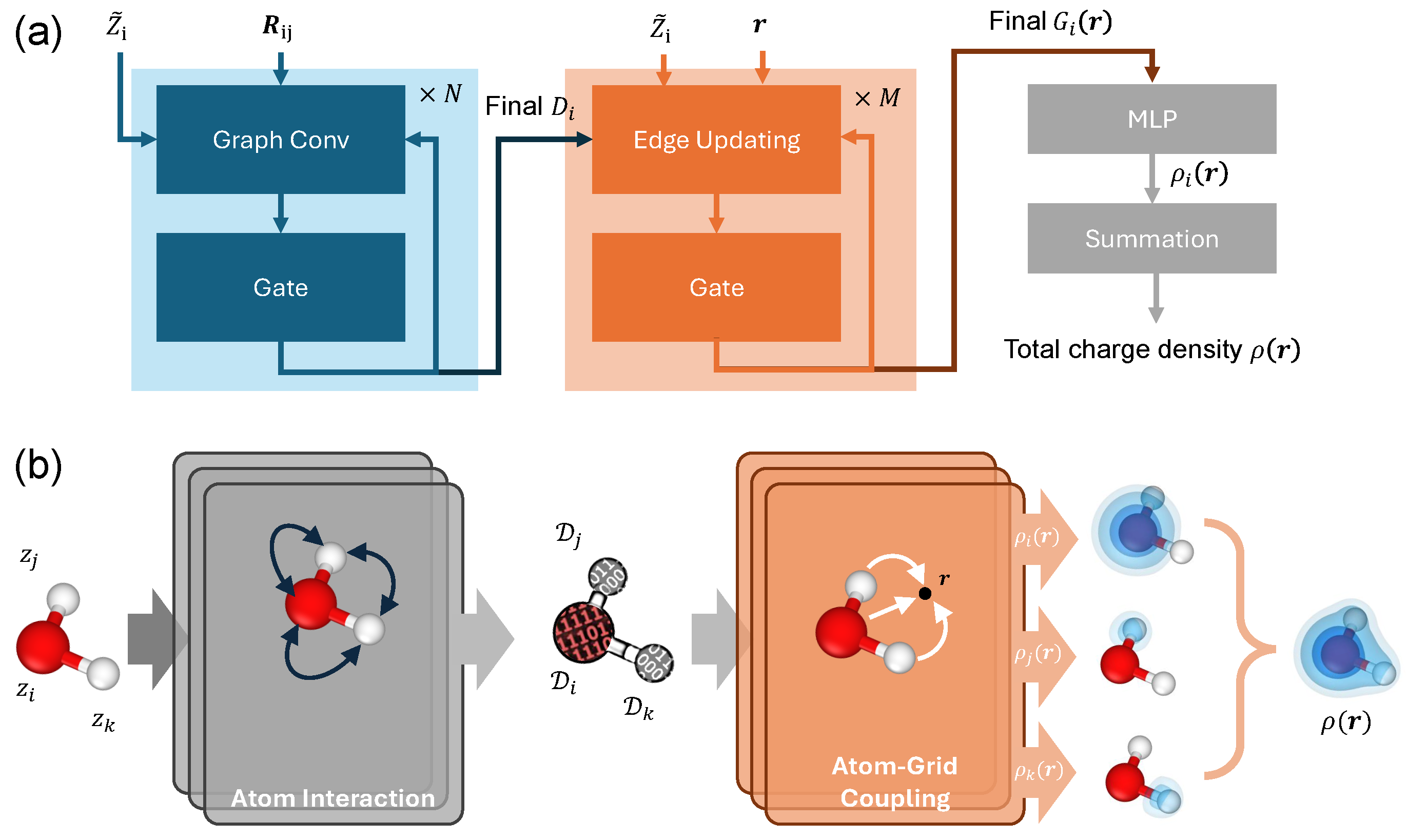
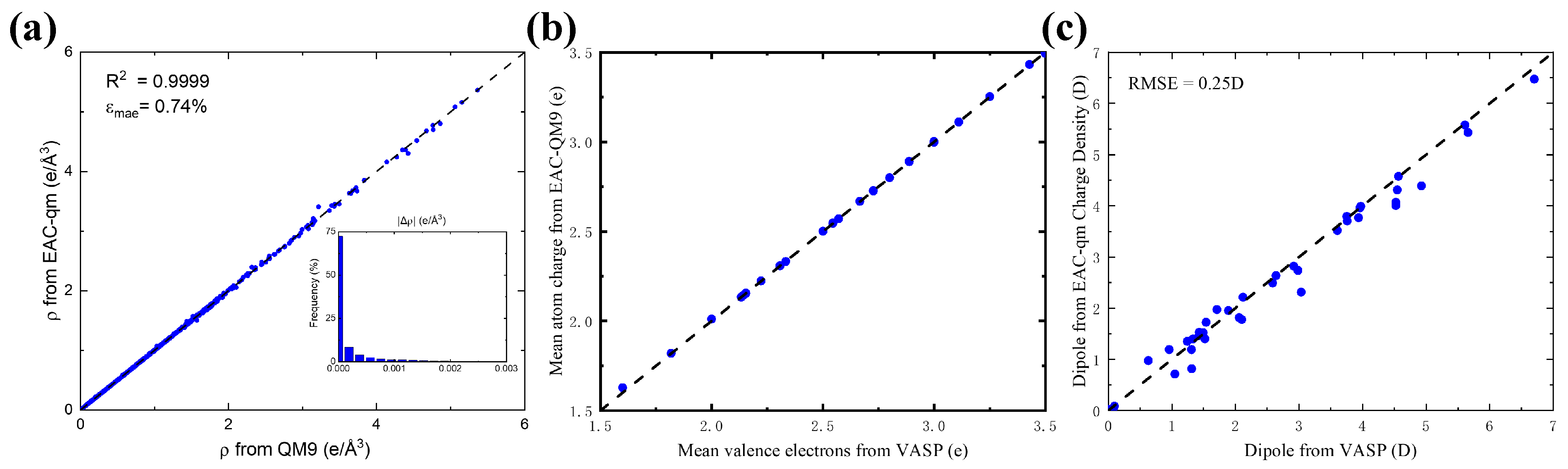
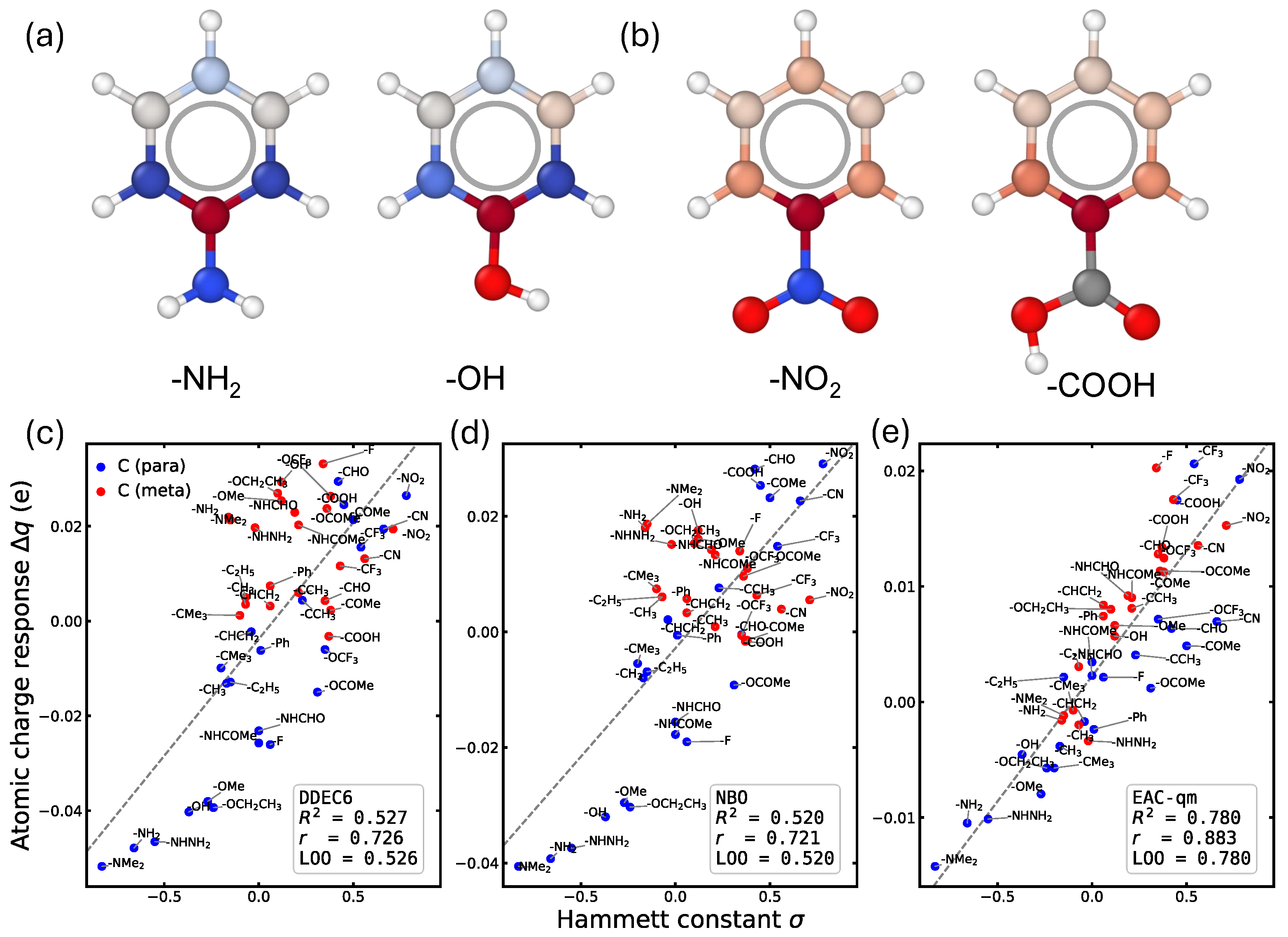
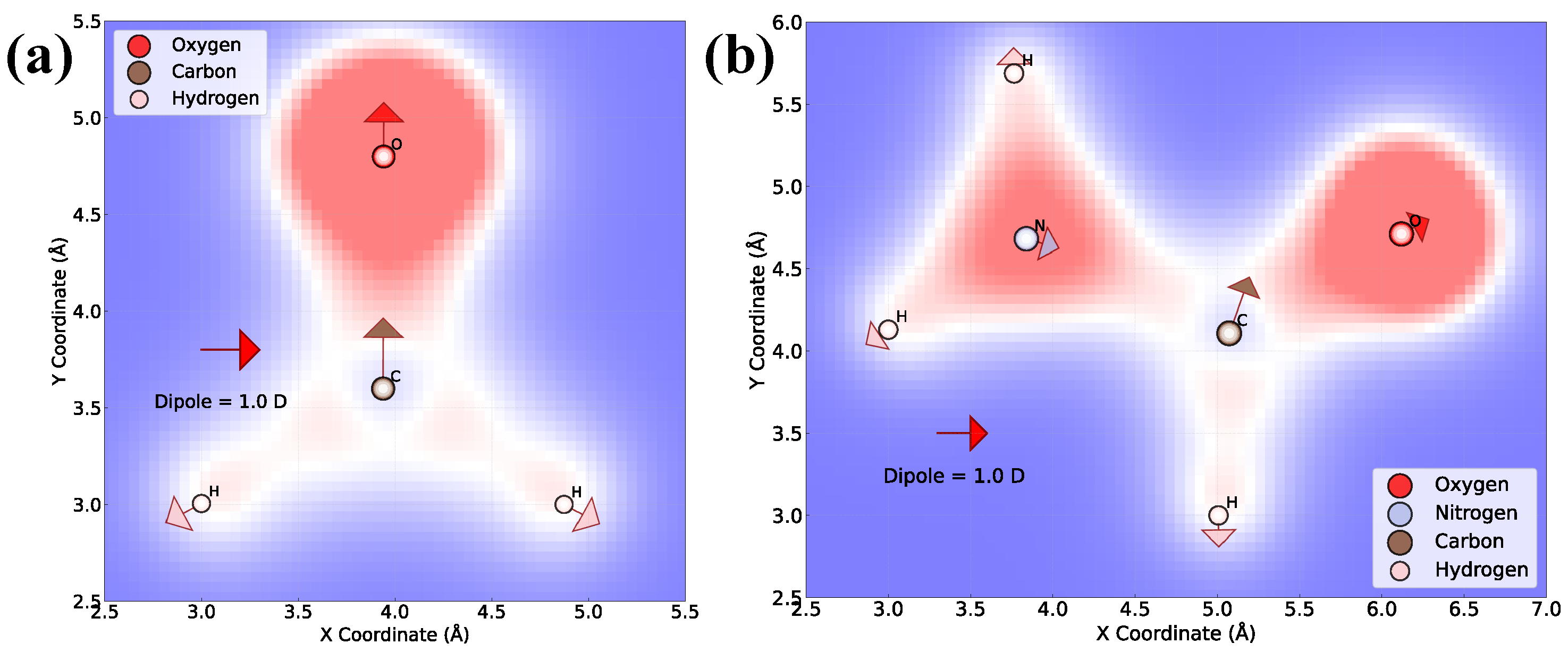
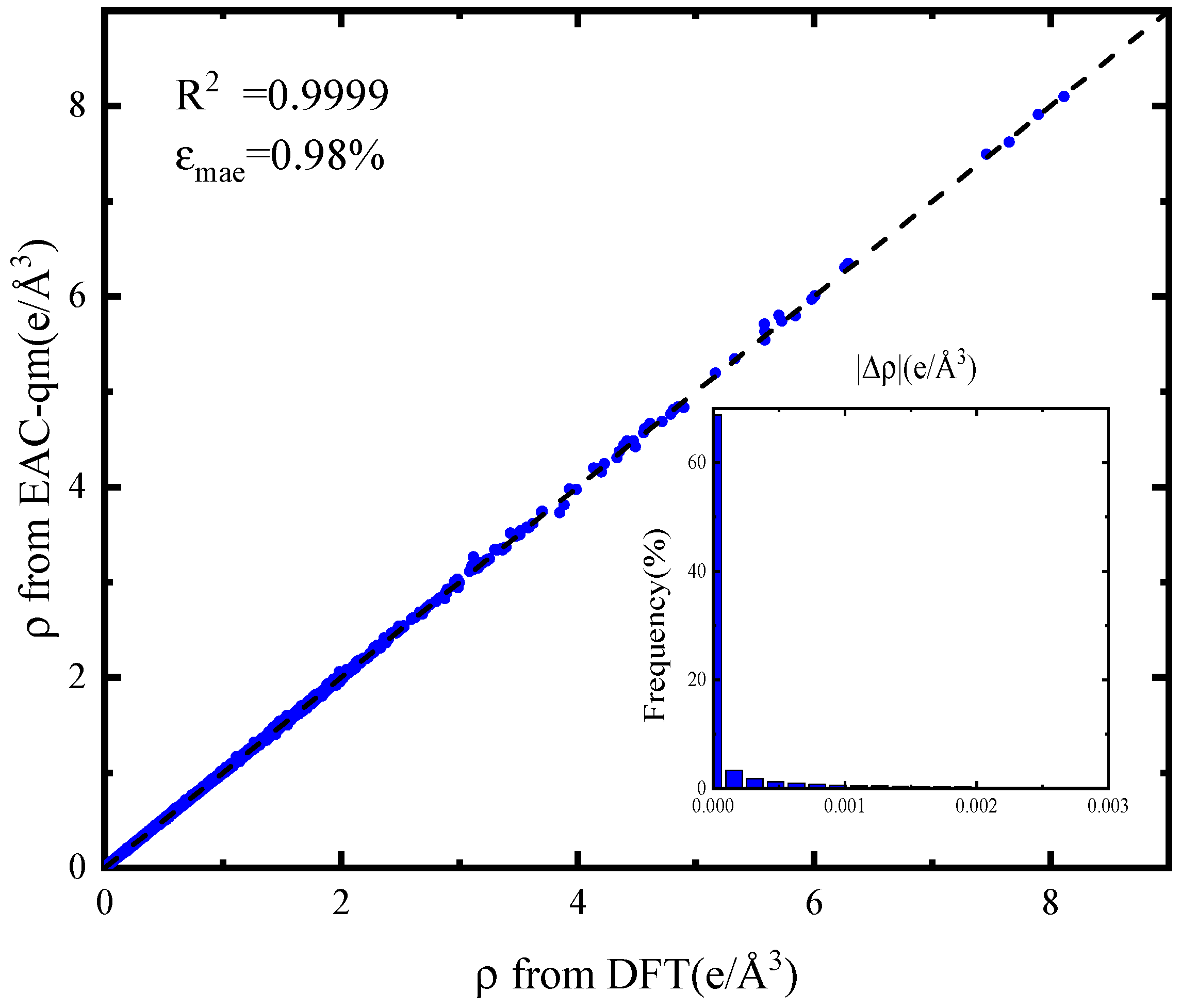
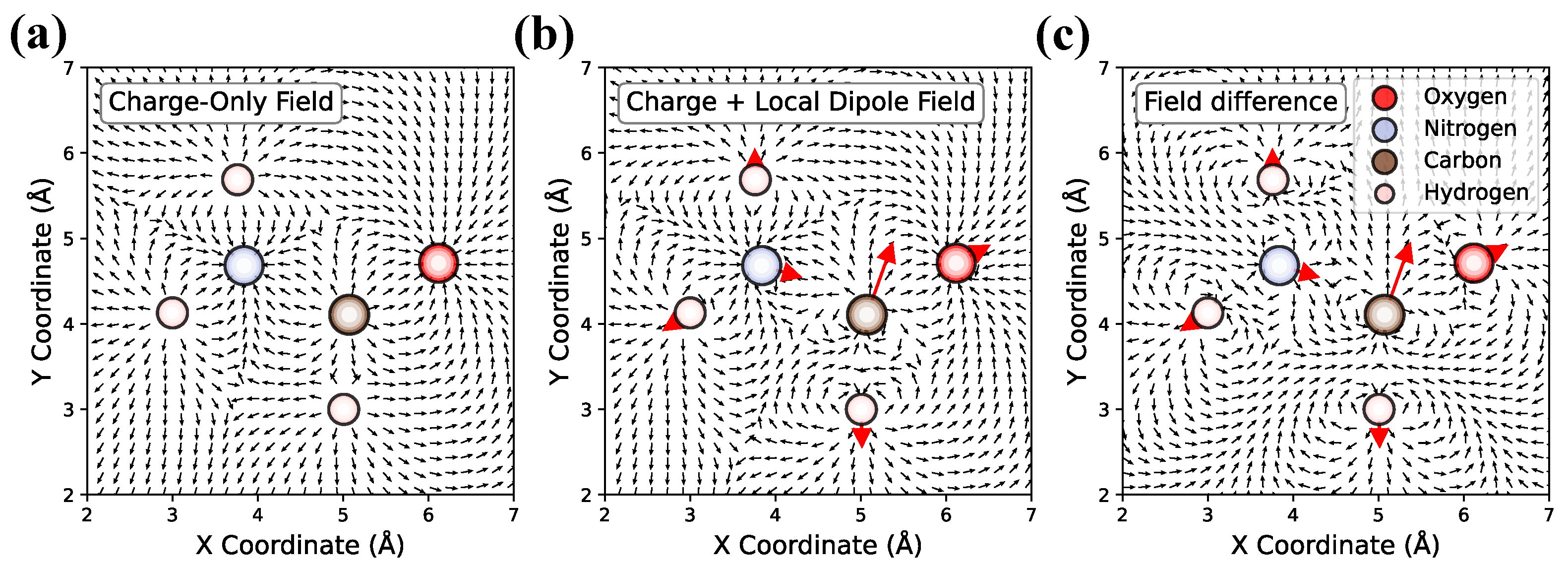
Atomic charges are widely used to analyze molecular electronic structure and substituent effects, yet their numerical values and interpretations are inherently dependent on the adopted density partitioning scheme. Here, we adapt the Equivariant Atomic Contribution framework to molecular systems (EAC-qm), enabling prediction of atom-resolved continuous charge densities from which atomic charges are obtained as spatial moments. The predicted densities reproduce reference density functional theory results with high accuracy and preserve global charge conservation. To assess chemical interpretability, we examine charge responses in monosubstituted aromatic systems using Hammett substituent constants as external empirical references. Atomic charges derived from EAC-qm exhibit a strong linear association with Hammett parameters, compared with values obtained from traditional density partitioning approaches applied to the same electronic structures. These correlations indicate that density-derived charges respond systematically to established substituent electronic trends. Beyond scalar charges, atom-resolved dipole moments can be evaluated as first-order moments of the same continuous density representation. Illustrative examples for formaldehyde (H2CO) and formamide (HCONH2) show that local dipole vectors provide directional information about intra-atomic polarization that is not captured by point-charge models. Overall, the results suggest that machine-learned continuous electron densities provide a representation-consistent basis for constructing atom-centered electronic descriptors with chemical interpretability.
Keywords: machine-learned electron density; atomic charges; density partitioning; substituent effects; Hammett constants machine-learned electron density; atomic charges; density partitioning; substituent effects; Hammett constants
Graphical Abstract