Article

PEG-Coated Nanostructured NiO Synthesized Sonochemically in 1,2-(Propanediol)-3-methylimidazolium Hydrogen Sulfate Ionic Liquid: DFT, Structural and Dielectric Characterization


1
Synthesis and Catalysis Laboratory, Ibn Khaldoun University of Tiaret, Tiaret 14000, Algeria
2
Materials Chemistry and Applications Laboratory, Tissemsilt University, Tissemsilt 38000, Algeria
3
Advanced Power and Energy Center APEC, Department of Electrical Engineering, Khalifa University, Abu Dhabi 127788, United Arab Emirates
4
Solar Equipments Development Unit, Bou Ismail 45000, Algeria
5
Laboratory Physico-Chemistry of Materials, Laghouat University, Laghouat 03000, Algeria
6
Laboratory of Telecommunication and Smart Systems (LTSS), Faculty of Science and Technology, University of Djelfa, P.O. Box 3117, Djelfa 17000, Algeria
7
Civil and Architectural Engineering, KTH Royal Institute of Technology, Teknikringen 78, 11428 Stockholm, Sweden
*
Author to whom correspondence should be addressed.
Chemistry 2025, 7(6), 194; https://doi.org/10.3390/chemistry7060194
Submission received: 5 November 2025 / Revised: 25 November 2025 / Accepted: 26 November 2025 / Published: 4 December 2025
(This article belongs to the Section Chemistry at the Nanoscale)

Abstract

In this work, nickel oxide nanoparticles (NiO NPs) were synthesized sonochemically in the ionic liquid 1,2-(propanediol)-3-methylimidazolium hydrogen sulfate ([PDOHMIM+][HSO4]) at different loadings (8 wt.%, 15 wt.%, and 30 wt.%), and subsequently coated with polyethylene glycol (PEG). Structural characterization (XRD, FTIR, TEM, TGA) confirmed a cubic NiO spinel phase with an average crystallite size of ~8 nm, which increased to 20–28 nm after PEG coating. Electrical measurements (100 Hz–1 MHz) showed that AC conductivity (σAC) increased with both frequency and NiO content, whereas the dielectric constant (ε′) and loss tangent (tan δ) decreased with frequency. DFT calculations (B3LYP/6–311+G(2d,p)) on the [PDOHMIM+][HSO4] ion pair showed that there were strong hydrogen bonds, an uneven charge distribution, and stable electrostatic interactions that help keep NiO NPs stable and spread them evenly in the ionic liquid. In general, both experimental and theoretical studies show that PEG-coated [NiO NPs + IL] nanostructures exhibit improved dielectric stability, enhanced interfacial polarization, and tunable electronic properties.

1. Introduction

Recent years have seen tremendous progress in nanotechnology, with several methods developed to produce nanoparticles of specific size and shape to meet requirements. Compared to their bulk counterparts, nanomaterials exhibit radically different mechanical, electrical, magnetic, thermal, and optical properties [1]. Transition metal oxides, such as nickel oxide (NiO) nanoparticles, have recently attracted significant attention from researchers due to their low cost, stability, and optoelectronic properties. Furthermore, NiO has many applications, such as electrochemica, batteries, gas sensors, magnetic materials, catalysis and capacitors (supercapacitors) [2]. Over the past several years, many efforts have been made to synthesize NiO nanostructures with various morphologies using methods such as sol–gel [3], thermal decomposition [4], spray pyrolysis [5], surfactant-mediated synthesis [6], and sonochemical synthesis [7].
Polymers mixed with nanoparticles are an interesting field for many researchers due to their low cost and easier manufacturing and their promise in several applications, including the medical, food, and device industries [8,9,10,11]. One of the promising polymers that can act as such a surface modifier is polyethylene glycol (PEG), a thermoplastic polymer with good crystallinity, excellent water solubility, and nontoxicity. It has high toughness and can easily bond to nanoparticle surfaces by reducing spin disorder [12,13,14,15]. PEG-coated nanoparticles reveal excellent stability and solubility in aqueous dispersions and in physiological media [16]. The sonochemical preparation of nanocrystalline NiO in ethanol–water was reported, using polyethylene glycol (PEG) as the surfactant [17,18,19].
Room-temperature ionic liquids (RTILs) are organic salts that are liquid at low temperatures, sometimes below [20]. They are also attracting more attention in the fabrication of nano- and microstructured inorganic materials, and their pre-organized structures make them useful as templates for nanomaterials [21]. Also, because they carry much charge and can be polarized, they may help stabilize inorganic nanomaterials via electrostatic and steric interactions [22,23]. NiO nanoparticles were prepared from a solution of water by using 1-butyl-3-methylimidazolium tetrafluoroborate [C4mim][BF4] ionic liquid as a template [24]. Indeed, careful modification of ionic liquids enables the production of NiO in morphologies ranging from nanosheets to rods and particles [25,26]. 1,2-propanediol is an important raw material with many industrial applications in food additives, polymer synthesis, pharmaceuticals, cosmetics, photochemicals, and de-icers, owing to its physical properties and low toxicity [27,28,29]. Due to its ability for hydrogen bonding with self-association at two hydroxylic groups, 1,2-propanediol is stronger in glycols than in monohydroxylic alcohols [30]. The properties of 1,2-(propanediol)-3-methylimidazolium hydrogen sulfate, compared to other common ionic liquids (ILs), include its strong hydrogen-bonding ability—especially with metals and metal oxides—its high thermal and chemical stability, its lower viscosity, and a synthesis process that is both inexpensive and straightforward. The HSO4 anion is regarded as a greener acid anion in comparison to PF6, BF4, or NTf2 [31]. The unique structural features of 1,2-(propanediol)-3-methylimidazolium hydrogen sulfate with NiO nanocomposite provide higher stability, smaller particle size, and better dispersion compared with composites made with non-functionalized ILs [32].
This study presents the structural, thermal, electrical, and dielectric properties of nanostructures formed from [NiO NPs + IL] sonochemically synthesized in 1,2-(propanediol)-3-methylimidazolium hydrogen sulfate [PDOHMIM+][HSO4], a new ionic liquid prepared and characterized in our laboratory in the first step. Different weights of these [NiO NPs + IL] have been coated with a PEG polymer in the second step to obtain nanostructure samples for various future medical and technological applications.

2. Materials and Methods

2.1. Chemicals and Reagents

All chemicals used in this work were obtained from recognized suppliers and used without further purification. Sulfuric acid (H2SO4, 98%), 3-chloro-1,2-propanediol (99%), and 1-methylimidazole (99%) were purchased from Sigma-Aldrich (St. Louis, MO, USA). Diethyl ether and acetonitrile served as solvents during the synthesis steps. Nickel(II) chloride hexahydrate (NiCl2·6H2O, (99%, Cheminova, Copenhagen, Denmark), sodium hydroxide (NaOH, 98%, Sigma-Aldrich, St. Louis, MO, USA), and cetyltrimethylammonium bromide (CTAB, 98%, Sigma-Aldrich, St. Louis, MO, USA) were used as precursors and surfactants. Polyethylene glycol (PEG-4000, H(OCH2CH2)nOH, 99%, Biochem, Berlin, Germany) and ethanol (C2H6O, 99%, Merck, Darmstadt, Germany) were also employed in the preparation process.

2.2. Instruments

The 1H and 13C NMR spectra were obtained using a Bruker Biospin Avance III spectrometer (Bruker, Karlsruhe, Germany) with a TXI 5 mm probe at frequencies of 600 MHz and 300 MHz, respectively. Chemical displacements (δ) are reported in ppm and related to the internal solvent signal D2O. X-ray powder diffraction (XRD) examination was performed using a Rigaku SmartLab operating (Rigaku, Tokyo, Japan) at 40 kV and 35 mA with Cu-Kα radiation (λ = 1.54059 Å). The Fourier transform infrared (FT-IR) spectra of the materials were obtained using a Perkin Elmer BX (FTIR) infrared spectrometer (PerkinElmer, Waltham, MA, USA) within the range of 4000–400 cm−1. Transmission electron microscopy (TEM) examination was conducted utilizing an FEI Tecnai G2 Sphera instrument (FEI, Hillsboro, OR, USA). A droplet of diluted sample in alcohol was placed on a TEM grid. The JEOL JSM-7200F Scanning Electron Microscope (SEM, JEOL, Tokyo, Japan) has been used for morphological investigations. Thermogravimetric analysis (TGA) and differential thermal analysis (DTA) were conducted using an SDT 2960 simultaneous DTA–TGA apparatus (TA Instruments, New Castle, DE, USA) with samples weighing 21.0 ± 1.0 mg, housed in aluminum cups. TGA studies were conducted over a temperature range of 30–800 °C, employing constant heating rates of 5, 10, 15, 20, and 25 K min−1 in a nitrogen atmosphere at a flow rate of 85 ± 5 mL min−1. The dielectric properties were assessed using dynamic electrical analysis with BDS40 equipment (Novocontrol Technologies, Montabaur, Germany), including a Novocontrol Novotherm temperature sensor (Novocontrol Technologies, Montabaur, Germany), and employing two cm-diameter compression molds. The measurements were obtained over a frequency range of 102–106 Hz, at temperatures between 30 °C and 100 °C, and at a rate of 3 K min−1 using a parallel plate sensor (Novocontrol Technologies, Montabaur, Germany).

2.3. Synthesis and Characterization of 1,2-(Propanediol)-3-methylimidazolium Chloride Ionic Liquid [PDOHMIM+][Cl] [33,34,35]

For 24 h, an equal quantity of 3-chloropropane-1,2-diol (1.66 mL, 20 mmol, (99%), (Sigma-Aldrich (St. Louis, MO, USA), and 1-methylimidazole (2.2 g, 20 mmol, 99%), Sigma-Aldrich (St. Louis, MO, USA) was heated to 120 °C in a homogeneous liquid medium. Magnets were used to agitate the fluid vigorously. At room temperature, the raw material is crystalline; it is therefore ground very finely, washed with diethyl ether (5 × 80 mL, (99.5%), (Honeywell, Charlotte, NC, USA)), and then filtered through a sintered glass filter with a porosity of 4. Finally, the product is dried for 10 h under low pressure to remove any residual solvent (Figure 1). A light brown liquid with a yield of 98%.

2.4. Synthesis and Characterization of 1,2-(Propanediol)-3-methylimidazolium Hydrogénosulfate [PDOHMIM+][HSO4] [33,34]

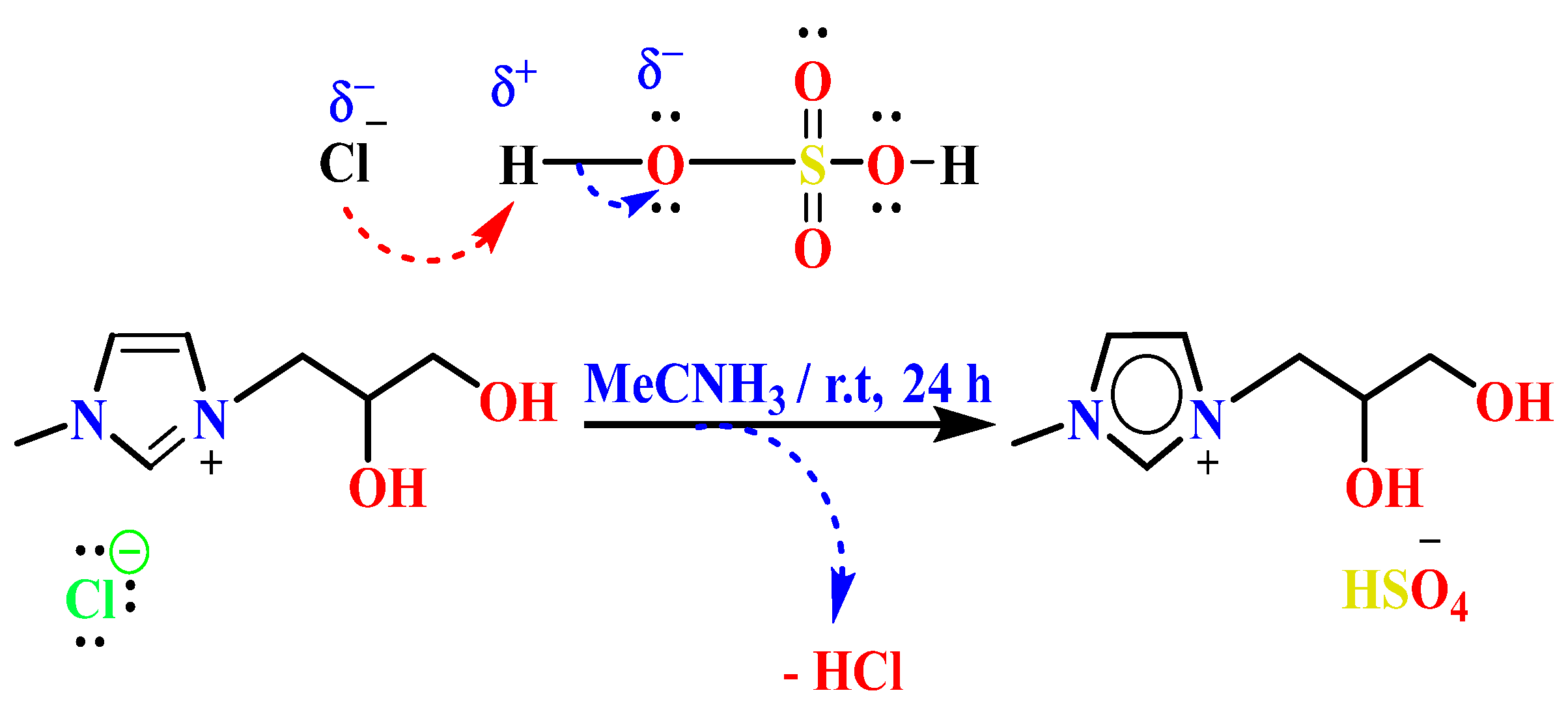
We mixed 1,2-(propanediol)-3-methylimidazolium chloride (5.0 g, 25.2 mmol) and Sulfuric acid (4 mL, 31 mmol, 98% Biochem Berlin, Germany) in 30 mL of acetonitrile and stirred at room temperature for 24 h under vigorous magnetic stirring (Figure 2).
After the acetonitrile is removed, the crude is washed with diethyl ether (3 × 80 mL) and then concentrated under low pressure in a rotary evaporator. Finally, the product was dried for 3 h under reduced pressure to remove any residual solvent. Dark brown liquid; yield: (94%).

2.5. Sonochemical Synthesis of [NiO NPs + IL]

1,2-(propanediol)-3-methylimidazolium hydrogen sulfate [PDOHMIM+][HSO4] ionic liquid (viscous liquid) created in our laboratory after the literature [29,30,31]. The ionic liquid was distilled at 70 °C before use. A sonochemical technique was used to synthesize NiO nanoparticles (NiO NPs). NiCl2·6H2O (1 M) was dissolved in 50 mL of distilled water. Then, NaOH (2 M) was added dropwise to the aforesaid solution, which was then sonicated in an ultrasonic bath for one hour at 60 °C. The green precipitate was filtered and washed multiple times with distilled water. The final was calcined at 250 °C for three hours. In a typical synthesis of [NiO NPs + IL] in ionic liquid, 0.5 g of [PDOHMIM+][HSO4] IL and 0.5 g of CTAB were dissolved in 50 mL of distilled water; the reaction solutions were agitated vigorously for one h. After 2 g of NiO NPs were introduced into the aforementioned solution, the reaction was completed under ultrasonic irradiation in an ultrasonic cleaning bath (Wiseclean, 80 W, 20 kHz) for three hours. The resultant powders were separated by centrifugation, rinsed with ethanol and deionized water multiple times, and dried overnight at 150 °C.

2.6. Preparation of PEG-Coated [NiO NPs + IL]

PEG-coated [NiO NPs + IL] were produced by the sonochemical method. Firstly, 10 g of PEG-4000 was dissolved in 30 mL of ethanol under continuous stirring for 30 min at 40 °C; then, varying amounts of [NiO NPs + IL] (8 wt.%, 15 wt.%, and 30 wt.%) were slowly added to the polymer solution and sonicated for one h. The fresh solution was combined and agitated at 60 °C for 3 h and ultimately dried at 50 °C for 24 h.

2.7. Computational Methods

The geometry optimization of the ionic liquid cations and their corresponding ion pairs, [PDOHMIM+][Cl] and [PDOHMIM+][HSO4], was carried out using Density Functional Theory (DFT) at the B3LYP/6–311+G(2d,p) level of theory as implemented in the Gaussian 9 program package (version 09, Wallingford, CT, USA). All structures were optimized without symmetry constraints, and the nature of the stationary points was confirmed by the absence of imaginary frequencies, indicating that the optimized geometries correspond to true minima on the potential energy surface.

3. Results and Discussion

3.1. NMR Results

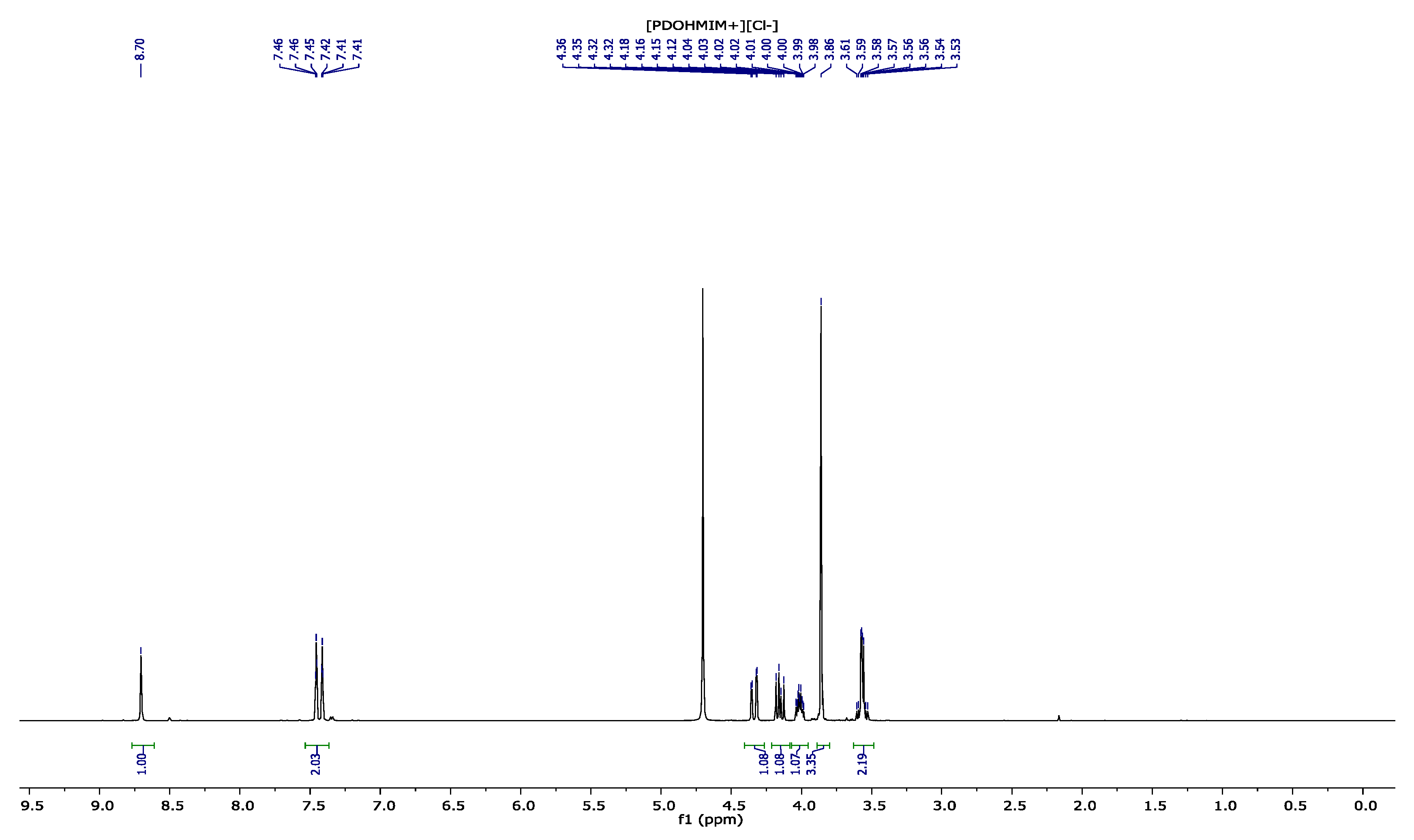
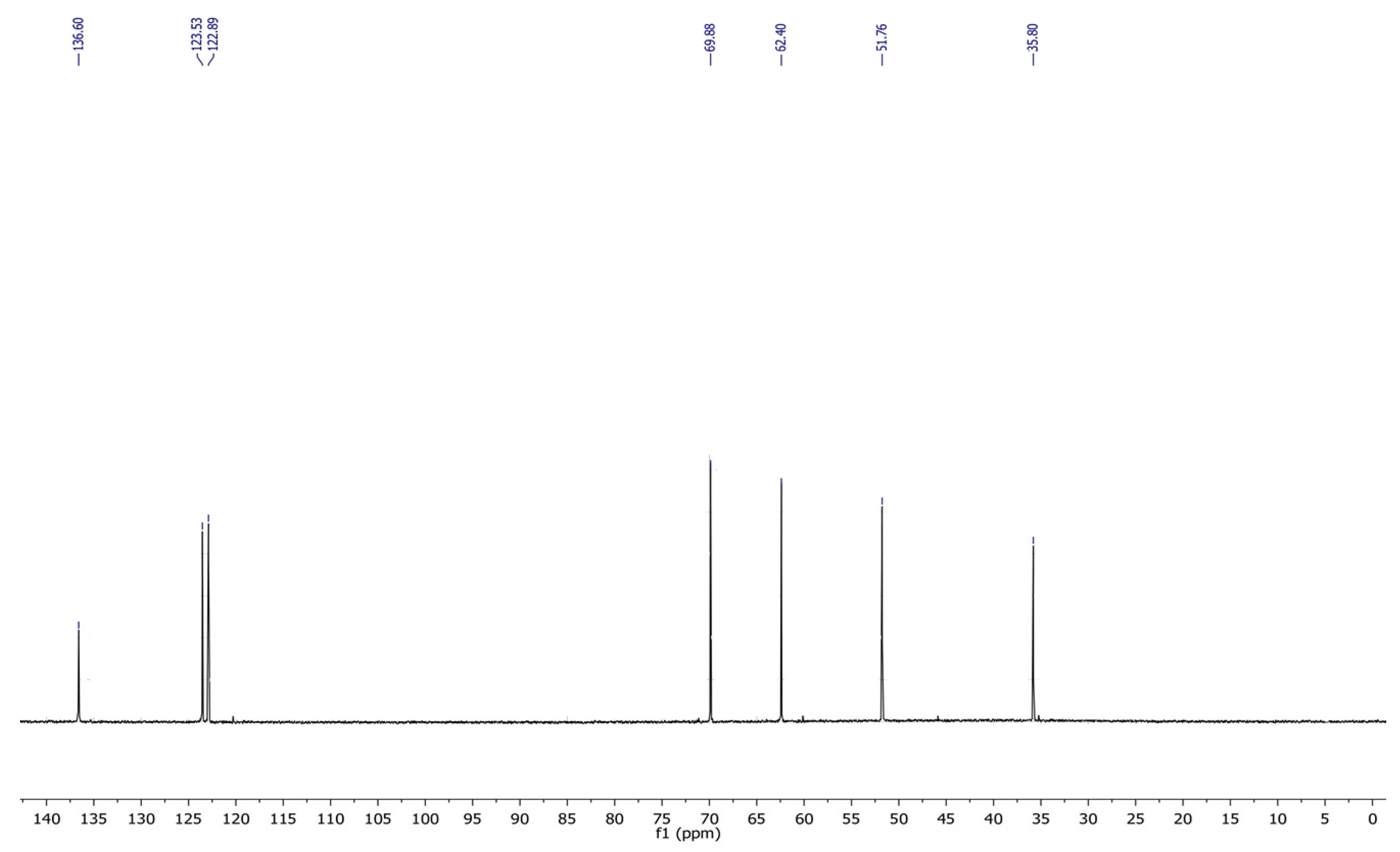
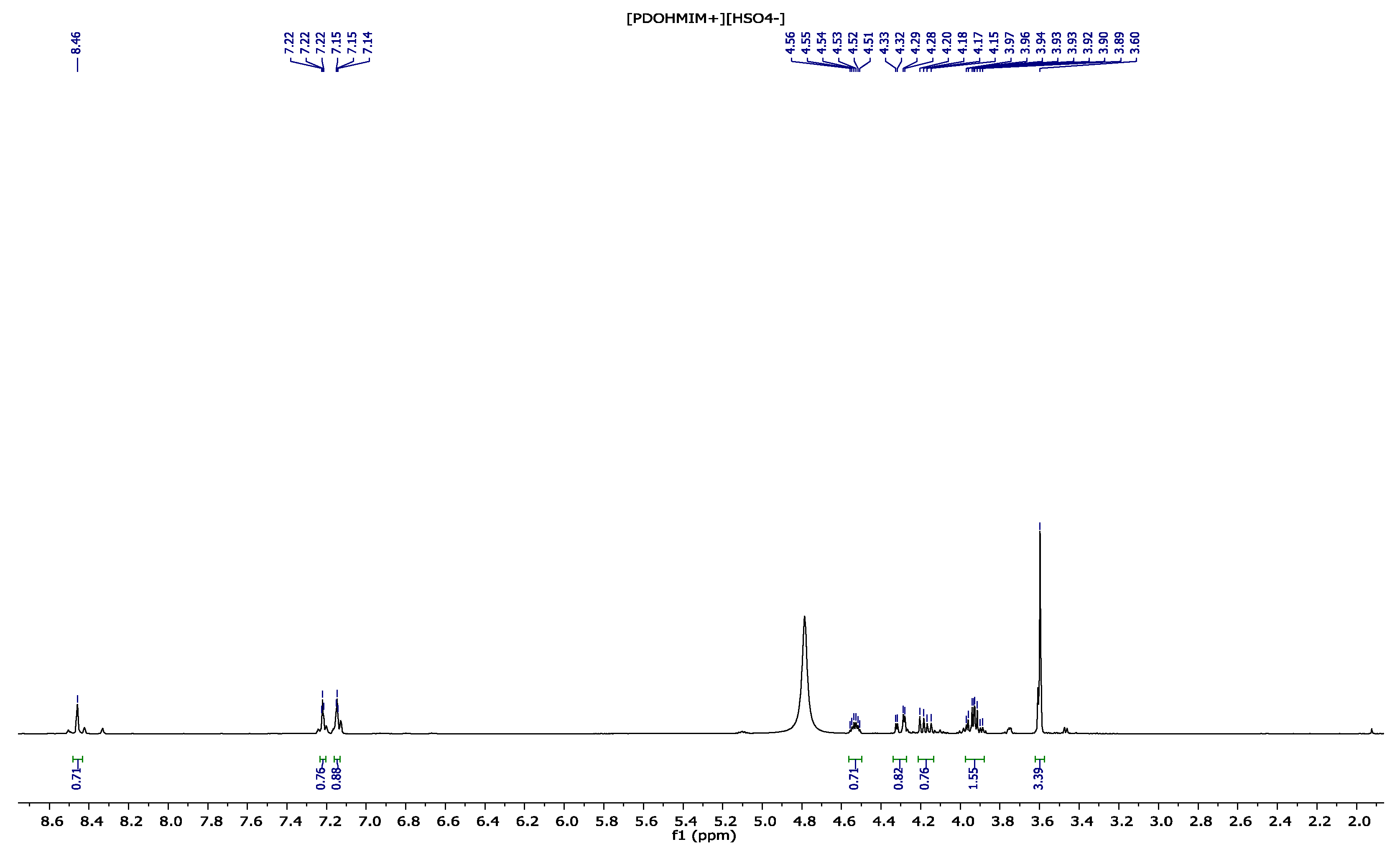
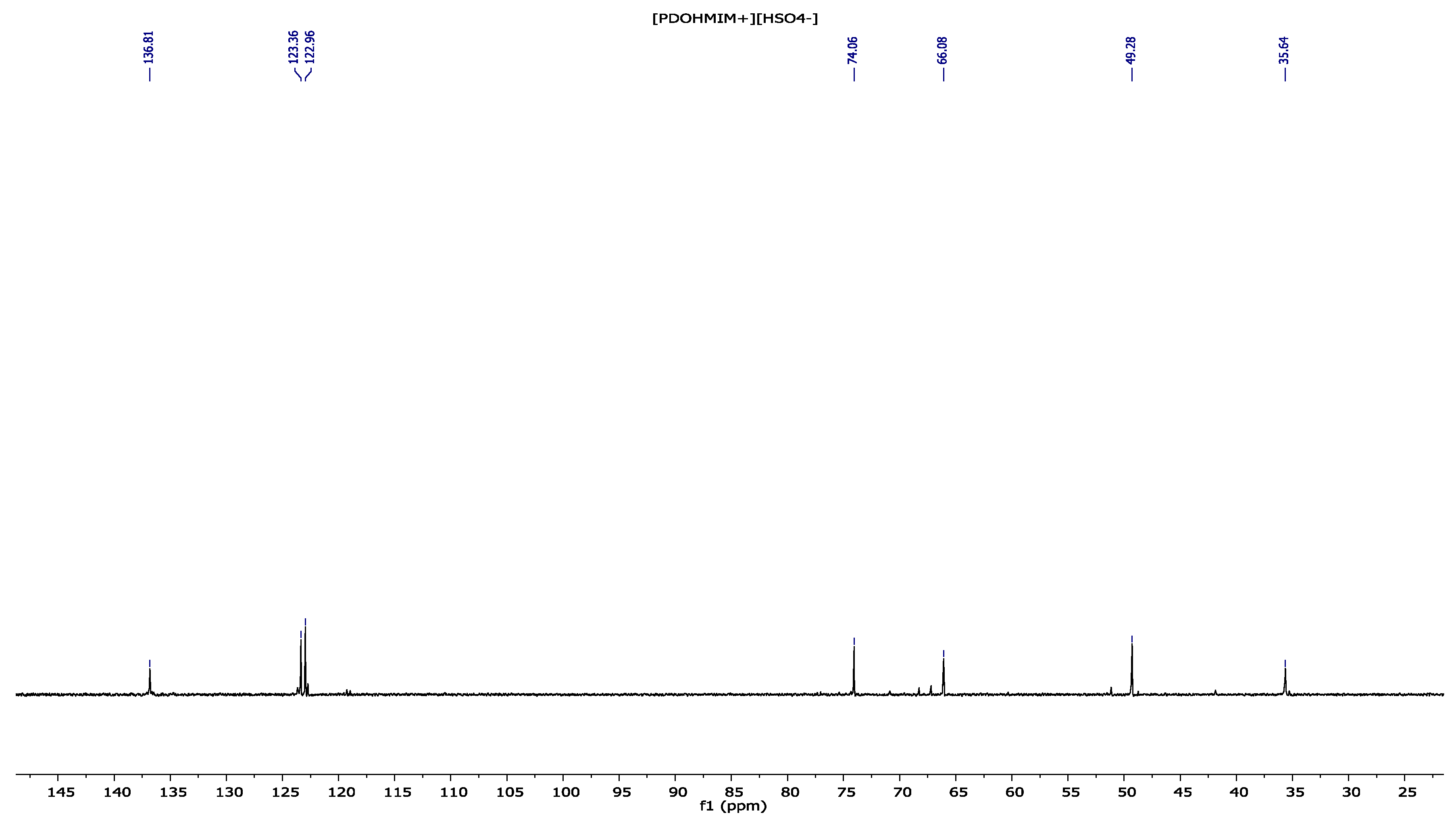
Using 1H and 13C nuclear magnetic resonance spectroscopy (NMR), the structures of the resultant compounds were confirmed, demonstrating the absence of substantial contaminants. The 1H and 13C NMR spectra are displayed in the Figure 3, Figure 4, Figure 5 and Figure 6, respectively, and the spectroscopic data are supplied below.

3.2. 1,2-(Propanediol)-3-methylimidazolium Chloride [PDOHMIM+][Cl] 1H, 13C NMR

NMR 1H (600 MHz, D2O): δ = 8.70 (s, 1H, NCHN), 7.46 (t, 1H, J = 1.8 Hz, CH=CH), 7.41 (t, 1H, J = 1.8 Hz, CH=CH), 4.33 (dd, 1H, Ja,CH = 3.1 Hz, Ja,b = 14.3 Hz, Ha NCH2), 4.15 (dd, 1H, Jb,CH = 8.4 Hz, Ja,b = 14.3 Hz, Hb NCH2), 3.95 (m, 1H, CH-OH), 3.86 (s, 3H, NCH3), 3.58 (dd, 1H, Ja,CH = 5.0 Hz, Ja,b = 11.8 Hz, Ha CH2OH), 3.55 (dd, 1H, Jb,CH = 5.6 Hz, Ja,b = 11.8 Hz, Hb CH2OH), (Figure 3).
NMR 13C (150 MHz, D2O): δ = 136.0 (NCHN), 123.5 (CH=CH), 122.9 (CH=CH), 69.8 (CH-OH), 62.4 (CH2-OH), 51.7 (NCH2), 35.8 (NCH3). (Figure 4).

3.3. 1,2-(Propanediol)-3-methylimidazolium Hydrogenosulfate [PDOHMIM+][HSO4] 1H, 13C NMR

NMR 1H (300 MHz, D2O): δ = 8.46 (s, 1H, NCHN), 7.22 (t, 1H, J = 1.8 Hz, CH=CH), 7.15 (t, 1H, J = 1.8 Hz, CH=CH), 4.53 (m, 1H, CH-OH), 4.30 (dd, 1H, Ja,CH = 3.1 Hz, Ja,b = 14.9 Hz, Ha NCH2), 4.17 (dd, 1H, Jb,CH = 8.0 Hz, Ja,b = 14.9 Hz, Hb NCH2), 3.95 (dd, 1H, Ja,CH = 3.8 Hz, Ja,b = 11.3 Hz, Ha CH2OH), 3.91 (dd, 1H, Jb,CH = 4.9 Hz, Ja,b = 11.3 Hz, Hb CH2OH), 3.60 (s, 3H, NCH3). (Figure 5).
NMR 13C (75 MHz, D2O): δ = 136.8 (NCHN), 123.3 (CH=CH), 122.9 (CH=CH), 74.0 (CH-OH), 66.0 (CH2-OH), 49.2 (NCH2), 35.6 (NCH3). (Figure 6).
The 1H and 13C NMR spectra confirm the anion exchange of [PDOHMIM+][Cl] to the hydrogenosulfate salt [PDOHMIM+][HSO4]. A slight downfield shift is noticed for some proton and carbon signals when Cl is exchanged with HSO4, especially for the imidazolium ring protons and the propanediol part. This is because the hydrogenosulfate anion is more acidic and a better hydrogen-bonding anion than chloride, which increases the deshielding of the cation. In particular, the NCHN proton shows a typical shift (δ 8.70 to 8.46 ppm) and the CH–OH and CH2–OH resonances are also altered. These spectral changes indicate the replacement of the chloride anion and the formation of [PDOHMIM+][HSO4] ionic liquid.

3.4. Compared FTIR/ATR Spectra of [PDOHMIM+][Cl] and [PDOHMIM+][HSO4]

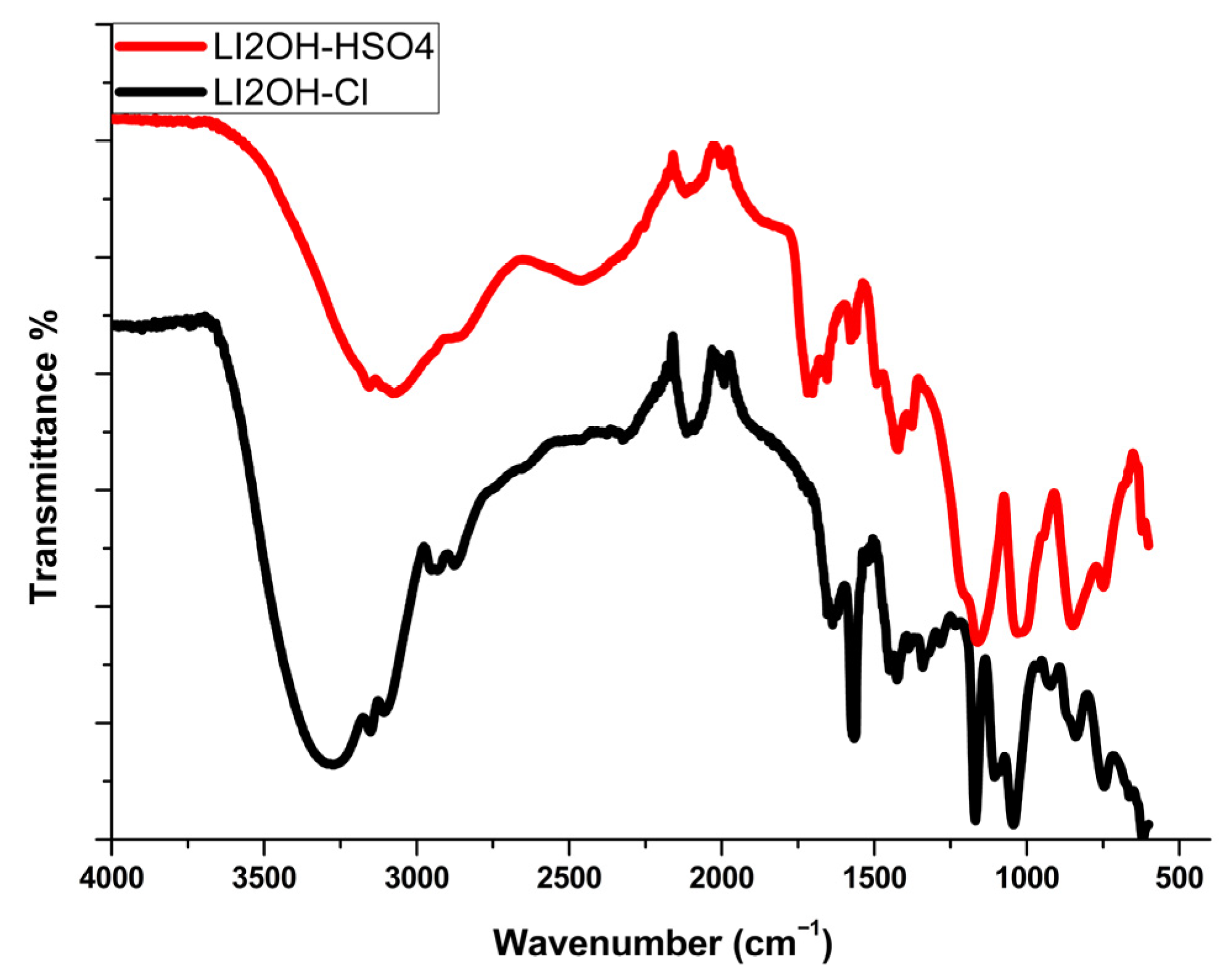
The Fourier Transform Infrared Spectroscop (FTIR/ATR) spectra clearly confirm the successful anion exchange from chloride [Cl] to hydrogen sulfate [HSO4] in the synthesized ionic liquid 1,2-(propanediol)-3-methylimidazolium Figure 7. This substitution is evidenced by the appearance of new characteristic vibrational bands at 1212 cm−1 and 1160 cm−1 [33,34], attributed respectively to the (S–O) asymmetric stretching and CH2(N)/CH3(N)–CN stretching modes associated with the HSO4 anion. In parallel, the disappearance of the (C–O) stretching shoulder at 1106 cm−1 and the shift of the (O–H) bending mode from 1341 cm−1 to 1338 cm−1 [29,30] further confirm the replacement of Cl by HSO4. Additional changes in the intensity and position of the CH2 and N–C stretching modes (around 939–968 cm−1) support the strong interaction between the imidazolium cation and the new hydrogen sulfate anion. These spectral modifications provide conclusive evidence of the successful anion exchange process.

3.5. FTIR Analysis of PEG-Coated [NiO NPs + IL]

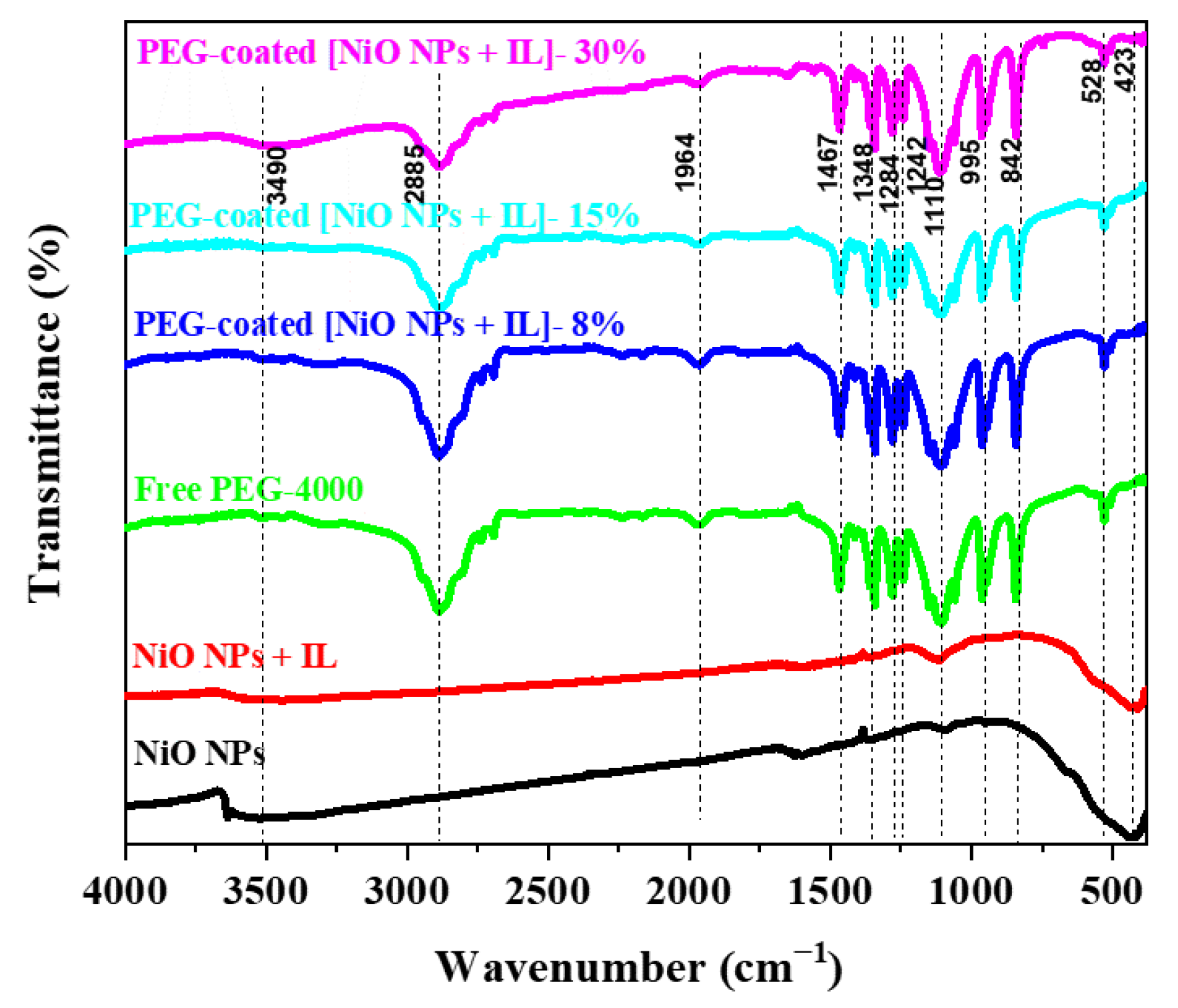
The FTIR spectra of [NiO NPs], [NiO NPs + IL], pure PEG, and differents amounts of [NiO NPs + IL] coated with PEG in the range of 400 to 4000 cm−1 are displayed in Figure 8.
A broad and strong absorption band at around 3490 cm−1 is observed in all samples, corresponding to the O–H stretching of absorbed water molecules. A doublet with peaks at 1284 and 1248 cm−1 is also detected in all samples, indicating C–H bending in the unconsumed NiO precursor. However, the intensity of this doublet is higher in capped samples due to the presence of C–H groups in the capping agents. The bending and stretching vibrations in the [NiO NPs + IL] structure are attributed to the bands in the fingerprint region of NiO NPs, which appear between 842 and 423 cm−1. Various small IR bands are observed in the 700–3000 cm−1 region, which may correspond to other functional groups listed in Table 1 [36]. No additional peaks are detected in the FTIR spectra of capped samples, likely due to the low amount of capping agent.

3.6. XRD Analysis of PEG Coated [NiO NPs + IL]

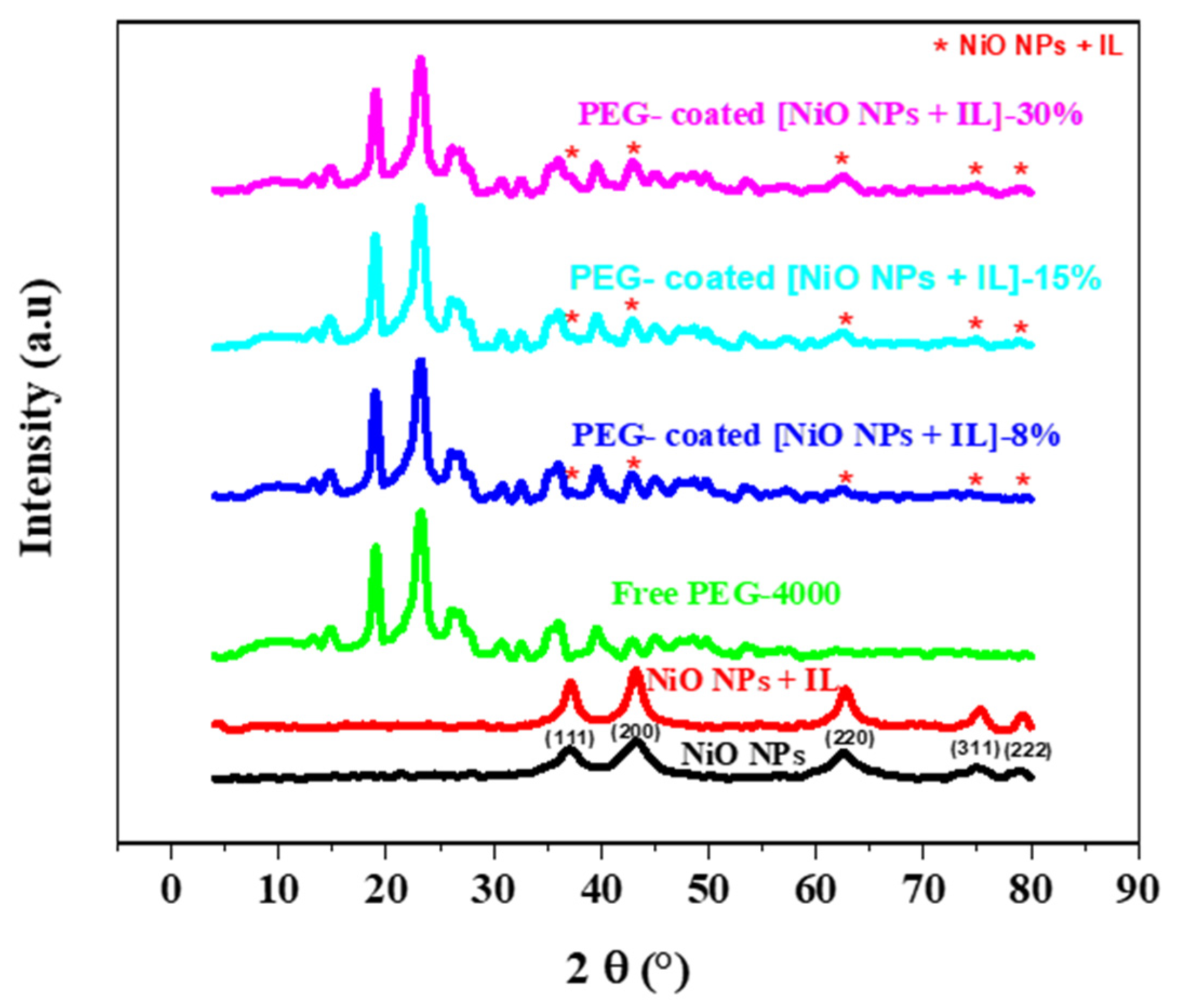
XRD patterns for pure nanosized NiO and PEG-coated [NiO NPs + IL] with different amounts have been shown in Figure 9.
Five typical broad peaks of [NiO NPs + IL] at 37.72°, 42.83°, 62.28°, 72.80°, and 79.1°, corresponding to the (111), (200), (220), (311), and (222) planes, respectively, are detected, which is in accordance with the theoretical values (JCPDS standard data, Card No. 98-001-6669). This clearly indicates that the [NiO NPs + IL] retain the spinel structure even after PEG coating, with a decrease in diffraction peak intensity likely due to the coating. Due to lattice mismatch or lattice strain between the polymer and [NiO NPs + IL] at the interface [37,38], PEG produces internal strain, which readily causes the peak intensity to decrease [39]. The crystallite size is calculated through the Debye–Scherrer equation [40].
D = Kλ/βcosθ
Average crystallite diameters (D) of [NiO NPs + IL] are 8.5 ± 2 nm and roughly 20–28 ± 2 nm for PEG-coated [NiO NPs + IL], respectively. As observed, the crystallinity of the samples increased with increasing the quantity of [NiO NPs + IL] after capping with PEG. It is believed that in the presence of PEG, tiny particles have a propensity to link together and produce bigger particles. A similar conclusion was observed for PEG-capped polymers [40].

3.7. TEM Morphology Analysis

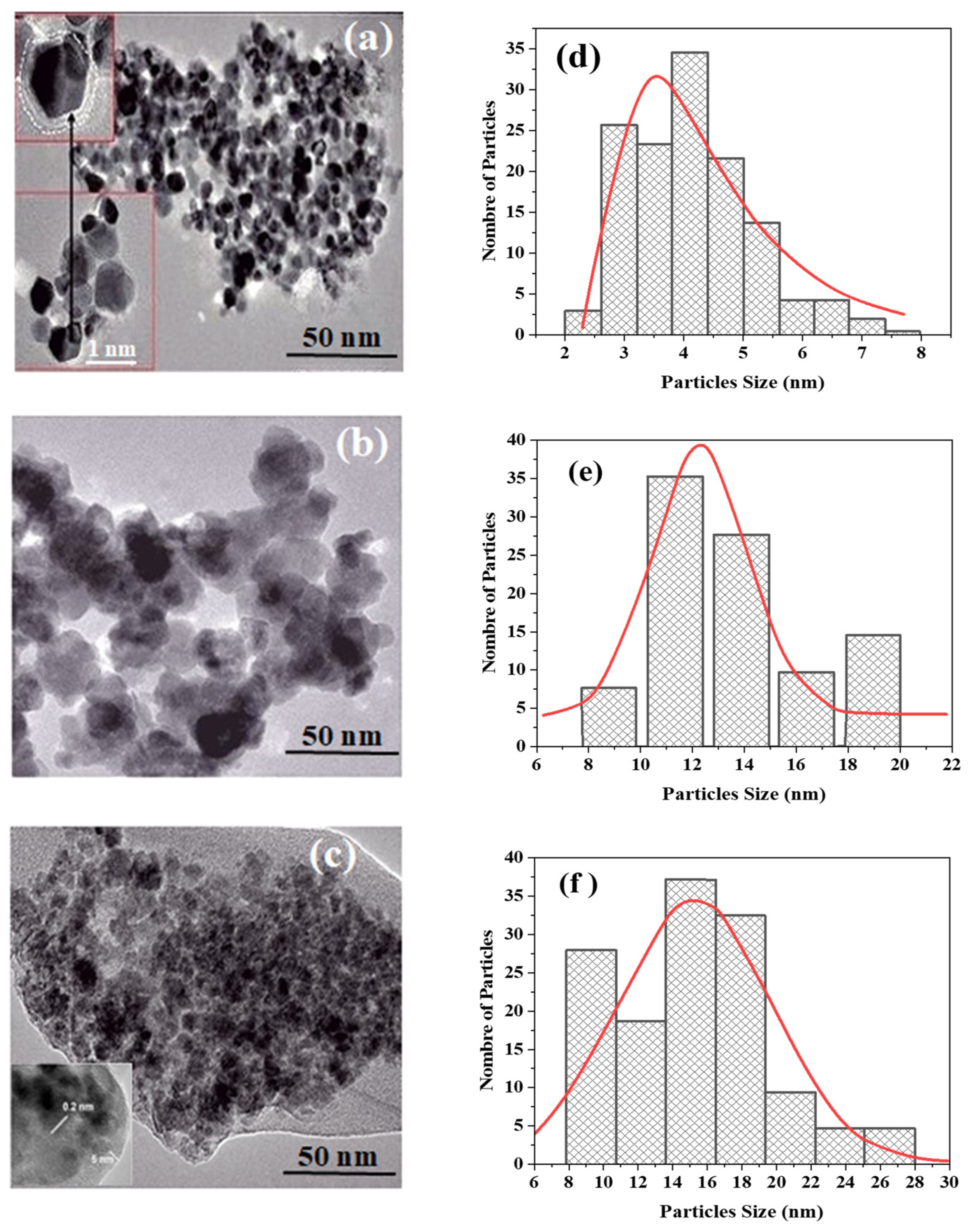
Various magnifications and particles size distribution histograms were generated from the TEM images together with a high resolution for PEG-coated [NiO NPs + IL] with differents quantity (8 wt.% and 30 wt.%) and [NiO NPs + IL] as shown in Figure 10a–f correspondingly.
According to TEM images, the produced [NiO NPs + IL] appears as a combination of tiny nanorods of different shapes and considerable aggregation, as shown in Figure 10a. The particle size distribution corresponding to the histogram for [NiO NPs + IL] depicted in Figure 10d demonstrated that their average size is ∼10 nm. The particle sizes correspond to the crystallite sizes obtained from XRD analysis, suggesting that the ionic liquid affects the size of the produced [NiO NPs + IL]. TEM images of PEG-coated [NiO NPs + IL] samples demonstrate greater NP aggregation with increasing [NiO NPs + IL] weight (see Figure 10b,c). The aggregation of [NiO NPs + IL] to a greater diameter might be due to the presence of PEG, which has enhanced attraction among the polymer chains, resulting in the fast nucleation and growth [41]. The coating thickness for PEGylated [NiO NPs + IL] measured by microscopy (TEM) is 10 ± 5 nm, which is typical according to the use of higher molecular weight PEG-4000 and higher grafting density (30% of [NiO NPs + IL]).

3.8. TGA Analysis

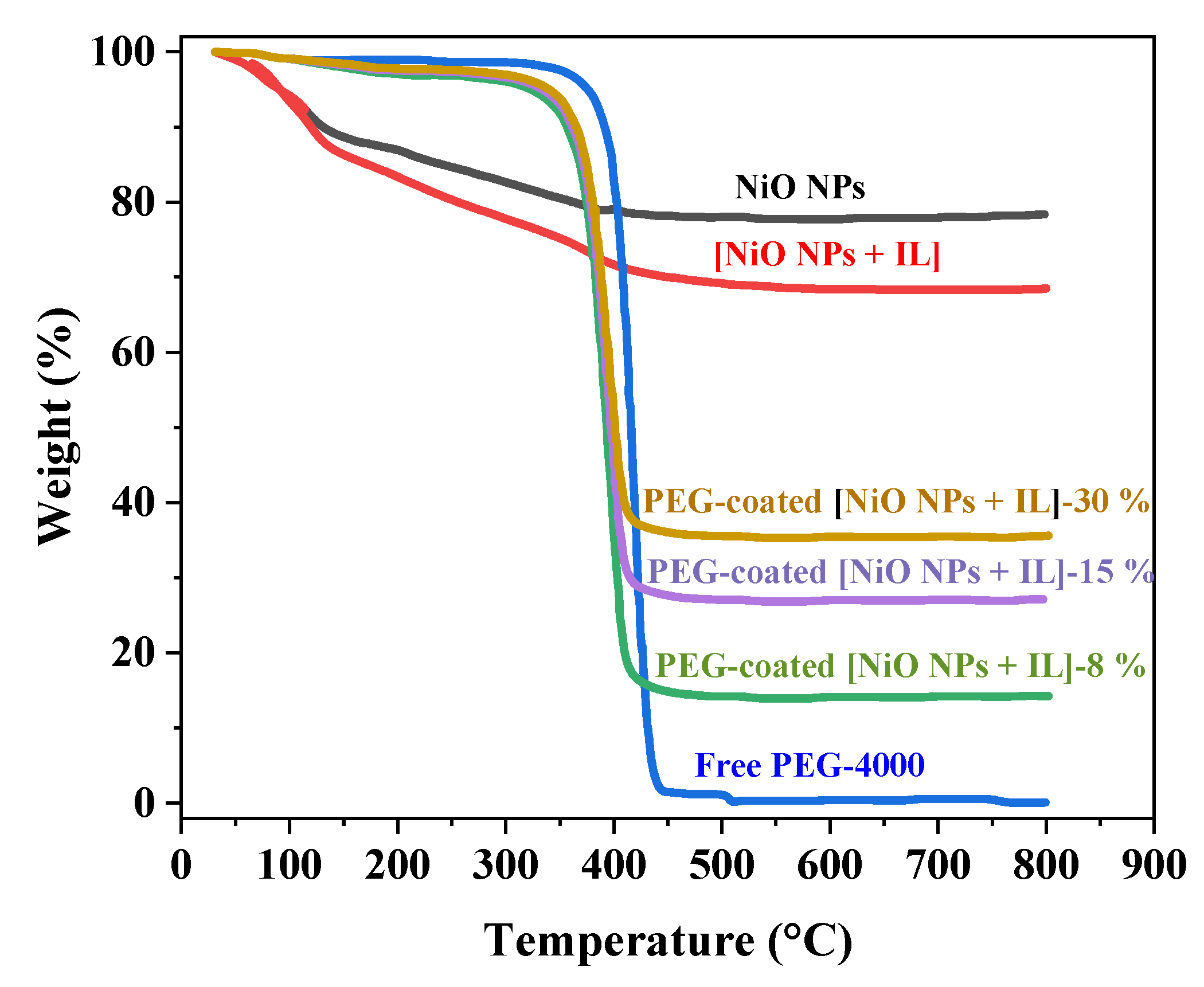
The Thermogravimetric Analysis (TGA) curves of several collected samples are given in Figure 11. The TGA measurements were obtained at a 2 °C/min heating rate in an argon atmosphere. The data demonstrate that the breakdown, which starts at ambient temperature, is practically complete by 620 °C. Over 600 °C, the weight loss owing to the removal of water and/or the breakdown of (NiO NPs) and [NiO NPs + IL] is 24 and 36%, respectively. PEG and PEG-coated [NiO NPs + IL] samples degrade in a single step in the temperature range of 50 to 800 °C. The weight loss for pure PEG during the initial stage of breakdown was quite minimal, ~7% below 100 °C. This weight loss might be due to the removal of the absorbed water molecules from the material surface. The breakdown of PEG begins at around 350 °C and is finished (i.e., weight loss is 100%) at about 480 °C. Due to the removal of the organic molecules, the composite undergoes weight loss between 440 and 654 °C. In contrast, the weight loss of all samples for PEG-coated [NiO NPs + IL] in the first stage of decomposition was higher (~12%) owing to the presence of labile –OH functional groups in PEG-4000, indicating an additional weight loss due to polymer degradation. In the second step, the modest weight loss (~3–5%) for PEG-coated [NiO NPs + IL] in the temperature range 210–335 °C was attributable to the degradation of the unreacted (NiO NPs) precursor. In the succeeding stage (355–550 °C), a consistent weight loss trend was seen for all the samples; the weight percentage of these composites remaining at 550 °C is around 14%, 27% and 35% for PEG-coated [NiO NPs + IL] (8wt.%, 15wt.%, and 30 wt.%), respectively.

3.9. AC Conductivity and Dielectric Proprieties of PEG-Coated [NiO NPs + IL]

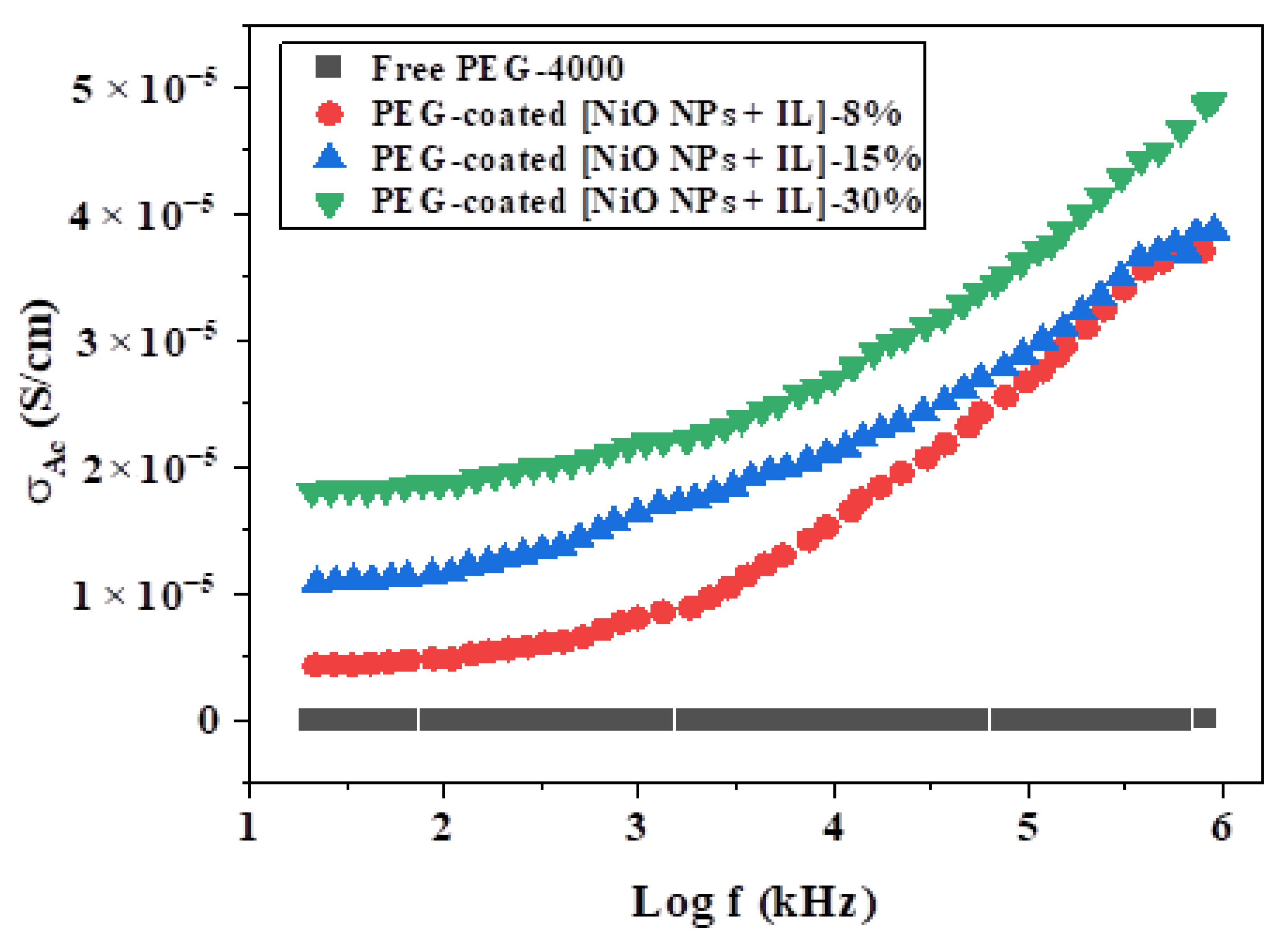
AC conductivity and dielectric characteristics of PEG-coated [NiO NPs + IL]. Evaluating the electrical conductivity of materials is a vital metric for identifying transport pathways within polymeric nanocomposites. The performance of AC conductivity for PEG-coated various weights (8 wt.%, 15 wt.%, and 30 wt.%) of [NiO NPs + IL] was displayed in Figure 12 in the form of Log f (kHz) vs. σAc (S/cm).
As shown in Figure 12, the σAC of nanostructures increases with increasing [NiO NPs + IL] ratio and frequency. The rise in conductivity with frequency is due to an increase in charge-carrier mobility. Further, the rise in conductivity with increasing [NiO NPs + IL] content is attributed to increased electron density and accelerated charge conduction, as demonstrated by the filled samples compared to the pure blend [42,43,44]. This increase may be ascribed to a higher level of disorder, which, in turn, promotes the mobility of charge carriers and supports the formation of a percolating network. Such a network is favorable to charge-transfer mechanisms [45]. The notion of hopping, which holds that improved charge-carrier mobility between [NiO NPs + IL] and the polymer mix raises conductivity, further explains the frequency-driven increase in conductivity. The conductivity patterns may be clarified by using Jonscher’s law [46]:
σAC (ω) = σDC + A ωS
where σDC is the DC conductivity, A is a constant, and s represents frequency exponents. As shown in prior studies of polymer-filled inorganic nanoparticles, the range of s values narrows as the quantity of nanoparticles increases [42]. This shows that the frequency exponents, which are less than 1 and decrease with increasing nanoparticle concentration, indicate a coupled barrier-hopping conduction process. Where σDC is the DC conductivity, A is a constant, and s represents frequency exponents. As shown in prior studies of polymer-filled inorganic nanoparticles, the range of s values narrows as the quantity of nanoparticles increases [42]. This displays the frequency exponents, which are less than 1 and decrease with increasing nanoparticle concentration, indicating a coupled barrier-hopping conduction process, as shown in Table 1.
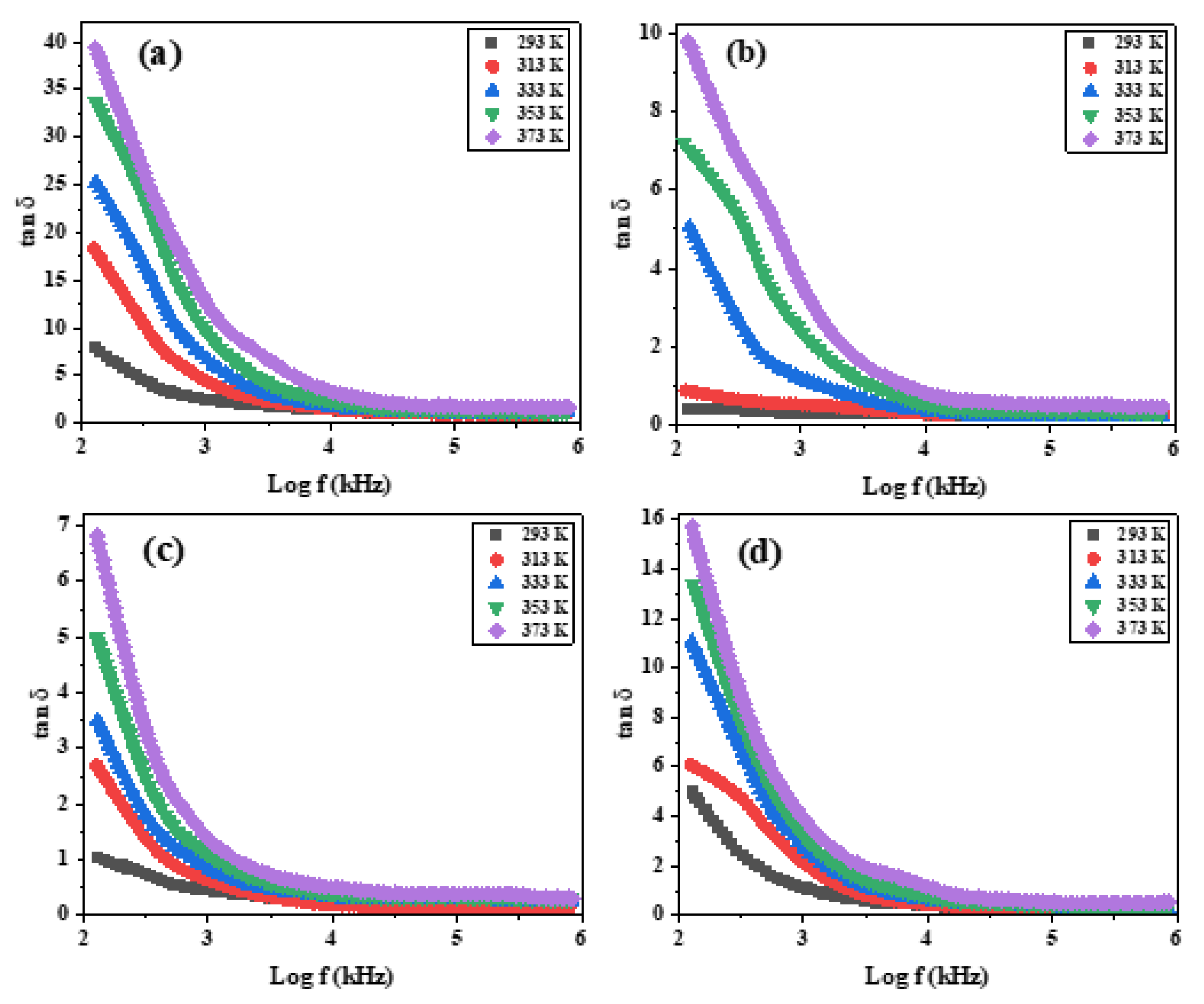
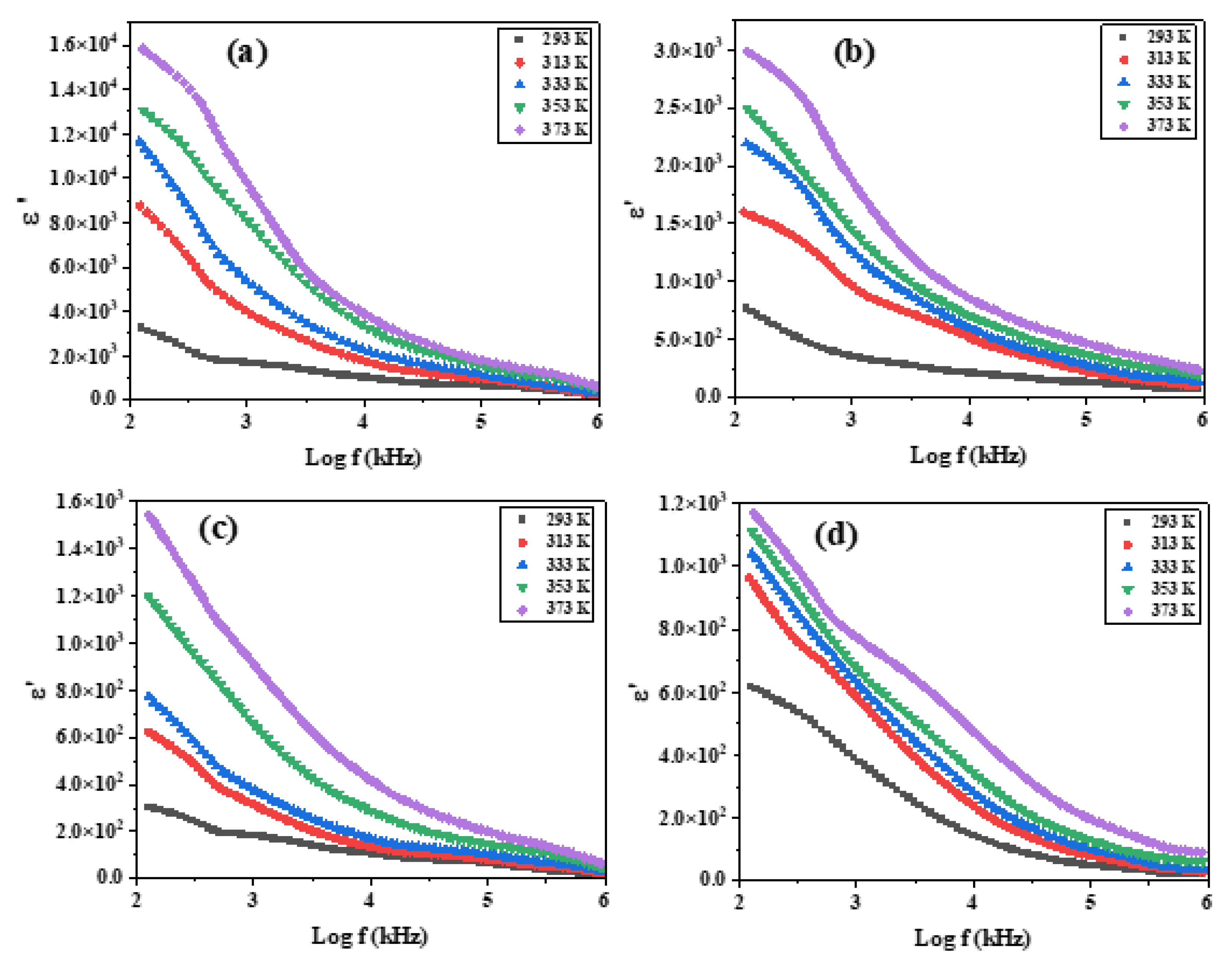
The The variations of the dielectric properties, such as dielectric constant (ε′) and dielectric loss (tan (δ) = ε/ε′) of PEG-coated different weights (8 wt.%, 15 wt.%, and 30 wt.%) of [NiO NPs + IL], have been studied as a function of frequency in the range of 102 to 106 Hz at different temperatures (293, 313, 333, 353, and 373 K) and are shown in Figure 13.
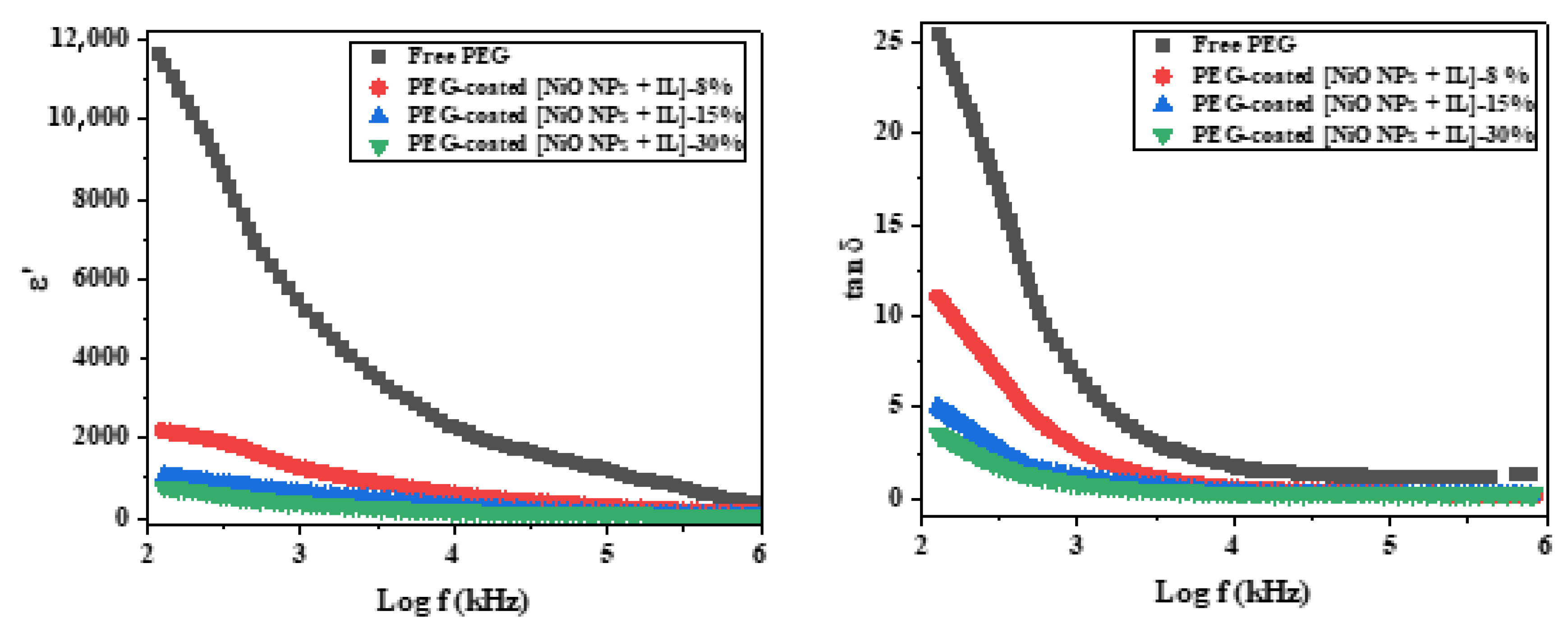
The dielectric constant (ε′) and loss tan (δ) are lowered when the frequency rises for all investigated materials Figure 14. At a low frequency, the (ε′) and tan (δ) values of PEG-coated [NiO NPs + IL] may be connected to the impact of interfacial polarization or Maxwell–Wagner–Sillars. On the other hand, at high frequencies, the (ε′) and tan (δ) were shown to remain largely constant with frequency. This has led to the field periodical reversal taking place so fast that the charge carriers will scarcely be able to orient themselves in the direction of the field consequent in the drop in dielectric constant and loss tan (δ) [43]: The variation in the (ε) and loss tan (δ) values of PEG-coated various weights (8 wt.%, 15 wt.%, and 30 wt.%) of [NiO NPs + IL] with frequency at different temperatures and the effect of [NiO NPs + IL] content at 333 K shown in Figure 15 demonstrate that dielectric properties decrease with the increase of the frequency or [NiO NPs + IL] content at constant temperature for all examined samples. The increase in dielectric parameters with temperature is due to greater freedom of motion of the dipole molecular chain at higher temperatures, indicating that the dipoles become more mobile and respond to the applied electric field. On the contrary, at low temperatures, the dipoles are securely locked in the dielectric; the field cannot affect their state, according to [45].
The different results of AC conductivity (σAC), dielectric constant (ε′), and dielectric loss (tan (δ)) of free PEG and PEG-coated [NiO NPs + IL] at 333 K with different weights are summarized in Table 2.

3.10. Stability

The counterion has a significant effect on the stability of imidazolium salts compared to one another. All three systems reached true minima with no imaginary frequencies, indicating that the structure is stable at the chosen level of theory. The total electronic energies become more negative as the anion size and electron content increase. For example, the chloride salt has a value of −994.859 a.u. and the hydrogen sulfate salt has a value of −1229.052 a.u. This trend shows that polyatomic oxygenated anions are more stable and have longer hydrogen bonding networks than the simple chloride ion. The chloride salt has higher rotational constants (A = 1.94 GHz, B = 0.40 GHz, C = 0.36 GHz), indicating a more rigid and compact structure. The hydrogen sulfate salts, on the other hand, have lower constants (A ≈ 0.57–0.59 GHz, B ≈ 0.25–0.26 GHz, C ≈ 0.18–0.19 GHz), which means they are more flexible and have bulkier shapes. Even though the structures differ, the HOMO–LUMO gaps remain consistently large (5.2–5.5 eV), indicating that electronic stability is maintained throughout the series. In general, anion substitution makes the system more energetically stable and alters the rigidity of the molecules. However, the imidazolium core’s intrinsic electronic robustness remains essentially unchan Table 3.

3.11. Geometry

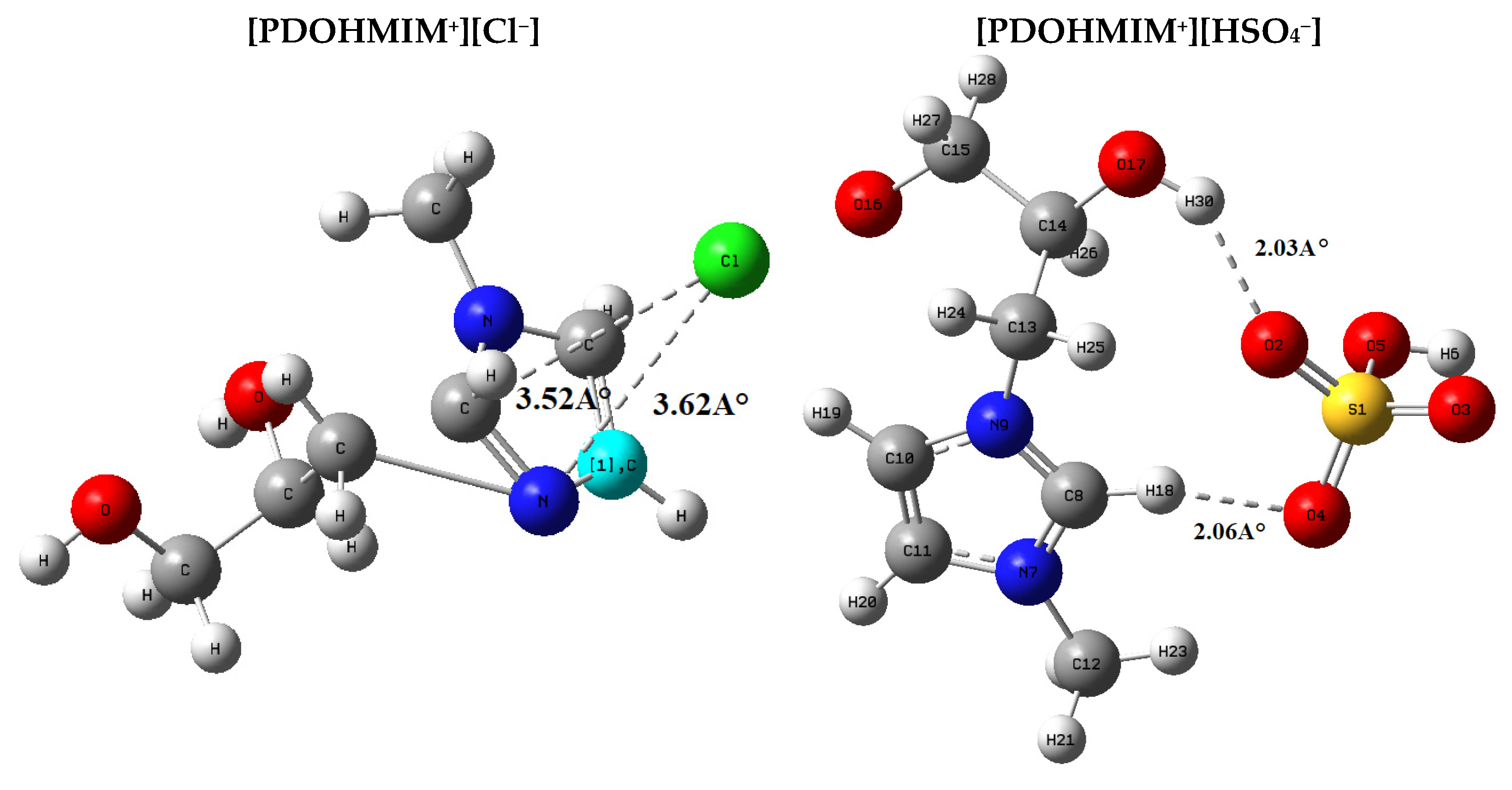
The optimised geometries of the two imidazolium salts Figure 16 show that the counterion is the most important factor in determining the size, rigidity, and overall arrangement of the molecules. The chloride salt (C7H13ClN2O2) consists of 25 atoms and has a reasonably compact structure. Its rotational constants are higher than those of other salts: A = 1.94 GHz, B = 0.40 GHz, and C = 0.36 GHz. This aligns with a rigid ion pair, where the chloride primarily interacts through electrostatic attraction. The hydrogen sulfate salt (C7H14N2O6S, 30 atoms) make bigger groups because the oxygen-rich anions are bigger and can bond with hydrogen in many directions. Their lower rotational constants (A ≈ 0.57–0.59 GHz, B ≈ 0.25–0.26 GHz, C ≈ 0.18–0.19 GHz) show that they are more flexible and have more moments of inertia. The differences in shape reveal how small, single-atom anions form tight, rigid complexes, while larger, multi-atom anions form expanded shapes held together by numerous hydrogen bonds. In all cases, however, the cationic imidazolium core retains its shape, and the differences in shape are primarily due to its interaction with the specific counterion [47,48,49,50,51].

3.12. Orbital Analysis

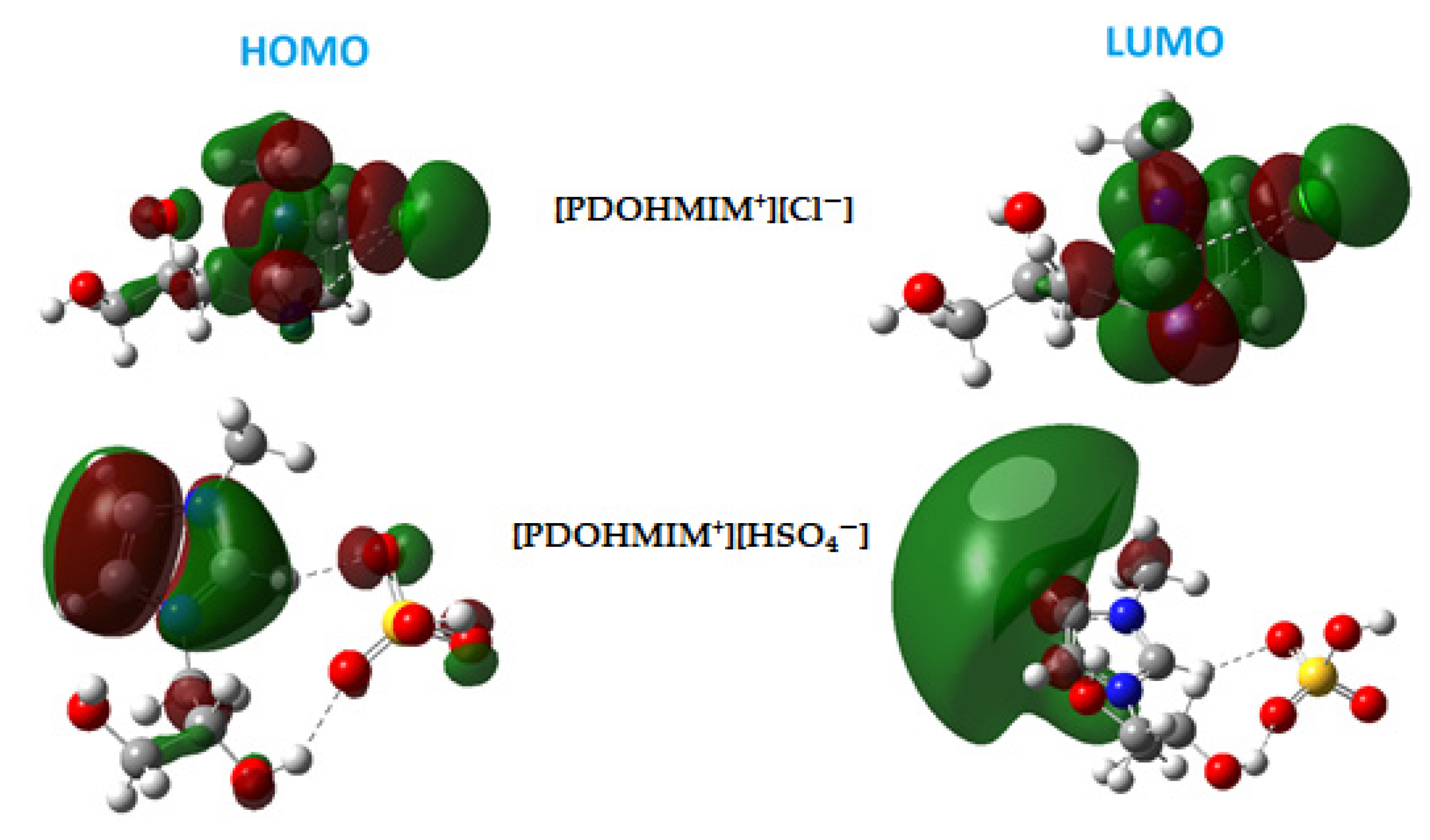
The frontier molecular orbital (FMO) analysis reveals clear differences between the three imidazolium salts Table 4 depending on the counterion. In the chloride salt, the Highest Occupied Molecular Orbital (HOMO) is located at −0.2497 a.u. (−6.8 eV) and the Lowest Unoccupied Molecular Orbital (LUMO) Figure 17 at −0.0576 a.u. (−1.6 eV), giving an energy gap of 5.2 eV. When chloride is replaced by polyatomic anions, the frontier orbitals are further stabilized: in the hydrogen sulfate salt, the HOMO is shifted to −0.2865 a.u. (−7.8 eV) and the LUMO to −0.0840 a.u. (−2.3 eV). In both cases the HOMO–LUMO gaps increase slightly to about 5.5 eV. These results indicate that polyatomic oxygenated anions stabilize the electronic structure by lowering both frontier orbital energies and slightly enlarging the energy gap, thus reducing the ionization tendency of the cation and enhancing its electronic hardness, whereas the chloride salt, with its higher HOMO and narrower gap, remains comparatively more reactive [47,48,49,50,51].

3.13. Electrostatic Stabilization

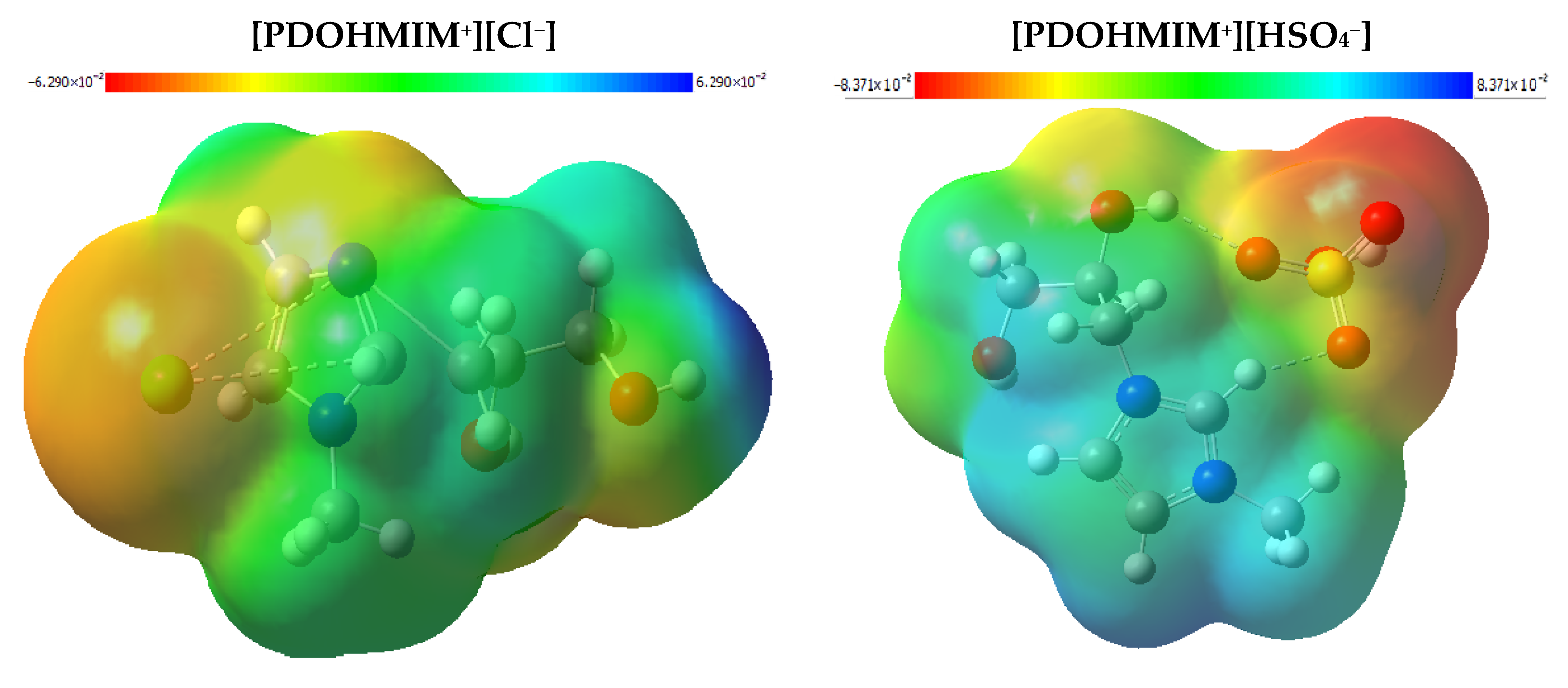
Polyatomic oxygenated anions HSO4 carry a delocalized negative charge distributed over several oxygen atoms, thereby generating an extended electrostatic field surrounding the cation. This stabilising field leads to a decrease in the absolute SCF energies Figure 18 (Cl: −994.859 a.u.; and HSO4: −1229.052 a.u.), confirming that complexes with larger anions are thermodynamically more stable as ion pairs due to additional electrostatic and hydrogen-bonding stabilisation. The altered field redistributes the electronic density of the cation, lowering both the HOMO and LUMO levels and thus reducing the ionisation tendency while facilitating charge acceptance. This trend is evident from the HOMO shift from ≈−6.8 eV in the chloride salt and to ≈−7.5 eV in the HSO4 [46,47,48,49,50,51].
Polyatomic anions are capable of forming multiple hydrogen bonds with the hydroxyl substituents and cationic sites of the imidazolium unit. Such multisite interactions smooth out local geometric variations (e.g., OH reorientation) and enhance charge delocalization. Consequently, the induction (polarization) contribution to stabilization increases, while exchange-repulsion becomes less dominant. This effect manifests in the higher dipole moments observed for oxygenated anions (Cl: 2.82 D; HSO4: 5.05 D), reflecting stronger spatial separation between the cationic positive centers and the extended negative charge distribution of the anion [47,48,49,50,51].

4. Conclusions

Overall, the integration of experimental characterisation with Density Functional Theory (DFT) modeling gives a thorough knowledge of the synergistic mechanisms responsible for the increased performance of PEG-coated [NiO NPs + IL] nanostructures. The experimental evidence—derived from XRD, FTIR, and TEM analyses—demonstrates that the presence of the ionic liquid [PDOHMIM+][HSO4] not only acts as a stabilizing medium but also influences the nucleation and growth of NiO nanoparticles, leading to smaller crystallite sizes and improved dispersion. The PEG coating further enhances the homogeneity and avoids agglomeration, generating an optimum interfacial milieu ideal for charge transfer. The DFT results further indicate that the HOMO–LUMO gap and the polarized charge distribution, particularly on the oxygen atoms of the polyatomic anions, enhance electronic stability and strengthen hydrogen bonding, which directly contributes to reduced dielectric loss, improved interfacial polarization, and higher charge transport efficiency, consistent with the experimental electrical and dielectric measurements.
From a theoretical standpoint, DFT calculations performed at the B3LYP/6–311+G(2d,p) level reveal that the [PDOHMIM+][HSO4] ion pair features a highly polarized electronic distribution and robust hydrogen-bonding capability. The HOMO–LUMO study revealed a reasonably broad energy gap (~5.3 eV), indicative of excellent intrinsic electrical stability and minimal chemical reactivity—properties that are necessary for maintaining dielectric integrity under an external electric field. The molecular electrostatic potential (MEP) indicate that the oxygen atoms of the [HSO4] anion and the hydroxyl group of the cation are the key reactive sites responsible for coordination with the NiO surface.
This theoretical understanding rationalizes the experimentally observed improvement in dielectric stability and interfacial polarization. The ionic liquid matrix produces a dynamic electrostatic network surrounding the NiO nanoparticles, which decreases charge accumulation and energy dissipation (loss tangent), while boosting directed dipolar alignment under alternating electric fields. Consequently, the PEG-coated [NiO NPs + IL] nanostructures display better dielectric constants, increased frequency response, and tunable polarization behavior compared to unmodified NiO samples.
These findings illustrate the significant complementarity between experimental and DFT techniques. While experimental techniques provide macroscopic proof of increased dielectric and conductive performance, DFT modeling uncovers the microscopic cause of these effects at the electronic and molecular levels. The significant association between both domains demonstrates that the synergistic interaction of NiO, the ionic liquid, and PEG forms an efficient, stable, and electrically controlled composite.
Such materials are intriguing prospects for high-performance capacitors, dielectric sensors, and electrochemical energy storage devices, where interfacial polarization and dielectric dependability are crucial to long-term stability and efficiency.

Author Contributions

Conceptualization: Y.C., A.B.; Methodology: A.B., G.D.; Software: M.H. (Mustapha Hatti), M.H. (Mustapha Habib); Validation: A.B., Y.C., E.-H.B., A.R.; Formal analysis: A.B., Y.C., M.H. (Mustapha Habib); Investigation: G.D., A.B., Y.C., A.R.; Resources: E.-H.B., A.Z., N.H.; Data curation: Y.C., M.H. (Mustapha Habib); Writing—original draft: G.D., A.B., Y.C.; Writing—review & editing: A.B., Y.C., M.H. (Mustapha Hatti); Visualization: A.B., Y.C.; Supervision: A.B., Y.C.; Project administration: E.-H.B., Y.C.; Funding acquisition: M.H. (Mustapha Habib). All authors have read and agreed to the published version of the manuscript.

Funding

This research received no external funding.

Data Availability Statement

The original contributions presented in this study are included in the article. Further inquiries can be directed to the corresponding authors.

Acknowledgments

The authors extend their appreciation to the Synthesis and Catalysis Laboratory, Ibn Khaldoun University of Tiaret, Algeria, for supporting this work.

Conflicts of Interest

The authors declare no conflict of interest.

References

  1. Comanescu, C. Magnetic nanoparticles: Current advances in nanomedicine, drug delivery and MRI. Chemistry 2022, 4, 872–930. [Google Scholar] [CrossRef]
  2. Paravannoor, A.; Nair, S.V.; Pattathil, P.; Manca, M.; Balakrishnan, A. High voltage supercapacitors based on carbon-grafted NiO nanowires interfaced with an aprotic ionic liquid. Chem. Commun. 2015, 51, 6092–6095. [Google Scholar] [CrossRef]
  3. Alsalme, A.; Alsaeedi, H.; Altowairqi, M.F.; Khan, R.A.; Alharbi, G.M.; Alhamed, A.A. Sol-gel synthesized nickel-oxide-based fabrication of Arsenic (As3+) sensor. Inorganics 2023, 11, 83. [Google Scholar] [CrossRef]
  4. Ye, S.; Guan, X. HMT-controlled synthesis of mesoporous NiO hierarchical nanostructures and their catalytic role towards the thermal decomposition of ammonium perchlorate. Appl. Sci. 2019, 9, 2599. [Google Scholar] [CrossRef]
  5. Morejón Aguila, G.L.; Rodríguez Santillán, J.L.; Poznyak, T.; Cruz Narváez, Y.; Mendoza León, H.F.; Lartundo Rojas, L.; Ramos Torres, C.J.; Castro Arellano, J.J. Naproxen Degradation Using NiO Synthesized via Ultrasonic Spray Pyrolysis on Ni–Fe Foam by Ozone. Catalysts 2025, 15, 993. [Google Scholar] [CrossRef]
  6. Sun, H.; Zhou, X.; Wang, B.; Yang, T.; Yang, J.; Jia, N.; Zhang, M. Ni/Ce0.2Zr0.8O2 Catalysts for Dry Reforming of Methane: Effects of Surfactant Amount on the Support Structure and Properties. Materials 2025, 18, 4329. [Google Scholar] [CrossRef] [PubMed]
  7. Duraisamy, N.; Numan, A.; Fatin, S.O.; Ramesh, K.; Ramesh, S. Facile sonochemical synthesis of nanostructured NiO with different particle sizes and its electrochemical properties for supercapacitor application. J. Colloid Interface Sci. 2016, 471, 136–144. [Google Scholar] [CrossRef] [PubMed]
  8. DeFrates, K.; Markiewicz, T.; Gallo, P.; Rack, A.; Weyhmiller, A.; Jarmusik, B.; Hu, X. Protein polymer-based nanoparticles: Fabrication and medical applications. Int. J. Mol. Sci. 2018, 19, 1717. [Google Scholar] [CrossRef]
  9. Sabliov, C.M.; Astete, C.E. Polymeric nanoparticles for food applications. In Nanotechnology and Functional Foods; Sabliov, C.M., Chen, H., Yada, R.Y., Eds.; Wiley: Hoboken, NJ, USA, 2015; pp. 272–296. [Google Scholar] [CrossRef]
  10. El-Nahrawy, A.M.; Ali, A.I.; Abou Hammad, A.B.; Youssef, A.M. Influences of Ag-NPs doping chitosan/calcium silicate nanocomposites for optical and antibacterial activity. Int. J. Biol. Macromol. 2016, 93, 267–275. [Google Scholar] [CrossRef] [PubMed]
  11. Belhocine, M.; Haouzi, A.; Ammari, A.; Chaker, Y.; Bassou, G. On the effect of Benzethonium intercalation process: Structural and dielectric properties of exchanged montmorillonite. Colloids Surf. A Physicochem. Eng. Asp. 2019, 577, 224–230. [Google Scholar] [CrossRef]
  12. Okoroh, D.O.; Ozuomba, J.; Aisida, S.O.; Asogwa, P.U. Thermal treated synthesis and characterization of polyethylene glycol (PEG) mediated zinc ferrite nanoparticles. Surf. Interfaces 2019, 16, 127–131. [Google Scholar]
  13. Aisida, S.O.; Akpa, P.A.; Ahmad, I.; Maaza, M.; Ezema, F.I. Influence of PVA, PVP and PEG doping on the optical, structural, morphological and magnetic properties of zinc ferrite nanoparticles produced by thermal method. Phys. B Condens. Matter 2019, 571, 130–136. [Google Scholar]
  14. Aisida, S.O.; Ahmad, I.; Ezema, F.I. Effect of calcination on the microstructural and magnetic properties of PVA, PVP and PEG assisted zinc ferrite nanoparticles. Phys. B Condens. Matter 2020, 579, 411907. [Google Scholar] [CrossRef]
  15. Aisida, S.O.; Akpa, P.A.; Ahmad, I.; Zhao, T.; Maaza, M.; Ezema, F.I. Bio-inspired encapsulation and functionalization of iron oxide nanoparticles for biomedical applications. Eur. Polym. J. 2020, 122, 109371. [Google Scholar] [CrossRef]
  16. Umut, E. Surface Modification of Nanoparticles Used in Biomedical Applications. Modern Surface Engineering Treatments. 2013. Available online: https://books.google.com/books?hl=en&lr=&id=le-gDwAAQBAJ&oi=fnd&pg=PA185&dq=Umut,+E.+(2013).+Surface+modification+of+nanoparticles+used+in+biomedical+applications.+Modern+surface+engineering+treatments,+20,+185-208.&ots=Q53pGoVrzE&sig=ehNX05gppSZRG5ytC7nlxXx-6aA (accessed on 4 October 2025).
  17. Aslani, A.; Oroojpour, V.; Fallahi, M. Sonochemical synthesis, size controlling and gas sensing properties of NiO nanoparticles. Appl. Surf. Sci. 2011, 257, 4056–4061. [Google Scholar] [CrossRef]
  18. Mohammed, H.A.; Bouafia, A.; Laouini, S.E.; Laib, I.; Salmi, C.; Alharthi, F.; Menaa, F. PEG-Modified NiFe2O4 Nanocomposites: Synthesis, Characterization, and Multifunctional Biomedical Applications in Antioxidant, Anti-Inflammatory, Photoprotective, Antiemolytic, and Antibacterial Therapies. Appl. Organomet. Chem. 2025, 39, e70212. [Google Scholar]
  19. Mahdi, H.S.; Alshrefi, S.M.; Dhabian, S.Z.; Mutar, M.A.; Lazim, H.G. Synthesis as Well as Characterization of New PEG-Coated Nanoparticles for Biomedical Application. J. Nanostruct 2024, 14, 1252–1260. [Google Scholar]
  20. Whitehead, J.A.; Lawrance, G.A.; McCluskey, A. ‘Green’leaching: Recyclable and selective leaching of gold-bearing ore in an ionic liquid. Green Chem. 2004, 6, 313–315. [Google Scholar]
  21. Taubert, A.; Li, Z. Inorganic materials from ionic liquids. Dalton Trans. 2007, 723–727. [Google Scholar] [CrossRef]
  22. Wang, W.-W.; Zhu, Y.-J. Shape-controlled synthesis of zinc oxide by microwave heating using an imidazolium salt. Inorg. Chem. Commun. 2004, 7, 1003–1005. [Google Scholar] [CrossRef]
  23. Zhou, Y. Recent Advances in Ionic Liquids for Synthesis of Inorganic Nanomaterials. Curr. Nanosci. 2005, 1, 35–42. [Google Scholar] [CrossRef]
  24. Zhao, M.; Li, N.; Zheng, L.; Li, G.; Yu, L. Synthesis of Well-Dispersed NiO Nanoparticles with a Room Temperature Ionic Liquid. J. Dispers. Sci. Technol. 2008, 29, 1103–1105. [Google Scholar]
  25. Niimi, S.; Suzuki, N.; Inui, M.; Yukawa, H. Metabolic engineering of 1,2-propanediol pathways in Corynebacterium glutamicum. Appl. Microbiol. Biotechnol. 2011, 90, 1721–1729. [Google Scholar] [CrossRef]
  26. Pankaj, S.K.; Misra, N.N.; Cullen, P.J. Kinetics of tomato peroxidase inactivation by atmospheric pressure cold plasma based on dielectric barrier discharge. Innov. Food Sci. Emerg. Technol. 2013, 19, 153–157. [Google Scholar] [CrossRef]
  27. Gómez-Jiménez-Aberasturi, O.; Ochoa-Gómez, J.R.; Pesquera-Rodríguez, A.; Ramírez-López, C.; Alonso-Vicario, A.; Torrecilla-Soria, J. Solvent-free synthesis of glycerol carbonate and glycidol from 3-chloro-1,2-propanediol and potassium (hydrogen) carbonate. J. Chem. Technol. Biotechnol. 2010, 85, 1663–1670. [Google Scholar] [CrossRef]
  28. Ochoa-Gómez, J.R.; Gómez-Jiménez-Aberasturi, O.; Ramírez-López, C.A.; Nieto-Mestre, J.; Maestro-Madurga, B.; Belsué, M. Synthesis of glycerol carbonate from 3-chloro-1,2-propanediol and carbon dioxide using triethylamine as both solvent and CO2 fixation–activation agent. Chem. Eng. J. 2011, 175, 505–511. [Google Scholar] [CrossRef]
  29. Pagliaro, M.; Rossi, M. Glycerol: Properties and production. Future Glycerol 2010, 2, 1À28. [Google Scholar]
  30. Papini, S.; Andréa, M.M. Enhanced degradation of metalaxyl in gley humic and dark red latosol. Rev. Bras. De Ciência Do Solo 2000, 24, 469–474. [Google Scholar] [CrossRef][Green Version]
  31. Rafiee, H.R.; Frouzesh, F. The effect of ionic liquid 1-ethyl-3-methylimidazolium hydrogen sulfate on thermodynamic properties of aqueous lithium nitrate solutions at different temperatures and ambient pressure. J. Mol. Liq. 2017, 237, 120–127. [Google Scholar] [CrossRef]
  32. Althumayri, K.; Eldesoky, A.M.; Alqahtani, N.F.; Ismail, L.A.; Elshaarawy, R.F.; Zakrya, R. Synthesis of tunable aryl alkyl ionic liquid-stabilized NiO nanoparticles supported reduced graphene oxide as highly efficient hole transport layer in perovskite solar cell. Results Chem. 2025, 18, 102759. [Google Scholar] [CrossRef]
  33. Chaker, Y.; Ilikti, H.; Debdab, M.; Moumene, T.; Belarbi, E.H.; Wadouachi, A.; Abbas, O.; Khelifa, B.; Bresson, S. Synthesis and characterization of 1-(hydroxyethyl)-3-methylimidazolium sulfate and chloride ionic liquids. J. Mol. Struct. 2016, 1113, 182–190. [Google Scholar] [CrossRef]
  34. Chaker, Y.; Benabdellah, A.; Debdab, M.; Belarbi, E.H.; Haddad, B.; Kadari, M.; Van Nhien, A.N.; Zoukel, A.; Chemrak, M.A.; Bresson, S. Synthesis, characterization, and dielectric properties of 1,2-(propanediol)-3-methylimidazolium chloride, hydrogenosulfate, and dihydrogenophosphate ionic liquids. Stud. Eng. Exact Sci. 2024, 5, e10517. [Google Scholar] [CrossRef]
  35. Zaoui, T.; Debdab, M.; Haddad, B.; Belarbi, E.H.; Chaker, Y.; Rahmouni, M.; Bresson, S.; Baeten, V. Synthesis, vibrational and thermal properties of new functionalized 1-(2-hydroxyethyl)-3-methylimidazolium dihydrogenophosphate ionic liquid. J. Mol. Struct. 2021, 1236, 130264. [Google Scholar] [CrossRef]
  36. Karimzadeh, I.; Dizaji, H.R.; Aghazadeh, M. Preparation, characterization and PEGylation of superparamagnetic Fe3O4 nanoparticles from ethanol medium via cathodic electrochemical deposition (CED) method. Mater. Res. Express 2016, 3, 095022. [Google Scholar]
  37. Yadav, A.; Lee, E.; Chen, R.; Chae, S.R.; Sun, Y.; Diao, J. Understanding the role of polyethylene glycol coating in reducing the subcellular toxicity of MXene nanoparticles using a large multimodal model. Mater. Today Bio 2025, 35, 102372. [Google Scholar] [CrossRef]
  38. Khan, M.; Ahmad, B.; Hayat, K.; Ullah, F.; Sfina, N.; Elhadi, M.; Khan, A.A.; Husain, M.; Rahman, N. Synthesis of ZnO and PEG-ZnO nanoparticles (NPs) with controlled size for biological evaluation. R. Soc. Chem. 2024, 14, 2402. [Google Scholar] [CrossRef]
  39. Jadhav, S.V.; Nikam, D.S.; Khot, V.M.; Mali, S.S.; Hong, C.K.; Pawar, S.H. PVA and PEG functionalised LSMO nanoparticles for magnetic fluid hyperthermia application. Mater. Charact. 2015, 102, 209–220. [Google Scholar] [CrossRef]
  40. Aghazadeh, M.; Ganjali, M.R. One-step electro-synthesis of Ni2+ doped magnetite nanoparticles and study of their supercapacitive and superparamagnetic behaviors. J. Mater. Sci. Mater. Electron. 2018, 29, 4981–4991. [Google Scholar] [CrossRef]
  41. Abbas, G. Metal organic framework supported surface modification of synthesized nickel/nickel oxide nanoparticles via controlled PEGylation for cytotoxicity profile against MCF-7 breast cancer cell lines via docking analysis. J. Mol. Struct. 2023, 1287, 135445. [Google Scholar] [CrossRef]
  42. Jebur, Q.; Hashim, A.; Habeeb, M. Structural, AC electrical and optical properties of (polyvinyl alcohol–polyethylene oxide–aluminum oxide) nanocomposites for piezoelectric devices. Egypt. J. Chem. 2019, 62, 719–734. [Google Scholar]
  43. Bafna, M.; Garg, N.; Gupta, A.K. Variation of dielectric properties & AC conductivity with frequency and composition for stannous chloride_PMMA composite films. J. Emerg. Technol. Innov. Res. 2018, 5, 494–497. [Google Scholar]
  44. Fahmy, T.; Ahmed, M.T. Dielectric relaxation spectroscopy and AC conductivity of doped poly (Vinyl Alcohol). Int. J. Mater. Phys. 2015, 6, 7. [Google Scholar]
  45. Wu, Y.; Hu, W.; Han, S. First-principles calculation of the elastic constants, the electronic density of states and the ductility mechanism of the intermetallic compounds: YAg, YCu and YRh. Phys. B Condens. Matter 2008, 403, 3792–3797. [Google Scholar] [CrossRef]
  46. Jonscher, A.K. The ‘universal’dielectric response. Nature 1977, 267, 673–679. [Google Scholar] [CrossRef]
  47. Politzer, P.; Murray, J.S.; Clark, T. Halogen bonding and other σ-hole interactions: A perspective. Phys. Chem. Chem. Phys. 2013, 15, 11178–11189. [Google Scholar] [CrossRef]
  48. Petrone, A.; Cimino, P.; Donati, G.; Hratchian, H.P.; Frisch, M.J.; Rega, N. On the Driving Force of the Excited-State Proton Shuttle in the Green Fluorescent Protein: A Time-Dependent Density Functional Theory (TD-DFT) Study of the Intrinsic Reaction Path. J. Chem. Theory Comput. 2016, 12, 4925–4933. [Google Scholar] [CrossRef]
  49. Zyss, J.; Ledoux, I. Nonlinear optics in multipolar media: Theory and experiments. Chem. Rev. 1994, 94, 77–105. [Google Scholar] [CrossRef]
  50. Reichardt, C.; Welton, T. Solvents and Solvent Effects in Organic Chemistry; John Wiley & Sons: Hoboken, NJ, USA, 2010. [Google Scholar]
  51. Zhang, Q.G.; Wang, N.N.; Yu, Z.W. The hydrogen bonding interactions between the ionic liquid 1-ethyl-3-methylimidazolium ethyl sulfate and water. J. Phys. Chem. B 2010, 114, 4747–4754. [Google Scholar] [CrossRef] [PubMed]
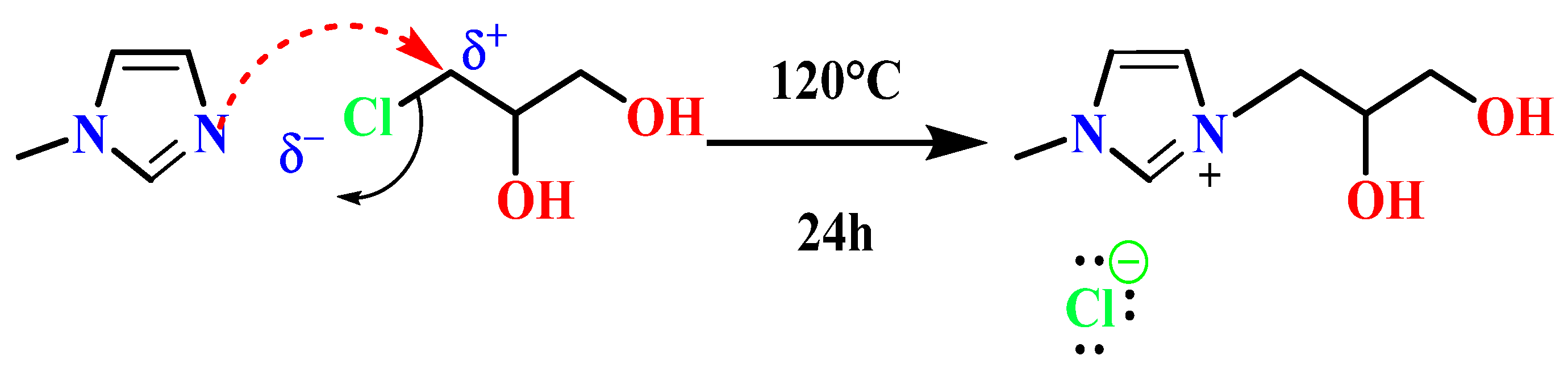
Figure 1. Amine quaternization reaction.
Chemistry 07 00194 g001
Figure 2. Anion exchange reaction.
Chemistry 07 00194 g002
Figure 3. 1H-NMR spectra of (600 MHz) [PDOHMIM+][Cl].
Chemistry 07 00194 g003
Figure 4. 13C NMR spectra of (150 MHz) [PDOHMIM+][Cl].
Chemistry 07 00194 g004
Figure 5. 1H-NMR (600 MHz) spectra of [PDOHMIM+][HSO4].
Chemistry 07 00194 g005
Figure 6. 13C-NMR spectra of (150 MHz) [PDOHMIM+][HSO4].
Chemistry 07 00194 g006
Figure 7. FTIR/ATR spectra of [PDOHMIM+][Cl], and [PDOHMIM+][HSO4] in the spectral range 4000–600 cm−1.
Chemistry 07 00194 g007
Figure 8. FTIR spectra of (NiO NPs), [NiO NPs + IL], Free PEG-4000 and PEG-coated [NiO NPs + IL] with different weights (8 wt.%, 15 wt.%, and 30 wt.%) respectively.
Chemistry 07 00194 g008
Figure 9. XRD patterns of (NiO NPs), [NiO NPs + IL], Free PEG-4000 and PEG-coated [NiO NPs + IL] with different weights (8 wt.%, 15 wt.%, and 30 wt.%) respectively.
Chemistry 07 00194 g009
Figure 10. TEM images with different magnifications and size distribution histogram of (a,d) [NiO NPs + IL], (b,c,e,f) PEG-coated differents weights (8 wt% and 30 wt%) of [NiO NPs + IL] respectively.
Chemistry 07 00194 g010
Figure 11. TGA curves of (NiO NPs), [NiO NPs + IL], Free PEG-4000 and PEG-coated [NiO NPs + IL] with different weights (8 wt.%, 15 wt.%, and 30 wt.%) respectively.
Chemistry 07 00194 g011
Figure 12. Influence of [NiO NPs + IL] content on Ac conductivity versus frequency for PEG-coated [NiO NPs + IL] at 333 K.
Chemistry 07 00194 g012
Figure 13. Variation of dielectric constant (ε′) versus frequency at different temperatures (a), Free PEG-4000 and (bd) PEG-coated [NiO NPs + IL] with different weights (8 wt.%, 15 wt.%, and 30 wt.%) respectively.
Chemistry 07 00194 g013
Figure 14. Variation of loss tan (δ) versus frequency at different temperatures of (a), Free PEG-4000 and (bd) PEG-coated [NiO NPs + IL] with different weights (8 wt.%, 15 wt.%, and 30 wt.%) respectively.
Chemistry 07 00194 g014
Figure 15. Influence of [NiO NPs + IL] content on dielectric constant (ε′) and loss tan (δ) versus frequency for PEG-coated [NiO NPs + IL] at 333 K.
Chemistry 07 00194 g015
Figure 16. Optimized structures of [PDOHMIM+][Cl] and [PDOHMIM+][HSO4-] at the B3LYP/6–311+G(2d,p) level.
Chemistry 07 00194 g016
Figure 17. HOMO and LUMO orbitals of [PDOHMIM+][Cl] and [PDOHMIM+][HSO4] showed by the B3LYP/6–311+G(2d,p) level.
Chemistry 07 00194 g017
Figure 18. Molecular Electrostatic Potential (MEP) surface of [PDOHMIM+][Cl] and [PDOHMIM+][HSO4] at the B3LYP/6–311+G(2d,p) level.
Chemistry 07 00194 g018
Table 1. Various others IR bands illustrated in the range of 700–3000 cm−1.
[NiO NPs + IL],
Wavenumber (cm−1)
[PDOHMIM+][HSO4]
Wavenumber (cm−1)
Assignment
2948–28853050–2851C–H (υstretching)
1771–1421C–H2stretching)
1467–1470 C–H2stretching)
1348–1410 C–H2stretching)
1284–12861374–1158C–O–C (υbending)
1110–1656 C–O–C (υbending)
955–8421018–746C–H (υwagging)
1110–1144 C–C (υstretching)
1066–1110 C–O–H (υstretching)
3180–3070O–H (υwagging)
849N–S (υwagging)
1212S–O (υwagging)
Table 2. Ac conductivity (σAC), dielectric constant (ε′) and dielectric loss (tan (δ)) of free PEG and PEG-coated [NiO NPs + IL] at 333 K.
Content of [NiO NPs + IL]
Coated by PEG (%)
Dielectric Parametres
σACε′tan (δ)
Free PEGS values4.38 × 10−91.2 × 10425.4
80.3943.65 × 10−52.20 × 10311.2
150.3683.95 × 10−51.13 × 1034.95
300.3094.92 × 10−56.8 × 1033.65
Table 3. Total electronic energies (in atomic units, a.u.) of the [PDOHMIM+][Cl] and [PDOHMIM+][HSO4] complexes calculated at the 3B3LYP/6–311+G(d,p) level.
Total Electronic Energy (a.u).
[PDOHMIM+][Cl]−994.858323057
[PDOHMIM+][HSO4]−1229.0517 
Table 4. B3LYP/6–311+G(2d,p) calculations of the EHOMO, ELUMO and Eg in eV for the [PDOHMIM+][Cl], and [PDOHMIM+][HSO4].
EHOMOELUMOEg
[PDOHMIM+][Cl],−6.8 eV−1.6 eV5.2 eV
[PDOHMIM+][HSO4]−7.8 eV−2.3 eV5.5 eV
Disclaimer/Publisher’s Note: The statements, opinions and data contained in all publications are solely those of the individual author(s) and contributor(s) and not of MDPI and/or the editor(s). MDPI and/or the editor(s) disclaim responsibility for any injury to people or property resulting from any ideas, methods, instructions or products referred to in the content.