1. Introduction
The digital transformation has brought about fundamental changes in the structure and functioning of financial supply chains in recent years. The proliferation of digital financial platforms, smart contracts, data-driven payment systems, and distributed financial networks has provided unprecedented opportunities to increase the speed, transparency, and efficiency of financial processes [
1]. However, the increasing dependence of these ecosystems on digital infrastructure has exposed them to a wide range of cyber threats, malicious attacks, data manipulation, and operational disruptions [
2]. In such a situation, securing transactions and maintaining network stability has become one of the most important challenges facing organizations, financial institutions, and supply chain actors [
3].
Conventional approaches to cybersecurity management mainly focus on incident detection and post-attack response. Although these methods have been effective in reducing some of the threats, the increasing complexity of cyberattacks and the dynamics of digital financial environments have made response mechanisms alone unable to meet current needs [
4]. In many cases, by the time an attack is detected, some of the financial and operational losses have already been incurred [
5]. Therefore, researchers and industry managers have moved towards developing frameworks that, in addition to detecting threats, also provide the network with adaptive and real-time analytical capabilities, adaptive capabilities, and automatic recovery [
6].
As one of the next-generation transformative technologies, the digital twin has provided significant capacity for creating such capabilities. By creating a virtual counterpart of the physical system, this technology can support real-time monitoring, current status analysis, future behavior prediction, and scenario evaluation [
7]. In the field of financial supply chains, digital twins can act as a dynamic decision-making platform and simulate the potential effects of cyber threats, financial changes, and operational disruptions before they occur [
8]. Despite these advantages, many existing studies have used digital twins solely as a monitoring or analytical tool, and their capacity to support integrated security and financial decision-making has not yet been fully exploited [
9].
Along with digital twins, blockchain is also recognized as one of the most important emerging technologies in the field of security and trust [
10]. Features such as decentralization, data immutability, transaction traceability, and smart contract execution have made blockchain one of the main options for enhancing security and transparency in financial ecosystems [
11]. However, the use of blockchain alone cannot solve all the existing challenges. Although blockchain provides a secure platform for recording and validating information, it lacks the ability to predict future events, dynamically analyze threats, and intelligently manage recovery processes. This makes the need for hybrid frameworks more evident than ever before [
12].
On the other hand, financial and cyber environments are inherently uncertain. The severity of attacks, attacker behavior, the state of trust between actors, transaction risk, and network operating conditions often cannot be modeled with certainty [
13]. In such circumstances, the use of fuzzy approaches can provide greater flexibility in modeling practical realities and enable more effective decision-making in complex environments [
14]. In addition, the emergence of the concept of self-healing systems has caused researchers to shift their attention from solely detecting attacks to developing mechanisms for automatic recovery and maintaining operational continuity [
15]. Despite recent advances, there is still a significant gap in the research literature between digital twins, blockchain, self-healing, and multi-objective optimization under uncertainty.
Aiming to fill this gap, the present study presents an innovative framework based on digital twins, blockchain, and self-healing mechanisms for multi-objective optimization of the financial supply chain under uncertainty. The main innovation of this study is the integration of four key capabilities, including support for real-time monitoring and dynamic system assessment, transaction security and transparency, support for automated recovery after disruptions, and uncertainty management, into a single decision-making model. Unlike previous studies that have examined each of these technologies independently, the proposed framework simultaneously considers the interaction between these components at the architectural, modeling, and decision-making levels. In addition, the development of a multi-objective fuzzy model, considering conflicting financial, security, and operational goals, enables decision-makers to derive balanced and practical solutions. In addition, the use of a self-healing mechanism based on digital twin information and blockchain data creates a new capability for proactive management of cyber threats and increasing network resilience.
The structure of the rest of the paper is as follows: first, the problem description and architecture based on blockchain and digital twin are presented. Then, the mathematical model and fuzzy approach are developed and the solution methods are explained. Next, the computational results and various analyses including scenario evaluation, Pareto analysis, sensitivity analysis, component elimination study and statistical comparison of algorithms are presented. Finally, the managerial implications, research conclusion and future research directions are discussed.
2. Literature Review
The increasing dependence of financial networks on digital technologies has made cybersecurity one of the most important research areas in recent years [
16]. Today’s financial supply chains consist of a set of financial institutions, suppliers, manufacturers, logistics service providers, and customers that are interconnected through digital infrastructures. This widespread dependence on online data exchange and transactions has created new opportunities for improving efficiency, but at the same time has increased the level of network vulnerability [
17]. Several studies have shown that cyberattacks can, in addition to direct financial losses, reduce trust, disrupt information flows, and weaken the performance of the entire network [
18].
In response to these challenges, a significant part of the research literature has focused on developing models for managing cyber risk in supply chains. These studies have mainly focused on identifying threats, assessing vulnerabilities, and designing risk mitigation policies [
19]. Although these approaches have played an important role in the development of existing knowledge, many of them are based on static structures and have limited ability to manage the dynamics of operational and financial environments [
20]. In fact, the rapid changes in network conditions and the continuous emergence of new threats have caused traditional risk management models to face limitations for real-time decision-making [
21].
Along with the development of smart technologies, the concept of digital twin has been considered as one of the new tools for monitoring and managing complex systems. By creating a virtual version of the real system, digital twin allows observing the current state, predicting future behavior, and evaluating different scenarios [
22]. In the field of supply chain, this technology has been used to improve visibility, increase operational flexibility, and enhance the decision-making process [
23]. However, most of the existing research has focused on the operational and logistical aspects of digital twins, and their application in cybersecurity management and financial supply chains is still in its early stages of development [
24]. Furthermore, many existing studies have used digital twins solely as a monitoring tool, and their potential to actively support security and financial decisions has received less attention.
Blockchain technology is also recognized as one of the most important solutions for increasing security and trust in digital environments. Features such as decentralization, transaction traceability, immutable data recording, and smart contract execution have led to blockchain being used in a wide range of financial applications [
25]. Various studies have shown that blockchain can increase information transparency and reduce the possibility of fraud and data manipulation [
26]. Despite these advantages, existing studies have mainly focused on the technical and security aspects of blockchain, and its relationship with dynamic decision-making mechanisms, cyber risk management, and network performance optimization has been less investigated [
27]. Also, in many studies, blockchain has been studied independently and its interaction with other intelligent technologies has been ignored.
In recent years, the concept of self-healing systems has also attracted considerable attention in the field of cybersecurity. The main goal of this approach is to develop systems that can initiate the recovery process after detecting a threat or disruption without the need for direct human intervention [
28]. Studies have shown that the use of self-healing mechanisms can reduce recovery time, costs caused by attacks, and the effects of operational disruptions [
29]. However, most of the existing studies have investigated this concept at the level of IT infrastructures or communication networks, and its application in multi-layered financial environments and complex supply chains is still not sufficiently developed.
On the other hand, uncertainty is an inseparable feature of financial and cyber environments. The intensity of attacks, the behavior of attackers, the level of trust between network members, the level of transaction risk, and operational conditions are all uncertain in nature [
30]. For this reason, the use of fuzzy logic in modeling security and financial issues has attracted the attention of researchers [
31]. Previous studies have shown that fuzzy models can perform better than deterministic approaches when faced with ambiguous data and incomplete information [
32]. However, most of the existing research has only modeled a part of the uncertainties of the environment and has less focused on the simultaneous combination of fuzzy logic with technologies such as blockchain, digital twin, and self-healing.
As the complexity of decision-making problems grows, the use of multi-objective optimization models has also become an important topic in the supply chain literature. These approaches allow for the simultaneous consideration of conflicting objectives such as cost, security, reliability, resilience, and quality of service [
33]. Recent studies have shown that multi-objective optimization can play an effective role in designing more resilient and flexible networks [
34]. However, most of the existing research has focused on economic and operational dimensions, and the components of cybersecurity, trust, and automatic recovery have been less included in multi-objective decision-making models.
A review of the research literature shows that although numerous studies have been conducted in the fields of blockchain, digital twin, self-healing, cybersecurity, and fuzzy optimization, these areas have been mainly developed in isolation. So far, a comprehensive framework that can integrate the predictive and monitoring capabilities of digital twin, blockchain transparency and security, automatic recovery of self-healing systems, and the flexibility of fuzzy logic into a multi-objective decision-making model for the financial supply chain has rarely been considered. There is also a significant gap in the field of simultaneous analysis of the interaction between financial, security, and resilience objectives in uncertain environments.
Furthermore, previous studies show that although there have been numerous studies on blockchain, digital twins, cybersecurity, self-healing systems, and fuzzy optimization, these technologies have mostly been developed independently, with each study focusing on only a part of the problem. In recent years, some studies have integrated blockchain and digital twins in the financial supply chain, while others have used fuzzy models or multi-objective optimization to improve decision-making; however, a framework that combines these capabilities simultaneously and in the form of an integrated system for cybersecurity management, automated recovery, uncertainty management, and multi-objective decision-making in the financial supply chain is still rare. To clarify the position of the present study relative to the most important studies in this area, a comparison of the main features of the key studies is presented in
Table 1.
As can be seen in
Table 1, each of the previous studies has covered a part of the capabilities required for smart financial supply chain management, but none have integrated all the key components, including digital twins, blockchain, fuzzy modeling, multi-objective optimization, cybersecurity, and self-healing mechanisms, into a single framework. This indicates that there is still a research gap in developing comprehensive frameworks for simultaneously managing financial, security, and resilience dimensions in uncertain environments. Accordingly, the present study attempts to address this gap by providing an integrated framework and providing a platform for real-time-oriented decision support in the financial supply chain.
The present study aims to fill this research gap. Its main innovation is in providing an integrated framework for intelligent management of the financial supply chain under cyber threats, in which the digital twin plays the role of real-time monitoring and prediction, the blockchain plays the role of ensuring trust and security of transactions, the self-healing mechanism plays the role of automatic recovery, and fuzzy logic plays the role of uncertainty management. Furthermore, the development of a multi-objective optimization model that simultaneously considers cost, cyber risk, trust, and resilience distinguishes this research from previous studies and provides a new context for the development of the next generation of smart financial networks.
3. Problem Description
Supply chain finance networks are recognized as one of the most important tools supporting the flow of cash in manufacturing and service ecosystems. In these networks, suppliers, manufacturers, distribution centers, retailers and end customers are connected to each other through a set of financial, operational and information interactions, and financial institutions play the role of providing the financial resources needed to continue the chain’s activities. Despite the significant benefits of these mechanisms, the increasing dependence of financial processes on digital infrastructures has made cyber threats one of the most important factors disrupting the functioning of these networks. Attacks such as manipulation of transaction data, infiltration of smart contracts, digital identity fraud, ransomware attacks and disruption of information exchange can lead to a decrease in trust between chain members, increase financial risk, delay in the allocation of credit resources and ultimately reduce the resilience of the entire network [
35].
In real environments, decision-making in the field of supply chain finance is accompanied by numerous uncertainties. Financial demand fluctuations, interest rate changes, chain member default risk, liquidity changes, cyberattack severity, and the level of trust between partners are among the factors that are ambiguous and uncertain in nature and cannot be modeled with definite values. Therefore, the use of fuzzy approaches to represent existing uncertainties and provide realistic decisions seems essential [
36].
In recent years, blockchain technology has been proposed as one of the effective solutions to increase the security, transparency, and traceability of financial transactions. The immutable registration of transactions, the implementation of smart contracts, and the creation of distributed consensus mechanisms reduce the possibility of fraud, data manipulation, and misuse of financial information. However, the use of blockchain alone is not enough to deal with complex cyber threats, because many attacks occur at the operational and decision-making layers of the network and require continuous monitoring and intelligent response [
37].
At the same time, the emergence of digital twin technology has made it possible to create a virtual and dynamic version of the financial network. By continuously receiving operational, financial and security data from the real environment, the digital twin reconstructs the current state of the network and enables the analysis of different scenarios, analyzing potential risks and assessing the consequences of decisions. Combining digital twin with blockchain can provide an integrated platform for creating transparency, trust, security and timely decision support in financial networks [
38].
In this study, a multi-layer supply chain finance network including suppliers, manufacturers, distribution centers, retailers, customers, financial institutions, and blockchain nodes is considered, in which financial and information flows are managed simultaneously. In order to increase security and trustworthiness, all financial transactions are recorded on the blockchain and validated through smart contracts. A financial digital twin also continuously monitors the operational, financial, and security status of the network and identifies potential risks by analyzing real-time data. In the event of a cyberattack occurring or predicted, the self-healing module uses the digital twin output and a fuzzy multi-objective optimization model to determine the best corrective actions and guide the network towards a stable state.
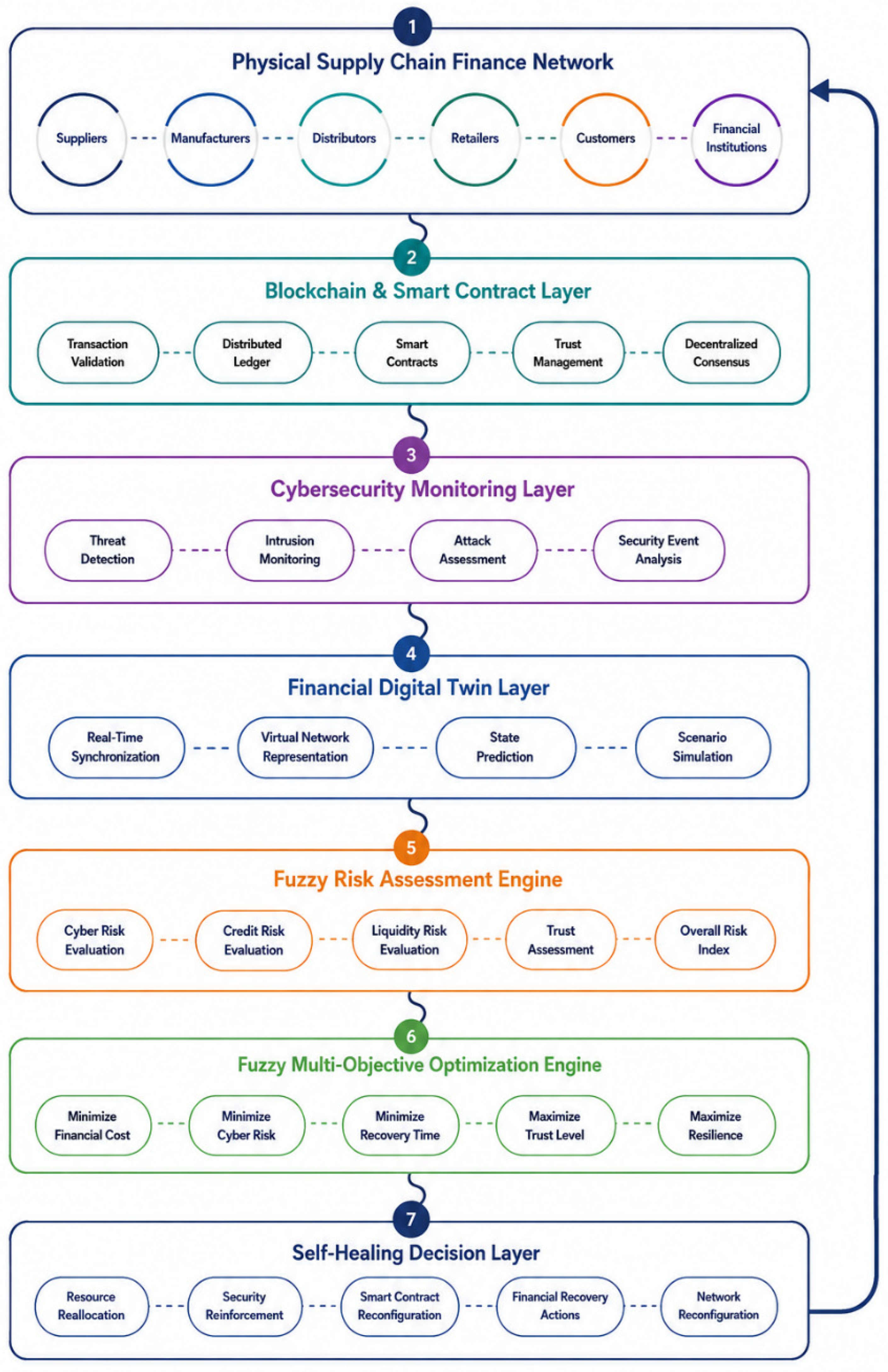
As shown in
Figure 1, the proposed architecture consists of several main layers. At the lowest level, there is the physical supply chain financing network, which includes all operational members and financial institutions. The data generated in this layer is continuously transferred to the blockchain layer and, after validation, is recorded in the distributed ledger. The cybersecurity monitoring layer is responsible for identifying anomalies, potential attacks, and security threats and provides the information obtained from this monitoring to the digital twin. By integrating financial, operational, and security data, the digital twin creates an up-to-date virtual representation of the network status and supports the analysis of different scenarios.
The output of the digital twin is sent to the risk assessment engine and the fuzzy multi-objective optimization engine. This section extracts the best decisions by considering the conflicting goals of the network, including reducing financial costs, reducing cyber risk, reducing recovery time, increasing trust, and increasing resilience. The self-healing module then takes actions based on the resulting optimal decisions, such as reallocating financial resources, rerouting transactions, strengthening security policies, activating alternative smart contracts, and reconfiguring the network. The results are fed back to the real network, forming a continuous feedback loop between the physical system and the digital twin, enabling intelligent and resilient network management against cyber threats. In this framework, security is considered as an integrated concept that simultaneously encompasses three complementary dimensions: economic security with the aim of maintaining the stability of financial flows and reducing the economic consequences of attacks, system security with the aim of ensuring the continuity of operation, resilience and recovery of the network, and data security with the aim of maintaining the confidentiality, accuracy, integrity and traceability of financial and operational information. All components of the proposed architecture are designed to support these three dimensions simultaneously.
The supply chain finance network considered in this study operates within a highly digitalized environment in which cybersecurity has become a fundamental prerequisite for maintaining the stability of financial operations, ensuring the continuity of information flows, and supporting reliable decision-making. In such an environment, cyber threats may originate from either external adversaries or compromised participants within the supply chain, with the objective of reducing service availability, compromising data integrity, exploiting digital identities, or disrupting financial processes. Accordingly, the proposed framework considers a broad spectrum of representative cyber threats commonly encountered in intelligent financial ecosystems, including attacks against service availability such as distributed denial-of-service (DDoS) attacks, ransomware campaigns aimed at interrupting operational continuity, attacks involving the injection or manipulation of financial and operational data, smart contract exploitation, identity spoofing, and unauthorized access attempts. Although these attacks differ in their implementation mechanisms and operational objectives, they ultimately produce similar consequences by reducing transaction reliability, disrupting financial resource allocation, weakening information consistency, and diminishing trust among supply chain participants. Therefore, the proposed architecture is designed not only to preserve the security, transparency, and reliability of financial interactions but also to maintain the continuity and resilience of the network under various cyberattack scenarios through timely threat detection and mitigation.
Within the proposed framework, cybersecurity is treated as an integral component of intelligent decision-making and continuously interacts with the operational, financial, and managerial layers of the supply chain finance network. The blockchain infrastructure, through its consensus mechanism, immutable distributed ledger, and standard cryptographic techniques, provides a trusted foundation for transaction validation, secure financial record management, and authenticated information exchange. Accordingly, this study assumes that these underlying blockchain security mechanisms operate correctly, allowing the proposed framework to focus on cyber threats that affect operational and financial performance rather than vulnerabilities inherent to blockchain consensus protocols or cryptographic algorithms. In parallel, the digital twin continuously synchronizes operational, financial, and security information received from the physical network to maintain an up-to-date virtual representation of the system and monitor its dynamic behavior. It is further assumed that data originating from authorized network entities are transmitted to the digital twin through authenticated and secure communication channels, thereby preserving data integrity throughout the synchronization process. Consequently, the proposed framework concentrates on detecting and managing cyber threats that disrupt operational and financial behavior rather than attacks directly targeting the communication infrastructure of the digital twin. Significant inconsistencies between the physical network and its virtual counterpart, abnormal transaction patterns, or unexpected variations in security-related indicators are interpreted as potential signs of cyber incidents and are subsequently forwarded to the fuzzy risk assessment module for further analysis. The outputs of this module provide the basis for the optimization process and the activation of the self-healing mechanism, supporting intelligent corrective actions such as financial resource reallocation, smart contract reconfiguration, security policy reinforcement, transaction rerouting, and other recovery strategies to be determined according to the current operational conditions. As a result, threat detection, risk assessment, optimization, and self-healing operate as a unified closed-loop decision-making process that is intended to enhance the security, resilience, and operational stability of the supply chain finance network.
4. Blockchain-Based Digital Twin Architecture
The proposed architecture of this research aims to create a smart, secure, and self-healing platform for supply chain finance management. This architecture uses a combination of blockchain, digital twin, fuzzy risk assessment, and multi-objective optimization technologies to simultaneously monitor financial flows, cybersecurity status, trust levels among chain members, and network resilience, and automatically make appropriate corrective decisions in the event of cyber threats. Unlike conventional approaches that use digital twin solely as a tool for monitoring and displaying information, in this research, the digital twin acts as the analytical and decision-making core of the system, and its output is directly used in the process of risk assessment, predicting the future state of the network, and producing optimal decisions.
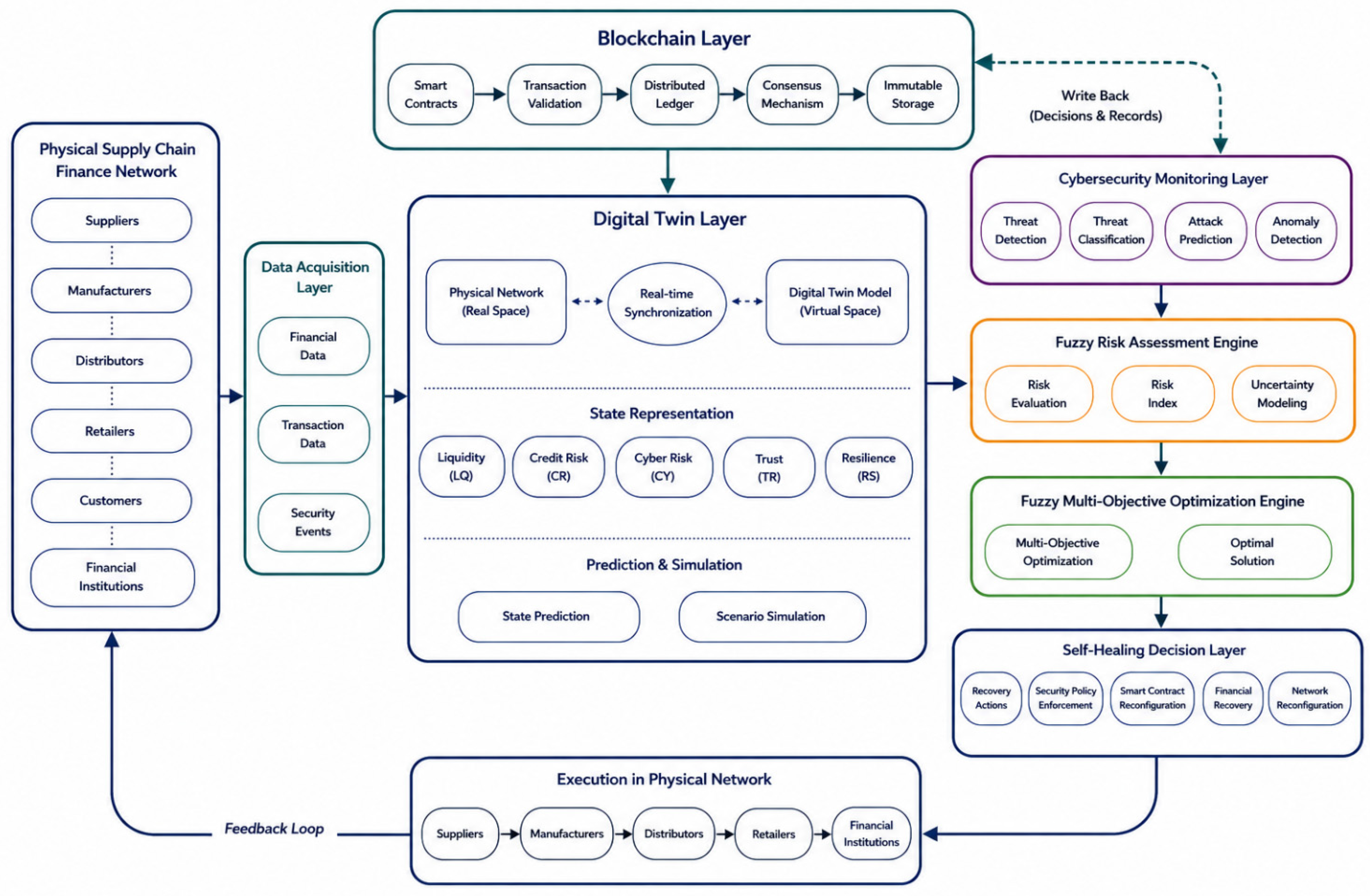
Figure 2 shows the closed-loop structure of the proposed architecture: a structure in which real-world network data is validated on the blockchain and then converted into corrective decisions through risk assessment, fuzzy multi-objective optimization, and self-healing mechanisms.
A supply chain finance network consists of a set of suppliers, manufacturers, distribution centers, retailers, customers, and financial institutions that are interconnected through financial, information, and operational flows. At each time period, data related to financial transactions, liquidity status, creditworthiness, operational performance, and security events are collected from the real environment and transmitted to the blockchain infrastructure. All transactions are recorded in the distributed ledger after validation by smart contracts, providing a reliable and immutable data source for the entire network. In this way, all members of the chain will have access to a single, authoritative copy of the information, and the possibility of forgery, manipulation, and misuse of financial data will be reduced.
In order to ensure the security, integrity, and reliability of financial transactions, the blockchain layer in the proposed architecture is designed in such a way that all transactions are recorded in the distributed ledger after validation through a consensus mechanism and smart contracts. This structure enables simultaneous processing of a large volume of financial transactions in organizational environments and, at the same time, creates a reliable platform for exchanging information between network members by maintaining data immutability, transaction traceability, and preventing information manipulation. In addition, the modular design of this layer allows the use of appropriate consensus mechanisms and blockchain platforms depending on the size of the network, transaction volume, and operational needs, without changing the decision-making structure, digital twin synchronization, or optimization and self-healing processes.
The information stored in the blockchain, along with security and operational data, is transferred to the digital twin. The digital twin creates a dynamic virtual version of the entire network that is able to reconstruct the instantaneous state of all members of the chain. In addition to reconstructing the current network state, the digital twin continuously updates its virtual representation by integrating synchronized operational, financial, and cybersecurity information received from the physical network. This continuously updated representation enables real-time monitoring of network conditions and provides consistent system-state information for fuzzy risk assessment, multi-objective optimization, and self-healing decision-making. For this purpose, the state of each member of the chain at time t is defined as a state vector:
where
is the liquidity level,
is the credit risk,
is the cyber risk,
is the trust level, and
is the resilience index of member
o in period
t. As a result, the overall state of the network digital twin in period
is obtained by aggregating the states of all members as follows:
To maintain the consistency between the real system and its virtual version, the digital twin continuously receives new information and updates the network state. The discrepancy between the real state and the state reconstructed by the digital twin is measured by the synchronization error index:
where
and
are the actual state and estimated state of member o, respectively. A decrease in the value of
indicates an increase in the accuracy of the digital twin in representing the actual behavior of the network. In the proposed framework, the synchronization error is employed as an indicator of the consistency between the physical supply chain finance network and its digital representation. After each synchronization cycle, the reconstructed system state is continuously compared with the latest synchronized operational data. A lower synchronization error indicates a more accurate representation of the real network, thereby improving the reliability of subsequent risk assessment, optimization, and self-healing decisions.
In order to support continuous synchronization between the physical system and the digital twin, the proposed framework is based on a distributed computing architecture based on real-time data collection, parallel processing, and continuous information exchange between the main components of the system. In this architecture, operational and security data received continuously from the financial network are used to update the state of the digital twin after performing initial processing and validation steps. This structure allows for the separation of processing tasks between the data collection, analysis, synchronization, and decision-making layers, and allows the computational load caused by real-time synchronization to be managed in a distributed manner. As a result, the proposed framework maintains the ability to be deployed on common enterprise computing infrastructures without dependence on a specific platform or hardware technology.
Since trust is a key component of the success of supply chain financing systems, the proposed architecture uses information recorded in the blockchain to calculate the trust level of members. The trust index of each member is calculated based on the ratio of valid transactions to the total recorded transactions:
where
is the number of valid transactions and
is the total number of transactions recorded for member
in period t. Accordingly, the trust level of the entire network is calculated from the following equation:
The cybersecurity indicators used in the proposed framework are continuously generated from the synchronized operational and security information collected by the digital twin. During each synchronization cycle, the framework aggregates abnormal transaction behaviour, authentication failures, communication disruptions, blockchain integrity violations, and other detected security incidents observed across the supply chain finance network. Rather than modelling the technical implementation of individual cyberattacks, these observations are transformed into three operational indicators representing vulnerability level, threat severity, and attack impact. These indicators provide a consistent quantitative representation of the current cybersecurity condition of each network member and are subsequently used as the input variables for cyber-risk assessment.
In addition to assessing trust, the digital twin continuously monitors and assesses cyber risks based on synchronized operational and security information. To this end, the cyber risk of each member is calculated based on the level of vulnerability, the severity of threats, and the impact of attacks:
where
,
, and
represent the vulnerability, threat severity, and attack impact severity, respectively, and the coefficients
, and
determine the relative importance of each factor. The average cyber risk of the entire network is obtained from the following equation:
For the computational experiments, the values of vulnerability, threat severity, and attack impact are assigned according to predefined cybersecurity scenarios representing different operational conditions of the network. These scenarios include normal operation, distributed denial-of-service attacks, ransomware incidents, unauthorized access attempts, smart contract manipulation, and combined cyberattack situations. The resulting indicator values are continuously updated through digital twin synchronization and subsequently incorporated into the cyber-risk assessment process before optimization is performed.
Since many financial and security variables are ambiguous and uncertain in nature, the proposed architecture uses fuzzy set theory to model these uncertainties. Cyber risk, credit risk, liquidity demand, and trust level are defined as triangular fuzzy numbers:
where
, and
are the lower bound, probable value, and upper bound of the fuzzy parameter, respectively. This structure allows the model to represent the real network conditions more accurately and make more robust decisions under uncertainty. The membership function of a triangular fuzzy number is defined as follows:
After assessing the financial and security status of the network, the digital twin output is transferred to a fuzzy multi-objective optimization engine. This engine extracts the best decisions for the network by considering conflicting goals such as reducing financial costs, reducing cyber risk, reducing recovery time, increasing trust, and increasing resilience. The resulting decisions are sent to the self-healing module, and if critical conditions are identified, the necessary corrective actions are automatically activated. For this purpose, the activation variable of the self-healing mechanism is defined as follows:
where
is the maximum acceptable level of cyber risk in the network. If the cyber risk exceeds this threshold, recovery processes including reallocation of financial resources, reconfiguration of smart contracts, strengthening of security policies, and correction of financial paths are automatically initiated. To assess the effectiveness of self-healing measures, the recovery efficiency index is calculated as follows:
where
and
are the average cyber risk of the network before and after implementing remediation measures, respectively. The larger the
value, the more successful the self-healing mechanism will be in mitigating the effects of cyberattacks.
The corrective actions activated by the self-healing module are not predefined recovery rules but are dynamically selected from the feasible solution set generated by the fuzzy multi-objective optimization model. According to the predicted network state, the estimated cyber-risk level, and the current operational conditions, the optimization engine determines the recovery strategy that provides the best trade-off between financial cost, cyber risk, recovery time, trust, and network resilience. Depending on the affected network components, these optimal decisions are translated into practical recovery procedures such as reallocating financial resources, rerouting financial transactions, reconfiguring smart contracts, reinforcing security policies, and restoring disrupted financial operations.
Thus, the proposed architecture creates a closed-loop decision-making between the physical network, blockchain, digital twin, risk assessment, multi-objective optimization, and self-healing mechanism, in which information is continuously exchanged between different components and the resulting decisions are reapplied to the real environment. Consequently, the optimization engine does not rely solely on the current operational conditions but also exploits the predicted future network states generated by the digital twin. This predictive capability enables proactive resource allocation, earlier activation of self-healing mechanisms, and more resilient decision-making before cyber disruptions propagate throughout the financial supply chain.
5. Mathematical Model
In order to model the proposed structure, a fuzzy multi-objective optimization model is developed for the supply chain finance network, in which the flow of goods, financial flow, blockchain transactions, cyber risk, trust level, resilience, digital twin status, and self-healing mechanism are simultaneously considered in decision-making. In this model, the operational members of the chain include suppliers, manufacturers, distribution centers, and retailers, and financial institutions provide the credit resources needed by the members. On the other hand, the blockchain nodes are responsible for validating, recording, and verifying financial transactions. The digital twin, by receiving financial, operational, and security data, reconstructs the dynamic state of each member and generates risk, trust, resilience, and synchronization error indices for the optimization model. Given the interdependence of objectives and risks in the network, changes in any one of the risk indicators can simultaneously affect several decision-making objectives. For example, increasing cyber risk can reduce network resilience in addition to increasing recovery costs and reducing trust, while greater investment in security and recovery measures usually reduces risk and increases trust and resilience, but increases operational costs. Therefore, the relationships between objectives and risks are dynamic and reciprocal in nature, and the proposed multi-objective model considers these dependencies simultaneously in the decision-making process.
The proposed model pursues five main objectives: minimizing the total network cost, minimizing cyber risk, minimizing recovery time, maximizing blockchain trust, and maximizing financial-operational resilience. The model constraints are also designed to cover operational capacity, commodity flow balancing, financing, blockchain validation, digital twin synchronization, self-healing activation, and resilience requirements in an integrated manner.
Sets:
: Set of suppliers.
: Set of manufacturers.
: Set of distribution centers.
: Set of retailers.
: Set of customers.
: Set of products.
: Set of financial institutions.
: Set of blockchain nodes.
: Set of planning periods.
: Set of operational supply chain members, where .
Parameters:
: Fuzzy demand of customer for product during planning period .
: Fuzzy supply capacity of supplier for product during period .
: Fuzzy production capacity of manufacturer for product during period .
: Fuzzy processing capacity of distribution center for product during period .
: Fuzzy sales capacity of retailer for product during period .
: Fuzzy liquidity requirement of operational member during period .
: Fuzzy financing capacity of financial institution during period .
: Fuzzy interest rate offered by financial institution to operational member during period .
: Fuzzy credit risk of operational member during period .
: Initial fuzzy cyber risk level of operational member during period .
: Initial fuzzy trust level of operational member during period .
: Initial fuzzy resilience level of operational member during period .
: Transportation cost of product from supplier to manufacturer during period .
: Transportation cost of product from manufacturer to distribution center during period .
: Transportation cost of product from distribution center to retailer during period .
: Transportation cost of product from retailer to customer during period .
: Inventory holding costs of product at manufacturer , distribution center , and retailer during period .
: Blockchain processing cost at blockchain node during period .
: Smart contract activation cost for operational member during period .
: Cybersecurity investment cost for operational member during period .
: Recovery cost of operational member during period .
: Baseline recovery time of operational member during period .
: Cyberattack intensity imposed on operational member during period .
: Vulnerability level of operational member during period .
: Impact severity of a cyberattack on operational member during period .
: Transaction processing capacity of blockchain node during period .
: Total budget available for cybersecurity, recovery, and blockchain operations during period .
: Minimum number of blockchain nodes required to achieve consensus.
: Minimum acceptable trust level.
: Maximum allowable cyber risk level.
: Minimum acceptable resilience level.
: Maximum allowable synchronization error of the digital twin.
: Importance coefficients associated with vulnerability, attack intensity, and attack impact in cyber risk assessment.
: Importance coefficients associated with trust, recovery capability, liquidity, and synchronization error in resilience evaluation.
: Effect coefficient of cybersecurity investment on cyber-risk reduction.
: Effect coefficient of self-healing mechanisms on recovery-time reduction.
: Large positive constant used for linearizing logical constraints.
Decision Variables:
: Quantity of product shipped from supplier to manufacturer during period .
: Quantity of product shipped from manufacturer to distribution center during period .
: Quantity of product shipped from distribution center to retailer during period .
: Quantity of product shipped from retailer to customer during period .
: Inventory levels of product at manufacturer , distribution center , and retailer at the end of period .
: Amount of financing allocated by financial institution to operational member during period .
: Amount of financial transaction of operational member processed by blockchain node during period .
: Binary variable equal to 1 if the transaction of operational member is validated by blockchain node during period , and 0 otherwise.
: Binary variable equal to 1 if the smart contract of operational member is activated during period , and 0 otherwise.
: Level of cybersecurity investment allocated to operational member during period .
: Binary variable equal to 1 if the self-healing mechanism is activated for operational member during period , and 0 otherwise.
: Recovery level achieved by operational member during period .
recon : Financial or operational reconfiguration level of operational member during period .
: Computed digital twin state of operational member during period .
: Digital twin synchronization error associated with operational member during period .
: Final cyber-risk level of operational member during period .
: Final trust level of operational member during period .
: Final resilience level of operational member during period .
Objective function (12) represents the minimization of the total cost of the supply chain financing network. This function considers all costs associated with the physical flow of products, inventory holding costs at different levels of the chain, financing costs, transaction processing and recording costs on the blockchain, costs arising from the implementation of smart contracts, costs of investing in cybersecurity, and also the costs of recovery after cyberattacks in an integrated manner. The goal of this function is to achieve the least costly operational and financial structure in the entire network. Objective function (13) pursues the minimization of the cyber risk of the network. In this function, the effects of existing vulnerabilities, the severity of possible attacks, the amount of damage caused by security threats, and the role of protective investments in reducing risk are considered. This function tries to reduce the level of exposure of the network to cyber threats as much as possible. Objective function (14) models the minimization of the recovery time and the return of the network to stable conditions. This function not only considers the time required for each member to recover after an attack, but also takes into account the impact of digital twin synchronization errors and network reconfiguration processes to increase the speed of response and return to normal conditions. The objective function (15) pursues the maximization of the level of trust in the network. Trust in this model is formed based on the validation of transactions on the blockchain, the performance of chain members, and the level of cyber risk. An increase in the value of this function indicates increased transparency, reliability, and validity of financial interactions between network members. The objective function (16) represents the maximization of the overall resilience of the network. This function evaluates the capacity of the network to withstand disruptions and continue operating in critical conditions by considering the level of trust, recovery ability, liquidity status, digital twin error rate, and the level of cyber risk.
Constraint (17) controls the supply capacity of suppliers and ensures that the volume of products shipped from each supplier does not exceed its available capacity. Constraint (18) balances the flow of materials at the manufacturer level and ensures that the sum of inputs plus previous inventory is equal to the sum of outputs plus remaining inventory. Constraint (19) limits the production capacity of each manufacturer and prevents the allocation of quantities beyond its operational capacity. Constraint (20) balances the flow of products at distribution centers and ensures the continuity of the physical flow of goods in the network. Constraint (21) controls the processing and storage capacity of distribution centers so that the volume of operations does not exceed the usable capacity. Constraint (22) balances the flow of goods at the retailer level and maintains a logical connection between inventory, receipt, and sale of products. Constraint (23) controls the operational capacity of retailers and prevents them from allocating more sales volume than they can actually handle. Constraint (24) ensures customer demand and ensures that the market demand for each product is met in each period of time. Constraint (25) determines the minimum amount of financing required by each chain member according to its liquidity needs and credit risk, preventing a shortage of financial resources. Constraint (26) controls the financing capacity of financial institutions and prevents them from allocating more credits than each institution has available. Constraint (27) represents the budget constraint of the entire network and ensures that the total costs of security, recovery, financing, and blockchain operations do not exceed the available budget. Constraint (28) establishes the connection between financial flows and transactions recorded in the blockchain and ensures that all allocated financial resources are recorded in the distributed ledger. Constraint (29) controls the transaction processing capacity of each blockchain node and prevents overloading of nodes. Constraint (30) models the consensus condition in the blockchain network and ensures that a sufficient number of nodes participate to verify transactions. Constraint (31) makes the activation of smart contracts dependent on the successful validation of transactions and prevents the execution of unconfirmed contracts. Constraint (32) specifies how to calculate the trust level of network members and shows the relationship between blockchain performance, credit risk, and cyber risk in determining trust. Constraint (33) enforces a minimum acceptable level of trust and prevents members from operating below the specified trust level. Constraint (34) calculates the cyber risk of each member based on vulnerability, attack severity, impact severity, and security investments. Constraint (35) links the allowable cyber-risk level to the activation status of the self-healing mechanism, while Constraint (40) defines the activation condition when cyber risk exceeds the acceptable threshold. Constraint (36): the first part of the digital twin synchronization error calculation expresses the difference between the real state and the reconstructed state. Constraint (37): the second part of the synchronization error calculation provides the absolute value of the difference between the real system and the digital twin to be correctly modeled. Constraint (38) determines the ceiling of the digital twin synchronization error and ensures that the virtual version always has an acceptable accuracy. Constraint (39) represents the digital twin state update equation and specifies how financial flows, blockchain transactions, trust, recovery, and risk affect the future state of the virtual system. Constraint (40) defines the activation condition of the self-healing mechanism and is activated when the cyber risk level exceeds the specified threshold.
Constraint (41) establishes the relationship between the recovery process and the self-healing activation status, preventing recovery operations from being performed in unnecessary conditions. Constraint (42) relates the amount of financial and operational reconfiguration of the network to the recovery resources, security investments, and allocated credits. Constraint (43) specifies how to calculate the resilience index and considers the impact of trust, recovery, liquidity, digital twin error, and cyber risk in determining the level of network resilience. Constraint (44) imposes a minimum acceptable level of resilience and ensures that the network always has sufficient capacity to cope with disruptions. Constraints (45) are dedicated to the domain and non-negativity conditions of continuous variables and ensure that all commodity flows, financial flows, inventories, risk indicators, trust, resilience, recovery values, and other quantitative variables fall within reasonable and interpretable ranges. Constraint (46) specifies the domain of the binary variables of the model and ensures that decisions related to transaction validation, smart contract activation, and implementation of the self-healing mechanism have only two states: active or inactive.
Supply chain finance networks in real environments face various levels of uncertainty, a significant part of which is due to market fluctuations, changes in economic conditions, unpredictable customer behavior, changes in interest rates, default risk, cyber threats, and lack of information transparency. In such circumstances, using deterministic values to represent key network parameters cannot accurately reflect the actual behavior of the system. Therefore, in this study, fuzzy set theory is used to model the existing uncertainties. The fuzzy approach allows the uncertainties in the decision-making environment to be introduced into the model without the need to assume specific probability distributions, and the results obtained are closer to real conditions. In the proposed model, customer demand, operational capacities, liquidity needs, interest rates, credit risks, cyber risks, trust levels, and resilience indices are represented as triangular fuzzy numbers.
In this research, customer demand, production capacity, distribution center capacity, and retailer capacity, credit risk of each network member, cyber risk, the level of trust of network members, which is affected by financial performance, transaction behavior, and blockchain validation, and the network resilience index are considered in a fuzzy manner.
To convert fuzzy parameters into definite values that can be used in the optimization model, the center of gravity or center of surface method is used. Accordingly, the definite value equivalent to each triangular fuzzy number is calculated from the following equation:
Finally, all fuzzy parameters after defuzzification are entered into the optimized model and used in calculating financial costs, cyber risk assessment, determining the level of trust, estimating resilience, and self-healing decisions. This approach allows the proposed model to better represent the real network behavior under uncertainty and provide more robust decision-making solutions for managing supply chain finance against cyber threats.
6. Solution Methodology
The multi-objective, nonlinear, and combinatorial nature of the proposed model makes it computationally challenging to obtain global optimal solutions using rigorous methods for the real dimensions of the problem. The increasing number of supply chain members, financial institutions, blockchain nodes, and planning periods creates a very large search space, making its direct solution time-consuming and in many cases impractical. For this reason, multi-objective meta-heuristic algorithms were used to extract a set of high-quality Pareto solutions.
In order to comprehensively evaluate the performance of the solution method, three well-known algorithms were used, including the Multi-Objective Gray Wolf Optimization Algorithm (MOGWO), the Non-dominated Sorting Genetic Algorithm II (NSGA-II), and the Multi-Objective Particle Swarm Optimization Algorithm (MOPSO). These algorithms were selected based on their ability to solve complex multi-objective problems, good performance in maintaining the diversity of the Pareto front, the ability to balance exploration and exploitation, and their successful track record in supply chain and smart grid optimization problems.
The NSGA-II algorithm is one of the most widely used multi-objective algorithms that uses the non-dominated sorting mechanism and the crowding distance to maintain the diversity of solutions. This algorithm has a high ability to produce a wide and uniform Pareto front and is known as one of the main comparison criteria in multi-objective optimization research [
39].
The MOPSO algorithm is a multi-objective version of the particle swarm algorithm that, by utilizing the concept of a non-dominated solution pool, enables simultaneous search in different regions of the solution space. The most important features of this algorithm are its reasonable convergence speed, simplicity of structure, and ability to produce competitive solutions [
40].
The MOGWO algorithm was also developed based on the social and hierarchical behavior of a pack of gray wolves. The use of alpha, beta, and delta leaders in the population guidance process allows the algorithm to strike a good balance between global and local search. This feature plays an important role in preventing getting stuck in local optima in complex and large-scale problems [
41].
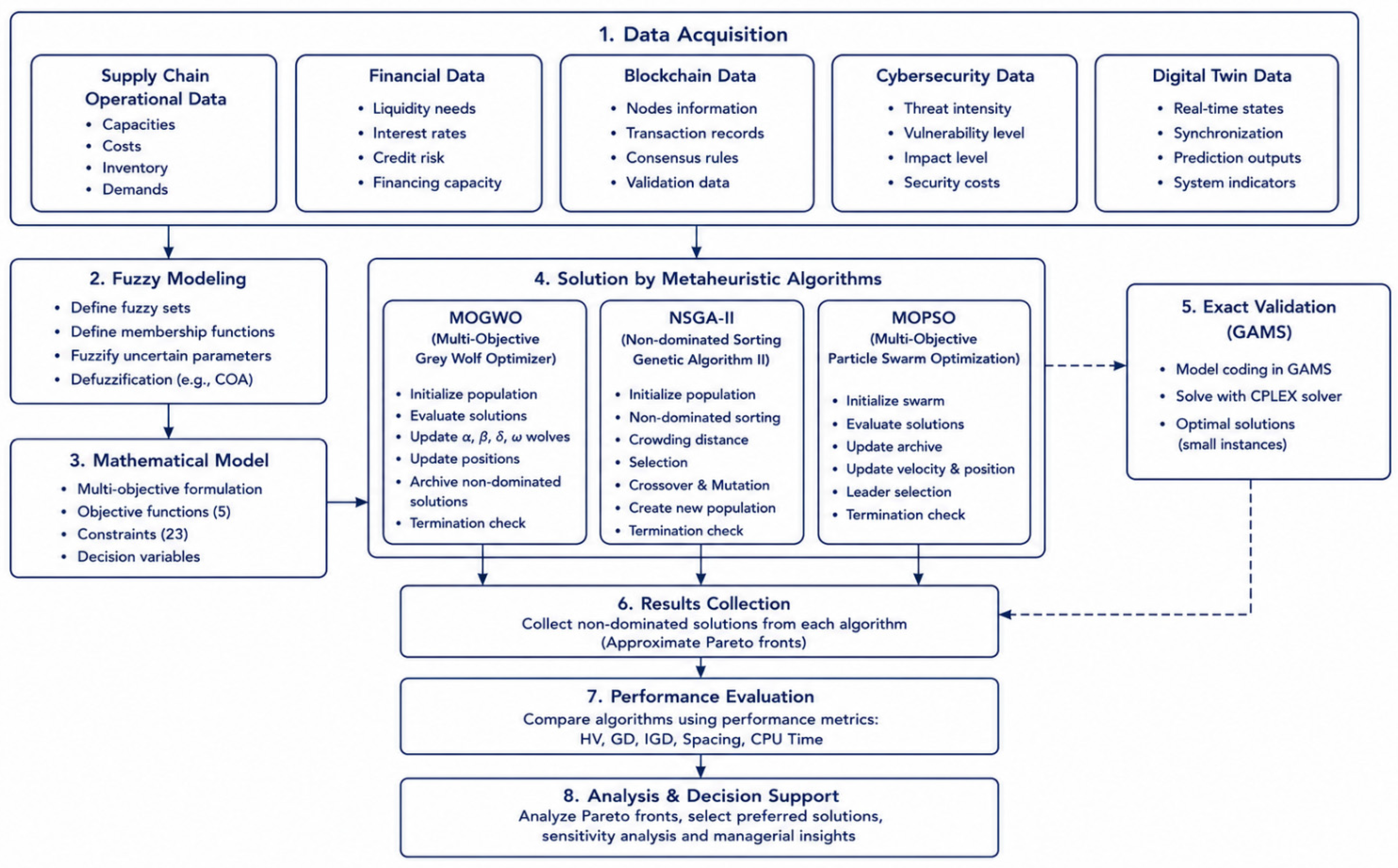
Figure 3 shows the overall process of solving the problem. First, fuzzy data, financial information, blockchain information, and cybersecurity data are entered into the model. After fuzzing and data preparation, the mathematical model is formed and solved by metaheuristic algorithms. The solutions obtained from each algorithm are extracted and then compared with the results obtained from the exact GAMS solver. Finally, the performance indicators are evaluated and the best Pareto front is selected.
As can be seen in
Figure 3, the solution process starts from the stage of receiving fuzzy data and network information and after the model is formed, it is executed independently by three metaheuristic algorithms. The output of each algorithm includes a set of non-dominated solutions that are used for performance analysis, statistical comparison, and Pareto front quality assessment. Next, the results obtained are compared with the solutions obtained from the exact model in small samples and the validity of the solution method is examined.
In order to create the same conditions for comparing the algorithms, parameter settings were made based on previous studies and several experimental runs. The final values of the parameters used are presented in
Table 2.
In order to reduce the effect of randomness of the metaheuristic algorithms, each algorithm was evaluated in 30 independent runs and the average results were used for performance analysis. All algorithms were implemented in Python 3.11. Also, to validate the model and evaluate the quality of solutions in small samples, GAMS 43.4 software and CPLEX solver were used. Comparing the results of metaheuristic algorithms with the solutions obtained from GAMS allowed to examine the accuracy and reliability of the proposed methods. In addition, common indicators of evaluation of multi-objective algorithms were used to compare the performance of the algorithms. These indicators allow to simultaneously evaluate the quality of convergence, the diversity of the Pareto front and the computational efficiency of the solution methods.
7. Analysis of Results and Discussion
Numerical results were generated based on a hybrid structure of real and simulated data to both maintain the practical validity of the model and allow its evaluation at larger scales and in critical conditions. Real data collected from the supply chain finance operations of an Australian industrial company were used to calibrate the main network parameters. These empirical data were extracted from the company’s operational and financial information systems and included information such as member operational capacity, product demand, transportation and storage costs, liquidity requirements, financing rates, credit risk, financial transaction history, processing times, and cybersecurity-related operational indicators. The experimental network consisted of 5 suppliers, 3 manufacturers, 4 distribution centers, 6 retailers, 20 customers, 5 products, 4 financial institutions, 8 blockchain nodes, and 12 planning periods. This data was used to determine the baseline values of the parameters, and in cases where complete real data was not available, simulated values were generated based on the observed limits, mean, range, and behavioral pattern of the real data.
The simulated parameters were mainly used to represent conditions that were difficult or limited to be directly observed in real data, including the severity of cyberattacks, the level of vulnerability of members, the impact of the attack on financial performance, the processing capacity of blockchain nodes, the digital twin synchronization error, and the recovery time after a disruption. These simulated parameters were generated within representative intervals derived from the corresponding empirical observations. Their values were determined according to the observed ranges and behavioural characteristics of the real industrial data to ensure consistency between the empirical and simulated datasets while enabling the evaluation of cybersecurity scenarios and operating conditions that were not sufficiently represented in the available observations. For the fuzzy parameters, three minimum, probable, and maximum values were defined, and triangular fuzzy numbers were constructed accordingly. The minimum and maximum values were extracted from the range of real data variations or the logical limits corresponding to each parameter, and the probable value was determined based on the average or dominant value of the data. The triangular fuzzy parameters were subsequently transformed into their corresponding deterministic equivalents according to the adopted fuzzy solution procedure and incorporated into the objective functions and constraints. In this way, the data entry into the model was carried out in three stages: first, real data were used to determine the baseline values and calibration, then additional simulated data were generated to cover security scenarios and larger scales, and finally, all the deterministic and fuzzy parameters were entered into the solution algorithms after preparation.
In addition to the implementation scenarios considered in this study, the cybersecurity component was evaluated under representative cyber-threat conditions. These conditions were defined by assigning different combinations of vulnerability level, threat severity, and attack impact to represent various operational security environments. The resulting cybersecurity indicators were then propagated through the digital twin, fuzzy risk assessment module, optimization model, and self-healing mechanism, allowing the influence of different cyber-threat conditions on network performance to be systematically evaluated.
To examine the behavior of the model under different conditions, four main scenarios were defined. The baseline scenario represents the network state without the simultaneous use of blockchain, digital twin, and self-healing mechanism and was used as a basis for comparison. The second scenario examines the effect of deploying blockchain and smart contracts on transaction transparency, reducing credit risk, and improving trust. The third scenario evaluates the role of digital twin in real-time monitoring, cyber risk prediction, reducing decision-making errors, and improving the quality of resource allocation. The fourth scenario represents the complete proposed model in which blockchain, digital twin, fuzzy risk assessment, multi-objective optimization, and self-healing mechanism operate in an integrated manner. In addition, the severity of cyber-attacks at three levels, low, medium, and high, and the level of uncertainty of fuzzy parameters were also analyzed in different domains to evaluate the stability and sensitivity of the model to environmental changes.
All composite indices reported in this section are normalized indices between zero and one used to evaluate the relative performance of the proposed framework. These indices are directly extracted from the output of model variables and simulation results and are used as comparative measures between scenarios, not as independent standard indices.
In order to comprehensively evaluate the proposed framework, the network performance was examined at four different implementation levels. The baseline scenario represents the traditional supply chain financing structure. In the second scenario, blockchain and smart contracts were added to the network. The third scenario applied digital twin capabilities alongside blockchain, and the fourth scenario included the complete proposed framework including blockchain, digital twin, fuzzy model, and self-healing mechanism. To compare these scenarios, the network behavior after a cyber disruption was first examined.
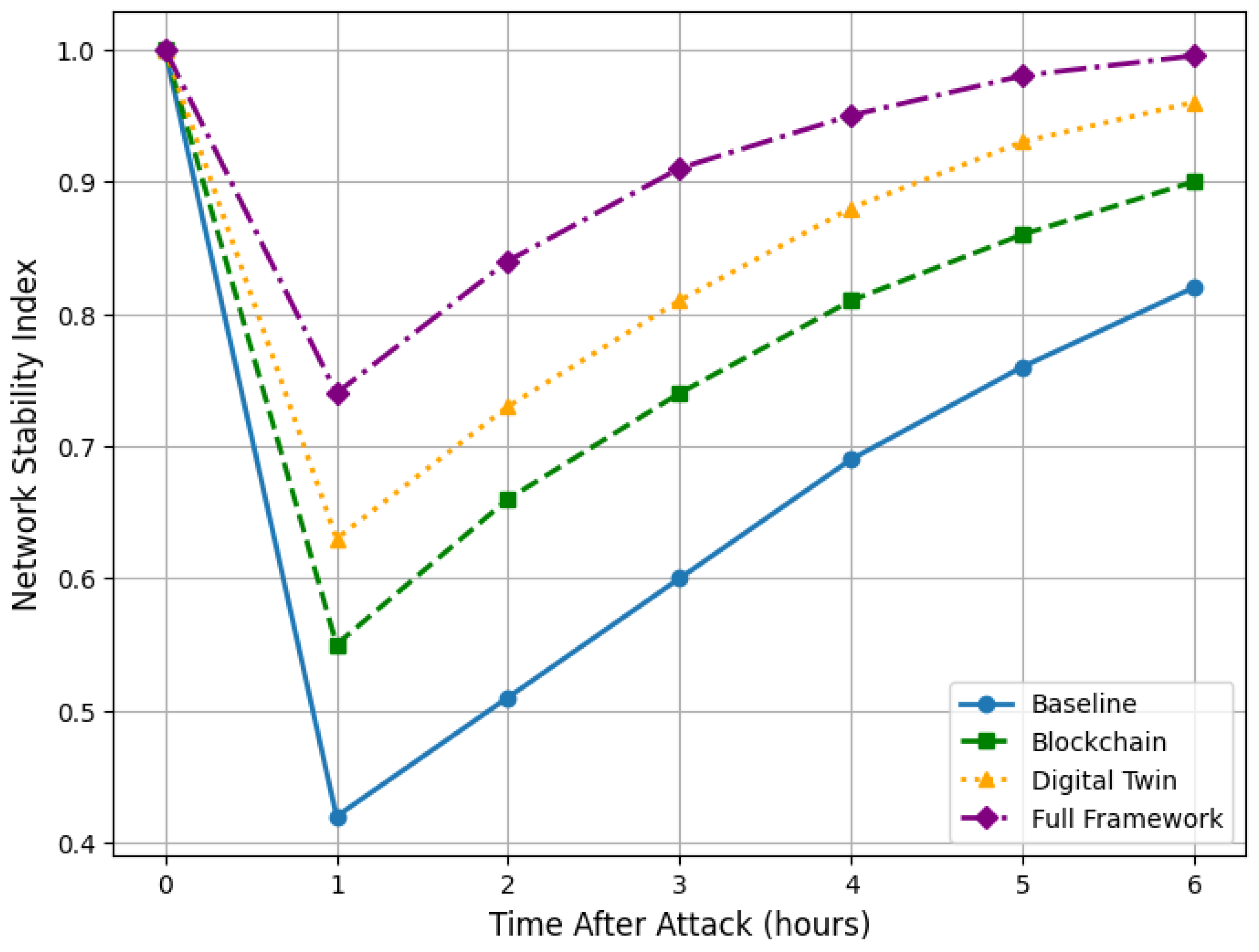
Figure 4 shows the network stability recovery process after a cyber-attack. All scenarios experience performance degradation at the moment of the attack, but their speed of recovery to stable conditions is not the same. In the baseline scenario, the network recovery is performed with a gentler slope and the effect of the disruption remains for a longer period. The use of blockchain has reduced some of the initial instability, while the combination of blockchain and digital twin increases the speed of detection and control of disruptions. The fastest recovery process is related to the proposed full framework, in which the network stability approaches the pre-attack level in a shorter time.
The values in
Table 3 show that each stage of framework development has gradually improved network performance. The greatest improvement is observed in indicators related to trust, fraud detection, and liquidity allocation efficiency. Also, the cyber risk in the proposed full framework has been reduced to less than one-third of the value observed in the baseline scenario. The increase in the financing approval rate and the accuracy of smart contract execution also indicate an improvement in the quality of financial and security decisions in a blockchain and digital twin-based environment.
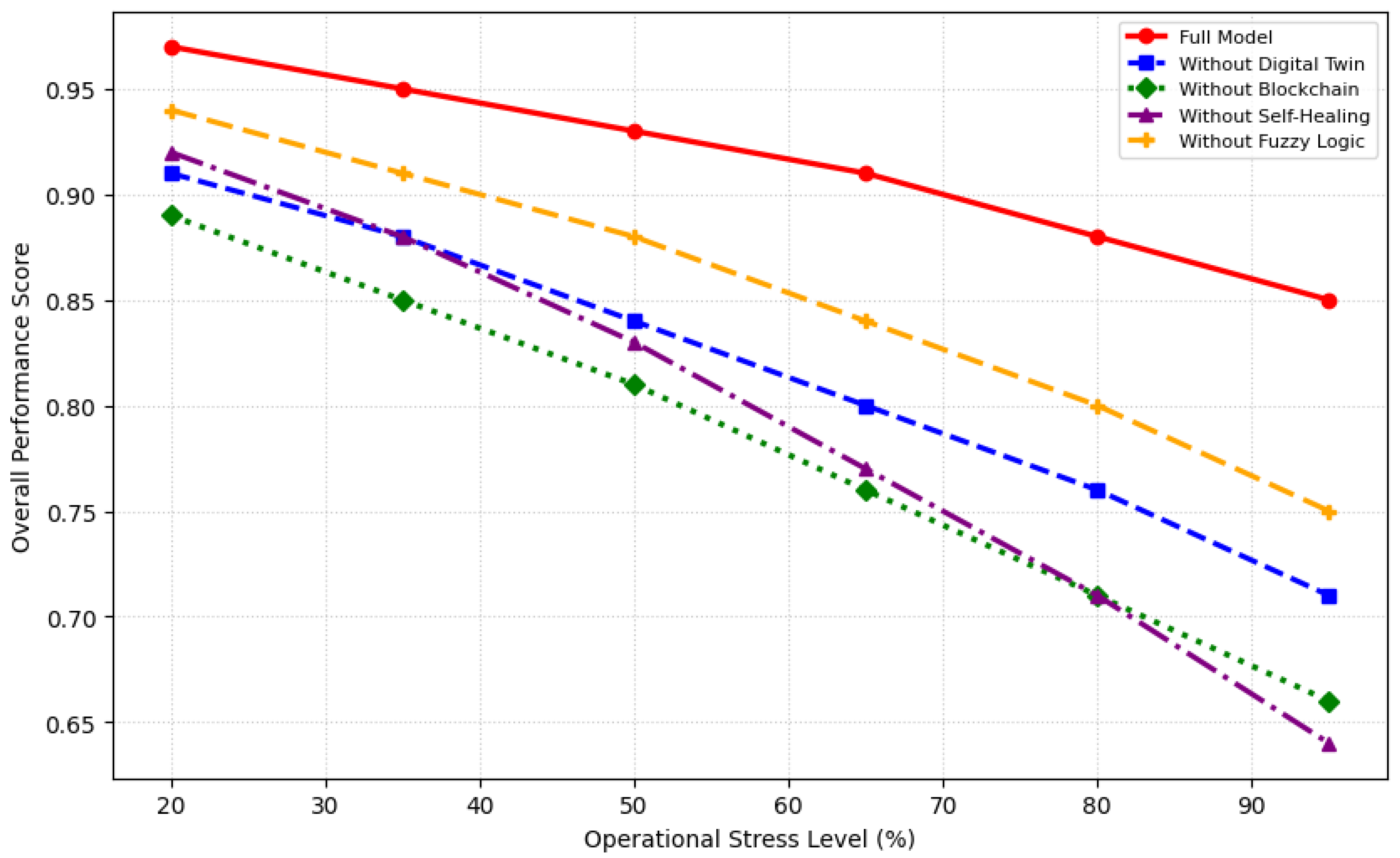
In order to achieve a comprehensive evaluation of the proposed framework, the analysis of the results was not limited to comparing different deployment scenarios, but a series of complementary evaluations were also conducted to examine different dimensions of the system performance. These evaluations, focusing on the main capabilities of the framework, including digital twin, blockchain, self-healing mechanism, Pareto behavior, cyberattack severity, sensitivity analysis, and component elimination study, allow for the analysis of network performance from different perspectives and, overall, provide a more complete picture of the behavior of the proposed framework.
The role of the digital twin in network performance was assessed by comparing the system behavior before and after the activation of real-time monitoring, data synchronization, and forecasting capabilities. Unlike the previous analysis, which focused on comparing different scenarios, this section examined the direct impact of the digital twin on the quality of decision-making and the network’s ability to manage changing conditions. To this end, changes in performance indicators were analyzed at different levels of digital twin synchronization accuracy.
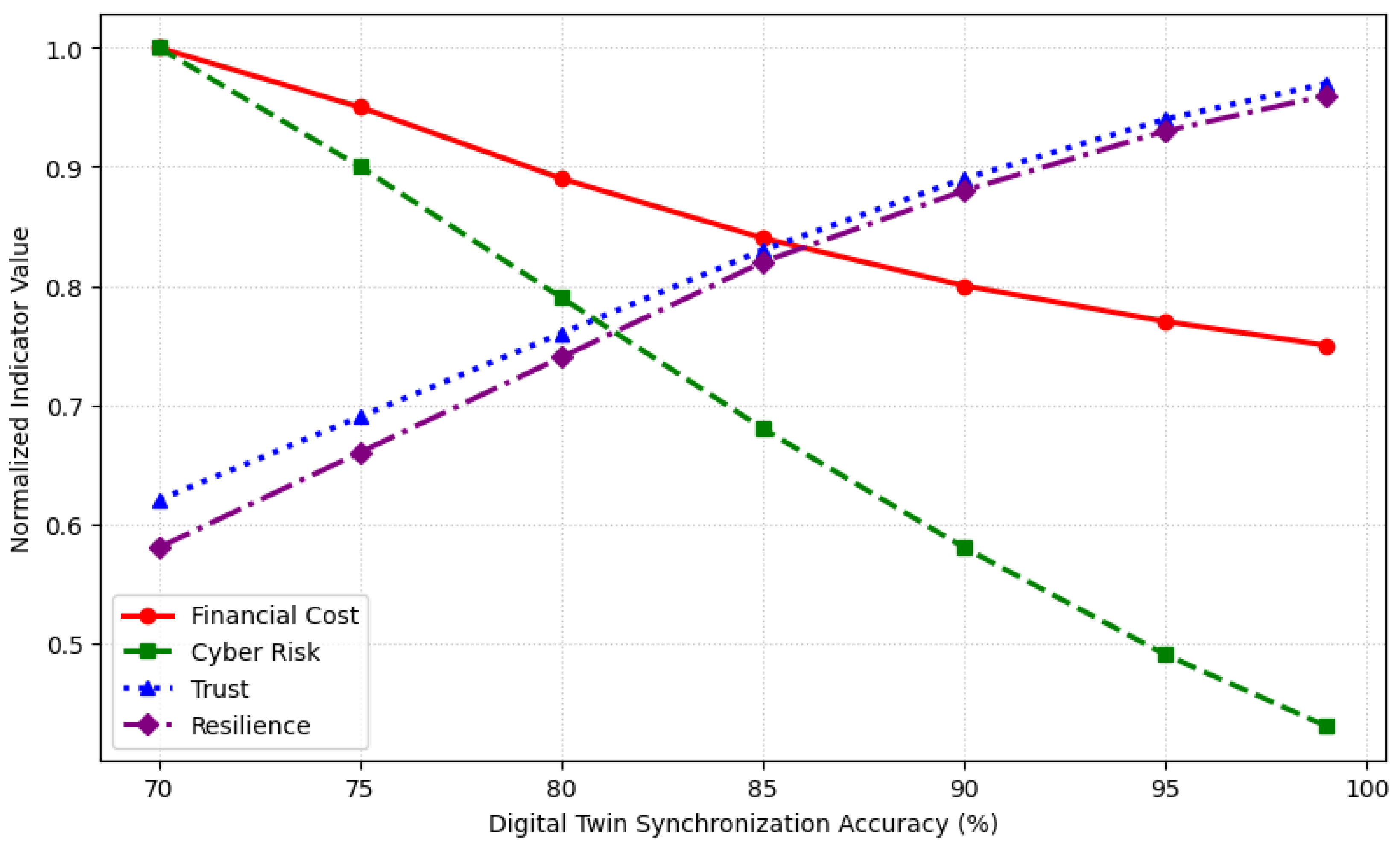
Figure 5 shows the behavior of four key performance indicators at different levels of digital twin synchronization accuracy. As synchronization accuracy increases, operational costs and cyber risk tend to decrease, while network reliability and resilience increase continuously. The slope of changes decreases at higher synchronization accuracy ranges, indicating that most of the benefits of the digital twin are achieved in the early stages of data quality improvement.
The results in
Table 4 show that the use of digital twins has led to simultaneous improvements in operational, financial, and security indicators. The greatest improvements were related to response time and threat detection rate, which indicates that access to synchronous information and a virtual network model can accelerate the incident response process. Also, increasing the accuracy of decision-making and utilization of financial resources indicates that digital twins are not just a monitoring tool, but also play a role as an active decision-making layer in network performance.
The observed improvements also confirm the predictive consistency of the digital twin, as the continuously synchronized virtual model maintained a low synchronization error while providing reliable forecasts for subsequent optimization and recovery decisions.
After detecting cyber threats, the speed and quality of network recovery significantly depend on self-healing capabilities. The proposed self-healing mechanism, using digital twin outputs, blockchain information, and intelligent decision-making rules, initiates corrective processes without the need for direct human intervention. To evaluate the effectiveness of this capability, the network behavior at different stages of recovery after a disruption was examined.
To validate the effectiveness of the proposed self-healing mechanism, three representative cyberattack scenarios with different disruption severities were considered during the computational experiments. The recovery performance was evaluated by comparing the network conditions before and after the optimization-driven recovery process using recovery time, cyber risk reduction, financial loss, service continuity, and network stability indicators.
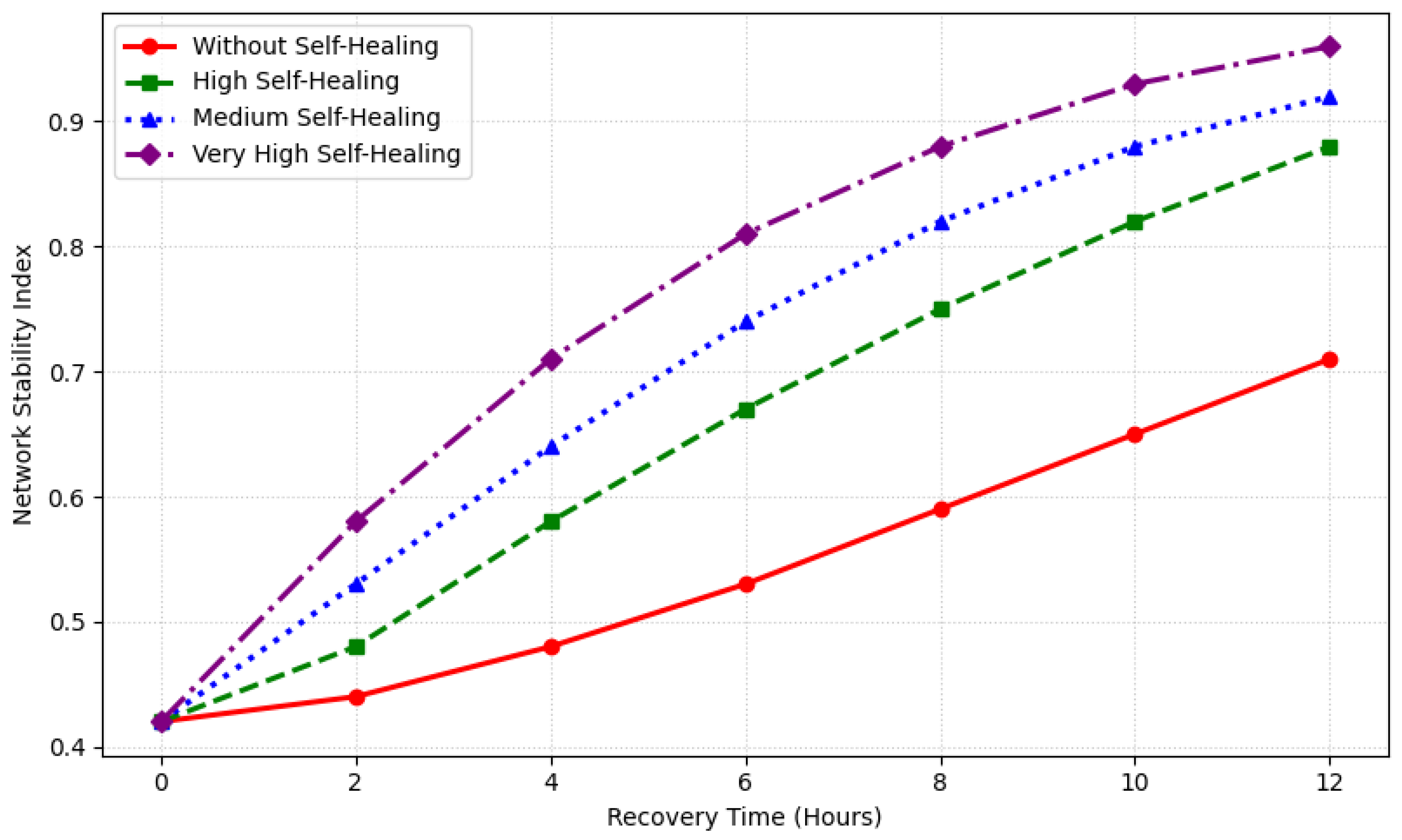
Figure 6 shows the process of restoring network stability under four different levels of self-healing mechanism efficiency. As the effectiveness of self-healing processes increases, the network recovery slope increases and the time required to return to stable conditions decreases. The difference between the curves is greater in the first hours after a disruption, indicating that the bulk of the benefit of self-healing systems occurs in the initial response phase to cyber-attacks.
Table 5 show that the use of the self-healing mechanism has significantly reduced the recovery time and network downtime. In addition, the financial damage caused by cyberattacks has decreased by more than 43% and the risk containment effectiveness has reached about 89%. The increase in the service continuity rate and the availability of critical processes also indicates that the self-healing mechanism has been able to control the effects of disruptions before they spread to the network level.
The simultaneous reduction in recovery time, financial damage, and operational downtime shows that the self-healing capability is not only a crisis response tool, but also part of the network stability strategy. This feature allows the network to maintain acceptable performance in the face of unexpected events and return to a stable state with minimal performance degradation.
Transaction transparency and trustworthiness among network members are among the most important challenges in financial supply chains. In the proposed framework, blockchain, in addition to immutable transaction recording, enables decentralized validation, financial record tracking, and automated execution of smart contracts. To examine the effectiveness of this technology, the behavior of indicators related to trust and transaction security under different levels of blockchain adoption was analyzed.
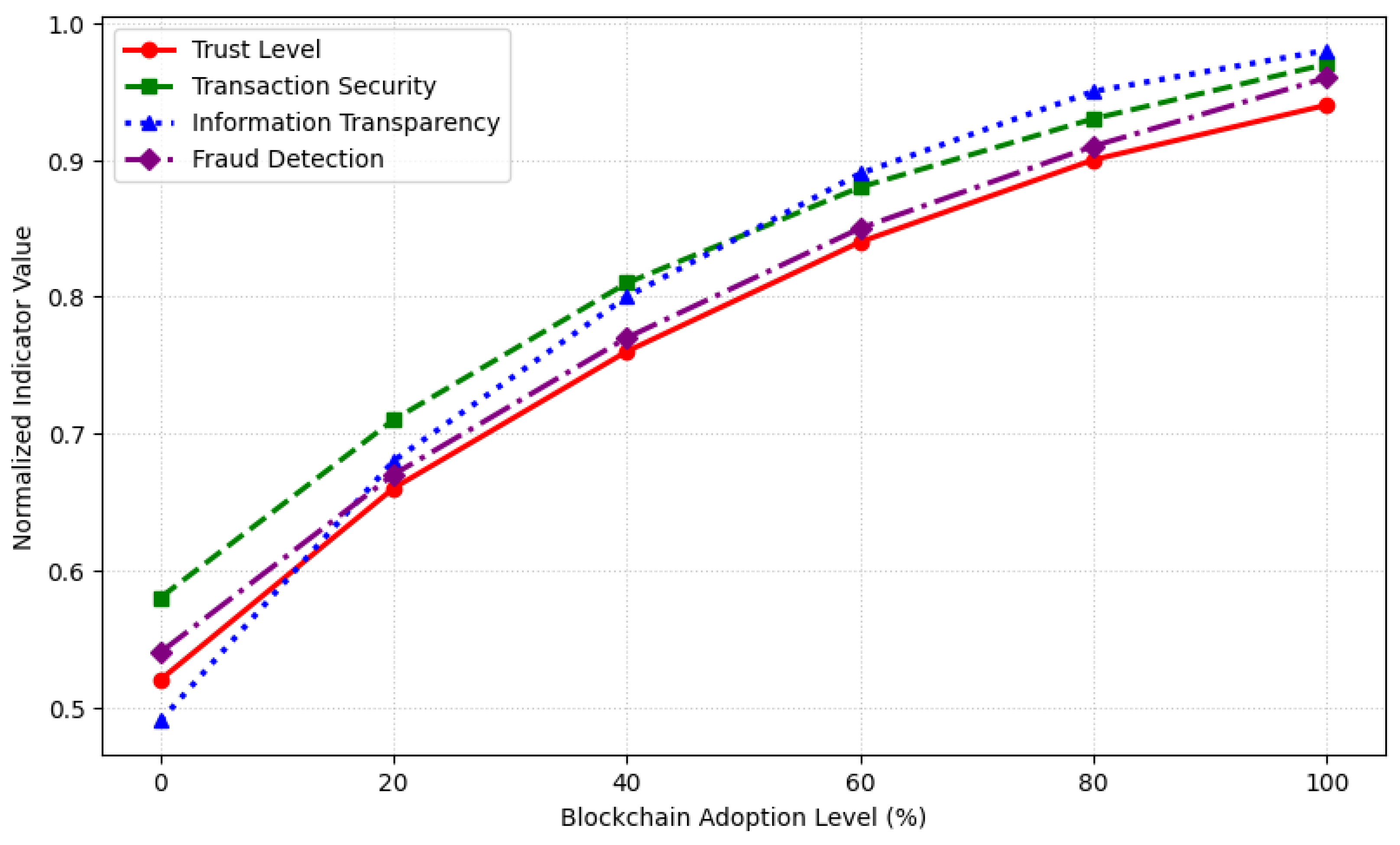
Figure 7 shows the changes in trust levels, transaction security, information transparency, and fraud detection rates at different levels of blockchain adoption. As blockchain adoption increases, all indicators show an upward trend. The highest growth rate is observed in the early stages of deployment, which indicates the key role of eliminating information asymmetry and increasing transaction traceability in the formation of trust among network members.
Table 6 show that the deployment of blockchain has led to significant improvements in all indicators related to trust and security. The largest increase is related to the information transparency index, which has grown by more than 52%. In addition, the ability to track transactions has reached more than 99% and the accuracy of transaction validation has also increased significantly. The improvement in the fraud detection rate and the efficiency of dispute resolution also shows that the use of blockchain can, in addition to increasing security, reduce the costs of distrust between network members.
These results indicate that the main value of blockchain is not simply in the secure storage of data, but rather this technology provides the necessary infrastructure for the formation of sustainable trust in financial networks by creating a transparent, traceable and untraceable platform.
The multi-objective nature of the problem makes it impossible to simultaneously achieve the lowest cost, lowest cyber risk, highest trust, and highest resilience. In such a situation, a set of Pareto solutions is formed, each representing a different balance between the conflicting objectives. Examining this Pareto front can provide a more accurate understanding of the interrelationships between key network indicators and the resilience of the decision-making space.
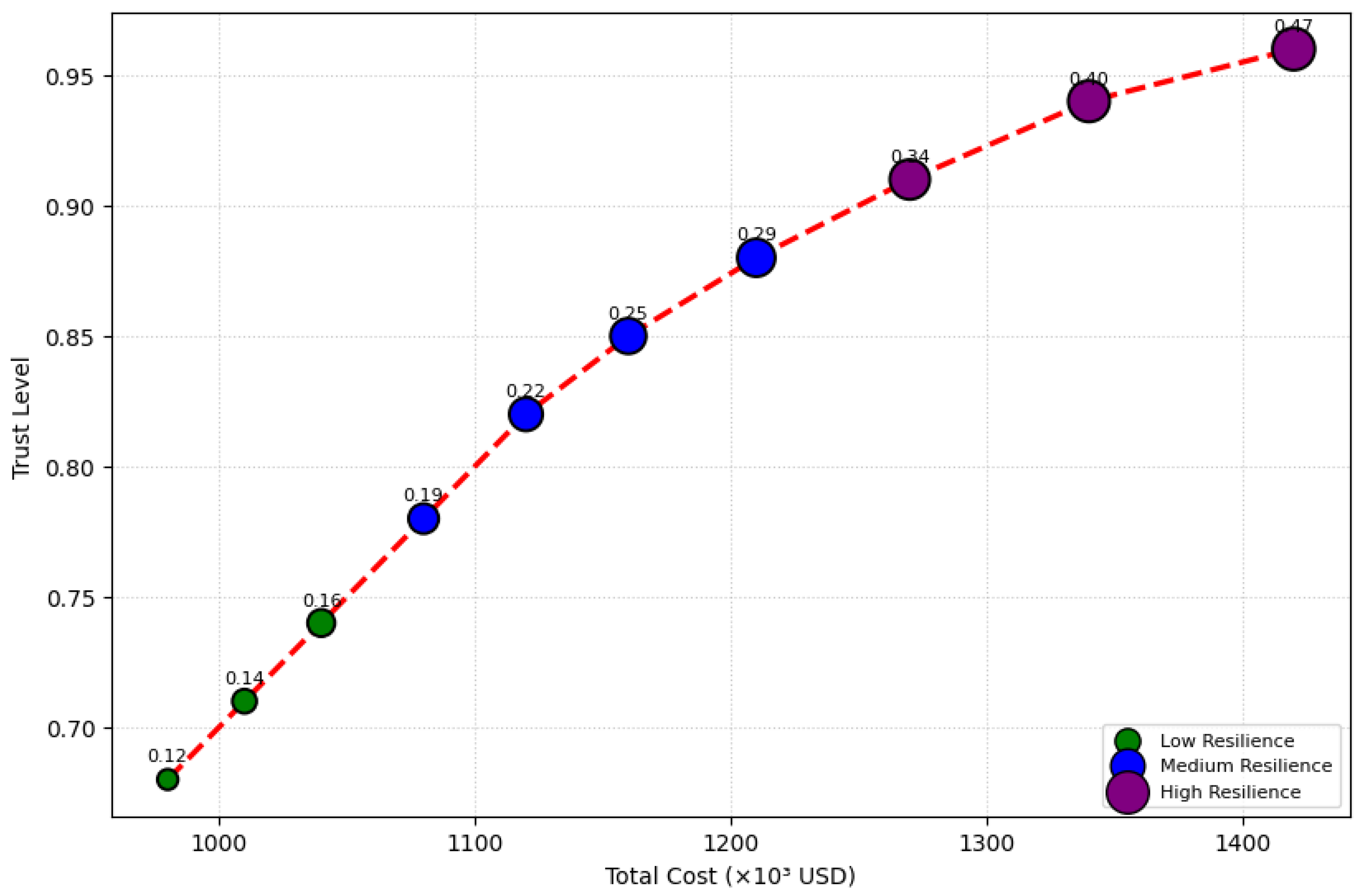
Figure 8 shows the Pareto front resulting from the proposed model. Points located on the left side of the Pareto front have lower cost and cyber risk, but are usually associated with lower levels of trust and resilience. In contrast, moving to the right side of the front increases the trust and resilience of the network, although achieving these conditions requires allocating more resources and incurring additional costs. The higher density of points in the middle region of the front indicates that the model is able to provide a wide range of balanced solutions for decision makers. The curvature of the Pareto front indicates the existence of a nonlinear relationship between the objectives. The results show that after a certain level, further increases in trust and resilience will be accompanied by increasing costs. This behavior highlights the importance of using multi-objective approaches in the design of smart financial networks, because choosing a single solution without considering these trade-offs can lead to inefficient decisions.
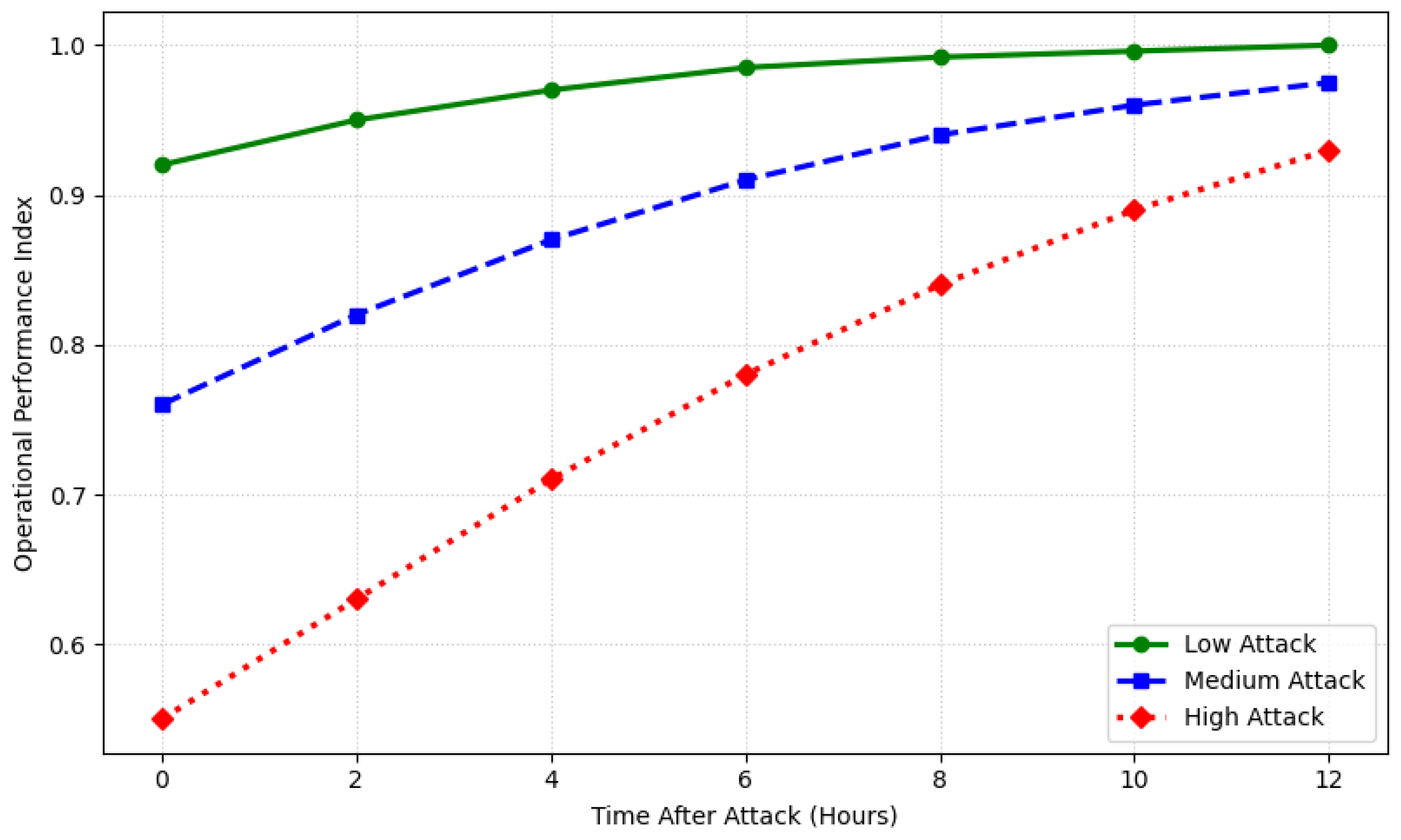
The severity of cyberattacks is one of the determining factors in the stability of smart finance networks. To assess the resilience of the proposed framework, three different attack levels, including low, medium, and high-severity attacks, were applied in the simulation environment. The purpose of this analysis is to examine how network performance changes under increasing threat conditions and the ability of security mechanisms to maintain the operational and financial performance of the system.
Figure 9 shows the trend of network performance changes under three different attack severity levels. At all levels, network performance decreases after an attack, but the rate of decline and recovery speed are not the same. In the low-severity attack scenario, the system has been able to maintain most of its performance and quickly return to a stable state. At the medium level, the performance decrease is more noticeable, but the prediction and intelligent response processes still prevent the spread of disruption. The largest performance drop is related to severe attacks, which, although causing a significant decrease in operational indicators, still prevent the collapse of network performance.
The values in
Table 7 show that increasing attack severity has the greatest impact on recovery time, resilience, and service continuity. However, even at the most severe attack level, the fraud detection rate and the reliability of smart contracts remain at relatively high levels. Also, the limited difference between the trust index at different attack levels indicates that the blockchain infrastructure has been able to neutralize some of the effects of the increased threats.
The results show that the main advantage of the proposed framework is evident in critical situations, where increasing attack severity, instead of causing widespread disruption, only causes a gradual decrease in performance and the network still maintains the ability to continue operating and recover its structure.
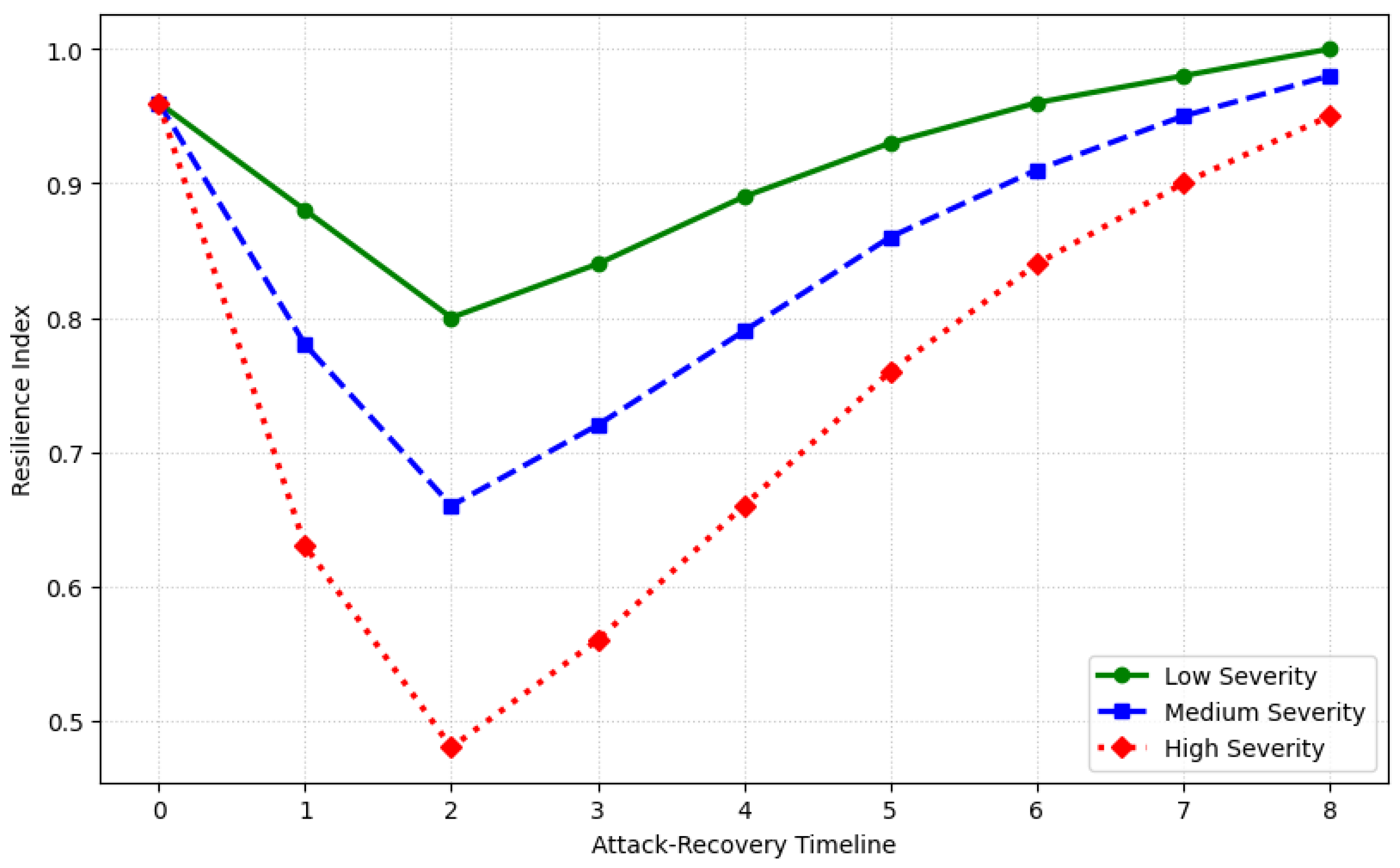
Cyber resilience is not limited to the extent of performance degradation after an attack, but also the ability of the network to recover and return to a stable state is an important part of it. For this reason, in addition to examining performance indicators, the temporal behavior of network resilience during the attack and recovery cycle was evaluated. This analysis allows for simultaneous observation of the degradation stage, the critical point, and the recovery process of the system.
Figure 10 shows the changes in the network resilience index at different stages before, during, and after a cyberattack. At the beginning of the cycle, the network is in a stable state and the resilience index value is at its highest level. With the onset of the attack, a noticeable drop in performance is observed and the system enters the critical zone. After the detection, response, and self-healing mechanisms are activated, the recovery process begins and the resilience index gradually approaches the initial level. The difference between the curves shows that the severity of the attack has a direct impact on the depth of the performance degradation and the time required for recovery.
The observed pattern indicates that the proposed framework does not only focus on reducing the damage, but also accelerates the process of returning the network to a stable state. As the severity of the attack increases, the distance between the critical point and the desired level of performance increases, but even in the most severe scenario, the recovery path remains stable and prevents the network from entering a long-term unstable state.
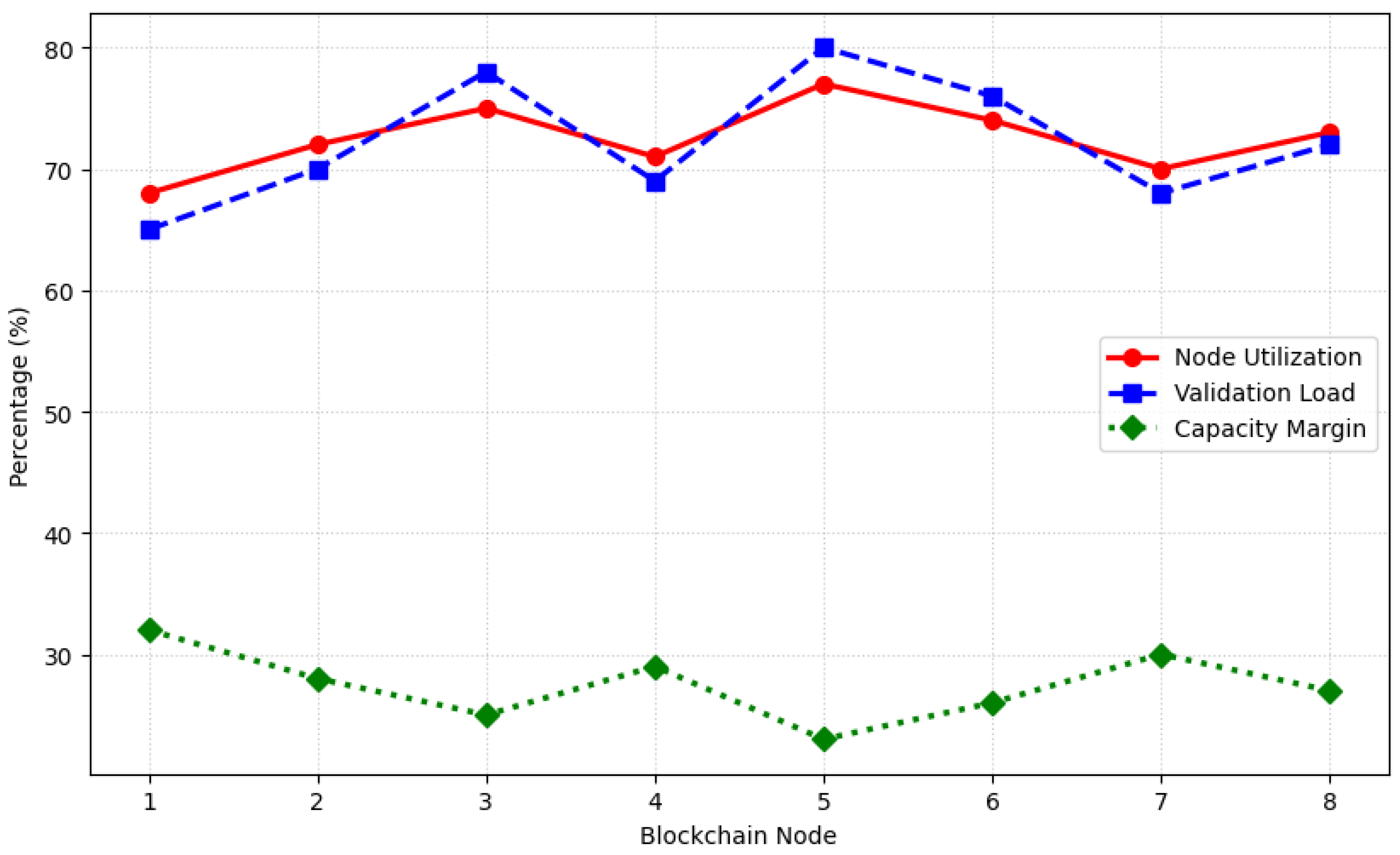
In addition to providing security, transaction validation in blockchain networks imposes a significant processing load on network nodes. If this load is not distributed in a balanced manner, some nodes will become bottlenecks and the overall efficiency of the network will decrease. Therefore, the utilization of the capacity of validator nodes and the distribution of the transaction verification load were examined as one of the important indicators of blockchain performance.
Figure 11 shows the pattern of validation load distribution among blockchain nodes. The trend of changes indicates that the processing load is distributed relatively balanced among nodes and the intense concentration of activity on a limited number of nodes has been prevented. The limited difference between the utilization and validation load curves indicates that the transaction allocation mechanism has been able to effectively use the capacity available in the network. Also, the absence of sudden jumps in the processing load of the nodes indicates the stability of the validation process under different operating conditions.
The results show that the proposed architecture, in addition to increasing the security and transparency of transactions, also performs well in terms of computational efficiency. The balanced distribution of the validation load reduces the possibility of processing congestion, increases scalability, and improves network stability when the volume of transactions increases. As a result, the blockchain plays a role not only as a security layer, but also as a stable infrastructure for managing financial transactions in the smart finance network.
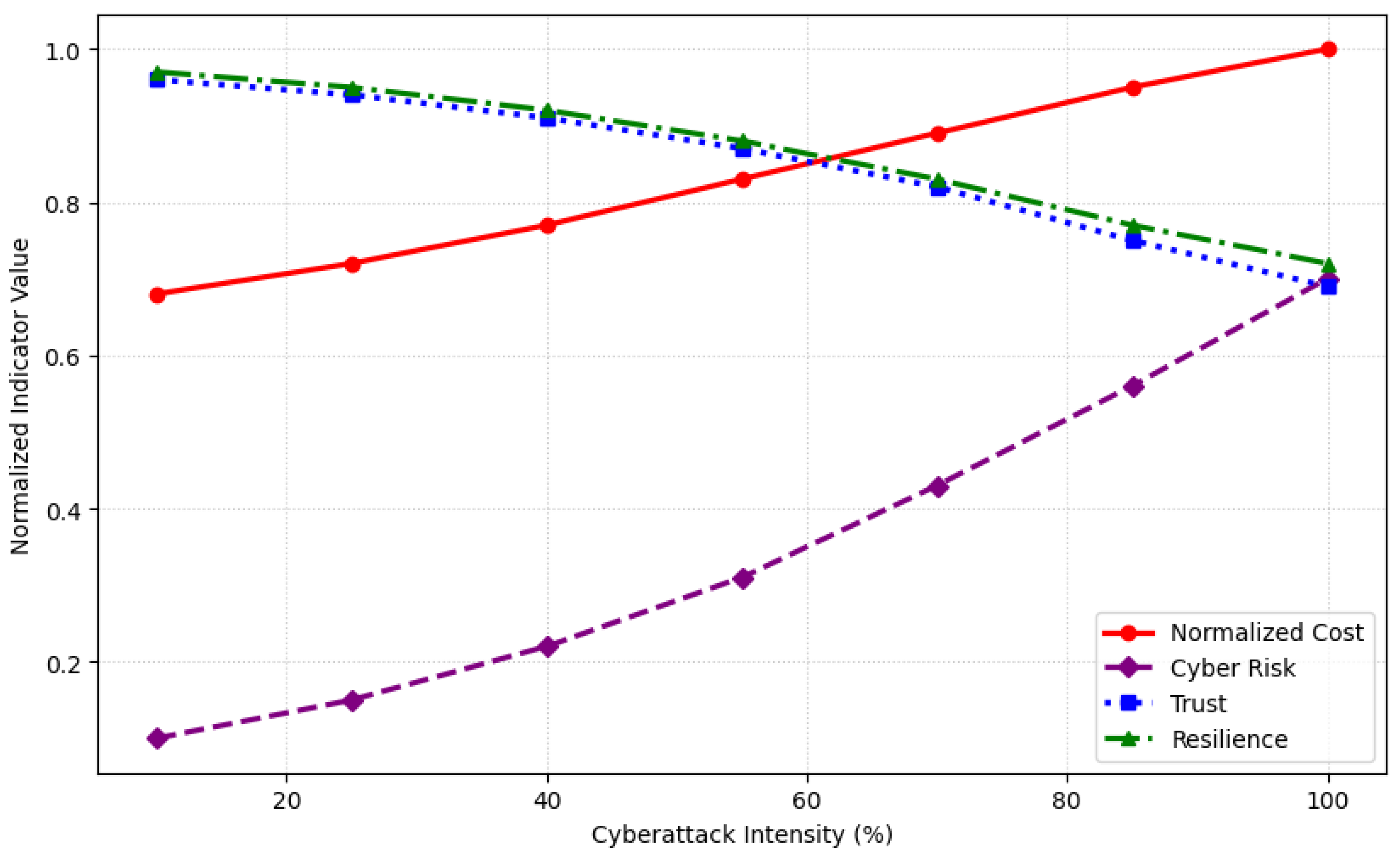
The intensity of cyberattacks is one of the most important factors affecting the performance of blockchain and digital twin-based financial networks. In order to examine the sensitivity of the model to changes in the threat environment, the intensity of cyberattacks was varied over a wide range and its impact on key network indicators was evaluated. This analysis allows identifying critical points in the system and assessing the stability of the proposed framework under increasing risk conditions.
Figure 12 shows the changes in key performance indicators at different levels of cyberattack intensity. With increasing attack intensity, operational cost and cyber risk show an increasing trend, while network trust and resilience gradually decrease. Despite this trend, the slope of changes in all indicators remains controlled, indicating the ability of the proposed architecture to limit the effects of increasing threats. The distance between the curves increases at higher intensities, indicating that the effects of severe attacks appear simultaneously on the security, financial, and operational dimensions of the network.
The values in
Table 8 show that increasing attack intensity has the greatest impact on operational costs and the cyber risk index. In contrast, although trust and resilience have a decreasing trend, they remain within acceptable limits even at the most severe attack level. This behavior indicates that the blockchain, digital twin, and self-healing mechanisms act complementary and prevent sudden drops in network performance.
The gradual behavior of the indices against increasing attack intensity indicates that the proposed framework has appropriate structural stability and maintains its performance in a controlled manner when faced with different levels of threats.
To determine the actual contribution of each of the main components of the proposed framework, a component elimination study was conducted. In this analysis, the performance of the full model was compared with four reduced versions, including the removal of the digital twin, the removal of the blockchain, the removal of the self-healing mechanism, and the removal of fuzzy logic. This approach allows us to identify the contribution of each technology to improving the overall performance of the system and shows to what extent the performance reduction depends on the removal of each component.
In this analysis, the performance of the full version of the framework is evaluated as a reference alongside versions that have one of the main architectural components removed. Such an approach allows for the measurement of the relative contribution of each technology to the final system performance and reveals the extent to which each component affects the balance between cost, cyber risk, trust, and network resilience. The results of this evaluation provide a basis for analyzing the extent to which the overall performance of the framework depends on its constituent components.
Figure 13 shows the trend of changes in the overall performance index for different versions of the model. The full model has maintained the best performance at all levels of testing. The removal of the digital twin has caused a significant decrease in decision-making accuracy and predictive ability, while the removal of the blockchain has had the greatest impact on the trust and security of transactions. Also, the removal of the self-healing mechanism has caused a significant decrease in network stability in critical conditions, and the version without fuzzy logic has also shown a weaker performance in managing uncertainty. Since the goal of this step is to assess the contribution of each major architectural component to the overall system performance, all metrics were calculated after independent component elimination experiments were performed and under the evaluation conditions corresponding to this study. As a result, the values reported for the full version of the framework in this section are considered the reference point for the same set of experiments and serve as a basis for comparison with the reduced versions, so that the contribution of each technology to the final system performance can be assessed in a consistent and comparable manner.
The results in
Table 9 show that the full model outperforms the ablated versions in all key metrics. The largest overall performance loss was due to the removal of the blockchain, which led to a sharp decrease in trust and increased cyber risk. On the other hand, the removal of the self-healing mechanism had the largest negative impact on the resilience index. The removal of the digital twin also increased operational costs and reduced decision-making efficiency.
To evaluate the quality of the Pareto solution set and compare the performance of the solution algorithms, five well-known metrics were used, including Hypervolume (HV), Generational Distance (GD), Inverted Generational Distance (IGD), Spacing, and processing time. These metrics measure the algorithm’s ability to cover the solution space, its proximity to the reference Pareto front, its uniform distribution of solutions, and its computational efficiency, respectively. All results were calculated based on an average of 30 independent runs for each algorithm.
Table 10 show that the GWO algorithm has the best overall performance among the methods studied. This algorithm has the highest Hypervolume value and the lowest GD, IGD, and Spacing values, which indicate better coverage of the solution space, closer proximity to the reference Pareto front, and a more uniform distribution of solutions. Although MOPSO has the lowest processing time, it has a poorer performance in terms of solution quality metrics than the other two algorithms.
In order to investigate the statistical significance of the performance difference between the multi-objective algorithms, the nonparametric Wilcoxon Signed-Rank test was performed on the results of 30 independent runs. This test was chosen because it is not dependent on the normal distribution of the data and is widely used in comparing meta-heuristic algorithms. Pairwise comparisons were made between the three algorithms GWO, NSGA-II, and MOPSO, and the p-value was calculated for the overall performance index.
The results of
Table 11 show that all pairwise comparisons have
p-values less than 0.05. This indicates that the observed difference between the performance of the algorithms is not due to random fluctuations and is statistically significant. The lowest
p-value is for the comparison of GWO and MOPSO, which also shows the largest performance gap.
Based on the results of the Wilcoxon test, the GWO algorithm has significantly better performance than the other two algorithms. Also, the difference between NSGA-II and MOPSO is statistically significant and confirms the superiority of NSGA-II.
From a management perspective, the implementation of the proposed framework enables a shift from reactive to proactive decision-making. Combining digital twin with blockchain and self-healing mechanisms provides financial supply chain managers with the ability to simulate and assess the consequences of a cyber threat before it becomes an operational crisis. Such a capability improves the allocation of security resources, prioritizes technology investments, and increases the accuracy of financial planning in uncertain environments. In addition, real-time tracking of transactions and observation of network health status increases the level of management visibility across all operational and financial layers and facilitates data-driven decision-making.
From a strategic perspective, this framework can be used as a tool to enhance trust among stakeholders, financial institutions, and network members. Increasing transaction transparency, reducing reliance on centralized control processes, and improving resilience after disruptions reduce operational and credit risk and pave the way for more sustainable financial partnerships. The research also shows that managers can balance cost, security, trust, and resilience by choosing policies that are appropriate to the threat level and market conditions, an issue that has become an important competitive advantage in complex, digitally driven financial networks.
8. Conclusions
Modern financial supply chains are more exposed to cyber threats, operational uncertainties, and trust and transparency challenges due to their extensive dependence on digital infrastructure, high-volume data exchange, and simultaneous interaction between multiple actors. In such an environment, achieving security, efficiency, resilience, and reliability simultaneously has become one of the most important concerns for managers and policymakers. In order to respond to this need, the present study proposed an integrated framework based on digital twin, blockchain, self-healing mechanism, and multi-objective fuzzy optimization for intelligent management of financial supply chains under uncertainty. The proposed framework attempted to provide a comprehensive platform for decision-making and risk management in complex environments by combining the real-time prediction and monitoring capabilities of digital twin, the transparency and immutability of blockchain, the automatic recovery capability of self-healing mechanisms, and the flexibility of fuzzy logic.
The results showed that the integration of the aforementioned technologies can simultaneously improve different aspects of network performance. The behavior of the model in different scenarios indicated that the simultaneous use of digital twins and blockchain not only increases trust and transparency in financial transactions, but also improves the network’s ability to identify, control, and manage cyber threats. The results also showed that the self-healing mechanism plays an important role in reducing recovery time and maintaining network operational stability and preventing the spread of disruptions during attacks. Pareto front analysis also showed that the proposed model is able to provide decision-makers with a diverse set of balanced solutions to strike a proper balance between cost, cyber risk, trust, and resilience based on management priorities.
Assessing the model’s sensitivity to the severity of cyber-attacks showed that the proposed structure has adequate stability against increasing levels of threats. Although the increase in the intensity of attacks naturally increases costs and risks, the controlled changes in the performance indicators showed that the designed architecture has the ability to maintain network performance in critical conditions. On the other hand, the results of the component elimination study showed that each of the main components of the framework plays a specific and complementary role in the final performance of the system. The decrease in performance in versions without digital twins, blockchain, self-healing or fuzzy logic indicated that the real value of the proposed framework comes from the interaction and synergy between these technologies and not simply the separate use of each of them.
Comparison of the solution algorithms also showed that the meta-heuristic approaches used have a good ability to extract high-quality solutions to the proposed problem. The results of the Pareto front quality criteria and statistical tests confirmed that the solutions obtained from the model have sufficient stability and validity and the difference in the performance of the algorithms is statistically significant. These findings provide additional evidence for the reliability of the adopted solution procedure in solving the proposed complex multi-objective supply chain finance model.
Despite the promising results, there are still valuable opportunities for the development of this research area. One future direction could be to extend the model to multi-layer and inter-organizational financial networks, in which the interaction between multiple financial ecosystems and supply chains is examined simultaneously. Also, the integration of emerging technologies such as federated learning, autonomous intelligent agents, advanced cyber threat analysis, and edge computing architectures can further enhance the decision-making and responsiveness capabilities of the framework. Among the different research directions, the integration of Federated Learning and Edge Computing should be considered the primary priority for the future development of the proposed framework. Federated Learning can enable privacy-preserving collaborative model learning among different supply chain participants without exchanging sensitive financial information, while Edge Computing can support low-latency distributed processing and faster synchronization of digital twin updates. In addition, autonomous intelligent agents, advanced cyber threat analysis, and adaptive mechanisms for dynamically adjusting security and financial policies based on environmental conditions represent complementary research directions that can further improve the intelligence and adaptability of the proposed framework. The development of adaptive mechanisms for dynamically adjusting security and financial policies based on environmental conditions is also an attractive area for future research.
The findings of this study indicate that the convergence of digital twins, blockchain, self-healing, and multi-objective fuzzy optimization can create a new path for designing smart, resilient, and reliable financial supply chains. Such an approach not only increases the capacity to deal with cyber threats and operational uncertainties, but also provides the necessary basis for data-driven decision-making, advanced risk management, and the development of next-generation financial infrastructure.