


Abstract
The escalating scale and complexity of cybercrime necessitate standardized digital forensic protocols to ensure the integrity and admissibility of digital evidence. This study empirically assesses the use of ISO/IEC 27037 and ISO/IEC 27041 through three real-world digital forensic case studies conducted in organizational settings. A multi-case methodology was employed, encompassing a multinational corporate criminal investigation, an internal employee misbehaviour probe, and an examination into mobile- and cloud-based data leaks. The effect of synchronized standard implementation was evaluated using audit-based and quantitative indicators that measure forensic process quality as a system attribute. The findings demonstrate that the systematic implementation of ISO/IEC 27037 and ISO/IEC 27041 improves investigative traceability, documentation quality, and evidentiary robustness. In the worldwide case study, documentation completeness increased by 18%, and all digital evidence was deemed admissible in judicial proceedings, surpassing the institutional baseline admissibility rate of 82%. In other instances, evidence gathered within the same framework was acknowledged in organizational or disciplinary review processes, resulting in similar enhancements in documentation quality and procedural consistency, notwithstanding technological and organizational limitations. The paper develops and empirically substantiates an integrated procedural validation model that connects evidence-handling practices with method and instrument validation. The results indicate that the synchronized implementation of ISO/IEC forensic standards improves the transparency, dependability, and auditability of digital forensic investigations.
1. Introduction
The rapid advancement of digital technologies and the increasing complexity of cybercrime have fundamentally transformed contemporary forensic investigations, intensifying the emphasis on the scientific reliability and legal admissibility of digital evidence. Digital artefacts now play a central role in criminal, civil, and corporate proceedings. Deficiencies in evidence handling, documentation, or validation can directly undermine investigative outcomes and judicial confidence. As a result, digital forensics—defined as the scientific identification, acquisition, and examination of data from digital systems—has become a critical component of modern investigative and legal processes [1]. In modern digital contexts, the data analyzed during investigations is typically referred to as digital artefacts—system-generated traces such as logs, metadata, configuration files, and communication records. In Internet of Things (IoT) and cyber–physical contexts, these artefacts may represent cyber–physical evidence, wherein digital data is directly associated with physical processes, equipment, or sensor systems.
Modern digital environments, characterized by cloud computing, mobile platforms, the Internet of Things (IoT), and pervasive encryption, pose substantial technical and procedural challenges. These challenges require forensic methodologies that are not only technically robust but also demonstrably reliable, reproducible, and legally defensible. From a systems and measurement perspective, digital forensic workflows can be understood as complex sensing and decision-support pipelines whose outputs must satisfy repeatability, traceability, and validation requirements. Alongside technological complexity, human behaviour remains a major source of cybersecurity risks. Insider exploitation, insufficient access controls, and social engineering attacks often lead to security breaches in digital systems. In these contexts, digital forensic standards like ISO/IEC 27037 [2] and ISO/IEC 27041 [3] are crucial for ensuring that evidence about human actions in digital environments—such as user activity logs, access records, and communication artefacts—is collected, preserved, and analyzed in a way that facilitates reliable attribution and evidentiary defensibility.
In this context, the ISO/IEC 27000 [4] series of standards provides structured guidance for ensuring quality and consistency in digital forensic investigations. ISO/IEC 27037 establishes principles for the identification, collection, acquisition, and preservation of digital evidence, while ISO/IEC 27041 focuses on the validation and suitability of forensic methods and tools. Together, these standards address both procedural integrity and methodological reliability, which are essential for maintaining evidentiary value in adversarial proceedings [5]. Their relevance is further amplified by the growth of cross-border cybercrime and multinational investigations, where procedural inconsistencies and inadequate validation can jeopardize admissibility.
Despite their formal adoption by many forensic institutions, empirical evidence demonstrating the measurable impact of ISO/IEC 27037 and ISO/IEC 27041 on investigative quality and evidentiary outcomes remains limited. Prior research has largely focused on conceptual frameworks, descriptive comparisons, or compliance-oriented analyses, with relatively few studies quantifying operational effects, such as documentation completeness, procedural consistency, or evidence admissibility.
Moreover, the two standards are frequently analyzed in isolation, thereby obscuring the effects of their coordinated application on real-world forensic workflows and system-level reliability.
This study addresses the identified research gap through two primary objectives. First, it empirically evaluates the impact of applying ISO/IEC 27037 and ISO/IEC 27041 on the admissibility of digital evidence, documentation quality, and procedural consistency across real-world investigative contexts. Second, it proposes and empirically examines an integrated procedural validation model that links evidence-handling requirements with method and tool validation principles across the digital forensic lifecycle.
Unlike prior descriptive or compliance-oriented studies, this work evaluates forensic standards through operational metrics that characterize process quality as a measurable system property. The following research questions guide the study:
- RQ1: How does the systematic application of ISO/IEC 27037 and ISO/IEC 27041 affect the admissibility of digital evidence and the quality of forensic documentation across different investigative contexts?
- RQ2: What procedural advantages and implementation challenges arise from integrating evidence-handling and method-validation standards within practical digital forensic workflows?
The subsequent sections of this work are organized as follows. Section 2 examines the pertinent literature and theoretical framework. Section 3 delineates the research methodology, encompassing the research design, assessment metrics, audit tool, and ethical considerations. Section 4 delineates the empirical case studies and their respective investigation contexts. Section 5 addresses risks to validity and methodological constraints. Section 6 evaluates the implementation outcomes, responds to the research enquiries, and explores the advantages and obstacles associated with the combined application of ISO/IEC 27037 and ISO/IEC 27041. Section 7 evaluates the relevance of the suggested model outside the contexts of Croatia and the European Union. Section 8 delineates guidance for forthcoming research endeavours. Section 9 delineates the study’s conclusions.
2. Literature Review
The standardization of digital forensic methodologies has emerged as a vital area of research, given the growing significance of digital evidence in criminal and civil inquiries. International standards such as ISO/IEC 27037 and ISO/IEC 27041 aim to ensure the integrity, reliability, and admissibility of digital evidence in various investigative contexts. Recent scholarship has examined the practical implementation of these standards, their integration with other forensic systems, and their empirical efficacy in actual investigations.
Numerous studies have investigated the application of ISO/IEC 27037 for evidence management and collection in practical forensic contexts. Empirical assessments in e-commerce fraud investigations indicate that adherence to ISO/IEC 27037 standards for acquisition and preservation markedly enhances the reliability and reproducibility of digital evidence, even in intricate application environments characterized by data compression and platform-specific transformations [6]. Comparable results are documented in studies of non-volatile memory architectures, in which hybrid models that integrate ISO/IEC 27037 with NIST SP 800-86 [7] enhance procedural clarity and legal defensibility [8]. Comparative assessments indicate that although ISO/IEC 27037 provides robust guidance on evidence management, it is further enhanced by incorporating supplementary investigative standards to encompass the entire forensic lifecycle [9].
The implementation of ISO/IEC 27037 has been examined using evidence from CCTV systems, smart routers, mobile devices, and social media platforms. Research on CCTV forensic data collection indicates that standardized static forensic techniques improve the reliability of low-quality video evidence [10]. In smart home and IoT contexts, researchers demonstrate that ISO/IEC 27037-aligned live acquisition procedures enable effective recovery of logs and application artefacts from smart routers and connected devices [2]. Mobile forensic research reveals deficiencies in standards for vendor-specific features, necessitating the development of enhanced acquisition frameworks that maintain compliance while addressing practical constraints [11].
In addition to evidence collection, researchers highlight the importance of cohesive investigative and preparedness frameworks that align with comprehensive incident response and forensic management standards. Digital forensic preparation frameworks based on ISO/IEC 27043 [12] and associated standards diminish inquiry duration and expenses by facilitating proactive evidence acquisition and organized preparation [13]. Research in finance and enterprise indicates that standardized preparedness models markedly enhance admissibility and the efficiency of investigations in regulated settings [14]. Proactive digital forensics protocols demonstrate the integration of ISO/IEC 27037 into broader security and incident response frameworks to ensure evidence integrity [15].
A recent study also examines organizational, legal, and jurisdictional obstacles to implementing international forensic standards. Empirical case studies by anti-corruption organizations indicate that resource constraints, training deficiencies, and legal complexities remain significant obstacles to the efficient implementation of ISO/IEC 27037, despite its technical advantages [16]. Legal and procedural analyses underscore the need for harmonized techno-legal models that bridge forensic standards with judicial admissibility requirements [17]. In cloud and remote systems, mixed-methods research underscores the importance of merging standardized forensic procedures with jurisdiction-sensitive investigation frameworks to ensure compliance and evidentiary integrity [2].
Ultimately, domain-specific forensic investigations—such as those involving digital marketplaces, cybercrime, and network-based offences—underscore the need for cohesive implementation models that consolidate evidence management, investigative planning, and assessment. Empirical design-science research indicates that standardized forensic investigation models enhance consistency, repeatability, and courtroom acceptance of digital evidence in rising crime categories [18]. Forensic investigations of networks and marketplaces further underscore the significance of ISO-compliant acquisition and analysis procedures in facilitating attribution and prosecution [19].
While these studies demonstrate the operational feasibility of ISO/IEC 27037 across diverse evidence sources, they largely omit quantitative assessments of admissibility outcomes or systematic integration with method validation standards such as ISO/IEC 27041. As a result, the existing literature provides limited insight into how coordinated standard adoption affects the quality of forensic processes as a measurable system property in operational investigations.
The literature collectively reveals a distinct research gap in empirical assessments of the integration of ISO/IEC 27037 and investigation management standards, such as ISO/IEC 27041, into practical forensic operations. Although individual standards have been widely implemented and evaluated, there is a scarcity of studies that offer comprehensive, end-to-end assessments of integrated models in operational investigations. This gap motivates the present study, which empirically evaluates the integrated application of ISO/IEC 27037 and ISO/IEC 27041 using operational metrics derived from real-world forensic investigations. ISO/IEC standards offer internationally recognized methodological guidance for digital forensic investigations; however, they are often voluntary until incorporated into national rules, accrediting mandates, or contractual responsibilities. Compliance with these criteria enhances the credibility, transparency, and methodological rigour of digital forensic processes, hence positively impacting the assessment of digital evidence in legal or organizational contexts.
The comparison in Table 1 illustrates their complementary nature, emphasizing that ISO/IEC 27037 and 27041 together provide a comprehensive framework for digital evidence management. At the same time, NIST SP 800-86 primarily serves as a practical guideline for integrating forensic activities into incident response workflows. Most existing frameworks and comparative studies, therefore, remain descriptive, focusing on conceptual alignment rather than on empirically evaluating the outcomes of admissibility or on quantifying the operational impact of adopting integrated standards.
Table 1.
Comparison of ISO/IEC 27037, ISO/IEC 27041, and NIST SP 800-86.
Although existing studies demonstrate the applicability of ISO/IEC 27037 across diverse evidence sources and investigative contexts, they largely evaluate the standard in isolation and focus on procedural compliance rather than measurable investigative outcomes. Research addressing ISO/IEC 27041 similarly emphasizes conceptual validation requirements, with limited empirical assessment of how method and tool validation affects admissibility, documentation quality, or procedural consistency. Consequently, the literature provides insufficient empirical insight into the combined operational effect of evidence-handling and validation standards when applied as an integrated forensic system.
This study employs an empirical multi-case methodology to assess the combined use of ISO/IEC 27037 and ISO/IEC 27041 in operational investigations, thereby addressing the identified research gap. The chosen case studies exemplify three distinct investigative contexts: a multinational corporate cybercrime investigation, an internal organizational misconduct inquiry, and a mobile- and cloud-assisted data-leaking investigation. Collectively, these scenarios analyze how synchronized evidence management and validation protocols affect documentation quality, procedural uniformity, and evidentiary robustness across various operational contexts. This design directly addresses the study topics by examining the practical advantages and implementation obstacles of integrated forensic standards.
Digital forensic approaches and standards are essential in public law enforcement and criminal justice investigations, as well as in organizational and corporate investigative contexts. Previous studies highlight that the reliability and admissibility of digital evidence in criminal cases are significantly contingent upon stringent evidence-handling protocols, dependable chain-of-custody management, and established forensic techniques. Research on digital evidence in criminal justice emphasizes the need for methodological transparency and procedural uniformity to ensure evidentiary reliability and court acceptability [20,21].
A recent study has examined the development of structured digital forensic methodologies into proactive, standardized investigative frameworks that adhere to international security requirements [22]. The rapid proliferation of Internet of Things (IoT) ecosystems has posed new challenges for forensic investigations within organizational and law enforcement contexts, notably due to scattered digital artefacts, diverse devices, and extensive data environments. IoT data is a substantial source of evidence; however, forensic professionals encounter various challenges, including device heterogeneity, non-standard data formats, cloud infrastructure complexities, and multi-jurisdictional investigation issues. Given the unpredictable nature of digital evidence, it is imperative to obtain and evaluate it using recognized methods and methodologies that ensure the integrity and preservation of the chain of custody [23]. Research on digital forensic readiness frameworks highlights the need for integrated procedural and validation models to facilitate reliable evidence management in complex technological systems [24]. Furthermore, studies on computational task-planning systems underscore the significance of adaptive resource allocation and workflow optimization in modern computing settings, where large-scale data processing and system reliability are essential operational aspects [25]. These methodologies offer valuable perspectives for digital forensic frameworks, where effective job scheduling and robust analytical processes can enhance the dependability and scalability of forensic enquiries.
The studies suggest that, although the current research emphasises organisational enquiries, the methodological tenets of ISO/IEC 27037 and ISO/IEC 27041 are pertinent to law-enforcement digital forensic practices and to the assurance of evidentiary reliability within criminal justice systems.
The comparison clearly indicates that ISO/IEC 27037 and ISO/IEC 27041 form an integrated pair of standards that collectively address both the procedural and methodological aspects of digital forensics. In contrast, NIST SP 800-86 focuses on practical implementation within organisational environments, serving as an operational complement rather than a substitute.
3. Materials and Methods
This study uses a multi-case empirical research design to assess the practical application of ISO/IEC 27037 and ISO/IEC 27041 in actual digital forensic investigations within organisational contexts. The methodology integrates literature-based methodological analysis with a systematic review of operational case studies to evaluate both the procedural viability and the quantifiable results of coordinated standard implementation.
The study investigates the impact of internationally recognised digital forensic standards on the dependability, traceability, and defensibility of digital evidence-handling procedures in practice. The methodological framework examines observable investigative outcomes using audit-based and quantitative criteria across various investigative contexts, rather than solely analysing normative compliance.
Figure 1 depicts the comprehensive procedural validation model utilised in this research. The model correlates the operational stages of digital evidence management outlined in ISO/IEC 27037—identification, collection, acquisition, and preservation—with the methodical validation tenets specified in ISO/IEC 27041. These validation standards ensure that forensic tools, analytical methods, and documentation techniques are adequately tested before evidence analysis. The model also includes subsequent phases of research and reporting, mirroring the comprehensive forensic lifecycle as defined in ISO/IEC 27043.
Figure 1.
Integrated procedural validation model linking ISO/IEC 27037 evidence-handling phases with ISO/IEC 27041 method and tool validation principles.
This integrated architecture ensures that evidence-handling methods and validation mechanisms function as complementary elements of a cohesive forensic process. This method facilitates a systematic evaluation of procedural transparency, methodological consistency, and evidential robustness across various investigation contexts.
This study employs a uniform evaluation methodology to assess the operational impact of the integrated framework across three real-world investigative situations. The chosen examples exemplify varied digital forensic scenarios: a multinational corporate cybercrime investigation, an internal organisational misconduct probe, and a mobile- and cloud-enabled data-leaking investigation. Collectively, these cases offer a comparative framework for examining the impact of the coordinated application of ISO/IEC 27037 and ISO/IEC 27041 on documentation quality, procedural uniformity, and evidence admissibility.
3.1. Research Design
This study used a multi-case empirical research approach to investigate the practical application of ISO/IEC 27037 and ISO/IEC 27041 in actual digital forensic investigations. The approach was chosen because controlled experimental conditions are infrequent in digital forensic settings, where investigations are conducted under legal, organisational, and technical constraints. Thus, case-based empirical analysis serves as a suitable methodological framework for assessing procedural procedures and investigation results in operational contexts.
The research examines three digital forensic cases carried out in organisational settings. These cases were chosen to exemplify several investigative contexts and technology scenarios commonly encountered in modern digital forensic practice. The examined cases encompass: (1) a multinational corporate cybercrime inquiry involving transnational evidence gathering and judicial scrutiny, (2) an internal organisational investigation regarding employee misconduct and unauthorised access to confidential information, and (3) a data breach investigation about mobile devices and cloud-based services.
The objective of the multi-case design is to facilitate comparative assessment of standard implementation across diverse investigative contexts. The research evaluates the resilience and contextual adaptation of the integrated forensic validation model depicted in Figure 1 by employing a uniform evaluation methodology across cases with varying technical infrastructures, legal contexts, and evidence sources.
The study employs analytical generalisation rather than statistical generalisation, utilising empirical observations from various operational cases to assess the practical feasibility, procedural impact, and methodological constraints of implementing coordinated ISO/IEC standards. This methodology enables the research to discern repetitive procedural patterns, implementation obstacles, and quantifiable enhancements in the quality of forensic processes across various investigative contexts.
To maintain methodological consistency across cases, all investigations were assessed using a uniform audit-based evaluation approach that operationalises essential elements of forensic process quality, such as evidence admissibility, documentation completeness, and procedural consistency. The subsequent subsection delineates the evaluation measures and the baseline comparison technique.
3.2. Evaluation Metrics and Baseline
This study applies three operational evaluation metrics to objectively assess the impact of implementing ISO/IEC 27037 and ISO/IEC 27041, focusing on critical forensic process quality areas: evidence admissibility rate, documentation completeness, and procedural consistency. These indicators were obtained from institutional digital forensic practices, judicial review standards, and internal quality assurance protocols employed in operational investigations.
The aim of these metrics is not to yield statistically generalisable results but to facilitate systematic comparisons of procedural outcomes across various investigative situations. Each metric thus serves as a descriptive indicator of procedural robustness and evidentiary defensibility in the studies examined.
- The evidence admissibility rate quantifies the percentage of collected digital evidence that is officially accepted by judicial or authorised review entities without procedural challenges. This measure assesses the legal defensibility of forensic processes, including adherence to chain-of-custody protocols, sufficient documentation, and methodological clarity. Admissibility was assessed solely in enquiries undergoing formal judicial or quasi-judicial review procedures. In investigations conducted solely within organisational settings, evidence was admitted through internal disciplinary or compliance review processes rather than official judicial proceedings.
- Documentation completeness evaluates the inclusion of necessary procedural components in forensic reports and accompanying investigative paperwork. The elements comprise evidence-identification records, descriptions of acquisition processes, chain-of-custody documentation, analytical-process records, and tool-validation information. Documentation completeness is the degree to which forensic activities are clearly documented and can be replicated.
- Procedural consistency assesses the uniform implementation of standardised forensic protocols throughout investigative stages and among personnel. This measure indicates the extent to which researchers comply with established protocols for identifying, acquiring, analyzing, and reporting evidence.
To facilitate a comparative assessment of standard implementation, the study employs an institutional baseline derived from retrospective internal audits conducted before the formal adoption of ISO/IEC 27037 and ISO/IEC 27041. The baseline dataset comprises finalised digital forensic investigations assessed at the case level rather than at the level of individual evidence items. These cases were selected from enquiries conducted over several years before the adoption of ISO standards, encompassing both internal organisational enquiries and externally reported digital mishaps. The baseline dataset consisted of 25 investigations conducted over five years prior to the formal implementation of ISO/IEC 27037 and ISO/IEC 27041. All cases were assessed using the same audit checklist and evaluation criteria applied in this study, ensuring methodological comparability between the baseline dataset and the analysed case studies.
Only cases with adequate forensic documentation for retrospective examination were included in the baseline dataset. Investigations without formal documentation or with incomplete case files were omitted from the baseline analysis. All baseline cases were assessed using the same audit checklist and assessment criteria as in the current investigation, ensuring methodological consistency between the baseline dataset and the case studies.
Despite the potential for historical or procedural bias in retrospective baselines, the use of uniform evaluation tools facilitates a meaningful comparison of procedural results before and after the adoption of ISO/IEC 27037 and ISO/IEC 27041. The baseline admissibility rate of roughly 82% at the examined institution mostly indicated issues with documentation completeness and inadequate validation records, rather than analytical errors. The operational definitions of the audit instrument, scoring technique, and assessment thresholds utilised to calculate these metrics are delineated in the subsequent subsection.
3.3. Audit Instrument and Scoring Methodology
This study employed evaluation criteria, operationalised through a structured audit instrument, to assess procedural adherence to the ISO/IEC 27037 evidence-handling principles and to validation processes consistent with ISO/IEC 27041. The audit methodology was developed using institutional digital forensic quality-assurance protocols and was modified to facilitate uniform comparison among the examined case studies.
The audit checklist comprised twelve documentation and procedural components typically mandated in formal digital forensic reporting. The elements comprised: (1) evidence identification records, (2) documentation of evidence collection procedures, (3) descriptions of acquisition methodologies, (4) chain-of-custody documentation, (5) measures for evidence preservation, (6) identification and version documentation of forensic tools, (7) validation records for analytical instruments, (8) descriptions of analytical procedures, (9) attribution of investigators, (10) statements of expert qualifications, (11) records for data integrity verification, and (12) documentation of investigative decisions and scope limitations.
Each checklist item was assessed using a binary scoring system: the presence of the required documentation was assigned a value of 1, and its absence, 0. All checklist components were assigned equal weight to prevent the introduction of subjective significance factors. The documentation completeness score for each investigation was calculated as the ratio of completed checklist items to the total number of checklist items.
The evaluation of procedural consistency utilised an identical checklist methodology, emphasising the uniform application of established forensic methods throughout all investigative phases and among staff. The procedural consistency score was determined as the percentage of checklist elements consistently applied among investigators and case documentation. Qualitative evaluation thresholds were established in accordance with institutional quality assurance guidelines to aid interpretation of the results. Scores above 90% on checklist completion were categorised as indicative of good procedural consistency, whilst lower scores signified incomplete compliance, necessitating corrective documentation or procedural modifications.
The evaluation was performed by impartial institutional digital forensic quality-assurance auditors, independent of the investigative teams handling the cases under study. Each case was assessed separately by two auditors utilising the aforementioned established checklist. In cases of scoring disparities, the differences were reconciled through collaborative review and consensus discussions informed by the relevant forensic material. The checklist’s reliance on explicitly stated documentation items led to few conflicts among auditors, who typically focused on documentation completeness rather than analytical interpretation. This audit governance mechanism ensured the independence of the review process from the investigators while preserving methodological consistency across all cases studied.
3.4. Ethical Considerations and Data Transparency
This paper analyses case studies derived from actual digital forensic investigations undertaken in institutional forensic settings. All cases included in the study were examined and sanctioned for scholarly review by the relevant organisational authorities overseeing the investigations.
To safeguard organisational confidentiality and operational security, all identifying information about organisations, individuals, technical infrastructures, and investigative artefacts has been anonymised or removed from the case reports in this study. The research relies solely on recorded forensic methodologies, audit documentation, and investigative summaries and avoids the use of personally identifying information.
The underlying investigations involve sensitive organisational security information, so the raw case documentation and digital evidence cannot be publicly released. The evaluation methodology utilised in this study, comprising the audit checklist structure and validation documentation model, might be provided in a sanitised format upon reasonable academic request to promote transparency and methodological reproducibility.
The study was performed in compliance with institutional ethical standards for the examination of operational security events and organisational enquiries. The study did not require formal ethical review procedures, as it did not involve processing personal data or direct interaction with human participants, in accordance with the relevant institutional policies.
4. Case Studies
This section presents three empirical case studies that examine the practical application of ISO/IEC 27037 and ISO/IEC 27041 across various digital forensic scenarios. The instances vary in organisational scope, legal complexity, and technical instability, thereby facilitating a comparative assessment of the integrated procedural validation model in real-world operational contexts. Rather than seeking statistical generalisation, the case studies facilitate analytical generalisation by demonstrating the efficacy of uniform evidence management and method validation across representative investigative contexts. Each case study explicitly maps investigative actions to the evaluation metrics defined in Section 3, enabling consistent cross-case comparison despite contextual variation. The contextual variations among the cases necessitated the selective application of specific criteria, while the fundamental evaluative framework remained the same.
Case A involved judicial review in a transnational corporate cybercrime inquiry, in which digital evidence was evaluated against formal legal admissibility criteria. Case B involved an internal organisational inquiry, during which evidence was assessed in accordance with disciplinary and compliance protocols. Case C involved an internal investigation into a potential data breach within an organisational context. These disparities are crucial for assessing admissibility outcomes and evidentiary standards across the investigations examined.
4.1. Case A: Corporate Cybercrime Investigation
Case A investigates a significant corporate cybercrime involving a global technology corporation accused of intellectual property theft. The inquiry encompassed many jurisdictions, disparate technical infrastructures, and distinct legislative frameworks, rendering it an appropriate case study for evaluating the scalability and robustness of the integrated implementation of ISO/IEC 27037 and ISO/IEC 27041.
The inquiry commenced after signs of unlawful access to private research data and subsequent data exfiltration were detected. Evidence sources comprised enterprise email systems, relational databases, staff workstations, mobile devices, and network infrastructure records over a six-month duration. Numerous forensic teams operated across countries, necessitating stringent procedural coordination and standardised documentation. Figure 2 depicts the investigative environment, encompassing evidence sources, acquisition sites, validation levels, and international data flows.
Figure 2.
Architecture of the corporate digital forensics case study illustrating evidence sources and analysis workflow.
Method validation included repeatability testing of database transaction log reconstruction and verification that identical analytical procedures produced consistent results across independent forensic teams. Evidence identification and acquisition were performed in compliance with ISO/IEC 27037, yielding a systematic inventory of storage media, network artefacts, applications, and ephemeral data sources. Network analysis indicated the use of encrypted communication channels and anonymisation services, necessitating analytical procedures whose appropriateness and reliability were confirmed in accordance with ISO/IEC 27041. Database analysis utilised transaction logs, access records, and historical modification data, and forensic tools were subjected to documented validation methods, including accuracy testing, performance evaluation, and repeatability assessments.
The combined use of evidence management and method validation standards was essential in navigating procedural complexity across jurisdictions. All investigative actions were systematically documented, facilitating transparent reconstruction of forensic decisions during court review. As a result, the court admitted all digital evidence presented without procedural objection, achieving a 100% admissibility rate, compared with an institutional baseline of approximately 82%. Internal audits revealed an 18% increase in documentation completeness, as measured by the structured ISO/IEC 27037 audit checklist described in Section 3.1.
Case A illustrates the efficacy of the integrated paradigm in contexts characterised by legal diversity, substantial volumes of evidence, and multi-team collaboration, where procedural inconsistency poses a significant threat to admissibility.
4.2. Case B: Internal Employee Misconduct Investigation
Case B investigates an internal digital forensic inquiry at a medium-sized financial services firm into alleged unlawful access to confidential financial information by a senior employee. In contrast to Case A, this inquiry was limited to a single jurisdiction and organisational context, thereby facilitating the evaluation of uniform procedures within regulated operational settings.
The inquiry began after internal monitoring systems detected unauthorised after-hours access to confidential documents. Evidence sources comprised the employee’s corporate email account, designated workstation, application-level access logs, and records of portable media usage, spanning an eight-week duration. The acquisition of volatile memory was considered but ultimately excluded due to the system’s condition at the time of collection, with the choice and rationale clearly recorded. Figure 3 illustrates the investigative framework, encompassing evidence sources, acquisition procedures, and validation methodologies.
Figure 3.
Architecture of the internal employee misconduct investigation, illustrating evidence sources and analysis workflow.
Evidence management in accordance with ISO/IEC 27037 supported methodical identification, acquisition, and preservation of pertinent artefacts. The forensic study focused on comparing file system metadata, email activity, application access logs, and external storage utilisation. No evidence of encrypted network exfiltration, anonymisation services, or cloud-based data leakage was detected, indicating reduced technical sophistication relative to Case A.
All analytical tools employed in this instance had been previously validated in line with ISO/IEC 27041 within the organisation’s forensic environment. Validation documentation encompassed tool version control, specified usage scope, and documented performance benchmarks, facilitating reproducibility and methodological transparency.
All gathered evidence was deemed admissible in internal disciplinary and judicial processes. Internal audits revealed procedural consistency exceeding 90%, according to the structured checklist scoring methodology described in Section 3, which assesses the uniform application of forensic documentation and procedural components across the inquiry phases. This method assesses how consistently forensic documentation and procedural elements are used across all phases of an investigation. The analytical toolkit achieved 100% tool-coverage validation.
Case B demonstrates that integrated standards improve procedural clarity, auditability, and consistency in routine corporate investigations, even in the absence of cross-border legal complexities.
4.3. Case C: Mobile Device and Cloud-Assisted Data Leakage Investigation
Case C examines a corporate inquiry into alleged data leakage from a company-issued mobile device and related cloud services. This case presents increased technical instability, limited access to evidence, and platform-specific limitations, illustrating issues characteristic of modern mobile-focused investigations.
The inquiry commenced after the project manager identified aberrant messaging behaviour and unusual access to documents. Evidence sources comprised the mobile device, application logs, mobile device management (MDM) records, and cloud synchronisation information, spanning a six-week duration. Despite the investigation being confined to a single legal jurisdiction, dependence on third-party cloud services presented legal and technical access constraints. Figure 4 depicts the mobile and cloud-based investigative framework, encompassing acquisition operations and validation parameters.
Figure 4.
Architecture of the mobile device and cloud-assisted data leakage investigation, illustrating evidence sources and analysis workflow.
Evidence identification and acquisition were performed in compliance with ISO/IEC 27037, with particular emphasis on documenting acquisition decisions regarding device status, network connectivity, and synchronisation behaviour. Logical extraction methods were utilised, and network isolation protocols were recorded to avert remote modification or deletion. Cloud-related evidence was limited to metadata and access logs accessible through organisational controls; the analysis not only reconstructed user activities but also assessed potential security vulnerabilities in the mobile cloud ecosystem. Special emphasis was placed on identifying indicators of obsolete or unpatched software components, misconfigured synchronisation services, and inadequate access controls that could enable unauthorised data access or leakage. The evaluation of these criteria facilitated forensic analysis of user behaviour and helped determine whether the incident stemmed from intentional misuse, insufficient access governance, or broader system weaknesses.
Analysis indicated recurrent access to confidential documents, subsequently followed by partial distribution through third-party messaging programs. No comprehensive cloud-based exfiltration was verified. Nonetheless, synchronisation metadata suggested restricted data disclosure. All restrictions of scope and evidential deficiencies were explicitly recorded. Mobile forensic tools and analytical utilities were utilised in accordance with ISO/IEC 27041 validation standards. The validation documentation covered the supported operating system versions, extraction constraints, and identified error circumstances. Validation coverage attained roughly 85% due to platform and access limitations, which were fully acknowledged in the reporting. Documentation completeness increased by approximately 11%, particularly for acquisition rationale and scope delineation. All evidence was deemed admissible in the internal review proceedings.
Case C underscores the flexibility of the integrated model in technologically volatile contexts, as well as the practical constraints of tool validation and evidence accessibility in mobile and cloud-based investigations. The explicit documentation of technical and legal limitations strengthened investigative transparency and preserved the interpretability of the forensic conclusions.
4.4. Synthesis of Case Studies
The combined implementation of ISO/IEC 27037 and ISO/IEC 27041 across all three case studies yielded consistent improvements in documentation quality, procedural consistency, and validation transparency, despite significant contextual variations. Outcomes varied mostly due to legal, organisational, and technical limitations rather than methodological shortcomings.
The cross-case analysis offers direct empirical insights into the study issues outlined in the introduction. Regarding RQ1, the findings indicate that the combined use of ISO/IEC 27037 and ISO/IEC 27041 enhances procedural transparency, documentation thoroughness, and evidentiary robustness in various investigative scenarios. The case studies demonstrate quantifiable enhancements in documentation quality and procedural uniformity relative to the institutional baseline. Regarding RQ2, the stories illustrate numerous practical obstacles to implementing these standards in operational settings. These include resource prerequisites for validation activities, platform-specific restrictions in mobile and cloud investigations, and organisational limitations impacting forensic documentation and tool verification. Collectively, these findings underscore the operational advantages and the pragmatic constraints of implementing integrated forensic standards.
Table 2 delineates the principal evaluation criteria across the three examples, emphasising improvements in documentation comprehensiveness, procedural uniformity, and the scope of tool validation. Although the extent of improvement varied by context, all instances demonstrated quantifiable benefits from systematic evidence management and procedure validation.
Table 2.
Comparative summary of key evaluation metrics across case studies.
The comparative analysis reveals that the primary advantage of integrating ISO/IEC 27037 and ISO/IEC 27041 lies not in optimising a single performance metric, but in creating a robust, scalable procedural framework that facilitates reliable digital forensic investigations across diverse operational contexts. Across all cases, improvements in documentation completeness, procedural consistency, and validation coverage were directly associated with increased traceability, reduced investigator-dependent variance, and improved evidentiary defensibility.
5. Threats to Validity
This work employs a multi-case empirical design grounded in actual digital forensic investigations, necessitating the acknowledgement of several validity threats. These dangers are mitigated through methodological transparency, cross-case comparison, and explicit documentation of contextual restrictions. They cannot be completely eradicated. This study’s approach relies on certain operational assumptions concerning the application of ISO/IEC 27037 and ISO/IEC 27041 within organisational forensic contexts. Initially, it presupposes that the organisations under examination possess established forensic protocols and institutional audit systems capable of assessing the completeness of documentation and the consistency of procedures. Secondly, it presupposes that forensic investigators utilise certified or well-recognised forensic tools, the functionality of which may be recorded and assessed in accordance with ISO/IEC 27041 validation standards.
The technique presupposes that methods for managing digital evidence follow a systematic workflow consistent with the ISO/IEC 27037 phases of identification, collection, acquisition, and preservation. In settings lacking fully established processes, the relevance of the evaluation measures may be constrained. These assumptions do not undermine the results but delineate the operational context in which the integrated standard implementation was evaluated.
5.1. Internal Validity
Internal validity assesses whether the observed improvements in documentation completeness, procedural consistency, and evidence admissibility can be credibly attributed to the integrated application of ISO/IEC 27037 and ISO/IEC 27041, rather than to extrinsic influences. In all three instances, enhancements were evaluated using structured audit metrics in accordance with the standards. Nevertheless, the enquiries were not performed under experimental control.
In Case A, the multinational corporate investigation was enhanced by significant institutional resources, seasoned forensic experts, and well-established organisational procedures. These factors may have independently contributed to elevated admissibility outcomes. To address this concern, data were juxtaposed with an institutional baseline established from pre-standardisation studies conducted within the same organisational context.
In Case B, the regulated organisational environment and collaborative internal atmosphere reduced ambiguity in investigation, potentially enhancing procedural consistency ratings. However, baseline comparisons with previous internal investigations that lacked official ISO alignment suggest that the observed benefits were not exclusively due to organisational familiarity.
In Case C, technological instability and platform-specific limitations created additional uncertainty, particularly regarding the extent of tool validation coverage. While this limited the scope of validated analysis, all acquisition and analytical decisions were explicitly documented, strengthening causal attribution between standard implementation and improved traceability rather than technical completeness.
5.2. External Validity
External validity pertains to the generalisability of results beyond the studied examples. The study’s reliance on three purposively selected case studies renders the conclusions statistically non-generalisable to all digital forensic investigations. The findings support analytical generalisation by demonstrating the relevance of the integrated procedural validation model across several representative investigative scenarios.
Case A exemplifies intricate, cross-jurisdictional enquiries characteristic of multinational corporate cybercrime. Case B exemplifies standard internal business investigations characterised by little legal and technical intricacies. Case C addresses emerging issues related to mobile devices and cloud-assisted environments. Collectively, these instances represent a wide range of modern digital forensic practices. Nevertheless, they exclude adversarial situations characterised by intentional anti-forensic methods, antagonistic suspects, or significant resource constraints. Therefore, prudence is necessary when generalising the findings to tiny organisations, resource-limited public-sector enterprises, or highly contentious criminal environments.
5.3. Construct Validity
Construct validity pertains to the extent to which the chosen evaluation metrics effectively represent the intended constructs of investigative quality and the impact of standard implementation. Metrics such as documentation completeness, procedural consistency, and evidence admissibility were selected for their direct alignment with ISO/IEC standards and legal review procedures. Nonetheless, these indicators are influenced by institutional recordkeeping and auditing cultures.
In Cases A and B, the completeness of documentation was evaluated using structured checklists in accordance with ISO/IEC 27037, which may favour formal documentation over informal yet effective investigative methods. In Case C, dependence on metadata and restricted cloud artefacts hindered the implementation of completeness, potentially under-representing inquiry efforts compared to conventional endpoint-focused situations. The limitations were mitigated by clearly defining scope boundaries and acquisition rationales. Nonetheless, residual concept ambiguity persists.
5.4. Legal and Jurisdictional Validity
Legal validity constitutes a domain-specific risk intrinsic to digital forensic investigation. The investigations were conducted in accordance with the legal frameworks of Croatia and the European Union, where the judiciary increasingly recognises international forensic standards. In Case A, cross-border collaboration spanned multiple legal frameworks, although a single court ultimately assessed admissibility. In Cases B and C, the evidence was predominantly subjected to internal or quasi-judicial review rather than to adversarial court proceedings.
Given that admissibility requirements vary across jurisdictions, endorsing ISO/IEC-aligned procedures in such cases does not guarantee uniform outcomes in legal systems with disparate evidentiary doctrines or standards of proof. The findings thus indicate legal plausibility rather than universal admissibility.
5.5. Overview of Validity Considerations
Notwithstanding these restrictions, the intentional selection of three structurally diverse situations, uniform use of evaluation criteria, and transparent disclosure of constraints enhance the overall validity of the study. The alignment of results across Cases A, B, and C indicates that the identified advantages derive from the combined implementation of ISO/IEC 27037 and ISO/IEC 27041, rather than from independent contextual factors. Future research utilising controlled comparisons, higher sample sizes, or cross-jurisdictional replication would enhance the evidentiary foundation for the suggested model.
Across all validity dimensions, risks were mitigated through structured audits, cross-case comparison, and explicit documentation of contextual constraints. While residual threats remain inherent to real-world forensic research, their impact is bounded and transparent.
6. Analysis of the Implementation, Benefits, and Challenges
This section examines the practical results of applying the ISO/IEC 27037 and ISO/IEC 27041 standards in the analysed case studies. This analysis, informed by the empirical findings in Section 4 and the methodological limitations outlined in the Section 5, explores the impact of the coordinated application of these standards on the reliability, transparency, and defensibility of digital forensic investigations in operational contexts.
This analysis has two primary objectives. Initially, it assesses how the cohesive implementation of the standards addresses the research enquiries by pinpointing quantifiable improvements in documentation quality, procedural uniformity, and evidentiary robustness across the examined cases. Secondly, it analyses the operational problems encountered during implementation, including resource needs, technical limitations, and organisational issues that affect the practical adoption of international digital forensic standards. This section synthesises findings from three investigative contexts—an international corporate cybercrime investigation, an internal organisational misconduct inquiry, and a mobile- and cloud-assisted data leakage investigation—identifying recurring implementation patterns and assessing the robustness of the integrated procedural validation model proposed in this study. The research focuses on identifying consistent procedural improvements while recognising contextual limitations that may affect the scope and effectiveness of standard implementation. This part analyses the significance of the findings for the study questions, provides a cross-case analysis of standard implementation, and addresses the operational problems and broader institutional ramifications associated with the adoption of ISO/IEC digital forensic standards.
6.1. Implications for the Research Questions
The results of this study offer empirical insights into the research topics posed in the introduction. Concerning RQ1, which investigates the influence of the coordinated application of ISO/IEC 27037 and ISO/IEC 27041 on digital forensic investigations, the findings indicate that the combined utilisation of these standards markedly enhances procedural transparency, documentation quality, and evidentiary defensibility. The systematic implementation of evidence-handling protocols outlined in ISO/IEC 27037 enhanced the traceability of digital evidence by refining identification, acquisition documentation, and chain-of-custody management throughout the examined cases. The validation principles of ISO/IEC 27041 enhanced methodological reliability by ensuring that forensic tools and analytical techniques were properly tested before evidence interpretation.
The findings further demonstrate that these enhancements are evident across various investigative contexts, including both judicially reviewed investigations and internal organisational enquiries. In the analysed cases, improved documentation thoroughness directly facilitated evidence traceability, whereas heightened procedural consistency diminished investigator-dependent heterogeneity in investigative methodologies. The presence of organised validation records enhanced the robustness of analytical results, especially in enquiries inside intricate technological settings.
Regarding RQ2, which investigates the operational obstacles to applying digital forensic standards worldwide, the study identifies multiple persistent constraints. That encompasses the resource needs for tool and method validation, technology constraints in mobile and cloud settings, and organisational capacity limitations that affect the scalability of standard implementation. The limitations do not diminish the advantages of the integrated framework but underscore the need for adaptive implementation techniques that account for institutional resources, technological diversity, and investigative complexity.
The findings suggest that the synchronised implementation of ISO/IEC 27037 and ISO/IEC 27041 yields quantifiable procedural advantages, necessitating meticulous attention to operational limitations. This subsection does a comparative cross-case analysis of standard implementation across the three examined scenarios.
6.2. Cross-Case Analysis of Standard Implementation
The cross-case research reveals that the synchronised implementation of ISO/IEC 27037 and ISO/IEC 27041 yielded uniform process enhancements across the three examined situations, despite variations in organisational context, legal complexity, and technical framework. The cohesive implementation of the standards enhanced documentation quality, strengthened procedural consistency, and increased transparency in investigative decision-making. The adoption of ISO/IEC 27037 significantly impacted the operational stages of digital evidence management. In all examined instances, the systematic documentation of evidence identification, acquisition protocols, and chain-of-custody records improved traceability throughout the investigative process. The enhancements were notably evident in Case A, which involved a global corporate cybercrime investigation marked by cross-jurisdictional collaboration and substantial volumes of digital data. In this context, standardised documentation protocols diminished ambiguity in investigative determinations and facilitated the assessment of evidence during judicial review.
In Case B, which concerned an internal organisational inquiry into employee misbehaviour, the technical and legal intricacies of the probe were diminished. The principal advantage of implementing ISO/IEC 27037 was the enhanced auditability and uniformity of investigation protocols, enabling investigators and organisational reviewers to accurately reconstruct the chain of forensic actions and evidence management decisions.
Case C, which entailed a mobile- and cloud-assisted data leakage investigation, had the most considerable technological limitations. Access restrictions on proprietary cloud services and mobile platforms limited the scope of evidence collection and verification. Nonetheless, the organised recording of acquisition decisions and constraints on the scope of investigation enhanced openness. It facilitated the interpretability of analytical results, despite limited technical access to specific data sources.
The adoption of ISO/IEC 27041 enhanced evidence-handling practices by establishing systematic validation protocols for forensic instruments and analytical techniques. In Cases A and B, the presence of institutional forensic infrastructure enabled comprehensive validation, thereby enhancing the methodological robustness of analytical outcomes. In Case C, validation coverage was inherently limited by platform-specific constraints and restricted access to some application-level artefacts. The clear disclosure of these limits guaranteed that methodological constraints were obvious and reproducible.
The cross-case research reveals that the combined application of ISO/IEC 27037 and ISO/IEC 27041 functions not as a strict procedural checklist but as a versatile methodological framework that adapts to diverse investigative contexts. The extent of improvements varied across cases, yet the observed changes consistently followed the same directional pattern, reinforcing the analytical generalisation that the coordinated application of these standards enhances procedural reliability and evidentiary transparency in digital forensic investigations.
6.3. Operational Challenges and Implementation Constraints
Although the procedural advantages noted in the examined cases are significant, the use of ISO/IEC 27037 and ISO/IEC 27041 has also revealed operational problems that could affect the scalability and sustainability of standard adoption in digital forensic settings. The problems are mostly related to resource demands, technological complexity, and the organisational capability required for sustained adherence to international forensic standards.
A major operational limitation pertains to the resource-intensive validation tasks mandated by ISO/IEC 27041. Thorough validation of forensic tools and analytical methodologies typically requires controlled testing conditions, verification of repeatability, and comprehensive documentation of tool performance across multiple platforms and artefact types. Although these validation processes enhance methodological dependability and evidentiary defensibility, they can increase operating expenses and may require specialist technological expertise.
These issues are especially evident in high-volume digital contexts, such as enterprise networks or cloud infrastructures, where investigations entail extensive datasets and diverse technical ecosystems. In many contexts, ensuring complete validation coverage may impede forensic reaction times, particularly during event containment and first forensic triage. Organisations must consequently reconcile the necessity for stringent methodological validation with the operational demand for prompt investigative response.
The case studies examined in this paper demonstrate how these issues arise in various investigative scenarios. In Cases A and B, the presence of established forensic infrastructure and institutional resources facilitated broad validation coverage and procedural uniformity. Conversely, Case C, which pertained to mobile devices and cloud services, illustrated the practical constraints of validation protocols when investigators encounter proprietary platforms, limited data accessibility, or rapidly evolving technical landscapes.
In addition to technical limitations, adopting international forensic standards requires continuous organisational investment in training, document management, and procedural oversight. Adhering to evolving forensic methodologies requires ongoing professional development for investigators and regular updates to forensic instruments and validation documentation.
Table 3 delineates the primary operational advantages and implementation obstacles associated with the synchronised adoption of ISO/IEC 27037 and ISO/IEC 27041, as identified in the examined situations.
Table 3.
Operational benefits and implementation challenges of ISO/IEC 27037 and ISO/IEC 27041.
As shown in Table 3, the advantages of coordinated standard adoption primarily relate to improved evidentiary quality and institutional trust. In contrast, the identified challenges reflect the operational costs and organisational capacities required to maintain validated forensic processes.
6.4. Institutional and Governance Implications
In addition to the immediate procedural enhancements noted in the investigations examined, this study’s results underscore broader institutional and governance implications of implementing international digital forensic standards. The synchronised use of ISO/IEC 27037 and ISO/IEC 27041 enhances forensic operations and bolsters organisational incident response capabilities and digital evidence governance structures. This study’s forensic shortcomings can be analysed through the functions outlined in the NIST Cybersecurity Framework (CSF) from a comprehensive cybersecurity governance viewpoint. Specifically, inadequacies in documentation, thoroughness, and evidence traceability pertain to the Identify and Protect functions, which underscore asset management, access control governance, and risk awareness. Constraints in forensic preparedness and validation processes impede the Detect and Respond functions, in which dependable logging, event analysis, and investigative proficiency are crucial for efficient incident management. The introduction of organised forensic validation and documentation processes enhances the Recover function by facilitating organisational learning and post-incident analysis, and by bolstering resilience in future investigations.
The case studies reveal that the efficacy of digital forensic standards at the institutional level is significantly affected by organisational capacity, encompassing the availability of trained personnel, forensic infrastructure, and the financial resources required to support validation procedures and documentation systems. Large organisations with developed forensic capabilities successfully instituted thorough validation protocols and upheld elevated standards of procedural uniformity. Conversely, smaller organisations or institutions with constrained resources may face challenges in fully complying with all validation and documentation mandates.
This observation underscores a significant boundary condition for the proposed integrated procedural validation approach. The effective application of ISO/IEC 27037 and ISO/IEC 27041 relies on the institutional context in which they are utilised, despite their ability to improve procedural reliability and evidential transparency. Divergences in legal frameworks, technological infrastructures, and organisational resources may affect the extent to which forensic standards may be properly implemented.
To mitigate these restrictions, many pragmatic implementation solutions can facilitate the wider use of international digital forensic standards. That encompasses prioritising essential evidence-handling criteria during initial adoption stages, establishing shared or regional forensic validation centres, and implementing collaborative validation frameworks for commonly used forensic technologies. These methods can diminish budgetary and technical obstacles while maintaining the scientific rigour and evidentiary reliability essential for digital forensic investigations.
These observations indicate that the enduring significance of ISO/IEC 27037 and ISO/IEC 27041 lies not in imposing strict procedural uniformity but in providing a scalable methodological framework that enhances transparency, reliability, and evidentiary defensibility across diverse investigative contexts.
7. Model Applicability Beyond Croatia and the EU
This study is based on digital forensic investigations within the Croatian legal environment. Nevertheless, the proposed integrated procedural validation model is not limited to Croatia. It is grounded in internationally accepted ISO/IEC standards, whose fundamental principles—evidentiary integrity, procedural transparency, and methodological reliability—are common across various legal systems. This section examines the applicability of the paradigm beyond Croatia and the European Union, while expressly recognising institutional, legal, and technological limitations.
7.1. Cross-Jurisdictional Relevance of the Integrated Model
The principal contribution of the proposed model lies in its operational integration of the evidence-handling requirements defined in ISO/IEC 27037 with the method- and tool-validation principles specified in ISO/IEC 27041. This integration addresses procedural challenges intrinsic to digital forensic investigations—such as traceability, reproducibility, and methodological transparency—rather than those arising from the specifics of any single judicial jurisdiction.
From a methodological perspective, the model is transferable across jurisdictions because it is grounded in foundational forensic principles widely shared across legal systems, including a documented chain of custody, explicit justification for acquisition decisions, and validation of analytical methods. The results of Case A, which involved cross-border data sources and multinational organisational structures, demonstrate that consistent application of these principles can reduce procedural fragmentation and support coherent investigative workflows even in legally heterogeneous environments.
At the same time, the model does not presume uniform legal admissibility outcomes. Decisions regarding the acceptance of digital evidence remain governed by national procedural law, evidentiary rules, and standards for expert testimony. Accordingly, the integrated framework should be understood as enhancing legal defensibility by improving procedural quality and transparency, rather than as guaranteeing judicial acceptance in all jurisdictions.
Organisations seeking to adopt the model outside the Croatian or European Union context must therefore contextualise its application by mapping local evidentiary and procedural requirements onto the phases defined by ISO/IEC 27037, while ensuring that method and tool validation activities conducted under ISO/IEC 27041 are compatible with jurisdiction-specific expectations regarding expert reliability and methodological sufficiency. In this sense, the model supports methodological harmonisation without imposing rigid legal standardisation.
7.2. Institutional, Financial, and Operational Limitations
The practical success of the integrated model, as emphasised in Section 4 and Section 5, is significantly influenced by institutional capability. Implementing ISO/IEC 27037 and ISO/IEC 27041 requires sustained investment in personnel training, tool procurement, validation procedures, and documentation systems. In Case A and Case B, the requirements were easily satisfied due to the presence of recognised forensic capabilities. However, in Case C, they posed significant limitations, particularly regarding validation coverage in mobile and cloud-assisted contexts.
Smaller businesses, public-sector entities, and jurisdictions with constrained forensic resources may face challenges in achieving full compliance, resulting in inconsistent levels of procedural maturity. This shortcoming does not diminish the model’s validity but highlights the need for practical adoption tactics. Gradual deployment, priority of essential evidence-handling needs, and collaborative validation resources may provide feasible avenues for wider acceptance while maintaining scientific integrity.
Figure 5 shows the integrated procedural validation model presented in this study and elucidates the connection between the evidence-handling framework established in ISO/IEC 27037 and the validation principles outlined in ISO/IEC 27041. The left side of the model illustrates the operational steps of digital evidence management—identification, collection, acquisition, and preservation—consistent with ISO/IEC 27037 guidelines. The right side of the model illustrates the methodological validation layer as delineated by ISO/IEC 27041, encompassing the verification of forensic instruments, analytical methodologies, and documentation standards.
Figure 5.
Integrated procedural validation model linking ISO/IEC 27037 evidence-handling phases with ISO/IEC 27041 tool and method validation principles across the digital forensic lifecycle.
The interplay between these two levels illustrates how evidence-handling protocols and validation systems collaborate to provide procedural transparency, methodological dependability, and evidentiary defensibility throughout the digital forensic lifecycle.
7.3. Legal Conformity and Technological Advancement
In the European Union, harmonisation initiatives and mutual recognition frameworks have strengthened judicial endorsement of internationally recognised forensic standards. In Croatia, adherence to EU directives and international treaties has facilitated the adoption of ISO/IEC standards in forensic practice. Comparable patterns are found in other jurisdictions that prioritise scientific credibility and procedural transparency in assessing evidence.
Nonetheless, rapid technological advancement poses persistent challenges to conventional forensic procedures. Although conventional evidence sources—such as file systems, email infrastructures, and enterprise databases—are adequately supported by established standards, emerging domains like cloud computing, mobile ecosystems, Internet of Things environments, and artificial intelligence systems present volatility, jurisdictional ambiguity, and methodological uncertainty. The obstacles were more pronounced in Case C, where platform dependencies and legal restrictions hindered access to evidence and validation.
Responding to these developments requires ongoing adjustments to validation procedures and interpretive assistance, rather than inflexible procedural mandates. The integrated model is best understood as a dynamic structure that can adapt to advancing technology, provided that its fundamental principles are consistently upheld.
7.4. Prospective Challenges and Standard Development
The enduring significance of ISO/IEC 27037 and ISO/IEC 27041 relies on sustained institutional commitment, ongoing professional development, and regular updates to validation methodologies. Innovative technologies such as blockchain systems, AI-enhanced platforms, and quantum computing are poised to transform the characteristics of digital evidence and the standards used in forensic practice.
Recent regulatory initiatives aimed at enhancing cross-border access to electronic evidence underscore the importance of interoperable forensic frameworks. Although these activities may aid in collecting evidence, they do not obviate the need for stringent evidence management and validation protocols. The integrated model presented in this study provides a foundation for the proper operation of regulatory mechanisms. Nonetheless, it must adapt concurrently with advances in technology and law.
The model’s application outside Croatia and the EU should be seen as a matter of methodological transferability rather than straightforward procedural replication. The integration of ISO/IEC 27037 and ISO/IEC 27041, when tailored to local legal standards and bolstered by sufficient institutional capacity, can improve the reliability, transparency, and defensibility of digital forensic investigations across various countries.
8. Future Works
The future research directions presented in this part are directly based on the empirical findings of the current study. The case analyses specifically underscored various operational challenges associated with the integrated application of ISO/IEC 27037 and ISO/IEC 27041, including validation resource demands, platform limitations in mobile and cloud environments, and organisational limitations that affect forensic documentation methodologies. These discoveries highlight multiple domains that require further methodological advancement and empirical assessment to enhance the scalability and practical implementation of international digital forensic standards.
In the short term, greater effort is required to develop scalable, cost-effective implementation strategies for ISO/IEC 27037 and ISO/IEC 27041. This study illustrates the advantages of integrated standard applications, especially in resource-abundant settings. Nonetheless, subsequent research should investigate lightweight or tiered validation frameworks appropriate for small and medium-sized enterprises. Empirical pilot studies assessing shared validation infrastructures, collaborative forensic laboratories, or centrally managed validation archives could yield evidence-based recommendations for mitigating implementation obstacles while preserving methodological integrity.
In the medium term, developing a hybrid technology ecosystem necessitates concentrated examination. Contemporary digital ecosystems increasingly encompass mobile-cloud convergence, virtualised platforms, and rapidly evolving operating system architectures, which undermine conventional assumptions about acquisition and validation. Future research should empirically evaluate the adaptation of ISO/IEC-aligned procedures to dynamic evidence sources, including synchronised cloud artefacts, containerised apps, and cross-platform mobile settings. Special attention must be directed towards establishing consistent validation procedures for cases involving partial or metadata-based evidence. The role of automation and intelligent decision-support systems in facilitating compliance with forensic standards is a potential area of research. Recent advances in knowledge-based systems and AI-assisted analysis indicate the potential to automate assessments of documentation completeness, procedural consistency, and validation monitoring within ISO/IEC frameworks. Systematic evaluations of the dependability, clarity, and interpretability of these systems should improve reproducibility and reduce human error in intricate analyses.
Fourth, future research should conduct comparative and longitudinal empirical assessments of standard implementation. Comparative multi-institutional studies examining investigative outcomes before and after ISO/IEC adoption, or among forensic units with varying levels of maturity, would strengthen the evidentiary basis for evaluating long-term effects on admissibility, quality assurance, and institutional trust. Such investigations would enhance the analytical generalisation offered by case-based research through larger empirical validation.
Ultimately, the integration with related ISO/IEC standards—specifically ISO/IEC 27042 and ISO/IEC 27043—merits thorough analysis. Examining the interplay between evidence analysis, interpretation, and incident investigation standards with evidence-handling and validation frameworks may facilitate the creation of a holistic, lifecycle-oriented forensic model. Pilot studies evaluating the aggregate impact of multi-standard integration on investigative efficacy and legal defensibility would signify a notable progression in forensic standardisation research.
These research directions collectively seek to advance digital forensic standardisation from mere compliance to empirically verified, technologically adaptive, and operationally sustainable practices.
9. Conclusions
This study empirically assessed the practical implementation of ISO/IEC 27037 and ISO/IEC 27041 through three complementary digital forensic case studies, each representing a distinct investigative context: a multinational corporate cybercrime investigation, an internal employee misconduct inquiry, and a mobile device- and cloud-assisted data leakage investigation. Collectively, these instances offer analytically generalisable proof that the synchronised application of international digital forensic standards enhances procedural reliability, documentation quality, and evidentiary defensibility in operational investigations. The findings indicate that digital forensic workflows are auditable investigative processes, with their dependability contingent upon proven protocols for evidence collecting, processing, and documentation.
The findings indicate that ISO/IEC 27037 enhances evidence identification, transparency in acquisition, and chain-of-custody traceability. In contrast, ISO/IEC 27041 enhances methodological reliability by ensuring proper validation of forensic equipment and analytical techniques. The comprehensive application of these standards resulted in quantifiable improvements in documentation thoroughness, procedural uniformity, and auditability. These enhancements were noted in both judicially reviewed investigations and internal organisational enquiries, illustrating the operational significance of standardised forensic procedures across various investigative contexts.
This research primarily contributes empirical validation of an integrated procedural model that connects evidence-handling needs with method and instrument validation across the digital forensic lifecycle. The results demonstrate that ISO/IEC 27037 and ISO/IEC 27041 are most effective when utilised as complementary elements within a cohesive methodological framework, rather than as standalone procedural directives. That integration enables forensic workflows to operate as visible, auditable processes that support both organisational investigations and legal evidentiary assessments.
The study concurrently identifies some practical difficulties. Implementation outcomes are contingent upon institutional capacity, legal framework, and technical intricacy. Resource limitations, validation costs, and platform-specific restrictions—especially in mobile and cloud environments—may affect the extent to which standards can be fully implemented. The limits do not diminish the validity of the integrated model but emphasise the significance of progressive adoption techniques and ongoing methodological adaptation. The findings indicate that the synchronised use of ISO/IEC 27037 and ISO/IEC 27041 provides a pragmatic, scalable framework for enhancing digital forensic process assurance while preserving adaptability across diverse investigative scenarios. Subsequent research may expand this study by analysing larger datasets of investigations, assessing the model across various institutional contexts and jurisdictions, and developing scalable validation methodologies to address emerging technological domains, including extensive cloud infrastructures, Internet of Things ecosystems, and AI-enhanced investigative settings.
Author Contributions
Conceptualisation: Z.M.; Data curation: Z.M.; Formal Analysis: I.O.B.; Investigation: Z.M. and V.D.; Methodology: Z.M. and V.D.; Resources: V.D.; Software: Z.M.; Supervision: I.O.B.; Validation: Z.M.; Writing—original draft: Z.M., V.D. and I.O.B.; Writing—review and editing: Z.M. and V.D. All authors have read and agreed to the published version of the manuscript.
Funding
This research received no external funding.
Data Availability Statement
The raw data supporting the conclusions of this article will be made available by the authors on request.
Conflicts of Interest
The authors declare no conflicts of interest.
References
- Casey, E. Digital Evidence and Computer Crime: Forensic Science, Computers and the Internet, 3rd ed.; Academic Press: San Diego, CA, USA, 2011. [Google Scholar]
- ISO/IEC 27037:2012; Information Technology—Security Techniques—Guidelines for Identification, Collection, Acquisition and Preservation of Digital Evidence. ISO Copyright Office: Geneva, Switzerland, 2012.
- ISO/IEC 27041:2015; Information Technology—Security Techniques—Guidance on Assuring Suitability and Adequacy of Incident Investigative Method. ISO Copyright Office: Geneva, Switzerland, 2015.
- ISO/IEC 27000:2018; Information Technology—Security Techniques—Information Security Management Systems—Overview and Vocabulary. ISO Copyright Office: Geneva, Switzerland, 2018.
- Yang, H.-C.; Lin, I.-L.; Chao, Y.-H. Enhancing Traditional Reactive Digital Forensics to a Proactive Digital Forensics Standard Operating Procedure (P-DEFSOP): A Case Study of DEFSOP and ISO 27035. Appl. Sci. 2025, 15, 9922. [Google Scholar] [CrossRef] [Scilit]
- Syahida Alawi, H.; Riadi, I.; Sunardi, S. Improving Credibility of Digital Evidence Investigation in E-Commerce Fraud Cases Using ISO/IEC 27037. Int. J. Adv. Data Inf. Syst. 2025, 6, 479–495. [Google Scholar] [CrossRef] [Scilit]
- NIST SP 800-86; Guide to Integrating Forensic Techniques into Incident Response. National Institute of Standards and Technology: Gaithersburg, MD, USA, 2006.
- Ramadhan, R.A.; Rachmat Setiawan, P.; Hariyadi, D. Digital Forensic Investigation for Non-Volatile Memory Architecture by Hybrid Evaluation Based on ISO/IEC 27037:2012 and NIST SP800-86 Framework. ITJRD 2022, 6, 162–168. [Google Scholar] [CrossRef] [Scilit]
- Faizal, A.; Luthfi, A. Comparison Study of NIST SP 800-86 and ISO/IEC 27037 Standards as A Framework for Digital Forensic Evidence Analysis. J. Inf. Syst. Inform. 2024, 6, 701–718. [Google Scholar] [CrossRef] [Scilit]
- Ramadhan, R.A.; Mualfah, D.; Hariyadi, D. Digital Forensics: Acquisition and Analysis on CCTV Digital Evidence Using Static Forensic Method Based on ISO /IEC 27037:2014. In Proceedings of the Second International Conference on Science, Engineering and Technology; Science and Technology Publications, Lda: Setúbal, Portugal, 2019; pp. 85–89. [Google Scholar] [CrossRef] [Scilit]
- Hariyadi, D.; Kusuma, M.; Sholeh, A. Fazlurrahman Digital Forensics Investigation on Xiaomi Smart Router Using SNI ISO/IEC 27037:2014 and NIST SP 800-86 Framework. In International Conference on Science and Engineering (ICSE-UIN-SUKA 2021); Advances in Engineering Research; Atlantis Press: Paris, France, 2021. [Google Scholar] [CrossRef] [Scilit]
- Fakhriansyah, A.R.; Luthfi, A. Development of Xiaomi Product Mobile Forensic Acquisition Framework on Second Space Features Based on SNI/ISO 27037:2014. J. Infotel 2024, 16, 255–272. [Google Scholar] [CrossRef] [Scilit]
- ISO/IEC 27043:2015; Information Technology—Security Techniques—Incident Investigation Principles and Processes. ISO Copyright Office: Geneva, Switzerland, 2015.
- Kebande, V.R.; Venter, H.S. Novel Digital Forensic Readiness Technique in the Cloud Environment. Aust. J. Forensic Sci. 2017, 50, 552–591. [Google Scholar] [CrossRef] [Scilit]
- Lee, S.J.; Kim, G.B. K-FFRaaS: A Generic Model for Financial Forensic Readiness as a Service in Korea. IEEE Access 2021, 9, 130094–130110. [Google Scholar] [CrossRef] [Scilit]
- Safie, S.I.; Bin Md Bashah, S.R. Implementing ISO 27037 for Digital Forensics in the Malaysian Anti-Corruption Commission: Challenges and Solutions. In Proceedings of the 2024 IEEE 10th International Conference on Smart Instrumentation, Measurement and Applications (ICSIMA), Bandung, Indonesia, 30–31 July 2024; pp. 81–85. [Google Scholar] [CrossRef] [Scilit]
- Antwi-Boasiako, A.; Venter, H. Implementing the Harmonized Model for Digital Evidence Admissibility Assessment. In IFIP Advances in Information and Communication Technology; Springer International Publishing: Cham, Switzerland, 2019; pp. 19–36. [Google Scholar] [CrossRef] [Scilit]
- Egho-Promise, E.; Idahosa, S.; Asante, G.; Okungbowa, A. Digital Forensic Investigation Standards in Cloud Computing. Univers. J. Comput. Sci. Commun. 2024, 3, 23–45. [Google Scholar] [CrossRef] [Scilit]
- Meutia, A.; Luthfi, A. Forensic Investigation of Drug and Food Crimes in Digital Marketplace. J. Inf. Syst. Inform. 2025, 7, 756–757. [Google Scholar] [CrossRef] [Scilit]
- Wicaksono, A.I.; Sahtyawan, R.; Hariyadi, D. Network Forensic of Cryptocurency Miners. Compiler 2022, 11, 97–101. [Google Scholar] [CrossRef] [Scilit]
- Rakha, A. Cybercrime and the Law: Addressing the Challenges of Digital Forensics in Criminal Investigations. Mex. Law Rev. 2024, 16, 23–54. [Google Scholar] [CrossRef] [Scilit]
- Abdullah, H.O.; Maqsood, M.; Nadeem, A. Digital Evidence in Criminal Proceedings: Legal Standards, Chain of Custody, and Evidentiary Reliability in the Digital Era. Res. J. Soc. Aff. 2025, 3, 795–805. [Google Scholar] [CrossRef] [Scilit]
- Stoyanova, M.; Nikoloudakis, Y.; Panagiotakis, S.; Pallis, E.; Markakis, E.K. A Survey on the Internet of Things (IoT) Forensics: Challenges, Approaches, and Open Issues. IEEE Commun. Surv. Tutor. 2020, 22, 1191–1221. [Google Scholar] [CrossRef] [Scilit]
- Kebande, V.R.; Mudau, P.P.; Ikuesan, R.A.; Venter, H.; Choo, K.R. Holistic Digital Forensic Readiness Framework for IoT-Enabled Organizations. Forensic Sci. Int. Rep. 2020, 2, 100117. [Google Scholar] [CrossRef] [Scilit]
- Menon, S.; Addula, S.R.; Parkavi, A.; Subbalakshmi, C.; Dhandayuthapani, V.B.; Pokkuluri, K.S.; Soni, A. Streamlining Task Planning Systems for Improved Enactment in Contemporary Computing Surroundings. SN Comput. Sci. 2024, 5, 993. [Google Scholar] [CrossRef] [Scilit]


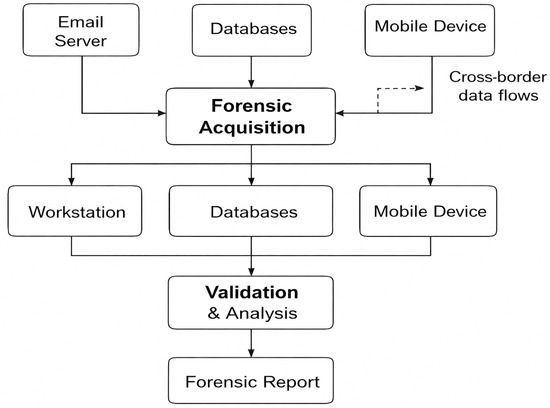
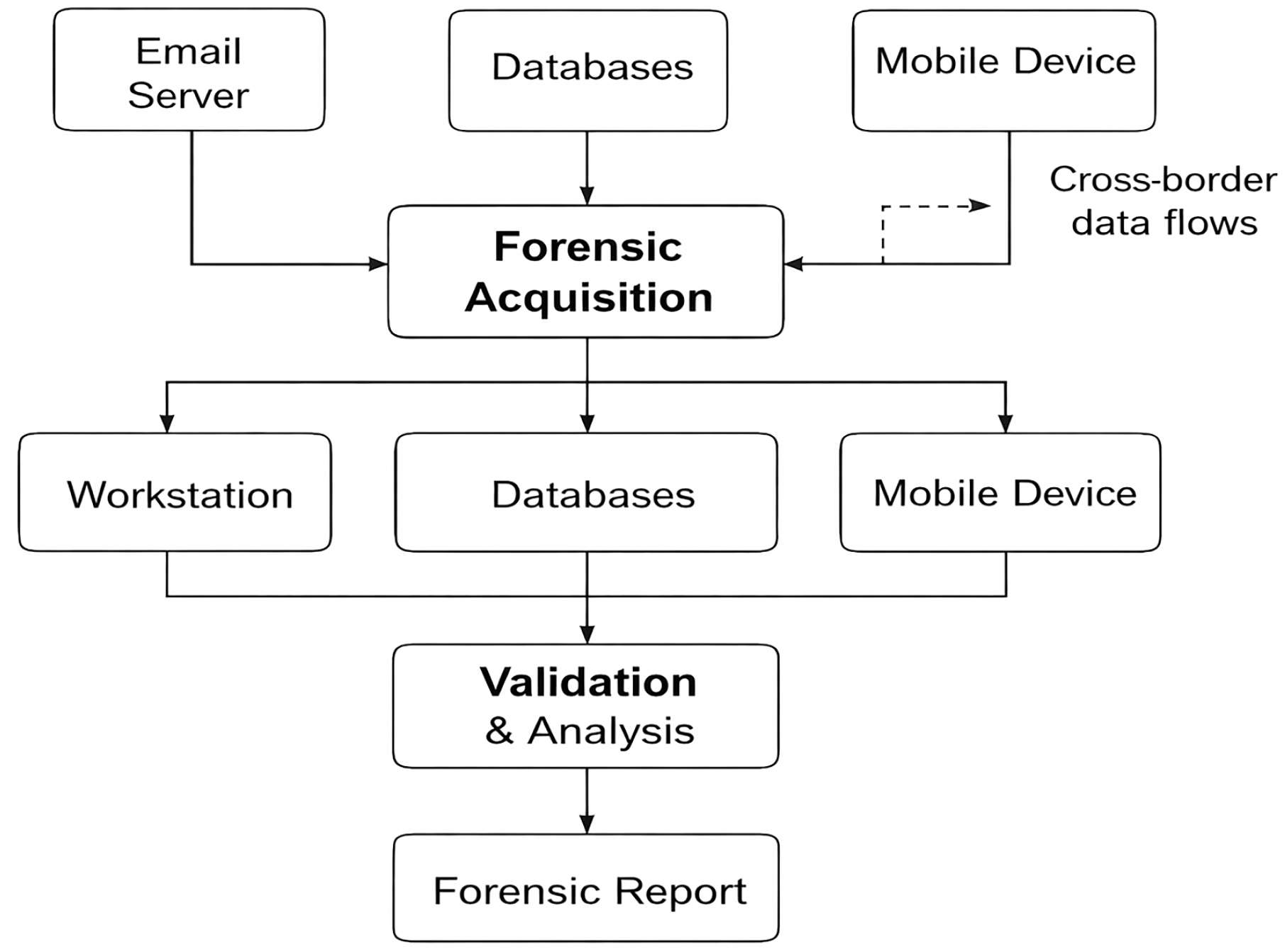
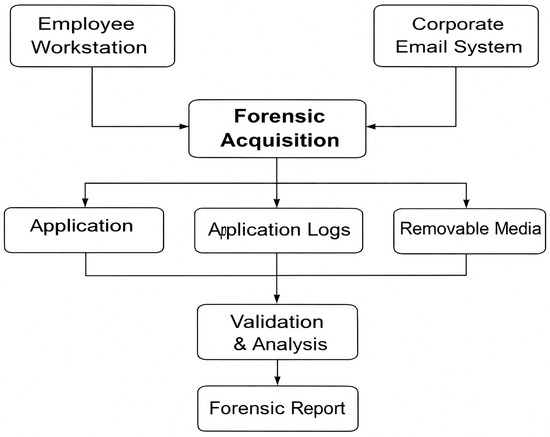
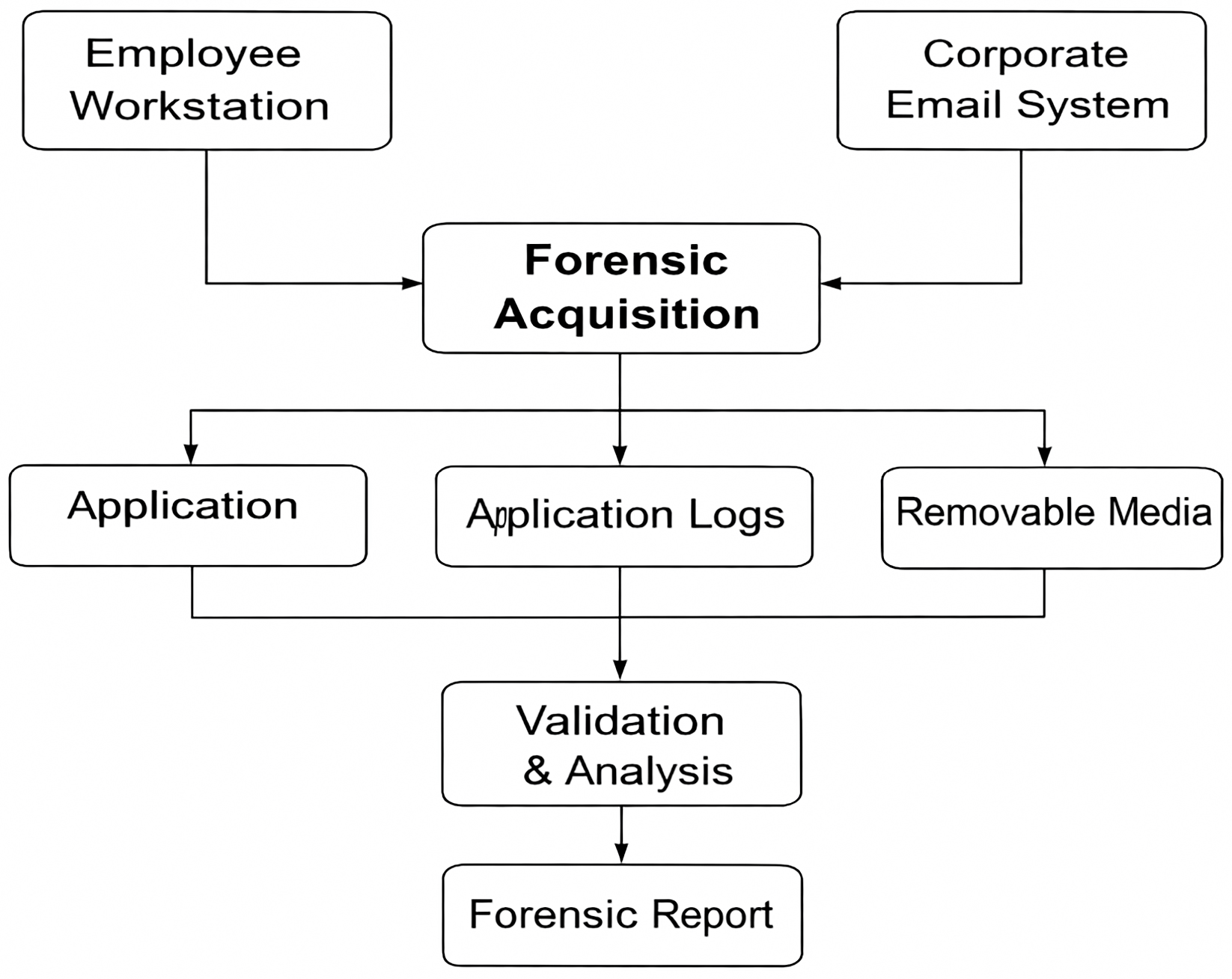
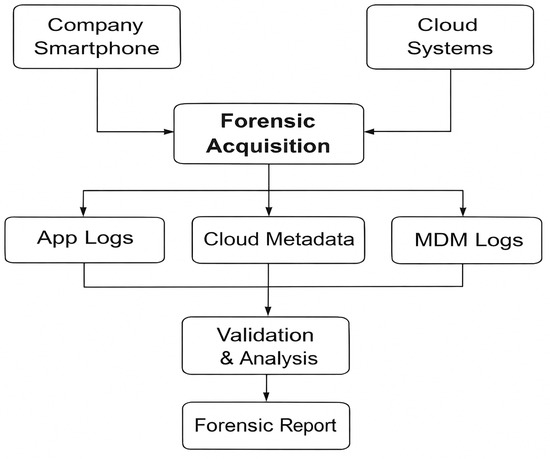
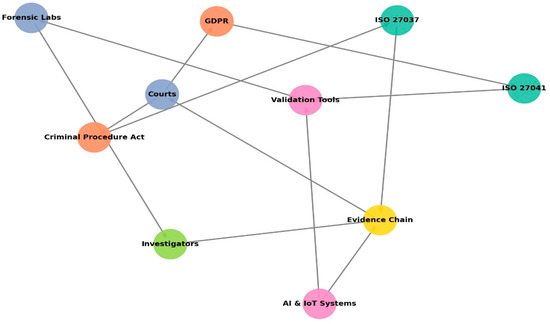

Disclaimer/Publisher’s Note: The statements, opinions and data contained in all publications are solely those of the individual author(s) and contributor(s) and not of MDPI and/or the editor(s). MDPI and/or the editor(s) disclaim responsibility for any injury to people or property resulting from any ideas, methods, instructions or products referred to in the content. |
© 2026 by the authors. Licensee MDPI, Basel, Switzerland. This article is an open access article distributed under the terms and conditions of the Creative Commons Attribution (CC BY) license.