Communication

Analysis of the Influence of Weak Stratum State on the Stability of Dip Slope and Anti-Dip Sides of Rock Foundation Pits

1
State Key Laboratory of Intelligent Construction and Healthy Operation and Maintenance of Deep Underground Engineering, China University of Mining and Technology, Xuzhou 221116, China
2
School of Architecture and Engineering, Nantong Vocational University, Nantong 226007, China
*
Author to whom correspondence should be addressed.
GeoHazards 2026, 7(3), 91; https://doi.org/10.3390/geohazards7030091

Submission received: 25 June 2026 / Revised: 22 July 2026 / Accepted: 23 July 2026 / Published: 25 July 2026

Abstract

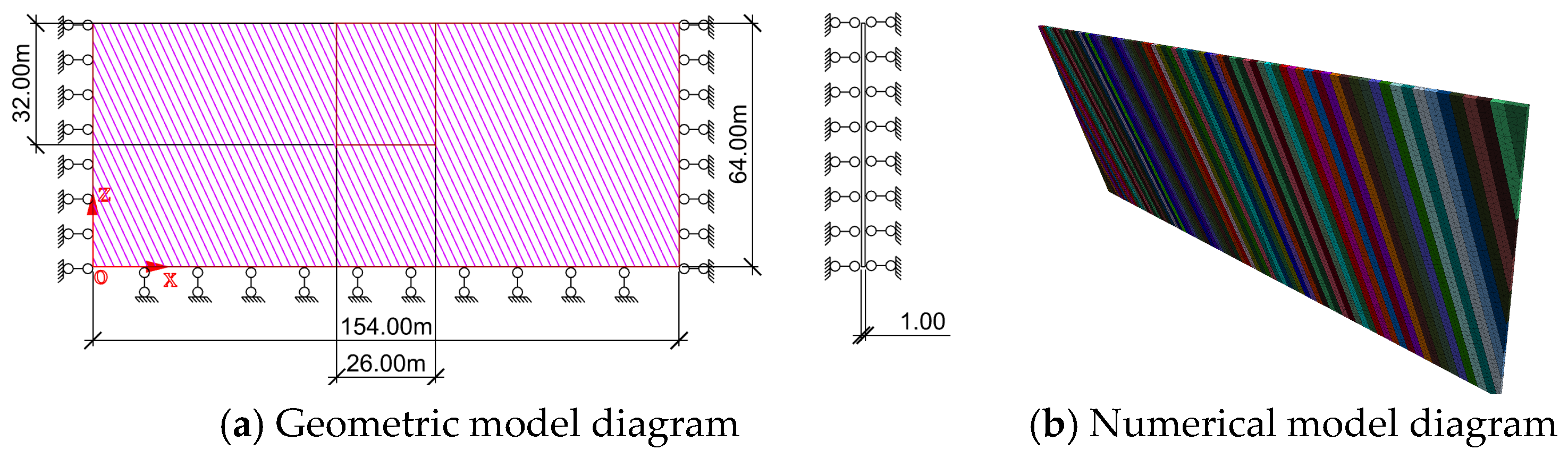
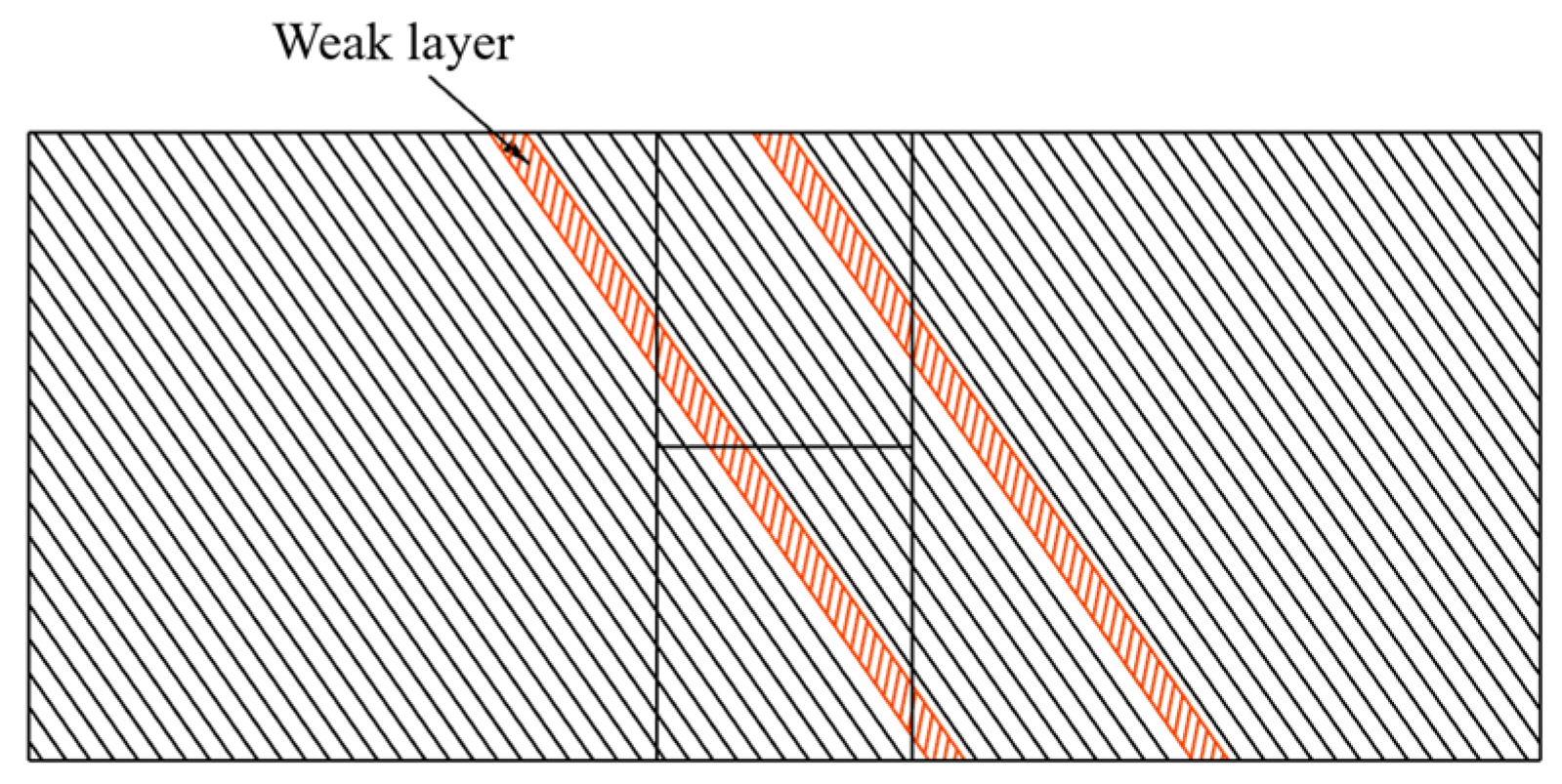
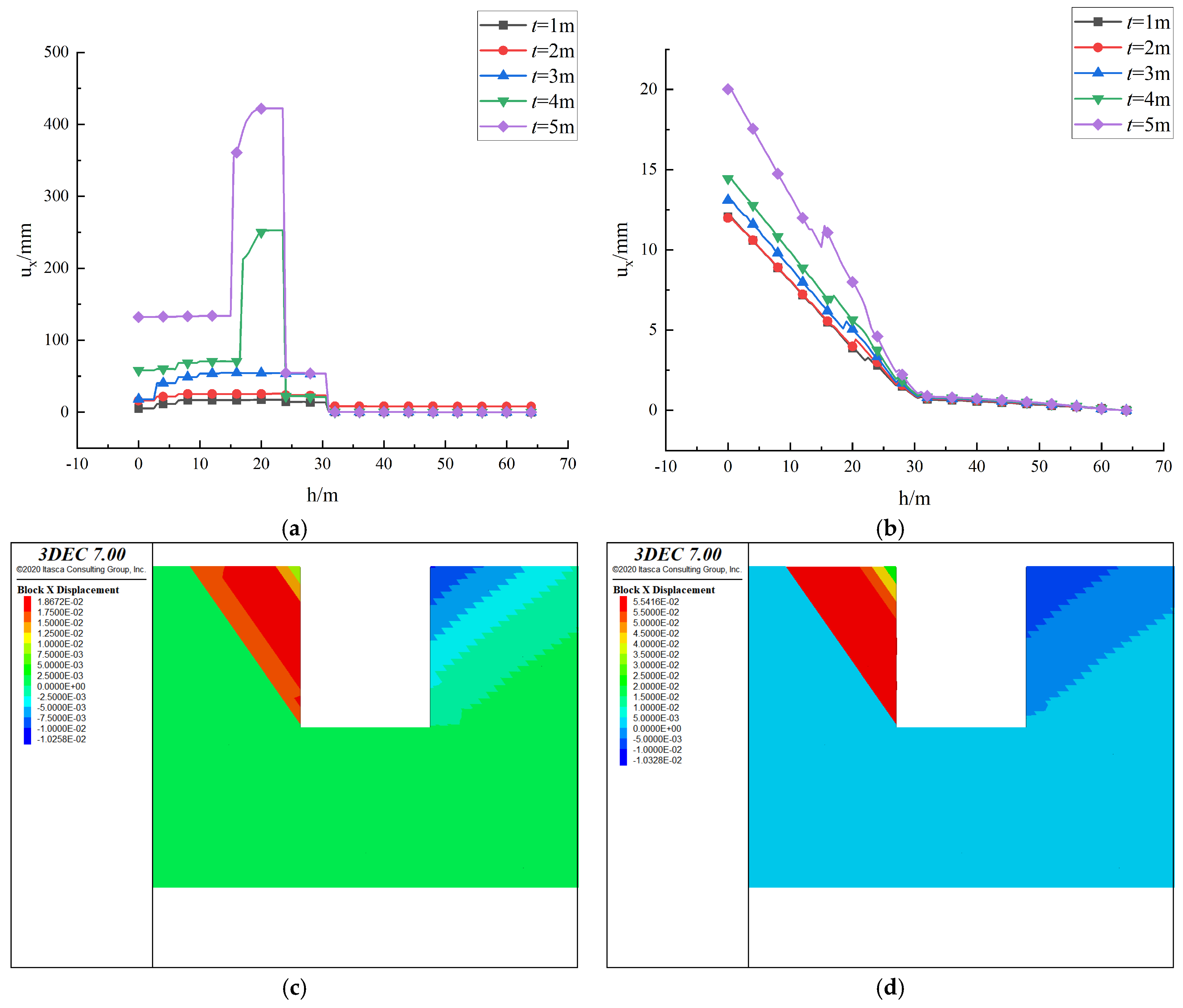
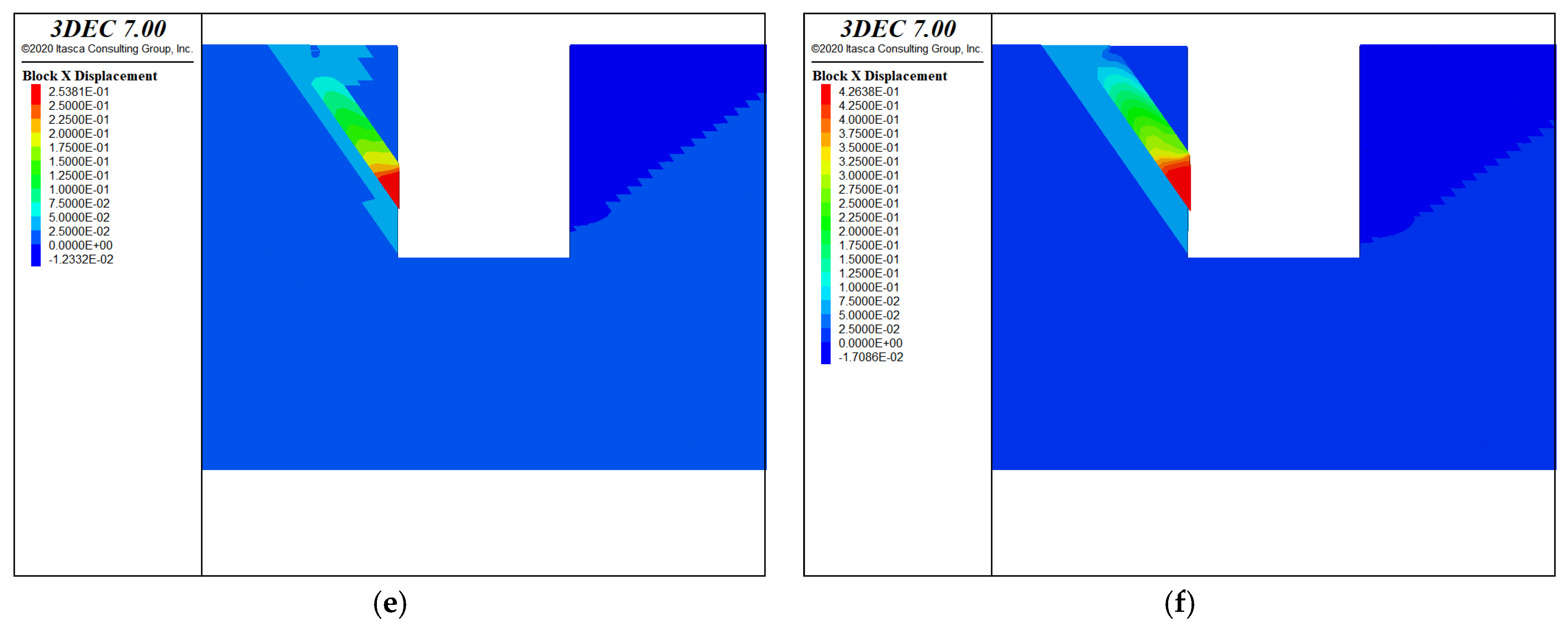
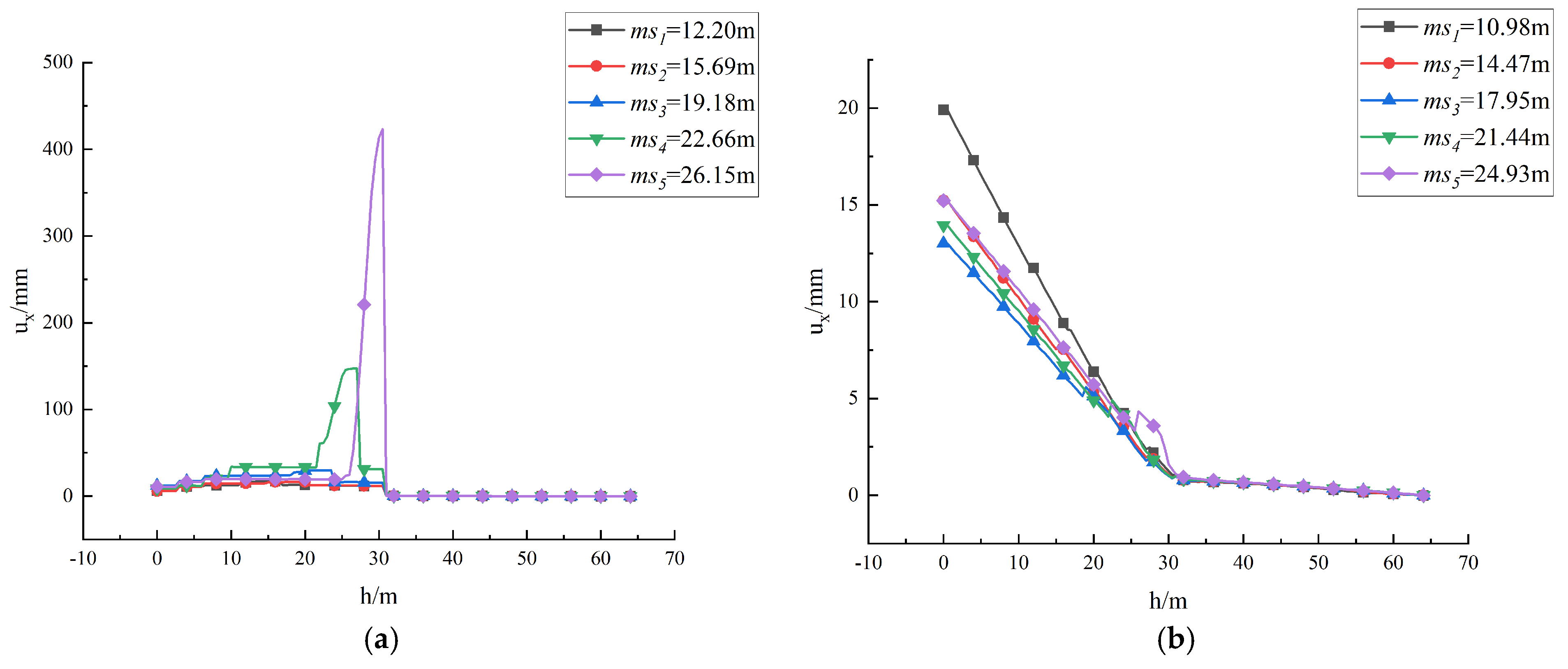
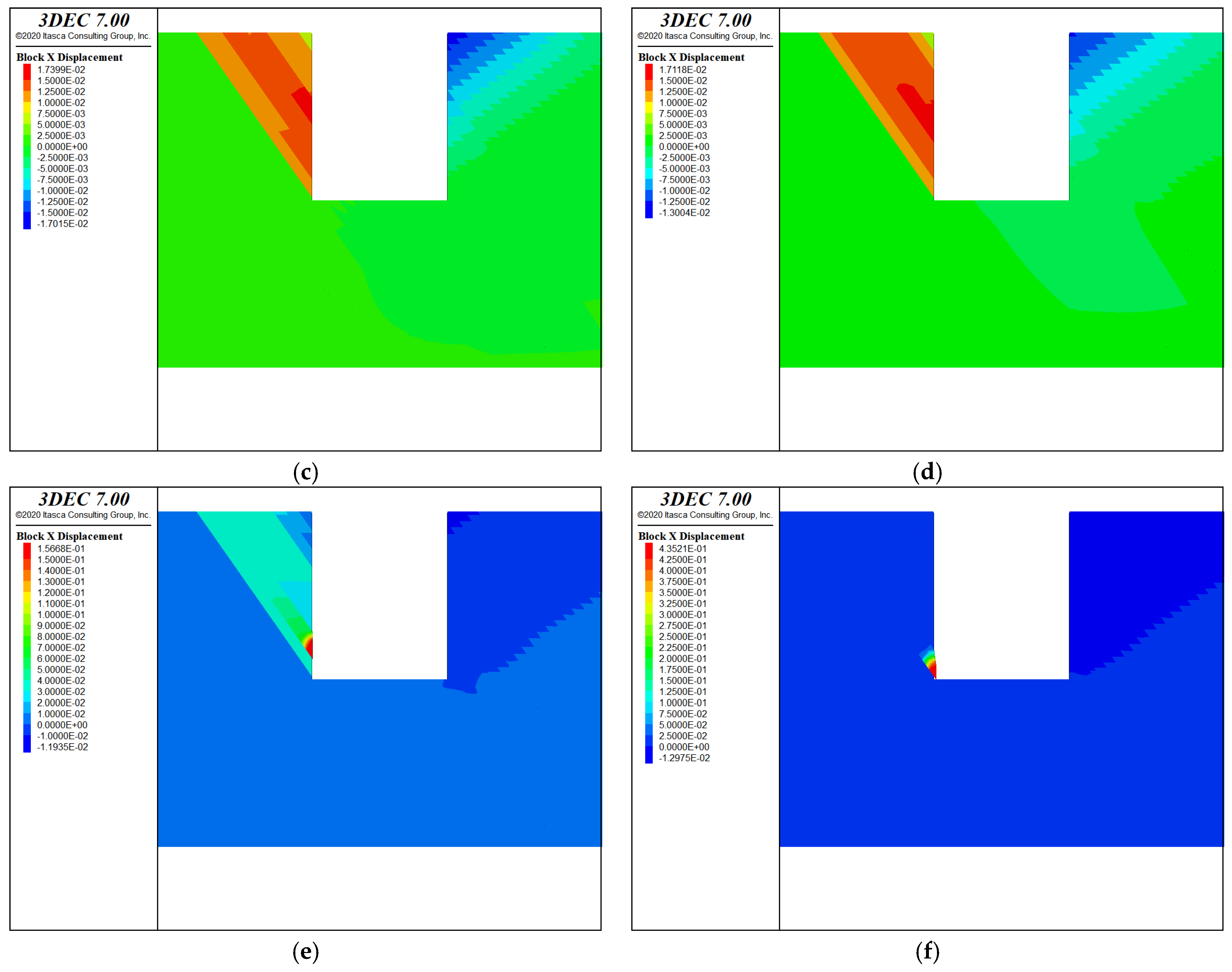
Based on urban subway foundation pit projects in typical limestone areas, this paper employs 3DEC numerical simulation to investigate the effects of the thickness and burial depth of weak interlayers on the deformation characteristics and stability of the dip slope and anti-dip sides of rock foundation pits. The results reveal asymmetric deformation responses between the two slope types. The anti-dip side undergoes bending and toppling deformation; the displacement within the weak interlayer is greater than that of the overlying rock mass, and the spatial position of the weak interlayer governs the maximum deformation of the anti-dip side. In comparison, the thickness and burial depth of the weak interlayer exert a significant influence on the horizontal displacement of the dip slope side. Two quantitative critical thresholds are identified: (1) an interlayer thickness threshold—when t ≥ 4 m, the extrusion displacement of the weak interlayer is distinctly larger than that of the adjacent hard rock, while t ≤ 3 m shows no obvious displacement difference due to the clamping effect of surrounding rock—and (2) a burial depth threshold—slope displacement rises sharply when interlayer burial depth reaches 22.66~26.15 m, while shallow-buried interlayers (12.20~19.18 m) only cause limited deformation. Additionally, the existence of weak interlayers leads to substantially larger displacement in the upper hard rock stratum relative to the lower stratum. These findings provide a reliable reference for the supporting optimization and stability design of rock foundation pits.
Keywords: weak interlayer; slope deformation; toppling failure; karst rock mass; pit supporting design weak interlayer; slope deformation; toppling failure; karst rock mass; pit supporting design