Article

Spatial and Magnitude Distribution of Seismic Events in Santorini Island, January–February 2025: Tectonic or Volcanic Earthquakes?


by
Alexandra Moshou
Civil Engineering Department, Polytechnic School, Democritus University of Thrace, Vas. Sofias 12, 67100 Xanthi, Greece
GeoHazards 2025, 6(4), 81; https://doi.org/10.3390/geohazards6040081

Submission received: 29 October 2025 / Revised: 5 December 2025 / Accepted: 7 December 2025 / Published: 12 December 2025
(This article belongs to the Special Issue Active Faulting and Seismicity—2nd Edition)

Abstract

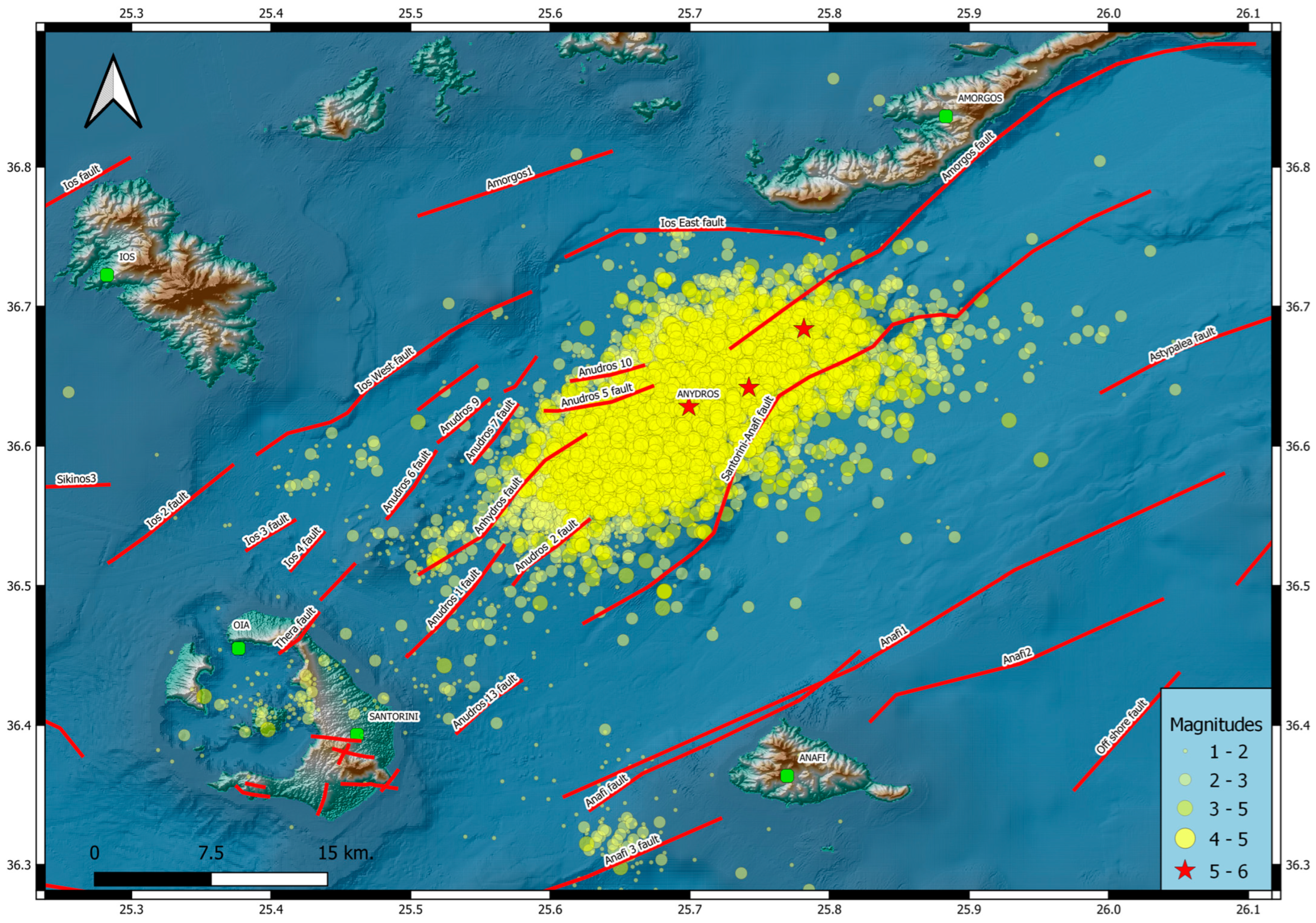
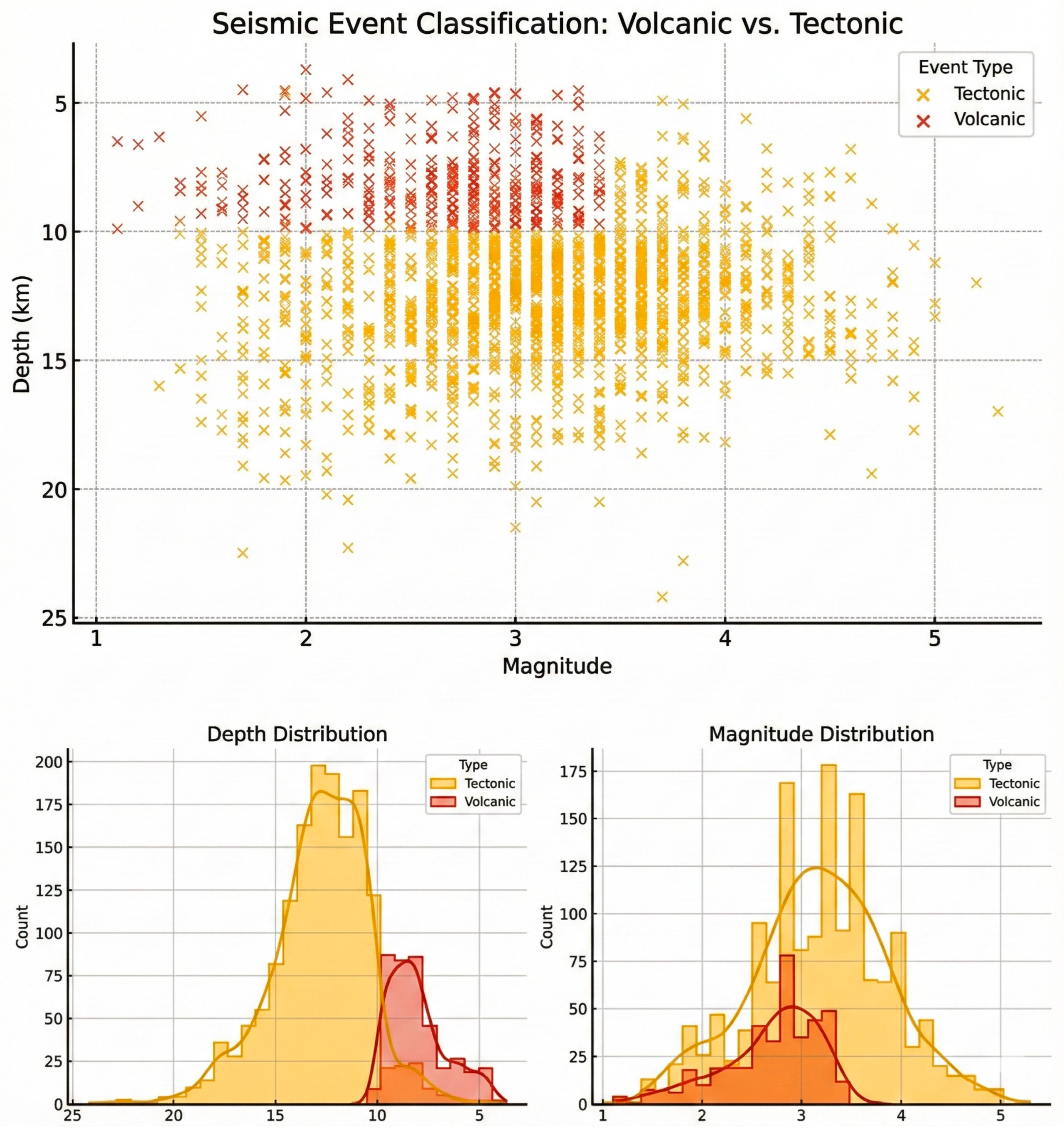
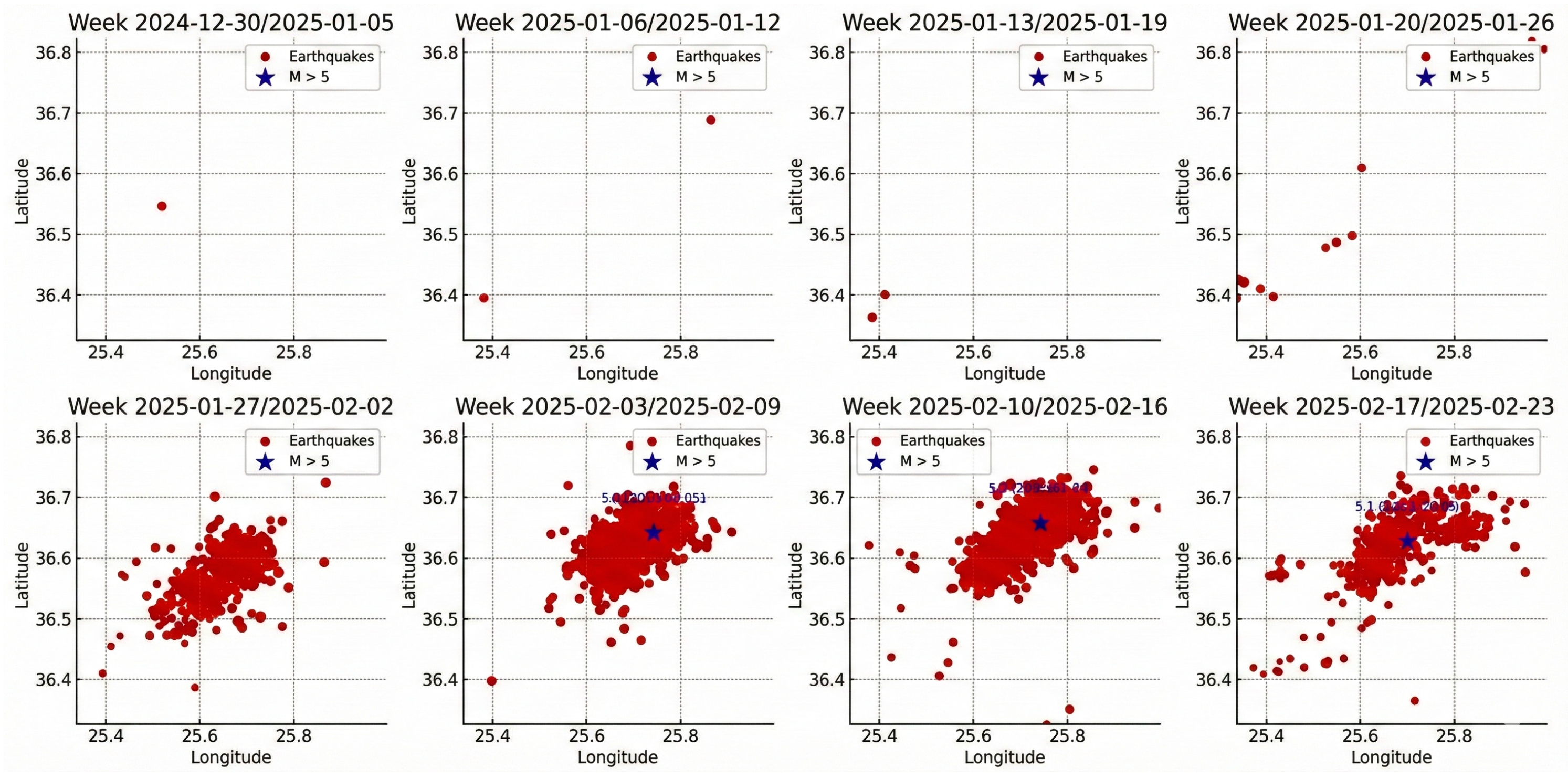
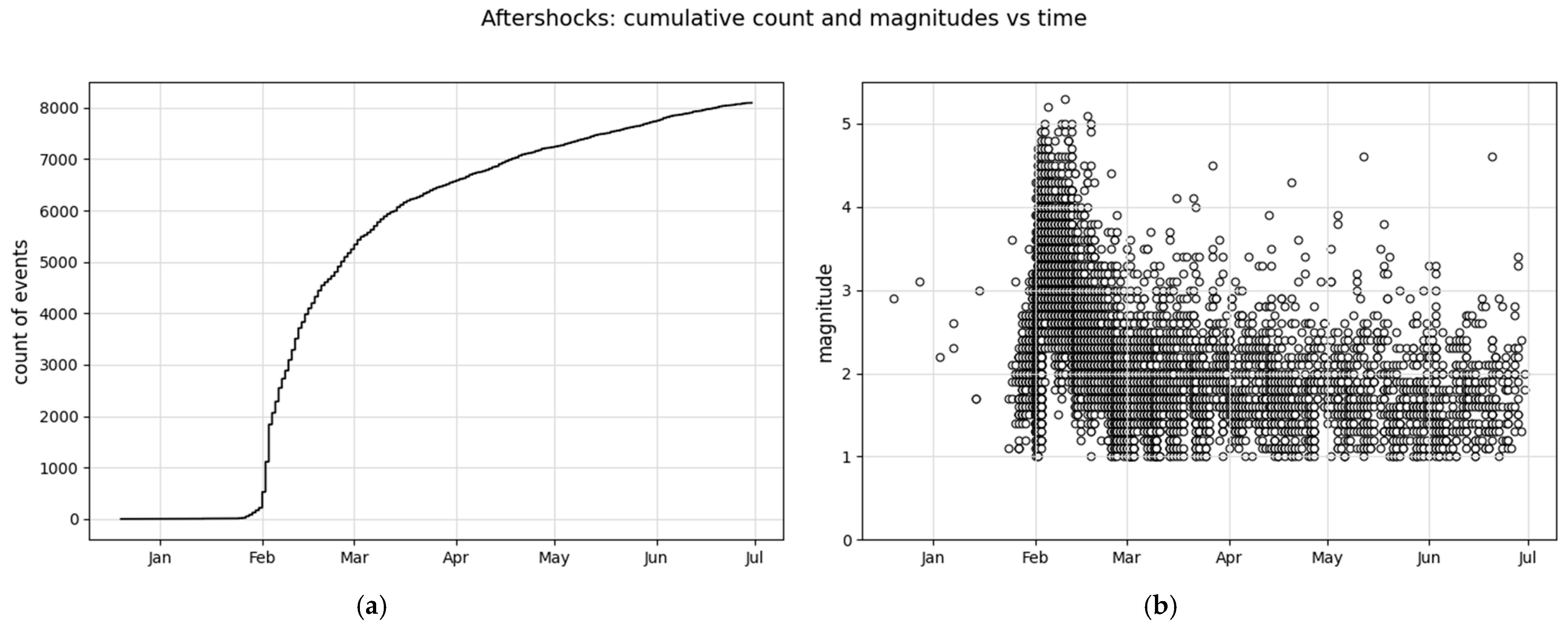
During January–February 2025, the Santorini volcanic complex experienced intense seismic activity, increasing interest and concern regarding the possible reactivation of the magmatic system. This study investigates the spatial and magnitude distribution of seismic events with the aim of distinguishing between tectonic and volcanic earthquakes and understanding the underlying processes governing seismicity in the region. The analysis is based on data from the national and local seismic network, including epicenter and focus determination, local magnitude (ML) calculation, depth analysis, statistical processing, and the application of machine learning methods for event classification. The results show that tectonic earthquakes are mainly located at depths, D > 8 km along active faults, while volcanic earthquakes are concentrated at shallower levels (D < 5 km) below the volcanic center. The analysis of b values suggests the differentiation of the focal mechanism, with higher values for volcanic events, which is related to fluid and magmatic pressure processes. The spatiotemporal evolution of seismicity demonstrates seismic swarm characteristics, without a main earthquake, which are attributed to processes within the subvolcanic system. The study contributes to improving the understanding of the current seismovolcanic crisis of Santorini and enhances the ability to identify magmatic instability processes in a timely manner, critical for hazard assessment and monitoring of the South Aegean volcanic arc.
Keywords: Santorini; seismic swarm 2025; tectonic and volcanic earthquakes; spatial distribution; volcano monitoring; machine learning Santorini; seismic swarm 2025; tectonic and volcanic earthquakes; spatial distribution; volcano monitoring; machine learning