Review

Recent Developments in the Catalytic Enantioselective Sakurai Reaction

by
Hélène Pellissier
Aix Marseille Univ., CNRS, Centrale Med, iSm2, Marseille, France
Reactions 2026, 7(1), 6; https://doi.org/10.3390/reactions7010006 (registering DOI)
Submission received: 18 December 2025 / Revised: 6 January 2026 / Accepted: 8 January 2026 / Published: 10 January 2026
(This article belongs to the Special Issue Feature Papers in Reactions in 2025)

Abstract

The Sakurai reaction constitutes a valuable tool for carbon–carbon bond formation. The use of nontoxic allylic reagents as well as the atom economy of the global process has prompted the development of enantioselective (aza)-variants based on the use of chiral organo- and metal catalysts. This review collects the recent developments in catalytic enantioselective Sakurai reactions published since the beginning of 2011, including methodologies based on the use of chiral organocatalysts, metal/boron catalysts and multicatalyst systems. It is divided into three parts, dealing successively with enantioselective organocatalytic (aza)-Sakurai reactions, enantioselective metal/boron-catalyzed Sakurai reactions and enantioselective multicatalyzed (aza)-Sakurai reactions. It shows that, although still widely developed with aromatic aldehydes, the enantioselective catalytic Sakurai reaction has considerably matured in the last decade.

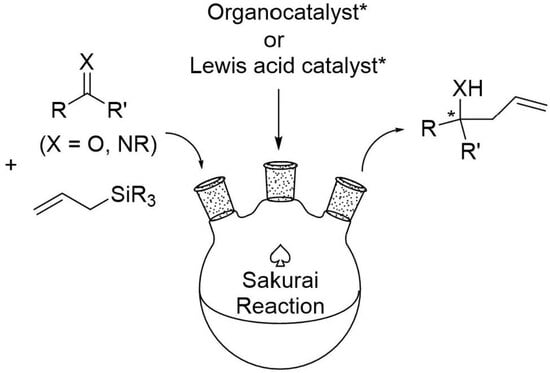
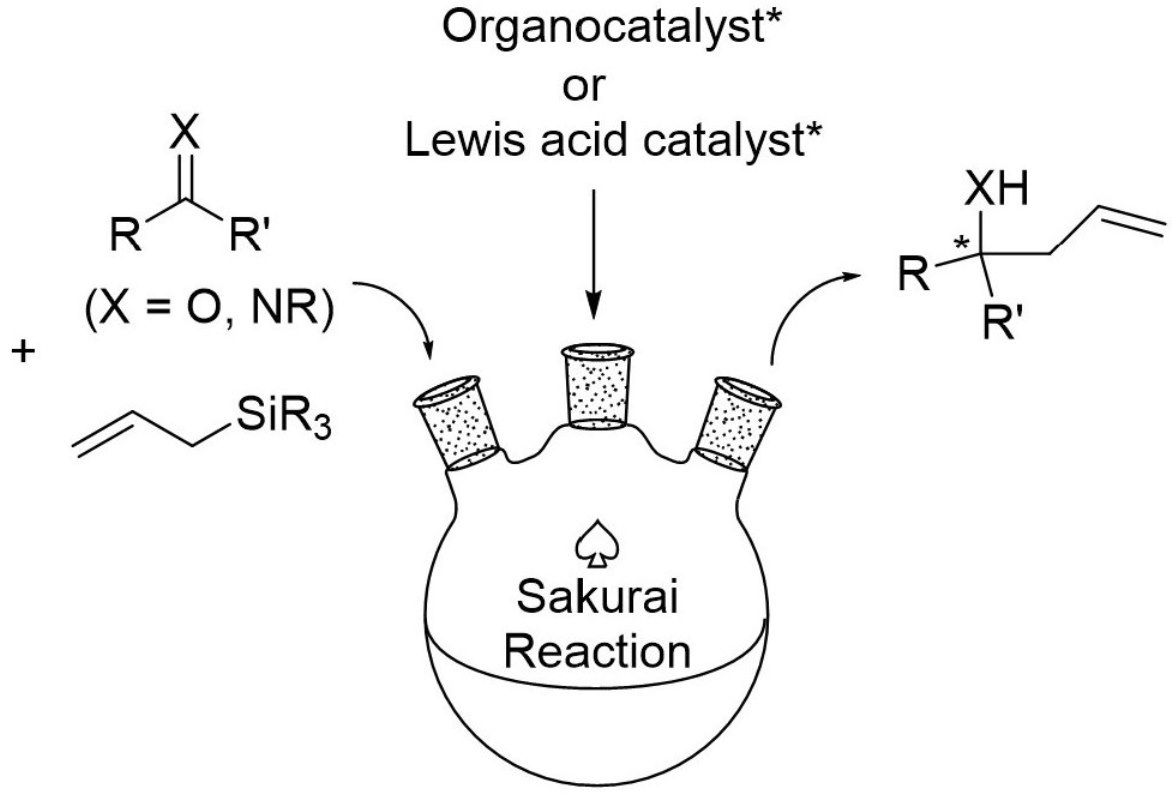
Graphical Abstract

1. Introduction

Reported in 1976 by Hosomi and Sakurai, the Hosomi-Sakurai allylation, commonly called the Sakurai reaction, deals with the allylation of carbonyl compounds and their derivatives with allylsilanes originally promoted by a strong Lewis acid, allowing direct access to homoallylic alcohols and their derivatives (Scheme 1) [1]. Many types of carbon electrophiles are compatible with reacting with various allylsilanes, spanning from aldehydes and ketones to acetals, ketals, aldimines, ketoimines, carboxylic acid chlorides, epoxides and α,β-unsaturated carbonyl compounds, among others [2,3,4,5,6]. In comparison with other allylating reagents, allylsilanes have several advantages, such as low cost, low toxicity, high air- and moisture-stability, high functional group compatibility and long storage period. The Sakurai reaction was originally promoted by Lewis acids, such as TiCl4, BF3‧OEt2, SnCl4 and EtAlCl2. As shown in the mechanism depicted in Scheme 1, a regiospecific transposition of the allyl moiety can be rationalized by the selective formation of a highly stabilized β-silylcarbocation intermediate through nucleophilic attack at the γ-carbon of the allylic system [7]. Along with Lewis acids, more environmentally benign Brønsted acids and Lewis base catalysts have been found to be efficient promoters of the Sakurai reaction, allowing useful and more valuable catalytic versions to be achieved [8]. Since the first asymmetric version reported by Herold and Hoffmann in 1978 based on the use of a camphor-derived chiral allylboronate reagent [9], the challenging development of catalytic enantioselective versions, avoiding the stoichiometric employment of expensive chiral auxiliaries [10], has been widely developed to gain access to chiral homoallylic alcohols [11,12,13,14]. These molecules constitute key building blocks in synthesis since they exhibit two functional groups (alkene and alcohol), which can separately participate in many types of synthetic transformations to afford a diversity of intermediates and complex molecules. The most developed catalytic enantioselective Sakurai reactions involved aldehydes as electrophilic partners. In general, these asymmetric processes are promoted by chiral Lewis acid catalysts, chiral Lewis base catalysts, or chiral Brønsted acid catalysts.
This review collects the major developments in enantioselective catalytic Sakurai reactions published since the beginning of 2011, since this field was reviewed the most recently that year by Yus and Foubelo, covering the literature up to 2010 [15]. Earlier, this field was updated by different authors, such as Denmark and Fu in 2003 [16], and Merino et al. in 2005 [17]. Moreover, it must be noted that in 2017, a report entitled “The remarkable journey of catalysts from stoichiometric to catalytic quantity for allyltrimethylsilane inspired allylation of acetals, ketals, aldehydes and ketones” was published by Chaskar et al., but it included only five references of enantioselective reactions [8]. Furthermore, in 2023, a review focusing on the Hosomi–Sakurai allylation in carbocyclization reactions was published by Cook and Stankevich, but it did not include any enantioselective catalytic works ≥ 2011 [18]. In 2025, Osei-Safo and Amewu published a report entitled “The application of Hosomi-Sakurai allylation reaction in total synthesis of biologically active natural products”, but it only dealt with diastereoselective noncatalytic reactions [19]. The present review is divided into three parts, dealing successively with enantioselective organocatalytic Sakurai reactions, enantioselective Sakurai reactions promoted by metal/boron chiral Lewis acid catalysts and enantioselective multicatalyzed Sakurai reactions.

2. Enantioselective Organocatalytic (Aza)-Sakurai Reactions

2.1. N-Oxide Catalysts in Enantioselective Sakurai Reactions of Aldehydes

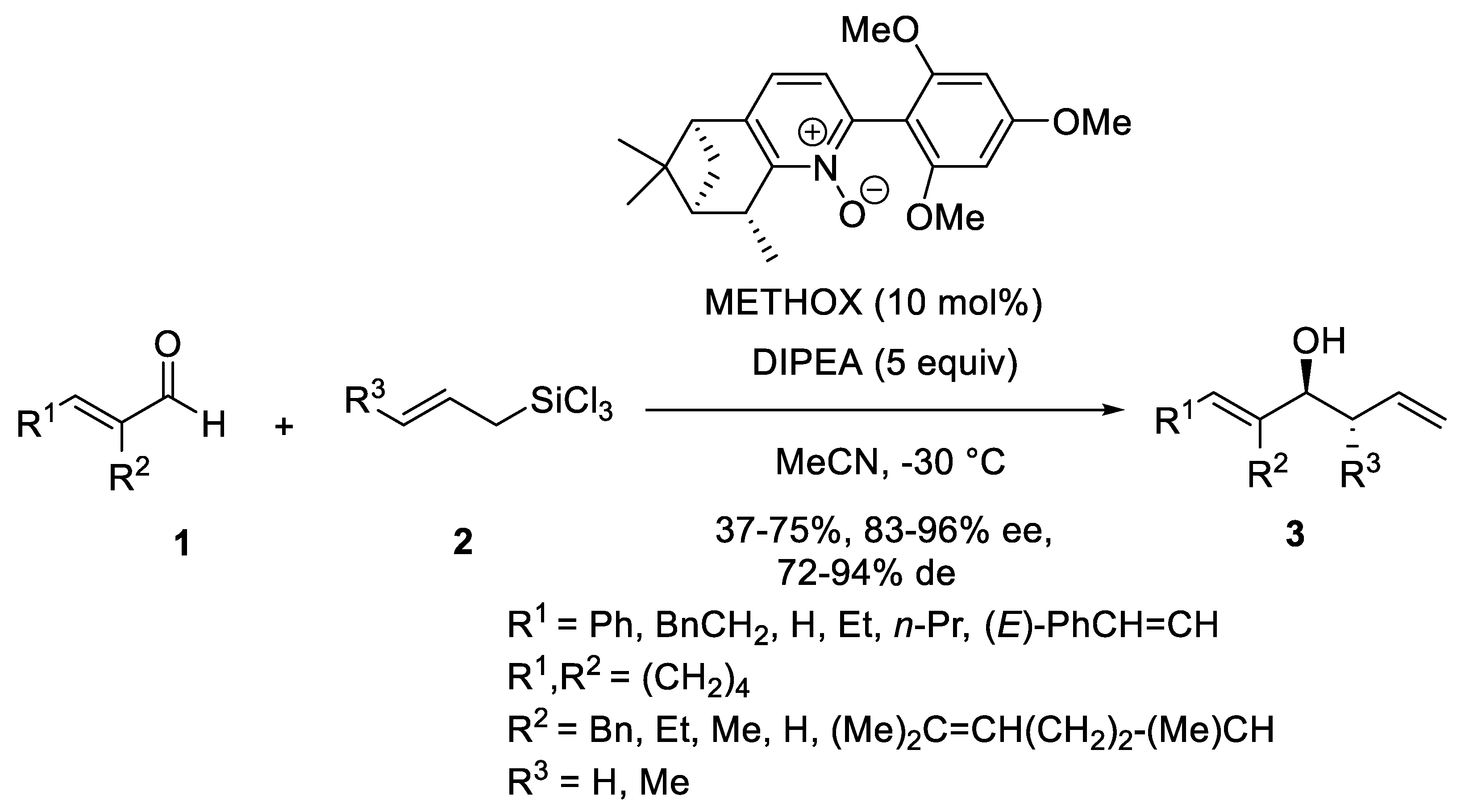
In 1993, Kobayashi et al. reported the first use of a Lewis base, such as DMF, as a promoter in the allylation of aldehydes with allyltrichlorosilanes, evolving through hypervalent silicon intermediates [20]. Later in 1994, Denmark et al. developed the first enantioselective version of this reaction, which was based on the use of a chiral phosphoramidate as Lewis base [21]. Ever since, different types of chiral Lewis base systems have been successfully applied to catalyze these reactions, including chiral phosphoramides, phosphine oxides, sulfoxides, formamides, ureas and N-oxides, among others. In 1998, Nakajima et al. reported the first use of chiral heterocyclic N-oxide catalysts as Lewis bases in enantioselective Sakurai reactions of aldehydes through the activation of allyltrichlorosilane [22]. This was based on the coordination of a N,N′-dioxide catalyst, acting as a Lewis base, to a tetracoordinated silicon atom. This increased the Lewis acidity of the hypervalent silicon center, thus becoming a highly reactive carbon nucleophile. Ever since, various types of N-oxide catalysts have been developed, such as N,N’-dioxides with two pyridine moieties bearing a stereogenic axis, N-oxides incorporated into a pyridine ring within a chiral framework and N-oxides included in a pyrrolidine or a piperidine ring. Especially, chiral pyridine N-oxides, such as readily available terpene-derived METHOX [23], constitute highly efficient catalysts for the asymmetric allylation of aromatic aldehydes with allylic trichlorosilanes. However, the use of this organocatalyst and related N-monoxides remained limited to aromatic aldehydes for a long time. In 2011, Malkov and Kočovský extended the use of METHOX to the allylation of α,β-unsaturated aldehydes 1 with allyltrichlorosilane 2a (R3 = H) (Scheme 2) [24]. The reaction was performed at −30 °C in acetonitrile in the presence of 10 mol% of METHOX and five equivalents of DIPEA to give the corresponding chiral homoallylic alcohols 3 with moderate to good yields (37–75%) and uniformly high ee values (83–96% ee). A range of various aldehydes was tolerated, including α-branched (R2 = Me, R1,R2 = (CH2)4) and α-methylene (R1 = H, R2 = Et, Bn) ones, which reacted with 83–93% ee and 88–89% ee, respectively. Moreover, the crotylation of aldehyde 1a (R1 = n-Pr, R2 = H) with crotyltrichlorosilane 2b (R3 = Me) gave rise to the expected anti-product 3b as a nearly single diastereo-(94% de) and enantiomer (96% ee). Interestingly, the catalyst could be recovered in all the reactions.
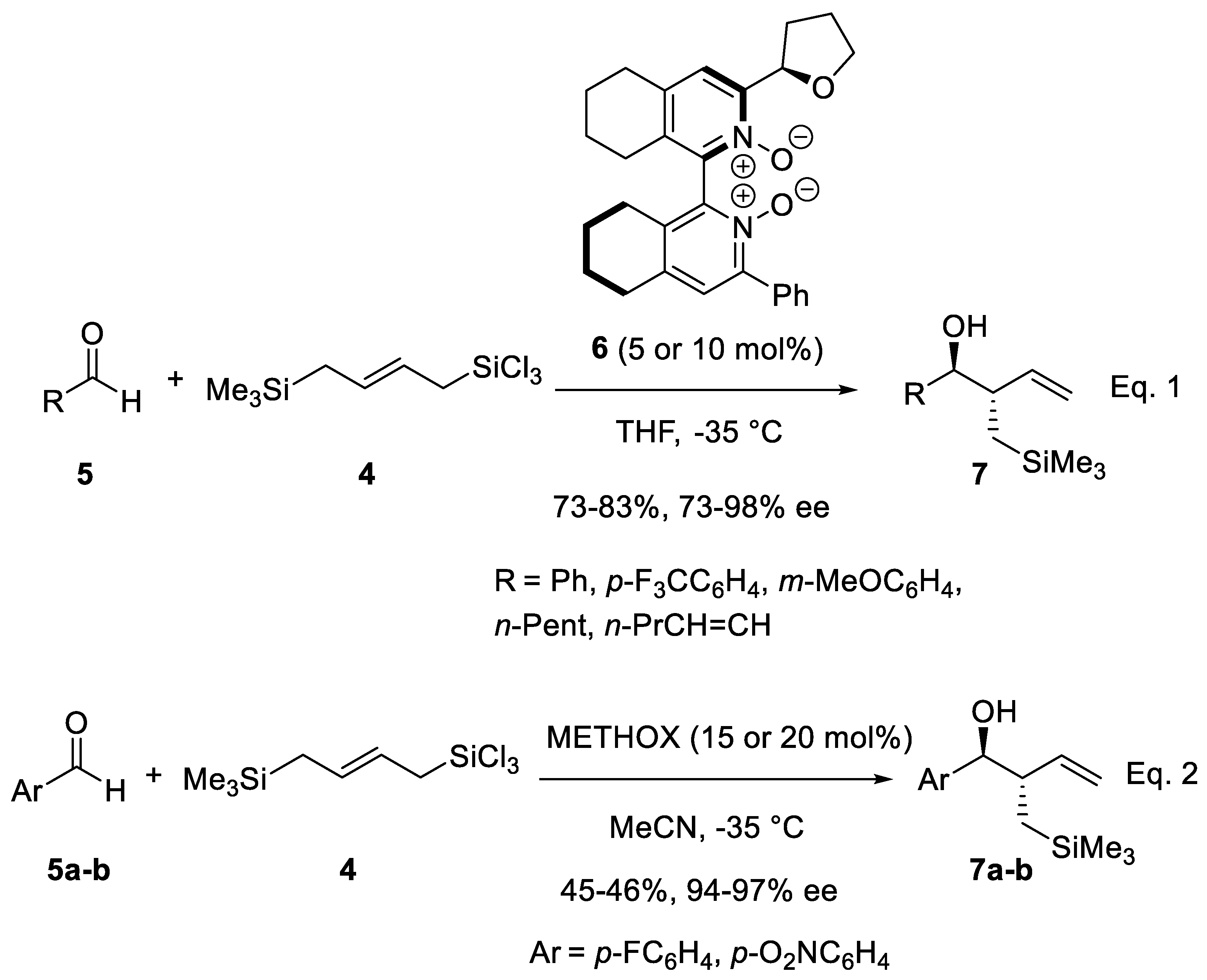
Simultaneously, these authors introduced bifunctional allyldisilane 4 to be condensed on a variety of aldehydes 5 [25]. This was achieved by using 5 or 10 mol% of chiral N,N‘-dioxide catalyst 6 in THF at −35 °C, delivering the corresponding chiral homoallylic alcohols 7 as single diastereomers with both good to high yields (73–83%) and ee values (73–98% ee), as illustrated in Scheme 3 (Equation (1)). Surprisingly, along with aromatic aldehydes, which reacted with 77–79% ee, aliphatic aldehydes also provided the desired Sakurai products with even higher enantioselectivities (73–98% ee). In the case of aromatic aldehydes 5a-b, bearing nitro or fluoride group on the phenyl ring, the authors employed 15 or 20 mol% of METHOX as a catalyst instead of catalyst 6 (Scheme 3, Equation (2)). The reaction performed in acetonitrile as solvent afforded chiral products 7ab in moderate yields (45–46%) combined with excellent enantioselectivities (94–97% ee), but it required seven days to reach completion.
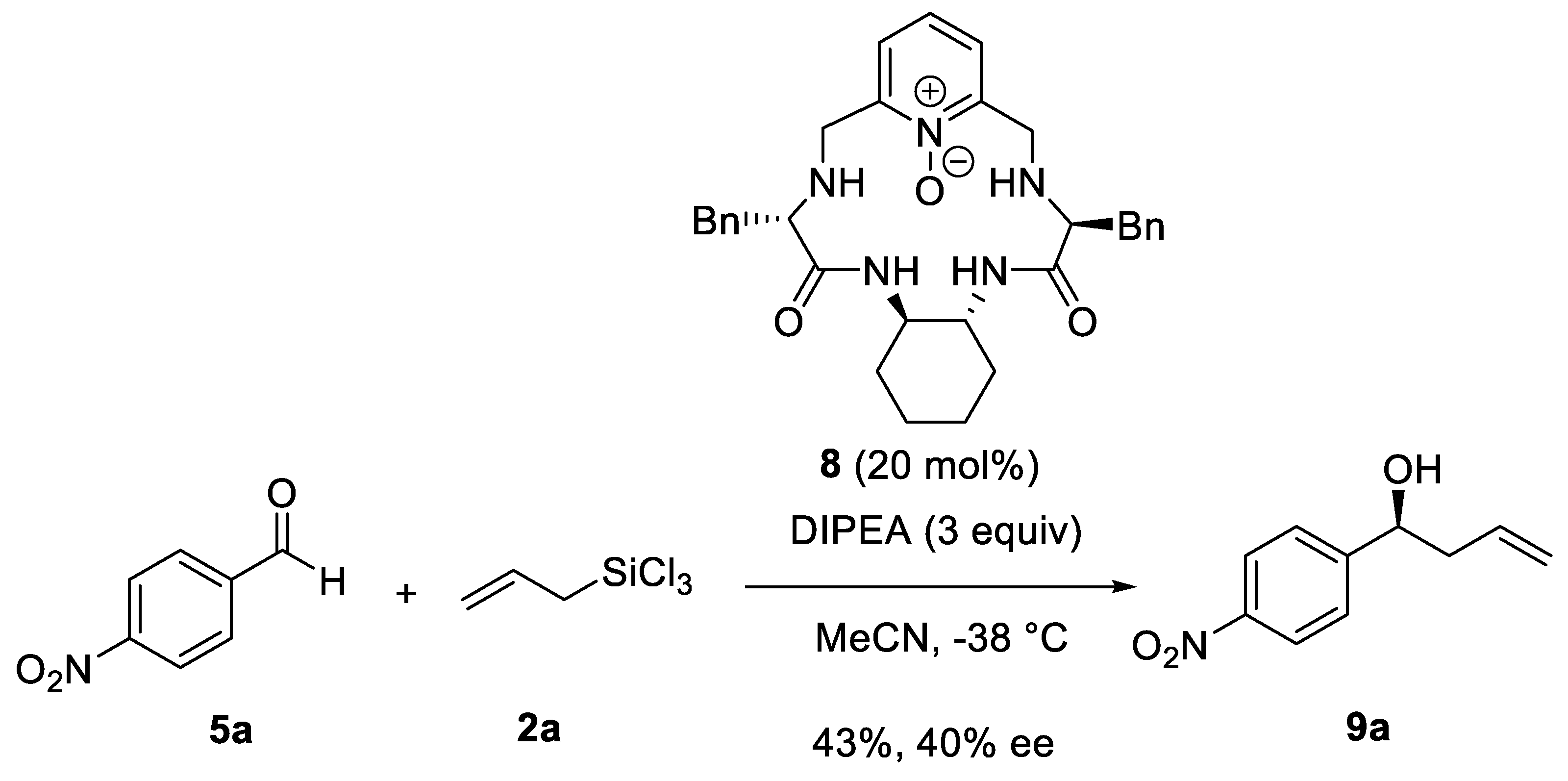
In 2011, Veitia and Ferroud described the synthesis of novel chiral azapyridinomacrocycle N-oxides to be investigated in the enantioselective allylation of p-nitrobenzaldehyde 5a with allyltrichlorosilane 2a [26]. Among these macrocyclic organocatalysts, chiral catalyst 8 was selected as an optimal promoter when employed at 20 mol% of catalyst loading in acetonitrile as solvent (Scheme 4). The reaction carried out at −38 °C in the presence of three equivalents of DIPEA as superstoichiometric additive afforded chiral homoallylic alcohol 9a with 43% yield and 40% ee.
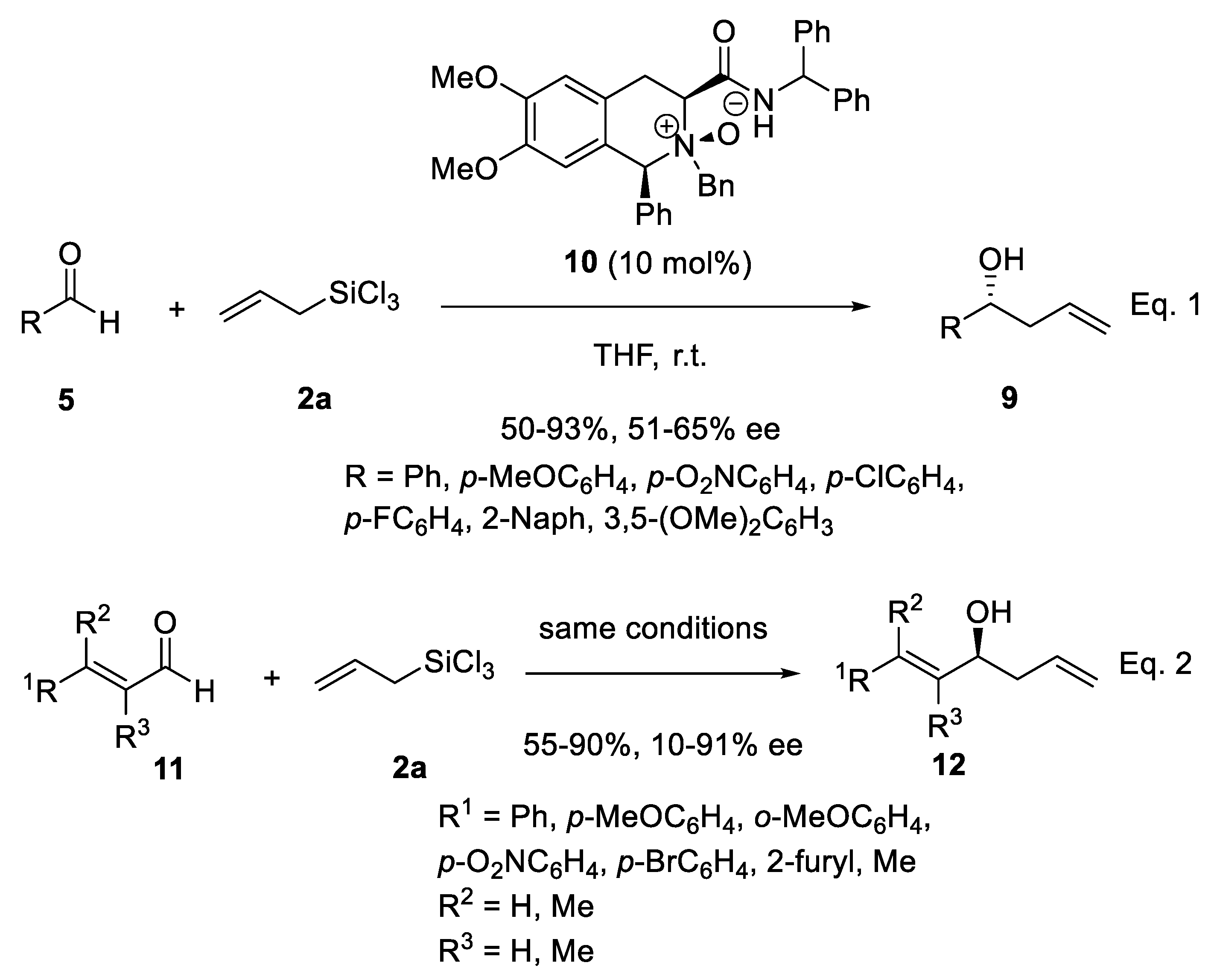
In the same year, Govender et al. introduced a novel class of N-oxide chiral catalysts derived from the tetrahydroisoquinoline backbone (Scheme 5) [27]. These organocatalysts constituted rare examples of monodentate N-oxides bonded to an sp3 nitrogen atom. Among them, optimal catalyst 10 was applied to promote, at 10 mol% of catalyst loading, the enantioselective allylation of aromatic aldehydes 5 with allyltrichlorosilane 2a in THF as solvent. Remarkably, the reaction occurred at room temperature, leading to chiral homoallylic alcohols 9 with moderate to high yields (50–93%) and uniformly moderate enantioselectivities (51–65% ee), as shown in Scheme 5 (Equation (1)). Upon increasing the steric hindrance of the aromatic aldehydes, the configuration of the corresponding products changed from R (with R = Ph, p-MeOC6H4, p-O2NC6H4, p-ClC6H4, p-FC6H4) to S (with Ar = 2-Naph, 3,5-(MeO)2C6H3). While the catalyst was found sensitive to steric hindrance, the electronic nature of the aromatic substituents was found to have a low impact on the enantioselectivity of the reaction (51–65% ee). The scope of this methodology could be extended to other types of aldehydes, such as α,β-unsaturated aldehydes 11 (Scheme 5, Equation (2)). Under the same conditions, cinnamaldehyde 11a (R1 = Ph, R2 = R3 = H) reacted with allyltrichlorosilane 2a to afford homoallylic alcohol (S)-12a with both a high yield (85%) and enantioselectivity (91% ee). A series of other aromatic α,β-unsaturated aldehydes 11, including either electron-withdrawing or electron-donating substituents on the phenyl ring, were also compatible, leading to the corresponding products (S)-12 with uniformly high yields (82–90%), albeit combined with moderate enantioselectivities (30–51% ee), as presented in Scheme 5. It was found that only a few changes in the structure of the substrate resulted in a dramatic drop in the enantioselectivity of the reaction, thus demonstrating once again that the catalyst system was highly sensitive to steric variations. In addition, an aliphatic α,β-unsaturated aldehyde 11b (R1 = Me, R2 = R3 = H) underwent the reaction to provide the desired product with a moderate yield (65%) and a low enantioselectivity (10% ee).
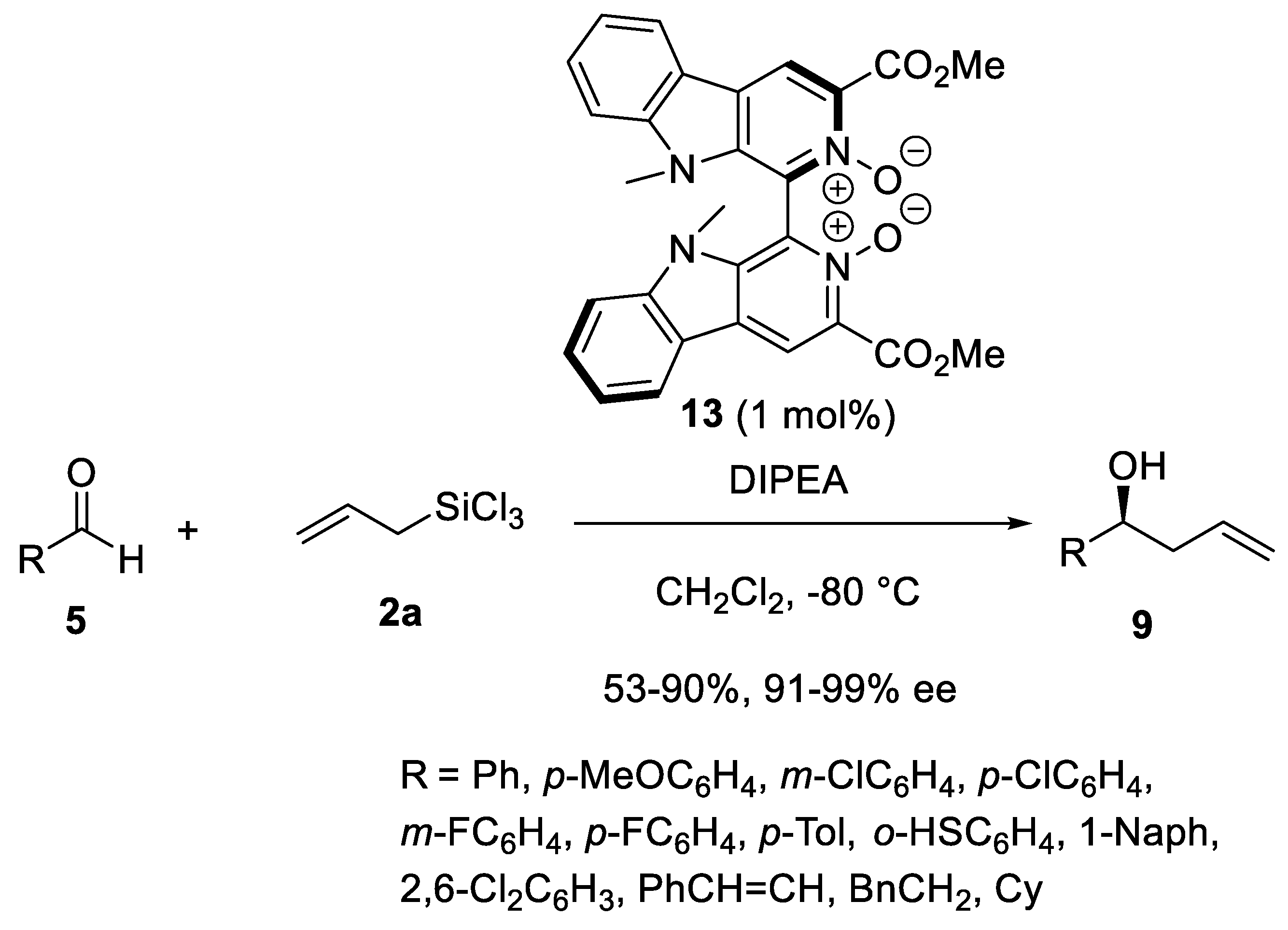
Later in 2012, novel axially chiral 1,1’-biscarboline N,N’-dioxide 13 was developed by Zhu et al. to be investigated in enantioselective Sakurai reactions of aldehydes 5 with allyltrichlorosilane 2a (Scheme 6) [28]. This catalyst was found to be highly efficient since it allowed uniformly excellent enantioselectivities (91–99% ee) to be achieved when employed at only 1 mol% of catalyst loading in dichloromethane as solvent. Indeed, the asymmetric allylation of a variety of aromatic as well as aliphatic aldehydes performed at −80 °C afforded the corresponding chiral homoallylic alcohols 9 with moderate to high yields (53–90%) and enantioselectivities over 96% ee in most cases of aldehydes. Remarkably, the reaction of aliphatic aldehydes also provided very high ee values (91–97% ee) associated with moderate to high yields (53–90%).
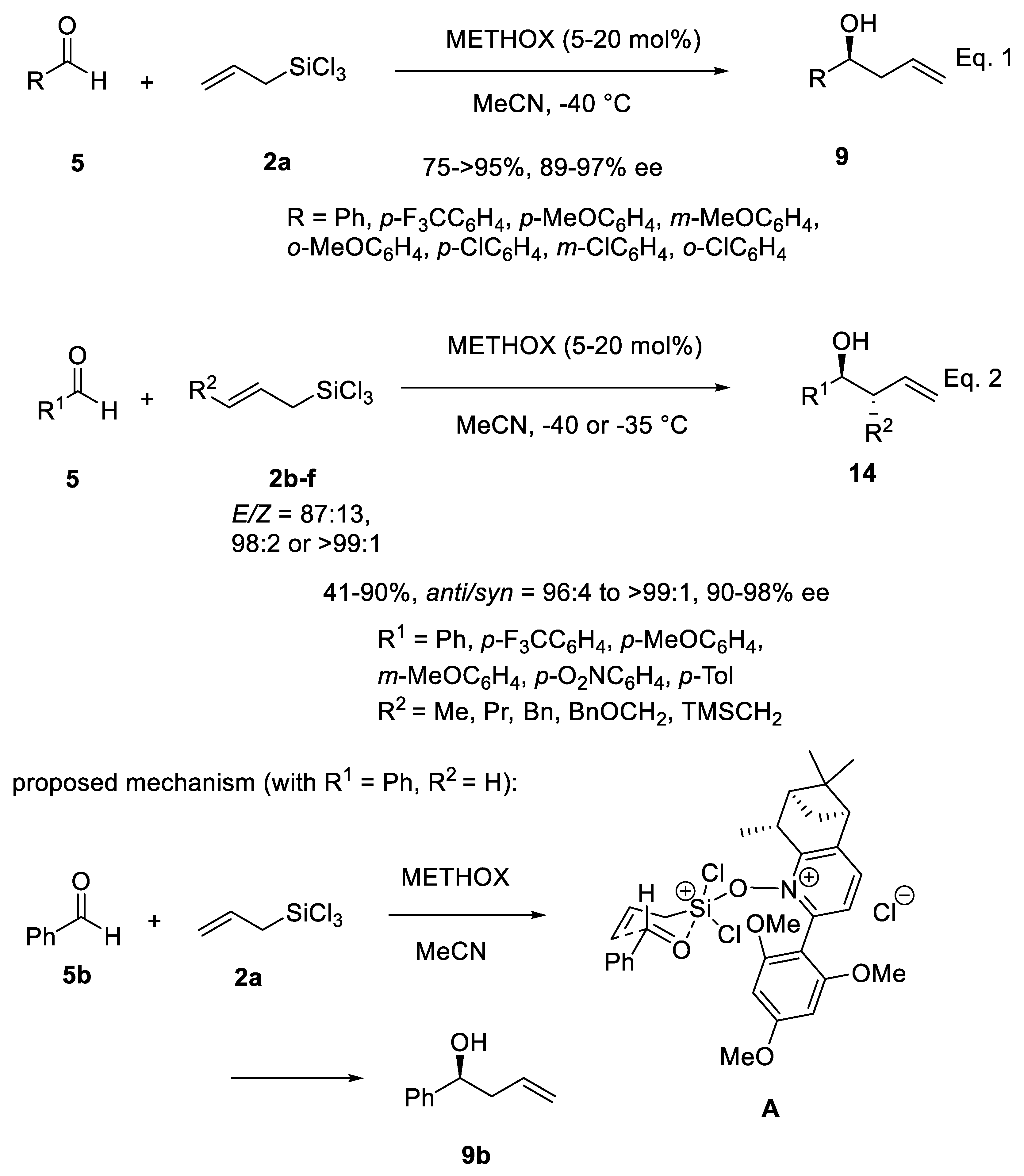
In 2013, Malkov and Kočovský investigated the use of METHOX catalyst in the enantioselective allylation and crotylation of benzaldehydes 5 with allyltrichlorosilanes 2 [29]. The reactions were performed in acetonitrile as solvent in the presence of 5–20 mol% of the catalyst. As presented in Scheme 7 (Equation (1)), the asymmetric allylation of various aromatic aldehydes 5 with allyltrichlorosilane 2a catalyzed by 5 mol% of METHOX at −40 °C led to the corresponding chiral products 9 with both high yields (75- > 95%) and enantioselectivities (89–97% ee). The enantioselective crotylation of benzaldehydes 2 with mixtures of (E)-crotyltrichlorosilanes 2bf was promoted by 5–20 mol% of the same catalyst at −40 or −35 °C, delivering the corresponding chiral homoallylic alcohols 14 as almost single anti-diastereomers (anti/syn = 96:4 to >99:1) with moderate to high yields (41–90%) and uniformly excellent ee values (90–98% ee), as shown in Scheme 7 (Equation (2)). The catalyst was found to exhibit a strong kinetic preference towards the (E)-crotyltrichlorosilane of the starting (E)- and (Z)-mixtures (E/Z = 87:3 to >99:1). On the basis of computational and kinetic studies, the authors proposed that the allylation evolved through a dissociative pathway involving the cationic pentacoordinated silyl intermediate A depicted in Scheme 7.
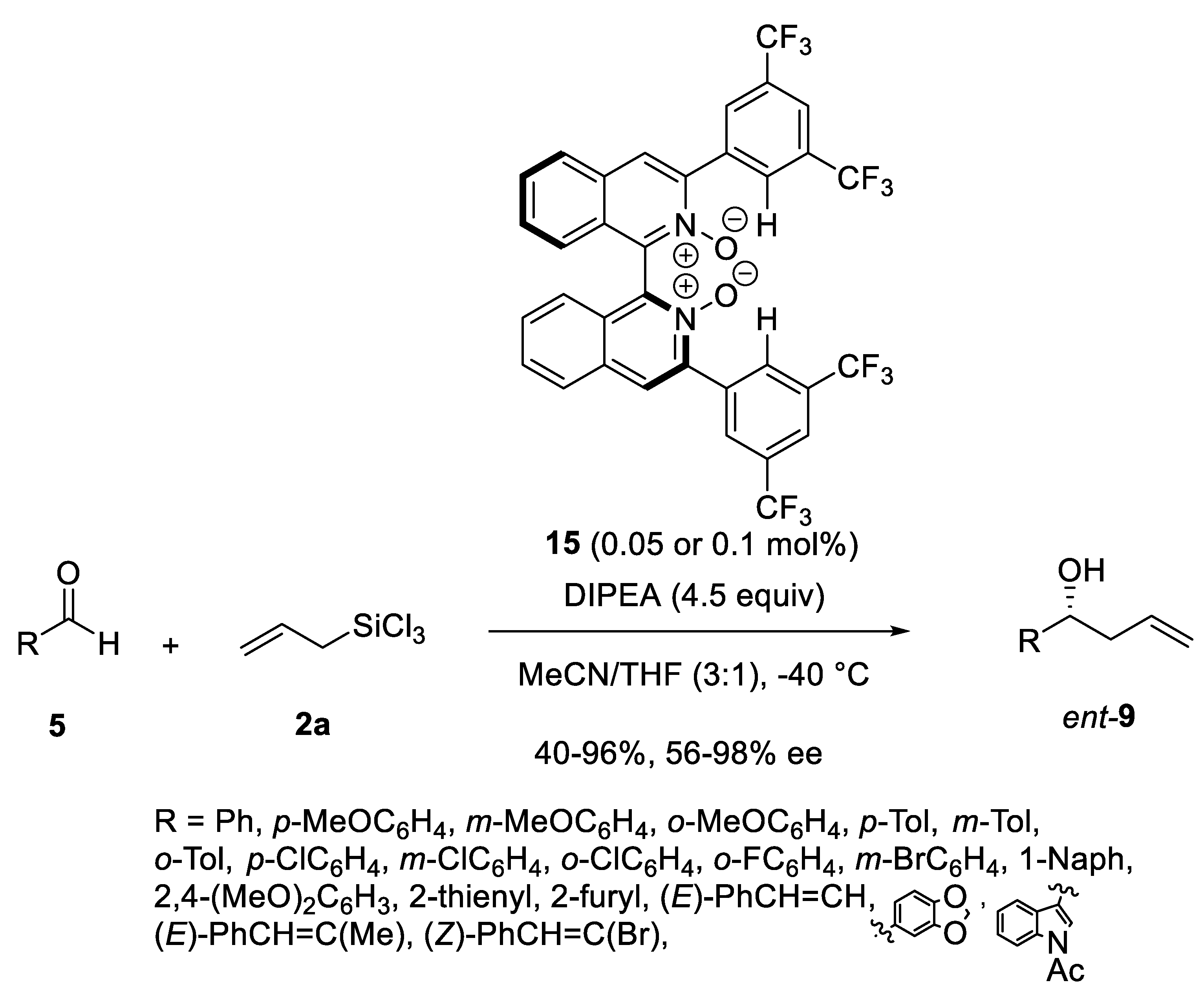
Later in 2018, Peverati and Takenaka designed novel axially chiral biisoquinoline N,N’-dioxides bearing polar aromatic C-H bonds as Lewis bases [30]. The latter species were investigated in the enantioselective allylation of a diversity of aldehydes 5 with allyltrichlorosilane 2a performed at −40 °C in a 3:1 mixture of acetonitrile and THF as solvent. Among these Lewis base catalysts, N,N’-dioxide 15 was found optimal, with an exceptionally low catalyst loading of 0.05 mol% (Scheme 8). The allylation of a range of (hetero)aromatic aldehydes as well as α,β-unsaturated ones afforded the corresponding chiral allylated products ent-9 with both moderate to high yields (40–96%) and enantioselectivities (56–98% ee). Electron-rich aldehydes were generally excellent substrates, while halogen-substituted benzaldehydes were found to be less reactive (47–62%). Moreover, excellent enantioselectivities (92–98% ee) combined with high yields (79–96%) were obtained in the reaction of α,β-unsaturated aldehydes, requiring in some cases a slightly higher catalyst loading (0.1 vs. 0.05 mol%).

2.2. Other Organocatalysts in Enantioselective (Aza-)Sakurai Reactions

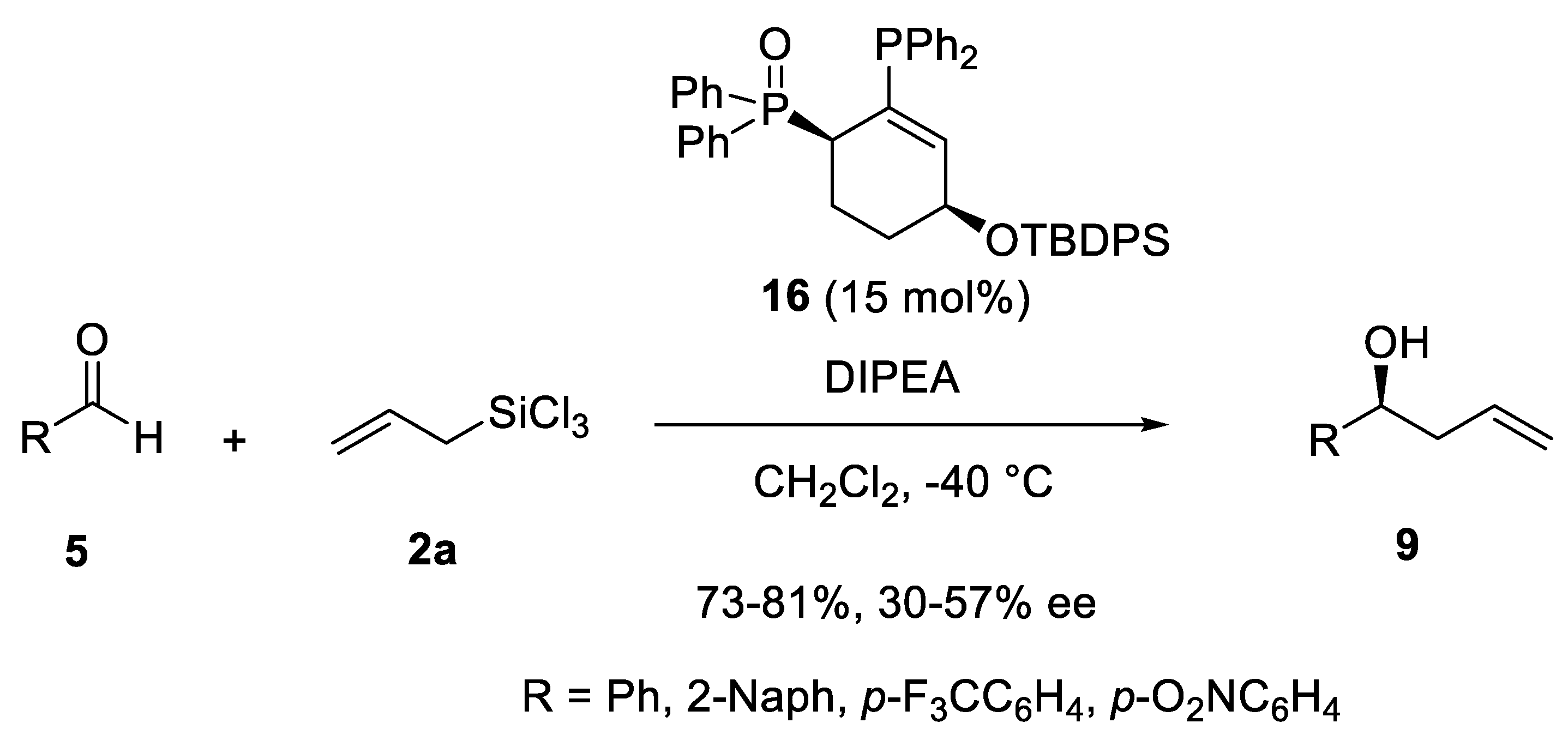
Since 2011, other types of organocatalysts have been successfully applied to promote enantioselective Sakurai reactions of aldehydes. For example, Boyd et al. reported in 2012 the synthesis of novel chiral phosphine–phosphine oxide 16 [31]. This type of Lewis base organocatalyst was investigated for the first time in the asymmetric allylation of aromatic aldehydes 5 with allyltrichlorosilane 2a. As illustrated in Scheme 9, using 15 mol% of this catalyst at −40 °C in dichloromethane as solvent, the Sakurai reaction afforded chiral homoallylic alcohols 9 with moderate to high yields (73–81%) and moderate ee values (30–57% ee).
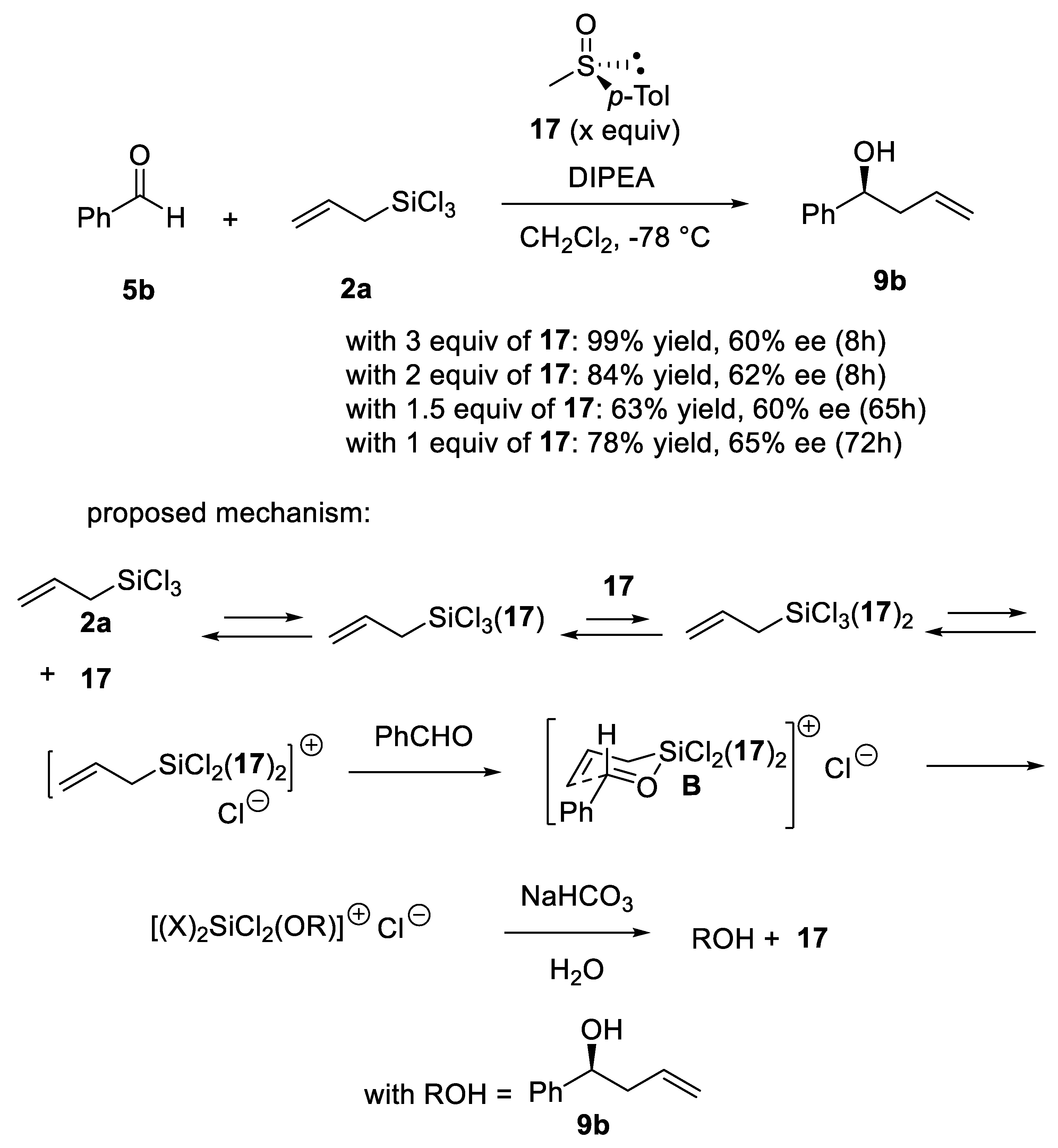
Other types of organocatalysts successfully employed to promote enantioselective allylation and crotylation of aldehydes are chiral sulfoxides, although they have the drawback of generally being required to be used in a large excess. In 2012, Monaco and Massa investigated the mechanism of the enantioselective allylation of benzaldehyde 5b with allyltrichlorosilane 2a promoted by a simple chiral monodentate sulfoxide, such as simple (R)-methyl p-tolyl sulfoxide 17 [32]. When performed at −78 °C in dichloromethane as solvent in the presence of one to three equivalents of this chiral sulfoxide, the reaction afforded the corresponding chiral homoallylic alcohol 9b with 63–99% yield and 60–65% ee. The authors proposed a dissociative mechanistic pathway depicted in Scheme 10, which involved the formation of cationic silyl intermediate B through the coordination of two chiral sulfoxides.
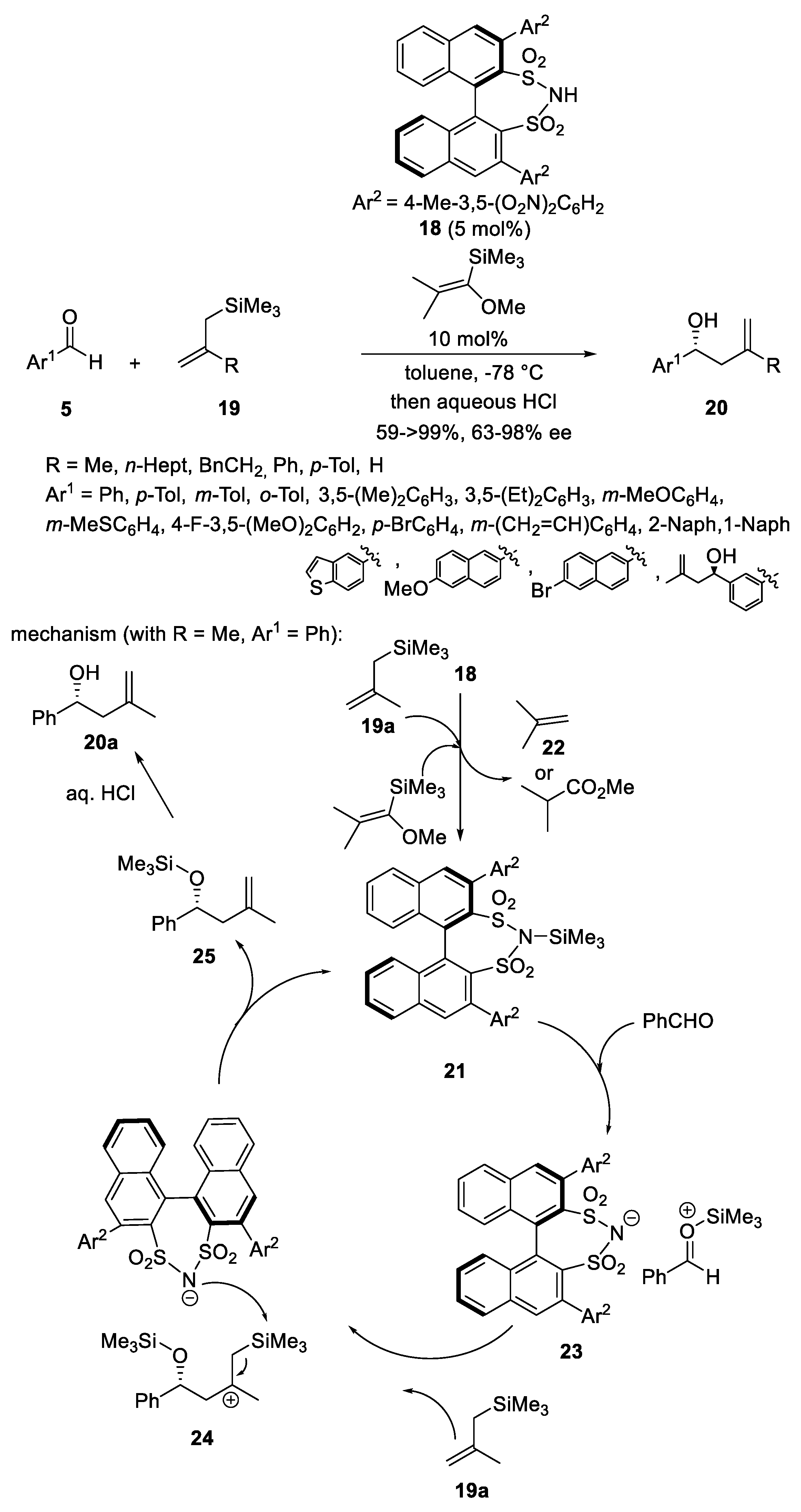
In 2012, List et al. reported the use of chiral disulfonimide catalyst 18 in the enantioselective Sakurai reaction of aromatic aldehydes 5 with substituted allyltrimethylsilanes 19 (Scheme 11) [33]. The reaction was carried out at −78 °C in toluene in the presence of 5 mol% of this pre-Lewis acidic organocatalyst, resulting in the formation of chiral homoallylic alcohols 20 in good to quantitative yields (59- > 99%) and moderate to excellent enantioselectivities (63–98% ee) after subsequent treatment with aqueous HCl. A diversity of either (hetero)aromatic aldehydes and variously substituted allylsilanes was compatible with the catalyst system. Actually, the limitations of this methodology were that aliphatic aldehydes and non-substituted allyltrimethylsilane cannot be used with good results. For example, the reaction of simple allyltrimethylsilane with benzaldehyde led to the corresponding product with only 25% ee, and only 2% ee was obtained in the reaction of an aliphatic aldehyde (BnCH2CHO). The authors proposed the mechanism depicted in Scheme 11, beginning with the conversion of the Brønsted acid precatalyst 18 into Lewis acid 21 by reaction with the allylsilane, delivering isobutene 22 as a side product. Subsequently, silylated catalyst 21 activated the aldehyde to give intermediate 23, which further underwent nucleophilic attack with methallyltrimethylsilane 19a (R = Me) to provide intermediate 24. Then, the disulfonimide counteranion attacked the silyl group, resulting in the formation of silylated product 25.
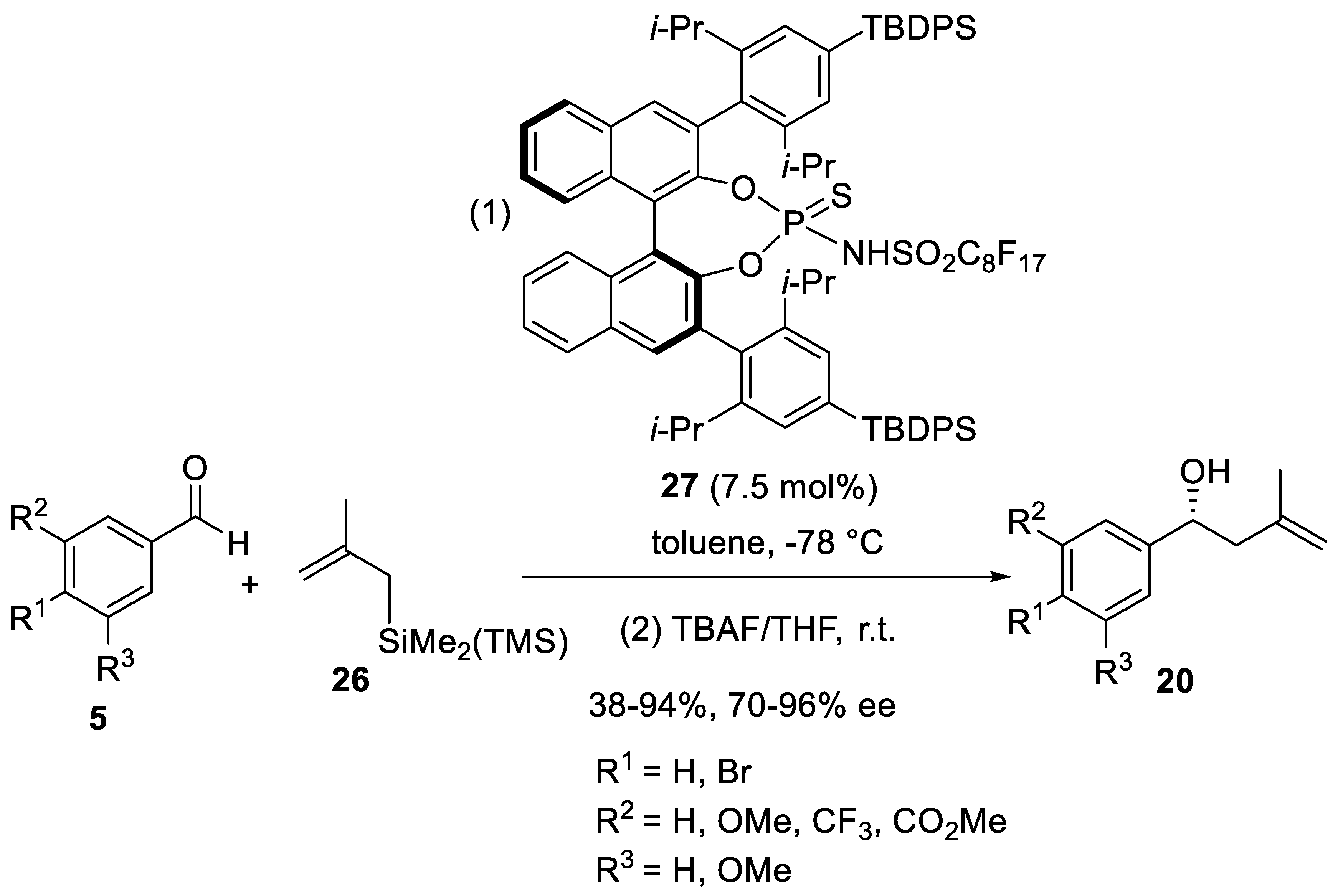
Later in 2015, a novel chiral BINOL-derived thiophosphoramide catalyst was designed by Sai and Yamamoto to be used in different enantioselective transformations [34]. Among them, the asymmetric Sakurai reaction of benzaldehydes with substituted allylsilanes was investigated (Scheme 12). The best results were obtained by involving highly reactive methallylsilane 26, which reacted with differently substituted benzaldehydes 5 in the presence of 7.5 mol% of chiral Brønsted acid 27 at −78 °C in toluene as solvent to give the corresponding chiral homoallylic alcohols 20 after further treatment with TBAF. Various functional groups were tolerated, and the methallylated products were obtained with moderate to excellent yields (38–94%) and good to high enantioselectivities (70–96% ee).
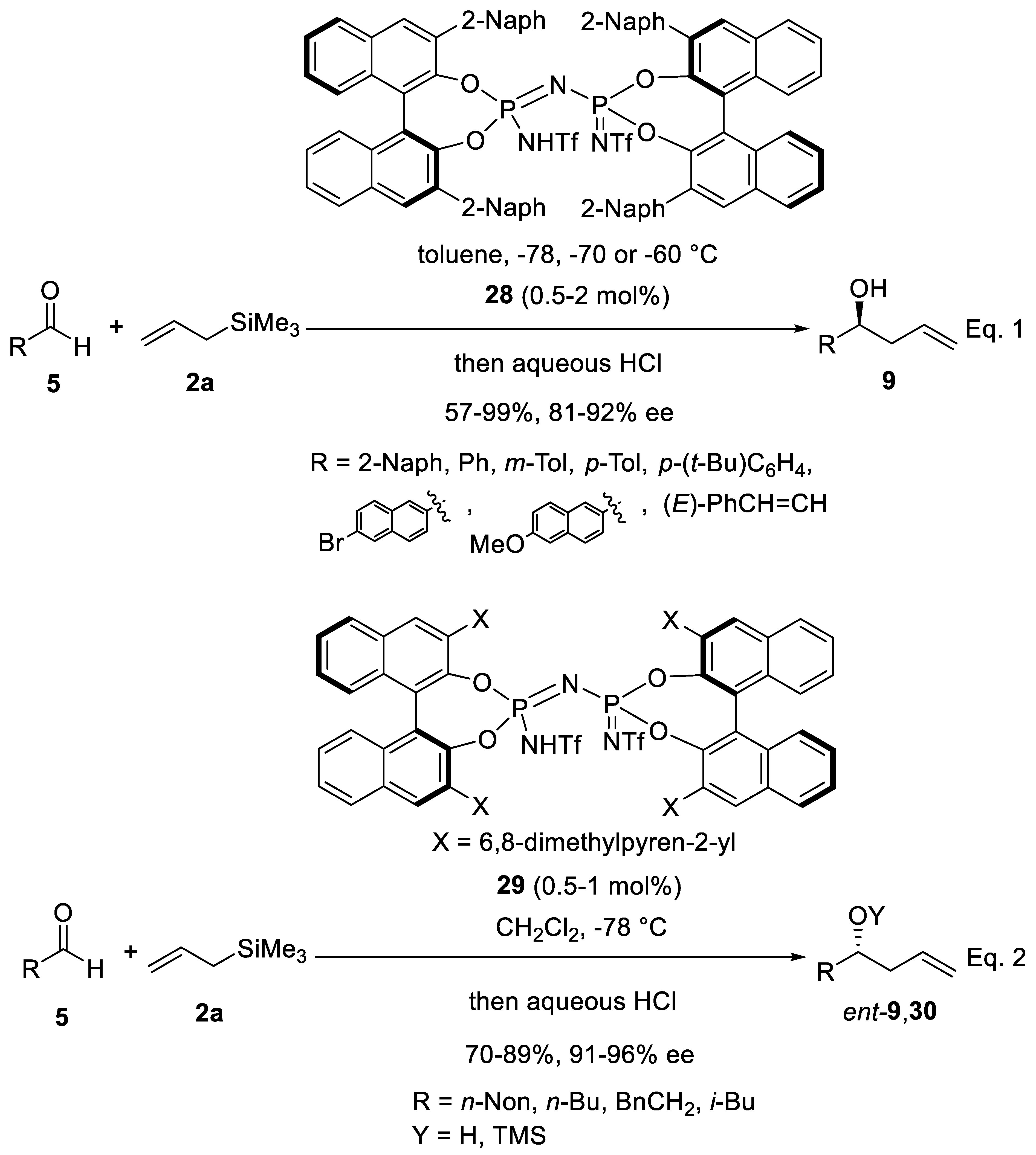
In 2016, List et al. introduced novel chiral imidodiphosphorimidates [35] as highly efficient Brønsted acid catalysts for enantioselective Sakurai reactions between aldehydes 5 and allyltrimethylsilane 2a [36]. In this process, in situ-generated silylium ions paired with an enantiopure counteranion functioned as powerful and highly enantioselective Lewis acid catalysts. Remarkably, the reaction of various aromatic aldehydes required as low as 0.5 mol% of optimal organocatalyst 28 to afford at −78 °C in toluene as solvent the corresponding chiral homoallylic alcohols 9 with moderate to quantitative yields (57–99%) and uniformly high enantioselectivities (81–92% ee), as shown in Scheme 13 (Equation (1)). An α,β-unsaturated aldehyde (R = (E)-PhCH = CH) was also compatible with this catalyst system, albeit requiring a higher catalyst loading (2 mol%) to give the desired product in 92% yield and 85% ee. Importantly, by using related chiral iminodiphosphorimidate catalyst 29 at only 0.5 or 1 mol% of catalyst loading in dichloromethane as solvent, a series of aliphatic aldehydes also underwent the allylation reaction to provide the corresponding (protected) products 9 or 30 (Y = TMS) in both high yields (70–89%) and enantioselectivities (91–96% ee), as presented in Scheme 13 (Equation (2)).
In addition to enantioselective Sakurai reactions of aldehydes, different types of chiral organocatalysts have been employed to promote asymmetric aza-Sakurai reactions.
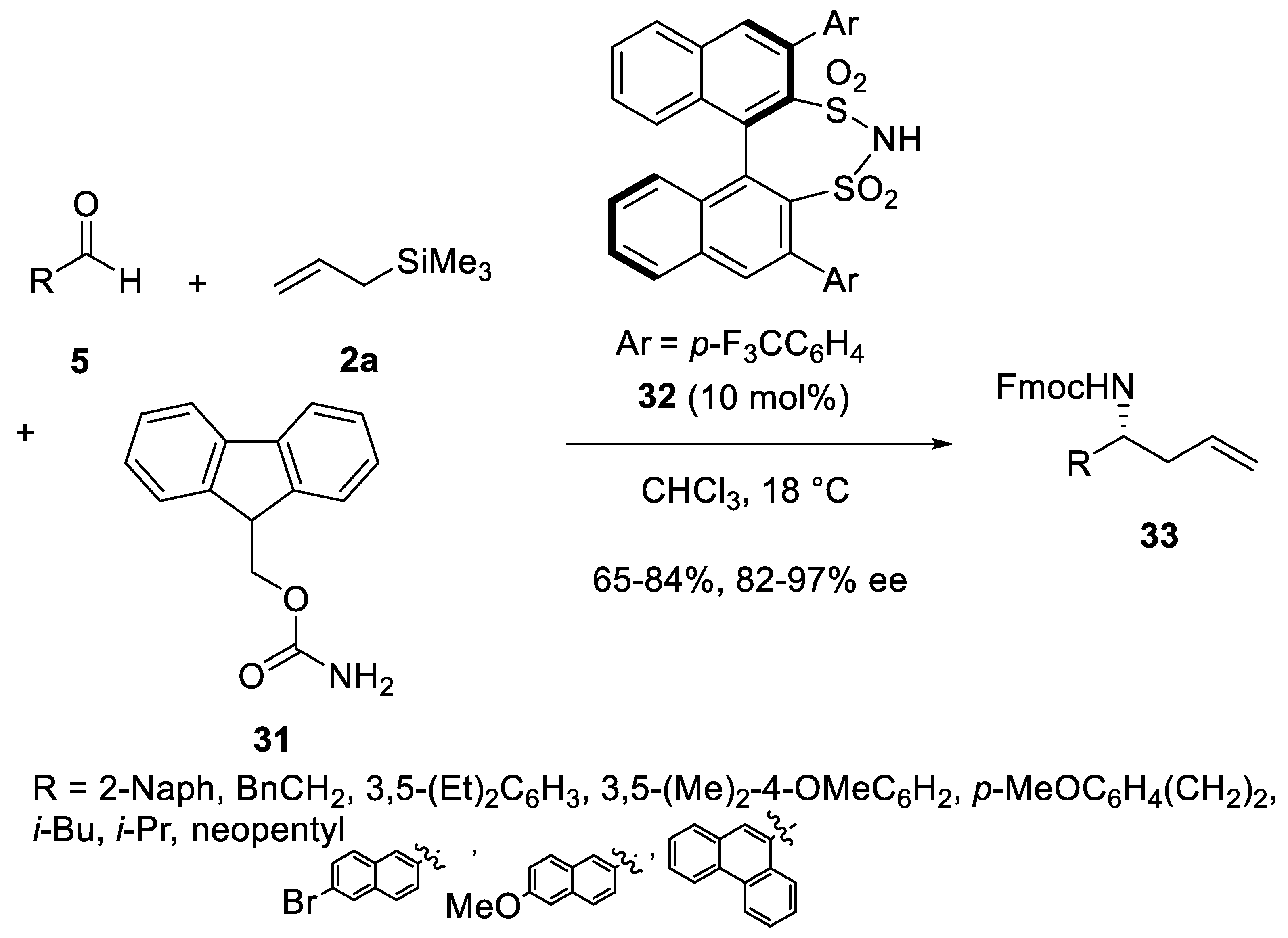
For example, a chiral disulfonimide catalyst was employed by List et al. in 2013 to develop the first enantioselective three-component aza-Sakurai reaction between aldehydes, carbamates, and allyltrimethylsilane [37]. As shown in Scheme 14, the reaction of a range of aldehydes 5 with 9-fluorenylmethyl carbamate 31 and allyltrimethylsilane 2a was catalyzed by 10 mol% of chiral disulfonimide 32 at 18 °C in chloroform to afford chiral homoallylic amine derivatives 33 with uniformly good yields (65–84%) and high ee values (82–97% ee). Along with aromatic aldehydes exhibiting either electron-donating or electron-withdrawing substituents on the phenyl ring, various aliphatic aldehydes also underwent the reaction to give the desired homoallylic amines with both good to high yields (65–83%) and enantioselectivities (82–92% ee). Some products could be readily converted into useful β-amino acid derivatives.
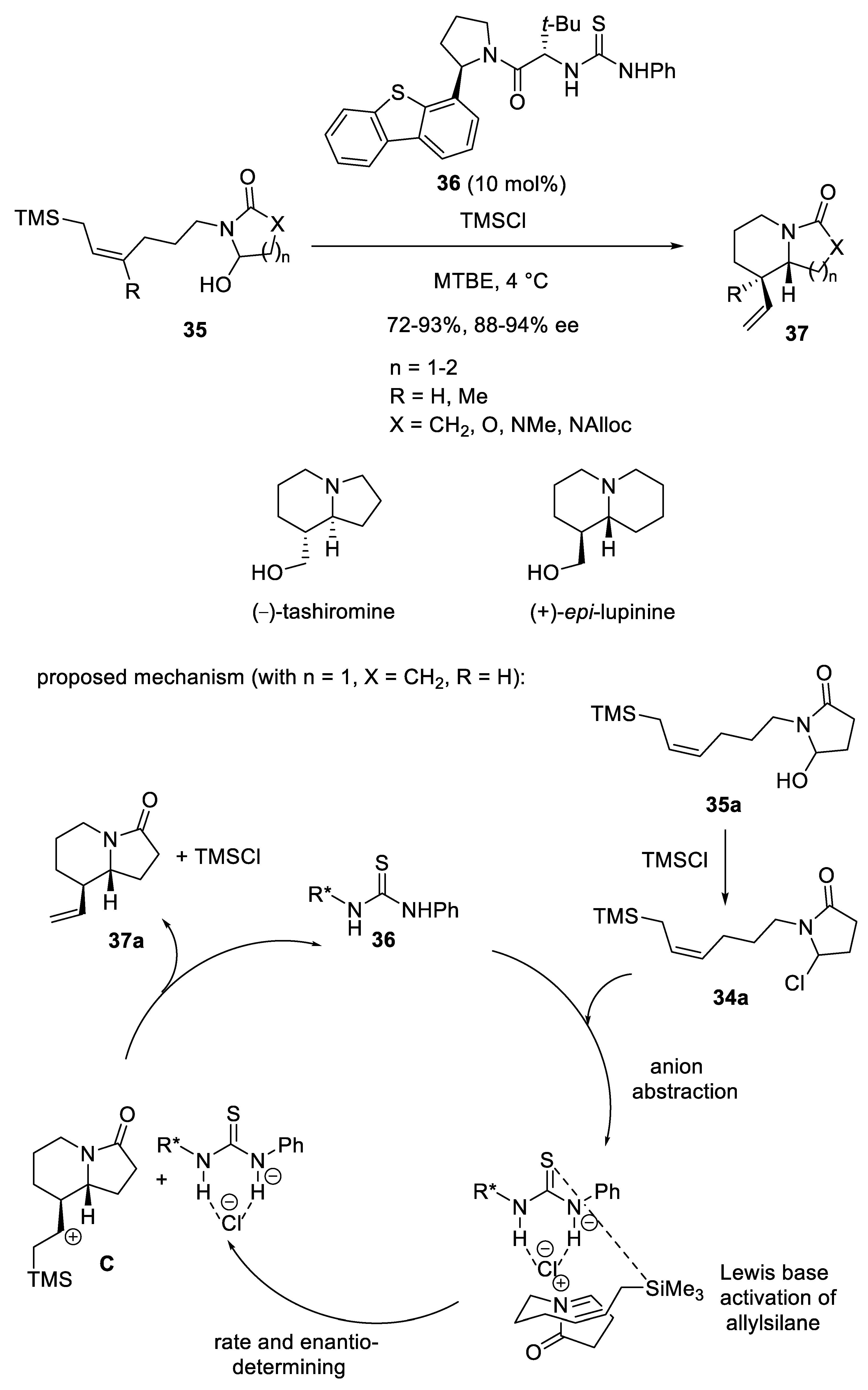
With the aim of opening a novel route to chiral indolizidines and quinolizidines, which constitute common N-heterocyclic motifs present in many bioactive products, Jacobsen et al. developed in 2016 an enantioselective aza-Sakurai reaction of chlorolactams 34 (Scheme 15) [38]. These substrates were in situ generated by treatment with TMSCl of the corresponding hydroxylactams 35 bearing a latent N-acyliminium precursor and a pendant allyltrimethylsilane as a potential nucleophile. The following cyclization of the thus-formed chlorolactams 34 evolved at 4 °C in MTBE as solvent under catalysis with 10 mol% of chiral thiourea 36, which resulted in the formation of the corresponding chiral bicyclic products 37 with good to high yields (72–93%) and uniformly excellent enantioselectivities (88–94% ee). In the mechanism proposed in Scheme 15, the thiourea catalyst promotes the ionization of the chlorolactam 34a to generate a N-acyliminium thiourea-bound chloride ion pair. The Lewis basicity of the thiourea was enhanced by the anion binding, thus activating the allylsilane to undergo cyclization. Then, the formed cyclic intermediate C is submitted to elimination of the β-silyl cation to give the final product. The synthetic utility of this novel methodology was demonstrated in the synthesis of the two alkaloid products (−)-tashiromine and (+)-epi-lupinine (Scheme 15).

3. Enantioselective Metal/Boron-Catalyzed Sakurai Reactions

3.1. Scandium Catalysts in Enantioselective Sakurai Reactions of Ketones

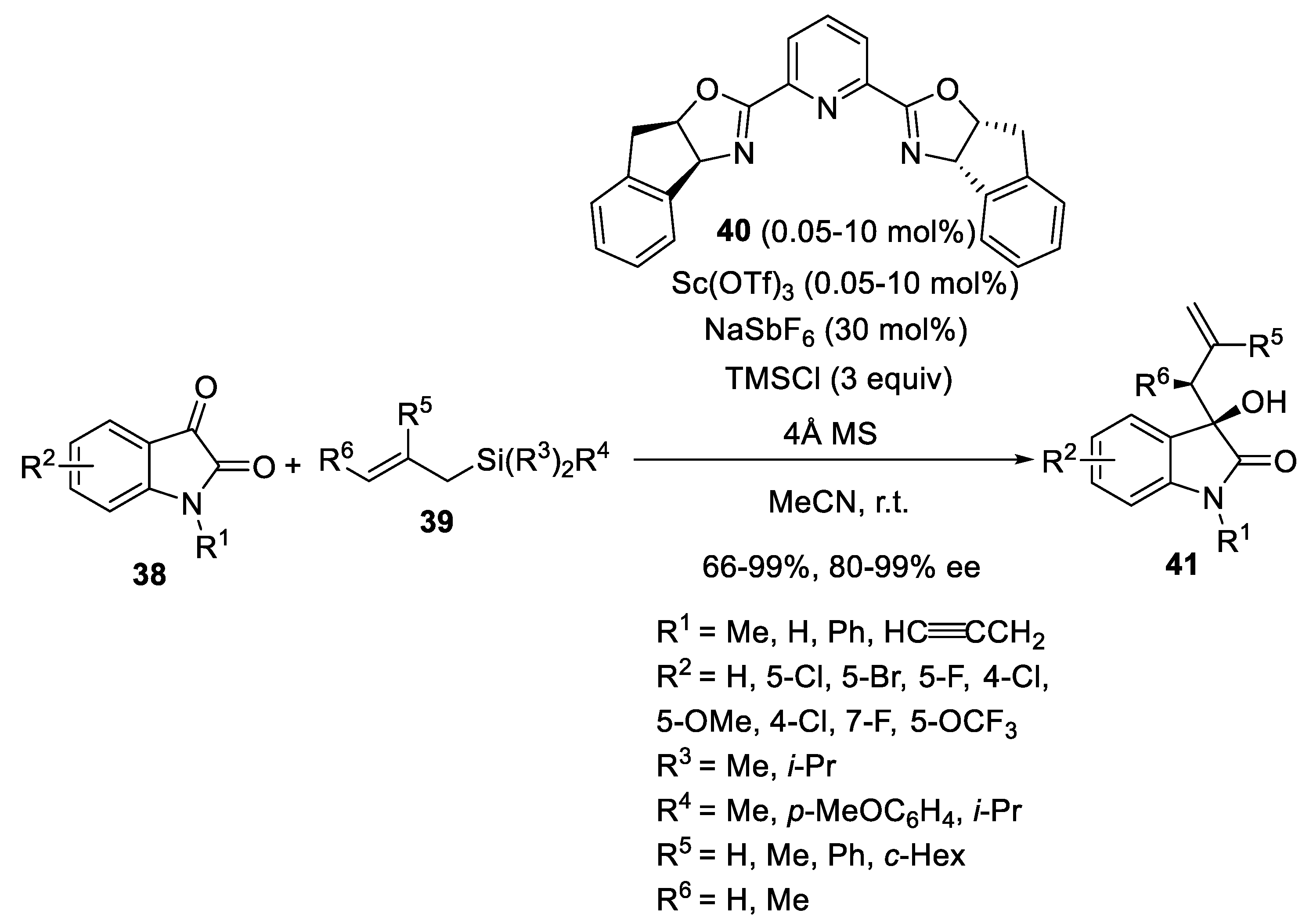
Chiral scandium catalysts have been widely employed in the last decade to promote a diversity of enantioselective transformations [39]. Among them, asymmetric allylations of challenging isatins 38 with allylsilanes 39 were developed in 2012 by Franz et al. [40]. The process employed a chiral scandium catalyst in situ generated from 10 mol% of Sc(OTf)3 and the same quantity of chiral Pybox ligand 40. Performed in the presence of NaSbF6 as an additive at room temperature in acetonitrile as solvent, it allowed the formation of chiral 3-allyl-3-hydroxy-2-oxindoles 41 with good to quantitative yields (69–99%) and uniformly high enantioselectivities (80–99% ee), as illustrated in Scheme 16. These excellent results also required the presence of three equivalents of TMSCl as an activator, which could enhance the Lewis acidity of the chiral catalyst. The latter was equally efficient for either N-substituted or unsubstituted isatins (R1 = H), providing high enantioselectivities and yields in both cases. Along with simple allyltrimethylsilane, an allylic silane bearing an aryldimethylsilyl group (R3 = Me, R4 = p-MeOC6H4, R5 = R6 = H) afforded the desired allylation product (R1 = Me, R2 = 5-Cl) with comparable excellent yield (99%) and ee value (87% ee). Moreover, triisopropylallylsilane (R3 = R4 = i-Pr, R5 = R6 = H) was compatible with the reaction in spite of an increased steric bulk, leading to the desired allylated product (R1 = Me, R2 = 5-Cl) with high enantioselectivity (85% ee), albeit combined with a moderate yield (66%). The authors demonstrated that the reaction using substituted allylsilanes was effective with as low as 0.05 mol % of the scandium catalyst, where a high yield and enantioselectivity were maintained. This work constituted an advance in the asymmetric allylation of more challenging ketones than common aldehydes.
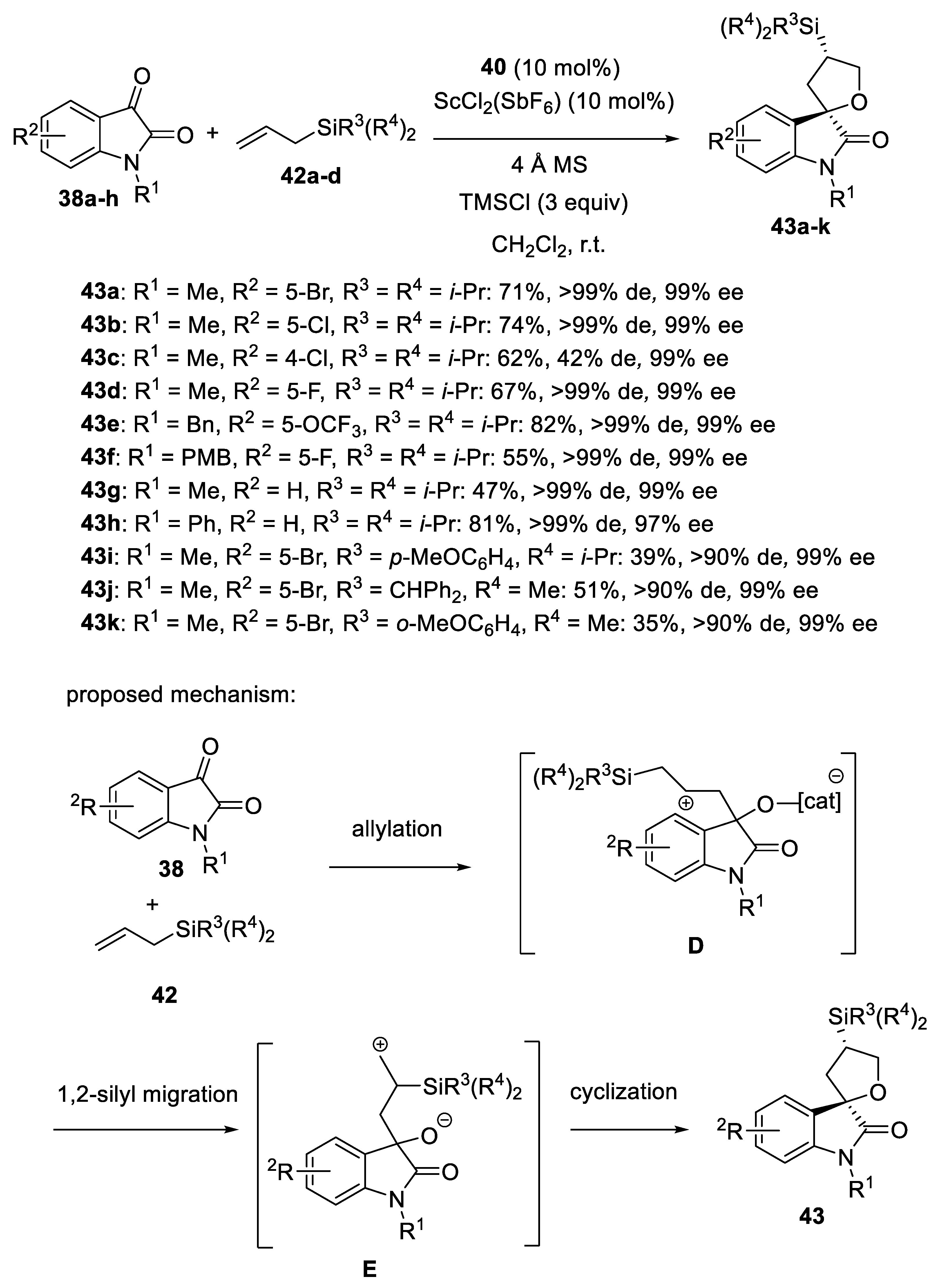
A number of natural and bioactive products are based on spirocyclic oxindole units [41]. With the aim of synthesizing this type of product, asymmetric domino reactions [42,43,44,45,46,47,48,49,50,51] initiated by a Sakurai reaction have been developed. For example, Franz et al. developed a novel enantioselective domino Sakurai/1,2-silyl migration/cyclization reaction between allylsilanes 42 and isatins 38 [52]. The one-pot reaction was promoted by a chiral scandium catalyst in situ generated by 10 mol% of ScCl2(SbF6) and 10 mol% of chiral Pybox ligand 40 employed in the presence of TMSCl in dichloromethane as solvent, thus resulting in the formation at room temperature of a wide variety of chiral spiro-oxindoles 43 generally as single diastereomers (42- > 99% de) with low to high yields (13–82%) and homogeneously excellent ee values (97–99% ee), as presented in Scheme 17. The domino process began with a Sakurai reaction generating intermediate D, which was subsequently subjected to a 1,2-silyl migration to provide intermediate E. The latter further underwent cyclization to afford the final chiral spiro-oxindoles. The best yields were achieved in the reactions of allyltriisopropylsilane (R3 = R4 = i-Pr). Remarkably, in almost all cases of substrates, a complete diastereoselectivity was observed.
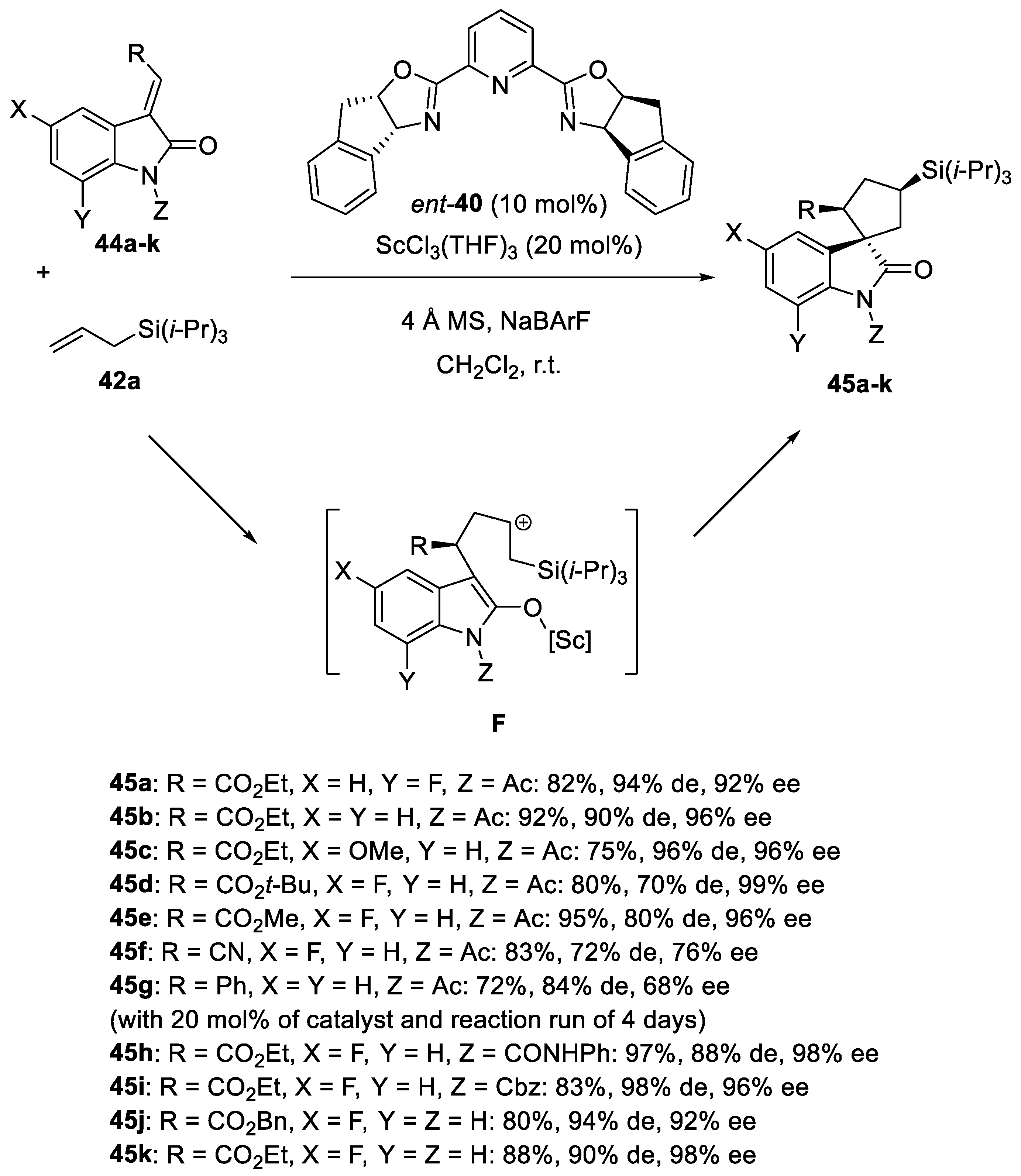
Later in 2014, the same group also developed the first enantioselective domino Sakurai conjugate allylation/1,2-silyl shift/cyclization reaction between alkylidene oxindoles 44 and allyltriisopropylsilane 42a [53]. Generally, the reaction was promoted at room temperature by 20 mol% of a combination of Sc(Cl)3(THF)3 and chiral Pybox ligand ent-40 in the presence of NaBArF as an additive, thus resulting in the formation of the corresponding highly functionalized chiral spirocyclopentanes 45ak bearing three stereogenic centers in high yields (72–95%), diastereo-(70–98% de) and enantioselectivities (68–99% ee). The mechanism depicted in Scheme 18 shows that the sequence begins with the Sakurai conjugate allylation of alkylidene oxindole with allyltriisopropylsilane to give intermediate F. Then, the latter undergoes a 1,2-silyl shift followed by cyclization to afford the final spirocyclopentane. A range of ester and nitrile substrates provided general excellent enantioselectivities (92–99% ee), while a phenyl-substituted alkylidene 44g (R = Ph) required a higher catalyst loading (20 mol% instead of 10 mol%) and extended reaction times (4 days) to afford the corresponding spirocyclopentane 45g in only 68% ee. In addition to N-acetylated alkylidene oxindoles (Z = Ac), chelating oxindoles 44hi exhibiting urea and Cbz groups (Z = CONHPh, Cbz) also led to the corresponding products 45hi in both excellent yields (83–97%) and enantioselectivities (96–98% ee). NH spiro-oxindoles 44jk (Z = H) could be accessed by simple deprotection of the corresponding N-acyl oxindoles with KHCO3 and H2O2 in high yields (80–88%) and enantioselectivities of 92–98% ee.
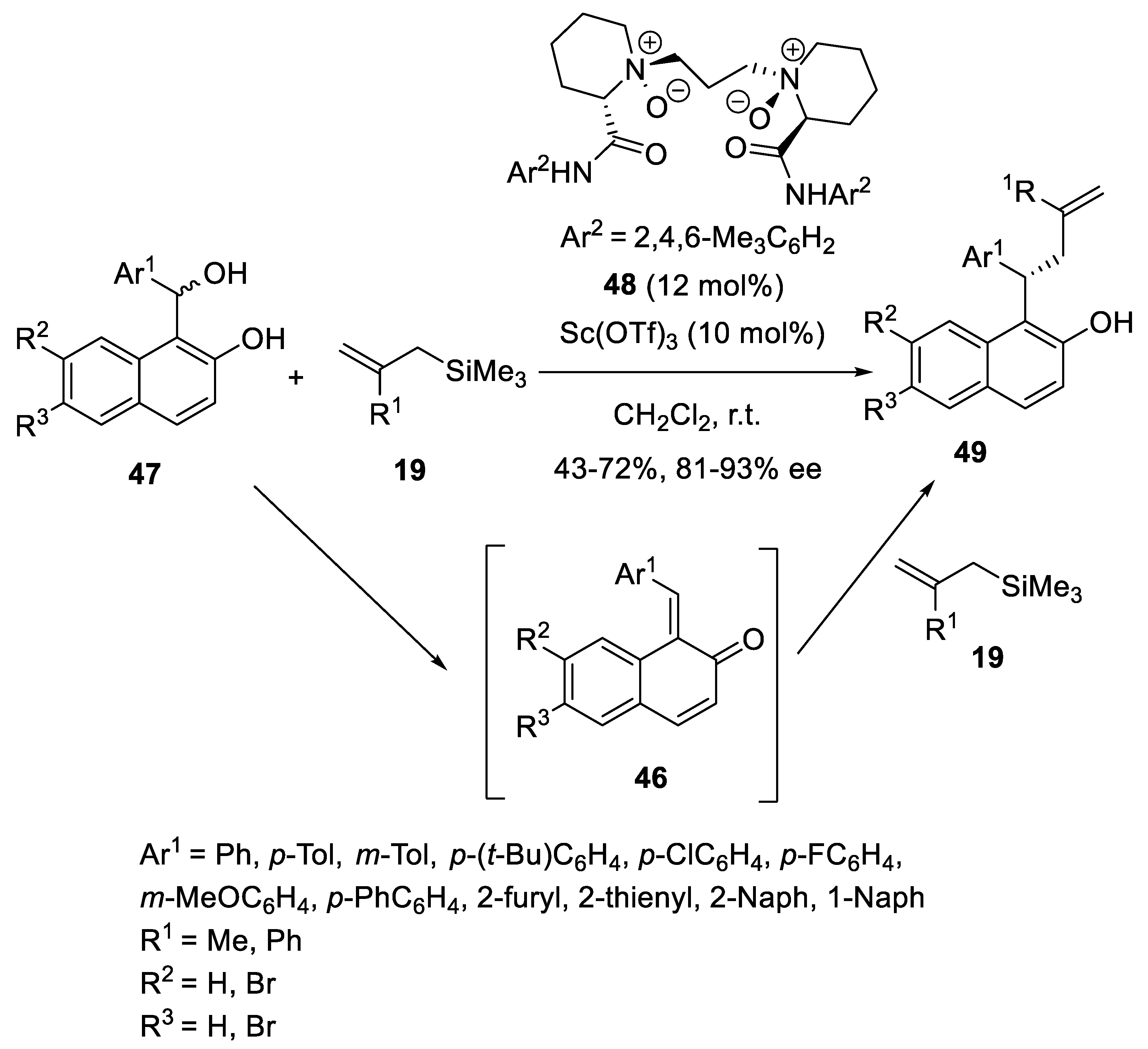
Although asymmetric 1,2-additions of allylsilanes to carbonyl compounds, imines and acetals have been widely developed, an efficient asymmetric Sakurai conjugate allylation, such as that involved in the precedent domino reaction, still remains challenging. In 2020, Li and Liu reported the first example of asymmetric Sakurai conjugate allylation of 2-naphthoquinone-1-methides 46, in situ-generated from the corresponding aryl-substituted 1-(hydroxymethyl)-2-naphthols 47, with α-substituted allylsilanes 19 [54]. This was achieved by using at room temperature a chiral scandium catalyst derived from 10 mol% of Sc(OTf)3 and 12 mol% of chiral N,N‘-dioxide ligand 48 in dichloromethane as the solvent. Under these mild reaction conditions, a variety of uniquely substituted chiral allyl-functionalized diaryl products 49 were produced with moderate to good yields (43–72%) and uniformly high enantioselectivities (81–93% ee), as shown in Scheme 19. Either electron-donating or electron-withdrawing substituents at the para- or meta-positions of the phenyl ring of phenyl-substituted 1-(hydroxymethyl)-2-naphthols were well tolerated, affording the desired products in moderate yields (50–72%) and high ee values (81–92% ee), while more sterically hindered ortho-substituted substrates did not react. Moreover, heteroaromatic substrates (Ar1 = 2-furyl, 2-thienyl) were also compatible, leading to the corresponding products with 86–90% ee. Substituents at the naphthoquinone methide fragment were also well tolerated. Along with methyl-substituted allyltrimethylsilane (R1 = Me), phenyl-substituted allyltrimethylsilane (R1 = Ph) reacted to give the desired product with 92% ee.

3.2. Silver Catalysts in Enantioselective Sakurai Reactions of Aldehydes and Isatins

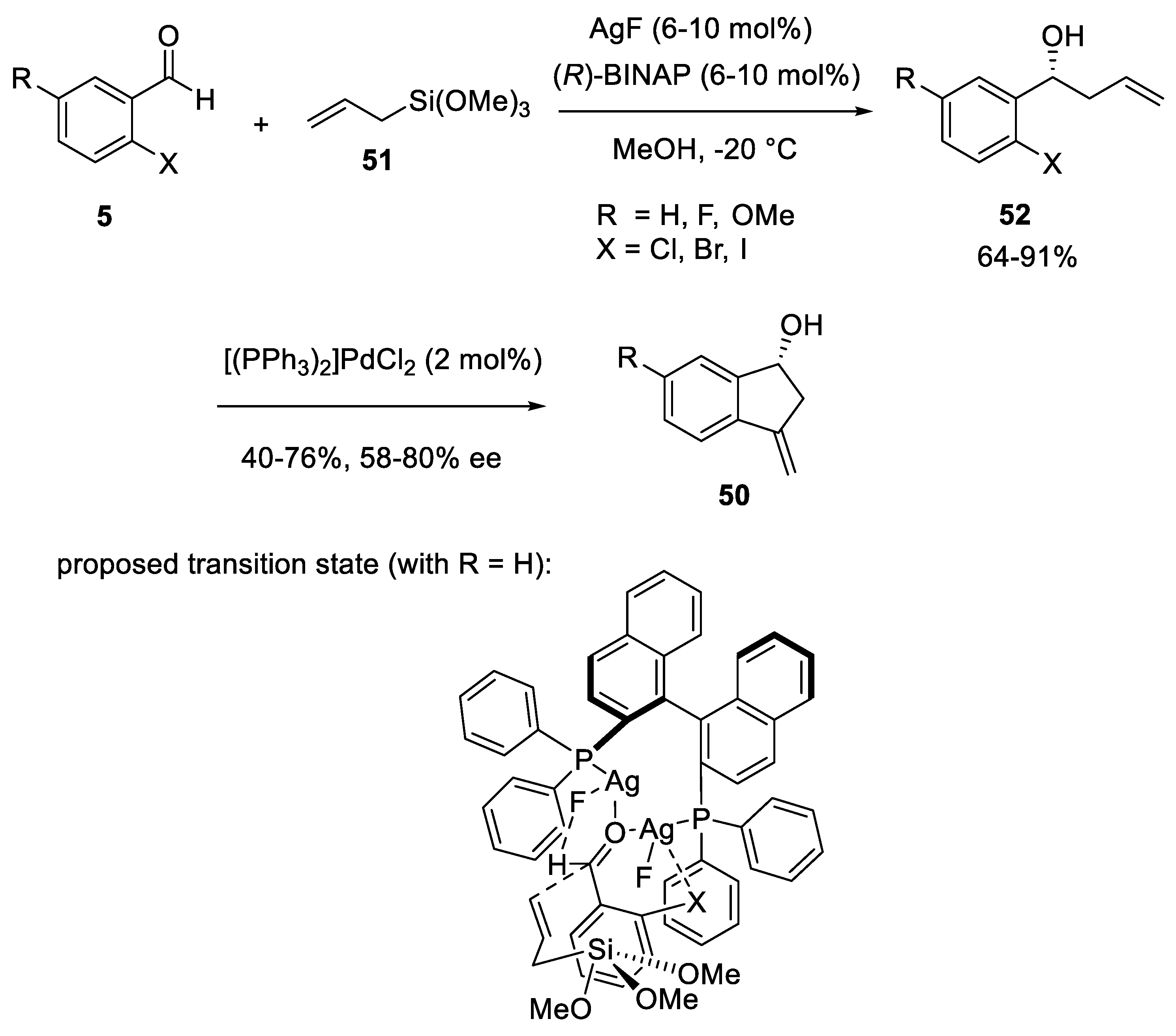
Chiral indanols constitute the skeletons of a number of bioactive products. In this context, Dudding and Mirabdolbaghi reported, in 2012, an unprecedented synthesis of C1-chiral 3-methylene-indan-1-ols 50 on the basis of a sequential asymmetric Sakurai/Heck reaction (Scheme 20) [55]. The first step of the sequence dealt with the enantioselective Sakurai reaction of o-substituted benzaldehydes 5 with allyltrimethoxysilane 51, which was catalyzed by a chiral silver complex in situ generated from 6 to 10 mol% of AgF and (R)-BINAP. Performed at −20 °C in methanol, the asymmetric allylation afforded the corresponding chiral homoallylic alcohols 52 with good yields (64–91%). The latter were subsequently submitted to Heck reaction promoted by 2 mol% of (Ph3P)2PdCl2 to afford desired chiral 3-methylene-indan-1-ols 50 with moderate to good yields (40–76%) and moderate to high enantioselectivities (58–80% ee). It was found that the presence of electron-rich substituents on the phenyl ring of benzaldehydes had no effect on the enantioselectivity of the reaction, whereas that of electron-withdrawing groups led to erosion in the ee values. The authors proposed the transition state depicted in Scheme 20 based on the activation of the aldehyde by two Ag centers, with a binding interaction between the C-H aldehyde and a F atom and another C-X/Ag interaction.
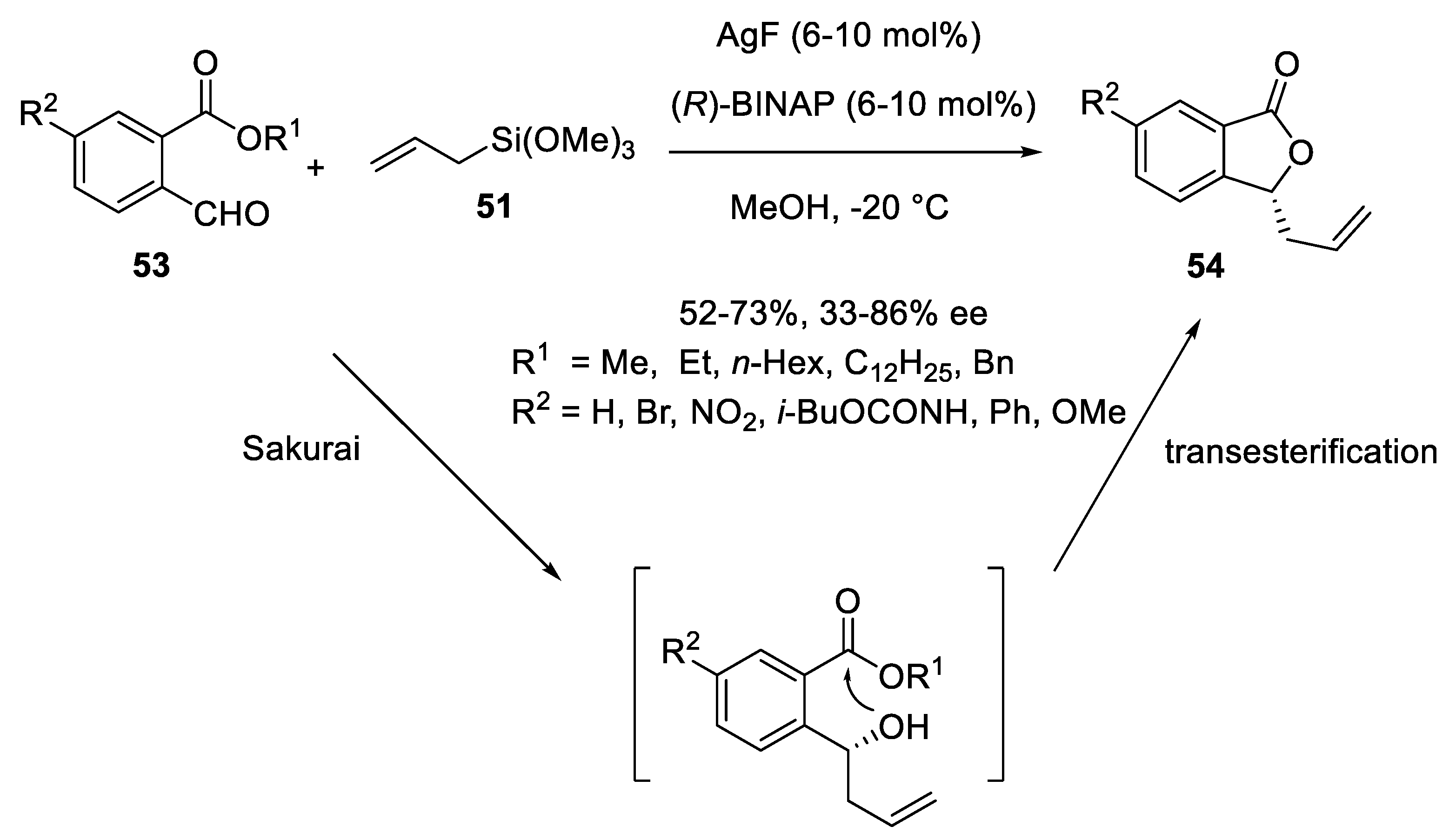
In 2013, the same authors also described an enantioselective silver-catalyzed domino Sakurai/transesterification reaction of alkyl 2-formylbenzoates 53 with allyltrimethoxysilane 51 [56]. As presented in Scheme 21, the reaction was employed at −20 °C in methanol as solvent, with 6–10 mol% of AgF as precatalyst combined with the same quantity of (R)-BINAP as ligand. It led to the formation in one step of a range of chiral C(3)-substituted phthalides 54 with moderate to good yields (52–73%) and moderate to high ee values (33–86% ee). An increasing enantioselectivity was found with the elongation of the n-alkyl chain length (R1) of the starting alkyl 2-formylbenzoates. Therefore, the best ee value (86% ee) was obtained in the reactions of the dodecyl derivative (R1 = C12H25) and the hexyl-2-formylbenzoate substrate (R1 = n-Hex).
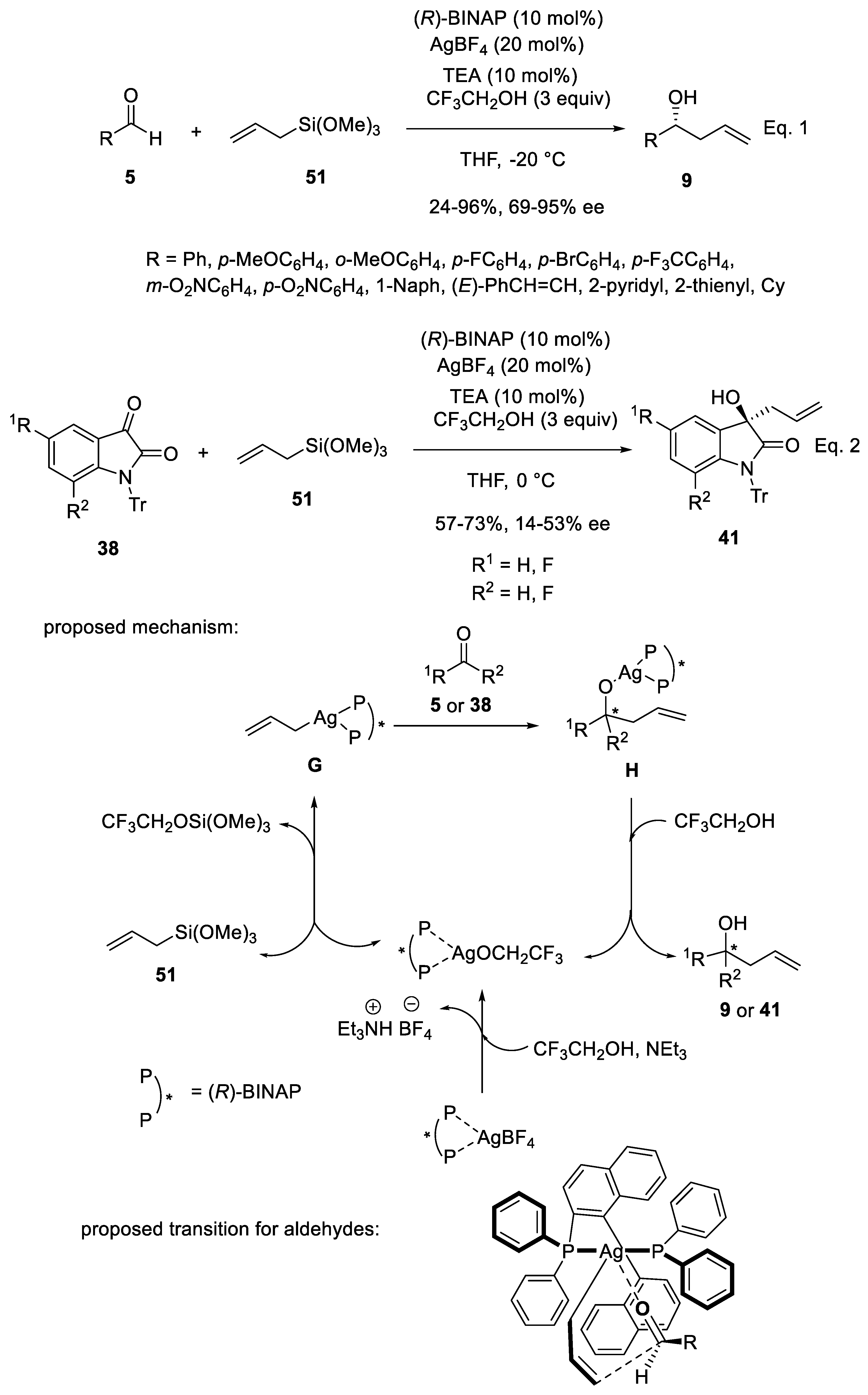
(R)-BINAP was also later employed as silver ligand by Yanagisawa et al. in enantioselective Sakurai reactions of various aldehydes and isatins with allyltrimethoxysilane [57]. The precatalyst consisted of 20 mol% of AgBF3, which was combined with 10 mol% of (R)-BINAP in THF as solvent. The Sakurai reaction of aldehydes 5 with allyltrimethoxysilane 51 was performed at −20 °C in the presence of TEA and 2,2,2-trifluoroethanol as additives to afford the corresponding chiral homoallylic alcohols 9 with moderate to excellent yields (24–96%) and good to high enantioselectivities (69–95% ee), as illustrated in Scheme 22 (Equation (1)). Generally, very good results (67–84% yield and 84–95% ee) were obtained in the reaction of benzaldehydes exhibiting various types of substituents at different positions on the phenyl ring. Moreover, the product arising from the reaction of 1-naphthaldehyde (R = 1-Naph) was formed in 87% yield and 95% ee. Even heteroaromatic aldehydes (R = 2-pyridyl, 2-thienyl) were compatible, leading to the corresponding alcohols with 60–83% yield and 69–91% ee. An unsaturated aldehyde, such as (E)-cinnamaldehyde (R = (E)-PhCH = CH), also underwent the 1,2-addition, giving the desired product with 96% yield and 84% ee. Furthermore, an excellent enantioselectivity (88% ee) was achieved in the reaction of an aliphatic aldehyde (R = Cy), albeit combined with a low yield (24%), probably related to the low electrophilicity of this substrate. Applying the same catalyst system at 0 °C allowed the asymmetric Sakurai reaction of isatins 38, which resulted in the formation of chiral allylated products 41 with moderate to good yields (57–73%) and low to moderate ee values (14–53% ee), as shown in Scheme 22 (Equation (2)). The authors proposed the mechanism depicted in Scheme 22, beginning with the reaction between (R)-BINAP·AgBF4 with 2,2,2-trifluoroethanol in the presence of triethylamine to afford the corresponding alkoxide intermediate (R)-BINAP·AgOCH2CF3, which actually constituted the true catalyst of the Sakurai reaction. Then, the latter attacked allyltrimethoxysilane to give allyl silver species G. The following addition of G with carbonyl compound 5 or 38 provided intermediate H as the chiral silver alkoxide of the homoallylic alcohol. Finally, protonation of H with 2,2,2-trifluoroethanol resulted in the formation of chiral homoallylic alcohol 9 or 41 along with regeneration of the chiral silver alkoxide. To explain the stereoselectivity of the Sakurai reaction of aldehydes, a six-membered cyclic transition state is proposed in Scheme 22 in which the chiral allyl silver attacked through the Re face of the aldehyde to avoid steric repulsion from a phenyl group of the chiral ligand.

3.3. Copper Catalysts in Enantioselective Sakurai Reactions of Ketones

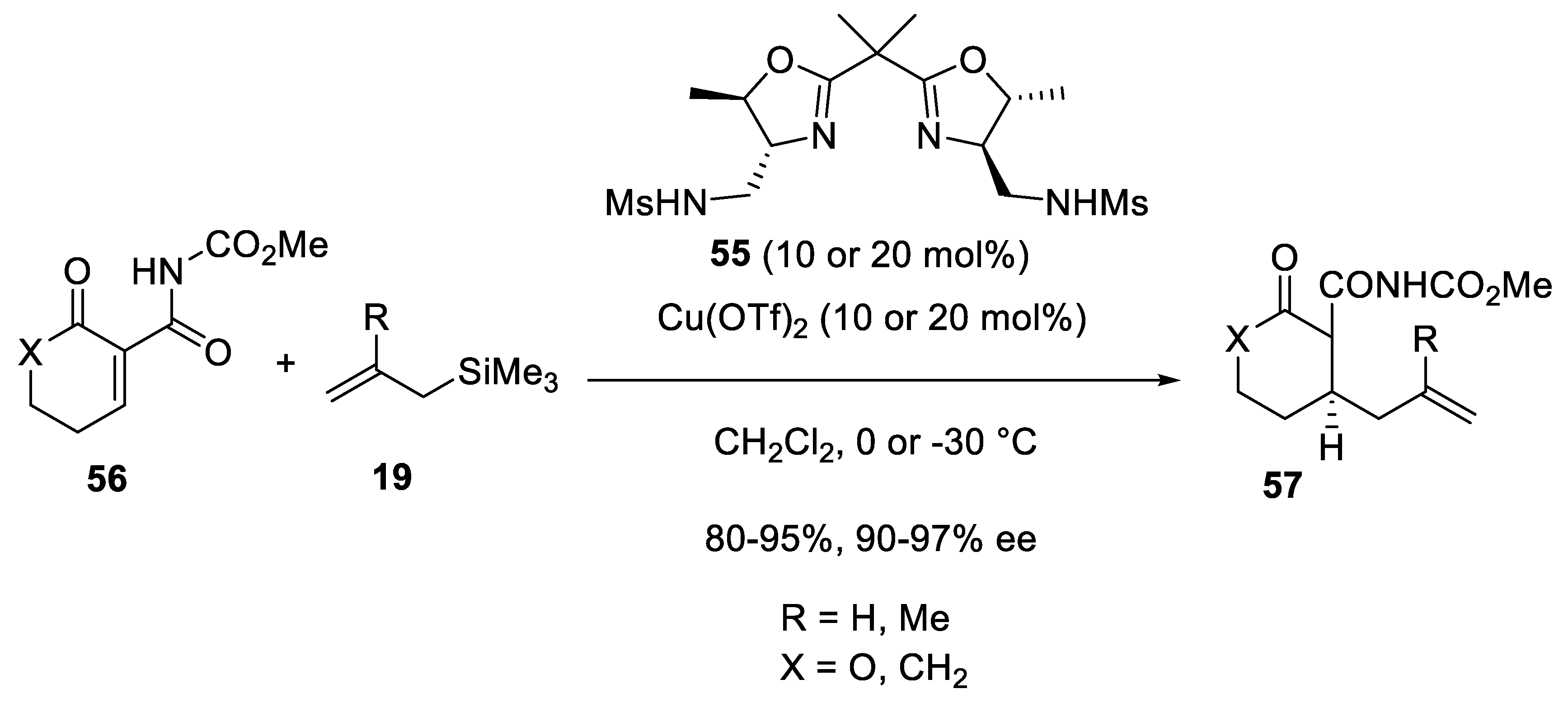
α-Alkylidene β-keto imides are key electrophiles, which have been used in the total synthesis of natural products. In 2013, a chiral copper catalyst was applied by Nakada et al. to promote the enantioselective Sakurai conjugate allylation with allyltrimethylsilanes (Scheme 23) [58]. Indeed, in the presence of 10 or 20 mol% of a catalyst in situ generated from Cu(OTf)2 and chiral bisoxazoline ligand 55 bearing methanesulfonamide groups, α-alkylidene β-keto imides 56 reacted in dichloromethane at 0 or −30 °C with allyltrimethylsilane 19a (R = H) or methallyltrimethylsilane 19b (R = Me) to give the corresponding chiral products 57 with both high yields (80–95%) and enantioselectivities (90–97% ee).
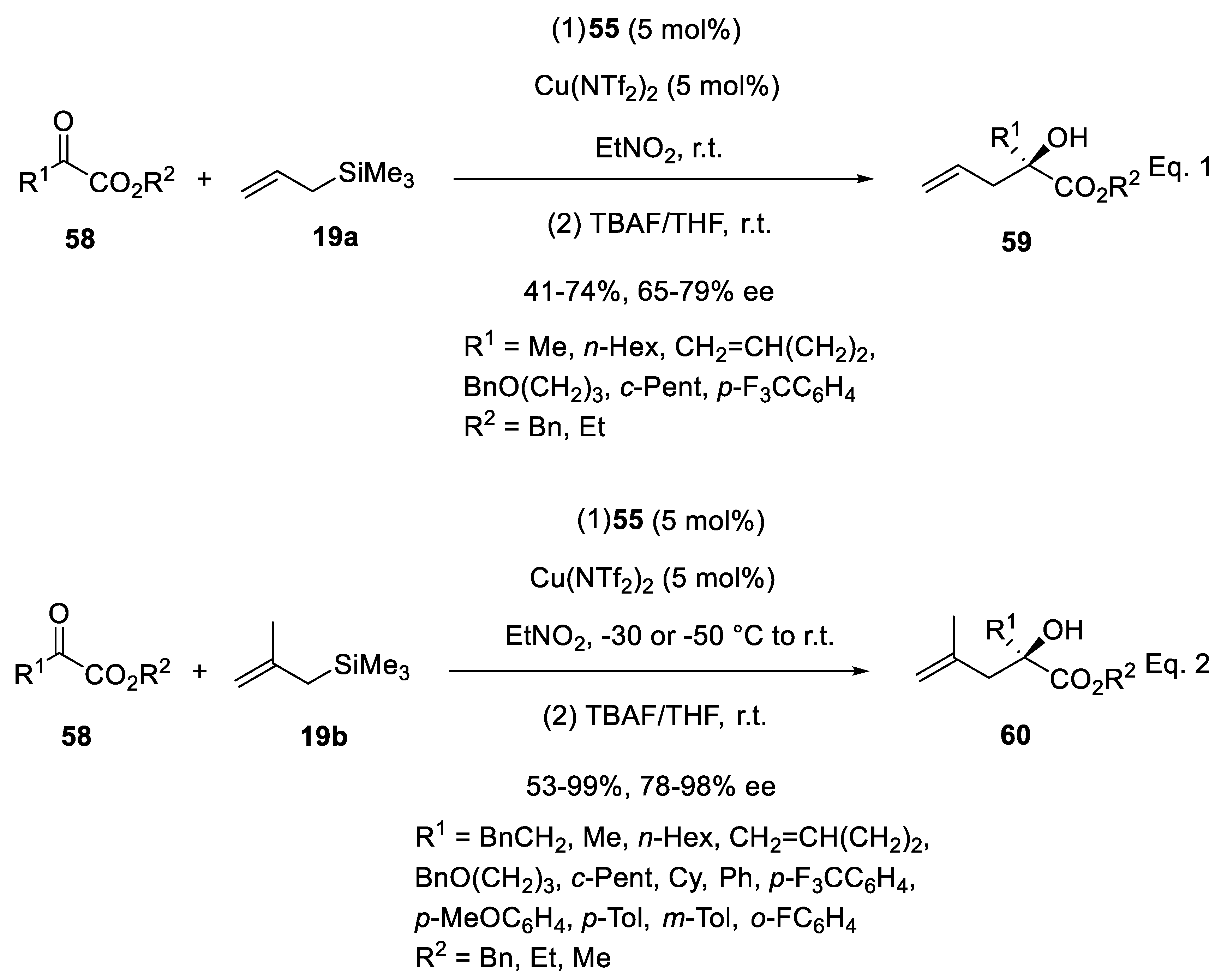
Later in 2019, the same ligand was used by Sakakura et al. to develop the first enantioselective catalytic Sakurai reaction between α-ketoesters and allylic silanes (Scheme 24) [59]. The allylation of α-ketoesters 58 with allyltrimethylsilane 19a was achieved at room temperature under catalysis with 5 mol% of a chiral copper complex in situ formed from Cu(NTf2)2 and chiral bisoxazoline ligand 55 in nitroethane as solvent, which led to a series of chiral α,α-disubstituted α-hydroxyesters 59 with both moderate to good yields (41–74%) and enantioselectivities (65–79% ee) after further treatment with TBAF (Scheme 24, Equation (1)). The scope of the novel methodology could be extended to methallyltrimethylsilane 19b, which reacted at −30 or −50 °C to room temperature with α-ketoesters 58, to give, after further treatment with TBAF to remove the TMS group, the corresponding chiral products 60 with moderate to quantitative yields (53–99%) and high ee values (78–98% ee), as presented in Scheme 24 (Equation (2)). Alkyl-substituted α-ketoesters all reacted with excellent enantioselectivities (88–98% ee), with a lower value (78% ee) for the bulky cyclohexyl-substituted substrate (R1 = Cy). Homogeneously excellent enantioselectivities (93–98% ee) were obtained in the reaction of aryl-substituted α-ketoesters.

3.4. Mercury Catalysts in Enantioselective Sakurai Reactions of Isatins

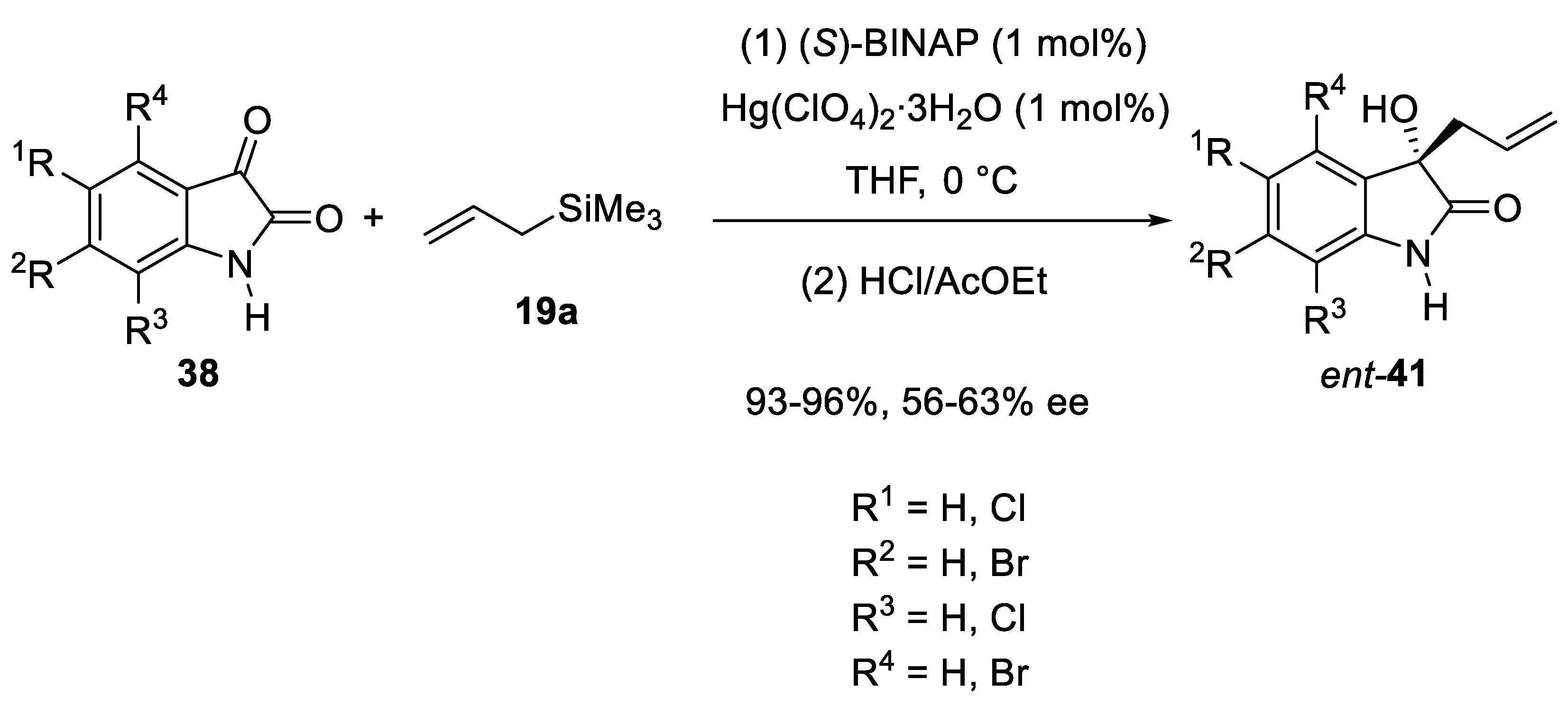
In 2011, Zhou et al. demonstrated that racemic mercury salts, such as Hg(ClO4)2 3H2O, were capable of highly efficiently promoting the Sakurai reaction of isatins and isatin-derived ketoimines (Scheme 25) [60]. An enantioselective version of this procedure was developed by using only 1 mol% of (S)-BINAP as chiral ligand in combination with 1 mol% of Hg(ClO4)2∙3H2O as precatalyst in THF at 0 °C. Under these conditions, several unprotected isatins 38 reacted with allyltrimethylsilane 19a to give the desired chiral 3-allyl-3-hydroxyoxindoles ent-41 of high synthetic value with excellent yields (93–96%) and moderate enantioselectivities (56–63% ee). In spite of these limited ee values, it must be noted that this work represented the first example of catalytic asymmetric allylation of ketones using allyltrimethylsilane.
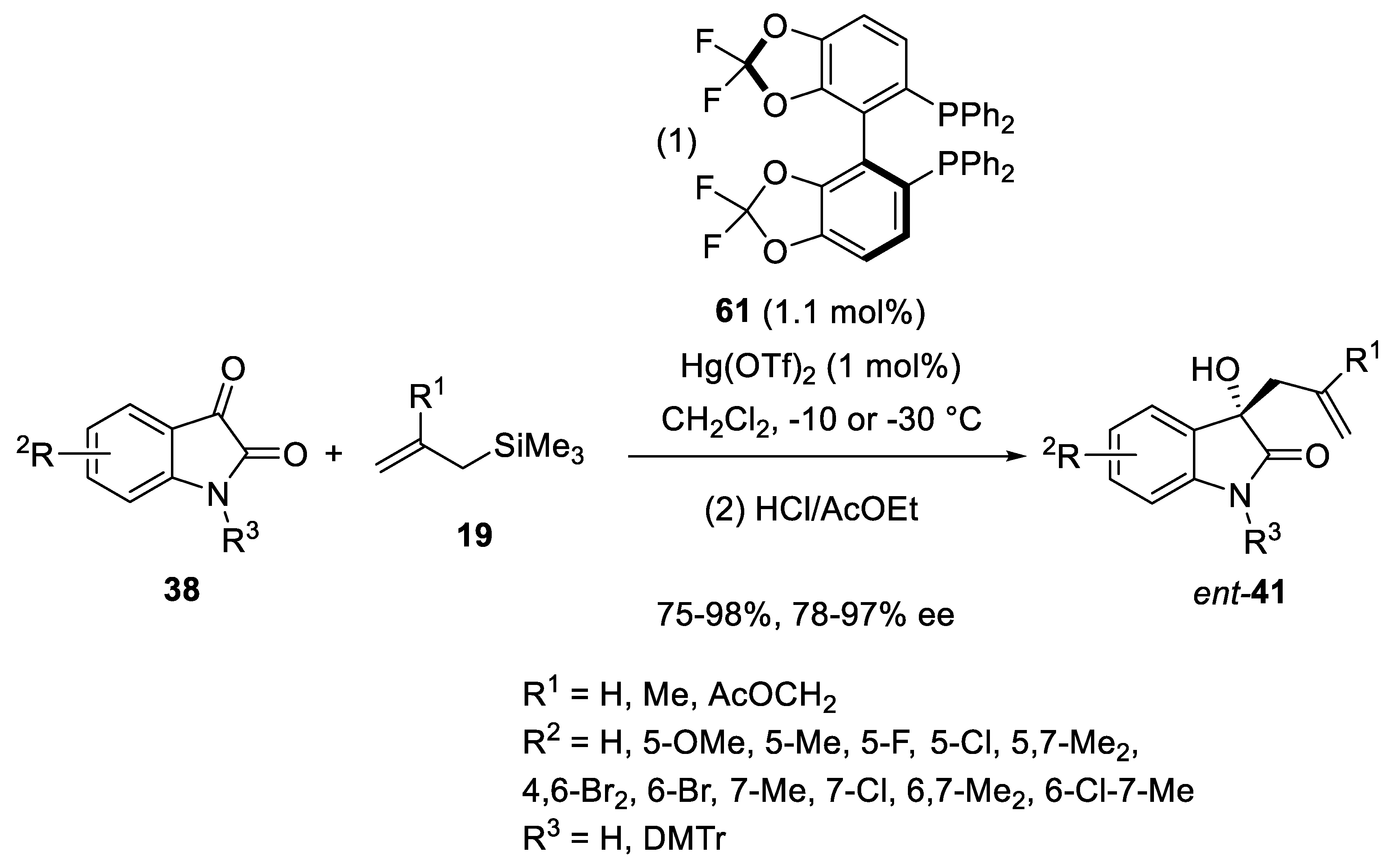
Later in 2016, these authors reported higher enantioselectivities of up to 97% ee in these reactions by using another chiral mercury catalyst in situ generated from 1 mol% of Hg(OTf)2 and 1.1 mol% of chiral difluorophos ligand 61 (Scheme 26) [61]. The reaction involved unprotected isatins 38a (R3 = H) as well as di(p-methoxyphenyl)phenylmethyl (DMTr)-N-protected isatins 38b (R3 = DMTr) as substrates which reacted in dichloromethane at −10 or −30 °C with either the simplest allyltrimethylsilane (R1 = H) or 2-substituted allyltrimethylsilanes 19 to provide the corresponding chiral 3-allyl-3-hydroxyoxindoles ent-41 with both good to excellent yields (75–98%) and enantioselectivities (78–97% ee). This result constituted the third example of highly enantioselective chiral mercury catalysis. The mild conditions, especially low catalyst loading, simple procedure and high enantioselectivity demonstrated that mercury salts can exhibit interesting catalytic properties worthwhile to be explored in the future.

3.5. Other Catalysts in Enantioselective Sakurai Reactions of Aldehydes

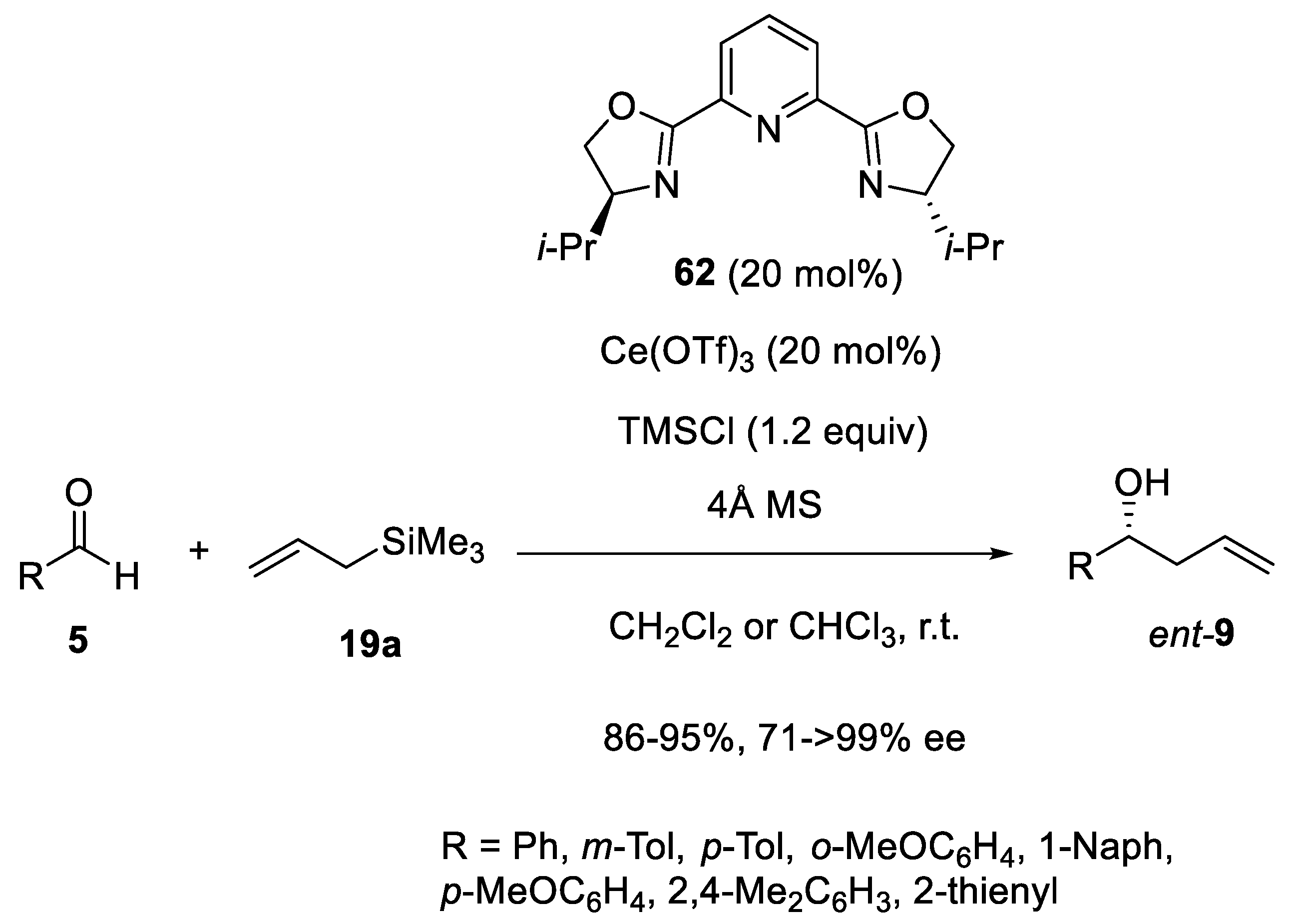
Despite the intensive development of catalytic asymmetric Sakurai reactions, less attention has been focused on the use of chiral cerium complexes as promoters. In 2015, Zhang and Huang reported a rare example of asymmetric cerium-catalyzed Sakurai allylation of aromatic aldehydes 5 with allyltrimethylsilane 19a [62]. Indeed, in the presence of TMSCl as activator and a combination of 20 mol% of Ce(OTf)3 with the same quantity of chiral Pybox ligand 62, the reaction proceeded smoothly at room temperature in dichloromethane or chloroform as solvent, giving rise to the corresponding chiral homoallylic alcohols ent-9 with uniformly high yields (86–95%) and good to excellent enantioselectivities (71- > 99% ee), as illustrated in Scheme 27. Among aldehydes, benzaldehyde (Ar = Ph) reacted with the best enantioselectivity (>99% ee). Furthermore, an excellent ee value (96% ee) was also obtained in the reaction of a heteroaromatic aldehyde, such as thiophene-2-carbaldehyde (Ar = 1-thienyl).
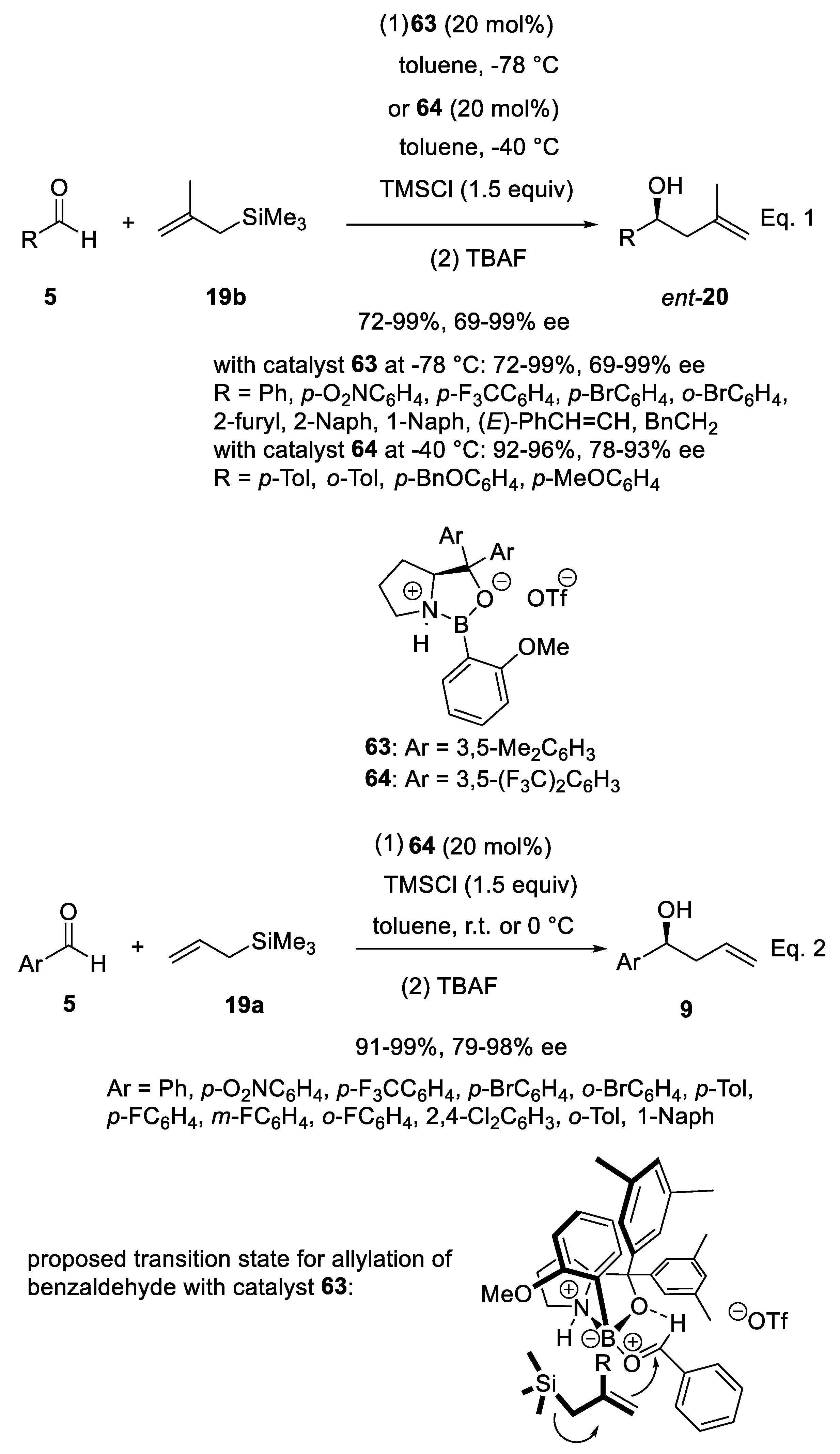
In 2020, Ryu et al. described the first highly enantioselective Sakurai reactions of various aldehydes with allylsilanes catalyzed by a chiral oxazaborolidinium ion in the presence of TMSCl as activator (Scheme 28) [63]. For the first time, the authors investigated the methallylation of aldehydes 5 with metallyltrimethylsilane 19b in toluene as solvent in the presence of TMSCl as superstoichiometric additive (Scheme 28, Equation (1)). Using catalyst 63 at 20 mol% of catalyst loading at −78 °C allowed a range of chiral homoallylic alcohols ent-20 to be synthesized with both high yields (72–99%) and enantioselectivities (78–99% ee). Whereas benzaldehydes substituted with electron-withdrawing groups showed high reactivities (94–98%), substrates exhibiting electron-donating substituents on the phenyl ring gave low reactivities and decreased enantiomeric excesses in the presence of catalyst 1c. To overcome this issue, the reactions of substrates with electron-donating substituents (R = p-Tol, o-Tol, p-BnOC6H4 and p-MeOC6H4) were performed in the presence of related chiral catalyst 64 at −40 °C, which allowed the desired products to be obtained in both high yields (92–96%) and ee values (78–93% ee). Chiral catalyst 63 was also compatible with the reaction of various other (hetero)aromatic aldehydes as well as cinnamaldehyde, thus affording the corresponding alcohols with high yields (72–99%) and enantioselectivities (83–99% ee). Moreover, an aliphatic aldehyde (R = BnCH2) was found compatible with this catalyst system since it led to the formation of the desired product with 94% yield, combined with the lowest ee value (69% ee). For the second time, the authors developed the first highly enantioselective boron-catalyzed allylation of aromatic aldehydes 5 with simple allyltrimethylsilane 19a. To reach this goal, 20 mol% of chiral oxazaborolidinium ion 64 was employed as promotor in the presence of TMSCl, which led at room temperature to a range of chiral homoallylic alcohols 9 with generally excellent yields (91–99%) and moderate to excellent enantioselectivities (79–98% ee), as illustrated in Scheme 28 (Equation (2)). To explain their results, the authors proposed the transition state shown in Scheme 28 in which the benzaldehyde group is situated above the 3,5-dimethylphenyl group of catalyst 63, which effectively shields the Re face in the attack of the allylsilane. Consequently, the nucleophilic addition of the latter occurs from the Si face of the benzaldehyde to give the final product after further deprotection of the silyl group by treatment with TBAF.

4. Enantioselective Multicatalyzed (Aza)-Sakurai Reactions

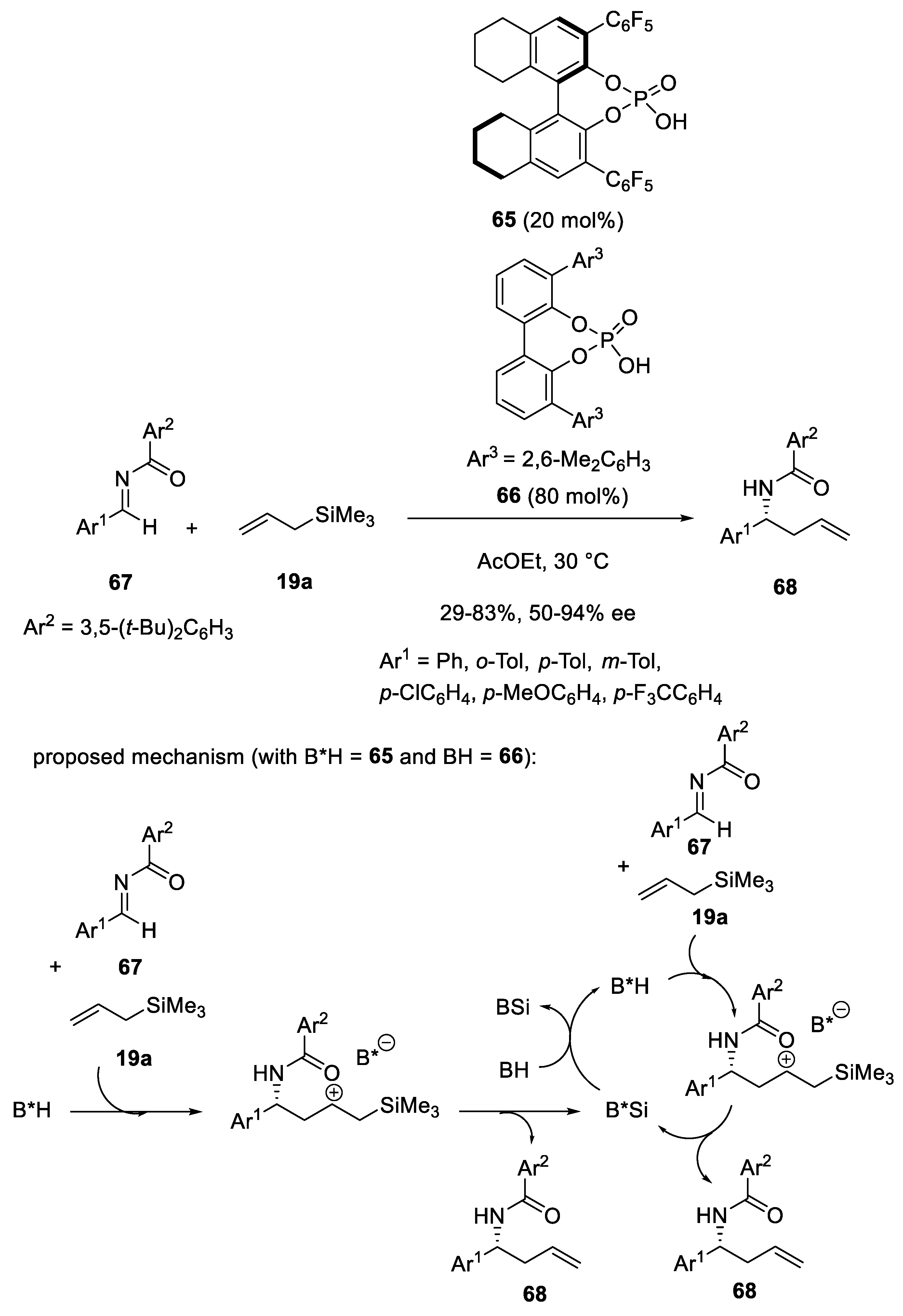
In 2011, Terada and Momiyama introduced the use of a combined Brønsted acid system, constituted by 20 mol% of chiral Brønsted acid 65 combined to 80 mol% of racemic Brønsted acid 66, to promote enantioselective aza-Sakurai reactions of aromatic imines with allyltrimethylsilanes [64]. The reaction of variously substituted imines 67 with allyltrimethylsilane 19a performed at 30 °C in acetonitrile as solvent led to the corresponding chiral homoallylic amines 68 in both moderate to high yields (29–83%) and enantioselectivities (50–94% ee), as presented in Scheme 29. The mechanism depicted in Scheme 29 shows that the dual catalyst system proceeds through the regeneration of the chiral Brønsted acid 65 through proton transfer from the additional racemic Brønsted acid 66 to the silylated chiral Brønsted acid.
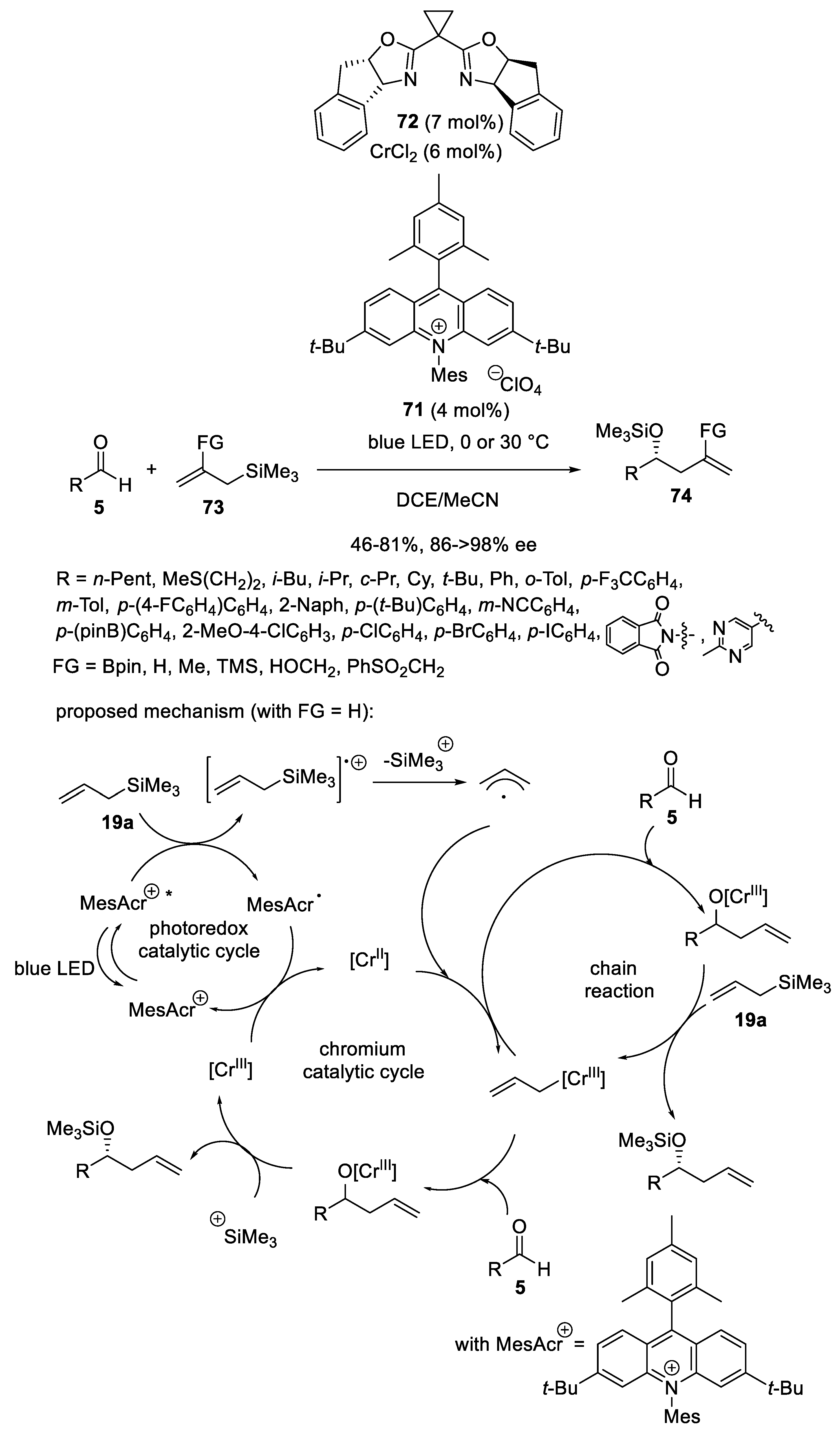
With the aim of developing a general method for highly enantioselective Sakurai reaction displaying a broad substrate scope and high functional-group tolerance, Glorius et al. described in 2022 a novel dual catalytic platform capable of coupling for the first time allylsilanes with aldehydes through mild visible light activation [65]. As shown in Scheme 30, when a mixture of 4 mol% of the organic dye mesitylacridinium perchlorate 71, 6 mol% of CrCl2, 7 mol% of chiral bisoxazoline 72, aldehyde 5 and boronic acid pinacol ester (Bpin)-substituted allylsilane (X = Bpin) 73 was irradiated with blue LEDs at 30 °C in a mixture of DCE and acetonitrile as solvent, it resulted in the formation of the corresponding chiral Sakurai products 74 with moderate to high yields (46–75%) and uniformly excellent ee values (92- > 98/% ee). Remarkably, comparable yields and enantioselectivities were obtained for either aromatic (53–73% yield, 92- > 98% ee) or aliphatic aldehydes (46–75% yield, 96- > 98% ee). Along with boronic acid pinacol ester-substituted allylsilane (X = Bpin), different substituents in the vinylic position were also well tolerated, yielding the corresponding chiral 1,3-functionalized alcohols bearing methyl (X = Me: 81%, 94% ee), silyl (X = TMS: 66%, 86% ee), alcohol (X = CH2OH: 72% yield, 98% ee), or sulfonyl (X = CH2SO2Ph: 60% yield, >98% ee) moieties, underlining the high functional-group tolerance of the catalyst system. According to the mechanism depicted in Scheme 30, the photocatalyzed SET oxidation of the allylsilane yields an allylic radical, which can be trapped by the CrII complex.

5. Conclusions

Although still widely developed with aromatic aldehydes, the enantioselective catalytic Sakurai reaction has considerably matured in the last decade.
Novel chiral organocatalysts, including disulfonimides and iminodiphosphoramidates developed by List or thiophosphoramides described by Sai and Yamamoto, have been involved in the asymmetric allylation of aromatic aldehydes to give chiral homoallylic alcohols with enantioselectivities of up to 98% ee.
Several uncommon chiral Lewis acids also provided enantioselectivities of up to 99% ee in comparable reactions, such as a rare cerium complex derived from a chiral Pybox ligand developed by Zhang and Huang or a chiral oxazaborolidinium ion employed for the first time by Ryu in these reactions.
Along with common aromatic aldehydes, more challenging substrates, such as aliphatic aldehydes, ketones and their corresponding imine derivatives, can now be employed in this reaction with significantly better results in terms of reactivity and enantioselectivity. For example, different types of novel organocatalysts have been successfully developed as promoters for the asymmetric allylation of less common aliphatic aldehydes. Enantioselectivities of up to 98% and 99% ee were, respectively, described by the group of Kočovský and Malkov and that of Zhu by using novel N,N’-dioxides. List introduced novel chiral iminodiphosphorimidates, which allowed enantioselectivities of up to 96% ee to be achieved in these reactions when employed at as low as 0.5 mol% of catalyst loading. Excellent enantioselectivities of >98% ee were also described by Glorius in the first Sakurai reaction of aliphatic aldehydes performed in the presence of a dual chromium/photoredox catalysis. On the other hand, excellent results were reported by different groups in the asymmetric allylation of ketones catalyzed with chiral Lewis acids. For example, the Sakurai reaction of isatins was achieved by Franz by using chiral scandium complexes derived from Pybox ligands, allowing the corresponding chiral tertiary homoallylic alcohols to be synthesized with up to 99% ee. This methodology was applied to develop asymmetric domino Sakurai/1,2-silyl migration/cyclization reactions, resulting in the synthesis of chiral spiro-oxindoles with 99% ee, which constitute key molecules for medicinal chemistry. The enantioselective Sakurai reaction of isatins was also investigated by Zhou, who employed an uncommon chiral mercury complex derived from a chiral difluorophos ligand. With enantioselectivities of up to 97% ee, this result constituted an extremely rare example of highly enantioselective chiral mercury catalysis. The asymmetric Sakurai reaction of other types of ketones, such as α-ketoesters, was disclosed by Sakakura, who obtained enantioselectivities of up to 98% ee by using chiral copper catalysts derived from bisoxazolines.
Moreover, several examples of enantioselective Sakurai conjugate allylations have been described. For example, the first Sakurai conjugate allylation of 2-naphthoquinone-1-methides was developed by Li and Liu by using chiral scandium complexes of N,N’-dioxide ligands with up to 93% ee. Another example was disclosed by Nakada, involving α-alkylidene β-ketoimides as substrates and chiral copper complexes of bisoxazolines as catalysts, which allowed enantioselectivities of up to 97% ee to be achieved. Always in the same area, a novel asymmetric domino Sakurai conjugate allylation/1,2-silyl shift/cyclization reaction of alkylidene oxindoles was reported by Franz, providing access to functionalized chiral spirocyclopentanes with up to 99% ee by using chiral scandium catalysts derived from Pybox ligands. Other types of ketone derivatives, such as chlorolactams, were also investigated as substrates by Jacobsen in the presence of a chiral thiourea, which provided enantioselectivities of up to 94% ee.
Novel developments also dealt with enantioselective aza-Sakurai reactions, such as those reported by Terada and Momiyama using a combined Brønsted acid system, which allowed the allylation of aromatic imines to be achieved with up to 98% ee. Moreover, List described the first enantioselective three-component aza-Sakurai reaction between aromatic as well as aliphatic aldehydes, 9-fluorenylmethyl carbamate and allyltrimethylsilane promoted by a chiral disulfonimide with enantioselectivities of up to 97% ee.
Despite the rapid evolution of this field, efforts will have to be made in the near future in the area of mechanisms as well as in the development of other catalytic systems in order to better understand the stereoselectivity of the enantioselective catalytic allylation processes with the aim of developing a more general methodology. Furthermore, even more complex substrates will have to be investigated to synthesize more elaborate and functionalized molecules. These reactions will also have to be more intensively applied to the synthesis of important natural and bioactive products.

Funding

This research received no external funding.

Data Availability Statement

Data are contained within the article

Acknowledgments

This work was supported by the National Centre for Scientific Research: CNRS.

Conflicts of Interest

The author declares no conflicts of interest.

Abbreviations

Allocallyloxycarbonyl
Araryl
BArFtetrakis(3,5-bis(trifluoromethyl)phenyl) borate
BINAP2,2’-bis(diphenylphosphino)-1,1’-binaphthyl
BINOL1,1’-bi-2-naphthol
Bnbenzyl
Cbzbenzyloxycarbonyl
Cycyclohexyl
DCEdichloroethane
dediastereomeric excess
DIPEAdiisopropylethylamine
DMFdimethylformamide
DMTrdi(p-methoxyphenyl)phenylmethyl
eeenantiomeric excess
FMOC9-fluorenylmethoxycarbonyl
Heptheptyl
Hexhexyl
LEDlight emitting diode
Mesmesityl
Msmesyl
MSmolecular sieves
MTBEmethyl tert-butyl ether
Naphnaphthyl
Pentpentyl
pinpinacolato
PMBpara-methoxybenzyl
r.t.room temperature
SETsingle electron transfer
TBAFtetra-n-butylammonium fluoride
TBDPStert-butyldiphenylsilyl
TEAtrimethylamine
TEStriethylsilyl
Tftrifluoromethanesulfonyl
THFtetrahydrofuran
TMStrimethylsilyl
Toltolyl

References

  1. Hosomi, A.; Sakurai, H. Syntheses of γ,δ-unsaturated alcohols from allylsilanes and carbonyl compounds in the presence of titanium tetrachloride. Tetrahedron Lett. 1976, 17, 1295–1298. [Google Scholar] [CrossRef]
  2. Yamamoto, Y.; Asao, N. Selective Reactions Using Allylic Metals. Chem. Rev. 1993, 93, 2207–2293. [Google Scholar] [CrossRef]
  3. Bols, M.; Skrydtrup, T. Silicon-Tethered Reactions. Chem. Rev. 1995, 95, 1253–1277. [Google Scholar] [CrossRef]
  4. Langkopf, E.; Schinzer, D. Uses of Silicon-Containing Compounds in the Synthesis of Natural Products. Chem. Rev. 1995, 95, 1375–1408. [Google Scholar] [CrossRef]
  5. Denmark, S.E.; Almstead, N.G. Modern Carbonyl Chemistry; Otera, J., Ed.; Wiley-VCH: Weinheim, Germany, 2000; pp. 299–401. [Google Scholar]
  6. Dilman, A.D.; Ioffe, S. Carbon–Carbon Bond Forming Reactions Mediated by Silicon Lewis Acids. Chem. Rev. 2003, 103, 733–772. [Google Scholar] [CrossRef] [PubMed]
  7. Fleming, I.; Langley, J.A. The Mechanism of the Protodesilylation of Allylsilanes and Vinylsilanes. J. Chem. Soc. Perkin Trans. 1981, 1, 1421–1423. [Google Scholar] [CrossRef]
  8. Lade, J.J.; Pardeshi, S.D.; Vadagonkar, K.S.; Murugan, K.; Chaskar, A.C. The Remarkable Journey of Catalysts from Stoichiometric to Catalytic Quantity for Allyltrimethylsilane Inspired Allylation of Acetals, Ketals, Aldehydes and Ketones. RSC Adv. 2017, 7, 8011–8033. [Google Scholar] [CrossRef]
  9. Herold, T.; Hoffmann, R.W. Enantioselective Synthesis of Homoallyl Alcohols via Chiral Allylboronic Esters. Angew. Chem. Int. Ed. Engl. 1978, 17, 768–769. [Google Scholar] [CrossRef]
  10. Lee, J.H. Use of the Hosomi-Sakurai Allylation in Natural Product Total Synthesis. Tetrahedron 2020, 76, 131356. [Google Scholar] [CrossRef]
  11. Fleming, I.; Trost, B.M. (Eds.) Comprehensive Organic Synthesis; Pergamon: Oxford, UK, 1991; pp. 563–593. [Google Scholar]
  12. Brook, M.A. Silicon in Organic, and Polymer Chemistry; John Wiley & Sons: Chichester, UK, 2000. [Google Scholar]
  13. Moran, J.; Krische, M.J. Asymmetric Synthesis: More Methods and Applications; Christmann, M., Bräse, S., Eds.; Wiley-VCH: Weinheim, Germany, 2012; pp. 187–196. [Google Scholar]
  14. Yus, M.; Gonzalez-Gomez, J.C.; Foubelo, F. Diastereoselective Allylation of Carbonyl Compounds and Imines: Application to the Synthesis of Natural Products. Chem. Rev. 2013, 113, 5595–5698. [Google Scholar] [CrossRef]
  15. Yus, M.; Gonzalez-Gomez, J.C.; Foubelo, F. Catalytic Enantioselective Allylation of Carbonyl Compounds and Imines. Chem. Rev. 2011, 111, 7774–7854. [Google Scholar] [CrossRef] [PubMed]
  16. Denmark, S.E.; Fu, J. Catalytic Enantioselective Addition of Allylic Organometallic Reagents to Aldehydes and Ketones. Chem. Rev. 2003, 103, 2763–2794. [Google Scholar] [CrossRef] [PubMed]
  17. Merino, P.; Tejero, T.; Delso, J.I.; Mannucci, V. Stereoselective Allylation Reactions of Imines and Related Compounds. Curr. Org. Synth. 2005, 2, 479–498. [Google Scholar] [CrossRef]
  18. Stankevich, K.S.; Cook, M.J. The Hosomi-Sakurai Allylation in Carbocyclization Reactions. Tetrahedron Lett. 2023, 121, 154415. [Google Scholar] [CrossRef]
  19. Akwensi, J.; Kumah, R.T.; Osei-Safo, D.; Amewu, R.K. Application of Hosomi-Sakurai Allylation Reaction in Total Synthesis of Biologically Active Natural Products. Front. Chem. 2025, 13, 1527387. [Google Scholar] [CrossRef]
  20. Kobayashi, S.; Nishio, K. Facile and Highly Stereoselective Allylation of Aldehydes using Allyltrichlorosilanes in DMF. Tetrahedron Lett. 1993, 34, 3453–3456. [Google Scholar] [CrossRef]
  21. Denmark, S.E.; Coe, D.M.; Pratt, N.E.; Griedel, B.D. Asymmetric Allylation of Aldehydes with Chiral Lewis Bases. J. Org. Chem. 1994, 59, 6161–6163. [Google Scholar] [CrossRef]
  22. Nakajima, M.; Saito, M.; Shiro, M.; Hashimoto, S. Enantioselective Ring Opening of Meso-Epoxides with Tetrachlorosilane Catalyzed by Chiral Bipyridine N,N′-Dioxide Derivatives. J. Am. Chem. Soc. 1998, 120, 6419–6420. [Google Scholar] [CrossRef]
  23. Malkov, A.V.; Bell, M.; Castelluzzo, F.; Kočovský, P. METHOX:  A New Pyridine N-Oxide Organocatalyst for the Asymmetric Allylation of Aldehydes with Allyltrichlorosilanes. Org. Lett. 2005, 7, 3219–3222. [Google Scholar] [CrossRef]
  24. Malkov, A.V.; Barlog, M.; Jewkes, Y.; Mikusek, J.; Kočovský, P. Enantioselective Allylation of α,β-Unsaturated Aldehydes with Allyltrichlorosilane Catalyzed by METHOX. J. Org. Chem. 2011, 76, 4800–4804. [Google Scholar] [CrossRef]
  25. Malkov, A.V.; Kysilka, O.; Edgar, M.; Kadlcikova, A.; Kotora, M.; Kočovský, P. A Novel Bifunctional Allyldisilane as a Triple Allylation Reagent in the Stereoselective Synthesis of Trisubstituted Tetrahydrofurans. Chem. Eur. J. 2011, 17, 7162–7166. [Google Scholar] [CrossRef] [PubMed]
  26. Veitía, M.S.-I.; Joudat, M.; Wagner, M.; Falguières, A.; Guy, A.; Ferroud, C. Ready Available Chiral Azapyridinomacrocycles N-Oxides; First Results as Lewis Base Catalysts in Asymmetric Allylation of p-Nitrobenzaldehyde. Heterocycles 2011, 83, 2011–2039. [Google Scholar] [CrossRef]
  27. Naicker, T.; Arvidsson, P.I.; Kruger, H.G.; Maguire, G.E.M.; Govender, T. Tetrahydroisoquinoline-Based N-Oxides as Chiral Organocatalysts for the Asymmetric Allylation of Aldehydes. Eur. J. Org. Chem. 2011, 2011, 6923–6932. [Google Scholar] [CrossRef]
  28. Bai, B.; Shen, L.; Ren, J.; Zhu, H.J. Chiral Biscarboline N,N’-Dioxide Derivatives: Highly Enantioselective Addition of Allyltrichlorosilane to Aldehydes. Adv. Synth. Catal. 2012, 354, 354–358. [Google Scholar] [CrossRef]
  29. Malkov, A.V.; Stoncius, S.; Bell, M.; Castelluzzo, F.; Ramirez-Lopez, P.; Lada Biedermannova, L.; Langer, V.; Rulisek, L.; Kočovský, P. Mechanistic Dichotomy in the Asymmetric Allylation of Aldehydes with Allyltrichlorosilanes Catalyzed by Chiral Pyridine N-Oxides. Chem. Eur. J. 2013, 19, 9167–9185. [Google Scholar] [CrossRef]
  30. Reep, C.; Morgante, P.; Peverati, R.; Takenaka, N. Axial-Chiral Biisoquinoline N,N′-Dioxides Bearing Polar Aromatic C-H Bonds as Catalysts in Sakurai-Hosomi-Denmark Allylation. Org. Lett. 2018, 20, 5757–5761. [Google Scholar] [CrossRef]
  31. Boyd, D.R.; Bell, M.; Dunne, K.S.; Kelly, B.; Stevenson, P.J.; Malone, J.F.; Allen, C.C.R. Chemoenzymatic Synthesis of a Mixed Phosphine–Phosphine Oxide Catalyst and its Application to Asymmetric Allylation of Aldehydes and Hydrogenation of Alkenes. Org. Biomol. Chem. 2012, 10, 1388–1395. [Google Scholar] [CrossRef]
  32. Monaco, G.; Vignes, C.; De Piano, F.; Bosco, A.; Massa, A. Chiral Sulfoxides in the Enantioselective Allylation of Aldehydes with Allyltrichlorosilane: A Kinetic Study. Org. Biomol. Chem. 2012, 10, 9650–9659. [Google Scholar] [CrossRef]
  33. Mahlau, M.; Garcia-Garcia, P.; List, B. Asymmetric Counteranion-Directed Catalytic Hosomi-Sakurai Reaction. Chem. Eur. J. 2012, 18, 16283–16287. [Google Scholar] [CrossRef]
  34. Sai, M.; Yamamoto, H. Chiral Brønsted Acid as a True Catalyst: Asymmetric Mukaiyama Aldol and Hosomi–Sakurai Allylation Reactions. J. Am. Chem. Soc. 2015, 137, 7091–7094. [Google Scholar] [CrossRef]
  35. Schreyer, L.; Properzi, R.; List, B. IDPi Catalysis. Angew. Chem. Int. Ed. 2019, 58, 12761–12777. [Google Scholar] [CrossRef] [PubMed]
  36. Kaib, P.S.J.; Schreyer, L.; Lee, S.; Properzi, R.; List, B. Extremely Active Organocatalysts Enable a Highly Enantioselective Addition of Allyltrimethylsilane to Aldehydes. Angew. Chem. Int. Ed. 2016, 55, 13200–13203. [Google Scholar] [CrossRef] [PubMed]
  37. Gandhi, S.; List, B. Catalytic Asymmetric Three-Component Synthesis of Homoallylic Amines. Angew. Chem. Int. Ed. 2013, 52, 2573–2576. [Google Scholar] [CrossRef] [PubMed]
  38. Park, Y.; Schindler, C.S.; Jacobsen, E.N. Enantioselective Aza-Sakurai Cyclizations: Dual Role of Thiourea as H-Bond Donor and Lewis Base. J. Am. Chem. Soc. 2016, 138, 14848–14851. [Google Scholar] [CrossRef]
  39. Pellissier, H. Recent Developments in Enantioselective Scandium–Catalyzed Transformations. Coord. Chem. Rev. 2016, 313, 1–37. [Google Scholar] [CrossRef]
  40. Hanhan, N.V.; Tang, Y.C.; Tran, N.T.; Franz, A.K. Scandium(III)-Catalyzed Enantioselective Allylation of Isatins Using Allylsilanes. Org. Lett. 2012, 14, 2218–2221. [Google Scholar] [CrossRef]
  41. Galliford, C.V.; Scheidt, K.A. Pyrrolidinyl-Spirooxindole Natural Products as Inspirations for the Development of Potential Therapeutic Agents. Angew. Chem. Int. Ed. 2007, 46, 8748–8758. [Google Scholar] [CrossRef]
  42. Tietze, L.F. Domino Reactions in Organic Synthesis. Chem. Rev. 1996, 96, 115–136. [Google Scholar] [CrossRef]
  43. Tietze, L.F.; Brasche, G.; Gericke, K. Domino Reactions in Organic Synthesis; Wiley-VCH: Weinheim, Germany, 2006. [Google Scholar]
  44. Enders, D.; Grondal, C.; Hüttl, M.R.M. Asymmetric Organocatalytic Domino Reactions. Angew. Chem. Int. Ed. 2007, 46, 1570–1581. [Google Scholar] [CrossRef]
  45. Pellissier, H. Recent Developments in Asymmetric Organocatalytic Domino Reactions. Adv. Synth. Catal. 2012, 354, 237–294. [Google Scholar] [CrossRef]
  46. Pellissier, H. Stereocontrolled Domino Reactions. Chem. Rev. 2013, 113, 442–524. [Google Scholar] [CrossRef] [PubMed]
  47. Tietze, L.F. Domino Reactions—Concepts for Efficient Organic Synthesis; Wiley-VCH: Weinheim, Germany, 2014. [Google Scholar]
  48. Pellissier, H. Recent Developments in Enantioselective Metal-Catalyzed Domino Reactions. Adv. Synth. Catal. 2016, 358, 2194–2259. [Google Scholar] [CrossRef]
  49. Pellissier, H. Recent Developments in Enantioselective Metal-Catalyzed Domino Reactions. Adv. Synth. Catal. 2019, 361, 1733–1755. [Google Scholar] [CrossRef]
  50. Pellissier, H. Recent Developments in Enantioselective Domino Reactions. Part A: Noble Metal Catalysts. Adv. Synth. Catal. 2023, 365, 620–681. [Google Scholar] [CrossRef]
  51. Pellissier, H. Recent Developments in Enantioselective Domino Reactions. Part B: First Row Metal Catalysts. Adv. Synth. Catal. 2023, 365, 768–819. [Google Scholar] [CrossRef]
  52. Hanhan, N.V.; Ball-Jones, N.R.; Tran, N.T.; Franz, A.K. Catalytic Asymmetric [3+2] Annulation of Allylsilanes with Isatins: Synthesis of Spirooxindoles. Angew. Chem. Int. Ed. 2012, 51, 989–992. [Google Scholar] [CrossRef]
  53. Ball-Jones, N.R.; Badillo, J.J.; Tran, N.T.; Franz, A.K. Catalytic Enantioselective Carboannulation with Allylsilanes. Angew. Chem. Int. Ed. 2014, 53, 9462–9465. [Google Scholar] [CrossRef]
  54. Lin, X.; Liu, Y.; Li, C. Allylsilane Reagent-Controlled Divergent Asymmetric Catalytic Reactions of 2-Naphthoquinone-1-methide. Chem. Eur. J. 2020, 26, 14173–14180. [Google Scholar] [CrossRef]
  55. Mirabdolbaghi, R.; Dudding, T. A Catalytic Asymmetric Approach to C1-Chiral 3-Methylene-Indan-1-Ols. Tetrahedron 2012, 68, 1988–1991. [Google Scholar] [CrossRef]
  56. Mirabdolbaghi, R.; Dudding, T. A synthetic Route to Chiral C(3)-Functionalized Phthalides via a Ag(I)-Catalyzed Allylation/Transesterification Sequence. Tetrahedron 2013, 69, 3287–3292. [Google Scholar] [CrossRef]
  57. Yanagisawa, A.; Yang, N.; Bamba, K. Asymmetric Allylation of Carbonyl Compounds Catalyzed by a Chiral Phosphine–Silver Complex. Eur. J. Org. Chem. 2017, 2017, 6614–6618. [Google Scholar] [CrossRef]
  58. Orimoto, K.; Oyama, H.; Namera, Y.; Niwa, T.; Nakada, M. Catalytic Asymmetric 4 + 2 Cycloadditions and Hosomi–Sakurai Reactions of α-Alkylidene β-Keto Imides. Org. Lett. 2013, 15, 768–771. [Google Scholar] [CrossRef] [PubMed]
  59. Niwa, Y.; Miyake, M.; Hayakawa, I.; Sakakura, A. Catalytic enantioselective Hosomi–Sakurai Reaction of α-Ketoesters Promoted by Chiral Copper(II) Complexes. Chem. Commun. 2019, 55, 3923–3926. [Google Scholar] [CrossRef] [PubMed]
  60. Cao, Z.-Y.; Zhang, Y.; Ji, C.-B.; Zhou, J. Hg(ClO4)2·3H2O Catalyzed Sakurai–Hosomi Allylation of Isatins and Isatin Ketoimines Using Allyltrimethylsilane. Org. Lett. 2011, 13, 6398–6401. [Google Scholar] [CrossRef]
  61. Cao, Z.-Y.; Jiang, J.-S.; Zhou, J. A Highly Enantioselective Hg(II)-Catalyzed Sakurai–Hosomi Reaction of Isatins with Allyltrimethylsilanes. Org. Biomol. Chem. 2016, 14, 5500–5504. [Google Scholar] [CrossRef]
  62. Zhao, S.; Zhang, X.; Zhang, Y.; Yang, H.; Huang, Y.; Zhanga, K.; Du, T. A Ce(OTf)3/PyBox Catalyzed Enantioselective Hosomi–Sakurai Reaction of Aldehydes with Allyltrimethylsilane. New J. Chem. 2015, 77, 7734–7737. [Google Scholar] [CrossRef]
  63. Kim, T.; Jeong, H.-M.; Venkateswarlu, A.; Ryu, D.H. Highly Enantioselective Allylation Reactions of Aldehydes with Allyltrimethylsilane Catalyzed by a Chiral Oxazaborolidinium Ion. Org. Lett. 2020, 22, 5198–5201. [Google Scholar] [CrossRef]
  64. Momiyama, N.; Nishimoto, H.; Terada, M. Chiral Brønsted Acid Catalysis for Enantioselective Hosomi–Sakurai Reaction of Imines with Allyltrimethylsilane. Org. Lett. 2011, 13, 2126–2129. [Google Scholar] [CrossRef]
  65. Schäfers, F.; Dutta, S.; Kleinmans, R.; Mück-Lichtenfeld, C.; Glorius, F. Asymmetric Addition of Allylsilanes to Aldehydes: A Cr/Photoredox Dual Catalytic Approach Complementing the Hosomi–Sakurai Reaction. ACS Catal. 2022, 12, 12281–12290. [Google Scholar] [CrossRef]
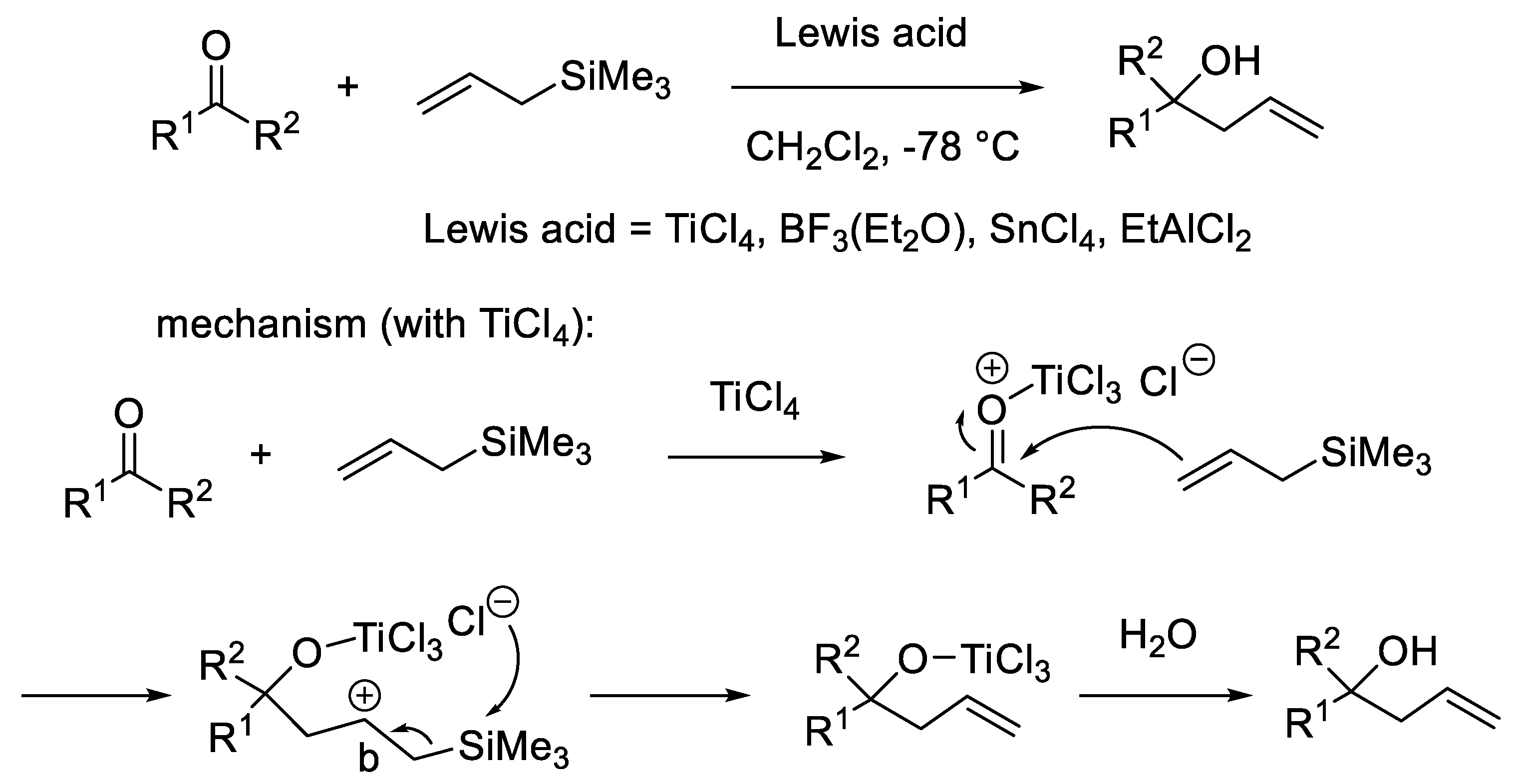
Scheme 1. The Sakurai reaction [1].
Reactions 07 00006 sch001
Scheme 2. Sakurai reaction of α,β-unsaturated aldehydes with allyltrichlorosilanes in the presence of METHOX [24].
Reactions 07 00006 sch002
Scheme 3. Sakurai reactions of aromatic/aliphatic aldehydes with a bifunctional allyldisilane in the presence of a N,N’-dioxide/METHOX [25].
Reactions 07 00006 sch003
Scheme 4. Sakurai reaction of p-nitrobenzaldehyde with allyltrichlorosilane in the presence of an azapyridinomacrocycle N-oxide [26].
Reactions 07 00006 sch004
Scheme 5. Sakurai reactions of aromatic and α,β-unsaturated aldehydes with allyltrichlorosilane in the presence of a tetrahydroisoquinoline-derived N-oxide [27].
Reactions 07 00006 sch005
Scheme 6. Sakurai reaction of aromatic/aliphatic aldehydes with allyltrichlorosilane in the presence of a 1,1’-biscarboline N,N’-dioxide [28].
Reactions 07 00006 sch006
Scheme 7. Sakurai reactions of benzaldehydes with allyltrichlorosilanes in the presence of METHOX [29].
Reactions 07 00006 sch007
Scheme 8. Sakurai reaction of aromatic/α,β-unsaturated aldehydes with allyltrichlorosilane in the presence of a biisoquinoline N,N’-dioxide [30].
Reactions 07 00006 sch008
Scheme 9. Sakurai reaction of aromatic aldehydes with allyltrichlorosilane in the presence of a phosphine–phosphine oxide [31].
Reactions 07 00006 sch009
Scheme 10. Sakurai reaction of benzaldehyde with allyltrichlorosilane in the presence of a simple sulfoxide [32].
Reactions 07 00006 sch010
Scheme 11. Sakurai reaction of aromatic aldehydes with substituted allyltrimethylsilanes in the presence of a disulfonimide [33].
Reactions 07 00006 sch011
Scheme 12. Sakurai reaction of benzaldehydes with a methallylsilane in the presence of a thiophosphoramide [34].
Reactions 07 00006 sch012
Scheme 13. Sakurai reactions of aromatic/aliphatic aldehydes with allyltrimethylsilane in the presence of iminodiphosphorimidates [36].
Reactions 07 00006 sch013
Scheme 14. Three-component aza-Sakurai-type reaction of aromatic/aliphatic aldehydes, 9-fluorenylmethyl carbamate and allyltrimethylsilane in the presence of a disulfonimide [37].
Reactions 07 00006 sch014
Scheme 15. Aza-Sakurai reaction of chlorolactams with substituted allyltrimethylsilanes in the presence of thiourea [38].
Reactions 07 00006 sch015
Scheme 16. Scandium-catalyzed Sakurai reaction of isatins with allylsilanes in the presence of a Pybox ligand [40].
Reactions 07 00006 sch016
Scheme 17. Scandium-catalyzed domino Sakurai/1,2-silyl migration/cyclization reaction of isatins with allylsilanes in the presence of a Pybox ligand [52].
Reactions 07 00006 sch017
Scheme 18. Scandium-catalyzed domino Sakurai conjugate allylation/1,2-silyl shift/cyclization reaction of alkylidene oxindoles with allyltriisopropylsilane in the presence of a Pybox ligand [53].
Reactions 07 00006 sch018
Scheme 19. Scandium-catalyzed Sakurai conjugate allylation of 2-naphthoquinone-1-methides with α-substituted allylsilanes in the presence of a N,N’-dioxide ligand [54].
Reactions 07 00006 sch019
Scheme 20. Silver-catalyzed Sakurai reaction of o-substituted benzaldehydes with allyltrimethoxysilane in the presence of (R)-BINAP as ligand, followed by a Heck reaction [55].
Reactions 07 00006 sch020
Scheme 21. Silver-catalyzed domino Sakurai/transesterification reaction of alkyl 2-formylbenzoates with allyltrimethoxysilane in the presence of (R)-BINAP as ligand [56].
Reactions 07 00006 sch021
Scheme 22. Silver-catalyzed Sakurai reactions of aldehydes/isatins with allyltrimethoxysilane in the presence of (R)-BINAP as ligand [57].
Reactions 07 00006 sch022
Scheme 23. Copper-catalyzed Sakurai conjugate allylation of α-alkylidene β-keto imides with allyltrimethylsilanes in the presence of a bisoxazoline ligand [58].
Reactions 07 00006 sch023
Scheme 24. Copper-catalyzed Sakurai reactions of α-ketoesters with allyltrimethylsilane/methallyltrimethylsilane in the presence of a bisoxazoline ligand [59].
Reactions 07 00006 sch024
Scheme 25. Mercury-catalyzed Sakurai reaction of isatins with allyltrimethylsilane in the presence of (S)-BINAP as ligand [60].
Reactions 07 00006 sch025
Scheme 26. Mercury-catalyzed Sakurai reaction of isatins with (2-substituted) allyltrimethylsilanes in the presence of difluorophos ligand [61].
Reactions 07 00006 sch026
Scheme 27. Cerium-catalyzed Sakurai reaction of aromatic aldehydes with allyltrimethylsilane in the presence of a Pybox ligand [62].
Reactions 07 00006 sch027
Scheme 28. Boron-catalyzed methallylation and allylation reactions of aromatic/aliphatic aldehydes with allyltrimethylsilanes [63].
Reactions 07 00006 sch028
Scheme 29. Aza-Sakurai reactions of aromatic imines with allyltrimethylsilanes in the presence of a combined Brønsted acid system [64].
Reactions 07 00006 sch029
Scheme 30. Sakurai reaction of aromatic/aliphatic aldehydes with functionalized allyltrimethylsilanes in the presence of a dual Cr/photoredox catalysis [65].
Reactions 07 00006 sch030
Disclaimer/Publisher’s Note: The statements, opinions and data contained in all publications are solely those of the individual author(s) and contributor(s) and not of MDPI and/or the editor(s). MDPI and/or the editor(s) disclaim responsibility for any injury to people or property resulting from any ideas, methods, instructions or products referred to in the content.