Article

Effect of Acetic Acid on Morphology, Structure, Optical Properties, and Photocatalytic Activity of TiO2 Obtained by Sol–Gel


by
Sofía Estrada-Flores
1,
Tirso E. Flores-Guia
1,
Catalina M. Pérez-Berumen
1,
Luis A. García-Cerda
2,
Aurora Robledo-Cabrera
3,
Elsa N. Aguilera-González
1 and
Antonia Martínez-Luévanos
1,*
1
Facultad de Ciencias Químicas, Universidad Autónoma de Coahuila, Blvd. V. Carranza s/n, Saltillo 25280, Coahuila, Mexico
2
Centro de Investigación en Química Aplicada, Blvd. Enrique Reyna, Hermosillo 140, San José de los Cerritos, Saltillo 25294, Coahuila, Mexico
3
Instituto de Metalurgia, Laboratorio de Química de Superficies, Universidad Autónoma de San Luis Potosí, Av. Sierra Leona 550, San Luis Potosí 78210, San Luis Potosís, Mexico
*
Author to whom correspondence should be addressed.
Reactions 2026, 7(1), 5; https://doi.org/10.3390/reactions7010005 (registering DOI)

Submission received: 28 June 2025 / Revised: 23 December 2025 / Accepted: 6 January 2026 / Published: 10 January 2026

Abstract

Titanium oxide (TiO2) is of great interest in solar cell manufacturing, hydrogen production, and organic compound photodegradation. The synthesis variables and methodology affect the morphology, texture, crystalline structure, and phase mixtures of TiO2, which, in turn, affect the optical and catalytic properties of TiO2. In this work, the effect of acetic acid as a catalyst and chelating agent on the morphology, texture, crystal structure, optical properties, and photocatalytic activity of TiO2 samples obtained using the sol–gel method with sodium dodecyl sulfate (SDS) as a template was investigated. The results indicated that acetic acid not only catalyzes the hydrolysis of the TiO2 precursor but also acts as a chelating agent, causing a decrease in crystallite size from 18.643 nm (T7 sample, pH = 6.8, without addition of acetic acid) to 16.536 nm (T2 sample, pH = 2). At pH 2 and 3, only the anatase phase was formed (T2 and T3 samples), whereas at pH 5 and 6.8, in addition to the anatase phase, the brookite phase (11.4% and 15.61% for samples T5 and T7, respectively) was formed. The band-gap value of TiO2 decreased with decreasing pH during synthesis. Although the T2 sample had the highest specific surface area and pore volume (232.02 m2g−1 and 0.46 gcm−3, respectively), the T3 sample had better efficiency in methylene blue dye photodegradation because its bird-nest-like morphology improved photon absorption, promoting better photocatalytic performance.

1. Introduction

Semiconductor materials are currently an important part of human activities, enabling the development of telecommunications and transport; in addition, their properties are so versatile that they can also be used in energy and the environment. In this context, TiO2 (titanium oxide) has raised great interest in solar cell manufacturing [1,2], hydrogen production [3,4], and the degradation of toxic organic compounds [5], among other applications. What makes TiO2 popular in these types of applications is its ability to absorb photons, generate electron–hole pairs, act as a catalyst in oxidation–reduction reactions [6], and function as a charge carrier material [7]. This material has three main polymorphs—anatase, rutile, and brookite—of which anatase stands out because it is obtained at a lower temperature than the other polymorphs, has a higher degree of hydroxylation on its surface, and can generate mobile hydroxyl radicals on its surface [6,8].
Notably, although TiO2 has been extensively studied, careful selection of the synthesis method is important, since the semiconductor’s characteristics and properties depend on it, affecting its efficiency in the process in which it is used. For example, it has been shown that TiO2 morphology can be linked to its efficiency in degrading organic compounds by photocatalysis [9]. The sol–gel method is the most popular for TiO2 synthesis because it allows its preparation at low temperatures, but the variables to be controlled can make the process somewhat complex. On the other hand, the type and concentration of catalysts used to control the hydrolysis and condensation rates of TiO2 precursors are two factors to be considered. Catalysts are acids or bases used to adjust the pH of a precursor solution; some catalysts can also act as chelating agents. During the sol–gel synthesis process of TiO2, acetate groups of acetic acid react with titanium isopropoxide to stop or slow the hydrolysis of the alkoxide, slowing condensation, coalescence, and subsequent crystal growth [10]. It has been previously reported that small crystallite sizes can decrease the material’s energy gap [11].
In some works, the use of surfactants in sol–gel synthesis has been reported to control the characteristics and properties of TiO2, such as morphology and texture, obtaining porous materials when cationic surfactants such as cetyltrimethylammonium bromide (CTAB) are used [12]. Nagamine et al. mentioned that the use of anionic surfactants such as dodecyl sodium sulfate (SDS), along with hydrochloric acid (HCl) as a catalyst for TTIP hydrolysis, favors TiO2 formation with the titania phase [13]. Estrada-Flores et al. investigated the relationship between the morphology, porosity, and photocatalytic activity of TiO2 obtained using the sol–gel method assisted with ionic and nonionic surfactants; in their synthesis procedure, they used acetic acid as a catalyst at pH 3. All samples formed the anatase crystalline phase, regardless of whether an ionic surfactant (CTAB and SDS) or a nonionic one (polyethylene glycol, PEG) was used. However, the morphology, texture, and band-gap of the TiO2 samples were very different, resulting in varying degrees of photocatalytic activity [14]. Therefore, it is important to consider, in addition to the type of surfactant used as a template for TiO2 particle formation, the type and concentration of the acid catalyst for pH adjustments.
Yuenyongsuwan et al. [15] investigated the influence of surfactant type on the control of TiO2 synthesis with a given crystalline phase. The pH value, temperature, and method (microemulsion and surfactant-assisted hydrothermal methods) were varied. They used the ionic surfactants SDS and CTAB and the nonionic surfactant TritonX-100. In the microemulsion synthesis method, they used sodium hydroxide (NaOH) as a catalyst to adjust the pH to 10 and HCl to adjust the pH to 2. On the other hand, they did not use a catalyst to adjust the pH (the pH value is not reported) using the hydrothermal synthesis method. The results indicated that the stability, size, and shape of the surfactant micelles were the main factors that determined the TiO2 phase formed. Using the microemulsion method at pH 2 and 30 C, the rutile and anatase phases were formed with the surfactants CTAB and TritonX, whereas only the anatase phase was formed using the SDS surfactant. Increasing the temperature to 90 °C led to the formation of pure phases: with surfactants CTAB and TritonX, the rutile phase was obtained, and with the SDS surfactant, the anatase phase. In contrast, the hydrothermal method formed only the anatase phase, regardless of the type of surfactant. The photocatalytic activity of the various samples depended on the phase mixture, specific surface area, and morphology. This is of relevance because mixtures of crystalline phases in a material can be beneficial for certain applications, such as heterogeneous photocatalysis [12,16]. Therefore, it is obvious that the parameters used during TiO2 synthesis affect its morphology, texture, crystalline phases formed, and optical and photocatalytic properties.
For this reason, the present work aims to study the effect of pH in the acid range 6.8–2 on the morphology, texture, crystal structure, and optical properties of TiO2 obtained by sol–gel, using acetic acid as a catalyst agent for the titanium isopropoxide (TTIP) hydrolysis reaction and the anionic surfactant SDS as a template.

2. Materials and Methods

2.1. Reagents

The following reagents were used: titanium isopropoxide (TTIP, 97% Sigma-Aldrich, St. Louis, MO, USA), sodium dodecyl sulfate (SDS, 99% Sigma-Aldrich), glacial acetic acid (99.95% purity, CTR Scientific, Monterrey, Mexico), anhydrous ethanol (CTR Scientific, Mexico), deionized water, and methylene blue (MB, Sigma-Aldrich).

2.2. TiO2 Synthesis

The sol–gel method was used to synthesize the different TiO2 samples from a solution of ethanol and water (1:1, v/v) with a measured pH value of 6.8. SDS surfactant was added in sufficient quantity to obtain a concentration of 1.64 × 10⁻² M, which is twice its critical micellar concentration (CMC), and stirred for 20 min. Subsequently, TTIP was slowly added to the previous solution and left in constant agitation for 24 h at 25 °C. At the end of this time, the temperature was raised to 60 °C, and the agitation continued for another 24 h. Finally, the sample was collected by centrifugation, and the recovered solid product was washed three times with a solution of ethanol and water (1:1, v/v), separating the solid from the liquid again by centrifugation. Subsequently, the white product obtained was dried in a vacuum oven for 24 h. After drying, the sample was placed in an alumina crucible and heat-treated at 450 °C for 4 h. The product obtained was called the T7 sample.
To evaluate the effect of using acetic acid as a catalyst and complexing agent on the morphology, structure and optical properties of TiO2 and to investigate the effect of these changes on its photocatalytic activity, the previous procedure was repeated with different amounts of glacial acetic acid added to adjust the pH value to 5, 3, and 2 (T5, T3, and T2 samples, respectively). An additional TiO2 synthesis experiment was also performed using a concentrated solution of nitric acid (HNO3) as the catalyst, adjusting the pH of the ethanol and water solution to a value of 2; this sample was named THNO3. Calcination of all samples was performed at 450 °C for 4 h.

2.3. Characterization

The TiO2 samples were characterized by infrared spectroscopy using a Thermo Scientific Nicolet iS10, Thermo Fisher Scientific Inc., Waltham, MA, USA, equipped with an attenuated total reflectance (ATR) accessory. To determine the crystal structure of the samples, an X-ray diffractometer, Rigaku Ultima IV, Rigaku Holdings Corporation, Tokyo, Japan (Cu kα, D/teX detector, angular pitch 0.02°, and velocity of 2°/min) with Bragg–Brentano geometry was used. Sample morphology was studied using a JEOL JSM-7800F scanning electron microscope, JEOL Ltd., Tokyo, Japan. Likewise, absorbance and diffuse reflectance spectra were obtained using a Perkin Elmer Lambda 35 spectrometer, PerkinElmer, Inc., Waltham, MA, USA, equipped with an integrating sphere. The surface area of the TiO2 samples was determined by the BET technique (Brunauer–Emmett–Teller), Danaher Inc., Washington, WA, USA. The pore size distribution was calculated from the desorption isotherm of the samples using the BJH (Barrett–Joyner–Halenda) theory.

2.4. Rietveld Refinement

The crystal structures of the TiO2 samples were refined using the Rietveld method with FullProf 2000 software. The spatial group I41/amd was used for anatase, and the lattice parameters were previously obtained from Le Bail adjustment of the diffractograms with FullProf software.

2.5. Photocatalytic Activity

The photocatalytic activity of the synthesized TiO2 samples was studied using methylene blue as a model dye; 50 mL of a 20 ppm MB solution was added to an Erlenmeyer flask containing a photocatalyst concentration of 1 g/L. The different systems were incubated in the dark at 25 °C for 30 min to ensure dye adsorption on the photocatalysts. Subsequently, they were placed under solar irradiation, and the concentration of methylene blue in solution was monitored by UV-Vis spectroscopy (Jenway 7315 equipment, Cole-Parmer Inc., Chicago, IL, USA) for 90 min. For comparison, the photodegradation kinetics of methylene blue were performed with the commercial sample P25. The average solar irradiance on October 28, 29, and 30, 2024, in Saltillo, Coahuila, Mexico, was 435.39 W/m2.

3. Results and Discussion

3.1. Effect of Acetic Acid on the Structure and Morphology of TiO2

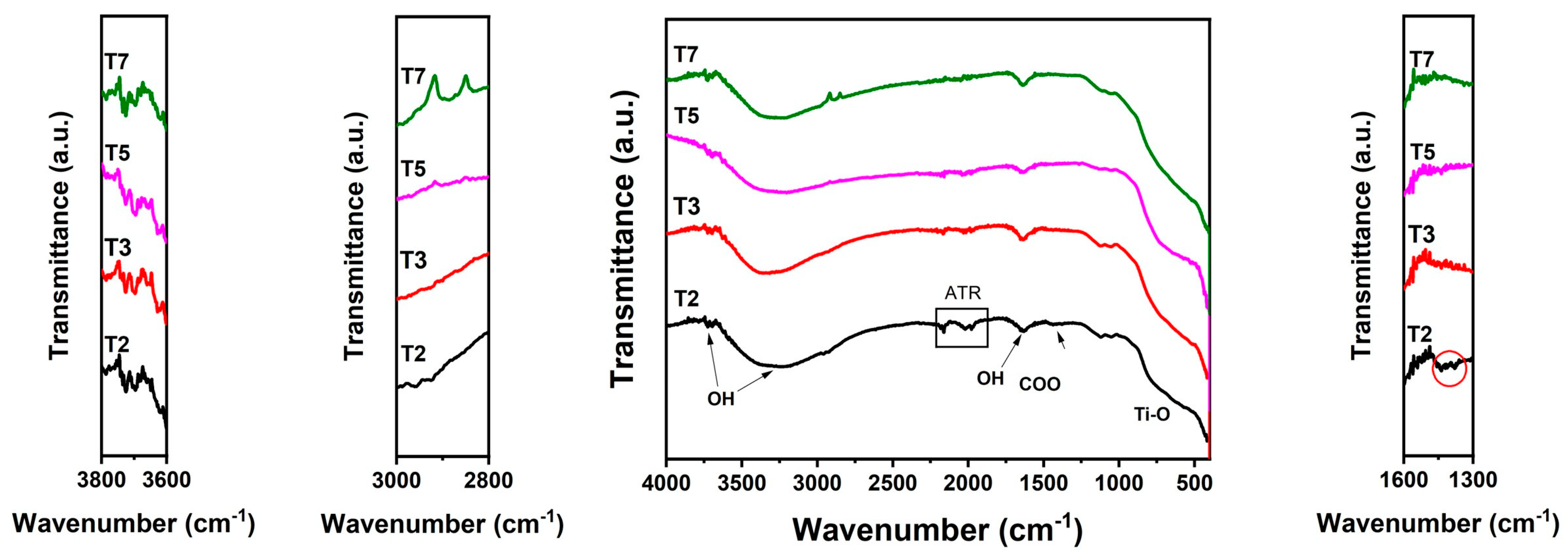
Figure 1 shows the infrared spectra of the T7, T5, T3, and T2 samples. The characteristic band around 800 cm−1 is assigned to the stretching vibration of Ti–O bonds in the TiO2 samples. The spectra also present a series of bands that indicate the presence of OH groups in the TiO2 samples [17,18]. In all spectra, two small bands are observed at 3725 and 3696 cm−1 (see the spectra of the four samples in the figure inserted on the left, from 3800 to 3600 cm−1), corresponding to the νO–H stretching of hydroxyl groups. The 3725 cm−1 band corresponds to free Ti–OH groups, and the 3696 cm−1 band is due to the presence of OH groups joined by hydrogen bonds, as they are in adjacent unit cells. Free OH groups commonly occur in planes of higher electron density of anatase, in this case (101), and are characteristic of oxygen vacancies on the surface [19]. The bandwidth observed from 3600 to 3000 cm−1 corresponds to the superposition of the symmetrical and asymmetrical vibration bands of the hydroxyl groups of coordinated water to Ti4+ centers [20]. Likewise, the band at 1640 cm−1 corroborates the presence of a hydroxyl group on the TiO2 surface [17,18,21]. In 2005, Li et al. studied the surface chemistry of water adsorbed on anatase [22]. They reported that infrared spectra of anatase samples show a small absorption band at 1626 cm−1, corresponding to the H–O–H stretching of physiosorbed water on its surface. Physisorption of water molecules in the heat-treated TiO2 samples could have occurred during storage and handling for characterization. The presence of this group on the surface of the TiO2 samples can be beneficial for photocatalysis because they act as hole (+) capture centers, preventing exciton recombination and producing hydroxyl radicals that act as strong oxidants [23].
The infrared spectrum of the T2 sample shows two small bands between 3000 and 2900 cm−1, which could correspond to O–H vibrations associated with hydrogen bonding interactions. The infrared spectra of samples T5 and T7 show two small bands at 2920 and 2849 cm−1, corresponding to the C–H stretching vibrations of alkane groups (see the spectra of the four samples on the left, from 3000 to 2800 cm−1). Praveen et al. reported the synthesis and characterization of nanocrystalline TiO2 by the sol–gel method using TTIP as a precursor and isopropyl alcohol. They investigated the structure of the prepared TiO2 by FTIR spectroscopy. The FTIR transmission spectrum of TiO2 nanoparticles annealed at 450 °C in air for 4 h presented two weak bands at 2920.55 and 2849.32 cm−1, which were assigned to the characteristic frequencies of residual organic species not completely removed by ethanol and deionized water washing and to C–H stretching vibrations of alkane groups [21].
In the spectrum of the T2 sample, which was synthesized with a greater amount of acetic acid to adjust the pH to 2 during the hydrolysis and consolidation reactions, two bands at 1449 cm−1 and 1381 cm−1 are noticed, corresponding to the acetate groups attached to the Ti centers (see the spectra of the four samples in the figure inserted on the right). The complex formed between the acetate groups and the titanium atoms is stable under the heat-treatment conditions used in this work. The bidentate complex formed on sample T2 may degrade at higher temperatures than those used in this work. In 2008, Parra et al. investigated the phase formation and structural and morphological features of pure anatase using a modified sol–gel method via the chemical modification of titanium isopropoxide with glacial acetic acid. They concluded that acetate acts as a bidentate rather than a monodentate or bridging ligand between two Ti centers. They also observed that in the presence of excess acetic acid, the maximum coordination number is limited to two acetates per Ti [24]. In the FTIR–ATR spectra of all TiO2 samples, small absorption bands are observed at 2600 and 1900 cm−1, corresponding to the diamond component of the ATR module of the infrared spectrophotometer.
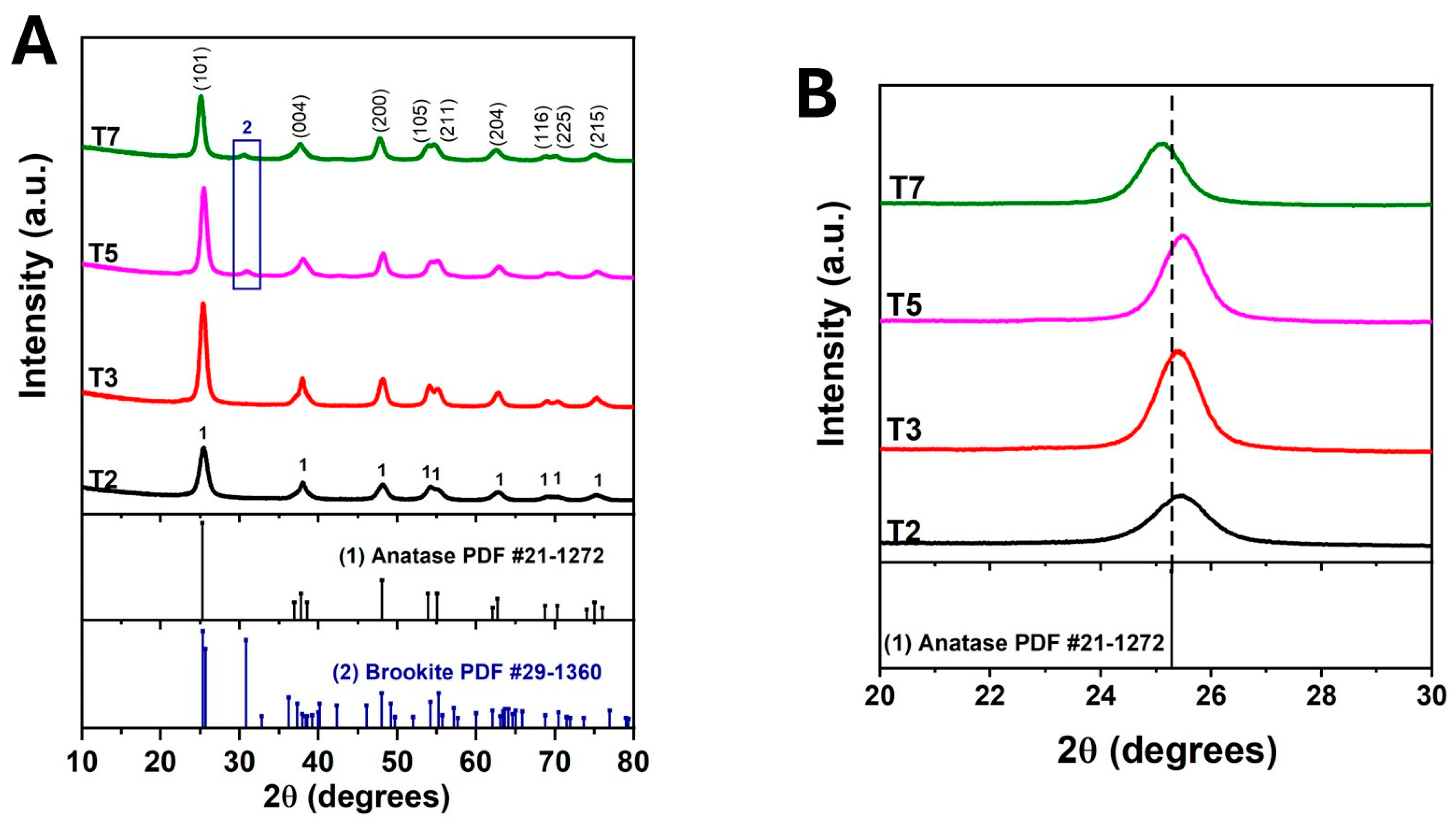
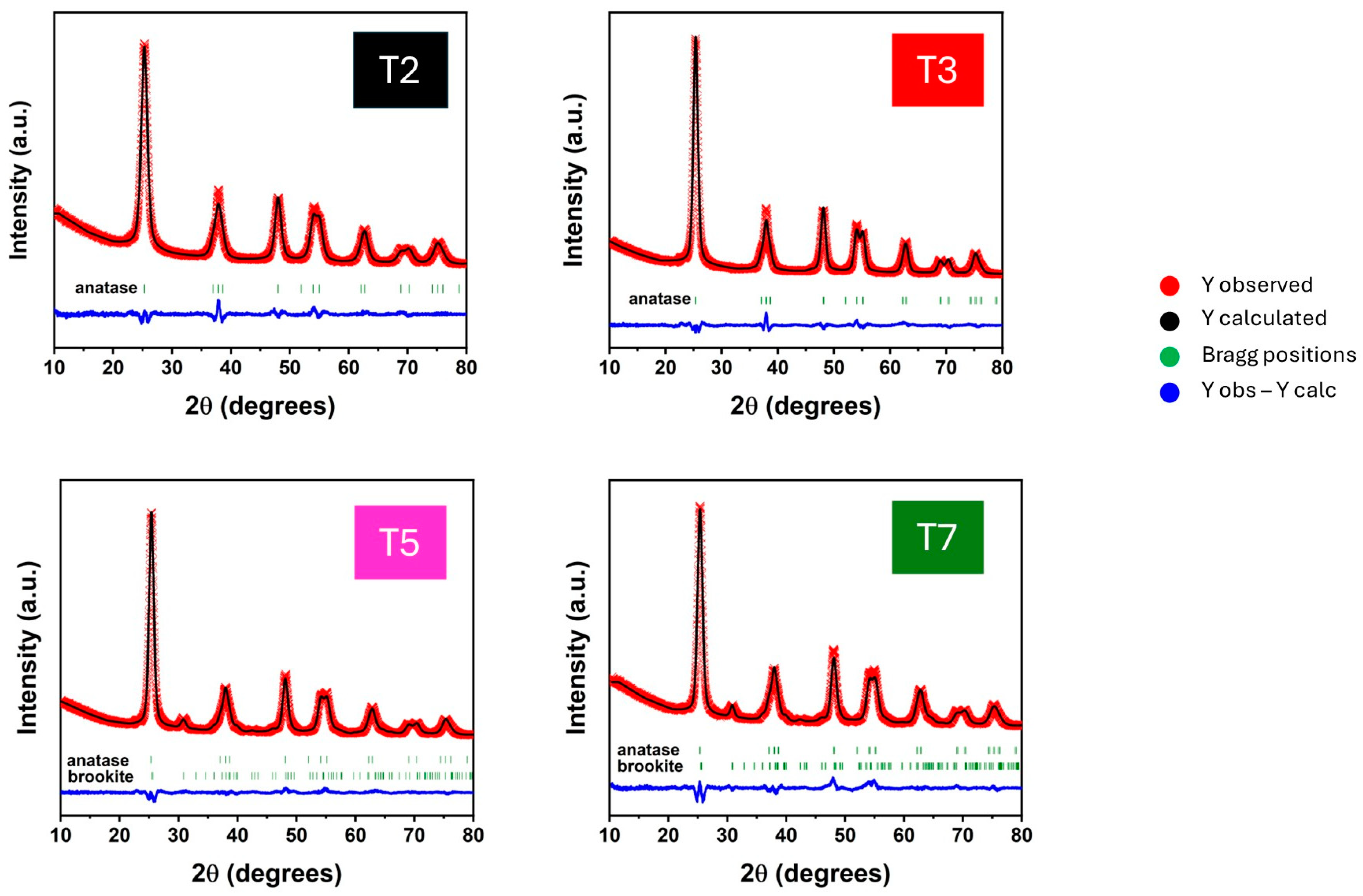
Figure 2A shows the diffractograms for the TiO2 samples synthesized at different pH values. The main crystalline phase in all samples is anatase (PDF #21-1272). In the diffractograms of the T5 and T7 samples, a small peak is observed at 31°, indicating the presence of the brookite crystalline phase (PDF #29-1360).
The average crystallite sizes of TiO2 anatase in the samples were calculated using the Debye–Scherrer equation (Equation (1)):
D = Kλ/βcos θ
where D is the size of the crystallite, K is a dimensionless shape factor (0.89), λ is the wavelength of Cu Kα radiation having a value of 1.5406 Å, β is the broadening of the anatase peak with higher intensity (101), and θ is the angle of X-ray diffraction [25]. The results obtained were 16.536 nm and 18.288 nm for the T2 and T3 samples, respectively; in this case, the size of the crystallite increased as the pH of the synthesis increased, while from pH 5 to 6.8, a slight decrease in the size of the crystallite was observed (18.979 and 18.643 nm). An amplification of the anatase peak with the highest intensity (101) (Figure 2B) was performed, which showed that increasing the amount of acetic acid used to adjust pH leads to a decrease in crystallinity. Although an aqueous environment favors the rapid hydrolysis of the TTIP precursor, it is possible that acetate groups can chelate Ti centers, slowing and controlling alkoxide hydrolysis [26].
It has been previously reported that small crystallite sizes help to decrease the energy gap of the material [27], so anatase synthesis at acidic pH values or at high acetic acid concentrations could be beneficial in reducing crystallite size and, therefore, decreasing the energy gap of TiO2. On the other hand, the crystallite sizes of all TiO2 samples synthesized in this work are smaller than that of commercial titanium oxide P25, which has a size of 25 nm, according to Marinho et al. [28].
In the amplification of the diffractogram, it can also be observed that the sample without acetic acid (sample T7, pH = 6.8) shows a shift in the peak corresponding to the crystallographic plane (101) towards lower degrees, indicating the expansion of an anatase single cell. This may be because the rate of crystal formation is faster than when acetic acid is used, which not only catalyzes the hydrolysis reaction but also forms complexes with titanium species in solution.
The expansion of the anatase single cell was verified by performing structural refinement using the Rietveld method. The lattice parameters a, b, and c of anatase are presented in Table 1. The results indicate that the lattice parameter a increases slightly as pH increases. The cell volumes are very similar for samples synthesized using acetic acid; however, the T7 sample synthesized without a catalyst has a higher volume. Likewise, the fraction of brookite present in TiO2 samples was determined and was found to increase with pH. Figure 3 shows the adjustments of X-ray diffraction patterns of the anatase samples.
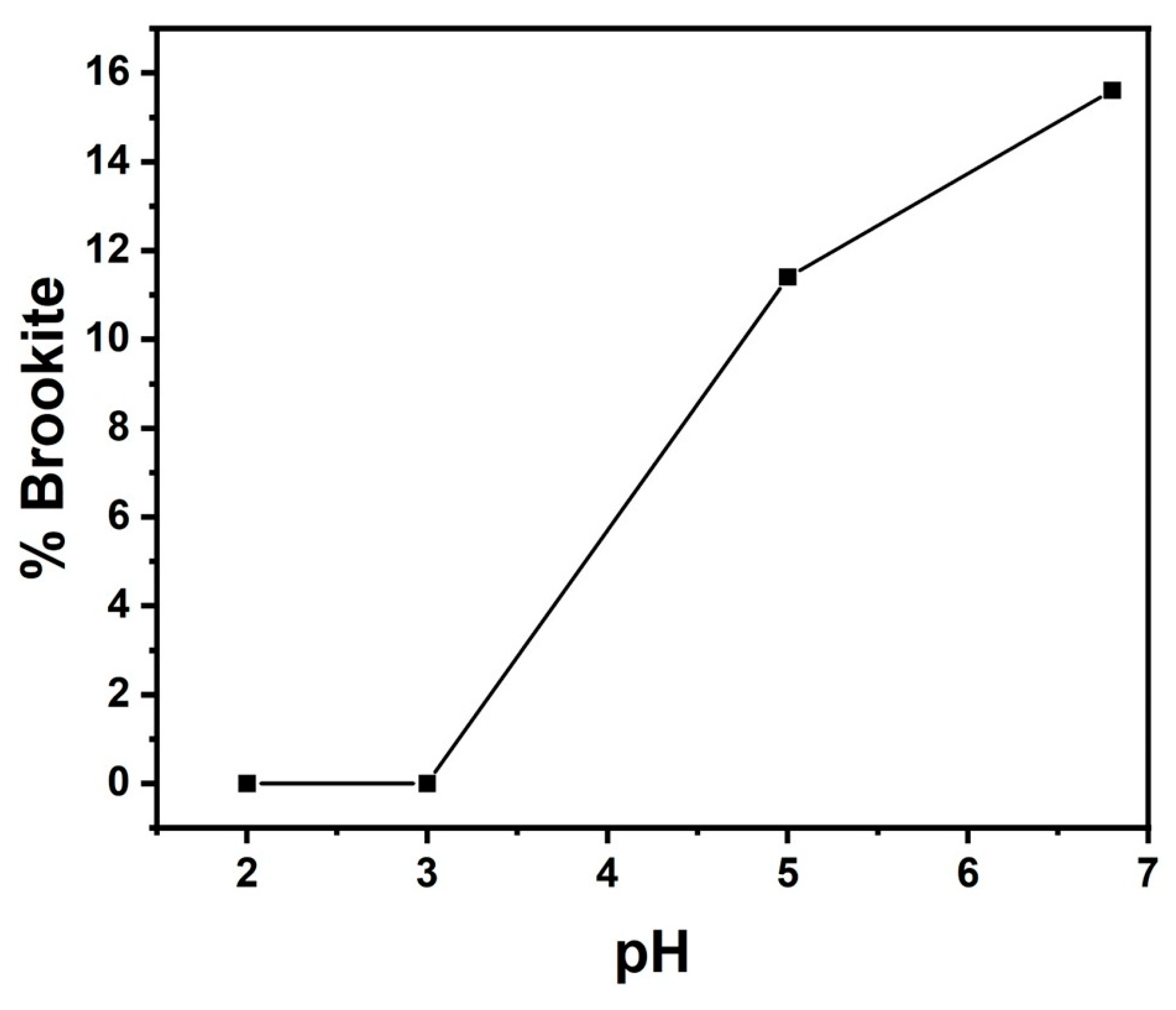
Figure 4 shows the effect of pH of the synthesis medium on the formation of the brookite phase in the TiO2 samples; the fraction of this phase increases with increasing pH. At pH 2 and 3, only the anatase phase is formed (T2 and T3 samples), whereas at pH 5 and 6.8, the T5 and T7 samples contain 11.4% and 15.61% of the brookite phase, respectively.
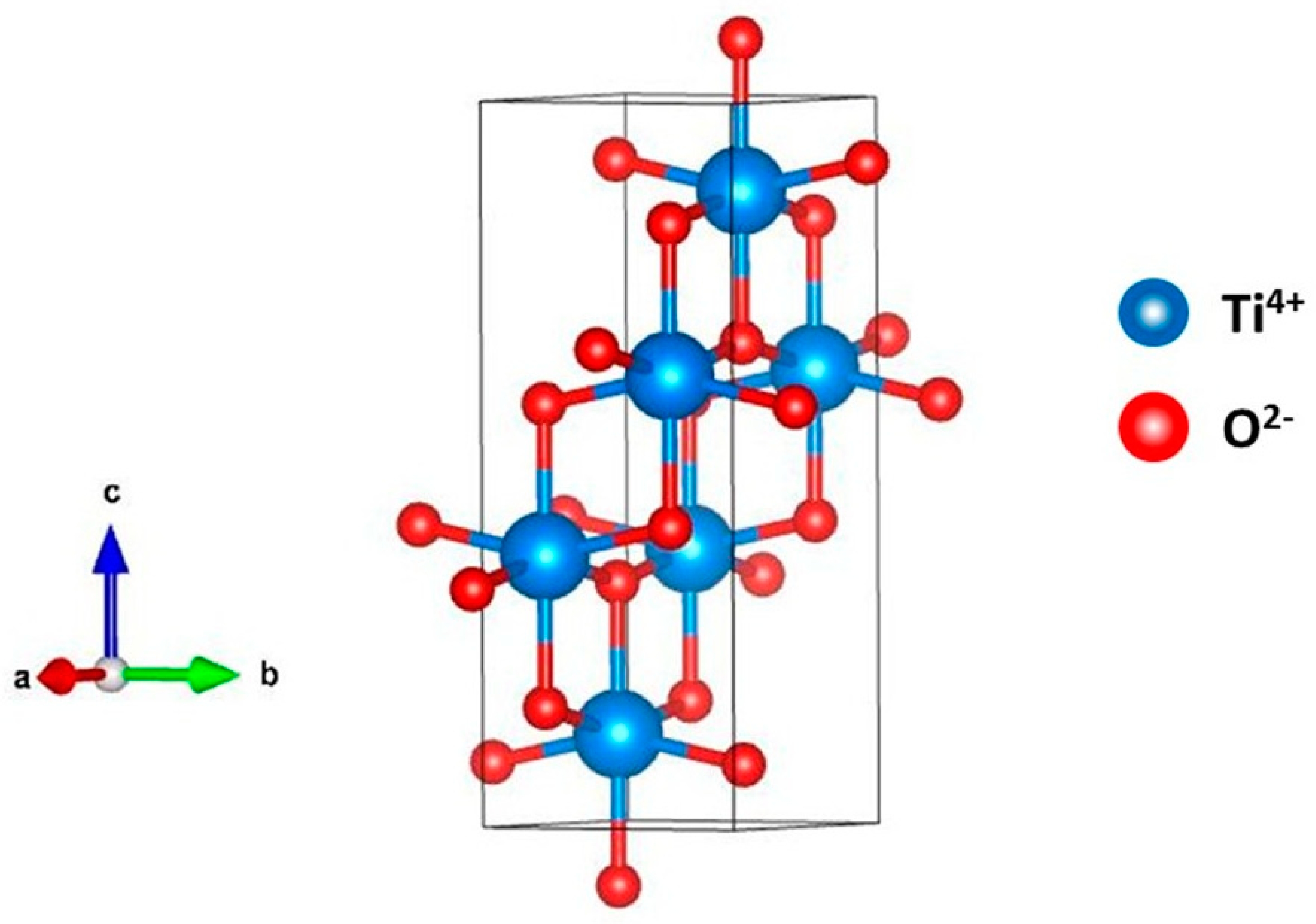
Figure 5 shows the anatase single cell, constructed with VESTA 3.5.8 software [29], using data obtained from the Rietveld refinement of X-ray diffraction patterns of the TiO2 samples. The anatase in all samples presents a tetragonal structure centered on the body, spatial group I41/amd.
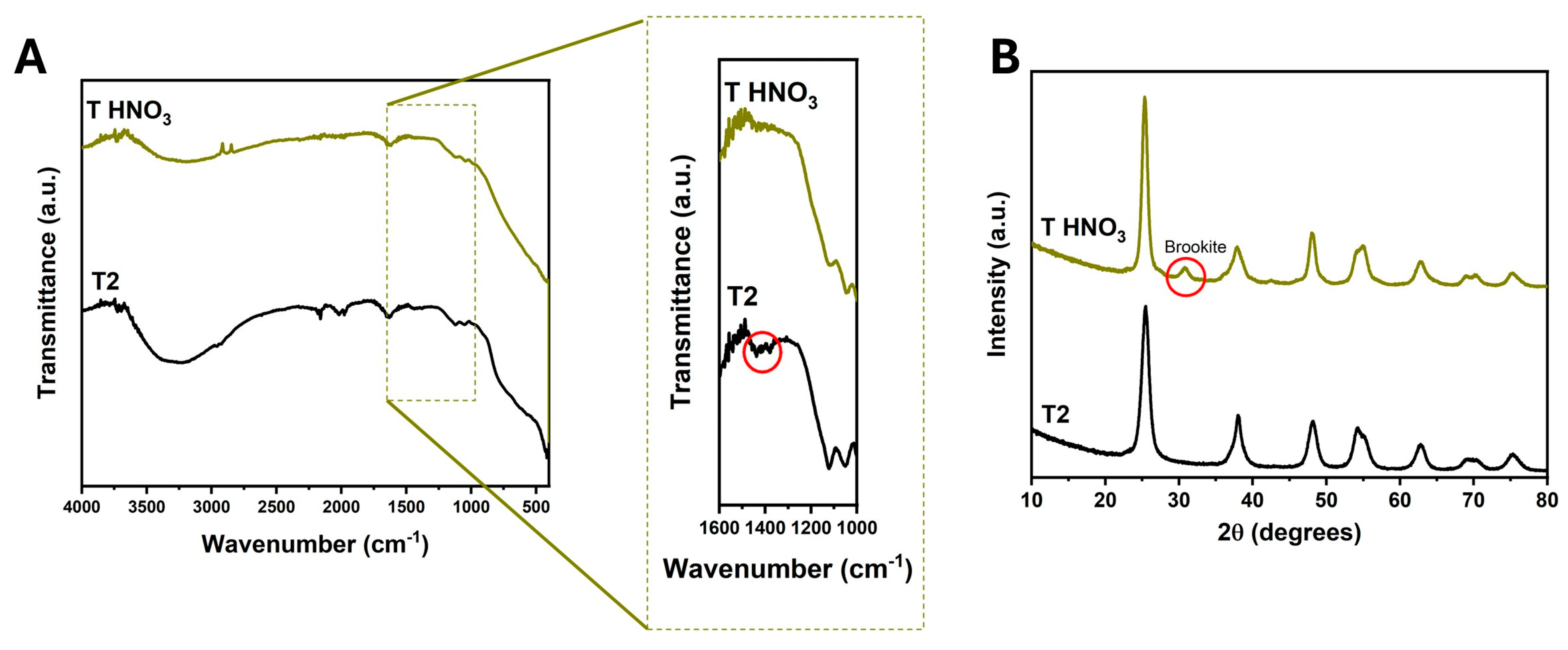
To investigate the effect of using two different acid catalysts, the T2 sample was compared with the sample synthesized using HNO3 as the catalyst. The infrared spectra of both samples are similar (Figure 6A), except that the THNO3 sample lacks bands at 1449 and 1381 cm−1 characteristic of the C–O stretch of acetate groups, as expected. Figure 6B compares the diffractograms of the T2 and THNO3 samples. Regarding the crystalline phases present, it is observed that both samples mainly contain the anatase phase; however, in the sample in which nitric acid is used as an acid catalyst, the formation of brookite is promoted (22%), which does not occur when synthesizing TiO2 with acetic acid at the same pH. In Figure 6B, the main diffraction peak of the brookite phase in the diffractogram of THNO3 sample is highlighted with a red circle. Similar results were reported by Leyva-Porras et al., who obtained a mixture of anatase and brookite when using nitric acid as a catalyst and pure anatase when using acetic acid [30]. On the other hand, Khalil et al. reported the formation of anatase only with acetic acid and a mixture of anatase and rutile with nitric acid in TiO2 synthesis [10]. It has been proposed that brookite formation at low pH is attributed to nitrate ions being less complex than acetate ions produced by the dissociation of acetic acid, promoting this phase formation [16]. The crystallite sizes obtained were 16.536 and 19.13 nm for the T2 and THNO3 samples, respectively.
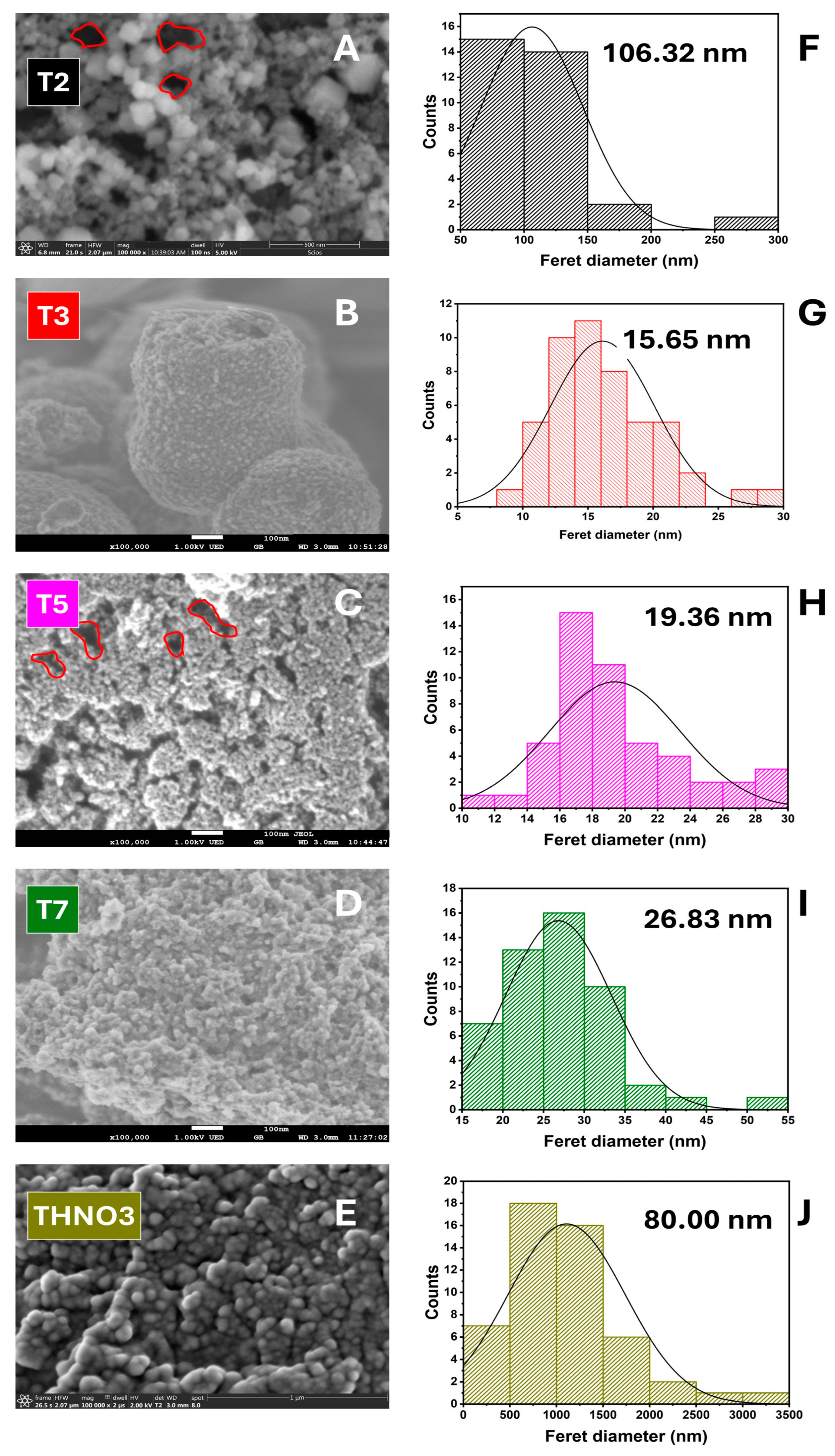
Figure 7 shows the micrographs taken at 100,000X magnification of the T2, T3, T5, T7, and THNO3 samples (Figure 7A, 7B, 7C, 7D, and 7E, respectively) and the particle size distribution (Figure 7F, 7G, 7H, 7I, and 7J, respectively). The morphology of all TiO2 samples is porous agglomerates formed by small particles. In some samples, these agglomerates form pores, marked with red color, as seen in the T2 and T5 samples (Figure 7A,C). In the T3 sample (Figure 7B), high porosity results from the spherical agglomerates composed of very small particles, with an average size of 15.65 nm (Figure 7G). The T7 sample has small pores formed by the agglomeration of small particles and large pores formed between the agglomerates (Figure 7D). The porous morphology of the samples can help to increase the specific surface area, which is directly related to adsorption capacity and the efficiency of some processes, such as photocatalysis [14,31]. Likewise, the presence of interconnected pores can increase light scattering and promote energy absorption in the visible region of the electromagnetic spectrum. TiO2 samples had different average particle sizes; the values, in ascending order, were 15.65 nm, 19.36 nm, 26.83 nm, 80.00 nm, and 106.32 nm for samples T3, T5, T7, THNO3, and T2, respectively.
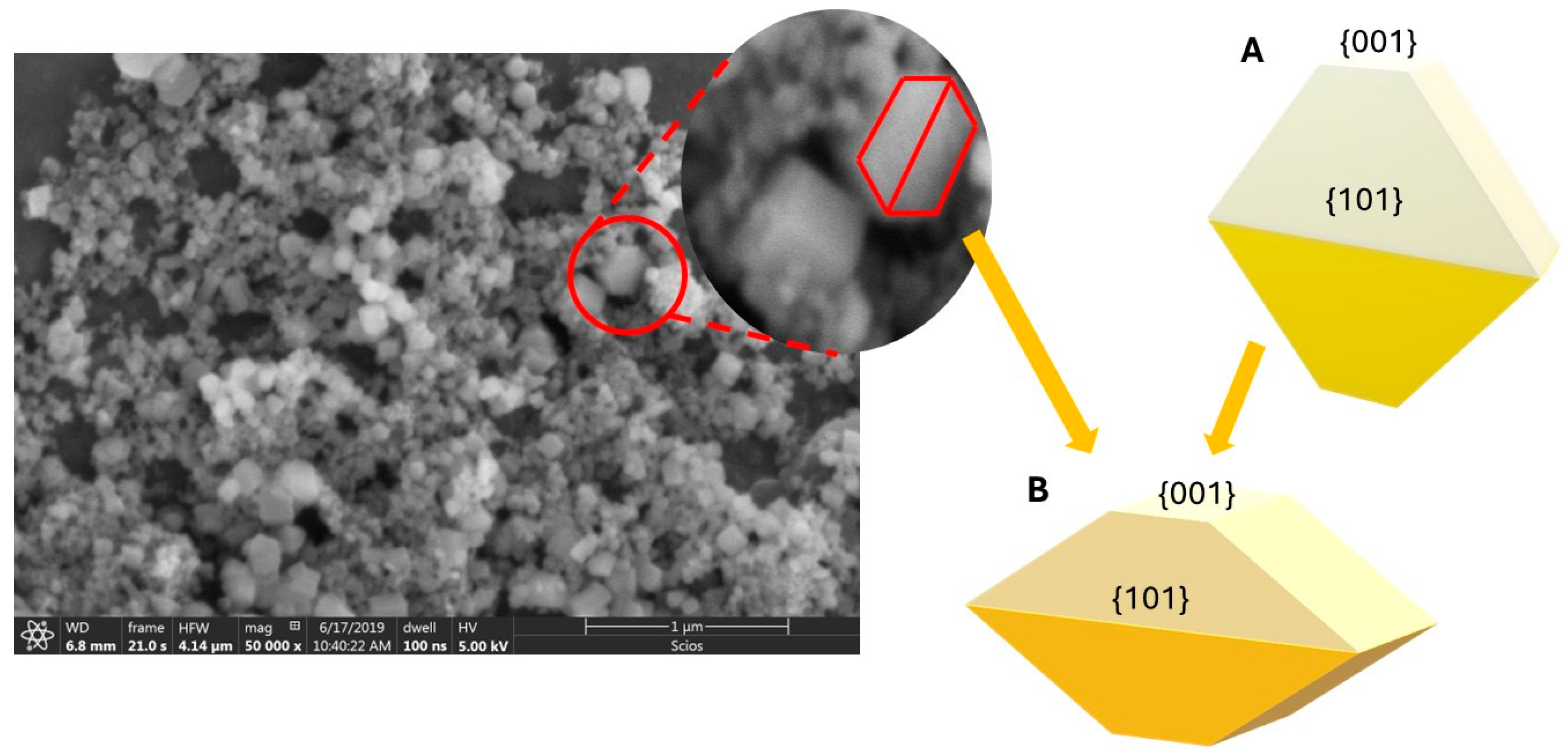
Figure 8 shows the morphology of the T2 sample more clearly. In the image, the presence of crystals with a flattened octahedral bipyramid shape is observed. It has been reported that, under equilibrium conditions, it is more common for thermodynamically stable faces such as {101} to grow larger (Figure 8A), but when a capping agent such as acetic acid is used, high-energy faces such as {001} can stabilize and therefore grow larger (Figure 8B); this form is present in the T2 sample, in which a greater amount of acetic acid was used to adjust the pH to 2 during synthesis [32]. Because of the above, it is possible that this sample is more reactive because the {001} faces have a greater number of active sites to react with the surrounding environment [33].

3.2. Effect of Acetic Acid on the Texture and Optical Properties of TiO2

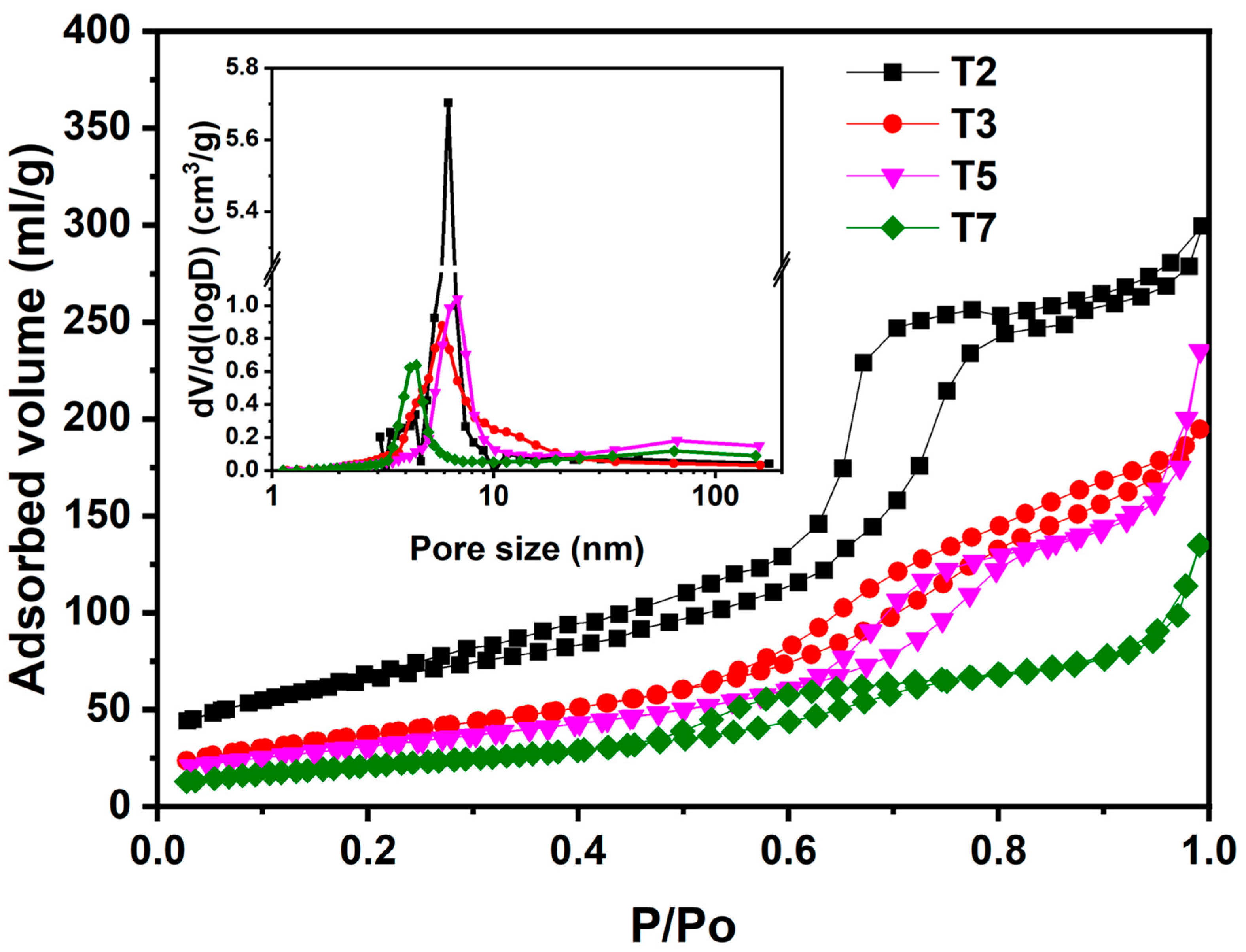
The porosity observed in the micrographs presented in Figure 7 is characteristic of samples with a high specific surface area; to verify this, the specific surface area of the TiO2 samples was analyzed using the N2 adsorption technique. The adsorption–desorption isotherms obtained are presented in Figure 9. The T3, T5, and T7 samples present a combination of type II and IV isotherms, with a combined hysteresis loop of types H1 and H3, indicating the presence of macropores and mesopores. On the other hand, the T2 sample presents an isotherm of type IV, which is characteristic of mesoporous materials, and a hysteresis loop of type H2; this sample is the one with the largest specific surface area, as shown in Table 2. It can be said that all samples have a specific surface area value higher than that of TiO2 P25, which is between 50 and 58.2 m2g−1 [28,34,35]. The distribution and average pore diameter were determined according to the BJH (Barret–Joyner–Halenda) theory using the desorption isotherm data for each sample. The results are presented in Table 2, and the pore size distribution is presented in the figure inserted in Figure 9. The pores in the T2 sample have an average size of 3.18 nm, while the pores in the T7 sample have a size of 10.52 nm. The use of acetic acid as a catalyst favored the formation of smaller mesopores and, consequently, a higher pore volume in the T2 sample (0.46 gcm−3), which is more than twice as high as the T7 sample (0.20 gcm−3).
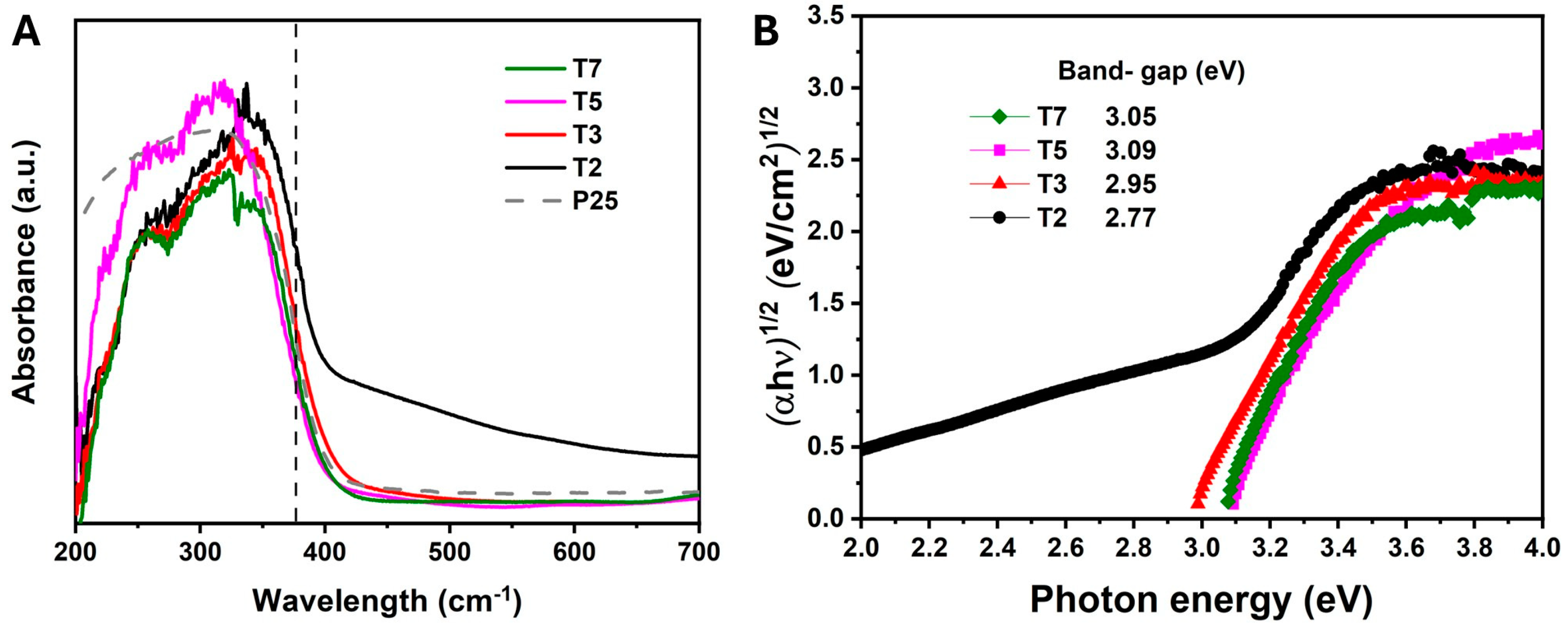
Figure 10A shows the absorption spectra of the samples. It can be seen that the samples absorb light with great intensity in the UV region; specifically, the T2 sample absorbs a large amount of light in the visible region of the electromagnetic spectrum, while the other samples also absorb light in this region, but with less intensity, presenting the following order: T2 > T3 > T5, T7. The forbidden energy gap or band-gap (Eg) of each sample was determined using a Tauc graph, considering n = 2 for allowed indirect transitions [36]; the results are presented in Figure 10B. The values obtained were 3.05, 3.09, 2.95, and 2.77 eV for the T7, T5, T3, and T2 samples, respectively. The samples with the lowest Eg values are those synthesized at pH 2 and 3 (T2 and T3, respectively), which may be due to their morphology, pure anatase phase, and lower crystallite size value.
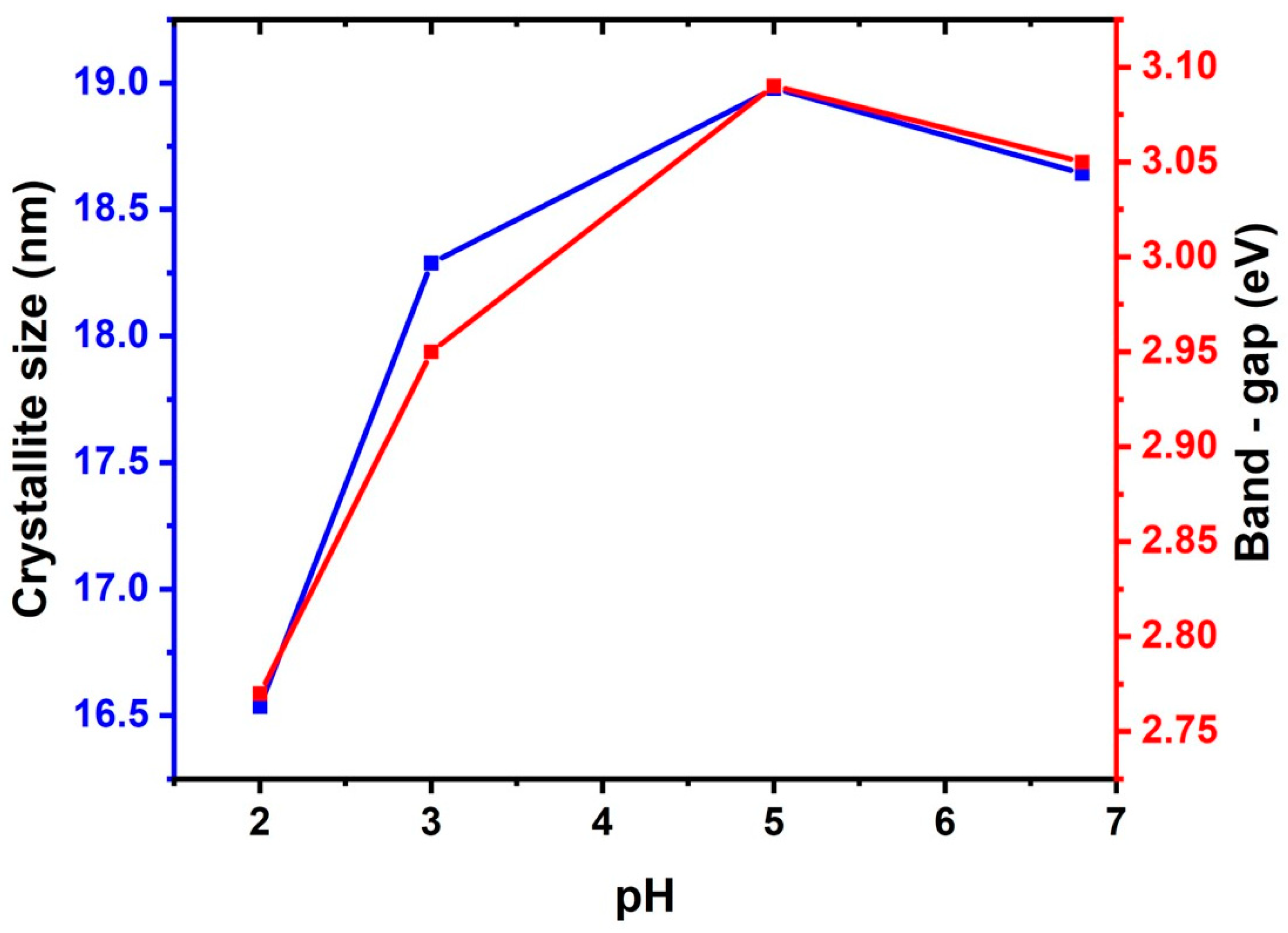
It has been reported that crystallite size can influence the band-gap value, which decreases with decreasing crystallite size and vice versa. This synergistic effect can be seen in Figure 11, which plots the effect of pH during synthesis on the crystallite size and band-gap value of the TiO2 samples obtained at pH 2, 3, 5, and 6.8 (T2, T3, T5, and T7 samples, respectively). Increasing pH increases the crystallite size, except for the T7 sample, in which no catalyst was used to adjust the pH. Qin et al. reported a P25 band-gap of 3.05 eV [37]. The Eg values of all the samples synthesized in this work were lower than that of this commercial titanium oxide. The T2 and T3 samples can be activated with visible light to achieve exciton formation and thus promote oxide-reduction reactions. Therefore, they could be useful in processes such as organic compound degradation, heavy metal reduction, or hydrogen (H2) production, among others.
The low band-gap values of all our TiO2 samples can also be attributed to the presence of hydroxyl groups (Ti–OH) on their surface, which can increase the amount of light harvested, leading to a shift in the adsorption edge and a decrease in band-gap energy, as reported by Deng et al. [38]. On the other hand, in our study, sample T2 was synthesized at pH 2 using a large amount of acetic acid. The infrared spectrum of sample T2 showed absorption bands associated with the presence of C–O on its surface, corresponding to the formation of a bidentate acetate–titanium complex. This complex could also be responsible for sample T2 absorbing a greater quantity of photons in the visible region and causing a greater decrease in the band-gap to 2.77 eV.

3.3. Effect of Acetic Acid on the Photocatalytic Activity of TiO2

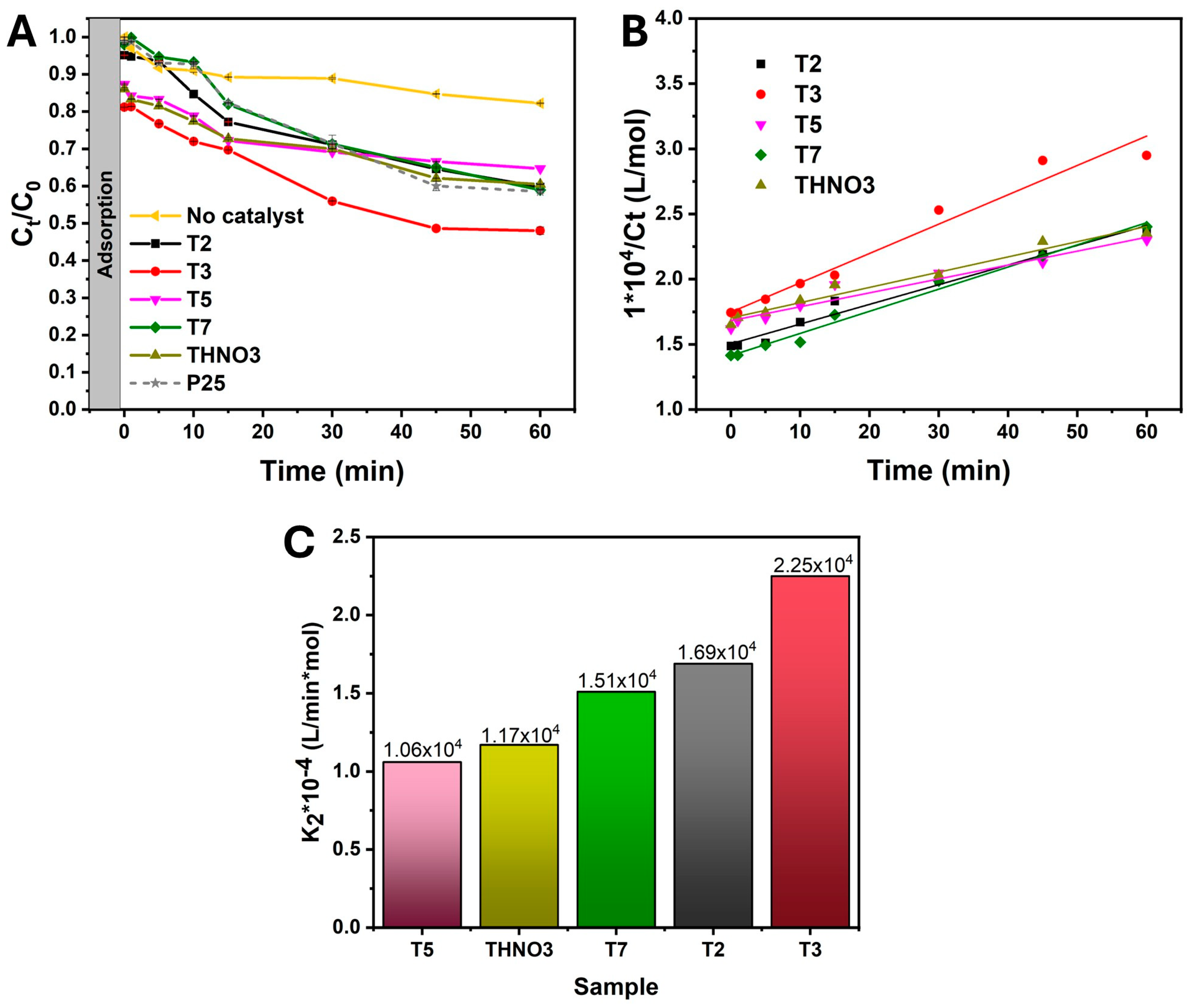
To test the photocatalytic capacity of the samples, methylene blue photodegradation was performed using natural sunlight. Figure 12A presents the methylene blue removal kinetics. It can be seen that the greatest removal is achieved using the T3 sample. Notably, the T2 sample has a greater specific surface area than the T3 sample. However, its band-gap value decreases sufficiently that it is possible to recombine the electron–hole pairs when photons are made to impinge on it, preventing photocatalysis from continuing. In addition, the T2 sample contains acetate groups attached to the Ti centers (see its infrared spectrum in Figure 1), which act as a poison and negatively affect its photocatalytic performance. Furthermore, the morphology of the bird’s-nest-like porous TiO2 microspheres exhibited by the T3 sample may positively contribute to its photocatalytic performance, consistent with Zhang et al., who synthesized hollow TiO2 microspheres with a bird’s-nest-like morphology [39].
The second-order kinetic model (Equation (2)) was used to investigate the kinetics of MB photodegradation:
1/Ct = K2t + 1/C0
where C0 and Ct (mol/L) are the MB concentrations at times 0 and t (min), respectively, and K2 (L/min·mol) is the second-order rate constant. The variation in 1/Ct as a function of irradiation time is shown in Figure 12B for the second-order model, by which the rate constant (K2) was calculated and listed in Table 3. The values of the velocity constants are presented in Figure 12C as a function of TiO2 sample type. The T3 sample has the highest removal velocity constant at 2.25 × 10⁴ L/min·mol.
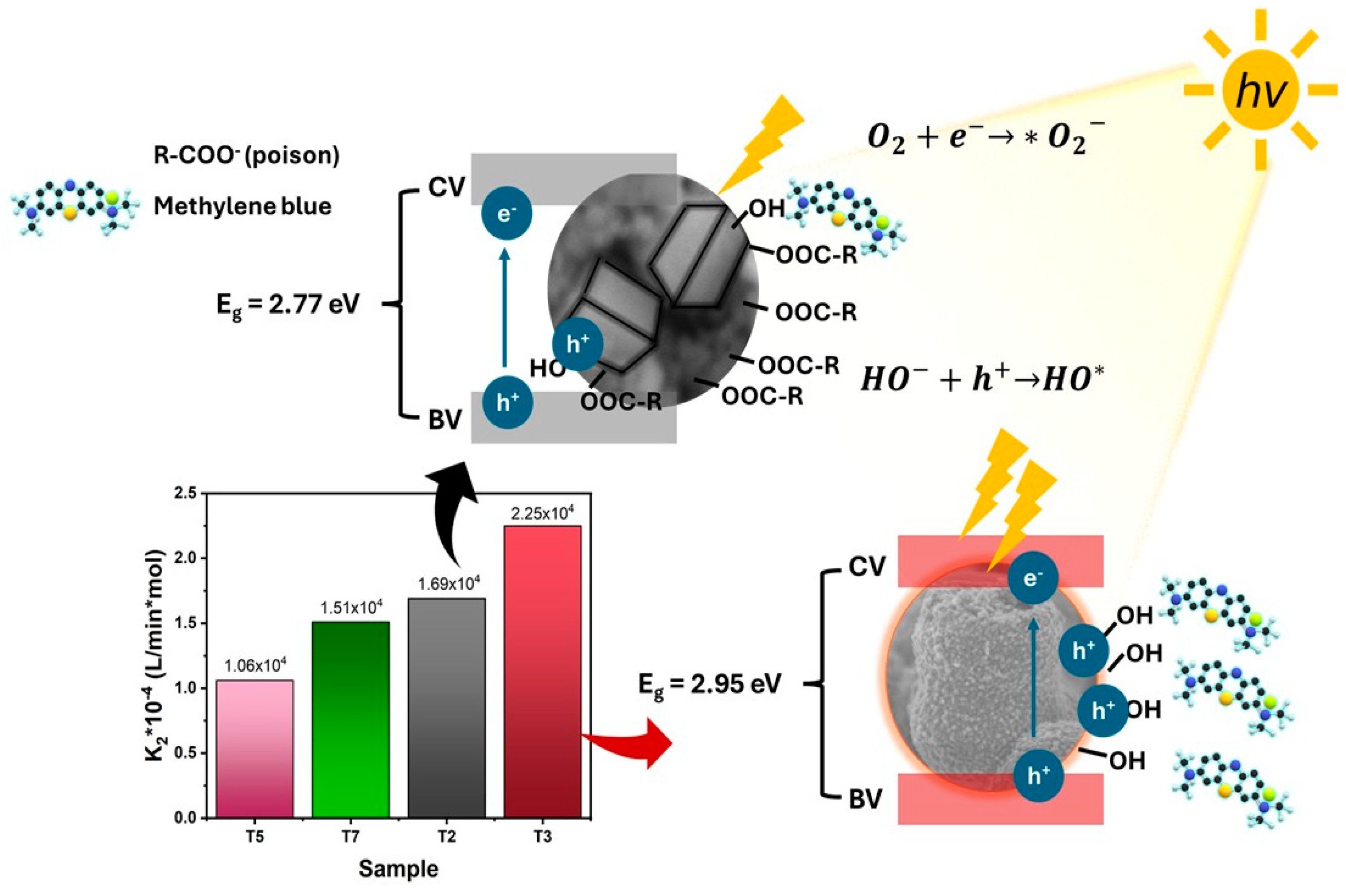
The main factor determining the catalytic activity of TiO2 samples is the presence of Ti–OH surface defects, which decrease the band-gap and increase their photon absorption capacity in the visible region of the electromagnetic spectrum. In this sense, all samples have a band-gap value suitable for excitation under visible irradiation and for photodegradation of the dye. The T2 sample showed the lowest band-gap value, so it would be expected that the value of the dye photodegradation rate constant (K2) would be higher. However, the T3 sample showed the highest K2 value. This may be due not only to the difference in morphology, where the bird’s nest shape of the T3 sample favors light capture, but also because the T2 sample contains a bidentate Ti–acetate complex on the anatase surface, as suggested by its infrared spectrum. This complex occupies surface sites for dye adsorption, acting as a poison and negatively affecting its photocatalytic performance. A proposed interaction of sunlight on T3 and T2 photocatalysts, resulting in the formation of oxyanions and OH* radicals that participate in the oxidation–reduction reactions of methylene blue molecules in an aqueous medium, is illustrated in Scheme 1.
Importantly, the band-gap values of all the TiO2 samples synthesized herein are adequate for these photocatalysts to be activated with natural sunlight, compared with commercial TiO2, which needs ultraviolet light to be activated due to its band-gap value of greater than 3.00 eV.

4. Conclusions

Using acetic acid during TiO2 synthesis via the sol–gel method, assisted with the anionic surfactant SDS, allows greater control over TTIP hydrolysis. In the sample synthesized with a higher amount of acetic acid (T2 sample, pH = 2), it was possible to identify the formation of complexes using the FTIR–ATR technique. These complexes facilitate the formation of crystals with exposed {001} faces. The diffractograms of the T2 and T3 samples indicate that the higher acetic acid concentrations used to adjust the pH to 3 and 2 promoted the formation of pure anatase, whereas at higher pH, brookite was obtained (T5 and T7 samples). The crystallite size of TiO2 decreases with decreasing pH, resulting in a reduction in the band-gap value. The T2 sample exhibited the best textural properties, with an SBET value of 232 m2g−1, and the best optical properties, with a band-gap value of 2.77 eV. However, the presence of acetate groups negatively affected its photocatalytic activity. The low band-gap values of all our TiO2 samples can be attributed to the presence of hydroxyl groups (Ti–OH) on their surface, which can increase the amount of light harvested, leading to a shift in the adsorption edge and a decrease in band-gap energy. The formation of bidentate acetate–titanium complexes on the TiO2 surfaces could also be responsible for sample T2 absorbing a greater quantity of photons in the visible region and the greater decrease in the band-gap to 2.77 eV. Sample T3 (pH = 3) demonstrated better photocatalytic activity against methylene blue photodegradation under solar irradiation, with a velocity constant of 2.25 × 10⁴ L/min·mol. This enhanced activity may be due to its bird-nest-like microstructure, which improves photon absorption, promoting better photocatalytic performance.

Author Contributions

Conceptualization, A.M.-L.; data curation, A.R.-C.; formal analysis, S.E.-F., T.E.F.-G. and L.A.G.-C.; investigation, A.M.-L.; methodology, S.E.-F.; project administration, A.M.-L.; resources, T.E.F.-G., L.A.G.-C., A.R.-C. and A.M.-L.; supervision, A.M.-L.; validation, C.M.P.-B.; visualization, C.M.P.-B. and E.N.A.-G.; writing—original draft, S.E.-F.; writing—review and editing, A.M.-L. All authors have read and agreed to the published version of the manuscript.

Funding

This research received no external funding.

Data Availability Statement

The data presented in this study are available upon request from the corresponding author.

Acknowledgments

Antonia Martinez-Luevanos thanks Universidad Autonoma de Coahuila in Mexico for the financial support for this research.

Conflicts of Interest

The authors declare no conflicts of interest.

References

  1. Nam, S.H.; Boo, J.H. Fabrication of moth-eye patterned TiO2 active layers for high energy efficiency and current density of dye-sensitized solar cells. Energy Rep. 2022, 8, 98–105. [Google Scholar] [CrossRef]
  2. Liu, Y.; Chen, J.; Tian, Z.; Yao, J. Dye-Sensitized Solar Cell Based on TiO2 Anode Thin Film with Three-Dimensional Web-like Structure. Materials 2022, 15, 5875. [Google Scholar] [CrossRef]
  3. Hejazi, S.; Killian, M.S.; Mazare, A.; Mohajernia, S. Single-Atom-Based Catalysts for Photocatalytic Water Splitting. Catalyst 2022, 12, 905. [Google Scholar] [CrossRef]
  4. Soundarya, T.L.; Jayalakshmi, T.; Alsaiari, M.A.; Jalalah, M.; Abate, A.; Alharthi, F.A.; Ahmad, N.; Nagaraju, G. Ionic Liquid-Aided Synthesis of Anatase TiO2 Nanoparticles: Photocatalytic Water Splitting and Electrochemical Applications. Crystals 2022, 12, 1133. [Google Scholar] [CrossRef]
  5. Chen, D.; Cheng, Y.; Zhou, N.; Chen, P.; Wang, Y.; Li, K.; Huo, S.; Cheng, P.; Peng, P.; Zhang, R.; et al. Photocatalytic degradation of organic pollutants using TiO2-based photocatalysts: A review. J. Clean. Prod. 2020, 268, 121725. [Google Scholar] [CrossRef]
  6. van Driel, B.A.; Kooyman, P.J.; van den Berg, K.J.; Schmidt-Ott, A.; Dik, J. A quick assessment of the photocatalytic activity of TiO2 pigments—From lab to conservation studio! Microchem. J. 2016, 126, 162–171. [Google Scholar] [CrossRef]
  7. Henderson, M.A. A surface science perspective on TiO2 photocatalysis. Surf. Sci. Rep. 2011, 66, 185–297. [Google Scholar] [CrossRef]
  8. Kim, W.; Tachikawa, T.; Moon, G.H.; Majima, T.; Choi, W. Molecular-level understanding of the photocatalytic activity difference between anatase and rutile nanoparticles. Angew. Chem.-Int. Ed. 2014, 53, 14036–14041. [Google Scholar] [CrossRef] [PubMed]
  9. Hu, J.; Li, H.; Muhammad, S.; Wu, Q.; Zhao, Y.; Jiao, Q. Surfactant-assisted hydrothermal synthesis of TiO2/reduced graphene oxide nanocomposites and their photocatalytic performances. J. Solid State Chem. 2017, 253, 113–120. [Google Scholar] [CrossRef]
  10. Khalil, K.M.S.; El-Khatib, R.M.; Ali, T.T.; Mahmoud, H.A.; Elsamahy, A.A. Titania nanoparticles by acidic peptization of xerogel formed by hydrolysis of titanium(IV) isopropoxide under atmospheric humidity conditions. Powder Technol. 2013, 245, 156–162. [Google Scholar] [CrossRef]
  11. Bellardita, M.; Di Paola, A.; Megna, B.; Palmisano, L. Absolute crystallinity and photocatalytic activity of brookite TiO2 samples. Appl. Catal. B Environ. Environ. 2016, 201, 150–158. [Google Scholar] [CrossRef]
  12. Payormhorm, J.; Chuangchote, S.; Laosiripojana, N. CTAB-assisted sol-microwave method for fast synthesis of mesoporous TiO2 photocatalysts for photocatalytic conversion of glucose to value-added sugars. Mater. Res. Bull. 2017, 95, 546–555. [Google Scholar] [CrossRef]
  13. Nagamine, S.; Sasaoka, E. Synthesis of nanostructured titania templated by anionic surfactant in acidic conditions. J. Porous Mater. 2002, 9, 167–173. [Google Scholar] [CrossRef]
  14. Estrada-Flores, S.; Martínez-Luévanos, A.; Perez-Berumen, C.M.; García-Cerda, L.A.; Flores-Guia, T.E. Relationship between morphology, porosity, and the photocatalytic activity of TiO2 obtained by sol–gel method assisted with ionic and nonionic surfactants. Bol. Soc. Esp. Ceram. Vidr. 2020, 59, 209–218. [Google Scholar] [CrossRef]
  15. Yuenyongsuwan, J.; Nithiyakorn, N.; Sabkird, P.; O’Rear, E.A.; Pongprayoon, T. Surfactant effect on phase-controlled synthesis and photocatalyst property of TiO2 nanoparticles. Mater. Chem. Phys. 2018, 214, 330–336. [Google Scholar] [CrossRef]
  16. Cassaignon, S.; Koelsch, M.; Jolivet, J.P. Selective synthesis of brookite, anatase, and rutile nanoparticles: Thermolysis of TiCl4 in aqueous nitric acid. J. Mater. Sci. 2007, 42, 6689–6695. [Google Scholar] [CrossRef]
  17. Li, Z.; Zhu, Y.; Wang, L.; Wang, J.; Guo, Q.; Li, J. A facile method for the structure control of TiO2 particles at low temperature. Appl. Surf. Sci. 2015, 355, 1051–1056. [Google Scholar] [CrossRef]
  18. Li, Z.; Zhu, Y.; Wang, J.; Guo, Q.; Li, J. Size-controlled synthesis of dispersed equiaxed amorphous TiO2 nanoparticles. Ceram. Int. 2015, 41, 9057–9062. [Google Scholar] [CrossRef]
  19. Primet, M.; Pichat, P.; Mathieu, M.-V. Infrared study of the surface of titanium dioxides. J. Phys. Chem. 1971, 75, 1216–1220. [Google Scholar] [CrossRef]
  20. Martra, G. Lewis acid and base sites at the surface of microcrystalline anatase. Appl. Catal. A Gen. 2000, 200, 275–285. [Google Scholar] [CrossRef]
  21. Zhuang, W.; Zhang, Y.; He, L.; An, R.; Li, B. Facile synthesis of amino-functionalized mesoporous TiO2 microparticles for adenosine deaminase immobilization. Microporous Mesoporous Mater. 2017, 239, 158–166. [Google Scholar] [CrossRef]
  22. Li, G.; Li, L.; Boerio-Goates, J.; Woodfield, B.F. High Purity Anatase TiO2 nanocrystals: near room-temperature synthesis, grain growth kinetics, and surface hydration chemistry. J. Am. Chem. Soc. 2005, 127, 8659–8666. [Google Scholar] [CrossRef]
  23. Ghorai, T.; Chakraborty, M.; Pramanik, P. Photocatalytic performance of nano-photocatalyst from TiO2 and Fe2O3 by mechanochemical synthesis. J. Alloys Compd. 2011, 509, 8158–8164. [Google Scholar] [CrossRef]
  24. Parra, R.; Góes, M.S.; Castro, M.S.; Longo, E.; Bueno, P.R.; Varela, J.A. Reaction pathway to the synthesis of anatase via the chemical modification of titanium isopropoxide with acetic acid. Chem. Mater. 2008, 20, 143–150. [Google Scholar] [CrossRef]
  25. Luca, V. Comparison of size-dependent structural and electronic properties of anatase and rutile nanoparticles. J. Phys. Chem. C. 2009, 113, 6367–6380. [Google Scholar] [CrossRef]
  26. Moussaoui, R.; Elghniji, K.; ben Mosbah, M.; Elaloui, E.; Moussaoui, Y. Sol–gel synthesis of highly TiO2 aerogel photocatalyst via high temperature supercritical drying. J. Saudi Chem. Soc. 2017, 21, 751–760. [Google Scholar] [CrossRef]
  27. Praveen, P.; Viruthagiri, G.; Mugundan, S.; Shanmugam, N. Structural, optical and morphological analyses of pristine titanium di-oxide nanoparticles-synthesized via sol-gel route. Spectrochim. Acta Part A Mol. Biomol. Spectrosc. 2014, 117, 622–629. [Google Scholar] [CrossRef]
  28. Marinho, B.A.; Cristóvão, R.O.; Djellabi, R.; Loureiro, J.M.; Boaventura, R.A.R.; Vilar, V.J.P. Photocatalytic reduction of Cr (VI) over TiO2 -coated cellulose acetate monolithic structures using solar light. Appl. Catal. B Environ. 2017, 203, 18–30. [Google Scholar] [CrossRef]
  29. Momma, K.; Izumi, F. VESTA 3 for three-dimensional visualization of crystal, volumetric and morphology data. J. Appl. Crystallogr. 2011, 44, 1272–1276. [Google Scholar] [CrossRef]
  30. Leyva-Porras, C.; Toxqui-Teran, A.; Vega-Becerra, O.; Miki-Yoshida, M.; Rojas-Villalobos, M.; García-Guaderrama, M.; Aguilar-Martínez, J.A. Low-temperature synthesis and characterization of anatase TiO2 nanoparticles by an acid assisted sol-gel method. J. Alloys Compd. 2015, 647, 627–636. [Google Scholar] [CrossRef]
  31. Bagheri, S.; Termehyousefi, A.; Do, T.O. Photocatalytic pathway toward degradation of environmental pharmaceutical pollutants: Structure, kinetics and mechanism approach. Catal. Sci. Technol. 2017, 7, 4548–4569. [Google Scholar] [CrossRef]
  32. Ong, W.-J.; Tan, L.-L.; Chai, S.-P.; Yonga, S.T.; Mohamed, A.R. Highly Reactive {001} Facets of TiO2-Based Composites: Synthesis, Formation Mechanism and Characterizations. Nanoscale 2014, 6, 1946–2008. [Google Scholar] [CrossRef]
  33. Ajmal, A.; Majeed, I.; Malik, R.N.; Idriss, H.; Nadeem, M.A. Principles and mechanisms of photocatalytic dye degradation on TiO2 based photocatalysts: A comparative overview. RSC Adv. 2014, 4, 37003–37026. [Google Scholar] [CrossRef]
  34. Sood, S.; Mehta, S.K.; Umar, A.; Kansal, S.K. The visible light-driven photocatalytic degradation of Alizarin red S using Bi-doped TiO2 nanoparticles. New J. Chem. 2014, 38, 3127–3136. [Google Scholar] [CrossRef]
  35. Mutuma, B.K.; Shao, G.N.; Kim, W.D.; Kim, H.T. Sol-gel synthesis of mesoporous anatase-brookite and anatase-brookite-rutile TiO2 nanoparticles and their photocatalytic properties. J. Colloid Interface Sci. 2015, 442, 1–7. [Google Scholar] [CrossRef]
  36. López, R.; Gómez, R. Band-gap energy estimation from diffuse reflectance measurements on sol—Gel and commercial TiO2: A comparative study. J. Sol.-Gel. Sci. Technol. 2012, 61, 1–7. [Google Scholar] [CrossRef]
  37. Qin, J.; Zhao, R.; Xia, M. A facile approach to synthesis carbon quantum dots-doped P25 visible-light driven photocatalyst with improved NO removal performance. Atmos. Pollut. Res. 2020, 11, 303–309. [Google Scholar] [CrossRef]
  38. Deng, Q.; Zhang, W.; Lan, T.; Xie, J.; Xie, W.; Liu, Z.; Huang, Y.; Wei, M. Anatase TiO2 quantum dots with a narrow band gap of 2.85 eV based on surface hydroxyl groups exhibiting significant photodegradation property. Eur. J. Inorg. Chem. [CrossRef]
  39. Zhang, G.; Zhang, S.; Wang, L.; Liu, R.; Zeng, Y.; Xia, X.; Liu, Y.; Luo, S. Facile synthesis of bird’s nest-like TiO2 microstructure with exposed (001) facets for photocatalytic degradation of methylene blue. Appl. Surf. Sci. 2017, 391, 228–235. [Google Scholar] [CrossRef]
Figure 1. FTIR–ATR spectra of the samples synthesized by the sol–gel method using acetic acid as a catalyst and complexing agent (T2, T3, and T5 samples) and without adding acetic acid (T7 sample).
Reactions 07 00005 g001
Figure 2. XRD patterns of the TiO2 samples (A); amplification on the peak corresponding to the plane (101) of the anatase phase (B).
Reactions 07 00005 g002
Figure 3. XRD pattern adjustment of the TiO2 samples.
Reactions 07 00005 g003
Figure 4. Relationship between the fraction of brookite present in the TiO2 samples and the pH of synthesis.
Reactions 07 00005 g004
Figure 5. Anatase single cell (body-centered tetragonal cell).
Reactions 07 00005 g005
Figure 6. FTIR–ATR spectra (A) and XRD patterns (B) of the T2 and the THNO3 samples.
Reactions 07 00005 g006
Figure 7. SEM images at 100,000× of the T2 (A), T3 (B), T5 (C), T7 (D), and THNO3 (E) samples. Feret diameter distribution (FJ).
Reactions 07 00005 g007
Figure 8. SEM image at 50,000× of the T2 sample. Crystals with a flattened octahedral bipyramid shape: under equilibrium conditions, it is more common for thermodynamically stable faces such as {101} to grow larger (A), but when a capping agent such as acetic acid is used, high-energy faces such as {001} can stabilize and therefore grow larger (B).
Reactions 07 00005 g008
Figure 9. N2 adsorption/desorption isotherms of the TiO2 samples. The inserted image corresponds to the pore size distribution.
Reactions 07 00005 g009
Figure 10. Absorbance spectra (A) and Tauc plot (B) of the samples by the sol–gel method using acetic acid as a catalyst. For comparison, the absorbance spectrum of the commercial sample P25 is included.
Reactions 07 00005 g010
Figure 11. Effect of the pH value on crystallite size and band-gap of the TiO2 samples.
Reactions 07 00005 g011
Figure 12. Photocatalytic activity (A) of MB under natural solar irradiation by the TiO2 samples and P25 as a function of irradiation time. Fitting curves of second-order kinetics for MB photodegradation (B) and effect of sample type on the MB photodegradation rate constant (C).
Reactions 07 00005 g012
Scheme 1. Diagram of the photocatalytic performance of T3 and T2 samples in the photodegradation of methylene blue using natural sunlight.
Reactions 07 00005 sch001
Table 1. Red parameters of the synthesized TiO2 samples at different pH values and boundary index of the structural analysis by the Rietveld refinement method.
T2 SampleT3 SampleT5 SampleT7 Sample
Space groupI41/AMDI41/AMDI41/AMDI41/AMD
a (Å)3.7798(4)3.7829(3)3.7798(4)3.7850(2)
c (Å)9.474(1)9.4930(9)9.472(1)9.482(9)
V (Å3)135.353135.847135.325136.207
Z4444
Ti (4b)
Byssus, Oc
(0, 1/4, 3/8)
0.2523, 1
(0, 1/4, 3/8)
0.177, 1
(0, 1/4, 3/8)
0.691, 1
(0, 1/4, 3/8)
0.465, 1
O (8e)
Byssus, Oc
(0, 1/4, 0.16508(15))
0.623, 1
(0, 1/4, 0.1658(1))
0.250, 1
(0, 1/4, 0.1658(1))
0.193, 1
(0, 1/4, 0.1613(1))
0.316, 1
Rp, Rwp, Rexp8.26, 8.97, 5.438.30, 9.13, 4.343.67, 4.75, 2.809.86, 10.4, 5.19
x22.734.432.884.06
% Brookite0011.415.61
Table 2. Specific surface area (SBET), average pore size, and average pore volume of the TiO2 samples synthesized using acetic acid as a catalyst by the sol–gel method.
SampleSBET (m2g−1)Average Pore Size (nm)Average Pore Volume (cm3g−1)
T2232.023.180.46
T3138.705.860.30
T5118.9012.720.36
T779.5010.520.20
Table 3. Values of determination coefficient (R2) and the second-order velocity constant (K2) of MB photodegradation using TiO2 samples as photocatalysts under natural solar irradiation: 50 mL of 20 mg/L MB solution; 1.0 g/L of catalyst.
SampleK2 (L/min·mol)R2
T21.69 × 1040.9763
T32.25 × 1040.9665
T51.06 × 1040.9446
T71.51 × 1040.9872
THNO31.17 × 1040.9664
Disclaimer/Publisher’s Note: The statements, opinions and data contained in all publications are solely those of the individual author(s) and contributor(s) and not of MDPI and/or the editor(s). MDPI and/or the editor(s) disclaim responsibility for any injury to people or property resulting from any ideas, methods, instructions or products referred to in the content.