Article

Influence of Ethanol Content on the Electrooxidation of Triethanolamine in Highly Apolar Media on Platinum Microelectrode


1
Institute of Organic and Medicinal Chemistry, Faculty of Pharmacy, University of Pécs, Honvéd Street 1, H-7624 Pécs, Hungary
2
Green Chemistry Research Group, János Szentágothai Research Center, Ifjúság útja 20, H-7624 Pécs, Hungary
3
Fujian Provincial Key Laboratory of Semiconductor Materials and Applications, Xiamen 361005, China
4
Department of Physics, Xiamen University, Xiamen 361005, China
*
Author to whom correspondence should be addressed.
Reactions 2026, 7(1), 17; https://doi.org/10.3390/reactions7010017
Submission received: 19 January 2026 / Revised: 20 February 2026 / Accepted: 23 February 2026 / Published: 2 March 2026

Abstract

Ethanol is widely used as an additive in fuels, so its effect on the electrochemical oxidation of triethanolamine was investigated on a 25 μm platinum microelectrode. Ethyl acetate was applied as a cosolvent to increase the permittivity of the medium. A hydrocarbon n-heptane, typically present in gasohol samples as the main component, was studied, and its solutions prepared with ethanol in the entire concentration range (between 0 and 100 v/v% ethanol contents) were mixed with ethyl acetate. The as-prepared liquid mixtures were prepared separately, and they were mixed with ethyl acetate in uniform ratios. Triethanolamine, the selected redox-active compound, exhibited a sharp peak in ethyl acetate at the 15 mM concentration. The changes in the voltammograms served as a good template for quantitative analysis of ethanol content. The most suitable analytical signal used for it was the current minimum after the anodic peak, and this parameter proved more sensitive and reproducible than the anodic peak height itself. The scatterings of the current minimum values were typically within some nanoamperes. MTBE (methyl tert-butyl ether) was added to the apolar mixtures of ethanol, and this ether had a negligible interfering effect on the estimation of ethanol content.

1. Introduction

Microelectrodes are widely used in low-conductivity media because the ohmic potential drop is minimized when they are applied. The ohmic potential drop can be calculated by multiplying the expected current signal by the solution resistance. The most popular media in this respect can be characterized by low permittivity, and this parameter strongly determines the extent of dissociation of the supporting electrolyte. Mainly tetraalkyl ammonium salts are particularly suitable in such media due to their apolar nature, and consequently, the associates and composing ions are properly solvated [1,2]. In the last century, the field of electrochemistry in highly resistive media was intensively studied to address specific problems. In most cases, the application of a supporting electrolyte is essential due to the unfavourable properties of the solvent. In solutions with extremely low permittivity, enhancing the conductivity becomes difficult due to the limited solubility of the aforementioned organic salts. In the absence of a supporting electrolyte, the necessary potential window is greatly extended. Still, in these cases, autodissociation of solvent and the residual trace ionic impurities can significantly influence the performance of microelectrodes [3]. These two phenomena ensure the necessary current flow through the solution and thus make possible voltammetric and amperometric investigations in pure solvents under very high resistance conditions.
There are many situations where the use of ultramicroelectrodes is the only solution. Anodic oxidation of short-chain alkanes [4] and some gases [5] could be carried out successfully in acetonitrile. In toluene and n-heptane, possessing very low dielectric constants, special supporting electrolytes are needed. They have satisfactory solubility, and therefore, they contribute to recording useful voltammetric signals [6]. Supercritical fluids also have poor ionic conductivity, but in this state, polarizabilities of 1,1,1,2-tetrafluoroethane and difluoromethane are higher than in the liquid state. On the other hand, enhanced solubilities of a wide range of solutes were achieved [7,8]. Voltammetry in the gas phase is also possible, but narrow-gap cells must be applied where a very thin insulating gap separates the two electrodes [9].
Ethyl acetate has favourable properties as a slightly polar solvent that can dissolve a wide range of samples; so it is popular for sample preparations in analytical procedures [10,11]. Since its permittivity is moderate, combining its favourable properties with those of the ultramicroelectrodes contributes to the development of powerful electroanalytical procedures. In such ways, the pesticide thiram [12] and vanillin [13] could be determined by square wave voltammetry.
Amines are susceptible to oxidation, and their nitrogen atom contains a lone electron pair in the unoccupied orbital and during their electrooxidation in the first step, one electron will be removed from this pair [14]. In case of tertiary amines, this cation radical becomes a neutral one as a consequence of a proton entrapment into the solution, and the result will be a radical, which disproportionates in a following step. The unpaired electron can then be found after rearrangement within the molecule on one of the α-carbon atoms. This disproportionation reaction yields the starting amine and the corresponding enamine. In a second oxidation step, the radical can be transformed to a cation, which can react with nucleophiles. The protons bind to reactant molecules, thus becoming deactivated as they can react only at significantly higher potentials. Depending on the nature of alkyl groups, the adduct can be transformed further, yielding an aldehyde and a secondary amine if the nucleophile is water. In the presence of alcohols, the corresponding alkoxy derivative forms [15,16], but tertiary alcoholamines can also undergo intermolecular ring formation [17].
Gasohol samples are basically mixtures of hydrocarbons and alcohols, mainly ethanol. Usually, the hydrocarbons occurring in these samples can be branched and may have a normal chain length within a sample. Depending on the type of utilization, the ethanol content varies within a wide range. Alcohols and ethers are substitutes for the poisoning lead tetraethyl due to their eco-friendly nature as anti-knocking materials. Due to the elevated octane number, the fuels burn more completely by adding the above materials, so the formation of environmentally hazardous gases will be minimized.
Electric or electrochemical methods are also developed to quantify the alcoholic content. The impedance of the solution is very informative, as the difference between the permittivities of alcohols and the other components is very large. For this impedimetric procedure, a flow-through reactor was used, consisting of hydrophobic glassy carbon electrodes located in parallel within the cell [18]. Amperometry also serves as an appropriate technique for the determination in apolar media and the batch injection analysis with the aid of a gold electrode immersed in NaOH solution [19]. Thiago and co-workers developed another powerful amperometric method where a pretreated copper microelectrode enabled the determination of ethanol removed by extraction with NaOH solution [20]. The latter solution served as an appropriate medium for the electroanalytical procedure. In one of our earlier works, we used a narrow-gap cell involving a carbon-disc microelectrode separated by a very thin dental resin insulating material from a larger carbon disc [21]. This arrangement made the estimation of ethanol content in hydrocarbons possible without the addition of a supporting electrolyte by using amperometry.
The content of acetic acid in ethyl acetate can be estimated with the aid of 4-methoxyphenol with a platinum microelectrode [22]. The shape of the curve changed gradually only with lower acetic acid contents. The surfactant triethanolamine undergoes polymerization during its electrooxidation, and it is able to block the electrodes in ethyl acetate, as demonstrated in our recent work [23]. A platinum microelectrode was also the working electrode in the latter work, and the signal varied similarly by low acetic acid contents remarkably. The shape of signals changed from peaked to signals having only a rising part within a narrow acetic acid concentration range. This was the consequence of a significant shift in the oxidation potential of triethanolamine to more positive values, leading to the registration of continuous current increases, enhancing acetic acid content. Acetic acid protonates amines, thus deactivating them, and therefore their signal shifts to more anodic potentials is governed mainly by thermodynamic control. The anodic reaction of the aforementioned amine is sensitive to the presence of nucleophiles in solution.
There are many methods (spectroscopic, chromatographic, impedimetric), which need a large amount of instrumentation. Electrochemical methods allow a high degree of miniaturization, so the three-electrode configuration makes it possible to make measurements in low-volume samples, but sometimes sample pretreatment is required.
Electropolymerization as a phenomenon can also be utilized in electroanalytical procedures, as the shape of the signal depends highly on the concentration of the monomer and the nature of the solvent. Thus, estimations can be carried out for the composition of solvent mixtures. Especially, microelectrodes are sensitive to the deactivating events due to their very small surface area. The use of a compound prone to electrochemical polymerization in a uniform concentration throughout the whole experiment provides useful information through the different shapes of the curve, depending on the composition. In addition, in some cases, the ohmic distortion elevates the estimation of solvent composition.
The solvent composition may play a crucial role in the electrochemical polymerization of a compound. Therefore, the focus of this study is on how to exploit the advantages of using a microelectrode as an electrode, which are diminished to a micrometre size, and are especially sensitive to deactivation. The studied reaction was electropolymerization of triethanolamine, and ethyl acetate was chosen as cosolvent in the estimation of ethanol content in its binary mixtures with a hydrocarbon, n-heptane. The addition of a cosolvent has a weaker or stronger effect on the solute-solvent interactions, so the other aim of the examinations was to shed light on these properties. The interesting mixture was the binary one composed of ethanol and n-heptane, and the interference of some frequently used additives will also be assessed.

2. Materials and Methods

The chemicals used for the investigations have the purity level of analytical reagent grade, which were mainly products of Molar Chemicals (Halásztelek, Hungary), HiperSolv (Fontenay-sous-Bois, France), and Merck (Darmstadt, Germany). For the electrochemical measurements, tetrabutylammonium perchlorate (TBAP) was used in the studied non-aqueous solutions. A platinum disc microelectrode with a 25 μm diameter was the working electrode sealed in glass, the reference electrode was a silver wire with 0.5 mm in diameter, and a platinum-iridium rod was the counter electrode with 1 mm diameter. The reason for the choice of platinum electrode was its high stability, even at extremely high potentials, as for example, the performance of the carbon electrode seemed unreliable [24]. During the experiments, the three electrodes were embedded in the corresponding solution and connected to a Dropsens potentiostat (Oviedo, Spain). The surface of the microelectrode was polished after all studies, where blocking can take place due to deactivating deposits on a wet polishing cloth containing alumina particles, responsible for the abrasion, therefore renewal of the electrode (alumina particle average diameter: 1 μm). Then, a thorough washing with tap and deionized water removed the solid particles from the electrode body, and for complete removal of particles, ultrasonication was applied. The cleaning procedure was finished with thorough washing with dry acetone to remove traces of water.
Ethyl acetate was mixed with the apolar mixtures in the optimal volume ratio to minimize the problem arising from the limited solubility of the supporting electrolyte in the obtained mixtures and to avoid the significant ohmic distortion. First, binary mixtures of ethanol and n-heptane were prepared in glass vials by using a micropipette. On the other hand, a stock solution was prepared in a glass flask with ethyl acetate containing triethanolamine and the supporting electrolyte in a concentration taking into account the dilution during the preparation of samples. The latter one was carried out with the micropipette by transferring the desired volumes into glass vials.

3. Results and Discussion

3.1. Studies on the Influence of Ethanol on the Voltammetric Curves of Triethanolamine

As n-heptane is a typical hydrocarbon component in fuels, this liquid was mixed with ethanol in some investigations. Linear sweep voltammetry was applied to get the desired analytical signal. The potential range was between 0 and 2.5 V, and the scan rate was set to 0.1 V/s. The volume ratio of the sample and ethyl acetate was 1:7 throughout the experiments, as ohmic distortion caused by the significant drop in permittivity as a consequence of the addition of hydrocarbon samples was still not obvious. This volume ratio proved to be the best, as experiments were also carried out regarding the effect of volume ratio, and at higher ratios, ohmic distortion became more and more significant. The oxidation peak of triethanolamine, whose concentration was 15 mM uniformly in each solution, appeared in most curves, which is due to ethyl acetate, as the solubility of electrochemically formed polymer is very low in this solvent.
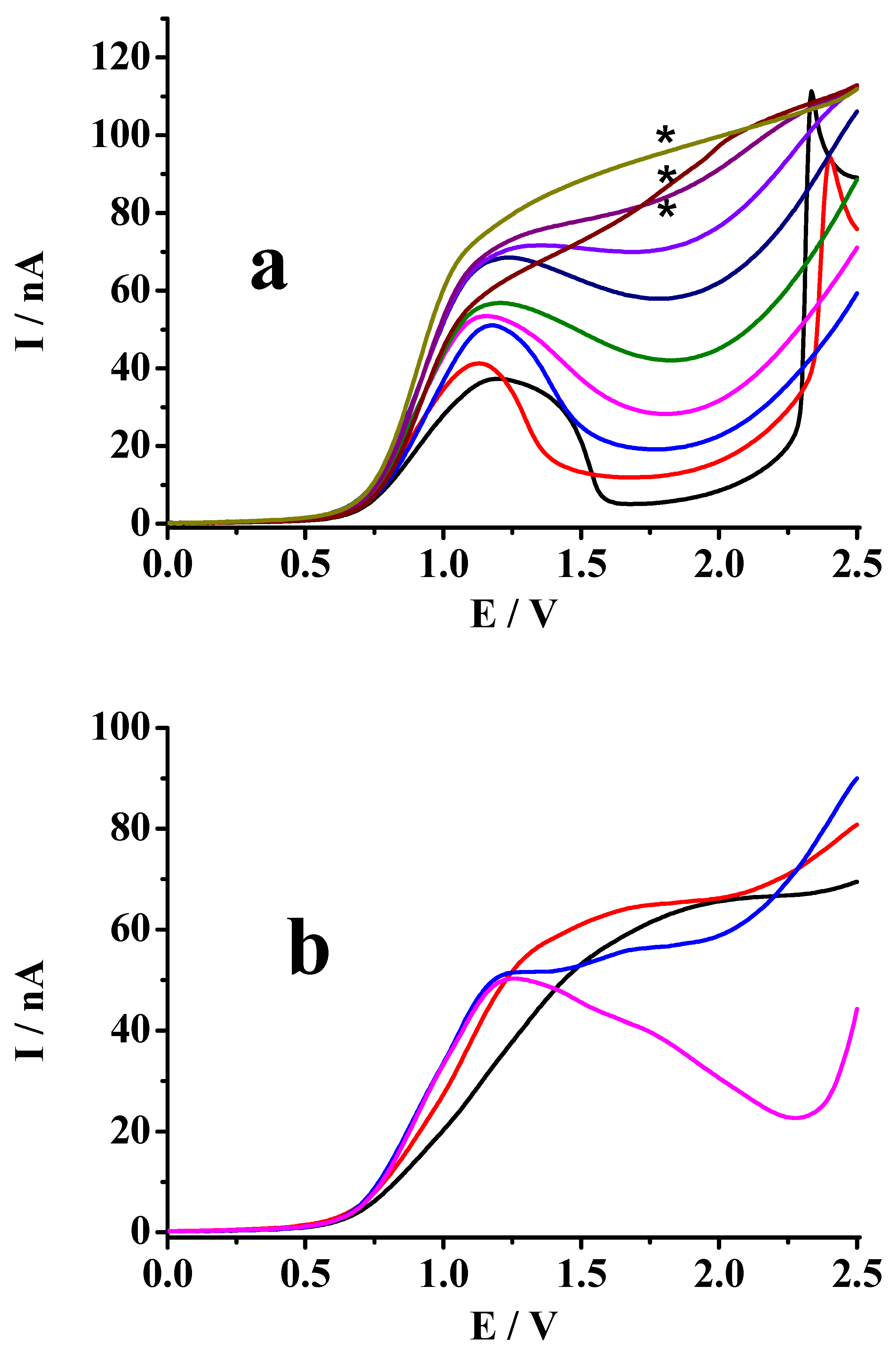
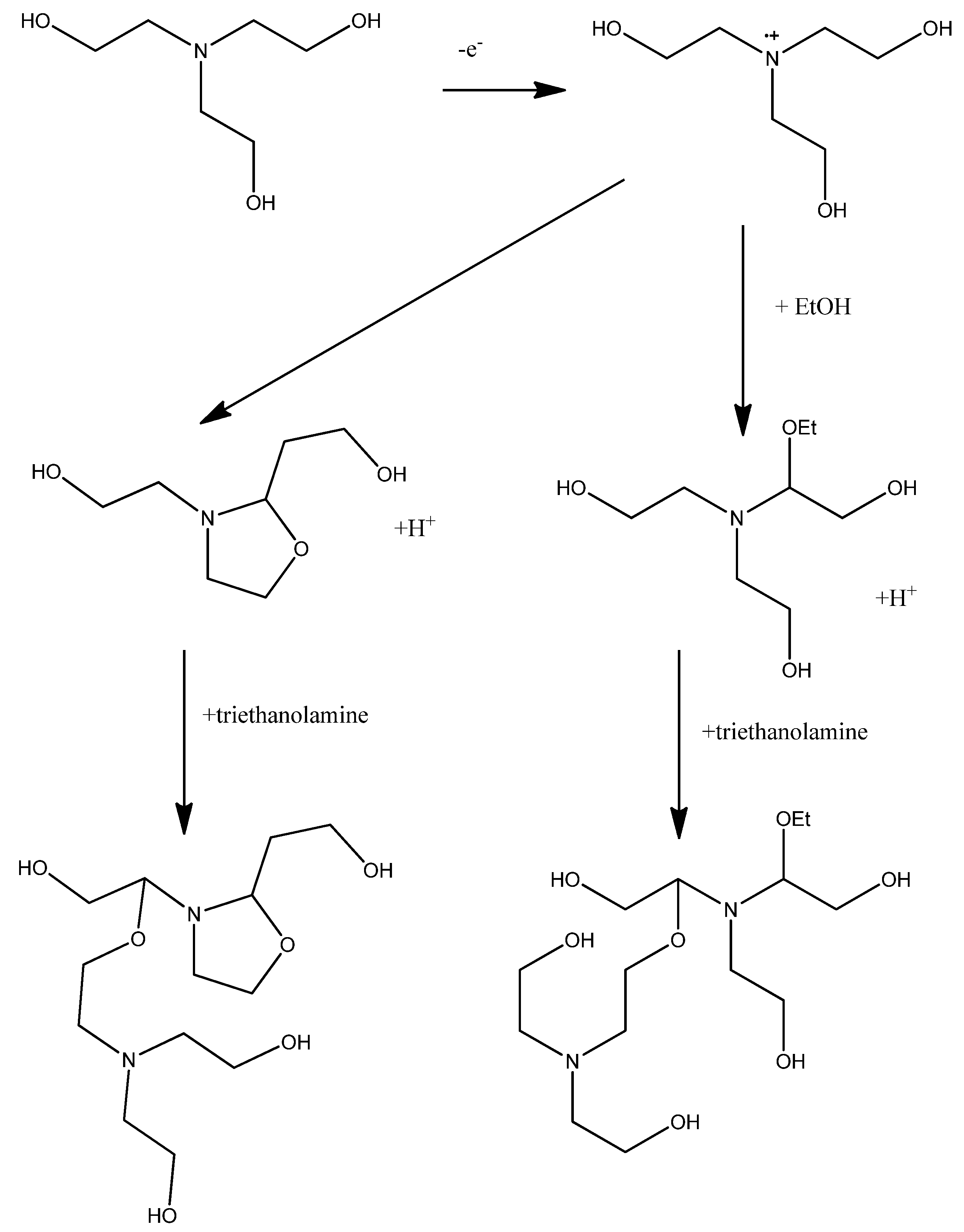
The blocking effect originating from the formation of oxidation products in the electrode-solution interface leads to these peaks, which indicate deactivation on microelectrodes. If the scan rate is not too high and the electrochemical reaction of a compound is diffusion-controlled, the result will be a sigmoidal-shaped voltammogram, so we can suppose the lack of complications. In these cases, the plateau heights are linearly proportional to the diffusion coefficient and the concentration of the reactant. Figure 1a shows the particular characteristics of curves by adding more and more ethanol using a microelectrode. The following ethanol concentrations shown in this figure are the following ones: 10, 20, 30, 40, 50, 60, 70, 80, 90, 100 v/v%. After the peaks, the current minima appear, and they become continuously higher and higher. When its concentration was 10 v/v%, the minimum was deep as network formation due to intermolecular nucleophilic attacks was dominant, and the presence of more and more ethanol became more and more predominant in competition with this process. In other words, the electrochemically generated cation also reacts with ethanol in an ethoxylation reaction, suppressing the inter- and intramolecular couplings of the electroreactant. Competition between polymer formation, intermolecular coupling and ethoxylation takes place as shown in Scheme 1, specifically for triethanolamine in the presence of ethanol. The intermolecular couplings result in the development of a polymeric network on the electrode, and the last steps indicate them. The products of the last steps are, of course, able to react with a new ethanol or triethanolamine molecule. When the percentage of alcohol was very high, the corresponding curves exhibited a steady-state nature. The high alcohol content dissolved the products of the anodic reaction, which were mainly ethoxylated.
Remarkably, in the curves of 10, 20 v/v% ethanol concentrations, close to 2.5 V sharp peaks appeared due to the rupture of the deposited layers and therefore, their partial removal from the surface occurred. Within a short period, the platinum disc became again accessible for the reacting amine molecules. At higher ethanol contents, these peaks disappeared partly due to the significant shifts towards higher potentials and improved solvation properties as partial removal by the more and more alcohol occurred.
Figure 1b displays the curves for very low alcohol contents (0, 2.5, 5, 7.5 v/v%), and surprisingly, in the case of n-heptane, the corresponding curve does not exhibit any deactivation. The curves recorded in samples containing only a low amount of alcohol are similar a minimum showed up only by 7.5 v/v% concentration.
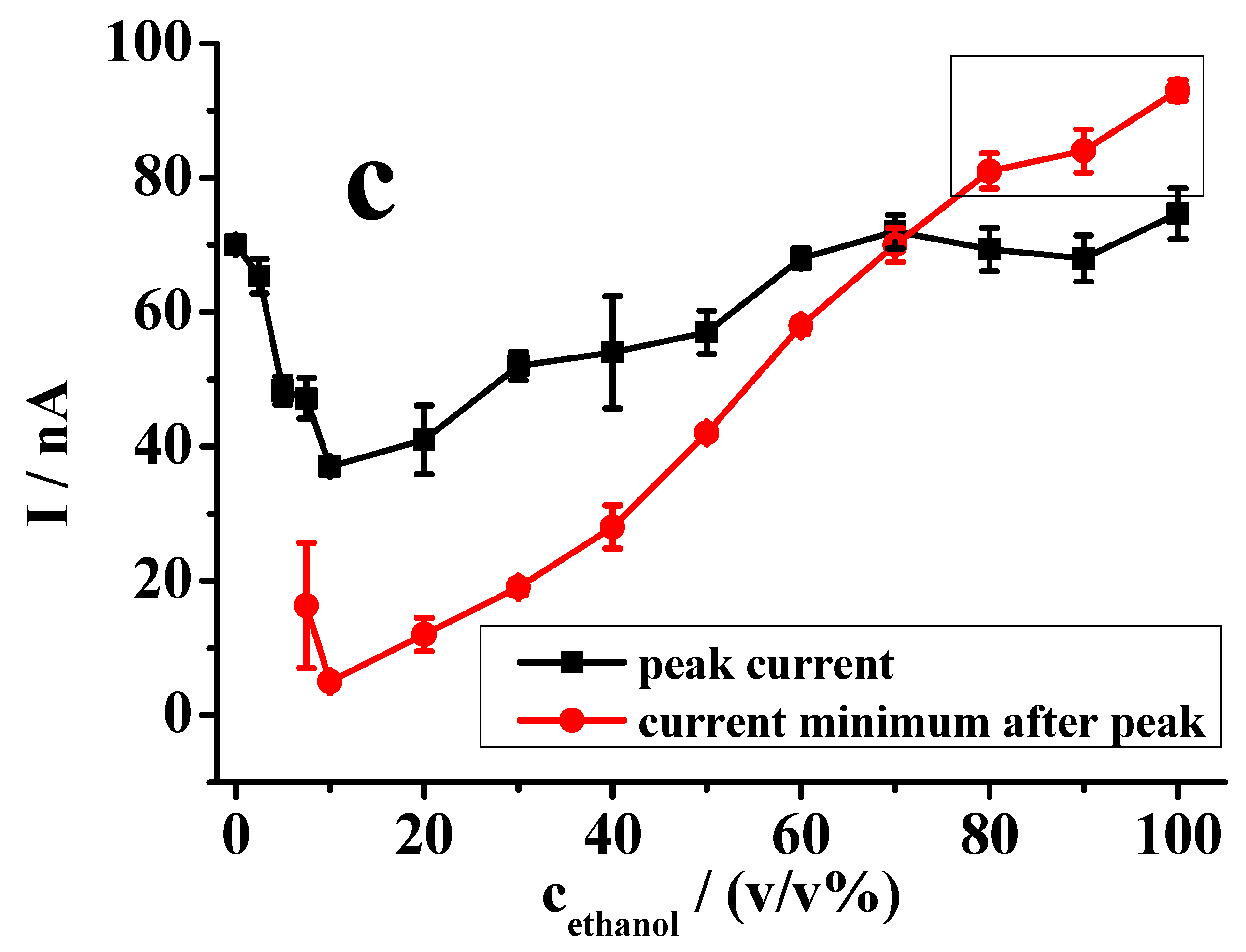
By analyzing the shape of linear sweep voltammetric curves, two types of parameters can be used for calibration. One is the anodic peak height, and the other is the height of the current minimum that appears after the peaks. The latter parameter could be taken into account only between 7.5 and 70 v/v% ethanol content, as in other cases, only near sigmoidal-shaped voltammograms could be obtained. By compositions between 80 and 100 v/v%, calibration data came from reading of currents at the potential of current minimums seen at the other curves. So, labelling in Figure 1c does not cover the origin of each data point. These are revealed in Figure 1c, and they evidently show that the latter one is significantly better. Basically, the sensitivity and reproducibility verify it, and only the 7.5 v/v% solution is an exception, indicated by the relatively large error bar. The position of the current minimum changed within a wide interval; consequently, this concentration is critical with respect to current and potential. By repeating the measurement with this composition, the shape of the curves exhibited different characteristics. It means that the position of current minimums had high variance. Moreover, sometimes the current minimum did not show up. There is a value around this composition where the transition between weak (low ethanol content) and strong (moderate alcohol content) deactivation can be found. Differences in currents are high between these two extremes. This is the reason why this point falls out of the tendency governed by the other points, thus allowing high uncertainty in the determination, as higher ethanol content can be estimated. The shape of the curve helps in decision, as from 10 v/v% the shape of the curves was characteristically reproducible with low scatterings of signal used for analysis.
The contradictories experienced by low ethanol contents need further explanation. In ethanol-free environments, only ethyl acetate and the hydrocarbons are present. Still, the near sigmoidal-shaped wave suggests an excellent dissolving ability towards the polymeric network propagated in the interface region. In our previous work [23], the repetition of the scan highlighted that there is a serious blocking as currents were approximately one-tenth of those of the first one. One contribution to this observation is the ohmic polarization indicated by the significant shift in wave to higher potentials, and the other one is possibly the weak deactivation due to the presence of n-heptane. In pure ethyl acetate, triethanolamine, present in 15 mM concentration, exhibited a sharp peak during the potential scanning with the same parameters as applied here. The polymeric film growth is governed by the intermolecular nucleophilic attacks of hydroxyl groups at the α-carbon atoms, so most of these groups will be involved in ether groups, improving the solvation abilities by the addition of hydrocarbons. Further question is why sharp peaks are recovered by the addition of ethanol, and on the other hand, it helps the dissolution of polymeric networks, which was also demonstrated in the recent work mentioned in this paragraph with 1-propanol, so alcohols help the development of sigmoidal curves of triethanolamine. The blocking effect was observed at not too low and not too high ethanol contents. This can be explained by the fact that alcohols bind to the deposit through hydrogen bonds from the strongly aprotic environment, enhanced by the hydrocarbon, leading to higher coverage of microdisc, but alcohol concentration is not enough for the complete removal of adducts. At higher contents, restoring the electrode surface gets easier and easier, as due to the predominance of alkoxylation, the polymeric network will be broken into smaller adducts.

3.2. Effect of MTBE and Some Other Additives

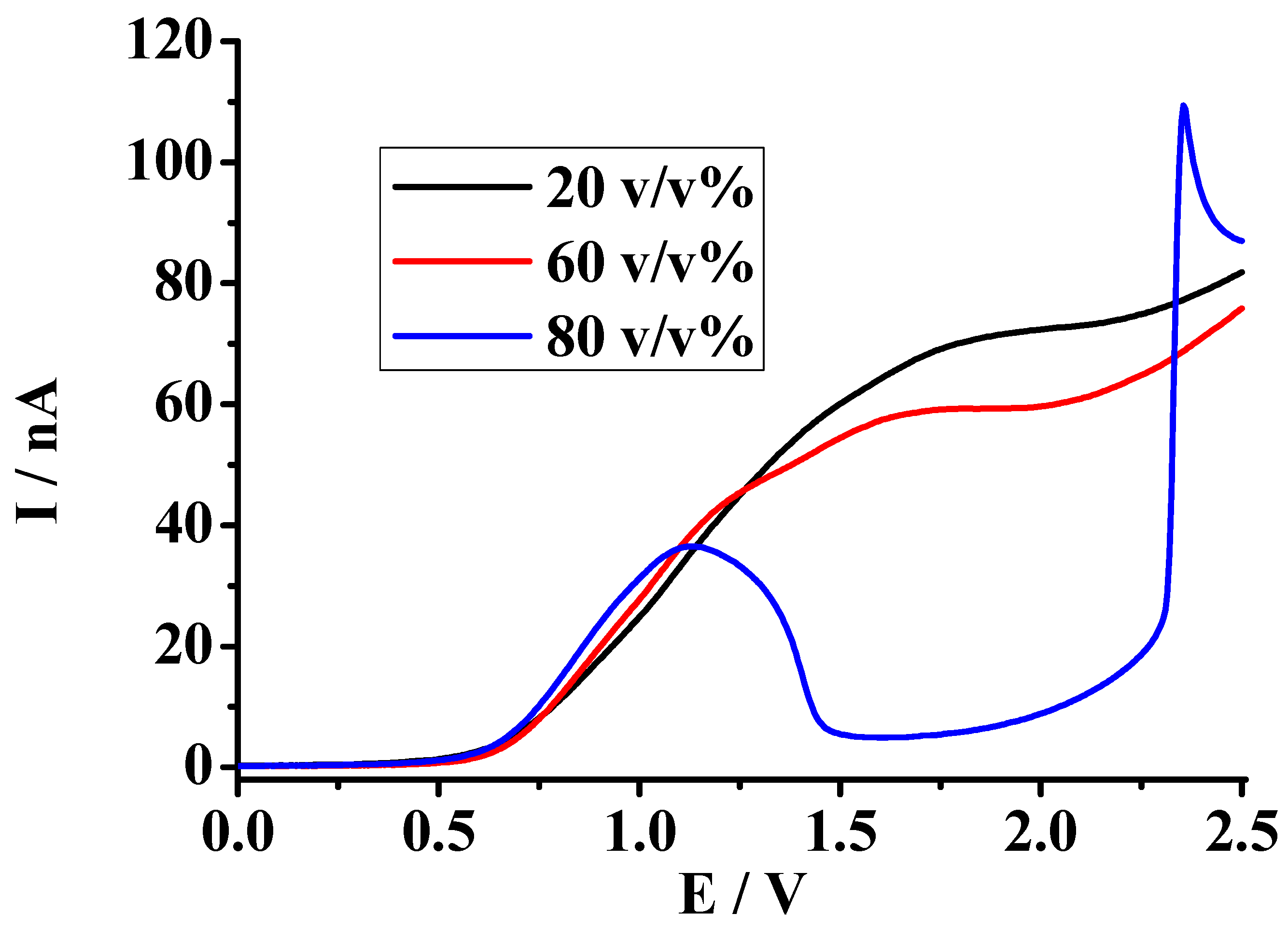
As an anti-knocking material, MTBE is also used in fuels, so its effect was also assessed. Figure 2 reveals the LSV curves of triethanolamine where higher quantities of MTBE were added to the hydrocarbon. They are very similar to those recorded when only the necessary aliquot was added to the mixture with ethyl acetate. Around 60 v/v%, there is a significant blocking, possibly due to the hydrogen bonds with the adduct, which are weaker than with alcohols. The shape of the curve by this MTBE concentration highlights that a high dose is necessary to trigger the same effect as alcohols can. At the curve of 80 v/v% concentration, a sign appeared indicating the rupture of the deposited film, and as a consequence, MTBE contributes to the film removal a little.
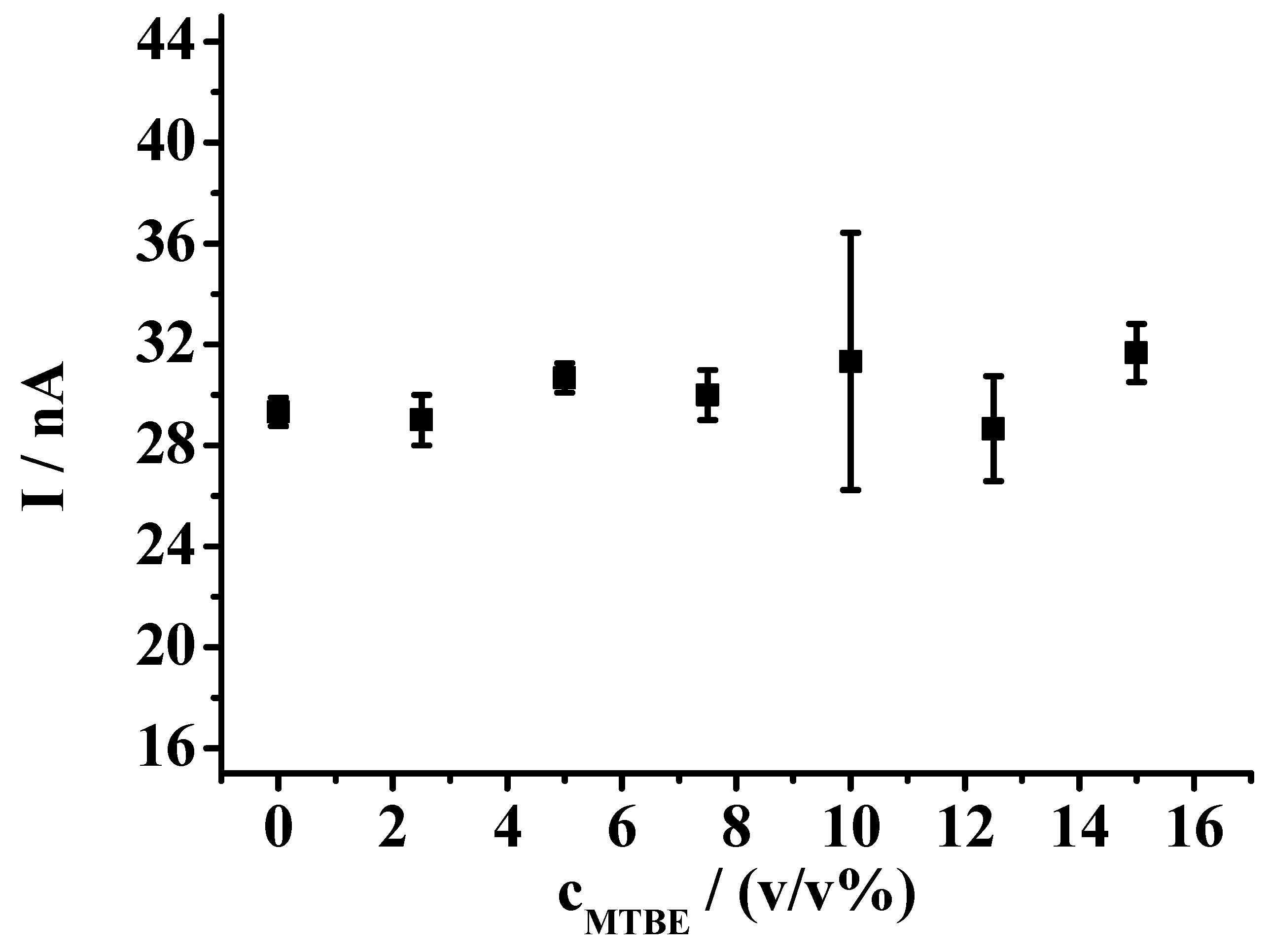
Ethanol was in the centre of our investigations as an anti-knocking additive, but the effect of a smaller amount of MTBE was also examined on the signal of 40 v/v% ethanol. Figure 3 shows the averages and scatterings of three parallel measurements for each solution. Obviously, there is only a very slight increasing tendency of currents by adding more and more ether, and typically they have similarly high reproducibilities to the previous measurements. Consequently, MTBE has a low influence on the signal of ethanol. This ether has similar solvation properties to hydrocarbons towards a polymer developed from triethanolamine.
As a small amount of phenolic compounds is also added to fuels as an antioxidant, an artificial sample was prepared containing 0.1 w/w% butylhydroxytoluene and 4-tert-butylphenol, respectively, as they are electroactive. The ethanol content of the samples was 40 v/v%. Due to the significant dilution of the sample added to ethyl acetate according to the applied procedure, a very small increase in the signal (current minimum on the voltammogram) showed up. Compared with the antioxidant-free solution, a 3 v/v% increase was established in ethanol content due to the interference.

4. Conclusions

Triethanolamine proved to be a proper choice for redox active material, also for the estimation of ethanol content in hydrocarbons, as it was demonstrated in this study. The optimization of the necessary amount of samples composed of more components dissolving in the appropriate volume of ethyl acetate makes possible the analysis of a compound within the entire range (0–100% v/v%). The pattern of electropolymerization, depending on the composition, was essential for the favourable solvation properties. The high differences led to regular and irregular shapes of linear sweep voltammograms. As suitable parameters, current minimums could be obtained as an analytical signal at moderate concentrations. The results proved valuable for ethanol determination, and on the other hand, they provided useful knowledge about the solvent-solute interactions. This work provided additional proof for the importance of solvent composition in influencing the events within the electrode-solution interface. The electrooxidation of triethanolamine (and generally alcoholamines) opens new possibilities for other applications to widen the scope of further research.

Author Contributions

Conceptualization, L.K.; methodology, L.K.; investigation, L.K.; resources, S.K.-M., H.L. and X.-H.C.; writing—original draft preparation, L.K., H.L. and X.-H.C.; writing—review and editing, S.K.-M., H.L. and X.-H.C.; supervision, L.K.; funding acquisition, S.K.-M. All authors have read and agreed to the published version of the manuscript.

Funding

This research was funded by the Hungarian National Research Development and Innovation Office (NKFI), grant number NKFI-137793, the Chinese-Hungarian Intergovernmental S&T Cooperation Programme (Project no.: CH-10-6/2024 and 2024-1.2.5-TÉT-2024-00006).

Data Availability Statement

The original contributions presented in this study are included in the article. Further inquiries can be directed to the corresponding author.

Conflicts of Interest

The authors declare no conflicts of interest.

Abbreviations

The following abbreviations are used in this manuscript:
MTBEMethyl tertbutyl ether
TBAPTetrabutylammonium perchlorate

References

  1. Myland, J.C.; Oldham, K.B. General theory of steady-state voltammetry. J. Electroanal. Chem. 1993, 347, 49–91. [Google Scholar] [CrossRef] [Scilit]
  2. Oldham, K.B.; Cardwell, T.J.; Santos, J.H.; Bond, A.M. Effect of ion pairing on steady-state voltammetric limiting currents at microelectrodes Part I. Theoretical principles. J. Electroanal. Chem. 1997, 430, 25–37. [Google Scholar] [CrossRef] [Scilit]
  3. Pendley, B.D.; Abruna, H.D.; Norton, J.D.; Benson, W.E.; White, H.S. Analysis of voltammetric half-wave potentials in low ionic strength solutions and voltammetric measurements of ion impurity concentrations. Anal. Chem. 1991, 63, 2766–2771. [Google Scholar] [CrossRef] [Scilit]
  4. Cassidy, J.; Khoo, S.B.; Pons, S.; Fleischmann, M. Electrochemistry at very high potentials: The use of ultramicroelectrodes in the anodic oxidation of short-chain alkanes. J. Phys. Chem. 1985, 89, 3933–3935. [Google Scholar] [CrossRef] [Scilit]
  5. Dibble, T.; Bandyopadhyay, S.; Ghoroghchian, J.; Smith, J.J.; Sarfarazi, F.; Fleischmann, M.; Pons, S. Electrochemistry at very high potentials: Oxidation of the rare gases and other gases in nonaqueous solvents at ultramicroelectrodes. J. Phys. Chem. 1986, 90, 5275–5277. [Google Scholar] [CrossRef] [Scilit]
  6. Geng, L.; Ewing, A.G.; Jernigan, J.C.; Murray, R.W. Electrochemical reactions of solutes and of electroactive polymer films in low dielectric media: Toluene and heptane. Anal. Chem. 1986, 58, 852–860. [Google Scholar] [CrossRef] [Scilit]
  7. Abbott, A.P.; Eardley, C.A.; Harper, J.C.; Hope, E.G. Electrochemical investigations in liquid and supercritical 1,1,1,2-tetrafluoroethane (HFC 143a) and difluoromethane (HFC 32). J. Electroanal. Chem. 1998, 457, 1–4. [Google Scholar] [CrossRef] [Scilit]
  8. Goldfarb, D.L.; Corti, H.R. Electrochemistry in supercritical trifluoromethane. Electrochem. Commun. 2000, 2, 663–670. [Google Scholar] [CrossRef] [Scilit]
  9. Fang, Y.; Leddy, J. Voltammetry in gas phase environments. J. Electroanal. Chem. 1995, 384, 5–17. [Google Scholar] [CrossRef] [Scilit]
  10. Tarhan, I.; Bakir, M.R.; Kalkan, O.; Yöntem, M.; Kara, H. Rapid determination of adulteration of clove essential oil with benzyl alcohol and ethyl acetate: Towards quality control analysis by FTIR with chemometrics. Vib. Spectrosc. 2022, 118, 103339. [Google Scholar] [CrossRef] [Scilit]
  11. Ikayanti, R.; Hafid, A.F.; Primaharinastiti, R.; Widyawaruyanti, A.; Yuwono, M. HPTLC method development and validation for the determination of andrographolide in raw material and tablet containing ethyl acetate fraction of Andrographis paniculata. Trop. J. Pharm. Res. 2021, 20, 1697–1704. [Google Scholar] [CrossRef] [Scilit]
  12. Hernández-Olmos, M.A.; Agüí, L.; Yánez-Sedeno, P.; Pingarrón, J.M. Analytical voltammetry in low-permittivity organic solvents using disk and cylindrical microelectrodes. Determination of thiram in ethyl acetate. Electrochim. Acta 2000, 46, 289–296. [Google Scholar] [CrossRef] [Scilit]
  13. Agüí, L.; López-Guzmán, J.E.; González-Cortés, A.; Yánez-Sedeno, P.; Pingarrón, J.M. Analytical performance of cylindrical carbon fiber microelectrodes in low-permittivity organic solvents: Determination of vanillin in ethyl acetate. Anal. Chim. Acta 1999, 385, 241–248. [Google Scholar] [CrossRef] [Scilit]
  14. Mruthunjaya, A.K.; Torriero, A.A. Mechanistic aspects of the electrochemical oxidation of aliphatic amines and aniline derivatives. Molecules 2023, 28, 471. [Google Scholar] [CrossRef] [Scilit]
  15. Danielmeier, K.; Schierle, K.; Steckhan, E. A new chiral, cationic β-amino alcohol equivalent: A variable approach to enantiomerically pure building blocks for hydroxyethylene isosters. Angew. Chem. Int. Ed. Engl. 1996, 35, 2247–2248. [Google Scholar] [CrossRef] [Scilit]
  16. Rudd, E.J.; Finkelstein, M.; Ross, S.D. Anodic oxidations. VII. Reaction mechanism in the electrochemical oxidation of N,N-dimethylformamide in acetic acid and in methanol. J. Org. Chem. 1972, 37, 1763–1767. [Google Scholar] [CrossRef] [Scilit]
  17. Weinberg, N.L.; Brown, E.A. The anodic oxidation of organic compounds. II. The electrochemical alkoxylation of tertiary amines. J. Org. Chem. 1966, 31, 4058–4061. [Google Scholar] [CrossRef] [Scilit]
  18. Kung, Y.; Cheng, T.; Chen, R.L.C. Impedimetric sensing of the ethanol and water contents in gasohol with a flow-through carbon electrode pair. Meas. Sci. Technol. 2013, 24, 105107. [Google Scholar] [CrossRef] [Scilit]
  19. Pereira, P.F.; Marra, M.C.; Munoz, R.A.; Richter, E.M. Fast batch injection analysis system for on-site determination of ethanol in gasohol and fuel ethanol. Talanta 2012, 90, 99–102. [Google Scholar] [CrossRef] [Scilit]
  20. Paixão, T.R.; Cardoso, J.L.; Bertotti, M. The use of a copper microelectrode to measure the ethanol content in gasohol samples. Fuel 2007, 86, 1185–1191. [Google Scholar] [CrossRef] [Scilit]
  21. Kiss, L.; Nagy, G.; Kovács, B. Amperometric response of alcohols dissolved in high resistance hydrocarbon media at microelectrodes without supporting electrolyte. Electroanalysis 2012, 24, 2117–2124. [Google Scholar] [CrossRef] [Scilit]
  22. Kiss, L.; Szabó, P. Acetic acid and ethyl acetate as solvents for electropolymerization reactions, considering 4-methoxyphenol and composition of solvent mixtures. Organics 2024, 5, 670–683. [Google Scholar] [CrossRef] [Scilit]
  23. Kiss, L.; Kunsági-Máté, S. Microelectrode studies of tertiary amines in organic solvents, considering triethanolamine to estimate the composition of acetic acid-ethyl acetate mixtures. Eng 2025, 6, 280. [Google Scholar] [CrossRef] [Scilit]
  24. Michalkiewicz, S.; Kaczor, M. Potential windows accessible to platinum and carbon electrodes in acetic acid and its mixtures with ethyl acetate. Chem. Anal. 2004, 49, 121–128. [Google Scholar]
Scheme 1. Mechanism of triethanolamine electrooxidation in aprotic environment in the presence of ethanol molecules.
Reactions 07 00017 sch001
Figure 1. Linear sweep voltammograms of triethanolamine in mixtures of ethyl acetate and samples in presence of ethanol in the samples with concentrations between 10 and 100 v/v% (a) with ethanol in the samples related to concentrations 0 and 7.5 v/v% (b) with the calibration curves for the two parameters (c) (c = 15 mM for triethanolamine, scan rate 0.1 V/s, supporting electrolyte 50 mM TBAP). The colours denote in (a) ethanol concentration in the next order: black (10 v/v%), red (20 v/v%), blue (30 v/v%), magenta (40 v/v%), green (50 v/v%), navy (60 v/v%), violet (70 v/v%), purple (80 v/v%), wine (90 v/v%), dark yellow (100 v/v%). In part (b), black: 0 v/v%, red: 2.5 v/v%, blue: 5 v/v%, magenta: 7.5 v/v%. A black box includes the points as exceptions where currents were utilized approximately at an average potential of appearances of minimums at the other curves (potentials shown by black asterisks in part (a)).
Reactions 07 00017 g001aReactions 07 00017 g001b
Figure 2. Linear sweep voltammograms of triethanolamine in mixtures containing different quantities of MTBE (c = 15 mM, scan rate 0.1 V/s, supporting electrolyte 50 mM TBAP).
Reactions 07 00017 g002
Figure 3. Average current signals (current minimums after the oxidation peak) of 40 v/v% ethanol in n-heptane upon additions of MTBE (c = 15 mM for triethanolamine, scan rate 0.1 V/s, supporting electrolyte 50 mM TBAP).
Reactions 07 00017 g003
Disclaimer/Publisher’s Note: The statements, opinions and data contained in all publications are solely those of the individual author(s) and contributor(s) and not of MDPI and/or the editor(s). MDPI and/or the editor(s) disclaim responsibility for any injury to people or property resulting from any ideas, methods, instructions or products referred to in the content.