


Abstract
The paper outlines soil–tool interaction investigations according to parameters of the trencher disc cutter with a variable installation angle relative to the rotation axis that ensure the required trench shape and dimensions. The research results make it possible to improve the quality of the technological process for obtaining the needed trench shape. The movement of soil particles on the knife surface and after their removal was considered using the principles of soil mechanics, mathematical analysis, and computer (3D) modelling taking into account centrifugal force, gravity and friction. Research has shown that the soil particles’ movement is spatially complex and can be described by parabolic dependencies when projected onto coordinate planes. It is proved that changing the angle of installation of the disc in the range of 90–80° allows the furrows’ width to be adjusted within the range of 0.1–0.5 m while maintaining the required depth of cultivation. The reduction indicators of trench depth that are dependent on changing the disc installation angle were also determined. The obtained dependencies, design and technological recommendations can be used in designing of planting machines for garden and forest crops, as well as in the justification of rational operating modes for them in intensive horticulture conditions.
1. Introduction
In the context of global agricultural intensification, improving the efficiency of perennial planting technologies is becoming particularly important. Industrial gardening is characterised by high capital intensity and a long payback period, which places high demands on the quality of planting operations. Traditional planting technology in individual planting holes at a density of more than 1.000 plants per hectare is becoming less economically viable and technologically difficult [1]. Planting rootstocks in nurseries and planting saplings for establishing intensive gardens are one of the basic technological processes that determine plant survival, root system formation and subsequent productivity of plantings [2,3]. In other hand, planting large numbers of seedlings or saplings in a short period improves environmental conditions, the quality of life and meets basic human needs, especially in areas where forests have been damaged by fires or human activities [4].
One promising area of mechanisation in planting operations is the use of specialised furrow cutters that form trenches of a specified width and depth in continuous mode. The technology of planting in pre-formed furrows or trenches is becoming increasingly widespread, as it ensures the continuity of the process, reduces labour costs and creates more uniform soil conditions for root system development. This indicates that there is a significant need to develop planting trenchers and improve the efficiency of the industry through the introduction of modern technical means [5]. Review of modern tree planting and fruit cultivation technologies shows that operations related to soil preparation and planting hole formation remain labour-intensive, time-consuming operation [6] and the development of intensive horticulture is accompanied by an increase in planting density. With increasing planting density, which is typical for intensive and super-intensive gardens, the amount of excavation work increases significantly.
Planting should be carried out on well-loosened soil with optimal trench geometry parameters corresponding to the biological characteristics of the crops and the accepted cultivation technology. Planting hole has a decisive influence on the survival rate of saplings and their further development. Accordingly, planting hole as well as the planting quality depends on the planting machine characteristics. First, they must not damage the seedlings in the process; second, the seedling must be planted at the correct depth and in an upright position. To avoid drying, the planting hole should be filled with and covered by at least 2–3 cm of soil after receiving a seedling root plug [7,8].
There are several types of trenchers and planting machines such as bar type, spiral, auger, drill, disc and plough type. Many commercially available tree planting machines are designed on excavator chassis [9]. Luoranen et al. evaluated the effects of armed planting machines (Bracke, Sweden and Ecoplanter, Finland) on the quality and field performance. Both machine types planted on average 1800 seedlings per hectare [10]. They conclude that mechanised planting is successful when the soil preparation method produces mounds covered by purely mineral soil. Rantala and Laine studied productivity of the planter (M-Planter) in practice and show how various factors affect it. The average productivity figures for the operators were 143 and 169 seedlings per effective working hour during the first and second planting season [11,12].
With the widespread application of computer-based virtual simulation technology in the agricultural sector, simulation techniques have provided an efficient and feasible method for studying the soil disturbance process during deep tillage or trench digging. The discrete element method (DEM) simulation technology has become an effective tool in trench cutting and tillage research [13,14,15,16,17]. Simulation of tool–soil interactions provides opportunities to accelerate new equipment design and evaluate its performance [15,16,17]. The use of modern CAD systems provides an opportunity to substantiate the geometric and kinematic parameters of the planting machine, as well as analyse the interaction of the disc cutter with the soil environment in a virtual environment.
Disc or rotary trenching is the most widely used method of mechanical soil cultivation for planting. The popularity of this method of site preparation is due to its ability to create continuous trenches that provide good micro-conditions for seedling rooting, as well as facilitating and making access to the planting machine safer at a reasonable cost [18,19]. The patent review in our investigations show that about 34% of the trenchers are disc type trenchers. There are many disc cutters that are used in heavy production operations. Machine with disc cutters is used to cut through compacted ground, asphalt, or soil while maintaining a clean, narrow trench. In urban areas, it is frequently utilised for the installation of underground utility lines, gas pipelines [20,21].
The disc trenching unit has the advantages of low traction resistance, high operation efficiency, small structure size, and easy to cooperate with the sapling or fertiliser application device. Ma et al. conducted an optimisation investigation of a rotary trenching tool and studied all influencing factors. The optimisation results were verified through field tests, which showed that the average depth of furrowing was 472 mm, the width was 332 mm, the thickness of soil return was 134 mm, and the operating power consumption was 19.95 kW [22]. Makovskis et al. has conducted comparison research on containerized seedling plants in different soil preparation methods and on sites where disc trenchers were used, tending productivity was higher and walked distance shorter [23]. Zhang et al. has designed combined trencher structure and the simulated trencher showed that the designed rotary tiller had strong particle throwing and transfer capabilities to break bonds between particles. The blade arrangement in Mode-2 with a quarter soil cutting pitch showed the smallest resistance and rotary tillage energy consumption [24]. Chen et al. investigated the motion characteristics of a double-disc colter with rotary tillage blades. The optimised double-disc colter underwent field validation tests, has shown a mere 0.73% deviation between the simulated and field-tested tillage depth stability. Field validation testing demonstrated a tillage depth stability coefficient of 92.37% and a working resistance of 104.2 N [25].
Unfortunately, disc-trenching machines are not developed or manufactured in Kazakhstan or its neighbouring countries. Existing technical means for cutting furrows and trenches, used in agriculture and forestry, generally do not allow for effective adjustment of the trench width without compromising soil tillage quality or increasing the energy consumption of the process. The settings on disc trenching units can be modified extensively, however the effect of these modifications on the work quality and machine performance is poorly understood [26].
The research problem addressed in this study lies in the insufficient understanding of the mechanisms governing the interaction between the planting machine’s milling working body and the soil during the formation of planting trenches with adjustable geometry. Furthermore, the influence of the milling disc’s installation angle, rotational parameters and blade geometry on the trajectory of soil particles, the distribution of loosened soil and the formation of the furrow profile has not yet been sufficiently investigated. Indeed, importance of the disc installation (tilt) angle [27] impact to the equipment movement, to the trench shape, and how the loosened soil is spread out is still an actual question. The lack of scientifically substantiated relations between the structural and kinematic parameters of the working body and the performance indicators of the technological process hinders the development of universal planting machines for intensive horticulture.
In this regard, the aim of this study is to provide theoretical and experimental justification of the geometry of the disc cutter exploitative installation based on mathematical modelling of the soil–tool interaction and movement of soil particles, optimisation by using the computational modelling, and experimental assessment of the quality of trench formation. The solution to this problem is aimed at improving the quality of planting operations and creating scientifically based recommendations for the development of a new generation of universal planting machines.
2. Materials and Methods
The research includes theoretical study and experimental verification of the obtained results. The theoretical part is based on the application of methods of classical theories of mechanics, soil–tool interaction studies, mathematical analysis, and simulation of the cutting element and soil particles kinematics [28,29,30]. Theoretical research has yielded analytical dependencies establishing the relationship between the angle of the working body, its movement parameters, and the geometric characteristics of the trench being formed.
2.1. Design and Parameters of the Working Body
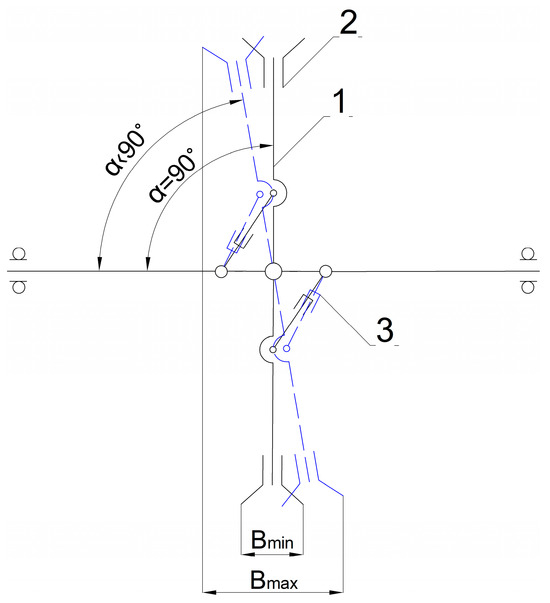
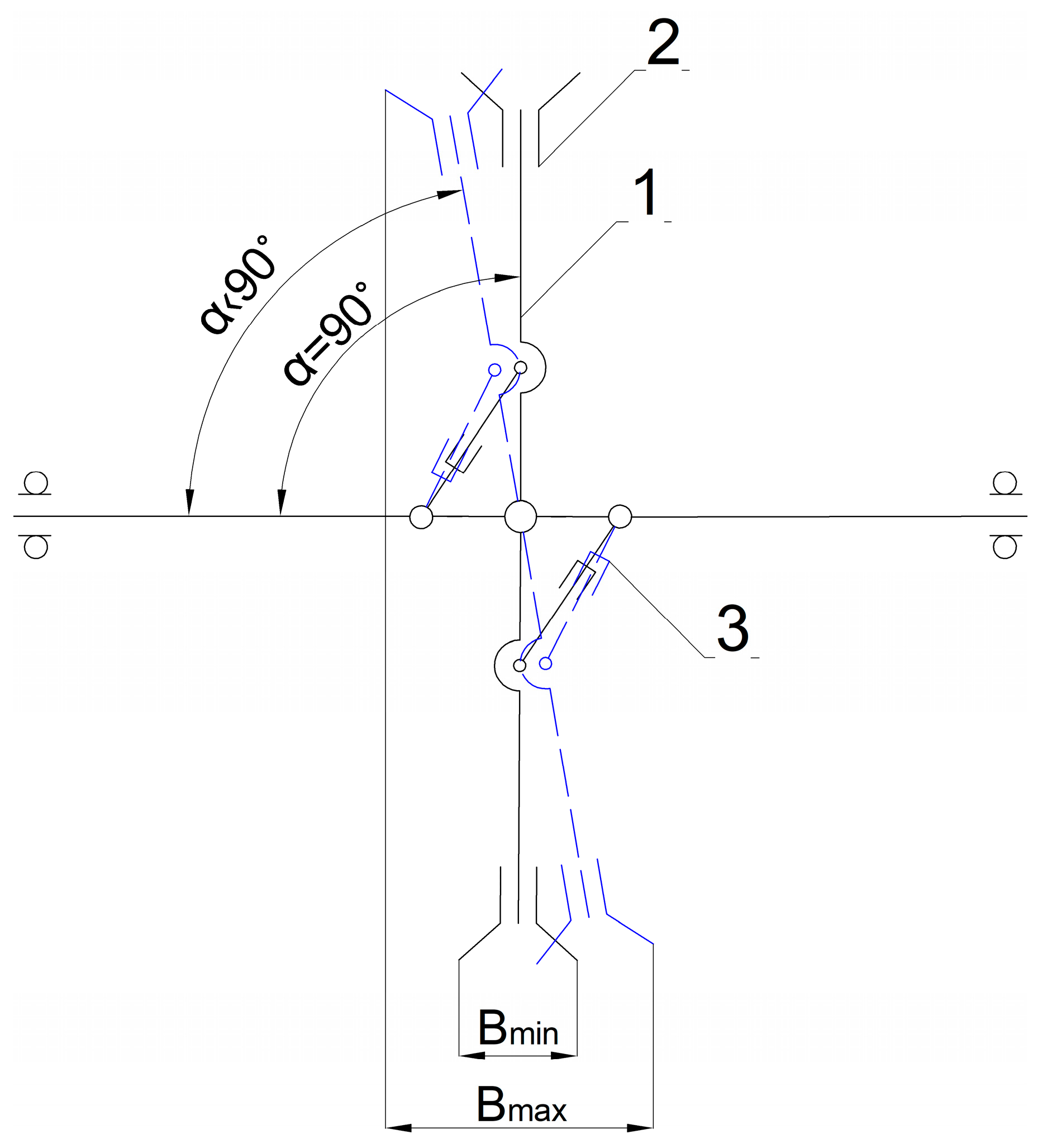
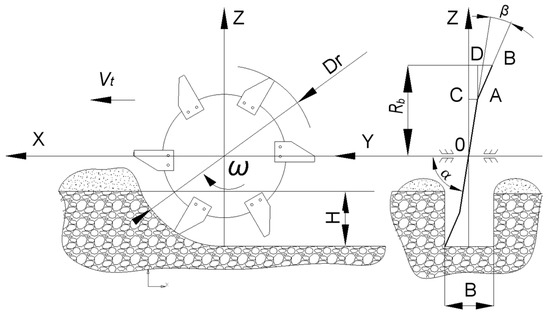
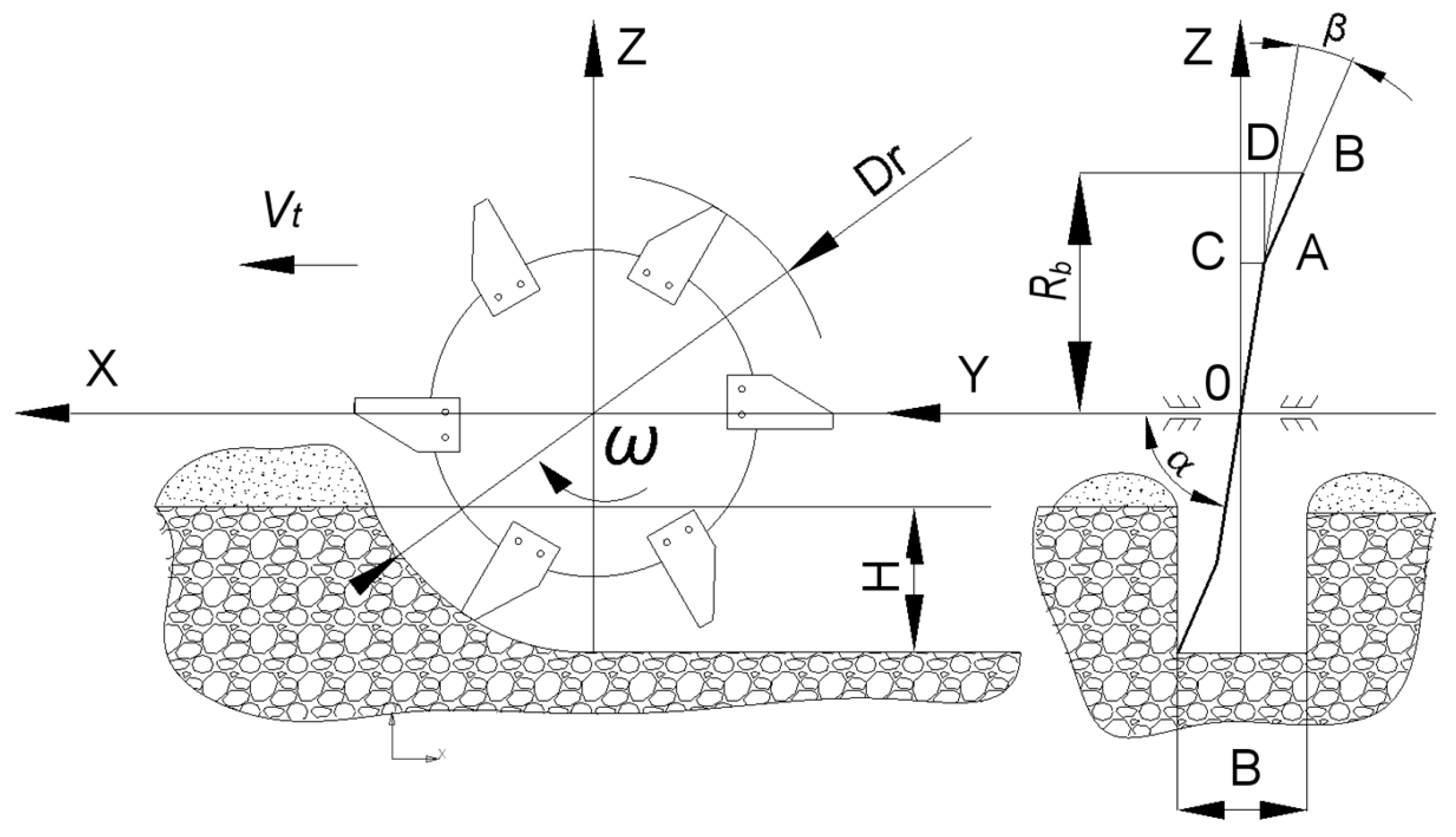
A schematic diagram of the developed disc cutter for sapling trenches is shown in Figure 1 and reflects the conceptual approach to forming a trench with adjustable geometric parameters. The working body is designed as a flat disc (1) with cutting elements (2) fixed to its surface and is mounted on the supporting frame of the developed planting machine. The design has possibility of changing the angle of the disc cutter relative to its axis of rotation using a special adjustment device [30,31]. The disc is rigidly attached (3) to the rotation shaft at the set installation angle, or rather, the installation angle also rotates around the axis of rotation.
Figure 1.
Position changing diagram of the working body: 1—the disc cutter; 2—cutting elements (knives); 3—the mechanism of rotation of the disc cutter relative to the axis of rotation. Here B is the trench width. The inclined position of the disc cutter is shown in blue.
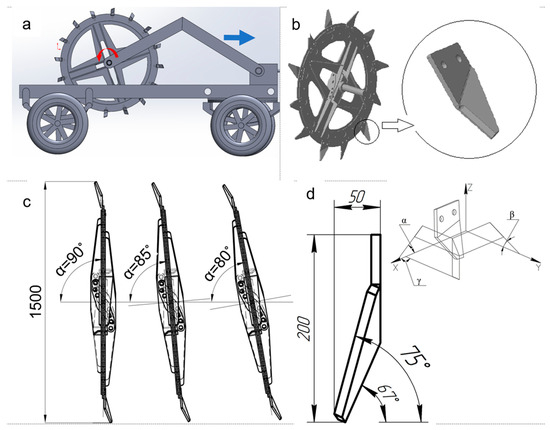
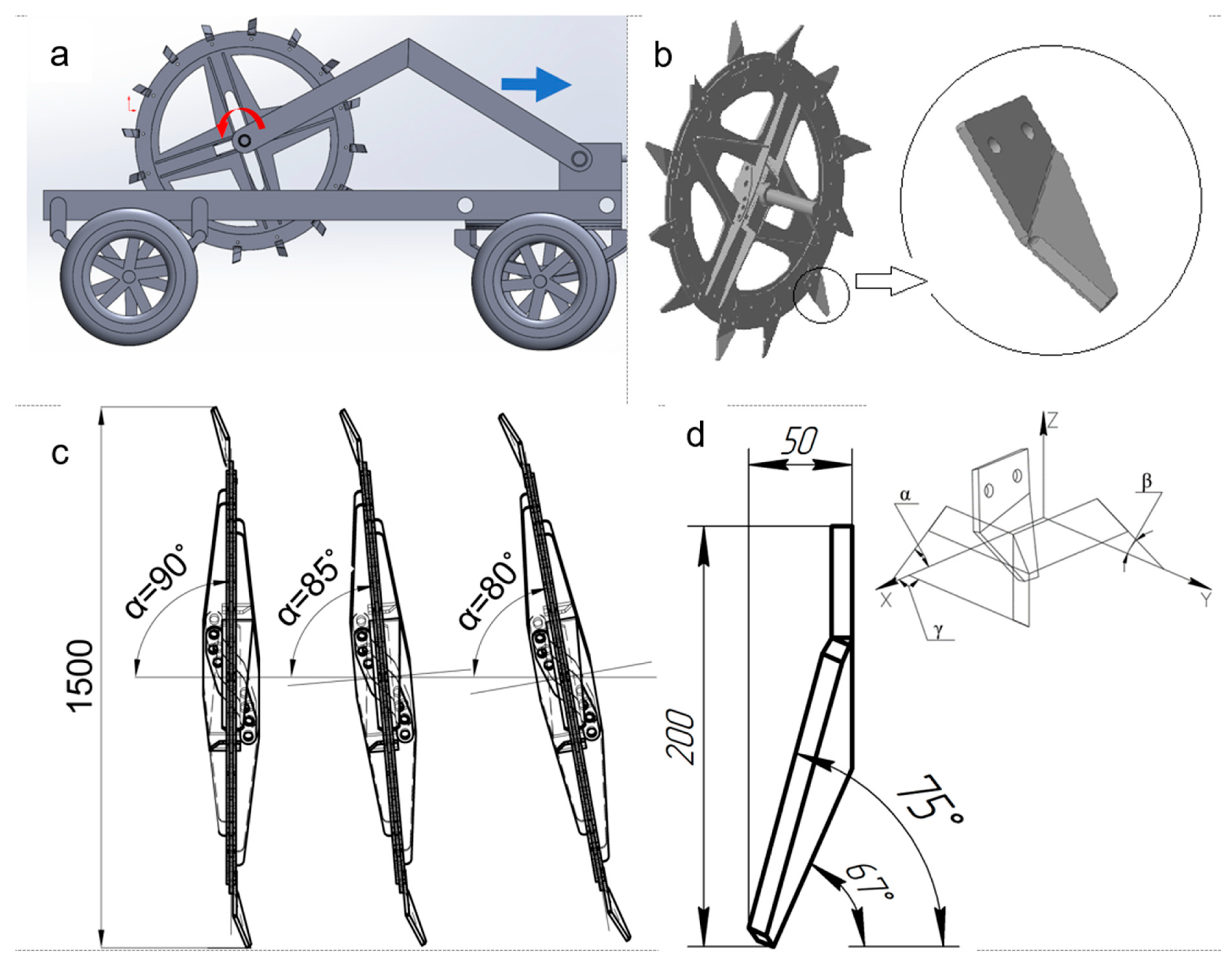
It is expected that when installing the working body at an angle of α = 90° to the axis of rotation, a trench of minimum width is formed. A decrease in the installation angle (α < 90°) leads to an increase in the width of the formed trench due to a change in the spatial trajectory of the cutting elements. Thus, adjusting the installation angle of the working body allows to purposefully change the geometric parameters of the trench without replacing or reconfiguring the main working tool. The 3D model of the trencher unit in transport position with the disc cutter (a), the disc cutter and the knife (b), various work positions of the disc cutter (c) as well as the knife installation details (d) are given in Figure 2.
Figure 2.
3D model of the trencher unit (a), working body (disc cutter) with cutting element (knife) (b), three installation positions of the working body relative to the rotation axis (c) and the knife installation details (d). Blue arrow in (a) is unit movement direction. The red arrow (a) is the rotation direction of the disk.
Based on the results of exploratory research [31,32,33] and analysis of data from other classical researchers [34,35], the knife installation angle, which provides a rational combination of energy consumption and the quality of trench formation, is around of 20–25°. In our calculations, for modelling purposes and research, the knife installation angle was ≈24° (that is 90° − 66.82°) for working body with installation angle of α = 90° (Figure 2d). However, in conditions where α < 90°, it will vary depending on the left and right position of the knife.
The disc rotates in opposite direction to the machine movement. The literature review shows that the use of reverse soil milling, in which the disc cutter rotates in the opposite direction to the machine’s forward movement, ensures more efficient removal of loosened soil from the working zone, reduces the re-grinding of the soil mass and helps to lower the energy consumption of the process [36,37,38].
2.2. Theoretical Studies
Theoretical studies of the interaction between the disc cutter and the soil were based on the analysis of kinematic and dynamic dependencies describing the movement of the knife point and soil particle in the “soil–tool interaction” system. To this end, methods of analytical mechanics, classical soil cutting theory, and modern approaches to modelling the movement of dispersed media were used. As a basic model is chosen a design diagram of the disc cutter with knives set at an angle to the plane of rotation, and the soil is considered as a loose medium, the particles of which move along the surface of the knife under the action of centrifugal force, gravity, and friction forces [32,39].
The basis for the mathematical description of the movement of the working surface elements is the kinematic model of the knife point trajectory, determined by the superposition of two velocities, circular and translational. The absolute velocity of the knife point is recorded as a vector sum (Figure 3):
Figure 3.
Operation diagram of the disc cutter.
The projections of the absolute velocity on the coordinate axes for the angle of rotation φ of the disc cutter are expressed by parametric equations:
where vt is the translational velocity of the unit.
The circumferential velocity is determined by the expression
where ω is the angular velocity of rotation of the disc cutter, s−1;
Rb is the radius of the disc cutter with knives; and
As mentioned earlier, the disc cutter rotates in opposite direction to the machine movement and the relative velocity at which the knife interacts with the soil increases: . When forward rotation of the disc cutter: .
Increasing the relative interaction velocity promotes more intensive breakdown of the soil mass, improves crumbling, and facilitates the efficient removal of loosened soil from the trench area. At the same time, it reduces the probability of soil falling back into the furrow.
An additional criterion for substantiating the recommended translational speed of the unit was the kinematic coefficient () of interaction of the working body with the soil:
where λ is the kinematic coefficient;
ωR is the circumferential speed of the knife; and
Vt is the translational velocity of the unit.
The radius of rotation at the end of the knife was calculated taking into account the spatial location of the working body. When installing the disc cutter at an angle α, the projection of its geometric axis onto a vertical plane is determined by the expression
where Dr is the diameter of the disc with knives.
The projection of the knife onto the axis of rotation depends on its orientation:
Thus, the total radius of rotation is expressed as
Then the parametric equation of the velocity projection on the coordinate axis will take the form
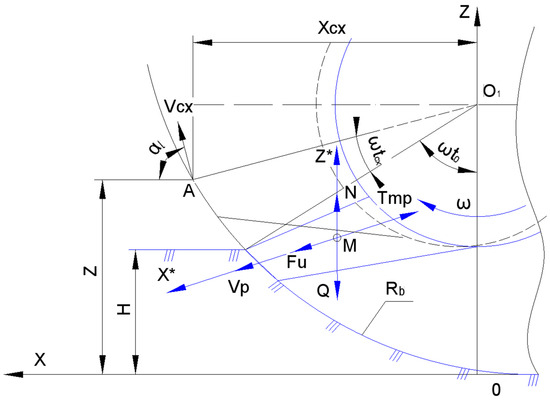
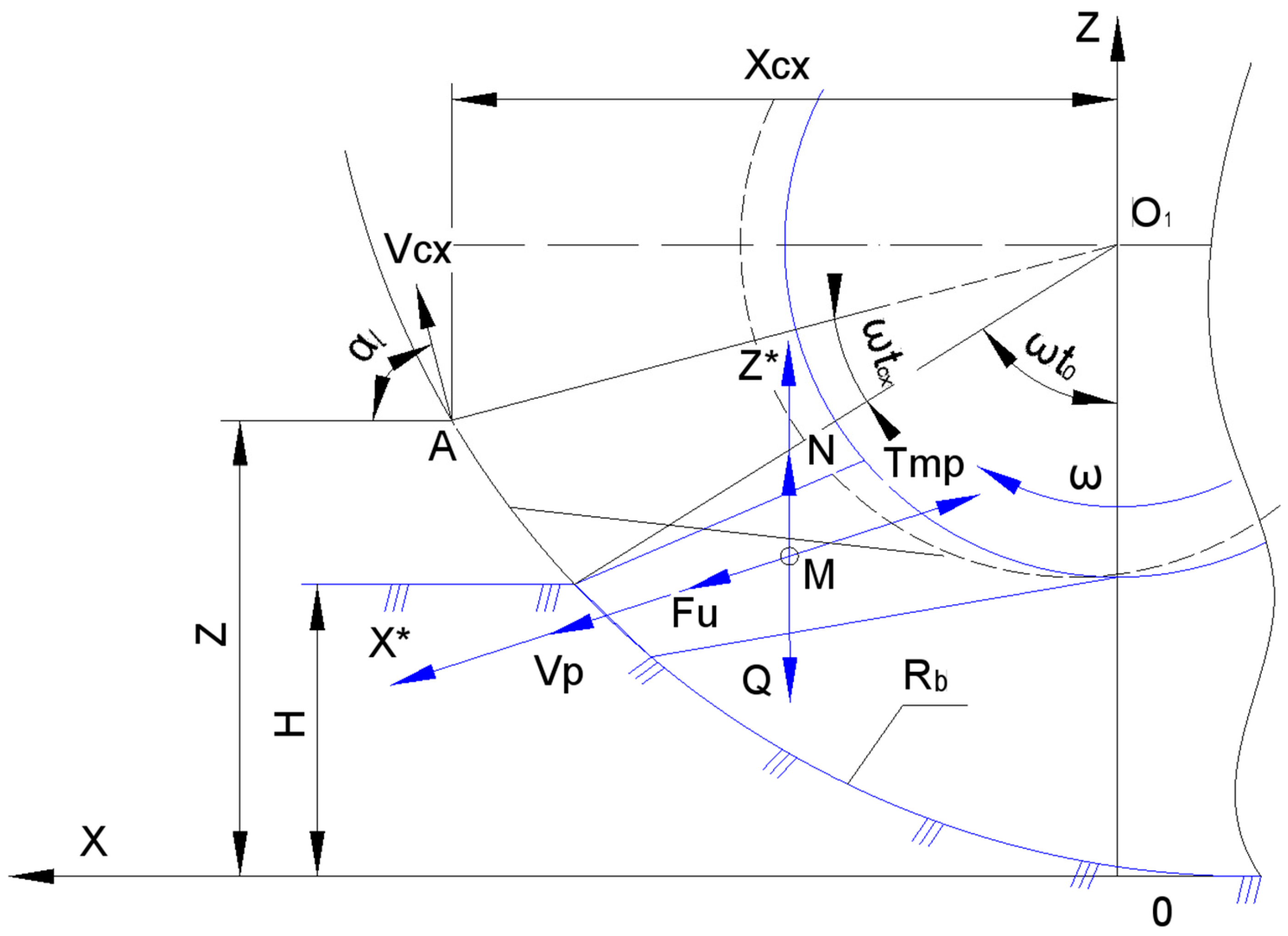
In the process of interaction with the working body, the soil particle moves along the surface of the knife (Figure 4) and is characterised by the projection of velocity onto the plane of the knife.
Figure 4.
Movement of a particle on the knife. M—material point; N—normal force exerted by the knife on the particle; ω—is the angular velocity of rotation of the disc cutter, s−1; Rb—is the radius of the disc cutter with knives; tcx—the time the particle stays on the working surface of the knife after it leaves the layer, s; Fu—centrifugal force; Q—the weight of the particle; Tmr—force of friction acting on a particle; Vp—translational velocity.
For a mathematical description of the process of soil particles leaving the knife, it is necessary to consider its relative movement on the working surface of the knife, as well as the subsequent flight after the descent.
Consider the motion of a material point M in the non-inertial coordinate system x*oz* (Figure 4), which performs a portable motion relative to the inertial coordinate system XOZ. In this case, inertial forces are added to the active forces and bond reactions.
The differential equation of motion of a particle along the surface of a knife is written as
where m is the mass of the particle (kg);
∑F is the sum of the projections of forces acting on a particle, including centrifugal force F, force of gravity P, and friction force T.
where g is the acceleration of gravity (m/s2); and
f is the coefficient of friction of the particle on the knife working surface.
The normal force exerted by the knife on the particle is N (H) calculated as
where t′ is the current time counted from the moment the disc cutter is completely buried, t′ = tφ + tcx.
Here, tφ is the time of rotation of the radius of the disc cutter from the position of complete penetration to the moment of complete exit from the soil layer (s);
tcx is the time the particle stays on the working surface of the knife after it leaves the layer (s); and
γ is the angle of deviation of the working surface of the knife from the radial direction (degrees).
The value /2 = Rb − H characterises the distance from the axis of rotation to the particle, which determines its position on the knife (m); and
H is the processing depth (m);
After substituting expressions and transformations, Equation (10) can be written as follows:
After substituting the variables and differentiating, we obtain
Let us determine the integral constant C1 from the initial conditions by specifying the position and velocity of the particle at the initial moment of time ():
Substituting the found value of the constant, we obtain the final expression for the particle velocity:
Since , then from integrating Expression (13) we find
or after the corresponding substitution of variables and differentiation
Then will determine the constant of integration C2 from the initial conditions: at x1 = 0 and = 0.
Then the path travelled by the particle on the knife surface is equal to
If the value of x exceeds the length of the knife working surface lH, the soil particle will be thrown into the area in front of the disc cutter. In this case, the descent time tcx is determined by the condition
from where
Thus, particle M, which has landed on the working surface of the knife, leaves it after a time tcx.
The direction of the particle’s velocity at the moment of departure is determined by the angle αcx, which in the XOZ coordinate system is equal to (Figure 4)
where φ∂ is the friction angle of the particles on the knife working surface (degrees).
In this case, the angle of rotation of the disc cutter from the bottom point of the trochoid to the moment of excavation is taken into account accordingly. Taking into account the above, Expression (19) will take the form
2.3. Movement of a Soil Particle After Leaving the Knife
After separation from the working surface of the knife, the movement of the soil particle should be considered as the movement of a body thrown at an angle to the horizon. In this case, the trajectory of its movement is determined by the classical equations of ballistic motion [28,31,32,39].
The range of a particle is determined by the expression
and the maximum lift height with dependency
Taking into account the fact that by the time of the descent the particle already has a certain height relative to the soil surface, the calculated dependences take the following forms:
Flight range:
Flight altitude:
An analysis of Expressions (23) and (24) obtained show that the particle descent angle from the knife and the angular velocity of rotation of the disc cutter, which form the initial conditions of its movement, have a decisive influence on the trajectory parameters.
2.4. Field Experiments
Experimental studies were conducted in field conditions and were aimed at verifying the adequacy of theoretical propositions and virtual modelling results. The methodology included determining the geometric parameters of the trench, profiling the transverse and longitudinal sections, and statistical processing of the measured data. A comparative analysis of the experimental and calculated results made it possible to assess the degree of their convergence and the validity of the proposed design and technological solutions.
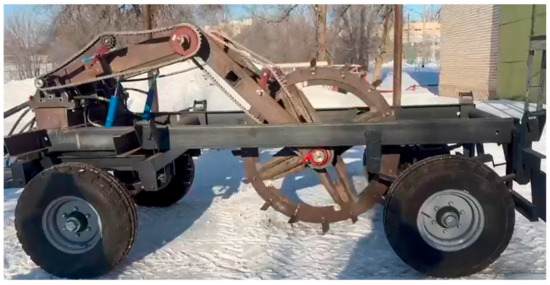
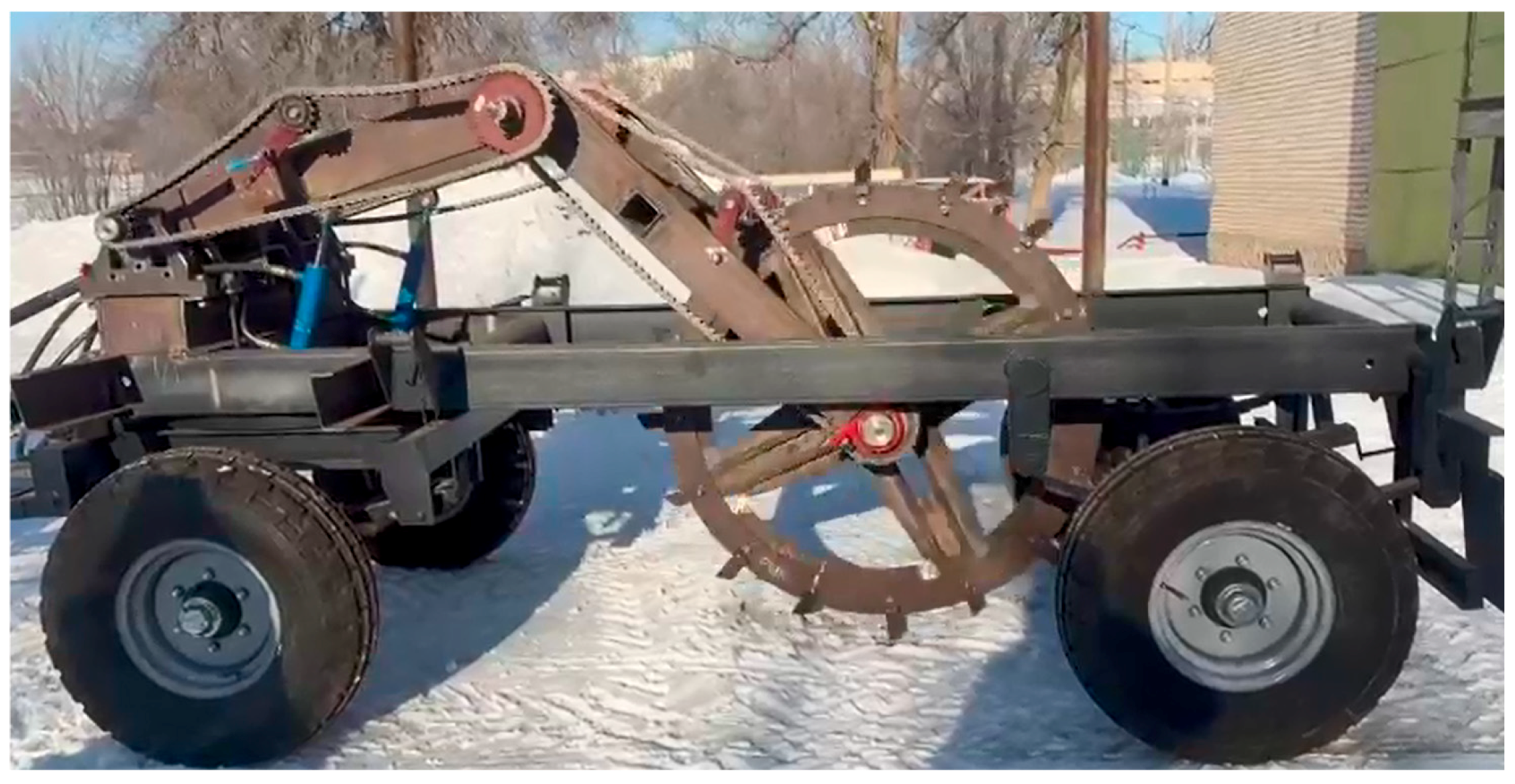
Figure 5 demonstrates the experimental unit that mounted the disc cutter. The experimental module includes a working body, a cantilever boom and running gear. The working body has a flat disc with fixed cutting elements that can be adjusted to the axis of rotation, allowing the width of the trench to be changed as required. The cantilever boom is designed to bring the working body into the transport position and adjust the cutting depth of the trench. The working body is driven by a system that includes the transmission of rotation from the tractor’s PTO through a bevel gear and chain drive. The main feature of the proposed technology is the ability to dynamically adjust operating parameters, such as the inclination angle of the working body (by adjusting the installation angle) and the depth of the trench, which ensures the versatility of the device for different types of soil. The experimental unit were manufactured in the research workshop of the Polytechnic Institute, of West Kazakhstan Agricultural and Technical University Named after Zhangir Khan, Uralsk.
Figure 5.
Experimental unit that mounted the disc cutter.
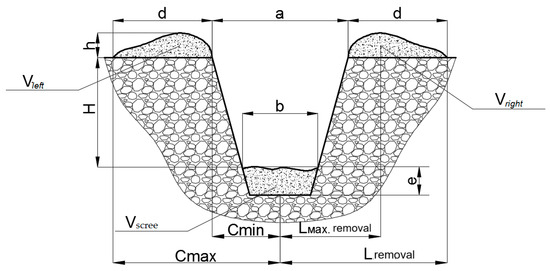
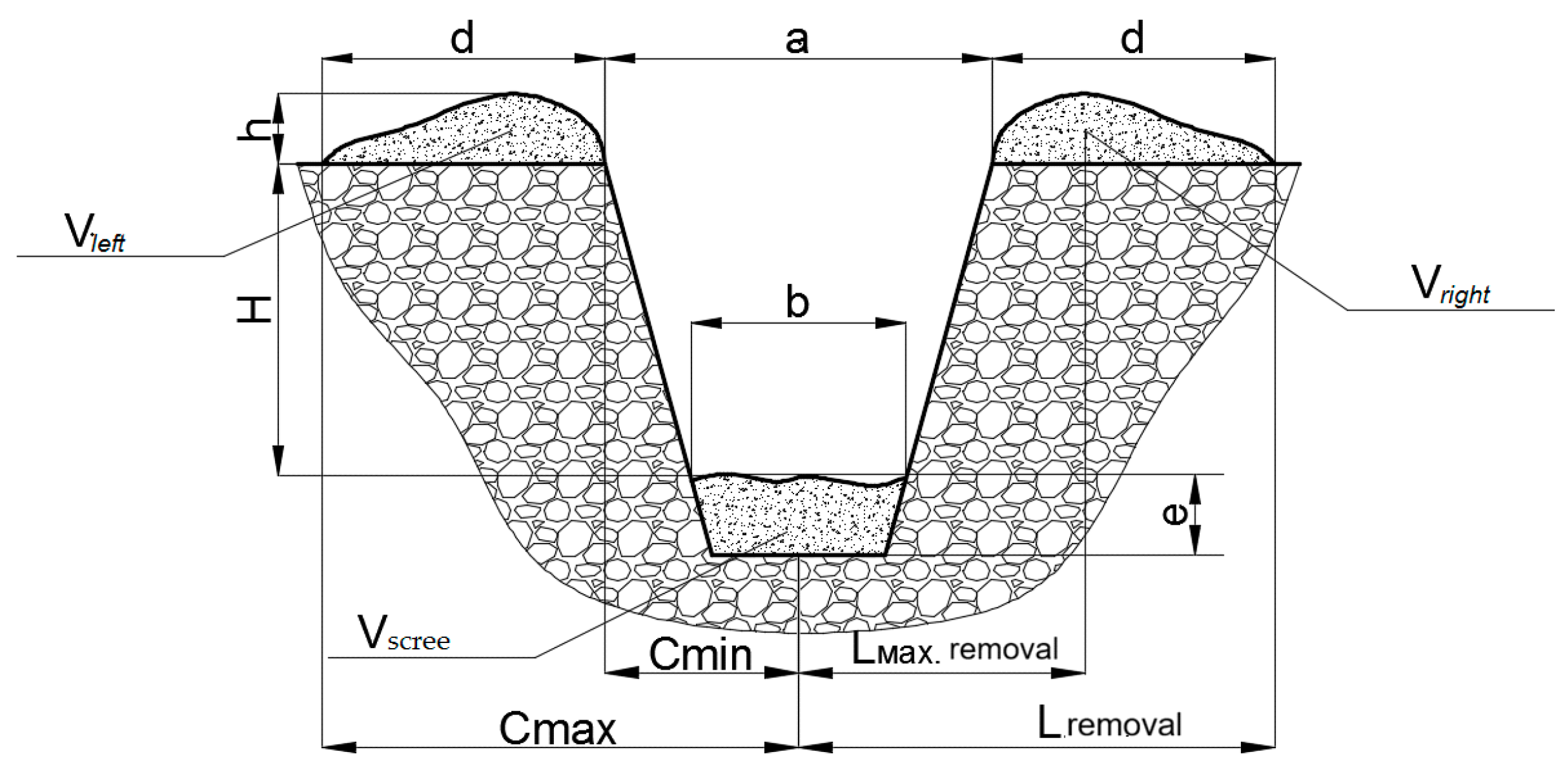
When determining the overall trench characteristics, the next dimensions were measured and recorded: clear trench depth H, trench width at the top a and width at the bottom b, soil scree width d and height h, thickness of the soil layer e, which crumbled to the bottom of the ditch during operation (Figure 6). The combination of these indicators made it possible to comprehensively assess the stability of the trench profile, the degree of preservation of its geometry and the compliance of the obtained parameters with agrotechnical requirements [31].
Figure 6.
Overall characteristics of the trench.
A rod-type profilometer with 50 mm divisions was used to quantify the trench profile geometry. The measurements were carried out along the cross-section of the trench, with the width at the top, the width at the bottom, and the actual depth of processing being fixed. The experimental data obtained made it possible to determine the real shape of the profile and compare it with the results of virtual modelling.
The assessment of the quality of the technological process was carried out based on an analysis of the transverse profile of the trenches being cut at different values of the knife installation angle α of the working body. This approach made it possible to establish the influence of the structural adjustment of the disc cutter on the trench shape and geometric parameters.
The approximate cross-sectional area of the trench can be determined by the trapezoid formula (Figure 6)
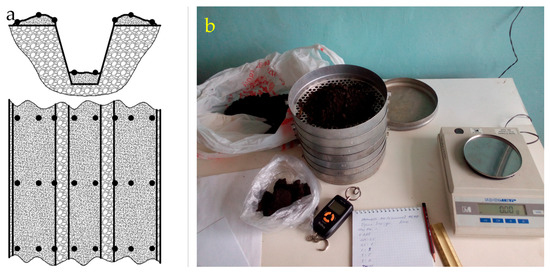
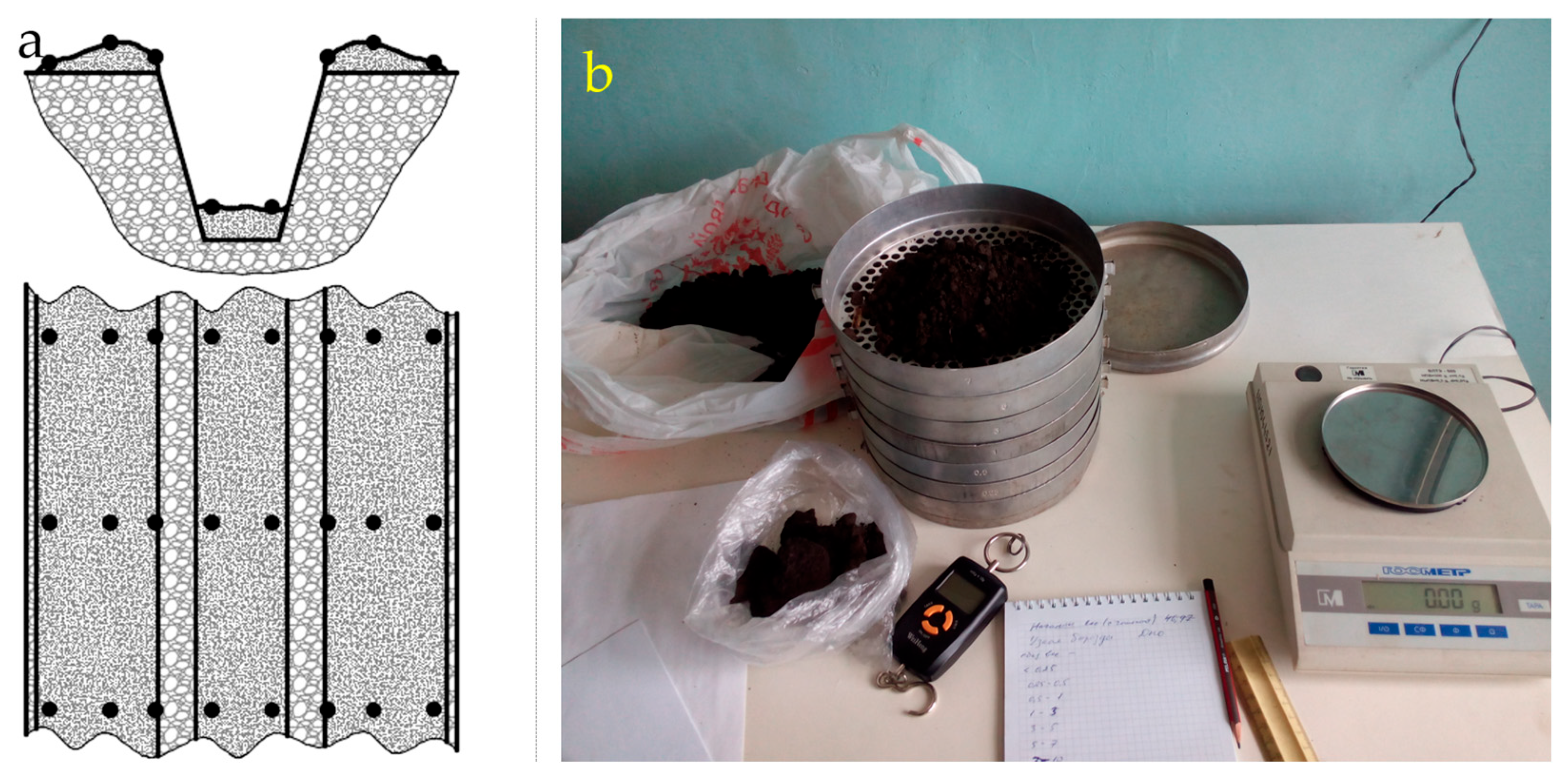
The sieve method was used to determine the granulometric composition of the soil before and after the passage of the furrow cutter [40]. To obtain more accurate results, samples for the study were taken in three places from the top of the furrow (shafts, ridges) and from the bottom of the furrow (scree) at the points indicated in the diagram (Figure 7a). The row spacing along the length of the trenches is 1 m.
Figure 7.
Sampling scheme (a) and sieving and weighing of the test material (b).
The following tools were used to determine the granulometric composition of the soil (Figure 7b): a set of sieves with hole sizes: 0.25; 0.5; 1; 3; 5; 7; 10 mm; electronic laboratory scales with a relative weighing error of no more than 0.01%; technical scales with a relative weighing error of no more than 0.1%; drying cabinet, spatula, ruler.
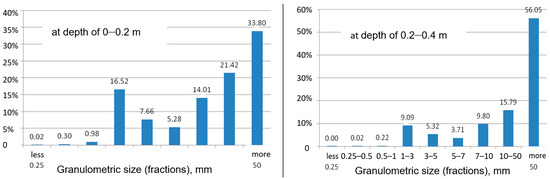
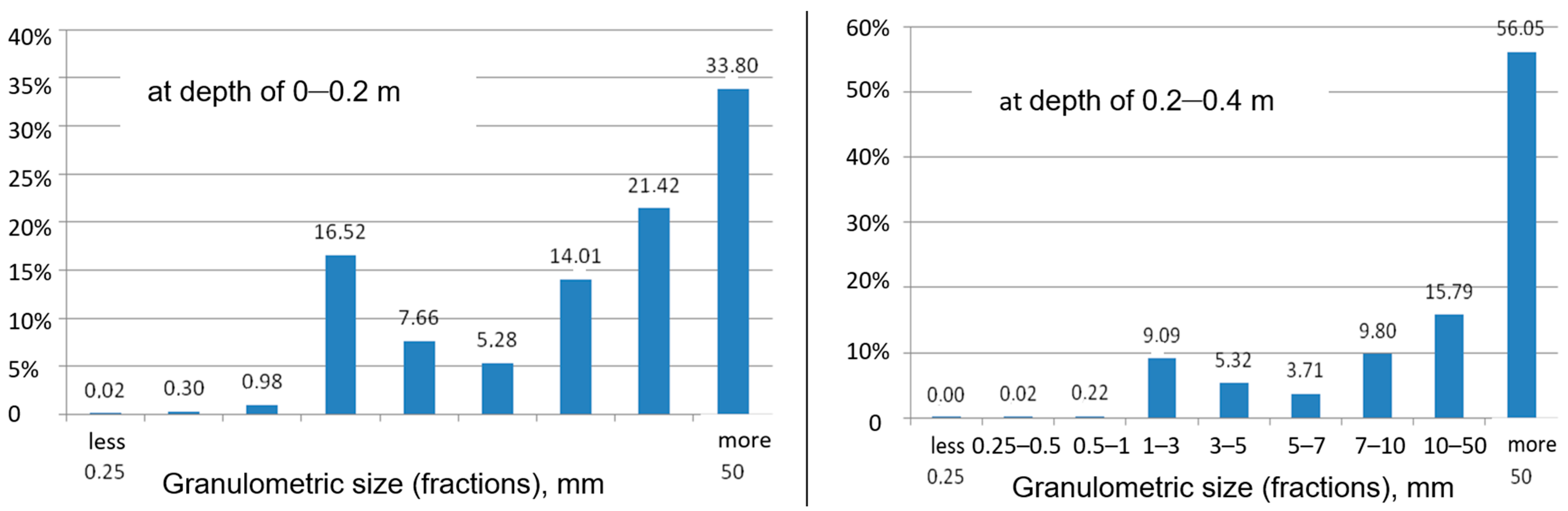
The pre-dried soil samples were prepared for weighing. After setting the sieves vertically from the smallest cell size (at the bottom) to the largest and placing the sample in the upper sieve, have to begin sifting the material in circular movements for 5–7 min. The remainder of the samples in each sieve is weighed with an accuracy of 0.01 g (Figure 7b). The selection of particles larger than 50 mm was carried out manually, followed by measurement and weighing. Taking the total mass of the sample as 100%, the percentage of each fraction was determined. Figure 8 demonstrates the percentages of the granulometric composition of the soil before digging trenches.
Figure 8.
The granulometric composition of the soil before tillage with working body, %.
2.5. Virtual Simulations
The technical appearance of the machine and its working body was designed using 2D drawings and 3D modelling, which made it possible to determine the layout parameters and kinematic capabilities of changing the angle of the disc cutter. The SolidWorks® (2023) and EDEM® (2018) [30] (p. 26) software packages were used to model and perform the virtual simulations. In the model, the soil was treated as a dispersed medium with a simplified representation of particles, and the interaction between the particles and the working body was defined using standard contact models employed in DEM simulations of soil media. The parameters of friction, density and contact interaction were adopted based on recommendations found in the review analyses and the software package’s built-in libraries (Table 1).
Table 1.
Soil mechanical parameters assigned in the DEM model.
To compare with the field test and simulation results, the average value of the trench width was used, defined as the half-sum of the width at the top and bottom of the trench. The average width () of the trench was defined as the half-sum of the width values of the top (a) and bottom (b) of the trench
The relative deviation was determined by the expression
Here, is the trench width obtained during the virtual simulations.
3. Results and Discussions
3.1. Virtual Simulation of the Movement of Soil Particles
The use of three-dimensional parametric modelling methods at the design stage made it possible to verify the results of theoretical research earlier than performing laborious field experiments, as well as to clarify the layout and design solutions of the working body. To assess the operability of the proposed design, a parametric 3D model of the working body was developed, which implements combined translational and rotational motion. Initial data for simulation investigations are disc cutter diameter Dr = 1500 mm, rotation speed n = 120 rpm, disc installation angle α = 90°, translational speed of the unit vt = 1 m/s. Based on these values, the resulting velocity of the knife point vax was determined in the modelling environment, as well as its projections on the X and Y coordinate axes [30] (p. 26).
The results of virtual modelling (Table 2) showed that even a slight change in the angle of the disc leads to a significant change in the width of the trench. When the installation angle of the disc cutter with a diameter of 1500 mm is changed within the range of 90–80° at a depth of 0.3 m, the width of the furrow varies up to 0.5 m. The defined trench width meets the agrotechnical requirements for planting saplings and for developing the root system [41,42].
Table 2.
Change in trench width when changing the angle of the disc cutter.
A change in the angle of installation of the disc in the range of 90–80° is accompanied by a change in the effective diameter (Rb) of the disc cutter, defined as the diameter of the circle described by the point (vertex) of the knife furthest from the axis of rotation. It can be explained by the fact that a circle at an angle is projected as an ellipse that forms an elliptical line. The small circle of the ellipse delivers an effective diameter. During the alteration of the effective diameters of the cutter from 1500 to 1462 mm a trench depth reduction up to 19 mm has observed in simulations.
Thus, regulating the width of the trench inevitably involves adjusting the depth of cultivation. As the width increases, the working body must be lowered further to compensate the trench depth reduction.
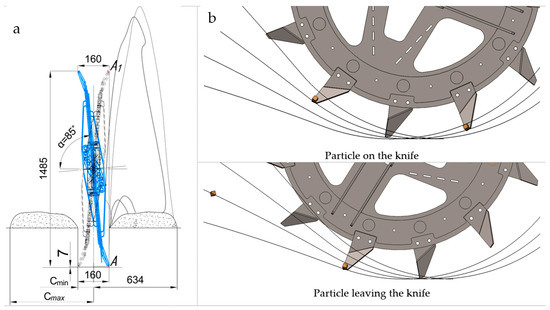
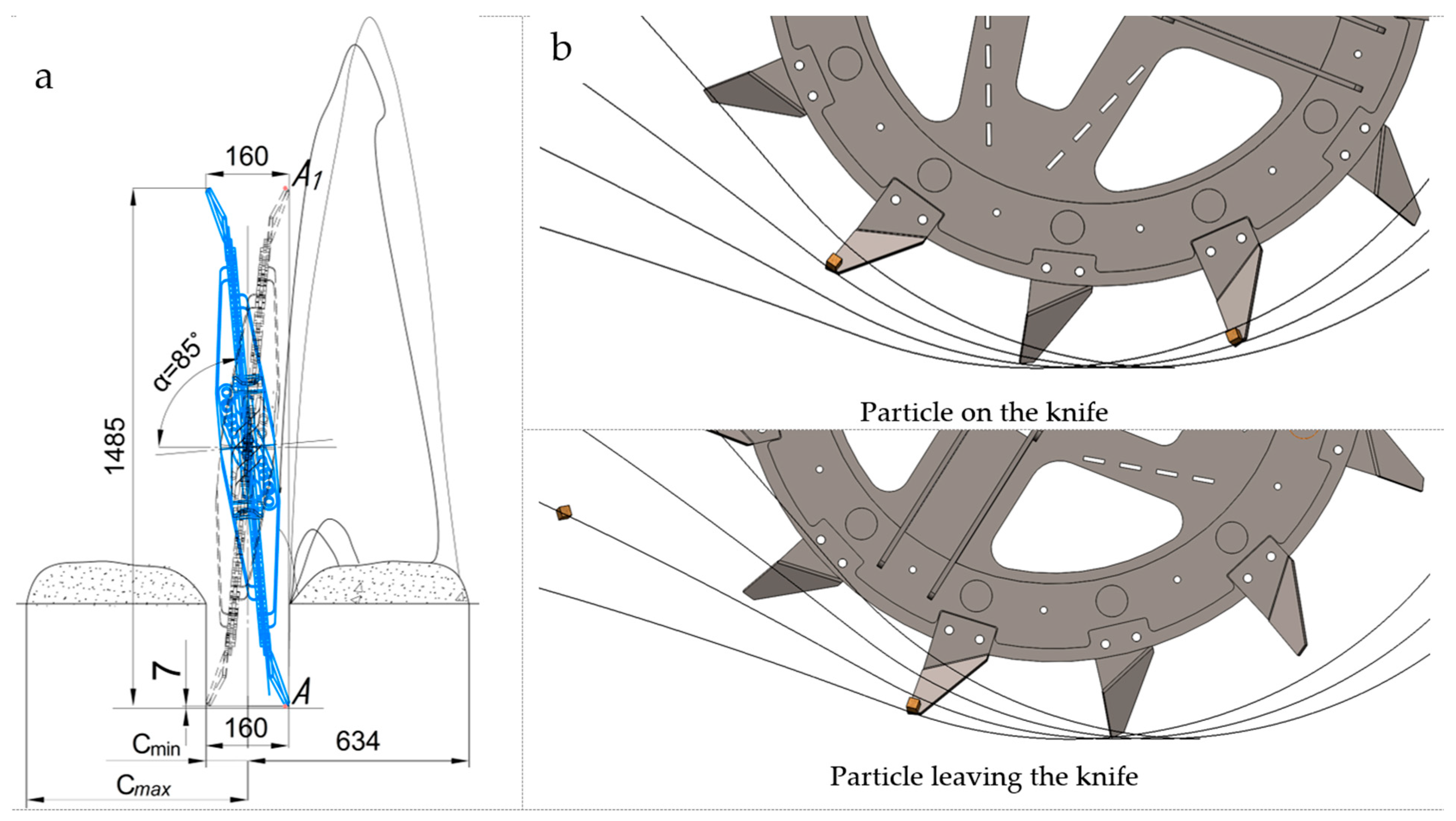
Figure 9a show trench sizes and flight trajectories of particles at disc cutter angle of 85° at rotation speeds of 100 rpm. An increase in the rotation speed leads to an increase in the soil ejection distance and the trajectory height, which is explained by an increase in the initial particle velocity at the moment of leaving the knife. Each peak point (A) of each knife has its own circle of rotation (diameter AA1). As the angle of installation increases, it is necessary to increase the number of knives or adjust the speed of rotation to ensure a clean furrow. The trench width is 160 mm and trench depth reduction are 7 mm.
Figure 9.
The trench sizes and flight trajectory of a soil particle depending on rotation velocity (100 rpm) of the working body at an angle of 85° (front view) (a) and movement of the appointed particle after leaving the knife (b).
As the cutter rotates, soil is thrown backward in the direction of travel, and away from the trench being formed. In Figure 9b have shown an example of virtual simulations in SolidWorks software where described flight trajectories of the appointed particle after leaving the knife. The trajectory of particles within the trench is of greatest importance when assessing the quality of work, since it is important to prevent partial filling of the trench during processing and to ensure minimal soil scatter to the sides for subsequent convenience of placement and sealing of the plant root system. The obtained trajectories showed that the nature of particle motion is most strongly determined by the installation angle of the disc, its rotation frequency.
The results of the simulations of soil particles flight after descending from the knife are shown in Table 3. Calculations were performed for various knives and for two characteristic positions of the descent of particles—at the soil surface and at the bottom of the trench. The obtained values of the X, Y, and Z coordinates up to the moment of impact on the surface make it possible to estimate the soil spread zone and the degree of backfilling of the formed trench.
Table 3.
Results of simulation modelling of soil particle flight after leaving the knife.
The quantitative results of the analysis are shown in Table 4. At an installation angle of 90°, the maximum particle range increases from 575 mm at 100 rpm to 984 mm at 140 rpm. When the installation angle is changed to 85° and 80°, a further increase in the maximum coordinate value is observed, reaching 1067 and 1048 mm, respectively, at 140 rpm. The minimum values of the coordinates also increase with decreasing angle of installation of the disc, which indicates the expansion of the soil spread zone.
Table 4.
Results of a study of the flight paths of soil particles depending on the rotation speed of the working body.
3.2. The Results of Experimental Studies of the Trench Profile
Experimental verifications of the working body operation were carried out in a field in order to assess the compliance of the actual profile and parameters of the trenches being cut with the calculated and model data. During the tests, the disc cutter installation angle was varied, which made it possible to obtain trenches of different widths with the basic kinematic parameters of the unit without any changes [43,44].
Based on the arithmetic mean values of the measurements, models of the cross-sections of the trenches were constructed for a comparative assessment of the shape of the trench depending on the studied angles (90°, 85°, 80°) of installation of the working body [31] (p. 5). The obtained profiles confirm the steady expansion of the upper part of the trench with a decrease in the installation angle of the disc and the relative stability of the processing depth.
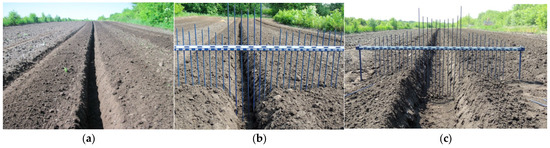
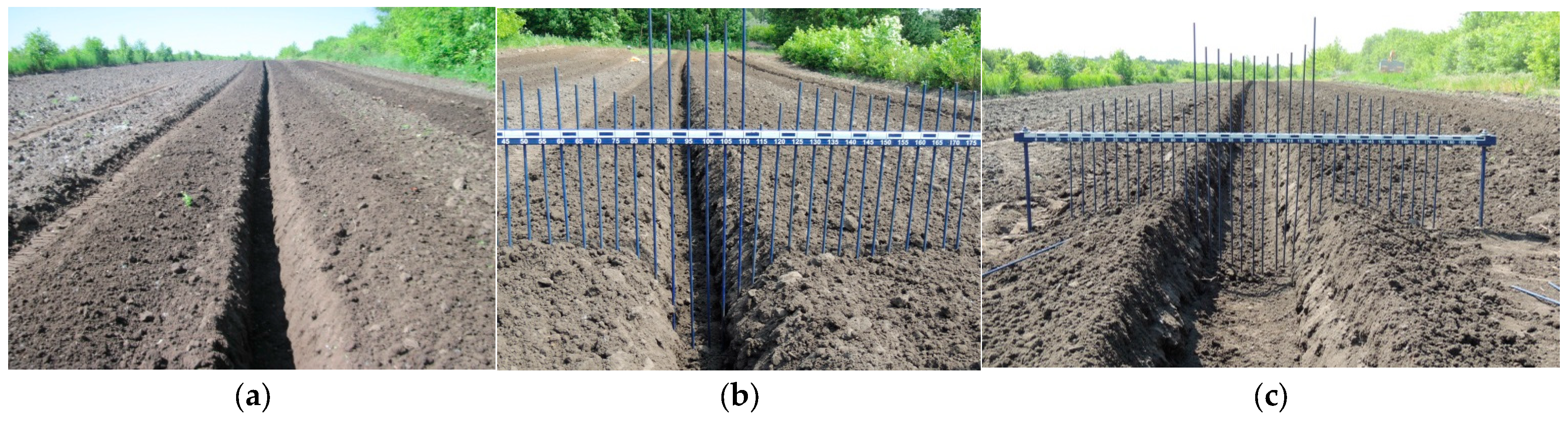
Figure 10 shows the profile of the formed trenches during the field experiments at the installation angles: at α = 90°—a narrow trench (a); α = 85°—a trench with medium width (b), and at α = 80°—a wide trench (c). Visual observations show that the trenches are trapezoidal in shape. Visual analysis also demonstrates the stable formation of the trench walls and bottom without crumbling during operation, which confirms the rationality of the selected cutting pattern and soil disposal direction. This also depends on the condition of the soil at the time of trench digging.
Figure 10.
Trench forms at different installation angles of the disc cutter: (a) narrow trench (α = 90°); (b) medium trench (α = 85°), (c) wide trench (α = 80°).
The designated depth for field studies is 300 mm. When setting the required trench depth, the k values were taken into account on the setting scale, which are 7–10 mm at the disc with installation angle of 85° and 19–20 mm when using the disc with installation angle of 80°.
Experimental studies have shown that the planting machine, when changing the installation angle of the working body, ensures the formation of planting trenches with different geometric parameters (Table 5).
Table 5.
Parameters of cut trenches.
Thus, when the installation angle of the disc cutter changes from 90° to 80° relative to rotation axis with rigid connection the trench width increases to 490 mm, which is within the limits of agrotechnical requirements. However, the effective diameter of the cutter is decreases according to disc diameter and inclination angle. Thus, when adjusting the width of the trench, it is simultaneously necessary to take into account the position of the cutter in depth and need cutting depth adjustments for trencher.
The volume of soil dislodged at the bottom of the trench increases as the angle of rotation of the working body changes. If consider the surface of the ground as a plane, the distance between the blades increases as the working body rotates, reducing the carry-out and increasing the amount of soil dislodged. This is confirmed by test data. The smallest volume of soil spillage is observed when profiling a narrow trench; this increases in a medium-width trench and more significantly in a wide trench.
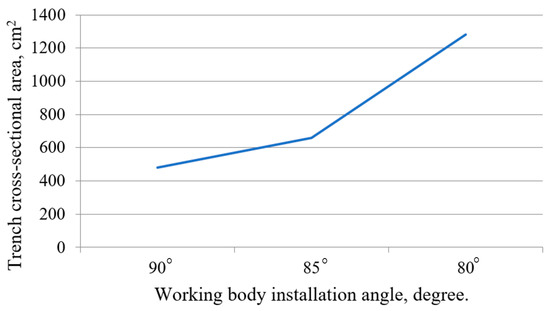
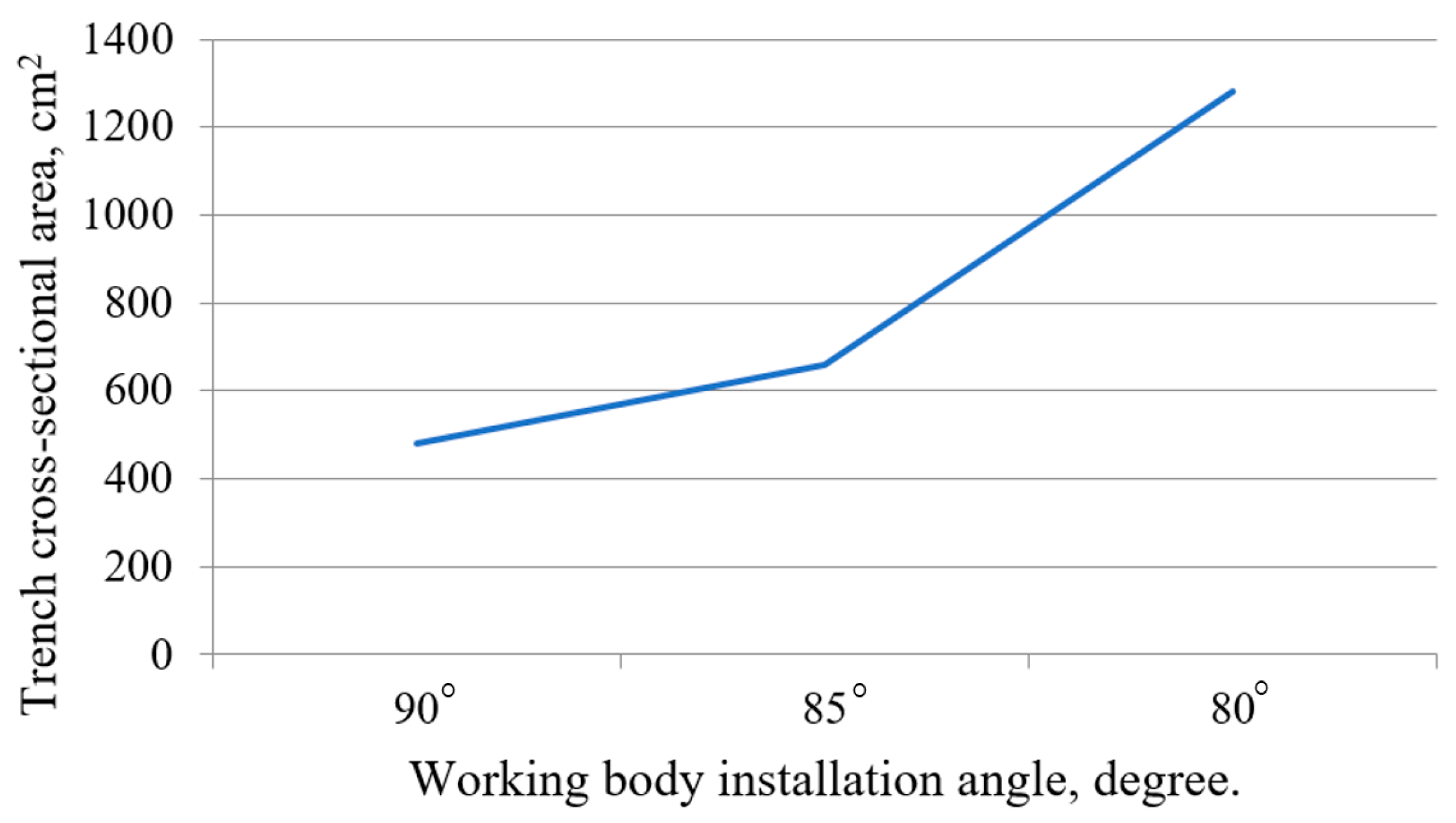
At the same time, the parameters of the soil embankment and the thickness of the loosened layer change, reflecting the redistribution of the loosened mass in the cross-section. It is noticeable that with a large change in the angle of installation, the width of the trenches at the bottom and top differs from the simulation results. Figure 11 shows the dependence of the trench cross-sectional area (S) on the installation angle of the working body.
Figure 11.
Dependence of the trench cross-sectional area on the installation angle.
Additional analysis included the determination of the volumes of soil deposited on the left and right sides of the trench, the volume of crumbled soil, as well as the distances of its discharge (Table 6). For a narrow trench (α = 90°), the volumes of soil to the left and right are almost equal and amount to 0.018 m3 each, while the volume of scree is minimal—0.0038 m3. The average distance of soil removal to the surface in all variants was in the range of 80–83 cm; however, the maximum ejection distance decreased with the expansion of the trench—from 57 cm (at the narrow trench) to 43 cm at the wide one. This indicates a redistribution of the kinetic energy of the particles and a change in the direction of their movement when adjusting the angle of installation of the working body.
Table 6.
Measurement data of trans verse profiles of trenches.
If consider the average distance of soil removal to the surface, it is almost invariable at any position of the disc cutter. Differences become apparent when we consider the average distance of the maximum soil displacement from the trenches. As the width of the trench increases, it decreases slightly. This is also facilitated by the installation angle of the disc cutter, as the trajectory of the particle’s changes. According to the experimental data, the lowest value of the maximum soil removal distance is observed at an angle of α = 80° (wide trench), and since most of the soil is concentrated near the trench, it greatly simplifies the filling of the root system after planting.
The volume of deposited soil increases as the trench widens: a wide furrow has the largest volume of deposited soil, which indicates the need to adjust the operating mode: either increasing the immersion depth or providing additional measures to remove deposited soil.
As the installation angle of the disc cutter increases and, accordingly, the width of the trench increases, the volume of soil removed from the trench also increases. The amount of soil carried to the left and right sides is the same for narrow and medium trenches, which indicates the uniformity of soil movement. The exception is a wide trench in which the removal of soil on the left side is 40% more than on the right. This is because, when rotating, the knife starts and will turn downwards mainly on left side, and the soil actively pours down. However, the situation does not damage the quality of the trench.
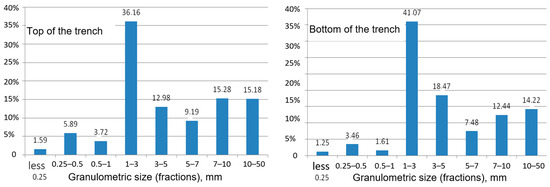
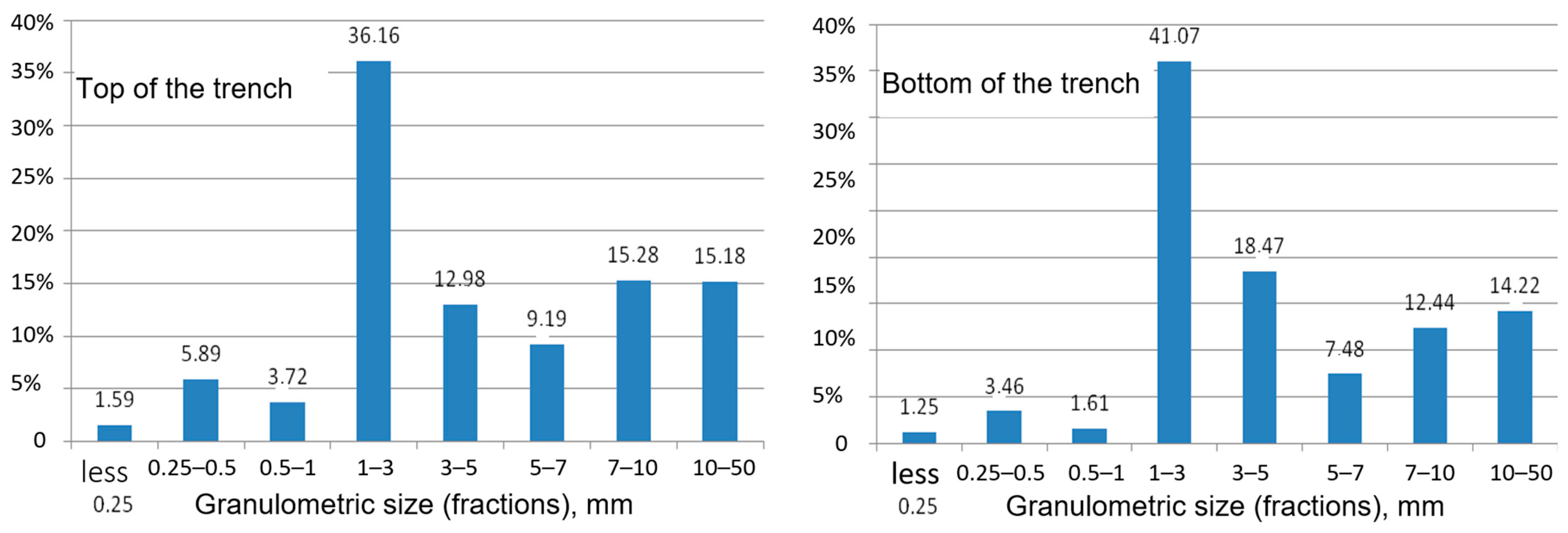
The granulometric composition of the soil improved after treatment by the working organ. Granules with a size of 7–10 mm and 10–50 mm decreased where granules with a size of 1–3 mm increased. The main mass of soil particles in the loosened soil in all three cases has consisted particle fractions of 1–3 mm. This was especially noticeable when the working body with the installation angle of 90° and particle fractions with 1–3 mm have accounted for 36% and 41% respectively at top and bottom of the trenches (Figure 12). When the disc cutter with installation angle of 80° these particles composed 32% and 34% of the mass respectively and when the disc cutter with installation angle of 85° it indicated 33% and 31%.
Figure 12.
The granulometric composition of the soil after treatment by the working body with the installation angle of 90°, %.
The recommended range of translational velocity for the reverse rotation mode of the working body was determined based on the results of exploratory experiments, theoretical analysis of the kinematics of the interaction of the knife with the soil and virtual modelling of the trench formation process.
According to field experiments it is proved that an increase in the relative velocity of knife–soil interaction contributes to a more intensive destruction of the soil mass, improved crumbling and effective removal of loosened soil from the trench area. At the same time, an increase in the intensity of the knife’s interaction with the soil may be accompanied by an increase in dynamic loads and energy consumption of the drive. For the recommended range of translational speeds, the relative speed of the knife’s interaction with the soil is given in Table 7.
Table 7.
The relative speed of the knives during reverse rotation.
The obtained values ensure a stable regime of soil destruction without significant deterioration in the quality of trench formation. With an increase in translational velocity above 1.2 m/s, the time of interaction of the knife with the soil decreases, which leads to the following:
- -
- A decrease in the degree of soil crumbling;
- -
- Deterioration of trench cleaning;
- -
- Increase the probability of repeated soil shedding;
- -
- An increase in dynamic loads on the working body;
- -
- Deterioration of the stability of the technological process.
At the same time, an excessive decrease in speed of less than 0.8 m/s leads to an increase in the time of contact of the knife with the soil and an increase in specific energy consumption per unit of treated trench length due to repeated interaction of the knives with already loosened soil.
Thus, the range of 0.8–1.2 m/s is a compromise mode, which ensures the following:
- -
- Sufficient intensity of destruction of the soil mass;
- -
- Effective removal of soil from the trench;
- -
- Stable trench profile formation;
- -
- Acceptable level of dynamic loads;
- -
- Efficient use of drive energy.
No measurements of drive power or fuel consumption were performed in this study. Therefore, the conclusions about energy consumption are qualitative in nature and are based on an analysis of the kinematics of the process, the intensity of interaction between the working body and the soil, and the results of virtual modelling. The kinematic coefficients (λ) of interaction between the working body and the soil are given in Table 8.
Table 8.
Kinematic coefficient (λ) of the working body interaction with the soil.
With the studied parameters of the working body, the circumferential speed of the knife was 9.43 m/s. In the recommended range of translational speeds of 0.8–1.2 m/s, the value of the kinematic coefficient varied from 7.9 to 11.8, which corresponds to the regime of intensive destruction and crumbling of the soil.
An increase in translational velocity above 1.2 m/s leads to a decrease in the kinematic coefficient, a decrease in the time of interaction of the knife with the soil and a deterioration in the quality of trench formation. This increases the probability of repetitive soil shedding and worsens the removal of loosened soil from the treatment area.
A decrease in speed of less than 0.8 m/s is accompanied by a decrease in the productivity of the unit and an increase in the duration of interaction of the working body with the already loosened soil, which can lead to an increase in the specific energy intensity of the process. Therefore, for the reverse rotation mode, the recommended translational velocity of the unit is 0.8–1.2 m/s, which ensures the stability of the technological process and the high-quality formation of trenches. Table 9 shows a comparison of the forward and reverse rotation of the disc cutter.
Table 9.
Comparison of the forward and reverse rotation of the disc cutter.
3.3. Quantitative Assessment of the Consistency Between Virtual Simulation Results and Field Test Results
To confirm the adequacy of the developed virtual model, a quantitative assessment of the correspondence of the simulation results and field tests was carried out according to the trench width parameter at different angles of installation of the working body relative to the axis of rotation. To compare with the simulation results, the average value of the trench width was used, defined as the half-sum of the width at the top and bottom of the trench (Table 10).
Table 10.
Comparison of the results of virtual simulation and field tests.
The smallest discrepancy between the virtual simulation and experimental data is observed at an installation angle of 80° and is 3.2%. At angles of 85° and 90°, the relative deviations were 31.9% and 26.7%, respectively. The increased discrepancy at large installation angles are due to a number of factors that are not fully taken into account in the virtual model, namely, the following:
- -
- Heterogeneity of physical and mechanical properties of the soil in natural conditions;
- -
- The difference in soil moisture and density depending on the depth;
- -
- The occurrence of lateral shedding of trench walls during field tests;
- -
- Simplifications adopted during the construction of the virtual model;
- -
- Additional dynamic effects and vibrations of the working body in real-world operating conditions.
In general, the results obtained confirm the satisfactory convergence of the virtual simulation and field test data. The average relative deviation was 20.6%, which can be considered acceptable for the processes of interaction of working bodies with a deformable soil environment and confirms the adequacy of the developed model for estimating the parameters of trench formation.
The experimental data obtained confirm the results of theoretical calculations and virtual modelling, demonstrating the possibility of a controlled change in the geometry of trenches and the nature of soil movement by adjusting the installation angle of the disc cutter. The main difference noticed in bottom width, which depends on the condition of the soil at the time of trench digging.
The proposed design scheme makes it possible to adapt the working body to various agrotechnical requirements for planting rootstocks and saplings, which is fundamentally important for industrial gardening conditions with different plant densities and species composition of crops.
Reducing the design diameter of the disc while maintaining the current efficiency, studying the energy requirements, and developing a unit with multiple parallel furrowing discs will be explored in future studies.
4. Conclusions
It resulted that the movement of a soil particle on the disc cutter knife can be adequately described in a non-inertial coordinate system, taking into account the action of centrifugal force, gravity and friction. The obtained differential equations and analytical dependences make it possible to determine the velocity, path and direction of movement of particles before and after their descent from the knife. The main parameters influencing the formation of the trench are the installation angle of the disc, the angular velocity of the rotor, the geometry of the working body and the coefficient of friction of the soil. The particles’ descent angle and the rotational speed of the rotor determine the initial conditions of its flight and significantly affect the distribution of soil in the trench.
The reverse rotation of the cutter according to movement direction of the unit is most effective way to operate the working body and the recommended translational velocity of the unit for this mode is 0.8–1.2 m/s, which ensures the stability of the technological process and the high-quality formation of trenches. The value of the kinematic coefficient varied from 7.9 to 11.8, which corresponds to the regime of intensive destruction and crumbling of the soil.
The trench width can be adjusted within the range of 0.1–0.5 m by changing the disc cutter installation angle from 90° to 80°, taking into account the reduction in the effective diameter of the disc. For a cutter with a diameter of 1500 mm at an angle of 80°, the elliptic diameter reduction is 38 mm (19 mm of the depth reduction), which requires adjustment of the depth of penetration. The maximum soil spread indicator reaches 1050 mm, which justifies the need to install protective shields to prevent the trench from being filled in (dawn) and to limit the scattering zone.
The data obtained confirm that changing the disc cutter installation angle allows controlling the shape and size of the trench, while the depth of the trench changes slightly. The average relative deviation between the results of the virtual simulation and the field test data was 20.6%. A minor variation in the results between modelling and experiments is within acceptable limits and explained by the heterogeneity of the soil and its physico-mechanical properties, which confirms the reliability of the proposed design and operating modes of the planting machine.
Author Contributions
Conceptualization, A.I. and A.S.; methodology, A.I.; software, Y.A. and A.T.; validation, A.I.; formal analysis, Z.K. and N.K.; investigation, N.K.; resources, Y.A., K.T. and A.T.; data curation, Z.K.; writing—original draft preparation, A.I.; writing—review and editing, K.T. and A.I.; visualization, Y.A.; supervision, A.S. and Z.K.; project administration, A.S.; funding acquisition, A.S. All authors have read and agreed to the published version of the manuscript.
Funding
This research was funded by the Science Committee of the Ministry of Science and Higher Education of the Republic of Kazakhstan, AP23487474 «Development of a universal planting complex for garden and forest crops with an automated fertilizer application system».
Data Availability Statement
Dataset available on request from the authors.
Conflicts of Interest
The authors declare no conflicts of interest.
References
- Sarsenov, A.; Kubasheva, Z.; Ibrayev, A.; Sugirbay, A. Theoretical Substantiation of the Dependence of Spring Deformation of an Improved Opener. AgriEngineering 2024, 6, 1450–1478. [Google Scholar] [CrossRef] [Scilit]
- Lawrence, B.T.; Fazio, G.; Nieto, L.G.; Robinson, T.L. Rootstock effect on horticultural performance and fruit quality is not uniform across five commercial apple cultivars in western New York. Front. Plant Sci. 2025, 16, 1552625. [Google Scholar] [CrossRef] [Scilit]
- Li, Z.; Li, C.; Zeng, Y.; Mai, C.; Jiang, R.; Li, J. Design and Realization of an Orchard Operation-Aid Platform: Based on Planting Patterns and Topography. Agriculture 2025, 15, 48. [Google Scholar] [CrossRef] [Scilit]
- Rafiee, P.; Sorouri, M. Design of a Seedling Planting Robot Using a CNC Controller. In Proceedings of the 2023 IEEE International Conference on Agrosystem Engineering, Technology & Applications (AGRETA), Shah Alam, Malaysia, 9 September 2023; pp. 113–118. [Google Scholar] [CrossRef] [Scilit]
- Staněk, L.; Zvěřina, L.; Ulrich, R. Innovative technology of saplings planting for increase tourism potential of the landscape. In Proceedings of the 14th Conference “Public Recreation and Landscape Protection—With Environment Hand in Hand?”, Krtiny, Czech Republic, 9–11 May 2023; Volume 14, pp. 119–122. [Google Scholar] [CrossRef] [Scilit]
- Eceoğlu, O.; Ünal, İ. Optimizing Orchard Planting Efficiency with a GIS-Integrated Autonomous Soil-Drilling Robot. AgriEngineering 2024, 6, 2870–2890. [Google Scholar] [CrossRef] [Scilit]
- Högberg, K.A. Needle conductance and root egress of containerized Scots pine and Norway spruce seedlings after surface and deep planting. Can. J. For. Res. 1987, 17, 783–786. [Google Scholar] [CrossRef] [Scilit]
- Örlander, G.; Nilsson, U. Effect of reforestation methods on pine weevil (Hylobius abietis) damage and seedling survival. Scand. J. For. Res. 2010, 14, 341–354. [Google Scholar] [CrossRef] [Scilit]
- Ersson, B.T.; Jundén, L.; Bergsten, U.; Servin, M. Simulated productivity of one- and two-armed tree planting machines. Silva Fenn. 2013, 47, 958. [Google Scholar] [CrossRef] [Scilit]
- Luoranen, J.; Rikala, R.; Smolander, H. Machine planting of Norway spruce by Bracke and Ecoplanter: An evaluation of soil preparation, planting method and seedling performance. Silva Fenn. 2011, 45, 107. [Google Scholar] [CrossRef] [Scilit]
- Rantala, J.; Laine, T. Productivity of the M-Planter tree-planting device in practice. Silva Fenn. 2010, 44, 125. [Google Scholar] [CrossRef] [Scilit]
- Chernik, K.N.; Lozovoy, V.A. Analysis of the productivity of discrete action machines used for mechanized planting of seedlings. Agrar. Nauchnyy Zhurnal/Agrar. Sci. J. 2024, 1, 136–144. (In Russian) [Google Scholar] [CrossRef] [Scilit]
- Nukeshev, S.; Sugirbay, A.; Dulatbay, Y.; Tanbaev, K.; Yeskhozhin, K.; Chen, J.; Nazarbayev, Y.; Sugirbaeva, Z. Offset Straight-Tooth Roller Development Using the Discrete Element Method for Applying Granular Mineral Fertilizer. Int. J. Technol. 2024, 15, 2060–2073. [Google Scholar] [CrossRef] [Scilit]
- Wang, X.; Zhang, Q.; Huang, Y.; Ji, J. An efficient method for determining DEM parameters of a loose cohesive soil. Biosyst. Eng. 2022, 215, 283–294. [Google Scholar] [CrossRef] [Scilit]
- Hoseinian, S.H.; Hemmat, A.; Esehaghbeygi, A.; Shahgoli, G.; Baghbanan, A. Development of a dual sideway share subsurface tillage implement: Part 1. Modeling tool interaction with soil using DEM. Soil Tillage Res. 2022, 215, 105201. [Google Scholar] [CrossRef] [Scilit]
- Salem, A.E.; Shang, S.; Wang, D.; Zhang, G.; Wang, H.; Abdeen, M.A.; Shehabeldeen, T.A. Developing an adequate DEM model to simulate soil-tool interactions under sticky soil conditions. Soil Tillage Res. 2025, 256, 106893. [Google Scholar] [CrossRef] [Scilit]
- Wang, L.; Zhou, B.; Wan, C.; Zhou, L. Structural Parameter Optimization of a Furrow Opener Based on EDEM Software. Int. J. Agric. Biol. Eng. 2024, 17, 115–120. [Google Scholar] [CrossRef] [Scilit]
- Manner, J.; Berg, S.; Ersson, B.T. Forwarding during final felling: Work element-specific distributions of driving distances at the stand level. Int. J. For. Eng. 2020, 31, 51–69. [Google Scholar] [CrossRef] [Scilit]
- Craig, E. Evaluation of a Four-Row Disc Trencher Prototype in Western Canada; FPInnovations: Pointe-Claire, QC, Canada, 2013; Volume 13. [Google Scholar]
- Autocracy Machinery. Wheel/Disc Trenchers—Clean Cuts for Urban & Utility Projects. Available online: https://www.autocracymachinery.com/products/wheel-trenchers (accessed on 17 May 2026).
- Crushingtech. Disk Trencher SCD, Implement Able to Dig Canals in the Ground in Rocky Lands, Disk Trencher for Laying Electric, Telephone or fiber Cables. Available online: https://www.crushingtech.com/en/disk-trencher-scd.htm (accessed on 17 May 2026).
- Ma, C.; Meng, H.W.; Zhang, J.; Zhang, C.; Zhao, Y.; Wang, L.H. Research and experiment on the trenching performance of orchard trenching device. Sci. Rep. 2023, 13, 18941. [Google Scholar] [CrossRef] [Scilit] [PubMed]
- Makovskis, K.; Lazdina, D.; Kaleja, S.; Spalva, G.; Dumins, K. Planting and tending productivity comparison in mounds and disc trenches using containerized and bareroot coniferous seedlings. Agron. Res. 2019, 17, 2327–2338. [Google Scholar] [CrossRef]
- Zhang, B.; Yang, X.; Zhu, Y. Design and Simulation of a Combined Trencher for Transverse Sugarcane Planter. Agriculture 2024, 14, 1416. [Google Scholar] [CrossRef] [Scilit]
- Chen, W.; Ren, J.; Huang, W.; Chen, L.; Weng, W.; Chen, C.; Zheng, S. Design and Parameter Optimization of a Dual-Disc Trenching Device for Ecological Tea Plantations. Agriculture 2024, 14, 704. [Google Scholar] [CrossRef] [Scilit]
- Ersson, B.T.; Cormier, D.; St-Amour, M.; Guay, J. The impact of disc settings and slash characteristics on the Bracke three-row disc trencher’s performance. Int. J. For. Eng. 2017, 28, 1–9. [Google Scholar] [CrossRef] [Scilit]
- Malasli, M.Z.; Çelik, A. Effects of the disc and tilt angle of a single disc type furrow opener of a no-till seeder onresidue distribution and the furrow profile. Turk. J. Agric. For. 2023, 47, 1025–1042. [Google Scholar] [CrossRef] [Scilit]
- Nuralin, B.; Dussenov, M.; Kukhta, B.; Bakushev, A.; Kubasheva, Z.; Janaliev, Y.; Khamsin, A.; Sarsenov, A. The working part of a reversible plough: Design and experiments. Acta Agric. Scand. Sect. B Soil Plant Sci. 2020, 70, 679–685. [Google Scholar] [CrossRef] [Scilit]
- Sarsenov, A.E.; Kubasheva, Z.K.; Khairullina, S.G.; Ibraev, A.S.; Bektasov, B.U. Investigation of the friction coefficients of various types of rubbing surfaces of the coulter. Ğylym Jäne Bilim/Sci. Educ. 2022, 69, 146–156. (In Russian) [Google Scholar] [CrossRef] [Scilit]
- Ibraev, A.S.; Kubasheva, Z.K.; Sarsenov, A.E.; Sakhapov, A.A.; Sugirbay, A.M.; Issetov, A.K.; Kadyrgaliyev, A.S. The effectiveness of virtual modeling at the design stage of the landing complex. Ğylym Jäne Bilim/Sci. Educ. 2025, 78, 23–31. (In Russian) [Google Scholar] [CrossRef] [Scilit]
- Ibraev, A.S.; Kubasheva, Z.K.; Sarsenov, A.E.; Issetov, A.K.; Kadyrgaliyev, A.S. Comparative analysis of the geometric parameters of the trench during virtual modeling and production tests of the working body of the landing machine. Ğylym Jäne Bilim/Sci. Educ. 2025, 3, 183–192. (In Russian) [Google Scholar] [CrossRef] [Scilit]
- Zavrazhnov, A.I.; Vedishchev, S.V.; Kadomtsev, A.I.; Pavlov, A.G.; Prokhorov, A.V.; Vyguzov, M.E. Methods for restoring fertility and improving physical and mechanical properties of soils: IOP Conference Series: Earth and Environmental Science. Int. Conf. Agric. Sci. Eng. 2021, 845, 012045. [Google Scholar] [CrossRef] [Scilit]
- Li, R.; Li, H.; Yang, S.; Lu, C.; Wu, Z.; Wang, Z. DEM simulation of straw-soil-cutting system interactions for performance assessment of a spin-descent straw cutter. Comput. Electron. Agric. 2025, 239, 111022. [Google Scholar] [CrossRef] [Scilit]
- Goryachkin, V.P. Teoriya Zemledel`Cheskix Mashin (Theory of Agricultural Machines); Kolos: Moscow, Russia, 1968. [Google Scholar]
- Sineokov, G.N.; Panov, I.M. Teoriya i Raschyot Pochvoobrabaty`Vayushhix Mashin (Theory and Calculation of Tillage Machines); Mashinostroenie: Moscow, Russia, 1977. [Google Scholar]
- Gao, J.; Qi, H. Soil throwing experiments for reverse rotary tillage at various depths, travel speeds, and rotational speeds. Trans. ASABE 2017, 60, 1113–1121. [Google Scholar] [CrossRef] [Scilit]
- Shibusawa, S. Reverse-rotational rotary tiller for reduced power requirement in deep tillage. J. Terramechanics 1993, 30, 205–217. [Google Scholar] [CrossRef] [Scilit]
- Salokhe, V.; Ramalingam, N. Effect of rotation direction of a rotary tiller on draft and power requirements in a Bangkok clay soil. J. Terramechanics 2002, 39, 195–205. [Google Scholar] [CrossRef] [Scilit]
- Zheng, S.; El-Shafie, A.F.; Liu, J.; Salme, A.; Zhang, J.; Bai, H. Structural design and performance study of salt-alkali soil rotary blade based on discrete elements. INMATEH Agric. Eng. 2025, 76, 1244–1257. [Google Scholar] [CrossRef] [Scilit]
- GOST 12536-79; Soils. Methods of Laboratory Granulometric (Grain-Size) and Microaggregate Distribution. Publishing House of Standards: Moscow, Russia, 2008.
- Budgovskij, V.I.; Trusevich, G.V. Mashiny` Dlya Sadovodstva (Gardening Machines); Agropromizdat: Moscow, Russia, 1988. [Google Scholar]
- Rom, R.C.; Carlson, R.F. Rootstocks for Fruit Crops; Wiley-Interscience: Hoboken, NJ, USA, 1987. [Google Scholar]
- Nuralin, B.; Galiev, M.; Kubasheva, Z.; Kozhabergen, O.; Khairullina, S. Study of Combined Tool Tiller Modes Intended for Graded Tillage. FME Trans. 2021, 49, 463–471. [Google Scholar] [CrossRef] [Scilit]
- Nalawade, R.D.; Singh, K.P.; Roul, A.K.; Agrawal, K.N.; Sonawane, S.; Mahore, A.; Patel, A.; Kumar, M.; Shelake, P.; Salem, A.; et al. Study on the effect of geometrical and operational parameters on performance dynamics of modified rotary blades using DEM. Sci. Rep. 2024, 14, 19239. [Google Scholar] [CrossRef] [Scilit] [PubMed]

Disclaimer/Publisher’s Note: The statements, opinions and data contained in all publications are solely those of the individual author(s) and contributor(s) and not of MDPI and/or the editor(s). MDPI and/or the editor(s) disclaim responsibility for any injury to people or property resulting from any ideas, methods, instructions or products referred to in the content. |
© 2026 by the authors. Licensee MDPI, Basel, Switzerland. This article is an open access article distributed under the terms and conditions of the Creative Commons Attribution (CC BY) license.