


Abstract
It is widely recognized that grain variability affects the physical and engineering properties of cowpea and maize varieties. Understanding the effects is vital for designing a dehulling machine that can yield better performance. The physical and engineering properties of nine cowpea varieties and a local maize variety were determined to provide essential data for the design of dehulling and processing equipment. Standard laboratory methods reported in the literature were used to analyze the grains. The study reveals that the physical and engineering properties of nine cowpea and maize varieties varied considerably (p < 0.05). The mean values of moisture content % ranged from 10.06 to 13.81%, length ranged from 7.11 to 11.44 mm, width ranged from 5.65 to 10.28 mm, thickness ranged from 4.60 to 6.73 mm, and thousand-grain weight ranged from 100 to 364 g. Da ranged from 5.79 to 8.89 mm, Dg ranged from 5.66 to 8.59 mm, sphericity ranged from 0.73 to 0.86, surface area ranged from 101.38 to 233.75 mm2, and volume ranged from 97.05 to 339.82 mm3. Furthermore, the COF on stainless steel ranged from 0.30 to 0.37, the angle of repose ranged from 20.03 to 30.33°, the bulk density ranged from 688.00 to 814.67 kg/m3, the true density ranged from 1079.91 to 1282.61 kg/m3, and the porosity % ranged from 60.53 to 67.46%. Lastly, grain hardness ranged from 56.27 to 267.91 N, grain compressive energy ranged from 80.91 to 664 mJ, grain stiffness ranged from 6.48 to 26.13 N/mm, seed coat–cotyledon/pericarp–endosperm stickiness force ranged from 0.04 to 0.10 N, Adhesiveness (force to overcome stickiness) ranged from 0.08 to 93.42 N · mm, and fracturability ranged from 56.27 to 267.91 N. These results offer a comprehensive engineering database for the design and optimization of dehulling and post-harvest processing equipment.
1. Introduction
Cowpea and maize are important sources of nutrients, energy, and income for smallholder farmers in Malawi and Mozambique, where over 75% of production is consumed after processing [1,2]. Traditional dehulling methods are labour-intensive and time-consuming, involving pestles and mortars. Conventional approaches have provided limited value addition and acceptability [3]. Various efforts have been made to improve the small-scale dehulling process, moving from manual to mechanized methods [4,5,6]. Although such is the case, design parameters (gap size, rotor speed, surface material) depend on seed hardness, friction, flow behaviour, and dimensions, the properties that vary significantly among the varieties [3,7,8,9,10].
Despite cowpea and maize importance in Southern Africa, engineering data for local varieties remains scarce. Most published physical and mechanical properties focus on West African landraces or Indian cultivars [3,7,8,9,10,11,12,13,14,15]. These studies report hardness (78–118 N), coefficient of friction on stainless steel (0.18–0.64), and angle of repose (20–36°) under standardized conditions, but genetic diversity and agro-ecological differences (soil, rainfall, altitude) render direct extrapolation to Malawian and Mozambican varieties unreliable. For instance, seed coat thickness and hardness are influenced by drought stress common in the region, yet no dataset exists for the nine cowpea varieties and local maize studied, creating a critical varietal knowledge gap for region-specific machine design.
Engineering and mechanical properties such as seed size, shape, dimensions, bulk and true density, porosity, coefficient of friction, hardness, compressive strength, shear resistance, moisture-dependent behaviour, and hull-cotyledon adhesion are fundamental parameters for the rational design and optimization of dehulling equipment [4,5]. These properties provide the basis for determining critical machine design and operational parameters, including abrasive or impact forces, clearance gaps between dehulling surfaces, rotational speeds, torque, and power requirements, and chamber dimensions necessary for efficient hull removal with minimal kernel damage and breakage [4,5,16]. In the absence of such data, the dehulling machine development often relies on a trial-and-error fabrication approach, which can result in low dehulling efficiency, excessive grain breakage or scarring, high energy consumption, rapid machine wear, poor separation of hulls from kernels, and limited adaptability to variations in seed type, texture, structure, moisture content, and flow behaviour [17]. Such limitations may further lead to operational problems, including jamming, uneven processing, and reduced throughput. Previous studies have demonstrated that successful dehulling machine designs explicitly integrate these engineering properties into force calculations, material selection, and process modelling to improve processing efficiency, reduce mechanical damage, and enhance suitability for small-scale and medium-scale processing systems [5,18,19]. Therefore, comprehensive characterization of these properties is essential for science-based engineering and cost-effective development of practical and efficient dehulling technologies.
Furthermore, a min-survey conducted by the researchers (2024) (unpublished data) in three major marketplaces in Maputo, Mozambique, namely Zimpeto market, Xipamanine market, and Xiquelene market, assessed the quality of dehulled cowpea and dehulling processes practiced at these locations. The survey involved field observations and informal interactions conducted across the three marketplaces and twelve grain processing sites, with 20 vendors and 15 consumers participating. The findings revealed that cowpea sold in both markets was inadequately dehulled, with a significant proportion of grains retaining portions of the seed coat. Interactions with both vendors and consumers indicated that, after purchase, the partially dehulled cowpea is typically subjected to an additional soaking process lasting 3–4 h or longer to facilitate complete removal of the seed coat before further processing. Observations at marketplace processing sites further revealed substantial seed breakage and the generation of cotyledon powder during the separation of grains and husks. In addition, cowpea grits were frequently found mixed with husks after the separation process, indicating poor separation efficiency. Furthermore, other dehulling machines did not have a separation mechanism that required manual winnowing and sorting.
In Malawi, cowpea dehulling is still predominantly carried out using traditional methods, which involve soaking the grains in water for approximately 11 h, followed by manual dehulling by hand [20]. This approach is highly labour-intensive, time-consuming, and inefficient. Furthermore, maize constitutes a major staple food in many Malawian households and is typically consumed after undergoing a dehulling process. However, existing mechanical dehullers are associated with substantial losses, reported to range between 22.9% and 32.3%, thereby reducing processing efficiency and food availability [2].
In conclusion, there is a clear need to investigate the physical and engineering properties of locally available cowpea varieties commonly traded in marketplaces to better understand their dehulling behaviour. Accordingly, this study aimed to characterize the physical and engineering properties of nine understudied cowpea varieties, alongside a local maize sample sourced from Malawi and Mozambique. The study further sought to identify significant varietal differences through analysis of variance (ANOVA) and to develop practical design recommendations for small-scale dehulling systems. In particular, the use of stainless steel was emphasized to enhance durability and ensure food safety during the dehulling process.
2. Materials and Methods
2.1. Area of Study
The study was conducted at the Chemical Engineering Departments at the Faculty of Engineering, Eduardo Mondlane University, in the laboratories. The site is located in Maputo, Mozambique, on the south coast of Africa at 18.6677° S, 35.5296° E.
2.2. Source of Sample
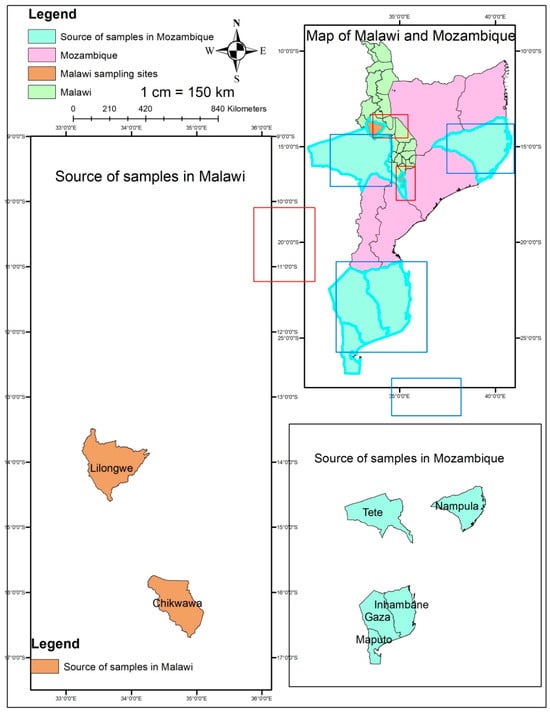
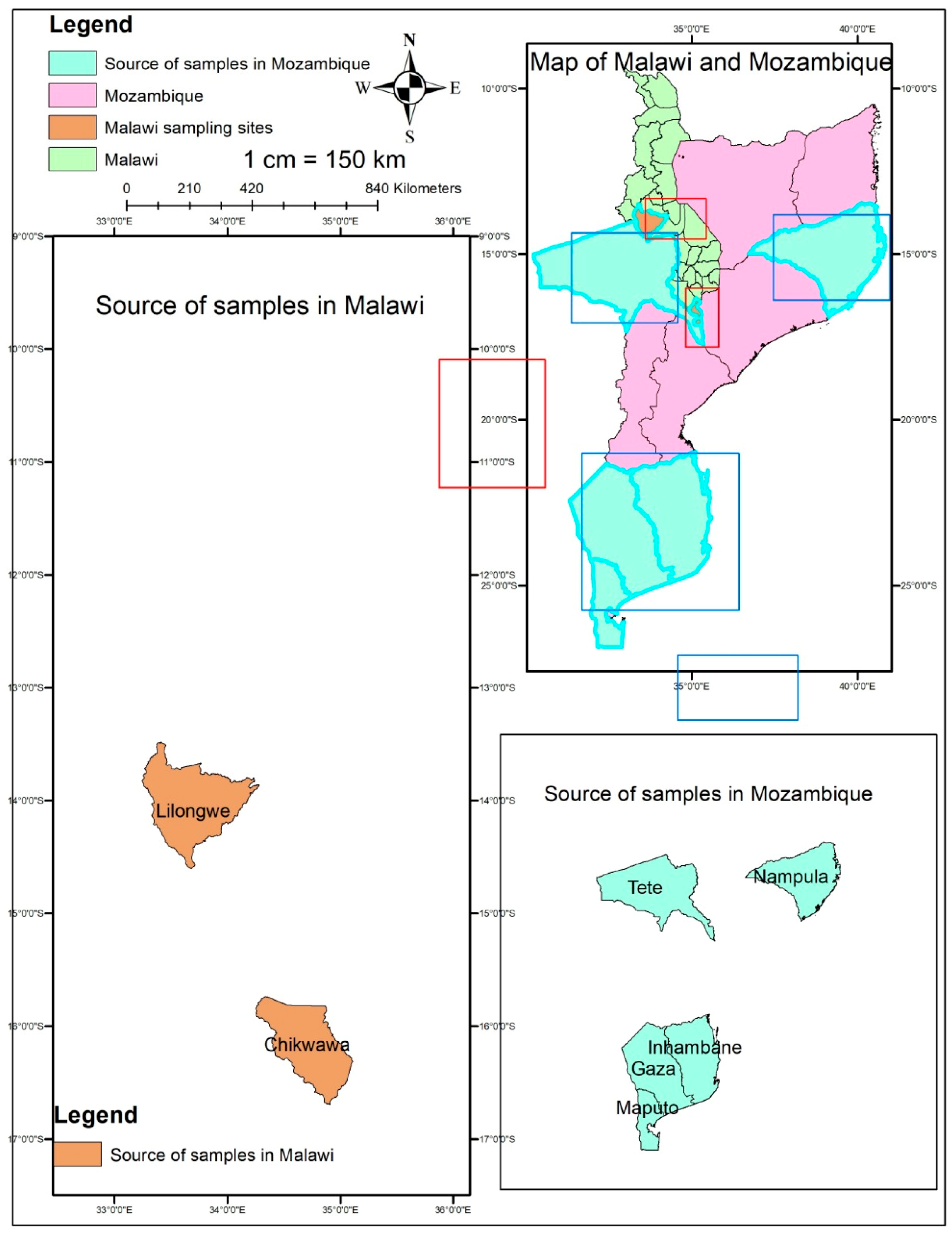
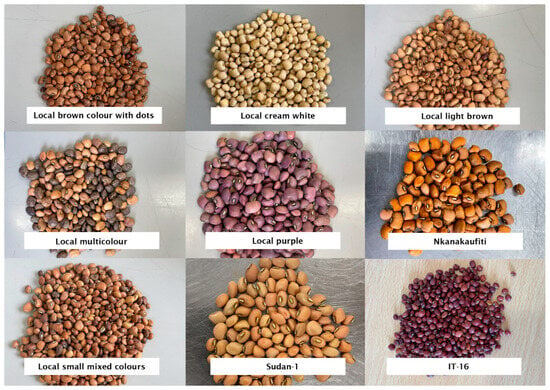
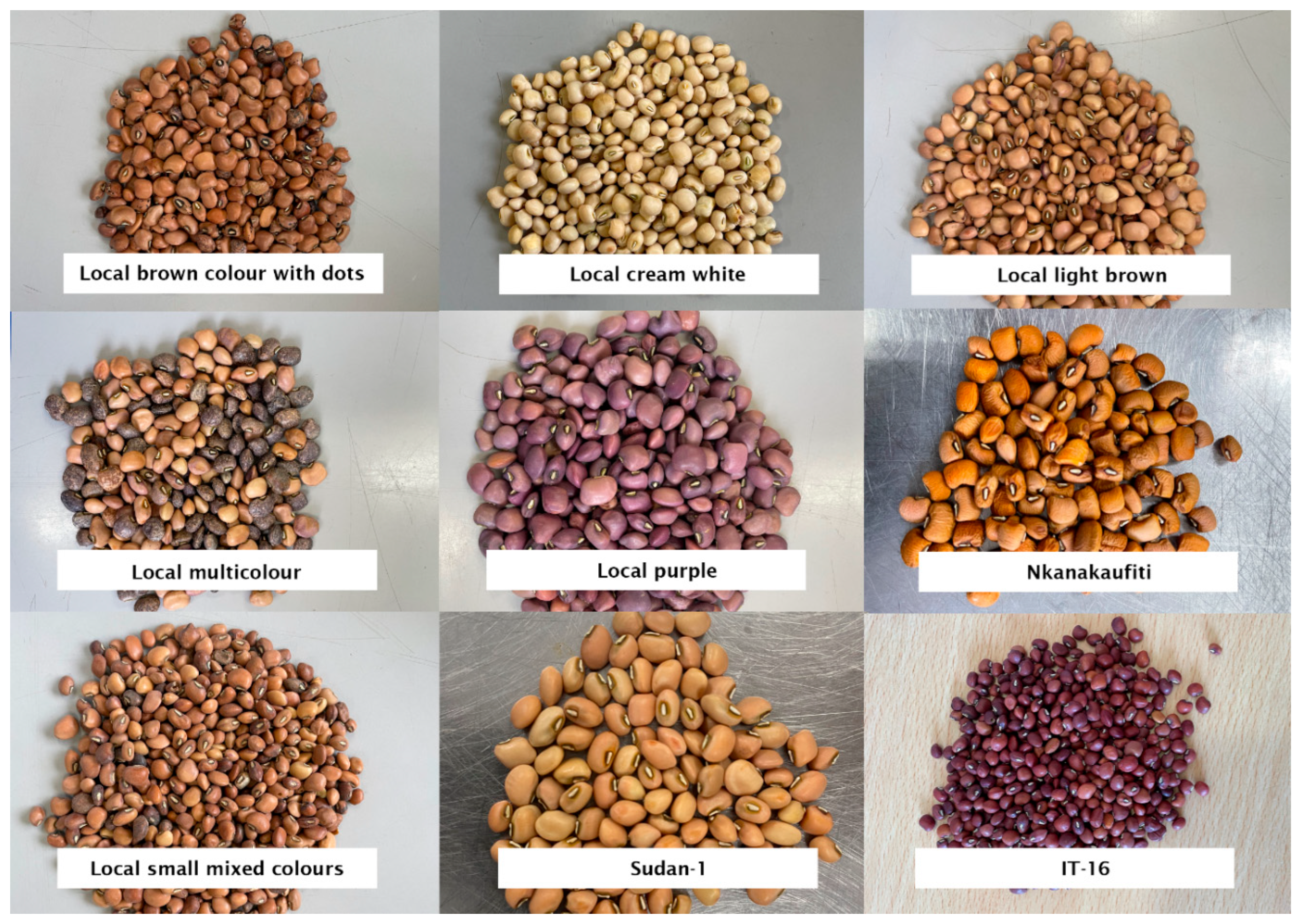
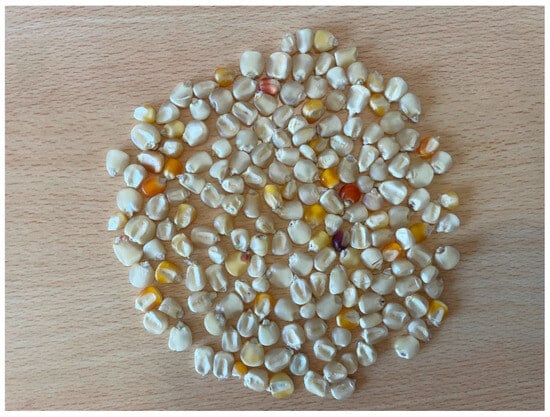
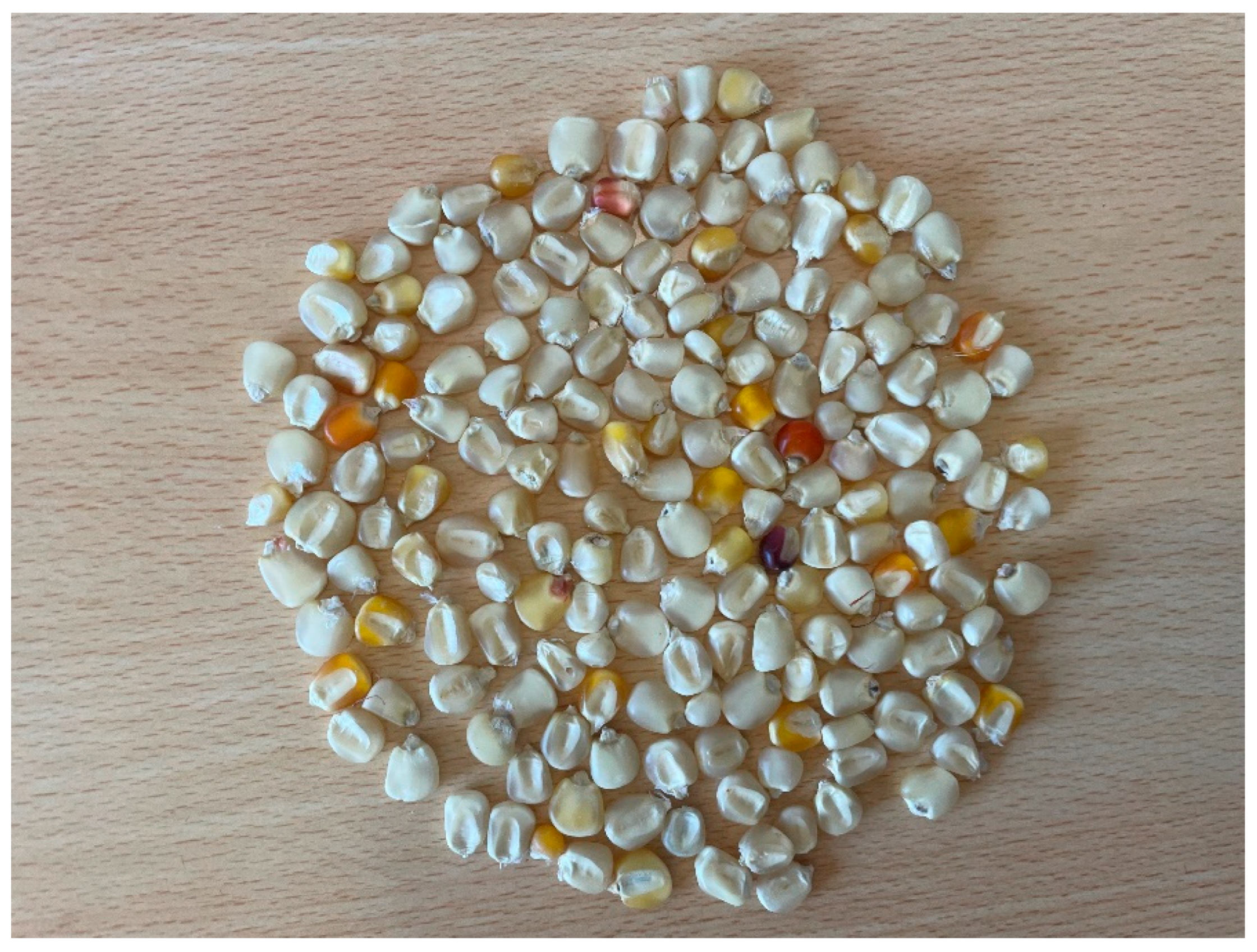
Six local cowpea varieties (Brown Colour with dots, Cream White, Light Brown Colour, Multi-coloured, Purple Colour, and Small Mixed Colours) were purchased at Zimpeto market in Maputo, Mozambique, and their source was traced through the agent. Local maize variety was purchased at Chokwe research station in Gaza, Mozambique. One improved cowpea variety (IT-16) was purchased at Kasinthula research station in Chikwawa, Malawi, and the other two improved cowpea varieties (Sudan-1 and Nkanakaufiti) were purchased at Lilongwe University of Agriculture and Natural Resources (LUANAR) in Lilongwe, Malawi. An agronomist-researcher from the Instituto de Investigação Agrária de Moçambique (IIAM) was involved in identifying 6 local cowpea varieties and the name assigned to each variety. Furthermore, plant breeders from Kasinthula research station and LUANAR were also involved in identifying the improved varieties commonly found in Malawi. Figure 1, Figure 2 and Figure 3 below provide a visual and spatial overview of the study materials used in this research. Figure 1 presents the geographical distribution of sampling locations for cowpea and maize across selected regions of Malawi and Mozambique, which were chosen to represent key agro-ecological zones with differing climatic and environmental conditions that may influence grain physical, engineering, and mechanical properties. Figure 2 and Figure 3 show the selected cowpea and local maize varieties, respectively, highlighting noticeable variation in grain morphology, including differences in size, shape, colour, and surface structure. Furthermore, detailed agronomic histories, including planting year and field management practices, were not available for some market-sourced samples. However, the selected samples were considered regionally representative due to their widespread production and utilization.
Figure 1.
Map of Malawi and Mozambique showing the source locations of collected samples (highlighted in blue squares colour and brown square and rectangle colour areas represent source of samples in Mozambique and Malawi). The map was drawn using ArcGIS version 15 Software, (Esris, Redlands, CA, USA).
Figure 2.
Cowpea varieties used in the study.
Figure 3.
Local maize variety used in the study.
2.3. Study Design
A Completely Randomized Design (CRD) was employed to ensure unbiased evaluation of the physical, geometric, engineering, and mechanical properties of maize and cowpea varieties. In this design, each grain variety was considered an independent treatment, while all experimental measurements were conducted under uniform laboratory conditions and replicated in accordance with established methodological recommendations to enhance the reliability, accuracy, and statistical validity of the generated data.
2.4. Sample Preparation
Local white maize variety and cowpea varieties were carefully sorted and thoroughly cleaned to remove dirt, stones, and other foreign materials. The cleaned samples were properly packaged and stored in a cool, dry environment before analysis. Throughout the study, cowpea and maize varieties were handled exclusively in their dry form. Although traditional dehulling practices in some local processing systems involve soaking before dehulling, the present study utilized dry grains to establish baseline engineering and mechanical property data under controlled conditions. Dry grain characterization is important for the design of feeding, handling, conveying, and structural components of dehulling systems. It is acknowledged that soaking may alter grain moisture content and mechanical behaviour, thereby affecting dehulling performance under wet-processing conditions. Therefore, the reported properties should be interpreted for dry-conditions applications and preliminary engineering design purposes.
2.5. Determination of Moisture Content
Moisture content of cowpea and maize grains was determined using a method described by [21]. Each crucible was thoroughly washed and dried in an oven at 100 °C for 30 min and allowed to cool inside a desiccator. The cooled crucible was weighed using a weighing balance and recorded as W1. Then, 15 g of the sample was put into the crucible and weighed to determine W2. Thereafter, the sample with the crucible was placed and dried in an oven at 105 °C for 72 h, and then it was cooled and weighed at the same temperature for 30 min until a constant weight was obtained, and the weight was recorded as W3 [21]. Then, the moisture content of the sample was calculated from the equation:
2.6. Determination of Grain Dimensions and Shape
Cowpea and maize grain dimensions and shape were determined by the methods and equations described by [22,23]. 100 grains were randomly collected from the sample lots. The linear dimensions, such as length (L), width (W), and thickness (T) for each grain, were determined using a calliper of 0.01 mm accuracy. The equations were used to further deduce the average diameter of the pulses with the help of linear dimensions (L, W, and T) [22]. The arithmetic mean diameter (Da) and geometric mean diameter (Dg) of the pulse grains were calculated using the equations below. Similarly, the sphericity values (Φ), roundness (R) (%), surface area (S) (mm2), and volume (V) (mm3) were obtained from the equations below [22,23].
where L = mean length of the seeds (mm); W = mean width of seeds (mm); and T = mean thickness of the measured seeds (mm).
2.7. Determination of Coefficient of Friction
The coefficient of friction of cowpea and maize grain was determined on stainless steel surfaces using a tilting table. The angle of inclination of the table to the horizontal at which samples started sliding was measured with the protractor attached beside the inclined plane apparatus [24]. Measurements were replicated five times for each sample, and the coefficient of friction was calculated from the relation:
where µ = coefficient of friction, α = angle of inclination of the table to horizontal (°).
2.8. Determination of Angle of Repose
A cylindrical container was filled with grains at a time and gently lifted 20 mm above the surface, where the bottom of the container was uncovered. The lifting of the container continued gradually until all the grains formed a conical heap on the floor. The height and diameter of the heap were measured [24]. The procedure was repeated 5 times. The angle of repose was calculated from these measurements as
where H = height of the heap (mm) and D = diameter of the heap (mm).
2.9. Determination of One Thousand Grain Mass
The thousand-grain mass was determined using a precision electronic balance with an accuracy of 0.01 g [25]. A representative sample of 100 grains was randomly selected and weighed, and the measured value was multiplied by 10 to obtain the mass of 1000 grains [25]. It was replicated 5 times.
2.10. Determination of Bulk Density
The bulk density is the ratio of the mass of a sample of grains to its total volume. The container with a known volume was filled with grain samples, and the contents were weighed. The ratio of the mass and volume was expressed as bulk density [22,23]. It was replicated 5 times.
where ρd = bulk density (kg/m3), Mb = mass of seeds (kg) an Vb = volume of container (m3).
2.11. Determination of True Density
True density was determined using a liquid displacement method [22]. A kernel sample of approximately 50 g was immersed in water in a graduated measuring cylinder with an accuracy of 0.1 mL. The increase in water volume resulting from immersing the sample was recorded as the true volume of the grains. The true density was calculated as the ratio of the sample’s mass to its corresponding true volume [22]. It was replicated 5 times. Due to the risk of water absorption, the measurements were taken quickly to avoid the grains absorbing too much water. Lastly, distilled water was used at room temperature, and the container was tapped to remove the trapped air:
where ρt = true density (kg/m3), M = mass of individual seed (kg), and V = volume (m3).
2.12. Determination of Porosity
The porosity (ε) of the bulk grain was computed from the values of the true density and bulk density of the grains by using the relationship given by [22].
where ∈ = porosity (%), ρb = bulk density (kg/m3), and ρt = true density (kg/m3).
2.13. Determination of Mechanical Properties
Mechanical properties of cowpea were measured using a texture analyzer TA.XTPlus100C texture analyzer. The mechanical properties were measured using a single compression test in “Return to Start” mode on the TA.XTPlus100C Texture Analyzer (Stable Micro Systems Ltd., Godalming, Surrey, UK) with a P/50 (50 mm diameter flat aluminum cylinder) probe for uniform force distribution. The grain was placed flat side down on the HDP/90 heavy-duty platform. It was secured with double-sided adhesive tape to prevent rolling. The probe was centred over the grain’s midpoint with pre-test speed at 2 mm/s, test speed at 1 mm/s, post-test speed at 10 mm/s, trigger force at 0.05 N, and compression set to 70% of grain thickness. The test was initiated in Exponent Connect software version 7.0.6.0 (Sax Basic Engine Copyright 1993-2000 Polar Engineering, 6 Patton Drive, Hamilton, MA, USA) under “Compression” mode, recording the force-time or force-deformation curve, and hardness (N), compressive energy (mJ), stiffness (N/mm), brittleness (mm), stickiness (N), adhesiveness (N.mm), and fracturability (N) were identified in the output. The grain, maintained at 10–13.81% moisture and replicated 10 times, ensures accuracy. Hardness was defined as the maximum compression force required to rupture the grain, while fracturability was taken as the force at the first significant break point on the force-deformation curve. Under the selected test configuration, the first break point coincided with the maximum peak force for all samples, resulting in identical numerical values for hardness and fracturability. Although dehulling mainly involves shear, impact, and frictional forces, a quasi-static compression test was used to evaluate grain mechanical resistance. This standardized method provides a repeatable measure of the force required to initiate structural failure, serving as an indirect indicator of hardness, breakage, susceptibility, and mechanical strength. Grains were compressed to 70% of their original thickness using a flat-bottom probe to ensure uniform loading conditions. The measured rupture forces reflect resistance to deformation and are relevant to dehuller design parameters such as applied forces, clearance, and energy demand. However, the method does not fully replicate actual shear-dominated dehulling conditions and therefore provides comparative engineering indicators rather than direct simulation of in-machine behaviour.
2.14. Statistical Analysis
Statistical analysis was performed using Stata 17. Data are presented as mean ± standard deviation. Differences among the groups were analyzed using one-way analysis of variance (ANOVA). When significant differences were observed, Tukey’s post hoc test was applied for pairwise comparisons. A p-value < 0.05 was considered statistically significant.
3. Results
3.1. Physical Properties of Nine Cowpea Varieties and the Local Maize Variety
As shown in Table 1, cowpea and maize grain moisture, length, width, thickness, and thousand-grain weight varied significantly (p < 0.05) among nine cowpea varieties and local maize. Moisture ranged from 10.06 to 13.81%; the local maize variety exhibited high moisture content across all grains, and the Local Small Mixed Colour (LSMC) cowpea variety had low moisture content. Length ranged from 7.11 to 11.44 mm; the local maize variety had the longest length across all grains, and Sudan-1 had the smallest. The width ranged from 5.65 to 10.28 mm; the local maize variety had the widest grain size, and Sudan-1 had the narrowest. Thickness ranged from 4.60 to 6.37 mm. The Local Multicoloured (LM) cowpea variety had the thickest size among the grains, with a small thickness observed in Sudan-1. Furthermore, thousand-grain weight ranged from 100 g to 364 g, and the local maize variety was found to have more grain weight among the grains, while Sudan-1 had less grain weight. In general, the local maize variety showed relatively larger grain dimensions and grain weight compared to the others.
Table 1.
Physical properties of nine cowpea varieties and a local maize variety (moisture content, length, width, thickness, and thousand-grain weight).
3.2. Geometric Properties of Nine Cowpea Varieties and the Local Maize Variety
The calculated geometric properties of nine cowpea varieties and a maize variety (Table 2) were significantly different (p < 0.05) among the grains. Arithmetic mean diameter (Da) ranged from 5.79 to 8.89 mm; the local maize variety had the largest Da, and Sudan-1 had the smallest among the grains. Geometric mean diameter (Dg) varied from 5.66 to 8.59 mm; the Local Multi-coloured (LM) cowpea variety had a higher value of Dg, while Sudan-1 had the lowest value. Sphericity ranged from 0.73 to 0.86; IT-16 was found to have a higher value of sphericity (0.86), while the local maize variety had the smallest value (0.73) across all grains. Furthermore, surface area ranged from 101.38 to 233.75 mm2, the LM cowpea variety had the largest surface area, and Sudan-1 had the smallest surface area among the grains. Finally, yet importantly, volume ranged from 97.05 to 339.82 mm3, LM cowpea variety was found to contain higher volume capacity, while Sudan-1 had some volume capacity across all grains.
Table 2.
Geometric properties of nine cowpea varieties and a maize variety (Da, Dg, sphericity, surface area, volume).
3.3. Engineering Properties of Nine Cowpea Varieties and the Local Maize Variety
From Table 3, the coefficients of friction, angle of repose, bulk density, density, and porosity varied across all the grains (p < 0.05). The coefficient of friction (COF) ranged from 0.30 to 0.37; the local brown colour (LBC) cowpea variety had a higher coefficient of friction (0.37), and the local maize variety had the lower value (0.30). Angle of repose ranged from 20.03 to 30.33°. The LBC cowpea variety was found to have a higher value of angle of repose (30.33°), while Sudan-1 had the lowest angle of repose value (20.03°) among the grains. Beyond this observation, bulk density ranged from 688.00 to 814.67 kg/m3. The Local Cream White Colour (LCWC) cowpea variety showed a higher bulk density value (814.67 kg/m3) while the Local Multicolour (LMC) cowpea variety had the smallest value (688.00 kg/m3) across all grains. In addition, density ranged from 1079.91 to 1282.61 kg/m3. The LCWC cowpea variety exhibited a higher density value (1282.61 kg/m3), and the Nkanakaufiti cowpea variety had the lowest density value among the grains. Lastly, porosity ranged from 60.53 to 67.46%, Nkanakaufiti cowpea variety showed a higher porosity percentage value (67.46%), while the LBC cowpea variety had a lower porosity percentage value (60.53%).
Table 3.
Engineering properties of nine cowpea varieties and a maize variety (coefficient of friction, angle of repose, bulk density, true density, and porosity).
3.4. Mechanical Properties of Nine Cowpea Varieties and the Local Maize Variety
As shown in Table 4 and Table 5, cowpea and maize grain hardness, compressive energy, stiffness, strain at peak load, seed coat–cotyledon/pericarp–endosperm stickiness force, adhesiveness, and grain fracturability force varied significantly (p < 0.05) across all grains. Grain hardness ranged from 56.27 to 267.91 N. The local maize variety had a high value of grain hardness (267.91 N), and the Small Mixed Colour (SMC) cowpea variety had low grain hardness (56.27 N) among the grains. Grain compressive energy ranged from 80.91 to 664 mJ. The Local Brown Colour (LBC) cowpea variety exhibited high compressive energy (664 mJ), and the local maize variety had a low compressive energy value (80.91 mJ) across all the grains. Grain stiffness ranged from 6.48 to 26.13 N/mm. The local maize variety showed a higher grain stiffness value (26.13 N/mm), while the Nkanakaufiti cowpea variety exhibited a low grain stiffness value (6.48 N/mm) among the grains. Furthermore, seed coat–cotyledon/pericarp–endosperm stickiness force ranged from 0.04 to 0.10 N. The local maize variety showed a higher pericarp–endosperm stickiness force value of 0.10 N, while the Local Light Brown Colour (LLBC) cowpea variety had a low value of 0.04 N seed coat–cotyledon stickiness force. Adhesiveness ranged from 0.08 to 93.42 N.mm, local maize variety showed a higher adhesiveness value of 93.42 N.mm and Nkanakaufiti cowpea variety showed a lower adhesiveness value of 0.08 N.mm across all grains. Lastly, it was observed that grain hardness was similar to grain fracturability forces; it ranged from 56.27 to 267.91 N, with the local maize variety exhibiting the highest grain fracturability force value among the grains. The identical hardness and fracturability values observed across the tested varieties indicate that grain fracture occurred at the maximum compression force, suggesting brittle failure behaviour under applied loading conditions.
Table 4.
Mechanical properties of nine cowpea varieties and the local maize variety.
Table 5.
Mechanical properties of nine cowpea varieties and the local maize variety.
4. Discussion
4.1. Physical Properties of Nine Cowpea Varieties and the Local Maize Variety
According to the results in Table 1, the study reveals that there is variation in the physical properties of cowpea and maize varieties. The study suggests that the variation may be attributed to species differences, genetic differences, moisture content, environmental conditions, and post-harvest handling among the grains. Understanding this variation is essential for the design of equipment and handling of grains. Furthermore, grain dimensions are critical design parameters for sieve selection and separation efficiency in the dehulling unit. The sieve aperture size should be selected based on the measured grain dimensions to retain the dehulled cotyledon or kernels while allowing smaller hull fragments, broken particles, and fines to pass through during the cleaning and separation process. Variability in grain size among tested varieties suggests that sieve dimensions and clearances may need to be optimized or adjusted to minimize grain losses and improve separation efficiency. The measured thousand-grain weight values indicate differences in mass flow characteristics and loading behaviour among the grain varieties. Varieties with higher thousand-grain weight are likely to impose greater loading on hopper structures, feeding mechanisms, shafts, and conveying components, thereby requiring sufficient structural strength and metering capacity to maintain stable machine operation. In addition, heavier grains may require greater conveying and handling energy, which should be considered in motor and power transmission design. A similar trend was observed on cowpea varieties. Lengths were reported to range from 8.95 to 9.75 mm. Width ranged from 5.81 to 6.98 mm, whereas thickness ranged from 5.57 to 6.45 mm [26]. Furthermore, thousand-grain weights were higher than those of the study, and it is in agreement with the study’s suggestions that the results varied due to grain variability in physical properties. It ranged from 1970 to 2165 g [26]. In addition, findings of the study were similar [8]. The study reported that thousand-grain weight ranged from 209.23 to 256.88 g [8]. Whereas length, width, and thickness were 9.92 mm, 6.87 mm, and 6.06 mm, respectively. These studies reported findings similar to those of the study [10,11,17,27,28,29,30,31]. Findings on maize: length, width, thickness, and thousand-grain weight were 1.10 cm, 0.93 cm, 0.66 cm, and 330.21 g, respectively, and were similar to the study [13]. Furthermore, different studies reported similar findings [12,32,33,34,35].
4.2. Geometric Properties of Nine Cowpea Varieties and the Local Maize Variety
The observed variations in geometric properties among the cowpea and maize varieties indicate non-uniform grain dimensions and shapes, which have important implications for dehuller design. Differences in arithmetic and geometric mean diameters suggest variability in particle size distribution, which can influence grain flow behaviour during feeding and conveying operations. This indicates that hopper openings, feeding mechanisms, and screen apertures should be designed to accommodate a range of grain sizes to ensure smooth and uniform material flow. The sphericity values below unity confirm that the grains are irregular in shape rather than perfectly spherical. Such irregularity increases frictional resistance and affects grain movement within the hopper, dehulling chamber, and separation units. Consequently, appropriate hopper wall angles and feed control mechanisms are necessary to minimize clogging, bridging, and uneven feeding control operation. Variation in grain volume also has direct engineering implications because larger grains possess greater mass and inertia, requiring higher impact or compressive forces for effective dehulling. This affects the selection of rotor power, shaft strength, and structural design of the dehulling components. In addition, grain surface area influences the extent of contact between the grain and abrasive or impact surfaces. Grains with larger surface area may experience improved hull removal efficiency but may also be susceptible to mechanical damage under excessive operating forces. Therefore, the geometric properties obtained in this study are important for optimizing dehulling efficiency while minimizing kernel breakage and power losses. The findings on cowpea varieties are similar to the values reported [8,10,11,17,26,29,30]. Geometric mean diameter ranged from 0.64 to 0.95 cm, arithmetic mean diameter ranged from 0.64 to 0.93 cm, sphericity ranged from 0.64 to 0.89, surface area ranged from 1.30 to 2.85 cm, and volume ranged from 0.04 to 0.14 cm3. Whereas the results reported on volume were higher than those of the study [31]. The volume ranged from 21.0 to 26.0 cm3. The variation can be due to geographical location and genetic differences in the cowpea varieties. In addition, geometric mean diameter ranged from 0.568 to 0.703 cm, sphericity ranged from 0.693 to 0.825, and surface area ranged from 1.015 to 1.553 cm2. Furthermore, the results on maize varieties show that this study’s findings fall within the reported range of values [35]. Arithmetic mean diameter ranged from 7.12 to 9.60 mm, geometric mean diameter ranged from 6.65 to 9.20 mm, sphericity percentage ranged from 63.74 to 110.11%, volume ranged from 154.15 to 407.26 mm3, and surface area ranged from 139.03 to 265.70 mm2 [35]. The findings reported by another study on volume were higher than those of this study; the volume ranged from 28.00 to 32.00 L [32]. Whereas geometric mean diameter ranged from 0.502 to 0.913 cm, surface area ranged from 0.793 to 2.619 cm2, and sphericity ranged from 0.502 to 0.957 [32]. Whereas other studies reported similar findings to those of the study [12,13,33,34].
4.3. Engineering Properties of Nine Cowpea Varieties and the Local Maize Variety
The variation in engineering properties among the tested grain varieties provides important design information for the development and optimization of dehulling equipment. Differences in bulk density, true density, porosity, coefficient of friction (COF), and angle of repose directly influence grain flow behaviour, conveying characteristics, and loading requirements, while true density influences separation efficiency during cleaning and aspiration processes. Variation in angle of repose, porosity, and COF is particularly significant in the design of hopper wall angles, chute inclinations, and discharge openings to ensure continuous material flow and minimize clogging or bridging during operation. Grains with higher COF and angle repose values are likely to exhibit greater resistance to flow, requiring steeper hopper surfaces or flow–assisting mechanisms. In addition, porosity influences airflow distribution and separation efficiency in pneumatic cleaning systems. The observed differences among the grain varieties suggest that dehulling systems should incorporate adjustable feeding, conveying, and separation mechanisms to accommodate variability in grain behaviour and maintain stable operational performance, dehulling efficiency, and reduce grain losses. Interestingly, the results reported on engineering properties of cowpea varieties agree with the findings of this study [8,26]. The studies observed a similar variation trend in cowpea varieties; the results on true density ranged from 1104.1 to 1154.1 kg/m−3, bulky density ranged from 0.60 to 0.72 g/cm−3, angle of repose ranged from 16.15 to 22.18°, coefficient of friction ranged from 0.176 to 0.238, and porosity percentage ranged from 35.58 to 40.06%. The findings on bulk density, true density, and porosity percentage reported values were less than the findings of this study [31]. In addition, the angle of repose and coefficient of friction reported values were higher than those of the study, with values ranging from 9 to 35° and 0.158 to 0.700, respectively [31]. Different studies reported similar findings [3,10,11,27,28,29]. This variation in engineering properties is due to geographical location and genetic and variety variation. Furthermore, on maize variety, some studies reported similar findings, bulk density ranged from 0.667 to 1.020 g/cm3, true density ranged from 1.05 to 1.93 g/cm3, porosity percentage ranged from 33.33 to 47.20%, angle of repose ranged from 20.11 to 32.62°, and coefficient of friction ranged from 0.13 to 0.30 [33,35]. The results reported by another study for bulk density, true density, and porosity percentages were lower than those of this study [13]. However, the coefficient of friction (0.43) and angle of repose (25.73°) were higher than those in this study [13]. An indication that variety, genetic composition, and geographical location play a role in engineering properties. In addition, different studies reported similar variations and findings on maize varieties studied [12,32,34].
4.4. Mechanical Properties of Nine Cowpea Varieties and the Local Maize Variety
The measured mechanical properties, including grain hardness, compressive energy, stiffness, strain at peak load, seed coat–cotyledon/pericarp–endosperm stickiness force, adhesiveness, and grain fracturability force, provide essential design parameters for the dehulling system. Grain hardness and fracturability forces are directly related to the impact or compressive force required for effective hull removal. In contrast, compressive energy and stiffness influence the energy demand and rotor power requirements during operation. Strain at peak load provides insight into the deformation behaviour of grains before rupture, which is important for optimizing rotor speed and clearance settings to minimize kernel damage. In addition, stickiness force and adhesiveness are critical for understanding hull-cotyledon separation efficiency and inform the design of surface materials and separation mechanisms to reduce material adherence and improve cleaning performance in the dehulling chamber. The wide hardness range observed among the tested varieties (56–268 N) and the other properties indicate that the dehulling machine should be capable of operating under varying force requirements. Harder varieties would require higher impact or compressive forces and greater rotor power, whereas softer varieties may require lower forces to minimize grain breakage. The findings reported by studies on cowpea hardness are similar to the study’s findings [9,11]. In addition, the torsion strength reported was higher than that of the study, with the values ranging from 65.00 to 92.75 N [11]. Furthermore, observation of the seed coat attachment to the cotyledon (stickiness) is similar to the study’s findings; the seed coat attachment to the cotyledon was reported to be firm and moderate [3]. After soaking in water for 24 h, the results showed that other varieties were still intact, while others were peeled off [3]. An indication that the stickiness forces of the seed coat to the cotyledon vary among the cowpea varieties. The results reported on compressive load at break (fracturability) were higher than those of the study, with a reported value of 1468.94 N [31]. A study that studied the mechanical properties of legumes (faba beans and lentil seeds) observed higher values than the study. Hardness 193.32 to 433.87 N, with other values on shear force ranged from 55.11 to 349.09 N, shear stress ranged from 2.7608 to 6.8082 N/mm2 [36]. Furthermore, the findings reported for maize grain were similar to the study’s findings on mechanical properties [19,32,37,38,39].
4.5. Comparison with Other Regional Varieties and Applicability to Local Processing
Cowpea physical, mechanical, and engineering properties exhibit notable regional variation that is important for the design and optimization of processing equipment. West Africa varieties such as Nigerian Ife Brown, IT89KD-288, IT98K-573-1-1, IT716, Sokoto types, and Ghanaian climate resilient lines, including SAMPEA 14 and SARI-tuya, generally exhibit seed lengths ranging from 7.76 to 11.7 mm, widths of 5.25–9.6 mm, thickness of 4.11 to 8.88 mm, geometric mean diameter of 0.71–0.87 cm, and sphericity values of 0.70–0.82 [10,11,40]. Bulk density values commonly range between 0.72 and 1.0 g/cm3, while reported angles of repose are approximately 20–27.5°. Mechanical studies further indicate compressive rupture force of about 38–93 N, depending on loading orientation, with the minor axis generally requiring the least force for fracture. Hardness values of approximately 1.455 kg-f/mm2 and 7.98–11.96 kg have also been reported [11,27]. These characteristics have informed the development of dehulling, conveying, separation, and storage systems in West African processing contexts. Indian cowpea varieties generally fall within similar dimensions and ranges of physical and engineering properties, although some studies report comparatively lower seed dimensions and density values, reflecting varietal and environmental differences [41,42]. In contrast, the Malawi and Mozambique cowpea landraces evaluated in this study exhibited greater variability, including potentially smaller or more irregular seeds, lower sphericity, and distinct density and porosity profiles. The variation in grain hardness is particularly important because harder grains generally require higher dehulling force and energy, while the softer grains may be more susceptible to breakage during processing. These regional differences suggest that engineering data from other regions may not be directly applicable to Southern Africa cowpea varieties, emphasizing the need for locally generated design parameters. For maize, Southern Africa local varieties are predominantly flint or semi-flint types, which are preferred for their higher hardness, better weevil resistance, and improved storage stability under humid tropical conditions. This differs from dent-type hybrids commonly reported in studies from India and West Africa, where kernel length of approximately 10–12 mm, geometric mean diameters of 7–8 mm, and sphericity values of 0.65–0.73 have been reported [12,13,33,38,43]. Furthermore, Compressive rupture forces vary widely (often 35–400 N, depending on moisture, loading position, and variety), angle of repose (25.73–28.66°), COF (0.55–0.64), and thousand-grain weight (285.6–290.9) [12,13,33,38,43]. In comparison with a maize variety in this study, which exhibited high grain hardness and heavier grains that require different consideration in selecting material and motor power that can be able to handle the grain characteristics. Another study revealed that local Malawian landraces emphasize harder grains suited to traditional processing and storage [44]. Flint characteristics influence shelling energy and kernel damage thresholds. Direct application of West African or Indian data may result in suboptimal machine performance, such as inaccurate flowability predictions or excessive breakage.
5. Conclusions
Understanding the physical, geometric, engineering, and mechanical properties of cowpea and maize grains is fundamental to designing and optimizing efficient dehulling equipment. The study demonstrated significant variation among the nine cowpea and maize varieties evaluated, indicating that dehulling machine components and operating conditions should be designed with variety-specific grain characteristics in mind. Parameters such as grain dimensions, density, frictional behaviour, hardness, and rupture strength provide essential engineering data for determining appropriate clearance gaps, sieve sizes, abrasive or impact forces, power requirements, and material handling systems. The generated dataset therefore provides a practical foundation for developing and improving small- to medium-scale dehulling technologies suited to grain varieties in Malawi and Mozambique. Ultimately, the findings contribute to improving dehulling efficiency, reducing grain damage and processing losses, and supporting the modernization and upgrading of traditional cowpea and maize dehulling practices in the region.
Author Contributions
All authors provided meaningful contributions to the overall framework and final version of the manuscript. Conceptualization, T.S.G.M. and B.C.; methodology, T.S.G.M. and B.C.; software, A.C.C.; validation, T.S.G.M. and B.C.; formal analysis, T.S.G.M.; field work and investigation, T.S.G.M. and A.C.C.; resources, T.S.G.M. and B.C.; data curation, T.S.G.M. and B.C.; writing—original draft preparation, T.S.G.M., B.C., and A.C.C.; writing—review and editing, T.S.G.M. and B.C.; visualization, T.S.G.M. and A.C.C.; supervision, B.C.; project administration, T.S.G.M. and B.C.; funding acquisition, T.S.G.M. All authors have read and agreed to the published version of the manuscript.
Funding
This research was supported by the Centre of Excellence in Agri-Food Systems and Nutrition (CE-AFSN) in Mozambique.
Institutional Review Board Statement
Not applicable.
Informed Consent Statement
Not applicable.
Data Availability Statement
The majority of the data generated in this study are presented in the Section 3 through tables. Additional data can be obtained from the corresponding author upon reasonable request.
Acknowledgments
The authors express sincere gratitude to the Centre of Excellence in Agri-Food Systems and Nutrition (CE-AFSN), University Eduardo Mondlane, Mozambique.
Conflicts of Interest
The authors declare no conflicts of interest.
Abbreviations
The following abbreviations are used in this manuscript:
| COF | Coefficient of Friction |
| Da | Arithmetic Mean Diameter |
| Dg | Geometric Mean Diameter |
| LBCC | Local Brown Colour Cowpea |
| LCWCC | Local Cream White Colour Cowpea |
| LLBCC | Local Light Brown Colour Cowpea |
| LMC | Local Multi-coloured Cowpea |
| LPCC | Local Purple Colour Cowpea |
| LSMCC | Local Small Mixed Colours Cowpea |
References
- Chipeta, M.M.; Kampanje-Phiri, J.; Moyo, D.; Colial, H.; Tamba, M.; Belarmino, D.; Hella, J.; Yohane, E.; Mvula, N.; Kafwambira, J. Understanding Specific Gender Dynamics in the Cowpea Value Chain for Key Traits to Inform Cowpea Breeding Programs in Malawi, Mozambique and Tanzania. Front. Sociol. 2024, 9, 1254292. [Google Scholar] [CrossRef] [Scilit]
- Ngoma, T.N.; Taleon, V.; Mvumi, B.M.; Gama, A.P.; Palacios, N. Whole Maize Flour Could Enhance Food and Nutrition Security in Malawi. Discov. Food 2025, 5, 40. [Google Scholar] [CrossRef] [Scilit]
- Olapade, A.A.; Okafor, G.I.; Ozumba, A.U.; Olatunji, O. Characterization of Common Nigerian Cowpea (Vigna unguiculata L. Walp) Varieties. J. Food Eng. 2002, 55, 101–105. [Google Scholar] [CrossRef] [Scilit]
- Babalola, A.A.; Adepoju, V.O. Design and Preliminary Evaluation of a Dry Cowpea Dehulling Machine. Agric. Eng. Int. J. 2023, 25, 254–262. [Google Scholar]
- Hlavangwani, N.; Tartibu, L.; Adebo, O.A. Development, Construction, and Testing of a Dehulling Machine. Int. J. Eng. Trends Technol. 2025, 73, 397–409. [Google Scholar] [CrossRef] [Scilit]
- Ogunjirin, O.; Oladipo, N.; Abiodun, L.; Ola, O. Performance Evaluation of Ncam Dry Beans Dehulling Machine. J. Food Process Technol. 2021, 12, 685. [Google Scholar]
- Altuntas, E.; Yıldız, M. Effect of Moisture Content on Some Physical and Mechanical Properties of Faba Bean (Vicia faba L.) Grains. J. Food Eng. 2007, 78, 174–183. [Google Scholar] [CrossRef] [Scilit]
- Yalçın, I. Physical Properties of Cowpea (Vigna sinensis L.) Seed. J. Food Eng. 2007, 79, 57–62. [Google Scholar] [CrossRef] [Scilit]
- Kayode, S.E.; Olorunfemi, B.J. Comparison of Some Physical and Mechanical Properties of Nigerian Local Soybean and Cowpea. Leonardo Electron. J. Pract. Technol. 2018, 33, 235–256. [Google Scholar]
- Adetifa, B.O.; Olumomi, E.A.; Samuel, T.M.; Babalola, A.A. Application of the Physical Properties of Local Cowpea Varieties in the Development of a Multi-Variety Cowpea Cleaner. Res. Agric. Eng. 2024, 70, 82–91. [Google Scholar] [CrossRef] [Scilit]
- Chukwu, O.; Sunmonu, M.O. Determination of Selected Engineering Properties of Cowpea (Vigna unguiculata) Related to Design of Processing Machines. Int. J. Eng. Technol. 2010, 2, 373–377. [Google Scholar]
- Brar, I.S.; Dixit, A.K.; Khurana, R.; Gautam, A. Studies on Physical Properties of Maize (Zea mays L.) Seeds. Int. J. Curr. Microbiol. Appl. Sci. 2017, 6, 963–970. [Google Scholar] [CrossRef] [Scilit]
- Chhabra, N.; Kaur, A. Studies on Physical and Engineering Characteristics of Maize, Pearl Millet and Soybean. J. Pharmacogn. Phytochem. 2017, 6, 1–5. [Google Scholar]
- Hamid, S.; Muzaffar, S.; Wani, I.A.; Ahmad, F.; Munaf, M. Physical and Cooking Characteristics of Two Cowpea Cultivars Grown in Temperate Indian Climate. J. Saudi Soc. Agric. Sci. 2016, 15, 127–134. [Google Scholar] [CrossRef] [Scilit]
- Sangani, V.P.; Davara, P.R. Moisture Dependent Physical Properties of Pigeon Pea Grains. Int. J. Postharvest Technol. Innov. 2013, 3, 51–62. [Google Scholar] [CrossRef] [Scilit]
- Mamdouh, M.M.; Ahmed, A.E.A.E.; Ebrahim, M.A.; Anwar, O.; El-Hameed, A.; Hendawy, Y.T.; Lotfy, H.A.E.; El-Raouf, S.A.E.A. Computer Application Program to Predict Physico-Mechanical Properties of Grains for the Design and Development of Processing Machines. Arch. Inf. Technol. 2026, 1, 2–19. [Google Scholar]
- Faleye, T.; Atere, O.A.; Oladipo, O.N.; Agaja, M.O. Determination of Some Physical and Mechanical Properties of Some Cowpea Varieties. Afr. J. Agric. Res. 2013, 8, 6485–6487. [Google Scholar]
- Mieszkalski, L. The Role of the Physical Properties of Seeds in the Design of Hullers. Int. Agrophysics 1997, 11, 283–291. [Google Scholar]
- Kruszelnicka, W. Study of Selected Physical-Mechanical Properties of Corn Grains Important from the Point of View of Mechanical. Materials 2021, 14, 1467. [Google Scholar] [CrossRef] [Scilit]
- Ngoma, T.N.; Chimimba, U.K.; Mwangwela, A.M.; Thakwalakwa, C.; Maleta, K.M.; Manary, M.J.; Trehan, I. Effect of Cowpea Flour Processing on the Chemical Properties and Acceptability of a Novel Cowpea Blended Maize Porridge. PLoS ONE 2018, 13, e0200418. [Google Scholar] [CrossRef] [Scilit]
- ASAE S352.2 APR1988 (R2008); Moisture Measurement—Unground Grain and Seeds. American Society of Agricultural and Biological Engineers: St. Joseph, MI, USA, 2008.
- Mohsenin, N.N. Physical Properties of Plant and Animal Materials_Structure, Physical Characteristics, and Mechanical Properties; (1986, Gordon and Breach)—Libgen.Li.Pdf; Second Rev.; Gordon and Breach Science Publishers: New York, NY, USA, 1986. [Google Scholar]
- Pulivarthi, M.K.; Nkurikiye, E.; Watt, J.; Li, Y.; Siliveru, K. Comprehensive Understanding of Roller Milling on the Physicochemical Properties of Red Lentil and Yellow Pea Flours. Processes 2021, 9, 1836. [Google Scholar] [CrossRef] [Scilit]
- Maduako, J.N.; Hamman, M. Determination of some physical properties of three groundnut varieties. Niger. J. Technol. 2004, 24, 12–18. [Google Scholar]
- Ahmadi, H. Some Physical and Mechanical Properties of Fennel Seed (Foeniculum vulgare). J. Agric. Sci. 2009, 1, 66–75. [Google Scholar] [CrossRef] [Scilit]
- Kabas, O.; Yilmaz, E.; Ozmerzi, A.; Akinci, I. Some Physical and Nutritional Properties of Cowpea Seed (Vigna sinensis L.). J. Food Eng. 2007, 79, 1405–1409. [Google Scholar] [CrossRef] [Scilit]
- Adanu, E.O.; Iya, S.A.; Yakubu, I.T.; Kubri, H.U. Determination of the physico-mechanical properties of three. Arid Zo. J. Eng. Technol. Environ. 2022, 18, 377–386. [Google Scholar]
- Adetola, O.; Aderotoye, A.; Lawal, M. Moisture-Dependent Physical and Aerodynamics Properties of Cowpea Seeds. Turk. J. Agric. Eng. Res. 2024, 5, 21–34. [Google Scholar] [CrossRef] [Scilit]
- Idowu, D.O.; Oloyede, C.T. Comparative Study of Engineering Properties of Four Selected Cowpea (Vigna unguiculata) Varieties. Int. J. Res. Rev. 2022, 9, 75–82. [Google Scholar] [CrossRef] [Scilit]
- Da Silva, L.S.; De Carvalho, A.J.; Siqueira, W.C.; Rocha, M.M.; Borges, J.B.; Barbosa, E.S.; Barbosa, J.A.E. Revista Brasileira de Engenharia Agrícola e Ambiental Propriedades Físicas de Grãos de Genótipos de Feijão-Caupi. Braz. J. Agric. Environ. Eng. 2022, 27, 216–222. [Google Scholar] [CrossRef] [Scilit]
- Soyoye, B.O.; Tehinse, T.O. Determination of Some Physical and Mechanical Properties of Cowpea and Groundnut and Their Effects on the Design Analysis of a Planter. Int. Res. J. Eng. Technol. 2020, 7, 5158–5164. [Google Scholar]
- Soyoye, B.O.; Ademosun, O.C.; Agbetoye, L.A.S. Determination of Some Physical and Mechanical Properties of Soybean and Maize in Relation to Planter Design. Agric. Eng. Int. CIGR J. 2018, 20, 81–89. [Google Scholar]
- Atere, A.O.; Olalusi, A.P.; Olukunle, O.J. Physical Properties of Some Maize Varieties. J. Multidiscip. Eng. Sci. Technol. 2016, 3, 3874–3880. [Google Scholar]
- Chowdhury, S.T.; Clementson, C.L.; Baidhe, E. Investigating the Physical Properties of Corn Varieties. J. ASABE 2024, 67, 631–639. [Google Scholar] [CrossRef] [Scilit]
- Mohamed, R.H.; El Shal, A.M.; Omar, O.A.; Mark, C. Identification of Some Physical and Mechanical Properties of Maize Grains. J. Soil Sci. Agric. Eng. 2021, 12, 855–859. [Google Scholar] [CrossRef] [Scilit]
- Matouk, A.M.; EL-Kholy, M.M.; Tharwat, A.; El-Far, S.E.; El-Serey, S.M. Determination of Mechanical and Aero-Dynamics Properties of Some Legume Crops. J. Soil Sci. Agric. Eng. 2018, 9, 667–674. [Google Scholar] [CrossRef] [Scilit]
- Bhise, S.R.; Kaur, A.; Manikantan, M.R. Moisture dependent physical properties of maize (PMH-1). Acta Aliment. 2014, 43, 394–401. [Google Scholar] [CrossRef] [Scilit]
- Tarighi, J.; Mahmoudi, A.; Alavi, N. Some Mechanical and Physical Properties of Corn Seed. Afr. J. Agric. Res. 2011, 6, 3691–3699. [Google Scholar]
- Seifi, M.R.; Alimardani, R. The Moisture Content Effect on Some Physical and Mechanical Properties of Corn (Sc 704). J. Agric. Sci. 2010, 2, 125–134. [Google Scholar] [CrossRef] [Scilit]
- Doe-Addo, K.S.; Tengey, T.K.; Boakye, A.; Zaukuu, J.L.Z.; Oduro, I.N.; Ellis, W.O. Physico—Mechanical Measurements, Functional Properties, Proximate Composition of Newly Developed Climate—Resilient Cowpea (Vigna unguiculata) Varieties and Their Classification with near—Infrared Spectroscopy. Food Nutr. Health 2024, 1, 6. [Google Scholar] [CrossRef] [Scilit]
- Joshi, A.A.; Bhokre, C.K.; Rodge, A.B.; Technology, F.; Naik, V.; Krishi, M. Physico Chemical and Functional Properties of Six Different Varieties of Cowpea (Vigna unguiculata L.). J. Food Legum. 2016, 29, 145–148. [Google Scholar]
- Kushwaha, A.; Kumar, A. A Comprehensive Review on Physical Properties, Nutritional Composition, Culinary Uses and Processing of Cowpea (Vigna unguiculata L.). Int. J. Pure Appl. Biosci. 2013, 1, 51–69. [Google Scholar]
- Zubairu, M.; Dauda, S.M.; Balami, A.A.; Gbabo, A.; Mohammed, I.S. Determination of Physical and Mechanical Properties of Some Selected Varieties of Commonly Grown Maize in Nigeria. In Proceedings of the 4th International Engineering Conference, Minna, Nigeria, 21–23 March 2023. [Google Scholar]
- Nguma, E.; Murayama, D.; Munthali, C.; Onishi, K.; Mori, M.; Tani, M.; Palta, J.P.; Koaze, H.; Aiuchi, D. Effect of Kernel Type on Hardness and Interrelationship with Endosperm Chemical Components of Malawian Local Maize (Zea mays L.) Varieties during Storage. Afr. J. Agric. Res. 2020, 16, 1449–1457. [Google Scholar] [CrossRef] [Scilit]

Disclaimer/Publisher’s Note: The statements, opinions and data contained in all publications are solely those of the individual author(s) and contributor(s) and not of MDPI and/or the editor(s). MDPI and/or the editor(s) disclaim responsibility for any injury to people or property resulting from any ideas, methods, instructions or products referred to in the content. |
© 2026 by the authors. Licensee MDPI, Basel, Switzerland. This article is an open access article distributed under the terms and conditions of the Creative Commons Attribution (CC BY) license.