1. Introduction
Thailand is among the countries most vulnerable to the impacts of climate change, including floods, droughts, heightened rainfall, and landslides. Mitigating greenhouse gas (GHG) emissions is therefore a critical strategy for addressing the impacts of global warming-related disasters. In response to the escalating impacts, Thailand has committed to reducing its GHG emissions by 20–25% by 2030.
Reports from the Intergovernmental Panel on Climate Change (IPCC) indicate that greenhouse gases (GHGs) significantly increase the risks associated with global climate change [
1]. The agricultural sector plays a critical role in this context, functioning both as a significant source of GHGs and as a potential mitigation pathway [
1,
2]. Consequently, the sector is uniquely positioned as both a contributor to and a solution for global environmental challenges. In addition, the Food and Agriculture Organization (FAO) highlights the potential of agricultural lands for carbon storage as a GHG mitigation strategy, although these systems remain a significant source of emissions [
3]. In Thailand, the agricultural sector is one of the major contributors to national greenhouse gas emissions. According to Thailand’s First Biennial Transparency Report, agriculture accounts for approximately 18–20% of total greenhouse gas emissions, making it the second largest emitting sector after energy [
2]. The principal greenhouse gases emitted from agricultural activities are carbon dioxide (CO
2) and methane (CH
4) [
2,
3]. CO
2 and CH
4 were selected in this study because they are key greenhouse gases associated with soil respiration and anaerobic biological processes, respectively. In addition, both gases can be monitored continuously using low-cost sensor technologies, supporting the objective of developing a practical real-time monitoring platform [
4]. Globally, agriculture accounts for approximately 10–12% of total anthropogenic GHGs [
4,
5].
According to the IPCC Fifth Assessment Report (AR5), agricultural activities are a major source of non-CO
2 GHGs [
3], particularly methane (CH
4) and nitrous oxide (N
2O). Agricultural emissions are largely associated with soil processes, biomass burning, rice cultivation, and manure management. Consequently, soil and vegetation carbon sequestration, together with improved agricultural management practices, are widely recognized as practical and effective options for mitigating GHGs from agricultural systems [
4]. Numerous studies, both in Thailand and internationally, have investigated GHG emissions from agricultural systems. For example, Collier et al. [
6] assessed spatial patterns of GHGs and sustainability indicators in sloping agricultural areas in Mae Chaem District, Chiang Mai Province. Similarly, Parkin et al. [
7] measured greenhouse gas fluxes (CO
2 and N
2O) using stationary chamber techniques combined with gas chromatography, an approach suitable for field applications and large-scale greenhouse gas emission assessments [
8].
Recent studies have increasingly focused on advanced measurement techniques and monitoring platforms for GHG emissions. For instance, Li Jun et al. [
9] investigated spatial and temporal distributions of atmospheric CO
2, CH
4, and N
2O over rice fields in Hefei, China, using high-resolution heterodyne laser radiometers and optimal estimation algorithms. Similarly, Nusrat Jahan Mumu et al. [
10] reviewed various GHG measurement methods and concluded that micrometeorological techniques are suitable for large-area monitoring, while chamber-based methods offer higher spatial and temporal resolution. In addition, Sakulrat Sutthiprapa et al. [
11] evaluated the performance of a UAV-based biogas sensor against a Biogas 5000 analyzer and found comparable effectiveness at ground level. Furthermore, recent studies have demonstrated the feasibility of low-cost IoT-based systems, wireless sensor networks, and mobile monitoring platforms for real-time environmental and agricultural applications [
12,
13,
14]. These approaches enable continuous data acquisition, autonomous field operation, and high-resolution spatial and temporal analysis.
Previous studies have shown that the design and dimensions of static emission chambers significantly influence the accuracy of GHG flux measurements, particularly chamber height, basal area, and volume, which affect gas accumulation dynamics and measurement bias [
15]. However, despite extensive research on greenhouse gas measurement techniques and monitoring platforms, few studies have systematically evaluated the combined effects of chamber height and real-time sensor-based monitoring under field conditions. In particular, integrated approaches combining chamber-based soil greenhouse gas measurements with low-cost, real-time monitoring systems remain scarce, especially in sugarcane cultivation. Therefore, this study aims to develop and evaluate a surface emission chamber integrated with a real-time measurement system for monitoring CO
2 and CH
4 emissions from agricultural soils in a sugarcane plantation in Nong Ruea District, Khon Kaen Province, Thailand. The findings are expected to support greenhouse gas management and emission reduction strategies at both local and national levels.
2. Materials and Methods
2.1. System Design and Architecture
The system was designed as a low-cost, real-time monitoring platform for measuring soil CO
2 and CH
4 emissions using a surface emission chamber integrated with gas sensors, a data acquisition unit, and a solar-powered control system. The static chamber approach is widely used for quantifying soil greenhouse gas fluxes and is recognized as a reliable method for field-based measurements of CO
2 and CH
4 emissions [
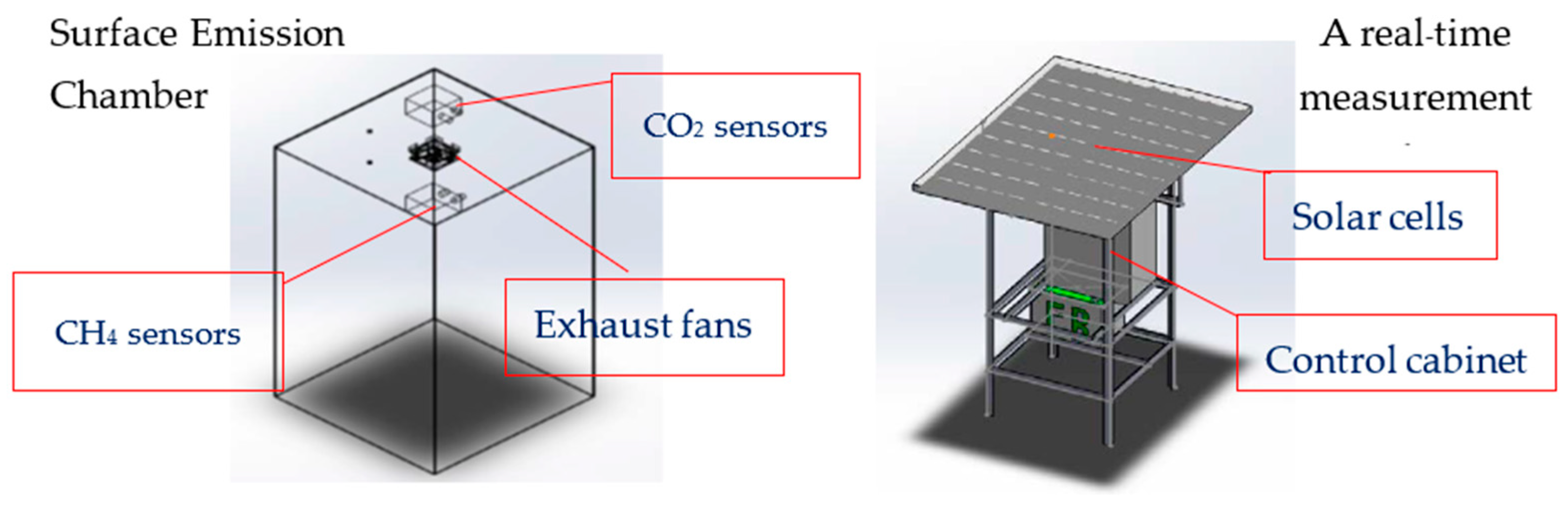
7]. Building on this principle, the proposed system integrates a surface emission chamber with embedded gas sensors and a real-time monitoring unit to enable continuous field measurements. The system architecture consists of four main subsystems: (i) the surface emission chamber unit, (ii) the gas sensing unit, (iii) the data acquisition and communication unit, and (iv) the power supply and control unit.
The surface emission chamber serves as the primary interface between the soil surface and the gas measurement system. The chamber is designed to accommodate the installation of CO
2 and CH
4 sensors, as well as exhaust fans to ensure controlled air circulation within the chamber. Sensor and exhaust fan placement was configured to allow uniform gas mixing and to minimize gas accumulation during measurement, consistent with established airflow and gas mixing principles in enclosed systems [
7,
16,
17]. This configuration enables continuous, real-time monitoring of gas concentration changes within the chamber.
The gas sensing unit comprises dedicated CO2 and CH4 sensors installed inside the surface emission chamber. These sensors continuously detect gas concentration levels and transmit the measured signals to the data acquisition unit. The integration of both sensors within the same chamber allows simultaneous measurement of CO2 and CH4 emissions from the soil surface under identical environmental conditions.
The data acquisition and real-time monitoring subsystem is responsible for collecting sensor signals, processing the data, and transmitting the information wirelessly. An embedded microcontroller-based control board serves as the core of the system, managing sensor data collection and communication. The measured data are transmitted via a wireless communication module to enable real-time monitoring and remote access to emission data [
18,
19].
The power supply and control subsystem was designed to support autonomous field operation. A solar-powered energy system supplies electricity to all components, including sensors, control units, and communication devices. The system includes protective modules such as circuit breakers and battery protection units to ensure stable and reliable operation and prevent damage caused by overvoltage or low-battery conditions. All subsystems are integrated within a control cabinet to provide environmental protection and facilitate field deployment. The overall system configuration and component layout are illustrated in
Figure 1.
2.2. Surface Emission Chamber Fabrication
Three sets of surface emission chambers were fabricated using transparent acrylic sheets with a square base area of 50 cm × 50 cm. Acrylic was selected for its mechanical rigidity, durability, and transparency, which facilitate field deployment and allow internal inspection during operation. The chambers were designed with three different heights (40, 60 and 80 cm) to evaluate the influence of chamber volume on gas accumulation and flux measurement performance. Chamber headspace volume is a critical factor in static closed-chamber measurements [
14,
18].
Previous studies have demonstrated that chamber geometry, headspace volume, and collar configuration can introduce measurement bias by altering gas diffusion gradients and microenvironmental conditions at the soil–atmosphere interface [
15]. In particular, increasing chamber height and volume has been shown to reduce flux underestimation by decreasing the rate of gas accumulation within the chamber headspace [
15]. Therefore, the use of multiple chamber heights in this study allows systematic evaluation of volume-related effects on soil CO
2 and CH
4 flux measurements.
Each surface emission chamber was equipped with dedicated CO
2 and CH
4 sensors installed within the chamber headspace to directly monitor temporal changes in gas concentrations above the soil surface. Exhaust fans were incorporated into the chamber structure to promote controlled air circulation and uniform gas mixing during the measurement period, thereby minimizing gas stratification and accumulation effects that may affect flux estimation accuracy [
5,
20].
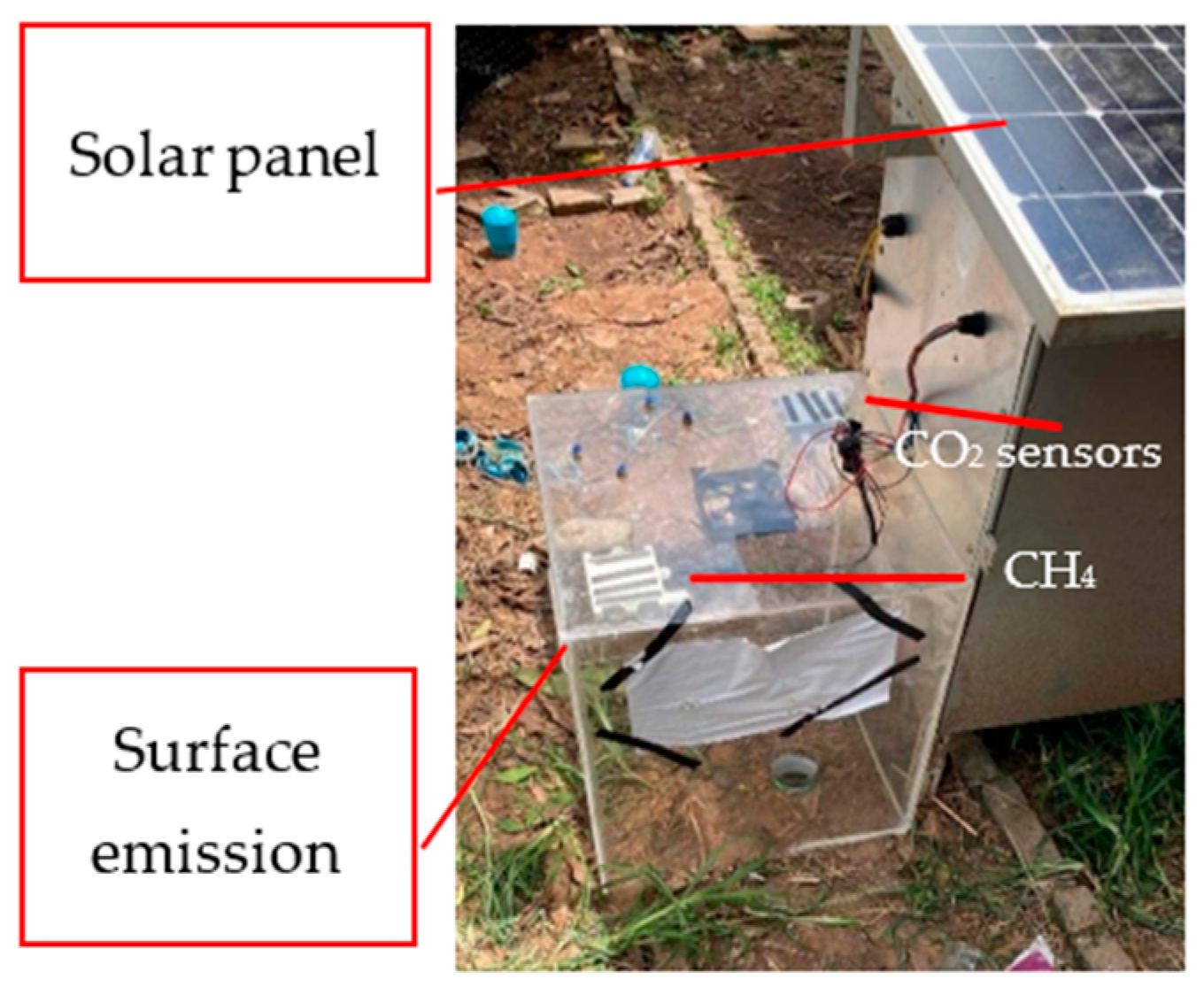
The surface emission chambers were integrated with a real-time soil CO
2 and CH
4 monitoring system designed for autonomous field operation. The control unit was powered by a solar energy system to enable continuous operation in remote field conditions without reliance on grid electricity, as illustrated in
Figure 2.
Energy storage was provided by a 12 V, 85 Ah battery, while power conditioning and distribution were managed using a solar charge controller (30 A), a 500 W inverter, and a switching power supply converting 240 V AC to 24 V DC. A microcontroller-based control board (Arduino ESP8266, NodeMCU) served as the central unit for sensor data acquisition, system control, and wireless communication. Wireless data transmission was enabled via a 4G portable hotspot and an LTE USB modem, allowing real-time data communication and remote access to soil gas emission data [
21,
22].
All electronic components were housed within a weather-resistant control cabinet to provide environmental protection and facilitate stable and reliable field deployment. Together, the fabricated surface emission chambers and the associated control system formed an integrated real-time platform for monitoring soil CO2 and CH4 emissions under field conditions.
2.3. Gas Sensors and Calibration
The gas sensing unit consisted of dedicated CO
2 and CH
4 sensors installed within the chamber headspace to continuously monitor changes in gas concentrations emitted from the soil surface. Sensor placement within the chamber was designed to allow direct detection of gas concentration variations under controlled internal conditions while minimizing external environmental interference. This configuration follows the fundamental principles of static closed-chamber measurements, in which gas fluxes are quantified based on temporal changes in gas concentrations within a confined headspace above the soil surface [
23,
24].
The CO2 and CH4 sensors were integrated with a microcontroller-based data acquisition system to enable real-time signal processing and data transmission. Sensor outputs were recorded continuously during the measurement period and transmitted to the monitoring system for data logging and subsequent analysis. The use of both gas sensors within the same chamber allowed simultaneous measurement of CO2 and CH4 emissions under identical environmental and operational conditions, thereby reducing variability associated with separate measurement systems.
Sensor calibration and performance verification were conducted by comparing real-time measurements from the developed monitoring system with those from a reference gas measurement instrument, Biogas 5000 analyzer (Geotech, Coventry, UK). Measurements were performed simultaneously using the surface emission chambers and the reference instrument to ensure consistent environmental conditions during calibration. This comparative approach is consistent with established validation practices for chamber-based GHG measurements, where sensor performance is evaluated against reference analyzers under field conditions [
23,
25,
26].
The calibration procedure focused on evaluating the agreement between sensor readings and reference measurements across all chamber heights to assess sensor performance under varying chamber volume conditions. This approach enabled validation of the developed real-time soil CO2 and CH4 monitoring system under different gas accumulation environments and supported subsequent accuracy analysis.
The detailed technical specifications of the CO
2 and CH
4 gas sensors employed in this study are presented in
Table 1. These specifications, including measurement range, accuracy, response time, operating conditions, and electrical characteristics, provide essential information for assessing sensor performance and confirming their suitability for continuous real-time monitoring of soil greenhouse gas emissions under field conditions.
2.4. Data Acquisition and Real-Time Monitoring System
The data acquisition and real-time monitoring system was developed to continuously record soil CO2 and CH4 concentrations from the surface emission chambers and transmit the data for remote monitoring and analysis. The system was designed to operate autonomously under field conditions using a solar-powered energy supply and a wireless communication network.
The CO2 and CH4 sensors within each surface emission chamber were connected to a microcontroller-based data acquisition unit using an Arduino ESP8266 NodeMCU (Espressif Systems, Shanghai, China) board. The microcontroller was responsible for collecting sensor output signals, processing the measured gas concentration data, and controlling system operations. Exhaust fans within the chambers were operated to regulate internal air circulation and ensure stable gas sampling conditions during measurements.
Power for the data acquisition system was supplied by a solar energy unit consisting of a 120 W solar panel, a solar charge controller (30 A), a 12 V battery (85 Ah), and protection components including AC and DC circuit breakers, a low-cut module, and a battery protection module. These components ensured stable power delivery and protected the system from over-discharge and voltage fluctuations during continuous operation.
For data transmission, the system employed a wireless communication setup comprising a 4G portable hotspot, a USB LTE modem with a SIM card slot, and a Wi-Fi signal distributor. Measurements collected by the microcontroller were transmitted in real time via the wireless network, enabling remote monitoring and data logging. This configuration allowed continuous observation of soil CO2 and CH4 emissions without the need for on-site data retrieval.
The integrated data acquisition and real-time monitoring system enabled synchronized measurement of CO2 and CH4 concentrations across all chamber heights under identical environmental conditions. The recorded data were subsequently used for relative agreement evaluation and comparison with reference measurements obtained from the Biogas 5000 instrument.
2.5. Field Experimental Setup
Field experiments were conducted to evaluate the performance of the developed real-time soil CO2 and CH4 monitoring system under actual agricultural conditions. The experiments were carried out in a sugarcane cultivation area located at Khon Kaen 3, Phu Wiang District, Khon Kaen Province, Thailand. The selected site represents typical field conditions for soil gas emission measurements in agricultural systems.
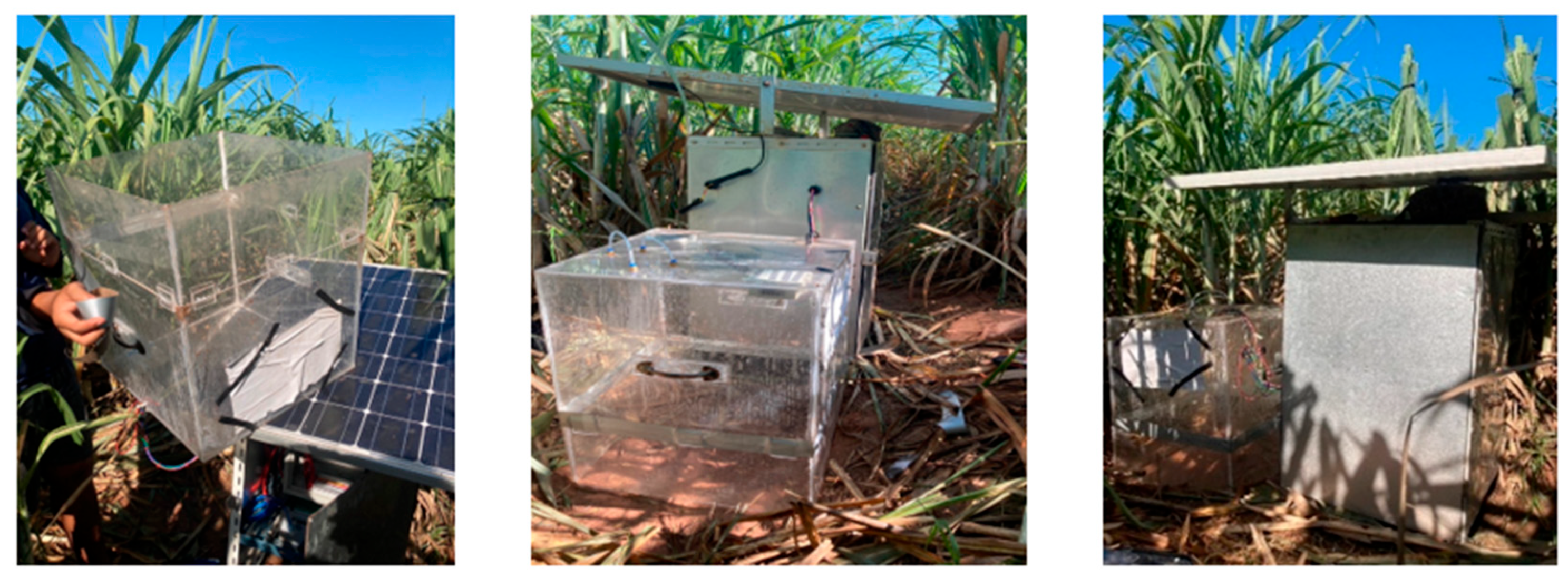
Three sets of surface emission chambers, fabricated from acrylic sheets with a base area of 50 cm × 50 cm and different chamber heights, were deployed in the field. Each chamber was equipped with integrated CO2 and CH4 sensors and exhaust fans, and connected to the solar-powered data acquisition and real-time monitoring system. The chambers were installed directly on the soil surface to ensure airtight contact and minimize gas leakage during the measurement.
The real-time monitoring system, including the control cabinet and solar power unit, was installed adjacent to the surface emission chambers to support autonomous operation. All chambers operated simultaneously to enable synchronized measurements of soil CO2 and CH4 concentrations under identical environmental conditions. Measurements were continuously recorded and transmitted wirelessly for remote monitoring and subsequent analysis.
Figure 3 illustrates the field deployment of the surface emission chambers and the real-time monitoring system in the sugarcane cultivation area, including the chamber installation, the solar-powered control unit, and the overall experimental setup used for soil CO
2 and CH
4 emission measurements.
2.6. Relative Agreement and Validation Methods
The relative agreement of the developed real-time soil CO2 and CH4 monitoring system was evaluated by comparing sensor measurements with reference values obtained from the Biogas 5000. Measurements from both the developed system and the reference instrument were conducted simultaneously under identical field conditions to ensure consistency during validation and minimize the influence of environmental variability.
Relative agreement was defined as the degree of agreement between the measured values obtained from the developed system and the reference values from the Biogas 5000. The relative agreement of the measurements was calculated using Equation (1).
where
Xm represents the measured value obtained from the developed system, and
Xt represents the reference value measured by the Biogas 5000 analyzer. This formulation expresses the degree of agreement between measured and reference values and has been widely used for the performance evaluation of measurement systems [
24]. Relative agreement was calculated for both CO
2 and CH
4 measurements at each chamber height. The resulting values were used to assess the reliability and measurement performance of the developed monitoring system under different chamber configurations.
2.7. Statistical Analysis
Statistical analysis was performed to evaluate the measurement performance of the developed real-time soil CO2 and CH4 monitoring system. Descriptive statistics, including the mean and standard deviation (SD), were used to summarize gas concentration measurements obtained from both the developed system and the reference instrument.
Relative agreement was calculated and expressed as a percentage (%) for each chamber height. These values were used to assess the agreement between the developed monitoring system and the reference measurements.
To further evaluate the relationship between the developed sensor system and the reference instrument (Biogas 5000), simple linear regression analysis was applied. The gas concentrations measured by the developed system were treated as the dependent variable (y), while the corresponding values obtained from the reference instrument were considered the independent variable (x). The regression model was expressed as:
where a is the slope and b is the intercept.
The coefficient of determination (R2) was used to quantify the strength of the linear relationship between the two measurement methods.
In addition, error metrics including the root mean square error (RMSE) and mean absolute error (MAE) were calculated to quantify the deviation between the developed system and the reference measurements:
where
n is the number of paired observations,
yi represents the gas concentration measured by the developed system, and x
i represents the corresponding value measured by the reference instrument.
All statistical analyses were conducted using standard data processing and analysis software. The results were used to support the evaluation of system reliability and performance under both simulated and field conditions.
3. Results
3.1. Performance of the Real-Time Soil CO2 and CH4 Monitoring System
The developed real-time soil CO2 and CH4 monitoring system was successfully assembled as a fully integrated platform suitable for agricultural field applications. The system consisted of three surface emission chambers with different heights (40, 60, and 80 cm), coupled with a solar-powered data acquisition and wireless communication unit. The integrated design enabled simultaneous gas monitoring under multiple chamber configurations.
The monitoring system enabled continuous, real-time measurement of soil CO2 and CH4 concentrations using integrated gas sensors installed within each surface emission chamber. Sensor signals were processed by a microcontroller-based data acquisition unit and transmitted wirelessly, enabling remote monitoring without the need for on-site data retrieval. The solar-powered energy supply supported autonomous operation and ensured stable performance during extended measurement periods.
System stability was evaluated based on continuous operation, the reliability of the solar power supply, successful wireless data transmission, and the absence of hardware or communication failures. Field deployment was conducted over a one-month period (March–April 2023), during which the system operated continuously. Only routine preventive maintenance was required—such as inspecting battery status, electrical connections, and chamber cleanliness—with no corrective maintenance or component replacement necessary.
The surface emission chambers with varying heights were successfully deployed and operated simultaneously, enabling synchronized measurements under identical environmental conditions. The different configurations ensured consistent evaluation of the influence of chamber height on gas accumulation behavior and measurement performance.
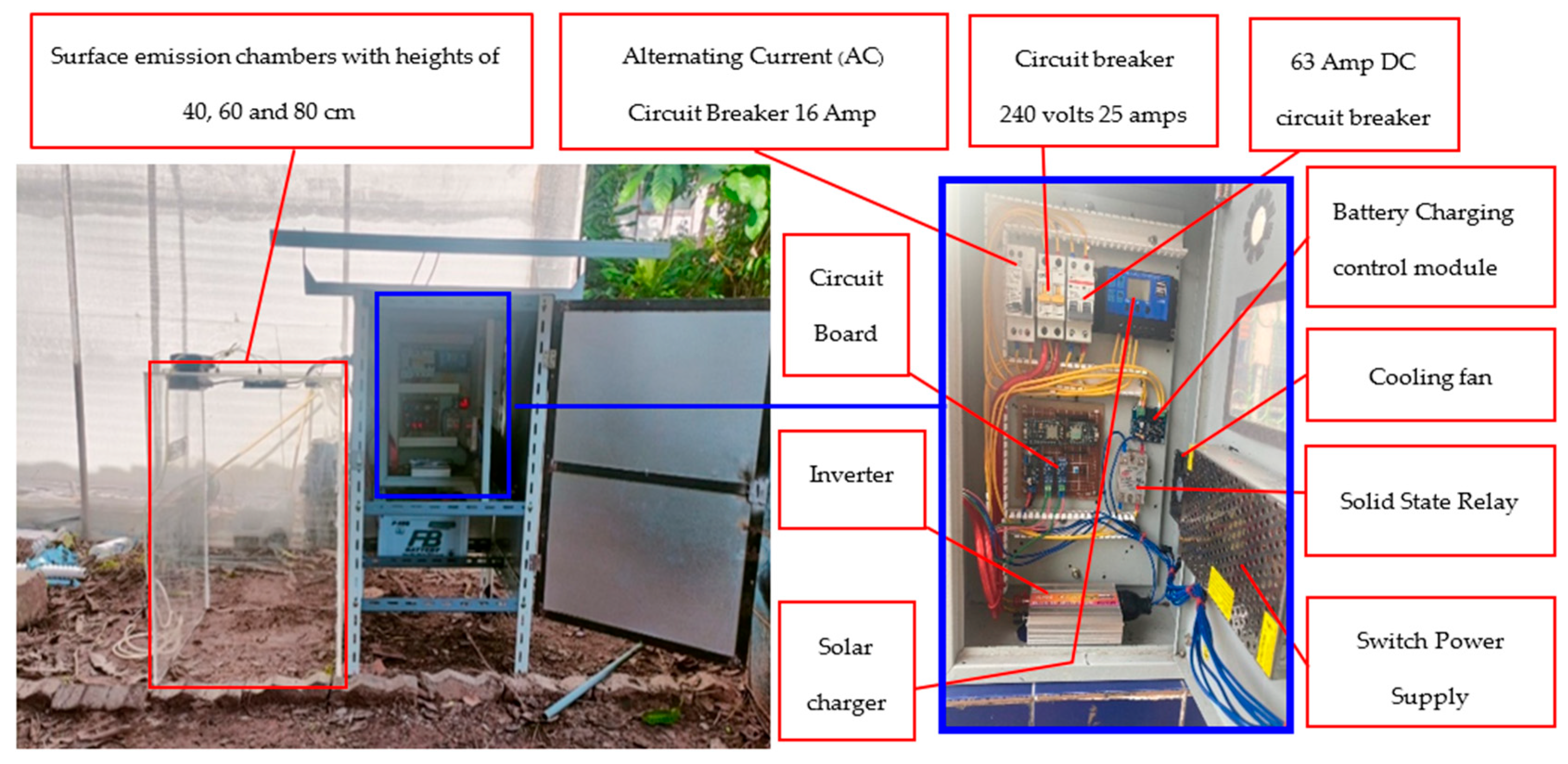
Figure 4 presents the completed surface emission chambers and the real-time soil CO
2 and CH
4 monitoring system, including the control cabinet, power supply components, and integrated sensors. The system operated successfully, demonstrating readiness for accuracy evaluation under simulated conditions and field deployment in agricultural environments.
3.2. Relative Agreement of CO2 and CH4 Under Simulated Conditions
Relative agreement of the developed real-time soil CO
2 and CH
4 monitoring system was evaluated under simulated soil conditions using surface emission chambers with heights of 40, 60, and 80 cm. Relative agreement assessment was conducted by comparing the sensor measurements with reference values measured simultaneously using a Biogas 5000 analyzer. Relative agreement was calculated based on the agreement between sensor measurements and reference values, as described in
Section 2.6.
The results demonstrated that the relative agreement for both CO
2 and CH
4 varied with chamber height. For CO
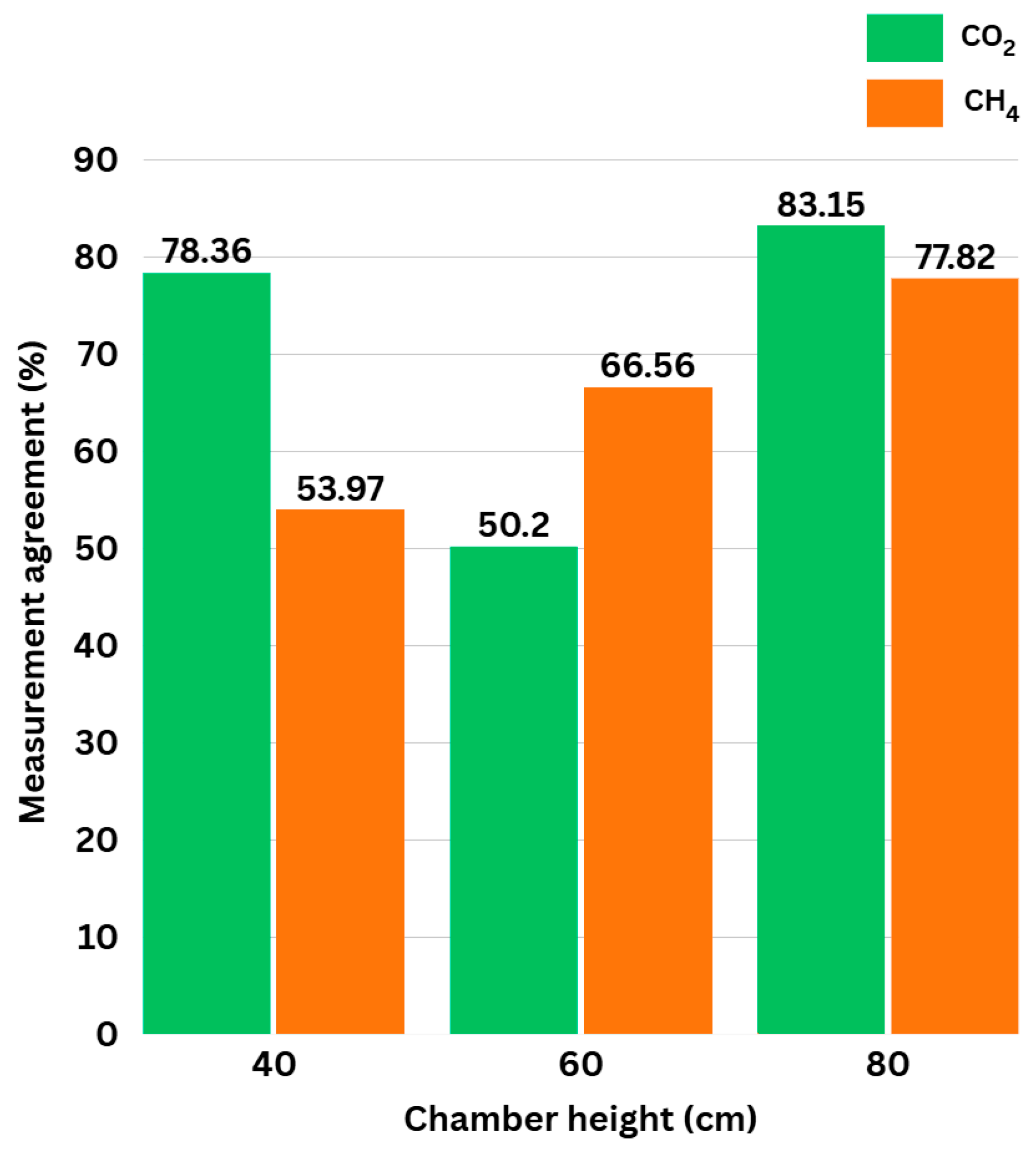
2 measurements, the average accuracies obtained at chamber heights of 40, 60, and 80 cm were 78.36%, 50.20%, and 83.15%, respectively. In contrast, the relative agreement of CH
4 increased with chamber height, yielding average relative agreement of 53.97% at 40 cm, 66.56% at 60 cm, and 77.82% at 80 cm, as shown in
Figure 5.
Overall, the simulated experiments indicated that the developed system was capable of detecting and quantifying soil CO2 and CH4 emissions, with performance dependent on chamber height. The results also revealed distinct patterns between the two gases, with higher CH4 relative agreement observed at increased chamber heights under simulated conditions.
3.3. Field Relative Agreement of CO2 and CH4 in a Sugarcane Cultivation Area
The developed real-time soil CO2 and CH4 monitoring system was evaluated under field conditions in a sugarcane cultivation area (Khon Kaen 3) located in Phu Wiang District, Khon Kaen Province. Field measurements were conducted over a one-month period from March to April 2023 using surface emission chambers with heights of 40, 60, and 80 cm. Relative agreement was assessed by comparing the sensor measurements obtained from the developed system with reference values measured simultaneously using a Biogas 5000 gas analyzer.
The field measurement results showed that CO
2 Relative agreement varied with chamber height. Average CO
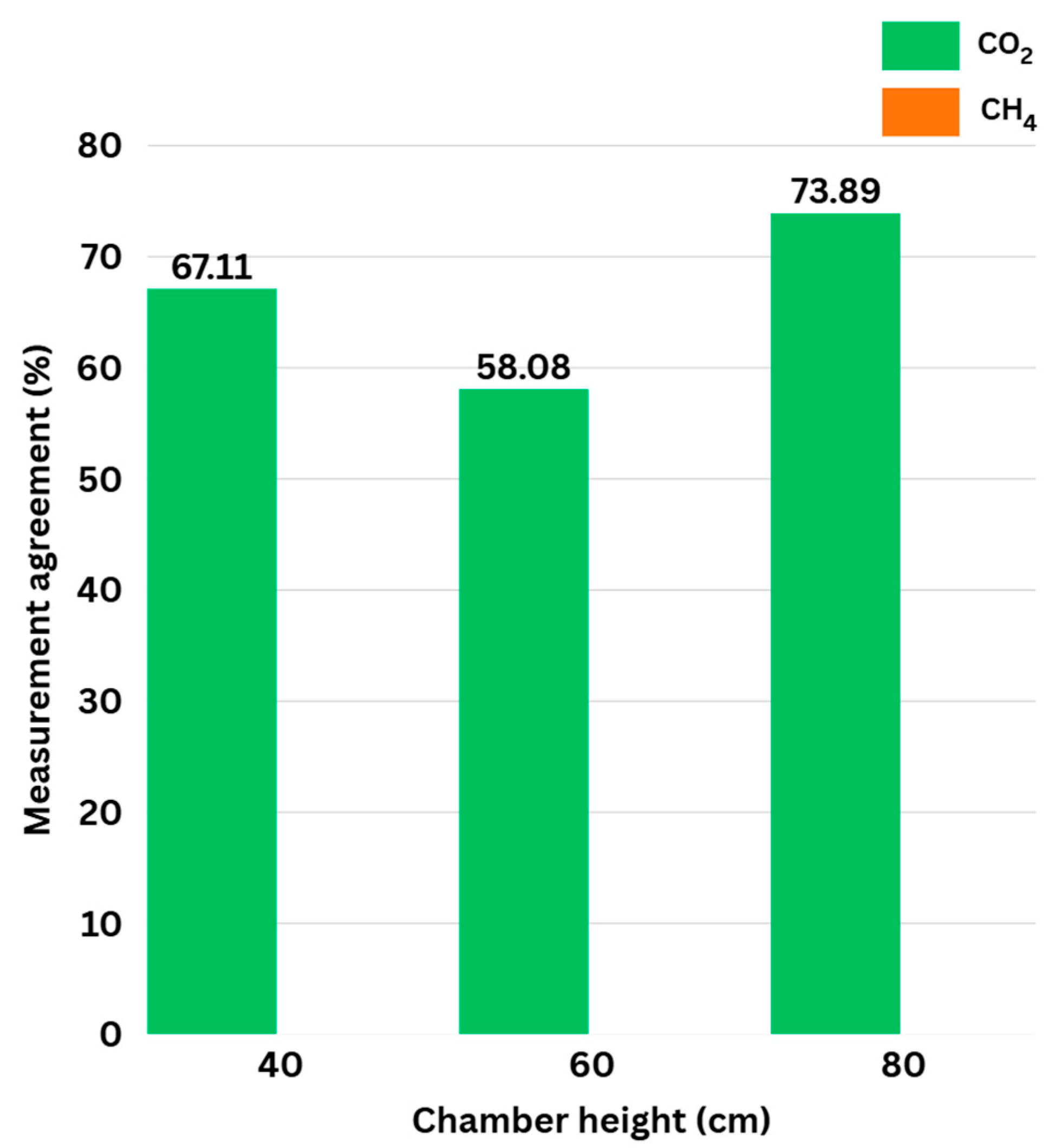
2 relative agreement were 67.11% at a chamber height of 40 cm, 58.08% at 60 cm, and 73.89% at 80 cm, as illustrated in
Figure 6. Among the tested configurations, the 80 cm chamber provided the highest CO
2 relative agreement under field conditions in the sugarcane cultivation area.
In contrast, CH
4 emissions were not detected during the field measurement period at any of the tested chamber heights, as shown in
Figure 6. As a result, CH
4 relative agreement could not be evaluated under the field conditions of this study.
Overall, the field evaluation demonstrated that the developed system was capable of monitoring soil CO2 emissions in an agricultural environment, with performance trends consistent with those observed under simulated conditions.
3.4. Linear Regression Analysis of CO2 and CH4 Measurements
To further evaluate the relationship between the developed sensor system and the reference instrument (Biogas 5000), linear regression analysis was conducted under simulated conditions, as commonly applied in environmental sensor validation studies.
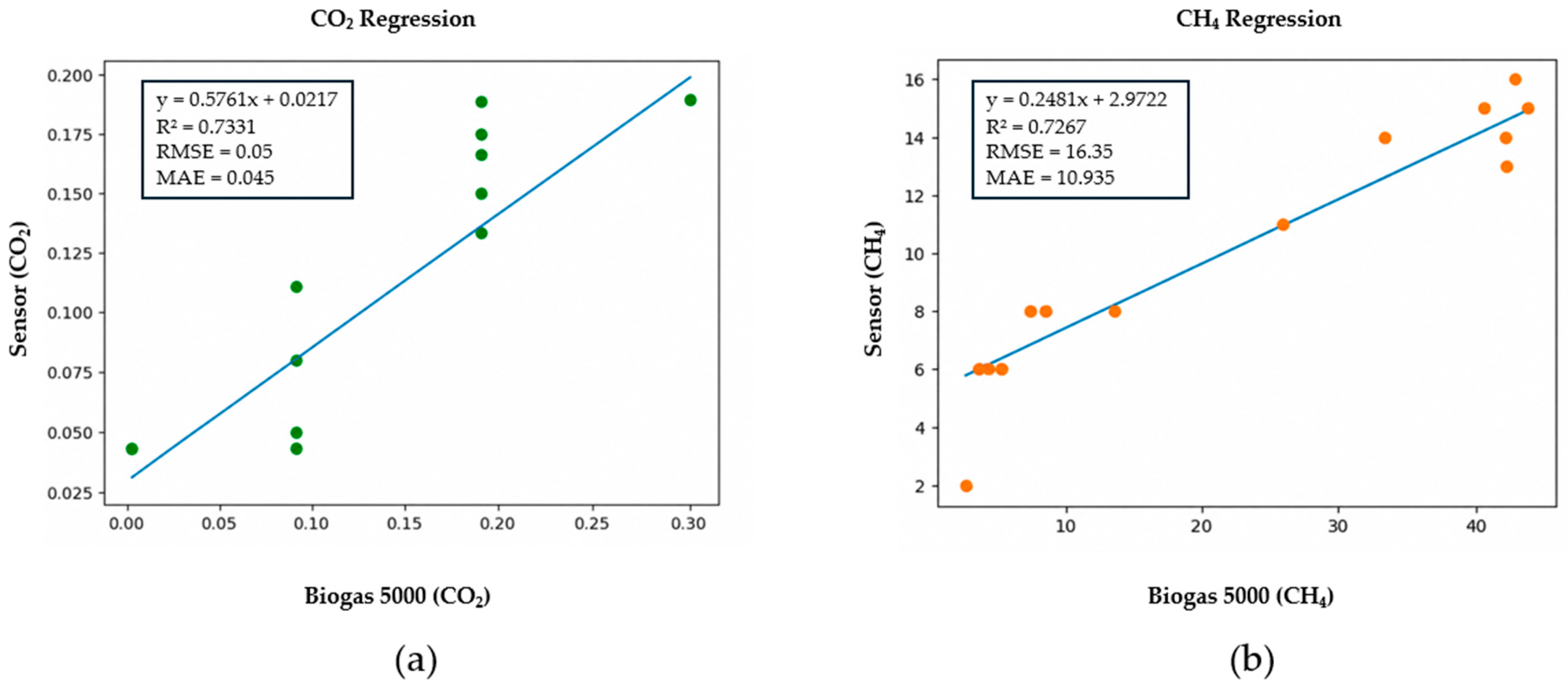
Figure 7 shows the scatter plots and corresponding regression lines for CO
2 and CH
4 measurements. For CO
2, a moderate linear relationship was observed (R
2 = 0.780), indicating an acceptable level of agreement between the developed system and the reference instrument. However, a systematic offset was evident at low concentration levels, which is consistent with previous studies reporting baseline drift and sensitivity limitations in low-cost gas sensors.
For CH4, a strong linear relationship was obtained (R2 = 0.902), suggesting that the developed system is capable of capturing methane concentration trends. Nevertheless, the relatively high RMSE and MAE values indicate increased measurement deviation, particularly at higher concentration levels, which has also been reported in sensor-based methane monitoring systems under varying concentration ranges.
Linear regression analysis between the developed sensor system and the reference Biogas 5000 analyzer under simulated conditions: (a) CO2 and (b) CH4. The solid lines represent the linear regression fits, and R2 indicates the strength of the relationship.
5. Conclusions
This study developed and evaluated a low-cost, real-time monitoring system for soil CO2 and CH4 emissions for practical agricultural field applications. The proposed system integrates surface emission chambers, low-cost gas sensors, a solar-powered energy supply, and IoT-based wireless communication into a single autonomous platform capable of continuous field operation. This integrated design addresses key limitations of conventional greenhouse gas measurement approaches, including high cost, operational complexity, and limited temporal resolution, by providing a cost-effective and scalable solution suitable for long-term environmental monitoring.
The experimental results demonstrated that system performance is strongly influenced by chamber configuration and environmental conditions. In particular, the use of surface emission chambers with different heights (40, 60, and 80 cm) provided important insights into the role of chamber geometry in gas accumulation behavior and relative agreement with the reference instrument. Among the tested configurations, the 80 cm chamber achieved the highest relative agreement for both CO2 and CH4 under simulated conditions, highlighting the importance of sufficient headspace volume in chamber-based measurements.
Field deployment in a sugarcane cultivation area confirmed the applicability of the developed system for continuous CO2 monitoring under real agricultural conditions. The system operated stably under field conditions and enabled real-time data acquisition without reliance on grid electricity. Although CH4 was not detected during the field measurement period, this result is attributed to unfavorable soil conditions for methane production, particularly drought-induced and well-aerated soil environments, rather than limitations of the sensor system itself.
Overall, the developed monitoring platform demonstrates strong potential as a practical and low-cost tool for real-time soil greenhouse gas monitoring. The system is particularly suitable for applications in agricultural engineering, precision agriculture, and climate-smart farming practices. Future research should focus on validating the system in methane-emitting environments, improving data processing and flux estimation methods, and extending the platform to support multi-gas monitoring and decision-support integration.




 ,
,