Review

A Comprehensive Review of Buried Biochar Layer Applications for Soil Salinity Mitigation: Mechanisms, Efficacy, and Future Directions

by
Muhammad Irfan
and
Gamal El Afandi
*
College of Agriculture, Environment and Nutrition Sciences, Tuskegee University, Tuskegee, AL 36088, USA
*
Author to whom correspondence should be addressed.
AgriEngineering 2026, 8(4), 148; https://doi.org/10.3390/agriengineering8040148

Submission received: 24 February 2026 / Revised: 3 April 2026 / Accepted: 8 April 2026 / Published: 9 April 2026

Abstract

Soil salinity poses a major challenge to agricultural productivity, especially threatening food security in arid and semi-arid areas. Traditional soil reclamation methods, such as leaching, chemical amendments, and drainage engineering, usually need large amounts of water, involve high costs, and can lead to environmental problems. This review compiles existing knowledge on innovative strategies for managing saline soils, focusing on buried interlayer systems that use materials like straw, sand, gravel–sand mixtures, and biochar. These interlayers improve soil hydraulic properties by preventing capillary rise, encouraging salt leaching, and reducing surface salt buildup. Biochar stands out as a particularly useful material because of its stability, large surface area, porosity, and high cation exchange capacity. These features help improve soil structure, increase water retention, and effectively retain sodium. Evidence from lab and field tests shows that buried biochar layers can stop salt from moving upward, aid in desalinating the root zone, and boost crop yields. While straw and sand interlayers show potential in reducing salinity, biochar is noted for its multifunctionality and long-term effectiveness in addressing salinity problems. The success of buried biochar systems depends on several factors, including the properties of the biochar, how much is used, how deep it is buried, and the specific soil and climate conditions. This review highlights how these systems work, compares their performance, and points out research gaps, advocating for their potential as a sustainable, resource-efficient way to manage salinity and improve soil health over the long term. A substantial proportion of the existing evidence is derived from controlled laboratory studies, and the buried biochar layer approach remains an emerging technique that requires further validation under field conditions. Still, significant knowledge gaps persist regarding long-term performance and water-salt dynamics, while site-specific soil variability and scalability challenges may limit the effective implementation of biochar interlayer systems under field conditions.

1. Introduction

Saline soils encompass a vast area of approximately 833 million hectares globally, which constitutes around 8.7% of the Earth’s terrestrial surface. These soils are predominantly found in naturally arid and semi-arid regions, particularly across the continents of Africa, Asia, and Latin America. This widespread presence poses significant challenges to agricultural productivity and food security, as hyper-salinity affects an estimated 20–50% of irrigated soils across all continents. This issue directly threatens the livelihoods of nearly 1.5 billion individuals, contributing to worsening soil degradation and declining agricultural yields [1].
The challenges posed by soil salinity are expected to intensify due to climate change. Projections suggest that by the century’s end, global arid land areas may expand by approximately 23%, particularly impacting developing regions that already struggle with water scarcity. Soil salinity can develop under a wide range of climatic conditions; however, it is most severe in arid regions where limited precipitation is insufficient to leach salt from the plant root zone. In such environments, rainfall rarely provides enough water to flush accumulated surface salts deeper into the soil profile, leading to progressive salt buildup [2].
Soil salinization is a complex issue influenced by a variety of factors, both natural and human-induced. Natural processes that contribute to soil salinization include several geological and climatic phenomena. For instance, mineral weathering occurs as rocks break down and release salt into the soil, while sea-breeze deposition involves the movement of salty ocean air, which can deposit saline particles onto land surfaces. Furthermore, the intrusion of saline groundwater can lead to increased salt levels in soil, particularly in coastal regions or areas near rivers affected by tidal influences.
Human activities have significantly intensified the problem of soil salinization. One major factor is the mismanagement of irrigation practices. When irrigation systems are not designed or implemented properly, excess water can lead to rising water tables, which in turn bring salt from deeper soil layers to the surface. Unsustainable practices such as over-cultivation and monocropping degrade soils and intensify salinity, raising broader concerns about declining soil ecosystem services [3].
Additionally, the misuse of fertilizers, particularly those high in salts, can contribute to salinization [4]. As these chemicals accumulate in the soil, they can disrupt the delicate balance of nutrients required for healthy plant growth. Deforestation is another contributing factor, as the removal of trees can lead to reduced rainfall and increased evaporation rates, leading to the concentration of salts in the soil.
Furthermore, rising sea levels due to climate change pose a significant threat, as they can lead to seawater encroachment into freshwater sources used for irrigation. Shallow water tables can also exacerbate salinization by allowing salts to move upward, especially in arid and semi-arid regions where evaporation rates are high. Ultimately, the interplay of these natural and anthropogenic factors creates a challenging landscape for agriculture, necessitating urgent attention and integrated management strategies to mitigate soil salinization and its impact on food security and ecosystem health.
Salt-affected soils are characterized by elevated levels of soluble salts, which can significantly impair both their chemical and physical properties, rendering them unsuitable for traditional agricultural practices. According to the United States Salinity Laboratory Staff, these soils are categorized into three distinct types: saline, sodic, and saline–sodic [5]. Saline soils are defined by their electrical conductivity (ECe) exceeding 4 dSm−1, whereas sodic soils exhibit pH levels greater than 8.5 and an exchangeable sodium percentage (ESP) above 15. Saline-sodic soils, on the other hand, manifest a combination of both conditions.
The unique physical and chemical characteristics of salt-affected soils lead to adverse effects on soil structure and function [6]. Soils with high concentrations of exchangeable sodium ions (Na+) often experience structural deterioration, resulting in reduced pore volumes and compromised relationships between soil, water, and air [7]. Upon wetting, entrapped air expands and disrupts weak aggregates, causing slaking, while concurrent clay swelling and reduced interparticle cohesion decrease pore size and structural stability [8,9].
The interplay between attractive and repulsive forces, driven by intermolecular and electrostatic interactions between ions present in the soil solution and the soil particles themselves, is crucial for understanding soil structural stability and the configuration of pore systems [10]. This relationship is explained by the Diffuse Double Layer Theory, which describes how electrostatic repulsive and van der Waals attractive forces govern the arrangement, interaction, and movement of soil particles [11]. When sodium salts are prevalent in the soil, they significantly alter these interactions, leading to detrimental effects on soil properties. Sodium-induced swelling and dispersion reduce soil infiltration and hydraulic conductivity, limiting salt leaching and promoting salt accumulation, although responses vary with soil texture and salinity [12].
To rehabilitate salt-affected soils, a variety of reclamation methods have been employed. These include flood irrigation to leach salts below the root zone, the application of gypsum and acids in conjunction with irrigation water, and the incorporation of organic amendments [13,14,15]. Successful reclamation strategies hinge on effective leaching, which involves the downward movement of salts through the soil profile beyond the root zone. Effective salinity mitigation relies primarily on two processes: leaching excess salts below the root zone and establishing adequate drainage to prevent their return to the surface [16,17]. Effective reclamation demands the infiltration of high-quality water that can dissolve and transport salts downward and sufficient internal drainage that enables the removal of salt from the root zone. The overall success of any reclamation initiative is contingent on the presence of appropriate drainage conditions, as effective leaching is only possible when surplus water can freely flow through and escape from the soil. In the absence of adequate leaching and drainage, salt will persistently accumulate, regardless of the amendments applied.
Innovatively, biochar, a carbon-rich material derived from the pyrolysis of crop straw, has been explored to enhance salt leaching when used as an interlayer material within the soil profile. When incorporated as a buried layer, biochar functions as a capillary barrier, promoting the downward movement of salts while preventing upward migration, thus contributing to the restoration of soil health and agricultural viability. Researchers continue to investigate various materials, including sand, straw, and biochar, to optimize buried layer applications that facilitate improved salt leaching and ultimately combat soil salinity challenges [18,19,20,21].
Due to its unique physicochemical characteristics, biochar has emerged as a highly regarded material for creating barriers aimed at remediating saline soils. The process of transforming straw into biochar not only enhances its functional properties but also extends its lifespan significantly compared to simply incorporating straw directly into the soil or utilizing deep mulching techniques.
Recent research has demonstrated that implementing a 5 cm layer of biochar situated at a depth of 20 cm functions effectively as a capillary barrier. This innovative application has been shown to significantly lower soil salinity levels, as indicated by reduced electrical conductivity (EC) and sodium ion (Na+) concentrations. Additionally, this biochar layer contributes to improved moisture retention and enhances nutrient availability within the soil, which collectively boosts plant root development and increases biomass in coastal saline environments [22].
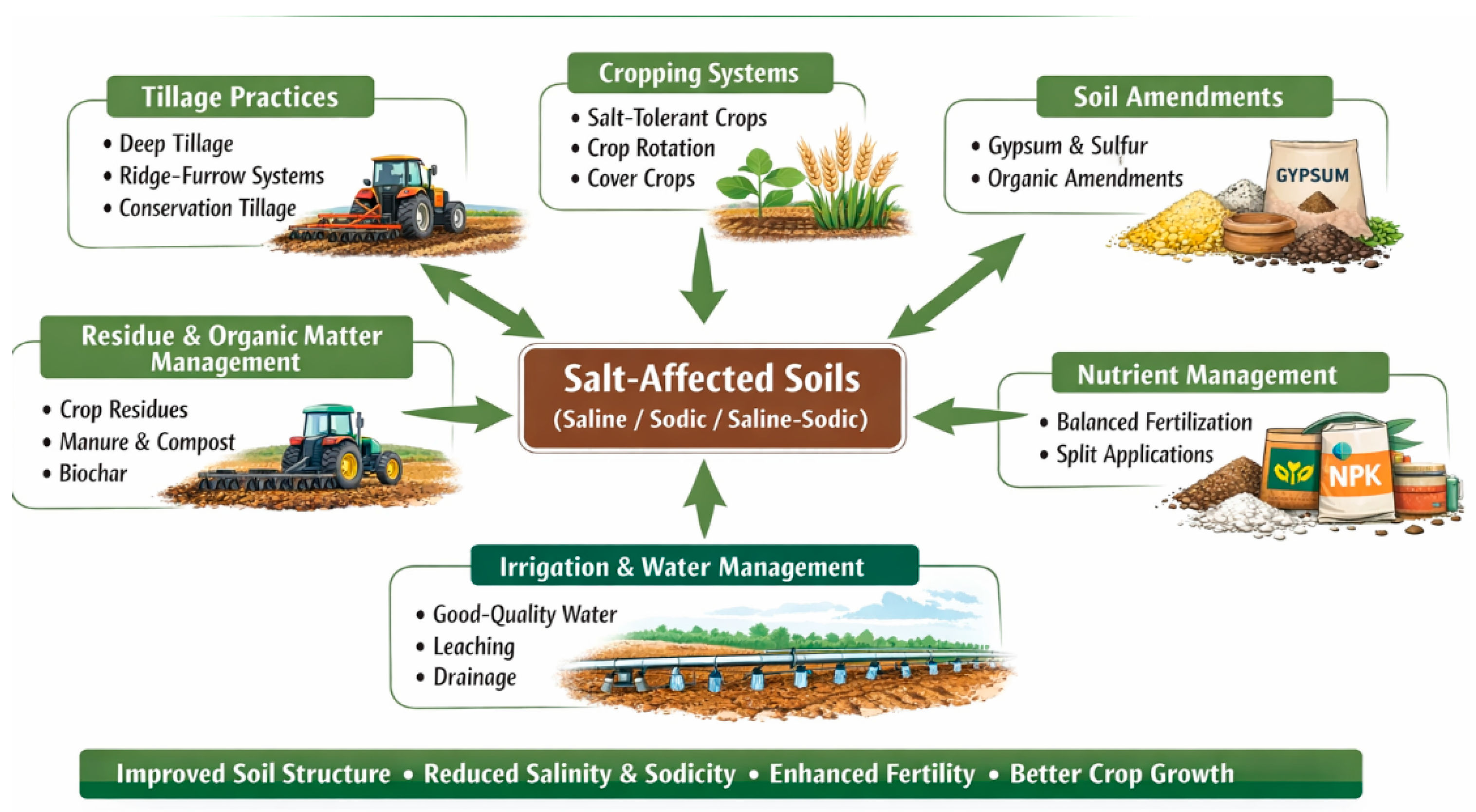
Considering these encouraging results, this review seeks to emphasize effective strategies for reclaiming soils affected by salinity, with a particular focus on the technique of employing a buried biochar interlayer. The discussion will delve into the mechanisms responsible for its effectiveness, rigorously assess its potential benefits, and examine its role in optimizing water and salt regulation in salt-affected soils, thereby fostering a more sustainable approach to soil management and agricultural productivity (as illustrated in Figure 1).
While numerous studies and reviews have thoroughly explored the use of biochar as a general soil amendment for enhancing soil quality and mitigating salinity stress, there remains a notable gap in the literature regarding the specific functions of buried biochar interlayers acting as subsurface capillary barriers. Unlike traditional methods that involve surface application or mixing biochar directly into the soil, buried biochar layers exhibit a unique spatial configuration that effectively interrupts capillary rise. This distinctive arrangement influences the vertical movement of water in the soil profile and facilitates the redistribution of salts deeper beneath the root zone.
The interaction of buried biochar interlayers with soil moisture dynamics is particularly significant in salinity-affected soils, where groundwater or saline water may contribute to salt accumulation in the root zone. By altering the capillary pathways and creating a physical barrier, these interlayers can help prevent saline groundwater from infiltrating into the upper layers of the soil, thereby protecting root systems from osmotic stress.
Given this context, the present review aims to provide a focused synthesis that delves into the underlying mechanisms by which buried biochar interlayers operate, their comparative advantages over conventional biochar application techniques, and the critical areas where further research is needed to optimize their use for salinity mitigation in salt-affected soils. An in-depth understanding of these aspects is essential for developing effective strategies to enhance soil health and agricultural productivity in regions prone to salinity issues.
Considerable variability in soil physicochemical properties, biochar feedstocks and production conditions, and experimental methodologies limits direct comparison across studies. These inconsistencies, together with uncertainties in field-scale performance, economic feasibility, and long-term stability, highlight the need for further research to support practical implementation.

2. Methodological Framework for Literature Selection

This review systematically targets peer-reviewed studies that examine the use of buried biochar interlayers as a mitigation strategy for upward salt migration in saline soils. Literature encompassing laboratory experiments, soil column investigations, and field-scale trials was evaluated to assess the influence of subsurface biochar placement on soil water-salt transport processes. Priority was given to studies that explicitly document capillary barrier effects or enhanced salt leaching under varying environmental and management conditions.

3. Reclamation and Management of Salt-Affected Soils

The reclamation and management of salt-affected soils present a multifaceted challenge that must address the intertwining physical, chemical, and biological constraints impeding optimal crop growth. The primary goal of these reclamation efforts is to enhance soil structure, regulate soil pH, boost organic matter content, and improve overall soil fertility as well as biological activity. Management strategies for salt-affected soil should incorporate a comprehensive suite of agronomic practices designed to suit the specific local conditions of the area.
To develop effective rehabilitation strategies, it is vital to properly utilize chemical amendments and assess the quality and availability of irrigation water. Additionally, site-specific factors, including local climate, crop selection, economic considerations, policy frameworks, cultural practices, and the prevailing agricultural system, must be taken into account.
Traditional methods for reclaiming and managing these soils encompass a range of agronomic practices: strategic irrigation, application of soil amendments, and biological interventions aimed at restoring soil functionality and productivity. This may also involve drainage engineering to alleviate excess salinity.

3.1. Agronomic Strategies for Enhancing Soil Quality of Salt-Affected Soils

Agronomic practices play a crucial role in enhancing both the quality and production potential of salt-affected soils by directly influencing their physical, chemical, and biological properties. Strategies such as tillage, crop rotation, and residue mulching are essential for mitigating salt accumulation in the root zone, enhancing soil physical attributes, and ensuring greater nutrient availability.
Conventional tillage methods, including deep plowing, rotary tillage, and advanced techniques such as fenlong-ridging deep tillage (FT), are effective in disrupting compacted soil layers while redistributing salt-rich topsoil into deeper horizons [22]. By enhancing soil structure, fenlong-ridging deep tillage significantly increases soil porosity, reduces bulk density, and boosts water retention capacity. These improvements foster a vibrant microbial community, enhance nutrient availability, and facilitate deeper root development, ultimately leading to improved crop growth outcomes [23].
Deep tillage has been shown to increase crop yields, especially in soils with layers that inhibit root penetration, thus providing better access to subsoil moisture and nutrients. However, the success of this technique can vary greatly depending on specific site conditions, including soil texture, structural integrity, moisture levels, and existing nutrient management practices [24]. Historically, research indicated that ridge cultivation effectively enhances wheat performance in saline-sodic conditions, underscoring the necessity of adapting techniques to local conditions [21,25]. Recent studies highlight the efficacy of deep vertical rotary tillage, which not only improves soil structure significantly but also reduces salinity levels and pH, enhances the accumulation of soil organic carbon and nitrogen (N), and ultimately boosts soil quality and cotton yield in saline environments [26].
Mulching techniques, such as the application of plastic film mulch and straw mulch, have proven effective in lowering soil salinity and increasing crop yields in saline–sodic soils. However, the efficacy of these methods is contingent upon climate conditions, soil characteristics, and the specifics of agronomic management [27]. For example, studies have revealed that organic mulching dramatically reduces soil salinity levels while stabilizing moisture content in the soil [28].
Notably, under the combination of film mulch and farmyard manure treatment, maize biomass and grain yield demonstrated astonishing increases of 106% and 137%, respectively, while barley benefited from increases of 133% in biomass and 106% in yield. This suggests that the synergistic effect of manure and plastic film mulch can significantly alleviate soil salinity issues, enhance moisture retention, improve nutrient status, and promote overall crop productivity in newly reclaimed salt-affected soils [29]. Key benefits of utilizing plastic-film mulching include reduced water evaporation from the soil surface, enhanced water conservation, and controlled salt accumulation, which collectively foster improved soil-water dynamics, nutrient activation, and increased crop yields. Furthermore, straw mulching offers an eco-friendly alternative to plastic film mulching, helping to minimize the accumulation of plastic waste and its negative environmental impacts on farmland.
The management of salt-affected soils through organic amendments represents an effective alternative, as the addition of organic matter fosters the binding of soil particles into stable aggregates [30]. The application of compost, for instance, can significantly improve soil structure and permeability, which in turn enhances the leaching of salt while reducing the accumulation of salt in surface layers by preventing excessive evaporation from shallow groundwater tables [31]. Additionally, incorporating organic materials can stimulate microbial activity, further contributing to enhanced soil structure and overall soil health. The implementation of various agronomic practices plays a crucial role in mitigating the adverse effects of salinity in agricultural soils. By effectively reducing salt accumulation, these practices help to maintain more favorable soil conditions. Enhanced soil physical properties, such as improved structure and aeration, are achieved through methods like proper tillage, cover cropping, and organic matter addition. Additionally, these practices optimize nutrient availability, ensuring that essential nutrients are accessible to crops, which in turn increases overall crop productivity. Therefore, the synergistic effects of these approaches not only promote healthier soil ecosystems but also support sustainable agricultural practices in areas affected by salinity, as illustrated in Figure 1.

3.2. Chemical Reclamation

The reclamation of saline-sodic soils typically necessitates the application of specific chemical amendments. The fundamental goal in this process is to facilitate the replacement of sodium ions (Na+) on exchange sites with more beneficial divalent cations, such as calcium ions (Ca2+). This is achieved through a two-step process: first, sodium ions are displaced; second, the soil is leached to remove the excess salts [32].
Commonly utilized chemical agents for this purpose include acids like sulfuric acid (H2SO4), hydrochloric acid (HCl), and nitric acid (HNO3), along with more traditional amendments such as gypsum (CaSO4.2H2O) and lime (CaCO3) [33]. Among these, gypsum remains the most prevalent inorganic amendment due to its effectiveness in supplying calcium ions, which play a crucial role in sodium ion replacement during the leaching process [34]. Extensive research has been conducted on the use of gypsum in reclaiming saline-sodic soils, demonstrating its effectiveness [34,35,36].
In the case of calcareous saline-sodic soils, the application of sulfuric acid and hydrochloric acid can effectively dissolve calcite, which facilitates the activation of calcium ions for exchange with sodium ions [37]. Studies show that when sulfuric acid is surface applied, it significantly boosts infiltration rates and accelerates reductions in both leachate electrical conductivity (EC) and sodium concentrations, often outperforming gypsum amendments in reclaiming calcareous sodic soils [38].

3.3. Phytoremediation

The utilization of crop-based strategies for reclaiming salt-affected soils has garnered significant attention in scientific literature [39]. Phytoremediation in these environments can occur through several mechanisms, as outlined by Qadir et al. (2007) [40]. One critical mechanism involves the production of carbonic acid in the root zone, driven by an increased partial pressure of carbon dioxide (PCO2). This reaction augments the solubilization of existing calcite, thereby releasing additional calcium ions (Ca2+) into the soil solution.
Moreover, the physical penetration of roots enhances soil structure and drainage, which is critical for salt leaching. Additionally, the physiological processes by which plants take up and accumulate soluble salts directly contribute to the reclamation of saline soils.
Halophyte species, such as Atriplex nummularia, Atriplex prostrata, Suaeda maritima, Suaeda portulacastrum, and Suaeda fruticosa, are particularly effective for the reclamation and revegetation of saline lands due to their remarkable ability to tolerate and accumulate high concentrations of sodium ions in their tissues [41]. These salt-tolerant plants employ a variety of survival strategies; for example, Tamarix species possess specialized leaf glands that effectively excrete salt, thereby mitigating their negative impacts on the soil environment [42]. Utilizing halophytes for revegetation significantly improves soil aggregation and hydraulic properties, enhances both the chemical and physical characteristics of the soil, promotes deeper reclamation when compared to more conventional amendments such as gypsum, and ultimately reduces costs by lessening the need for chemical inputs and extensive leaching [43].

3.4. Engineering Measures

Achieving comprehensive reclamation of salt-affected soils requires the implementation of two principal strategies: irrigation designed to leach out accumulated salts beneath the root zone and effective drainage systems to expel excess salts and prevent the upward movement of the groundwater table [44]. Siyal et al. [45] have indicated that salt can be effectively leached using partial ponding techniques. However, the feasibility of traditional leaching practices might be compromised due to inadequate drainage systems and limited water resources.
A novel method developed by Li et al. [46] involved excavating the soil to a depth of one meter, placing a layer of gravel and sand, refilling with soil, and implementing soil tillage along with phased water-salt regulation, all under controlled drip irrigation. This innovative approach resulted in enhanced salt leaching efficiency, optimized water conservation, and demonstrated impressive two-year plant survival rates. The effectiveness of an embedded gravel–sand layer for reclaiming coastal saline soils was studied by [47]. Their findings revealed that placing a 20 cm thick gravel–sand layer at a depth of 80 cm not only improved salt leaching but also obstructed the upward movement of groundwater. Results indicated a greater degree of desalinization in plots with the gravel–sand layer compared to those without.
Furthermore, the effects of burying a straw layer at 30 cm depth were examined [48], which led to a significant reduction in salt content within the plow layer. The most effective results were observed at this depth, with desalination rates reaching 47% and 45% at 50 cm and 70 cm depths, respectively.
In a complementary study, Zhang et al. [49] found that during periods of substantial rainfall, a sand layer placed at depths of 80-100 cm could diminish salt accumulation by 50% to 70% in comparison to control plots. When rainfall occurred near evaporation, the salt content in sand-layered soil decreased significantly, whereas it either remained constant or experienced only minor increases in control soils. At the conclusion of the rainy season, the soil desalinization ratio rose by 10% to 35% relative to controls, continuing to aid in soil desalting, which proved beneficial for plant growth.
Through these combined strategies, chemical amendments, phytoremediation, and engineered drainage and irrigation measures, significant advancements can be made in the reclamation of salt-affected soils, ultimately facilitating agricultural productivity and sustainability in these challenging environments.
Conventional agronomic practices and chemical reclamation methods continue to play a crucial role in the management of salt-affected soils, yet their overall effectiveness is frequently limited by several key factors. These include a significant demand for water, which can be challenging to sustain, the typically temporary nature of their impacts, and a limited ability to control the vertical movement of water and salt within the soil profile. As a result of these challenges, there has been increasing interest in innovative solutions such as subsurface barrier technologies, particularly the use of buried interlayer systems.
Buried interlayer systems are designed to effectively regulate capillary rise, which is the upward movement of water through soil due to evaporation and plant uptake. By modifying hydraulic conductivity, these systems can influence how easily water and salts move through the soil, thereby promoting a more efficient distribution of salts within the soil profile. This can help mitigate the detrimental effects of salinity on crop growth.
Among the various approaches being explored, the use of buried biochar interlayers stands out as a particularly promising strategy. Biochar is a form of carbon-rich material produced through the pyrolysis of organic matter, and its incorporation into soil offers a dual benefit. Not only does it enhance hydraulic regulation, allowing for better management of water and salt dynamics, but it also improves several physicochemical properties of the soil. For instance, biochar can increase soil fertility, enhance microbial activity, and improve soil structure, all of which contribute to more sustainable agricultural practices in salt-affected areas. This makes buried biochar interlayers an attractive option for integrated soil management in regions suffering from salinity issues.
Traditional salinity management practices, such as mulching, leaching, gypsum application, and phytoremediation, are often limited by their short-term effectiveness, high water and input requirements, and dependence on site-specific conditions. These approaches primarily address symptoms rather than underlying soil structural and physicochemical constraints, and their efficiency may decline under water-scarce or poorly drained environments. In contrast, buried biochar applied as a subsurface interlayer provides a more sustainable approach by improving soil structure, enhancing water retention and regulating water-salt movement, thereby reducing upward salt transport and supporting long-term salinity mitigation.

4. Biochar Properties and Their Role in Soil Salinity Management

Biochar is a carbon-rich material produced when biomass is heated in an oxygen-limited environment (pyrolysis). This process converts carbon captured by plants from the atmosphere into a stable form that can be used as a soil amendment [50]. To fully comprehend how biochar contributes to the mitigation of salinity, it is crucial to delve into the physicochemical characteristics of biochar. These characteristics include the surface area, porosity, and functional groups present on the biochar, as they dictate how the material interacts with surrounding soil and water. By examining these features in detail, we can better explain how biochar enhances soil quality and contribute to effective salinity management strategies. Understanding the interplay between biochar’s properties and its role within the soil matrix provides insights into optimizing its use for sustainable agricultural practices.
Biochar is a carbon-dense substance notable for its exceptional stability and resistance to decay when introduced into soil environments [51]. This versatile material is not solely composed of carbon; it also contains hydrogen, oxygen, and a variable assortment of essential mineral nutrients, including nitrogen, phosphorus, and sulfur, which are influenced by the type of feedstock used in its production [52]. The characteristics of biochar are significantly determined by both the source of the feedstock and the conditions under which it is produced.

Influence of Feedstock Type and Pyrolysis Temperature on Biochar Physicochemical Properties

The physicochemical characteristics and elemental composition of biochar are primarily influenced by two main factors: the type of feedstock used in its production and the specific pyrolysis temperature applied during the process. Various feedstocks can be utilized for biochar synthesis, including woody plants, agricultural crop residues, and animal manures, each contributing distinct physical and chemical properties to the final product.
Woody plant feedstocks, for instance, are characterized by a denser structural composition and higher concentrations of lignin and cellulose compared to those derived from herbaceous plants. This distinction plays a critical role in determining the stability and structural integrity of the resultant biochar, affecting its effectiveness in enhancing soil quality and fertility [53].
The choice of feedstock is crucial because it significantly impacts the biochar’s overall quality and its physicochemical attributes [51]. For example, key metrics such as ash content, pH level, and nutrient composition can show considerable variance based on the specific type of feedstock utilized. Therefore, selecting the appropriate feedstock is imperative to ensure that the biochar produced aligns with its intended uses, especially in agricultural applications.
Research conducted on biochar produced from twenty distinct biomass feedstocks in the Brazilian Amazon, subjected to pyrolysis at 350 °C for two hours, revealed notable differences in chemical and physicochemical properties among the samples. Specifically, biochar derived from feedstocks like poultry litter, annatto seed, passion fruit peel, and coffee husk was found to be rich in ash and essential nutrients, showcasing higher pH levels that can significantly contribute to enhanced soil fertility. In contrast, biochar produced from sugarcane bagasse and wood residues exhibited elevated levels of carbon content and aromatic structures, suggesting greater potential for carbon sequestration and mitigating greenhouse gas emissions [51].
In addition to the type of feedstock, the conditions of pyrolysis–such as temperature, heating rate, and residence time–also have a profound impact on the properties of the resulting biochar. Pyrolysis temperatures typically range between 300 °C and 700 °C, and previous studies have demonstrated that higher pyrolysis temperatures can lead to an increase in the specific surface area of biochar [51]. This increase occurs due to the contraction of the solid matrix, which results in reduced pore sizes, thereby enhancing the overall surface area available for interaction with soil and plants.
A comparative study assessing biochars produced from rice straw, sawdust, sugarcane, and tree leaves at pyrolysis temperatures of 400 °C to 800 °C indicated that elevating the temperature can decrease biochar yield while significantly altering its physical and chemical properties. This includes variations in moisture content, porosity, bulk density, pH, electrical conductivity, and nutrient composition, all of which are critical factors influencing the effectiveness of biochar in agricultural contexts [52].
In summary, the interplay between feedstock selection and pyrolysis conditions is essential in tailoring biochar’s characteristics for specific environmental and agricultural applications, and understanding these factors can significantly enhance its value as a soil amendment and carbon sequestration agent.
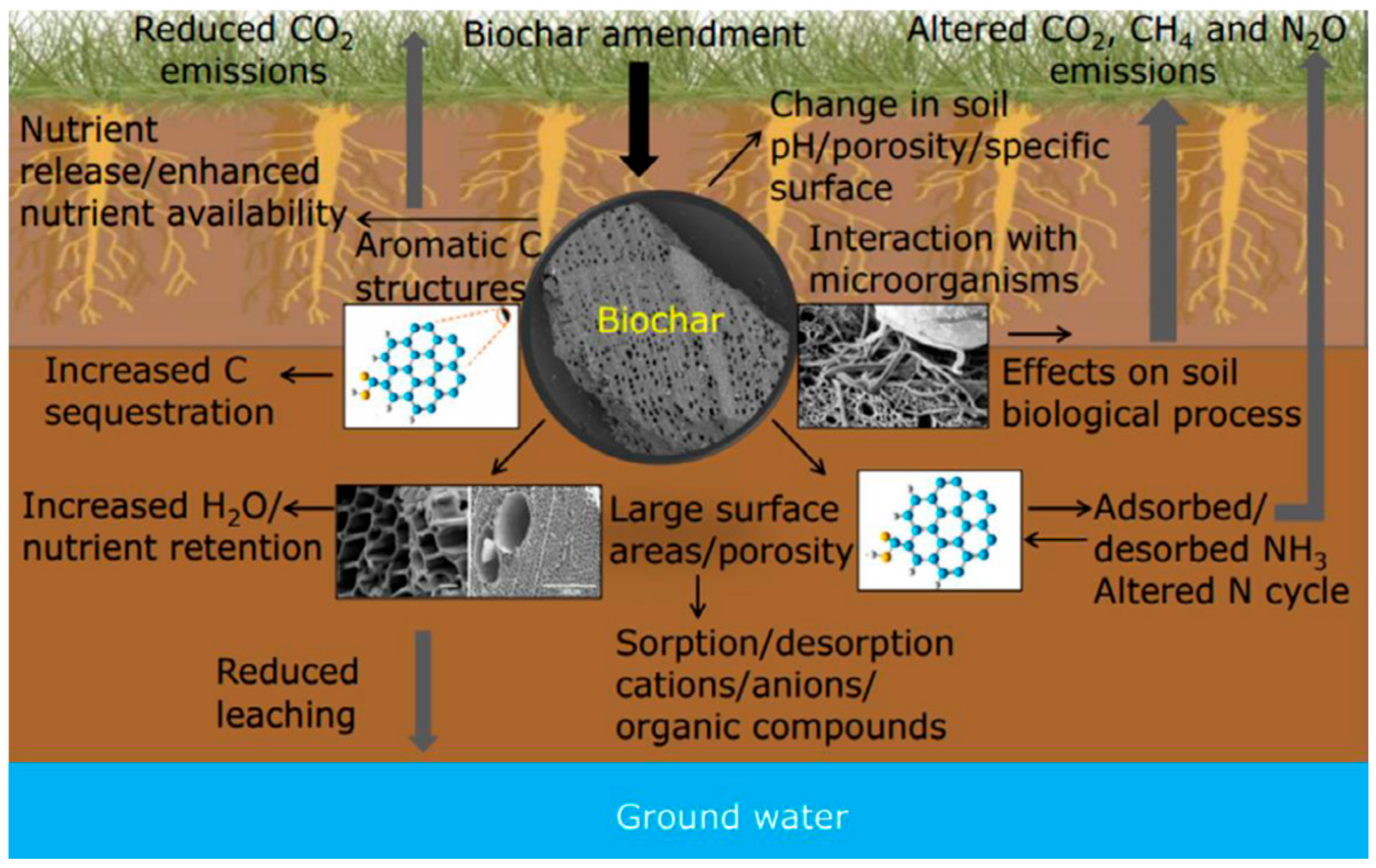
In terms of its specific traits, biochar is characterized by a remarkably high surface area and a porous structure, which together contribute to its considerable cation exchange capacity (CEC). When integrated into soil as an organic amendment, biochar has demonstrated substantial improvements in both the chemical and physical properties of the soil (Figure 2), as well as enhancements in plant growth and productivity [53].
One of the vital ways in which biochar impacts soil is through its influence on hydrological properties. This includes key aspects such as moisture content, water holding capacity, water retention, hydraulic conductivity, and water infiltration rate. For instance, when biochar is applied at a rate of 22 tons per hectare, it can boost water-holding capacity by 11% to 14% and enhance water-retention capacity by 28% to 32% in soils such as those found in the Kubuqi and Thar Deserts compared to control soils [54].
Beyond improving water management, biochar exhibits numerous beneficial properties that can mitigate salinity stress in plants [55,56,57]. Reducing sodium (Na+) uptake, it plays a crucial role in supporting plant health under saline conditions. For example, when biochar produced from Fagus grandifolia sawdust is pyrolyzed at 378 °C and applied at a rate of 50 tons per hectare, it was found to completely prevent salt-induced mortality in the plant species Aesculus theophrasti and also prolonged the survival of Phaseolus vulgaris [57].
Research conducted by [58] further explores how biochar incorporation into salt-affected soils diminishes the adverse effects of salinity on potato plant performance. The findings suggested that biochar mitigates saline stress by effectively adsorbing Na+ from the soil solution. Another study by the same group looked into the residual benefits of biochar on wheat growth, physiology, and yield under saline stress, illustrating that biochar, much like organic fertilizers, can provide lasting effects that enhance crop resilience to salinity [59]. The results showed that, like organic fertilizers, biochar also showed residual effects in alleviating salinity stress on subsequent crops. Biochar amendment can alter the resistance and resilience of soil microbial properties to water stress [60].
Previous study [59] showed that three primary mechanisms might explain how biochar amendments help reduce salinity stress in plants. First, biochar can lead to a temporary increase in the sorption of Na+, which helps to bind this harmful ion. Second, the addition of biochar can enhance the availability of soil moisture, which dilutes the concentration of salts in the soil solution, thus alleviating osmotic stress on plants. Lastly, biochar is rich in essential nutrients, such as potassium (K), phosphorus (P), calcium (Ca), and magnesium (Mg), which enhance their availability in soil solutions. This increased nutrient concentration can lead to reduced Na+ uptake by plants, effectively lowering salinity stress [61].
Overall, biochar’s high surface area and cation exchange capacity significantly augment the soil’s ability to adsorb various ions, including Na+ [62]. Studies have also indicated that the incorporation of biochar not only enhances CEC but can also lower the levels of exchangeable Na+ and the exchangeable sodium percentage (ESP), providing a multifaceted approach to managing soil health and productivity, as illustrated in Figure 2 [63].

5. Buried Biochar Layer as a Strategy for Soil Salinity Mitigation

5.1. Soil Interlayers and Capillary Barriers: Effects on Water and Salt Dynamics

The integration of a buried interlayer in soil systems has been demonstrated to significantly enhance the dynamics of water and salt through its modification of various processes, such as infiltration, evaporation, and solute transport [64]. By affecting the soil’s hydraulic properties and capillary action, these interlayers improve water retention while facilitating the effective redistribution and leaching of salts. This improvement plays a crucial role in overall soil salinity management [65].
Research has indicated a pronounced difference in pore structure, suction levels, and hydraulic conductivity at the interface of layered soils when compared to homogeneous soil profiles [66]. For instance, investigations have shown that the introduction of a clay interlayer within light loam soil markedly boosts the rate at which capillary water is transported, particularly in contrast to non-layered light loam soil, which lacks this vital structural component [67]. Importantly, the presence of a capillary obstruction at the layered contact point limits water permeability, leading to enhanced water retention capabilities in the upper soil layers [68].
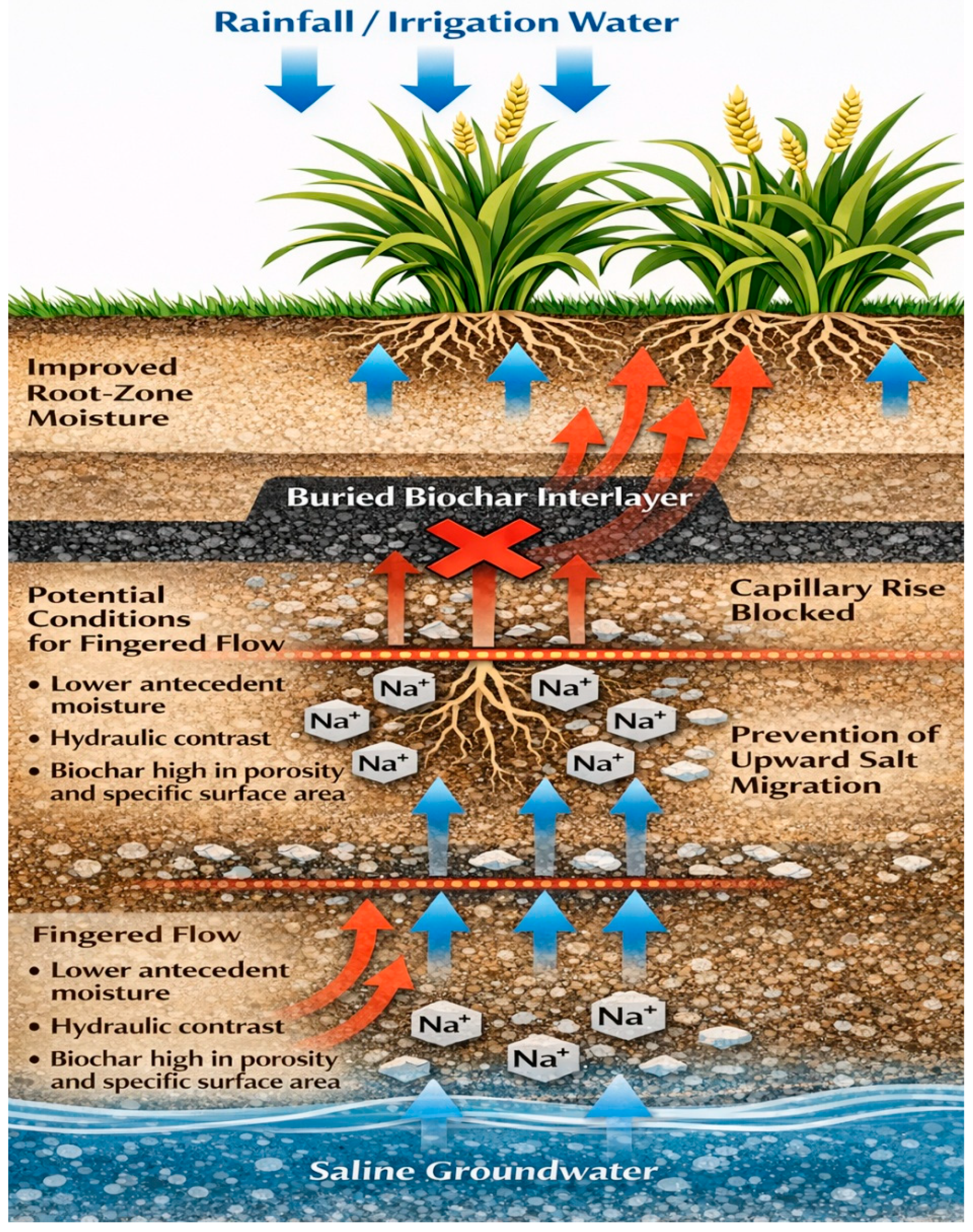
Moreover, it is well-documented that soil texture, along with its vertical heterogeneity, significantly influences hydraulic properties and the movement of water and salts throughout the soil profile. In uniform soils, the phenomena of capillary rise and salt distribution are predominantly dictated by the established soil texture. In contrast, the implementation of textural layering introduces hydraulic and capillary barriers that further augment the soil’s ability to retain water, as illustrated in Figure 3 [69].

5.2. Mechanisms of Salinity Reduction Mediated by Buried Biochar Layers

Soil salinity can be effectively managed and mitigated through practices such as extensive flood irrigation to leach salt below the root zone. Unfortunately, this method has become less effective due to rising groundwater tables caused by inadequate drainage and improper irrigation techniques. Furthermore, the growing scarcity of water resources for agricultural purposes, exacerbated by climate change [19], highlights the unsustainability of relying solely on leaching for salinity management. The concept of employing soil barriers, particularly capillary barriers, has emerged as a promising strategy for efficiently desalinating degraded lands characterized by shallow groundwater levels and high evaporation rates [70]. It is essential to recognize that layered structures are a fundamental characteristic of natural soils, resulting in distinctly different water and salt movement dynamics when compared to homogeneous soils [20,71,72].
Various materials, including sand, agricultural crop straw, and biochar, have been utilized to inhibit the upward migration of salts and mitigate accumulation in the root zone. The literature indicates that organic and inorganic materials used as barriers yield variable results regarding water content transport and salt dynamics. Recently, biochar has gained attraction as a subsurface barrier owing to its effectiveness in regulating soil water infiltration, evaporation rates, and the redistribution of water and salts.
In contrast, straw interlayers demonstrate a limited lifespan of effectiveness, typically around one hundred days, and their application necessitates significant labor and mechanical effort, which hampers broader adoption [73]. However, when crop straw is converted into biochar, it presents a particularly promising avenue for barrier applications [74]. Biochar’s inherent stability in both physical and chemical properties makes it a suitable candidate for improving soil aggregation, enhancing water retention, offsetting salinity impacts, and ultimately boosting crop yields [75].
Recent discourse around biochar’s function as a buried layer for the management of soil water and salinity underscores the urgency to aggregate and synthesize research findings on this innovative utilization. Experimental evidence from recent studies illustrates that when biochar is applied as a buried interlayer, it can substantially enhance the leaching of salts while concurrently curbing the upward movement of salts in saline soils [19].
Integrated findings from laboratory column studies and field experiments demonstrate that biochar interlayers situated at depths greater than 20 cm drastically accelerate the efflux of salts, decrease the electrical conductivity of the soil, and lower concentrations of major ions across various soil depths. These improvements coincide with enhanced physiological performance and higher yields of crops grown in salt-affected agroecosystems. The results underscore the viability of employing buried biochar layers as a sustainable strategy for soil desalination, contributing to water conservation and the enhancement of agricultural productivity.
Theoretically, incorporating a biochar interlayer into the soil profile serves a critical role in impeding the upward movement of salts. This is achieved by effectively disrupting the natural capillary pathways that typically facilitate salt migration [76]. By enriching soil aggregation and enhancing structural integrity, a buried layer of biochar significantly boosts the soil’s ability to retain moisture, leading to improved water storage capacity [19,77].
When the wetting front, essentially the leading edge of water infiltration, encounters a buried biochar interlayer within the soil profile, the dynamics of water movement may transition from relatively uniform matrix flow to a more complex form known as preferential flow. This shift in flow patterns is contingent upon a combination of soil properties and the specific characteristics of the biochar amendment. The reason for this alteration lies in the ability of the biochar layer to significantly modify the pore structure and hydraulic behavior at the interface with the surrounding soil [70]. As a result, new preferential pathways are created, which facilitate water movement more rapidly through certain areas compared to others.
As the water progresses through the soil, it may also trap air within the biochar layer. This entrapment can lead to increased local pressure differences right in front of the advancing wetting front. Such pressure variations can contribute to uneven flow dynamics and varying velocities within different parts of the soil profile [78,79]. Consequently, fingered flow, a phenomenon characterized by irregular, finger-like patterns of water movement, should be considered a potential mechanism that enhances salt leaching in systems incorporating buried biochar. However, the actual occurrence of fingered flow is likely influenced by specific conditions related to the soil and the biochar used.
At the pore scale, previously conducted studies have established a strong relationship between soil pore-size distribution and the behavior of water flow. There are distinct functional thresholds that relate to types of water movement, such as mobile water, preferential flow, and bypass flow [80]. Furthermore, the characteristics of pore sizes are instrumental in estimating permeability, which is crucial for modeling hydraulic conductivity. In systems where biochar is integrated as a buried interlayer, the contrasts in pore structure between the biochar layer and the adjacent soil layers may contribute to flow heterogeneity and the subsequent development of preferential flow. This heterogeneity can lead to variability in how water and solutes, such as salts, are distributed within the soil, impacting overall soil health and agricultural practices.
Research shows that the water adsorption capacity is enhanced owing to the biochar’s extensive specific surface area and abundant pore structures. Consequently, the propagation of the wetting front exhibits greater heterogeneity, a crucial factor for effective soil moisture management [64,78]. The biochar interlayer could provide a theoretical underpinning and a practical reference for strategies aimed at water conservation and the mitigation of salt accumulation. Interestingly, biochar may perform a dual role: it can absorb salts that are leached from the upper soil layers while simultaneously acting as a barrier to prevent the migration of salt from deeper layers. Empirical evidence from field studies supports the assertion that biochar interlayers substantially augment soil moisture levels in the root zone, effectively diminishing salt concentration in the surface layers by facilitating the redistribution of salts towards deeper soil horizons. This is accomplished by establishing a capillary barrier between the surface soil and the biochar interlayer, thus curbing the upward recharge of shallow groundwater and reducing salt migration to the topsoil.
From a modeling perspective, coupled water–salt modeling studies have highlighted the complex interplay of various factors that influence the migration and accumulation of salt in porous saline media. These studies have shown that hydraulic conditions, initial salt concentration, and boundary conditions play crucial roles in dictating how salt moves within these systems. For example, a coupled water-heat-salt model has demonstrated that the initial concentration of salt significantly affects the dynamics of water, salt migration, and aggregation patterns [81]. Additionally, under closed boundary conditions, both water and salt migration tend to be substantially reduced, which can have important implications for salinity management in agricultural settings.
Although the modeling framework discussed here was developed for a different type of saline porous system, it remains highly relevant for understanding phenomena such as preferential flow, variations in hydraulic conductivity between different soil layers, and the processes governing salt redistribution, particularly in systems that incorporate buried biochar interlayers.
Subsurface applications of biochar serve a critical role in mitigating salinity by fundamentally altering the unsaturated flow processes within the soil. Biochar is known to modify essential soil hydraulic properties, including water retention capacity, pore-size distribution, and unsaturated hydraulic conductivity, factors that are central to the theoretical framework of unsaturated flow. Specifically, in the context of the Richards equation, which governs water movement in unsaturated soils, biochar influences both the soil-water characteristic curve and the conductivity function. Amendments with biochar have been shown to reshape the soil water retention curve and even reduce unsaturated hydraulic conductivity, primarily due to changes in pore-size distribution, overall porosity, and flow tortuosity [20].
These modifications impart several beneficial effects, such as enhancing infiltration rates, promoting deeper percolation of saline water, and limiting the upward flux of water through evaporation. This reduction in evaporative loss is particularly important as it helps to curb the concentration of salt accumulating in the root zone. Empirical findings further support the notion that subsurface biochar interlayers effectively reduce soil water evaporation and inhibit salt migration upward, consequently leading to decreased salt accumulation in the upper layers of the soil profile [82].
Additionally, biochar has a significant impact on the dynamics of capillary pressure within the soil. Generally, the presence of biochar reduces capillary rise and slows the upward movement of salts. The increased heterogeneity in pore sizes resulting from biochar incorporation introduces a greater degree of hysteresis between the processes of wetting and drying, which serves to further inhibit salinity buildup during periods of dryness.
The effectiveness of biochar as a salinity mitigation strategy is also contingent upon the texture of the soil in question. In fine-textured soils, the application of biochar may enhance leaching capabilities and contribute to improved structural stability. Conversely, in sandy soil, biochar more consistently boosts water retention and available water capacity, making it a valuable amendment [83].
In the context of multilayered soil profiles, strategically positioned subsurface biochar zones can function effectively as hydraulic buffers, minimizing evaporation and mitigating the accumulation of salts driven by capillary action near the soil surface.
Overall, a comprehensive integration of engineering hydrology principles, unsaturated flow theory, Richards-based modeling, capillary behavior, and texture-specific hydraulic responses supports the design and implementation of biochar systems as engineered hydraulic amendments. This approach holds significant promise for achieving long-term mitigation of soil salinity, contributing to more sustainable agricultural practices and enhanced soil health.

5.3. Influence of Buried Layer Thickness on Water and Salt Transport

Despite the promising potential of buried layers in managing soil water and salt transport, research focusing on the comparative effects of varying thicknesses of straw and biochar remains scant. Experimental studies demonstrate that the effectiveness of buried straw layers in regulating soil water and salt movement is highly dependent on their thickness. Notably, layers measuring 3 cm, 5 cm, and 7 cm have been shown to enhance salt leaching progressively, with thicker layers exhibiting superior salt leaching capabilities [84]. However, while thicker straw layers tend to retain more water over extended periods, the performance of these layers diminishes over time due to structural degradation and natural decomposition. Notably, the implementation of a 7 cm layer poses practical challenges, leading researchers to advocate for a 5 cm thickness as an optimal balance between efficacy and feasibility. This 5 cm straw interlayer is particularly beneficial for fostering sunflower root development under conditions of saline–sodic soil, where effective moisture retention and salt regulation are crucial for plant health [85].
It is essential to recognize, however, that straw interlayers have limitations concerning their longevity in maintaining barrier functions. Long-term studies indicate that the efficacy of these layers in retaining soil moisture and regulating salt content gradually diminishes over time, resulting in soil conditions increasingly resembling those of control treatments without any interlayers [86]. This underscores the need for ongoing research to explore sustainable alternatives that can maintain their efficacy over extended periods in agricultural practices.

6. Comparative Performance of Buried Materials

The research presented in Table 1 illustrates distinct differences in the effectiveness of various buried materials used for managing soil water dynamics and salinity levels. The comparative effectiveness of these materials is influenced by several critical factors, including the specific type of material utilized, the depth at which it is buried, the thickness of the layer applied, and its long-term stability and performance under actual field conditions.
Straw interlayers stand out for their ability to significantly reduce soil salinity levels in the short term, thanks to their organic composition. However, it is important to note that their effectiveness tends to diminish over time because of decomposition processes. This decay leads to a gradual loss of their salinity-reducing properties, making them less reliable for sustained management of soil salinity.
On the other hand, sand and gravel–sand layers serve primarily as physical barriers that inhibit capillary rise—this restricts the upward movement of saline water from deeper soil layers to the surface. While these layers are effective in promoting the leaching of salts from the root zone, they do not significantly enhance soil fertility, which limits their utility in improving overall soil health and crop productivity.
In contrast, biochar emerges as a highly advantageous option for long-term salinity management. Its multifaceted benefits comprise not only the creation of a durable capillary barrier that protects against salinity but also improvements in water-holding capacity, enhanced soil aggregation, and an increased ability to retain and exchange essential nutrients through cation exchange. These comprehensive advantages position biochar as a far more promising material for managing soil salinity over extended periods in various agricultural scenarios compared to both straw and mineral interlayers. Thus, the selection of materials for soil treatment should carefully consider both immediate impacts and long-lasting effects on soil health and productivity.

7. Research Gap and Future Directions

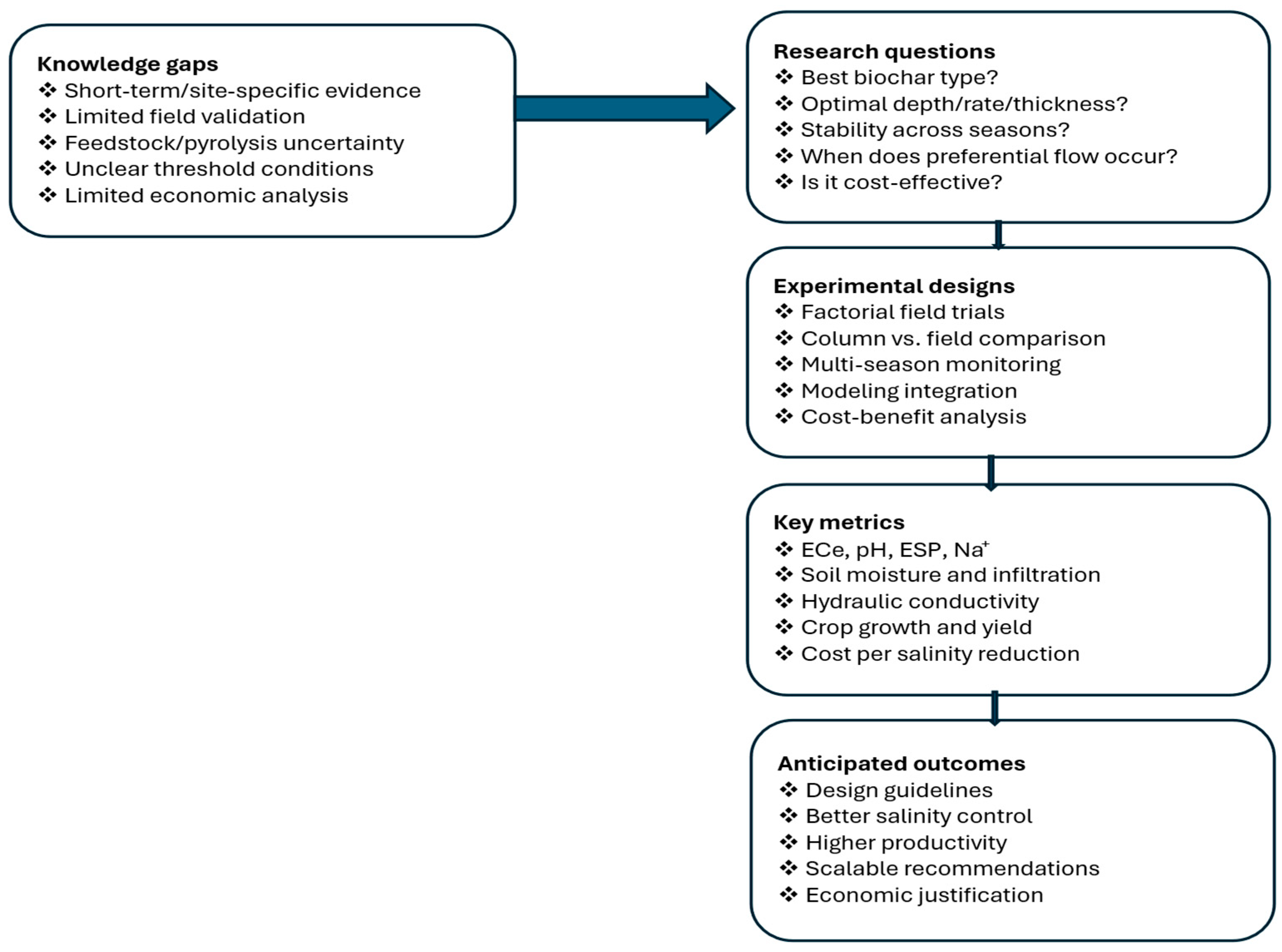
A conceptual framework for future research on buried biochar for salinity mitigation is presented in Figure 4. The existing literature presents a robust array of encouraging findings regarding the application of buried biochar and other interlayer materials as effective strategies for salinity mitigation in agricultural soils. As detailed in Table 1, the current evidence base encompasses both controlled laboratory column experiments and real-world field studies. However, a notable limitation of many investigations is their relatively short duration or their focus on site-specific conditions, which may not universally apply.
For instance, several studies have concentrated on short-term phenomena such as water and salt redistribution within column setups. In contrast, there is a scarcity of comprehensive evaluations that assess the long-term performance of these interventions in actual field settings across multiple growing seasons. This identified imbalance underscores the imperative for extensive field-based research aimed at confirming the durability and agricultural relevance of such practices, particularly in varied environmental contexts.
Additionally, another significant gap in the literature pertains to the inherent variability in biochar properties, which are heavily influenced by the type of feedstock used and the conditions under which pyrolysis occurs. Factors such as porosity, surface area, ash content, cation exchange capacity, and levels of alkalinity all play critical roles in determining biochar’s effectiveness in retaining soil moisture, adsorbing sodium ions (Na+), enhancing soil structure, and regulating the movement of both water and salts. Consequently, future research endeavors should adopt a systematic approach to compare biochar produced from diverse feedstocks and subjected to varying pyrolysis temperatures. This comparative analysis is vital to pinpoint the most effective combinations for salinity mitigation under specific soil types and climatic conditions.
Moreover, the mechanisms driving preferential flow, capillary interruption, and salt redistribution in systems incorporating buried biochar remain poorly understood when applied to field conditions. While controlled column studies have yielded valuable insights into these processes, there remains a pressing need for further investigation to elucidate the threshold conditions under which these phenomena occur in real-world soils. This includes understanding how variables such as soil texture, antecedent moisture levels, burial depth of the biochar, and various characteristics of the biochar particles interact to influence outcomes.
To effectively address these critical knowledge gaps, future research should prioritize the implementation of multi-season field trials, process-based modeling efforts, and cost–benefit analyses. At a minimum, field experiments ought to be designed using factorial treatment layouts that compare various factors: biochar feedstock type, pyrolysis temperature, application rates, burial depths, and layer thicknesses. These studies should be conducted under representative saline soil conditions to ensure applicability. Sampling methodologies must include key depth intervals, such as 0–20 cm and 20–40 cm, or an aggregated 0–40 cm layer, to monitor root-zone salinity and the dynamics of salt redistribution within the soil profile.
Furthermore, core indicators to be monitored should encompass parameters such as electrical conductivity of the saturated extract (ECe), pH levels, exchangeable sodium percentage (ESP), soil moisture content, bulk density, infiltration rates, hydraulic conductivity, and concentrations of Na+, as well as measures of crop growth and yield. To provide concrete performance benchmarks, future studies should aim to define target performance criteria, such as achieving a decrease in ECe of at least 1 dS m−1 within the 0–40 cm layer over a single growing season, alongside demonstrable improvements in crop performance and water-use efficiency.
Lastly, it is crucial to give considerable attention to the practical scalability of biochar systems buried in agricultural applications. Beyond assessing agronomic effectiveness, future research must evaluate practical considerations such as the availability of materials, transport logistics, application feasibility, and the overall economic viability of implementing these systems. To provide a comprehensive framework for advancing research in this area, Figure 4 illustrates a conceptual roadmap that links existing knowledge gaps to targeted research questions, recommended experimental designs, essential performance metrics, and anticipated outcomes for evaluating the efficacy of buried biochar systems in salt-affected soils.

8. Conclusions

Soil salinity is a significant barrier to agricultural productivity, especially in arid and semi-arid regions where traditional reclamation methods tend to be resource-intensive, economically unfeasible, or ineffective in the long term. This review highlights the efficacy of buried interlayer strategies in managing water and salt dynamics in saline soils. By disrupting capillary rise, these strategies facilitate salt leaching and minimize surface salt accumulation.
Among the materials evaluated, biochar emerges as a particularly advantageous option due to its multifaceted benefits. Not only does buried biochar act as a capillary barrier, but it also enhances soil structure and increases water retention capacity while boosting cation exchange capacity and promoting sodium adsorption. These properties collectively contribute to improved soil conditions and crop resilience in saline environments.
Overall, the use of buried biochar presents a promising, multifunctional approach for the sustainable management of salt-affected soils. Its integrated effects on hydraulic behavior, salinity mitigation, and soil quality enhancement underscore its potential for fostering long-term agricultural resilience.
Future research should prioritize long-term field validation, the optimization of biochar characteristics and burial configurations, and the assessment of the practical scalability of buried biochar systems across various saline soil contexts.

Author Contributions

Conceptualization, M.I. and G.E.A.; methodology, M.I. and G.E.A.; software, M.I. and G.E.A.; validation, M.I. and G.E.A.; formal analysis, M.I. and G.E.A.; investigation, M.I. and G.E.A.; resources, M.I. and G.E.A.; data curation, M.I. and G.E.A.; writing—original draft preparation, M.I. and G.E.A.; writing—review and editing, M.I. and G.E.A.; visualization, M.I. and G.E.A.; supervision, M.I. and G.E.A.; project administration, M.I. and G.E.A. All authors have read and agreed to the published version of the manuscript.

Funding

This research received no external funding.

Institutional Review Board Statement

Not applicable.

Informed Consent Statement

Not applicable.

Data Availability Statement

No new data were generated or analyzed.

Conflicts of Interest

The authors declare no conflicts of interest.

Abbreviations

The following abbreviations are used in this manuscript:
ECeElectrical Conductivity of the Saturation Extract
ESPExchangeable Sodium Percentage
SARSodium Adsorption Ratio
DDLDiffuse Double Layer
CECCation Exchange Capacity
FTFenlong-Ridging Deep Tillage
GLGravel–Sand Layer Treatment
NGLNon–Gravel–Sand Layer Treatment
SOCSoil Organic Carbon

References

  1. Chen, X.; Yang, J.; She, D.; Chen, W.; Wu, J.; Wang, Y.; Chen, M.; Li, Y.; Qureshi, A.S.; Singh, A.; et al. Monitoring, reclamation and management of salt-affected lands. Water 2025, 17, 813. [Google Scholar] [CrossRef]
  2. Wang, N.; Yu, D.; Chen, S.; Huang, J.; Taghizadeh-Mehrjardi, R.; Peng, J.; Wigneron, J.-P.; Frappart, F.; Biswas, A.; Shi, Z. Mapping 25 years of global soil salinity: Hydrothermal conditions drive widespread desalinization amid regional salinization hotspots. One Earth 2026, 101658. [Google Scholar] [CrossRef]
  3. Kopittke, P.M.; Menzies, N.W.; Wang, P.; McKenna, B.A.; Lombi, E. Soil and the intensification of agriculture for global food security. Environ. Int. 2019, 132, 105078. [Google Scholar] [CrossRef] [PubMed]
  4. Liu, J.; Xie, W.; Yang, J.; Yao, R.; Wang, X.; Li, W. Effect of different fertilization measures on soil salinity and nutrients in salt-affected soils. Water 2023, 15, 3274. [Google Scholar] [CrossRef]
  5. U.S. Department of Agriculture. Diagnosis and Improvement of Saline and Alkali Soils; U.S. Department of Agriculture: Washington, DC, USA, 1954. [Google Scholar]
  6. Corwin, D.L. Soil Salinity Measurement. In Encyclopedia of Water Science; Stewart, B.A., Howell, T.A., Eds.; Marcel Dekker: New York, NY, USA, 2003; pp. 852–857. Available online: https://www.ars.usda.gov/arsuserfiles/20361500/pdf_pubs/P1747.pdf (accessed on 1 February 2026).
  7. Pan, J.; Xue, X.; Huang, C.; You, Q.; Guo, P.; Yang, R.; Da, F.; Duan, Z.; Peng, F. Effect of salinization on soil properties and mechanisms beneficial to microorganisms in salinized soil remediation–a review. Res. Cold Arid Reg. 2024, 16, 121–128. [Google Scholar] [CrossRef]
  8. Ezlit, Y.D.; Smith, R.J.; Raine, S.R. A Review of Salinity and Sodicity in Irrigation; Cooperative Research Centre for Irrigation Futures: Toowoomba, QLD, Australia, 2010. [Google Scholar]
  9. Jones, E.J.; Filippi, P.; Wittig, R.; Fajardo, M.; Pino, V.; McBratney, A.B. Mapping soil slaking index and assessing the impact of management in a mixed agricultural landscape. Soil 2021, 7, 33–46. [Google Scholar] [CrossRef]
  10. Mojid, M.A. Diffuse Double Layer (DDL). In Encyclopedia of Agrophysics; Springer: Dordrecht, The Netherlands, 2011; pp. 213–214. [Google Scholar]
  11. Du, J.; Zhou, A.; Lin, X.; Bu, Y.; Kodikara, J. Prediction of swelling pressure of expansive soil using an improved molecular dynamics approach combining diffuse double layer theory. Appl. Clay Sci. 2021, 203, 105998. [Google Scholar] [CrossRef]
  12. Zhang, X.; Zuo, Y.; Wang, T.; Han, Q. Salinity effects on soil structure and hydraulic properties: Implications for pedotransfer functions in coastal areas. Land 2024, 13, 2077. [Google Scholar] [CrossRef]
  13. Zheng, N.; Guo, M.; Yue, W.; Teng, Y.; Zhai, Y.; Yang, J.; Zuo, R. Evaluating the impact of flood irrigation on spatial variabilities of soil salinity and groundwater quality in an arid irrigated region. Hydrol. Res. 2020, 52, 229–240. [Google Scholar] [CrossRef]
  14. Gharaibeh, M.A.; Eltaif, N.I.; Shra’ah, S.H. Reclamation of a calcareous saline-sodic soil using phosphoric acid and by-product gypsum. Soil Use Manag. 2010, 26, 141–148. [Google Scholar] [CrossRef]
  15. AL-Falahi, M.; Al Hadethi, A.; Al-Hadethi, A. The effect of humic acid addition mixing with saline water irrigation in kinetics of salts release and sodium adsorption ratio in calcareous soil. Anbar J. Agric. Sci. 2018, 16, 438–451. [Google Scholar] [CrossRef]
  16. Daba, A.W. Rehabilitation of soil salinity and sodicity using diverse amendments and plants: A critical review. Discov. Environ. 2025, 3, 53. [Google Scholar] [CrossRef]
  17. Ondrasek, G.; Bakić Begić, H.; Zovko, M.; Filipović, L.; Meriño-Gergichevich, C.; Savić, R.; Rengel, Z. Biogeochemistry of soil organic matter in agroecosystems & environmental implications. Sci. Total Environ. 2019, 658, 1559–1573. [Google Scholar] [CrossRef] [PubMed]
  18. Zhang, J.G.; Xu, X.W.; Zhao, Y.; Lei, J.Q.; Li, S.Y.; Wang, Y.D. Effect of shifting sand burial on soil evaporation and moisture–salt distribution in a hyper-arid desert. Environ. Earth Sci. 2016, 75, 1417. [Google Scholar] [CrossRef]
  19. Irfan, M.; Afandi, G.E.; Moustafa, A.; Ibrahim, S.; Sapkota, S. Impact of biochar interlayer on surface soil salt content, salt migration, and photosynthetic activity and yield of sunflowers: Laboratory and field studies. Sustainability 2025, 17, 5642. [Google Scholar] [CrossRef]
  20. Liu, N.; Feng, W.; Zhang, H.; Chang, F.; Wang, J.; Li, Y.; Pang, H. If sand interlayer acts better than straw interlayer for saline soil amelioration? a three-year field experiment. Sustainability 2023, 15, 4931. [Google Scholar] [CrossRef]
  21. Khan, M.J.; Jan, M.T.; Ullah, A.; Arif, M.; Shafi, M. Management of saline sodic soils through cultural practices and gypsum. Pak. J. Bot 2010, 42, 4143–4155. [Google Scholar]
  22. Hu, M.; Qu, Z.; Li, Y.; Xiong, Y.; Huang, G. Contrasting effects of different straw return modes on net ecosystem carbon budget and carbon footprint in saline-alkali arid farmland. Soil Tillage Res. 2024, 239, 106031. [Google Scholar] [CrossRef]
  23. Zhu, S.; Xiao, J.; Han, S.; Li, X.; Li, Z.; Wei, B.; Zhang, D.; Wang, R.; Li, R.; Yang, L.; et al. Transcriptomics combined with photosynthetic physiology and leaf structure analysis revealed increased sugarcane yield by fenlong-ridging. Agronomy 2023, 13, 1196. [Google Scholar] [CrossRef]
  24. Schneider, F.; Don, A.; Hennings, I.; Schmittmann, O.; Seidel, S. The effect of deep tillage on crop yield–what do we really know? Soil Tillage Res. 2017, 174, 193–204. [Google Scholar] [CrossRef]
  25. Shaygan, M.; Baumgartl, T. Reclamation of salt-affected land: A review. Soil Syst. 2022, 6, 61. [Google Scholar] [CrossRef]
  26. Li, Z.; Liu, H.; Yang, H.; Wang, T. Effects of deep vertical rotary tillage management methods on soil quality in saline cotton fields in Southern Xinjiang. Agriculture 2023, 13, 1864. [Google Scholar] [CrossRef]
  27. Song, Y.; Sun, J.; Cai, M.; Li, J.; Bi, M.; Gao, M. Effects of management of plastic and straw mulching management on crop yield and soil salinity in saline-alkaline soils of China: A meta-analysis. Agric. Water Manag. 2025, 308, 109309. [Google Scholar] [CrossRef]
  28. Koriyev, M.; Mirzahmedov, I.; Boymirzaev, K.; Juraev, Z. Effects of mulching, terracing, and efficient irrigation on soil salinity reduction in uzbekistan’s fergana valley. Cogent Food Agric. 2025, 11, 2449201. [Google Scholar] [CrossRef]
  29. Wang, X.; Yang, J.; Yao, R.; Xie, W.; Zhang, X. Manure plus plastic film mulch reduces soil salinity and improves barley-maize growth and yield in newly reclaimed coastal land, eastern China. Water 2022, 14, 2944. [Google Scholar] [CrossRef]
  30. Nelson, P.N.; Oades, J.M. Organic Matter, Sodicity and Soil Structure; Oxford University Press: Oxford, UK, 1998. [Google Scholar]
  31. Lakhdar, A.; Rabhi, M.; Ghnaya, T.; Montemurro, F.; Jedidi, N.; Abdelly, C. Effectiveness of compost use in salt-affected soil. J. Hazard. Mater. 2009, 171, 29–37. [Google Scholar] [CrossRef] [PubMed]
  32. Gupta, R.K.; Abrol, I.P. Salt-Affected Soils: Their Reclamation and Management for Crop Production; Lal, R., Stewart, B.A., Eds.; Advances in Soil Science; Springer: New York, NY, USA, 1990; Volume 17, pp. 223–288. [Google Scholar]
  33. Niazi, B.H.; Ahmed, M.; Hussain, N.; Salim, M. Comparison of sand, gypsum and sulphuric acid to reclaim a dense saline sodic soil. Int. J. Agric. Biol. 2001, 3, 316–318. [Google Scholar]
  34. Mace, J.E.; Amrhein, C. Leaching and Reclamation of a Soil Irrigated with Moderate SAR Waters. Soil Sci. Soc. Am. J. 2001, 65, 199–204. [Google Scholar] [CrossRef]
  35. Gharaibeh, M.A.; Eltaif, N.I.; Shunnar, O.F. Leaching and reclamation of calcareous saline-sodic soil by moderately saline and moderate-sar water using gypsum and calcium chloride. Z. Pflanzenernähr. Bodenk. 2009, 172, 713–719. [Google Scholar] [CrossRef]
  36. Lebron, I.; Suarez, D.L.; Yoshida, T. Gypsum effect on the aggregate size and geometry of three sodic soils under reclamation. Soil Sci. Soc. Am. J. 2002, 66, 92–98. [Google Scholar] [CrossRef]
  37. Zia, M.H.; Sabir, M.; Ghafoor, A.; Murtaza, G. Effectiveness of sulphuric acid and gypsum for the reclamation of a calcareous saline-sodic soil under four crop rotations. J. Agron. Crop Sci. 2007, 193, 262–269. [Google Scholar] [CrossRef]
  38. Amezketa, E.; Aragüés, R.; Gazol, R. Efficiency of sulfuric acid, mined gypsum, and two gypsum by-products in soil crusting prevention and sodic soil reclamation. Agron. J. 2005, 97, 983–989. [Google Scholar] [CrossRef]
  39. Manousaki, E.; Kalogerakis, N. Halophytes present new opportunities in phytoremediation of heavy metals and saline soils. Ind. Eng. Chem. Res. 2011, 50, 656–660. [Google Scholar] [CrossRef]
  40. Qadir, M.; Oster, J.D.; Schubert, S.; Noble, A.D.; Sahrawat, K.L. Phytoremediation of sodic and saline-sodic soils. Adv. Agron. 2007, 96, 197–247. [Google Scholar]
  41. Manousaki, E.; Kalogerakis, N. Halophytes—An emerging trend in phytoremediation. Int. J. Phytorem. 2011, 13, 959–969. [Google Scholar] [CrossRef] [PubMed]
  42. Lu, C.; Yuan, F.; Guo, J.; Han, G.; Wang, C.; Chen, M.; Wang, B. Current understanding of role of vesicular transport in salt secretion by salt glands in recretohalophytes. Int. J. Mol. Sci. 2021, 22, 2203. [Google Scholar] [CrossRef] [PubMed]
  43. Qadir, M.; Oster, J.D. Crop and Irrigation management strategies for saline-sodic soils and waters aimed at environmentally sustainable agriculture. Sci. Total Environ. 2004, 323, 1–19. [Google Scholar] [CrossRef] [PubMed]
  44. Lei, S.; Jia, X.; Zhao, C.; Shao, M. A Review of saline-alkali soil improvements in china: Efforts and their impacts on soil properties. Agric. Water Manag. 2025, 317, 109617. [Google Scholar] [CrossRef]
  45. Siyal, A.A.; Skaggs, T.H.; Van Genuchten, M.T. Reclamation of saline soils by partial ponding: Simulations for different soils. Vadose Zone J. 2010, 9, 486–495. [Google Scholar] [CrossRef]
  46. Li, X.; Kang, Y.; Wan, S.; Chen, X.; Chu, L.; Xu, J. First and second-year assessments of the rapid reconstruction and re-vegetation method for reclaiming two saline–sodic, coastal soils with drip-irrigation. Ecol. Eng. 2015, 84, 496–505. [Google Scholar] [CrossRef]
  47. Sun, J.; Kang, Y.; Wan, S. Effects of an imbedded gravel–sand layer on reclamation of coastal saline soils under drip irrigation and on plant growth. Agric. Water Manag. 2013, 123, 12–19. [Google Scholar] [CrossRef]
  48. Ha, F. Study on straw buried on saline soil saline-alkali regulation in Hetao plain. Inn. Mong. Agric. Sci. Technol. 2015, 4, 19–22. [Google Scholar]
  49. Zhang, L.; Ding, G.D.; Wang, X.Y.; Zhao, M.Y.; Guo, Y.; Wei, L.W.; Liang, W.J. Effect of sand layer on soil water and salt movement in saline land. J. Agric. Res. Arid Areas 2010, 28, 197–200. [Google Scholar]
  50. Di Lonardo, S.; Baronti, S.; Vaccari, F.P.; Albanese, L.; Battista, P.; Miglietta, F.; Bacci, L. Biochar-based nursery substrates: The effect of peat substitution on reduced salinity. Urban For. Urban Green. 2017, 23, 27–34. [Google Scholar] [CrossRef]
  51. Lehmann, J.; Joseph, S. Biochar Systems. In Biochar for Environmental Management; Routledge: Abingdon, UK, 2009. [Google Scholar]
  52. Irfan, M.; Chen, Q.; Yue, Y.; Pang, R.; Lin, Q.; Zhao, X.; Chen, H. Co-Production of biochar, bio-oil and syngas from halophyte grass (Achnatherum splendens L.) under three different pyrolysis temperatures. Bioresour. Technol. 2016, 211, 457–463. [Google Scholar] [CrossRef]
  53. Wang, D.; Fonte, S.J.; Parikh, S.J.; Six, J.; Scow, K.M. Biochar additions can enhance soil structure and the physical stabilization of c in aggregates. Geoderma 2017, 303, 110–117. [Google Scholar] [CrossRef]
  54. Laghari, M.; Mirjat, M.S.; Hu, Z.; Fazal, S.; Xiao, B.; Hu, M.; Chen, Z.; Guo, D. Effects of biochar application rate on sandy desert soil properties and sorghum growth. Catena 2015, 135, 313–320. [Google Scholar] [CrossRef]
  55. Lashari, M.S.; Liu, Y.; Li, L.; Pan, W.; Fu, J.; Pan, G.; Zheng, J.; Zheng, J.; Zhang, X.; Yu, X. Effects of amendment of biochar-manure compost in conjunction with pyroligneous solution on soil quality and wheat yield of a salt-stressed cropland from central China great plain. Field Crops Res. 2013, 144, 113–118. [Google Scholar] [CrossRef]
  56. Lashari, M.S.; Ye, Y.; Ji, H.; Li, L.; Kibue, G.W.; Lu, H.; Zheng, J.; Pan, G. Biochar–manure compost in conjunction with pyroligneous solution alleviated salt stress and improved leaf bioactivity of maize in a saline soil from central china: A 2-year field experiment. J. Sci. Food Agric. 2015, 95, 1321–1327. [Google Scholar] [CrossRef]
  57. Thomas, S.C.; Frye, S.; Gale, N.; Garmon, M.; Launchbury, R.; Machado, N.; Melamed, S.; Murray, J.; Petroff, A.; Winsborough, C. Biochar mitigates negative effects of salt additions on two herbaceous plant species. J. Environ. Manag. 2013, 129, 62–68. [Google Scholar] [CrossRef] [PubMed]
  58. Akhtar, S.S.; Andersen, M.N.; Liu, F. Biochar mitigates salinity stress in potato. J. Agron. Crop Sci. 2015, 201, 368–378. [Google Scholar] [CrossRef]
  59. Akhtar, S.S.; Andersen, M.N.; Liu, F. Residual effects of biochar on improving growth, physiology and yield of wheat under salt stress. Agric. Water Manag. 2015, 158, 61–68. [Google Scholar] [CrossRef]
  60. Liang, C.; Zhu, X.; Fu, S.; Méndez, A.; Gascó, G.; Paz-Ferreiro, J. Biochar alters the resistance and resilience to drought in a tropical soil. Environ. Res. Lett. 2014, 9, 064013. [Google Scholar] [CrossRef]
  61. Grattan, S.R.; Grieve, C.M. Salinity–mineral nutrient relations in horticultural crops. Sci. Hortic. 2016, 78, 127–157. [Google Scholar] [CrossRef]
  62. Liang, B.; Lehmann, J.; Solomon, D.; Kinyangi, J.; Grossman, J.; O’Neill, B.; Skjemstad, J.O.; Thies, J.; Luizão, F.J.; Petersen, J.; et al. Black carbon increases cation exchange capacity in soils. Soil Sci. Soc. Am. J. 2006, 70, 1719–1730. [Google Scholar] [CrossRef]
  63. Kim, H.-S.; Kim, K.-R.; Yang, J.E.; Ok, Y.S.; Owens, G.; Nehls, T.; Wessolek, G.; Kim, K.-H. Effect of biochar on reclaimed tidal land soil properties and maize (Zea Mays L.) response. Chemosphere 2016, 142, 153–159. [Google Scholar] [CrossRef] [PubMed]
  64. Xu, Q.; Liu, H.; Li, M.; Li, P. The presence of the biochar interlayer effectively inhibits soil water evaporation and salt migration to the soil surface. Agriculture 2023, 13, 638. [Google Scholar] [CrossRef]
  65. Liu, Z.-R.; Ye, W.-M.; Cui, Y.-J.; Zhu, H.-H.; Chen, Y.-G.; Wang, Q. A soil–water retention model with differentiated adsorptive and capillary regimes. Comput. Geotech. 2025, 183, 107188. [Google Scholar] [CrossRef]
  66. Qiao, J.; Liu, X.; Zhu, Y.; Jia, X.; Shao, M. Three-dimensional quantification of soil pore structure in wind-deposited loess under different vegetation types using industrial X-ray computed tomography. Catena 2021, 199, 105098. [Google Scholar] [CrossRef]
  67. Li, Y.; Hu, K. Simulation for the effect of clay layer on the transport of soil water and solutes under evaporation. Acta Pedol. Sin. 2004, 41, 493–502. [Google Scholar]
  68. Guo, G.; Araya, K.; Jia, H.; Zhang, Z.; Ohomiya, K.; Matsuda, J. Improvement of salt-affected soils, part 1: Interception of capillarity. Biosyst. Eng. 2006, 94, 139–150. [Google Scholar] [CrossRef]
  69. Li, X.; Chang, S.X.; Salifu, K.F. Soil texture and layering effects on water and salt dynamics in the presence of a water table: A review. Environ. Rev. 2014, 22, 41–50. [Google Scholar] [CrossRef]
  70. Xu, Q.; Han, H.; Xu, Y.; Xia, H.; Li, M.; Gong, P.; Wang, C.; Li, Y.; Li, P.; Liu, H. Effect of the biochar interlayer on saline wasteland desalination and the development of suaeda salsa roots. Environ. Technol. Innov. 2025, 37, 103976. [Google Scholar] [CrossRef]
  71. Cao, R.; Shao, M.; Jia, X. Experimental study on effects of layered soils on saturated hydraulic conductivity. J. Soil Water Conserv. 2015, 29, 18–21. [Google Scholar]
  72. Loo, H.Y.; Jan, A.F.; Shieh, C.H. Experimental Investigation of Upward Movement of Soil Water in Layered Systems. Acta Pedol. Sin. 2015, 13, 312–324. [Google Scholar]
  73. Zhang, J.-Z.; Wang, Z.-H.; Hudan, T. Influence of straw mulching on soil water/salt movement and cotton root distribution under drip irrigation: Influence of straw mulching on soil water/salt movement and cotton root distribution under drip irrigation. Chin. J. Eco-Agric. 2013, 21, 1467–1476. [Google Scholar] [CrossRef]
  74. Mukherjee, A.; Lal, R. Biochar impacts on soil physical properties and greenhouse gas emissions. Agronomy 2013, 3, 313–339. [Google Scholar] [CrossRef]
  75. Van Zwieten, L.; Kimber, S.; Morris, S.; Chan, K.Y.; Downie, A.; Rust, J.; Joseph, S.; Cowie, A. Effects of biochar from slow pyrolysis of papermill waste on agronomic performance and soil fertility. Plant Soil 2010, 327, 235–246. [Google Scholar] [CrossRef]
  76. Chen, S.; Zhang, Z.; Wang, Z.; Guo, X.; Liu, M.; Hamoud, Y.A.; Zheng, J.; Qiu, R. Effects of uneven vertical distribution of soil salinity under a buried straw layer on the growth, fruit yield, and fruit quality of tomato plants. Sci. Hortic. 2016, 203, 131–142. [Google Scholar] [CrossRef]
  77. Cao, J.; Liu, C.; Zhang, W.; Guo, Y. Effect of integrating straw into agricultural soils on soil infiltration and evaporation. Water Sci. Technol. 2012, 65, 2213–2218. [Google Scholar] [CrossRef]
  78. Wang, Y.; Wei, Y.; Sun, J.; Zhang, Y. Soil water infiltration and distribution characteristics under different biochar addition amount. Trans. Chin. Soc. Agric. Eng. 2016, 32, 113–119. [Google Scholar] [CrossRef]
  79. Zhang, H.; Pang, H.; Zhao, Y.; Lu, C.; Liu, N.; Zhang, X.; Li, Y. Water and salt exchange flux and mechanism in a dry saline soil amended with buried straw of varying thicknesses. Geoderma 2020, 365, 114213. [Google Scholar] [CrossRef]
  80. Chen, M.; Wang, G.; Jing, Y.; Zhou, J.; Song, J.; Chang, F.; Yu, R.; Wang, J.; Wang, W.; Sun, X.; et al. Straw interlayer improves sunflower root growth: Evidence from moisture and salt migration and the microbial community in saline-alkali soil. J. Integr. Agric. 2024, 23, 3870–3881. [Google Scholar] [CrossRef]
  81. Chang, F.; Zhang, H.; Song, J.; Yu, R.; Zhang, X.; Li, H.; Wang, J.; Kan, Z.; Li, Y. Once-middle amount of straw interlayer enhances saline soil quality and sunflower yield in semi-arid regions of China: Evidence from a four-year experiment. J. Environ. Manag. 2023, 344, 118530. [Google Scholar] [CrossRef]
  82. Yang, M.; Yang, R.; Li, Y.; Pan, Y.; Sun, J.; Zhang, Z. Effects of different biomass materials as a salt-isolation layer on water and salt migration in coastal saline soil. PeerJ 2021, 9, e11766. [Google Scholar] [CrossRef]
  83. Li, J.; Ye, X.; Zhang, Y.; Chen, J.; Yu, N.; Zou, H. Maize straw deep-burying promotes soil bacteria community abundance and improves soil fertility. J. Soil Sci. Plant Nutr. 2021, 21, 1397–1407. [Google Scholar] [CrossRef]
  84. Zhang, H.; Lu, C.; Pang, H.; Liu, N.; Zhang, X.; Li, Y. Straw layer burial to alleviate salt stress in silty loam soils: Impacts of straw forms. J. Integr. Agric. 2020, 19, 265–276. [Google Scholar] [CrossRef]
  85. Zhao, Y.; Li, Y.; Wang, J.; Pang, H.; Li, Y. Buried straw layer plus plastic mulching reduces soil salinity and increases sunflower yield in saline soils. Soil Tillage Res. 2016, 155, 363–370. [Google Scholar] [CrossRef]
  86. Yao, B.; Sun, S.; Li, F.; Li, Z.; Wang, X. Using cotton straw interlayer to reduce evaporation and salt migration from groundwater to the soil surface. J. Irrig. Drain. 2021, 40, 95–102. [Google Scholar]
  87. Zhao, Y.; Pang, H.; Wang, J.; Huo, L.; Li, Y. Effects of straw mulch and buried straw on soil moisture and salinity in relation to sunflower growth and yield. Field Crops Res. 2014, 161, 16–25. [Google Scholar] [CrossRef]
Figure 1. Practices to improve the quality of salt-affected soils.
Agriengineering 08 00148 g001
Figure 2. Multifunctional benefits of biochar used as a soil amendment.
Agriengineering 08 00148 g002
Figure 3. Concept of buried layer (straw/biochar) to enhance salt leaching and prevent upward salt migration.
Agriengineering 08 00148 g003
Figure 4. Framework for future research on buried biochar for salinity mitigation.
Agriengineering 08 00148 g004
Table 1. Summary of studies on biochar/straw/sand buried layers for soil salinity mitigation.
Buried MaterialBurial Depth/ThicknessKey Findings Crop Yield ImpactReference
Biochar (cotton straw–derived)10–30 cmReduced soil evaporation, enhanced water retention above the interlayer, and suppressed salt migration upward, lowering surface salinity.Not reported[64]
Biochar (cotton straw–derived)40 cm (15–75 t ha−1)Increased soil moisture and reduced topsoil salinity improve overall soil desalination efficiency.Not reported[70]
Biochar (sunflower straw–derived)20 cm (20–80 t ha−1)Lowered soil EC and Na+ accumulation, promoted salt leaching, and enhanced crop performance under saline conditions.Improved crop performance[19]
Biomass isolation layers (straw, biochar, peat)20 cm depth; 3–6 cm layer thicknessBiochar increased water retention but weakly blocked salt; straw and peat were more effective salt barriers.Not reported[82]
Straw mulching + deep burial (maize straw)Surface cover + 40 cm burialStrongly reduced soil evaporation and surface salt accumulation; optimized water–salt distribution, with combined treatments most effective.Improved yield[83]
Straw interlayer + plastic mulch40 cm straw layer + surface plastic mulchGreatly reduced groundwater evaporation, enhanced water storage, and most effectively suppressed salt accumulation when combined.Not reported[84]
Straw interlayer (rhizobox study)3–7 cm (optimal at 5 cm)Increased soil moisture, reduced salinity in 0–40 cm soil, enhanced sunflower root growth, and altered microbial community composition, with 5 cm being optimal.Enhanced root growth[85]
Straw mulch + buried straw layer (field study)40 cm buried maize straw (12 t ha−1) + surface mulchImproved soil moisture, reduced topsoil salinity, and achieved the highest sunflower biomass and yield under combined treatment.Highest biomass/yield[80]
Cotton straw interlayer (column experiment)0–30 cmCut soil capillary rise, reduced groundwater evaporation and salt accumulation (0–30 cm); most effective at 15 cm depth; salt accumulation increased linearly with evaporation.Not reported[86]
Maize straw (buried layer) + straw mulch12 t ha−1 straw layer buried at 40 cm depthCombined straw mulch and a buried straw layer increased soil moisture (0–40 cm), reduced topsoil salinity (0–20 cm) by up to 31.6%, suppressed salt movement upward, and enhanced sunflower growth.Enhanced growth[87]
Straw (maize)/Sand 40 cm depth; 5 cm thicknessAfter irrigation, salt content in the 0–40 cm soil layer decreased by 10.69–17.01% with the straw interlayer and by 7.00–7.59% with the sand interlayer.Not reported[20]
Gravel–Sand Interlayer80 cm depth; 20 cm thicknessReduced capillary rise upward; enhanced salt leaching compared to control; lower winter salt accumulation; mean ECe in 0–40 cm root zone reduced to ~3 dS m−1 (vs. <5 dS m−1 without interlayer).Not reported[45]
Straw interlayer30, 50, and 70 cm depthsDisrupted capillary continuity, reduced deep soil evaporation, inhibited surface salt accumulation, and decreased plow layer salinity. The highest desalination rate (61.2%) was achieved at 30 cm depth, compared to 47.1% at 50 cm and 45.5% at 70 cm, indicating 30 cm as the most effective and cost-efficient depth.Not reported[48]
Disclaimer/Publisher’s Note: The statements, opinions and data contained in all publications are solely those of the individual author(s) and contributor(s) and not of MDPI and/or the editor(s). MDPI and/or the editor(s) disclaim responsibility for any injury to people or property resulting from any ideas, methods, instructions or products referred to in the content.