1. Introduction
The optimization of agricultural pesticide spraying can be approached from two distinct perspectives (Warneke et al., 2021 [
1]). The first aims to reduce the amount of product applied, minimizing waste of inputs and, consequently, the environmental impact of agricultural activity (Ferguson et al., 2018 [
2]). However, this approach can result in areas with insufficient coverage of sprayed particles (Alam et al., 2020 [
3]). The second approach seeks to improve product distribution, aiming to enhance application precision and ensure uniform coverage across all plants in the field. Variable-rate spraying technologies designed to maintain dosage during operation fall within this latter approach.
The development of new spraying equipment, designed to optimize the process, requires methods that allow analysis of its performance under diverse conditions before practical implementation. For this purpose, simulation and evaluation of processes under laboratory conditions are useful tools, as they facilitate the optimization of operational parameters without the complexity of field evaluations (Li et al., 2025 [
4]). This simulation step contributes to the development of open-loop and closed-loop application rate adjustment systems.
In this perspective, Cai et al., 2019 [
5] developed an open-loop variable-rate spraying system, based on experimental equations that related PWM signal to flow rate, obtaining good coverage and avoiding over-spraying. However, the system showed operational limitations, especially at speeds above 1.2 m·s
−1, due to the valve’s restriction to the range where a linear relationship between duty cycle and flow rate was observed (10–60%).
The work by Liu et al., 2022 [
6] describes the development of an autonomous and variable-rate sprayer based on a LiDAR sensor, where the hydraulic spraying system operated in an open loop. Nevertheless, the system showed good results, with significant reductions in the amount of pesticides applied (32.46%), drift losses (44.34%), and ground losses (58.14%) compared to conventional application. On the other hand, Orti et al., 2022 [
7] highlighted the precision challenges in systems with fixed PWM, evidencing instabilities in flow rate and droplet uniformity, attributed to pressure oscillations and difficulty in measurement at reduced duty cycles. This study reinforces the limitations of systems without feedback, especially in more complex operational conditions, such as those involving pulse activation of nozzles combined with section control.
Mathematical models that simulate the elements of the spraying system have been widely used in the development of control strategies for variable-rate spraying systems. In the context of PID controller development, the work of Guzman et al., 2004 [
8] stands out, describing distinct pressure control algorithms designed for a low-cost variable-rate sprayer, developed from a mathematical model that allowed simulation of the dynamics between pressure and the opening degree of a proportional valve. A similar work was later presented by Gonzalez et al., 2012 [
9], where pressure adjustment was conducted using a PI adjustment algorithm based on a mathematical model. The algorithm was experimentally evaluated on the real spraying system, achieving an average error of less than 0.3 bar.
Regarding closed-loop flow rate adjustment systems, Assani et al., 2022 [
10] describe the development of a mathematical model of a flow rate adjustment system, based on experimental data using the MATLAB
® system identification tool. This tool allowed obtaining adjustment percentages for the validation dataset between 51.84% and 91.2%. Following this research line, Shi et al., 2008 [
11] developed and evaluated a controller based on a complete theoretical model of the sprayer’s electro-hydraulic system. Simulation results showed that the PID algorithm offers stable adjustment, with a steady-state accuracy of 2%.
Similar development methodologies were applied in the work of Aissaoui et al., 2011 [
12] for direct injection variable-rate spraying systems. This research describes the development of a numerical model of the sprayer that enabled the development of a PID control algorithm to determine the injection rate based on pressure and operating speed. This algorithm was evaluated on a laboratory test bench, where reductions in the transport delay of the spray mixture from injection to nozzles of up to 2 s were observed.
The hydraulic spraying system is considered nonlinear because it is composed of elements simulated from nonlinear models. However, pressure and flow rate adjustment is still performed using linear controllers such as PID (Berk et al., 2015 [
13]; Schutz et al., 2024 [
14]). Although these algorithms show good results, the use of nonlinear algorithms may provide a more precise adjustment. An example of this approach is found in the study by Yang et al., 2003 [
15], which describes the development of a precision herbicide spraying system for corn crops, based on coverage maps and target distribution. The algorithm was evaluated through simulations with experimental data, and the results indicated a theoretical reduction in herbicide use between 1.65% and 12.54%, compared to continuous rate application.
Felizardo et al. (2016) [
16] describe the development of a mathematical model based on the physical parameters of hydraulic and electromechanical components, physical models, and experimental procedures. The model was experimentally validated on a fully instrumented test bench, detailed by Cruvinel et al., 2016 [
17], presenting an RMSE less than 0.4, which indicated good accuracy for predicting sprayer performance. Furthermore, the model allowed estimating the transport delay and the time constant of the mixture concentration with a high degree of correlation (R
2 = 0.99).
In a later work using the same bench, Schutz et al., 2024 [
14] developed generalized predictive control (GPC) and GPC-Fuzzy algorithms, based on the mathematical model of the system. These algorithms were evaluated in simulations, with one simulation performed for each nozzle evaluated, totaling four in all. In each simulation, performance was measured by the Integral of the time-weighted absolute error (ITAE). It was observed that the ITAE of the GPC algorithm (0.4) was greater than the value obtained for the GPC-Fuzzy (0.34), which indicates that the latter provides a faster and more stable response.
To optimize agricultural pesticide spraying by improving product distribution, a new, compact, low-cost, electric vertical sprayer was developed for family farming. The sprayer has four nozzles that can be adjusted individually to maintain the distance from the plant canopy. Moreover, the equipment features a low-cost electro-hydraulic spraying system that adjusts the application rate in real time in response to the tractor’s velocity.
For this purpose, the prototype was tested across different operating points, and its transfer function was used to validate various control strategies.
2. Materials and Methods
2.1. Vertical Sprayer
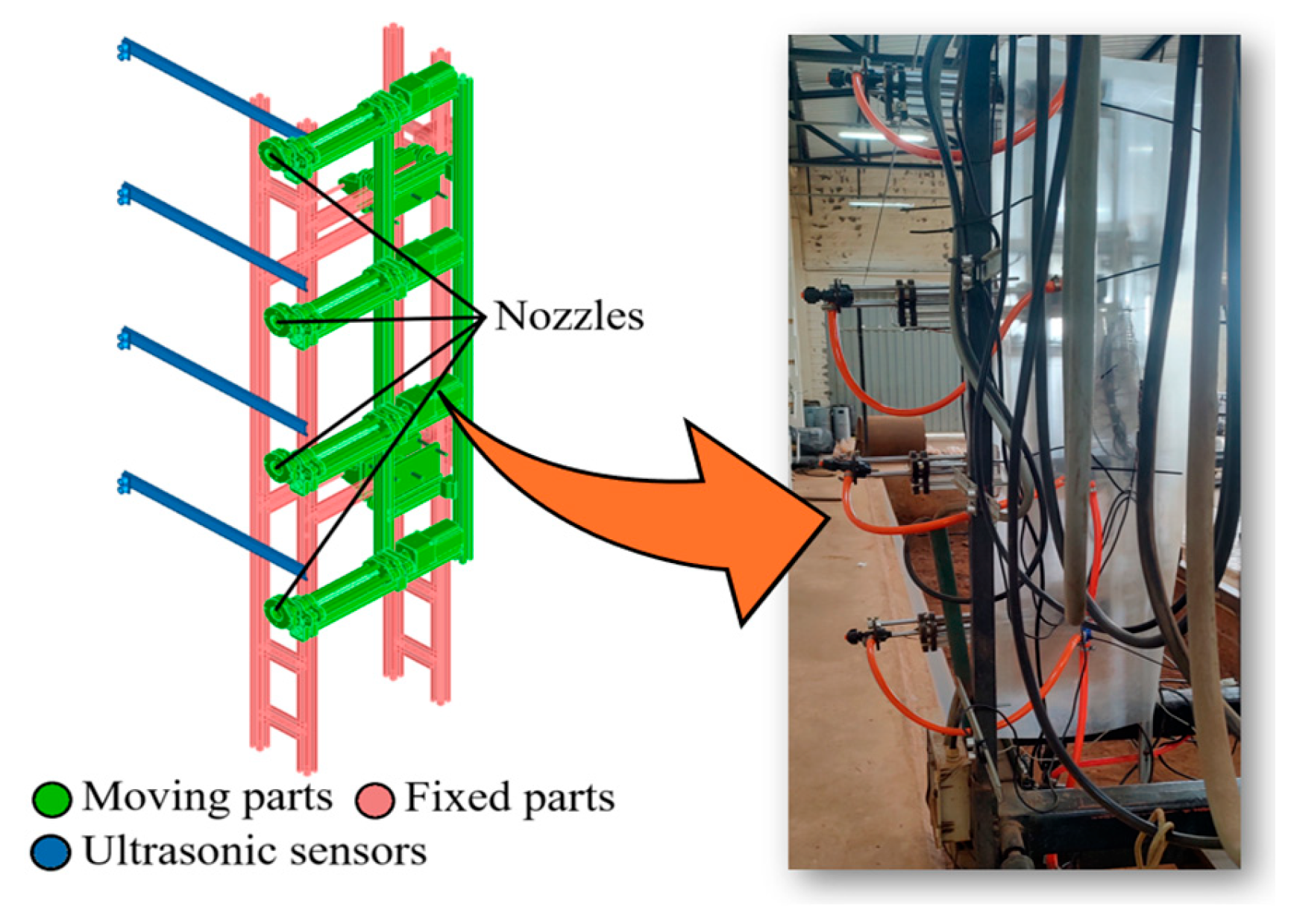
The newly developed equipment consists of a low-cost variable-rate vertical sprayer, capable of regulating the outlet flow for a segment of four spray nozzles, and maintaining the sprayed volume within the operational condition, independent of disturbances caused by speed changes. The four nozzles can be adjusted individually to maintain the distance between them and the plant canopy, with the output flow rate being simultaneously controlled by the pump control, and the flow rate being the same for all four nozzles. Therefore, from a flow rate control perspective, the system should be classified as a “system-level variable-rate spraying” system. In
Figure 1, a three-dimensional representation of the constructed sprayer is shown.
The equipment’s hydraulic system consists of an SFDP2-013-100-22 diaphragm pump (SEAFLO, Longyan, China), with a maximum flow rate of 8.5 × 10⁻⁵ m3s−1 and a maximum pressure of up to 689,476 Pascal, and a YF-S401 Hall effect digital flow meter (SEa), with a measurement range between 5 × 10⁻⁶ m3s−1 and 1 × 10⁻⁴ m3s−1 and 5880 pulses L−1. The system also has four JSF11001 (JACTO, Pompeia, Brazil) spray nozzles equally spaced every 0.38 m. These operate at pressures between 15 and 75 PSI and a flow rate that varies from 0.23 L min−1 to 0.52 L min−1.
Flow rate control was performed by adjusting the PWM signal’s duty cycle, which modified the pump’s operating voltage. The observed pressure was not sufficient to ensure proper operation of the spray nozzles for duty cycles below 67%; therefore, the duty cycle was kept above this value.
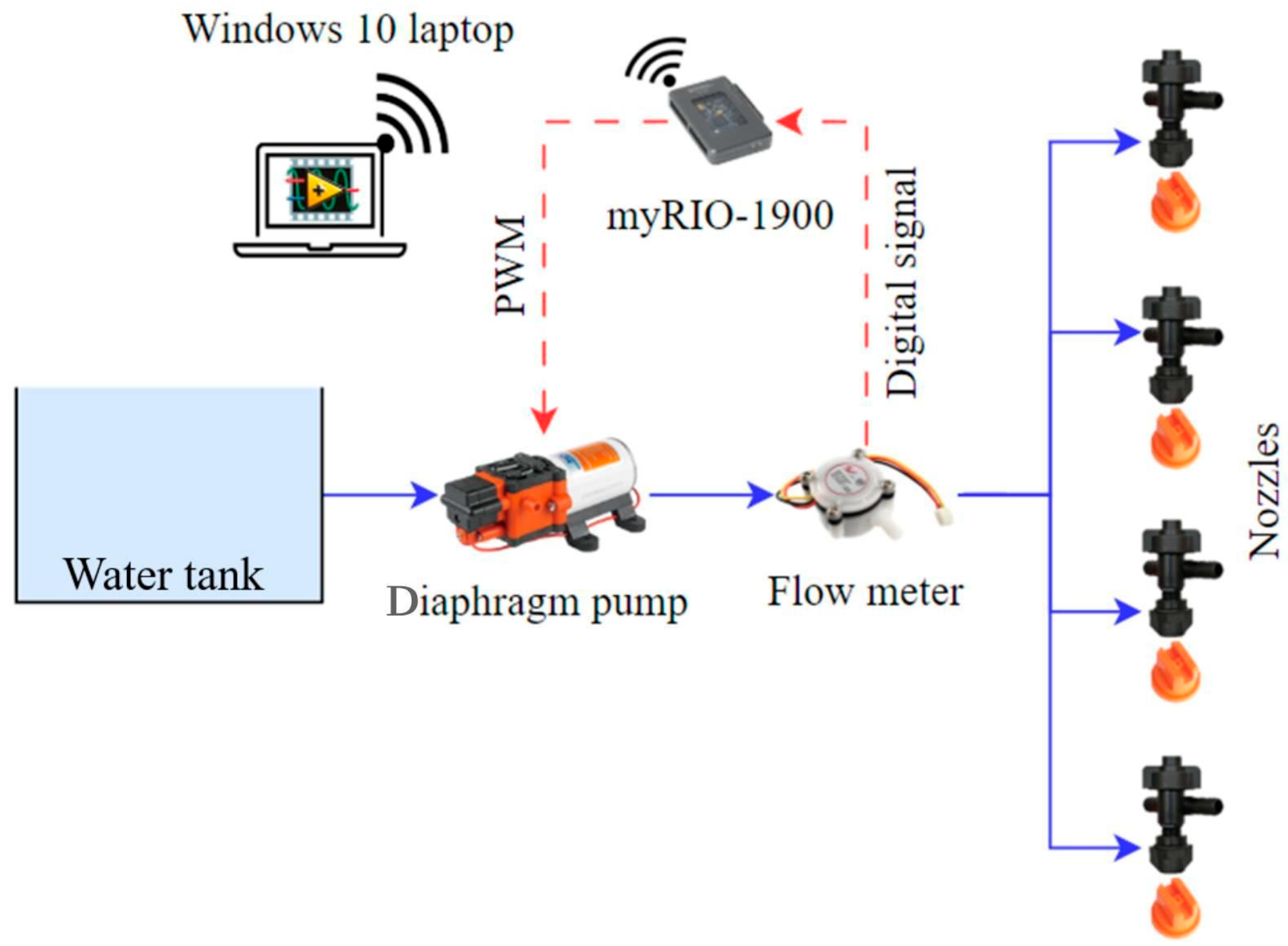
Figure 2 shows the schematic of the hydraulic and electronic circuits of the sprayer’s hydraulic system, where the arrows showcase the water flow from the tank to the nozzles.
The system was controlled by an embedded data acquisition and control device, myRIO-1900 (National Instruments, Austin, TX, USA), which features a dual-core ARM Cortex-A9 processor, analog and digital inputs and outputs, and USB and Wi-Fi connectivity. This device received and processed the digital pulse generated by the flow meter and determined the pump’s operating voltage by adjusting the PWM signal width. The myRIO-1900 board was programmed using LabVIEW myRIO version 2017 software (National Instruments, Austin, TX, USA).
2.2. Control Algorithms
Given that the literature presents examples of both open-loop and closed-loop controllers, the present work developed and evaluated the control algorithms in both configurations. The open-loop algorithms were generated from experimental data, while the closed-loop ones were tuned based on a dynamic model of the variable-rate spraying hydraulic system. All algorithms acted on the PWM signal’s duty cycle, which controls the pump and adjusts the flow rate.
In the case of open-loop algorithms, the first step was a comprehensive statistical analysis of the data to evaluate the reliability of the information obtained with the flow and volume measurement system implemented in the prototype. Subsequently, a polynomial relationship, obtained through regression analysis, was defined, which allowed estimating the appropriate duty cycle as a function of the required flow rate. This relationship was called “Polynomial Regression Algorithm”. In parallel, and from the series of flow rate data as a function of duty cycle, a Fuzzy algorithm was developed that acted as a selector of the duty cycle as a function of the desired flow rate: this was called “Open-Loop Fuzzy Control”.
The experimental data obtained and analyzed allowed developing a mathematical model to simulate the system’s operation and, from it, design and tune closed-loop controllers. With the aim of implementing a simple strategy capable of eliminating the steady-state error, an Integral controller was developed and tuned. In addition, a nonlinear controller based on a Fuzzy logic algorithm was implemented, which determined the duty cycle as a function of the error and its derivative. This controller was called “Fuzzy-PD Control with Output Integration”.
2.2.1. Polynomial Regression Algorithm
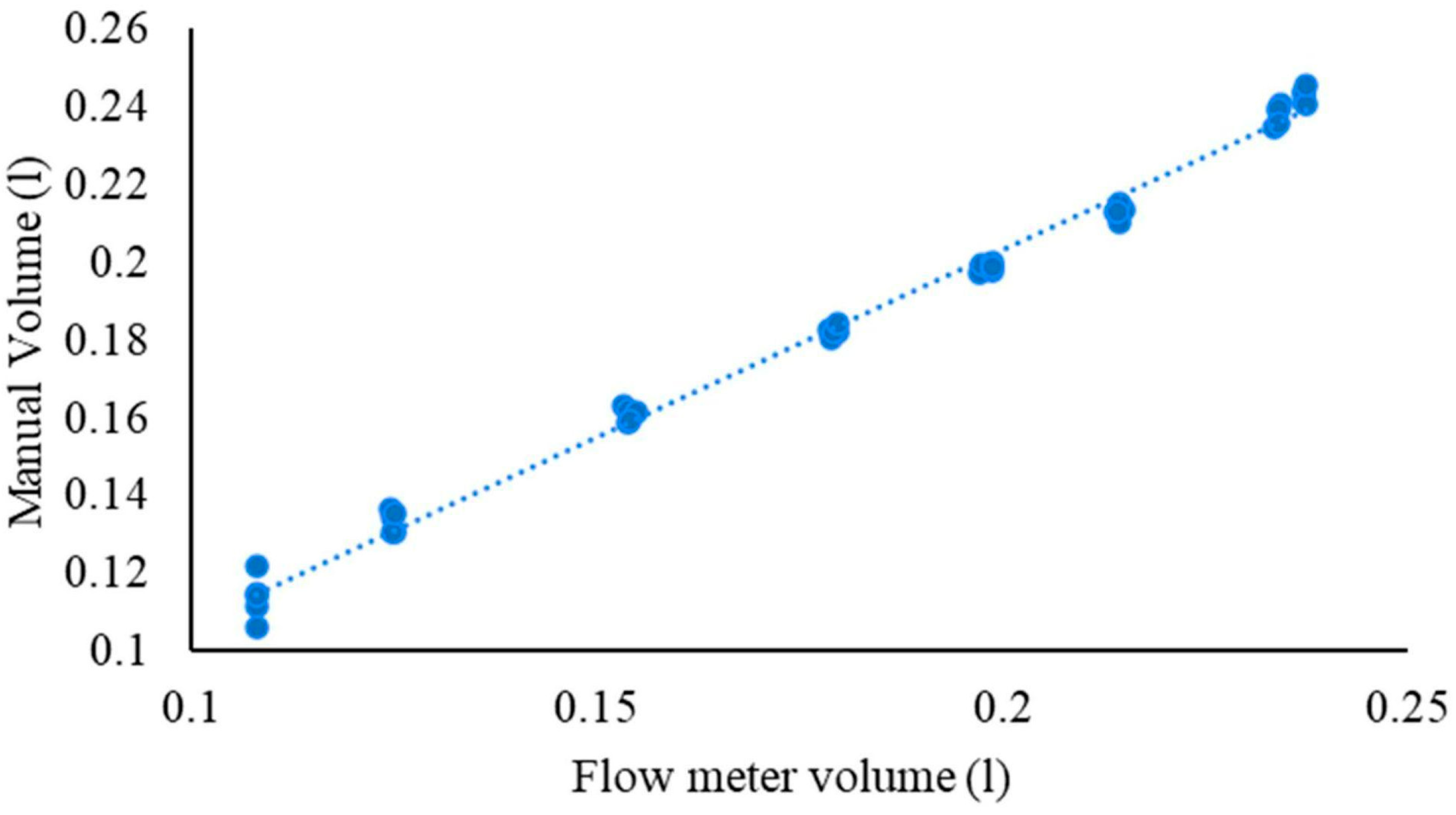
This open-loop algorithm had the objective of estimating the necessary duty cycle (output) to meet a specific flow rate demand (input). The model was developed based on the empirical relationship between duty cycle and flow rate, established from experimental data. The first step in the development of this algorithm was to obtain the data; for this, tests were carried out, in which eight duty cycles (67%, 70%, 75%, 80%, 85%, 90%, 95% and 100%) were evaluated, with tests of eight seconds each and five repetitions per cycle. In each repetition, the volume and flow rate measured by the flow meter were recorded, in addition to the values obtained by manual measurements. Subsequently, and to evaluate the quality of the information provided by the flow meter, it was verified if the correlation between manually measured volume and the estimated volume was acceptable (R
2 ≥ 0.99). A coefficient of determination of 0.993 was obtained from the linear regression shown in
Figure 3.
Subsequently, a residual analysis was performed to verify the presence of bias in the data. For this, the Shapiro–Wilk normality test was applied with a significance level of 5%, obtaining a p-value of 0.7151. This result indicated that the residuals had normal distribution, ruling out the suspicion of bias in the information. Based on the normality in the residuals, combined with the observed coefficient of determination, it was possible to confirm the quality of the data obtained through the flow meter, which allowed proceeding with the development of the algorithm.
The process continued with the analysis of the flow rate data series generated for the evaluated duty cycles. To remove outliers, the interquartile range (IQR) method with a scaling factor of 1.5 was used. Then, the Shapiro–Wilk normality test was applied with a significance level of 5%. The results indicated that none of the flow rate data series fit a normal distribution, making the use of the mean as a measure of centrality inappropriate to represent the corresponding flow rate for each evaluated duty cycle.
The abnormality in the data series can be attributed to the implementation of digital sensors in the measurement of continuous quantities, such as volume and flow rate, which results in the discretization of information. This restricts the accuracy of the measurement to the sensor’s resolution, causing all reported values to be multiples of the minimum value the sensor can measure, favoring the atypical grouping of samples around the modal value. For this reason, it was considered appropriate to use the mode as a measure of centrality for each repetition.
Table 1 shows the observed flow rate modes for each repetition.
No differences were observed between the modal values, which indicates that despite the abnormality observed in the data series, the measurement system was consistent and the behavior of the process remained stable. However, it is important to consider that stability may reflect the lack of sensitivity of the systems to small data fluctuations that were below the sensor’s resolution. Nevertheless, the resolution offered by the sensor (0.00034 L s−1) is sufficiently low for the results to be considered acceptable, confirming the reliability of the system within the established measurement parameters.
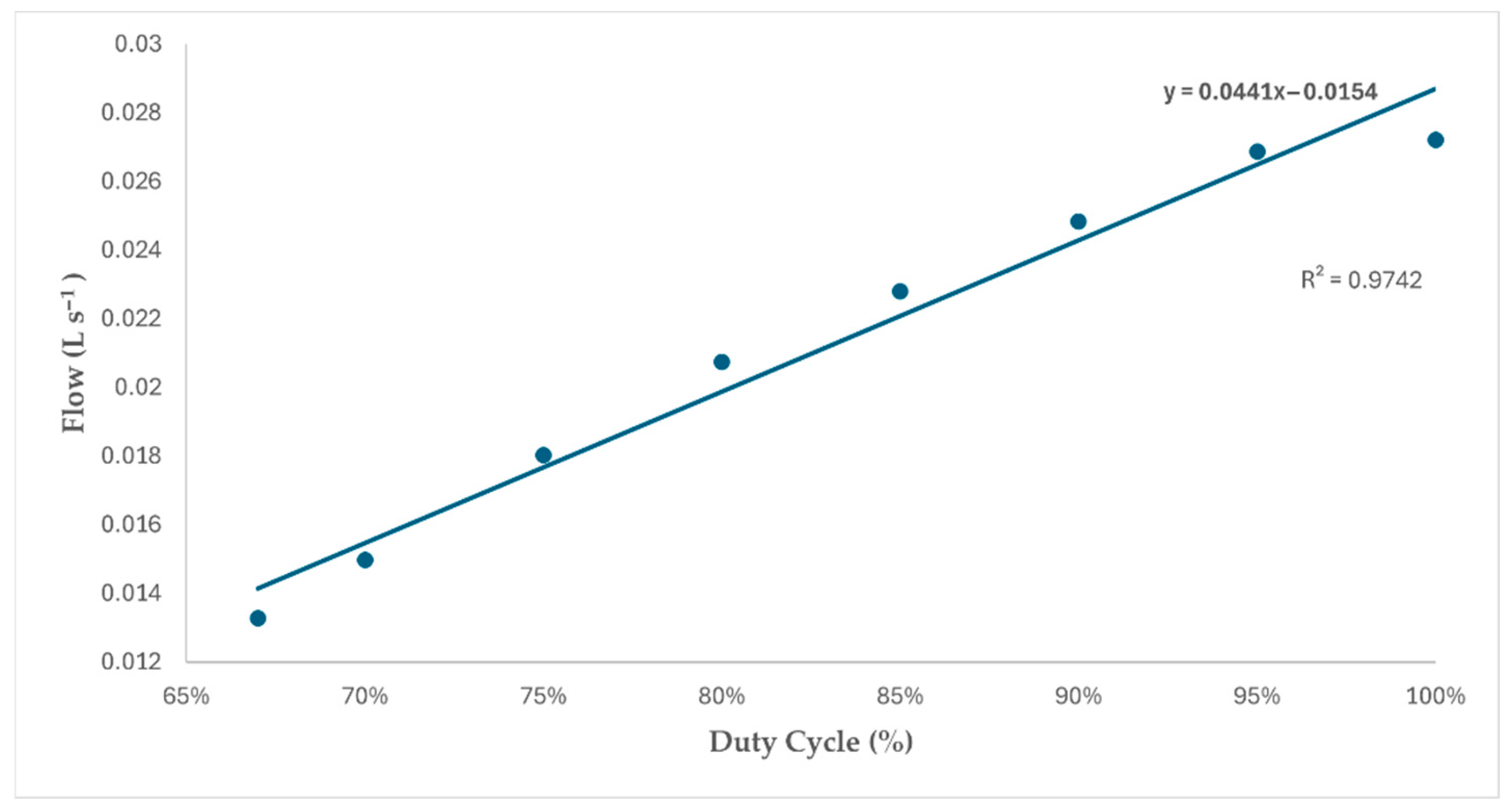
Starting with the flow rate data determined for each duty cycle, a polynomial regression analysis was performed in which the polynomial degree was modified until an acceptable coefficient of determination (R
2 ≥ 0.99) was reached, resulting in a function that calculated the required flow rate demand from a duty cycle, shown in
Figure 4.
The dynamic relationship between the required flow and the corresponding duty cycle is given by the following equation:
The observed coefficient of determination (R2 = 0.9742) indicates an adequate fit of the data to the polynomial model. To verify if the regression requirements were met and to ensure the validity of the statistical inferences, the Shapiro–Wilk normality test was applied to the residuals, with a significance level of 5%. The obtained p-value (0.6822) indicated that the residuals follow a normal distribution. Thus, considering both the normality in the residuals and the found coefficient of determination, it was possible to state that the created model is appropriate to describe the relationship between duty cycle and flow rate.
2.2.2. Open-Loop Fuzzy Control
Based on the flow rate and duty cycle data recorded in
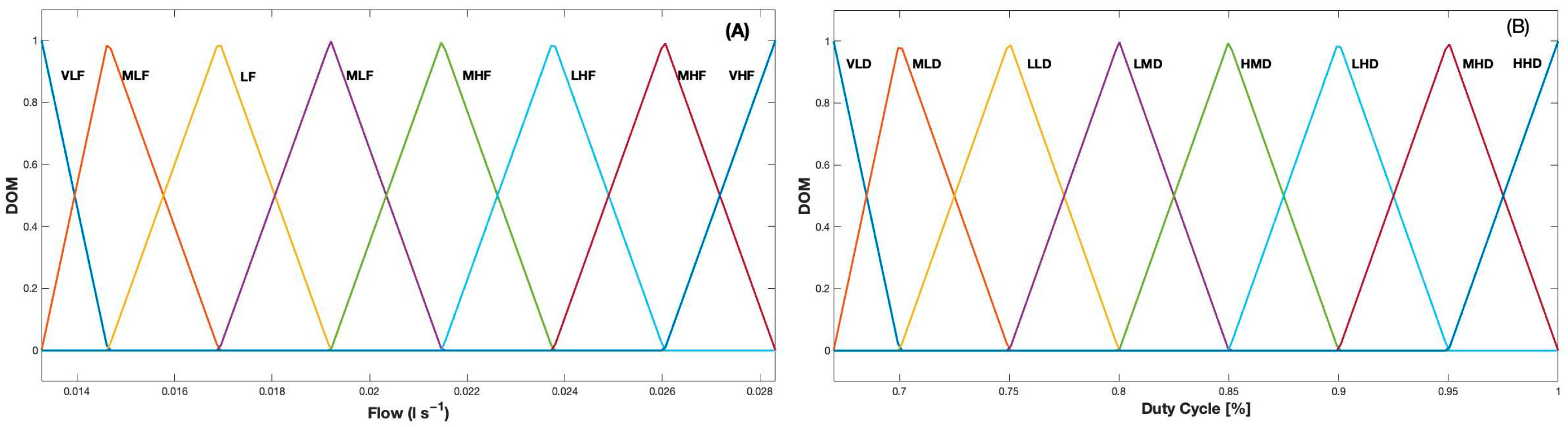
Table 1, a Fuzzy algorithm was developed, following Mamdani’s methodology, to determine the appropriate duty cycle (output) from a required flow rate (input). For the eight evaluated duty cycles, eight triangular membership functions were defined, both for the input and for the output, which assigned the degree of membership (DOM) to the system variables, as shown in
Figure 5.
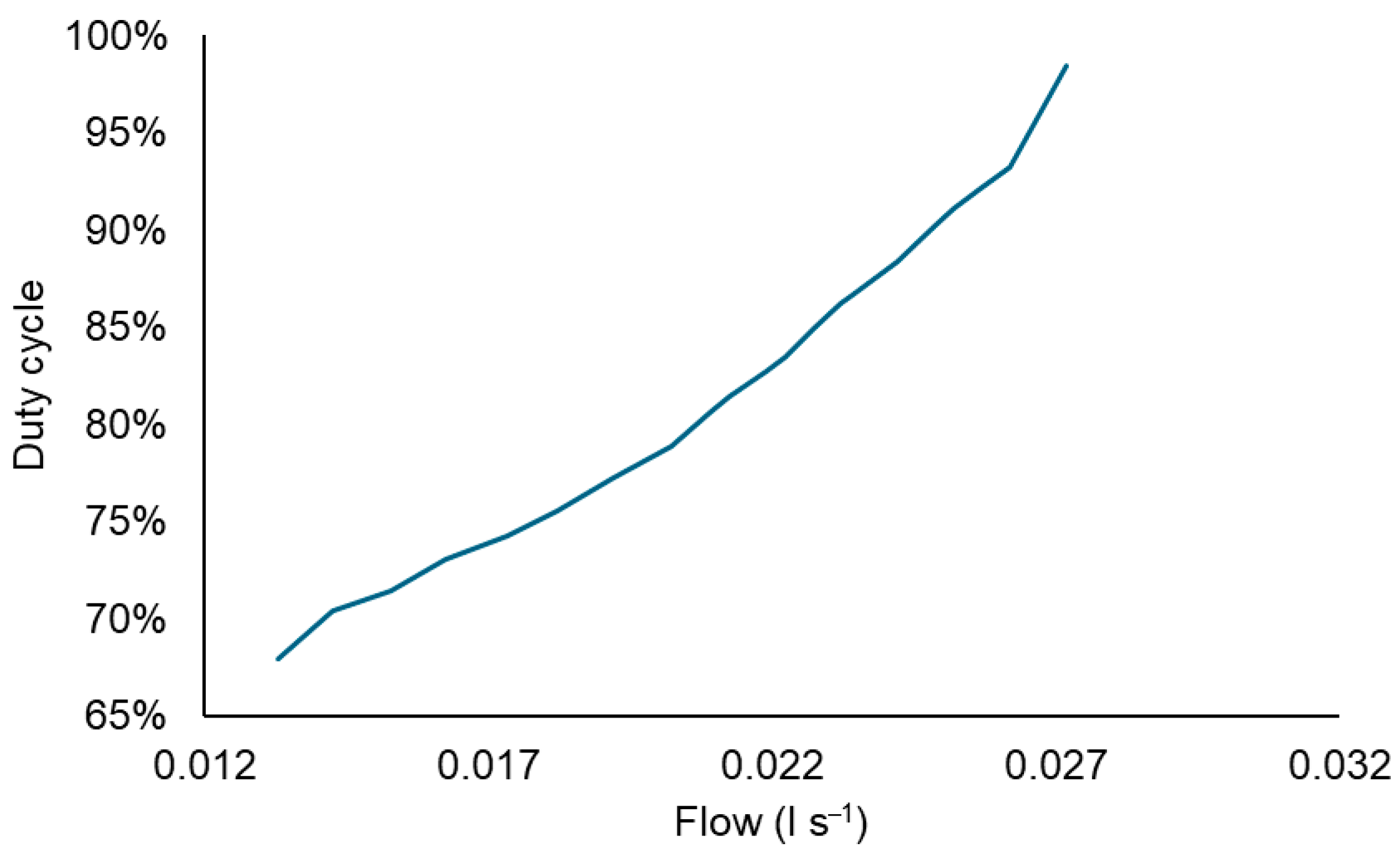
To describe the relationship between input and output, a simple rule base was implemented, with each one following the form: if INPUT = A% ⇒ then OUTPUT = A%. This resulted in the relationship between the duty cycle and the required flow rate presented in
Figure 6.
In the controller, the minimum implication method, the maximum aggregation method, and centroid defuzzification were implemented.
2.2.3. Integral Control
An Integral controller was implemented in parallel, adjusted to the expression shown below.
The algorithm was tuned to optimize the response under the most extreme operating conditions. For this, a step-type disturbance was used as input, in which the required flow rate varied from the minimum (0.013265 L s−1) to the maximum (0.027211 L s−1). The plant used was a dynamic model of the hydraulic system. Tuning was performed using Simulink’s Integral controller tuning tool (Maltalb 2021b), seeking to achieve a balance between the speed and robustness of the response. Thus, the Integral gain was adjusted to 25.154.
2.2.4. Fuzzy-PD Control with Output Integration
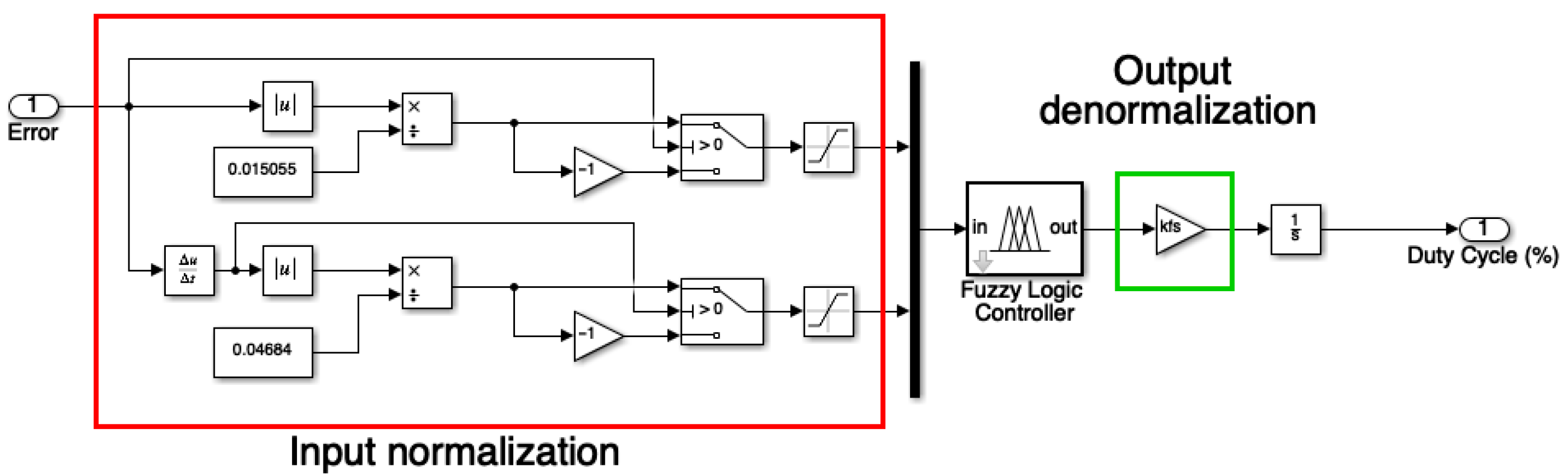
This control strategy is based on a Fuzzy-PD algorithm, with two inputs (error and the derivative of the error) and a single output. This output was integrated over time, generating the control signal applied to the actuator. Both inputs and output were normalized in the interval from −1 to 1. In
Figure 7, the block diagram of the Fuzzy-PD controller with output integration is shown.
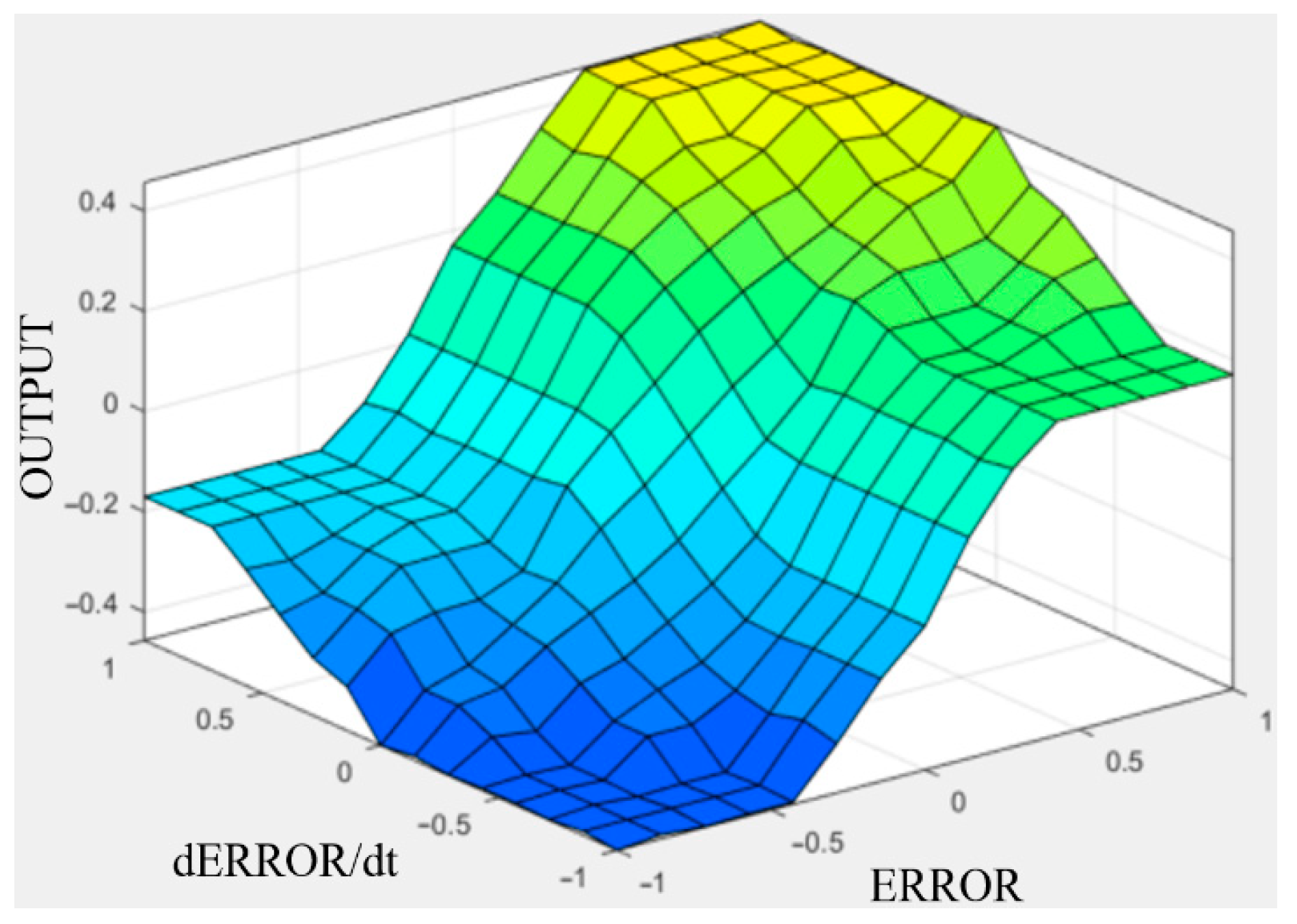
For the Fuzzy algorithm, Mamdani’s methodology applied to Fuzzy-PD controllers was implemented. Seven equally spaced triangular membership functions were employed (LN, MN, SN, ZR, SP, MP, LP) in the normalized interval for both the inputs and the output. Fuzzy inference was performed using the AND method based on the minimum value, minimum implication, maximum aggregation, and centroid defuzzification. The rule base describing the dynamics between inputs and outputs is represented by the surface illustrated in
Figure 8.
Finally, the value of the denormalization factor (Ksf), which multiplied the output of the Fuzzy-PD algorithm, was determined. This was reached through an iterative process, performed with the custom limit checking tool of Simulink’s design optimization toolbox. This type of iterative process is commonly applied in Fuzzy controller tuning (Mitra et al., 2013 [
18]). The tool adjusted the value of Ksf to maximize performance, yielding Ksf = 0.33. In this process, a dynamic model of the hydraulic system was used as the plant (as detailed in the corresponding section).
Although Fuzzy-PD with output integration is a nonlinear alternative to conventional linear controllers for this application and an established control technique, its application in a vertical sprayer prototype specifically designed for family farming represents a significant practical innovation. By incorporating the derivative of the error, the controller provides anticipatory action against speed-compensated rate control for smallholder contexts. This approach proves that advanced non-linear algorithms can be successfully deployed on low-cost hardware to achieve high-precision application standards.
2.2.5. Redesign of Open Loop Algorithms
The open-loop algorithms were designed based on experimental data, while the closed-loop algorithms were developed and tuned using a mathematical model that, although providing a good representation of the hydraulic system, could not exactly adjust to the dynamics observed in the experimental data. This difference in design conditions made it necessary to redesign the open-loop algorithms using data generated directly by the model. This approach allowed comparing the performance of open-loop algorithms with closed-loop controllers under equivalent simulation conditions.
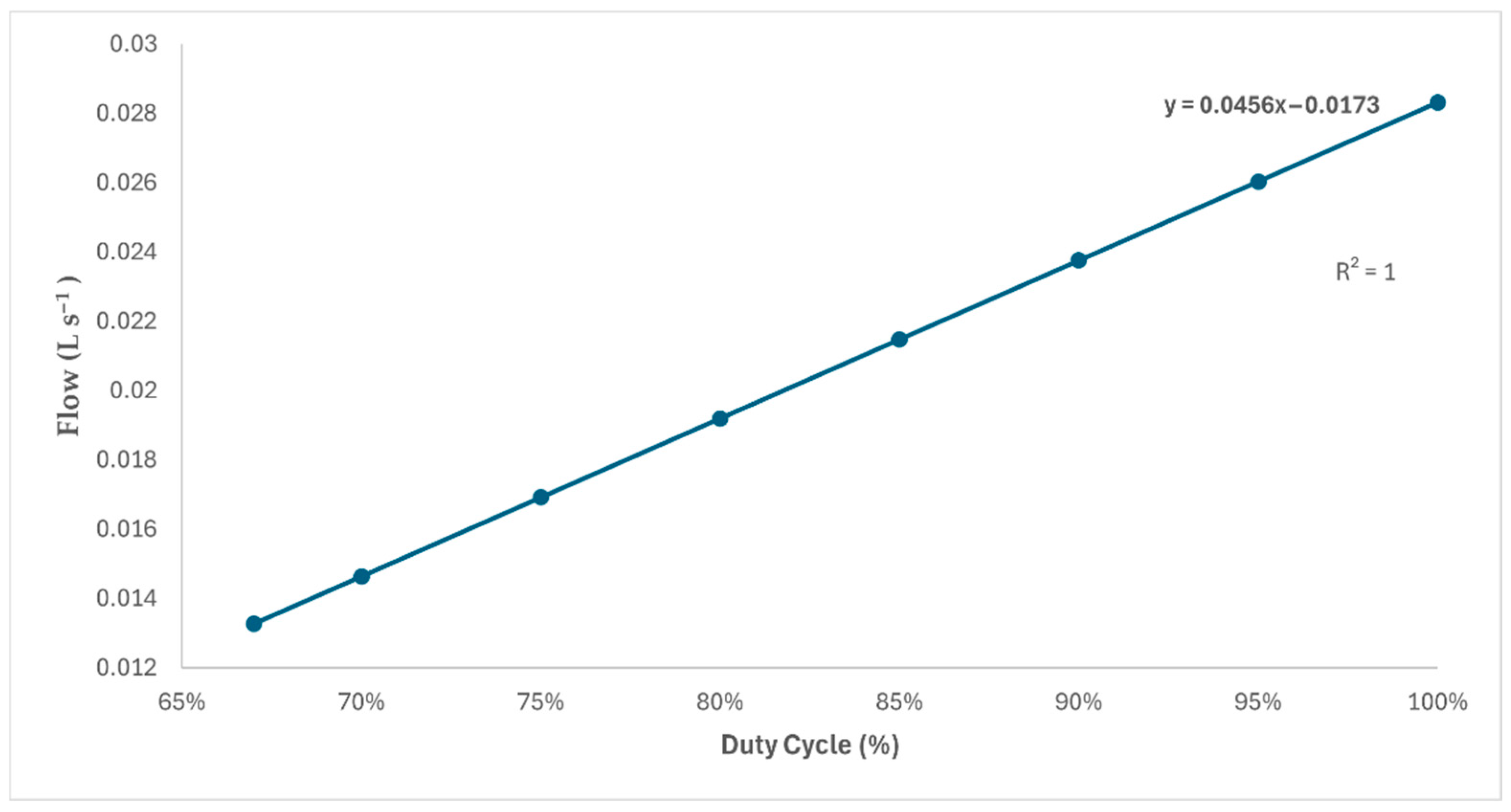
For the polynomial regression algorithm, the flow rate values delivered by the model for eight duty cycles (67%, 70%, 75%, 80%, 85%, 90%, 95% and 100%) were calculated. Subsequently, a linear regression analysis was performed, considering the duty cycle as a function of the flow rate. The redesign of the regression algorithm is presented in
Figure 9.
The relationship between the required flow and the corresponding duty cycle for the redesign of the regression algorithm is given by the following equation:
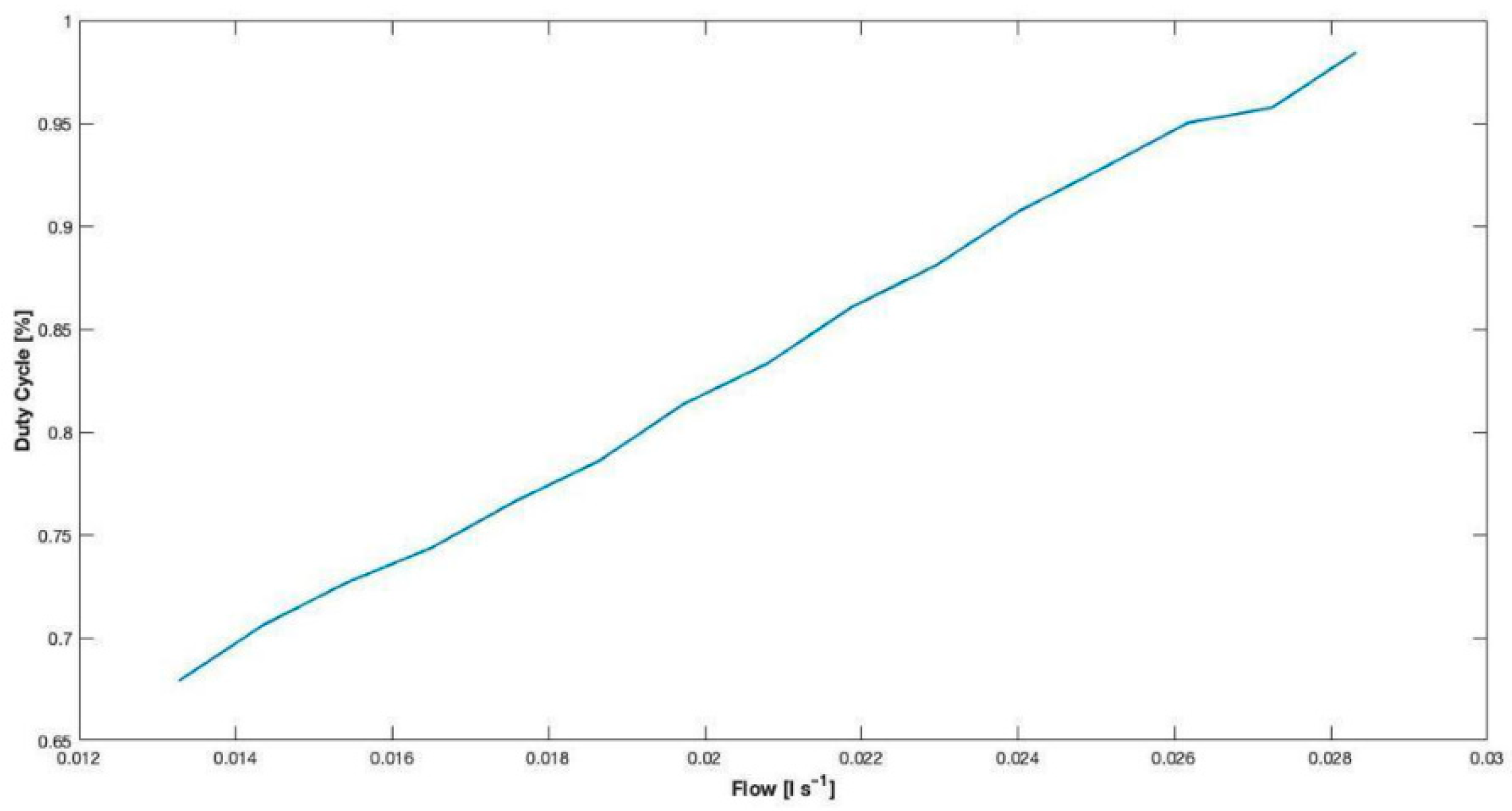
Using the duty cycle and flow rate data generated from the model, the membership functions of the open-loop Fuzzy algorithm were redesigned, maintaining the same rule base. This resulted in the input–output relationship presented in
Figure 10.
2.2.6. Performance Evaluation of Control Strategies
For the performance evaluation of the developed control strategies, a dynamic model was used that described the relationship between the PWM signal’s duty cycle and the flow rate delivered by the spray nozzles. This model was obtained using the System Identification Toolbox (SIT) of MATLAB software, version 2021 (MathWorks, Natick, MA, USA). This tool enables the estimation of mathematical models of dynamic systems from experimental data. This tool was used successfully in the modeling of flow adjustment systems by Assani et al., 2022 [
10].
For experimental data acquisition, the myRIO-1900 device was configured to modify the PWM signal’s duty cycle at 10 s intervals, recording the flow rate. This procedure was repeated three times, generating three data sets. The first two were used for model development, while the third was reserved for its validation.
Table 2 presents the duty cycle variations implemented to obtain the flow rate data.
The flow rate and duty cycle data series were pre-processed before being used in the SIT. For the tests, variations were considered relative to the minimum point at which the pump would operate (67%); that is, the value corresponding to 67% of the duty cycle (1.33 × 10
−2 L s
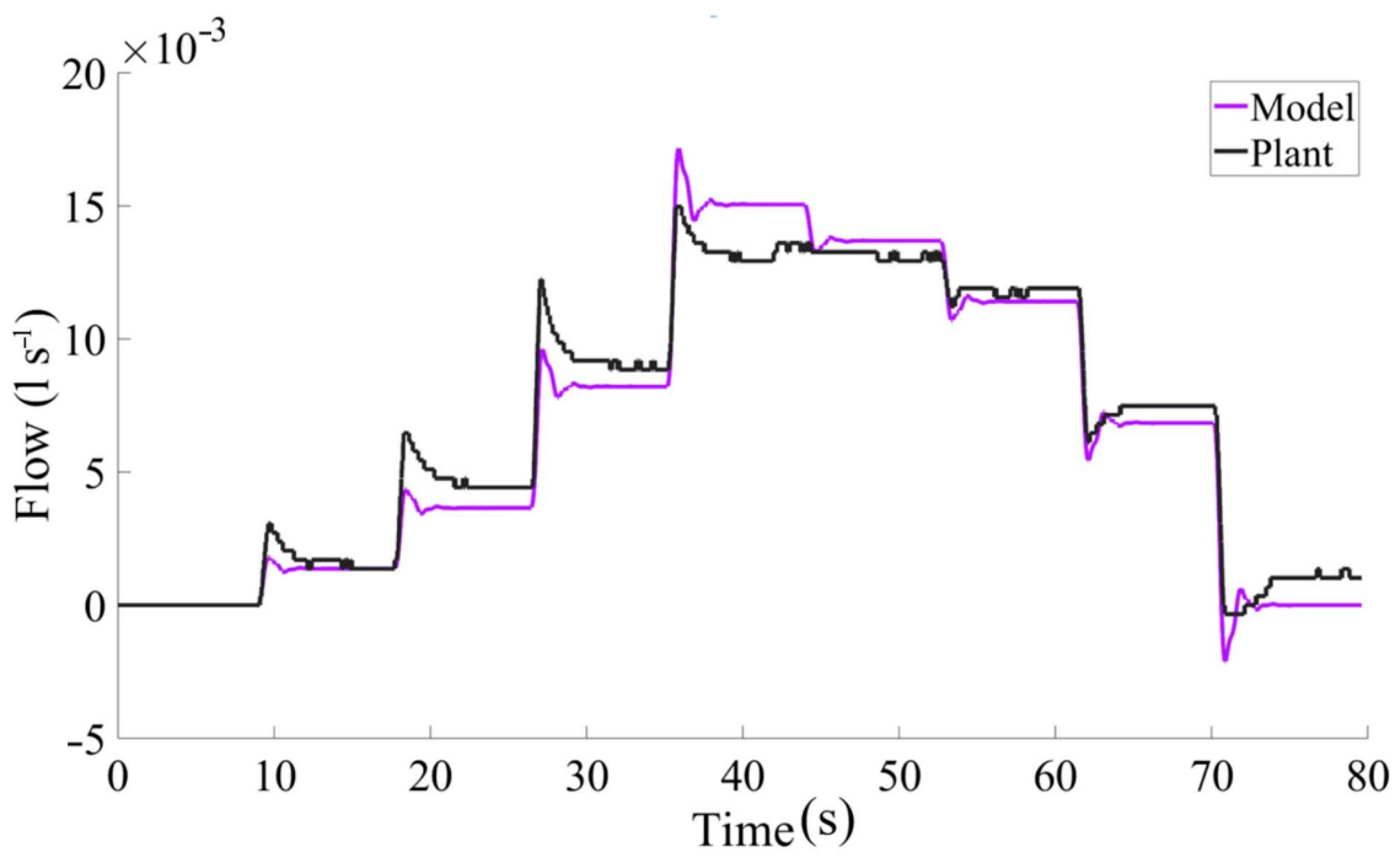
−1) was subtracted. The processed data were loaded into the SIT and adjusted to a transfer function. The number of poles and zeros was adjusted iteratively to optimize the model fit on the validation data, as presented in
Figure 11. This technique is common in the literature, and a similar approach is used by Assani et al., 2022 [
10].
The model that achieved the best fit on the validation data (81.23%) was a fourth-order transfer function. This is relatively simple, compared to the results presented in the work of Assani et al., 2022 [
10], in which they adjusted the behavior of a flow adjustment system to a transfer function, resulting in a transfer function with 13 poles and 9 zeros, which achieved an adjustment for the validation data of 91.2%. A higher-order model could improve model fit, but it could also overfit the validation data and fail to represent the real scenario; therefore, the fourth-order model was selected to ensure generalization.
Adding the processing of the inputs and summing the minimum flow rate, the model implemented for the simulations is shown in
Figure 12.
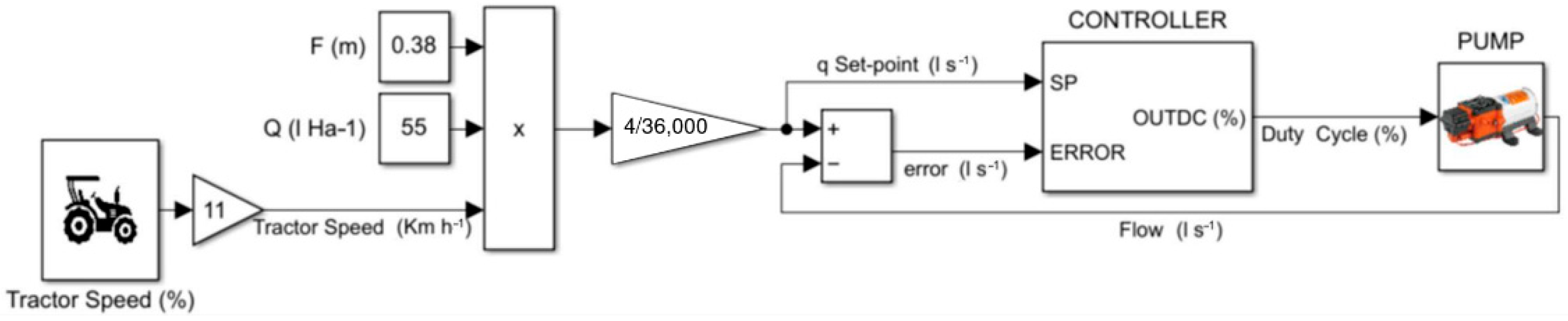
Next, for the creation of the spraying process model, the required flow rate per nozzle (
q, in L s
−1) was calculated as a function of the target spray volume (
Q, in L Ha
−1), the spacing between spray nozzles (
F, in m) and the travel speed (
, in km h
−1), through the following equation:
The spacing between spray nozzles (
F) was defined as 0.38 m, while the application volume (
Q) was established at 55 L ha
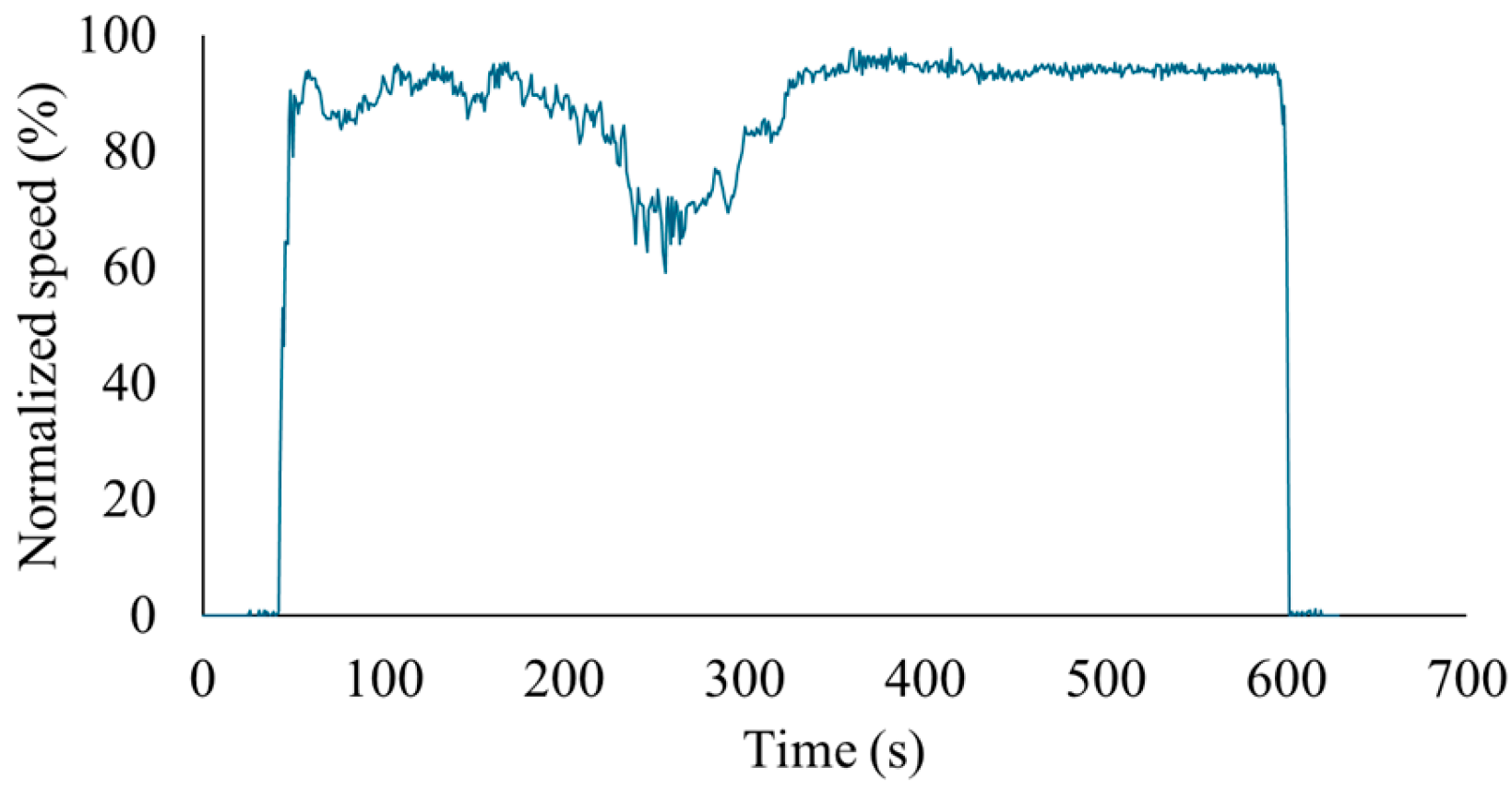
−1. To simulate the operating speed, the series of normalized speed values for agricultural tractors made available by the United States Environmental Protection Agency was used, as presented in
Figure 13. Once the speed profile reflected the typical behavior of agricultural machines in a similar case, we selected the maximum speed of 11 km h
−1 as the reference point for denormalization, as this value is representative of maximum speed in small farm scenarios. The speed was used by De Sousa Júnior et al. (2017 [
19]) in a study on determining the volumetric spray index for coffee cultivation. The normalized speed series is presented in
Figure 13.
The objective of this system was to maintain a constant spray volume (
Q) by adjusting the nozzle’s flow rate (
q).
Figure 14 shows the block diagram of the model used to simulate the spraying process.
The “PUMP” block represents the dynamic model of the relationship between the duty cycle and the flow rate delivered by the nozzles, while the “CONTROLLER” block represents the different control algorithms already described.
The performance evaluation of the controllers was performed in 630 s simulations for each algorithm, recording the final value of the Integrated Squared Error (ISE) and the total volume of product applied. The ISE avoids the cancelation of positive and negative errors and rigorously penalizes the occurrence of relatively large errors (Wand and Jones, 1994 [
20]).
The ISE can be used to tune control algorithm parameters and to directly indicate response speed, overshoot percentage, and settling time in certain types of systems. For this reason, the ISE is widely used as a performance index for tuning and performance analysis of control strategies (Wand and Jones, 1994 [
20]) and is also useful for comparing different algorithms. Algorithm optimization based on the ISE has shown satisfactory results, especially in systems with integrative characteristics (Clark, 1961 [
21]), offering more effective responses compared to those obtained with other criteria, such as the Integral of the absolute error (IAE) and the time-weighted Integral of the absolute error (ITAE) (Schutz, 2024 [
14]).
Some authors suggest that, in certain cases, this index can serve as an indirect measure of the rise time and the percentage overshoot of the controlled variable (Clark, 1961 [
21]). The
ISE was calculated by the equation:
The calculation of the ISE was restricted to the moments when the speed was greater than For equal to 5 km h−1. This is because, for low speeds, the required flow rate was lower than the minimum possible flow rate to be simulated, resulting in an increase in the ISE in a situation in which the controller had no influence on the process.
Finally, a constant flow rate spraying simulation was conducted to compare spray volume (Q) values, both with and without control, and the corresponding volumes of product applied under each condition. The fixed flow rate (0.020134 L s−1) was defined based on the average speed of the series (8.67 km h−1). The algorithms operating in open-loop and closed-loop were compared.
3. Results and Discussion
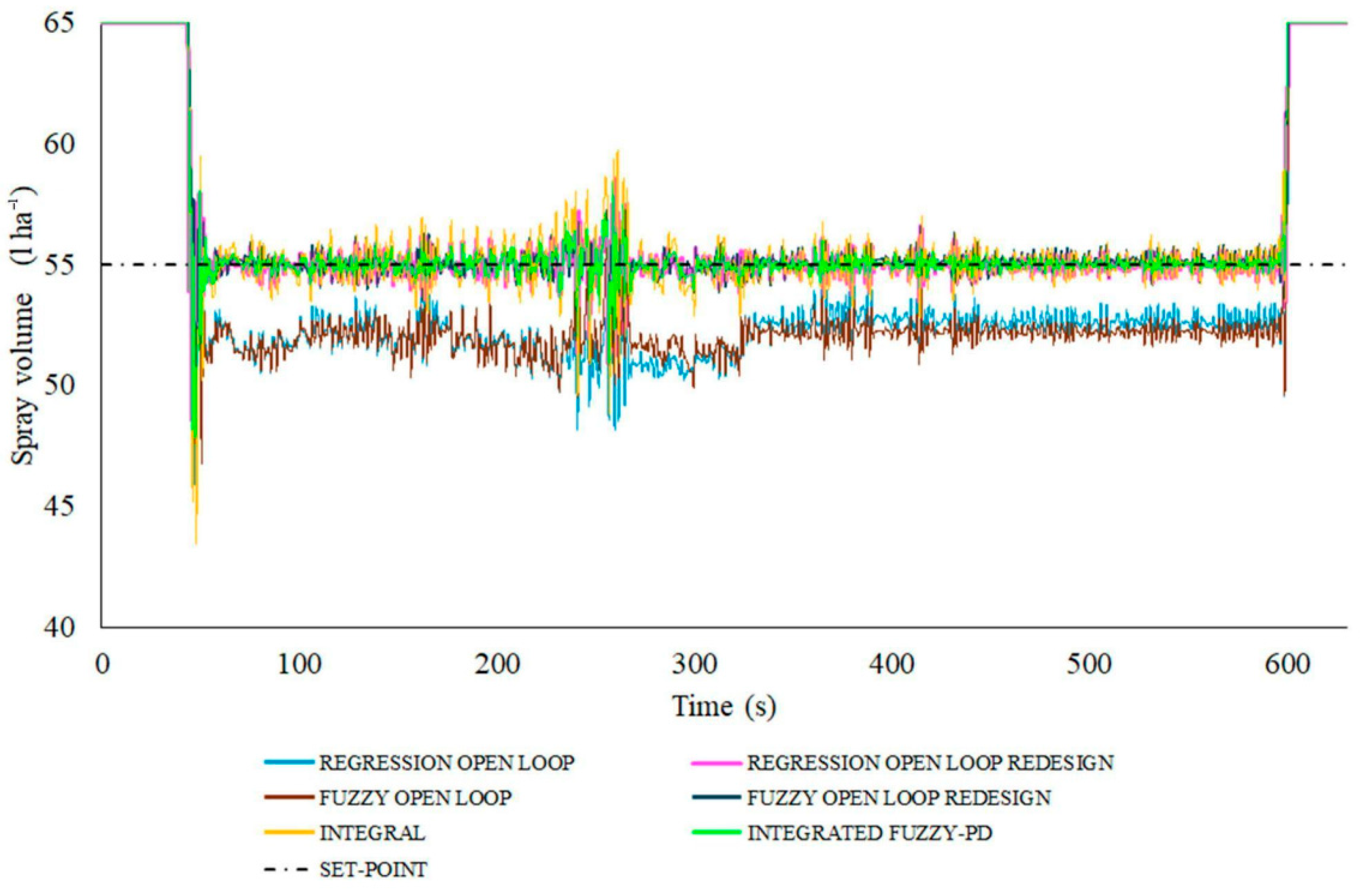
The Integral, Fuzzy-PD with output integration, redesigned regression algorithm, and redesigned open-loop Fuzzy algorithm were able to maintain the defined spray volume (55 L ha
−1), adjusting the flow rate in response to variations in travel speed. As expected, the open-loop algorithms, based on experimental data, failed to achieve this objective, as shown in
Figure 15.
The unsatisfactory performance of the algorithms designed on experimental data is due to their evaluation of a model that did not exactly reproduce the experimental data. Although the present work did not include the implementation and evaluation of these algorithms in the sprayer’s hydraulic system, their performance is expected to be superior to that observed in the simulations. The results of Guzman et al. (2004) [
8] demonstrated a good correlation between mathematical models adjusted from experimental data and values measured directly on the plant.
The open-loop algorithms were redesigned using the validated mathematical model to ensure parity during comparison. This methodological choice isolates the control system algorithm from potential modeling discrepancies, allowing for a rigorous evaluation of each control strategy’s intrinsic performance under the same simulated conditions.
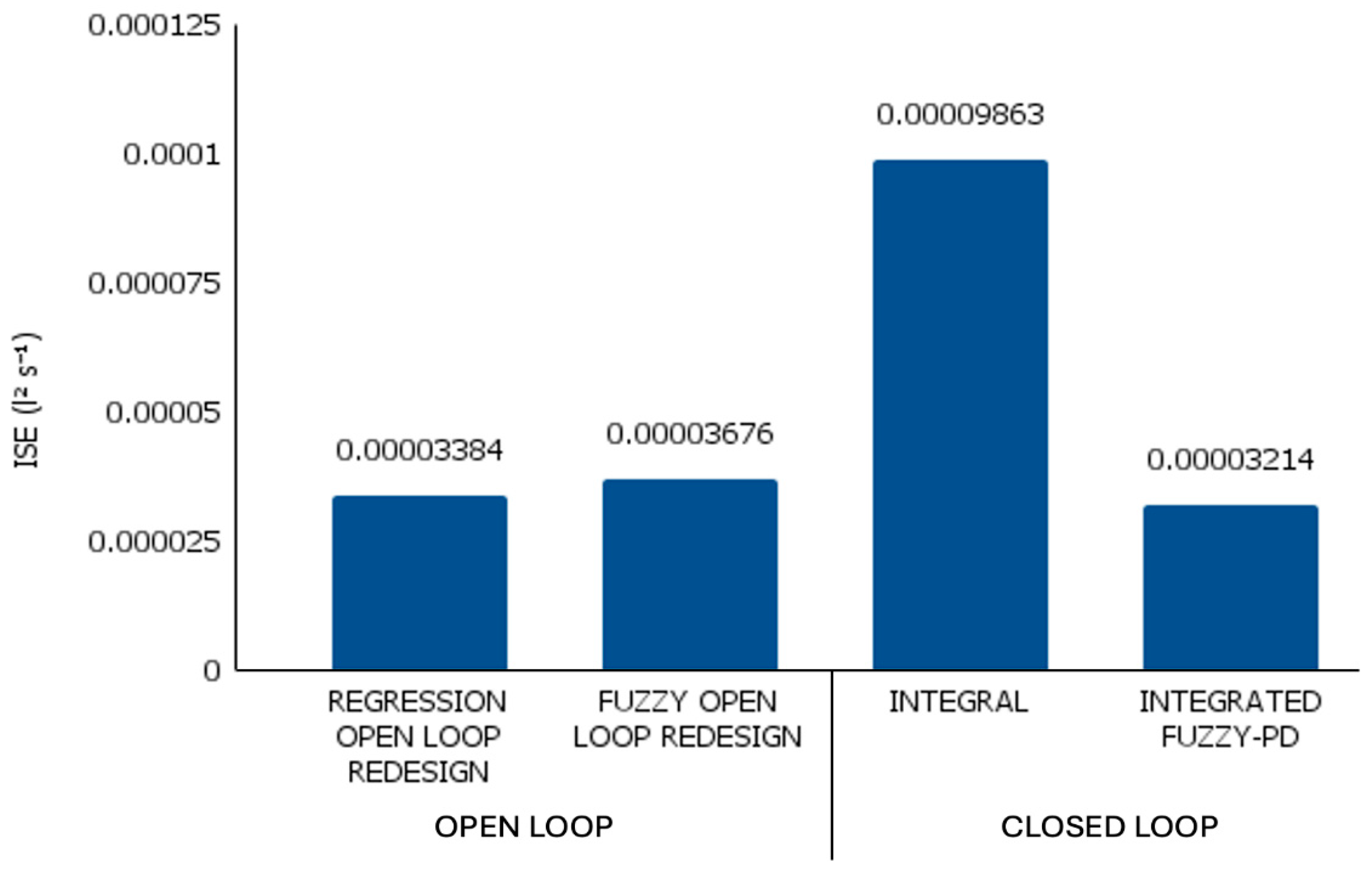
Given this, the open-loop algorithms created from experimental data were not considered in the performance analyses, and the open-loop algorithms were represented by their redesigns, based on information generated from the model. The performance evaluation results are presented in
Figure 16.
The ISE can be used as a metric for the deviation of the applied value from the desired value; thus, a high ISE value indicates that the application was not uniform, possibly indicating an excess of product applied or a lack of it in other areas.
As observed in
Figure 16, open-loop algorithms allow for good performance under ideal conditions, as the adjustment is made based on previously established relationships. In addition, they require less computational capacity and simpler implementation, as they do not depend on real-time sensors for system monitoring. However, they are unable to compensate for unexpected variations, such as clogged spray nozzles, component wear, variations in spray mixture viscosity, pressure fluctuations, or eventual actuator failures. Additionally, water hammer effects induced by PWM actuation in the pipeline can jeopardize the flow uniformity and cannot be tracked by the open-loop controllers. This and other problems caused by PWM that impact open-loop performance are described by Orti et al., 2022 [
7].
Given these limitations, the implementation of closed-loop algorithms in variable-rate spraying systems is preferable to open-loop strategies.
Traditionally, Fuzzy controllers perform better than linear controllers such as PID, PD, or PI, due to their nonlinear nature (Chao et al., 2017 [
22]). This was proven by the presented performance results, which are in accordance with those of Schutz et al., 2024 [
14]. In this work, the nonlinear control methodologies also surpassed the performance achieved by the linear algorithms.
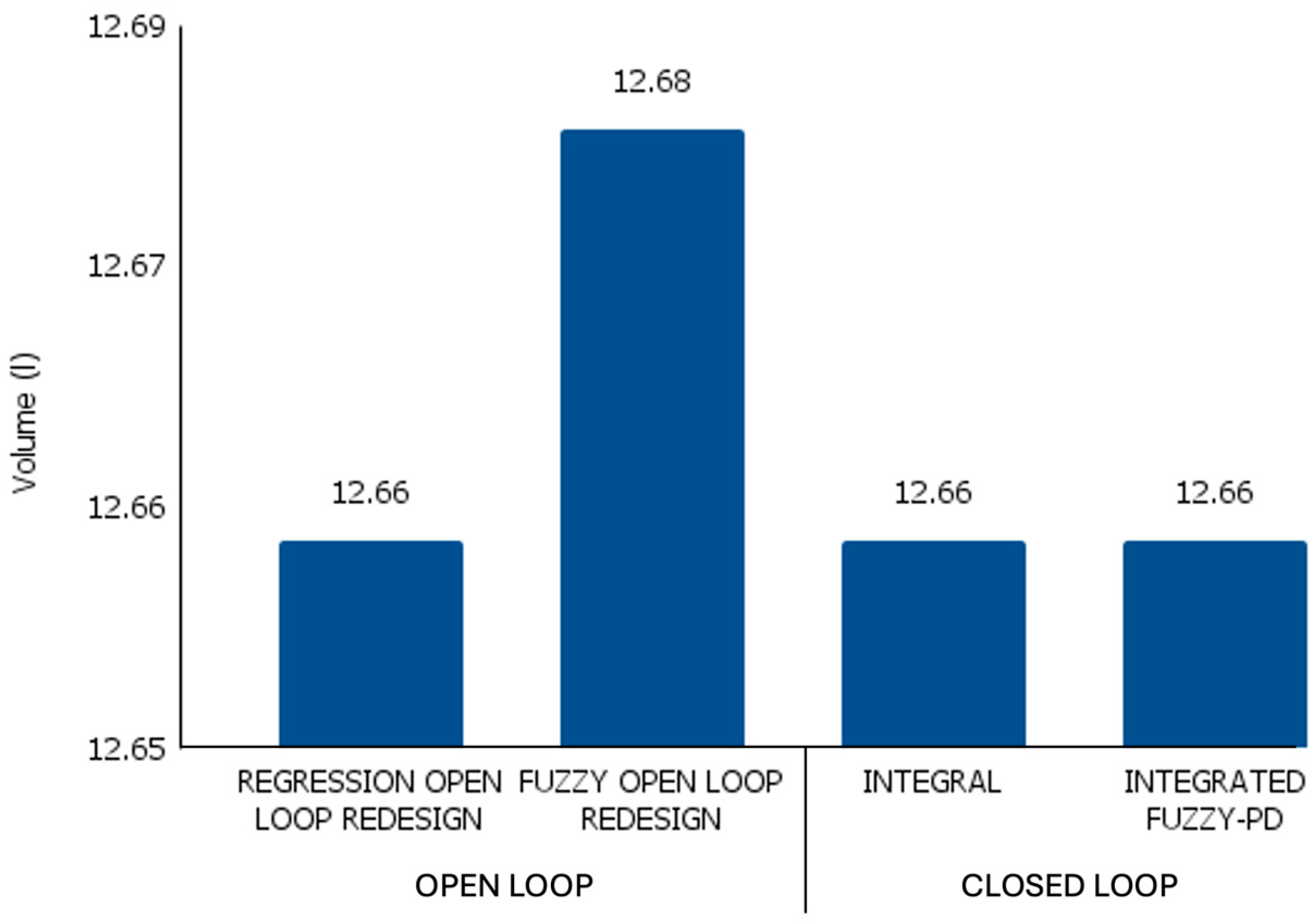
Although the performance varied across the algorithms evaluated, the applied volumes (
Figure 17) indicated that, in general, these algorithms maintained similar flow rates over time. However, the algorithms that achieved better performance, together with a lower applied volume, were the ones that proved to be more efficient (regression open loop and integrated Fuzzy-PD).
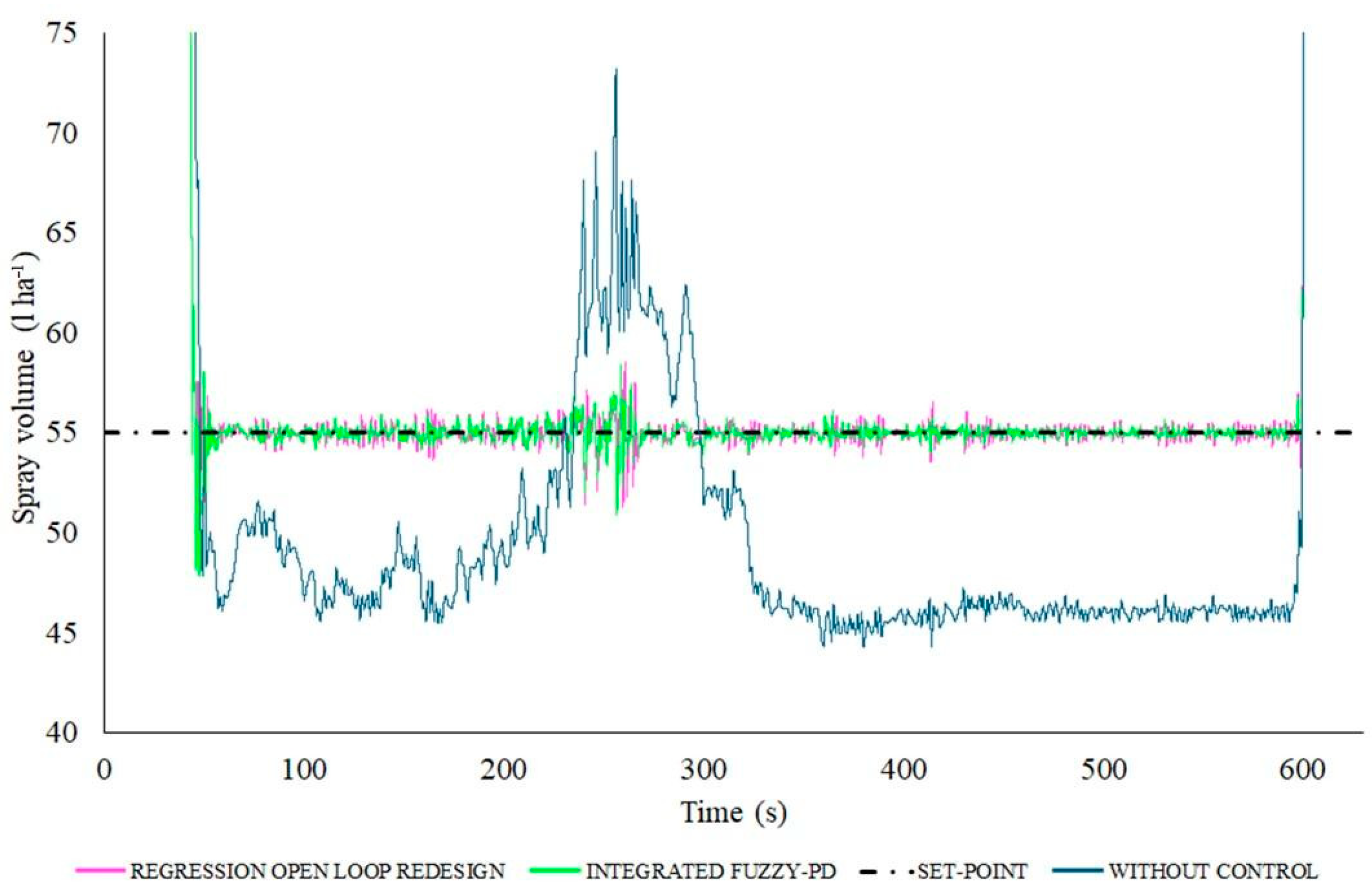
The simulation results for a constant flow rate application, compared with those obtained for the two best flow rate adjustment strategies, are presented in
Figure 18. One can observe that both controllers outperform the uncontrolled case, even around 250 s. In this case, the open-loop and integrated Fuzzy-PD controllers achieved an overshoot of approximately 6%, whereas the uncontrolled system achieved an overshoot of approximately 35%.
Application based on a rate calculated from a fixed nominal speed of 8.67 km h
−1 resulted, for the most part, in a spray volume below the defined set-point. In addition, there was an 11.45% reduction in product use compared with the system operating in open loop and with the simulated speed variation profile. Because the open-loop system does not correct the application rate, there is a possibility of applying larger or smaller quantities than required. In
Figure 18, it can be observed that during 50–230 s and 300–600 s, less than the recommended amount was applied, whereas during 230–300 s, a higher quantity of product was applied. However, this saving occurred at the expense of spray quality at times when the observed spray volume was lower than the set-point, which can compromise distribution uniformity, result in coverage failures, and, consequently, reduce the biological effectiveness of the treatment (Nuyttens et al., 2004 [
23]) and negatively impact crop yield (Alam et al., 2020 [
3]). On the other hand, in periods when the spray volume exceeded the set-point, there was a waste of goods.
Generally, when spraying optimization is approached from the perspective of reducing input use, the flow rate is adjusted based on morphological characteristics of the canopy obtained by electronic sensors, the most used being ultrasonic distance sensors (Dou et al., 2021 [
24]; Maghsoudi et al., 2015 [
25]) and laser-based sensors (LiDAR) (Liu et al., 2022, 2025 [
6,
26]). These technologies reduce the volume of product used, operational costs, risks to workers and environmental impacts of agricultural activity, ensuring efficient use of agrochemicals (Abbas et al., 2020 [
27]).
4. Conclusions
This work presents the concept and control of a new vertical sprayer suitable for agricultural crops, including coffee and citrus. The system controls the pump flow rate and, consequently, the flow rate through the four spray nozzles, using a model that employs four distinct control strategies.
Comparing the performance of the open-loop Fuzzy, Polynomial Regression, Integral, and Fuzzy-PD with output integration algorithms in controlling spray volume in response to variations in travel speed, it was observed, through simulations, that the Integral-Fuzzy-PD algorithm stood out as the most superior: it presented the best performance, while also resulting in the lowest total volume of agrochemicals applied, among the evaluated control strategies. The results indicated that, compared with the application based on rates calculated from fixed nominal parameters, the developed sprayer improves spray mixture distribution in the field.
The open-loop strategy also performs well, but it cannot compensate for speed fluctuations; therefore, it is not recommended when this represents a problem. Although more complex and computationally more expensive, the Integral-Fuzzy-PD algorithm is the best analyzed choice because it is capable of handling speed fluctuations and reducing variations in product distribution.




 ,
,