Article

Performance Assessment of Fluidized Bed Drying System for Enhancing Drying Efficiency and Quality of Parboiled Rice


by
Josiah Ojeniran
1,
Griffiths G. Atungulu
2 and
Kaushik Luthra
1,3,*
1
Department of Biological and Agricultural Engineering, University of Arkansas Division of Agriculture, Fayetteville, AR 72701, USA
2
Department of Food Science, University of Arkansas Division of Agriculture, Fayetteville, AR 72704, USA
3
Northeast Rice Research & Extension Center, University of Arkansas Division of Agriculture, Harrisburg, AR 72432, USA
*
Author to whom correspondence should be addressed.
AgriEngineering 2026, 8(3), 78; https://doi.org/10.3390/agriengineering8030078

Submission received: 13 December 2025 / Revised: 5 February 2026 / Accepted: 20 February 2026 / Published: 24 February 2026
(This article belongs to the Section Pre and Post-Harvest Engineering in Agriculture)

Abstract

Parboiling improves rice-milling performance and consumer acceptance; however, drying parboiled rice can be energy intensive and highly sensitive to drying conditions, making it costly for processors. High head rice yield (HRY) and whiteness index (WI) are essential for commercial value because they reduce breakage and improve visual quality. In the United States, parboiled rice is typically dried in a two-stage process using rotary drum and crossflow dryers, but the high temperature condition of rotary drums can increase energy demand and compromise rice quality. This study evaluated the drying kinetics, effective moisture diffusivity (Deff), energy consumption, and quality for three common cultivars (CLL 18, RT 7521, and Titan) using four methods: natural air drying (NAD), two-pass hot air oven drying (OO), two-pass fluidized bed drying (FBD), and a hybrid of oven and fluidized bed method (OFBD). Moisture content (MC) was monitored during drying until 12.5% (w.b.) to understand the drying kinetics. FBD achieved the fastest drying, reducing Titan MC from 38.24% to 13.79% (w.b.) in 60 min (two passes). It also produced highest Deff across cultivars and consumed less energy (1.6599 kWh) as compared to OFBD (1.6733 kWh) and OO (1.68 kWh). Among nine thin-layer models explored, the logarithmic model provided the best fit, and Midilli–Küçük and Verma et al. models performed better in specific cases. NAD produced a higher quality of HRY (Titan: 65.33 ± 2.07%) and WI (RT 7521: 63.99 ± 0.25) than FBD but required 7–10 days to reach the target moisture content, limiting industrial applicability. Results from this study show that drying method and rice cultivars significantly influenced parboiled rice quality, and FBD offered efficient drying without compromising parboiled rice quality.

1. Introduction

The U.S. parboiled rice market is growing due to its superior cooking quality and associated health benefits compared to white rice. However, processors need more efficient and reliable systems to maintain rice quality and stay competitive. Parboiled rice is very sensitive to drying conditions; poorly controlled drying may reduce milling yield, degrade color, and compromise nutritional quality. Because broken kernels are valued at roughly 60% less than head rice, head rice yield (HRY) is a major driver of economic return [1]. Consumer acceptance also depends on the visual quality, i.e., the color, as yellowness and discoloration are recurring challenges in parboiled rice, the whiteness index (WI) is a key indicator of rice processing performance. Therefore, maintaining high HRY and WI is essential for economic viability and market competitiveness of parboiled rice [2,3].
Parboiling involves three main steps: soaking, steaming, and drying. During soaking, rice absorbs water rapidly and uniformly, typically at temperatures below starch gelatinization (60–70 °C) for 4–10 h [4,5]. Steaming then changes the starch structure and strengthens the kernel, which helps reduce breakage during milling and can improve HRY. Steaming can also influence the grain color through Maillard reactions. Thus, steaming at 90–110 °C for 2–10 min has been reported to increase starch gelatinization from 46.8% to 77.9%, hardness from 118.6 N to 219.2 N and HRY from 64.8% to 67.1% [6].
Drying is the final and most important part of the parboiling process because it reduces moisture to safe storage level (12.5 ± 0.5% w.b.) and prevents microbial growth, insect infestation, and biochemical degradation [7,8,9]. Delays in drying or retention of excess moisture can promote mold development; therefore, drying should be initiated immediately after steaming, ideally temperatures below 60 °C [10]. Drying must be carefully controlled, although excessive heat can accelerate drying but can also lead to increase fissuring causing less HRY and affecting total market value [11,12].
In industrial U.S settings, a common approach for drying parboiled rice is the two-stage approach which utilizes rotary drum drying followed by crossflow drying system. Rotary drum drying is basically used for initial rapid drying to reduce the high moisture content of parboiled rice at high temperatures (110–150 °C) and crossflow drying at lower temperatures (50–60 °C) to finalize drying. While this approach is widely used, the high-temperature stage of the rotary drum can increase discoloration, degrade heat-sensitive nutrients, and cause moisture gradients within the rice kernels, leading to fissures and breakage [13,14,15,16]. To mitigate these issues, processors often use tempering as a resting period between drying passes to redistribute the moisture within the kernel, diffusing from the interior of the kernel to the exterior, which equilibrates moisture content and relaxes molecular structures, making the grain more rigid and less prone to fissuring [12,16,17,18]. Thakur and Gupta [19] investigated the stationary and fluidized bed drying of high-moisture paddy incorporating a rest period. They reported that introducing a rest period between the first and second drying stages improved the drying rate, reduced the energy consumption, and increased the HRY. Despite these measures, rotary drying systems remain energy intensive, require high maintenance, and often fail to produce uniform drying, which motivates the need for better options. To address these limitations, several modern drying techniques have been explored and implemented, such as radio frequency (RF), microwave (MW), infrared (IR), superheated steam, vacuum, and fluidized bed drying (FBD) [3,12,15,16,20,21,22,23,24,25,26,27].
Fluidized bed drying (FBD) has been in existence for up to three decades and has been used to dry some products such as millet, maize, pepper, carrot, agglomerates and pellets [1,28,29,30,31,32,33,34,35,36,37,38]. Its ability to provide uniform air distribution, efficient heat and mass transfer, and gentle handling of grain makes it a suitable alternative to conventional drying methods. Also, FBD can significantly reduce drying time and minimize the risk of fissuring and kernel breakage [39,40,41]. Luthra and Sadaka [42] reported that FBD can remove 87–90% of moisture from rough rice within the first 30 min and it can be relatively simple to operate and maintain. Luthra and Sadaka [42] further recommend using air temperatures below 50 °C and drying time of 60 min for rough rice. FBD performance depends on factors such as air temperature, airflow rate, initial grain moisture, drying and tempering durations, grain bed height, and FBD design [7,42,43]. Akhtaruzzaman et al. [44] also observed that a two-stage drying system can achieve better quality and consume less energy than a single-stage system.
Despite FBD potential, it has not been widely adopted in the U.S parboiled rice processing, and limited studies have compared its performance with conventional drying methods. Therefore, the study aims to compare FBD with conventional drying methods for parboiled rice under local conditions across major Arkansas cultivars focusing on drying performance, energy consumption, and key quality outcomes (HRY and WI).

2. Materials and Methods

2.1. Rice Sample Collection

Rough rice samples of long-grain pureline (CLL 18), long-grain hybrid (RT 7521) and medium grain (Titan) were selected for this study to represent the major rice types commonly grown in Arkansas. The samples were freshly harvested from rice fields in Northeast Arkansas at harvest moisture content of 19–22% (w.b.). After harvest, the rice was immediately transported to the laboratory and was thoroughly cleaned using a dockage tester (Model XT4, Carter-Day, Minneapolis, MN, USA) to remove impurities and large inclusions. Samples were transferred to perforated trays and placed in a controlled environmental chamber set at 25 °C air temperature and 55% relative humidity to gently dry samples to 12.5 ± 0.5% moisture content [45]. Moisture content of the rice samples was checked every day using a moisture meter (AM 5200, PERTEN Instruments, Hägersten, Sweden). After the samples had dried (7–10 days), they were labeled and stored in plastic bags that were kept in cold storage at 4 °C. Before each experiment, samples were removed from the tubs and allowed to equilibrate at room temperature for 12 h.

2.2. Kernel Dimensions Measurement

Kernel length (SL) and width (SW) were measured using WinSEEDLE image analysis system (Regent Instruments Inc., Québec, Canada) by placing 100 kernels per cultivar on the scanning tray without overlap, measurements were performed in two replicates, and the shape (length- to- width) ratio was calculated by dividing the mean length by the mean width of the sample [46].
S R = S L S W
where SR = Shape ratio, SL = Shape length (mm) and SW = Shape width (mm)

2.3. Moisture Content Determination

The moisture content of parboiled rice was determined according to ASAE Standard S352.2 [47]. About 20 g of sample was weighed into a can, dried in a convection oven at 130 °C for 24 h, and subsequently cooled in a desiccator for 30 min, and reweighed to obtain the final weight. Moisture content was calculated as:
M C w b % = W i W f W i × 100 ;   M C d b % = W i W f W f × 100
where MCwb = moisture content on a wet basis (%), MCdb = moisture content on a dry basis (%), Wi = initial weight of the sample (g) and Wf = final weight of the sample (g).

2.4. Drying Kinetics and Effective Diffusivity (Deff)

2.4.1. Thin-Layer Drying Models

The drying kinetics of parboiled rice in the drying systems used in this study was evaluated using nine empirical thin-layer drying models through nonlinear regression analysis to find the best fit for the study experimental data.
The moisture ratio (MR), which represents the relative moisture content of the sample over time in the drying system, can be gotten from Equation (3) [36];
M R = M t M e M 0 M e
Given the fluctuations in the relative humidity of the drying air during the experiments, the moisture ratio (MR) was calculated using Equation (4) [48];
M R = M t M 0
where Mt = instantaneous moisture content (at time t) in (% d.b.), M0 = initial moisture content (% d.b.) and Me = equilibrium moisture content (% d.b.)

2.4.2. Determination of Best Fit Model for the Experimental Data

The experimental data was fitted into the models mentioned above (Table 1) for the studied cases. The nonlinear regression was performed using the Solver feature in MS-Excel (Microsoft, version 2013, Chula Vista, CA, USA). Model performance was evaluated using the coefficient of determination (R2), root mean square error (RMSE) and chi-square (χ2) to identify the best fit model. Higher R2 values and lower RMSE and χ2 values indicate better model fit [36].
R M S E = i = 1 N ( M E i M P i ) 2 N
R 2   =   1 i = 1 N ( M P i M E i ) 2 i = 1 N ( M P i M P ) 2
χ 2 = i = 1 N ( M E i M P i ) 2 N P
where ME = experimental MR,   M P i = predicted MR, M P = The mean of the observed values, N = number of experimental data points, P = number of parameters in the model.

2.4.3. Determination of Effective Moisture Diffusivity ( D e f f )

Moisture movement within rice kernels during drying occurs through several mechanisms, including molecular diffusion, capillary flow, and surface diffusion. These mechanisms are represented by a single parameter, referred to as the effective moisture diffusivity ( D e f f ), which describes the overall internal moisture transport during drying [36,58].
Assuming spherical geometry, uniform initial moisture content, constant diffusivity, and radial moisture diffusion, moisture transport during the falling-rate period can be described using Fick’s second law for spherical particles [36,59]:
M t = D e f f × 2 M r 2 + 2 r M r
For the application of the Fick equation, the following assumptions were considered: (1) the rice grains are modeled as spherical in shape, (2) the initial moisture content is uniform across the grains, (3) moisture content is uniformly distributed, but transient at the grain surface, (4) effective moisture diffusivity was used, (5) moisture transfer occurs in one dimension along the radial direction, (6) capillary action within the grains is neglected, and (7) resistance to mass transfer in the external gas phase is negligible.
The Moisture Ratio (MR) is expressed as:
M R = 6 π 2 e x p π 2 × D e f f × t r 2
By applying the natural logarithm to this equation, we obtain:
  ln M R = ln 6 π 2 π 2 × D e f f × t r 2
where M R = Moisture ratio (dimensionless)
D eff = Effective diffusivity (m2/s)
t = Drying time (s)
r = Geometric mean radius of the grain (m)
The slope (m), representing the relationship between ln(MR) and time, is given by:
m = π 2 × D e f f r 2  
Thus, the effective moisture diffusivity D eff can be calculated as:
D e f f = π 2 × m r 2  
Geometric mean radius of the grain (r) modified from Ogunsina et al. [60];
d = L × W × T 3 ;   r = L × W × T 2 3  
where d = geometric mean diameter (m)
L = Length of the grain (m)
W = Width of the grain (m)
T = Thickness of the grain (m)

2.5. Drying Methods

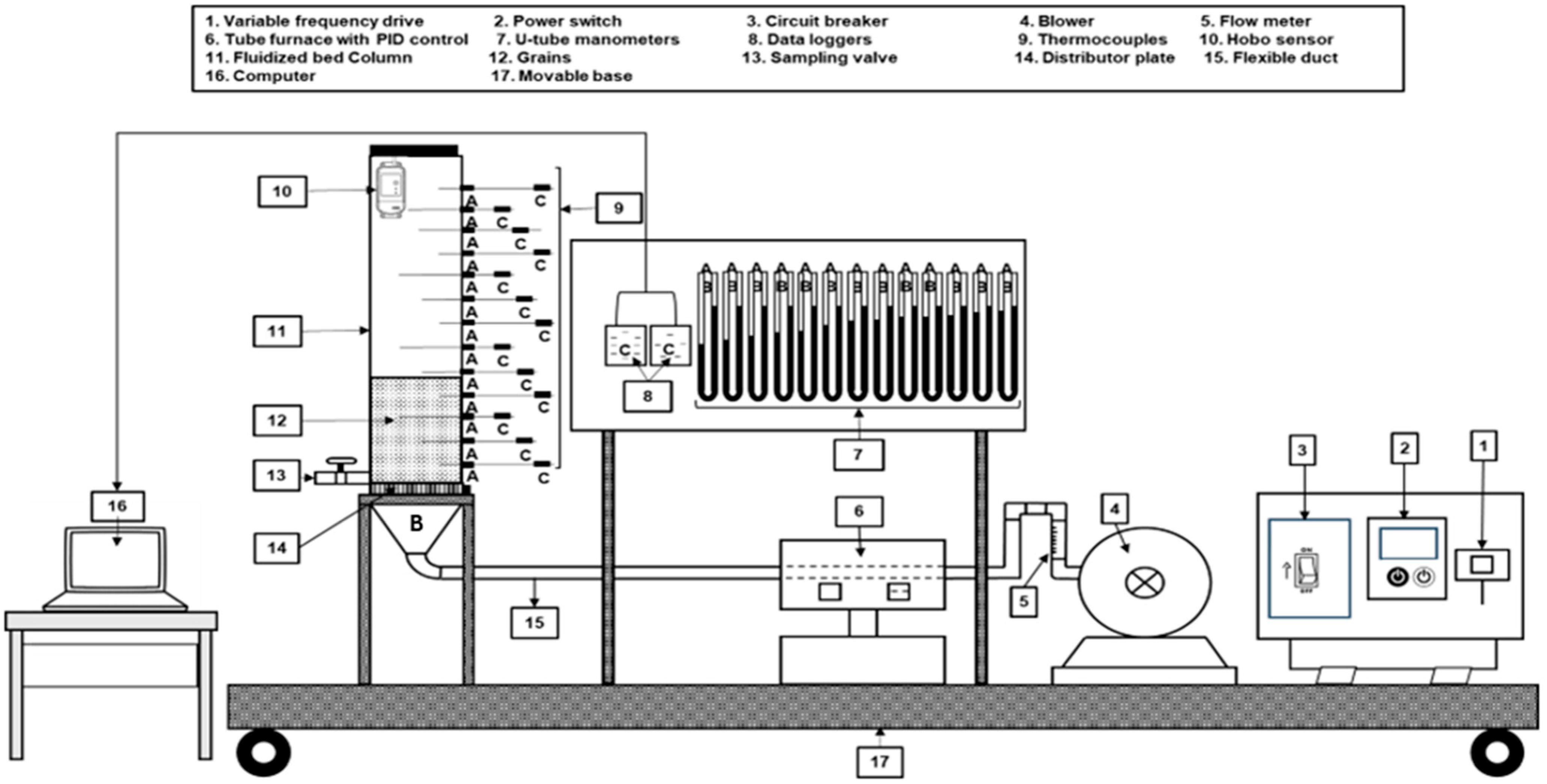
Parboiled rice samples were subjected to four drying methods (Table 2). Natural air drying (NAD) was carried out by spreading samples on perforated trays and placing them in a controlled environmental chamber set at 25 °C and 55% relative humidity until the target moisture content of 12.5 ± 0.5% (wet basis) was reached and no tempering was needed. Natural drying provides a reliable baseline for comparing other drying methods used in this study. For hot air oven drying (OO), samples were dried in a convection oven at 110 °C, then reduced to 60 °C for 20 min, followed by 4 h tempering at 60 °C (first pass). In the second pass, the oven was maintained at 60 °C and dried for 20 min, the sample was subjected to tempering again at 60 °C for 4 h. During tempering, samples were sealed in glass jars and placed inside a convection oven at 60 °C for 4 h to serve as resting period which enables moisture redistribution within the grains and reduced grain fissuring. This method was conducted to simulate industrial-scale rotary drum dryer. Fluidized bed drying (FBD) was performed using a custom-built dryer designed by Luthra and Sadaka [42] and modified for this study (Figure 1). Sample was dried at 60 °C for 30 min per pass with 4 h of tempering after each pass to allow internal moisture redistribution and reduce thermal stress. Two (2) drying passes were done to reach the target moisture content. As shown in Figure 1, the FBD system comprises a electrical heater, heater control, centrifugal fan, dryer chamber, flexible duct, thermocouples, U-tube manometers, hobo sensors, and omega data loggers. Lastly, the combined hot air oven and fluidized bed drying method (OFBD) involved initial drying in a convection oven at 110 °C for 20 min, then reduced to 60 °C for 20 min, followed by 4 h tempering at 60 °C (first pass). The samples were subsequently transferred to the fluidized bed drying system (Figure 1) at 60 °C for 20 min followed by an additional 4 h tempering to complete the second pass.

2.6. Establishing the Relationship Between Parboiled Rice Moisture Content and Minimum Fluidization Velocity (Umf)

The minimum fluidization velocity (umf) is the air velocity at which the upward drag force on the grains equals their weight, causing the grain bed to fluidize within the fluidized bed dryer. Determining umf is essential for establishing optimal operating conditions, to enhance efficient fluidized bed drying, and prevent insufficient fluidization, or grain entrainment during drying. Efficient fluidization greatly depends on the airflow and its uniform distribution within the drying chamber. In this study, a 500 g portion of parboiled rice samples were conditioned to four moisture levels: 35%, 29%, 18% and 12.5% (w.b.). For each level, the samples were loaded into the fluidized bed drying column (Figure 1) and the minimum fluidization velocity (umf) was determined by gradually increasing the airflow using a variable frequency drive until the grains reached a state of dynamic equilibrium. At this point, the upward drag force exerted by the air equaled the gravitational force acting on the grains, causing them to suspend within the airstream, marking the onset of fluidization. The air velocity corresponding to this condition was recorded as the minimum fluidization velocity. Measurements were taken using a hot-wire anemometer at three bed height positions, and the average value was used to represent umf [42,61].

2.7. Experimental Design

A full factorial design was employed to evaluate the effect of drying methods on the quality of hybrid and conventional parboiled rice. The experiment included long-grain pureline (CLL 18), long-grain hybrid (RT 7521), and medium-grain pureline (Titan) across four drying methods, with two replicates, which gives a total of 24 experimental runs (Table 3).

2.8. Experimental Procedure

The parboiling process began by soaking 1 kg of each rice sample, wrapped in cheesecloth, in a 5 L PolyScience water bath at 70 °C for 4 h, as described by Owusu et al. [62]. After soaking, the sample was placed in a 2.56 mm stainless steel sieve and transferred into a Sanyo Autoclave (MLS 3750, Osaka, Japan) for steam treatment. The autoclave was set at 110 °C, and it took approximately 40 min to reach the temperature. Once the temperature was attained, the samples sterilized for 4 min to gelatinize the starch from the outer bran layer toward the endosperm and embryo.
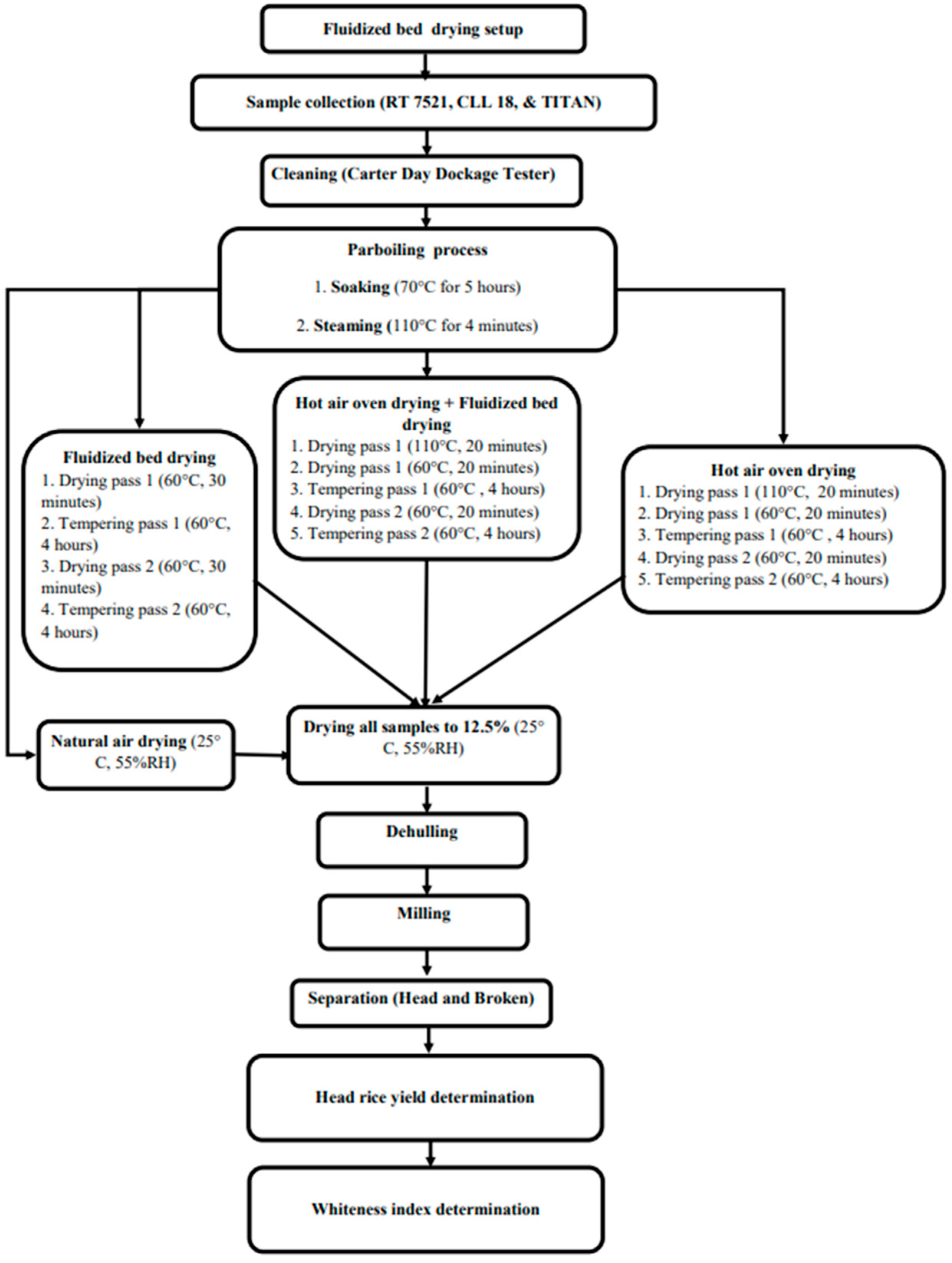
After steaming, the samples were subjected to four drying methods (Table 3) and conditioned to 12.5 ± 0.5% MC (w.b) in a controlled conditioning chamber (EMC). A total of 150 g of each dried sample was dehulled using a laboratory huller (McGill Sheller No. 3, Houston, TX, USA). Residual husks were removed with an Intermatic Aspirator. To ensure consistent milling conditions, 125 g of brown rice was milled for 30 s to preheat the milling. The dehulled rice was then milled at intervals of 20–60 s to reach the target surface lipid content (SLC) of 0.4% to be considered as well-milled rice according to the U.S standard for milled rice. After milling, broken rice was separated using a Zaccaria mill (Zaccaria PAZ-1 DTA, Anna, TX, USA) and the milled head rice sample was analyzed using a Near-Infrared Refractometer (NIR, DA7200, Perten Instruments, Stockholm, Sweden) to determine SLC. The SLC values were plotted against milling time to generate a millability curve for each cultivar, and a regression model was applied to determine the optimal milling duration. Subsequently, 150 g of each rice sample was milled at this optimal milling time. After each milling interval, the equipment was thoroughly cleaned by brushing residual bran and broken grains from the rotor and screen to prevent cross-contamination. The instruments used were calibrated: thermocouples (±0.5 °C), data logger (±2% RH), anemometer (±0.1 m/s), and weighing balance (±0.01 g). HRY was calculated as the proportion of whole kernels, and whiteness index was measured using the HunterLab colorimeter (Colorflex EZ, Hunterlab, Reston, VA, USA). Figure 2 presents the experiment flowchart employed in this study.

2.9. Parboiled Rice Quality Evaluation

2.9.1. Head Rice Yield Measurement

Approximately 150 g of each parboiled sample was dehusked using a laboratory huller (McGill Sheller No. 3, Houston, TX, USA) at the respective milling duration as determined by millability curve. A kernel with 75% or more of its original length after milling is considered to be head rice as previously described by Jindal & Siebenmorgen [63] and was separated from broken kernels. The head rice yield (HRY) was then calculated as reported by Siebenmorgen [64]:
H e a d   r i c e   y i e l d   % = W e i g h t   o f   h e a d   r i c e T o t a l   p a d d y   w e i g h t ×   100    

2.9.2. Whiteness Index Measurement

The color of parboiled head rice was measured using Hunter colorimeter (Colorflex EZ, Hunterlab, Reston, VA, USA) with the International Commission on Illumination (CIE) Lab* color scale. The colorimeter was standardized with a white tile (Illuminant D65, 10° Observer; L* = 93.76, a* = −0.93, b* = 1.02) and a 1.25-inch aperture. About 25g of head rice was placed in a transparent plastic Petri dish on the sample port. The Petri dish was rotated 180° for a second reading to minimize variation. After calibration, the L* (lightness), a* (red–green), and b* (yellow–blue) values were recorded, and the WI was calculated as follows:
W h i t e n e s s   i n d e x = 100   100 L 2 + a 2 + b 2

2.10. Energy Consumption

Energy consumption for each drying method was estimated as the total electrical energy used during the drying process. Total energy consumed was calculated from the rated power of the equipment used and the operating time for each process step [65]:
E c o n s = P   ×   t
where E cons is the energy consumed (kWh), P is the output power of the component, and t is the drying time. When multiple components operated simultaneously (i.e., heater and fan in the fluidized bed dryer), their rated powers were summed for that step.
E c o n s = P 1 t 1 + P 2 t 2 + + P m t m

2.11. Statistical Analyses

All experiments were conducted in a completely randomized design (CRD) with two replicates, and the resulting data were analyzed using analysis of variance (ANOVA) in R version 4.4.1. Mean separation was performed with Tukey’s Honest Significant Difference (HSD) test at a significance level of p < 0.05. The experimental factors included rice cultivar and drying method, and the primary quality indicators evaluated were head rice yield (HRY), whiteness index (WI) and drying consumption.

3. Results

3.1. Kernel Dimensions and Shape Ratio

The three cultivars differed in kernel dimensions and shape characteristics (Table 4). RT 7521 exhibited the greatest average kernel length at 9.61 mm and a width of 3.04 mm, resulting in a length to width ratio of 3.17, typical of long grain rice. CLL 18 had a slightly shorter but narrower kernel with the highest length to width ratio of 3.47, indicating a slenderer long grain type. Titan showed the shortest but widest kernels among the cultivars, with a lower length to width ratio of 2.52, consistent with medium grain classification. These differences in physical dimensions reflect distinct grain types and may influence drying behavior, milling performance, and overall grain quality.

3.2. Minimum Fluidization Velocity (Umf)

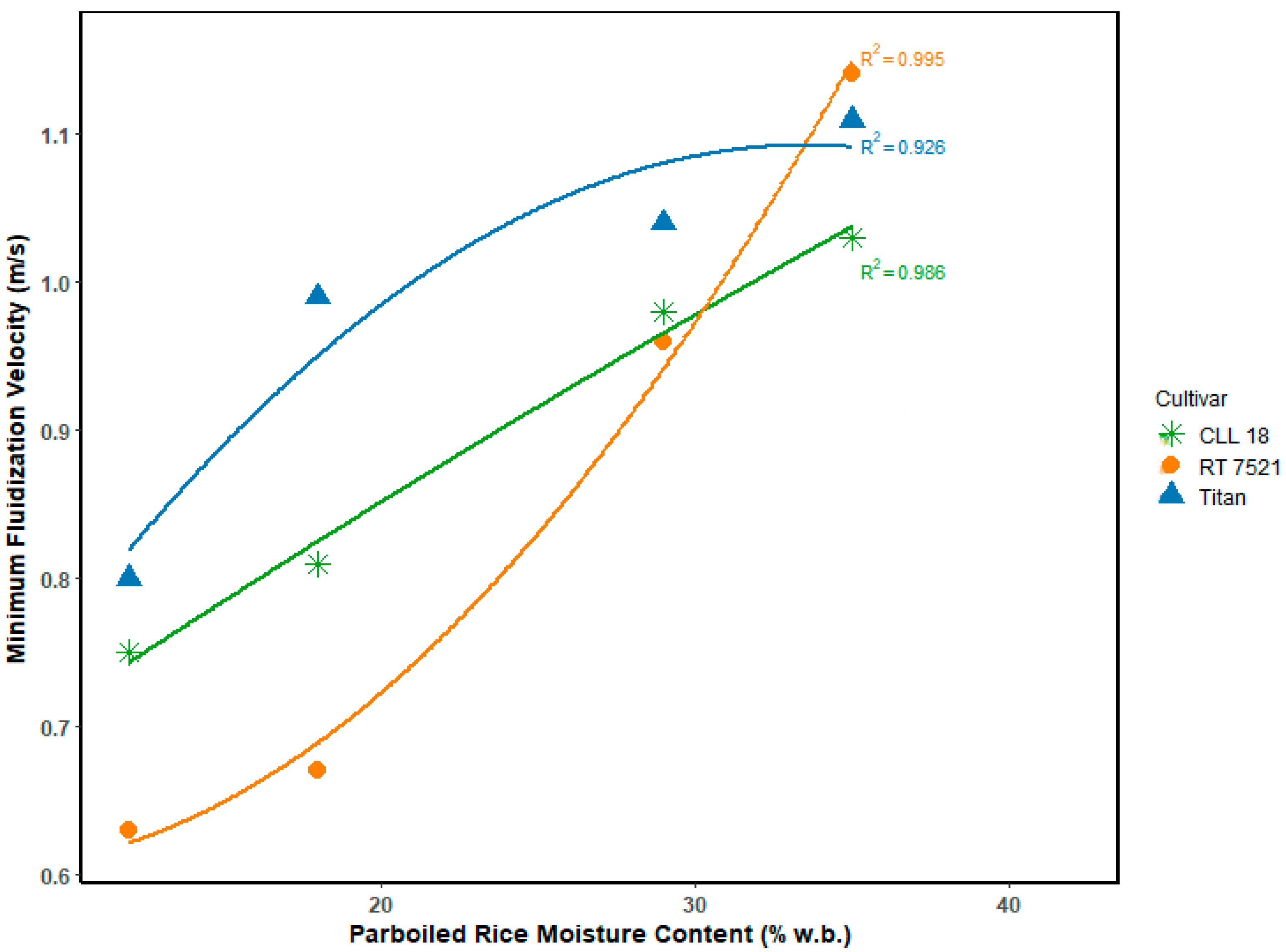
In this study, the minimum fluidization velocity (umf) decreased as drying progressed for all parboiled rice cultivars (Figure 3). For instance, umf for RT 7521 decreased from 1.14 m/s at 35% MC (w.b.) to 0.63 m/s at 12% MC (w.b.), and Titan decreased from 1.11 m/s to 0.80 m/s. This finding corroborates the results of Senadeera et al. [66], who reported a similar decline in umf with decreasing moisture content. The reduction can be attributed to lower grain moisture, which decreases particle density and inter-particle cohesion, allowing fluidization at lower velocities. Wetter grains thus required higher air velocities to achieve fluidization across cultivars. At 12% MC (w.b.), Titan (0.80 m/s) required a higher umf than the long-grain cultivars RT 7521 (0.63 m/s) and CLL 18 (0.75 m/s), likely due to its shorter and thicker grain structure. The umf was significantly influenced by moisture content (p < 0.05). These findings, supported by similar trends in Japonica and Indica rice varieties, Zahra and Bintoro [48], indicate that minimum fluidization velocity depends on the moisture content of parboiled rice and should be carefully considered in the design and operation of fluidized bed drying systems. The potential for using fluidized bed drying is strongly influenced by the efficient use of energy; thus, understanding is crucial for reducing energy costs and maintaining grain quality.

3.3. Air Conditions of Parboiled Rice Cultivars in the Fluidized Bed Drying System

To achieve the optimum performance of a fluidized bed drying system, it is essential to control the operation conditions carefully. Air temperature and relative humidity strongly influence the drying efficiency of parboiled rice, and increasing the temperature or decreasing the relative humidity can increase the drying rate [67].
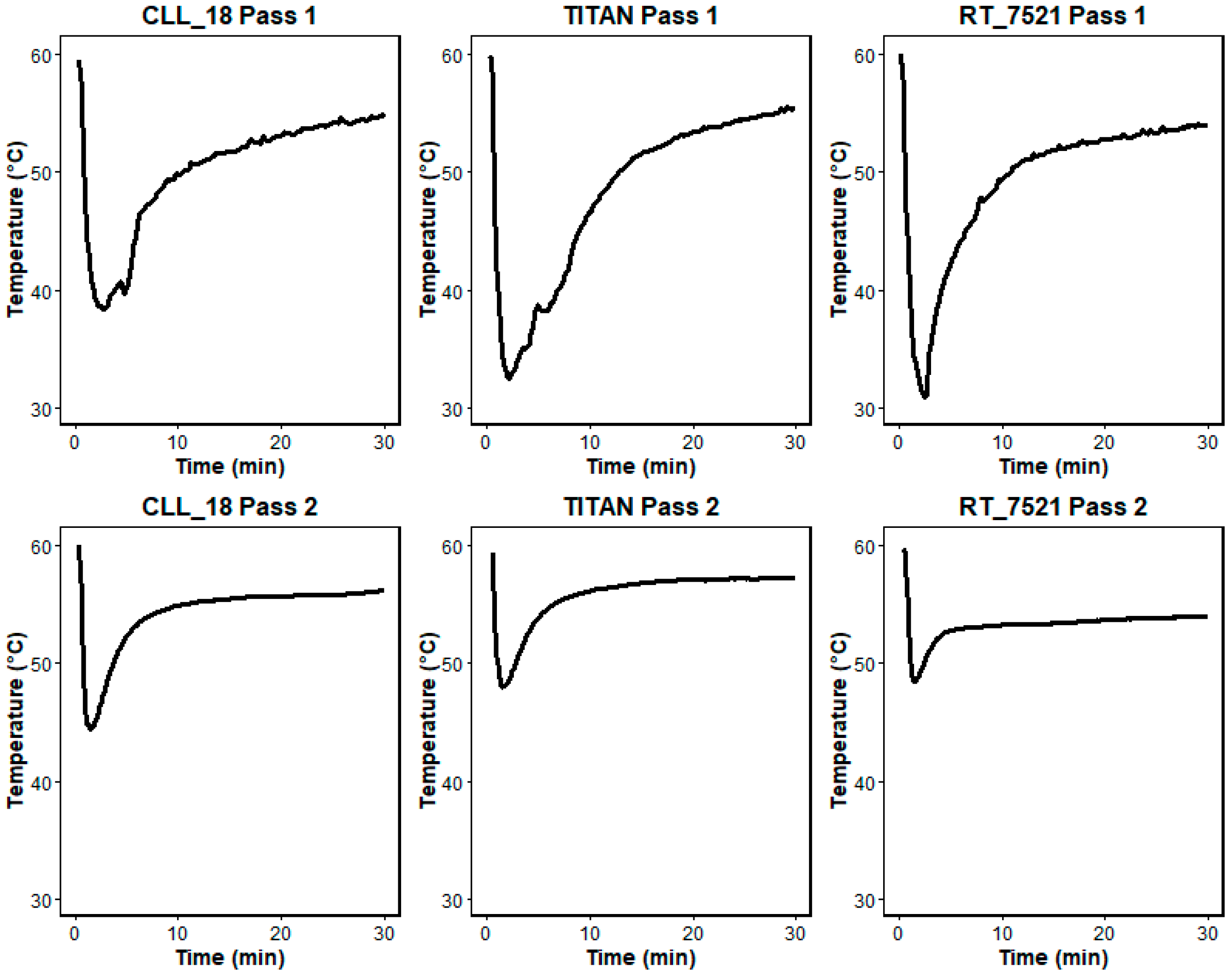
During the fluidized bed drying of parboiled rice, a rapid decrease in air temperature was observed within the first 2–3 min of the first pass, dropping sharply from 60 °C to 38.6 °C, 33 °C, and 32 °C for CLL 18, Titan and RT 7521, respectively, as shown in Figure 4. The sharp temperature drop may be due to intense evaporative cooling as heat from the drying air was absorbed by the wet grain to facilitate moisture removal [68]. The initial phase, with high moisture content of 35–38% MC (w.b.), requires a high mass-transfer rate as water rapidly evaporates from the saturated grain surface.
As drying progresses, typically about 30 min, the air temperature gradually recovers and stabilizes, which corresponds to the reduction in grain moisture content and the corresponding decrease in evaporative cooling. As the grains dry, less heat is required for evaporation, and the air temperature approaches the inlet air temperature. The second drying pass exhibited higher and more stable air temperatures, typically around 53–56 °C. The observed trend in air temperature during the second pass can be attributed to the rapid drying that occurred during the first pass, in agreement with the findings of Akhtaruzzaman et al. [69]. Additionally, the grain temperature prior to the second pass affects the air temperature. During the first pass, the grains were saturated, so the air temperature dropped more sharply due to greater heat absorption. However, the second pass was conducted after tempering at the same 60 °C air temperature, but the grains had a lower initial temperature after tempering, reducing evaporative cooling of the drying air. The size of the kernels may also influence the drying air temperature dynamics. Figure 4 shows that the larger kernel size of the medium-grain cultivar Titan requires greater energy input and longer drying times than the long-grain cultivar CLL 18 to reach the target moisture content. Relative humidity in the fluidized bed dryer dropped sharply when the parboiled rice was introduced and continued to decline during both drying passes as the grains progressively lost moisture and the drying rate slowed. This can be attributed to differences in surface area and mass transfer rates, which influence the overall drying efficiency [70].

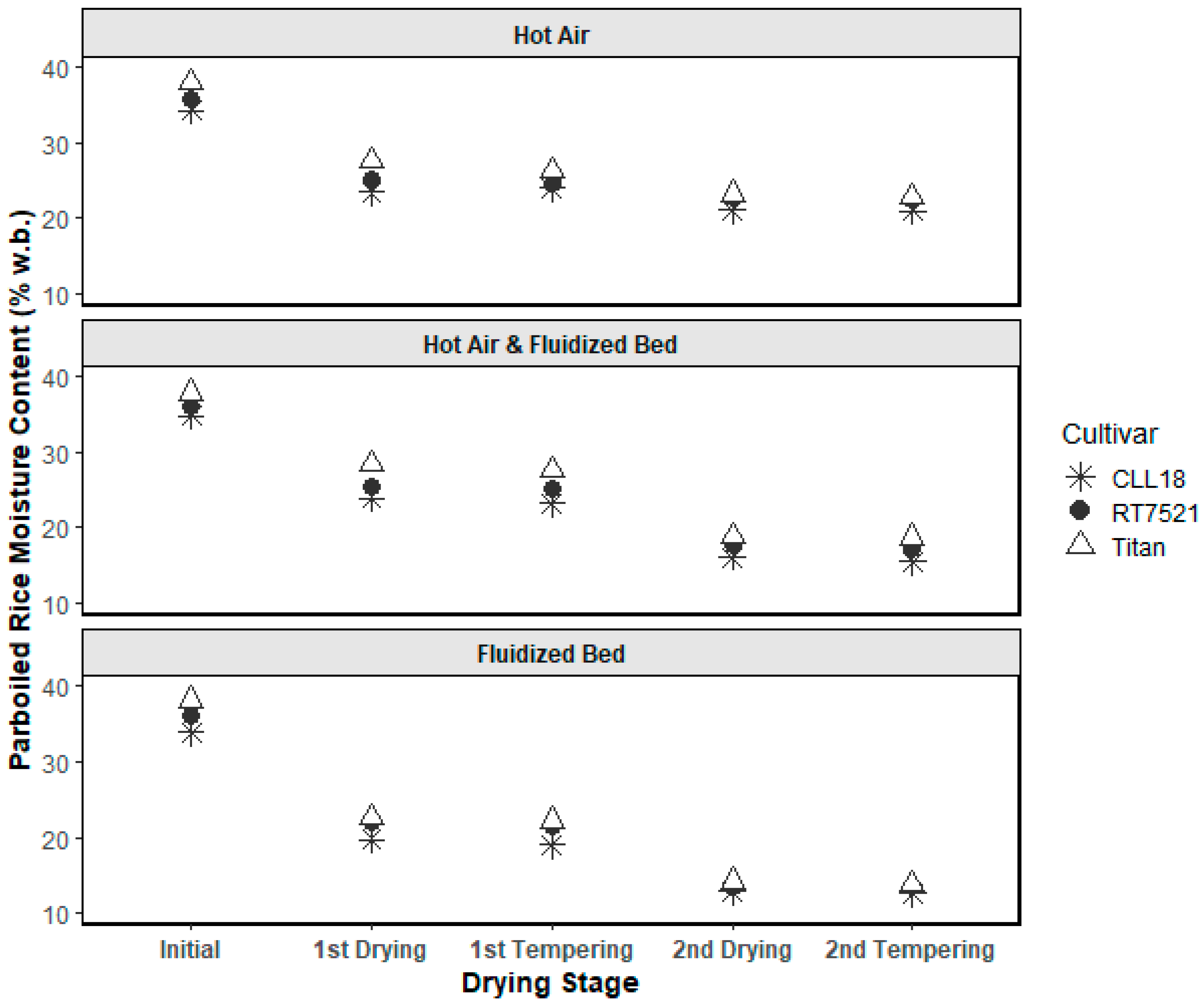
3.4. Effects of Drying Methods on Parboiled Rice Moisture Content

Figure 5 illustrates the moisture removal of parboiled rice cultivars RT 7521, CLL 18, and Titan across drying methods. It was observed that moisture content varied significantly across drying methods (p = 0.0014). The fluidized bed drying system (FBD) achieved the fastest drying rate; results showed that RT 7521 decreased from 33.93% to 12.60% MC (w.b.) within 60 min of the two-stage drying pass. The rapid moisture removal in FBD can be ascribed to its high heat and mass transfer rates between the drying air and parboiled rice kernels [71]. This observation is consistent with the results of Sarker et al. [72] who reported that two-stage FBD systems significantly reduced drying times (1.83–5 hr.) for aromatic rice compared to conventional methods. Hot-air drying (OO) was the least efficient in this study, especially during the second drying stage. For all drying methods, the initial stage removed surface moisture rapidly, reducing Titan MC from 38.24% to 22.56%, in agreement with Elbert et al. [73]. Results showed that tempering did not significantly reduce moisture content (p = 0.127); however, it facilitated internal moisture redistribution and reduced internal stresses, which contributed to improved milling yield [74]. The second stage dried more slowly than the first, likely due to the limited rate of moisture diffusion from the interior of the kernel to its surface (Figure 5). This observation aligns with Pruengam et al. [75], who reported that moisture removal in parboiled rice was faster during the initial stage of impinging steam drying, when surface moisture is high.

3.5. Drying Kinetics Modeling and Effective Moisture Diffusivity (Deff) of Parboiled Rice Cultivars in Different Drying Methods

3.5.1. Determining Best Fit Model for Drying Parboiled Rice

Drying kinetics were evaluated by fitting nine thin-layer drying models to the experimental moisture ratio (MR) data for the three cultivars studied (RT 7521, CLL 18, and Titan). Model parameters were estimated using nonlinear regression, and each model was fitted separately for each cultivar × drying method combination (FBD, OFBD, and OO) across the drying period. The estimated coefficients and goodness-of-fit statistics are reported in the corresponding tables. The best-performing model was selected based on the highest R 2 and the lowest RMSE and reduced chi-square.
Table 5, Table 6 and Table 7 present the best-fit models for drying parboiled rice across the three drying methods: fluidized bed drying (FBD), hot-air oven and fluidized bed drying method hybrid (OFBD), and hot-air oven (OO). The results indicate that the logarithmic model shows better agreement with the experimental data and had the highest R 2 values, the lowest RMSE and χ 2 across most of the models. However, the Midilli et al. [56] model performed better for OFBD with Titan ( R 2 = 0.9885 ) , compared to the logarithmic model ( R 2 = 0.9881 ) . According to the results of Golmohammadi et al. [76], the Midilli model [56] got better agreement during the pre-tempering stage of rice. Similarly, Khanali et al. [77] found the Midilli et al. model to be the best for describing fluidized bed drying of rough rice. Although the Midilli et al. [56] and Verma et al. [54] models performed well in this study, their consistency across the different drying methods was slightly lower compared to the logarithmic model. Luthra and Sadaka [36] also found that Modified Henderson and Pabis [53], and Verma et al. [54] are the best fits for fluidized bed drying of rough rice at 40 °C, 45 °C, and 50 °C temperature levels.

3.5.2. Drying Kinetics Curve

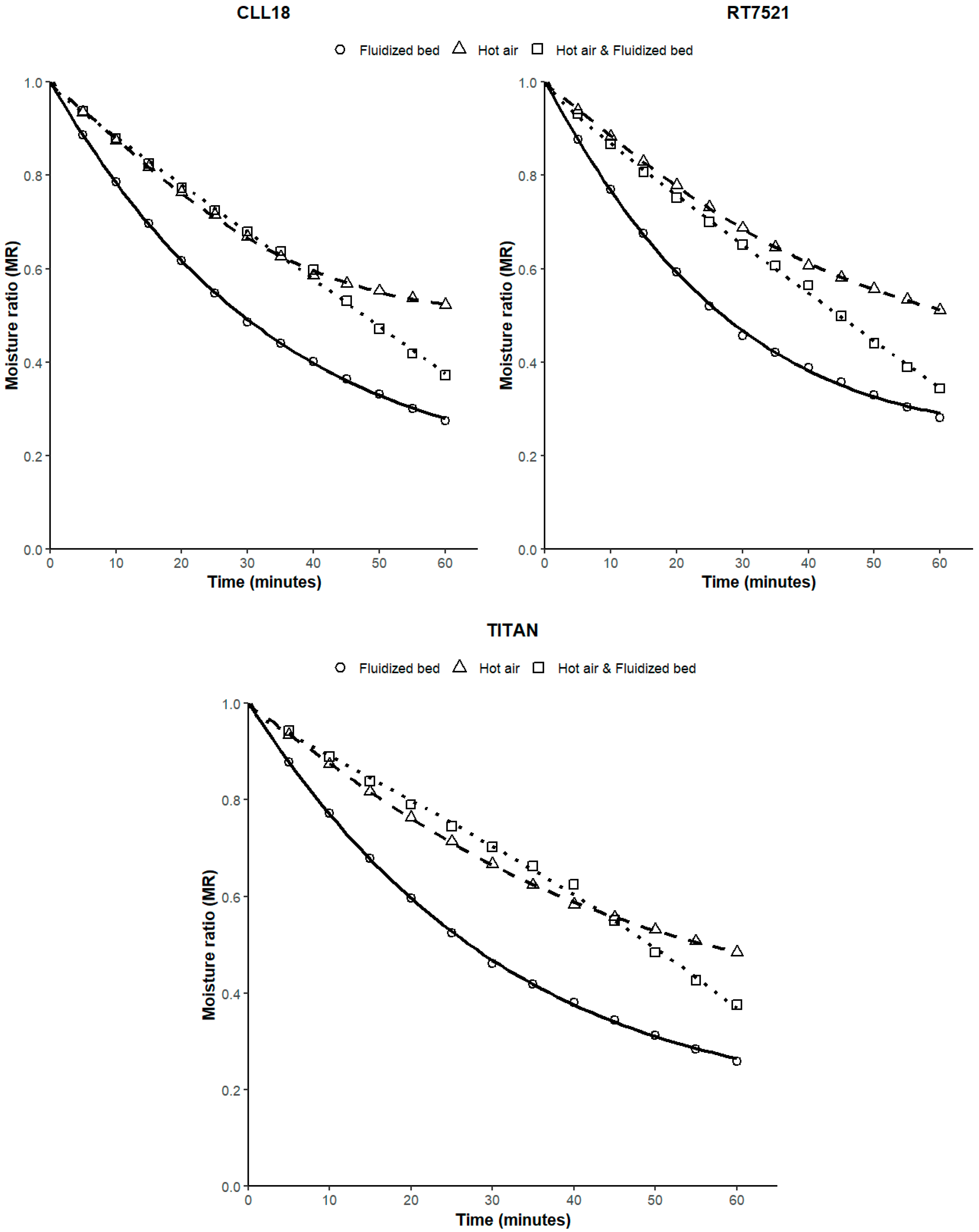
Figure 6 shows the drying curves for FBD, OFBD, and OO across the three rice cultivars. The curves indicate that FBD resulted in the fastest moisture loss. During the initial drying phase, OO and OFBD followed similar trends due to the shared use of hot air drying. However, in the second pass, FBD demonstrated a significantly faster moisture removal rate compared to hot air which supports its superior drying efficiency in the later stages [71,72].

3.5.3. Effective Moisture Diffusivity ( D eff )

The effective moisture diffusivity was determined using the method of slopes, the natural logarithm of moisture-ratio values was plotted against drying duration based on the experimental data. Table 8 outlines the effective moisture diffusivity ( D eff ) values for three parboiled rice cultivars, Titan, CLL 18, and RT 7521, across three drying methods (FBD, OO, OFBD). Effective moisture diffusivity represents the rate at which moisture moves through the rice grains, with higher values indicating faster moisture removal and more efficient drying. It was observed that medium-grain Titan tends to exhibit higher D eff compared to long-grain cultivars. Its higher D eff may be attributed to the greater surface-area-to-volume ratio of medium-grain rice, which enhances moisture-removal efficiency during drying. Similar findings were reported by Sadaka and Kalyankar [78], who observed that Titan exhibited higher D eff than long-grain cultivars like Diamond and Wells. The relationship between hybrids and purelines is also evident in the results. It was observed that hybrid cultivar RT 7521 exhibit higher D eff compared to pureline cultivar, CLL 18. Their difference may be attributed to the pubescent surface characteristic of the hybrid cultivar, which can influence surface roughness and moisture transfer conditions and promotes more rapid moisture movement during drying [79]. In this study, FBD results in the highest D eff across all cultivars, indicating that the method promotes faster moisture removal compared to OFBD and OO. For example, Titan shows the highest diffusivity under FBD (1.73 × 10⁻¹⁰ m2/s), followed by RT 7521 (1.42 × 10⁻¹⁰ m2/s) and CLL 18 (1.22 × 10⁻¹⁰ m2/s). OFBD also produced relatively high diffusivity values, though not as high as FBD, suggesting it may not be as efficient as compared to the FBD. Hot-air oven (OO) results in the lowest D eff for all cultivars, which implies that hot-air oven may be the least efficient drying method in terms of moisture removal, likely due to less uniform heat distribution and slower moisture movement compared to FBD and OFBD. The values of the D eff obtained in this study are comparable to those reported in the literature. Sadaka and Kalyankar [78] reported diffusivity values of Titan ranging from 3.93 × 10⁻⁹ m2/s to 18.10 × 10⁻⁹ m2/s for rough rice at drying temperatures between 40 °C and 100 °C, which is comparable to the values obtained in this study for parboiled rice (0.86 × 10⁻¹⁰ to 1.73 × 10⁻¹⁰ m2/s). Golmohammadi et al. [76] studied intermittent drying of paddy rice and reported diffusivity values ranging from 3.89 × 10⁻⁹ m2/s to 6.58 × 10⁻⁹ m2/s for rough rice, which exceed the values observed for parboiled rice in the present study; the higher initial moisture content of rough rice may account for its faster drying relative to parboiled rice.

3.6. Energy Consumption of the Drying Systems

The energy consumption of the drying methods, fluidized bed drying (FBD), hot air oven and fluidized bed drying method hybrid (OFBD), and hot-air oven (OO) was calculated based on the duration of operation and the power used during the drying process. For FBD, both the heater (1.05 kW) and blower (0.6099 kW) operated continuously for 60 min. The total energy consumption for FBD was calculated as follows:
Energy consumed by heater:
E heater = 1.05 kW × 1 hour = 1.05 kWh
Energy consumed by blower:
E blower = 0.6099 kW × 1 hour = 0.6099 kWh
Thus, the total energy consumption for FBD was:
E FBD   total = 1.05 kWh + 0.6099 kWh = 1.6599 kWh
For OO, which operated for 60 min at 1.68 kW, the energy consumed was:
E OO   total = 1.68   k W × 1   h o u r = 1.68   k W h
OFBD utilized both the oven and fluidized bed dryer, with the oven operating for the first 40 min and the fluidized bed operating for last 20 min. The energy consumed by the oven during OFBD was calculated as:
E oven   OFBD = 1.68 kW × 2 3 hour = 1.12 kWh
The energy consumed by the fluidized bed during the OFBD process (for 20 min) was:
E FBD   OFBD = 1.6599 k W h × 1 3 hour   =   0.5533 kWh
Thus, the total energy consumption for the OFBD method was:
E OFBD   total = 1.12 kWh + 0.5533 kWh = 1.6733 kWh
In this study, the fluidized bed drying system (FBD) emerged as the most energy-efficient method, consuming the least energy at 1.6599 kWh. The hybrid of oven and fluidized bed drying system (OFBD) consumed relatively more energy (1.6733 kWh) than FBD. The hot-air oven (OO) was the most energy-intensive method, consuming 1.68 kWh over the same drying period of 1 h.

3.7. Effects of Drying Methods on Parboiled Rice Quality

3.7.1. Head Rice Yield

Table 9 shows the head rice yield (HRY) of three parboiled rice cultivars: CLL 18 (long-grain pureline), RT 7521 (long-grain hybrid), and Titan (medium-grain pureline) across four drying methods. Both cultivar and drying method significantly affected HRY (p > 0.05) and ranged from 51.47 ± 6.22% to 65.33 ± 2.07% across all samples. Natural air drying (NAD) produced the highest HRY for all cultivars, with 60.07 ± 1.51%, 62.3 ± 0.8%, and 65.33 ± 2.07% for CLL 18, RT 7521, and Titan, respectively. NAD higher performance may be attributed to its slower rate of moisture removal and relatively low drying temperature of 25 °C, which reduces kernel breakage. Similar findings were reported by Ondier et al. [67] who showed that low temperature and slow drying results in higher HRY. However, a major limitation of NAD is the long drying time, requiring about 7–10 days to reach 12.5% moisture content. Fluidized bed drying (FBD) and hot-air oven integrated with fluidized bed drying (OFBD) showed minimal differences in HRY, although FBD produced slightly higher values. The similarity can be explained by the fact that OFBD used FBD to complete the drying process. Low standard deviations observed for FBD across all three cultivars demonstrate its uniform drying performance and minimal variability in HRY, which corroborates previous reports on its consistent drying capability [67,80]. Hot air oven drying (OO) resulted in the lowest HRY across all cultivars, indicating that high temperatures caused kernel fissures and structural damage during milling due to rapid moisture loss from the outer layers, reducing milling yield [63]. These findings highlight that excessive heat during drying compromises HRY.
The differences in HRY among cultivars are largely influenced by kernel physical structure and variety characteristics. It was observed that medium-grain Titan produced higher HRY than the long-grain cultivars, and this aligns with previous findings by Alizadeh et al. [81] who reported that varietal differences strongly affect milling recovery. This may result from inherent differences in kernel shape, size, hardness, and surface topography that affect susceptibility to fissuring and breakage during drying and milling. Variations in bran layer thickness and bran or embryo composition between hybrid and pureline cultivars may also contribute to differences in milling performance [82,83,84,85,86]. A similar trend was reported by Fan et al. [87], who observed that medium-grain Bengal achieved higher HRY than long-grain cultivars such as Cypress and Kaybonnet under same drying conditions. Among the long-grain cultivars in this study, the hybrid cultivar (RT 7521) had higher HRY than the pureline cultivar (CLL 18), reflecting the advantage of hybrid vigor in maintaining kernel integrity during processing. Similar results were reported by Mohammadi and Atungulu [88], who found that medium-grain Titan exhibited the higher HRY than long-grain cultivars, also, the long-grain hybrid (XL 753) produced higher HRY than the long-grain pureline Roy J. These findings suggest that hybrid cultivars generally have greater resilience to breakage than pureline cultivars. However, under fluidized bed drying (FBD), differences in HRY between the long-grain cultivars were not statistically significant, indicating that the uniform controlled drying conditions can minimize the impact of varietal characteristics on milling recovery.

3.7.2. Whiteness Index

Yadav and Jindal [2] stated that whiteness index (WI) can be measured based on light reflectance, typically ranging from 0 (black surface with no reflection) to 100 (whiteness comparable to magnesium oxide). Based on the results, it was observed that WI of parboiled rice varied significantly among drying methods (p = 0.024) and cultivars (p = 0.047) (Table 9). The measured WI ranged from 55.42 ± 1.03 to 63.99 ± 0.25. Natural air drying (NAD) produced better WI across all the cultivars, which indicates its gentle drying minimizes chemical reactions responsible for discoloration. Fluidized bed drying (FBD) also resulted in higher WI than hot air drying (OO) and the combined oven–fluidized bed drying method (OFBD) and showed no significant difference from NAD for some cultivars (RT 7521 and Titan). This demonstrates FBD’s ability to remove moisture rapidly with minimal color degradation, unlike OO and OFBD, which produced the lowest WI due to prolonged exposure to heat. These results suggest that higher drying temperatures promote Maillard reactions leading to non-enzymatic browning and reduced kernel whiteness. Similar findings were reported by Lamberts et al. [89], who observed significant decreases in rice whiteness at high drying temperatures. Siebenmorgen et al. [90] also noted that for a given milling duration, WI varied among cultivars. In this study, the long-grain hybrid RT 7521 exhibited higher whiteness than the pureline cultivars, which may reflect hybrid vigor enhancing kernel resistance to color degradation during drying. A comparable pattern was observed by Lanning and Siebenmorgen [85], the authors reported that hybrid cultivars (XL 723, CL XL730, CL XL729) had a better appearance after milling than pureline cultivars (Francis and Wells).

4. Conclusions

The performance of a fluidized bed drying (FBD) system for hybrid and pureline parboiled rice was evaluated and compared with conventional drying methods to assess its effectiveness in improving drying efficiency, milling quality and visual appearance. The relationship between grain moisture content (12.5–35% w.b.) and minimum fluidization velocity (umf) was established, showing that umf increased with moisture content across all cultivars. This trend reflects higher particle density and cohesiveness in wetter grains, which require greater airflow to achieve fluidization. Moisture ratio data were fitted to nine thin-layer models, the logarithmic model showed the best fit, and the Midilli–Küçük and Verma et al. models performed comparably under specific conditions. Drying method and cultivar significantly influenced head rice yield (HRY) and whiteness index (WI) (p < 0.05). Among the drying methods, FBD (HRY = 59.8 ± 0.76%, WI = 63.54 ± 0.64) achieved quality comparable to natural air drying (NAD) (HRY = 65.33 ± 2.07%, WI = 63.99 ± 0.25), while it performed better than the hybrid hot air and FBD system (OFBD) (HRY = 55.55 ± 1.02%, WI = 55.42 ± 1.03) and hot-air drying (OO) (HRY = 51.47 ± 6.22%, WI = 56.64 ± 2.28). The medium-grain Titan produced higher HRY than the long-grain cultivars (RT 7521 and CLL 18), which may be due to inherent differences in kernel size, shape, and hardness that enhance breakage resistance. Also, long-grain hybrid RT 7521 showed better WI compared to pureline cultivars (Titan and CLL 18), and this can be attributed to hybrid vigor and intrinsic structural traits such as bran layer structure. FBD proved effective for drying parboiled rice without compromising milling or visual quality. Past studies have reported that optimizing FBD parameters, such as temperature, air velocity, and relative humidity, can further enhance drying efficiency, maintain grain integrity, and reduce energy consumption [35,37,39,42,80]. These findings establish FBD as a sustainable and high-performance method for drying parboiled rice, with strong potential for full industry adoption in the United States. Further studies are recommended to evaluate cooking properties, texture, nutritional composition, storage stability of the drying systems for parboiled rice.

Author Contributions

Conceptualization, K.L. and G.G.A.; investigation and data curation, J.O.; writing—original draft preparation, J.O.; writing—review and editing, J.O., K.L. and G.G.A.; resources and supervision, K.L. and G.G.A. All authors have read and agreed to the published version of the manuscript.

Funding

This research was funded internally through the corresponding author’s startup funds provided by the Department of Biological and Agricultural Engineering, University of Arkansas Division of Agriculture, Fayetteville, AR 72701, USA.

Institutional Review Board Statement

Not applicable.

Informed Consent Statement

Not applicable.

Data Availability Statement

The original contributions presented in this study are included in the article. Further inquiries can be directed to the corresponding author.

Conflicts of Interest

The authors declare no conflicts of interest.

References

  1. Siebenmorgen, T.J.; Bautista, R.C.; Counce, P.A. Optimal Harvest Moisture Contents for Maximizing Milling Quality of Long- and Medium-Grain Rice Cultivars. Appl. Eng. Agric. 2007, 23, 517–527. [Google Scholar] [CrossRef]
  2. Yadav, B.K.; Jindal, V.K. Changes in head rice yield and whiteness during milling of rough rice (Oryza sativa L.). J. Food Eng. 2008, 86, 113–121. [Google Scholar] [CrossRef]
  3. Mahmood, N.; Liu, Y.; Saleemi, M.A.; Munir, Z.; Zhang, Y.; Saeed, R. Investigation of Physicochemical and Textural Properties of Brown Rice by Hot Air Assisted Radio Frequency Drying. Food Bioprocess Technol. 2023, 16, 1555–1569. [Google Scholar] [CrossRef]
  4. Saleh, M.; Akash, M.; Ondier, G. Effects of temperature and soaking durations on the hydration kinetics of hybrid and pureline parboiled brown rice cultivars. J. Food Meas. Charact. 2018, 12, 1369–1377. [Google Scholar] [CrossRef]
  5. Hunt, M.; Aramouni, F. Impact of Parboiling Conditions on Rice Characteristics. Master’s Thesis, Kansas State University, Manhattan, TX, USA, 2009. Available online: https://krex.k-state.edu/server/api/core/bitstreams/43928e4f-36d0-4bfc-926b-98de25366c53/content (accessed on 1 July 2025).
  6. Taghinezhad, E.; Khoshtaghaza, M.H.; Minaei, S.; Suzuki, T.; Brenner, T. Relationship Between Degree of Starch Gelatinization and Quality Attributes of Parboiled Rice During Steaming. Rice Sci. 2016, 23, 339–344. [Google Scholar] [CrossRef]
  7. Brooker, D.B.; Bakker-Arkema, F.W.; Hall, C.W. Drying and Storage of Grains and Oilseeds; Springer Science & Business Media: Cham, Switzerland, 1992. [Google Scholar]
  8. Nawirska, A.; Figiel, A.; Kucharska, A.Z.; Sokół-Łętowska, A.; Biesiada, A. Drying kinetics and quality parameters of pumpkin slices dehydrated using different methods. J. Food Eng. 2009, 94, 14–20. [Google Scholar] [CrossRef]
  9. Ojeniran, J.I.; Adejumo, B.A.; Obasa, P.A. Effects of drying methods on the qualities of beetroot flour. Eur. J. Sustain. Dev. Res. 2025, 9, em0312. [Google Scholar] [CrossRef] [PubMed]
  10. Akowuah, J.; Addo, A.; Bart-Plange, A. Influence of Drying Temperature and Storage Duration on Fissuring and Milling Quality of Jasmine 85 Rice Variety. J. Sci. Technol. 2012, 32, 26–33. [Google Scholar] [CrossRef][Green Version]
  11. Xangsayasane, P.; Vongxayya, K.; Phongchanmisai, S.; Mitchell, J.; Fukai, S. Rice milling quality as affected by drying method and harvesting time during ripening in wet and dry seasons. Plant Prod. Sci. 2019, 22, 98–106. [Google Scholar] [CrossRef]
  12. Ying, T.; Spang, E.S. Paddy Drying Technologies: A Review of Existing Literature on Energy Consumption. Processes 2024, 12, 532. [Google Scholar] [CrossRef]
  13. Islam, M.A.; Sarker, M.S.H.; Mondal, M.H.T.; Sheikh, M.A.M.; Haque, M.R.; Islam, M.M.; Haque, M.A. Effect of two stage drying on milling performance: The case of parboiled paddy. IOSR J. Environ. Sci. Toxicol. Food Technol. 2021, 15, 30–37. [Google Scholar]
  14. Bootkote, P.; Soponronnarit, S.; Prachayawarakorn, S. Process of Producing Parboiled Rice with Different Colors by Fluidized Bed Drying Technique Including Tempering. Food Bioprocess Technol. 2016, 9, 1574–1586. [Google Scholar] [CrossRef]
  15. Poomsa-ad, N.; Soponronnarit, S.; Prachayawarakorn, S.; Terdyothin, A. Effect of Tempering on Subsequent Drying of Paddy Using Fluidization Technique. Dry. Technol. 2002, 20, 195–210. [Google Scholar] [CrossRef]
  16. Chitsuthipakorn, K.; Thanapornpoonpong, S. Verification of rice quality during storage after drying with hot air and radio frequency heating. Food Chem. X 2023, 20, 100882. [Google Scholar] [CrossRef] [PubMed]
  17. Igathinathane, C.; Chattopadhyay, P.K.; Pordesimo, L.O. Moisture diffusion modeling of parboiled paddy accelerated tempering process with extended application to multi-pass drying simulation. J. Food Eng. 2008, 88, 239–253. [Google Scholar] [CrossRef]
  18. Dong, R.; Lu, Z.; Liu, Z.; Koide, S.; Cao, W. Effect of drying and tempering on rice fissuring analysed by integrating intra-kernel moisture distribution. J. Food Eng. 2010, 97, 161–167. [Google Scholar] [CrossRef]
  19. Thakur, A.K.; Gupta, A.K. Two stage drying of high moisture paddy with intervening rest period. Energy Convers. Manag. 2006, 47, 3069–3083. [Google Scholar] [CrossRef]
  20. Tumambing, J.A. Mathematical Modelling and Design of a Continuous Fluidised Bed Dryer for Pre-Drying of Paddy in the Humid Tropics. Ph.D. Thesis, UNSW Sydney, Sydney, Australia, 1993. [Google Scholar] [CrossRef]
  21. Soponronnarit, S.; Wetchacama, S.; Swasdisevi, T. Managing Moist Paddy by Drying, Tempering and Ambient Air Ventilation. Dry. Technol. 1999, 17, 335–343. [Google Scholar] [CrossRef]
  22. Swasdisevi, T.; Sriariyakula, W.; Tia, W.; Soponronnarit, S. Effect of pre-steaming on production of partially-parboiled rice using hot-air fluidization technique. J. Food Eng. 2010, 96, 455–462. [Google Scholar] [CrossRef]
  23. Jaiboon, P.; Prachayawarakorn, S.; Devahastin, S.; Tungtrakul, P.; Soponronnarit, S. Effect of high-temperature fluidized-bed drying on cooking, textural and digestive properties of waxy rice. J. Food Eng. 2011, 105, 89–97. [Google Scholar] [CrossRef]
  24. Chungcharoen, T.; Prachayawarakorn, S.; Tungtrakul, P.; Soponronnarit, S. Effects of germination time and drying temperature on drying characteristics and quality of germinated paddy. Food Bioprod. Process. 2015, 94, 707–716. [Google Scholar] [CrossRef]
  25. Anand, A.; Gareipy, Y.; Raghavan, V. Fluidized bed and microwave-assisted fluidized bed drying of seed grade soybean. Dry. Technol. 2021, 39, 507–527. [Google Scholar] [CrossRef]
  26. Nunes, M.T.; Coradi, P.C.; Müller, A.; Oliveira Carneiro, L.; Steinhaus, J.I.; Anschau, K.F.; Souza, G.C.; Müller, E.I.; Teodoro, P.E.; Dutra, A.P. Stationary rice drying: Influence of initial moisture contents and impurities in the mass grains on the physicochemical and morphological rice quality. J. Food Process. Preserv. 2022, 46, e16558. [Google Scholar] [CrossRef]
  27. Avidan, A.; Yerushalmi, J. Solids mixing in an expanded top fluid bed. AIChE J. 1985, 31, 835–841. [Google Scholar] [CrossRef]
  28. Hovmand, S. Fluidized bed drying. In Handbook of Industrial Drying; Taylore & Francis: Abingdon, UK, 1987; pp. 165–211. [Google Scholar]
  29. Tirawanichakul, S.; Prachayawarakorn, S.; Varanyanond, W.; Tungtrakul, P.; Soponronnarit, S. Effect of Fluidized Bed Drying Temperature on Various Quality Attributes of Paddy. Dry. Technol. 2004, 22, 1731–1754. [Google Scholar] [CrossRef]
  30. Karbassi, A.; Mehdizadeh, Z. Drying Rough Rice in a Fluidized Bed Dryer. Agric. Sci. Technol. 2008, 10, 233–241. [Google Scholar]
  31. Tuyen, T.T.; Truong, V.; Fukai, S.; Bhandari, B. Effects of High-Temperature Fluidized Bed Drying and Tempering on Kernel Cracking and Milling Quality of Vietnamese Rice Varieties. Dry. Technol. 2009, 27, 486–494. [Google Scholar] [CrossRef]
  32. Özahi, E.; Demir, H. Drying performance analysis of a batch type fluidized bed drying process for corn and unshelled pistachio nut regarding to energetic and exergetic efficiencies. Measurement 2015, 60, 85–96. [Google Scholar] [CrossRef]
  33. Chuwattanakul, V.; Eiamsa-ard, S. Hydrodynamics investigation of pepper drying in a swirling fluidized bed dryer with multiple-group twisted tape swirl generators. Case Stud. Therm. Eng. 2019, 13, 100389. [Google Scholar] [CrossRef]
  34. Yogendrasasidhar, D.; Setty, Y.P. Experimental studies and thin layer modeling of pearl millet using continuous multistage fluidized bed dryer staged externally. Eng. Sci. Technol. Int. J. 2019, 22, 428–438. [Google Scholar] [CrossRef]
  35. Luthra, K.; Sadaka, S.S. Challenges and Opportunities Associated with Drying Rough Rice in Fluidized Bed Dryers: A Review. Trans. ASABE 2020, 63, 583–595. [Google Scholar] [CrossRef]
  36. Luthra, K.; Sadaka, S.S. Mathematical Modeling of Rough Rice Dehydration with Dehumidified Air in a Fluidized Bed Drying System. Appl. Eng. Agric. 2021, 37, 783–791. [Google Scholar] [CrossRef]
  37. Hasibuan, R.; Sari, W.N.; Manurung, R.; Alexande, V. Drying Kinetic Models of Rice Applying Fluidized Bed Dryer. Math. Model. Eng. Probl. 2023, 10, 334–339. [Google Scholar] [CrossRef]
  38. Daud, W.R.W. Fluidized Bed Dryers—Recent Advances. Adv. Powder Technol. 2008, 19, 403–418. [Google Scholar] [CrossRef]
  39. Sadaka, S.S.; Luthra, K.; Atungulu, G.G. Evaluation of the Performance of a Custom-Made Fluidized Bed Drying System. Appl. Eng. Agric. 2018, 34, 1027–1037. [Google Scholar] [CrossRef]
  40. Sutherland, J.W.; Ghaly, T.F. Rapid fluidized bed drying of paddy in the humid tropics. In Proceedings of the 1990, 13th ASEAN Seminar on Grain Post Harvest Technology, Brunei, Darussalam, 4–7 September 1990; pp. 1–12. [Google Scholar]
  41. Srinivasakannan, C.; Balasubramaniam, N. An Experimental and Modeling Investigation on Drying of Ragi (Eleusine corocana) in Fluidized Bed. Dry. Technol. 2006, 24, 1683–1689. [Google Scholar] [CrossRef]
  42. Luthra, K.; Sadaka, S. Investigation of rough rice drying in fixed and fluidized bed dryers utilizing dehumidified air as a drying agent. Dry. Technol. 2021, 39, 1059–1073. [Google Scholar] [CrossRef]
  43. Sharada, S. Mathematical Models for drying behavior of green beans. Int. J. Eng. Res. Appl. 2013, 3, 845–851. [Google Scholar]
  44. Akhtaruzzaman, M.; Mondal, M.H.T.; Hossain Sarker, M.S.; Biswas, M.; Shanta, S.A.; Momin Sheikh, M.A. Evaluation of drying characteristics, energy consumption and quality of parboiled paddy: Two stage drying. J. Agric. Food Res. 2022, 8, 100284. [Google Scholar] [CrossRef]
  45. Fan JSiebenmorgen, T.J.; Marks, B.P. Effects of Variety and Harvest Moisture Content on Equilibrium Moisture Contents of Rice. Appl. Eng. Agric. 2000, 16, 245–251. [Google Scholar] [CrossRef]
  46. Grigg, B.C.; Siebenmorgen, T.J. Impacts of Thickness Grading on Milling Yields of Long-Grain Rice. Appl. Eng. Agric. 2013, 29, 557–564. [Google Scholar] [CrossRef]
  47. S352-2FEB03; Moisture Measurement. Unground Grain and Seeds. ASAE: St. Joseph, MI, USA, 2003.
  48. Zahra, A.; Bintoro, N. The Effect of Rice (Oryza sativa L.) Types and Moisture Contents on Terminal Velocity. IOP Conf. Ser. Earth Environ. Sci. 2021, 828, 012042. [Google Scholar] [CrossRef]
  49. Lewis, W.K. The rate of drying of solid materials. J. Ind. Eng. Chem. 1921, 13, 427–432. [Google Scholar] [CrossRef]
  50. Henderson, S.M.; Pabis, S. Grain drying theory I. Temperature effect on drying Coefficient. J. Agric. Eng. Res. 1969, 6, 169–174. [Google Scholar]
  51. Chandra, P.K.; Singh, R.P. Applied Numerical Methods for Food and Agricultural Engineers; CRC Press: Boca Raton, FL, USA, 1995. [Google Scholar]
  52. Henderson, S.M. Progress in developing the thin layer drying equation. Trans. ASAE 1974, 17, 1167–1168. [Google Scholar] [CrossRef]
  53. Karathanos, V.T. Determination of water content of dried fruits by drying kinetics. J. Food Eng. 1999, 39, 337–344. [Google Scholar] [CrossRef]
  54. Verma, L.R.; Bucklin, R.A.; Endan, J.B.; Wratten, F.T. Effects of drying air parameters on rice drying models. Trans. ASAE 1985, 28, 296–301. [Google Scholar] [CrossRef]
  55. Page, G.E. Factors Influencing the Maximum Rates of Air Drying Shelled Corn in Thin Layers. Master’s Thesis, Department of Mechanical Engineering, Purdue University, West Lafayette, IN, USA, 1949. [Google Scholar]
  56. Midilli, A.; Kucuk, H.; Yapar, Z. A new model for single layer drying. Dry. Technol. 2002, 20, 1503–1513. [Google Scholar] [CrossRef]
  57. Wang, C.Y.; Singh, R.P. A Single Layer Drying Equation for Rough Rice; ASAE Paper, No. 1978, 78-3001; ASAE Press: St. Joseph, MI, USA, 1978. [Google Scholar]
  58. Khanali, M.; Banisharif, A.; Rafiee, S. Modeling of moisture diffusivity, activation energy and energy consumption in fluidized bed drying of rough rice. Heat Mass Transf. 2016, 52, 2541–2549. [Google Scholar] [CrossRef]
  59. Crank, J. The Mathematics of Diffusion; Oxford University Press: New York, NY, USA, 1975. [Google Scholar]
  60. Ogunsina, B.; Olaoni, S.; Babarinde, A.; Kareem, I. Engineering Properties of Monodora tenuifolia Seeds as Influenced by Moisture Content. Ife J. Technol. 2016, 24, 52–60. [Google Scholar]
  61. Soponronnarit, S.; Prachayawarakorn, S.; Rordprapat, W.; Nathakaranakule, A.; Tia, W. A Superheated-Steam Fluidized-Bed Dryer for Parboiled Rice: Testing of a Pilot-Scale and Mathematical Model Development. Dry. Technol. 2006, 24, 1457–1467. [Google Scholar] [CrossRef]
  62. Owusu, E.A.; Luthra, K.; Bruce, R.; Atungulu, G. Cooked rice safety: A review of status and potential of radiative pasteurization. J. Food Saf. 2023, 43, e13090. [Google Scholar] [CrossRef]
  63. Jindal, V.K.; Siebenmorgen, T.J. Effects of Rice Kernel Thickness on Head Rice Yield Reduction Due to Moisture Adsorption. Trans. ASAE 1994, 37, 487–490. [Google Scholar] [CrossRef]
  64. Siebenmorgen, T. Laboratory measurement of rice milling yield. In Arkansas Rice Production Handbook; University of Arkansas Division of Agriculture Cooperative Extension Service: Little Rock, AR, USA, 2014; pp. 167–175. [Google Scholar]
  65. Motevali, A.; Minaei, S.; Khoshtagaza, M.H. Evaluation of energy consumption in different drying methods. Energy Convers. Manag. 2011, 52, 1192–1199. [Google Scholar] [CrossRef]
  66. Senadeera, W.; Wijesinghe, B.; Young, G.; Bhandari, B. Fluidization Characteristics of Moist Food Particles. Int. J. Food Eng. 2006, 2, 1–15. [Google Scholar] [CrossRef]
  67. Ondier, G.O.; Siebenmorgen, T.J.; Mauromoustakos, A. Low-temperature, low-relative humidity drying of rough rice. J. Food Eng. 2010, 100, 545–550. [Google Scholar] [CrossRef]
  68. Syahrul, S.; Hamdullahpur, F.; Dincer, I. Exergy analysis of fluidized bed drying of moist particles. Exergy Int. J. 2002, 2, 87–98. [Google Scholar] [CrossRef]
  69. Akhtaruzzaman, M.; Kamal, M.M.; Alam, S.M.S.; Sarker, M.S.H.; Mondal, M.H.T. Impacts of two-stage drying techniques on drying characteristics, physical and nutritional quality of maize. J. Agric. Food Res. 2024, 15, 101046. [Google Scholar] [CrossRef]
  70. Amantea, R.P.; Balbino, G.P.A.; Fortes, M. Dynamic analysis of grain quality during drying in fluidised beds. Biosyst. Eng. 2023, 228, 149–165. [Google Scholar] [CrossRef]
  71. Seodigeng, R.; Kabuba, J.; Rutto, H. Modelling the drying characteristics of human faeces using thin-layer drying models and calculation of mass transfer properties at ambient conditions. Environ. Chall. 2022, 9, 100648. [Google Scholar] [CrossRef]
  72. Sarker, M.S.H.; Akhtaruzzaman, M.; Mondal, M.H.T.; Kamal, M.M.; Plabon, M.E.A. Evaluation of drying characteristics, milling performance and nutritional quality: The case of aromatic rice. J. Food Process. Preserv. 2022, 46, e16275. [Google Scholar] [CrossRef]
  73. Elbert, G.; Tolaba, M.P.; Suárez, C. Effects of drying conditions on head rice yield and browning index of parboiled rice. J. Food Eng. 2001, 47, 37–41. [Google Scholar] [CrossRef]
  74. Kamruzzaman, M.D.; Uyeh, D.D.; Jang, I.J.; Woo, S.M.; Ha, Y.S. Drying characteristics and milling quality of parboiled Japonica rice under various drying conditions. Eng. Agric. Environ. Food 2017, 10, 292–297. [Google Scholar] [CrossRef]
  75. Pruengam, P.; Soponronnarit, S.; Prachayawarakorn, S.; Devahastin, S. Rapid drying of parboiled paddy using hot air impinging stream dryer. Dry. Technol. 2014, 32, 1949–1955. [Google Scholar] [CrossRef]
  76. Golmohammadi, M.; Foroughi-dahr, M.; Hamaneh, M.R.; Shojamoradi, A.R.; Hashemi, S.J. Study on drying kinetics of paddy rice: Intermittent drying. Iran. J. Chem. Chem. Eng. (IJCCE) 2016, 35, 105. [Google Scholar] [CrossRef]
  77. Khanali, M.; Rafiee, S.; Jafari, A.; Hashemabadi, S.H.; Banisharif, A. Mathematical modeling of fluidized bed drying of rough rice (Oryza sativa L.) grain. J. Agric. Technol. 2012, 8, 795–810. [Google Scholar]
  78. Sadaka, S.; Kalyankar, V. Determination of the Drying Kinetics Modeling and Activation Energy of Medium-Grain and Long-Grain Rough Rice under Isothermal Conditions. Open J. Appl. Sci. 2022, 12, 822–844. [Google Scholar] [CrossRef]
  79. Atungulu, G.G.; Zhong, H.; Thote, S.; Okeyo, A.; Couch, A. Microbial prevalence on freshly-harvested long-grain pureline, hybrid, andmedium-grain rice cultivars. Appl. Eng. Agric. 2015, 31, 949–956. [Google Scholar]
  80. Luthra, K.; Sadaka, S.; Atungulu, G.G. Exploration of Rough Rice Head Yield Subjected to Drying and Retention Durations in a Fluidized Bed System. Appl. Eng. Agric. 2018, 34, 877–885. [Google Scholar] [CrossRef]
  81. Alizadeh, M.R.; Dabbaghi, A.; Rahimi-Ajdadi, F. Effect of final paddy moisture content on breaking force and milling properties of rice varieties. Elixir Agric. 2011, 36, 3186–3189. [Google Scholar]
  82. Chen, H.; Siebenmorgen, T.J.; Griffin, K. Quality Characteristics of Long-Grain Rice Milled in Two Commercial Systems. Cereal Chem. 1998, 75, 560–565. [Google Scholar] [CrossRef]
  83. Pomeranz, Y.; Webb, B.D. Rice hardness and functional properties. Cereal Foods World 1985, 30, 784. [Google Scholar]
  84. Rohrer, C.A.; Siebenmorgen, T.J. Nutraceutical Concentrations within the Bran of Various Rice Kernel Thickness Fractions. Biosyst. Eng. 2004, 88, 453–460. [Google Scholar] [CrossRef]
  85. Lanning, S.B.; Siebenmorgen, T.J. Comparison of Milling Characteristics of Hybrid and Pureline Rice Cultivars. Appl. Eng. Agric. 2011, 27, 787–795. [Google Scholar] [CrossRef]
  86. Olaoni, S.O.; Regonda, B.; Luthra, K.; Atungulu, G.G. Optimizing lab methods for consistent rice milling analysis. Cereal Chem. 2025, 102, 199–210. [Google Scholar] [CrossRef]
  87. Fan, J.; Siebenmorgen, T.J.; Yang, W. A Study of Head Rice Yield Reduction of Long- and Medium-Grain Rice Varieties in relation to Various Harvest and Drying Conditions. Trans. ASAE 2000, 43, 1709–1714. [Google Scholar] [CrossRef]
  88. Mohammadi Shad, Z.; Atungulu, G. Physical Integrity of Long-Grain Hybrid, Pureline, and Medium-Grain Rice Kernels as Affected by Storage Conditions. Appl. Eng. Agric. 2020, 36, 579–588. [Google Scholar] [CrossRef]
  89. Lamberts, L.; Brijs, K.; Mohamed, R.; Verhelst, N.; Delcour, J.A. Impact of Browning Reactions and Bran Pigments on Color of Parboiled Rice. J. Agric. Food Chem. 2006, 54, 9924–9929. [Google Scholar] [CrossRef]
  90. Siebenmorgen, T.J.; Matsler, A.L.; Earp, C.F. Milling Characteristics of Rice Cultivars and Hybrids. Cereal Chem. 2006, 83, 169–172. [Google Scholar] [CrossRef]
Figure 1. A schematic diagram of the fluidized bed drying system developed in this study. Letters A, B, and C denote measurement connection points. C indicates the cable connection between the thermocouples and the data logger for temperature recording. A marks the pressure taps along the drying column connected to one end of the U tube manometer, while B marks the base tap connected to the other end, enabling measurement of pressure drop across the column due to airflow resistance.
Agriengineering 08 00078 g001
Figure 2. Experimental flow chart of the study.
Agriengineering 08 00078 g002
Figure 3. Relationship between parboiled rice moisture content and minimum fluidization velocity.
Agriengineering 08 00078 g003
Figure 4. Air-temperature dynamics of parboiled rice cultivars in a fluidized bed drying system.
Agriengineering 08 00078 g004
Figure 5. Moisture content of hybrid and conventional parboiled rice cultivars at different drying stages.
Agriengineering 08 00078 g005
Figure 6. Moisture ratio (MR) over time for hybrid and conventional parboiled rice cultivars under drying methods (FBD, OFBD, OO).
Agriengineering 08 00078 g006
Table 1. Thin-layer drying models evaluated in this study for predicting moisture ratio (MR).
ModelEquationReference
LewisMR = exp(−kt)[49]
Henderson and PabisMR = A exp(−kt)[50]
LogarithmicMR = A exp(−kt) + B[51]
Two-termMR = A exp(−k1t) + B exp(−k2t)[52]
Modified Henderson and PabisMR = A exp(−k1t) + B exp(−k2t) + C exp(−k3t)[53]
Verma et al.MR = A exp(−k1t) + (1 − A) exp(−k2t)[54]
PageMR = exp (−ktn)[55]
Midilli et al.MR = A exp(−ktn) + Bt[56]
Wang and SinghMR = 1 + At + Bt2[57]
k 1 , k 2 , and k 3 are drying-rate constants ( m i n 1 ); A , B , and C are empirical coefficients; and n is a dimensionless exponent.
Table 2. Drying methods applied in this study.
MethodDrying ConditionTempering ConditionPasses
NAD (Natural air drying)25 °C, 55% RH (EMC chamber)NoneUntil 12.5% MCwb
OO (Convection oven drying)110 °C (20 min) + 60 °C (20 min) → 60 °C (20 min) 60 °C, 4 h (after each pass)2
FBD (Fluidized bed drying)60 °C, 30 min (2 passes)60 °C, 4 h (after each pass)2
OFBD (Hybrid)110 °C (20 min) + 60 °C (20 min) oven → 60 °C (20 min) FBD60 °C, 4 h (after each pass)2
Table 3. Factorial design with four drying methods, three rice cultivars, and two replications for a total of 24 experimental runs.
FactorsVariablesTotal Number of Experiments
Drying methodsNAD
OO
FBD
OFBD
4 × 3 × 2 = 24 runs
Rice cultivarsCLL 18 (long-grain pureline)
RT 7521 (long-grain hybrid)
Titan (Medium-grain pureline)
Replication1, 2
Table 4. Kernel length (SL), width (SW), and shape ratio (L/W) of the rice cultivars used in this study (mean ± SD).
CultivarSL (mm)SW (mm)L/W
RT 75219.61 ± 0.333.04 ± 0.053.17 ± 0.06
CLL 188.98 ± 0.082.59 ± 0.103.47 ± 0.16
Titan8.36 ± 0.373.33 ± 0.262.52 ± 0.09
Table 5. Drying-model fit results for RT 7521 under different drying methods (FBD, OFBD, OO).
ModelDrying MethodModel Constants (×104)R2RMSEχ2
Lewis [49]FBDk = 3.92130.99010.03040.0011
OFBDk = 3.05080.99580.01760.0004
OOk = 2.16320.93650.05350.0034
Henderson
and Pabis [50]
FBDk = 3.8824, A = 9910.66100.99040.02990.0013
OFBDk = 3.0371, A = 9965.89200.99590.01750.0005
OOk = 2.0739, A = 9772.74000.94050.05180.0040
Logarithmic [51]FBDk = 6.2713, A = 8028.6201, B = 1971.36821.00000.00200.0000
OFBDk = 3.7613, A = 8841.5794, B = 1158.45610.99700.01490.0004
OOk = 7.8536, A = 5196.0399, B = 4803.95260.99360.01700.0006
Two term [52]FBDk1 = 17.8947, k2 = 2.5615, A = 2942.5725, B = 7057.40711.00000.00200.0000
OFBDk1 = 6.4968, k2 = 2.2882, A = 2765.2297, B = 7234.74690.99700.01490.0007
OOk1 = 11.5746, k2 = 0.5657, A = 3806.3950, B = 6193.61870.99360.01700.0009
Mod.
Henderson
and Pabis [53]
FBDk1= 6.2717, k2 = 0.0003, k3 = 0.0000, A = 8028.2120, B = 1969.6285, C = 2.15411.00000.0020-
OFBDk1 = 3.9223, k2 = 0.5141, k3 = 0.0000, A = 8289.5487, B = 1710.4552, C = 0.00000.99700.0149-
OOk1 = 5.8082, k2 = 0.4596, k3 = 0.0000, A = 5331.9542, B = 1800.2787, C = 2775.25430.98700.0242-
Verma et al. [54]FBDk1 = 7.1081, k2 = 0.8220, A = 6943.20451.00000.00200.0000
OFBDk1 = 4.0366, k2 = 0.7806, A = 7883.66640.99700.01490.0004
OOk1 = 9.4554, k2 = 0.3228, A = 4423.92440.99360.01700.0006
Page [55]FBDk = 42.6033, n = 6956.66721.00000.00200.0000
OFBDk = 6.5980, n = 9022.41820.99700.01490.0003
OOk = 205.4923, n = 4257.17020.99360.01700.0004
Midilli et al. [56]FBDk = 10.2869, n = 9020.3358, A = 9999.9718, B = 0.25291.00000.00200.0000
OFBDk = 7.7148, n = 8831.6640, A = 10,005.5820, B = 0.00660.99690.01510.0007
OOk = 7.7148, n = 8831.6637, A = 10,005.5821, B = 0.42160.98520.02580.0020
Wang
and
Singh [58]
FBDA = −1.7423, B = −0.00010.85680.11580.0201
OFBDA = −3.0102, B = 0.00030.99700.01490.0003
OOA = −3.0102, B = 0.00030.77430.10080.0152
Table 6. Drying-model fit results for CLL 18 under different drying methods (FBD, OFBD, OO).
ModelDrying MethodModel Constants (×104)R2RMSEχ2
Lewis [49]FBDk = 3.80100.99720.01600.0003
OFBDk = 2.7940.0.99960.00530.0000
OOk = 2.24740.91820.06210.0046
Henderson
and Pabis [50]
FBDk = 3.7805, A = 9951.67530.99730.01580.0004
OFBDk = 2.7862, A = 9980.14830.99960.00510.0000
OOk = 2.1423, A = 9736.18200.92330.06010.0054
Logarithmic [51]FBDk = 4.9638, A = 8720.1597, B = 1279.83511.00000.00070.0000
OFBDk = 3.1915, A = 9202.4695, B = 797.50651.00000.00100.0000
OOk = 9.3494, A = 5103.3155, B = 4896.68540.99390.01700.0006
Two term [52]FBDk1 = 13.0112, k2 = 2.9782, A = 2049.7003, B = 7950.30231.00000.00070.0000
OFBDk1 = 7.6518, k2 = 2.4931, A = 1050.6204, B = 8949.37381.00000.00100.0000
OOk1 = 20.2809, k2 = 0.7034, A = 3468.2725, B = 6531.72410.99390.01700.0009
Mod.
Henderson
and Pabis [53]
FBDk1 = 5.0704, k2 = 0.2716, k3 = 0.0000, A = 8493.0388, B = 1508.7331, C= 2.15121.00000.0007-
OFBDk1 = 3.2425, k2 = 0.3110, k3 = 5034.2363, A = 8963.2708, B = 1034.5645, C = 2.15051.00000.0010-
OOk1 = 6.2717, k2 = 0.0003, k3 = 0.0000, A = 8028.2120, B = 1969.6285, C = 2.15410.51640.1509-
Verma et al. [54]FBDk1 = 5.7020, k2 = 1.2907, A = 7087.17631.00000.00070.0000
OFBDk1 = 3.7787, k2 = 1.5888, A = 6268.65791.00000.00100.0000
OOk1 = 13.2322, k2 = 0.4566, A = 4061.62560.99390.01700.0006
Page [55]FBDk = 13.4952, n = 8384.98591.00000.00070.0000
OFBDk = 4.3156, n = 9450.07781.00000.00100.0000
OOk = 426.8498, n = 3378.16140.99390.01700.0004
Midilli et al. [56]FBDk = 11.6612, n = 8599.6289, A = 9999.9323, B = 0.02911.00000.00070.0000
OFBDk = 11.5682, n = 8211.0972, A = 10,042.8930, B = 0.00000.99800.01160.0004
OOk = 20.6972, n = 7897.1306, A = 9999.9685, B = 0.67570.99390.01700.0009
Wang
and
Singh [57]
FBDA = 0.0000, B = 0.00000.62440.18690.0524
OFBDA = 0.0000, B = 0.00000.72130.13720.0283
OOA = 0.0000, B = 0.00000.42480.16460.0406
Table 7. Drying-model fit results for Titan under different drying methods (FBD, OFBD, OO).
ModelDrying MethodModel Constants (×104)R2RMSEχ2
Lewis [49]FBDk = 4.03050.99620.01930.0004
OFBDk = 2.67080.98800.02820.0010
OOk = 2.34240.93070.05920.0042
Henderson
and Pabis [50]
FBDk = 4.0067, A = 9944.96330.99630.01900.0005
OFBDk = 2.6795, A = 10,022.55450.98810.02820.0012
OOk = 2.2520, A = 9773.44440.93420.05760.0050
Logarithmic [51]FBDk = 5.4399, A = 8634.8847, B = 1365.11461.00000.00110.0000
OFBDk = 2.6795, A = 10,022.5561, B = 0.00000.98810.02820.0016
OOk = 8.0219, A = 5449.2902, B = 4550.70640.98520.02730.0015
Two term [52]FBDk1 = 4.0056, k2 = 4.0063, A = −5987.7542, B = 15,932.68900.99630.01900.0011
OFBDk1 = 9.8111, k2 = 2.6795, A = 0.0000, B = 10,022.55980.98810.02820.0024
OOk1 = 19.6371, k2 = 0.9376, A = 3200.8097, B = 6799.18940.98520.02730.0022
Mod.
Henderson
and Pabis [53]
FBDk1 = 7.5064, k2 = 2.0756, k3 = 23.0211, A = 5292.8419, B = 4704.6728, C = 2.48091.00000.0011-
OFBDk1 = 6.2717, k2 = 0.0003, k3 = 0.0000, A = 8028.2120, B = 1969.6285, C = 2.15410.79970.1154-
OOk1 = 6.2717, k2 = 0.0003, k3 = 0.0000, A = 8028.2120, B = 1969.6285, C = 2.15410.60340.1415-
Verma et al. [54]FBDk1 = 6.3891, k2 = 1.3841, A = 6883.83881.00000.00110.0000
OFBDk1 = 2.6708, k2 = 2.6709, A = 8156.29570.98800.02820.0016
OOk1 = 11.5124, k2 = 0.5861, A = 4085.42650.98520.02730.0015
Page [55]FBDk = 18.5803, n = 8048.66161.00000.00110.0000
OFBDk = 1.6282, n = 10,625.20820.98850.02760.0011
OOk = 223.0705, n = 4247.49880.98520.02730.0011
Midilli et al. [56]FBDk = 17.8170, n = 8109.8892, A = 9999.9574, B = 0.00781.00000.00110.0000
OFBDk = 1.6322, n = 10,622.0527, A = 9999.9810, B = 0.00000.98850.02760.0023
OOk = 18.1865, n = 8003.4840, A = 9999.9939, B = 0.57340.98520.02730.0022
Wang
and
Singh [57]
FBDA = 0.0000, B = −0.00060.59930.19810.0589
OFBDA = 0.0000, B = −0.00050.76440.12520.0235
OOA = 0.0000, B = −0.00040.47110.16340.0401
Table 8. Effective moisture diffusivity ( D eff ) for parboiled rice cultivars under drying methods.
CultivarDrying MethodDeff (m2/s)
RT 7521FBD1.42 × 10−10
OFBD1.07 × 10−10
OO0.71 × 10−10
CLL 18FBD1.22 × 10−10
OFBD0.92 × 10−10
OO0.61 × 10−10
TitanFBD1.73 × 10−10
OFBD1.29 × 10−10
OO0.86 × 10−10
Table 9. The effects of drying methods on the quality of hybrid and conventional parboiled rice cultivars.
CultivarDrying MethodHead Rice Yield (%)Whiteness Index
CLL 18Natural air60.07 ± 1.51 ᵃ62.72 ± 4.12 ᵃ
CLL 18Fluidized bed57.71 ± 0.42 ᵇ58.13 ± 0.09 ᵃᵇ
CLL 18Hot air and Fluidized bed55.55 ± 1.02 ᵇ58.91 ± 0.8 ᵇ
CLL 18Hot air53.54 ± 1.51 ᶜ58.67 ± 0.83 ᵇ
RT 7521Natural air62.3 ± 0.8 ᵃ63.99 ± 0.25 ᵃ
RT 7521Fluidized bed57.44 ± 0.72 ᵇ63.54 ± 0.64 ᵃᵇ
RT 7521Hot air and Fluidized bed56.84 ± 1.08 ᵇ59.42 ± 0.92 ᵇ
RT 7521Hot air51.47 ± 6.22 ᶜ58.78 ± 2.34 ᵇ
TitanNatural air65.33 ± 2.07 ᵃ60.48 ± 2.02 ᵃ
TitanFluidized bed59.8 ± 0.76 ᵇ60.35 ± 1.87 ᵃᵇ
TitanHot air and Fluidized bed58.37 ± 1.36 ᵇ55.42 ± 1.03 ᵇ
TitanHot air55.97 ± 1.64 ᶜ56.64 ± 2.28 ᵇ
Note: Means followed by the same superscript letter are not significantly different (p > 0.05) according to Tukey’s multiple range test at the 5% level of probability. Values are presented as mean ± SEM of triplicate determinations.
Disclaimer/Publisher’s Note: The statements, opinions and data contained in all publications are solely those of the individual author(s) and contributor(s) and not of MDPI and/or the editor(s). MDPI and/or the editor(s) disclaim responsibility for any injury to people or property resulting from any ideas, methods, instructions or products referred to in the content.