


Abstract
Non-destructive estimation of high-temperature stress effects on tobacco plants is crucial for both scientific research and practical applications. Normalized difference vegetation index (NDVI), chlorophyll index, and spectra in the range of 900–1700 nm of Burley, Oriental, and Virginia tobacco plants under control and high-temperature stress conditions were measured using portable instruments. NDVI and chlorophyll index measurements indicate that young leaves of all tobacco types are tolerant to high temperatures. In contrast, the older leaves (the fifth leaf) showed increased sensitivity to heat stress. The chlorophyll content of these leaves decreased by 40 to 60% after five days of stress, and by the seventh day, the reduction reached 80% or more in all plants. The vegetative index of the fifth leaf also decreased on the seventh day of stress in all tobacco types. Differences in near-infrared spectra were observed between control, stressed, and recovered plants, as well as among different stress days, and among tobacco lines. The most significant differences were in the 1300–1500 nm range. The first characterization of heat-induced changes in the molecular structure of water in tobacco leaves using an aquaphotomics approach was conducted. Models for determining days of high-temperature treatment based on near-infrared spectra achieved a standard error of cross-validation (SECV) from 0.49 to 0.62 days. The total accuracy of the Soft Independent Modeling of Class Analogy (SIMCA) classification models of control, stressed, and recovered plants ranged from 91.0 to 93.6% using leaves’ spectra of the first five days of high-temperature stress, and from 90.7 to 97.7% using spectra of only the fifth leaf. Similar accuracy was obtained using Partial Least Squares–Discriminant Analysis (PLS-DA). Near-infrared spectroscopy and aquaphotomics can be used as a fast and non-destructive approach for early detection of stress and additional tools for investigating high-temperature tolerance in tobacco plants.
1. Introduction
Plants in native surroundings are frequently exposed to unfavorable environmental conditions, and these have been the major factors influencing physiology, crop productivity, and the effective use of arable land. To overcome the negative impact, plants have developed sophisticated responses resulting in complex morphological and physiological adaptive changes [1,2,3]. Global temperatures are constantly increasing, and combined with water deficiency, these factors have a significant impact on agricultural productivity [4,5].
Tobacco (Nicotiana tabacum L.) is a significant economic crop cultivated worldwide and plays a vital role in certain regions of low- and medium-income countries [6,7]. However, tobacco is vulnerable to various abiotic stresses, such as water deficiency, temperature extremes, low and high light intensity and salinity [8,9,10].
High temperature stress responses have been investigated in both cell cultures [11] and in vivo tobacco plants [12]. Heat stress in tobacco leads to distinct morphological and physiological changes, including biomass production [13], leaf wilting, deformation, and necrosis [14], decreased photosynthetic efficiency [15,16], reduced respiration activity [17], metabolism, and pigment content [13], leaf or plant death [18].
The development of a robust, inexpensive, and accurate alternative to the conventional method for detecting stress-induced changes in crop plants would be of benefit in agriculture and plant breeding. Visible and near-infrared (NIR) spectroscopy are increasingly used for plant stress detection. Multispectral and hyperspectral cameras operating in the visible and near-infrared regions have been used intensively in recent years. Healthy plant leaves exhibit low reflectance in the visible region because of strong absorption by chlorophyll and other pigments. Absorption in the NIR region provides information about the chemical composition of plants [19,20]. Changes in the chemical composition and cellular structure, induced by different stress factors, will alter the plant’s spectrum in a specific way. Using various chemometric methods, it is possible to extract information from near-infrared spectra of plants, create equations to determine quantitative parameters, and build classification models.
NIR spectroscopy offers several benefits over traditional biochemical and physiological methods for plant analysis. It involves minimal or no sample preparation and is suitable for in-field measurements. A single spectral measurement can determine multiple chemical components or plant properties. Recent reviews on optical technologies, sensors, and their applications in diagnosing both abiotic and biotic stresses in plants have been published by [21,22,23,24,25].
Several authors used visible and near-infrared spectroscopy, as well as hyperspectral images, for the analysis of tobacco plants and leaves. NIR spectra combined with discriminant partial least-squares (DPLS) and Fisher’s discriminant algorithms allowed effective and nondestructive qualitative discrimination of intact tobacco leaves and can be applied in the tobacco industry to assist manual grading and classification [26]. Lu et al. [27] investigated the possibilities of using visible-NIR hyperspectral imaging for detecting the maturity of fresh tobacco leaves. The constructed model can effectively identify the maturity of flue-cured tobacco with 99.32% and 98.46% accuracy in the calibration and prediction sets, respectively. Successful determination of total nicotine, total sugar, reducing sugar, and total nitrogen contents in tobacco was reported [28]. Partial Least Squares Regression (PLSR), combined with several pre-processing techniques, was able to simultaneously determine alkaloids, sugars, and yield in tobacco with excellent predictive capacity [29]. These results could be used for genetic improvement and processing of tobacco, since it is necessary to evaluate a large number of samples within a short period and at a low cost. A review of applications of hyperspectral remote sensing for estimating tobacco quality, predicting yield, and detecting diseases, pests, heavy metals, and nutrition deficiency was published by Zhang et al. [30].
A few research studies related to biotic stress in tobacco plants have been published. Images from healthy and tobacco mosaic virus-infected leaves with 2, 4, and 6 days’ post-infection were acquired by a hyperspectral reflectance imaging system covering the spectral range of 380–1023 nm [31]. Hyperspectral imaging has the potential to be utilized as a fast and non-invasive method for the identification of infected leaves within a short period after infection (i.e., 48 h) compared to the time required for typical symptoms to be visually observed (11 days). A rapid detection method based on a hand-held near-infrared spectrometer, the MicroNIR, and a convolutional neural network (CNN) algorithm for identifying tobacco leaf disease species (powdery mildew, deep green, mosaic virus, and brown-spot) was reported [32]. The obtained accuracy of determination was 100% for the training model and 98.91% for the test set. To the best of our knowledge, no publications have been found on the non-destructive investigation of heat stress-induced changes in tobacco plants using portable spectral instruments.
Aquaphotomics is a novel scientific approach that utilizes NIR spectroscopy to study the molecular structure of water [33,34,35]. In agriculture, aquaphotomics enables the real-time monitoring of plant responses to abiotic and biotic stress, as well as nutrient absorption, by examining water spectral patterns. Rapid in vivo diagnosis of virus-infected soybean was reported by Jinendra et al. [36]. The study emphasizes the significance of water-related spectral responses in understanding plant disease dynamics and highlights the potential of NIR spectroscopy and aquaphotomics in agricultural diagnostics. The ability of near-infrared spectroscopy and aquaphotomics to detect fungal diseases on durum wheat was investigated [37]. The aquagrams revealed that pathogens have altered the water structure in wheat plants uniquely during disease development. Muncan et al. [38] reported the early detection of cold stress responses in soybean cultivars with varying levels of stress tolerance. Their study used NIR spectroscopy to analyze the leaves of five soybean cultivars under optimal (27 °C) and cold stress (22 °C) conditions. The authors reported significant differences in NIR spectral profiles between plants in normal and cold-stressed conditions. Aquagrams visualized the spectral differences in soybean leaves under stress. Moyankova et al. [39] applied an aquaphotomics approach to examine changes in maize plants during drought stress. Differences in absorption spectra within the first overtone water region (1300–1600 nm) were observed among control, water-stressed, and recovered plants, as well as across different days of stress. Aquagrams revealed a reduction in free and weakly bound water during water stress. NIR spectroscopy and aquaphotomics were used to study water and nitrogen stress in tomato plants [40], successfully differentiating between control and stressed plants based on the spectral features of their leaves. Aquaphotomics could be a suitable method for investigating high-temperature stress in plants, because temperature strongly affects water’s NIR spectra by altering hydrogen bonding [41]. Heat-induced aquaphotomics patterns in crop leaves are largely unexplored.
This study aimed to characterize heat-induced changes in vegetation indices and leaf water structure in three tobacco types using non-destructive spectral measurements in the visible-near-infrared range and aquaphotomics approach, to develop models for evaluation of the heat exposure duration, and models for classification of tobacco plants according to their heat stress status using plant leaf NIR spectra.
2. Materials and Methods
2.1. Plant Materials and Experimental Conditions
Tobacco (Nicotiana tabacum L.) lines belonging to three commercial types of tobacco—Burley (line B134), Virginia (line V24), and Oriental (line O37)—were used. Seeds were provided by Prof. Bozukov of the Institute of Tobacco and Tobacco Products, Plovdiv, Bulgaria. After surface sterilization in a 2% sodium hypochlorite solution for 10 min and subsequent washing, the seeds were sown in plastic pots (d12 cm) filled with a peat and perlite soil mix (pH 5.8; Gold Label, Aalsmeer, The Netherlands). Plants were cultivated in a controlled growth chamber (MLR-351, SANYO, Osaka, Japan) at 23/20 °C day/night temperatures, 50 ± 5% relative air humidity, and 150 µmol m−2 s−1—photon flux density of light intensity for 16 h, with daily watering.
Heat stress was induced by transferring plants at the 6–7th leaf stage to 38 °C during the day and night in a controlled growth chamber. After 7 days of exposure to high temperatures, plants were returned to normal temperature conditions for recovery. Control plants were maintained at 23/20 °C day/night temperatures throughout the experiment. Watering, photoperiod, relative humidity, and light intensity were maintained identically for both stressed and control plants.
Ten plants from each line were subjected to heat stress, and an additional ten plants were used as controls under standard temperature conditions. The heat stress treatment was repeated at least three times.
2.2. Measurement of NDVI and Chlorophyll Index
The SPAD-502Plus (Konica Minolta, Inc., Tokyo, Japan) portable device was used for the nondestructive measurement of chlorophyll content in tobacco leaves. Chlorophyll concentration was determined by the leaf absorbance at 650 nm (red) and 940 nm (near-infrared) and expressed in arbitrary units as Chlorophyll Content Index (CCI).
The portable instrument, PlantPen model NDVI 300 (Photon Systems Instruments, Drásov, Czech Republic), was used to measure the Normalized Difference Vegetation Index (NDVI). Calculation of NDVI was made using reflectance from the leaves at 660 and 740 nm.
Data were collected from the upper surfaces of the first, third, and fifth leaves (counted from the top of the plant), avoiding the primary veins. At least two measurement points were selected on each leaf. Measurements were conducted on days 3, 5, and 7 of stress, and on day 3 of recovery.
2.3. Near-Infrared Spectral Measurement, Data Analysis, Classification Models, and Aquagrams
A portable, handheld MicroNIR OnSite-W instrument (Viavi Solutions, Santa Rosa, CA, USA) was used for acquiring spectral data. The instrument setup was 100 scans per single spectrum and an integration time of 0.1 ms. After calibration of the instrument, spectra were measured from each plant at the first, third, and fifth leaves, and at several points on the upper surface of the leaf. The instrument was positioned directly on the top leaf surface, and at least two measurements were taken at two different points on the leaf. A thick black plate is placed under the leaves during the measurement. Measurements were made on days 0, 3, 5, and 7 of stress, and on day 3 of recovery.
Pirouette v.4.5 software (Infometrix, Inc., Bothell, WA 98011, USA) was used for spectral data processing. Partial Least Squares (PLS) regression equations were developed for the quantitative determination of the number of days of stress. PLS models were developed with spectral data transformed as the second derivative and validated using a one-leave-one-out cross-validation. The predictive capacity of each calibration model was evaluated using statistical parameters from the calibration procedure: R—the multiple correlation coefficient between reference values and NIR predicted values; SEC—standard error of calibration; and SECV—standard error of cross-validation. The number of latent variables in the models was selected based on the SECV values, which corresponds to the number at which the minimum SECV is obtained.
Soft Independent Modeling of Class Analogy (SIMCA) and Partial Least Square Discriminant Analysis (PLS-DA) were used to develop the classification models. The class variable was assigned to each analyzed sample: “control plants”, “high temperature treatment plants”, and “recovered plants”, respectively. The spectral data were transformed as second derivatives before the application of SIMCA and PLS-DA modeling. The same data sets were used for both methods.
The SIMCA model applied was based on principal components analysis (PCA), in which the significant components of each class were evaluated using leave-one-out cross-validation. SIMCA builds one PCA model per class independently, and therefore, it is suitable for classes with a different number of samples. A sample is assigned to a class if it falls within that class’s confidence limits. The maximum number of principal components in the SIMCA model was set to ten. The probability threshold was set to 0.95, a value that is used to determine whether a sample belongs to a certain class or not.
The second classification method was PLS-DA, which builds one global regression model. The created latent components maximized the covariance between the spectra of samples and their respective class variables. The maximum number of PLS factors in the models was set to ten.
The precision, sensitivity, F1 score, and total accuracy were used as indicators of classification model performance. The F1 score is a harmonic mean of precision and sensitivity (recall) calculated for each class. In a multi-class classification model, the F1 score for a class is a digital representation of whether the prediction on a specific class is valid. Total accuracy measures the number of correctly determined samples divided by the total number of predictions made. The terms are defined as follows:
where TN is the number of true negatives, FP is the number of false positives, FN is the number of false negatives, and TP is the number of true positives. These parameters were multiplied by 100 to convert them to percentages.
Additionally, so-called aquagrams were calculated. An aquagram is a radar chart with coordinates related to wavelengths, connected to the absorption of free water, and specific water configurations, such as dimers, trimers, solvation shells, etc., and named water matrix coordinates [33]. Further in the text, the water matrix coordinates are typed as C1, C2, C3, etc. The values for aquagram were calculated using the following equation:
where is the absorbance at a wavelength after multiplicative scatter correction (MSC) transformation of spectral data, is the mean value of all spectra, and is the standard deviation of all spectra at a wavelength , respectively. Aquagrams were calculated using the initial 12 WAMACs, presented in Table 1 (based on [33,42,43]), and the new 7 WAMACs (1391, 1410, 1446, 1503, 1521, 1534, and 1571 nm) proposed by Vitalis et al. [44].
Table 1.
Water matrix coordinates in the area of the first overtone of water in the near-infrared region (1300 to 1600 nm).
2.4. Statistical Analysis
A univariate ANOVA was applied separately to NDVI and CCI to assess differences among the control, high-temperature-stressed, and recovered tobacco groups, or between treatment days. Depending on Levene’s test of equality of error variances, Tukey or Dunnett T3 post hoc multiple-comparison tests were used at p < 0.05. Because repeated measurements were taken from the same plants across days, the analysis does not explicitly account for within-plant correlation, which is acknowledged as a limitation.
Data processing was performed using the IBM SPSS Statistics 26.0 software.
3. Results
3.1. NDVI and Chlorophyll Content Index Values
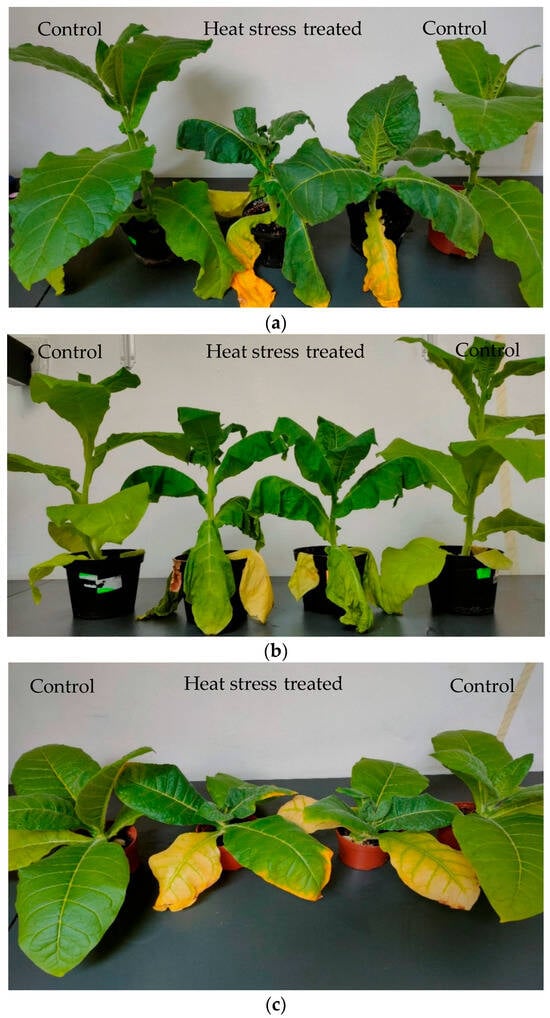
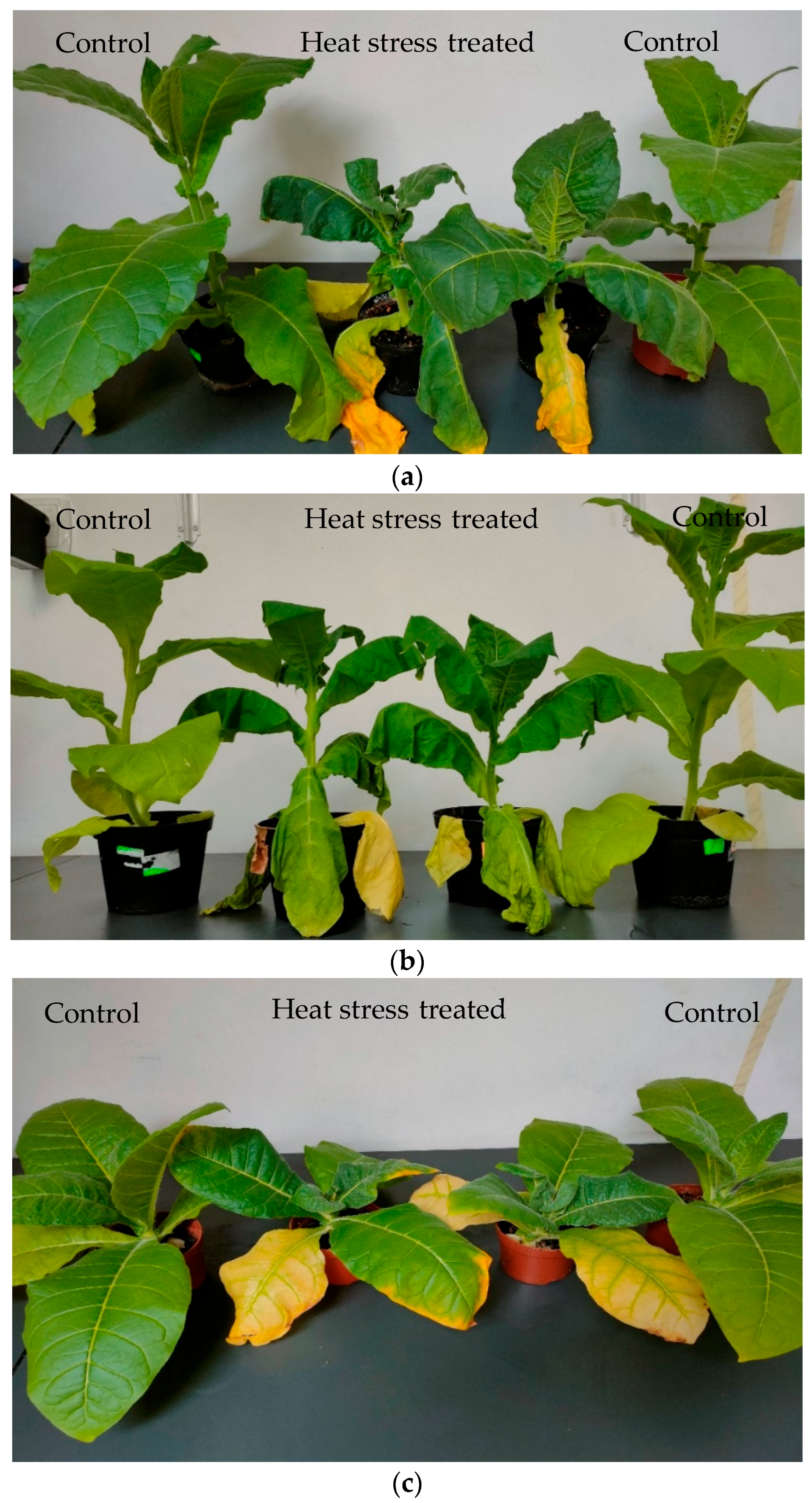
Tobacco plants were exposed to heat stress for 7 days, and then returned to normal temperature conditions. Phenotypic changes observed on the 7th day of high-temperature stress in tobacco plants are presented in Figure 1. No visible signs of damage were detected during the initial three days of heat exposure. By the 5th day of stress, high temperatures caused light yellowing of the lower leaves in all tobacco types and wilting in Oriental tobacco. These damages became more pronounced by the 7th day of heat stress, with lower tobacco leaves showing more yellowing and some necrotic spots. Wilting was observed in both Oriental and Virginia tobacco leaves. Plants were able to recover 3 days after being subjected to heat stress, and only severely damaged lower yellow leaves did not survive.
Figure 1.
Phenotypic changes on the 7th day of high-temperature stress in Virginia (a), Oriental (b), and Burley (c) tobacco plants and controls. Control plants were grown at 20/23 °C day/night temperatures; Heat-stressed plants were grown at 38 °C.
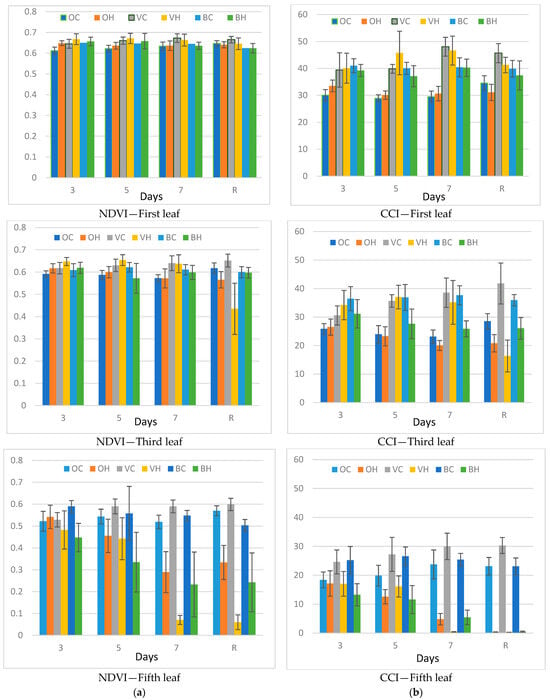
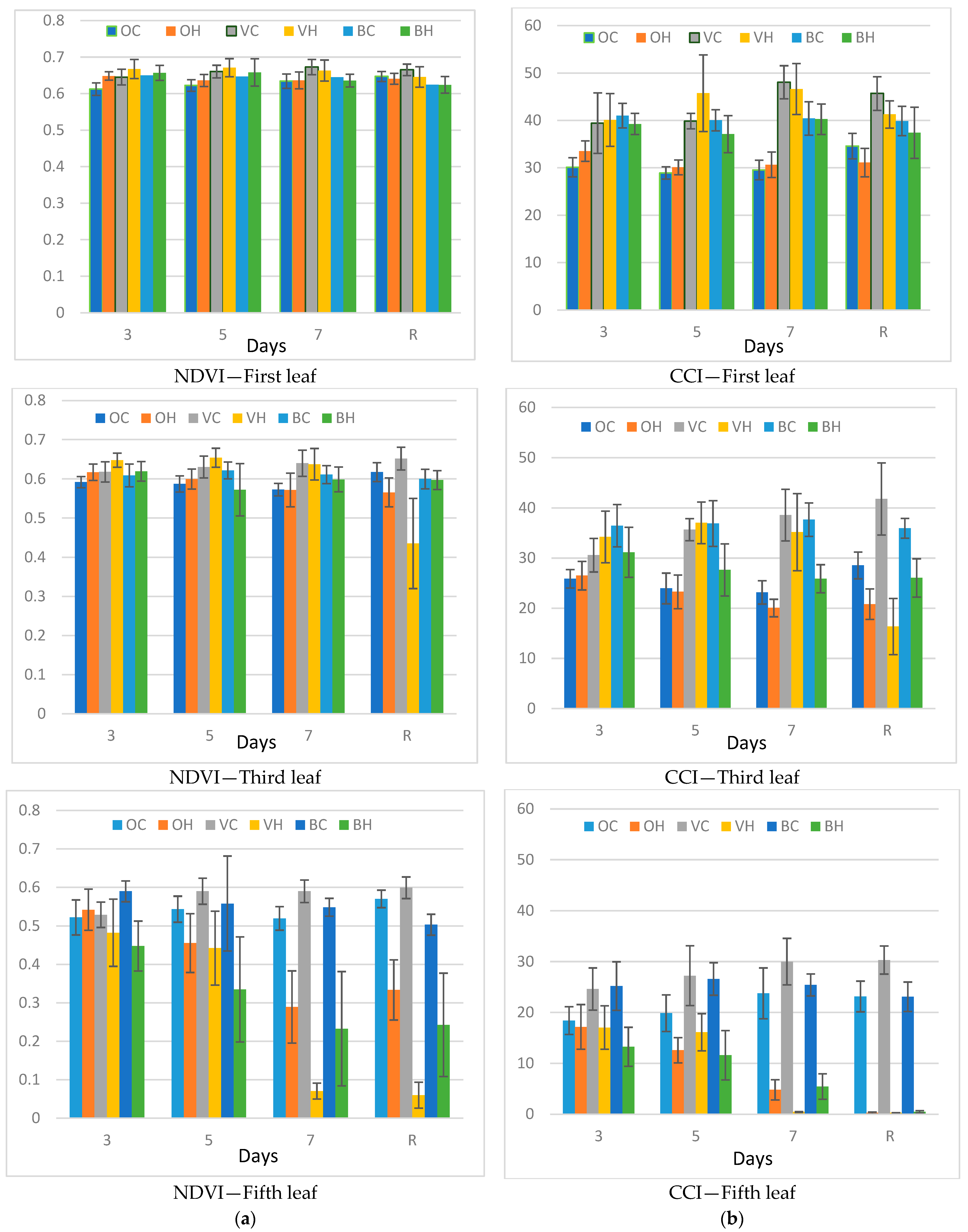
Two vegetative indices associated with plant pigments were evaluated to assess the impact of high temperature on tobacco plants. NDVI measurement (Figure 2a) on the first upper and third leaves did not show differences between control and stressed plants. However, NDVI values obtained from the fifth leaf enabled differentiation between control and stressed tobacco plants. After 7 day of exposure to high temperatures, NDVI decreased in 5th leaf of all treated plants, with Virginia tobacco exhibiting 88% decrease compared to controls. These reduced index values persisted even after plants were returned to normal temperatures.
Figure 2.
NDVI (a) and SPAD Chlorophyll content index CCI (b) in tobacco plants grown at high temperature for seven days and recovery; high-temperature stressed tobacco—Oriental (OH), Virginia (VH), and Burley (BH), and controls—Oriental (OC), Virginia (VC), and Burley (BC). Data are represented as the means ± SD of five biological replicates.
Leaf chlorophyll content was measured non-destructively using a Soil–Plant Analysis Development (SPAD) meter (Figure 2b). Chlorophyll content did not change in the youngest fully expanded leaf across all tobacco plants at both high and normal temperatures. After 7 days at 38 °C, during recovery from stress, all plants showed lower chlorophyll content in the 3rd leaf compared to controls, with a decrease of approximately 30% in Burley and Oriental tobacco. The reduction was most pronounced in Virginia tobacco, reaching a 60% decrease. Differences between control and stressed plants were even more evident in the 5th leaf. Chlorophyll content decreased by 47% in Burley after 3 days of heat stress, and in all tobacco types, the reduction ranged from 40% to 60% after 5 days at high temperatures. On the seventh day of stress, a significant 80% decrease in chlorophyll content was observed in all plants compared to the controls, with no detectable chlorophyll in Virginia. These leaves were unable to recover by the 3rd day at normal temperature.
The results of the univariate ANOVA (Table 2) indicate that high-temperature stress and subsequent recovery significantly affect the photosynthetic activity and chlorophyll content in different tobacco lines. Across the three types, statistically significant differences in the NDVI trait were observed between control, stressed, and recovered plants. Additionally, in the Virginia tobacco, significant differences were observed between the stressed and recovered plants. This highlights the sensitivity to temperature stress across all the examined tobacco lines.
Table 2.
Univariate ANOVA results for NDVI and Chlorophyll content index (CCI) in control, high-temperature stressed, and recovered plants of Burley, Oriental, and Virginia tobacco.
The average CCI values of the control groups across all three tobacco plants were significantly higher than those of the stressed and recovered groups. In addition, significant differences were also observed between the groups subjected to temperature stress and the recovered ones in the Burley and Virginia tobacco. In the Oriental tobacco, statistically significant differences were noted between groups for both NDVI and CCI. Still, the magnitude of the changes was more moderate, suggesting a greater resistance to high-temperature stress of this tobacco type.
The results of the univariate ANOVA (Table 3) show that NDVI and CCI vary significantly depending on the duration of high-temperature stress among the three tobacco lines. In Virginia and Oriental tobacco, the average NDVI values for the control group (day 0) and the 3rd day differ significantly from those on the 7th day, indicating a progressive decline in photosynthetic activity under prolonged stress. In contrast, for Burley tobacco, a statistically significant difference in NDVI is observed only between the control group (day 0) and the 7th day, indicating a more limited change in this indicator for Burley tobacco.
Table 3.
Temporal changes in NDVI and Chlorophyll index (CCI) under univariate ANOVA analysis in Burley, Oriental, and Virginia tobacco.
Regarding CCI, no statistically significant differences were observed across individual days for Burley and Virginia tobacco, suggesting relative stability in chlorophyll content despite temperature stress. In contrast, in Oriental tobacco, CCI values on days 0, 3, and 5 differed significantly compared to day 7, indicating a distinct reduction in chlorophyll content under prolonged stress. In the previous analysis (Table 2), Oriental tobacco was identified as the most resistant to high temperature stress. However, the data in Table 3 show that this resistance is only short-term: under prolonged stress, NDVI and, in particular, CCI decrease significantly, suggesting the limited long-term tolerance of this line.
3.2. NIR Spectra of Tobacco Plants
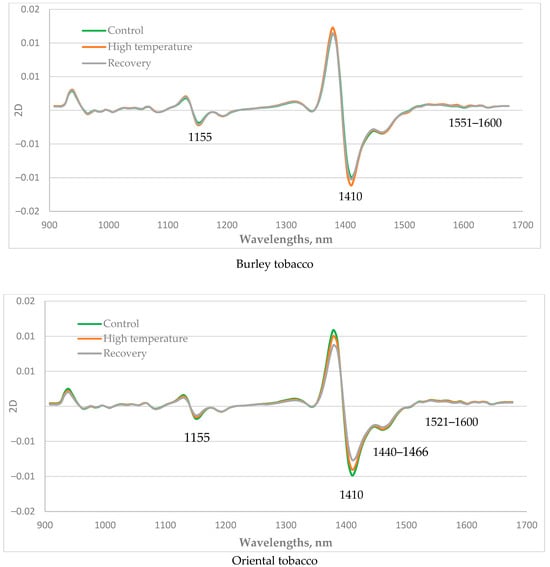
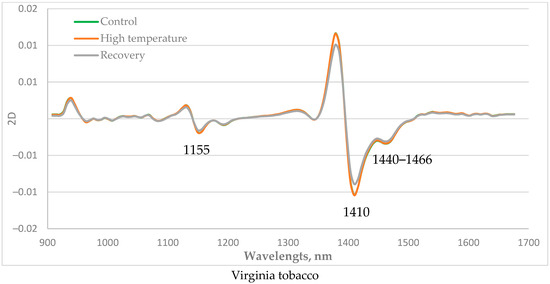
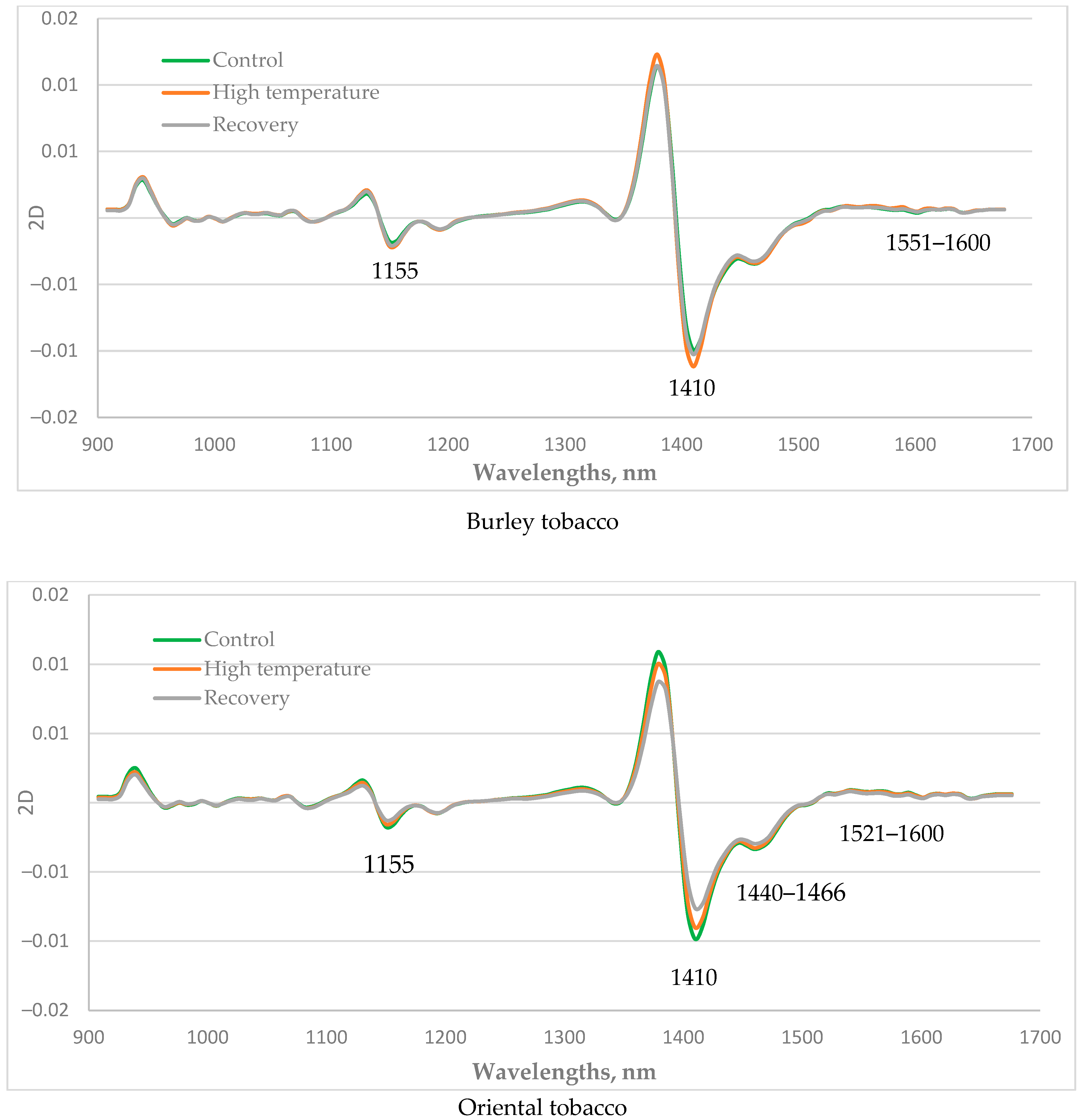
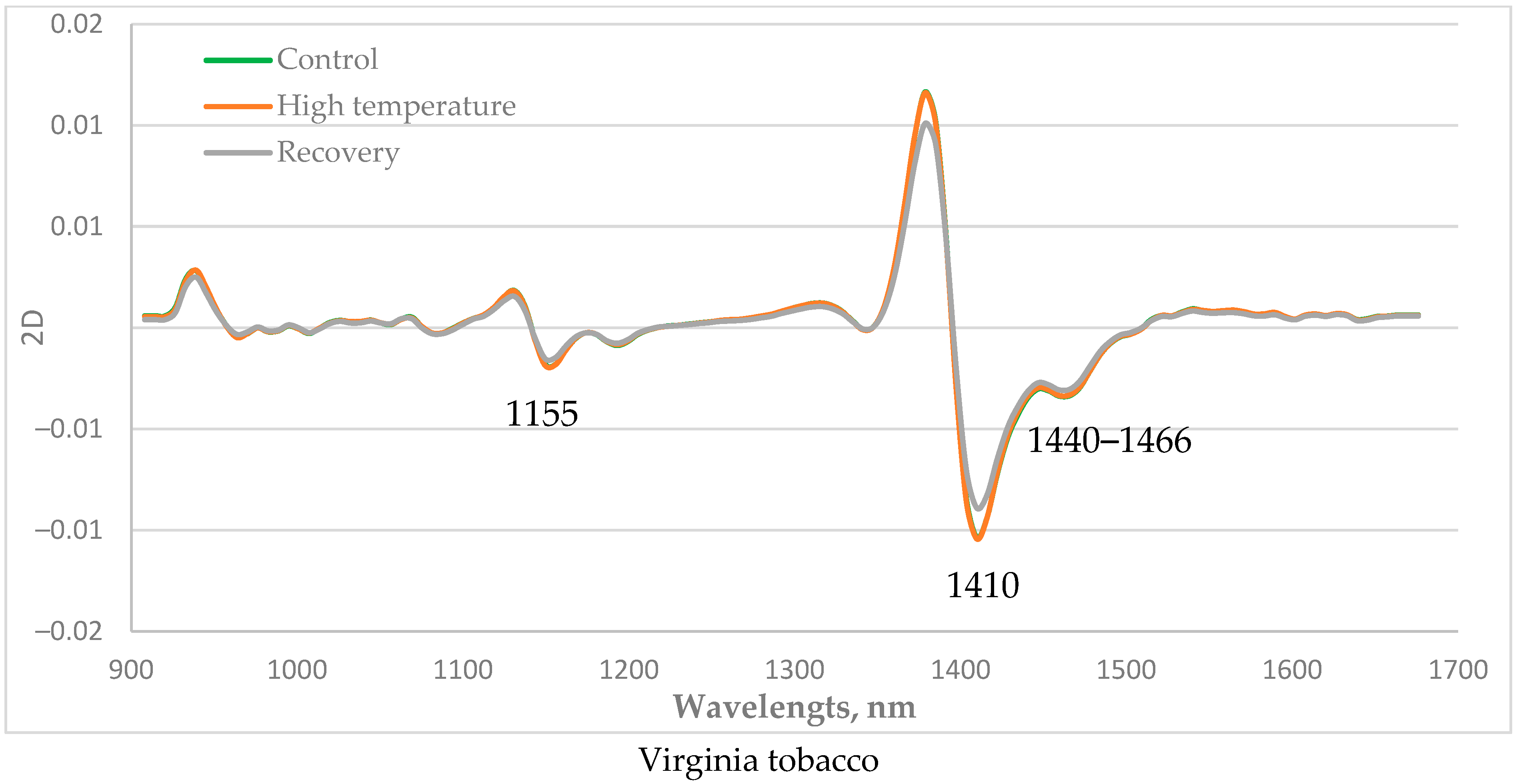
Average NIR spectral characteristics of the measured leaves from control, high-temperature-grown, and recovered plants transformed as a second derivative (2D) are presented in Figure 3. The second derivative transformation enabled the separation of overlapping peaks that were that not distinguishable in the original spectrum, making small or hidden peaks more visible, which is especially useful for detecting minor compounds. The absorption patterns of the three investigated tobacco types were highly similar. The largest maximum was observed at 1410 nm, due to the water absorption. The spectral features in the region 1450–1470 nm depend mainly on different water molecular conformations. Hydrogen bonding strongly shapes the NIR spectrum of water by broadening absorption bands and shifting their positions. The strength of the hydrogen bonding influenced the position of the O–H stretching vibration. At higher temperatures, hydrogen bonds weaken, leading to shift towards shorter wavelengths in absorption peaks [41]. In the investigation of cold stress in cucumber plants, the largest maximum in their NIR spectra was reported at 1416 nm [45]. The observed maximum in tobacco spectra at 1410 nm in this experiment confirmed the water shift at shorter wavelengths. Wang et al. [46] assigned 1406 nm as vibration of non–hydrogen–bonded OH in a water molecule. Another small maximum was found at 1155 nm, which could also be connected also with the absorption of the O-H group from water.
Figure 3.
Second derivative (2D) spectra of control, high-temperature treatment, and recovery tobacco plants.
Small differences existed in 1527–1600 nm range, in addition to the above-mentioned regions. The area between 1521 and 1600 nm contained closely located absorption lines related to C-H, O-H, and N-H bands [47]. In aquaphotomics, this region was related to strongly bound water and water-cellulose or water-protein interactions.
The differences between the spectra of control and treated plants were smaller for Virginia plants compared to those for Oriental and Burley. The spectra of recovered plants differed from those of control and stressed plants.
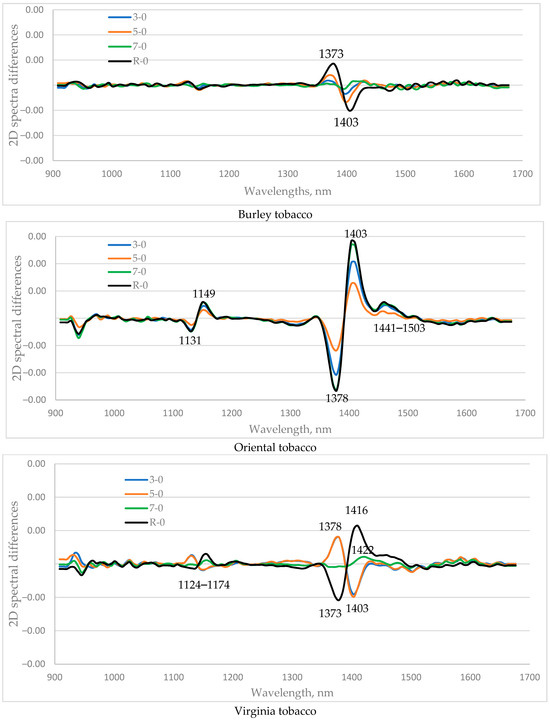
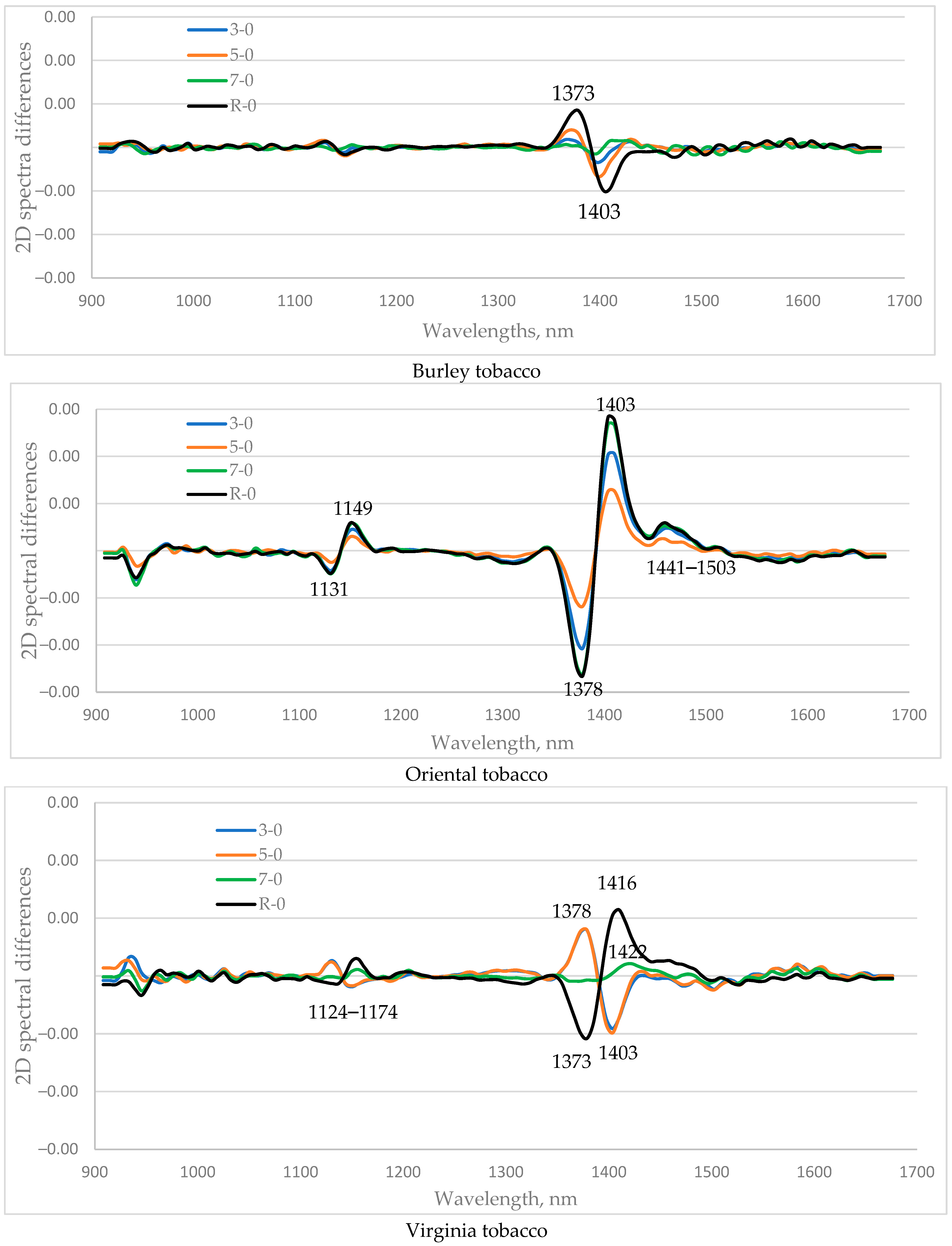
For a more detailed study of the changes in the spectral characteristics of the tobacco plants under high-temperature stress, differences in the average spectra measured on day 0 and days 3, 5, and 7 of the high-temperature stress, as well as recovery plants, were calculated (Figure 4). The largest differences between the spectra of control and stressed plants were found around 1370–1440 nm for all tobacco types, indicating changes in water content. With the same scale of the coordinate axes for a different tobacco type, it was clearly visible that differences were bigger for Oriental plants, particularly in the 1370–1440 nm region. Much smaller were the differences in the plants of Burley. These differences in the spectra were also consistent with the lack of statistically significant differences in the measured NDVI and CCI values. The differences observed for Virginia tobacco were also smaller compared to those for Oriental tobacco.
Figure 4.
Differences between the NIR spectral characteristics transformed as the second derivative of plants, grown under high-temperature stress, measured on different days (3, 5, and 7 days), recovered plants, and the spectra of the control (zero day). In figures, the legend 3-0 means spectra measured at day 3 minus spectra at day 0; 5-0 means spectra measured at day 5 minus spectra at day 0, etc.
The data showed some differences in leaf spectra changes during the heat treatment. For example, the spectra of control plants and those measured on the 7th day of stress and recovery in Oriental tobacco plants were very similar. The spectral differences between the control and those measured on the 3rd and 5th days of stress for Oriental tobacco were clearly distinguished around 1378–1403 nm, whereas for Virginia tobacco, they were very close. Interestingly, the differences between the spectra of control and measured at the 7th day of stress were smaller than those for the 3rd and 5th days for Burley and Virginia tobacco, and the maximum differences in the commented region were found at 1442 nm. This wavelength corresponds to C7 WAMACS, and absorption in this area could be connected with water molecules with one hydrogen bond.
3.3. Tobacco Plants’ Aquagrams
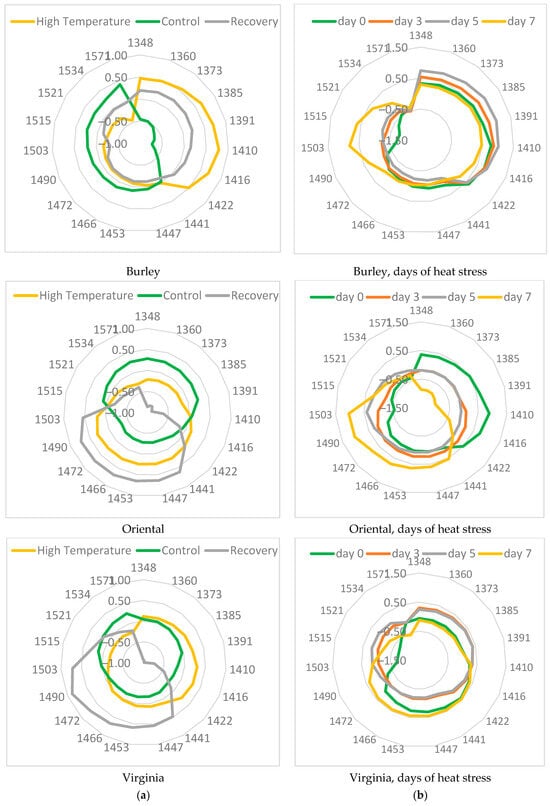
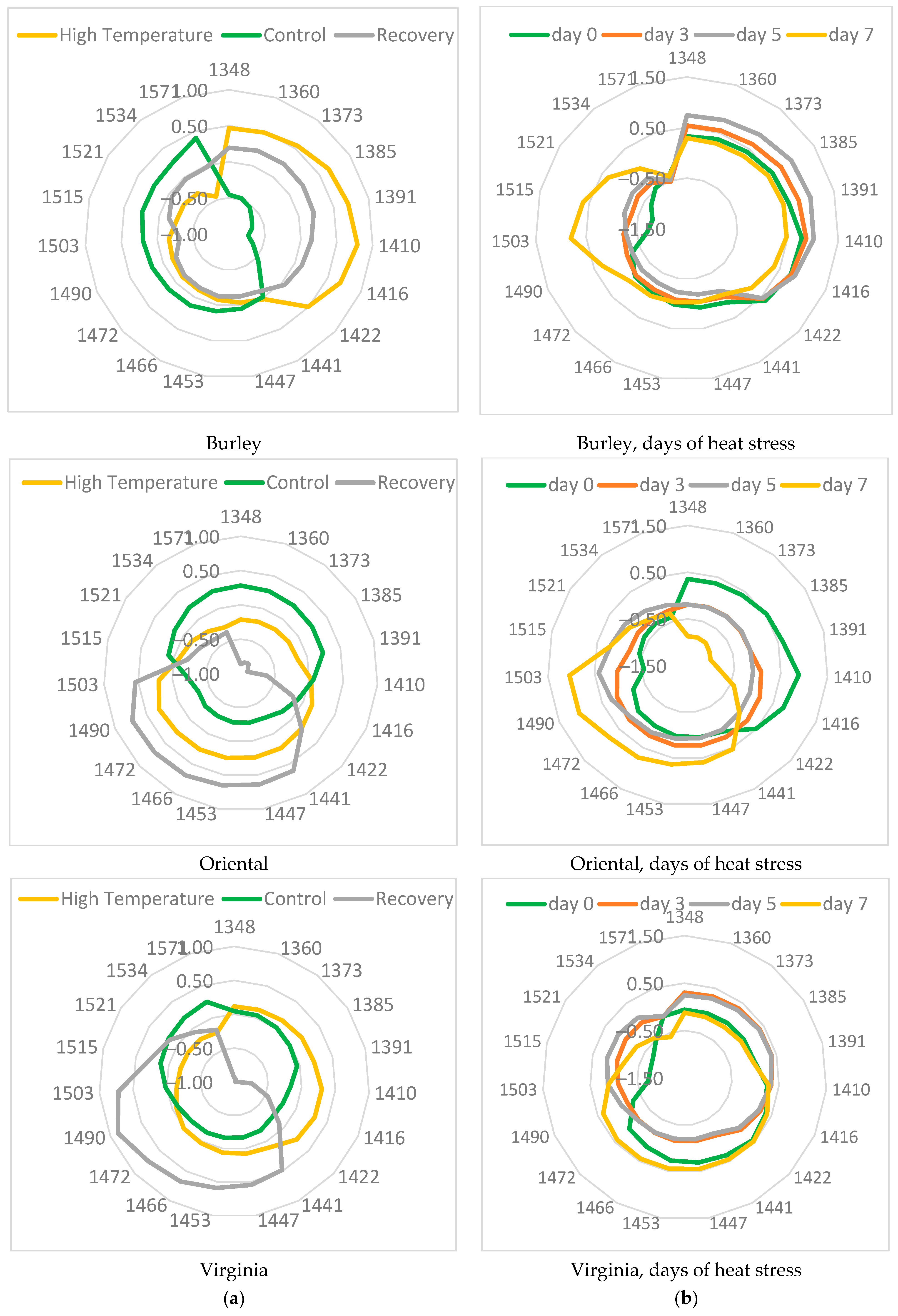
To further investigate the changes in water status in leaves during high temperature stress, aquagrams were calculated for control, stressed, and recovered plants (Figure 5a). The aquagrams showed that the three investigated tobacco types responded differently to the heat stress. The aquagrams for the control, stressed, and recovery tobacco plants showed clear differences, but the tendencies in changes varied among the three studied tobacco types. The aquagram of control Burley plants was different from that of stressed and recovery plants. They showed that the bound water content in control plants was higher than that in stressed plants. This is also in agreement with the higher absorption at 1410 nm in the spectrum of stressed compared to control plants (Figure 3). For the stressed plants, the content of free and weakly bound water was dominant. This could be explained by the effect of high temperature, which weakened hydrogen bonding.
Figure 5.
Aquagrams of control, stressed and recovered tobacco plants (a) and different days of heat stress (b).
The differences in the aquagrams for control, stressed, and recovered plants are greatest for Oriental tobacco, which confirms the observations in their spectral characteristics and the observed greatest differences between them. In the aquagrams of stressed and recovered plants, an increase in water molecules with two, three, and four hydrogen bonds (range 1453–1490 nm) was observed. The differences in aquagrams between control and stressed Virginia tobacco plants were smaller compared to those of Burley and Oriental plants. The values of stressed plants in the range 1410–1441 nm were higher than those for control plants, as for Burley tobacco, which suggested more water dimers. The aquagram for recovered plants was similar to that for Oriental plants. Analysis of the aquagrams revealed significant differences in the organization of water molecules among the three studied tobacco plants, as well as specific changes resulting from heat stress.
In Figure 5b, the aquagrams for different days of heat stress are presented. The aquagrams for the third and fifth days of Burley plants were very similar, with differences observed only on the seventh day of heat stress. Again, aquagrams for the third and fifth day of Oriental plants were very similar, but differences were observed for control and recovery plants. In this type of tobacco, a trend of increasing water molecules with two, three, and four hydrogen bonds, as well as interactions between water and cellulose or proteins, was observed on the seventh day [48]. Differences in aquagrams for Virginia plants were smaller, as confirmed by small differences in spectral characteristics (Figure 3 and Figure 4).
3.4. PLS Models for the Determination of Days of Heat Stress
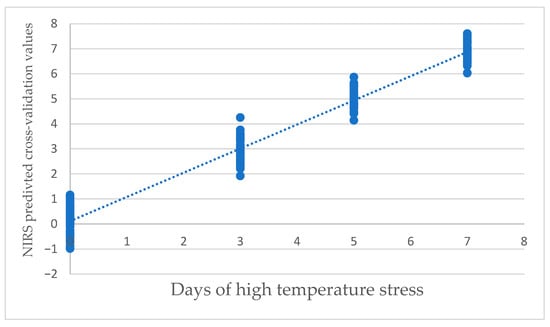
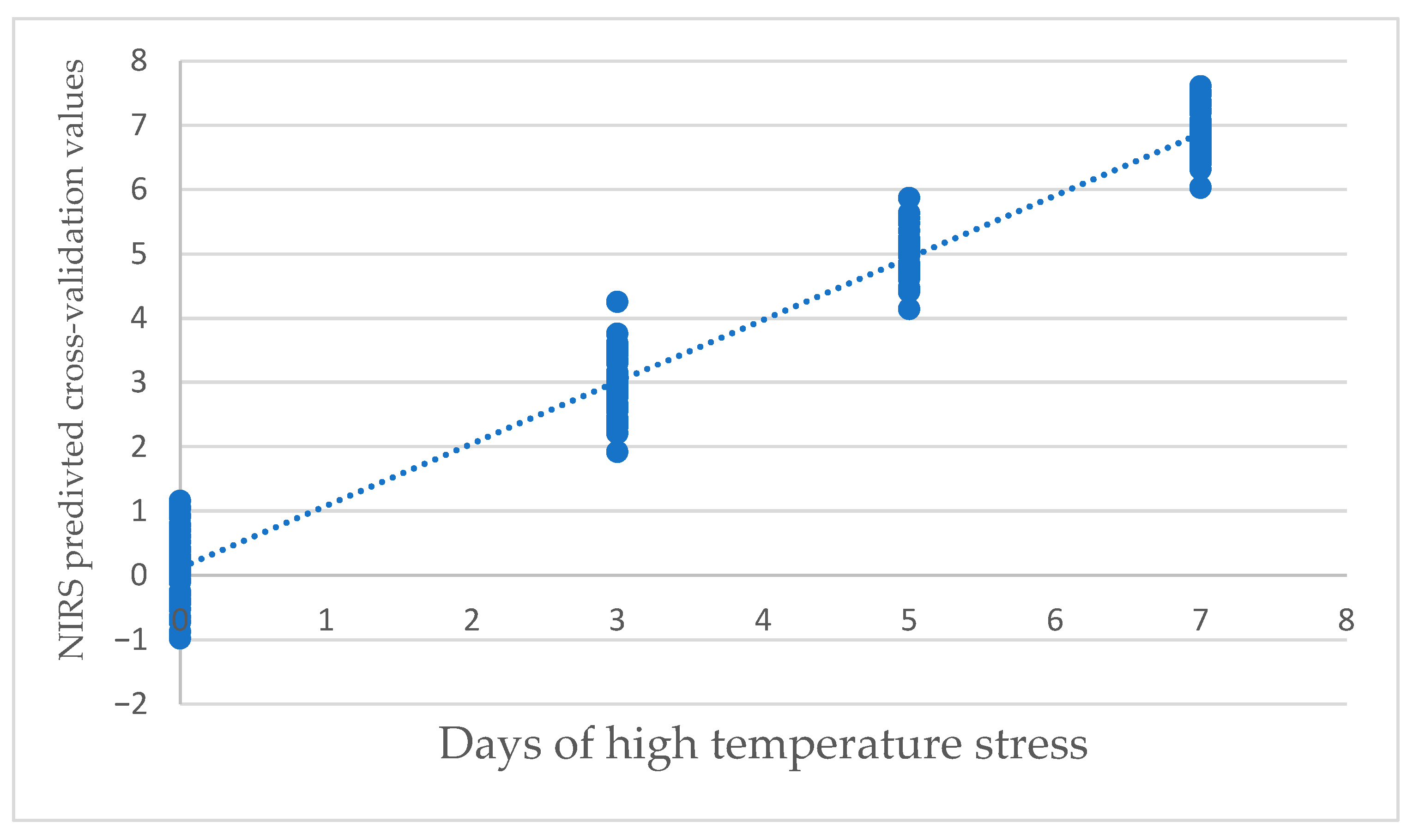
PLS models were created to determine the days of high-temperature stress using full spectral range and second derivative data preprocessing, and their statistical parameters are presented in Table 4. The cross-validation errors for determining the days of high-temperature stress were 0.49 days for Burley, 0.61 days for Oriental, and 0.62 days for Virginia plants. Cross-validated correlation coefficients were bigger than 0.96, indicating a strong relation between spectral characteristics and days of stress. A graphical illustration of the accuracy of the determination of days of heat stress for the Burley plants was presented in Figure 6.
Table 4.
Statistical parameters of PLS models for determining days of high temperature stress.
Figure 6.
PLS regression model for the determination of days of heat stress of Burley plants.
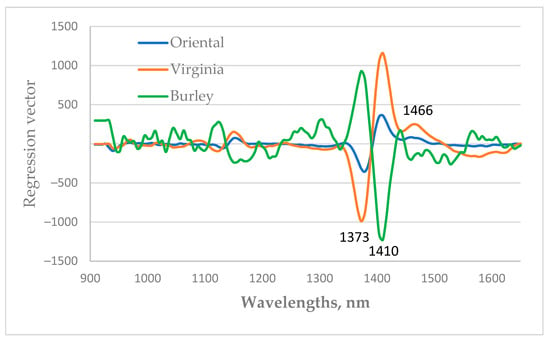
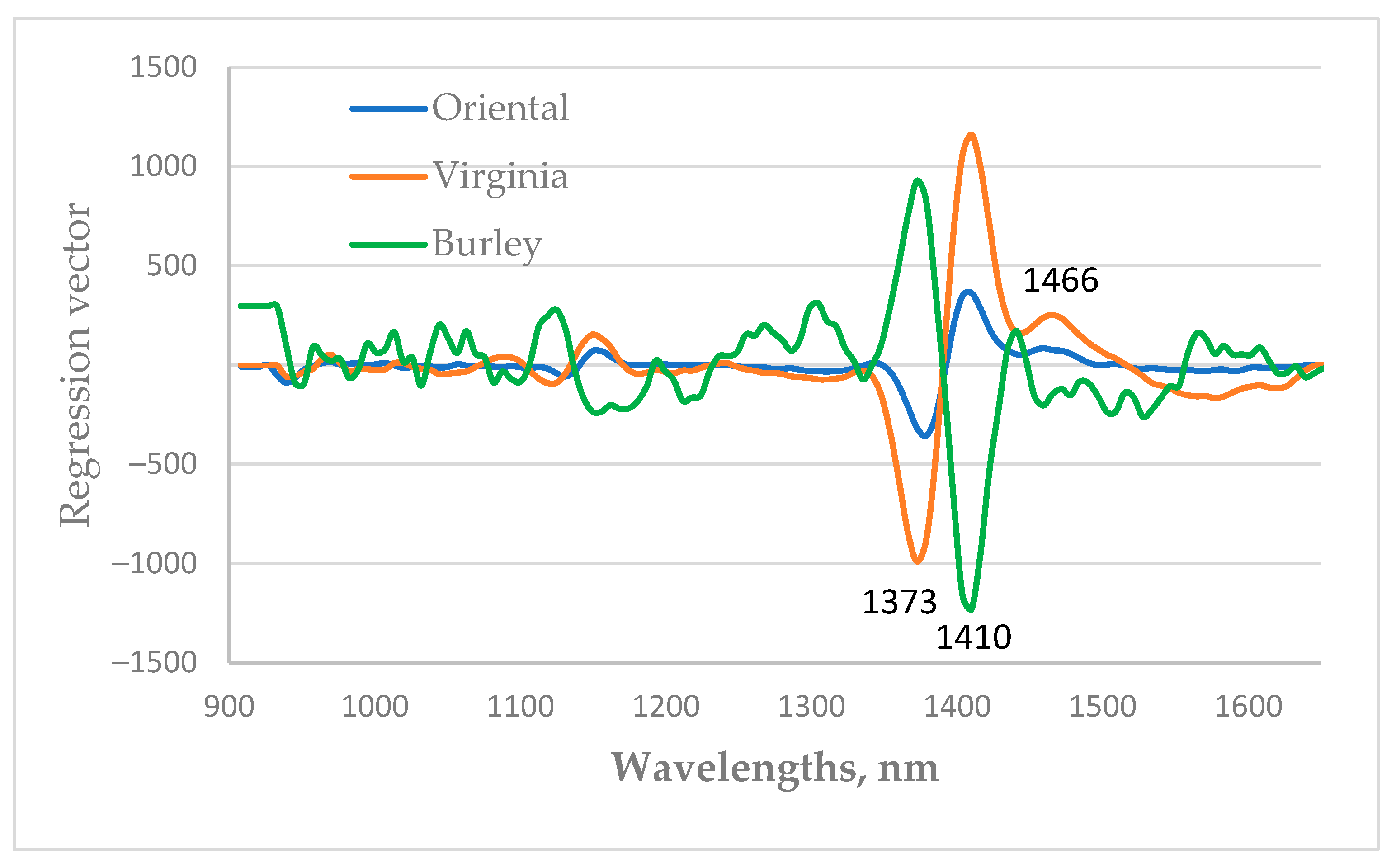
The main goal of creating these models was to explore the significant spectral information on which the determination of stress days is based. An illustration of the regression vectors from PLS regression models for estimating days of high-temperature stress is presented in Figure 7. Models for Oriental and Virginia tobacco provided similar regression vectors. The regression vector for Burley tobacco was different. These results confirm the observed differences in the aquagrams for the three tobacco types.
Figure 7.
Regression vectors from PLS regression models for the determination of days of heat stress in tobacco plants.
The most informative wavelengths were in the 1370–1447 nm region, which is also in agreement with the observed differences in the spectra. This once again confirms the importance of this range, associated with water absorption, for the processes in plants induced by the action of high-temperature treatment.
3.5. Models for Classification of Plants According to Stress Factors
The SIMCA and PLS-DA methods were employed for developing plant classification models based on their spectral data. The measured spectra were divided into three groups: spectra from control plants, spectra from heat-stressed plants, and spectra from recovered plants. Then, models were created for each class. SIMCA and PLS-DA were selected because these methods provide information about the spectral regions that are significant for the discrimination of classes. The main goal in creating classification models was to study whether the changes in the spectral characteristics of tobacco plants resulting from the stress factor are sufficient for classification models, and to identify significant spectral information for classification.
The results of NDVI and chlorophyll index measurements showed that, on the seventh day of stress, there was a significant decrease in their values compared to controls (Table 2). Additionally, significant differences in NDVI and CCI values measured on the 5th leaf were found (Figure 2). Since our goal was early stress detection of tobacco plants, we decided to create two types of SIMCA and PLS-DA models: first, to exclude spectra measured on the seventh day of stress and create the models based on the remaining spectra; second, to use spectral data only from the fifth leaves.
The results of the SIMCA classifications are presented in Table 5 for Burley tobacco, Table 6 for Oriental, and Table 7 for Virginia plants, respectively. The parameters precision, sensitivity, F1, and total accuracy were used to assess the accuracy of the models.
Table 5.
Results of the SIMCA classification of Burley tobacco leaves.
Table 6.
Results of the SIMCA classification of Oriental tobacco leaves.
Table 7.
Results of the SIMCA classification of Virginia tobacco leaves.
The SIMCA models for Burley tobacco, based on spectral data from the first five days of the experiment, showed very good classification accuracy. The total accuracy was 93.6%, and the F1 parameter varied from 88.57% to 90.26%. A high F1 score indicates that the model has a good balance between precision and sensitivity, meaning it can effectively identify positive cases while minimizing false positives and false negatives. An F1 score bigger than 0.9 is considered excellent, and a score between 0.8 and 0.9 is considered good. The sensitivity and precision varied from 79.49 to 100%. The results of the models, based on only the 5th leaf spectra, were slightly less accurate. The total accuracy was 90.74%, and the F1 parameter varied from 72.7% to 88.07%.
The results of the SIMCA models for Oriental and Virginia tobacco showed a slightly lower accuracy in plants’ classification (Table 6 and Table 7). The sensitivity and precision of the control models and stressed plants were higher than 82%. The total accuracy is 93.14%, and the F1 parameter varies from 85.47% to 96.55% for Oriental tobacco. The respective values of F1 for Virginia tobacco were greater than 81%, and the total accuracy was 91.03%. The total accuracy of models, based on the spectral data of only the 5th leaf, showed similar accuracy for Oriental tobacco and higher accuracy for Virginia tobacco.
Analysis of stressed samples determined as controls showed that most of them were those measured on the 3rd day of the high temperature treatment. For example, in Burley models based only on the spectra of fifth leaves, of the 6 incorrectly determined as controls, 4 were measured on the 3rd day of the experiment. For Oriental tobacco—10 samples from the stressed group, determined as control, were also measured on the 3rd day of treatment. Likely, the changes in some plants on the first 3 days of heat action were not as great compared to those for the remaining days of stress, and the spectra were more similar to those of control plants. A similar observation was found for stressed samples determined as recovered. Most of them were samples measured on the 7th day of the stress treatment.
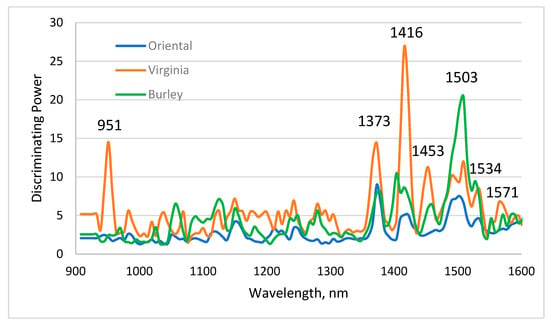
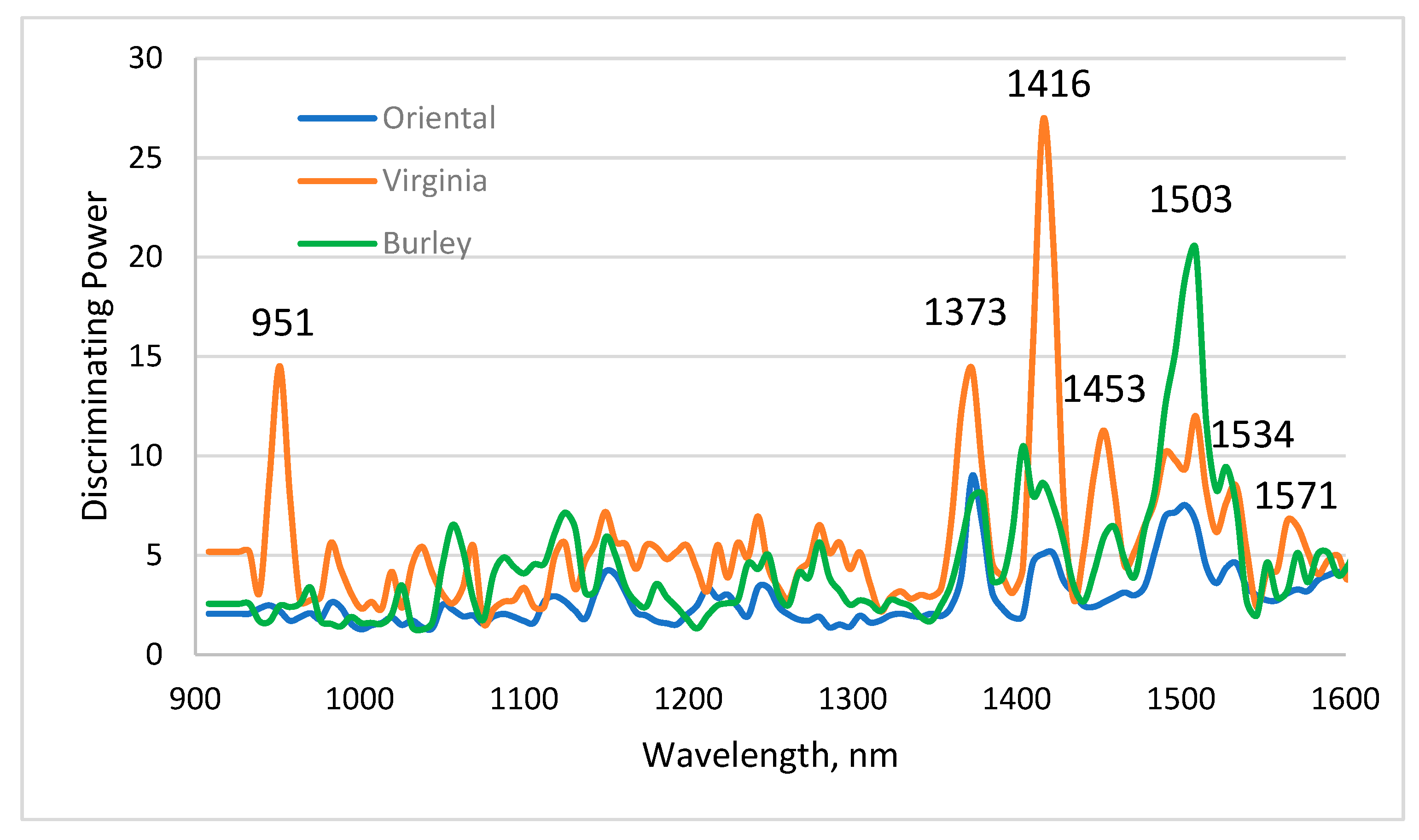
An illustration of the discriminating power plot of SIMCA models, based on spectra of 5th leaves, for the classification of control, stressed, and recovered tobacco plants.is presented in Figure 8. As for regression vectors for the determination of days of high-temperature stress, the most important wavelengths for discrimination of classes were between 1373 and 1503 nm, corresponding to water absorption. The peaks at 1373, 1416, 1453, 1503, 1534, and 1571 nm correspond exactly to the WAMAC coordinates. This once again confirms the importance of this range for estimating changes in tobacco plants caused by high-temperature stress.
Figure 8.
Discriminating power plot from SIMCA models for the classification of control, stressed, and recovered tobacco plants.
The results of the PLS-DA classifications are presented in Table 8 for Burley tobacco, Table 9 for Oriental, and Table 10 for Virginia plants, respectively. The total classification accuracy of the models obtained with the PLS-DA method was higher for Burley tobacco and slightly lower for Oriental and Virginia, respectively, than that of the SIMCA models. The Precision values for the Oriental and Virginia tobacco models are also lower. The main difference observed was the much larger number of unclassified samples compared to those of the SIMCA models.
Table 8.
Results of the PLS-DA classification of Burley tobacco leaves.
Table 9.
Results of the PLS-DA classification of Oriental tobacco leaves.
Table 10.
Results of the PLS-DA classification of Virginia tobacco leaves.
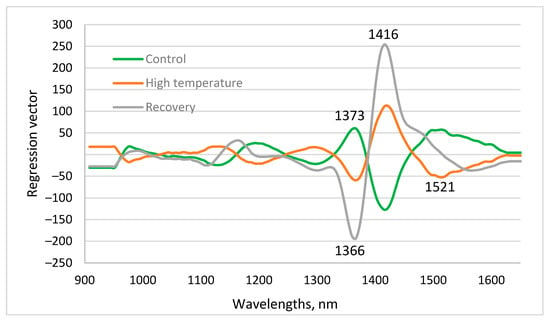
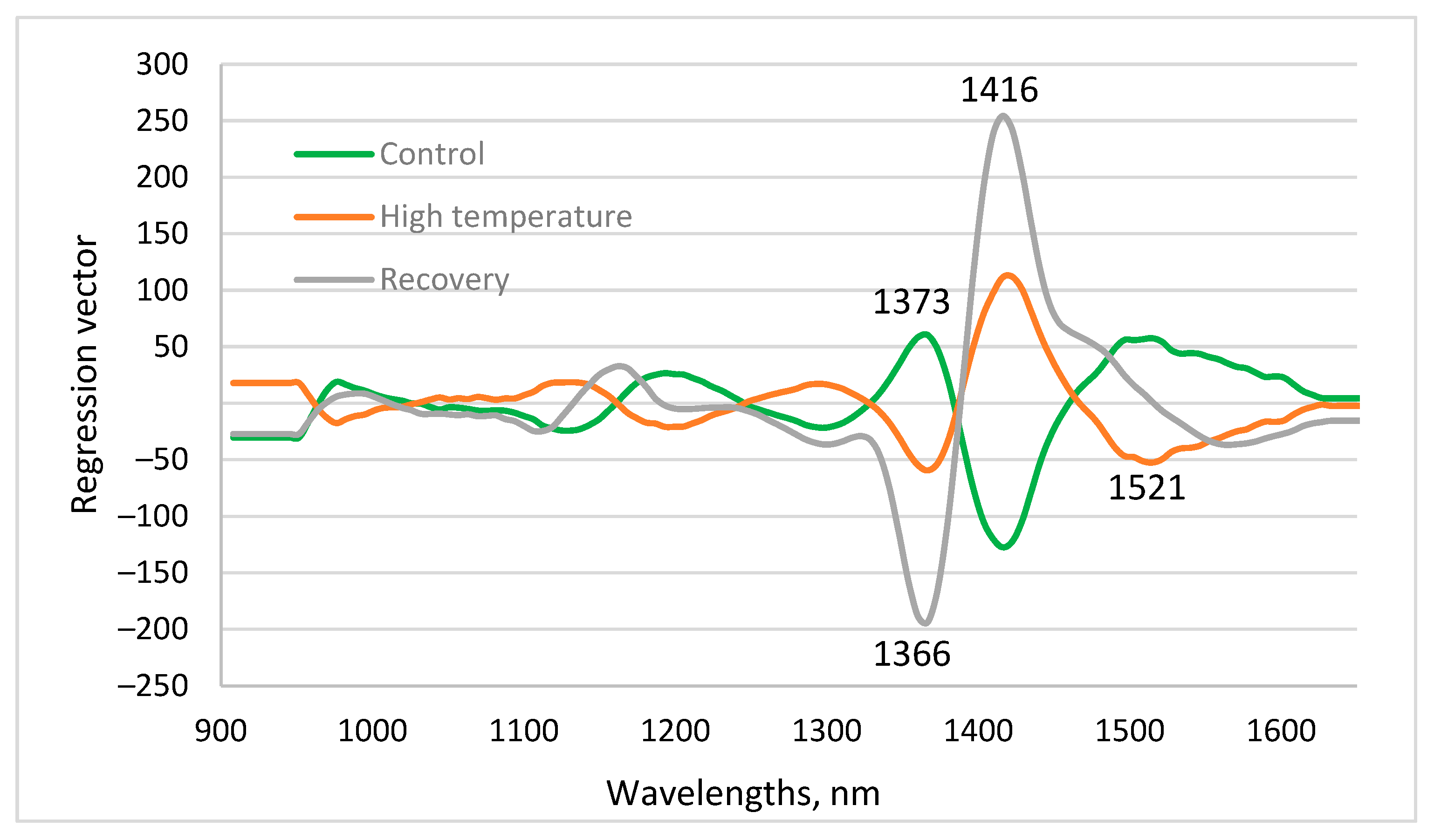
PLS-DA effectively highlights the variables, in our case, wavelengths, that contribute most to class discrimination. Again, as results for the SIMCA method, the most significant region for discrimination between the studied tobacco classes was the 1300–1600 nm. An illustration of this fact is presented in Figure 9, which presents the regression factors of the models for Oriental tobacco. Similar results were found for the Virginia and Burley models.
Figure 9.
Regression vector plot from PLS-DA models for the classification of control, stressed and recovered Oriental tobacco plants, based on spectral data for control, heat-stressed at 3 and 5 days, and recovery plants.
The results of the SIMCA and PLS-DA classification and PLS models for determining the days of heat stress confirmed that the near-infrared spectra of tobacco leaves changed in a specific way, carrying information about the changes in the plant induced by the stress factor. Near-infrared spectroscopy and chemometrics allowed fast and non-destructive detection of heat stress at an early stage.
4. Conclusions
This study was conducted to investigate the changes in three tobacco types—Burley, Oriental, and Virginia under high-temperature stress using portable instruments for measurement of NDVI and chlorophyll index, NIR spectroscopy in the range 900–1700 nm, and an aquaphotomics approach.
Measurement of the NDVI of the first upper and third leaves did not show differences between control and stressed plants. NDVI values measured on the older leaves (fifth leaf) enabled differentiation between control and stressed tobacco plants in all types of tobacco plants. At high temperature, NDVI decreased on the 7th day in all treated plants, with a more pronounced decrease in Virginia tobacco. Chlorophyll content did not change in the youngest fully expanded leaf in all tobacco lines at high and normal temperatures. Differences in chlorophyll index between the control and stressed plants were much greater at the 5th leaf. Chlorophyll content did not change in the youngest fully expanded leaf in control and stressed plants in all types of tobacco. On the seventh day of stress, a significant decrease in chlorophyll content was observed in all plants, with no detectable chlorophyll in Virginia. The leaves were not able to recover on the 3rd day at normal temperature.
The NIR spectroscopy and aquaphotomics approach allowed us to uncover the processes occurring during tobacco heat stress in greater detail. Differences in absorption spectra of tobacco leaves were observed among control, stressed, and recovered plants, as well as across different days of stress. The most significant differences were observed in the range of the first overtone of water, from 1370 to 1570 nm. Aquagrams and spectra analyses of the studied tobacco types also showed differences in their responses to high temperatures, and specific changes in leaf free and bound water. Based on the spectral characteristics, it is possible to generate models for determining the days of high temperature stress and models for discriminating between control and stressed plants with good accuracy.
Near-infrared spectroscopy and aquaphotomics has a potential to be used in the future after validation under field conditions and in larger germplasm panels as an additional fast and non-destructive approach for the selection of high-temperature-tolerant tobacco types.
Author Contributions
Conceptualization, S.A., P.S. and D.M.; methodology, S.A., P.S. and D.M.; software, S.A., A.P. and P.V.; validation, S.A. and P.V.; formal analysis, A.P., P.V. and G.S.; investigation, D.M., S.A., P.S., P.V., A.P. and N.K.C.; resources, D.M. and N.K.C.; data curation, S.A.; writing—original draft preparation, S.A., P.S., D.M., N.K.C. and P.V.; writing—review and editing, S.A. and D.M.; visualization, S.A. and P.V.; supervision, S.A.; project administration, S.A. and P.S.; funding acquisition, S.A. and P.S. All authors have read and agreed to the published version of the manuscript.
Funding
This research was funded by the National Science Fund of Bulgaria (Contract No. KP-06-N51/3). The topic of the scientific research national project is: “Aquaphotomics approach for investigation of stress-induced changes of water molecular structure in green species”.
Institutional Review Board Statement
Not applicable.
Informed Consent Statement
Not applicable.
Data Availability Statement
All data are available from the corresponding author upon request.
Acknowledgments
The authors would like to express their gratitude to H. Bozukov of the Institute of Tobacco and Tobacco Products, Plovdiv, Bulgaria, for kindly providing seed samples of the three tobacco lines analyzed in the present study.
Conflicts of Interest
The authors declare no conflicts of interest.
Abbreviations
The following abbreviations are used in this manuscript:
| NIR | Near-infrared |
| NDVI | Normalized Difference Vegetation Index |
| CCI | Chlorophyll Content Index |
| PLS | Partial Least Squares regression |
| Rcal | Multiple correlation coefficients between reference values and NIR predicted values calibration |
| SEC | Standard error of calibration |
| Rcv | Multiple correlation coefficients between reference values and NIR predicted values for cross-validation |
| SECV | Standard error of cross-validation |
| SIMCA | Soft Independent Modeling of Class Analogy |
| PLS-DA | Partial Least Squares–Discriminant Analysis |
References
- Bohnert, H.J.; Nelson, D.E.; Jensen, R.G. Adaptations to environmental stresses. Plant Cell 1995, 7, 1099–1111. [Google Scholar] [CrossRef] [Scilit]
- Madhava Rao, K.V. Introduction. In Physiology and Molecular Biology of Stress Tolerance in Plants, 1st ed.; Madhava Rao, K.V., Raghavendra, A.S., Janardhan Reddy, K., Eds.; Springer: Dordrecht, The Netherlands, 2006; pp. 1–14. [Google Scholar]
- Salvucci, M.E.; Crafts-Brandner, S.J. Inhibition of photosynthesis by heat stress: The activation state of Rubisco as a limiting factor in photosynthesis. Physiol. Plant. 2004, 120, 179–186. [Google Scholar] [CrossRef] [Scilit]
- Feller, U.; Vaseva, I.I. Extreme climatic events: Impacts of drought and high temperature on physiological processes in agronomically important plants. Front. Environ. Sci. 2014, 2, 39. [Google Scholar] [CrossRef] [Scilit]
- Gourdji, S.M.; Sibley, A.M.; Lobell, D.B. Global crop exposure to critical high temperatures in the reproductive period: Historical trends and future projections. Environ. Res. Lett. 2013, 8, 24041. [Google Scholar] [CrossRef] [Scilit]
- Kulik, M.C.; Bialous, S.A.; Munthali, S.; Max, W. Tobacco growing and the sustainable development goals, Malawi. Bull. WHO 2017, 95, 362–367. [Google Scholar] [CrossRef] [Scilit] [PubMed]
- Appau, A.; Drope, J.; Witoelar, F.; Chavez, J.J.; Lencucha, R. Why Do Farmers Grow Tobacco? A Qualitative Exploration of Farmers Perspectives in Indonesia and Philippines. Int. J. Environ. Res. Public Health 2019, 16, 2330. [Google Scholar] [CrossRef] [Scilit]
- Gu, K.; Hou, S.; Chen, J.; Guo, J.; Wang, F.; He, C.; Zou, C.; Xie, X. The physiological response of different tobacco varieties to chilling stress during the vigorous growing period. Sci. Rep. 2021, 11, 22136. [Google Scholar] [CrossRef] [Scilit]
- Sarala, K.; Prabhakara Rao, K.; Nanda, C.; Baghyalakshmi, K.; Darvishzadeh, R.; Gangadhara, K.; Rajappa, J.J. Abiotic Stress Resistance in Tobacco: Advances and Strategies. In Genomic Designing for Abiotic Stress Resistant Technical Crops, 1st ed.; Kole, C., Ed.; Springer: Cham, Switzerland, 2022; pp. 329–427. [Google Scholar] [CrossRef] [Scilit]
- Liu, M.; Liu, X.; Song, Y.; Hu, Y.; Yang, C.; Li, J.; Jin, S.; Gu, K.; Yang, Z.; Huang, W.; et al. Tobacco production under global climate change: Combined effects of heat and drought stress and coping strategies. Front. Plant Sci. 2024, 15, 1489993. [Google Scholar] [CrossRef] [Scilit]
- Kuznetsov, V.V.; Shevyakova, N.I. Stress responses of tobacco cells to high temperature and salinity. Proline accumulation and phosphorylation of polypeptides. Physiol. Plant. 1997, 100, 320–326. [Google Scholar] [CrossRef] [Scilit]
- Lipiec, J.; Doussan, C.; Nosalewicz, A.; Kondracka, K. Effect of drought and heat stresses on plant growth and yield: A review. Int. Agrophys. 2013, 27, 463–477. [Google Scholar] [CrossRef] [Scilit]
- Yang, L.Y.; Yang, S.L.; Li, J.Y.; Ma, J.H.; Pang, T.; Zou, C.M.; He, B.; Gong, M. Effects of different growth temperatures on growth, development, and plastid pigments metabolism of tobacco (Nicotiana tabacum L.) plants. Bot. Stud. 2018, 59, 5. [Google Scholar] [CrossRef] [Scilit]
- Bittner, R.J.; Arellano, C.; Mila, A.L. Effect of temperature and resistance of tobacco cultivars to the progression of bacterial wilt, caused by Ralstonia solanacearum. Plant Soil 2016, 408, 299–310. [Google Scholar] [CrossRef] [Scilit]
- Yanhui, C.; Hongrui, W.; Beining, Z.; Shixing, G.; Zihan, W.; Yue, W.; Huihui, Z.; Guangyu, S. Elevated air temperature damage to photosynthetic apparatus alleviated by enhanced cyclic electron flow around photosystem I in tobacco leaves. Ecotoxicol. Environ. Saf. 2020, 204, 111136. [Google Scholar] [CrossRef] [Scilit]
- Falcioni, R.; Chicati, M.L.; de Oliveira, R.B.; Antunes, W.C.; Hasanuzzaman, M.; Demattê, J.A.M.; Nanni, M.R. Decreased Photosynthetic Efficiency in Nicotiana tabacum L. under Transient Heat Stress. Plants 2024, 13, 395. [Google Scholar] [CrossRef] [Scilit]
- Mathur, S.; Agrawal, D.; Jajoo, A. Photosynthesis: Response to high temperature stress. J. Photochem. Photobiol. B Biol. 2014, 137, 116–126. [Google Scholar] [CrossRef] [Scilit] [PubMed]
- Lobell, D.B.; Hammer, G.L.; Chenu, K.; Zheng, B.; McLean, G.; Chapman, S.C. The shifting influence of drought and heat stress for crops in northeast Australia. Glob. Change Biol. 2015, 21, 4115–4127. [Google Scholar] [CrossRef] [Scilit]
- Carter, G.A.; Knapp, A.K. Leaf optical properties in higher plants: Linking spectral characteristics to stress and chlorophyll concentration. Am. J. Bot. 2001, 88, 677–684. [Google Scholar] [CrossRef] [Scilit] [PubMed]
- Badgley, G.; Field, C.B.; Berry, J.A. Canopy near-infrared reflectance and terrestrial photosynthesis. Sci. Adv. 2017, 3, e1602244. [Google Scholar] [CrossRef] [Scilit]
- Katsoulas, N.; Elvanidi, A.; Ferentinos, K.P.; Bartzanas, T.; Kittas, C. Crop reflectance monitoring as a tool for water stress detection in greenhouses: A review. Biosyst. Eng. 2016, 151, 374–398. [Google Scholar] [CrossRef] [Scilit]
- Zubler, A.V.; Yoon, J.-Y. Review. Proximal Methods for Plant Stress Detection Using Optical Sensors and Machine Learning. Biosensors 2020, 10, 193. [Google Scholar] [CrossRef] [Scilit]
- Zahir, S.; Omar, A.F.; Jamlos, M.F.; Azmi, M.A.M.; Muncan, J. A review of visible and near-infrared (Vis-NIR) spectroscopy application in plant stress detection. Sens. Actuators A Phys. 2022, 338, 113468. [Google Scholar] [CrossRef] [Scilit]
- Zahir, S.A.D.M.; Jamlos, M.F.; Omar, A.F.; Jamlos, M.A.; Mamat, R.; Muncan, J.; Tsenkova, R. Review—Plant nutritional status analysis employing the visible and near-infrared spectroscopy spectral sensor. Spectrochim. Acta Part A Mol. Biomol. Spectrosc. 2024, 304, 123273. [Google Scholar] [CrossRef] [Scilit]
- Krishnamoorthi, S.; Koh, S.S.; Ang, M.C.-Y.; Teo, J.T.; Jie, R.A.; Dinish, U.S.; Strano, M.S.; Urano, D. Advancements in Plant Diagnostic and Sensing Technologies. Adv. Sens. Res. 2025, 4, e00045. [Google Scholar] [CrossRef] [Scilit]
- Lu, M.; Zhou, Q.; Chen, T.; Li, J.; Jiang, S.; Gao, Q.; Wang, C.; Chen, D. Qualitative Discrimination of Intact Tobacco Leaves Based on Near-Infrared Technology. J. Spectrosc. 2021, 2021, 8807199. [Google Scholar] [CrossRef] [Scilit]
- Lu, X.; Zhao, C.; Qin, Y.; Xie, L.; Wang, T.; Wu, Z.; Xu, Z. The Application of Hyperspectral Images in the Classification of Fresh Leaves’ Maturity for Flue-Curing Tobacco. Processes 2023, 11, 1249. [Google Scholar] [CrossRef] [Scilit]
- Wang, H.; Wu, Q.; Yang, W.; Yu, J.; Wu, T.; Xiong, Z.; Du, Y. NIR and MIR spectral feature information fusion strategy for multivariate quantitative analysis of tobacco components. Chem. Int. Lab Syst. 2024, 253, 105222. [Google Scholar] [CrossRef] [Scilit]
- Rodrigues, M.; de Oliveira, R.B.; dos Santos, G.L.A.A.; de Oliveira, K.M.; Reis, A.S.; Furlanetto, R.H.; Bernardo Júnior, L.A.Y.; Coelho, F.S.; Nanni, M.R. Rapid quantification of alkaloids, sugar and yield of tobacco (Nicotiana tabacum L.) varieties by using Vis–NIR–SWIR spectroradiometry. Spectrochim. Acta Part A Mol. Biomol. Spectrosc. 2022, 274, 121082. [Google Scholar] [CrossRef] [Scilit]
- Zhang, M.; Chen, T.; Gu, X.; Chen, D.; Wang, C.; Wu, W.; Zhu, Q.; Zhao, C. Hyperspectral remote sensing for tobacco quality estimation, yield prediction, and stress detection: A review of applications and methods. Front. Plant Sci. 2023, 14, 1073346. [Google Scholar] [CrossRef] [Scilit]
- Zhu, H.; Chu, B.; Zhang, C.; Liu, F.; Jiang, L.; He, Y. Hyperspectral Imaging for Presymptomatic Detection of Tobacco Disease with Successive Projections Algorithm and Machine-learning Classifiers. Sci. Rep. 2017, 7, 4125. [Google Scholar] [CrossRef] [Scilit] [PubMed]
- Ying, L.; Kun, M.; Xinyu, Z.; Qifu, Y.; Jiaquan, W.; Shuangyan, Y. Identification of Disease Type of Tobacco Leaves Based on Near Infrared Spectroscopy and Convolutional Neural Network. J. Braz. Chem. Soc. 2024, 35, e-20230181. [Google Scholar] [CrossRef] [Scilit]
- Tsenkova, R. Aquaphotomics: Dynamic Spectroscopy of Aqueous and Biological Systems Describes Peculiarities of Water. J. Near Inf. Spec. 2009, 17, 303–314. [Google Scholar] [CrossRef] [Scilit]
- Tsenkova, R.; Muncan, J.; Pollner, B.; Kovacs, Z. Essentials of Aquaphotomics and Its Chemometrics Approaches. Front. Chem. 2018, 6, 363. [Google Scholar] [CrossRef] [Scilit]
- Muncan, J.; Tsenkova, R. Aquaphotomics-From Innovative Knowledge to Integrative Platform in Science and Technology. Molecules 2019, 24, 2742. [Google Scholar] [CrossRef] [Scilit]
- Jinendra, B.; Tamaki, K.; Kuroki, S.; Vassileva, M.; Yoshida, S.; Tsenkova, R. Near infrared spectroscopy and aquaphotomics: Novel approach for rapid in vivo diagnosis of virus infected soybean. Biochem. Biophys. Res. Commun. 2010, 397, 685–690. [Google Scholar] [CrossRef] [Scilit] [PubMed]
- Atanassova, S.; Yorgov, D.; Veleva, P.; Nedyalkova, S. Visible and near-infrared spectroscopy for detection of fungal diseases on Durum wheat. AIP Conf. Proc. 2021, 2889, 080013. [Google Scholar] [CrossRef] [Scilit]
- Muncan, J.; Jinendra, B.M.S.; Kuroki, S.; Tsenkova, R. Aquaphotomics Research of Cold Stress in Soybean Cultivars with Different Stress Tolerance Ability: Early Detection of Cold Stress Response. Molecules 2022, 27, 744. [Google Scholar] [CrossRef] [Scilit]
- Moyankova, D.; Stoykova, P.; Veleva, P.; Christov, N.K.; Petrova, A.; Atanassova, S. An Aquaphotomics Approach for Investigation of Water-Stress-Induced Changes in Maize Plants. Sensors 2023, 23, 9678. [Google Scholar] [CrossRef] [Scilit] [PubMed]
- Atanassova, S.; Petrova, A.; Yorgov, D.; Mineva, R.; Veleva, P. Visible and Near-Infrared Spectroscopy for Investigation of Water and Nitrogen Stress in Tomato Plants. AgriEngineering 2025, 7, 155. [Google Scholar] [CrossRef] [Scilit]
- Maeda, H.; Ozaki, Y.; Tanaka, M.; Hayashi, N.; Kojima, T. Near Infrared Spectroscopy and Chemometrics Studies of Temperature-Dependent Spectral Variations of Water: Relationship between Spectral Changes and Hydrogen Bonds. J. Near Infrared Spectrosc. 1995, 3, 191–201. [Google Scholar] [CrossRef] [Scilit]
- Kojić, D.; Tsenkova, R.; Tomobe, K.; Yasuoka, K.; Yasui, M. Water confined in the local field of ions. ChemPhysChem 2014, 15, 4077–4086. [Google Scholar] [CrossRef] [Scilit]
- Gowen, A.A.; Esquerre, C.; O’Donnell, C.P.; Downey, G.; Tsenkova, R. Use of near infrared hyperspectral imaging to identify water matrix co-ordinates in mushrooms (Agaricus bisporus) subjected to mechanical vibration. J. Near Infrared Spectrosc. 2009, 17, 363–371. [Google Scholar] [CrossRef] [Scilit]
- Vitalis, F.; Muncan, J.; Anantawittayanon, S.; Kovacs, Z.; Tsenkova, R. Aquaphotomics Monitoring of Lettuce Freshness During Cold Storage. Foods 2023, 12, 258. [Google Scholar] [CrossRef] [Scilit] [PubMed]
- Moyankova, D.; Stoykova, P.; Veleva, P.; Christov, N.K.; Petrova, A.; Rusanov, K.; Atanassova, S. Low-Temperature Stress-Induced Changes in Cucumber Plants—A Near-Infrared Spectroscopy and Aquaphotomics Approach for Investigation. Sensors 2025, 25, 7602. [Google Scholar] [CrossRef] [Scilit]
- Wang, M.; An, H.; Cai, W.; Shao, X. Wavelet Transform Makes Water an Outstanding Near-Infrared Spectroscopic Probe. Chemosensors 2023, 11, 37. [Google Scholar] [CrossRef] [Scilit]
- Workman, J.; Weyer, L. Practical Guide to Interpretive Near-Infrared Spectroscopy, 1st ed.; CRC Press Taylor and Francis Group: Boca Raton, FL, USA, 2007. [Google Scholar] [CrossRef] [Scilit]
- Muncan, J.; Anantawittayanon, S.; Furuta, T.; Kaneko, T.; Tsenkova, R. Aquaphotomics monitoring of strawberry fruit during cold storage—A comparison of two cooling systems. Front. Nutr. 2022, 9, 058173. [Google Scholar] [CrossRef] [Scilit] [PubMed]

Disclaimer/Publisher’s Note: The statements, opinions and data contained in all publications are solely those of the individual author(s) and contributor(s) and not of MDPI and/or the editor(s). MDPI and/or the editor(s) disclaim responsibility for any injury to people or property resulting from any ideas, methods, instructions or products referred to in the content. |
© 2026 by the authors. Licensee MDPI, Basel, Switzerland. This article is an open access article distributed under the terms and conditions of the Creative Commons Attribution (CC BY) license.