


Abstract
Greenhouse pesticide application often suffers from low droplet deposition uniformity and health risks to operators. A self-propelled overhead rail air-assisted sprayer has been designed. The mathematical model based on droplet movement and the DPM are used to analyze the equipment’s working principle. Deposition surfaces at 0.4, 0.5, 0.6, and 0.7 m were used to examine the effects of travel speed, external airflow, and spray angle on droplet deposition uniformity. Through one-way analysis of variance, all variables reached a significant level (p < 0.001). Simulation results identified the optimal operating parameters: travel speed of 0.3 m/s, external air-flow velocity of 0.3 m/s, and spray angle of 5°, resulting in droplet deposition densities of 719, 586, 700, and 839 droplets/cm2, with a coefficient of variation of 14.57%. The sediment variation coefficients of both the on-site test results and the simulation results were within 10%, which proved the reliability of the numerical simulation. In conclusion, the device proposed in this study effectively enables targeted fog spraying for multi-layer crops in greenhouses, significantly improving pesticide utilization, reducing application costs, and minimizing environmental pollution. It offers reliable technical support for greenhouse pest control operations.
1. Introduction
Facility agriculture is a key component of modern agricultural production. Greenhouses play a central role in year-round vegetable cultivation. They ensure a stable supply and support increased agricultural output. Vegetables are essential sources of nutrients and occupy a key position in human diets. China is the world’s largest vegetable producer. Greenhouse facilities have expanded rapidly in recent years. The total area has increased from 555,459.78 to 1,295,479.91 hm2 [1].
Currently, pest control in greenhouse agriculture relies predominantly on chemical methods to mitigate crop losses caused by diseases and pests. However, excessive dependence on chemical control not only results in over-application of pesticides but also leads to environmental pollution and pesticide residues. Manual backpack atomization devices remain widely used. They expose operators to high concentrations of chemicals over prolonged periods, posing health risks and increasing labor costs. To address these challenges, the development of advanced atomization devices and precise application techniques has become crucial.
An atomization device is a device that uses water pump pressure to convert liquid droplets into mist droplets and to impart kinetic energy to them. Atomization spraying provides strong droplet adhesion and reduces pesticide consumption. It also minimizes environmental impact. This technique has been widely applied in protected agriculture. Air-assisted spraying technology breaks liquid droplets into finer particles through forced airflow. It also controls droplet trajectories, improving deposition efficiency and uniformity. This technology enhances atomization and reduces environmental impact. Air-assisted spraying Recent studies have focused on improving droplet penetration and deposition through auxiliary airflow. For instance, Dai Shiquan et al. [2] designed a small-flow air-assisted atomization device and, through orthogonal experiments, evaluated the effects of spraying speed, distance, and arrangement angle on droplet deposition, demonstrating improved uniformity in near- and mid-canopy layers. Fan Feng et al. [3] developed an orchard atomization device with airflow control, which enhanced canopy deposition and reduced drift. Similarly, Lin Jinlong et al. [4] designed a single-track autonomous air-assisted atomization device, verifying airflow distribution and spray performance, thus providing a predictable solution for greenhouse pest control. Wei Qiu et al. [5] developed an electro-rotary vortex gas-assisted atomization device, and Tian Li et al. [6] analyzed airflow velocity and direction, demonstrating significant improvements in deposition coverage. Other studies have explored operational operating parameters. Jian Song et al. [7] quantified the interactions between spray distance, fan speed, deposition height, and droplet distribution. Alberto Godoy-Nieto et al. [8] compared the spraying efficiency of three types of air-assisted atomization devices with that of a conventional atomization device. Their results indicate that different planting systems are better suited to different types of air-assisted spraying technologies. Shijie Jiang et al. [9] examined the influence of various operating parameters on airflow and coverage, confirming that air-assisted atomization devices reduce droplet loss and environmental impact. Jinlong Lin et al. [10] investigated the effects of spray angle and travel speed on the deposition uniformity of air-assisted atomization devices, revealing that the deposition coverage on both left and right sides of the canopy decreased with increasing spray angle, while it increased with higher horizontal travel speed. Youyi Miao et al. [11] designed an air-assisted remote-controlled atomization device. The experiments showed that droplet deposition and coverage were highest at the top layer. They gradually decreased with increasing spray distance. Further research by Chenchen Gu et al. [12], Dou Hanjie et al. [13], Quanshun An et al. [14], and Yanjie Li et al. [15] highlighted the significant effects of fan speed, spray pressure, spray distance, and canopy characteristics on droplet deposition. The studies demonstrated the superiority of air-assisted atomization devices over traditional equipment in terms of deposition efficiency, uniformity, and environmental protection. Despite these advances, many studies continue to rely on high-flow blanket spraying. This approach often leads to the overuse of chemical agents and reduced pesticide efficiency. Optimizing the operational parameters of air-assisted atomization devices, including travel speed, external wind speed, and spray angle, is therefore of considerable practical and research significance.
The operation of plant protection equipment involves multiple interacting modules and parameters. This complexity makes conventional field experiments both costly and analytically challenging. Combining computational fluid dynamics (CFD) simulations with field tests has proven an effective approach. Jian Zhang et al. [16] used CFD to optimize equipment structure and airflow distribution, enhancing pesticide utilization. Xinyu Lu et al. [17] demonstrated that CFD simulations reliably evaluate operational performance. Ashenafi T. Duga et al. [18] developed CFD models to predict droplet deposition and drift.
Greenhouse crops require pesticide application throughout their growth cycle. Therefore, equipment must accommodate varying plant heights and ensure uniform coverage across vertical layers. Compared with orchards or field crops, greenhouse cultivation is highly intensive, with limited space and ground resources, requiring equipment with strong spatial adaptability. Widely used chemical control methods in greenhouses not only risk operator health but also incur high labor costs. Therefore, designing a device that does not occupy land resources is of great significance. The device should be applicable to most greenhouse structures, capable of operating throughout the entire life cycle of plants, and capable of reducing health hazards to workers. To address these issues, this study developed an overhead rail air-assisted atomization device installed on an overhead to reduce ground-space occupation.
The device generates stable and uniform airflow using a cross-flow fan. This airflow directs droplets toward target locations across vertical layers, thereby improving deposition uniformity and pesticide utilization. Droplet deposition per unit area at different heights and deposition uniformity were used as evaluation indices. This study combined CFD simulations with field experiments to analyze the effects of travel speed, external wind speed, and spray angle on deposition performance. The optimal operational parameters were ultimately determined. This work provides a new device and a feasible operational approach for greenhouse plant protection, offering technical support for precise pesticide application and improved spraying efficiency.
2. Materials and Methods
The prevention and control of greenhouse pests and diseases are supported by the adaptability of the spraying equipment. Such adaptability is defined by the spatial structure of the working environment and by the growth characteristics of the crops. Uniform deposition is difficult to achieve when traditional equipment is used in confined ground spaces. Additional limitations are introduced when the equipment operates within dynamically changing crop canopies. To address this limitation, a rail-based pneumatic-assisted spraying device was developed. The device was designed according to three principles. These principles include reducing ground occupancy during operation, enhancing adjustability in the spatial dimension, and enabling unmanned operation.
2.1. Design Objectives and Principles
To address the challenges posed by limited ground space and dynamically changing crop growth conditions in modern greenhouses, a greenhouse pest control device was developed. The device achieves efficient and uniform droplet deposition performance. The device is required to provide efficient and uniform droplet deposition performance. Considering the existing requirements for facility agriculture equipment as discussed in the introduction, the device should be designed to adapt flexibly to diverse greenhouse structures. The device should also be able to adapt to different crop growth stages. Unmanned operation should be supported. Accordingly, the following core design hypotheses have been established.
- (1)
- Low ground occupation rate:
Dependence on ground space should be avoided. Vertical utilization of greenhouse space should be enhanced through aerial operations. Occupation of the crop-planting area should be reduced. Adaptation to diverse greenhouse structures and environmental changes should be ensured.
- (2)
- Multi-dimensional adjustment:
A multi-dimensional adjustable structure has been required to accommodate canopy variation among different crop types and throughout their growth cycle. The structure should allow flexible adjustment of operation parameters, such as spraying height and angle. Operational efficiency is affected by different spraying heights and angles for various crop growth stages.
- (3)
- Unmanned operation:
The equipment should support autonomous operation and allow adjustable traveling speed. Operational efficiency should be improved. Health risks to operators should be reduced.
2.2. Overall Structure
To meet the agronomic requirements for pest control and disease prevention in greenhouse agriculture, a self-propelled overhead rail air-assisted sprayer was designed. The device was developed based on the structural characteristics of greenhouses, crop growth patterns, and agronomic standards.
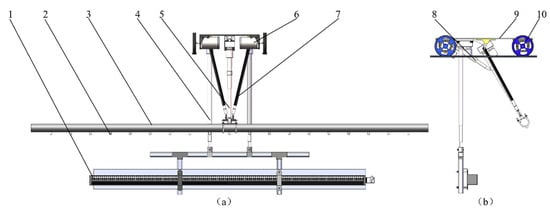
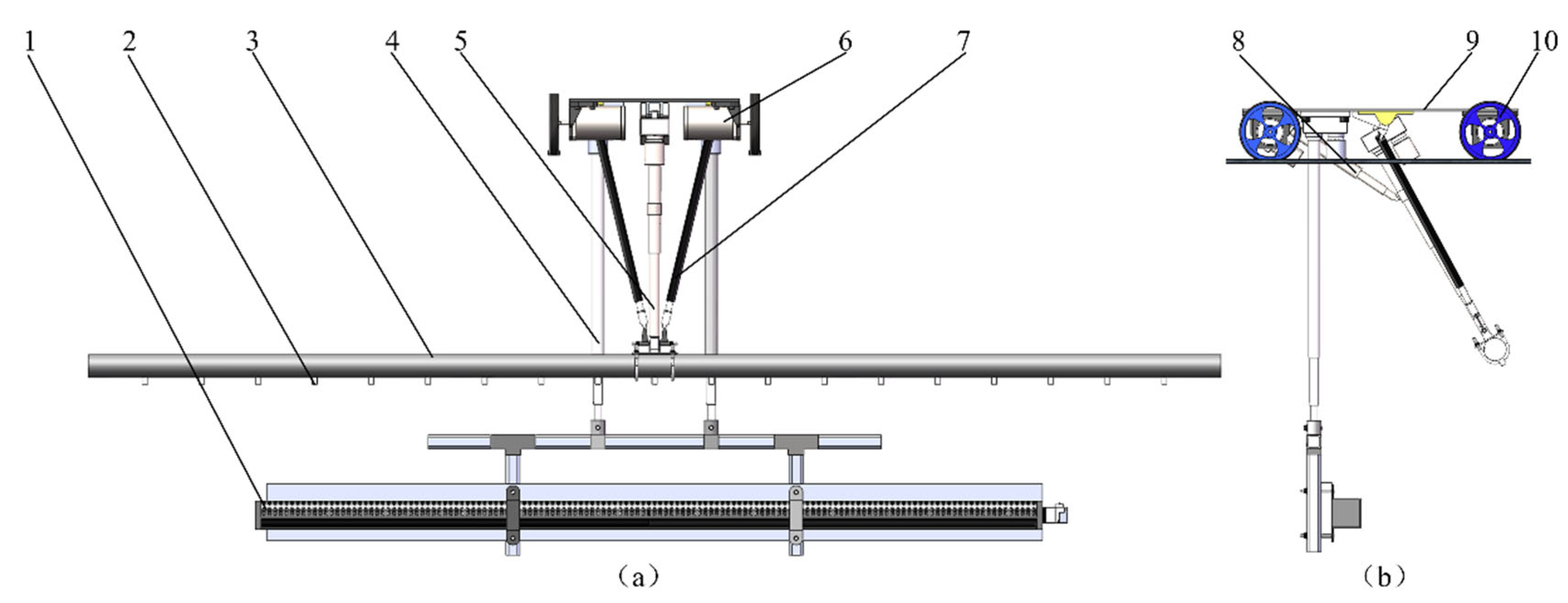
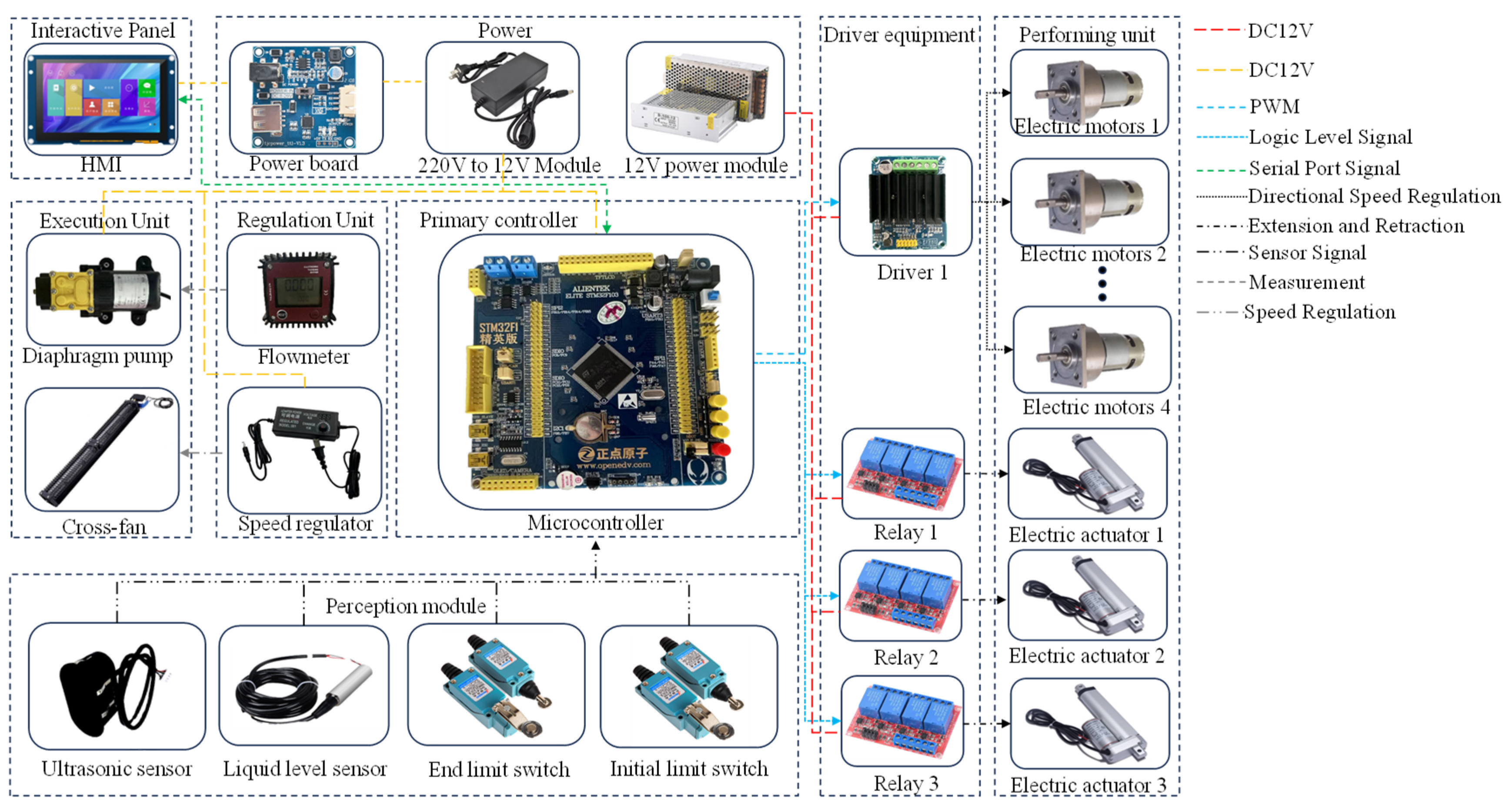
As shown in Figure 1, the self-propelled overhead rail air-assisted sprayer machine adopts a modular design. The overall system comprises a self-propelled module, a position adjustment module, an air-assisted atomizing module, and a sensor module. The self-propelled module consists of a drive motor, a motor driver, and driving wheels, responsible for moving the system along the track. The motor is fixed on the machine platform through the motor bracket. The position adjustment module consists of multiple electric actuators and relays. It is responsible for regulating the fan height, the spray angles of the rod and nozzles, and the ground clearance of the spray rod. The connection head of electric actuator 1 is attached to the spray tube using a U-shaped clamp. Electric actuators 1 and 2 are mechanically linked using a wine glass-shaped bracket. Electric actuators 1, 2, and 3 are connected to the base platform using pins. The bottom of electric actuator 3 is connected to the aluminum square tube using screws and nuts. The fan is fixed to the aluminum square tube using a clamp. The air-atomization module consists of a cross-flow fan, spray rod, pesticide tank, nozzles, PE pipeline, fan regulator, and diaphragm pump. The detailed technical parameters are summarized in Table 1. Pressure nozzles with an orifice diameter of 0.3 mm are employed. The liquid ejected by the nozzle forms a cone shape. The nozzle flow rate is 94 mL/min. The median droplet diameter (DV50) ranges from 80 to 130 µm. The water pump pressure is 130 PSI, and the maximum power is 80 W. A cross-flow fan is used. The air volume generated by the fan is 3.2 m3/min. The airflow generated by the fan is regulated using an airflow regulator. The airflow speed is measured with a wind speed testing instrument. The gas is processed by the internal impeller, forming a uniform and forced airflow band. It utilizes the forced airflow generated by the fan to direct the transport of droplets, thereby achieving precise spraying. The forced airflow generated by the fan is directed in the same direction as the movement. The airflow angle is maintained horizontally. The vertical distance between the nozzle and the fan is 0.15 m. The horizontal distance is 0.2 m. The sensor module consists of limit switches, liquid level switches, and ultrasonic sensors. It monitors the liquid level in the pesticide tank and the crop canopy height and restricts system edge movement, thereby ensuring operational safety and stability.
Figure 1.
Self-propelled overhead rail air-assisting sprayer: (a) Front view; (b) Side view. 1. Cross-flow fan; 2. Atomizing nozzle; 3. Spray rod; 4. Electric actuator 3; 5. Electric actuator 1; 6. Drive motor; 7. Auxiliary frame; 8. Electric actuator 3; 9. Base platform; 10. Drive wheel.
Table 1.
Main technical parameters of the track-type air-assisted atomization device.
2.3. Control System
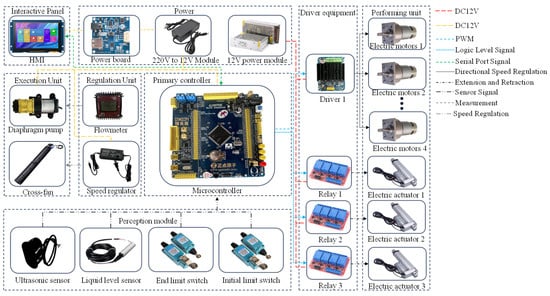
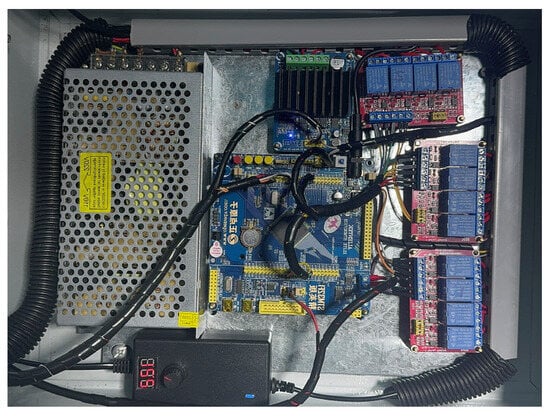
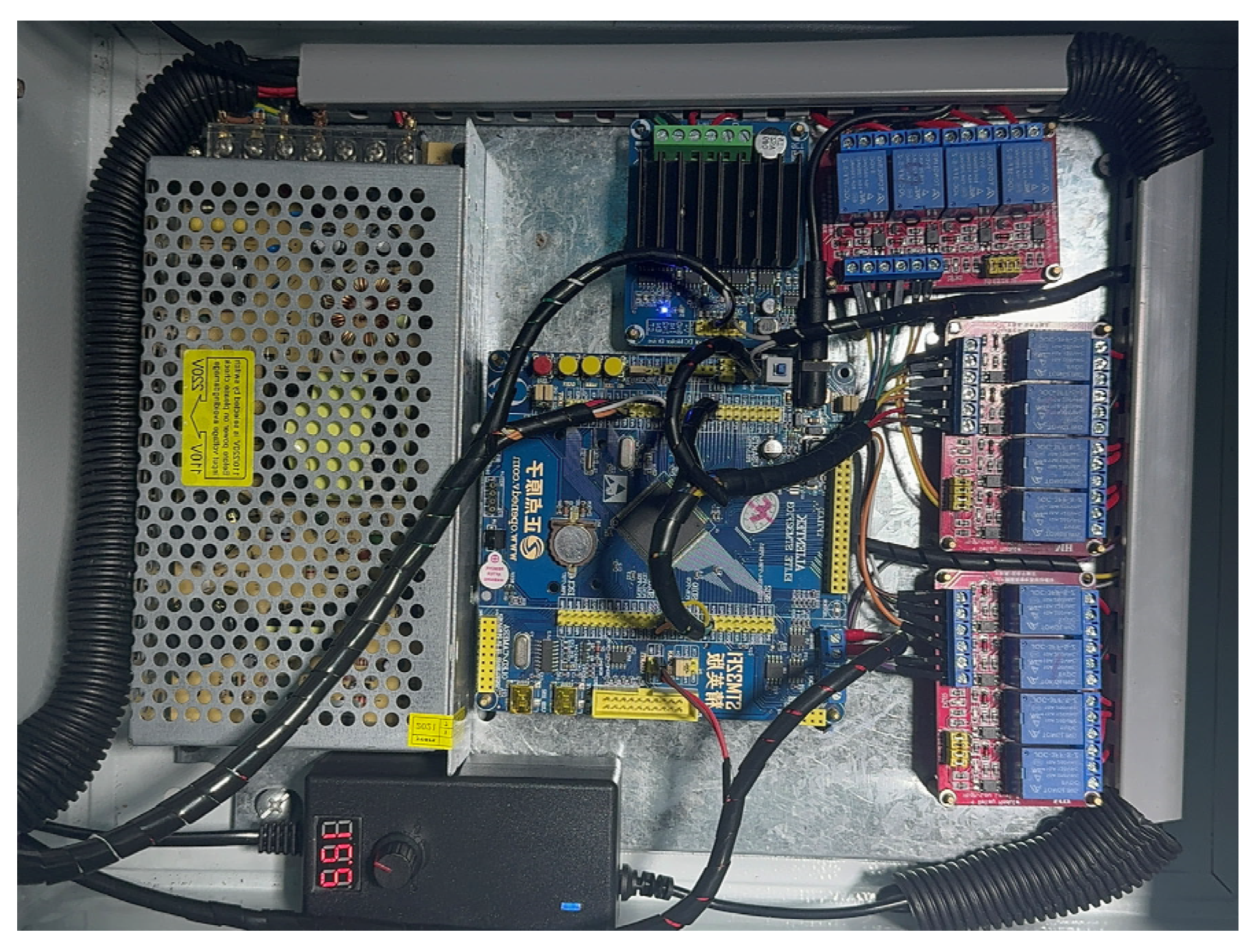
The self-propelled track-mounted air-film atomization system is equipped with human–computer interaction (HMI), key-button collaborative, and automatic control modes. The system employs an STM32F103 series microcontroller (Shenzhen Lichuang E-commerce Co., Ltd., which is located in Shenzhen City, Guangdong Province, China), powered via a 220 to 12 V power conversion module. The device movement speed and direction are precisely controlled via PWM signals from the main controller to the motor driver, enabling accurate regulation of the driving motor. The main controller outputs high- and low-level signals through multiple relay groups to control the electric actuators, thereby enabling multi-dimensional adjustment of fan height, spray range angle, and spray arm height. The drive motor and electric actuators are powered by a 12 V power supply. The human–computer interaction module utilizes the Taojingchi serial touch screen TJC8048X550_011C (Shenzhen Taojingchi Electronics Co., Ltd., which is located in Shenzhen City, Guangdong Province, China), which is supplied with 12 V power and communicates with the main controller via a serial port. This setup enables touch operation and overall system control, facilitating coordinated management of all modules (The cross-flow fan is produced by Wenzhou Juhao Electrical Co., Ltd. in Wenzhou City, Zhejiang Province, China. The diaphragm pump is manufactured by Shanghai Sunshine Pump Industry Co., Ltd. in Shanghai, China). The cross-flow fan and diaphragm pump are powered by a 12 V supply. The outlet airflow of the cross-flow fan is regulated via a speed controller, and a flow meter is installed on the PE pipe at the diaphragm pump outlet to continuously monitor the spraying flow. Limit switches are installed at both the starting and ending positions of the track. When the device reaches these limits, the mechanical contacts are triggered, sending a signal to the main controller to provide system position information. The liquid level sensor and the ultrasonic sensor communicate with the main controller via the RS485 bus using the Modbus protocol to acquire liquid level in the medicine tank and crop canopy height. To ensure operational safety, the system is equipped with an emergency stop button, which immediately halts device movement and atomization. A self-cleaning program is implemented, and the nozzles are regularly cleaned to prevent blockages. The control system diagram is shown in Figure 2. The control system is shown in Figure 3.
Figure 2.
Control System Diagram.
Figure 3.
Control System.
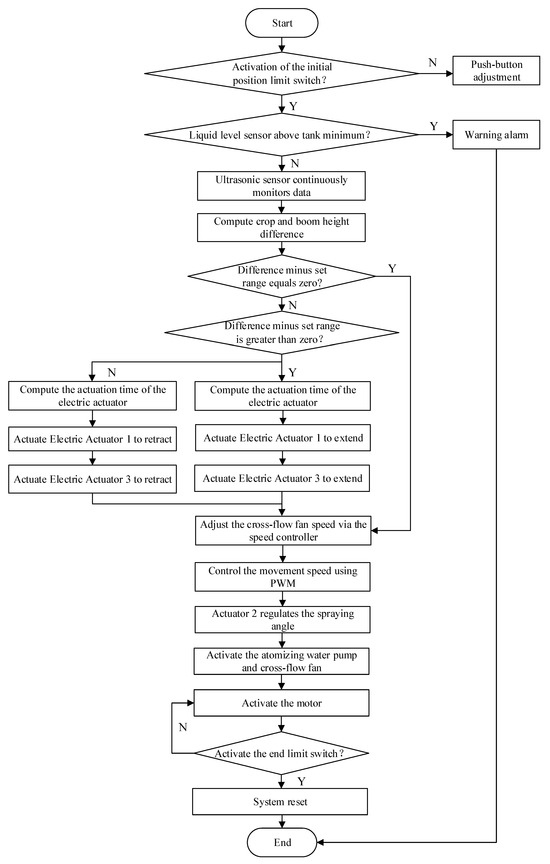
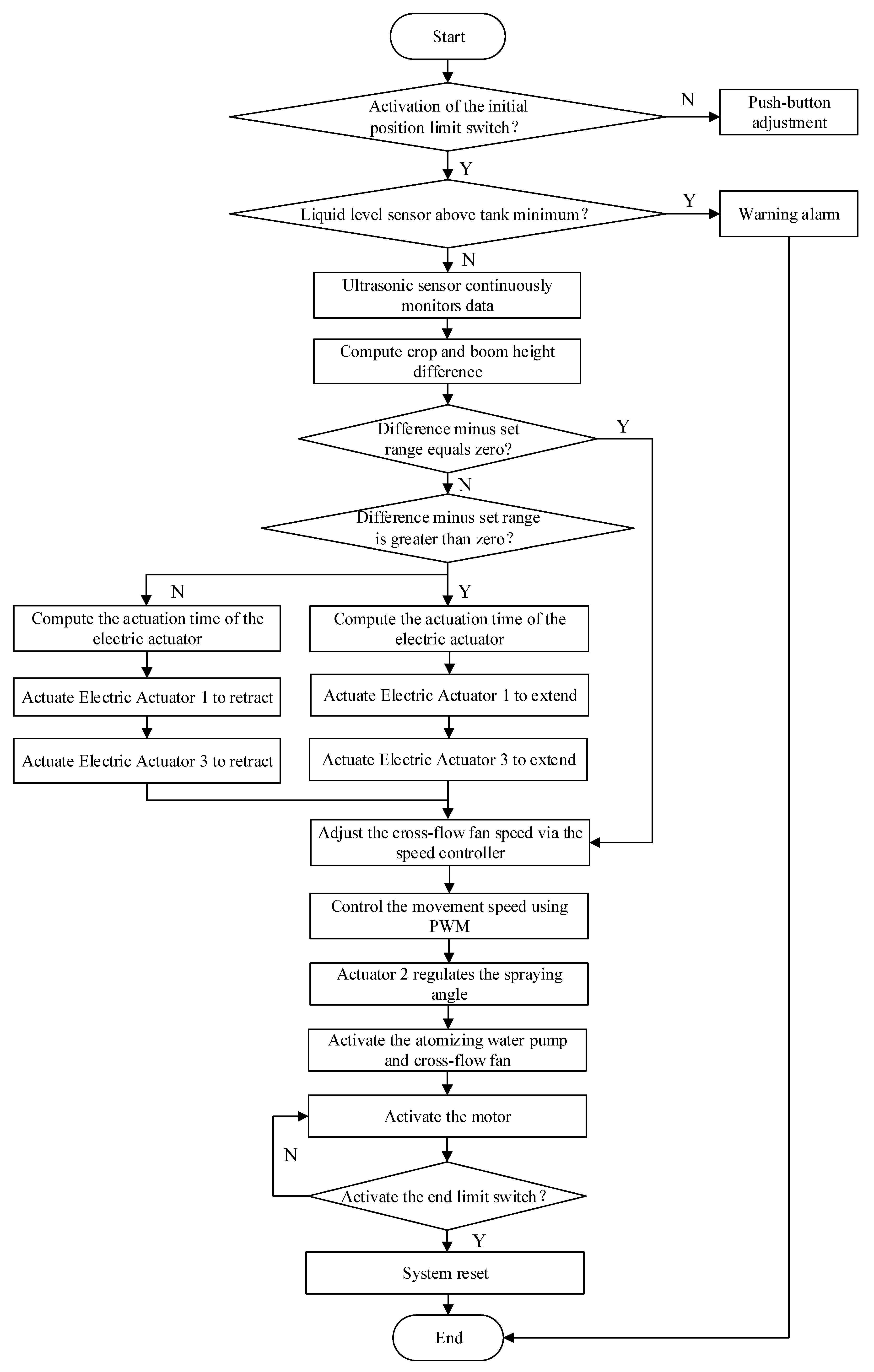
The device supports multiple operation modes. It communicates with the main controller through either physical buttons or a serial touch screen. This enables system operation and control. The automatic atomization control system adjusts the nozzle height relative to the ground based on real-time crop canopy measurements. The system measures both the device height above the ground and the crop canopy height, and adjusts electric actuator 1 based on the difference between them. This adjustment automatically modifies the nozzle height, thereby optimizing the spray distance and enhancing atomization efficiency and accuracy. The control system operates as follows: upon powering on the system, the start limit switch is checked to verify whether the device is in its initial position. If the device is not in its initial position, the drive motor is controlled via a button to return it to the origin. Once the initial position is reached, the liquid level sensor monitors the pesticide tank level. If the liquid level falls below the predefined minimum threshold, the system issues an alarm and halts operation to prompt the operator to replenish the liquid. During spraying, the ultrasonic sensor continuously measures the crop canopy height. The main controller then calculates the difference between the canopy height and the boom height. If the difference exceeds the preset threshold, the system determines the direction of the electric actuators based on the sign of the difference. The actuators are then extended or retracted accordingly, The actuator is produced by Wenzhou Pufide Mechanical & Electrical Co., Ltd. in Wenzhou City, Zhejiang Province, China. When the difference is positive, the running time is calculated based on the difference and actuator speed, causing actuators 1 and 3 to extend. Conversely, when the difference is negative, the running time is similarly calculated, causing actuators 1 and 3 to retract. After adjusting the spray boom height, the system regulates the airflow of the cross-flow fan using the fan speed controller. The main controller then outputs PWM signals to the drive motor for adjusting the traveling speed. Simultaneously, the spray angle of the boom is adjusted via electric actuator 2. Once adjustments are completed, the cross-flow fan is activated, and the drive motor propels the device along the track until the end limit switch is triggered. At this point, all modules reset and return to their initial positions, thereby completing one full spraying cycle. The control process is illustrated as a flowchart in Figure 4.
Figure 4.
Control flowchart.
2.4. Working Principle
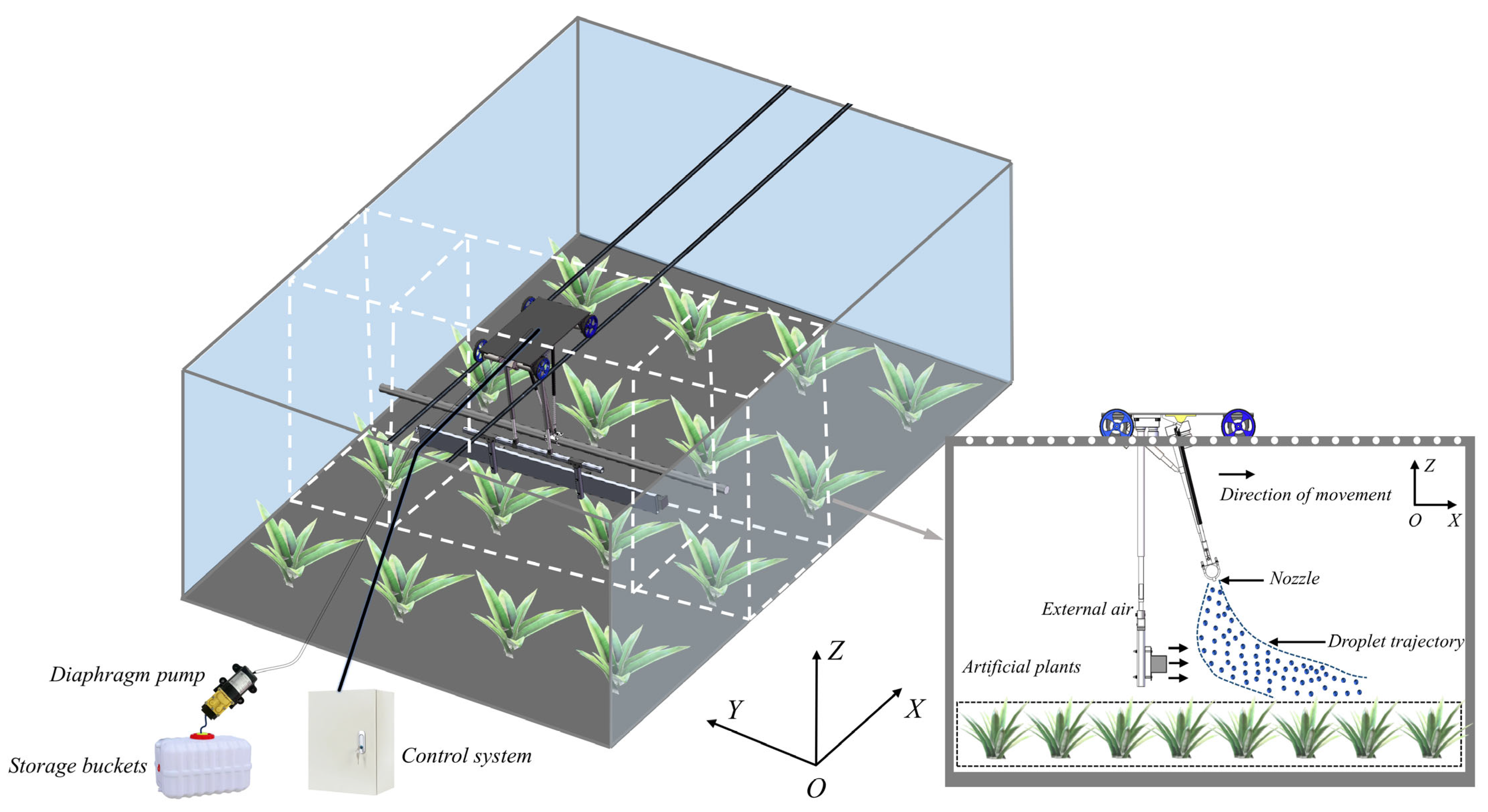
Inside the greenhouse, the upper steel structure serves as the supporting foundation for the aerial track, and steel is used to construct the aerial track. The Self-Propelled Overhead Rail Air-Assisted Sprayer device is mounted on the aerial track. Its movement along the track is controlled by the self-propelled module driver. The driving motor acts on the driving wheels to provide propulsion. The pose adjustment module is mounted on the profile base of the atomization system. The height and spraying angle of the device are precisely adjusted through the extension and retraction of multiple electric actuators. The height-adjustable electric push rod was connected to the spray rod through an electric actuator connector. The spray rod is equipped with multiple nozzles. The diaphragm pump pressurizes the liquid from the medicine tank. The liquid is delivered through the PE pipe to the nozzles, completing the atomization process. The cross-flow fan is mounted at the rear of the nozzle. It is adjusted using an electric actuator and a clamping structure to control the relative height between the fan and the nozzle. The system adjusts the rotational speed of the cross-flow fan motor using a frequency converter. This allows precise control of the fan outlet velocity to accommodate different operating conditions. This ensures that the airflow meets the requirements for atomization and deposition, improving application efficiency and pesticide utilization. During spraying, the cross-flow fan generates a uniform and stable forced airflow, which is aligned with the direction of device movement. This applies continuous aerodynamic stress to the droplets, guiding them to move directionally along the crop canopy. Under the influence of the airflow, the droplets undergo secondary fragmentation during flight, further reducing their particle size. Simultaneously, the airflow counteracts external disturbances caused by device movement. This enhances droplet penetration and improves deposition uniformity in the target area. This process achieves efficient and precise spraying. The working principle is illustrated in Figure 5.
Figure 5.
Working principle.
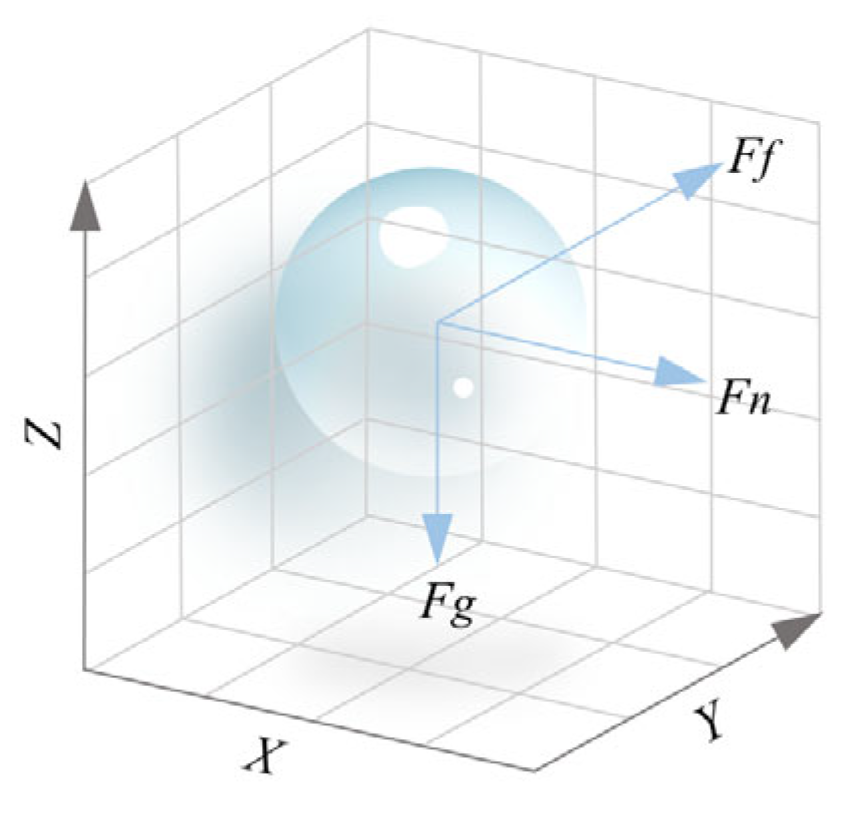
Based on the mathematical model proposed by Zhidong Wu et al. [19], the working principle of the device was analyzed. The force analysis of the droplets ejected from the nozzle during device operation showed that they were affected by gravity, air resistance, and air buoyancy (Figure 6).
Figure 6.
Force analysis of droplets: represents air buoyancy; represents air resistance; represents gravity.
Previous models did not consider the effect of the device’s travel speed. During the spraying operation, the relative velocity between droplets and the airflow changed, affecting the forces acting on the droplets and altering their trajectories. Therefore, the device’s travel speed was included to improve the original model. The updated three-dimensional droplet motion model is expressed as follows:
In the formula, is the mass of a single droplet (g); , , and represent the traveling distances of the droplet along the x-axis, y-axis, and z-axis, respectively; is the flight time of the droplet in the air (s); is the coefficient of air resistance; is the density of air (kg/m3); is the density of the mixed solution (kg/m3); is the velocity of the droplet relative to the air (m/s); is the radius of the droplet (μm); , , and represent the velocity components along the x-axis, y-axis, and z-axis as unit vectors, respectively; , , and represent unit vectors of the air velocity along the x-axis, y-axis, and z-axis as unit vectors, respectively; , , and represent the velocity components of the device along the x-axis, y-axis, and z-axis as unit vectors, respectively; and is the acceleration due to gravity (m/s2).
2.5. Simulation and Verification
CFD Flow Field Modeling and Simulation
Based on the working principle of the device, the improved three-dimensional droplet motion model was derived. It was then used to study the deposition characteristics. The deposition characteristics of droplets during operation were investigated. The device’s operational performance was subsequently evaluated.
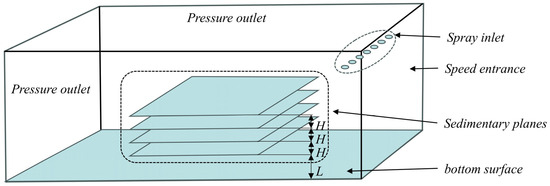
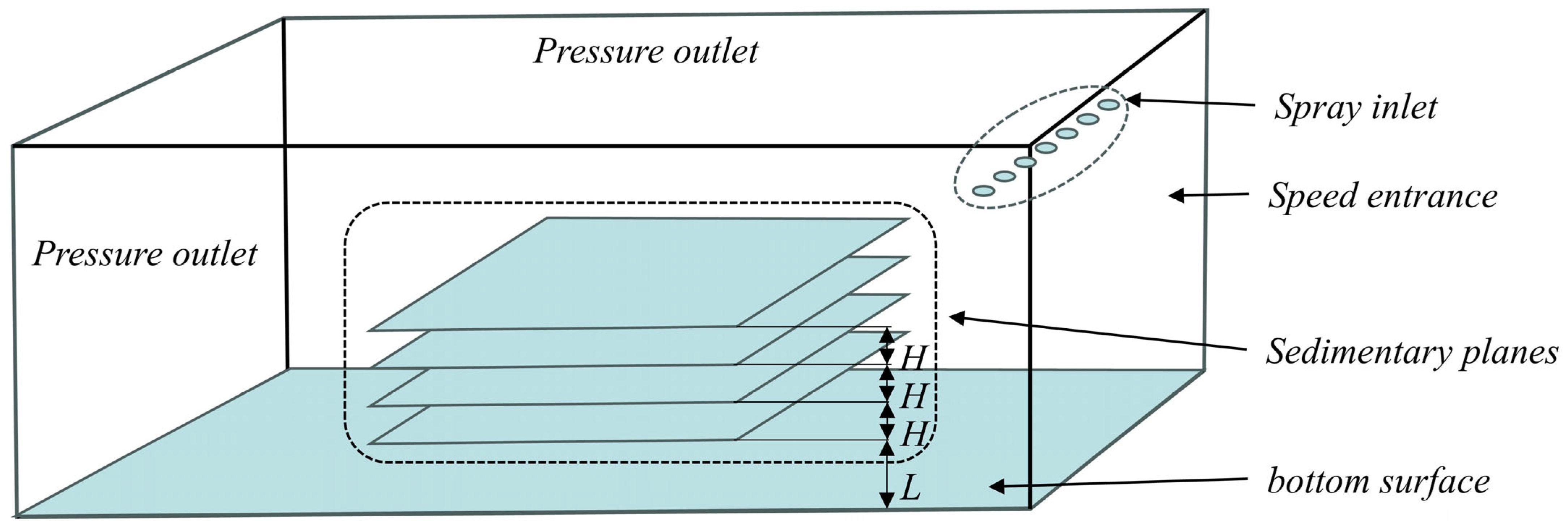
The commercial CFD software ANSYS Fluent 2022 R1 was used as the numerical simulation tool to simulate the droplet motion during device operation [20]. The atomization flow field model was established using the 3D modeling software SpaceClaim 2022 R1. The simulation domain was defined in length, width, and height to match the dimensions of the test site. The flow field model was illustrated in Figure 7. The computational domain included the air domain and the sprayer domain. Within this domain, multiple layers of deposition surfaces were vertically arranged, each separated by a height interval of 10 cm. The heights of the deposition surfaces from the ground were set at 40, 50, 60, and 70 cm, respectively. Samples were collected along the direction of device operation. The sampling area corresponded to the area and spatial positions of the water-sensitive papers used in the test. Equipment performance was evaluated based on the number of droplets deposited per unit area and the uniformity of droplet deposition within each spatial layer.
Figure 7.
Flow field model.
Considering the random collision, aggregation, and fragmentation of droplets under airflow influence, the Discrete Phase Model (DPM) was employed to simulate droplet motion, dispersion, and interactions with the airflow during atomization. Due to the high airflow velocity of the sprayer and the strong interaction between the gas and liquid phases, air was treated as the continuous phase, while droplets were regarded as the discrete phase in the numerical simulation. An unsteady-state numerical method was adopted to investigate the interactions between gas and liquid two-phase flows. The Lagrangian method was applied to track the discrete-phase droplets. The motion equations of individual droplets were solved to analyze changes in their motion under the influence of external forces, such as air resistance, gravity, and turbulent disturbances. This allowed for the simulation of droplet trajectories within a complex flow field. Boundary conditions were set as follows: the right side of the domain was defined as a velocity inlet, the surrounding walls and top surface were set as pressure outlets with an initial pressure of 0, and the ground was defined as a no-slip wall. Since the atomization system employed a nozzle group, the spraying source was determined by the nozzle positions. The injection type was set as conical, and the spraying material was defined as liquid water. The incompressible flow field was solved using the SIMPLE (Semi-Implicit Method for Pressure-Linked Equations) algorithm. This semi-implicit method was employed to handle pressure-velocity coupling. Because the movement speed significantly affected the flow field, moving the injection source in existing numerical simulation tools was challenging. In this study, the injection source velocity within the flow field was defined using a user-defined function (UDF). This function was then employed to analyze the effect of travel speed on the operational performance of the equipment.
The computational domain was meshed using Fluent’s built-in meshing tool. After meshing, the solution stage was initiated, the energy equation was activated, and the turbulence model was set to Realizable k-ε. The component equation was activated to account for environmental effects on the droplets. Thermal diffusion was also considered in the simulation. The discrete phase model was initialized, and the device parameters were assigned to the injection source. Based on measurements of actual greenhouse temperature and humidity, the simulation flow field was initialized with a temperature of 25 °C and a relative humidity of 45%. The air density was approximately 1.183 kg/m3, the dynamic viscosity was about 1.849 × 10⁻⁵ Pa·s, and the calculated Reynolds number was approximately 41.57. The levels of the simulation factors were presented in Table 2.
Table 2.
Injection-source and environmental parameters for numerical simulation.
2.6. Field Performance Test
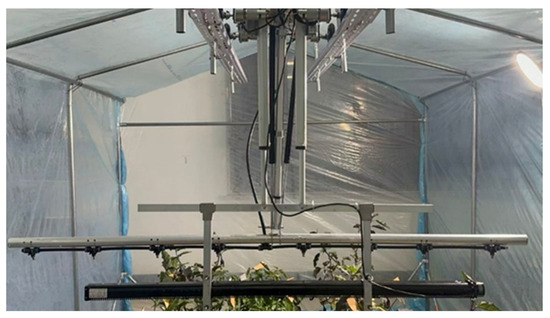
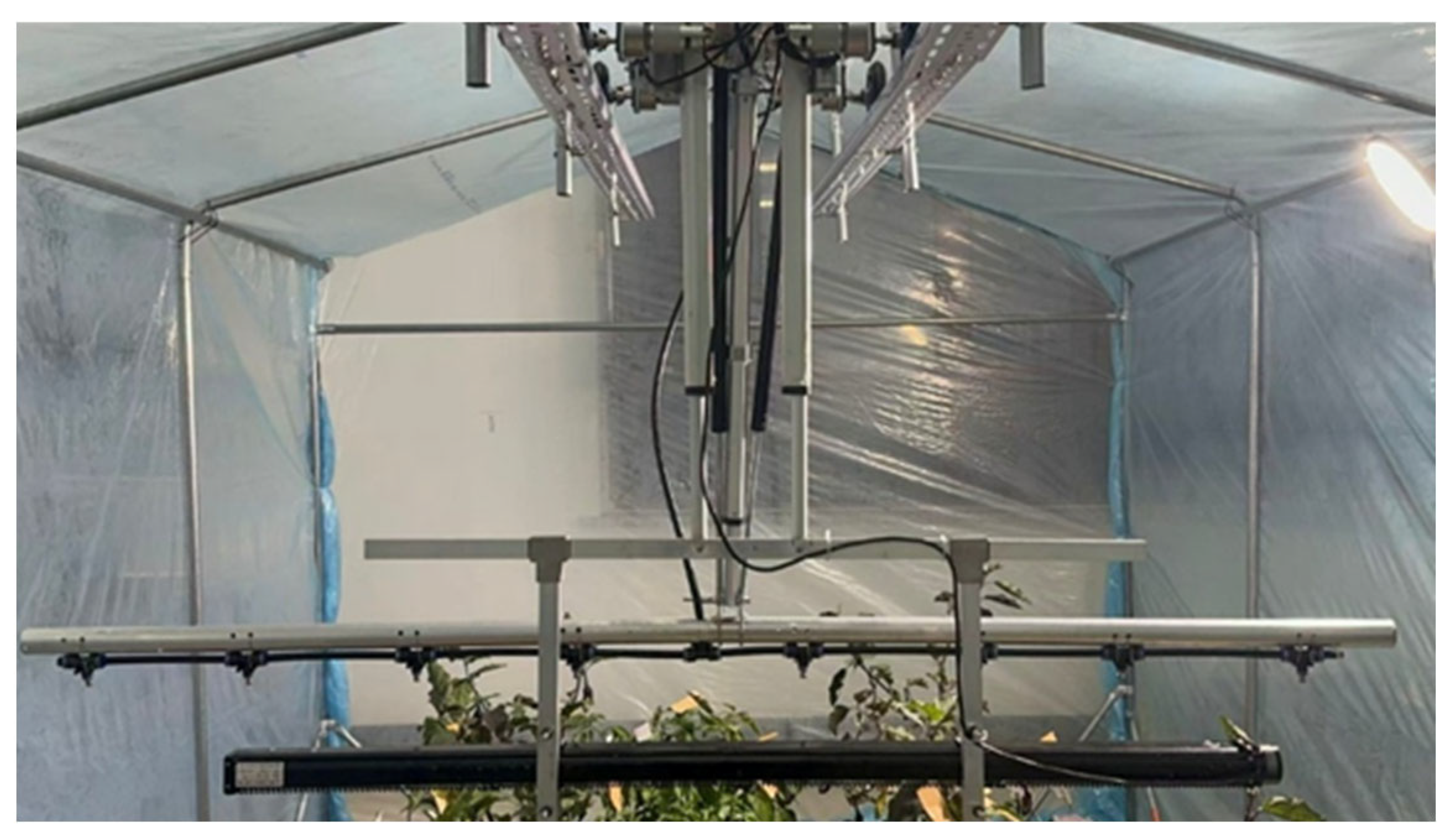
To verify the performance of the orbital air-conveying and sprayer under actual working conditions, a field test was conducted in a solar greenhouse, as illustrated in Figure 8.
Figure 8.
Greenhouse Field Spraying Test.
Natural airflow disturbances in the production greenhouse have been considered. Fluctuations in the ventilation system have also been included. Variations in air humidity caused by day–night temperature differences have further been taken into account. These factors may introduce deviations into the test results. These deviations may complicate the assessment of the device’s operational performance. Therefore, the test site was selected as an experimental greenhouse at Qiqihar University (longitude: 123.932676, latitude: 47.352064), and the experiment was carried out on 15 August 2025. During the experiment, the temperature was 25 °C and the relative humidity was 45%. The time period with minimal external airflow influence was selected. Eggplants and peppers were chosen as the experimental crops, and the height of all selected plants exceeded 65 cm.
To ensure the reliability and efficiency of the field experiment, the optimal operating parameters derived from CFD simulation were implemented. The field test results were analyzed and compared with the simulation data to verify the accuracy of the numerical model.
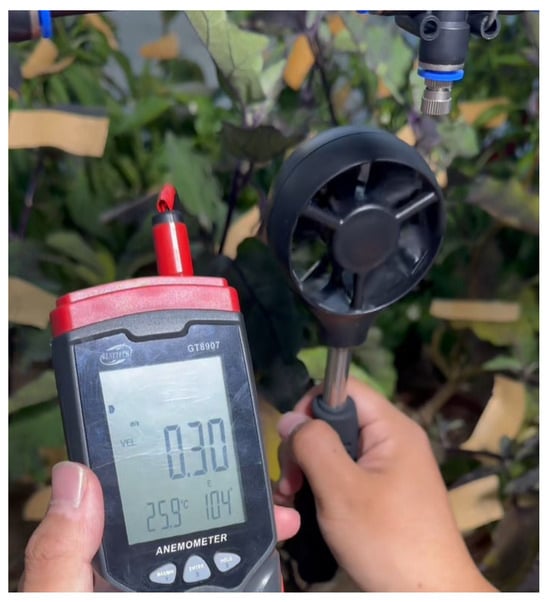
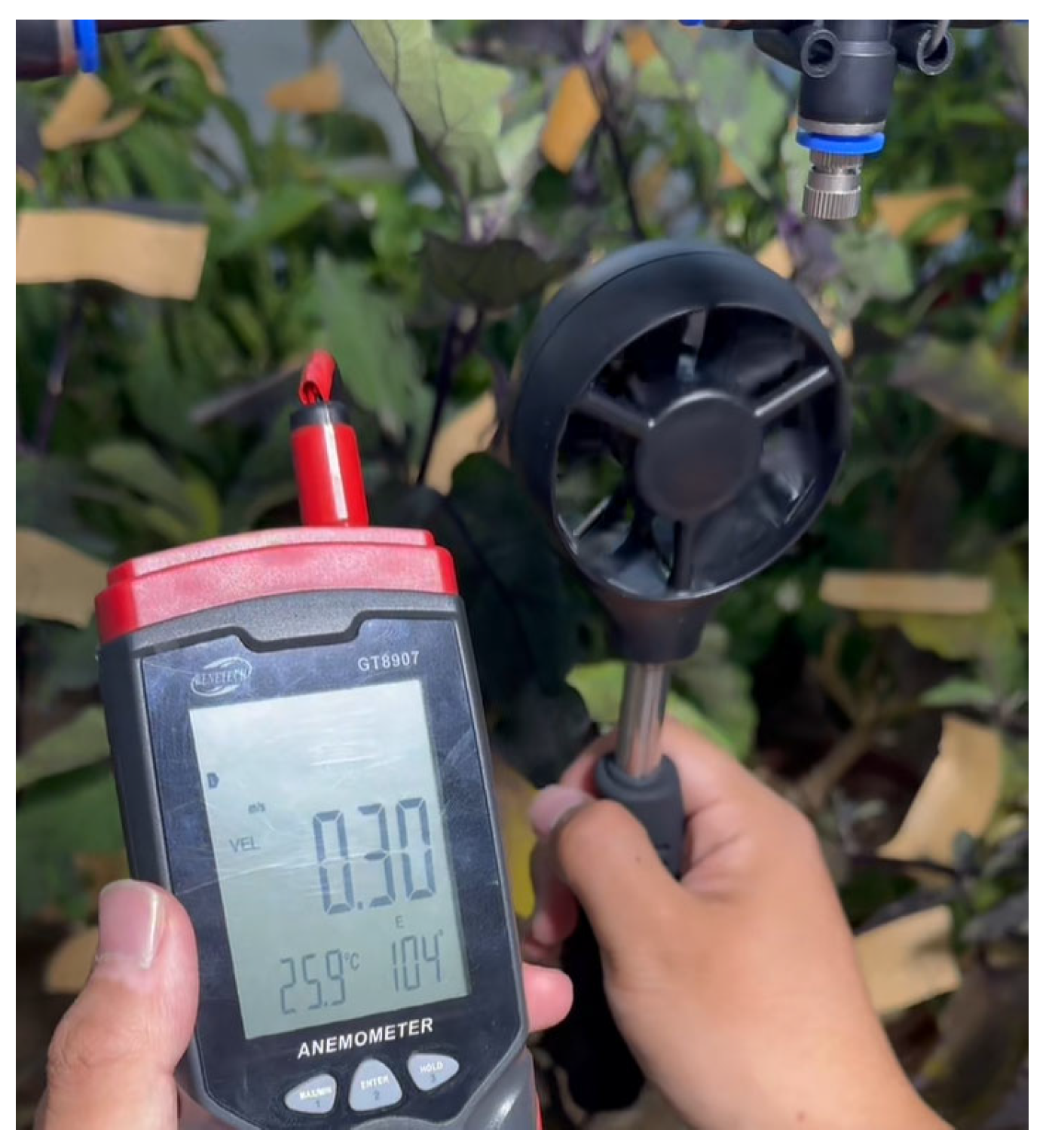
The main controller of the control system activated the relay group. This controlled multiple electric actuators to adjust the spray pole position relative to the ground and its spraying angle. The nozzle was positioned at 1.5 m above the ground, and the spraying angle was set to the optimal value determined from the simulations. The speed value was verified repeatedly based on the relationship between travel distance and time, and the travel speed was calculated. The spraying angle was measured on-site using an angle tester. The speed regulator of the cross-flow fan was used to adjust its wind speed, and a digital anemometer (GT8907, Shenzhen Lichuang E-commerce Co., Ltd., which is located in Shenzhen City, Guangdong Province, China) was placed at the nozzle position, as illustrated in Figure 9. The wind speed measurement range of the instrument was 0–45 m/s.
Figure 9.
Wind Speed Measurement.
The wind speed experienced by the droplets during spraying was measured. The fan speed was then adjusted to the optimal value determined from the simulations. The main controller of the system communicated with the motor driver. It output different analog voltages via PWM to achieve various motor rotational speeds. Thus, the device was adjusted to the optimal operating speed determined from the simulations. The length of the track was measured. The motor rotational speeds were adjusted to ensure the device traveled a consistent distance along the track. The running speed of the device was then recorded. Once the operational parameters stabilized, the device was started. Tests were then conducted to evaluate the uniformity of deposition and the density of deposited particles. The performance of the device was subsequently assessed.
2.7. Methodology for Assessing the Uniformity of Fog Droplet Deposition
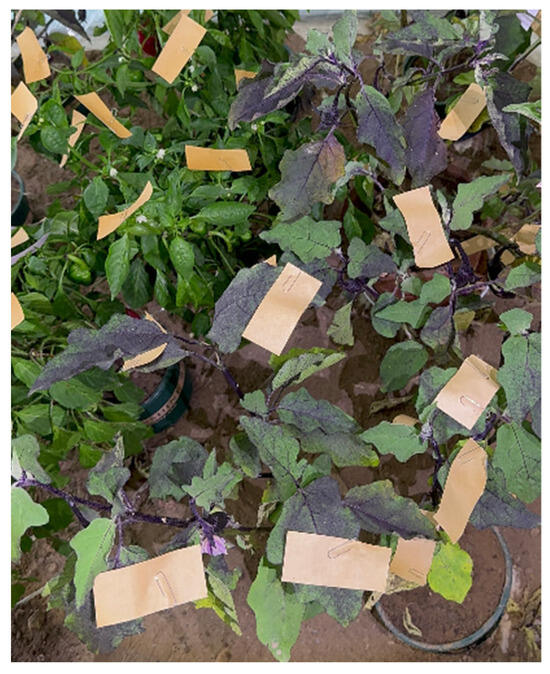
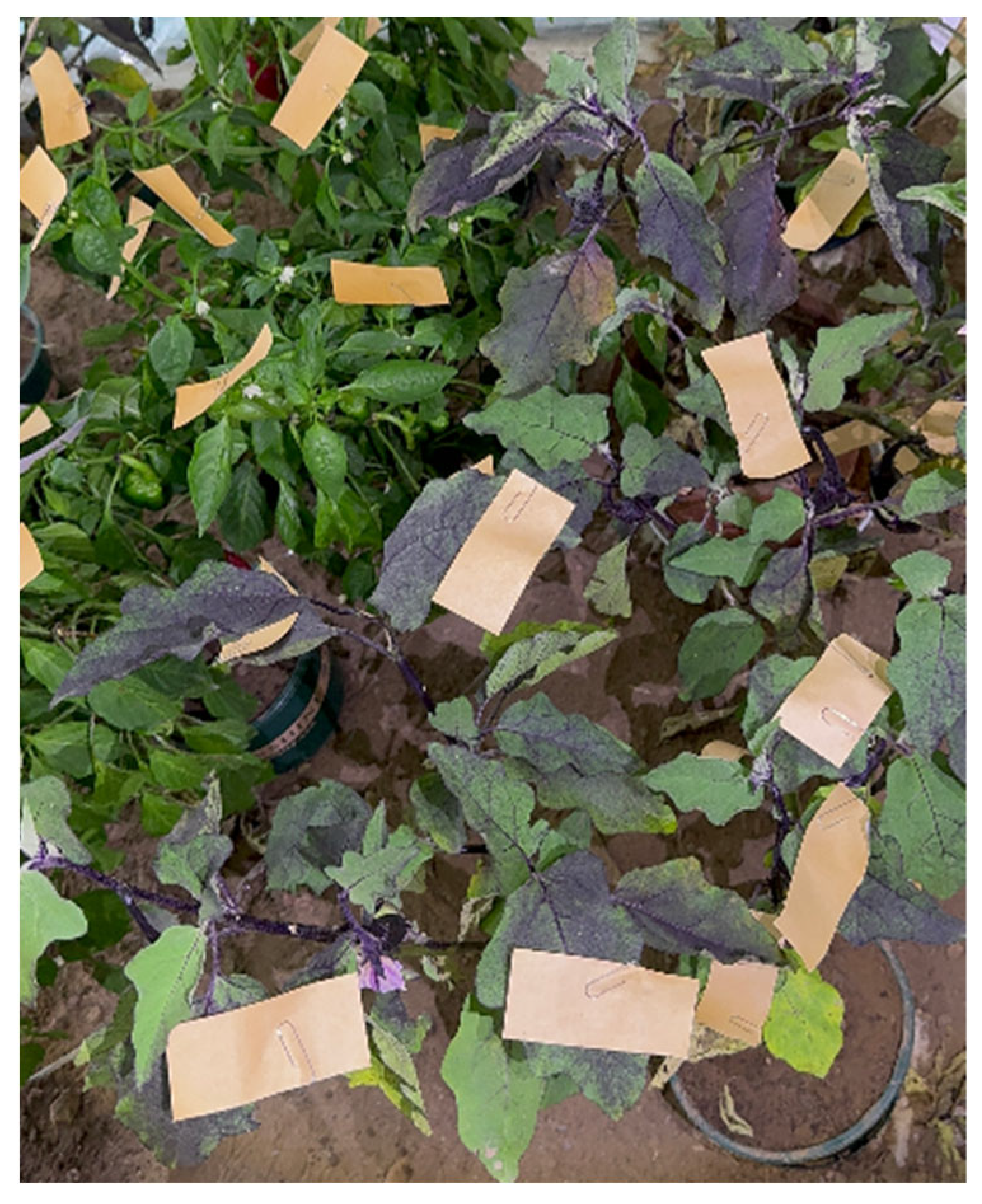
Water-sensitive paper is widely employed to evaluate the operational performance of agricultural machinery [21]. Therefore, in this study, water-sensitive paper was employed to investigate the deposition characteristics of fog droplets at each height within the spatial layer [22]. The color-developing solution for the water-sensitive paper was prepared according to the concentration requirements of the color-developing agent. Before testing the device, crops were arranged with their orientations perpendicular to the device’s movement direction. The spacing between crops was set according to the actual planting density in the greenhouse. Four test points were established within the spatial layer of the crops. At each point, water-sensitive papers (8 cm × 2 cm) were evenly attached to the leaves of each experimental plant using paper clips. The deposition surfaces were positioned at heights of 70, 60, 50, and 40 cm from the ground, counted from top to bottom. The placement method of the water-sensitive papers was illustrated in Figure 10.
Figure 10.
Test setup.
To improve experimental accuracy, multiple repeated trials were performed. After the device operation was completed, water-sensitive papers at different heights within the spatial layer were collected, dried, and sealed in waterproof bags. Each bag was labeled according to the spatial position of the papers to ensure accurate data recording. After the experiment, the water-sensitive papers were scanned using Deposit Scan (ImageJ 1.38X) droplet scanning software. The number of droplets per unit area (in/cm2) for each spatial layer was then obtained. Water-sensitive papers were sampled at different heights along the device movement direction to determine the number of droplets deposited per unit area. The average value from each plant was calculated to minimize experimental errors. The number of droplets deposited per unit area directly reflects the deposition efficiency in each spatial layer. Based on this measurement, the droplet deposition performance of the device on the crop canopy was evaluated.
Deposition uniformity was another important indicator for evaluating the performance of agricultural protection equipment [23]. It was quantified using the coefficient of variation of the number of droplets deposited per unit area at different plant heights. As shown in Formula 4, the coefficient of variation at each height level was calculated and analyzed.
where is the number of droplets per unit area (in/cm2); is the average number of droplets per unit area (per cm2); represents the number of height layers.
3. Test Results and Analysis
3.1. Simulation Results and Analysis
3.1.1. Effect of Device Travel Speed on Droplet Deposition in the Canopy
The performance of plant protection operations is affected by the interaction between external environmental factors and operational parameters. Among these, the number of droplets deposited per unit area and deposition uniformity served as the primary indicators for evaluating the operational performance of the equipment [24]. The self-propelled overhead rail air-assisted sprayer device was capable of unmanned operation. During unmanned operation, the traveling speed significantly affected the droplet deposition characteristics. Excessively high traveling speeds reduced the spraying volume over a given area, whereas excessively low speeds could result in over-application of pesticides. Therefore, analyzing the effect of the equipment’s traveling speed on droplet deposition was essential.
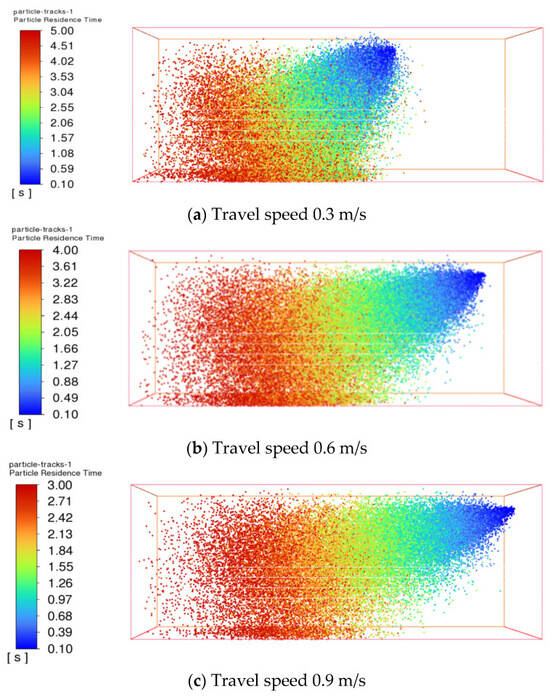
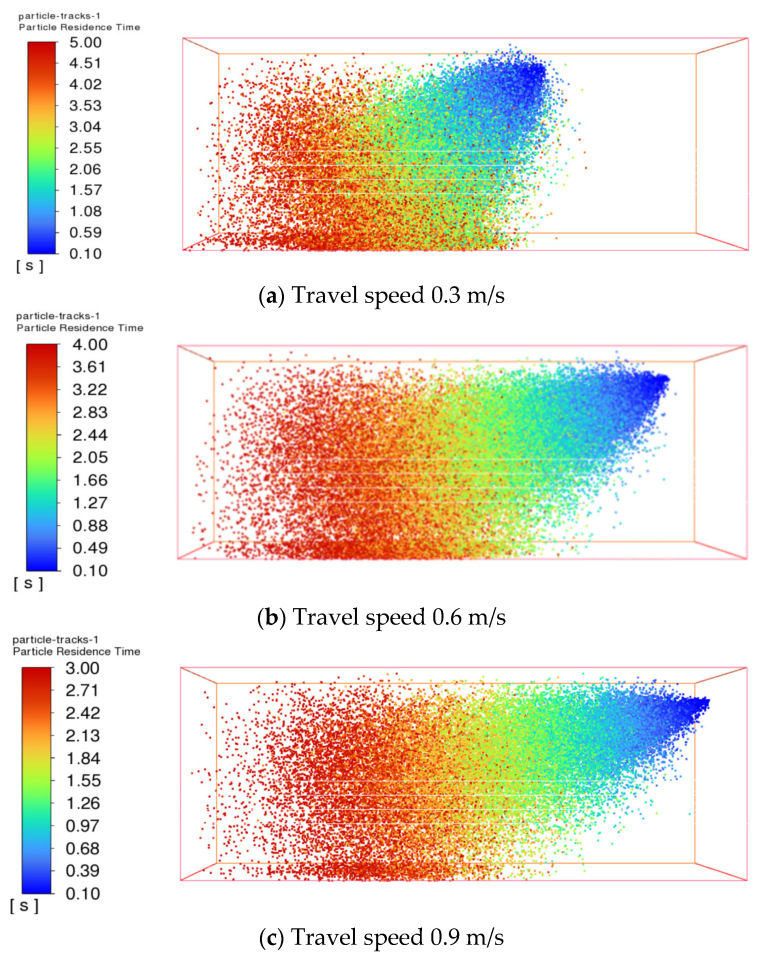
First, the impact of different traveling speeds (0.3, 0.6, and 0.9 m/s) on the number of droplets deposited per unit area and deposition uniformity within the spatial layers was analyzed. Additionally, external wind was not considered, the nozzle was set perpendicular to the ground, and the spraying angle was 0°. Based on the simulation results, the deposition uniformity across multiple spatial layers and the number of droplets deposited per unit area were calculated. The simulation results (Figure 11) show the movement and distribution of droplets at different traveling speeds.
Figure 11.
Spatial distribution of droplets under different traveling speeds.
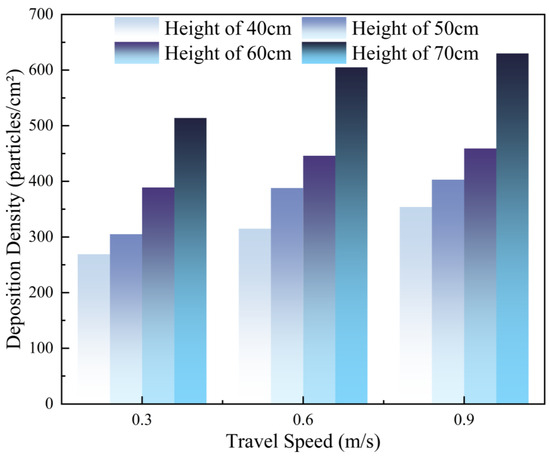
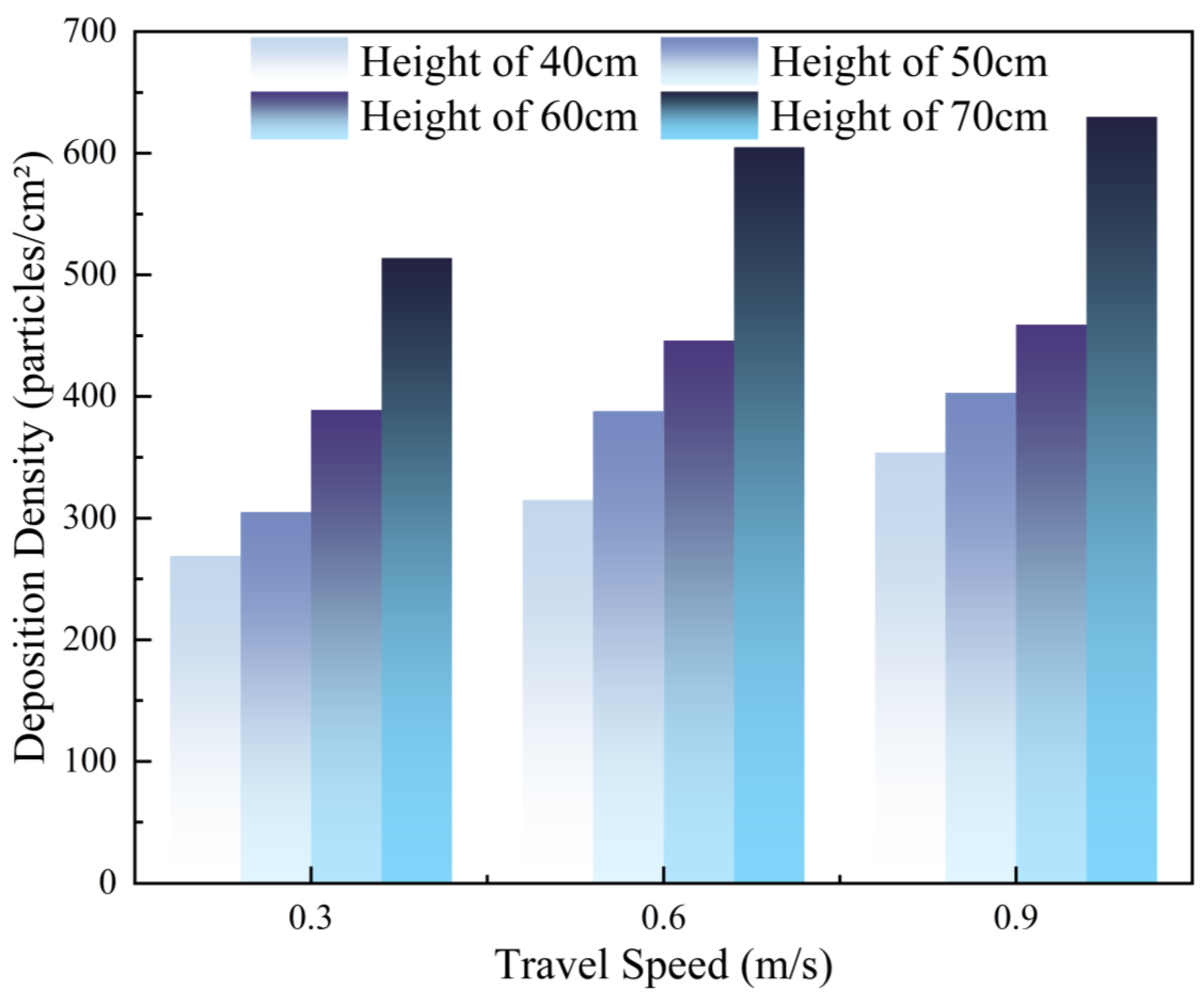
Figure 12 showed the deposition of fog droplets on the deposition surfaces of each spatial layer at traveling speeds of 0.3, 0.6, and 0.9 m/s. At a traveling speed of 0.3 m/s, the number of droplets deposited per unit area on the 40, 50, 60, and 70 cm surfaces was 354, 403, 459, and 630/cm2, respectively, with a coefficient of variation of 26.06%. At a traveling speed of 0.6 m/s, the corresponding values were 315, 388, 446, and 605 /cm2, with a coefficient of variation of 28.11%. At a traveling speed of 0.9 m/s, the corresponding values were 269, 305, 389, and 514/cm2, with a coefficient of variation of 29.49%. Statistical analysis was performed on the experimental data at walking speeds of 0.3, 0.6, and 0.9 m/s. Multiple measurements were repeated for each speed. One-way analysis of variance showed that walking speed had a statistically significant effect on deposition uniformity (p < 0.001).
Figure 12.
The simulation results of the impact of travel speed on the number of droplets per unit area deposition.
With increasing traveling speed, the number of droplets deposited per unit area in each spatial layer gradually decreased. Simultaneously, the coefficient of variation increased, indicating a gradual reduction in deposition uniformity. A mathematical model was established based on the equipment’s working principle. As the operating speed increased, the relative airflow induced by the equipment altered droplet motion, disrupting the original force balance and affecting droplet trajectories, deposition time, and spatial distribution. The flow rate of the equipment’s spray head remained constant. As the traveling speed increased, the residence time of droplets over a unit area decreased. The initial kinetic energy of the droplets originated from the energy imparted upon leaving the nozzle. After ejection, this kinetic energy gradually decreased. Coupled with the airflow induced by the equipment’s movement, the droplet kinetic energy decayed further, gradually approaching a dispersed state. The increased traveling speed and overlapping of multiple nozzles significantly reduced the vertical kinetic energy of the droplets. Consequently, most droplets accumulated near the top, diminishing vertical deposition performance. Therefore, as the traveling speed increased, both the number of droplets deposited on each spatial layer and the uniformity of deposition gradually declined. Comparison among the three traveling speeds indicated that the highest deposition uniformity occurred at 0.3 m/s.
3.1.2. Effect of External Wind Speed on Droplet Deposition in the Canopy
When considering an operating speed of 0.3 m/s, the number of droplets deposited per unit area in each spatial layer during operation was relatively low. This failed to meet the operational performance criteria for droplet deposition per unit area in pest control equipment. Additionally, the coefficient of variation in droplet deposition is high, resulting in poor droplet distribution uniformity. To improve droplet deposition uniformity and the number of droplets deposited per unit area, the influence of external wind speed on droplet deposition performance was analyzed.
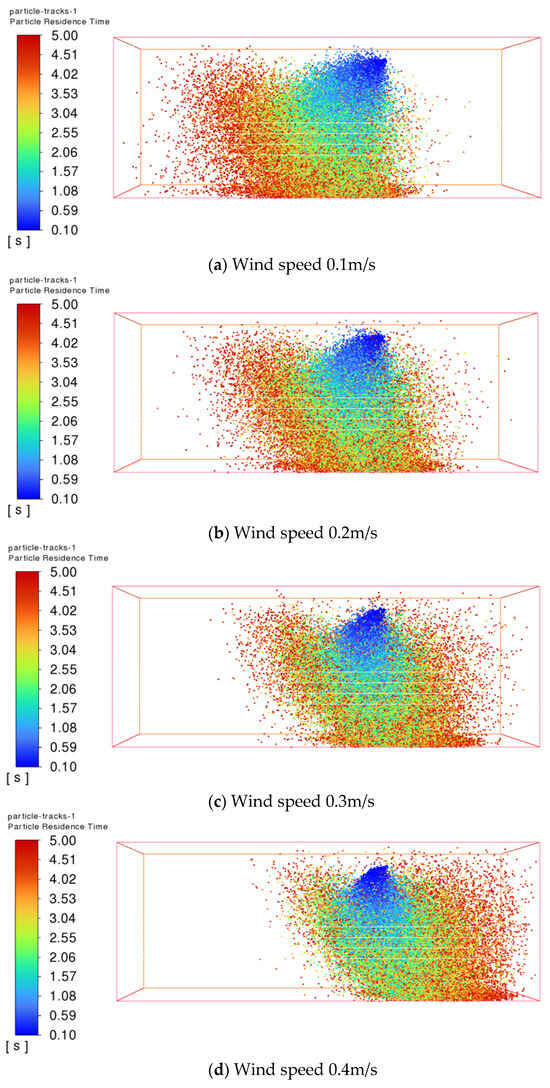
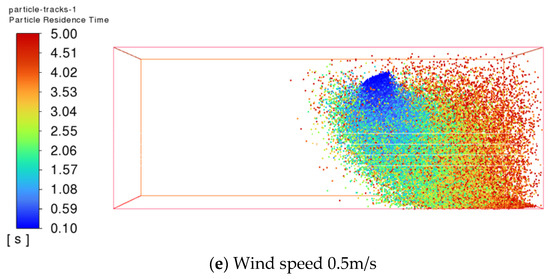
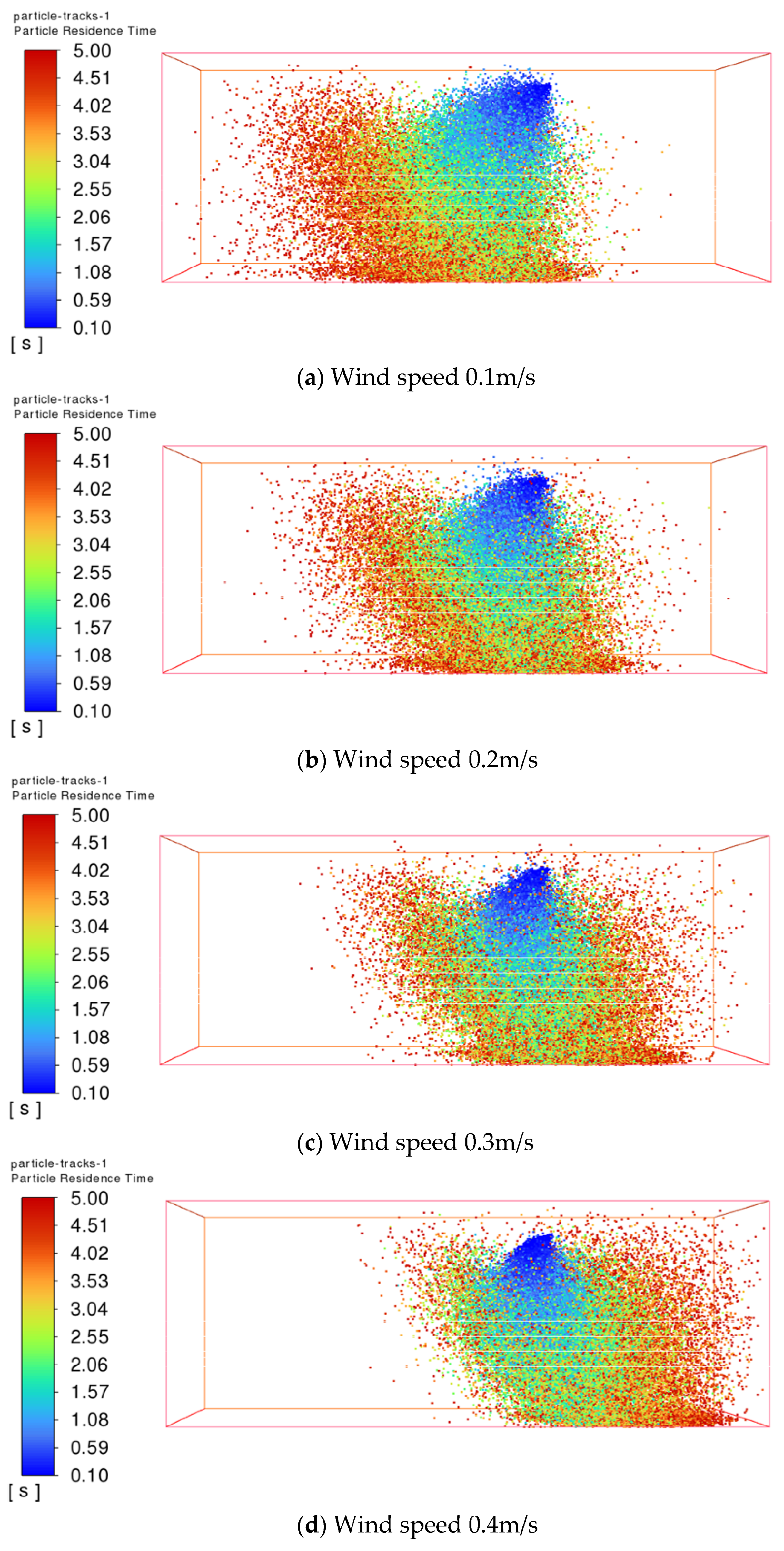
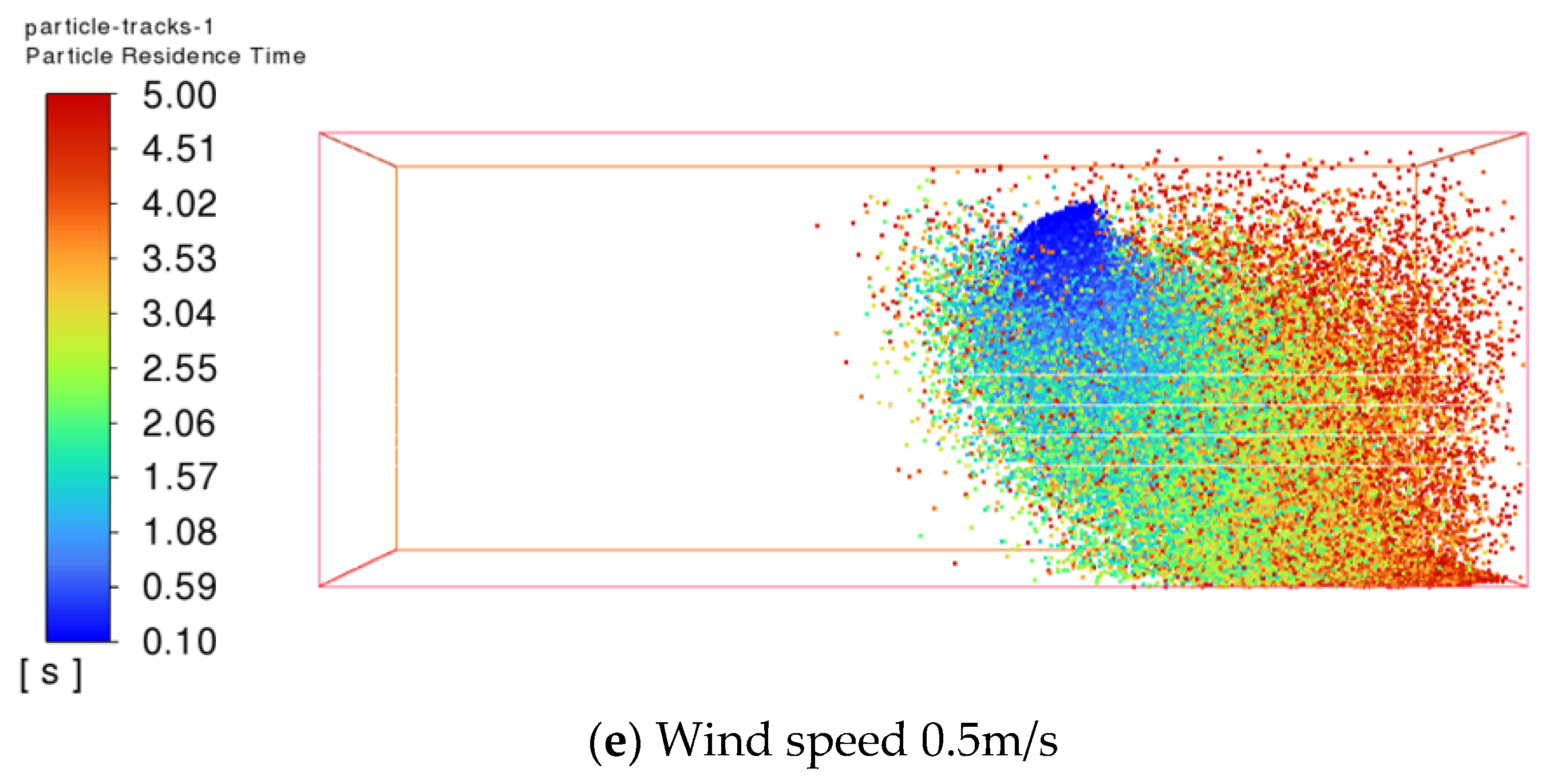
Based on a spraying angle of 0° and the device’s optimal operating speed of 0.3 m/s, external wind speeds of 0.1, 0.2, 0.3, 0.4, and 0.5 m/s were applied. The number of droplets deposited per unit area across multiple spatial layers and the uniformity of droplet distribution were analyzed. The simulation results (Figure 13) show the movement and distribution of droplets at different wind speeds.
Figure 13.
Spatial distribution of droplets under different wind speeds.
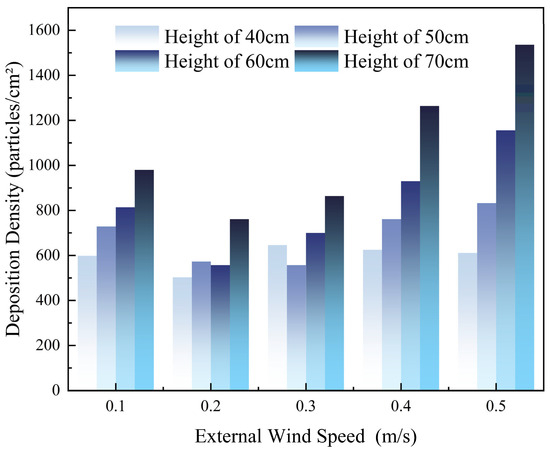
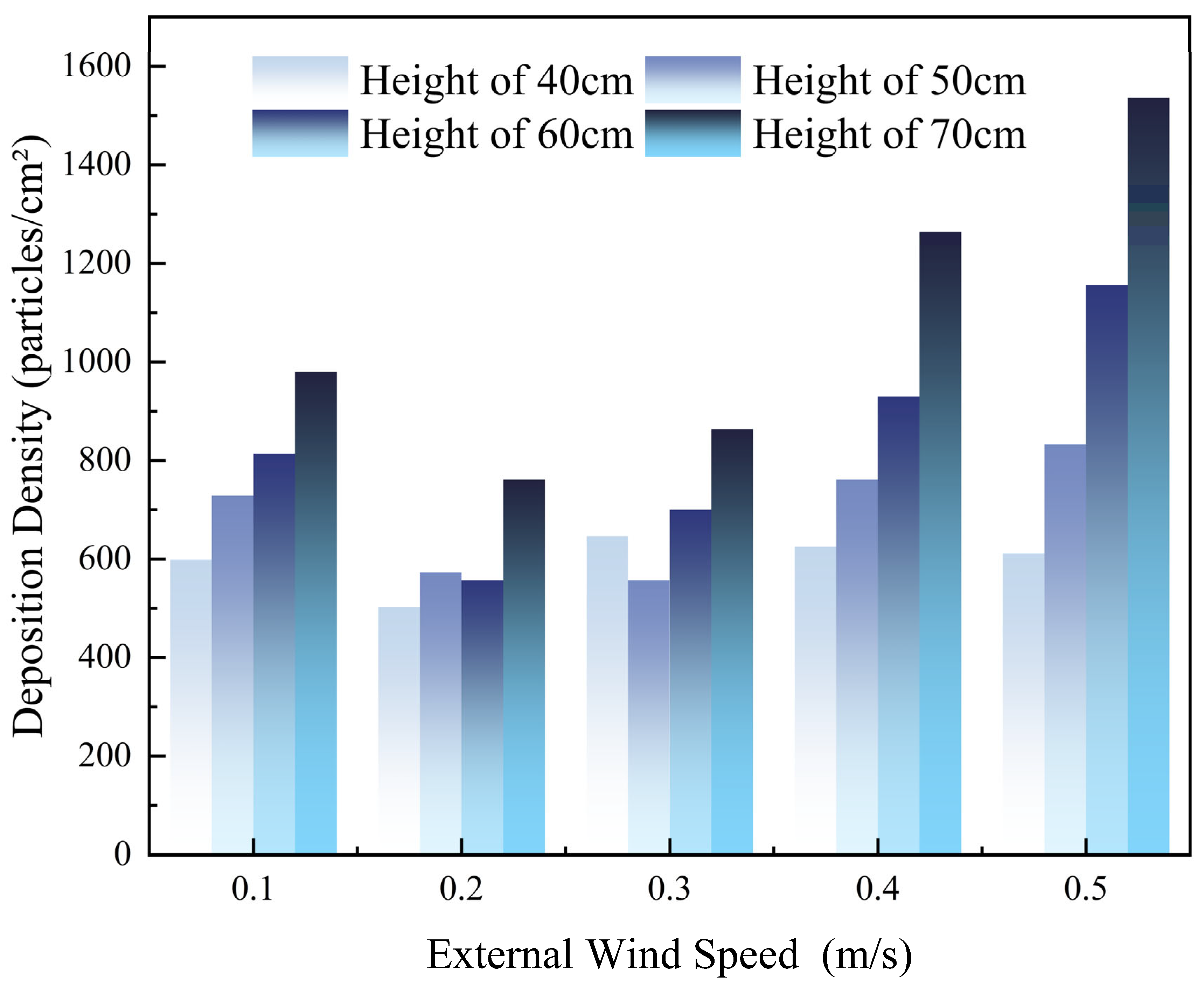
As shown in Figure 14 below, when the external wind speeds are 0.1, 0.2, 0.3, 0.4, and 0.5 m/s, the number of droplets deposited per unit area on different deposition surfaces within the spatial layer is presented. When the external wind speed was 0.1 m/s, the number of droplets deposited per unit area on the 40, 50, 60, and 70 cm deposition surfaces was 598, 729, 814, and 980/cm2, respectively. When the external wind speed is 0.2 m/s, the number of droplets deposited per unit area on each spatial layer is 503, 573, 557, and 761/cm2, respectively. When the external wind speed is 0.3 m/s, the number of droplets deposited per unit area on each spatial layer is 646, 557, 700, and 864/cm2, respectively. When the external wind speed is 0.4 m/s, the number of droplets deposited per unit area on each spatial layer is 625, 761, 930, and 1264/cm2, respectively. When the external wind speed is 0.5 m/s, the number of droplets deposited per unit area on each spatial layer is 611, 832, 1156, and 1536/cm2, respectively. Statistical analysis was performed on the experimental data at external wind speeds of 0.1, 0.2, 0.3, 0.4, and 0.5 m/s. Multiple measurements were repeated for each speed. One-way analysis of variance showed that external wind speed had a statistically significant effect on deposition uniformity (p < 0.001).
Figure 14.
The simulation results of the impact of external wind speed on droplet deposition.
As the external wind speed gradually increases, distinct trends are observed across the spatial layers. At the 40 cm deposition surface, as the external wind speed gradually increases, the number of droplets deposited per unit area initially rises and then falls. The deposition slightly decreases at 0.2 m/s, reaches its maximum at 0.3 m/s, and then declines further. In the improved three-dimensional motion model of fog droplets, the fan generates an external airflow that allows the droplets to acquire additional kinetic energy after leaving the nozzle, enhancing their motion and influencing their trajectories. This reduces dispersion time, improves the droplets’ wind-driven movement, and increases both penetration depth and deposition efficiency within the spatial layers. At external wind speeds of 0.1, 0.2, 0.3, 0.4, and 0.5 m/s, the coefficients of variation for droplet deposition were 20.52, 18.78, 18.66, 25.98, and 29.99%, respectively.
Based on the coefficients of variation, it is evident that when the device operates at 0.3 m/s and the external wind speed is also 0.3 m/s, the variation coefficient of droplet deposition is minimal, resulting in optimal deposition uniformity across all spatial layers. Since the device’s operating speed aligns with the external wind direction, the relative velocity between the device and the airflow is affected by the external wind speed. This facilitates the transport of droplets toward the target area by the airflow. When the external wind speed exceeds 0.3 m/s, the coefficient of variation in droplet deposition gradually rises. Analysis of the forces acting on droplets during their motion within the spatial field showed. Air resistance from the device operation was smaller than the external wind speed. This disrupts the original force balance, alters droplet trajectories, and reduces their directed movement, resulting in decreased deposition uniformity across spatial layers. When the external wind speed is below 0.3 m/s, the deposition uniformity coefficients are 26.06% at 0 m/s, 20.52% at 0.1 m/s, and 18.78% at 0.2 m/s. For these wind speeds, the coefficient of variation gradually decreases, suggesting that the external wind progressively mitigates the effect of airflow induced by the device’s traveling speed on droplet motion, thereby enhancing deposition uniformity. When the external wind speed is 0, the trajectories of fog droplets are governed by the combined effects of air drag, gravity, and other forces. The relative velocity between the device and the ambient airflow disrupts the droplet distribution. When the external wind speed is 0.1 m/s, compared to the windless condition, the external airflow introduces a slight disturbance that directs fog droplets toward the target area. This enhances droplet deposition uniformity and reduces the deposition coefficient of variation. When the external wind speed is 0.2 m/s, the external airflow weakens the influence of device-induced airflow, thereby diminishing the effect of traveling speed on droplet motion and improving deposition uniformity across spatial layers. When the external wind speed is 0.3 m/s, the relative velocity of droplets reaches a critical point, yielding the lowest deposition coefficient of variation and the highest deposition uniformity. Under this condition, droplets experience minimal influence from the external airflow during their motion. The external airflow exerts negligible influence on droplet motion, simultaneously mitigating the impact of the device’s operating speed on droplet disturbance, thereby achieving low deposition variation coefficients across all spatial layers and high deposition uniformity.
3.1.3. Effect of Spraying Angle on Droplet Deposition in the Canopy
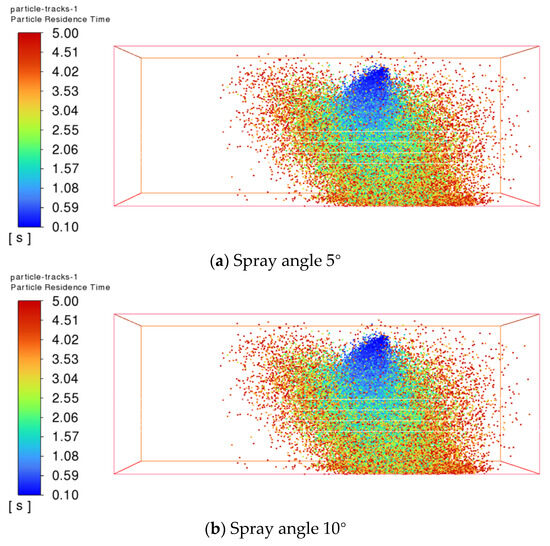
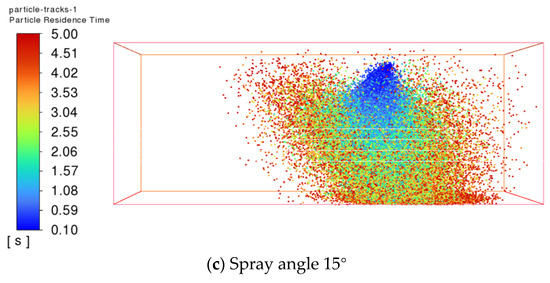
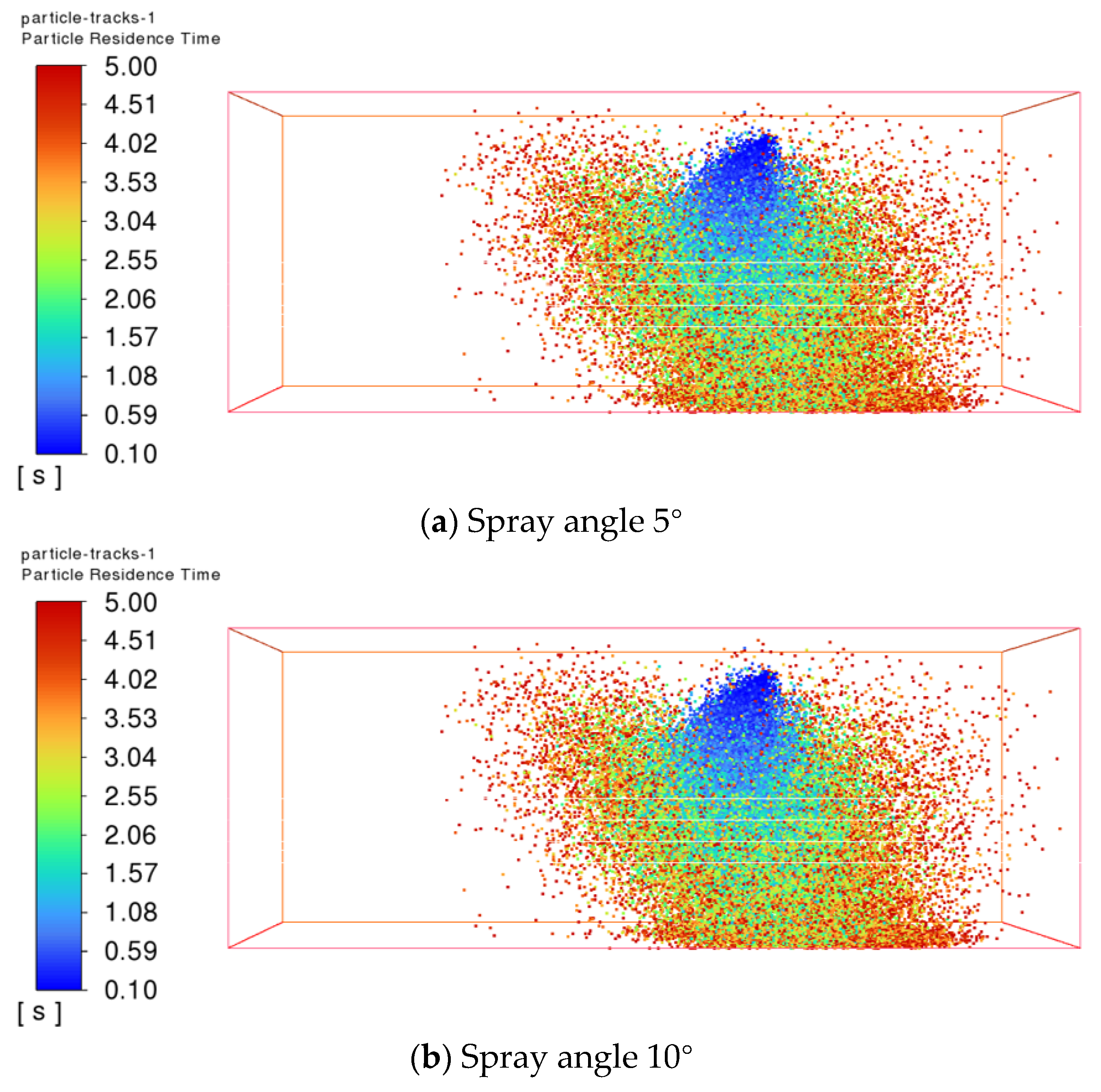
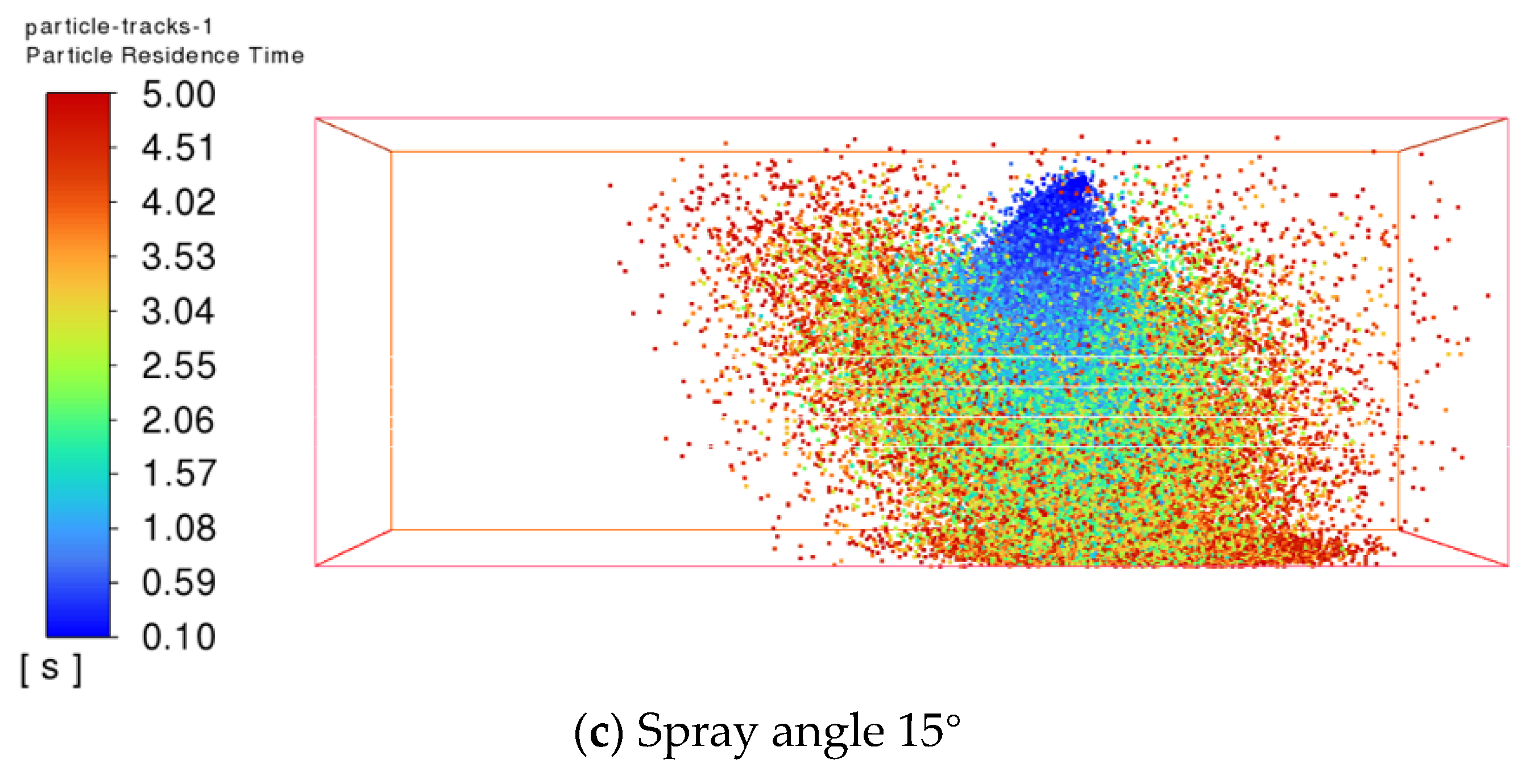
The above analysis indicated that the traveling speed of the device and the outlet airflow velocity of the fan jointly influenced droplet trajectories, thereby determining their final deposition patterns. Due to the guiding effect of the fan airflow, the relative velocity of the surrounding airflow generated by device movement was suppressed, resulting in a more stable overall flow field and reduced droplet disturbance. The airflow conditions ensured a relatively high droplet deposition density per unit area; however, the uniformity of deposition across different plant canopy layers still required improvement. Based on the optimal traveling speed and external airflow velocity parameters, the spraying angle was adjusted to 5, 10, and 15°. The influence of the nozzle inclination relative to the horizontal plane on droplet deposition density across spatial layers and deposition uniformity was then analyzed. The simulation results (Figure 15) show the movement and distribution of droplets at different spray angles.
Figure 15.
Spatial distribution of droplets under different spray angles.
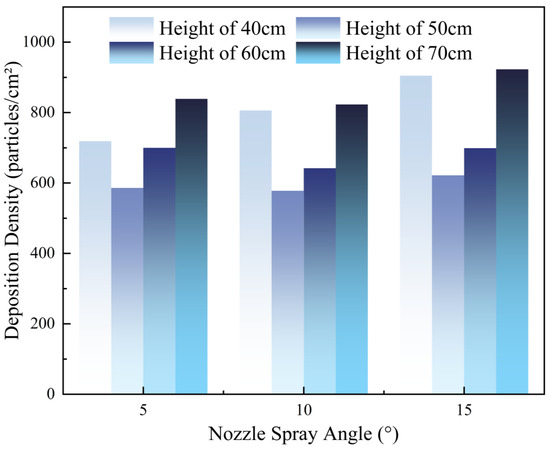
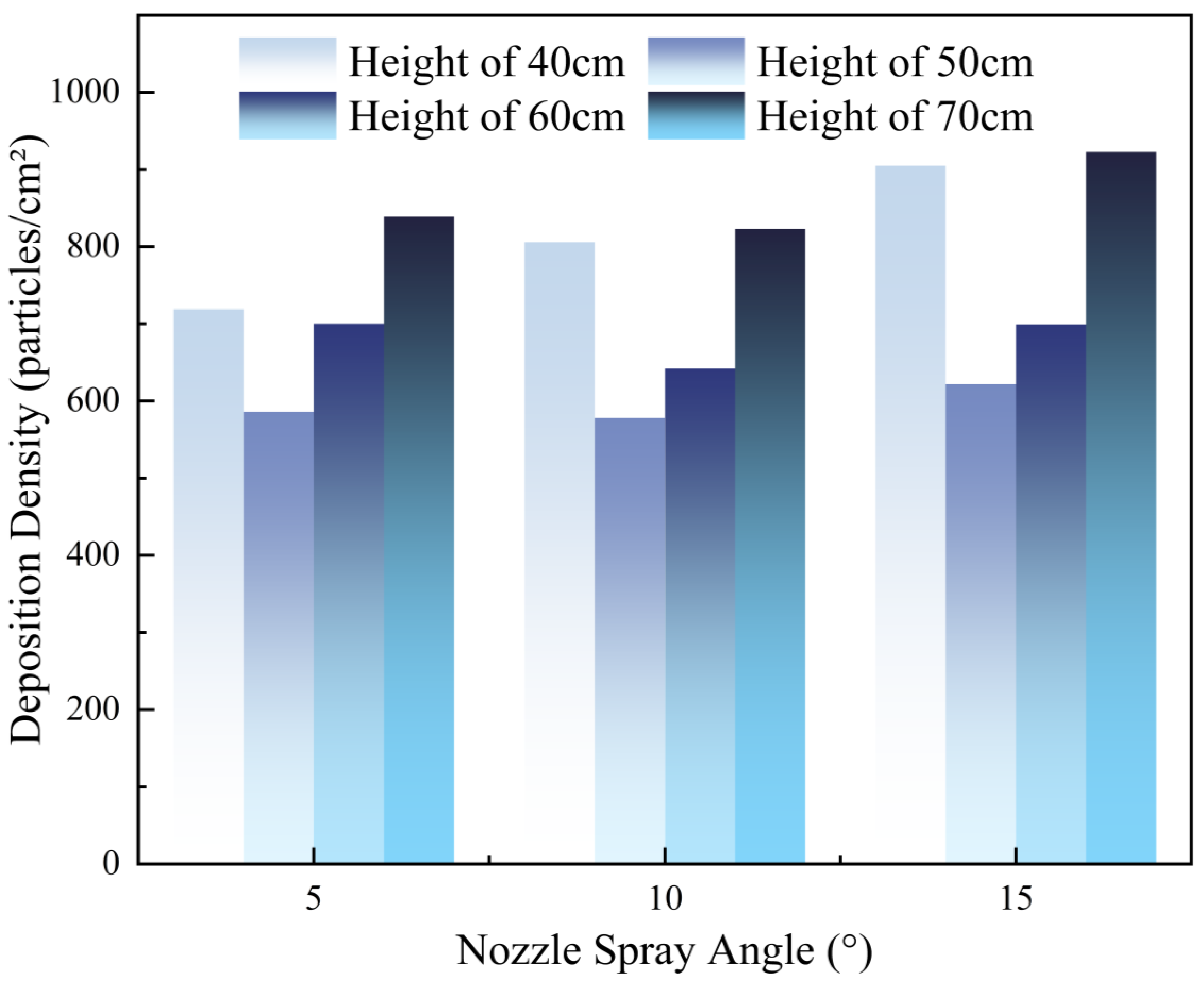
Figure 16 below presented the numerical simulation results of droplet deposition density (per unit area) at deposition heights of 40, 50, 60, and 70 cm under spraying angles of 5, 10, and 15°. At deposition heights of 40, 50, 60, and 70 cm with a spraying angle of 5°, the droplet deposition densities were 719, 586, 700, and 839/cm2, respectively, with a coefficient of variation of 14.57%. At a spraying angle of 10°, the droplet deposition densities were 806, 578, 642, and 823/cm2 across the respective layers, with a coefficient of variation of 17.01%. At a spraying angle of 15°, the droplet deposition densities were 905, 622, 699, and 923/cm2 across the layers, with a coefficient of variation of 19.08%. Statistical analysis was conducted on the experimental data of 5, 10 and 15°. Multiple repeated measurements were carried out. One-way ANOVA showed that the different spraying angles had a statistically significant impact on the uniformity of deposition (p < 0.001).
Figure 16.
The simulation results of the impact of spraying angle on droplet deposition.
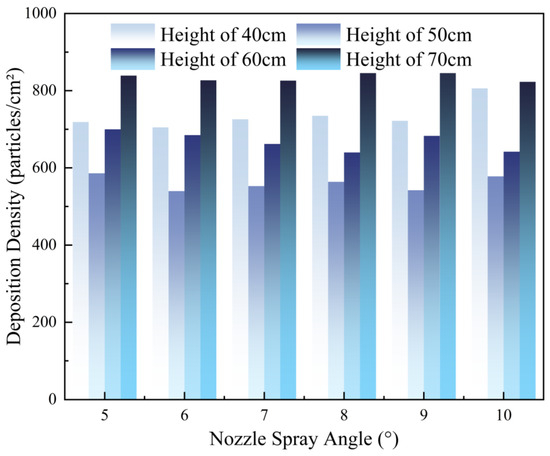
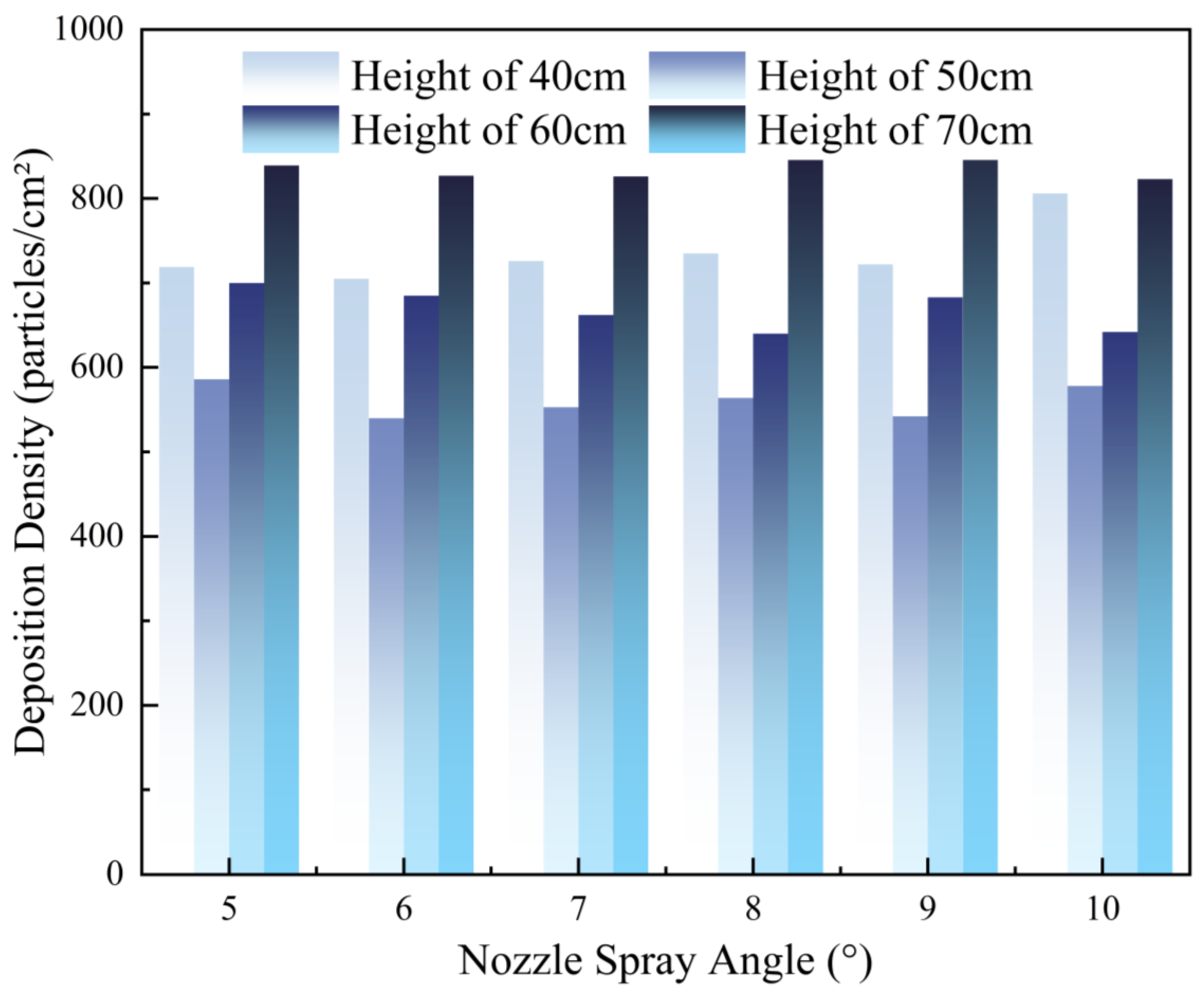
After the optimal parameters for external wind speed and travel speed were determined, the spraying angle was optimized. When the spraying angle was 0°, the coefficient of variation was 18.66%. At 5°, it was 14.57%. At 10°, it was 17.0%. At 15°, it was 19.38%. When the spraying angle was between 5° and 10°, the deposition of fog droplets in each layer was relatively uniform. The spraying angle was further optimized using the Lagrange interpolation method. The number of droplets deposited per unit area was measured at different spraying angles after optimization. The results were presented in Figure 17. Between 5° and 10°, the coefficient of variation reached a minimum at 5°. At this spraying angle, the uniformity of deposition in each layer of the space was the highest.
Figure 17.
The simulation results of the influence of the optimized spray angle on droplet deposition.
Compared with the optimization of traveling speed and external airflow velocity, adjusting the spraying angle further reduced the coefficient of variation in droplet deposition and improved deposition uniformity across the layers. As the spraying angle increased, the coefficients of variation across the spatial layers gradually rose, while deposition uniformity progressively deteriorated. At a spraying angle of 0°, the droplets left the nozzle with an initial vertical downward kinetic energy and then moved downward under the influence of gravity. Below the nozzle, a fan generated a lateral airflow, which strongly interacted with the vertically injected droplets. Initially, a strong collision occurred between the droplets and the airflow. Subsequently, the high speed and large momentum of the airflow weakened the droplets’ kinetic energy and carried them along with the flow. In addition, altering the spraying angle changed the initial momentum distribution of the droplets, exerting a significant influence on their trajectories and deposition patterns.
At lower spraying angles, the droplets acquired horizontal momentum due to the nozzle orientation, aligning with the direction of the external airflow. This alignment enabled the droplets to interact more effectively with the airflow, enhancing their entrainment and transport efficiency. As a result, droplet movement was dominated by the stable and uniform airflow. The variation in surrounding airflow induced by the device’s movement was moderated by the external airflow, enabling the droplets to be guided more uniformly toward the target area. This reduced lateral deviation and prolonged the residence time of droplets in the air. With higher momentum, droplet motion became more effectively coupled with the airflow, increasing both the number of droplets deposited per unit area and deposition uniformity. As the spraying angle increased and the nozzle became more inclined, the horizontal momentum of droplets after ejection increased, whereas their vertical momentum decreased. The reduced vertical momentum caused the droplets to move downward primarily under the influence of spraying pressure and gravity. Excessive horizontal momentum shifted droplet motion from being primarily carried by the airflow to following a parabolic path, with trajectories approaching ballistic motion. This increased the horizontal displacement and extended the suspension time in the horizontal direction. After ejection, the droplets’ kinetic energy gradually decayed, leading to prolonged horizontal suspension. This altered the deposition characteristics of each spatial layer, increasing the variation coefficient and reducing deposition uniformity. Therefore, as the spraying angle increased, the variation coefficient of deposition in each spatial layer rose, while deposition uniformity declined.
In conclusion, under an external wind speed of 0.3 m/s, a spraying angle of 5° enabled the droplet trajectory and the device-induced airflow to act synergistically, resulting in high deposition uniformity.
3.2. Spraying Test Results and Analysis
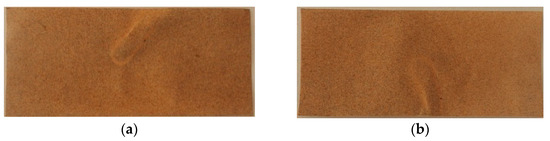
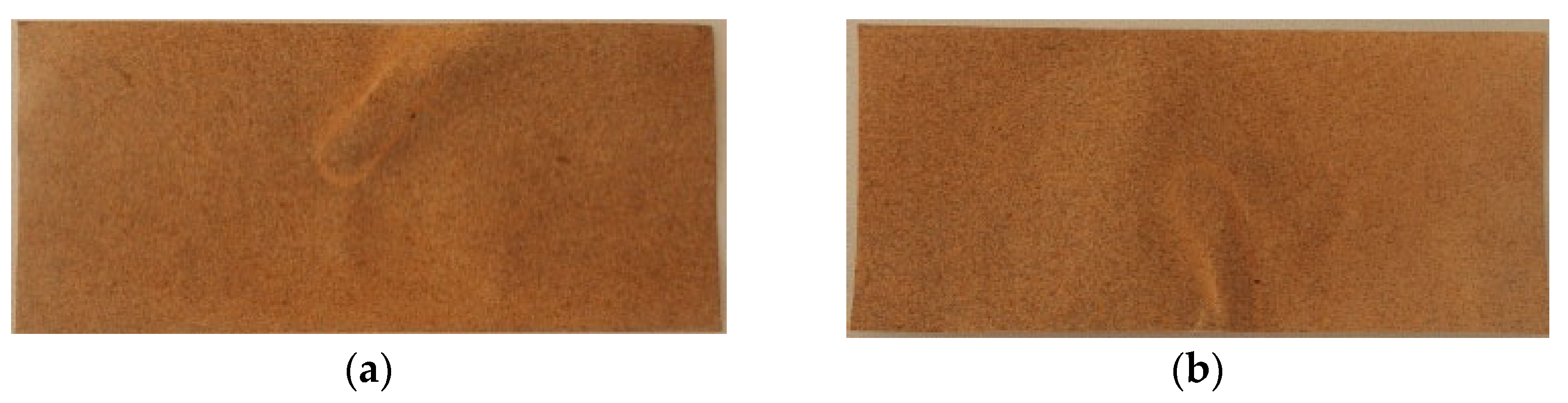
To verify the accuracy of the simulation results described above, a field test was conducted with the device to assess its operational performance. Under the optimal operating parameters, the greenhouse orbital air-conveying and atomizing device functioned stably and reliably. All functional modules were in normal working condition. The adhesion of the water-sensitive paper was shown in Figure 18 below.
Figure 18.
Spray effect. (a) 40 cm; (b) 70 cm.
The results of multiple experiments indicated that the droplet deposition characteristics in each spatial layer were highly favorable. The specific performance test results were presented in Table 3.
Table 3.
Test result of the spray.
Based on the analysis of average values obtained from multiple spray tests, the droplet deposition densities at heights of 40, 50, 60, and 70 cm from the ground were 629, 531, 688, and 920/cm2, respectively. The corresponding coefficient of variation in deposition was 23.93%, indicating relatively good overall deposition uniformity. On the other hand, the spray test results indicated that the droplet deposition per unit area in the lower part of the crops was lower than the simulation results, with the majority of deposition in the spatial layers concentrated in the upper and middle parts. This was primarily due to the relatively dense leaf distribution in some crop canopies, where mutual shading between the leaves reduced the penetration ability of the droplets, thereby affecting deposition distribution across the spatial layers. Nevertheless, the overall deposition uniformity remained satisfactory. The deposition coefficient of variation obtained from the experiment was 23.93%, with an error of less than 10% relative to the simulation results. This indicates a high degree of consistency between the experimental and simulation results.
3.3. Applicability and Feasibility Analysis of Orbital Wind-Spraying Atomization Device
The results of numerical simulations and greenhouse experiments indicate that the orbital wind-spraying atomization device satisfies the requirements for greenhouse pest and disease control. Based on agricultural operation requirements, such atomizing devices can be developed to enhance the application of air-assisted spraying technology and promote the development of pest control practices in controlled-environment agriculture. To evaluate the deposition performance of the track-type pneumatic atomization equipment, this study improved a previous model based on the device’s working principle and the forces acting on the droplets during motion; it analyzed the droplets’ comprehensive movement and force characteristics within the airflow field and thus investigated the deposition patterns of droplets in each spatial layer. As previously reported by Huiyuan Cui et al. [25], a moderate crosswind facilitates the horizontal drift of fog droplets. Numerical simulations of droplet movement and deposition were performed using computational fluid dynamics (CFD), and the effects of various operating parameters on droplet deposition were systematically investigated. The results indicate that the optimal operating parameters are a traveling speed of 0.3 m/s, an external wind speed of 0.3 m/s, and a spraying angle of 5°. Subsequently, the simulation results were validated through greenhouse-based experiments. The experimental results indicate that the track-type pneumatic conveying and atomization device exhibits excellent deposition characteristics throughout all spatial layers, with high deposition uniformity. These findings further confirm the feasibility and practicality of this pneumatic conveying and atomization technology for greenhouse pest control operations.
4. Discussion
In recent years, the influence of operation parameters on spraying efficiency and droplet deposition uniformity during the operation of agricultural protection equipment has remained a major research focus. Air-assisted atomization technology can effectively address this issue. It achieves this by forcing airflow to drive droplet movement, thereby expanding transport pathways within the crop canopy and enhancing droplet deposition characteristics across all spatial layers. Meanwhile, an appropriate airflow intensity contributes to maintaining uniform droplet deposition across spatial layers. For different agricultural protection devices, the effects of operational parameters on droplet deposition characteristics can vary significantly. Therefore, systematically investigating the effects of different operational parameters on droplet movement is crucial for achieving effective deposition. This investigation is essential for enhancing pest and disease control efficacy.
Previous studies have shown that varying operational parameters can significantly influence droplet deposition behavior [26]. Zhidong Wu et al. analyzed the effects of external wind speed, spraying angle, and other factors on fog droplet deposition, providing a theoretical basis for this study to investigate the impact of operational parameters on droplet movement [19]. However, most studies have primarily focused on theoretical analyses. They have overlooked the comprehensive effects of various operational parameters on droplet deposition in real operational environments. To comprehensively analyze the effects of different operational parameters on fog droplet deposition, this study improved a previous theoretical model and examined these effects based on the equipment’s working principles. Liyang et al. designed a novel autonomous air-assisted sprayer and performed spray tests to evaluate droplet deposition uniformity. However, the equipment occupied a portion of the ground planting area, and its longitudinal adjustment capability was limited [27]. Jinlong Lin et al. designed an autonomous air-assisted atomization device that addressed the issue of limited ground space. However, optimization of the spraying angle remains necessary to enhance droplet deposition uniformity [4]. Huiyuan Cui et al. found that crosswinds increase droplet drift [25]. Therefore, an orbital wind-assisted atomization device with a lateral airflow direction was developed. The device overcame ground space limitations and operated in the air. It was capable of automatically adjusting spray height, spray angle, and other parameters according to the requirements throughout the entire crop growth cycle. In terms of liquid deposition, the air-assisted atomization device achieved more effective deposition compared with traditional sprayers. It also reduced pesticide losses in the soil [15]. Computational fluid dynamics (CFD) was employed to numerically simulate the device. The effects of different operational parameters on droplet movement and deposition in three-dimensional space were investigated. Changes in deposition under various parameter conditions were analyzed using discrete particle tracking (DPM). This study focused on analyzing droplet deposition characteristics at different heights within spatial layers under varying operational parameters. During device operation, droplets are ejected from the nozzle and begin to move, with their deposition process primarily influenced by operational parameters. Using the improved mathematical model, the forces acting on droplets in three-dimensional space were analyzed: device traveling speed affects the relative velocity of surrounding airflow, external wind speed enhances droplet transport distance, and spraying angle influences the droplets’ initial momentum distribution.
Results showed that when the device’s traveling speed closely matched the external wind speed, and both were relatively low, interference from surrounding airflow on droplet movement was minimized. This resulted in optimal droplet deposition uniformity across all spatial layers. At smaller spraying angles, droplets gain greater horizontal momentum, enabling better alignment with airflow, thereby increasing transport distance and deposition uniformity. This study analyzed the effects of various operational parameters on device performance, providing guidance for optimizing parameters in similar pneumatic atomization devices. Nevertheless, this study has certain limitations. The influence of leaf shading on droplet movement was not considered, which may have caused deviations between experimental results and actual conditions. For example, densely packed leaves may impede droplet movement on certain deposition surfaces, leading to excessive accumulation and reduced uniformity across vertical layers. Furthermore, this study used the amount of fog droplets deposited per unit area at each height level of the space layer, as well as the uniformity of deposition, as indicators. This might have limited the applicability of the experimental results to densely vegetated crops. Notably, during experimental validation and numerical simulation, the water-sensitive paper placement was free from leaf obstruction. This made the results generally applicable for optimizing greenhouse crop pest control parameters when leaf shading is minimal. Moreover, in actual greenhouse operations, external factors such as human activity and natural ventilation can influence device performance. Future research should investigate the effects of dense leaf coverage on droplet deposition across all spatial layers. Additionally, findings should be validated in more controlled production greenhouse environments to enhance the generalizability and accuracy of the results.
5. Conclusions
This study aimed to address the challenges posed by the complex spatial structure of greenhouse sheds, low operational efficiency, inadequate uniformity of droplet deposition, and potential health risks to pesticide applicators. Accordingly, a track-type wind-assisted atomization robot for greenhouse applications was designed and developed. Firstly, considering the characteristics of greenhouse structures and the requirements of agricultural operations, an aerial track system was constructed to minimize the footprint of ground-based operations. The equipment utilizes air-assisted atomization technology, whereby high-speed airflow generated by the fan guides the droplets, achieving efficient coverage of the target area while maintaining environmental friendliness. Leveraging high-performance, low-cost, and low-power embedded control technology, an unmanned automatic control system suitable for the enclosed greenhouse environment was implemented, effectively reducing potential health risks to pesticide applicators associated with chemical dispersion. Building upon previous theoretical models with necessary improvements, this study analyzed the influence of operational parameters on the trajectories of fog droplets. To evaluate the deposition performance of the equipment, a combined approach of numerical simulation and experimental verification was employed, with the primary evaluation metrics being the droplet number per unit area and deposition uniformity across different spatial layers. Numerical simulations of the equipment operation were conducted using computational fluid dynamics (CFD), with a three-dimensional flow field model established via modeling software (SpaceClaim 2022 R1) to analyze the movement and deposition characteristics of droplets. Using the improved theoretical model, the forces acting on droplet movement were analyzed, and the effects of operational parameters (travel speed, external wind speed, and spraying angle) on both droplet trajectories and spatial layer deposition patterns were investigated. Simulation results indicate that under a traveling speed of 0.3 m/s, an external wind speed of 0.3 m/s, and a spraying angle of 5°, the droplet deposition per unit area on surfaces at heights of 70, 60, 50 and 40 cm from the ground was 719, 586, 700, and 839/cm2, respectively. The coefficient of variation was lowest at 14.57, which reflected the highest deposition uniformity. One-way analysis of variance was conducted. Within the parameters set in this study, travel speed, external wind speed, and spraying angle all had highly significant effects on droplet deposition uniformity (p < 0.001). The simulation results were validated through greenhouse experiments, which demonstrated that the droplet deposition in each spatial layer closely matched the simulated values, with deposition uniformity errors below 10%. These results indicate that the orbital pneumatic atomization equipment demonstrates stable operational performance. It meets the mechanization and efficiency requirements of greenhouse operations. Additionally, it provides both a theoretical foundation and practical reference for the application of air-assisted atomization technology in facility agriculture.
Author Contributions
Conceptualization, Z.W.,C.L. and W.Z.; methodology, Z.W. and C.L.; software, Z.W., C.L. and W.S.; validation, Z.W., C.L., W.Z., Y.F., X.L., M.F. and Y.L.; formal analysis, Z.W. and C.L.; investigation, Z.W. and C.L.; resources, Z.W. and C.L.; data curation, Z.W., C.L. and W.Z.; writing—original draft preparation, Z.W. and C.L.; writing—review and editing, Z.W., C.L.; visualization, Z.W. and C.L.; supervision, Z.W. and C.L.; project administration, W.Z. and Y.F.; funding acquisition, Z.W. and C.L. All authors have read and agreed to the published version of the manuscript.
Funding
This work was supported by Program for Young Talents of Basic Research in Universities of Heilongjiang Province (grant number YQJH2024272), the Collaborative Innovation Achievement Project of “Double First—Class” Disciplines in Hei long jiang Province (grant number LJGXCG2024-P25), and a Graduate Innovative Research Project of Qiqihar University for the Academic Year 2024–2025 (grant number QUZLTS_CX2024059).
Institutional Review Board Statement
Not applicable.
Informed Consent Statement
Not applicable.
Data Availability Statement
The original contributions presented in this study are included in the article. Further inquiries can be directed to the corresponding author.
Conflicts of Interest
The authors declare no conflicts of interest.
References
- Sun, Y.; Yuan, Y.; Ge, H.; Jiang, F.; Zhou, M.; Chen, F. The spatial pattern and change trend of agricultural greenhouse facilities in China from 2010 to 2022. Trans. Chin. Soc. Agric. Eng. 2025, 41, 291–299. [Google Scholar] [CrossRef]
- Dai, S.Q.; Ou, M.X.; Du, W.T.; Yang, X.J.; Dong, X.; Jiang, L.; Zhang, T.; Ding, S.M.; Jia, W.D. Effects of sprayer speed, spray distance, and nozzle arrangement angle on low-flow air-assisted spray deposition. Front. Plant Sci. 2023, 14, 1184244. [Google Scholar] [CrossRef] [Scilit]
- Feng, F.; Dou, H.J.; Zhai, C.Y.; Zhang, Y.L.; Zou, W.; Hao, J.J. Design and Experiment of Orchard Air-Assisted Sprayer with Airflow Graded Control. Agronomy 2025, 15, 95. [Google Scholar] [CrossRef] [Scilit]
- Lin, J.L.; Ma, J.; Liu, K.; Huang, X.; Xiao, L.P.; Ahmed, S.; Dong, X.Y.; Qiu, B.J. Development and test of an autonomous air-assisted sprayer based on single hanging track for solar greenhouse. Crop Protection. 2021, 142, 105502. [Google Scholar] [CrossRef] [Scilit]
- Qiu, W.; Guo, H.B.; Cao, Y.B.; Li, X.L.; Wu, J.H.; Chen, Y.F.; Yu, H.F.; Zhang, Z.W. An electrical vortex air-assisted spraying system for improving droplet deposition on rice. Pest Manag. Sci. 2022, 78, 4037–4047. [Google Scholar] [CrossRef] [Scilit]
- Li, T.; Qi, P.; Wang, Z.C.; Xu, S.Q.; Huang, Z.; Han, L.; He, X.K. Evaluation of the Effects of Airflow Distribution Patterns on Deposit Coverage and Spray Penetration in Multi-Unit Air-Assisted Sprayer. Agronomy 2022, 12, 944. [Google Scholar] [CrossRef] [Scilit]
- Song, J.; Wang, Z.C.; Zhai, C.Y.; Gu, C.C.; Zheng, K.; Li, X.C.; Jiang, R.H.; Xiao, K. Modeling of Droplet Deposition in Air-Assisted Spraying. Agronomy 2025, 15, 1580. [Google Scholar] [CrossRef] [Scilit]
- Godoy-Nieto, A.; Miranda-Fuentes, A.; Grella, M.; Blanco-Roldán, G.L.; Rodríguez-Lizana, A.; Gil-Ribes, J.A. Assessment of Spray Deposit and Loss in Traditional and Intensive Olive Orchards with Conventional and Crop-Adapted Sprayers. Agronomy 2022, 12, 1764. [Google Scholar] [CrossRef] [Scilit]
- Jiang, S.J.; Yang, S.H.; Xu, J.W.; Li, W.W.; Zheng, Y.J.; Liu, X.X.; Tan, Y. Wind field and droplet coverage characteristics of air-assisted sprayer in mango-tree canopies. Pest Manag. Sci 2022, 78, 4892–4904. [Google Scholar] [CrossRef] [Scilit]
- Lin, J.L.; Cai, J.P.; Xiao, L.P.; Liu, K.; Chen, J.; Ma, J.; Qiu, B.J. An angle correction method based on the influence of angle and travel speed on deposition in the air-assisted spray. Crop Protection. 2024, 175, 106444. [Google Scholar] [CrossRef] [Scilit]
- Miao, Y.Y.; Chen, X.; Gong, Y.; Liu, D.J.; Chen, J.; Wang, G.; Zhang, X. Design and test of powerful air-assisted sprayer for high stalk crops. Front. Plant Sci. 2023, 14, 1266791. [Google Scholar] [CrossRef] [Scilit] [PubMed]
- Gu, C.C.; Liu, Z.J.; Pan, G.T.; Pu, Y.J.; Yang, F.Z. Optimization of working parameters for 3MGY-200 axial air-assisted sprayer in kiwifruit orchards. Int. J. Agric. Biol. Eng. 2020, 13, 81–91. [Google Scholar] [CrossRef] [Scilit]
- Dou, H.J.; Li, Q.; Zhai, C.Y.; Yang, S.; Zhao, C.J.; Gao, Y.Y.; He, Y.K. Computational model of pesticide deposition distribution on canopies for air-assisted spraying. Front Plant Sci. 2023, 14, 1153904. [Google Scholar] [CrossRef] [Scilit] [PubMed]
- An, Q.S.; Li, D.; Wu, Y.L.; Pan, C.P. Deposition and distribution of myclobutanil and tebuconazole in a semidwarf apple orchard by hand-held gun and air-assisted sprayer application. Pest Manag. Sci. 2020, 76, 4123–4130. [Google Scholar] [CrossRef] [Scilit]
- Li, Y.J.; Li, Y.F.; Pan, X.; Li, Q.X.; Chen, R.H.; Li, X.S.; Pan, C.P.; Song, J.L. Comparison of a new air-assisted sprayer and two conventional sprayers in terms of deposition, loss to the soil and residue of azoxystrobin and tebuconazole applied to sunlit greenhouse tomato and field cucumber. Pest Manag. Sci. 2018, 74, 448–455. [Google Scholar] [CrossRef] [Scilit]
- Zhang, J.; Chen, Q.; Zhou, H.P.; Zhang, C.; Jiang, X.S.; Lv, X.L. CFD analysis and RSM-based design optimization of axial air-assisted sprayer deflectors for orchards. Crop Protection 2024, 184, 106794. [Google Scholar] [CrossRef] [Scilit]
- Lu, X.Y.; Gong, Y.; Liu, D.J.; Wang, G.; Chen, X.; Zhang, X.; Liang, Q.H. CFD simulation and experiment on the flow field of air-assisted ultra-low-volume sprayers in facilities. Int. J. Agric. Biol. Eng. 2021, 14, 26–34. [Google Scholar] [CrossRef] [Scilit]
- Duga, A.T.; Delele, M.A.; Ruysen, K.; Dekeyser, D.; Nuyttens, D.; Bylemans, D.; Nicolai, B.M.; Verboven, P. Development and validation of a 3D CFD model of drift and its application to air-assisted orchard sprayers. Biosyst. Eng. 2017, 154, 62–75. [Google Scholar] [CrossRef] [Scilit]
- Wu, Z.D.; Liu, C.M.; Li, C.; Song, W.S.; Zhang, S.Q. Establishment of fog droplet distribution model and study on canopy deposition uniformity. Phys. Fluids. 2024, 36, 077113. [Google Scholar] [CrossRef] [Scilit]
- Ambaw, A.; Dekeyser, D.; Vanwalleghem, T.; Van Hemelrijck, W.; Nuyttens, D.; Delele, M.A.; Ramon, H.; Nicolai, B.; Bylemans, D.; Opara, U.L.; et al. Experimental and numerical analysis of the spray application on apple fruit in a bin for postharvest treatments. J. Food Eng. 2017, 202, 34–45. [Google Scholar] [CrossRef] [Scilit]
- Ou, M.X.; Zhang, Y.; Wu, M.M.; Wang, C.Y.; Dai, S.Q.; Wang, M.; Dong, X.; Jiang, L. Development and Experiment of an Air-Assisted Sprayer for Vineyard Pesticide Application. Agriculture 2024, 14, 2279. [Google Scholar] [CrossRef] [Scilit]
- Guo, Z.H.; Zhang, J.J.; Chen, L.N.; Wang, Z.Y.; Wang, H.B.; Wang, X.F. Study on Deposition Characteristics of the Electrostatic Sprayer for Pesticide Application in Greenhouse Tomato Crops. Agriculture 2024, 14, 1981. [Google Scholar] [CrossRef] [Scilit]
- Wawrzosek, J.; Parafiniuk, S. Optimization of the Opening Shape in Slot Spray Nozzles in a Field Boom Sprayer. Sustainability 2021, 13, 3291. [Google Scholar] [CrossRef] [Scilit]
- Buosi, G.G.P.; Neto, A.D.R.; Lopes, P.R.M.; Ferrari, S.; Guerreiro, J.C.; Filho, P.J.F.; Lima, R.C.; Nascimento, V.; Funichello, M.; Raetano, C.G.; et al. Droplet size and hydraulic spray nozzles in peanut plant spray deposition. J. Plant Dis. Protection. 2024, 131, 27–33. [Google Scholar] [CrossRef] [Scilit]
- Cui, H.Y.; Wang, C.D.; Yu, S.H.; Xin, Z.B.; Liu, X.M.; Yuan, J. Two-stage CFD simulation of droplet deposition on deformed leaves of cotton canopy in air-assisted spraying. Comput. Electron. Agric. 2024, 224, 109228. [Google Scholar] [CrossRef] [Scilit]
- Zhou, H.T.; Ou, M.X.; Dong, X.; Zhou, W.; Dai, S.Q.; Jia, W.D. Spraying performance and deposition characteristics of an improved air-assisted nozzle with induction charging. Front. Plant Sci. 2024, 15, 1309088. [Google Scholar] [CrossRef] [Scilit]
- Li, Y.; Yuan, J.; Liu, X.H.; Niu, Z.R.; Chen, B.L.; Liu, X.M. Spraying strategy optimization with genetic algorithm for autonomous air-assisted sprayer in Chinese heliogreenhouses. Comput. Electron. Agric. 2019, 156, 84–95. [Google Scholar] [CrossRef] [Scilit]

Disclaimer/Publisher’s Note: The statements, opinions and data contained in all publications are solely those of the individual author(s) and contributor(s) and not of MDPI and/or the editor(s). MDPI and/or the editor(s) disclaim responsibility for any injury to people or property resulting from any ideas, methods, instructions or products referred to in the content. |
© 2026 by the authors. Licensee MDPI, Basel, Switzerland. This article is an open access article distributed under the terms and conditions of the Creative Commons Attribution (CC BY) license.