
Article

Strategies for Wine, Orange Processing and Olive Oil By-Product Valorisation Based on GIS Spatial Analysis

by
Grazia Cinardi
,
Provvidenza Rita D’Urso
* and
Claudia Arcidiacono
Department of Agriculture Food and Environment, University of Catania, Via S. Sofia 100, 95123 Catania, Italy
*
Author to whom correspondence should be addressed.
AgriEngineering 2026, 8(1), 25; https://doi.org/10.3390/agriengineering8010025 (registering DOI)
Submission received: 7 November 2025 / Revised: 2 January 2026 / Accepted: 6 January 2026 / Published: 9 January 2026

Abstract

Waste valorisation has become a key strategy for applying circular economy principles in the agro-industrial field. This study investigated the territorial implementation of the waste composting on a territorial scale. The wastes considered were the post-processing orange waste, spent olive oil pomace, and spent wine grape pomace. Their potential use as soil amendments across the provinces of Sicily was assessed through a GIS-based analysis, taking into account nitrogen (N) application constraints. Moreover, a cascade valorisation scheme was also evaluated: post-processing orange waste was first used as animal feed, and the remaining fraction was directed to composting; olive pomace was first sent to pomace oil extraction mills, and the residual material was subsequently used for composting. Results indicate that N inputs derived from composted residues remain below legal thresholds in all provinces, with relative contributions ranging from 38% to 92% of the regulatory limits. Spatial variability in nitrogen availability reflects the territorial distribution of agro-industrial activities, highlighting the importance of localised management strategies. These findings demonstrate that composting, combined with cascade valorisation, is an effective pathway to close nutrient cycles, reduce waste generation, and support sustainable biomass management in regional agri-food systems.

1. Introduction

The climate instability of recent years, coupled with the scarcity of fertile soils and soil deterioration, poses a serious threat to food security, especially in a context of a steadily increasing world population [1]. It is essential to consider the impact of the agri-food system, which is responsible for producing a large amount of waste, with significant effects on both human health and the environment [2]. Efficiently managing these wastes has recently become a priority issue internationally, given that the European agricultural sector alone generated around 21 million tonnes of waste in 2020 [3]. Such wastes represent an opportunity within circular economy (CE) models [4], which promotes sustainable development by replacing the traditional concept of the “end of life” of products with practices that reduce, reuse and recycle materials throughout the production, distribution and consumption cycle. In the Mediterranean basin, the predominant crops are citrus fruits, grapes, olives and stone fruits [5]. In 2021, the total production of these products in the Mediterranean region was approximately 13, 28.3 and 10 million tonnes respectively [6].
In Sicily, in particular, citrus production reached 1.47 million tonnes in 2021, with about 88,000 hectares cultivated, of which 58,000 hectares were dedicated to oranges, 21,000 ha to lemon, and 5000 ha to mandarin [7]. Notably, there was a substantial increase in orange cultivation in this region compared to 2022, particularly in the provinces of Catania (i.e., +500 hectares) and Agrigento (i.e., +200 hectares) [8]. Conversely, vine cultivation in Sicily covers around 95,760 hectares, and the region is renowned for its viticultural biodiversity and leading position in organic viticulture, with approximately 70 native grape varieties. In fact, 32,787 hectares of vineyards in Sicily are cultivated by using organic methods, representing around a quarter of the national organic wine-growing area [9]. Furthermore, the region is one of Italy’s leading areas for the production of olives and olive oil. In 2024, it produced over 100,000 quintals of oil, ranking third nationally. However, the sector’s competitiveness and investment capacity are limited by the prevalence of medium-sized olive farms, which average only 1.3 ha in size. At the same time, demand for exports to foreign markets is growing, particularly in the United States, Canada and Japan.
While the processing of these products yields high-value goods, it also generates a considerable amount of organic waste. If not properly managed, this waste presents an environmental challenge. The focus of recent research studies and industrial innovations is to transform this challenge in an opportunity for the sustainable exploitation of by-products [10,11,12].
Castagna et al. [13] conducted a review analysing the main strategies for the valorisation of citrus, grape and olive wastes, typical of the Mediterranean area. While acknowledging that many of these solutions are still in the laboratory phase, the authors propose the integration of digital tools and multidisciplinary approaches to facilitate their industrial implementation. Another study by Negrea et al. [14] examined the sustainable use of citrus peel in jam production to enhance its nutritional and functional properties. This approach yielded high levels of bioactive compounds and antioxidant activity.
Furthermore, Hartinger et al. [15] suggested that citrus pulp could be valuable as feed for dairy cows. A meta-analysis evaluating the effect of different levels of citrus pulp in the diet showed that milk production increased with low levels of inclusion (0–10%) without affecting food intake.
In the context of the bio-circular economy, cascade valorisation refers to the sequential use of biomass and agro-industrial by-products through a hierarchy of processes that maximise their economic value, while minimising the environmental impacts, before their final return to the environment [16]. Rather than treating residues as a waste, they are initially directed toward higher value applications such as the production of animal feed, the extraction of bioactive compound or the energy generation. Only after these stages they are used for lower value purposes, including composting or soil amendment [17].
The current national regulatory framework is mainly regulated by Legislative Decree No 75 of 29 April 2010 [18], which reorganised and revised the subject of fertilisers, including soil improvers. In Article 2, the latter are defined as materials added to the soil <<to preserve or improve its physical or chemical characteristics or biological activity>>. A crucial update was introduced by the Decree of 2 February 2022, which added a new and specific category to Annex 2 of Legislative Decree 75/2010: <<Composted soil improver from agrofood chain waste>>. Among the requirements, a minimum 25% organic carbon content in dry matter, a minimum 7% humic and fulvic carbon content, and at least 80% of the total nitrogen (N) must be in organic form. On the other hand, at the European level, Regulation (EU) 2019/1009 [19] harmonises the standards for fertiliser products with CE marking.
In the literature, many studies [20,21] evaluated the sustainable reuse of agricultural by-products at a territorial scale. Geographic Information Systems (GIS) are an effective way of integrating and analysing georeferenced data. They allow residual biomass distribution to be mapped, areas under greater environmental pressure to be identified, and sustainable management strategies to be supported [22].
Studies carried out in Sicily have already demonstrated the effectiveness of these tools. For example, Beccali et al. [23] used GIS models to quantify residual resources and plan energy plants, and Valenti et al. [24] developed a spatial index to identify locations suitable for biogas production, thereby reducing logistics costs and environmental impact. More recently, Catalano et al. [25] applied GIS techniques and predictive ecological models to estimate the potential of citrus biomass in the province of Syracuse. This study identified over 184,000 tonnes of exploitable biomass, providing concrete support for spatial planning.
These examples confirmed the central role of geospatial technologies in the valorisation of by-products and the promotion of a circular agricultural economy. To the authors’ knowledge, the GIS-spatial analysis has not been applied to a cascade valorisation approach for the citrus, olive oil and wine sectors in Sicily.
This research aims at assessing the feasibility of composting agricultural by-products and using them as a soil amendment within the same areas where the primary agricultural production occurs. The proposed approach is based on a spatial assessment that integrates the distribution of residual biomass, the location of major cropping areas, and key environmental constraints across the provinces of Sicily, about the levels of nitrogen that can be applied to the soil. By leveraging GIS-based spatial analysis, the research introduces an innovative territorial perspective on bio-circular economy strategies, in which resource use is optimised through cascade valorisation pathways and by-products are reintroduced into the production cycle. In this study, the cascade valorisation approach was applied to agro-industrial residues from the citrus, olive oil and wine sectors in Sicily. Specifically, orange-processing residues were first used as livestock feed, olive pomace was initially processed for oil extraction, and the resulting material was subsequently composted, while wine pomace was directly used for composting. This closed-loop framework reduces waste generation, enhances soil fertility, and promotes local resource cycling. Ultimately, the study provides a decision-support tool for policymakers and stakeholders to design territorially grounded strategies for sustainable biomass management and circular agri-food systems.

2. Materials and Methods

In this study the potential for adding value to by-products from the production of wine, citrus-processed products and olive oil is assessed. The analysis integrates agricultural activities, agro-industrial production data and territorial analysis tools with GIS support. The main methodological steps are as follows:
-
data collection: acquisition of quantitative data on regional agricultural production (wine, orange-processed products, and olive oil) from official statistical sources and sectoral databases.
-
estimation of by-products: calculation of quantities of by-products generated using specific yield coefficients validated in the literature;
-
analysis of potential uses: assessment of the potential use of by-products for animal feed and composting, with reference to animal nutritional parameters and fertilisation needs.
-
spatial analysis with GIS involves georeferencing the collected data and integrating it into a GIS environment to identify areas with the greatest by-product availability and possible logistical connections with recovery plants.

2.1. Data Collection

The collection of production and cultivated area data for olive trees, citrus fruits and viticulture at a provincial level in Italy was based on data provided by the National Institute of Statistics (ISTAT) between 2020 and 2024. For each species and province, the production/area ratio for each year, the average value, and the standard deviation over five years were calculated. This analysis enabled the consistency of these indicators over time to be assessed, in order to highlight any trends or anomalies. Specifically, it was verified that the ratio of production (in quintals) to area (in hectares) remained substantially constant for each province over the considered period. The input data for each species (i.e., olives, citrus fruits and viticulture) were processed based on the average production over the last five years in each Sicilian province.
However, the use of advanced GIS technologies, thanks to the ability to manage and analyse geospatial data at different levels of detail, has improved understanding of agricultural sustainability and supported the development of more effective policies and decisions [26].
In Italy, the management of by-products from the processing of olive oil and orange fruits is governed by Legislative Decree No. 152 of 3 April 2006, known as the “Consolidated Environmental Act” [27]. This regulatory framework is of crucial importance as it allows certain olive oil by-products to be classified as “plant materials from agricultural activities used in agricultural activities”, thus distinguishing them from hazardous waste. This recognition allows them to be managed as a resource rather than as waste, provided that the relevant regulations are complied with and no negative impact on the environment or human health is generated.

2.1.1. Grape By-Products

Grape marc is a highly degradable organic material, accounting for around 20–25% of the total weight of grapes. It consists mainly of skins (43%), seeds (23%) and stalks (25%). Incorrect disposal can have negative effects on the environment, crop health and human health, so its management requires particular attention [28]. In the EU, pomace is often sent to distilleries where it is processed to extract residual ethanol for use in producing spirits. This results in exhausted grape pomace being obtained [29].
Around 75% of grapes are used for wine production, with 20–30% of these representing waste products with significant potential for valorisation, such as grape pomace and wine lees [30,31].
On average, the process of pressing grapes yields approximately 74% wine, 13% virgin pomace and 2.2% stalks and other waste. About the 13% of the total weight, representing virgin pomace, only 2% is recovered immediately, while the remaining 11% is used for distillation. Ultimately, 42% of the 11% of the total grape weight becomes spent pomace [32]. Therefore, the formula used for calculating reusable grape pomace was the following:
g r a p e   p o m a c e = ( 0.11 × 0.42 ) × Y e a r l y   w i n e   g r a p e   p r o d u c t i o n .

2.1.2. Olive By-Products

On average, olive pressing yields 15–20% oil, 30–35% virgin pomace, and 55–60% physiological water. Further processing of the virgin pomace yields around 50% exhausted pomace, with the remainder being pomace oil and physiological water. The variability depends on:
-
extraction technology (i.e., two- or three-phase system);
-
cultivar (e.g., Sicilian varieties such as Nocellara or Biancolilla have different yields);
-
state of ripeness of the olive;
-
moisture content of the fruit.
The exhausted pomace has been computed with the following formula:
e x h a u s t e d   p o m a c e   =   0.5   ×   0.325   ×   Y e a r l y   o l i v e s   f o r   o i l   p r o d u c t i o n

2.1.3. Orange-Processing By-Products

Valenti et al. [33] highlighted that approximately 30% of total citrus production is destined for processing by the juice industry. Of this, 56% consists of solid waste, including peel, membranes, vesicles and seeds. Based on these data, the annual quantity of orange waste generated can be estimated using the following formula:
o r a n g e   w a s t e   =   0.3   ×   0.56   ×   Y e a r l y   O r a n g e   P r o d u c t i o n

2.2. Estimation of Biomass Uses, for Bovine Nutrition

Orange wastes are supposed to pass through a cascade valorisation process. Firstly, it is given priority to intensively feed beef, dairy and mixed cattle in Sicily. The number of animals for each province has been acquired from the National Zootechnical Registry of the Italian Ministry of Health (IZS) (https://www.vetinfo.it/j6_statistiche/#/ accessed on 24 May 2025). The study by Gulisano et al. [34], advocated the use of fresh orange waste in dairy cow diets at doses ranging from 6 to 10 kg per cow per day. Specifically, an average of 8 kg per day was used over a period of six months from December to May, based on the assumption that the orange waste would be used as cattle feed within the same province. The remaining part of the orange waste in each province would be used in the same province agricultural lands as soil amendment.

2.3. Estimating the N from Biomasses Residues of Agro-Industrial Activities

Accurately estimating the N content of biomass residues from agro-industrial activities is essential for evaluating their agronomic and environmental potential for valorising them through composting. Orange waste contains an average of 1.39% N on a dry basis, while grape marc has a N content ranging from 1% to 2% by fresh weight [32]. The content of N in exhausted olive pomace is 1.397 ± 0.199% [35].
Based on these coefficients, the total N content of each residue can be calculated as:
N   ( spent   olive   pomace )   =   spent   olive   pomace   ×   1.397 100 N   ( orange   waste )   =   orange   waste ×   1.39 100 N   ( spent   grape   pomace )   =   spent   grape   pomace   ×   1.50 100
The composting process reduces N percentage in biomass [36]. A study by Zhao et al. [37] found that N losses amounted to around 31.4%, comprising 17.2% ammoniacal nitrogen (NH3-N) and 1.4% nitrous oxide (N2O-N). NH3-N represents the most significant fraction of total nitrogen losses, contributing 55% to the overall decline. The main factors influencing these losses are the composting method, the type of biomass, and the duration of the process. In this study, the N content of each biomass after the composting process has been calculated by applying a reduction coefficient of 0.686% (i.e., 1−0.314%).

2.4. Study of Nitrate Vulnerable Zone (NVZ)

The Nitrates Directive (91/676/EEC) [38] requires Member States to identify polluted or at-risk waters and designate ‘Nitrate Vulnerable Zones’ (NVZs) within their territories. In Italy, this directive has mainly been transposed into national legislation through Legislative Decree No. 152 of 3 April 2006 [27] and subsequent emendations, as well as the Ministerial Decree of 19 April 1999 [39]. While these regulations allow for exceptions, they generally establish specific limits for the application of N in NVZs, such as a maximum of 170 kg of N per hectare per year from livestock manure.
For this reason, it is essential to identify these areas in order to adapt agricultural practices. The following analysis considered the NVZ shapefiles for the Region of Sicily [40], which enabled subsequent processing.
In this study, the NVZ shapefiles had been loaded and projected in QGIS environment.
The percentage of NVZ area for each crop in each province (NVZp) were calculated as the NVZ of the area (Pa) divided by the total area (Ta).
N V Z p = P a   T a × 100   [ % ]
The same NVZp value for each crop in each province was also assumed for the agricultural production areas. Therefore, for each province it was assumed a limitation for the amount of N to be used in the crop of the total agricultural land.

2.5. Estimation of N Max to Be Spread on Agricultural Land for Every Province: Law Limitations

In order to assess the N limits in every province, the regional regulations, in particular the Sicilian plan on water safeguard [41] have been considered. For agricultural firms situated in non-vulnerable zones, the maximum limit for N input is 340 kg ha−1 (named Nmax hereafter). Conversely, in areas designated as Vulnerable Zones due to agricultural Nitrates (NVZ), a maximum N input of 170 kg ha−1 (named NmaxNVZ hereafter) is established.

3. Results

3.1. Input Data Collected and By-Product Calculation

In Table 1, the average value of the production/surface ratio between 2020 and 2024 it is shown for each province and for each fruit.
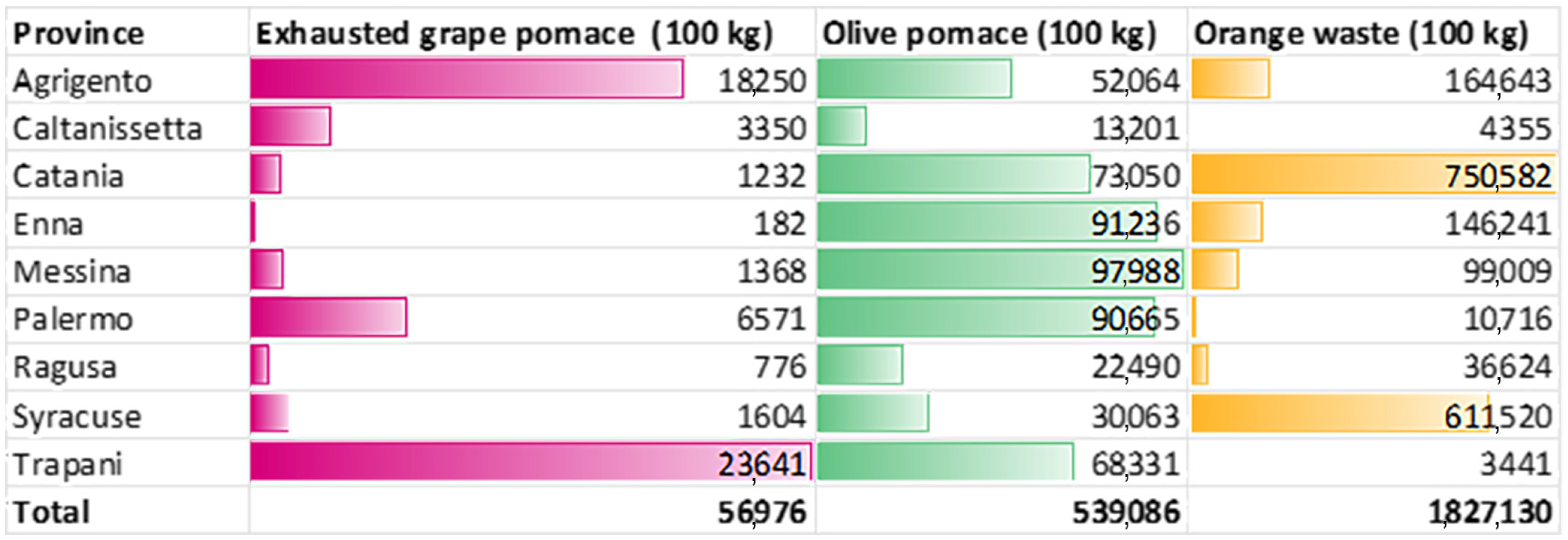
Table 1 and Figure 1 provide a quantitative basis for understanding the spatial variability of agricultural productivity across Sicilian provinces for the main fruit species considered. Table 1 reports the average production-to-area ratios for the period 2020–2024 and highlights clear differences in crop performance among territories. Provinces such as Ragusa, Enna, and Syracuse show notably higher citrus productivity, while Catania and Enna display comparatively high yields for olives. Conversely, provinces like Trapani and Agrigento exhibit lower production densities for specific crops. This heterogeneity is essential for estimating the potential generation of biomass and by-products, which depend directly on local production efficiency.
Figure 1 visually complements Table 1 by illustrating the magnitude of these differences through a graphical comparison of yield ratios. The bar lengths immediately allow to identify high-performing and low-performing provinces for each crop. This visualisation enhances the interpretability of the numerical data and supports the identification of spatial clusters where by-product availability may be significant. Together, Table 1 and Figure 1 provide the foundational input for calculating the annual amounts of citrus waste and other by-products considered in the subsequent stages of the assessment. Their combined use ensures that the by-product estimation is based on empirical, region-specific production data rather than uniform or averaged assumptions.
Based on these results and following the equation presented in Section 2.1.1, Section 2.1.2 and Section 2.1.3, the residues from orange processing, olive oil and wine production were quantified. Figure 1 shows the quantity of exhausted grape pomace, exhausted olive pomace after pomace oil extraction, and orange post-processing waste that can be obtained in each province.
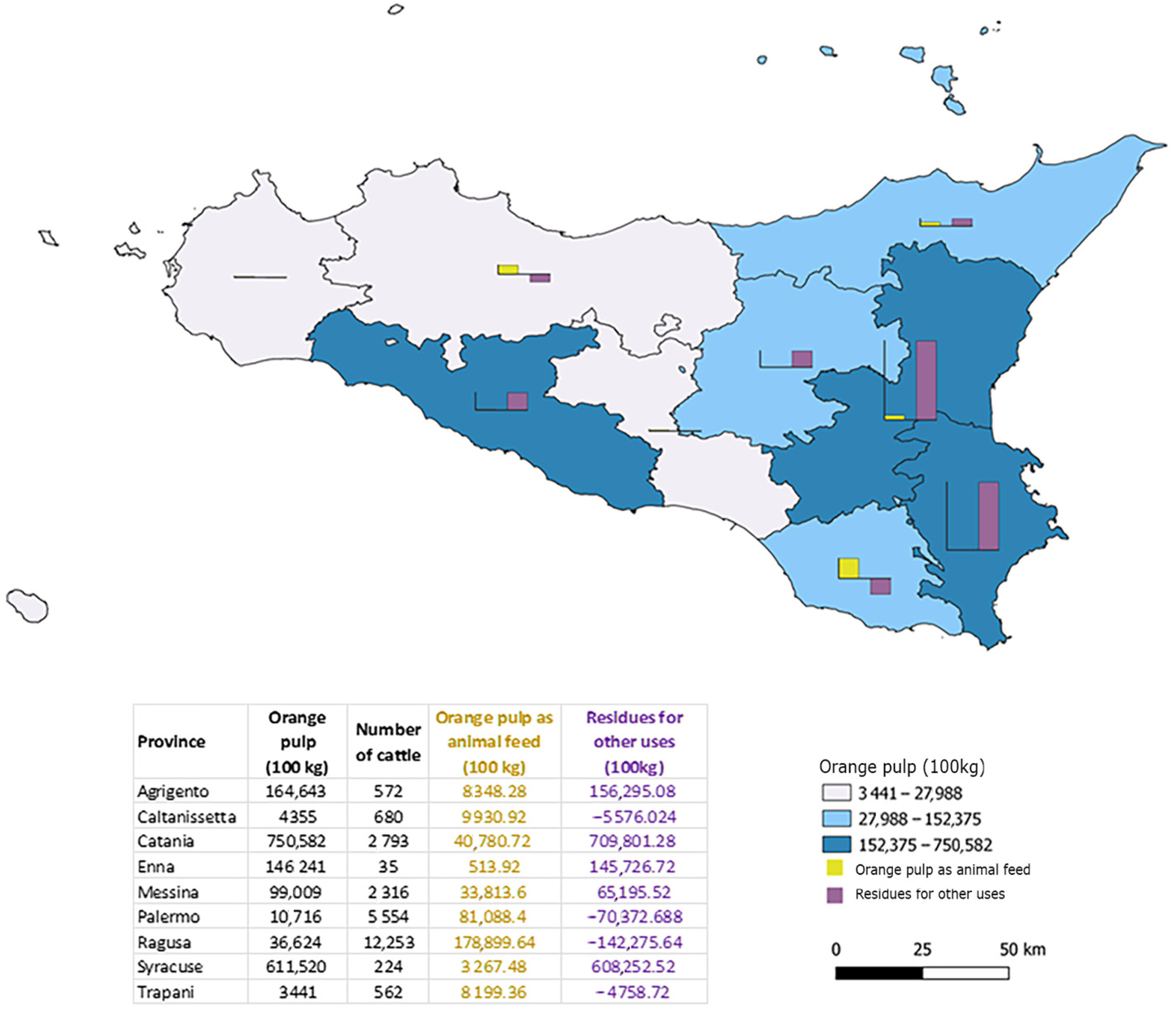
In particular, for the orange post-processing waste, the bio-circular economy hypothesis was to use orange waste for animal feed, then the remaining part, if any, for composting. Therefore, after calculating the total amount of citrus waste, the amount of citrus waste needed for feeding them was estimated as 8 kg by day. Figure 2 shows a thematic map of the total production of orange waste (blue shades). Moreover, based on animal presence in each province, and citrus waste used as animal feed (yellow bar), Figure 2 shows the province in which there is a residue useful for composting (positive purple bar) and the provinces in which there are not (negative purple bar).

3.2. Estimating the Amount of N from Biomass Residues from Agro-Industrial Activities

Following the formulas presented in Section 2.3, Table 2 shows the amount of N available from each agro-industrial waste in each province. As can be seen in the Caltanissetta, Palermo, Ragusa and Trapani provinces, the amount of N from orange should be considered 0 kg as the whole amount of orange post-processing waste was considered for animal feeding.
After that, the amount of N finally available after composting for the agricultural activities has been quantified for each province (Table 3).

3.3. N Management in Agricultural Lands Under NVZ Restriction

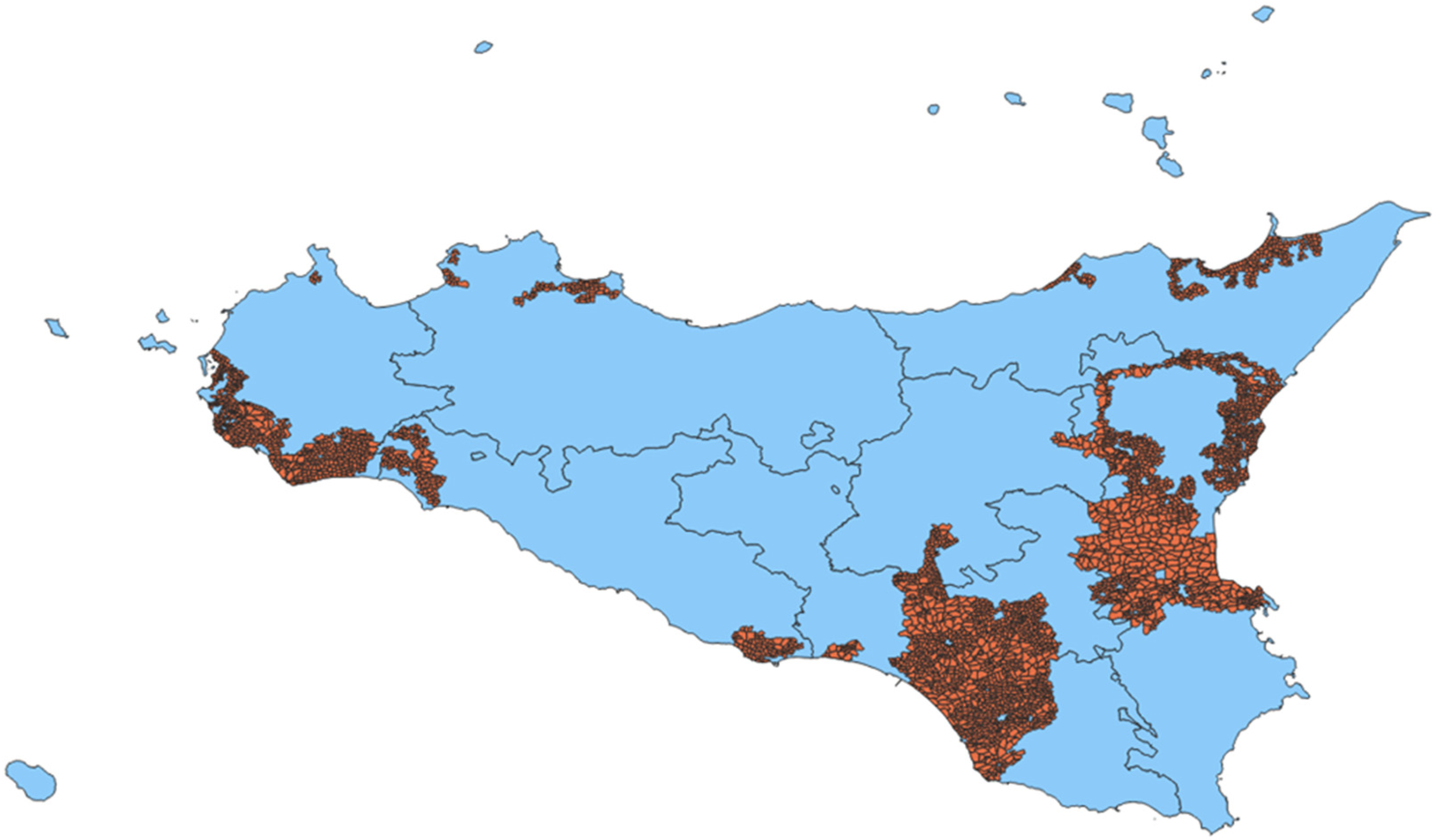
In order to evaluate the real amount of hectares affected by NVZ, the official shape file from the Sicilian region repository has been analysed (Figure 3). Then, the NVZp was calculated for each province. The data used and the results are shown in Table 4.
Based on the NVZp of each province, the maximum amount of nitrogen that can be applied to agricultural land was calculated for each province and for each crop considered (Nmax tot). Therefore, for each agro-industrial by-product considered the amount of N available after composting (N available) was calculated. The third column of Table 4 shows the amount of N that might be added in the agricultural land to achieve the maximum amount of N that is possible to add according to law constraints (N residual). As it can be seen in the Table, the limit is not overcome in any of the provinces.
Based on the NVZp values identified for each Sicilian province, the maximum quantity of nitrogen that can be legally applied to agricultural land was calculated both at the provincial scale and for the main crop types considered in the study. Subsequently, the nitrogen potentially available from each agro-industrial by-product after composting was estimated. The results, summarised in Table 5, compare these values with the regulatory limits established by the current legislation. As shown in the third column, the total nitrogen potentially added to soils remains consistently below the legal threshold in all provinces.
The spatial distribution of NVZ across Sicily further supports these results, highlighting that even in areas subjected to stricter environmental constraints, nitrogen inputs derived from composted by-products do not exceed regulatory limits. Table 5 shows that the nitrogen contribution deriving from each of the analysed waste is much less than the legal limit. Indeed, for each waste and for province there is a residual amount of N. These values confirm that the proposed composting strategy is environmentally compatible across diverse territorial conditions and can be implemented without the risk of nitrate accumulation.
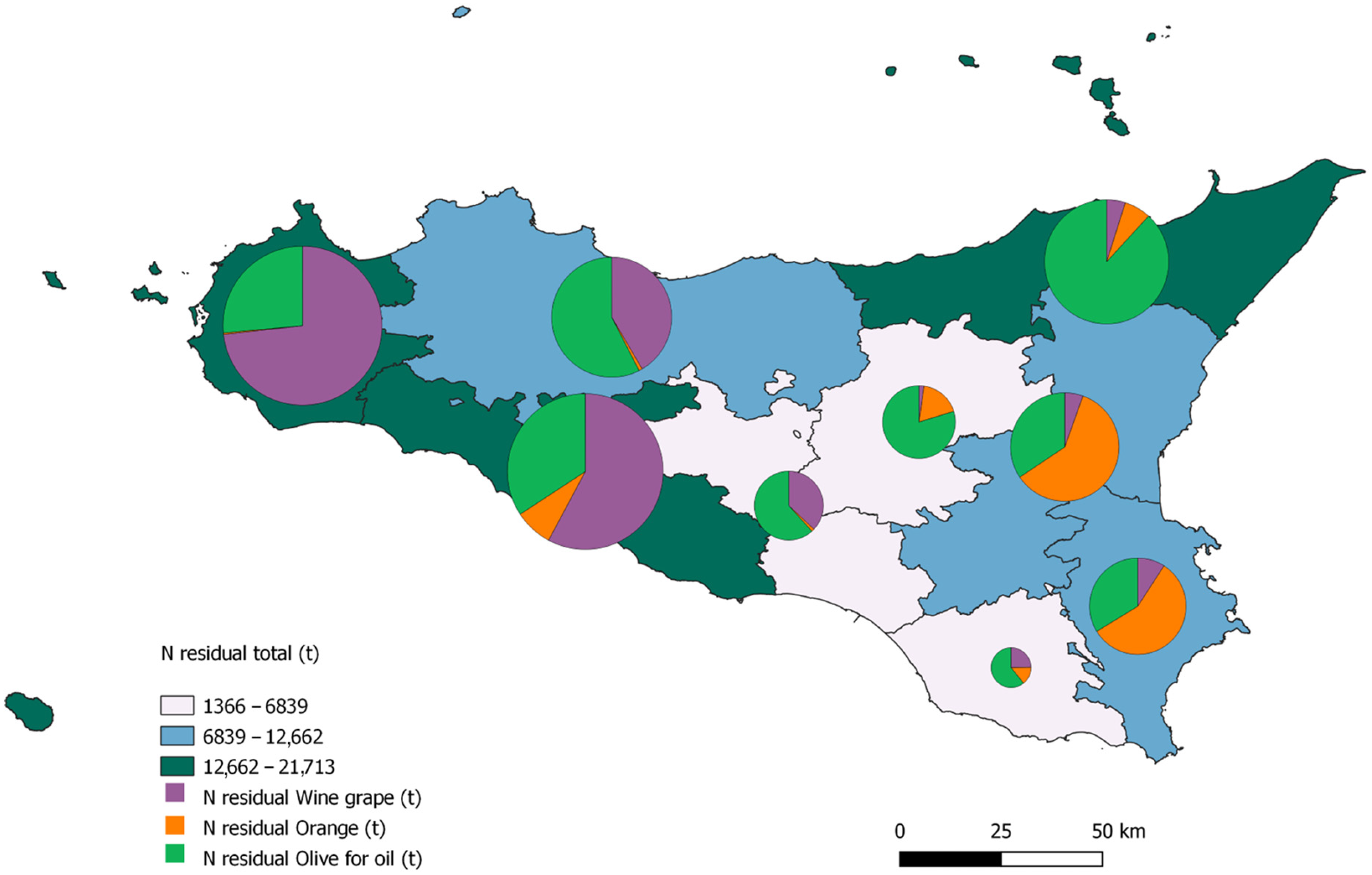
Figure 4 illustrates the spatial distribution of the nitrogen potentially available from the composting of agro-industrial by-products across the provinces of Sicily. The map highlights significant variability in both the total nitrogen content and the relative contribution of different residue types, reflecting the geographical specialisation of local agri-food production systems. The highest amounts of residual nitrogen are concentrated in the provinces of Catania, Agrigento, and Trapani, where the large-scale cultivation and processing of citrus fruits, olives, and wine grapes generate substantial quantities of by-products. In contrast, provinces such as Enna and Caltanissetta show lower overall nitrogen availability, consistent with their smaller agro-industrial output.
The composition of the nitrogen pool also differs across provinces. Orange-processing residues represent a major share of the available nitrogen in eastern Sicily, particularly in Catania and Syracuse, while wine grape residues are predominant in western areas such as Trapani and Agrigento. Olive-derived nitrogen is more evenly distributed but contributes significantly to provinces with a strong olive oil sector, such as Palermo and Messina. These spatial patterns have confirmed the importance of a territorial perspective for planning composting strategies, as the distribution of available biomass and its nutrient content are closely linked to local production dynamics.
Overall, the spatial distribution of nitrogen availability highlights the strong territorial dimension of composting potential in Sicily, confirming that effective biomass management strategies must be tailored to local production patterns and nutrient demands to maximise the environmental and agronomic benefits of agro-industrial by-product valorisation.

4. Discussion

This study aimed to evaluate the potential of using agro-industrial wastes from key sectors in Sicily as soil amendment. The importance of this topic is due to the amount of agricultural production and the percentage of waste deriving from agro-industrial activity. In particular, more than 80% of olive weight and more than 50% of orange weight generate by-products after the agro-industrial activities and transformations. Many studies in the literature have assessed several valorisation strategies [10,42,43,44,45]. However, when considering the most environmentally sustainable way to valorise these by-products, it is strictly dependent on the territorial aspects such as industrial clusters, and the verticality of the supply chain included in the territory. In this study, it was proven that a cascade valorisation approach is possible for olive oil by-products and orange wastes. Firstly, olive pomace oil can be sent to olive pomace oil mills to obtain spent olive pomace. Secondly, orange post-processing waste can be sent to livestock farms as animal feed. According to the scientific literature, this approach may lead to the reduction in methane emissions in livestock barns [46], which is another topic of particular interest in the context of agriculture sustainability [47]. Moreover, the proposed cascade valorisation approach further advances the state of the art by showing that sequential use of by-products, such as the preliminary use of orange residues as animal feed and the extraction of pomace oil before composting, maximises resource efficiency and reduces waste generation. This finding aligns with recent studies emphasising the importance of multi-step valorisation pathways for achieving higher environmental performance and economic returns in circular bioeconomy models [16]. Moreover, the methodology aligns to the necessity of taking into account the soil fertility issue and the limits in nutrient addition [48].
By combining territorial analysis with cascade valorisation strategies, this study provides a replicable framework that can support regional planning and policy development aimed at enhancing sustainability in agro-industrial supply chains. Wine by-products are reach in nutrients for soil, and the amount of by-products available for composting is particularly significant in the Agrigento and Trapani regions. The relatively wide margin between the estimated nitrogen contributions and the legal threshold in most provinces indicates the possibility of further integrating composted residues into local fertilisation practices. This reinforces the feasibility and scalability of a territorial biomass reuse strategy that simultaneously meets agronomic requirements and complies with environmental protection objectives [48]. Such results demonstrate the potential of composting and nutrient recycling as effective tools for advancing bio-circular economy strategies, reducing reliance on synthetic fertilisers, and promoting the closed-loop use of agro-industrial by-products.
The results of this study are consistent with previous research on the valorisation of agro-industrial residues [10,45,48,49,50], yet they also provide new insights by adopting a territorial and spatially explicit perspective. Several studies have highlighted composting as one of the most effective and low-impact strategies for managing organic residues from the agri-food sector [50], improving soil fertility and contributing to long-term soil carbon sequestration [51]. However, most of these works address composting practices at the plant or farm scale, without considering the spatial distribution of biomass sources, crop demand, and environmental constraints at a regional level. By integrating GIS-based spatial analysis into the assessment, the present study fills this gap and demonstrates how composting potential and regulatory compliance can vary significantly across territories depending on the availability of by-products, cropping patterns, and the extent of nitrate vulnerable zones.
The outcomes of this study have practical implications for both regional policymakers and stakeholders in the agro-industrial sector. By demonstrating the feasibility of integrating composting into a territorial bio-circular economy framework, the results provide a valuable evidence base for designing policies that promote nutrient recycling, reduce dependence on synthetic fertilisers, and support the sustainable management of agricultural soils. The spatially explicit approach adopted here can serve as a decision-support tool for planning the localisation of composting facilities, optimising biomass transport, and aligning nutrient supply with crop demand at the provincial scale [48]. Furthermore, the cascade valorisation model highlights the importance of fostering cooperation among different sectors of the agri-food system, such as livestock farming, olive oil production, and citrus processing, to create synergies that enhance resource efficiency and minimise waste generation.
Future research should build on these findings by integrating additional environmental and economic parameters into the spatial analysis, such as greenhouse gas emissions, energy use, and cost–benefit assessments, to provide a more comprehensive evaluation of the sustainability potential. More in deep environmental analysis would assess whether to redesign the valorisation strategies, accounting for the energy valorisation approach or whether it is more efficient to compost biomass and use other renewable energy resources such as sun and wind [52,53].
Expanding the analysis to include other types of agro-industrial residues and exploring different regional contexts would also strengthen the generalisability of the proposed framework and support the broader transition toward circular and regenerative agri-food systems.
From a spatial analysis perspective, further research should focus on in-depth analysis of the transportation phase and on investigating the solution at a municipal level.

5. Conclusions

The results showed the potential of using agro-industrial residues from the main agricultural products in a circular economy approach. In particular, a cascade valorisation strategy was applied for each of the wastes. Based on the outcomes of this study, this approach has been proven to be very effective, particularly when the processes involved are well-integrated within the industrial context of the territory. In this sense, GIS studies play a key role in assessing the sustainability of a valorisation strategy. As it was demonstrated, this was the case of composting agro-industrial residues and using the compost as a soil amendment. Moreover, the other agricultural activities, namely, olive pomace oil extraction and feeding animals with orange wastes, are very widespread sustainable practices in Sicily.
Future research in this field should focus on including additional environmental impacts and economic analyses, by integrating other industrial and agronomic phases. Moreover, the applicability of the methodology to other by-products should be investigated as well as additional cascading valorisation processes, including a waste-to-energy approach.

Author Contributions

Conceptualization, P.R.D. and C.A.; methodology P.R.D. and C.A.; software, P.R.D.; validation, G.C.; formal analysis, P.R.D.; resources, C.A.; data curation, P.R.D.; writing—original draft preparation, G.C.; writing—review and editing, C.A., P.R.D.; investigation, G.C. and P.R.D.; visualisation, P.R.D. and G.C.; supervision, P.R.D. and C.A.; funding acquisition, C.A.; project administration, C.A. All authors have read and agreed to the published version of the manuscript.

Funding

The APC has been founded by the University of Catania through the ‘Piano incentivi per la ricerca di Ateneo 2020-2022-Linea 2’ project on ‘Engineering solutions for sustainable development of agricultural buildings and land’ (ID: 5A722192152) coordinated by Claudia Arcidiacono.

Institutional Review Board Statement

Not applicable.

Informed Consent Statement

Not applicable.

Data Availability Statement

The data presented in this study are available into the Italian Institute of Statistics (https://www.istat.it/it/ accessed on 21 June 2025), the National Zootechnical Registry of the Italian Ministry of Health (IZS) (https://www.vetinfo.it/j6_statistiche/#/ accessed on 24 May 2025) and the Nitrate Vulnerable Zones (https://dati.regione.sicilia.it/dataset/zone-vulnerabili-ai-nitrati-di-origine-agricola accessed on 20 May 2025).

Acknowledgments

This research is part of the PhD research activity grant Inv. 4.1 Research NRRP—Ministerial Decree n. 118/2023 at the University of Catania. PhD student: Grazia Cinardi; tutor: Claudia Arcidiacono; co-tutor: Provvidenza Rita D’Urso; supervisors: Carlo Ingrao, and Silvia Guillén-Lambea. Furthermore, this research was carried out within the research project PIA.CE.RI of the University of Catania: Progetto PIAno di inCEntivi per la RIcerca di Ateneo 2024/2026—Linea di Intervento 1 “Progetti di ricerca collaborativa” (DR 2306 of 3 June 2024)—SIA3 project on “Innovative solutions and strategies for sustainability of Cities, Land and Society”. This research is also in line with the PRIN2022 project (Progetti di Ricerca di Rilevante Interesse Nazionale—Bando 2022) on ‘Emission-controlled intensive livestock housing systems for ecological transition: innovative measuring, mitigating and mapping strategies (EMILI)’, UPB: 5A723192019.

Conflicts of Interest

The authors declare no conflicts of interest.

References

  1. Bhatia, T.; Sindhu, S.S. Sustainable Management of Organic Agricultural Wastes: Contributions in Nutrients Availability, Pollution Mitigation and Crop Production. Discov. Agric. 2024, 2, 130. [Google Scholar] [CrossRef]
  2. Zhang, Q.; Zhang, H. Assessing Agri-Food Waste Valorization Challenges and Solutions Considering Smart Technologies: An Integrated Fermatean Fuzzy Multi-Criteria Decision-Making Approach. Sustainability 2024, 16, 6169. [Google Scholar] [CrossRef]
  3. Midolo, G.; Cutuli, G.; Porto, S.M.C.; Ottolina, G.; Paini, J.; Valenti, F. LCA Analysis for Assessing Environmenstal Sustainability of New Biobased Chemicals by Valorising Citrus Waste. Sci. Rep. 2024, 14, 21418. [Google Scholar] [CrossRef] [PubMed]
  4. Kirchherr, J.; Reike, D.; Hekkert, M. Conceptualizing the Circular Economy: An Analysis of 114 Definitions. Resour. Conserv. Recycl. 2017, 127, 221–232. [Google Scholar] [CrossRef]
  5. Bassi, D.; Cirilli, M.; Rossini, L. The Most Important Fruit Crops in Mediterranean Basin (Mb): Position Paper; Milano University Press: Milan, Italy, 2024; ISBN 979-12-5510-109-3. [Google Scholar]
  6. FAO. The State of Food and Agriculture 2022; FAO: Rome, Italy, 2022; ISBN 978-92-5-136043-9. [Google Scholar]
  7. ISMEA. ISMEA Citrus Report, 2024; ISMEA: Rome, Italy, 2024. [Google Scholar]
  8. Sicilia Report Sicilia Tra Le Principali Regioni Italiane per Produzione Olio d’oliva. Available online: https://www.italpress.com/sicilia-tra-le-principali-regioni-italiane-per-produzione-olio-doliva/ (accessed on 30 July 2025).
  9. Sicilia Agricoltura. Cultivating the Future: La Sicilia del Vino Si Raccon. 2024. Available online: https://www.assovinisicilia.it/cultivating-the-future-la-sicilia-del-vino-si-racconta/ (accessed on 30 July 2025).
  10. Cinardi, G.; D’Urso, P.R.; Arcidiacono, C.; Ingrao, C. Accounting for Circular Economy Principles in Life Cycle Assessments of Extra-Virgin Olive Oil Supply Chains—Findings from a Systematic Literature Review. Sci. Total Environ. 2024, 945, 173977. [Google Scholar] [CrossRef]
  11. Zema, D.A.; Calabrò, P.S.; Folino, A.; Tamburino, V.; Zappia, G.; Zimbone, S.M. Valorisation of Citrus Processing Waste: A Review. Waste Manag. 2018, 80, 252–273. [Google Scholar] [CrossRef]
  12. Karastergiou, A.; Gancel, A.-L.; Jourdes, M.; Teissedre, P.-L. Valorization of Grape Pomace: A Review of Phenolic Composition, Bioactivity, and Therapeutic Potential. Antioxidants 2024, 13, 1131. [Google Scholar] [CrossRef]
  13. Castagna, A.; Aboudia, A.; Guendouz, A.; Scieuzo, C.; Falabella, P.; Matthes, J.; Schmid, M.; Drissner, D.; Allais, F.; Chadni, M.; et al. Transforming Agricultural Waste from Mediterranean Fruits into Renewable Materials and Products with a Circular and Digital Approach. Materials 2025, 18, 1464. [Google Scholar] [CrossRef]
  14. Negrea, M.; Cocan, I.; Jianu, C.; Alexa, E.; Berbecea, A.; Poiana, M.-A.; Silivasan, M. Valorization of Citrus Peel Byproducts: A Sustainable Approach to Nutrient-Rich Jam Production. Foods 2025, 14, 1339. [Google Scholar] [CrossRef]
  15. Hartinger, T.; Mahmood, M.; Khiaosa-ard, R. The Impact of Citrus Pulp Inclusion on Milk Performance of Dairy Cows: A Meta-Analysis. Food Chem. Mol. Sci. 2024, 9, 100216. [Google Scholar] [CrossRef]
  16. Girard, G. Does Circular Bioeconomy Contain Singular Social Science Research Questions, Especially Regarding Agriculture—Industry Nexus? Clean. Circ. Bioecon. 2022, 3, 100030. [Google Scholar] [CrossRef]
  17. Berbel, J.; Posadillo, A. Review and Analysis of Alternatives for the Valorisation of Agro-Industrial Olive Oil By-Products. Sustainability 2018, 10, 237. [Google Scholar] [CrossRef]
  18. Gazzetta Ufficiale Della Repubblica Italiana. Legislative Decree No. 75 of 29 April 2010; State Polygraphic Institute and Mint: Roma, Italy, 2010. [Google Scholar]
  19. Official Journal of the European Union. Regulation (EU) 2019/1009 on EU Fertilising Products 2019/1009; The European Union: Brussels, Belgium, 2019. [Google Scholar]
  20. Cillis, G.; Statuto, D.; Schettini, E.; Vox, G.; Picuno, P. Implementing a GIS-Based Digital Atlas of Agricultural Plastics to Reduce Their Environmental Footprint; Part I: A Deductive Approach. Appl. Sci. 2022, 12, 1330. [Google Scholar] [CrossRef]
  21. Lycourghiotis, S. GIS and Spatial Analysis in the Utilization of Residual Biomass for Biofuel Production. J 2025, 8, 17. [Google Scholar] [CrossRef]
  22. Haase, M.; Rösch, C.; Ketzer, D. GIS-Based Assessment of Sustainable Crop Residue Potentials in European Regions. Biomass Bioenergy 2016, 86, 156–171. [Google Scholar] [CrossRef]
  23. Beccali, M.; Columba, P.; D’Alberti, V.; Franzitta, V. Assessment of Bioenergy Potential in Sicily: A GIS-Based Support Methodology. Biomass Bioenergy 2009, 33, 79–87. [Google Scholar] [CrossRef]
  24. Valenti, F.; Liao, W.; Porto, S.M. A GIS-Based Spatial Index of Feedstock-Mixture Availability for Anaerobic Co-Digestion of Mediterranean by-Products and Agricultural Residues. Biofuels Bioprod. Biorefining 2018, 12, 362–378. [Google Scholar] [CrossRef]
  25. Catalano, G.A.; D’Urso, P.R.; Arcidiacono, C. Predicting Potential Biomass Production by Geospatial Modelling: The Case Study of Citrus in a Mediterranean Area. Ecol. Inform. 2024, 83, 102848. [Google Scholar] [CrossRef]
  26. Raihan, A. A Systematic Review of Geographic Information Systems (GIS) in Agriculture for Evidence-Based Decision Making and Sustainability. Glob. Sustain. Res. 2024, 3, 1–24. [Google Scholar] [CrossRef]
  27. Official Gazette of the Italian Republic. Legislative Decree No. 152 of 3 April 2006 Environmental Regulations 152/2006; State Polygraphic Institute and Mint: Rome, Italy, 2006. [Google Scholar]
  28. Abreu, T.; Sousa, P.; Gonçalves, J.; Hontman, N.; Teixeira, J.; Câmara, J.S.; Perestrelo, R. Grape Pomace as a Renewable Natural Biosource of Value-Added Compounds with Potential Food Industrial Applications. Beverages 2024, 10, 45. [Google Scholar] [CrossRef]
  29. Heuzé, V.; Tran, G. Grape Pomace. Feed. Anim. Feed Resour. Inf. Syst. 2020. [Google Scholar]
  30. Antonić, B.; Jančíková, S.; Dordević, D.; Tremlová, B. Grape Pomace Valorization: A Systematic Review and Meta-Analysis. Foods 2020, 9, 1627. [Google Scholar] [CrossRef] [PubMed]
  31. Ferrer-Gallego, R.; Silva, P. The Wine Industry By-Products: Applications for Food Industry and Health Benefits. Antioxidants 2022, 11, 2025. [Google Scholar] [CrossRef] [PubMed]
  32. ENAMA. ENAMA Biomass Technical Commission Biomass Project—Technical Characteristics of Biomass and Biofuels; ENAMA Biomass Project; Ministry of Agricultural, Food and Forestry Policies (MIPAAF): Roma, Italy, 2011. [Google Scholar]
  33. Valenti, F.; Porto, S.M.C.; Chinnici, G.; Selvaggi, R.; Cascone, G.; Arcidiacono, C.; Pecorino, B. Use of Citrus Pulp for Biogas Production: A GIS Analysis of Citrus-Growing Areas and Processing Industries in South Italy. Land Use Policy 2017, 66, 151–161. [Google Scholar] [CrossRef]
  34. Gulisano, G.; Careri, P.; Strano, A. Il Pastazzo Di Agrumi va Bene Nella Dieta Di Bovini e Ovini. Inf. Agrar. 2008, 28, 28–29. [Google Scholar]
  35. Tawarah, K.M. Specifications of Exhausted Olive Pomace as an Energy Source: A Statistical Approach. Int. J. Adv. Res. Chem. Sci. 2019, 6, 6–15. [Google Scholar] [CrossRef]
  36. Yang, X.; Liu, E.; Zhu, X.; Wang, H.; Liu, H.; Liu, X.; Dong, W. Impact of Composting Methods on Nitrogen Retention and Losses during Dairy Manure Composting. Int. J. Environ. Res. Public. Health 2019, 16, 3324. [Google Scholar] [CrossRef]
  37. Zhao, S.; Schmidt, S.; Qin, W.; Li, J.; Li, G.; Zhang, W. Towards the Circular Nitrogen Economy—A Global Meta-Analysis of Composting Technologies Reveals Much Potential for Mitigating Nitrogen Losses. Sci. Total Environ. 2020, 704, 135401. [Google Scholar] [CrossRef]
  38. Official Journal of the European Communities. Council Directive 91/676/ECC Concerning the Protection of Waters against Pollution Caused b Nitrates from Agricultural Sources 91/676/ECC; The European Union: Brussels, Belgium, 1991. [Google Scholar]
  39. Official Gazette of the Italian Republic. Ministerial Decree of 19 April 1999; State Polygraphic Institute and Mint: Rome, Italy, 1999. [Google Scholar]
  40. Region of Sicily Zones Vulnerable to Agricultural Nitrates. Available online: https://www.sitr.regione.sicilia.it/download/download-carta-tecnica-regionale-10000/ata1213-shape/ (accessed on 3 June 2025).
  41. Criteria and General Technical Standards for the Regional Regulation of the Agronomic Use of Livestock Effluents and Zootechnical Waste Pursuant to Art. 112 of Legislative Decree No. 152 of 3 April 2006, as Well as for the Production and Agronomic Use of Digestate Pursuant to Art. 52, Paragraph 2-Bis of Decree Law No. 83 of 22 June 2012, Converted into Law No. 134 of 7 August 2012, No. 5046 of 25 February.
  42. Salomone, R.; Ioppolo, G. Environmental Impacts of Olive Oil Production: A Life Cycle Assessment Case Study in the Province of Messina (Sicily). J. Clean. Prod. 2012, 28, 88–100. [Google Scholar] [CrossRef]
  43. Negro, V.; Mancini, G.; Ruggeri, B.; Fino, D. Citrus Waste as Feedstock for Bio-Based Products Recovery: Review on Limonene Case Study and Energy Valorization. Bioresour. Technol. 2016, 214, 806–815. [Google Scholar] [CrossRef]
  44. Negro, V.; Ruggeri, B.; Fino, D.; Tonini, D. Life Cycle Assessment of Orange Peel Waste Management. Resour. Conserv. Recycl. 2017, 127, 148–158. [Google Scholar] [CrossRef]
  45. Cinardi, G.; D’Urso, P.R.; Cascone, G.; Arcidiacono, C. Citrus Waste Valorisation Processes from an Environmental Sustainability Perspective: A Scoping Literature Review of Life Cycle Assessment Studies. AgriEngineering 2025, 7, 335. [Google Scholar] [CrossRef]
  46. Fernández, C.; Romero, T.; Martí, J.V.; Moya, V.J.; Hernando, I.; Loor, J.J. Energy, Nitrogen Partitioning, and Methane Emissions in Dairy Goats Differ When an Isoenergetic and Isoproteic Diet Contained Orange Leaves and Rice Straw Crop Residues. J. Dairy Sci. 2021, 104, 7830–7844. [Google Scholar] [CrossRef] [PubMed]
  47. Cinardi, G.; Vitaliano, S.; Fasciana, A.; Fragalà, F.; La Bella, E.; Santoro, L.M.; D’Urso, P.R.; Baglieri, A.; Cascone, G.; Arcidiacono, C. Preliminary Analysis on Bio-Acidification Using Coffee Torrefaction Waste and Acetic Acid on Animal Manure from a Dairy Farm. Agriculture 2025, 15, 948. [Google Scholar] [CrossRef]
  48. Amlinger, F.; Götz, B.; Dreher, P.; Geszti, J.; Weissteiner, C. Nitrogen in Biowaste and Yard Waste Compost: Dynamics of Mobilisation and Availability—A Review. Eur. J. Soil Biol. 2003, 39, 107–116. [Google Scholar] [CrossRef]
  49. Pinter, I.F.; Fernández, A.S.; Martínez, L.E.; Riera, N.; Fernández, M.; Aguado, G.D.; Uliarte, E.M. Exhausted Grape Marc and Organic Residues Composting with Polyethylene Cover: Process and Quality Evaluation as Plant Substrate. J. Environ. Manag. 2019, 246, 695–705. [Google Scholar] [CrossRef]
  50. Gazal, A.A.; Bonnet, S.; Silalertruksa, T.; Gheewala, S.H. Circular Economy Strategies for Agri-Food Production—A Review. Circ. Econ. Sustain. 2025, 5, 2467–2493. [Google Scholar] [CrossRef]
  51. Jeong, Y.-J.; Vyavahare, G.D.; Kim, S.-H.; Jeon, S.-H.; Roh, A.-S.; Yun, J.-J.; Shim, J.-H. Effect of Fertilizer and Food Waste Compost on Soil Carbon, Nitrogen Use Efficiency, and Yield of Chinese Cabbage (Brassica rapa L.). Appl. Biol. Chem. 2025, 68, 77. [Google Scholar] [CrossRef]
  52. Cinardi, G.; D’Urso, P.R.; Arcidiacono, C. Integrating Rooftop Grid-Connected Photovoltaic and Battery Systems to Reduce Environmental Impacts in Agro-Industrial Activities with a Focus on Extra Virgin Olive Oil Production. Clean Technol. 2025, 7, 91. [Google Scholar] [CrossRef]
  53. Cinardi, G.; D’Urso, P.R.; Arcidiacono, C.; Cascone, G. Integrating Photovoltaic Systems to Reduce Carbon Footprint in Extra Virgin Olive Oil Production: A Territorial Perspective in the Mediterranean Area. In Biosystems Engineering Promoting Resilience to Climate Change—AIIA 2024—Mid-Term Conference ; Sartori, L., Tarolli, P., Guerrini, L., Zuecco, G., Pezzuolo, A., Eds.; Lecture Notes in Civil Engineering; Springer Nature: Cham, Switzerland, 2025; Volume 586, pp. 999–1007. ISBN 978-3-031-84211-5. [Google Scholar]
Figure 1. Biomass residues from agro-industrial activities (in purple exhausted grape pomace, in green exhausted olive pomace, and in orange the orange post processing waste).
Agriengineering 08 00025 g001
Figure 2. Thematic map of citrus pulp production for each province, and bar graphs of the amount used as animal feed (yellow) and the remaining amount for composting (purple).
Agriengineering 08 00025 g002
Figure 3. NVZ in Sicily are showed in brown shades.
Agriengineering 08 00025 g003
Figure 4. Spatial distribution of nitrogen (N) potentially available from the composting of agro-industrial by-products across the provinces of Sicily. Colours of the province indicate the total N availability. The pie graph represents N composition according to the main residue types considered reported in Table 5.
Agriengineering 08 00025 g004
Table 1. Average value of production/area ratio for each species of fruit and for each province considered between 2020 and 2024.
Production (100 kg)/Area (ha)Wine GrapesCitrusOlive for Oil
Agrigento5817915
Caltanissetta8115610
Catania7017534
Enna7030050
Messina8119617
Palermo5118826
Ragusa7731149
Syracuse7821421
Trapani539623
Table 2. Amount of N estimated from agro-industrial wastes.
ProvinceOlive Pomace (100 kg)Exhausted Grape Pomace (100 kg)Orange Waste (100 kg)
Agrigento72715062173
Caltanissetta1842760
Catania10211029866
Enna1275152026
Messina1369113906
Palermo12675420
Ragusa314640
Syracuse4201328455
Trapani95519500
Table 3. Amount of N estimated from composted agro-industrial wastes.
ProvinceOlive Pomace (100 kg)Grape Pomace (100 kg)Citrus Pulp (100 kg)
Agrigento49910331490
Caltanissetta1271900
Catania700706768
Enna874101390
Messina93977622
Palermo8693720
Ragusa216440
Syracuse288915800
Trapani65513380
Table 4. Percentage of NVZ area (NVZp) for each province.
ProvinceNVZ (ha)Area (ha)NVZp [%]
Agrigento24,235305,5907.9
Caltanissetta38,258213,42117.9
Catania159,419357,53644.6
Enna13,696257,2925.3
Messina25,346326,6067.8
Palermo5115500,5061.0
Ragusa53,831162,36033.2
Syracuse47,059212,18122.2
Trapani49,950246,94120.2
Table 5. Residual nitrogen for each province.
ProvinceNmax Tot (t)N Available (t)N Residual (t)
Wine grapeAgrigento12,142.2103.512,038.7
Caltanissetta1529.119.01510.1
Catania557.77.0550.7
Enna102.61.0101.6
Messina653.67.8645.9
Palermo5178.837.35141.5
Ragusa342.34.4337.9
Syracusa740.69.1731.5
Trapani16,044.7134.115,910.6
Orange wasteAgrigento1807.3149.01658.2
Caltanissetta53.20.053.2
Catania6745.0676.86068.2
Enna960.1139.0821.1
Messina980.462.2918.3
Palermo115.00.0115.0
Ragusa198.50.0198.5
Syracusa5139.0580.04559.0
Trapani61.10.061.1
Olive for oilAgrigento7175.249.97125.3
Caltanissetta2530.712.72518.0
Catania3537.670.03467.6
Enna3716.287.43628.8
Messina11,765.193.911,671.2
Palermo7205.086.97118.1
Ragusa850.921.6829.4
Syracusa2720.728.82691.9
Trapani5806.765.55741.2
Disclaimer/Publisher’s Note: The statements, opinions and data contained in all publications are solely those of the individual author(s) and contributor(s) and not of MDPI and/or the editor(s). MDPI and/or the editor(s) disclaim responsibility for any injury to people or property resulting from any ideas, methods, instructions or products referred to in the content.